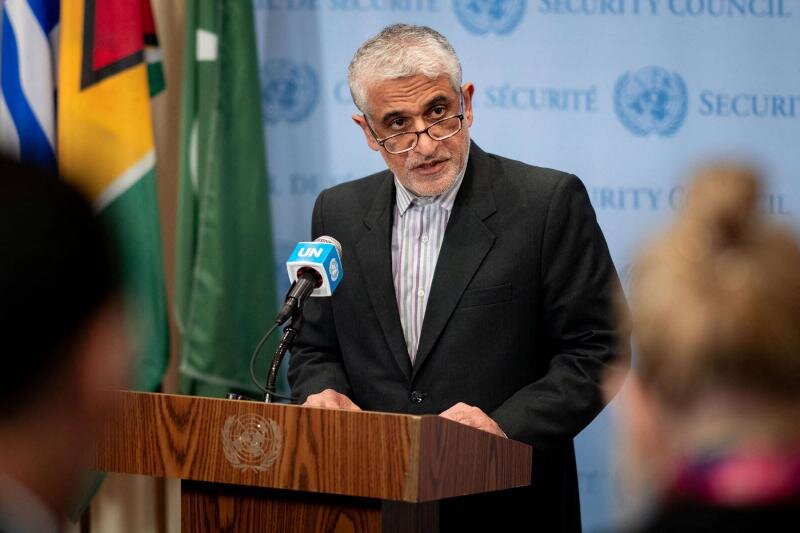
TEHRAN, May 09 (MNA) – Iran's UN Ambassador has formally warned the Security Council that continued US military actions in the Persian Gulf and Strait of Hormuz could produce catastrophic consequences extending far beyond the region.
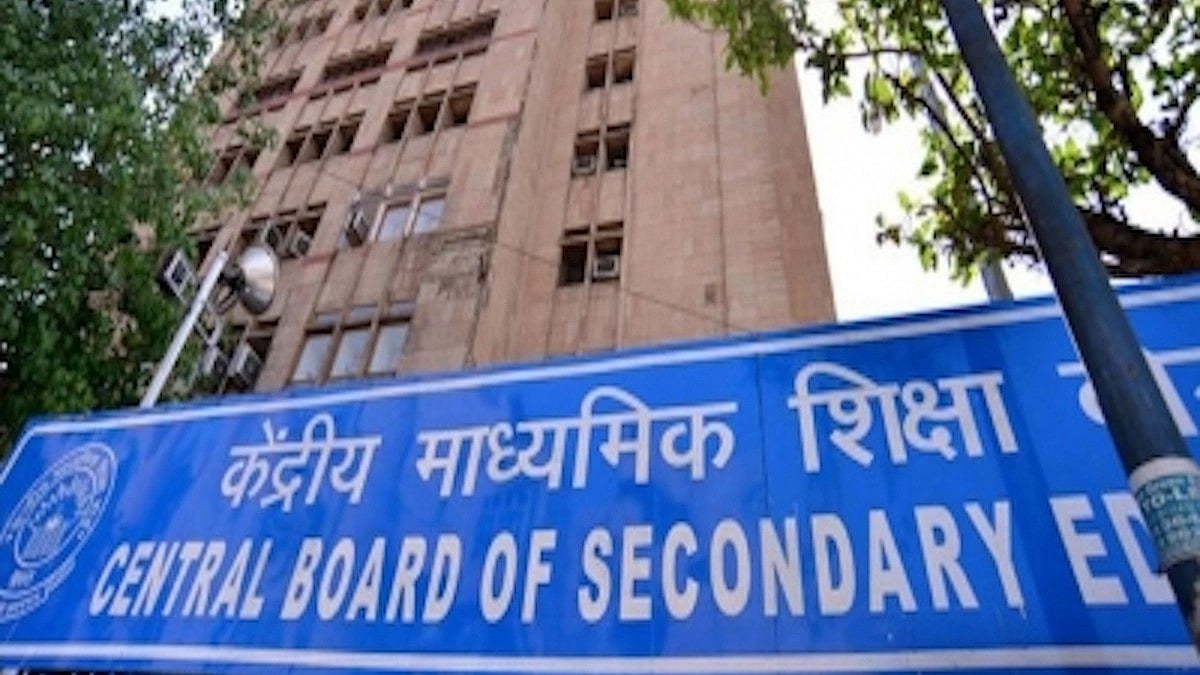
The Congress on Monday intensified its attack on the Centre and Union education minister Dharmendra Pradhan over alleged irregularities in the Central Board of Secondary Education’s newly introduced On-Screen Marking (OSM) system for Class 12 board examinations.
Congress leader and Rajya Sabha MP Jairam Ramesh accused the government of mishandling the digital evaluation process, claiming it had created uncertainty for lakhs of students and disrupted academic outcomes across the country.
In a post on X, Ramesh alleged that the rollout of the OSM system had “thrown into chaos the academic futures of lakhs of children” and raised serious concerns about the functioning of the CBSE.
He claimed that the Class 12 pass percentage had fallen from 88 per cent last year to 85 per cent this year and alleged that the evaluation process was marred by multiple irregularities.
According to the Congress leader, students and evaluators faced issues including blurred and illegible scanned answer sheets, incorrect allocation of scripts, errors in marking, delays in payments to teachers and high revaluation fees.
CBSE ने कक्षा 12 की बोर्ड परीक्षाओं के लिए On Screen Marking System (OSM) लागू किया, जिसने देशभर के लाखों बच्चों के शैक्षणिक भविष्य अस्त-व्यस्त हो गया है। कक्षा 12 का पास परसेंटेज अभूतपूर्व रूप से 3% अंक गिर गया है (88% से घटकर 85%) और पूरी प्रक्रिया अनियमितताओं से भरी रही…
The OSM system, introduced by CBSE this year, involves scanning physical answer sheets, digitally masking student identities and allowing teachers to evaluate scripts on computer screens.
Targeting Union education minister Dharmendra Pradhan, Ramesh accused him of responding only after concerns had escalated publicly.
He criticised the minister for portraying himself as attempting to resolve the issue after technical problems emerged and questioned why the education ministry and CBSE had failed to anticipate implementation challenges before introducing the system nationwide.
Ramesh also referred to reports that IIT Kanpur had been brought in to assist with technical issues linked to the evaluation process.
Sharpening his criticism, the Congress leader said the education minister should resign over what he described as “institutional collapse” and accused the government of jeopardising students’ futures through administrative failures.
The Centre and CBSE have not yet issued a detailed response to the allegations.
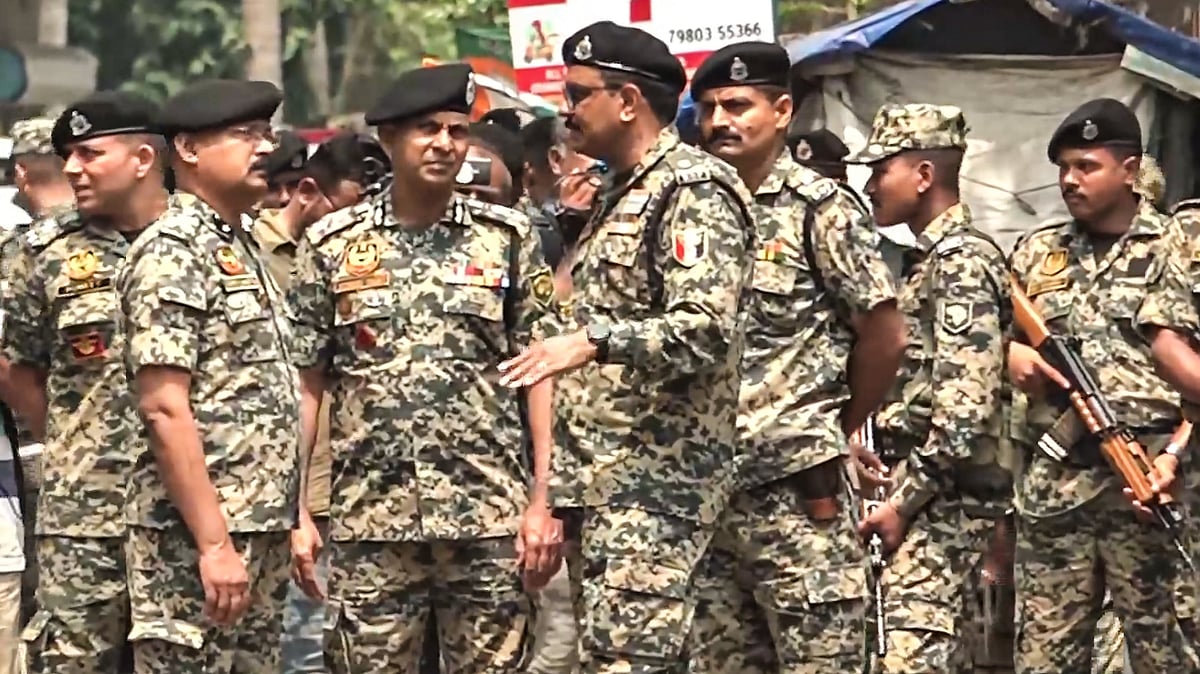
Tension gripped parts of West Bengal’s North 24-Parganas district on Thursday after a close aide of BJP leader Suvendu Adhikari was shot dead, prompting heightened security measures and political recriminations just days after the assembly election results.
Senior officers appealed for calm, saying security had been reinforced in sensitive pockets to prevent any escalation.
“We are maintaining strict surveillance in vulnerable areas and have deployed extra forces. People should not pay attention to rumours,” a senior West Bengal Police officer said.
The victim, identified as Chandranath Rath, was gunned down on Wednesday night in what BJP leaders described as a “targeted assassination”.
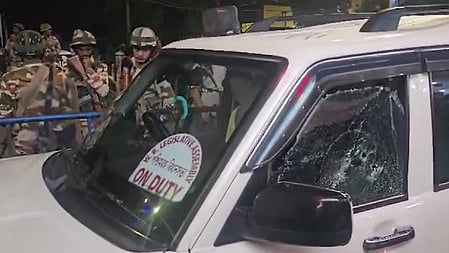
According to preliminary police findings, Rath was travelling near Doltala in Madhyamgram at around 10.30 pm when motorcycle-borne attackers allegedly intercepted his vehicle, forced it to halt and opened fire before escaping.
#WATCH | North 24 Parganas, West Bengal | Forensic team investigates the vehicle in which BJP Leader Suvendu Adhikari's PA Chandra was shot dead near Madhyamgram. pic.twitter.com/gdenXBk0o0
The incident triggered outrage among BJP workers, who accused the ruling Trinamool Congress (TMC) of fostering a climate of political violence in the aftermath of the fiercely contested polls.
“We want the killers arrested immediately. Rath was travelling in a vehicle linked to the Leader of the Opposition and was deliberately targeted. People are living in fear,” a local BJP worker said.
Another supporter called for a central agency investigation, alleging that criminals were operating unchecked in the state.
Police said raids were being conducted at several locations and CCTV footage from nearby areas was being scrutinised to identify the assailants.
“No one involved will be spared. The investigation is being treated as a priority,” an officer said.
The killing, which came two days after the declaration of the assembly election results, has intensified the political confrontation between the BJP and the TMC. While the BJP accused the ruling party of unleashing retaliatory attacks on opposition workers, the TMC countered by alleging that its own supporters had also been targeted in violence across several districts.
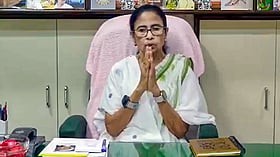
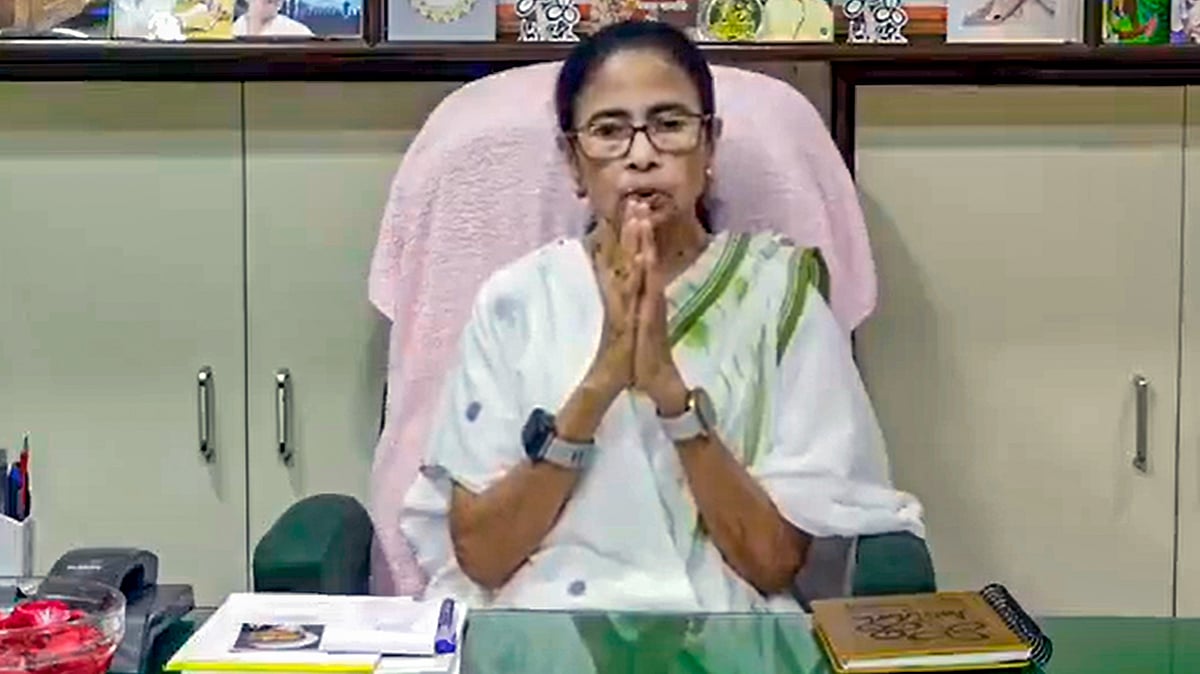
Former West Bengal chief minister Mamata Banerjee on Sunday said INDIA bloc leaders were likely to meet in the first week of June to chalk out a joint political strategy, asserting that the opposition alliance was prepared for a long battle. “We are ready to fight, and we will not give up till the end,” the Trinamool Congress chief said during a Facebook Live address.
Launching a fresh attack on the BJP, Banerjee alleged large-scale electoral manipulation and claimed the Trinamool’s mandate had been overturned in around 150 Assembly constituencies.
“Winning seats were turned into losing seats and losing ones into winning seats,” she alleged, claiming that the TMC would otherwise have won between 220 and 230 seats.
Senior BJP leader Keya Ghosh rejected the allegations, accusing Banerjee of refusing to accept the electoral verdict and resorting to conspiracy theories to explain the defeat. “If the elections of 2011, 2016 and 2021 were fair, why are you suddenly raising questions now?” Ghosh said, alleging that Banerjee was disregarding constitutional institutions.
Banerjee repeated allegations of irregularities in voter rolls and election procedures, claiming the electoral process had been compromised. “Nearly 60 lakh names were deleted initially through the SIR process. Though many were restored later, we have information suggesting manipulation and irregularities at different stages,” she alleged.
She said the TMC would pursue legal remedies in constituencies where doubts remained over the conduct of polls. The former chief minister also accused the BJP of using intimidation against political opponents. “The more the BJP tortures TMC in Bengal, the more problems it will face in New Delhi,” she said.
Claiming that TMC workers and grassroots leaders were facing pressure after the change of government in the state, Banerjee said, “Twenty days have passed since counting. Our workers and elected representatives are being tortured and intimidated, but we are holding on.”
She further alleged that TMC-run civic bodies and local institutions were facing administrative obstacles and accused the BJP government of shrinking democratic space.
“Some people may become turncoats, but many are still with us. We will bounce back and give the BJP a befitting reply,” she said. Banerjee also claimed that despite having 80 MLAs, the TMC had not been granted recognition of the leader of opposition post and alleged that its legislators were being made to sit in the Assembly lobby.
Countering her claims, Ghosh argued that Banerjee’s political influence had weakened and claimed unease was growing within the TMC, with workers and elected representatives drifting away from the party.
Accusing the TMC of becoming a “corporate-style organisation” centred around Abhishek Banerjee, the BJP leader said recent developments reflected broader shifts in public mood.
Referring to the Falta bypoll result, Ghosh claimed even perceived TMC bastions such as Diamond Harbour were witnessing political change. She also cited Banerjee’s defeat in Bhabanipur as evidence of what she described as a “complete rejection” of the TMC leadership.
Dismissing the prospects of opposition unity under the INDIA bloc, Ghosh said earlier alliance experiments had failed. “They may continue forming alliances, but the BJP is not bothered. People are with us,” she said.
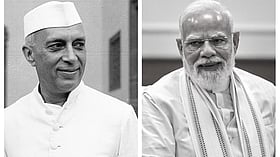
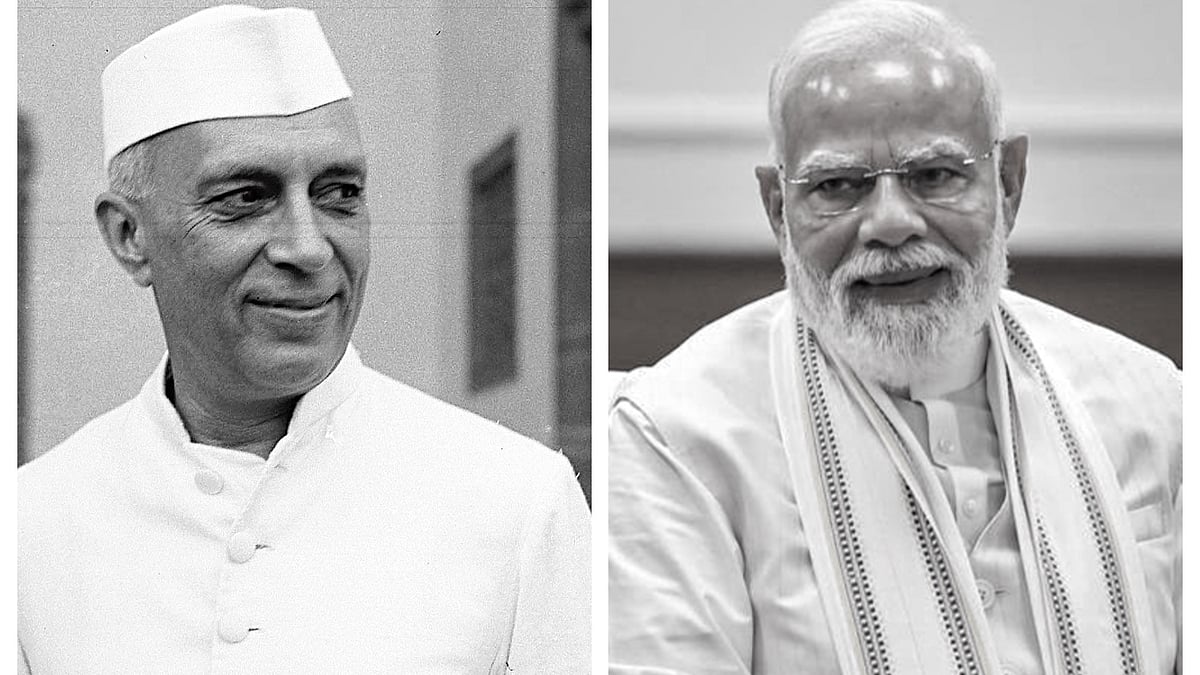
NCP (SP) president Sharad Pawar on Wednesday pushed back against attempts to compare Prime Minister Narendra Modi with India's first Prime Minister Jawaharlal Nehru, saying Nehru's role in the freedom movement and nation-building remains unparalleled.
Addressing the 27th foundation day celebrations of his party in Mumbai, Pawar acknowledged Modi's tenure as the country's longest-serving prime minister but insisted that Nehru occupied a unique place in India's history.
"There is a portrayal that there is no leader like Narendra Modi because he has become the longest-serving prime minister," Pawar said. "But Nehru's contribution to nation-building and the freedom struggle cannot be forgotten and must be respected."
The veteran leader said Nehru's sacrifices during the independence movement set him apart from contemporary political leaders.
"He cannot be compared with anyone else. Nehru spent several years in prison during the freedom struggle under the leadership of Mahatma Gandhi," Pawar said.
Referring to Modi's record in office, Pawar said the constitutional position of the prime minister deserved respect, but added that historical contributions should not be overlooked.
"It is good that he has become the longest-serving prime minister. In a parliamentary democracy, the office of the prime minister is a constitutional post and must be respected. But Nehru is Nehru, and Indians cannot forget his sacrifices," he said.
Pawar also criticised Maharashtra minister and BJP leader Girish Mahajan for his recent remarks on Indira Gandhi and Operation Blue Star, calling the comments unacceptable.
Mahajan had triggered a political controversy by describing Operation Blue Star as a "black day" and comparing the Army's 1984 action inside the Golden Temple complex to an invasion by Afghan ruler Ahmad Shah Abdali. Opposition parties subsequently demanded his dismissal from the state cabinet.
Responding to the remarks, Pawar defended the former prime minister's actions and said they were driven by concerns for national security. "Such a statement is unacceptable. Operation Blue Star was a sacrifice by Indira Gandhi," he said.
Pawar noted the Sikh community's contribution to both national defence and food security, while acknowledging that some individuals had chosen a different path during that turbulent period.
"Sikhs have worked for the country's security on the borders and for food security. Some people took a different path. Certain events took place and cannot be forgotten. Indira Gandhi never compromised on the country's prestige and security," he said.
Mahajan, however, has maintained that Operation Blue Star amounted to a military assault on Sikhism's holiest shrine and alleged that the then prime minister had ordered the Army into Punjab and the Golden Temple complex by force.
"Nowadays for a homeless person to fulfil the requirement of a place of residence, ‘The BLO [Booth Level Officer] will visit the address given… at night to ascertain that the homeless person actually sleeps at the place which is given as his address… If the BLO is able to verify that the homeless person actually sleeps at that place, no documentary proof of place of residence shall be necessary.’ (Hand Book for Booth Level Officers, Election Commission of India 2011)”.
"The 25 September 1948 press note covered in detail ‘Refugees Rights as Electors’, and the instructions for their inclusion on the electoral rolls. The press continued to bring stories from across the country under the occasional title: ‘Progress In Preparation of Electoral Rolls’. It reported that the East Punjab Government extended the final date for the completion of electoral rolls to 31 October 1948 ‘since a large number had not got themselves registered'.
These passages are taken from the book How India Became Democratic: Citizenship and the Making of the Universal Franchise by Ornit Shani. The point is to show how, for decades, the focus of the Indian state has been on inclusion when it has come to voters and their rights.
Here is another instruction from the government: 'Persons sleeping in a pedhi or shop or servants sleeping in the loft of a hotel will be entitled to be included in the electoral roll for the areas in which the pedhi or the shop or the hotel as the case may be is situated. Similarly, vagrants living in huts erected on municipal land will also be entitled to be registered as voters. Domestic servants who sleep in general or rear passages, balconies or staircases are also eligible for inclusion'
Some 25 years ago, there was an interview on a Pakistani channel by their famous journalist Najam Sethi of Manohar Singh Gill. Gill had just retired as India's chief election commissioner and the discussion was about the introduction of the electronic voting machine. The device was thought to be overly complex and intimidating to use. To test this, Gill and his team took it to a vegetable market. They observed how those in the market used it in their experiment and discovered what all of us know now: that it is easy to use.
This ended a period in India’s electoral history where elections were often disputed, with accusations of wrongdoing (what was called in those days booth-capturing). We do not hear that any longer because, like in the matter of inclusion of electors, the state and the election commission were focused on the rights of voters and how to make their voting easier.
That period has ended now. That focus has also ended.
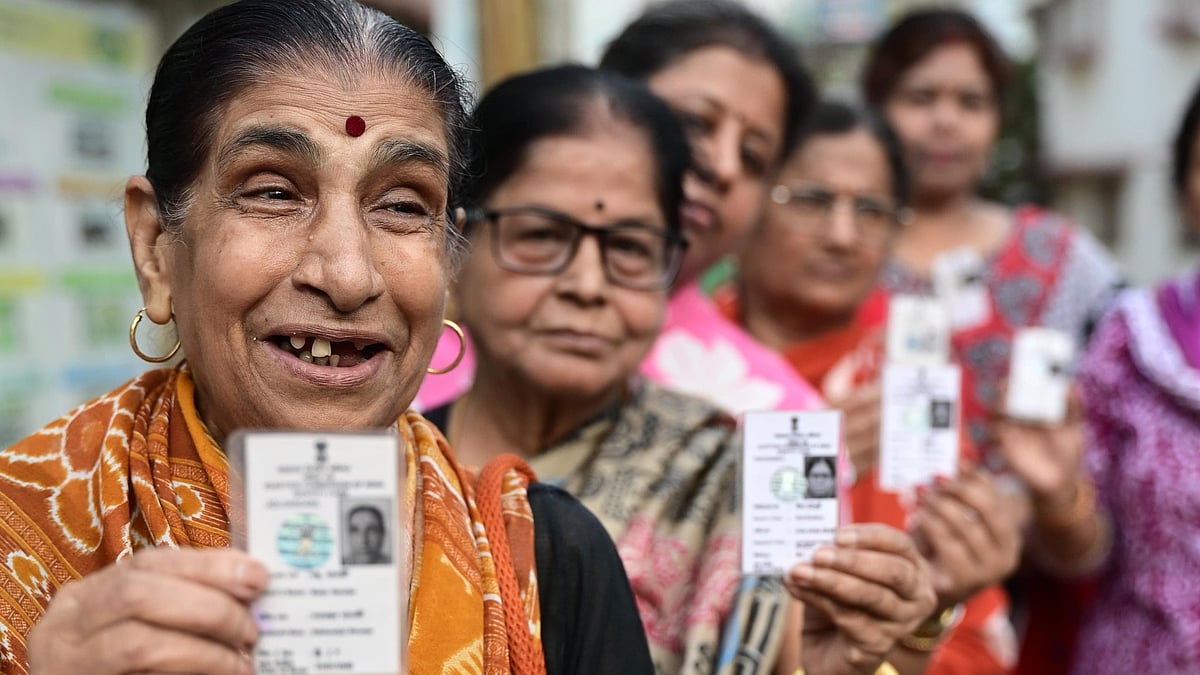
The government and the Election Commission are now intent on exclusion, and they have been successful at doing this. The recent removal of millions of Bengalis from the voting list has received the sanction of the Supreme Court and will be repeated in other states.
Eligible voters wrongly removed can appeal and may be able to get themselves reinstated later but their vote this time is denied. To many this seems like an illegitimate election, and this is why we have ended the Indian era where political parties and particularly the parties that lost elections, accepted the results and the election as being fair and free.
There will be other issues associated with this for millions of individuals. One headline from 13 May reads: 'SIR-deleted can’t avail govt schemes, says Bengal govt; Bihar CM talks of cancelling bank passbooks'. But we need not go there today.
Why are we deliberately taking apart an electoral system that has worked? There is no answer to that, and there is no data and has never been any on the absurd slander that foreigners are voting here. Like the monstrous NRC process in Assam, which began with a hysterical note from its then government with no supporting data, we have assumed there is a condition and are intent on addressing it through the most extreme method.
This will have consequences for the nation whose government calls it the mother of democracy. There is no question that India has now eroded the meaning of the term ‘universal franchise’.
Shani opens her book with these words, which bear reflection on today: 'From November 1947 India embarked on the preparation of the first draft electoral roll on the basis of universal adult franchise. A handful of bureaucrats at the Secretariat of the Constituent Assembly initiated the undertaking.
'They did so in the midst of the partition of India and Pakistan that was tearing the territory and the people apart, and while 552 sovereign princely states had yet to be integrated into India. Turning all adult Indians into voters over the next two years against many odds, and before they became citizens with the commencement of the constitution, required an immense power of imagination.
'Doing so was India’s stark act of decolonisation. This was no legacy of colonial rule: Indians imagined the universal franchise for themselves, acted on this imaginary, and made it their political reality. By late 1949 India pushed through the frontiers of the world’s democratic imagination and gave birth to its largest democracy.'
Views are personal. More of Aakar Patel’s writing here
“If 10 per cent of the electorate does not vote and the winning margin is more than 10 per cent…what will happen? Suppose margin is 2 per cent and 15 per cent of the electorate who are mapped could not vote, then maybe… we are not expressing any opinion, but we would definitely have to apply our minds,” observed Justice Joymalya Bagchi in the Supreme Court during hearing of petitions challenging SIR.
Justice Bagchi's half-articulated apprehension appears to be borne out by the results of the West Bengal Assembly elections declared on Monday, 4 May.
'In 105 seats that the Bharatiya Janata Party won in West Bengal, the total number of voters deleted during the special intensive revision exceeds its margin of victory,' reported a data analysis by Scroll.
In a separate analysis The Wire reported, 'In 150 seats, more than half of West Bengal’s 294, total deletions were greater than victory margins, and BJP won 99. In 2021, it had won just 19 of these.'
The bulk of these 105 seats have never been won before by the BJP. Banerjee’s party ended up losing 129 seats it had held to the BJP. The Hindutva party, on the other hand, won every single seat that it had won five years ago.
Of the 91 lakh total deletions in the SIR, at least 27 lakh voters are still under adjudication, with their fate to be decided by special tribunals.https://t.co/boMkDX8bjD
The BJP was the only major political party in Bengal that supported the exercise from start to finish.… pic.twitter.com/o0zjrn2CnF
Theanalysis by both the portals underscores that of the 105 seats, 86 were never won by the BJP. Bengal has 294 Assembly seats in all, and the BJP secured a two-thirds majority to end outgoing chief minister Mamata Banerjee’s 15-year reign in the state. Both the news portals cited several results to indicate how SIR may have affected the final outcome.
1. The Indus seat in Bankura was won by the BJP this time by just 900 votes. SIR had deleted 7,515 voters in the constituency.
2. BJP won the Jadavpur Assembly seat in south Kolkata by a margin of 27,716 votes. The SIR excluded more than 56,000 names in the constituency, a stronghold of the CPI(M), which polled a little over 41,000 votes.
3. Aroop Biswas, a minister in the outgoing government, lost the Tollygunge seat by 6,013 votes. The total number of voters deleted by SIR was 37,889.
4. Mamata Banerjee also lost her Bhabanipur seat to BJP heavyweight Suvendu Adhikari by 15,105 votes, while the SIR had deleted over 51,000 voters.
5. In Satgachhia, the BJP’s victory margin was 401 votes while there were 17,669 ASDD deletions and 8,785 'under adjudication' voters were found ineligible
6. In Rajarhat New Town, the BJP’s victory margin of 316 votes followed over 63,000 total deletions.
7. In Raina, BJP won by 834 votes, while total deletions crossed 23,000.
8. In Jangipur, BJP won by 10,542, while deletions stood at 36,581 in a constituency with over 51 per cent Muslim population.
On SIR and West Bengal:
I see several journalists, analysts as well as opinion writers trying to assess how much the SIR in West Bengal impacted Trinamool and BJP's fortunes.
We @reporters_co tracked the SIR in West Bengal from scratch. We reviewed the previous voter…
In West Bengal, SIR was a contentious exercise which dragged on for six months until days before polling and culminated in a total of about 91 lakh names being deleted, shrinking the state’s voter rolls by nearly 12 per cent. Of the 91 lakh total deletions, at least 34 lakh voters are known to have filed petitions against their deletion before appellate tribunals which will take a year or, according to some estimates, 10 years to complete the process.
Nitin Sethi, founder of Reporters’ Collective, which has conducted several forensic examinations of SIR since it was first conducted in Bihar from June 2025, said in a statement on Wednesday: 'If you are reading others on this (the impact of SIR on Bengal results), I would advise you to consider if the following have been parsed and factored in:
1. The 2025 or previous voter lists, the historical and accumulated problems in that and the patterns of those problems.
2. The actual process of how deletions, detection of doubtful voters through the software happened at different states (and it did keep on changing).
3. Overlap this with the organic voter shift in favour of BJP.
4. Actively avoiding confirmation bias while building assumptions and conclusions drawn from correlations.
'I am yet to see any cogent argument or reportage that acknowledges taking these four into account while concluding, by allusion or directly, how significant SIR's impact is on any party's votes in the state in a quantifiable manner across the state.
'That said, the SIR, as done in West Bengal and largely condoned by SC (in fact, enabled by it), regardless of how it impacted any political party's fortunes, is a dangerous and deeply worrisome precedent for voters and citizens in India. It sets a paradigm that endangers the fabric of electoral politics, democratic integrity, and citizen right in India. Regardless of who the voter today or tomorrow votes for.'
The Election Commission of India (ECI) on Thursday issued an order lifting the Model Code of Conduct (MCC) that had been in force following the 2026 assembly elections in Assam, Kerala, Tamil Nadu, West Bengal, and the Union Territory of Puducherry.
However, the MCC will continue to remain in force in West Bengal’s 144-Falta Assembly constituency, where the Commission has ordered a fresh poll.
The order stated that the provisions of the Model Code of Conduct come into effect from the date of announcement of the election schedule by the ECI and remain operational until the completion of the election process.
The commission noted that the results of the general elections to the Legislative Assemblies of Assam, Kerala, Tamil Nadu, West Bengal, and Puducherry have now been declared by the respective returning officers. Additionally, the results of bye-elections held in Assembly constituencies across Gujarat, Karnataka, Maharashtra, Nagaland, and Tripura have also been declared.
Following the declaration of results, the ECI said that the Model Code of Conduct has ceased to be in operation with immediate effect in all concerned states and constituencies, except the 144-Falta assembly constituency in West Bengal.
The commission clarified that the MCC would continue in Falta because a fresh poll has been ordered there.
Earlier on 3 May, the ECI had taken the extraordinary step of cancelling the entire voting process in the Falta assembly constituency of the South 24-Parganas district, West Bengal. Fresh polling will be held on the 21st of this month across all 285 polling stations, including auxiliary booths. The counting of votes will be held on 24 May. In its statement, the commission had explained that the decision followed reports of severe electoral offences and large-scale subversion of the democratic process during the voting on 29 April.
Meanwhile, counting of votes for the assembly elections in Assam, Kerala, Tamil Nadu and West Bengal, along with the Union Territory of Puducherry, was completed on 4 May, following which the ECI announced the results for all constituencies.
Minister for Children Norma Foley has announced new maximum fee caps for early learning and childcare services participating in the State's core funding scheme.
SINGAPORE: In a much-shared May 27 Facebook post, a Singaporean highlighted a long-standing issue of former candidates from the People’s Action Party (PAP) standing as grassroots advisers in opposition-held wards.
Andrew Loh, who often writes socio-political content, shared photos of posters promoting subsidised “Sunrise Specials” breakfasts in Senkang that prominently feature Theodora Lai. Ms Lai, a venture capital firm co-founder, had been part of the PAP slate that lost in GE2025.
He pointed out that the posters, which can be found in public areas, carry the official logo of the People’s Association (PA), a statutory board funded entirely by public funds.
“This raises an immediate, uncomfortable question: Why is a defeated political candidate’s face plastered all over public infrastructure to promote a food discount?” wrote Mr Loh.
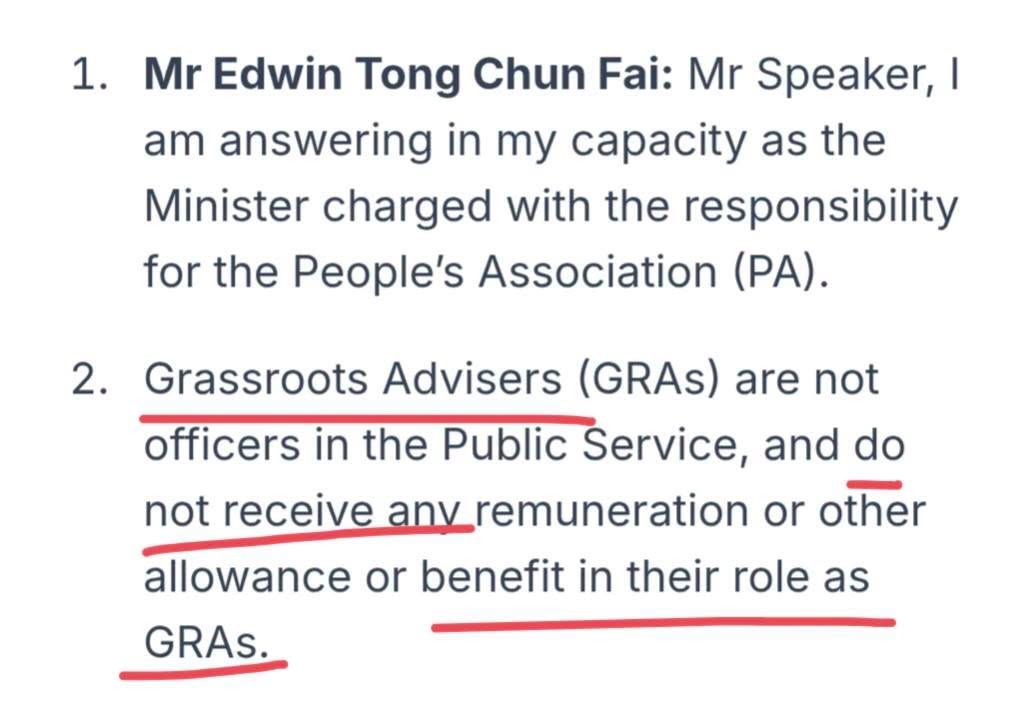
He took exception to Ms Lai benefiting from the posters, and cited Minister in charge of the PA Edwin Tong as having said in Parliament last month that Grassroots Advisers receive “no remuneration or other allowance or benefit.”
FB screengrab/ Andrew Loh
Pointing out that there are two such posters at SingPost lifts, a standee and a poster on the electronic notice board at the lift lobby, plus another poster at the Sengkang Community Club.
“Who pays for all this publicity for Ms Lai?” he asked, adding, “For a politician who contested and lost Sengkang GRC under the People’s Action Party (PAP) banner in the last election, face recognition is the ultimate currency. Having your name, title, and smiling portrait systematically displayed in high-traffic public spaces—like post offices and HDB lifts—is an invaluable political benefit that money simply cannot buy.”
Calling it a “Glaring Double Standard,” Mr Loh also noted that Sengkang’s MPs, who were elected by residents, have been excluded from “these taxpayer-funded platforms,” and non-elected grassroots advisers are given access to community networks and public facilities, as well as “prominent advertising space.”
“Residents deserve clear boundaries between state-funded community care and perpetual electioneering,” he added.
The relationship between the PA, grassroots advisers, and opposition-held constituencies has been debated for decades, but especially since the Workers’ Party has won two GRCs, Aljunied and Sengkang, as well as held Hougang SMC for decades.
He explained to them that opposition MPs are not given this responsibility, which falls to grassroots advisers instead. He offered to write letters of encouragement to the awardees and to give them out during mini-ceremonies at Meet-the-People sessions. /TISG
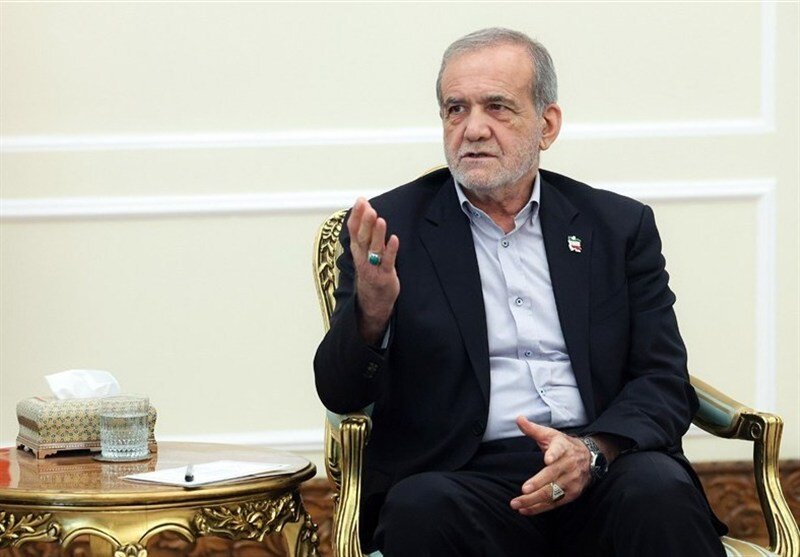
TEHRAN, May 19 (MNA) –Iranian President Masoud Pezeshkian has said that Tehran has entered talks with the United States with dignity to safeguard the rights of the noble nation of Islamic Iran.

 Login
Login