For some transgender men and women – and the campaigners who support them – the updated guidance confirms their worst fears
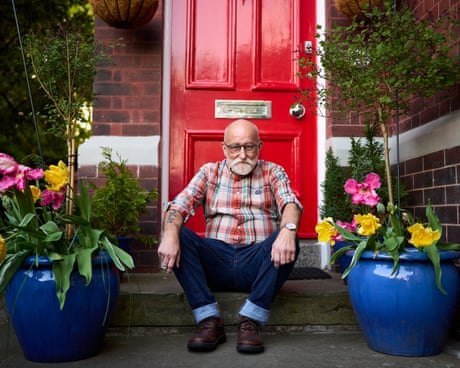
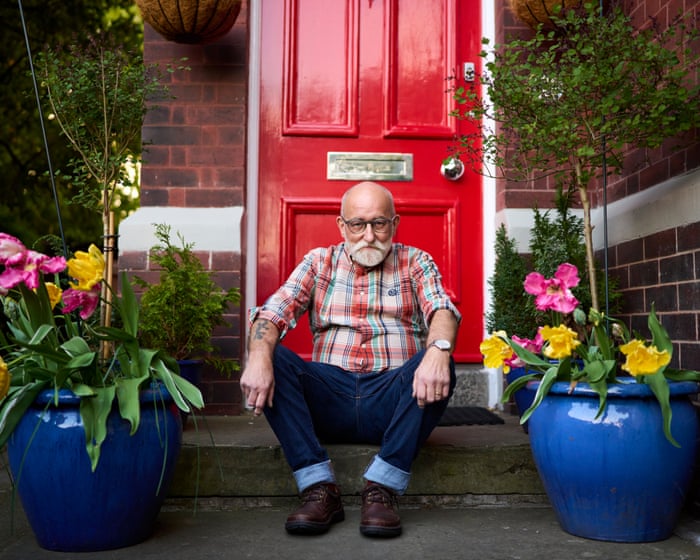
Stephen Whittle was visiting the Chelsea flower show as a birthday treat with his wife on Thursday afternoon. At around the same time, the updated code of practice from the Equality and Human Rights Commission was published. It confirmed, among myriad updates, that single-sex spaces such as toilets and changing rooms must be used on the basis of biological sex, and that transgender people may not access those that accord with their lived gender.
Among the floral displays, 70-year-old Whittle did not stray from habit. “Of course I used the male facilities, as I have done for the last 50 years. Can you imagine what the guy on security would have said if I’d gone to the ladies?”
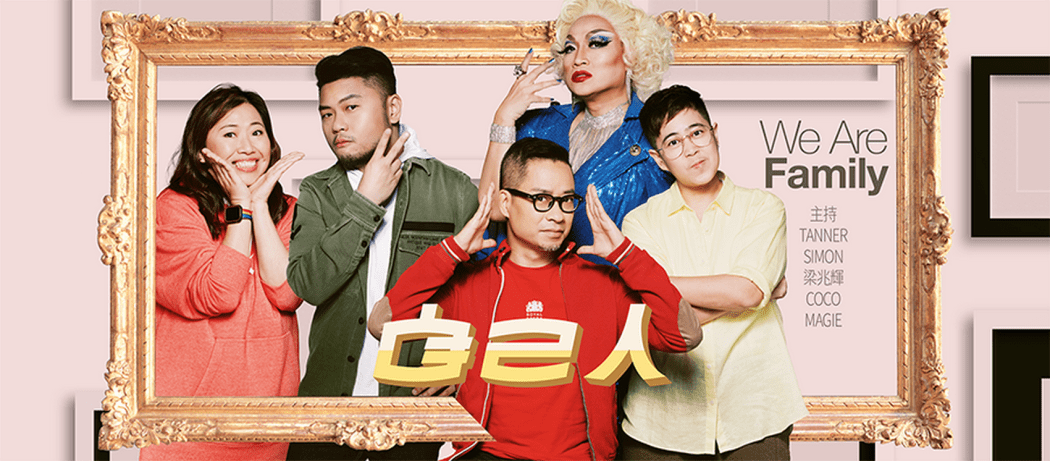
Hong Kong’s Metro Radio has abruptly halted plans to relaunch radio programme We Are Family, an LGBTQ show axed by government-funded broadcaster RTHK three years ago, its host has said.
The crew of the LGBT radio programme We Are Family. Photo: We Are Family, via Facebook.
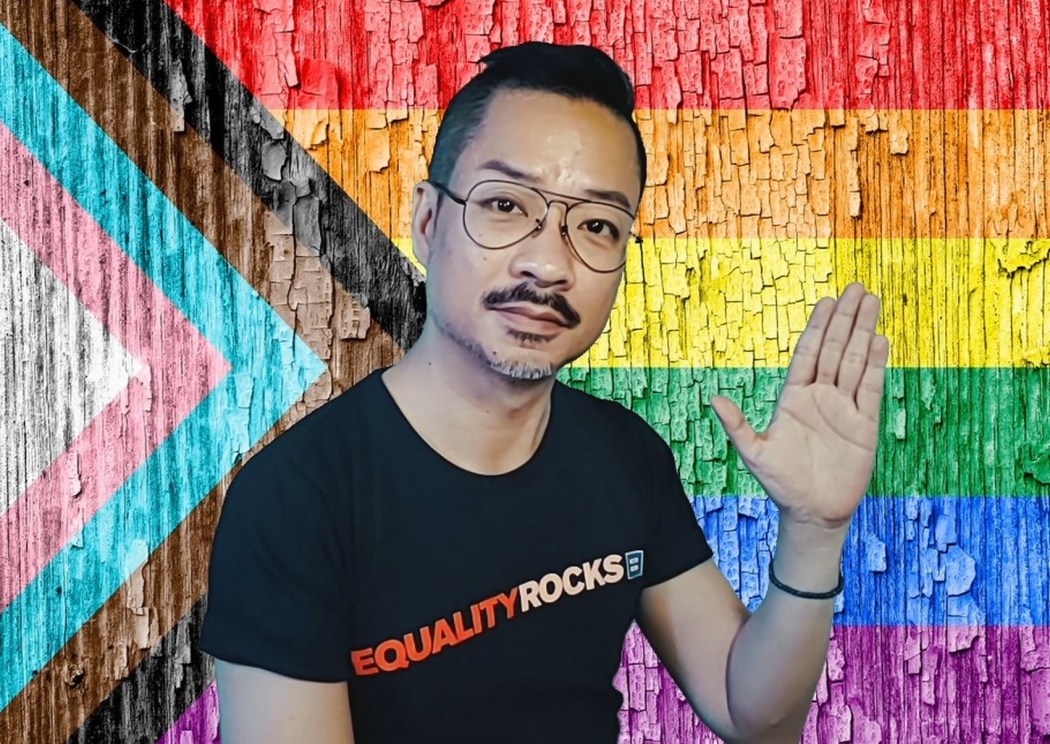
Brian Leung, the host of We Are Family, said on the show’s Facebook page on Wednesday that Metro Radio invited him in April to relaunch We Are Family on Metro Info Live, one of the radio’s channels.
The invitation was made by Steven Ma, who was the CEO of Metro Radio at the time. It was decided that the show would start on May 29, Leung said.
After Ma announced he was leaving Metro Radio in May, Leung said he sought clarification from the head of Metro Info Live about whether the show would go on. He was told it would launch as scheduled and that an advertisement for it had already aired on Monday.
However, Leung said he received a call from the head of Metro Info Live on Wednesday afternoon, saying Metro Radio’s new management had decided to halt the relaunch.
No reasons were provided for the change, Leung said.
HKFP has reached out to Metro Radio, which is owned by CK Hutchison Holdings, for comment.
Veteran broadcaster Brian Leung, who hosted the programme We Are Family for 17 years. Photo: We Are Family, via Facebook.
“It was sudden and unusual… [I] send my apologies to all of We Are Family‘s supporters for getting everyone’s hopes up,” Leung said in the Chinese-language post.
“The platform is run by others, and we can’t influence their back-and-forth decisions. What we could do is to safeguard the channels we have left and continue to speak up,” Leung has said.
We Are Family was launched in 2006 to promote diversity and discuss topics related to gay culture and diverse lifestyles, according to the broadcaster’s website.
It was the city’s first and only LGBTQ radio show. After the RTHK suspension, Leung continued to run the show on the YouTube channel.
Hong Kong has seen a shrinking space for LGBTQ events in recent years.
On Monday, LGBTQ carnival Pink Dot announced its cancellation for the second year after its venue pulled out. Leung is also a co-director of Pink Dot.
In November last year, the Hong Kong Pride Committee scrapped an outdoor festival at Kwun Tong Promenade after being told the venue was not available.
Single-sex toilets and changing rooms in England, Wales and Scotland must exclude transgender men and women, according to a new code of practice from the equalities watchdog.
But the long-awaited guidance also says that businesses and service providers have to offer practical alternatives such as gender-neutral toilets for people who do not wish to use services for their biological sex.
In an age where it feels like we should all know less about each other, there’s at least one place on the internet where you just want to know more: It’s called r/GirlDinnerDiaries.
As its name suggests, the subreddit consists of women posting a photo of their meal accompanied by a brief story about what’s happening in their lives.
The confessions are met with commiseration, helpful suggestions (turn that thieving raccoon into a friend by investing in a puzzle feeder!), supportive advice, or just compliments on the meal. The commentariat is generally as open as the OPs (original posters), speaking frankly about their own experiences. They chime in to offer perspective on the realities of long-term relationships, the very normal reaction of feeling insecure about someone’s extremely beautiful ex, the warning signs of abuse, how expensive it is to raise children, and the difference between setting a boundary and punishing a partner.
What makes GDD thrilling is that it is (or at least feels like) real secrets from real women.
The posts aren’t the kind of life updates you’d see on Instagram, nor are they long, multipart “storytime” videos that people post hoping to get hundreds of thousands of views on TikTok. And perhaps that partly explains why the forum now gets more than 2 million visitors per week, according to one of its moderators (who ultimately declined to participate in this story).
While our collective social media fatigue is high, people are still naturally curious about other people’s lives. And while GDD fulfills that desire, it’s also just a robust and thriving community in its own right — one that can teach us something about the power of a good story, our own curiosities, and the connections we allow ourselves to make.
What are Girl Dinner Diaries?
GDD was created in January 2026, a spinoff from the original Girl Dinner subreddit. The idea behind a girl dinner is that it’s not a “real,” composed meal, but something messier (e.g., a chaotic assortment of pretzel sticks, crackers, and pickles versus a filet mignon with a side of asparagus and potatoes).
r/GirlDinner is more food-focused, and centers the untamed spirit of women foraging in their fridges. r/GirlDinnerDiaries is about the girl who’s eating the dinner. (The sub’s description is, “For the feral plates and the feral thoughts. Post your unhinged meals, your relationship spirals, your late-night thoughts, your soft moments, your messy moments.”)
There are three crucial things needed for Girl Dinner Diaries: a girl, a diary entry, and a picture of food. (After publishing, a moderator for Girl Dinner Diaries reached out to Vox to emphasize that being AFAB is not a requirement to participate.) Separately, they can be interesting. But something magical happens when one girl tells one story with a picture of the supper she’s currently eating. It feels like bliss — a secret you’re not supposed to know, and an opportunity for a little moment of connection with a stranger that you didn’t know you needed.
Alexandra Solomon, a clinical psychologist who specializes in relationships and is an adjunct professor at Northwestern University, told Vox that an integral component of human relationships is having witnesses to our lives. Social media seems like an obvious extension of this urge. But with apps feeling increasingly transactional and focused on getting views and likes, these platforms may not be satisfying the emotional connections we’re seeking when we share stories on them.
We’ve all had the urge to text that friend about the annoying day we had at work, or to call someone to vent about the rude person we just encountered while running errands. The experience you’re discussing could be mundane, salacious, or anything in between, but the important thing is the connection.
Solomon said that, in general, women are more inclined to do this than men because society encourages women to talk about their feelings, verbally express themselves, tell stories, and have the kind of conversation that “meanders from the ordinary to the profound, back to the ordinary.”
And the anonymity of a subreddit allows for more candid storytelling. While the desire to have people bear witness to our experiences is very human, people aren’t always comfortable telling their loved ones everything. On GDD, those barriers are gone, which allows participants to share and respond more openly.
“I think about my own friends, dear friends that I love, but I wouldn’t tell them I fucked up the laundry,” Solomon said. “Another characteristic of this community, though, is that when you say you fucked up the laundry, you’re going to get affirmation.”
Girl Dinner Diaries is community gossip
GDD is also a look into how we can create online relationships and spaces that people actively participate in.
“They’ve done a really nice job of creating community,” Melanie Green, a social psychologist at the University at Buffalo, told me. “They’ve sort of set this social norm of people being kind to each other and supportive of each other.”
Green studies online friendships, as well as trust and identity on the internet. She explained how GDD’s rules — like “start with decency and restraint,” “engage in good faith,” and “tough love must be loving” — set a standard for how people behave on the site. (Also, if you were wondering, men are allowed to join but are encouraged to only react and comment with emoji and GIFs.) The moderators are also active in making sure the posts and replies follow the rules. Because these guidelines are implemented consistently, it creates a space where people are willing to share with more honesty.
“Having those norms of supportiveness and positivity and things like that, I think they’ve sort of created a bit of a baseline of trust. It seems like people feel comfortable disclosing,” Green said.
According to Green, people are naturally curious about other people’s lives, and storytelling creates trust and leads to bonding. “One of the things that stories can do is they help us feel a sense of belongingness. You feel that connection,” Green said. “It makes us feel like, oh, we’re all in here together, experiencing this thing, connecting with someone else who’s having this human experience, and maybe you’ve had a similar experience, and so you kind of resonate with that.” She also pointed to research that food, specifically comfort food — and one could argue these dinners, no matter what they are or what form they take, bring comfort — creates a sense of community.
The overall effect is something that feels, for those who remember, like the old internet, specifically the comment sections of mid-2000s women’s websites like The Hairpin and Jezebel. The humor and thoughtfulness in the replies are just as valuable and tantalizing as the original posts. Everyone seems to be on the same wavelength and understand the vibe. It also helps that while conversations on GDD can get into darker topics, it’s still relatively (compared to the seriousness of current events) light.
“Maybe in a world where things are polarized, intense, high-stakes, and urgent, we are craving spaces that are low-stakes, mundane, and ordinary,” Solomon, the psychologist, said. “You’re not going to feel activated or triggered or angry or scared. You’re going to just feel curious and supportive and supported, and you’re probably going to feel maybe a little more regulated when you leave.”
Update, May 19, 4:30 pm ET: This story has been updated with other information on requirements to participate in the subreddit Girl Dinner Diaries.
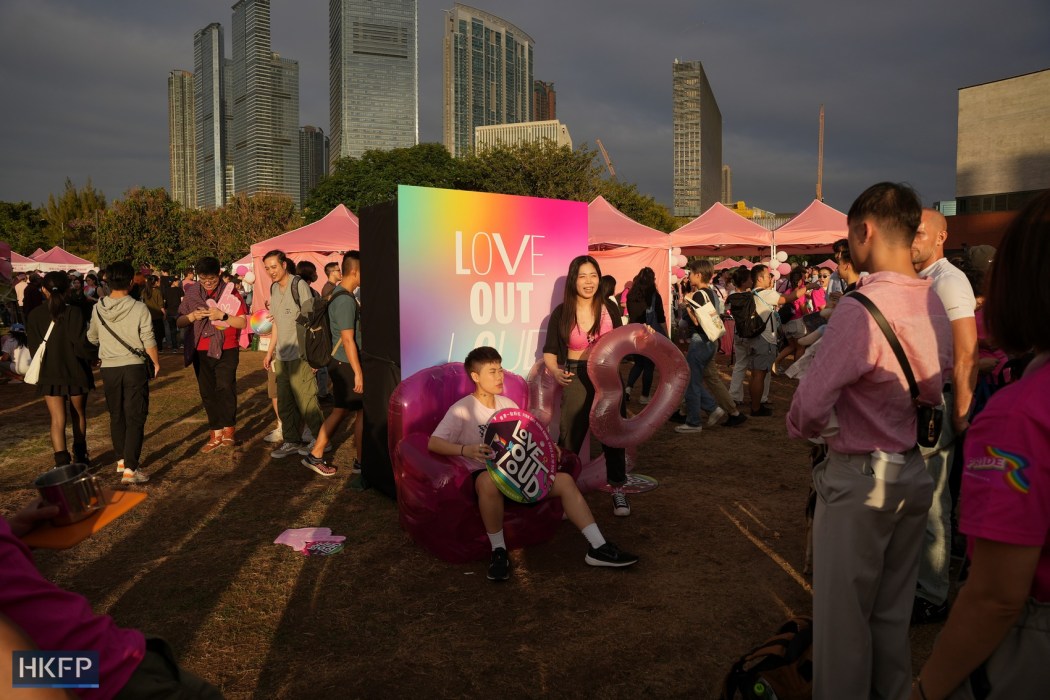
Hong Kong’s Pink Dot carnival has been cancelled for the second year in a row – again due to difficulties in finding a venue to host the event.
People at LGBTQ event Pink Dot HK at the West Kowloon Cultural District, on December 10, 2023. Photo: Kyle Lam/HKFP.
In a statement on Monday, the organiser said it had been applying for the necessary licences but had not received approval from the “relevant authorities.”
Link REIT – the company that operates the venue where the event was planned – then told Pink Dot it could not rent out the space due to “licensing issues.”
“Faced with this uncertainty, given the tight timeline and the involvement of numerous partner organizations, after thorough considerations, we have had to make the difficult decision to cancel this year’s Pink Dot HK outdoor carnival scheduled for 14 June 2026,” the statement read.
Pink Dot previously announced in mid-April that this year’s event would take place on June 14 at Stanley Plaza and Murray House.
The event was also axed last year after organisers failed to secure its usual venue at the West Kowloon Cultural District. The organiser announced the cancellation in July, three months before the scheduled date.
The Pink Dot carnival on September 22, 2024. Photo: Pink Dot HK, via Facebook.
The organiser said then that it had been in talks to rent Art Park, an outdoor space in the cultural district. But the West Kowloon Cultural District Authority later pulled out without giving any explanation.
In place of the carnival, Pink Dot held a livestreamed concert featuring performances and talks by activists, as well as a fashion show.
Last year’s statement on the cancellation, which had been posted on Pink Dot’s social media, has since been deleted.
Known as Hong Kong’s largest LGBTQ event, Pink Dot was first held in the city in 2014 at Tamar Park in Admiralty. The yearly carnival – which started in Singapore in 2009 – aims to promote diversity and raise awareness of the LGBTQ community.
Pink Dot is still held each year in Singapore, with the 18th edition scheduled for June 27.
Another event scrapped
Large-scale LGBTQ events have become a rarity in Hong Kong in recent years since Beijing imposed a national security law in 2020.
While LGBTQ groups have not been specifically targeted, activists say it has become harder to host big events.
The Rainbow Market, held by the Hong Kong Pride Committee, at The Wave in Kwun Tong on November 23, 2025. Photo: Kyle Lam/HKFP.
In November last year, the Hong Kong Pride Committee scrapped an outdoor festival at Kwun Tong Promenade after being told the venue was not available.
Aquabeat, which operates the promenade event space, said the venue was unavailable due to government construction work. However, the Buildings Department later clarified that no such work was scheduled for that day.
The Hong Kong Pride Committee used to organise the city’s annual Pride parades. The last one was in 2018, and since then, it has switched to holding indoor bazaars.
Last year, the only outdoor, large-scale LGBTQ event that took place was in celebration of the International Day Against Homophobia, Biphobia, and Transphobia (IDAHOBIT) in May. As part of the event, LGBTQ groups ran street booths in a busy part of Causeway Bay, organising activities and holding talks by activists.
The event was also held this past Saturday and Sunday in Causeway Bay.
A transgender alum has sued her former secondary school over “discriminatory” policies that barred her from having long hair.
Lung Kung World Federation School Limited (LKWFSL) Lau Wong Fat Secondary School in Tai Kok Tsui. Photo: LKWFSL Lau Wong Fat Secondary School.
Oscar Fung, who studied at Lung Kung World Federation School Limited (LKWFSL) Lau Wong Fat Secondary School in Tai Kok Tsui from 2019 to 2025, filed a writ in the District Court on Thursday, local media reported.
According to the writ, Fung experienced gender dysphoria at the age of 14 when her parents separated.
During the Lunar New Year holiday in 2024, Fung decided to grow out her hair. However, she was reprimanded at school after the break because her hair exceeded the length permitted for male students and was accused of violating school rules.
The writ stated that Fung was scolded by two teachers for almost 30 minutes one day, with the teacher threatening to withdraw her from science competitions she was representing the school in.
Equal Opportunities Commission. Photo: Kelly Ho/HKFP.
Fung felt embarrassed and angry as other students witnessed the scene. She was then sent to the disciplinary teacher, who accused her of “cosplaying as a girl” and told her to cut her hair.
The writ also mentioned that Fung had filed a complaint with the Equal Opportunities Commission, but it was dismissed.
‘Injury to feelings’
Fung alleged in the writ that the school had breached the Sex Discrimination Ordinance, as female students were allowed to grow long hair while male students were not.
She asked the court to declare the school’s rules discriminatory and to order it to pay damages for “injury to feelings,” a term under the ordinance.
District Court in Wan Chai. File photo: Hans Tse/HKFP.
The writ also stated that one of the school’s vice principals, Pang King-fai, had twice dismissed the Sex Discrimination Ordinance.
During a meeting with Fung before the 2023-24 school year ended, Pang said the school was not subject to the Sex Discrimination Ordinance.
The second instance was during a ceremony on the first day of school for the 2024-25 academic year in September 2024. Pang told pupils publicly that male students’ hairstyles did not fall under the ordinance, and any challenges would be handled through disciplinary measures.
According to the writ, another vice principal, Li Wing-yee, told Fung that if she did not abide by the school’s rules, she should change schools.
A hearing for the case has been scheduled for July 15, according to the Judiciary’s website.
“I started doing photography as a way to express things I don’t understand or to convey a message I’m having a hard time explaining,” Austn Fischer says. “I often work in quite a backwards way, knowing exactly what I want to arrange in front of the camera but struggling to understand the significance in my life until I am able to reflect on it after.”
The Wisconsin-born, London-based photographer taps into fashion as performance, considering how our garments, style, and gestures convey parts of our identities. Contrast is key in Fischer’s work, and it emerges through unusual pairings like lace ruffs atop athletic garb or an angular, black gown with a dainty, horse-shaped wire armature. Whether a portrait or a more conceptual composition, each work harnesses an exuberant sense of play and homes in on our ability to remake ourselves anew.
David Byrne
“Growing up, I had a lot of questions around my sexuality and my own experience as a man. I naturally gravitated towards fashion because of the story clothing can convey in an image,” he adds. “The colours, shape, fabric, and the way clothing wraps around a model create a unique conversation around identity and the body.”
Fischer has collaborated with a range of editorial and commercial clients, shooting Ai Weiwei with a milkshake for The New Statesman, for example, and David Byrne seemingly under oath for Crack Magazine. Whether working on a personal project or a commissioned series, the photographer transforms a largely black-and-white palette that could appear harsh into scenes exuding warmth and softness.
Better understanding his own emotions is Fischer’s priority at the moment, following a series of painful experiences, both personal and professional, that have influenced what and how he’s creating. “Recently, I spent two weeks from 8 a.m. to 5 p.m. painting a wall in a church white over and over to understand patience and reflect on myself. I’m working a lot on understanding emotion and myself through putting my body through different tasks or challenges,” he tells Colossal.

 Login
Login