
Reading view

‘I feel afraid to go to work’: Employee says after being constantly singled out by manager

SINGAPORE: An employee shared on Reddit that she feels she has been unfairly singled out by her manager, who appears to treat her much more harshly than the rest of her colleagues.

In her post on the r/singaporejobs forum, the employee wrote that her manager “often calls out her mistakes in front of the whole office” and “puts a lot of pressure” on her to complete everything by the end of the day, even when some tasks are not urgent.

She also said she noticed a clear difference in how her manager speaks to her compared to others.

“Her tone towards me is very different compared to how she speaks to my colleagues—she’s much nicer to them.”

Unsurprisingly, being constantly put on the spot has started to wear her down. She shared that her anxiety at work has been “getting worse,” to the point where the thought of going into the office fills her with dread.

It has even started to affect her physically. She said that whenever she receives a Teams message from her manager, her heart “starts racing” and she feels “physically shaky.” Even when she is at home, simply thinking about work leaves her feeling uneasy, which is hardly ideal for anyone trying to switch off after hours.

“I’ve never felt like this in my previous job. I used to be able to handle stress, but this feels different, and it’s starting to affect me quite a bit.”

Unsure of what to do next, she turned to others for advice, asking if this is something she should try to push through or if it is a sign she should leave. 

“Has anyone experienced something similar? How did you decide whether to stay or go?” 

“If you do not see yourself continuing under her, then yes, time to move on.”

In the comments, one user asked the post author, “Are the mistakes real? Does she call out others’ mistakes in public too? Did you try to tell her it’s not urgent and can be done 3 days later so you can double-check? Does she do this to you or others as well?”

In response, the employee admitted that the mistakes were real, but said they were only “minor” errors or small details she had missed. She also shared that she had not told her manager that certain tasks were not urgent, as she already had a sense that her manager would not take that well, so she chose to keep quiet and just comply instead.

She also clarified that she was the only one being treated this way.

Another user weighed in with a different perspective, suggesting that there could be a reason the manager was being particularly strict with her.

“If she is only micromanaging you, that means she noticed a pattern in you. Perhaps you always miss deadlines or you make repeated mistakes,” they said.

“Many people think, ‘Aiya, small minor mistakes only.’ Why kick up a fuss? It depends on what and where the mistakes are. If you are, e.g., a lawyer, you cannot get an NRIC wrong. If you are an accountant, an extra zero makes a world of difference. You get the gist.”

A third added, “When was the last time you had 1:1 with her? Have you voiced out about improving processes and deliverables? If that hasn’t, give it a try to work it out. Let her know how you will deliver the deliverables. If you do not see yourself continuing under her, then yes, time to move on.”

Steps to take if your manager is targeting you

Career experts say there are usually two reasons a manager might act this way: either they are bullying the employee, or they are trying to push them out of the company. Either way, it’s important not to ignore the behaviour and to take steps to protect yourself.

If you find yourself in this situation, one of the first things you should do is keep a clear record of what’s happening. Write down what was said or done, the dates and times it occurred, how it made you feel, any proof or messages you have, and the names of any witnesses who saw what happened.

You can also try addressing the issue directly with your manager. If speaking face to face feels uncomfortable, raising it through email is another option.

If that doesn’t help, bring the matter to HR or another neutral party in your organisation so they can intervene, or reach out to the Tripartite Alliance for Fair and Progressive Employment Practices (TAFEP) for support.

Read also: ‘Is burnout a badge of honour in Singapore work places?’ Local worker calls out long-hours culture

This article (‘I feel afraid to go to work’: Employee says after being constantly singled out by manager) first appeared on The Independent Singapore News.

  •  

‘Am I wrong for saying no?’ — Employee tired of being asked to cover ‘grey areas’ at work

SINGAPORE: One employee’s patience finally ran out after years of being asked to handle “grey areas” or tasks that had absolutely nothing to do with their actual job scope.

Sharing their frustrations on the local forum called singaporejobs on Monday (May 27), the employee said their boss had constantly expected staff to “cover the grey areas, do more work outside their job scope, and think like a business owner.”

The employee admitted that they initially followed instructions without questioning them and carried out the extra responsibilities “fairly well.” However, they eventually became burnt out as their boss continued to criticise their performance despite their efforts.

According to the employee, their boss ranks staff on a scale of one to five.

“It’s like 1 for ‘cannot make it.’ 2 for ‘barely making it.’ 3 for ‘average.’ 4 for ‘better than average.’ 5 for ‘industry best.’”

During their first year, the boss allegedly told them they “were not good enough” and “dismissed their effort.”

In their second year, the boss reportedly said they “were still a 3.”

By the third year, the employee said they had finally reached their limit. “He told me I was still a 3 and asked me to do more work.”

“I just told him politely no. Since you already said there’s no promotion, then I am happy to do my work, and that’s good enough. Please don’t ask me to do more and cover grey areas and frame it as career development.”

“I think once bitten, twice shy. Unless the remuneration or incentive is made clear upfront, I am not going to do anything that is not within my field of work.”

Wondering if they did the right thing, they asked Singaporean users: “Am I the a***ole for telling my boss no?”

“Good job for standing up for yourself.”

Many commenters quickly sided with the employee, saying there was nothing wrong with setting boundaries at work. 

One user pointed out how absurd the demands were, writing, “Do outside job scope, think like a business owner, but you don’t pay me like a business owner; it’s like asking a horse to think and work like a cow.”

Another said, “You’re not the a***ole. Bosses and owners want to get two workers for the price of one.”

A third simply said, “Good job for standing up for yourself.”

Still, some warned the employee that refusing extra work could come with consequences during future performance reviews. 

One told them, “Just be prepared that your next performance grade might be a 2, or even 1 + a PIP. From what you have shared, it seems like your boss considers covering extra work a basic expectation. Hence, the average grade. That makes not covering that extra stuff a below-average grading.”

In other news, a Singaporean Threads user who tried to call out two national servicemen on the MRT has instead found himself at the centre of online criticism, after his post struck a nerve with many who felt the men were unfairly singled out.

In a post published on Tuesday (March 28), the user, who goes by the handle “chefphotodan,” shared a photo taken inside a crowded train carriage.

Read more: Man criticised online after calling out NSFs for using phones on MRT: ‘Cut our boys some slack, please’

This article (‘Am I wrong for saying no?’ — Employee tired of being asked to cover ‘grey areas’ at work) first appeared on The Independent Singapore News.
  •  

When comments on Malaysia’s public holidays cross the line into disrespect

MALAYSIA: A foreign boss has come under fire after allegedly name-calling Malaysian staff in a group chat and complaining about the number of public holidays they enjoy in the country. The comments are largely seen as being disrespectful to the host country.

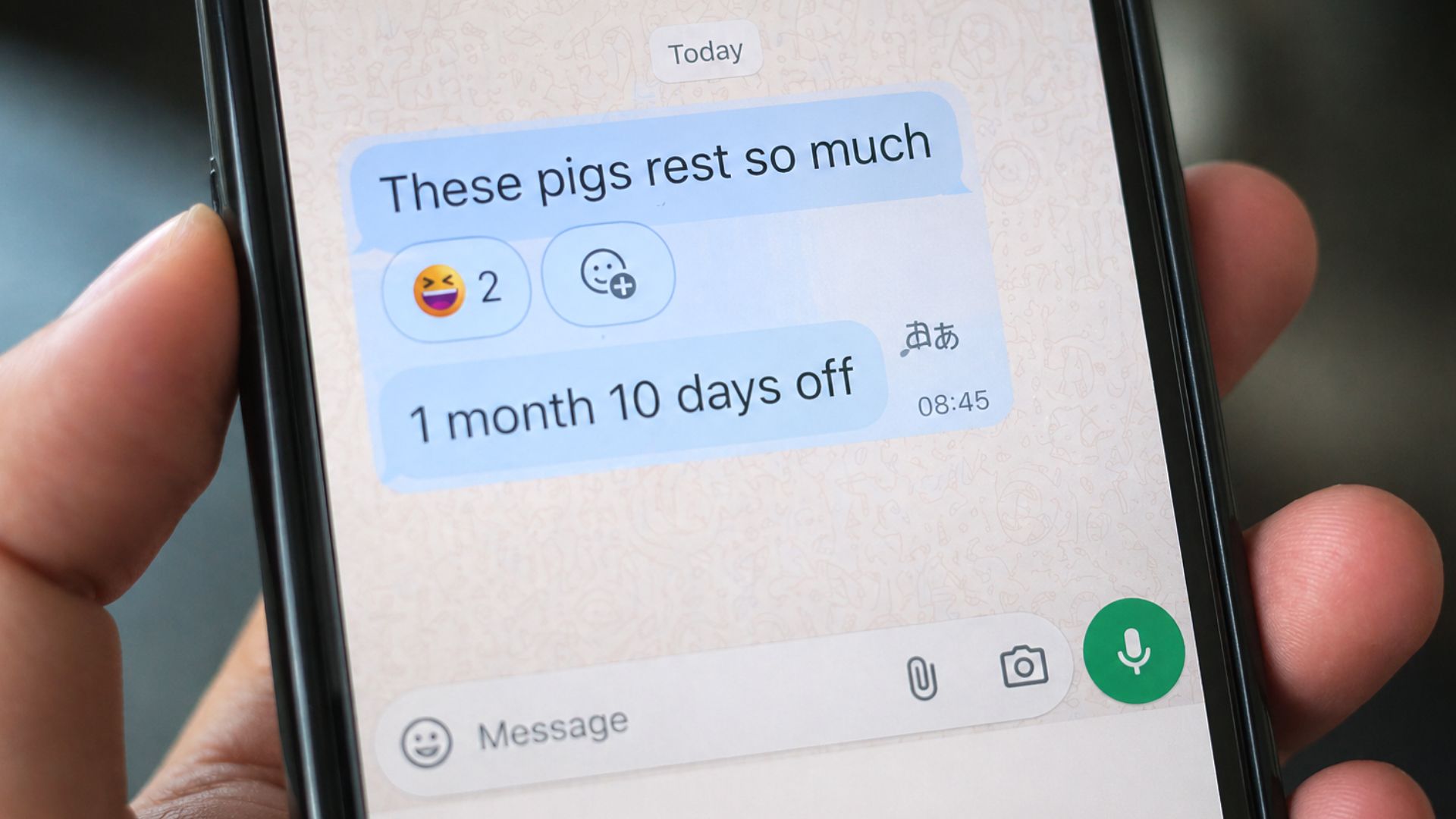
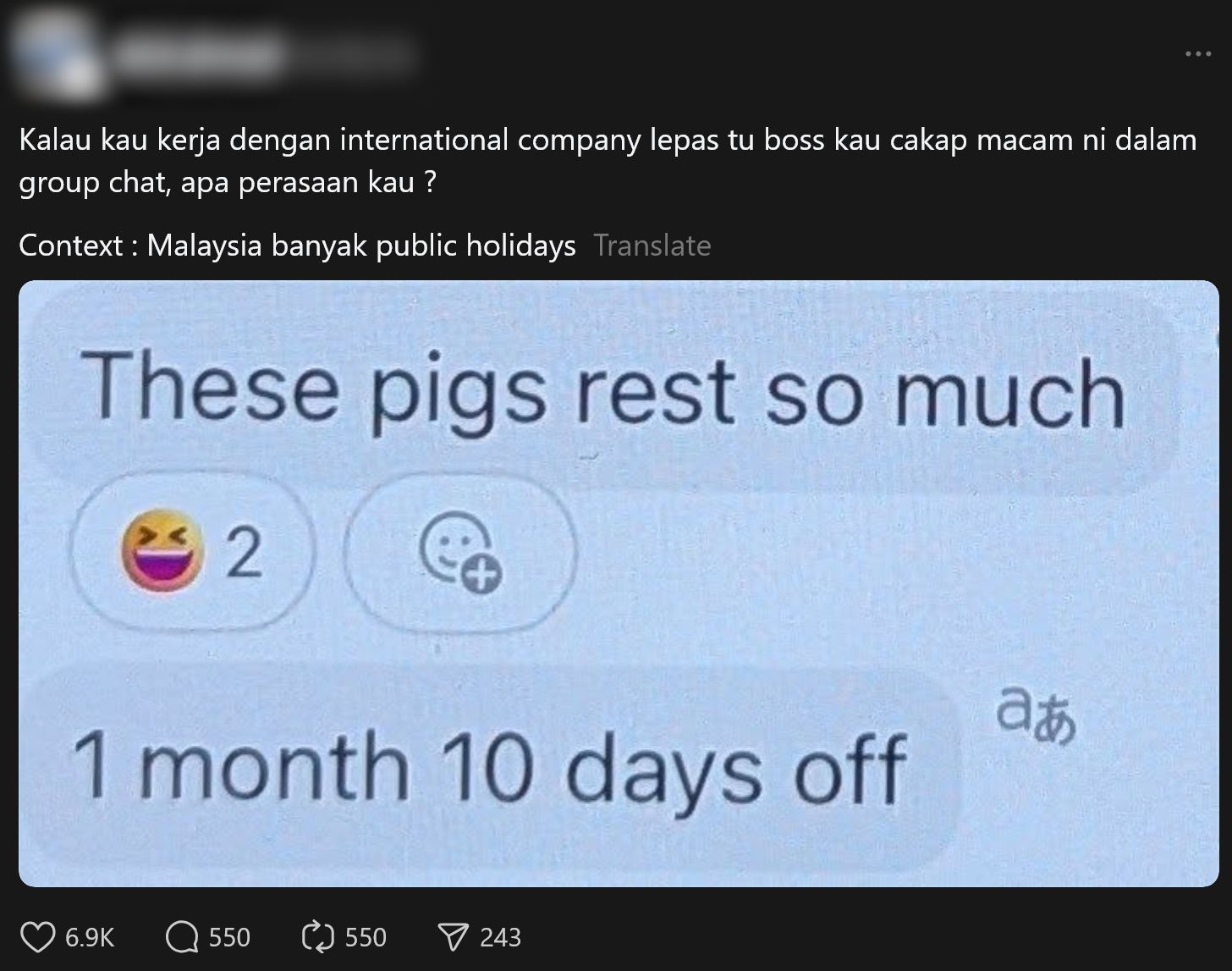
The comment, which has since gone viral on Threads and was reposted by Singapore’s No.1 personal finance podcast, The Financial Coconut, on TikTok and Instagram, shows the boss writing: “These pigs rest so much” and “1 month 10 days off.”

The boss’s comment in the post drew strong reactions online as many saw it as disrespectful. Others said it revealed deeper attitudes about work culture in the region.

“If your boss says this in a group chat, how would you feel?”

The original Threads post was shared in Malay with a question: “If you work for an international company and then your boss says this in a group chat, how would you feel? Context: Malaysia has many public holidays.”

‘These pigs rest so much’ - Foreign boss says about Malaysian staff and public holidays: ‘1 month 10 days off’
@akid.ahmad/Threads

That question resonated with many, and according to The Financial Coconut, the negative comment cut deeper beyond workplace rudeness. It pointed to a long-standing stereotype about Southeast Asians being “lazy” or lacking drive.

The podcast explained that such views date back to colonial times, when workers in the region were often labelled “indolent” to justify low wages and harsh labour systems. It added that these ideas didn’t disappear as they continue to show up today in modern language, such as complaints about “too many holidays” or assumptions about productivity.

“When someone says that, they’re echoing a colonial script,” the commentary noted, pointing to issues like salary, power, control and working conditions.

“So when a foreign boss in Malaysia calls his team ‘pigs’ for using public holidays, it’s not just unprofessional, it drags in a whole history where Southeast Asians are only seen as ‘good workers’ if they sacrifice rest… and family time to fit someone else’s business model.”

Online reactions: “Yes, well-rested pigs perform better!”

Reactions online ranged from anger to sarcasm and humour. One witty commenter even responded with: “Yes, well-rested pigs perform better! 🐷

Others took a more serious tone and said rest days and public holidays are part of labour rights, not signs of laziness.

Some also pointed out that Malaysia’s public holidays reflect its multicultural society, with different religious and cultural observances across the year.

When productivity is judged by hours worked, instead of outcomes delivered

The incident has reopened the usual debate in Southeast Asia: how work is measured, and who defines “hard work.”

For many, the issue is not about the number of holidays, but respect. Calling staff “pigs” crosses that line. It undermines morale and signals a lack of cultural awareness, especially in international teams. It also raises an important question: should productivity be judged by hours worked, or by outcomes delivered?

In Singapore and across the region, this conversation is becoming more relevant as companies push for better work-life balance while staying competitive.

Public holidays are how societies choose to live, work and rest

Good management always starts with respect for their staff, and cultural context matters—so does how leaders speak to their teams.

Public holidays are not a flaw in the system. They reflect how societies choose to live, work and rest. If anything, a well-rested workforce is more often effective. And a boss who understands that will get more out of people than one who reduces them to insults.

This article (When comments on Malaysia’s public holidays cross the line into disrespect) first appeared on The Independent Singapore News.

  •  
❌