Reading view

The prime minister of records

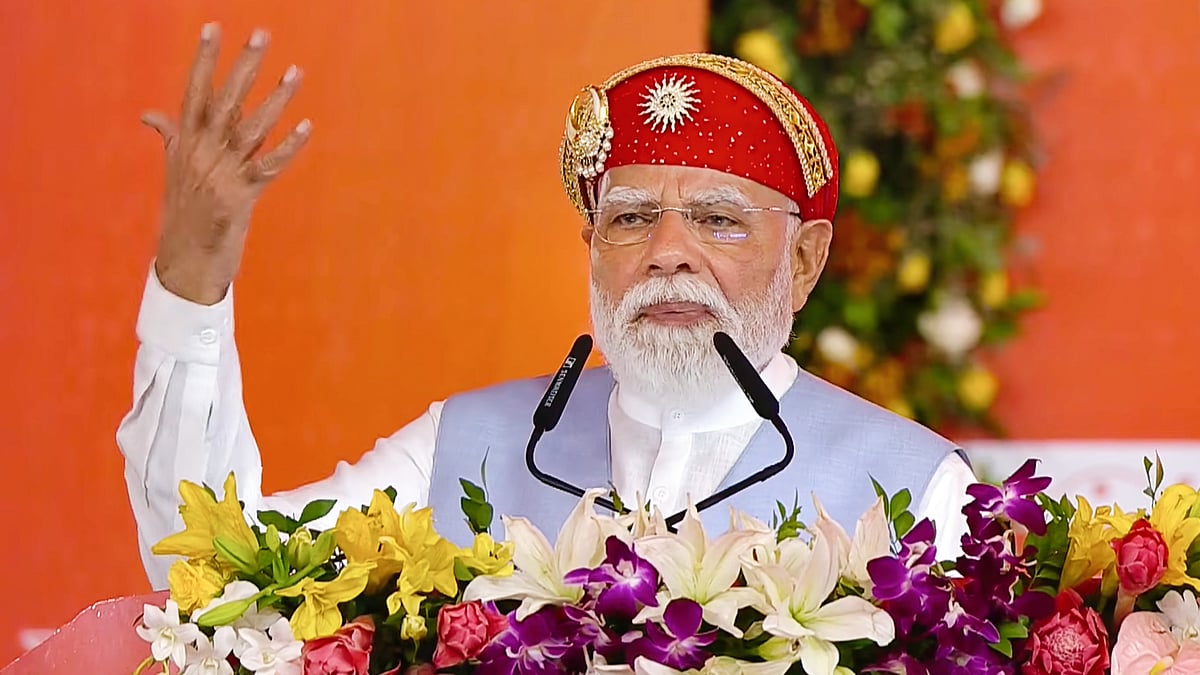
Friend Ram Madhav has written a fine piece on Prime Minister Narendra Modi reaching an important milestone. On 10 June, he writes, Modi completes 4,399 days in office uninterruptedly as prime minister, overtaking Jawaharlal Nehru’s record of 4,398 days.

The awkward word 'uninterruptedly' is used because Indira Gandhi was in office for almost 6,000 days. No doubt our leader will cross that number in time as well.

What is more interesting here is Madhav’s assertion that 'Modi, undoubtedly, will be remembered as the most effective and successful prime minister of India'. His reason for this is that Modi 'is midway through his third term as the prime minister. Yet, his dominance over Indian political landscape remains towering and unchallenged. He is certain to break more records as he continues to lead the country for many more years to come'.

Yes, longevity is important and staying at the crease for an extended period is also important to some people. But from the audience’s perspective, what is relevant is what is on the scoreboard.

Here, the problem is that, unlike longevity, the data is unclear. Madhav says among Modi’s achievements is that India’s GDP doubled in the last one decade. But it has doubled in each decade since independence; certainly it has since 1960, which is the period from which we have World Bank data.

What else? Madhav says 'in foreign policy, Modi scripted a glorious history'. How? That we do not know. Looking around at what is happening in the world today, it would be difficult not to conclude that India is irrelevant, and the accusation can be accurately made that it is often servile, especially to US President Donald Trump. However, we need not go there today.

The question to ask is this: How will Modi be remembered six decades after he is gone? In the India of 2086, what will people be writing and speaking of Modi as the way we speak and write of Nehru today, 62 years after his passing?

My concern is that we — those of us who are still around then and those who are born hereon — may not be referring to Modi at all.

One reason for this is that things and people and events that are current fade very quickly with time. Sunil Gavaskar gives way to Sachin Tendulkar, who gives way to Virat Kohli, who gives way to Vaibhav Sooryavanshi. There is always a shiny new thing on offer, and the relationship that the present generation has with the current stars is always fresher and more intense than it is with the things of the past.

But if this is true, then why has Nehru not faded? And why are Madhav and those of us who are fans of this prime minister still exhuming the old Jawaharlal so long after he has gone into the ether?

That brings us to the second reason why Nehru is still with us in spirit. It is because of what he left behind.

The first is institutions of every sort — educational, scientific, cultural and medical — that he conceived and built. It is a rare achievement anywhere in the world, and especially rare in our part of it.

Compare the legion of things Nehru built with what Modi has conceived and executed. One is hard-pressed to come up with any. Perhaps the hapless NITI Aayog (is it still around?) might be one thing Modi gifts to the India of the future. But what else? Hard to say.

The second thing Nehru left behind is, like his institutions, still around us and associated with him: what is called the idea of India. Meaning a pluralist society that has a pathway to modernity. Here, we can concede that Modi has made a difference and parted ways with the past in a manner that may prove longer-lasting than his non-existent institutions.

Madhav concludes by writing that 'it is not just the numbers that distinguish Modi from others. It is the quality of governance, ideological vision and effective development agenda that he brought to the table as the leader of the world’s largest democracy that makes him the shining star of Indian politics'.

This India around us that has made him the shining star is one dominated by laws and policies of exclusion and persecution. Bulldozers, lynchings, special intensive revisions and so on. And on. Much of it is not new, of course, but the intensity is new, and it is Modi’s gift to India.

One is not sure whether what we have experienced will last until 2086. One hopes it does not, but then it is irrelevant for me because I will not be around to see it.

My guess, based on the evidence of what Modi has left behind in the last dozen years, is that if this continues for another decade or so — let alone another six decades — Modi will indeed be remembered, but not for the reasons Madhav would like him to be.

Views are personal. More of Aakar Patel’s writing here
  •  

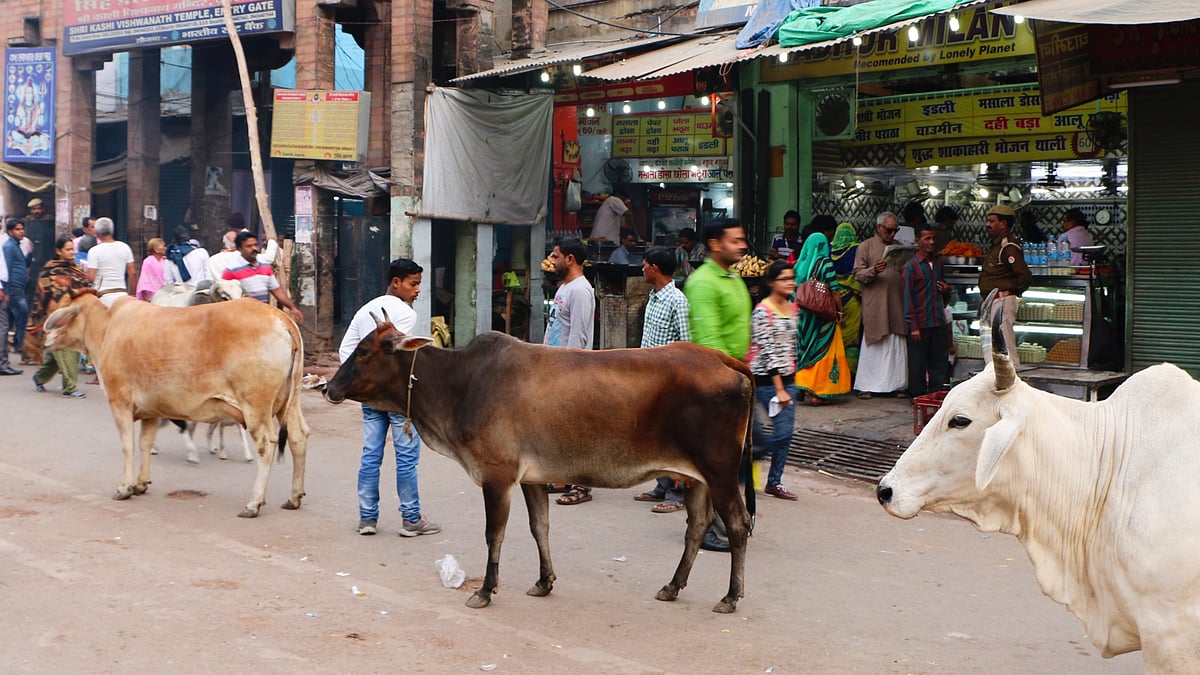
If the cow is sacred, should the law say so?

Prominent Muslim voices have asked the prime minister to declare the cow a national animal and therefore ban its slaughter across India. The head of the largest body of clerics, Jamiat Ulma-e-Hind president Maulana Arshad Madani, said Muslims would have no objection to this, since it would stop mob lynchings.

Madani said when the majority of the country's population considers the cow sacred and gives it the status of 'mother', there should be no political compulsion for the government to avoid declaring the cow as the national animal. Former vice-president Hamid Ansari also weighed in on this and repeated what Madani was asking for.

Laws criminalising the possession of beef were first legislated in 2015, in Maharashtra, then Haryana, which began a spate of violence we call ‘beef lynchings’. Other BJP states followed and the lynchings continue.

Those who support a nationwide ban on cow slaughter say it is a constitutional requirement. So why has it not been implemented? Let us examine the matter.

Article 48 of India’s Constitution is a directive principle, meaning that it is guidance and not law. It reads: ‘The State shall endeavour to organise agriculture and animal husbandry on modern and scientific lines and shall, in particular, take steps for preserving and improving the breeds, and prohibiting the slaughter, of cows and calves and other milch and draught cattle.’

There is something unusual here. The reasoning is not religious but framed as an economic and scientific argument. Those pressing for a ban kept bringing up religious sentiment but also said they did not want to impose a cow slaughter ban on unwilling minorities.

Two members, Seth Govind Das and Pandit Thakur Das Bhargava, both of the Congress, even wanted to introduce a ban on cow slaughter as a fundamental right of the cow. Others wanted buffaloes, bulls and other cattle of all ages to be included in the ban.

However, to retain the appearance that India’s Constitution was secular, the legislators wanted a non-religious reason for the ban. Cows were needed to nourish children with milk and slaughter was wrong since there was no such thing as unproductive cattle (because a cow and a bullock were a ‘moving manure factory’).

In a letter written on 7 August 1947, just a week before Independence, the soon-to-be president Rajendra Prasad wrote to Jawaharlal Nehru. It read: ‘There are two points which I had for consideration at our meeting yesterday. I mentioned the agitation which is spreading with tremendous speed about the stopping of cow slaughter, but as everybody was in a hurry to go, the matter was not considered. I have been flooded with postcards, letters, packets and telegrams making a demand that cow slaughter should be stopped by legislation … The Hindu sentiment in favour of cow protection is old, widespread and deep-seated and it has taken no time to rouse at this moment to a pitch when it is difficult, if not impossible, to ignore it. I think that the matter does require consideration and we must take a decision, whatever it is, after due consideration.'

In the Constituent Assembly, the Muslims requested the Hindus to proceed with the ban but to lay out their religious reasons unequivocally. Zahir-ul-Hasan Lari from UP said, 'if the House is of the opinion that slaughter of cows should be prohibited, let it be prohibited in clear, definite and unambiguous words.’

It was in the interest of goodwill and cordial relations between Hindus and Muslims that, if Hindus wanted a ban on cow slaughter for religious reasons, ‘this is the proper occasion when the majority should express itself clearly and definitely’. He said Muslims were aware that their faith did not necessarily require them to sacrifice the cow; it permitted it.

The question was whether, given the strong religious sentiments expressed by members of the Assembly, they would continue to extend to the Muslims the permission and privilege they had at present. It was not so much interference with religion, Lari said, as with liberty.

He said he did not want to get in the way of the Hindus protecting the cow but the economic argument was weak. Modern and scientific development of agriculture necessarily meant mechanisation and not the continued use of draught animals. His plea was not heard and the amendment was adopted.

This state of affairs has continued. Maulana Madani has pointed out another problem: 'In favour of the Uniform Civil Code, it is argued that when the country is one, the law should also be one, but the laws related to animal slaughter in the country are not equally applicable in all states.'

Author Rasheed Kidwai wrote on the issue that the 'Muslim clergy’s demand for a nationwide position should therefore be read not as submission, but as a challenge. It asks the state to stop dithering. It asks the political class to stop profiting from confusion. It asks the country to decide whether the cow is a matter of governance or merely an unfair instrument of polarisation.’

We must also ask the government to tell us whether the Indian state is founded on secularism or religion. The prime minister, who has been vocal on the matter with his harangue against the ‘pink revolution’, can address the issue and resolve it by passing an honest law. It may or may not bring an end to the beef lynchings but it will certainly end the hypocrisy.

Views are personal. More of Aakar Patel’s writing here
  •  

If India is secure in its democracy, why fear scrutiny?

Assume for a moment that I am a big and strong fellow who lifts heavy weights easily and is flexible and fit. If someone approached me to comment on what they saw as my unhealthiness and absence of strength would it affect me?

If the first assumption is true, that I am in fact big and strong, then it should not make a difference. In all likelihood, I will ignore the comments and move on. Assume that I am wealthy and have been for generations. Why would the remark from a stranger pitying the fact that I was poor or that I looked destitute upset me or anger me?

It was not a reflection of the truth, which was that I was in fact not only rich but had been so forever. The view that someone else holds of me will not affect me negatively if that view is not only wrong but the opposite of what I know to be reality. The remarks from others about me only bite when they are close to the truth and when I am insecure about the very things that their words carry.

The words of a young woman, a foreign reporter, have caused the mighty ministry of external affairs to lecture her, and the world at large, about the greatness of this nation. Lessons were given about our heritage and our culture and ancient traditions in response to an anodyne question about freedom.

Something about constitutional values and fundamental rights including the right to approach the supreme court was also said. The young woman followed up with a question which will not occur to most Indians. Why, she asked, did Indians have to approach the supreme court to claim fundamental rights?

The answer from our foreign office grandee was that it was his press conference and therefore presumably she should shut up.The media here then jumped in. Not on the side of its fraternity mind you, but to close ranks with the government and scream at the reporter for daring to ask things that were so obviously false.

What the point of any of it was lost to the dispassionate observer, but it is interesting to examine the pathology here.Why do we get angry and upset when questioned about our behaviour and values if we are secure in the truth? The answer to that can only be that we are not in fact secure. And then the next questions must arise: is that because we are insecure despite the truth? Or insecure because what we are claiming is not true?

Let us assume that the first is the case. That India and its government are insecure despite the truth, and the facts, which are that we are a democratic nation, where individuals have liberty and that the state is not malign.

We are merely touchy when we are asked about the subject. If that is so, then the advice to foreign reporters and observers is to engage us as if we were children.

We should be patted on the head, told we are good boys and girls, and given some sort of lollipop. Being asked hard questions will provoke a tantrum from us and this should be avoided. It should be mentioned here that this is how other nations deal with our government.

If they want something from us, they will offer us a lollipop (or a medal) and a place to recite our little speech and then extract from us what they need. When Israel is told it is misbehaving in the region and that its idiotic war has damaged the world, Benjamin Netanyahu has been pointing to the validation of Israel offered by the mother of democracy as his defence.

That medal was extremely good value for money. Let us now turn to the other possibility, that we are insecure because we know that what we are claiming is false. That we are not in fact as democratic or liberty-loving as we claim to be and to be reminded of those upsets and angers us. If this is the case, there is an easier solution for it. It does not concern the external world, and they do not need to calibrate their behaviour towards us or treat us as children.

This solution is to simply speak the truth. For the past 12 years, India’s diplomats have been operating under a Nehruvian carapace. We have been telling the world, particularly the democratic and developed nations, that we are secular, pluralist and liberal. That we respect human rights and individual liberties. This is of course false. And when the foreign media examines the facts they know it to be false. It is just that India’s government now speaks with a forked tongue. It says things and behaves locally in a different way than it speaks abroad.

It does not brag to the world and their reporters about bulldozers and lynchings and bail-denials and voter-deletions and community-exclusions that are the basis of new India. It talks the language of Nehru and inclusion. It would be easier for all of us and for the world and its reporters, if we stopped lying about what we are actually all about.

Someone making a clever pun said that diplomats are individuals sent to lie abroad for their country. But given the anxiety and anger that lying is producing we should consider the option that honesty might be the best diplomatic policy.

Views are personal. More of Aakar Patel’s writing here
  •  

From universal franchise to voter selection

"Nowadays for a homeless person to fulfil the requirement of a place of residence, ‘The BLO [Booth Level Officer] will visit the address given… at night to ascertain that the homeless person actually sleeps at the place which is given as his address… If the BLO is able to verify that the homeless person actually sleeps at that place, no documentary proof of place of residence shall be necessary.’ (Hand Book for Booth Level Officers, Election Commission of India 2011)”.

"The 25 September 1948 press note covered in detail ‘Refugees Rights as Electors’, and the instructions for their inclusion on the electoral rolls. The press continued to bring stories from across the country under the occasional title: ‘Progress In Preparation of Electoral Rolls’. It reported that the East Punjab Government extended the final date for the completion of electoral rolls to 31 October 1948 ‘since a large number had not got themselves registered'.

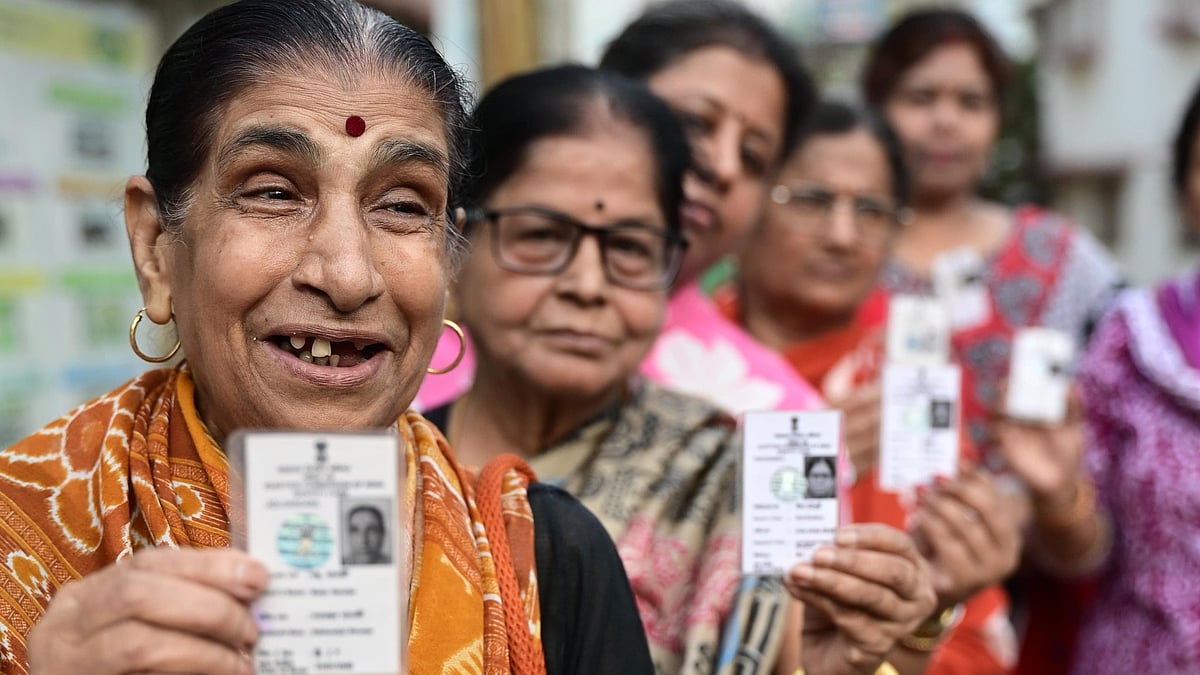
These passages are taken from the book How India Became Democratic: Citizenship and the Making of the Universal Franchise by Ornit Shani. The point is to show how, for decades, the focus of the Indian state has been on inclusion when it has come to voters and their rights.

Here is another instruction from the government: 'Persons sleeping in a pedhi or shop or servants sleeping in the loft of a hotel will be entitled to be included in the electoral roll for the areas in which the pedhi or the shop or the hotel as the case may be is situated. Similarly, vagrants living in huts erected on municipal land will also be entitled to be registered as voters. Domestic servants who sleep in general or rear passages, balconies or staircases are also eligible for inclusion'

Some 25 years ago, there was an interview on a Pakistani channel by their famous journalist Najam Sethi of Manohar Singh Gill. Gill had just retired as India's chief election commissioner and the discussion was about the introduction of the electronic voting machine. The device was thought to be overly complex and intimidating to use. To test this, Gill and his team took it to a vegetable market. They observed how those in the market used it in their experiment and discovered what all of us know now: that it is easy to use.

This ended a period in India’s electoral history where elections were often disputed, with accusations of wrongdoing (what was called in those days booth-capturing). We do not hear that any longer because, like in the matter of inclusion of electors, the state and the election commission were focused on the rights of voters and how to make their voting easier.

That period has ended now. That focus has also ended.

The government and the Election Commission are now intent on exclusion, and they have been successful at doing this. The recent removal of millions of Bengalis from the voting list has received the sanction of the Supreme Court and will be repeated in other states.

Eligible voters wrongly removed can appeal and may be able to get themselves reinstated later but their vote this time is denied. To many this seems like an illegitimate election, and this is why we have ended the Indian era where political parties and particularly the parties that lost elections, accepted the results and the election as being fair and free.

There will be other issues associated with this for millions of individuals. One headline from 13 May reads: 'SIR-deleted can’t avail govt schemes, says Bengal govt; Bihar CM talks of cancelling bank passbooks'. But we need not go there today.

Why are we deliberately taking apart an electoral system that has worked? There is no answer to that, and there is no data and has never been any on the absurd slander that foreigners are voting here. Like the monstrous NRC process in Assam, which began with a hysterical note from its then government with no supporting data, we have assumed there is a condition and are intent on addressing it through the most extreme method.

This will have consequences for the nation whose government calls it the mother of democracy. There is no question that India has now eroded the meaning of the term ‘universal franchise’.

Shani opens her book with these words, which bear reflection on today: 'From November 1947 India embarked on the preparation of the first draft electoral roll on the basis of universal adult franchise. A handful of bureaucrats at the Secretariat of the Constituent Assembly initiated the undertaking.

'They did so in the midst of the partition of India and Pakistan that was tearing the territory and the people apart, and while 552 sovereign princely states had yet to be integrated into India. Turning all adult Indians into voters over the next two years against many odds, and before they became citizens with the commencement of the constitution, required an immense power of imagination.

'Doing so was India’s stark act of decolonisation. This was no legacy of colonial rule: Indians imagined the universal franchise for themselves, acted on this imaginary, and made it their political reality. By late 1949 India pushed through the frontiers of the world’s democratic imagination and gave birth to its largest democracy.'

Views are personal. More of Aakar Patel’s writing here
  •  

The monopoly of hate

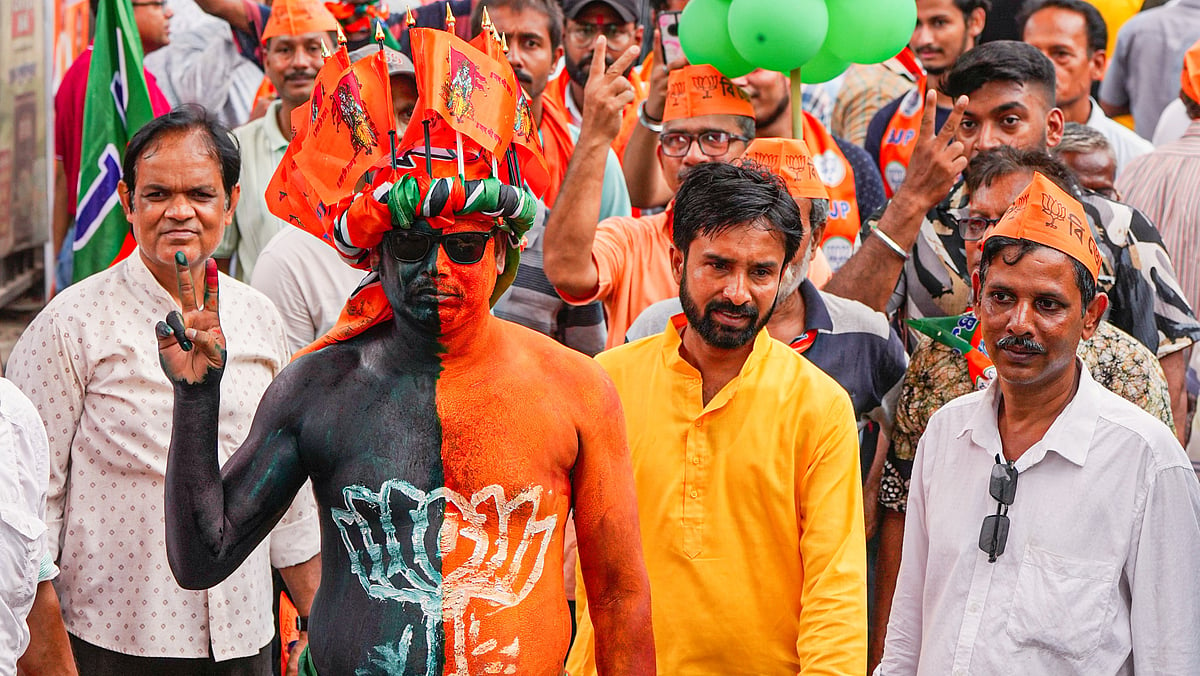
If you are a normal voter, you have any number of parties you can support and vote for. There is the DMK, AIADMK, TDP, NCP, PDP, TMC, INC, JD(S) and JD(U), the NCP again, TRS, the new TVK, CPM, CPI and so on. There is no shortage of parties with different platforms.

But if your primary interest lies in the bullying and harassment of Indian minorities, particularly Muslims, there is only one party for you — and that is the BJP. Fortunately, it is on offer nationally and in most states. It unites prejudiced Indians in much the same way as cricket and the English language do, cutting across regions.

In a recent media interaction, an analyst put the same point differently. He said of the BJP’s appeal: “Anybody who has a right-wing ideology has one party. On the other side, there is so much competition and that vote gets split.”

Let us try to understand why this is the case, because it is true: the BJP has no competition when it comes to what it does. The term ‘right-wing’ is often a euphemism for hate-based politics — and we shall see why in a moment. First, after accepting that there is no rival to the BJP, we must also accept that it offers a simple, easy-to-understand formula.

‘I hate Muslims’ does not require further elaboration. It is clear, direct and effective. The voter does not need to examine a manifesto to understand what the party represents. The distilled essence of the BJP’s ideology is anti-minority.

If you are in the market for a party that does this, you have one at hand — with a national presence and decades of proven delivery on this issue. So why look for another? There is no need.

A question arises: can the BJP not face competition from another party whose position is: 'But I hate Muslims more'?

It could, and it might — but that position can also be taken within the BJP itself, as we will likely see if and when succession struggles begin. The acceptable spectrum of the BJP’s ideology ranges from disliking minorities to detesting them, and all sentiments within this spectrum are acceptable.

This is the first and most important reason why the BJP has no rival in what it does: it is consistently anti-minority. The second reason is that other parties either choose not to do what the BJP focuses on, or do it episodically and come across as inauthentic. Many parties in India have dabbled in communalism, as we know. But communalism is not at the centre of their politics or identity. The BJP is not the only party to have profited from division and hate, but it is the only one to have made this its central platform.

The list of issues that made the BJP what it is — India’s largest party — remained unchanged for years. First, Muslims must give up their mosque in Ayodhya; second, Muslims must give up their constitutional autonomy in Kashmir; third, Muslims must give up their personal law. Note that there is nothing for Hindus in this framework — for instance, reservations for Dalits and Adivasis remain untouched. The focus is on minorities, which underpins conclusions about what the party stands for.

Having achieved most of what it set out to do, the party has remained on the same path, as we have seen: Muslims must give up their diet; give up agency over whom to love and marry; give up agency over where to live and pray; whether they can vote; whether they can seek asylum — and so on. There is no end to this, and there will be no end, because harassment is the intent and bullying the ultimate objective.

This bigotry is often described as ‘right-wing’ ideology — a characterisation that does a disservice to the term. Conservatism, as generally understood in politics, has a long and respectable tradition. It seeks continuity and values stability.

Abolishing currency, for instance, is a radical idea, not a conservative one. None of the arbitrary tinkering, renaming, institutional weakening or disruption we have witnessed fits within classical conservatism. What is presented as ‘right-wing’ here is, in fact, intense prejudice cloaked in a more acceptable label.

It is for this reason that BJP manifestos over the decades have experimented with, adopted and then abandoned many positions. In the 1960s and 1970s, they leaned socialist. Under Vajpayee, the party proposed capping incomes and home sizes — later abandoned. It argued against mechanisation replacing labour in factories — also dropped. It even advocated the use of bullocks instead of tractors — again, discarded. None of these positions were taken up or abandoned with much explanation, because none was needed.

The primary product that the BJP and its predecessor, the Jana Sangh, have consistently offered has always been visible: an unchanging hostility towards minorities. The rest has been secondary. As long as that core promise was delivered upon — and it has been, one must concede — the rest was largely irrelevant.

That is why there is only one BJP — and why it is unlikely to face a challenger on its chosen terrain.

Views are personal. More of Aakar Patel’s writing here
  •  
❌