Reading view

Friends, allies and the farce of strategic autonomy

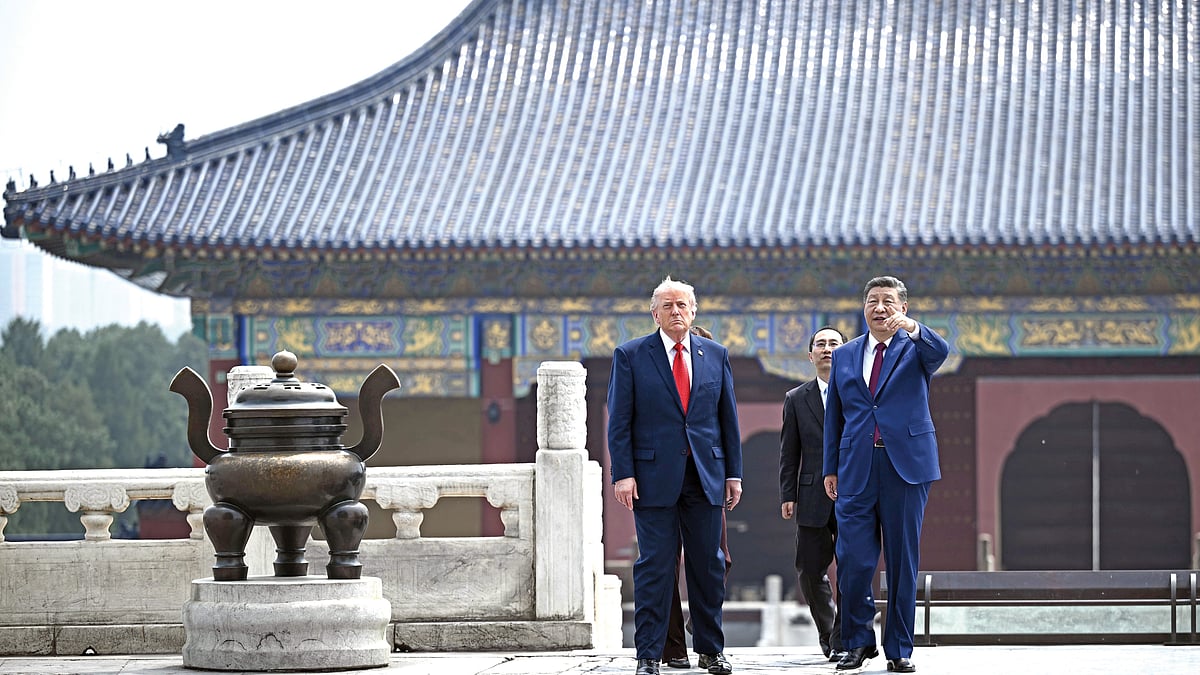
Donald Trump would have hoped for better when he visited Beijing on 13-15 May, but the trip, instead of becoming a feather in his deal-making cap, revealed a glaring strategic asymmetry.

The White House had originally imagined a summit with ambitious outcomes across trade, security and technology. But the ongoing war with Iran altered both the timing of the summit and the substance of the meeting.

Trump, who went with a high-level delegation including top business honchos — Elon Musk (Tesla), Tim Cook (Apple) and Jensen Huang (Nvidia) — arrived in Beijing as a leader constrained by geopolitical overreach, domestic political pressures and a growing need for Chinese cooperation.

The summit yielded no dramatic breakthrough he might have hoped for, and instead revealed something more consequential: a public acknowledgment that the US, under Trump, has little appetite for open confrontation with China. This should deeply unsettle Narendra Modi’s foreign policy establishment in New Delhi.

For more than a decade, Modi’s foreign policy has rested on a foundational assumption: that the US will see India as a strategic counterweight to China and demonstrate this outlook in its policy choices. This assumption shaped India’s diplomatic posture, regional alignments and military cooperation agreements. But the Trump-Xi summit has demonstrated that this assumption is shakier than Modi’s government is willing to admit.

Trump went to Beijing hoping that Xi might use China’s leverage with Tehran to help deliver a diplomatic outcome in the Iran conflict, especially around reopening the Strait of Hormuz and stabilising energy markets. China offered rhetorical support for stability but no meaningful commitment. Beijing was not going to rescue Washington from a crisis of its own making.

Despite receiving little support on Iran, Trump was strikingly deferential to Xi. The symbolism was hard to miss. Warm personal praise, reciprocal invitations and public insistence that the relationship could become stronger than ever. Xi, by contrast, used the moment to re-draw a red line over Taiwan, reminding Trump that this remains non-negotiable for China.

The summit bore no signs that the United States is ready for a strategic confrontation with China. This was a transactional administration looking to accommodate, as far as possible.

That should matter to India because Modi has spent twelve years investing heavily in precisely the opposite reading of global politics. Since coming to power in 2014, Modi has increasingly tied India’s strategic future to Washington’s China anxieties. The Quadrilateral Security Dialogue (Quad) became central to India’s Indo-Pacific narrative.

Defence agreements multiplied. Intelligence cooperation deepened. Joint military exercises expanded. In 2016, India signed the Logistics Exchange Memorandum of Agreement (LEMOA) with the US, for reciprocal military logistics access.

These weren’t merely technical arrangements, but a political bet. The Modi government believed the US was becoming a durable strategic partner against China. More importantly, it appeared to believe that India’s visible alignment with Washington would translate into dependable US backing in any serious confrontation with Beijing.

That belief ignores the first rule of US foreign policy — support for partner countries must serve American interests not the strategic pipedreams of their partners.

The US did not come to the rescue when Chinese forces altered the status quo along the Line of Actual Control in 2020. It didn’t back rhetoric with deterrence when India faced pressure after Galwan. It offered diplomatic sympathy, intelligence cooperation and defence sales. But sympathy is not commitment.

India is not Japan nor South Korea. It is not a treaty ally of the US. Modi’s strategic establishment either failed to understand this distinction or chose to obscure it. But the Trump–Xi summit bared this reality.

Trump is fundamentally transactional. There is no ideological coherence in his statements or policy choices. Instinct and personal chemistry always take precedence over institutional doctrine in his scheme of things. In the present moment, he sees benefits in stabilising relations with China, so Taiwan concerns are less important, regional partners must manage their own risks, and the tariff battle is on the back-burner.

India should never have built a China strategy that was dependent on the whims of an American president. But the problem runs deeper than misreading Trump. For all the grand pronouncements about India’s strategic autonomy, the Modi government’s foreign policy has narrowed India’s strategic flexibility.

India always prided itself on its strategic autonomy. It was called non-alignment back then. This did not mean neutrality or indecision, but showed that India had a policy compass and it would maintain room for manoeuvre in a fluid international system. Modi rebranded this principle, but hollowed it out by leaning too heavily towards Washington.

At the same time, India’s China policy has lacked coherence. Modi pursued summit diplomacy with Xi in Wuhan and Mamallapuram, affecting great confidence in leader-driven engagement. Yet these optics didn’t prevent military confrontation in 2020. Border tensions intensified and the build-up of Chinese infrastructure didn’t stop. China grew its economic and diplomatic reach in the neighbourhood and India helped it along with self-goals.

Instead of recalibrating after these failures, Delhi doubled down on external balancing through Washington. That was strategically foolhardy because no serious power can outsource the burden of balancing its foreign policy equation to another big power whose priorities are globally dispersed and unstable.

India’s challenges vis-à-vis China are structural, geographic and permanent while America’s big-power anxieties are strategic and variable. The two are not in the same boat. Washington can negotiate tactical coexistence with Beijing when necessary but India cannot relocate itself.

The lesson for India is that America was never going to subordinate its China policy to India’s security concerns. The US may still arm India, cooperate with India and support India rhetorically. But if broader accommodation with Beijing serves US interests, then India’s anxieties will not determine Washington’s choices.

Modi’s foreign policy has often confused tactical convergence with strategic alignment. This confusion has costs.

India’s relations with countries in its neighbourhood have deteriorated, and China has exploited the growing trust deficit to its advantage. India is heavily dependent on imported defence hardware and technology; military modernisation at home is shaky. India lacks economic competitiveness; no amount of grandstanding abroad can make up for structural weaknesses at home.

A credible China strategy will have to pivot on India’s own economic resilience, technological capacity, defence manufacturing, border infrastructure, regional partnerships and diplomatic credibility. It also requires pragmatic engagement with multiple power centres, including Europe, Southeast Asia, the Gulf and Beijing itself.

‘Strategic autonomy’ was never about sitting on the fence; it was and still is about retaining agency. That has eroded in a foreign policy dispensation that is driven by spectacle. Trump’s Beijing visit should be read as a warning.

Views are personal

Ashok Swain is a professor of peace and conflict research at Uppsala University, Sweden. More by the author here
  •  

Operation Sindoor was a stress test India failed

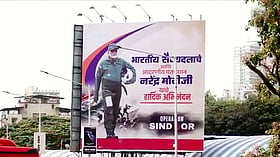
A year after Operation Sindoor, the Modi government still brandishes it as a signal that terrorism traced to Pakistan will be punished. It would have us believe that this is India’s new military doctrine. The claim has political force.

Yet wars are not judged by intent alone, but the balance of power they create in the aftermath. By that measure, Operation Sindoor looks less like a strategic success than a costly misadventure that exposed the limits of India’s military and diplomatic power. For Operation Sindoor revived Pakistan’s relevance and gave China an unexpected advertisement for its weapons.

The operation began after the Pahalgam massacre of 22 April 2025, in which twenty-six civilians were killed in Kashmir. India immediately blamed Pakistan-linked militants and struck targets across Pakistan and Pakistan-Occupied Kashmir in the early hours of 7 May.

New Delhi intended to hit terror infrastructure, keep escalation below the nuclear threshold, and demonstrate that the old restraint after major terror attacks had ended. In that narrow sense, the strike achieved visibility. It showed that India was willing to use force in the heartland of Pakistan despite nuclear risks. But the battlefield quickly slipped beyond the neat script of calibrated punishment.

Pakistan responded militarily and, more importantly, survived and succeeded politically, diplomatically and psychologically. Before the conflict, India enjoyed not just a larger economy and a larger military, but also a deeply entrenched perception of conventional superiority.

That perception mattered. It shaped diplomacy, deterrence, media narratives, and Pakistan’s own sense of vulnerability. Operation Sindoor punctured it.

Whether Pakistan shot down two, five or more Indian aircraft remains contested. But even limited confirmation from India’s senior military officials and several outside officials that Chinese-made Pakistani aircraft brought down Indian jets — including at least one Rafale — was enough to alter the strategic conversation. A country presumed to be outmatched had shown it could impose visible costs.

This is the central military lesson India should not evade. Conventional superiority is not a slogan. It must be proven across sensors, missiles, electronic warfare, command networks, quality of fighter jets, pilot training and information discipline.

India may have hit Pakistani air bases and military infrastructure later in the conflict. It may have adapted after initial losses and used long-range precision weapons effectively. But in modern conflict, the first images and first claims shape the global story. India’s silence created a vacuum. Pakistan filled it. China amplified it. The world noticed not India’s declared punitive precision, but the possibility that Chinese platforms and Pakistani tactics had successfully challenged India’s airpower.

Pakistan did not need to prove every claim beyond doubt. It needed only to cast doubt on India’s presumed air dominance. Operation Sindoor therefore did not establish uncontested asymmetry, as BJP supporters argue. It revealed contested asymmetry.

India remains militarily stronger in arithmetic aggregation, but Pakistan demonstrated that strength on paper can be blunted by new weapons, networking, Chinese support, long range missiles and a carefully managed escalation strategy.

The diplomatic consequences have been no less uncomfortable for India. Washington was closer to India, the Gulf was more pragmatic, and Islamabad was weighed down by debt, political instability and insurgency. After Operation Sindoor, Pakistan did not become powerful, but it became useful again.

Donald Trump repeatedly claimed credit for the ceasefire, publicly inserted himself into the crisis, and treated Pakistan’s army chief Asim Munir as a consequential interlocutor. For India, which insists that Kashmir and India-Pakistan tensions are bilateral matters, this was a diplomatic setback. The crisis meant to show India’s action reopened space for outside mediation.

Munir gained from this. Pakistan’s army, battered by domestic criticism before the conflict, recast itself as the defender that had stood up to India. The general’s global profile rose, especially in Washington’s highly personalised diplomacy under Trump.

Pakistan also positioned itself as a useful actor in West Asia and around Iran and Gulf security. This may not be a durable strategic revival, but it weakened India’s claim that Pakistan no longer matters. Modi wanted to punishPakistan. Instead, he helped Rawalpindi recover the attention it had lost.

The China angle is even more consequential. Pakistan has long depended on Chinese arms, but Operation Sindoor deepened military and intelligence exchange between the two. China provided Pakistan with real-time support and used the crisis as a live laboratory for its weapons against Indian systems.

For Beijing, this was low-cost strategic learning. It didn’t have to fight directly; it watched India’s responses, tested Chinese platforms, assessed Western aircraft and gathered lessons for a possible future conflict in the Himalayas or the Indo-Pacific.

For China’s defence industry, the gains were immediate. The J-10C entered global debate not as an untested Chinese fighter but as an aircraft associated with combat success against India and its French fighter jets. AVIC Chengdu’s revenues and share prices surged and interest in Chinese aircraft grew among states seeking cheaper, reliable alternatives to Western systems.

Even if Pakistan’s claims were inflated, perceptions did the work. Defence markets are shaped by narrative as well as performance. A single contested battle can become a sales pitch. India, by launching an operation that allowed Pakistan and China to showcase their systems, unintentionally boosted the prestige of the military ecosystem it should be trying to contain.

This does not mean India should have ignored Pahalgam. No government can remain passive after such a cold-blooded massacre. The question is not whether India had a right to respond. The question is whether Modi’s chosen highly-politicised response improved India’s security.

A punitive strike that triggers aircraft losses, strengthens Pakistan’s military narrative, draws Trump into mediation claims, deepens China-Pakistan cooperation, and raises Chinese fighter stocks is not a clean success. It is a warning about the difference between tactical action and strategic outcome.

The deeper danger is that both India and Pakistan may now believe escalation can be managed. India has announced a new normal in which terrorism will be treated as an act of war. Pakistan believes rapid retaliation can internationalise the crisis.

Both sides have learned that drones, missiles, standoff weapons and information warfare can be used under the nuclear shadow. It lowers the threshold for the next confrontation and compresses decision time for leaders already trapped by domestic divisive nationalism.

Operation Sindoor should, therefore, be remembered not as a triumph or a new military doctrine but as a stress test India failed to control. It exposed serious gaps in intelligence, air combat preparedness, strategic communication and diplomatic anticipation.

It showed that China is not a distant third party but an active force multiplier. It showed that Washington under Trump cannot be assumed to privilege Indian sensitivities over Pakistani utility. Above all, it showed that performative toughness can produce strategic embarrassment.

A year later, the ceasefire holds, but little else does. The Indus Waters Treaty remains suspended, diplomacy is frozen, and public opinion on both sides has become more militarised. Modi wanted Operation Sindoor to announce India’s arrival as an unrestrained regional power. Instead, it revealed a harsher truth.

Power is not measured by the bravado to strike first. It is measured by the ability to shape what happens after. On that front, Modi’s misadventure gave Pakistan a narrative, China a market, Trump a stage, and South Asia a more dangerous future.

Views are personal

Ashok Swain is a professor of peace and conflict research at Uppsala University, Sweden. More by the author here
  •  

Operation Sindoor’s unintended reckoning

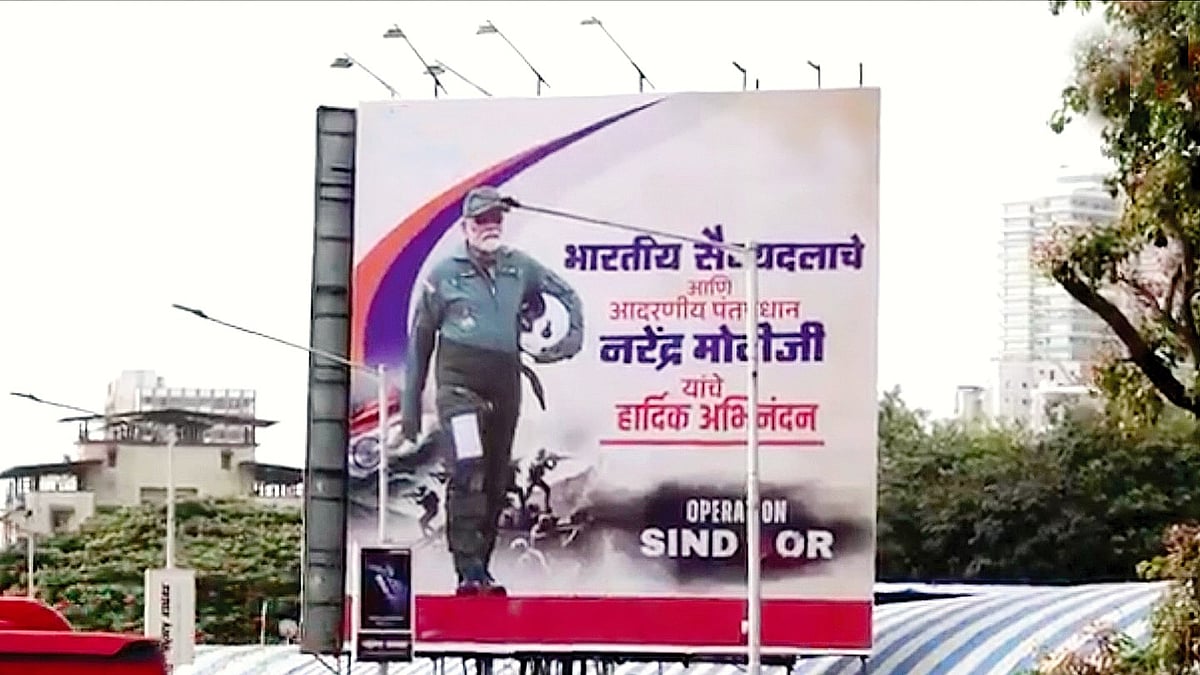
A year after Operation Sindoor, the Narendra Modi government of India still describes it as proof of a new doctrine, a signal that terrorism traced to Pakistan will invite punishment across borders. That claim has political force. Yet wars are not judged by intent alone.

They are judged by the balance they leave behind. By that measure, Operation Sindoor looks less like a strategic success than a costly misadventure that exposed the limits of India’s military and diplomatic power, revived Pakistan’s relevance, and gave China an unexpected advertisement for its weapons.

The operation began after the Pahalgam massacre of April 2025, in which twenty-six civilians were killed in Kashmir. India immediately blamed Pakistan-linked militants and struck targets across Pakistan and Pakistan administered Kashmir on the night of 6 and 7 May.

New Delhi intended to hit terror infrastructure, keep escalation below the nuclear threshold, and demonstrate that the old restraint after major terror attacks had ended. In that narrow sense, the strike achieved visibility. It showed that India was willing to use force in the heartland of Pakistan despite nuclear risks. But the battlefield quickly slipped beyond the neat script of calibrated punishment.

Pakistan responded militarily and, more importantly, survived and succeeded politically, diplomatically, and psychologically. Before the conflict, India enjoyed not just a larger economy and a larger military, but also a deeply entrenched perception of conventional superiority.

That perception mattered. It shaped diplomacy, deterrence, media narratives, and Pakistan’s own sense of vulnerability. Operation Sindoor punctured it. Whether Pakistan shot down two, five, or more Indian aircraft remains contested.

But even limited confirmation from India’s senior military officials and several outside officials that Chinese made Pakistani aircraft brought down Indian jets, including at least one Rafale, was enough to alter the strategic conversation. A country presumed to be outmatched had shown it could impose visible costs.

This is the central military lesson India should not evade. Conventional superiority is not a slogan. It must be proven across sensors, missiles, electronic warfare, command networks, quality of fighter jets, pilot training, and information discipline.

India may have hit Pakistani air bases and military infrastructure later in the conflict. It may have adapted after initial losses and used long range precision weapons effectively. But in modern conflict, the first images and first claims shape the global story. India’s silence created a vacuum. Pakistan filled it.

China amplified it. The world noticed not India’s declared punitive precision, but the possibility that Chinese platforms and Pakistani tactics had successfully challenged India’s airpower.

Pakistan did not need to prove every claim beyond doubt. It needed only to cast doubt on India’s presumed air dominance. Operation Sindoor therefore did not establish uncontested asymmetry, as BJP supporters argue. It revealed contested asymmetry.

India remains militarily stronger in arithmetic aggregation, but Pakistan demonstrated that strength on paper can be blunted by new weapons, networking, Chinese support, long range missiles, and a carefully managed escalation strategy.

The diplomatic consequences have been no less uncomfortable for India. Washington was closer to India, the Gulf was more pragmatic, and Islamabad was weighed down by debt, political instability, and insurgency. After Sindoor, Pakistan did not become powerful, but it became useful again.

Donald Trump repeatedly claimed credit for the ceasefire, publicly inserted himself into the crisis, and treated Pakistan’s army chief Asim Munir as a consequential interlocutor. For India, which insists that Kashmir and India-Pakistan tensions are bilateral matters, this was a diplomatic setback. The crisis meant to show India’s action reopened space for outside mediation talk.

Munir gained from this. Pakistan’s army, battered by domestic criticism before the conflict, recast itself as the defender that had stood up to India. The general’s global profile rose, especially in Washington’s highly personalized diplomacy under Trump. Pakistan also positioned itself as a useful actor in the West Asia and around Iran and Gulf security. This may not be a durable strategic revival, but it weakened India’s claim that Pakistan no longer matters. Modi wanted to punish Pakistan. He helped Rawalpindi recover attention it had lost.

The China angle is even more consequential. Pakistan has long depended on Chinese arms, but Operation Sindoor has deepened the military and intelligence fusion between the two. China provided Pakistan with real time support and used the crisis as a live laboratory for its weapons against Indian systems.

For Beijing, this was low-cost strategic learning. It did not have to fight India directly. It could watch Indian responses, test Chinese platforms, assess Western aircraft, and gather lessons for a possible future conflict in the Himalayas or the Indo Pacific.

For China’s defence industry, the gains were immediate. The J-10C entered global debate not as an untested Chinese fighter but as an aircraft associated with combat success against India and its French fighter jets. AVIC Chengdu’s revenues and share prices surged, and interest in Chinese aircraft grew among states seeking cheaper and reliable alternatives to Western systems.

Even if Pakistan’s claims were inflated, perception did the work. Defence markets are shaped by narrative as well as performance. A single contested battle can become a sales pitch. India, by launching an operation that allowed Pakistan and China to showcase their systems, unintentionally boosted the prestige of the military ecosystem it should be trying to contain.

This does not mean India should have ignored Pahalgam. No government can remain passive after such a cold-blooded massacre. The question is not whether India had a right to respond. The question is whether Modi’s chosen highly-politicised response improved India’s security.

A punitive strike that triggers aircraft losses, strengthens Pakistan’s military narrative, draws Trump into mediation claims, deepens China-Pakistan cooperation, and raises Chinese fighter stocks is not a clean success. It is a warning about the difference between tactical action and strategic outcome.

The deeper danger is that both India and Pakistan may now believe escalation can be managed. India has announced a new normal in which terrorism will be treated as an act of war. Pakistan believes rapid retaliation can internationalise the crisis and force intervention.

Both sides have learned that drones, missiles, standoff weapons, and information warfare can be used under the nuclear shadow. It lowers the threshold for the next confrontation and compresses decision time for leaders already trapped by domestic divisive nationalism.

Operation Sindoor should therefore be remembered not as a triumphant doctrine but as a stress test India failed to fully control. It exposed serious gaps in intelligence, air combat preparedness, strategic communication, and diplomatic anticipation.

It showed that China is not a distant third party but an active force multiplier. It showed that Washington under Trump cannot be assumed to privilege Indian sensitivities over Pakistani utility. Above all, it showed that performative toughness can produce strategic embarrassment.

A year later, the ceasefire holds, but little else does. The Indus Waters Treaty remains suspended, diplomacy is frozen, and public opinion on both sides has become more militarized. Modi wanted Operation Sindoor to announce India’s arrival as an unrestrained regional power. Instead, it revealed a harsher truth.

Power is not measured by the bravado to strike first. It is measured by the ability to shape what happens after. On that front, Modi’s misadventure gave Pakistan a narrative, China a market, Trump a stage, and South Asia a more dangerous future.

Ashok Swain is a professor of peace and conflict research at Uppsala University, Sweden. More by the author here
  •  

The other high-risk gamble in West Asia

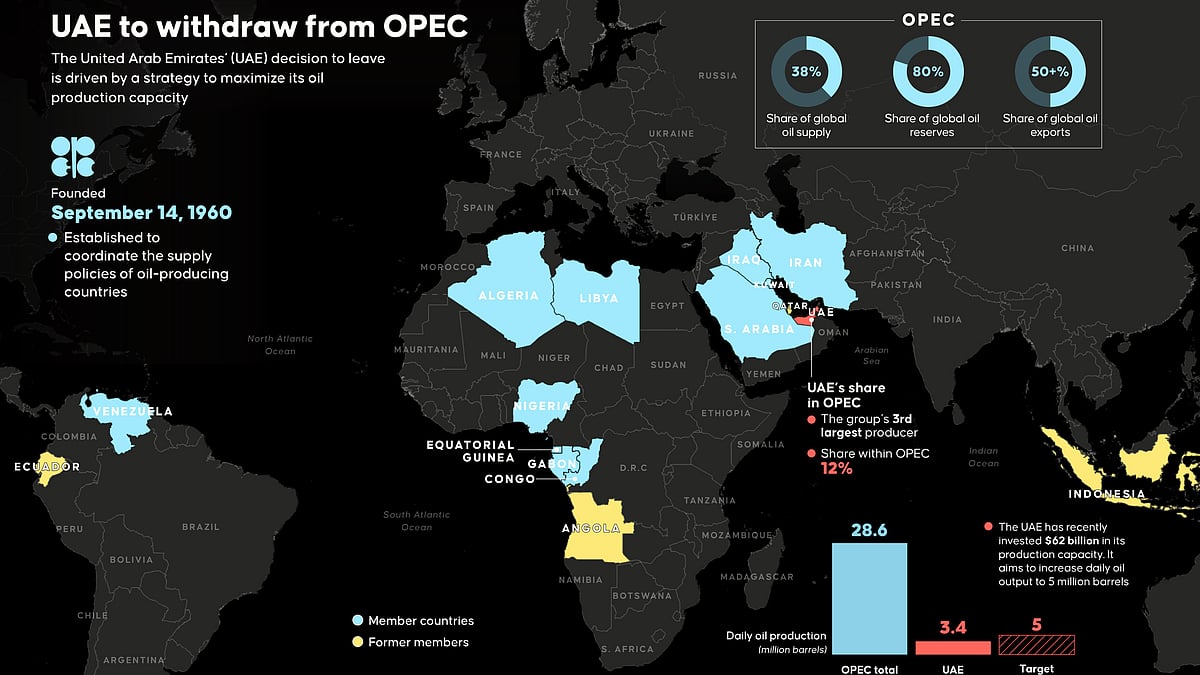
The UAE’s decision to walk out of OPEC and OPEC+ is not just about oil. It represents a blunt geopolitical rupture. Abu Dhabi is no longer disguising its rivalry with Saudi Arabia nor walking a tightrope between regional camps. It is openly gravitating towards a new axis consisting of the US, Israel and increasingly India — and this high-risk strategy is deepening conflict lines across regions already on edge.

OPEC, created in 1960, was designed to coordinate oil production and give oil-producing countries collective control over global prices. OPEC+ came into being in 2016 to fold in 10 other countries, including big producers like Russia. For decades, Saudi Arabia dominated both structures, using them as instruments of economic and geopolitical influence. The UAE’s exit strips away part of that leverage and signals that Abu Dhabi no longer accepts Riyadh’s leadership, not just in oil but in the broader regional order.

The economic argument for leaving is straightforward. The UAE wants to produce more oil than OPEC quotas allow because the Iran war has put its economy under great strain. It wants to monetise its reserves quickly, to hedge against a future where fossil fuel demand has declined. But this is only the surface. What lies underneath is a deeper strategic break with Saudi Arabia, stretching across energy policy, military alliances and global partnerships.

The Abraham Accords of 2020 marked a significant geopolitical shift, with the UAE normalising relations with Israel and building cooperation in trade, technology and security. In contrast, Saudi Arabia declined to join the Accord, with Crown Prince Mohammed bin Salman maintaining that normalisation of ties with Israel would be contingent on the establishment of a Palestinian state and broader regional considerations.

This divergence between the UAE and Saudi Arabia is growing, and it shows in their external alignments.

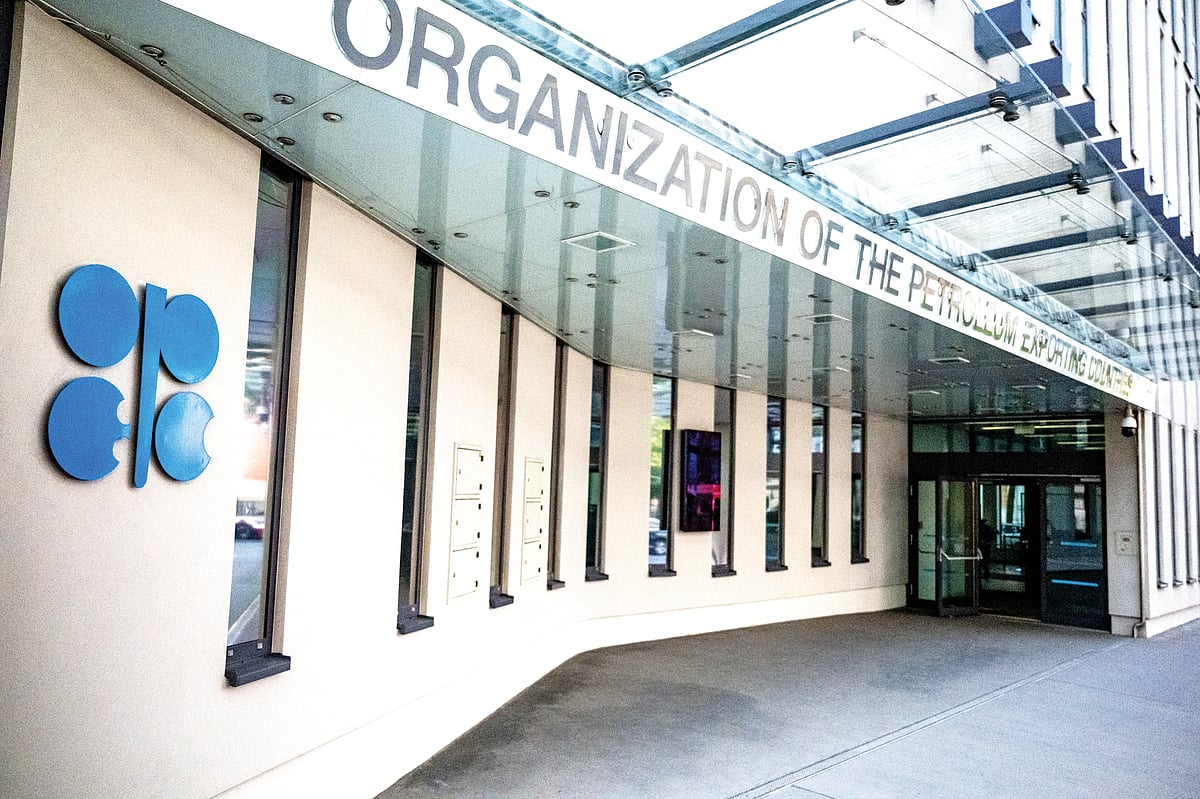
Deserted OPEC headquarters in Vienna

Where Saudi Arabia is strengthening ties with Pakistan through a formal defence partnership, the UAE is moving closer to India, expanding cooperation in defence, intelligence, energy and technology, while also embedding itself deeper into a shared strategic space with Israel.

The United States has quietly encouraged this shift. Washington has long viewed OPEC as an obstacle to lower oil prices and greater Western leverage over energy markets. By leaving OPEC, the UAE weakens the cartel’s collective ability to control supply and pricing, opening space for increased Emirati production and greater market volatility that could benefit American oil producers.

Abu Dhabi’s move aligns neatly with broader US strategic interests: weakening Saudi-dominated oil coordination, reducing OPEC’s influence and committing the UAE more deeply to a US-led geopolitical and economic order.

The UAE’s growing proximity to India is also not just economic. It is political and strategic as well and carries serious implications. Abu Dhabi has chosen to align itself with a government in New Delhi whose domestic and regional policies have caused deep concern in the Muslim world. At the same time, India has been moving closer to Israel, expanding defence cooperation, intelligence sharing and technological partnerships.

The convergence of interests — seen in evolving UAE–India ties and India–Israel relations—is not accidental but part of an opportunistic geopolitical realignment that prioritises security cooperation and economic gain without bothering with notions of accountability and justice or a rules-based order.

The UAE’s relations with Pakistan have deteriorated sharply. Abu Dhabi has scaled back financial support, cooled diplomatic engagement and withdrawn from investment commitments. Pakistan was asked to pay back the entire UAE debt of $3.5 billion in April.

So, the UAE–Saudi rivalry will extend beyond West Asia, and what was once a regional competition is now entangled with India–Pakistan dynamics, creating overlapping fault lines. Instead of trying to reduce tensions, the UAE is embedding itself firmly on one side of a deeply polarised geopolitical divide.

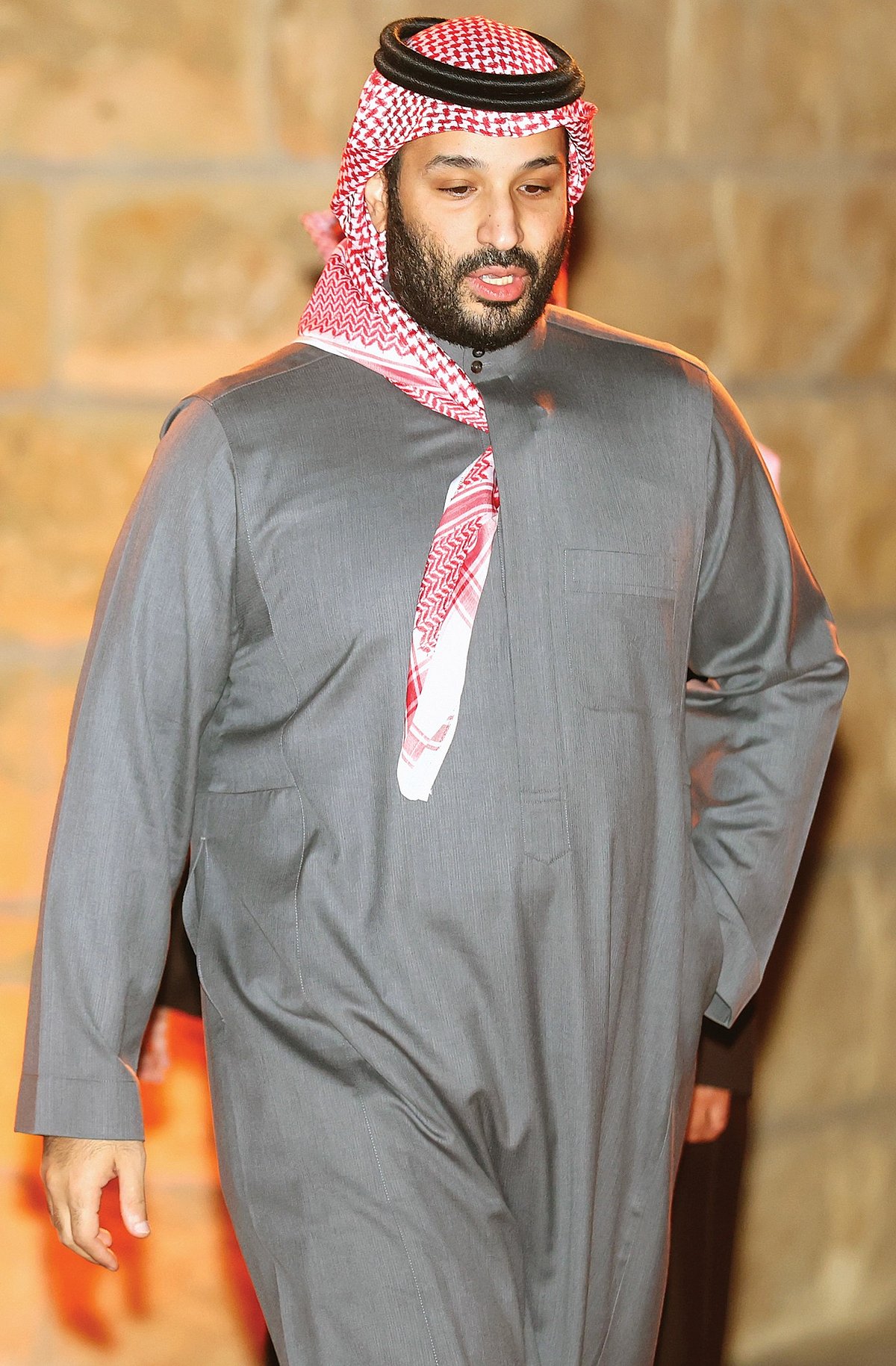
Crown Prince Mohammed bin Salman Al Saud of Saudi Arabia

The UAE’s broader foreign policy reinforces this pattern. From Yemen to Libya, from Ethiopia and Sudan to the Horn of Africa, Abu Dhabi has pursued influence through strategic investments, military interventions and even proxy actors.

In Yemen, it backed separatist groups that clashed with Saudi-supported forces. In Sudan, it supports paramilitary actors accused of terrible atrocities. In Libya, it armed and financed a rival strongman. It has forged ties with Somaliland. All these actions have entrenched division.

The UAE frames its activism as a fight against extremism and disorder. But the reality is more troubling. It has continued to expand economic, technological and military cooperation with Israel despite its horrific genocidal project in Gaza. Trade has grown and defence and intelligence ties have deepened. The Iran war has only hardened Abu Dhabi’s conviction that its security lies with Israel and the US, not with Arab institutions.

The addition of India to this axis intensifies the problem. By aligning with Netanyahu-led Israel and Modi-led India while distancing itself from traditional partners, the UAE risks deepening divisions across West and South Asia. It also risks undermining its own credibility. A state that claims to promote tolerance cannot indefinitely ignore the implications of its alliances.

Saudi Arabia is not without fault. Its own interventions and ambitions have contributed to regional instability. But the UAE’s challenge is not a progressive alternative. It is a competing model of authoritarian power projection. The rivalry between the two is less about ideology and more about who will dominate the next phase of regional politics.

The risk is that this competition, now intertwined with India-Pakistan dynamics and reinforced by external alliances, will deepen instability across multiple regions. Yemen, Sudan and Libya are already paying the price. South Asia could become another arena for Gulf rivalries to play out.

Ashok Swain is a professor of peace and conflict research at Uppsala University, Sweden. More by the author here
  •  

Presiding over its own irrelevance

It’s India’s turn at the helm of BRICS this year and its position in the bloc — once seen as a counterweight to Western-dominated alliances and a US-led international order — couldn’t be more incongruous. As New Delhi prepares to host the 18th BRICS summit in September this year, India finds itself presiding over a divided grouping while becoming increasingly isolated within it.

The BRICS grouping was already beset with contradictions but the ongoing Iran war seems to have split it wide open. Once projected as a platform for coordinated political assertion, for its commitment to multipolarity, it now appears incapable of even issuing a joint statement on a major geopolitical crisis involving one of its own members.

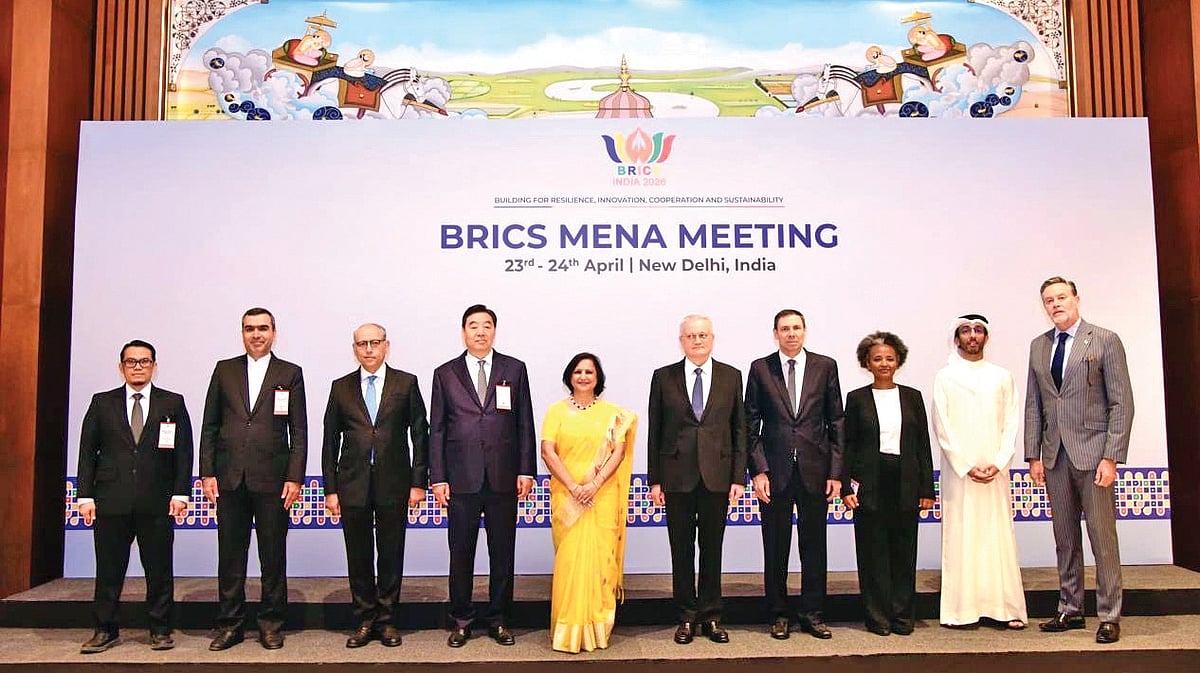
The BRICS MENA meeting, of deputy foreign ministers and special envoys of West Asia and North Africa, in New Delhi on 23–24 April, ended without consensus, forcing New Delhi to fall back on issuing a ‘chair’s summary’ rather than a collective declaration. That distinction is not procedural; it’s political — you get a chair’s summary when you lack consensus.

The divisions in the group are structural. Iran, now a BRICS member, expected solidarity from the bloc in the face of military confrontation. Yet other members, particularly the UAE, which has since withdrawn from OPEC (Organization of Petroleum Exporting Countries), resisted the use of strong language against the US and Israel. China and Russia leant towards Tehran. India equivocated with vague expressions of concern.

This paralysis has left BRICS unable to take a stand even when a member state has been attacked, when its leaders have been assassinated. Draft statements have failed and negotiations have stalled.

India’s role in this deadlock has been revealing. As chair, it was expected to provide direction but has instead chosen ambiguity. India’s reluctance to take a firm stand reveals the contradictions in the Modi government’s foreign policy.

In pursuing what its external affairs minister S. Jaishankar describes as ‘strategic autonomy’, India has developed trade, defence and strategic partnerships with the US and Israel, economic and energy ties with the Gulf, and cultural and diplomatic cooperation with Iran. With the war forcing a show of hands, India has tried to hedge to avoid alienating anyone.

But within BRICS, a grouping that increasingly defines itself through a critique of US dominance, that ambiguity comes at a cost. India’s refusal to take a position on a conflict involving BRICS bête noire US and a BRICS member is seen not as prudence but a lack of commitment. Iran has openly expressed its expectation that India, as BRICS chair, will mobilise the bloc in its favour, but New Delhi’s interests are too deeply embedded in the US–Israel alliance to hazard such a stance.

At the same time, China’s influence within the grouping continues to expand. The enlargement of BRICS, often presented as a sign of its growing global appeal, has in fact strengthened Beijing’s centrality. Many of the newer members share closer strategic alignment with China than with India. The balance within BRICS has shifted decisively. India is no longer a co-equal pillar. It has become a dispensable player in a structure increasingly shaped by China.

This shift has made India’s position more uncomfortable. Its strained bilateral relations with China, marked by unresolved border conflicts and strategic rivalry, limits the possibility of meaningful cooperation within BRICS.

India’s position is further complicated by Trump’s warnings of imposing punitive tariffs on countries pursuing alternative trade arrangements under BRICS. Wary of the Trump administration, the Modi government won’t risk taking a stand that might invite retaliation at various levels it cannot afford.

Consequently, New Delhi has been hesitant about endorsing initiatives that will be seen as a challenge to a US-dominated global economic order. Take for instance, talks of de-dollarisation.

The consequence is a narrowing of India’s strategic space within BRICS. It cannot fully align with the bloc’s more assertive agenda without risking economic and diplomatic repercussions. Yet by holding back, it undermines its standing within the group.

The internal contradictions of BRICS have never been so thoroughly exposed. For the first time, the grouping is confronting a situation where its members are divided over an ongoing military conflict involving one of their own. The inability to forge a consensus reflects deep incompatibilities.

India’s chairmanship has coincided with this rupture, and its own ambiguity has rendered it totally ineffective in managing the contradictions in the group. If anything, the crisis has exposed the limits of India’s influence.

The implications for the upcoming summit are difficult to ignore. Expectations are low. China’s President is unlikely to attend. With divisions unresolved and no shared strategic direction, the summit is unlikely to produce anything of consequence. At best, it will generate carefully worded statements that skirt contentious issues. And this, in turn, will reinforce the perception that India has no locus to lead the Global South.

This moment also raises big questions about India’s foreign policy. Its attempt to straddle competing geopolitical alignments is hard to sustain. Within BRICS, that strategy is already failing. The more India hedges, the more space China occupies. The more India avoids taking a stand on global issues, the less influence it commands.

The credibility of BRICS as the pivot of an alternative global order was already fading. Under India’s chairmanship, that decline has become unmistakable. The grouping continues to expand, add members and meet, but its capacity for meaningful collective action is eroding.

The Modi government’s failure to define a clear role for India within the bloc means that India now chairs BRICS without commanding it. It will play host without shaping the outcome in any way. The September summit in New Delhi will only lay bare its irrelevance.

Ashok Swain is a professor of peace and conflict research at Uppsala University, Sweden. More by the author here
  •  
❌