
❌

Reading view

Long COVID will cost the US an estimated $8 billion over just 3 years due to healthcare burden, managing symptoms and loss to the workforce

Losses in workplace productivity account for more than 90% of the estimate. aire images/Moment via Getty Images
The Conversation, CC-BY-ND.

Headlines on long COVID have become much more rare than during the first few years of the COVID-19 pandemic.

But that doesn’t mean the more than 44 million Americans who have at some point reported long COVID symptoms – a number that continues to grow – are no longer suffering, or that the U.S. isn’t paying for it.

Long COVID refers to a condition where at least one of the COVID-19 symptoms, such as fatigue, shortness of breath, and headaches, persists for more than three months.

We are artificial intelligence and computational modeling researchers who have been developing and using these methods to aid communications and decision-making in public health. For this study, we worked in a collaborative team of public health and infectious disease experts.

Our team’s study, which was published in 2025 in the Journal of Infectious Diseases, estimated that the total economic burden of long COVID will likely exceed US$8 billion between 2025 and the end of 2027.

This study entailed developing and running a computational simulation model that represented what might happen to each person after suffering COVID-19, including the risk of that person developing different types of long COVID and the resulting symptoms, healthcare costs and lost-work productivity.

Based on our simulations, a single case of long COVID could cost the U.S. an average of between $9,906 and $11,646 annually, with more severe cases costing even more. Productivity losses would account for well over 90% of these costs, which means that employers around the country will be affected.

Woman lying in bed, looking out of window with a dismayed look on her face.
With no cure available, people who have long COVID are left to simply manage the symptoms. Counter/DigitalVision via Getty Images

More questions than answers

Studies have suggested that somewhere between 6%-20% of people with COVID-19 will go on to develop long COVID. We then used numbers within this range in our model to then calculate the number of people who have developed long COVID, and therefore had probabilities of suffering different symptoms and accompanying healthcare costs and productivity losses.

Taking the most conservative 6% end of that range and assuming that long COVID symptoms would only last for one year results in an annual cost of $2.01 billion. Increasing this percentage to 10% would push the estimated annual burden to $3.4 billion.

Naturally, the longer that symptoms persist, the higher the total cost. The previously mentioned $8 billion burden for 2025-2027 assumed the 6% incidence of long COVID with symptoms lasting up to three years. This is likely still a conservative estimate, since many who developed long COVID five to six years ago have continued to have symptoms with no clear end in sight. In addition, evidence suggests that long COVID is underdiagnosed and underreported.

Currently, there are no effective cures for long COVID, and treatment entails trying to manage the symptoms as best as possible. It’s also not clear whether and when long COVID symptoms might ever subside.

There is also a severe shortage of long COVID treatment clinics, with far too few to meet the demand for specialized treatment.

Higher demands and few resources

Despite the lack of preventive options and the need for more answers, the U.S. is moving further away from being able to effectively manage long COVID.

For example, in the midst of the massive funding cuts in President Donald Trump’s second term, in 2025 the Department of Health and Human Services shuttered the Office of Long COVID Research after only two years of existence. The same year, the National Institutes of Health terminated various funding initiatives for studying potential pathways to and treatments for long COVID.

There is currently no clear national strategy on how to manage long COVID going forward or COVID-19 in general, for that matter. Recommendations on face mask use, indoor air quality measures and who should get vaccinated each year have been ambiguous and changing often since 2021. Such recommendations and regulations have also varied significantly from organization to organization and state to state.

Without any changes, the number of people with long COVID is almost certain to grow, and those with persistent long COVID symptoms could continue to suffer and cost society.

Our study shows literally billions of reasons why all of this is a big problem.

The Conversation

Bruce Y. Lee has received funding from the National Institutes of Health, the National Science Foundation, the Agency for Healthcare Research and Quality, the Bill and Melinda Gates Foundation, and the Centers for Disease Control and Prevention. He is the founder and CEO of Symsilico and the founder of InSilico Analytics.

Hannah Dimmick does not work for, consult, own shares in or receive funding from any company or organization that would benefit from this article, and has disclosed no relevant affiliations beyond their academic appointment.
  •  

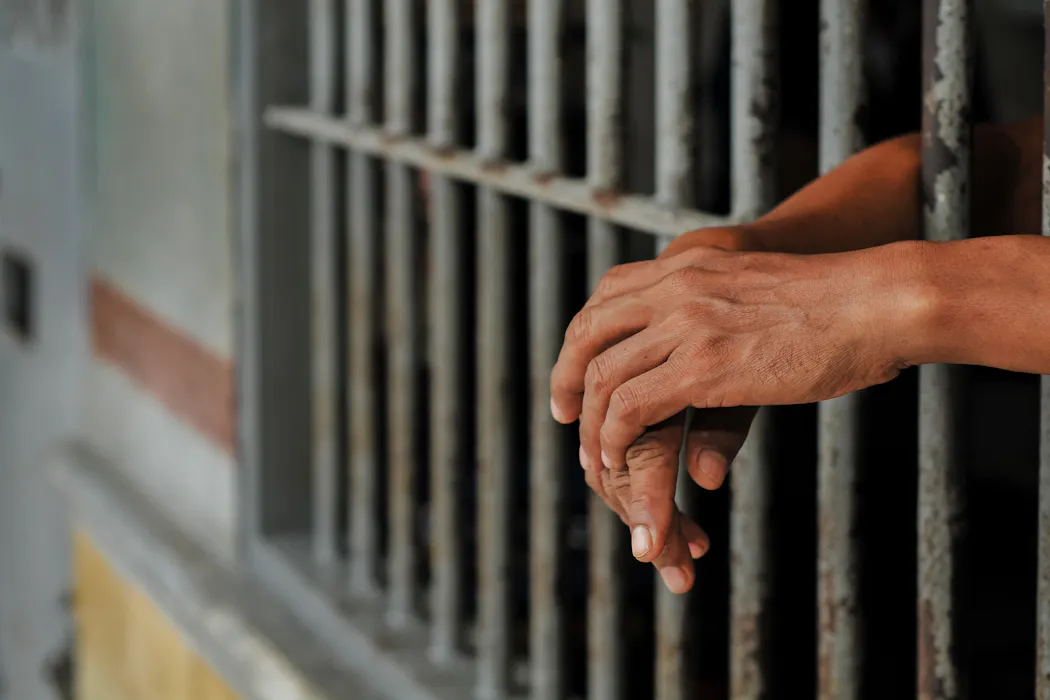
Colorado voted to end forced prison labor in 2018 – so why are incarcerated people in the state still working for less than $2 an hour?

Incarcerated people in Colorado make less than $2 an hour for their labor. Hari Sucahyo/Getty Images

Colorado voters passed Amendment A, a ballot measure touted as an end to slavery in state prisons in 2018. The amendment eliminated the penal exception clause, which allowed the state to use forced labor in addition to incarceration as a punishment for crime.

Colorado was the first of eight states to repeal its penal exception clause. Advocates for the policy change hoped it would prevent forced labor for little pay. Colorado pays incarcerated workers between US$0.33 and $1.61 per hour for maintenance jobs such as cooking, cleaning and groundskeeping.

Nationally, the elimination of state penal exception clauses has had little impact on incarcerated workers. Lawsuits in Colorado and Alabama have alleged that forced labor continues despite the policy change.

My research examines prison conditions and programming, including work programs. I wrote my doctoral dissertation on state and federal prison industries, which sell goods produced by incarcerated workers to government agencies.

Colorado lawsuit alleges abuse

In 2022, the plaintiffs who brought a class action lawsuit, Mortis v. Polis, alleged that the Colorado Department of Corrections violated the amended state constitution by punishing incarcerated people who refused mandatory work programs. The punishments included solitary confinement and use of force.

Incarcerated people also reported the loss of good time and earned time credit, which are two sentence reduction incentives based on participating in work programs. Additionally, they reported loss of privileges like phone calls and family visits.

Colorado prisoners say the state is violating an antislavery law by requiring forced labor, according to an August 2023 CBS Colorado report.

During the trial, David Lisac, deputy director of the Colorado Department of Corrections prison operations, testified. He said the department had neither changed its policies in response to the amendment nor attempted to ascertain whether the department was in compliance with the amendment.

In February 2026, the court ruled that the department and Gov. Jared Polis violated the state constitution by forcing people to work. The ruling specified that use of force and isolation for failure to work were unconstitutional. On the other hand, the court dismissed the plaintiffs’ claims that withholding privileges or credits constituted involuntary servitude.

Whether the decision will have an impact on work conditions in Colorado prisons remains to be seen.

History of the penal exception clause

When the 13th Amendment to the U.S. Constitution abolishing slavery passed in 1865, the penal exception clause allowed for slavery only as punishment for a crime. Along with Jim Crow laws that criminalized Blackness, the loophole allowed for the legal re-enslavement of Black Americans to financially benefit the state. The penal exception clause also allowed prisons to continue to operate as they had prior to the 13th Amendment. Historically, prisons in Colorado and across the U.S. used the labor of incarcerated workers and paid them little to nothing.

This included the establishment of state penal farms on former slave plantations and widespread convict leasing of incarcerated workers’ labor to private companies. Chain gangs to build railroads were also established during this time.

A black-and-white photo of men in striped clothing shoveling the ground.
A group of incarcerated men, known as a prison chain gang, work on a railroad in Florida. The photo was taken sometime around 1920. FPG/Hulton Archive/Getty Images

The Colorado Constitution, drafted and approved a decade later in 1876, included a provision that mirrored the 13th Amendment. Article II, Section 26, Colorado’s penal exception clause, stated: β€œSlavery prohibited. There shall never be in this state either slavery or involuntary servitude, except as a punishment for crime, whereof the party shall have been duly convicted.”

Opposition to forced labor in prison took many forms. Those include the Attica uprising in 1971, attempts to unionize incarcerated workers and prison labor strikes.

Colorado’s penal exception clause was eliminated in 2018. Following Colorado, legislation and ballot measures were introduced in many states and at the federal level.

Incarcerated people need work

Colorado and states across the country use incarcerated workers to do almost all the jobs of running the prison. Paying prevailing wages would significantly increase operating expenses. A cost-benefit analysis of paying incarcerated workers full wages for their work, by Edgeworth Economics, an economic consultancy firm, estimated the increase of expenses to fall between $8.5 billion to $14.5 billion nationwide.

Incarcerated people use earnings from their work to purchase food and hygiene products from the commissary. In addition, many derive meaning and purpose from work, which is important for mental health.

Incarcerated workers produce $2 billion in goods and $9 billion in services every year, but those workers are often underpaid or not paid at all, according to a March 2025 CBS News report.

Refusing to work can also lead to harsh consequences. The Colorado lawsuit plaintiffs alleged that they experienced solitary confinement, isolation in their cells, loss of phone calls and visits, and loss of good time and earned time credits for failure to work. Solitary confinement harms mental health, and phone calls and visits are essential for family connectedness. Good time and earned time credits accrued through work can speed up release and are an important motivator to work, regardless of working conditions.

Simultaneously, incarcerated people risk retaliation for speaking out about prison conditions. For example, the incarcerated men who started the Free Alabama Movement to end forced labor in 2013, and featured in the popular 2025 documentary film β€œThe Alabama Solution,” were later transferred to solitary confinement.

Incarcerated workers rarely considered employees

Some prison labor is recognized as employment and paid the minimum wage – in theory. Nationally, private-sector Prison Industry Enhancement Certification Program and work release employers are required to pay the prevailing minimum wage to their incarcerated employees. However, states always take deductions for room and board, transportation, victims services, court fees and the like. In some cases, up to 80% of an incarcerated person’s wages are deducted. That means take-home pay often remains low.

But 97.4% of incarcerated workers labor for government entities directly and are paid less than a dollar an hour.

They also lack protections. They are not covered by the Fair Labor Standards Act, which provides minimum wage rights and provisions for overtime pay. Nor are they covered by the Occupational Safety and Health Administration, which enforces worker’s compensation and rights to safe working conditions. If an incarcerated worker is injured on the job, they are entitled to medical care, like anyone else in prison, but they have no right to financial compensation or sick days.

Adapting the private-sector pay structure for all work in prison could result in fair wages – that’s if deductions are revised to be fair as well. Researchers estimate that paying fair wages to incarcerated workers could produce up to $20.3 billion annually in income to them directly, and benefits to families, crime victims and the economy through child support payments, restitution payments and taxes. Furthermore, fair wages would allow people to support themselves during incarceration and save for when they are released, which could have a meaningful impact on well-being during and after incarceration.

Reforms, such as adjusting pay structures or removing the penal exception clause, may improve working conditions for incarcerated people. But researchers have asserted that prison labor will always be inherently coercive. Incarcerated workers have limited options to earn money and work toward an earlier release date, which undoubtedly influences their choice to work.

Read more of our stories about Colorado.

The Conversation

Julia Bowling does not work for, consult, own shares in or receive funding from any company or organization that would benefit from this article, and has disclosed no relevant affiliations beyond their academic appointment.

  •  
❌