
Reading view

Guide to the classics: Margaret Cavendish’s The Blazing World pioneered speculative fiction, 400 years ago
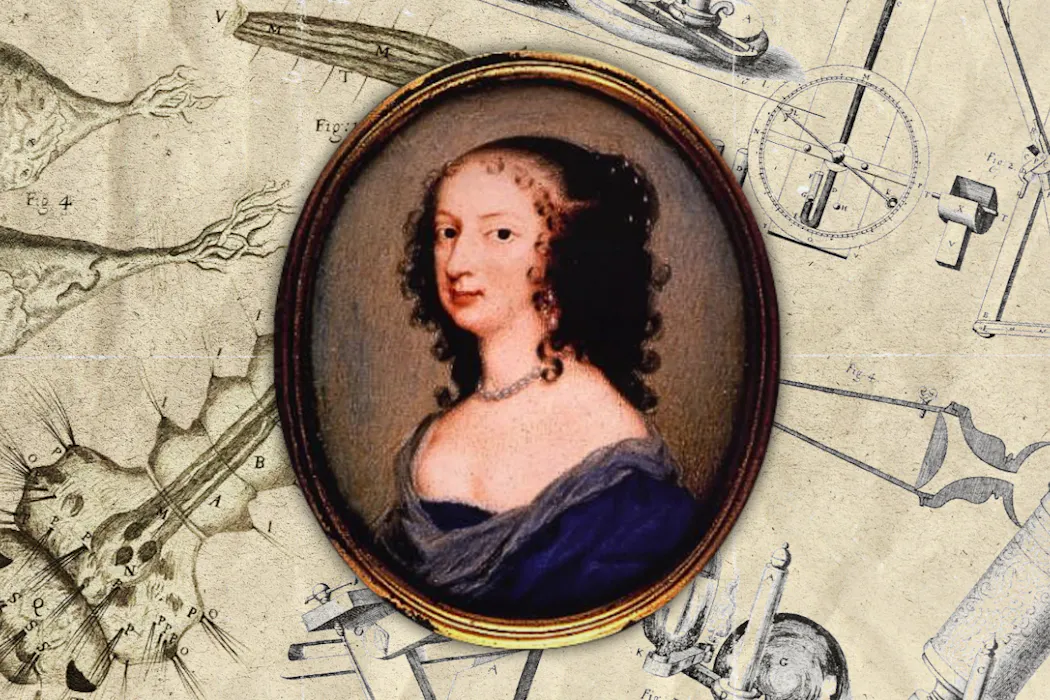
A 17th century portrait of Margaret Cavendish.

The Blazing World is a testament to how far the written novel has travelled in the past 400 years. A literary time capsule, it holds within it the origins of a genre we now call speculative fiction.

Written by Margaret Cavendish, a wealthy iconoclast who advocated for women’s educational opportunities, and published in 1666, The Blazing World is a strange work. Testament to this, its full title is The Description Of A New World Called The Blazing-World, written by The Thrice Noble, Illustrious, and Excellent Princess the Duchess of Newcastle.

The novel follows the journey of a woman who lives by the sea and is abducted by a travelling merchant from a strange land. His boat swiftly heads to the Arctic, where it threads between the ice and all the men on board freeze to death.

Goodreads

The North Pole of Earth is connected to the Pole of The Blazing World. Here, the hapless lady crosses into an alternate landscape where she is rescued by gentle bear-like creatures. These creatures deliver her as a gift to their emperor, who believes her a goddess (perhaps because she manages to learn their language so quickly) and marries her.

From here, the empress swiftly rises to a position of power. She travels through the land, interrogating representatives of all the various “peoples” who rule over their domains. These human-animal chimera include bear-men, worm-men, fish-men, geese-men, ape-men and lice-men.

The empress is the antithesis of a picaresque hero. Rather, she is an entitled figure with a thirst for new knowledge, unreflective about adopting an imperialistic leadership role in countries where she has only recently arrived.

Sci-fi or fantasy?

At the time, Cavendish’s book was written, European literature was dominated by playwrights, including Shakespeare and Ben Jonson, and poets, among them the three Johns: Donne, Milton and Dryden. Prose fiction, having flourished in older works such as The Decameron and Don Quixote, had fallen into the doldrums.

The Blazing World is sometimes called the first “science fiction” novel, but it has less reliance on science and more on fantasy or speculation. Science is present in swathes of information about the flora, fauna and geography of this new land, but such world-building – along with a central “what if” question – marks it as possibly the first work of speculative fiction.

The novel asks us: what if another world was an appendix to our own, populated with hybrid creatures specialising in different areas of science and technology?

Interestingly, the science in the work includes the relatively new technologies of the microscope and the telescope. In 1665, Robert Hooke, curator of experiments at London’s Royal Society had published Micrographia, which included copperplate engravings of insects, rocks and plants in detail not previously seen.

After viewing lice in the microscope, the empress in the novel curtly asks if the microscope can stop the lice from biting the “poor beggars”. She quickly loses interest when she discovers that this solution is “below the noble study of microscopical observations”.

In an empowering and metafictional move, the empress is joined in the last third of the book by Cavendish herself, who adopts the role of a scribe known as The Soul of the Duchess, delivered to the Empress by the Spirits.

Detail from Robert Hooke’s Micrographia (1665). National Library of Wales, via Wikimedia Commons

A trailblazer

Margaret Cavendish was an astonishing woman for her time. She loved fashion and put great effort into breaking gender conventions and wearing unconventional clothing. Her portraits are resplendent.

She was from a wealthy family and received a basic education, but began writing books at the age of 12. She entered the court of King Charles I at 20 as maid of honour to Queen Henrietta Maria, at a time of social unrest. During the English Civil War, her family home was ransacked, and she and her mother were paraded through the streets of Colchester and imprisoned. She later followed the heavily pregnant queen into exile in Paris on a ship under attack by Cromwell’s forces.

In France, she met the Marquess of Newcastle, William Cavendish, and married him, despite a 30 year age gap. The couple lived in Paris and Antwerp for 15 years, during which time Margaret met the key intellectuals of the age. These included philosophers Thomas Hobbes, Rene Descartes and Pierre Gassendi. The latter studied the atom, a topic which influenced The Blazing World.

Margaret Cavendish and her husband, William Cavendish, 1st Duke of Newcastle-upon-Tyne, circa 1650. Wikimedia Commons

In 1660, the couple returned to England and were rewarded with the title of Duke and Duchess of Newcastle. Cavendish wrote various works which advocated educational opportunities for women at a time when only 10% of women had a basic education, compared to 30% of men.

The mid-17th century witnessed a small rise in publication of works by women authors, but these were mainly on childbearing, motherhood and religion. By comparison, Cavendish’s work was scandalous and cerebral.

Before The Blazing World, Cavendish wrote a radical play, The Female Academy (1662), which imagines a cloistered group of educated women who operate as an oracle of knowledge. Both works offer contradictions and raise more puzzling questions than they resolve about female education and gender roles.

In the 17th century, it was rare for women to publish under their own name, so Cavendish was a celebrity on that basis. Samuel Pepys’ diary tracks some of her antics and comments on her later play The Humourous Lovers (1667). “The whole story of this lady is a romance,” he notes, describing her play as “the most ridiculous thing that ever was wrote.”

Science and metafiction

The Royal Society was an exclusive and patriarchal hub of learning in 17th-century London. Cavendish takes a stab at this male-dominated society by interrogating the bear-men and commanding them to destroy the telescope:

your Glasses are false Informers, and instead of discovering the Truth, delude your Senses; Wherefore I Command you to break them, and let the Bird-men trust onely to their natural eyes, and examine Cœlestial Objects by the motions of their own Sense and Reason

Despite her criticisms of science, Cavendish was fascinated enough to write poetry about atoms and was the first woman invited to visit the Royal Society in May 1667.

Her admission was narrated by Pepys, who was excited by her appearance, despite her “not saying anything that was worth hearing”. His diary captures the moment when she is shown experiments with colours, loadstones, microscopes and liquors, one of which “turned a piece of roasted mutton into pure blood”.

Cover of The Blazing World: An Illuminated Edition (2022), illustrated by Rebekka Dunlap. NewSouth

The novel draws on this experience, but the narrative goes on and on. Its lengthy circumlocution and dizzying, chapterless form has much in common with perplexing modernist novels.

In the third part, The Soul of the Duchess – Cavendish’s alter ego – quickly becomes the favourite advisor to the empress. Firm friends, they travel back to the Earth together, going to the theatre, visiting royalty and having a look around.

The Empress does not wish to stay in her native country, considering that she “did not enrich” that part of the world, so she and the Duchess return to the Blazing World. They journey on ships, which sink beneath the sea and travel across the Arctic Circle. Shortly thereafter, the Soul of the Duchess returns to Earth and spends her time telling stories of the empress, the bird-men, lice-men, ape-men and other human-animal chimera figures.

Margaret Cavendish draws outrageous pictures, indulging in grand speculations with an awfully conceited protagonist. Still, her novel foreshadows the Enlightenment, when the natural sciences fully blossomed.

She published 23 books in her lifetime, dying suddenly in 1673. She is buried in Westminster Abbey, with a marble effigy of her laying in a lavish gown, holding a book and pen. The inscription reads “This Dutches was a wise wittie & learned Lady, which her many Bookes do well testifie.”

The Blazing World is an amazing vision which ends as bewilderingly as it begins, making the reader’s head spin. A novel of this vintage by a woman is something to value and uphold for its achievement. It is a testament to anthologists and determined readers of women’s writing that the work survived in print for centuries.

The Conversation

Donna Mazza does not work for, consult, own shares in or receive funding from any company or organisation that would benefit from this article, and has disclosed no relevant affiliations beyond their academic appointment.
  •  

The real Robinson Crusoe has been reimagined with historical accuracy – except for the talking goat

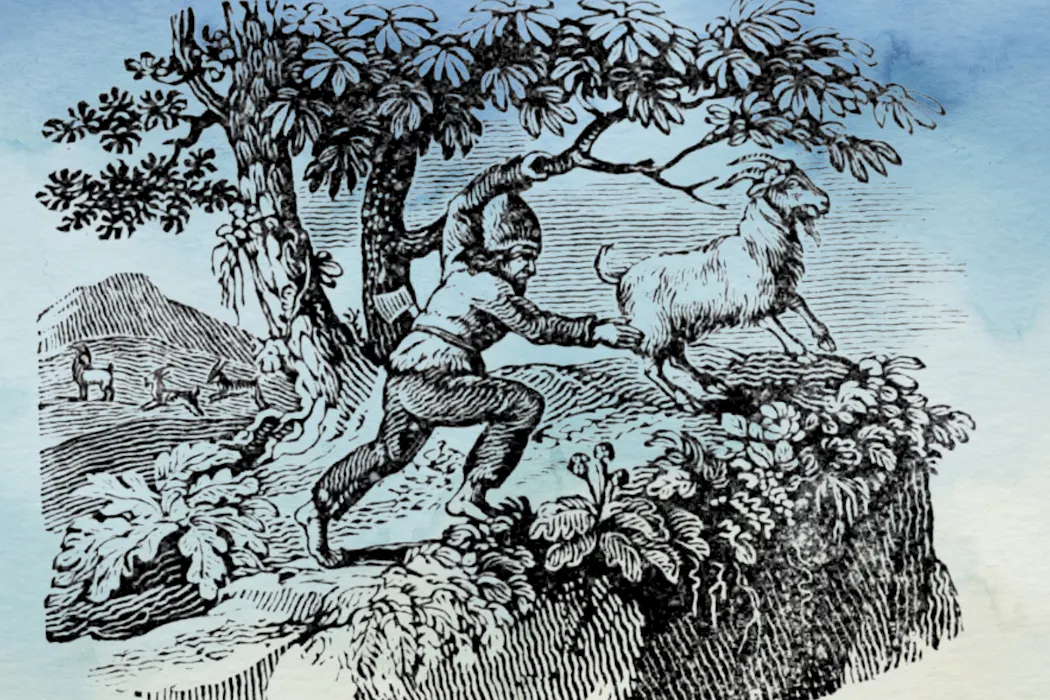
Selkirk catching a goat. Public domain, via Wikimedia Commons

You might think you’ve already heard a story about someone marooned on an uninhabited island who needs to fight for survival. The iconic image of Tom Hanks desperately calling for Wilson, the anthropomorphised volley ball in Castaway (2000), probably comes to mind.

There is also the juggernaut reality series Alone, the popularity of which raises questions about why its followers are so fascinated by isolation and survival.

And then, of course, there is Daniel Defoe’s famous tale of Robinson Crusoe.


Review: Cast Away: or, the Surprising Adventures of Alexander Selkirk – Francesca de Tores (Bloomsbury)


Defoe’s book – the full title of which is The Life and Strange Surprizing Adventures of Robinson Crusoe, of York, Mariner – is widely considered the first English novel, though there are other contenders, including works by women who came before Defoe, such as Margaret Cavendish, author of The Blazing World (1666) and Aphra Behn, author of Oroonoko (1688).

Published in 1719, amid the power struggle between the empires of England and Spain, Defoe’s tale was a runaway bestseller. It is still in print.

Robinson Crusoe was loosely based on the experience of Alexander Selkirk, who was rescued in 1709 after spending over four years marooned on an island in the Pacific Ocean.

Francesca de Tores’ new novel Cast Away returns to the inspiration for Defoe’s seminal work. It is not only the story of an escape into the simplicity (and drudgery) of life on a deserted island; it is a timely and reassuring consideration of human resilience and resourcefulness.

It is also a testament to de Tores’s research: her willingness to draw from history and get elbow-deep in the goat skins.

Research and authenticity

Robinson Crusoe deviates from Selkirk’s lived experiences in some key details. Crusoe’s island is not in the Pacific but the Caribbean, where he is given the opportunity to attain dominion over nature and visiting humans for 28 years. Defoe also furnished his castaway with a shipwreck full of tables, chairs, tools, supplies and a dog, all of which helped him live a more comfortable existence. So did the fortuitous arrival of a human, whom he enslaved and named “Friday”.

Though he is self-reflective, Crusoe is a character written for an audience that was widely accepting of the ethics and practices of imperialism. Many readers at the time were persuaded that Defoe’s novel was a true story. Its first-person narration proved a convincing technique to blur the edges of fact and fiction.

These days, audiences demand more credibility from their historical narratives. We are bombarded with stories, in print and on screen. A discerning reader wants to shake out the dross and dedicate their reading time to something transporting and meaningful.

This is an excellent reason why de Tores’s novel should rise to the top of our to-be-read lists. Cast Away respects its historical research, even as it deploys fictional tropes made familiar by its predecessors. Extensive notes at the end of Cast Away clearly set out the line where historical facts limited the telling of a rounded story, and where de Tores took narrative leaps and made educated guesses. The honesty is refreshing. It enhances reader trust and does not diminish the enjoyment of the novel.

It is evidence of the author’s commitment to creating an immersive story. In a world flooded by AI slop, where we don’t know what to trust anymore, this is important. De Tores reveals that she even took the time to learn how to cure a hide so this could be depicted with authenticity, as Selkirk cures goat skins for clothing, bedding and shelter.

Rats, cats and goats

Selkirk was a navigator on Cinque Ports, a ship accompanying explorer William Dampier on an expedition to raid and pillage Spanish galleons. The details of these preliminary circumstances are saved for late in the novel, but the questions around them hang in the air and maintain the suspense.

In de Tores’s novel, Selkirk is more experienced than his young commander Captain Stradling, and too honest for his own good. His reflections on the ethics of Dampier’s journey of plunder leaves the famed explorer’s reputation a little more stained that what we might have learned in primary school. The author’s notes confirm:

After the investors in the voyage made a case against Dampier, on 18 July 1712 Selkirk himself gave a deposition which is critical of Dampier for his mismanagement of the voyage.

History did not record the story of the women in Selkirk’s life, but the novel also includes a significant subplot which examines the lives of women involved with the sailors of the era. This offers us a convincing picture of gender disparity and bullying.

Cast Away is not fast-paced, but it is pleasant to drift into the world of Selkirk and his struggle for survival. The novel is vivid on details of the ways he uses his meagre belongings, most of which were left with him when he was dumped on a tiny island in the Pacific’s Juan Fernandez Archipelago, 650 kilometres off the coast of Chile.

There are a lot of rats on the island, as well as plentiful cats and goats. Selkirk quickly drinks his “cask of flip” and realises the best remedy for the nibbling rats that keep him awake all night is to tame some of the island’s many cats. Pickle and Sleek become comfort and protection, with the latter playing a key role in unpacking Selkirk’s back story.

Sleek is part of the novel’s fiction, which is easy to discern, because the cat is given a speaking role, as is a grand old billy-goat: Reverend Vicarious Cronch. Their conversations with Selkirk begin at a point in the novel where he has been alone for some time and is contemplating his life at sea and in Scotland, which weigh on his conscience.

As devices in the novel, these secondary animal characters are highly anthropomorphic. Like Tom Hanks and Wilson, they leave us in no doubt that Selkirk’s sanity is a bit wobbly, and with good reason.

Francesa de Tores. Andrew North/Bloomsbury

The voice of history

Author L.P. Hartley said “the past is a foreign country; they do things differently there”.

They said things differently there, too. Contemporary fiction rarely uses words like “thus” and “shall”, with the exception perhaps of high fantasy genre works. De Tores takes a gentle approach, defamiliarising English usage enough to capture a faux-archaic voice of the period without overcooking it:

I determine that my new home shall be a proper hut, standing free of the trees. Indeed, given the heavy winds that scour the island, I shall sleep all the sounder for not being directly beneath a tree, and not having to fear with each gale that I shall be crushed where I lie.

Crisp, correct grammar, with some deference to the 18th century, eases the reader into the narrative flow. It is very readable and captures a sense of time that is easy to escape into.

Selkirk is marooned with his Bible, and after reading it end to end a few times, he takes to it with charcoal and begins to create erasure poetry. His redactions seem intended to make a point about religion, but the inclusion of these poems does not do much to enhance the narrative. Whole pages are devoted to blacked-out text, which yield short ambiguous images, such as “the water shall not be forgiven”.

There is merit in experimentation in fiction, but this aspect of the novel does not add to its depth. Selkirk is already “full of goat meat and metaphors” without the erasure poems. In the context of the other exquisite writing in the novel, however, it is forgivable, with metaphors such as this: “I am impaled on the curve of time, as sharp and inevitable as the horn of a goat.”

Surviving alone

Loneliness and isolation are key themes, yet Selkirk retains some agency, not only within the circumstance of being cast away, but in the choices he makes to pursue a life at sea. Selkirk the historical figure, and the character in this novel, had incredible resilience. Given an opportunity to be on reality television, this guy would certainly take home the prize.

After damaging his flint, he eventually masters lighting a fire without one, pushing through the sore hands and lost embers. The novel captures the grim reality of his survival: the repetitive nature of foraging, hunting, feeding and building shelter; the cycle of destruction by human interference, goat, rat and storm.

It doesn’t take a genius to realise that our affluent lifestyles are balanced on a precipice that would be terrifying to a wild mountain goat. Lessons of resilience, of simple comforts, human strength and the beauty and provision in nature seem like things we need to hear in this time.

To be marooned now in such a place might mean more plentiful materials washed up on the shore, but the business of hunting and gathering are more alien to us than they were to 18th century sailors. Cast Away is not an instruction manual for Alone contestants, but it does reassure us that human resilience is still there. If the contemporary pirates of the great empires dump us on the shore, we will make the best of what we find.

The Conversation

Donna Mazza does not work for, consult, own shares in or receive funding from any company or organisation that would benefit from this article, and has disclosed no relevant affiliations beyond their academic appointment.

  •  

Reddit short stories are popular in Hollywood – joining a long trend. Here are 5 of the best short stories on film

Short stories published on Reddit have been selling for lucrative amounts to studios like Warner Bros, Amazon MGM and Netflix. It seems there’s no need to write a full screenplay: a few thousand words in a short story could be enough to kick start a Hollywood dream.

I Pretended to be a Missing Girl, the story attached to Warner Bros, with Sydney Sweeney producing, was posted in 2020 by English teacher Scott Cote to Reddit’s popular horror community r/NoSleep, where stories must be written as if true, in the first-person – and commenters must act in the same spirit. Film rights sold last year.

a man in black with one tattooed arm, sitting on a chair
Marcus Kliewer. Brian Van Wyk/Penguin Random House

Stop-motion animator Marcus Kliewer also found success on r/NoSleep, where his short story We Used to Live Here attracted the attention of a producer who sold it to Netflix in 2021, with Blake Lively set to star and produce. Kliewer then got a book deal. An expanded version of his story became his debut novel. His second novel, The Caretaker, published last month, was also based on a short story (unpublished), with film rights already sold; it will be produced by Sweeney, too.

Online platforms such as Reddit and Wattpad, a platform for publishing and sharing fiction, have become part of a legitimate acquisition pipeline. New York magazine reported in late 2024 on the “booming subgenre” of movies based on Wattpad stories (including Amazon Prime’s most popular original film worldwide in 2023, My Fault).

Why short stories suit film

On these platforms, writers can test their skills by sharing their stories with a ready-made readership (in some cases, up to 20 million members). In some ways, these stories are audience-tested through the number of “upvotes” or “likes” or “shares” they receive. So, the story may already have hype around it before being snapped up by a Hollywood producer.

For producers, a short story is faster to read than a full screenplay. It also serves as a good indicator of how well a story will translate into a treatment: the summary of a film’s narrative prepared before investing in a full screenplay. This makes economic sense too: buying the rights to a short story could be cheaper than investing in a full screenplay.

But even with the backing of a big name, many short stories optioned for film will struggle to be made. Projects that never make it to production are not unusual in film, where projects go through complex development and approval processes. Jasper DeWitt’s Reddit story The Patient Who Nearly Drove Me Out of Medicine, optioned by Ryan Reynolds in 2018, is one of many stories acquired this way yet to start production, along with Cote’s and Kliewer’s.

What is clear is that short stories are perfect material for film adaptation. A short story focuses on a single situation, turning point or crisis. This brevity makes it especially adaptable, while novels often need to be compressed for the screen.

Seen in this way, this trend is a new version of an old process. If there is a risk, it’s that writers may feel pressure to write for “likes” and the algorithm. It’s not the end of the short story, but another reminder that literary forms are shaped by the media systems they circulate in.

5 of the best short stories on film

Some of cinema’s most memorable films began as short stories. Here are five of our favourites.

1. Rear Window (It Had to be Murder)

It Had to Be Murder by Cornell Woolrich, first published in Dime Detective Magazine, provides the premise for Alfred Hitchcock’s 1954 classic, Rear Window. The short story is about a man confined to his apartment, who suspects a neighbour has committed murder after he observes strange behaviour across the courtyard. Woolrich’s text is lean and restricted to the protagonist’s point of view, with clues gradually dropped in.

Hitchcock retains this restricted vantage point but elaborates it into a dense visual world. He turns the courtyard into a kind of stage where multiple narratives unfold. Adding a romantic subplot and the glamorous figure of Lisa (played by Grace Kelly) ramps up the intrigue. Hitchcock also turned to a short story by Daphne Du Maurier as the inspiration for his 1963 thriller The Birds.

a man in a wheelchair behind a woman sprawled on a bed, looking away from him
Rear Window, based on a short story, added a romantic subplot for the screen.

2. The Shawshank Redemption (Rita Hayworth and Shawshank Redemption)

Stephen King’s novella, Rita Hayworth and Shawshank Redemption, was the inspiration for Frank Darabont’s 1994 film The Shawshank Redemption. The film largely follows the novella’s plot about the wrongful imprisonment of banker Andy Dufresne and his friendship with fellow inmate Red, while amplifying key motifs like institutionalisation, hope and the possibility of moral integrity under brutal conditions.

The adaptation gives more screen time to Andy’s quiet acts of resistance: building a library, playing opera over the loudspeakers. And it uses voice over to preserve aspects of Red’s narration, while exploiting the visual power of enclosed spaces and the climactic escape.

3. Jindabyne (So Much Water So Close to Home)

Raymond Carver’s short story So Much Water So Close to Home was adapted into Ray Lawrence’s 2006 Australian film Jindabyne. Carver’s original story presents a disturbing moral failure: four men discover a young woman’s body while on a fishing trip, but continue fishing before reporting the death. The story is unsettling, focusing on the emotional aftermath within one marriage.

Jindabyne relocates this premise to Australia’s rural New South Wales and expands the story’s ethical questions by making the discovered body that of an Aboriginal woman. This change allows the film to explore broader questions of responsibility, silence, race, masculinity and national unease.

four men standing in Australian wilderness
Jindabyne relocates Raymond Carver’s short story to Australia, making the discovered body that of an Aboriginal woman. IMDB

4. Brokeback Mountain

Brokeback Mountain, by E. Annie Proulx, was originally published in The New Yorker and later adapted into a 2005 film by Ang Lee. Proulx’s original is spare and unsentimental, tracking the decades-long, intermittent relationship between ranch hands Ennis del Mar and Jack Twist. Its tight third-person narrative summarises years in a few paragraphs.

The screenplay focuses on the Wyoming landscapes and recurring visual motifs (such as the main characters’ shirts hanging side by side in the wardrobe), demonstrating how a short story can be expanded into an emotionally and visually rich feature.

5. Burning (Barn Burning)

Haruki Murakami’s Barn Burning is a disconcerting tale about a young man, an enigmatic woman and her new boyfriend who claims to burn barns as a hobby. The narrative is full of gaps and unresolved suggestions, typical of Murakami’s unique blend of the mundane and uncanny.

Lee Chang-dong’s 2018 film Burning relocates the story to South Korea. It introduces fiery class tension between the protagonist and the wealthy boyfriend, whose crimes extend beyond barn burning. As an adaptation, it shows how the short story can be culturally and politically re-situated, without losing its original sense of mystery and emotional uncertainty.

The Conversation

The authors do not work for, consult, own shares in or receive funding from any company or organisation that would benefit from this article, and have disclosed no relevant affiliations beyond their academic appointment.

  •  
❌