Reading view

Democrats don’t get why they’ve lost most working class voters

Graham Platner, Democratic candidate for U.S. Senate, speaks at an event hosted by U.S. Sen. Bernie Sanders in Orono, Maine, on May 24, 2026. AP Photo/Robert F. Bukaty

Since 2016, when Donald Trump shattered the Democrats’ blue wall by winning working-class voters across the Midwest, a cottage industry has sprung up on the left dedicated to answering a single question: How can Democrats win back the working class?

The answers come in different forms. Sometimes it is veteran Vermont Sen. Bernie Sanders – barnstorming red districts, railing against oligarchy and corporate greed.

Or it’s Connecticut Sen. Chris Murphy, who after the 2024 election declared, “Democrats must reclaim our identity as the party of the working class.”

Or the answer comes from a new generation of candidates – tattooed veterans, mechanics, bartenders – whose biography is supposed to do the political work that policy has not.

Graham Platner, the Maine Senate candidate who has become the left’s latest blue-collar savior, put the theory in its most unguarded form.

We are in a form of class war,” he says. “And if the Democratic Party is going to have a future with working people, it needs to pick the side of working people.”

How does he define the working class? “Essentially everybody who isn’t making all their money on an immense amount of wealth.”

The theory is all the same: Somewhere out there is a latent working-class majority, held together by shared economic grievances, waiting to be politically reassembled to vote for Democrats. The New Deal did it – Democrats can do it again.

I’m a political scientist who has written extensively about rural and working-class communities. I believe it is an open question whether these reformist Democrats are really interested in understanding working-class voters on their own terms. Because working-class voters, as they tell us themselves, are not simply waiting to be activated by the right program, the right messenger, the right phrase. “Fight the oligarchy” probably isn’t going to do it.

Working-class voters have a worldview. For 50 years, it has been growing less compatible with the Democratic Party’s – not because working-class voters changed, but because Democrats did.

Working-class identity

Since the early 1950s, the American National Election Studies has asked respondents whether they think of themselves as members of the working class. This article uses my analysis of that data.

While a larger proportion of the electorate has obtained a college degree and household incomes have risen, the share of Americans who consider themselves working class has remained remarkably stable: roughly 35% of voters for the past 70 years, 38% in 2024.

Working-class identity is something more durable and culturally grounded than a description of who isn’t a billionaire. It is a specific way of looking at the world.

There are conventional ways to define the working class, but they often miss how people understand their own place in society. In the 2024 American National Election Studies, for example, 21% of those who identify as working class have a college degree, only 5% belong to a private-sector union, and 37% own stocks. Conversely, most Americans without a college degree do not identify as working class.

Working-class voters have never been a predominantly Democratic group – not even at the height of the New Deal coalition. Based on the American National Election Studies self-report measure, the working-class share of the Democratic coalition peaked around 56% in 1960 and has fallen more or less continuously since, sitting at just about 30% today.

Meanwhile, the share of working-class voters who identify as Democrats has been declining for half a century: A majority did so in 1958, but not since.

Working-class voters have not become Republicans. Only in 2020 and 2024 – the first time in the survey’s history – did more working-class voters identify as Republican than Democrat, and even then by narrow margins.

The data shows a working class that is politically homeless: estranged from the Democrats, not captured by the Republicans, stuck in the middle with diminishing attachment to either party.

Economic abandonment

So what drove them out?

A segment of the progressive left has a ready answer: Democrats abandoned working-class voters economically – on trade, wages and industrial policy. Working-class voters responded rationally. Fix the economics and the coalition comes back.

Trade is where the argument is strongest. In 1988, roughly 74% of both Democrats and working-class voters groups favored limits on imports to protect American jobs.

By 2024, only 26% of Democrats favored limits, while a majority – 54% – of working-class voters continued to do so.

Unlike most Democrats, many working-class communities do not see globalization in their interest. Running alongside the trade gap is a widening divide over values that no tariffs can fix.

What fairness requires

In 1984, Democrats and working-class voters broadly agreed that treating people more equally would mean fewer social problems. A divergence opened after 2008 and accelerated after 2016, with Democrats now 28 points more likely than working-class voters to think we should worry more about equality.

In 1986, half of mainstream Democrats and a slightly smaller percentage of working-class voters agreed with the idea that Black Americans don’t succeed because they don’t try hard enough. By 2024, Democratic agreement had collapsed to 13%. Working-class voters declined too, but to 32%.

The gap that opened between them is not primarily a story about rising working-class racial resentment. It is a story about the Democratic Party’s rapid post-2008 shift toward a worldview that places far greater explanatory weight on structural barriers and far less on individual effort and personal responsibility.

Working-class voters, who historically have understood their own lives through a framework of hard work and earned reward, did not shift so dramatically.

Alignment becomes division

On cultural questions, the pattern persists: Working-class voters did not move right in reactionary revolt. Democrats moved left.

In 1986, similar levels of Democrats and working-class voters agreed with the statement “This country would have many fewer problems if there were more emphasis on traditional family ties.” By 2024 a 25-point gap emerged.

On whether religion is an important part of their life: a near-zero gap through the early 1990s, but 17 points by 2024. On abortion, a 3-point gap in 1980 became 30 points in 2024. Regarding whether immigration levels should be increased, the two groups were virtually identical in 2000 – around 8% support – but by 2020 Democrats were at 48%, working-class voters at 24%.

But even where working-class voters nominally agree with a Democratic policy goal, they don’t trust the institution being asked to deliver it – a distrust decades in the making.

How the ‘system’ plays

In 1958, working-class voters and Democrats were within 5 points of each other on whether government wastes a lot of tax money. By 2024 that gap reached 27 points – not because working-class voters lurched toward anti-government extremism, but because mainstream Democrats became dramatically more trusting of government as an instrument of social change.

Working-class voters are 17 points more likely than Democrats to say people like them have no say in what government does. In 2024, 88% of working-class voters and 75% of Democrats said government is run by a few big interests. Both groups agree the system is captured.

Yet the Democratic policy response, invariably, is to expand the system.

On support for expanding government – from healthcare to jobs to environmental programs – Democrats and working-class voters have diverged dramatically since the 1980s. By 2024, there were approval gaps of between 20 and 30 points on providing government health insurance, environmental spending and a guaranteed jobs program.

On every major plank of the progressive economic agenda, Democrats are now substantially to the left of the workers they claim to champion.

Not all class war

Working-class voters have been telling pollsters for 60 years that the political system doesn’t hear them. Democrats, over the same period, have grown more comfortable with the institutions working-class voters have increasingly less faith in.

This distrust is the accumulated residue of specific experiences: deindustrialization that happened on government’s watch, trade deals that economists endorsed and workers paid for, a 2008 financial crisis response that saved the banks and foreclosed on their homes, an opioid epidemic that regulators missed entirely.

To be fair, this is precisely what the new crop of reform candidates say they want to fix. The argument that the right candidate can move the needle is not crazy. Candidate quality matters. Personal trust can substitute for institutional trust, at least at the margins.

But economic grievance politics is a very small slice of what working-class voters are telling us. The data documents a comprehensive, decades-long divergence in how working-class voters and mainstream Democrats understand fairness, government, personal responsibility and social change.

Reducing that to class war jams working-class voters into a prefabricated progressive agenda rather than taking seriously what they are actually saying.

The Conversation

Nicholas Jacobs does not work for, consult, own shares in or receive funding from any company or organization that would benefit from this article, and has disclosed no relevant affiliations beyond their academic appointment.

  •  

Dark patterns on the web are designed to manipulate you – why aren’t they all illegal?

Website designs that try to change your behavior cross a line when they outright deceive. Fizkes/iStock via Getty Images

You open a free app to do one simple thing. Before you even start, a full-screen message asks whether you want to try the paid version. The “Start free trial” button is large, bright and hard to miss. The option to keep using the free version is smaller, buried at the bottom. The same prompt appears again tomorrow. And the day after that.

A lot of people look at screens like that and think, “Surely this has to be illegal.” We even have a name for them, “dark patterns.” They feel pushy. They waste time. They seem designed to wear you down. But in most cases, they are perfectly lawful.

“Dark pattern” is not a legal term with a clear boundary. It is a broad label for digital designs that nudge, pressure, confuse or trap users. As a legal scholar who studies consumer protection and digital design, I think the most important thing for readers to understand is that the label “dark pattern” covers a broad spectrum.

Some of that spectrum is just annoying. Some of it is aggressive salesmanship. And some of it crosses the line into deception or coercion. Federal and state consumer protection laws are mostly aimed at that last category. They do not ban every design choice people dislike, only those that trick or coerce.

Annoying isn’t illegal

smartphone screenshot of images of a well-dressed young man
The ‘X’ in the upper right corner of this ad, for users to click to dismiss the ad, appears after the ad has been displayed for a moment. The ad also has an ‘X’ in the upper left corner, which is part of the image in the ad. Some users might click the ‘X’ on the left to dismiss the ad but instead be sent to the ad’s website. Possibly annoying but not illegal. Screen capture by Gregory Dickinson

That reality may sound unsatisfying, but it is not unusual. Offline life is full of things that are irritating but not unlawful. Think of the cashier who asks whether you want to sign up for the store credit card, then points out the discount you are turning down, then asks again. Most people know exactly what is happening. They roll their eyes, say no and try to shop somewhere else next time.

The same is true online. A repeated pop-up can be obnoxious. A guilt-inducing button can be tacky. But consumers recognize ordinary annoyance for what it is. In many cases, the market answer is simple: Close the app, ignore the pitch or take your business elsewhere.

Similarly, law does not ban persuasive sales pitches just because they are effective. A car salesperson who keeps steering you toward the upgraded model is trying to influence your choice. So is the airline clerk who offers travel insurance. So is the restaurant server who asks whether you want dessert. Salesmanship is nothing new. Digital design often borrows from familiar techniques.

That helps explain why lawmakers cannot simply outlaw “manipulation.” And so many interfaces are built to persuade, openly and lawfully.

What crosses the line

What the federal FTC Act and analogous state consumer-deception statutes usually care about is not whether a design is annoying. They focus on whether the design is likely to mislead a reasonable consumer. That is the core idea in modern consumer protection law.

So a design is likelier to be unlawful when it hides key facts, makes an optional choice look mandatory or tricks people about the effect of the button they are pressing. A fake countdown timer, a disguised ad, a misleading one-click purchase button or a cancellation path that looks finished when it is not are all different from ordinary hard selling. Those designs do not just pressure users; they can deceive them.

That is also why the app maker’s intent is not always the key question. In many consumer protection cases, a company does not get a free pass just because no one said, “Let’s trick people.” The legal question is often about effect: What would a reasonable user likely understand from this screen?

Research on dark patterns reinforces that concern. Even relatively mild designs can push people into choices they would not otherwise make. And regulators have increasingly focused on subscription flows, hidden fees and cancellation obstacles for exactly that reason.

image of a website form with a pop-up box in front of it
The instructions for this web form and the pop-up box that appears when users click ‘Continue’ indicate that the form has required fields. The form uses the word ‘mandatory,’ which could lead some users to believe that the form itself is required in order to continue when it is instead optional. Possibly annoying but not illegal. Screen capture by Gregory Dickinson

Why it feels like dark patterns are everywhere

One reason people might think there are no laws against dark patterns is that they see them so often. But that frequency reflects that the term covers a wide range of conduct, from lawful nagging to outright deception.

It also reflects enforcement limits. Regulators cannot chase every irritating screen on every app and website. They have to prioritize the worst cases. That leaves a lot of borderline conduct in the wild, which makes the whole problem feel bigger and murkier to ordinary users.

So when people ask why there is not a law against dark patterns, the best answer is that there already is, but the law does not prohibit every annoying or high-pressure design. It targets lies, misleading cues and coercive obstacles.

That line can be fuzzy. But the fuzziness is not a mistake. It is what you get when the law tries to separate persuasion from deception in a world full of both.

The Conversation

Gregory M. Dickinson does not work for, consult, own shares in or receive funding from any company or organization that would benefit from this article, and has disclosed no relevant affiliations beyond their academic appointment.

  •  

Cuba needs a long-term solution to its energy crisis

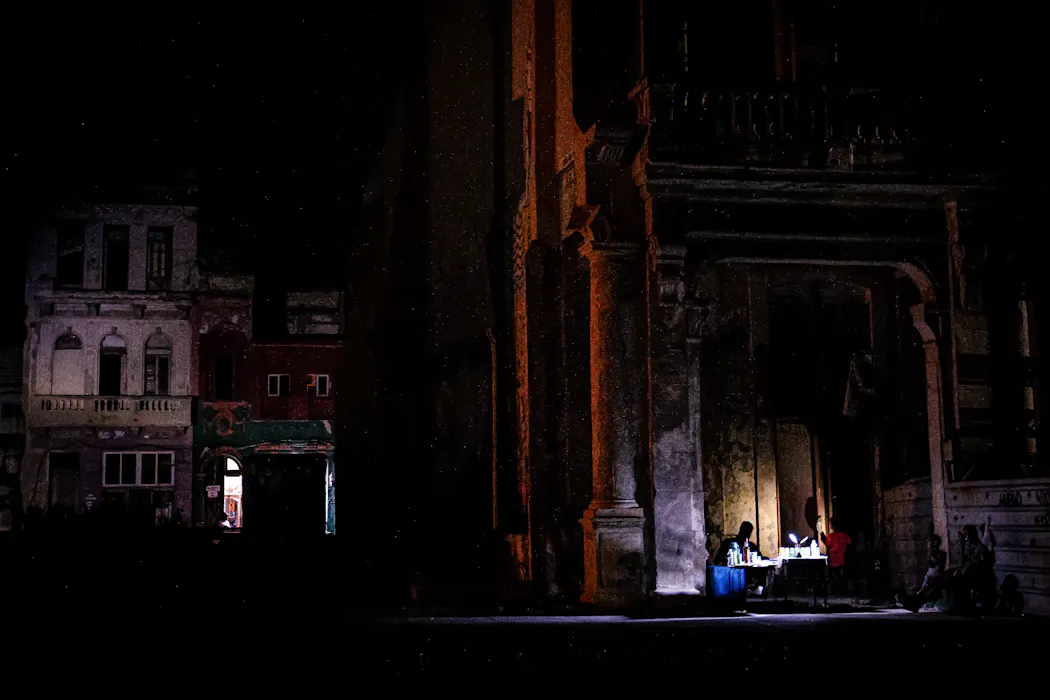
Cubans are trying to carry on with daily life amid ongoing blackouts and economic uncertainty, as shown in this photo of Havana from March 2026. Adalberto Roque/AFP via Getty Images

Cuba has run out of oil, the country’s energy minister announced on May 14, 2026.

It marks a new depth to the island’s energy crisis, which has gotten worse in recent months amid the tightening of U.S. sanctions imposed in January 2026.

U.S. Secretary of State Marco Rubio announced on May 13 that the U.S. continues to be ready to offer humanitarian assistance of up to US$100 million – but only if Cuba reforms its communist government. The State Department did not provide many specifics, but according to Archbishop Thomas Wenski of Miami, who is involved in the discussions on behalf of the Catholic Church in its role as distribution partner of U.S. aid, a regime change would be necessary.

But at current prices, this aid would buy only about 20 days’ worth of oil for the island nation, covering a mere 5% of Cuba’s annual oil import.

As an economist specializing in Latin America and a master’s candidate in public policy, we believe that the broader history of Cuba’s energy sector sheds some light on the current situation.

Dependence on foreign oil

For most of Cuba’s history, its energy capabilities lacked a stable infrastructure. This was primarily due to its dependence on foreign countries for the supply of oil necessary to produce electricity.

According to the official history of the state-run energy company, Union Eléctrica, until 1956 only about 56% of the country’s population had access to electricity. By 1992, that number had grown to 95%, largely due to fuel supplies and technological aid sourced from the former Soviet Union.

However, beginning in 1989, the weakening and eventual fall of the Soviet Union marked a return to energy insecurity, and electricity produced in Cuba fell by 25% by 1994.

In 1998, Hugo Chavez was elected president of Venezuela. Within a year, he had negotiated a deal with Cuban President Fidel Castro that made Venezuela the main provider of Cuban oil. This was a lifeline for Cuba.

Venezuela was the largest exporter of petroleum and oil to Cuba through 2021. And though there is no data past 2021, we know that Venezuela continued to be a major oil supplier to Cuba until Jan. 3, 2026, when U.S. forces captured Venezuelan President Nicolás Maduro in Caracas.

Finding a long-term solution

The current U.S. embargo on Cuba now puts the nation in a situation similar to the one it faced when the USSR fell. Memories of 1989 linger in the minds of many Cubans. The cause may be different, but the blackouts Cuba is now experiencing are not new.

As oil limitations persist, Cuba is increasingly looking to alternative sources of energy, and it has found one solution in solar power. Historical experience with energy insecurity and the recent blackouts have helped spur the transition.

Still, the nation relies heavily on oil for most of its energy production. According to data from the International Energy Agency, oil accounts for 83% of Cuba’s energy production, while solar accounts for just 0.84%.

And a transition to solar energy does not necessarily equate to energy independence. Indeed, part of Cuba’s transition to solar energy has already been expedited by assistance from foreign nations, including China and Brazil. China’s contributions through its Belt and Road Initiative, as well as Brazil’s assistance, indicate that Cuba’s reliance on foreign powers for energy will likely continue.

But at this point, one thing is clear: There is no short-term, immediate solution to satisfying the oil energy requirements of Cuba’s electrical grid. There is a clear need for a long-term solution to a long-term problem.

Whatever Cuba chooses to do about its energy crisis, it will also remain dependent on foreign nations. The questions are, which nations and how dependent?

The Conversation

The authors do not work for, consult, own shares in or receive funding from any company or organization that would benefit from this article, and have disclosed no relevant affiliations beyond their academic appointment.

  •  
❌