
Reading view

Is baby talk bad? Why ‘parentese’ actually helps babies learn language
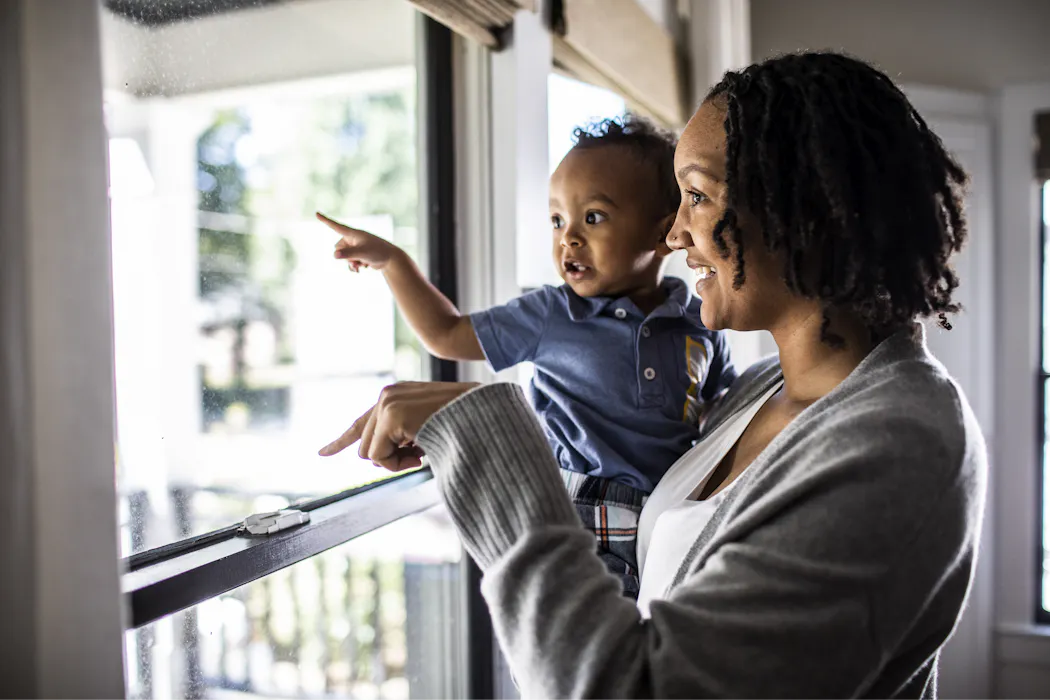
Emphasizing the sounds of certain words to young children can help them retain language, not confuse them about speaking properly. MoMo Productions/DigitalVision via Getty Images

Many parents have heard the warning: Don’t use baby talk with babies and toddlers. Instead, caregivers are often encouraged to speak properly and use adultlike language, out of concern that simplified speech could confuse children or delay language development.

But my research, which I highlighted in in my new book, “Beyond Words,” suggests the opposite is true. The sing-song voice many adults instinctively use with infants, sometimes called “baby talk” but more accurately known as “parentese” or infant-directed speech, actually helps children learn language.

Far from confusing babies, exaggerating phrases like “Loooook at the doggie!” capture their attention, help them detect patterns in speech and strengthen social bonding.

And the funny mistakes children make along the way, such as saying “goed,” instead of “went,” or “mouses” instead of “mice,” are not signs that children are learning language incorrectly. They are evidence that children are actively working out the rules of language for themselves.

A man holds his hands away from his face and leans over a small baby lying on a bed and smiles.
Speaking ‘parentese’ to a child doesn’t involve nonsense words. BjelicaS/E+ via Getty Images

What parentese really is

When many people think of baby talk, they imagine nonsense phrases like “goo goo ga ga” or made-up words like “num nums.” But that’s not what linguists and developmental psychologists mean by parentese.

Parentese uses real words and grammatically correct sentences, but with exaggerated intonation, a higher pitch, stretched-out vowels and a slower rhythm. Think of the way a caregiver might naturally say: “Hi, baaaaby! Are you huuungry?”

There is little evidence that occasional playful nonsense words harm children’s language development. But studies suggest that parentese in particular helps babies pay attention to speech, recognize patterns and engage socially.

Adults across cultures tend to speak this way to infants instinctively. Even people who swear they never use baby talk often slip into it around babies.

Researchers have found that infants actually prefer listening to parentese over regular adult speech. The exaggerated sounds and slower pacing make language easier to process. Babies are better able to pick out individual sounds, notice word boundaries and recognize patterns. In other words, parentese helps tune babies into language.

It also strengthens emotional connection. Language learning does not happen in isolation. Babies learn through warm, responsive interaction with caregivers during feeding, play, bath time and everyday routines.

Interestingly, humans are not the only ones who respond to this style of communication. Studies have even shown that cats react more positively when people use a baby-talk voice with them.

Babies are not passive learners

Children do not learn language simply by copying adults word for word. They actively test hypotheses about how language works. That is why toddlers make predictable and surprisingly logical mistakes.

One common example is overgeneralization. A child learns that people form the past tense of many verbs by adding “-ed,” so they produce forms like “goed,” “eated” or “comed.”

These are not random errors. In fact, they show that the child has understood a grammatical rule and is trying to apply it consistently. The problem is simply that English is full of irregular exceptions. The same thing happens with plurals. Children may say “foots” instead of “feet” or “mouses” instead of “mice.” Again, the logic behind these errors is sound.

Linguists sometimes say that children are little scientists, constantly testing patterns and revising their understanding as they receive more input from the world around them.

Why toddlers call everything a ‘dog’

Young children also make predictable mistakes with meaning.

A toddler might learn the word “dog” and then use it for every four-legged animal they encounter. Linguists call this overextension. On the flip side, some children use words too narrowly. A child may use “dog” only for the family pet and not recognize that other dogs belong in the same category. Linguists call this tendency underextension.

These mistakes reveal how children organize and categorize the world around them. They are gradually mapping words onto objects, people and experiences.

Pronouns are another tricky area. Small children often confuse “me” and “you” because these words constantly shift depending on who is speaking. If a parent says, “I’ll pick you up,” the child hears themselves called “you.” But when they try to repeat the sentence, they may not yet understand that the labels switch from speaker to speaker.

This is why toddlers sometimes say things that sound unintentionally cute or confusing. But beneath the confusion is a sophisticated learning process.

Even the Cookie Monster gets it wrong

Children’s speech errors are so recognizable that they often appear in popular culture. Sesame Street’s character Cookie Monster famously says things like “Me want cookie,” while Elmo often refers to himself in the third person: “Elmo wants this.” These speech patterns mirror real stages of child language development. Young children commonly confuse pronouns or refer to themselves by name before mastering forms like “I,” “me” and “mine.”

Despite occasional complaints from adults, there is no evidence that hearing this kind of speech harms children’s language development. If anything, it reflects the natural experimentation children go through.

A Cookie Monster puppet stands near a black tarp with its mouth open and holds a cookie.
The Cookie Monster saying ‘Me want cookie’ won’t teach babies and young kids to speak incorrectly. Brian Killian/WireImage via Getty Images

‘Pasketti’ and ‘wabbit’

Pronunciation develops gradually too. Young children often simplify difficult sounds and groups of consonants. “Spaghetti” becomes “pasketti,” “rabbit” becomes “wabbit” and “yellow” may come out as “lellow.”

Speech-language specialists call these simplifications phonological processes. They are a normal part of development because some sounds are physically harder to produce than others. Sounds such as r, th, sh and ch tend to develop later because they require more precise control of the tongue and mouth.

Most children naturally outgrow these pronunciation patterns as their speech matures. However, persistent difficulties can sometimes signal a speech or language disorder, which may require professional support.

A graphic image shows a young child's head with various colorful thought bubbles inside.
Children don’t learn language by copying adults word for word. They learn through interaction, experimentation and repetition. DrAfter123/DigitalVision Vectors via Getty Images

Mistakes are part of learning

Parents are often under enormous pressure to do everything right, including helping their children learn to speak a language. But children do not learn language by avoiding mistakes. They learn through interaction, experimentation and repetition.

Parentese helps babies focus on speech and engage socially. The funny mistakes toddlers make reveal that they are actively piecing together the complex system of language and are often signs of normal development. Language acquisition is messy, creative and remarkably sophisticated.

Speaking in an exaggerated sing-song voice to a baby is not something parents and caregivers need to feel embarrassed about.

Far from harming language acquisition, it may help lay the foundation for it.

The Conversation

Karen Stollznow does not work for, consult, own shares in or receive funding from any company or organization that would benefit from this article, and has disclosed no relevant affiliations beyond their academic appointment.
  •  

Where did language come from? Nobody really knows, but the theories are fascinating

Sriharu Kapu/Unsplash

Humans are the only species known to use fully symbolic language: a system capable of expressing abstract ideas, imaginary worlds and endless combinations of meaning. But how did we get there?

The origins of language have fascinated philosophers, scientists and storytellers for thousands of years. Despite all our advances in linguistics, archaeology and cognitive science, we still don’t know exactly how language began.

That uncertainty hasn’t stopped people from trying to solve the mystery. In fact, some of the earliest theories of language’s origins are among the strangest and most entertaining ideas in the history of science.

Bow wow, ding-dong

In the 19th century, scholars proposed a flurry of curious theories to explain how speech first emerged. Many of these theories were given playful nicknames by the German philologist Max Müller, who intended them partly as satire. Yet the theories were genuine attempts to tackle one of humanity’s biggest questions.

German philologist Max Müller gave playful nicknames to competing theories of language’s origins. Public domain, via Wikimedia Commons

The most famous is probably the Bow-Wow Theory. This suggested language began through imitation of natural sounds. Early humans, according to this theory, copied the noises around them: animal cries, splashing water, thunderclaps and birdsong. Words such as “buzz”, “hiss”, “bang” and “splash” seem to support the idea because they sound like what they describe.

But there is a problem. Different languages hear the same sounds differently. English dogs go “woof” or “bow-wow”, but in Turkish they go “hev-hev”, while Indonesian dogs go “guk-guk”. Even animal noises, it turns out, are filtered through culture and language.

And onomatopoeic words (words that imitate sounds) make up only a tiny fraction of our vocabularies. Most words sound nothing like their meanings. For instance, there is nothing inherently tree-like about the word “tree”.

That brings us to the Ding-Dong Theory, which argued that sounds and meanings are naturally connected in some deeper, almost mystical way.

Some words do seem to fit their meanings uncannily well. “Mini”, “teeny” and “itsy-bitsy” feel small and delicate. “Lump”, “rump” and “plump” sound heavier and rounder.

Modern linguists call this sound symbolism. One famous experiment asked participants to match two nonsense words, “bouba” and “kiki”, to two shapes: one rounded and one jagged. Most people matched “bouba” with the soft shape and “kiki” with the sharp one.

The effect is real, but it is limited. Most language still appears to be arbitrary, which means there is no natural reason why a particular sound should mean a particular thing.

Pooh-pooh, la-la, ye-he-ho

Other theories focused less on imitation and more on emotion and social interaction.

The Pooh-Pooh Theory proposed that speech began with instinctive emotional cries such as “ouch”, “oh” or perhaps less publishable exclamations uttered after stubbing a toe. According to this idea, language evolved from spontaneous vocal reactions to pain, surprise, fear or joy.

Again, though, there are complications. Interjections vary widely across languages. English speakers say “ouch”. Greeks say “aou”. Czechs might exclaim “ach”. Emotional sounds are not nearly as universal as they seem.

Then there is the wonderfully named Yo-He-Ho Theory, which suggested language emerged from rhythmic chants used during collective labour, like sailors chanting “yo-heave-ho” while hauling ropes, or workers singing together to coordinate physical effort.

The theory may sound quaint, but modern researchers do think rhythm, cooperation and social bonding played important roles in human evolution. Language is, after all, deeply social.

Charles Darwin speculated that speech evolved from musical expression. Herbert Rose Barraud, Public domain, via Wikimedia Commons

Another proposal, the La-La Theory, linked language to music. Charles Darwin entertained the possibility that speech evolved from musical calls used in courtship and emotional expression. Before humans spoke, perhaps we sang?

Some modern theories echo this idea. One hypothesis suggests that, as early humans began walking upright, parents increasingly needed to soothe babies from a distance. Sing-song vocalisations, cooing and proto “baby talk” may have helped strengthen emotional bonds and eventually paved the way for speech.

Gestures, symbols and brains

Today, most scientists think no single theory fully explains language origins. Instead, language probably emerged gradually through a combination of gestures, vocalisations, facial expressions, social cooperation and increasing cognitive complexity.

Some researchers argue that language began with gestures before shifting to speech. Others believe language evolved as a tool for social bonding, allowing larger groups of humans to cooperate and share information. Still others see language as tied to the evolution of symbolic thought itself: our ability to imagine, plan, remember and communicate abstract ideas.

Biology is also a factor. Humans have developed unusually precise control over the tongue, lips and vocal tract. We have evolved specialised brain regions linked to language processing.

But anatomy alone cannot explain language. Parrots can mimic speech sounds. Many animals communicate. None, however, appear to possess grammar and symbolism on the human scale. And, frustratingly, early language leaves no evidence behind. Spoken words don’t fossilise.

That lack of evidence is one reason the topic became so controversial that, in 1866, the Société de Linguistique de Paris banned discussions about language origins altogether, dismissing the field as hopelessly speculative.

Saraswati, Hindu goddess of knowledge and speech – Raja Ravi Varma (1894) Public domain, via Wikimedia Commons

Of course, theories about language origins also appear in religion and mythology. In Greek mythology, the messenger god Hermes was associated with language and communication. In the Hindu tradition, the goddess of knowledge and speech Saraswati bestowed Sanskrit upon humanity. In the Judeo-Christian tradition, language was a gift from God, who enabled Adam to name the animals in the Garden of Eden.

These stories reflect something deeply human: our urge to explain where language came from, because language itself feels almost magical. Every theory of language origins captures a small piece of the puzzle. Imitation, emotion, rhythm, music, gesture, cooperation and symbolic thought probably all played some role.

But none can provide a complete answer. The truth is that language evolved so long ago, and likely so gradually, that we will never pinpoint a single moment when it began, unless someone invents a time machine.

The birth of language will probably remain one of humanity’s greatest unsolved mysteries. Still, the theories themselves tell us something important. Humans are always trying to explain what makes us human. And language may be the most human thing of all.

The Conversation

Karen Stollznow does not work for, consult, own shares in or receive funding from any company or organisation that would benefit from this article, and has disclosed no relevant affiliations beyond their academic appointment.

  •  
❌