
Reading view

From medieval plague ships to hantavirus: How outbreaks at sea helped to shape the international public health system
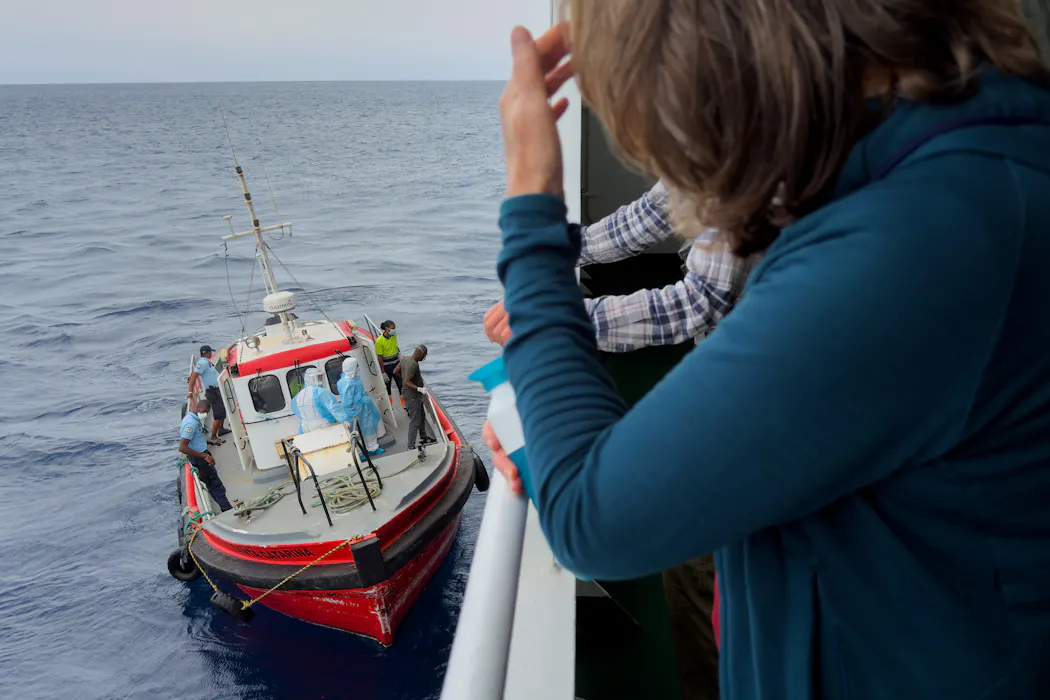
Passengers on the the hantavirus-stricken cruise ship MV Hondius watch epidemiologists board the boat in Praia, Cape Verde, on May 6, 2026 AP Photo/Uncredited

Cruise ships are convenient floating hotels by which to see far-flung parts of the world – but as an epidemiologist, I know they are also everything an infectious pathogen could want: thousands of strangers packed into enclosed spaces for days or weeks, sharing dining rooms and high-touch surfaces such as elevator buttons and handrails, breathing recirculated air.

Each new port of call where passengers can explore for a few days is an opportunity for germs to embark – and once they do, they encounter a highly efficient setting for hopping from host to host.

The MV Hondius confirmed this well-known fact in April 2026, when an outbreak of Andes hantavirus began aboard the Dutch-flagged expedition vessel carrying 147 passengers and crew from 23 countries.

The Andes virus is one of several species of hantaviruses. It is the only one known to spread from person to person, though it doesn’t do so very efficiently. It is far less contagious than COVID-19 or the measles.

As of May 14, a total of 11 cases, including three deaths, have been reported in the Hondius outbreak.

Outbreaks at sea are one of the oldest problems in public health. From medieval plague quarantines to modern times, they have repeatedly tested the ability to control infectious disease – and have played a key role in shaping the international public health framework in place today.

That interconnected public health system, however, depends on the cooperation of countries around the globe.

From harbor quarantine to global disease control

The word “quarantine” was first documented in the English language in 1663, in the Oxford English Dictionary, which defined it as a period of 40 days during which people who might spread a contagious disease are kept isolated from the rest of the community.

The first official quarantine, though, came earlier, in 1377, when the Republic of Ragusa – modern-day Dubrovnik, Croatia – ordered ships from plague-affected ports to anchor offshore for 30 days before anyone could disembark. A quarter-century later, Venice extended this period to 40 days – hence the “quarantine” term, which stuck. In 1423, Venice officially opened the world’s first permanent quarantine island, the Lazzaretto Vecchio, specifically to manage the problem of the plague arriving by sea.

A black and white historical illustration of an island,
Lazzaretto Vecchio, the first quarantine island, was established in 1423. Wikimedia Commons

The system worked during the medieval era because a single authority usually controlled most harbors. Ships waited because they recognized states’ authority to detain them.

For centuries, maritime quarantine operated on this principle. Harbor officials wielded broad public health powers over incoming vessels. In the 19th century this practice continued in the United States. Cholera ships – a nickname for trans-Atlantic vessels carrying migrants and troops that were breeding grounds for cholera and other diseases – arrived from Europe and the Mediterranean and sat offshore in New York for weeks. At quarantine stations on Ellis Island and ports across the Atlantic seaboard, ships were inspected, passengers isolated and captains overruled by public health officers who had the legal authority to isolate passengers for extended periods.

The system was crude and often brutal. Ships of the medieval period were floating sickrooms with poor conditions: putrid water in the casks, bread full of worms, and passengers packed into pitch-sealed berths with lice in the bedding and the bilge stinking under them. Many people died on board. But the system rested on a foundation of recognized, enforceable authority over the vessel and everyone on it for the purpose of protecting the city from disease.

International cooperation

As maritime trade and travel became increasingly globalized, however, no single port or government could manage outbreaks alone. Also, advances in vaccines, antibiotics and sanitation led many countries to downsize the maritime quarantine systems that had once defined disease control at sea.

This forced quarantine systems to evolve from local harbor control into international frameworks for coordination. The World Health Organization was established in 1948, and the International Health Regulations were created in 1969 to manage disease across borders.

Countries agreed to share information, notify one another of outbreaks and coordinate responses at ports and borders. The responsibility no longer fell on a sole harbormaster, but the system was designed to perform a similar coordinating function across an increasingly interconnected world.

Even within that system, however, cruise ships remain unusually vulnerable outbreak environments. A highly visible example was a COVID-19 outbreak that occurred on the Diamond Princess in 2020. The cruise ship, which was anchored off the coast of Yokohama, Japan, produced weeks of confusion between Japanese authorities, the British cruise operator and a dozen foreign governments as they struggled to coordinate responsibility for the 3,700 passengers and containment measures.

Some analyses later suggested the shipboard quarantine may have amplified transmission. At the time, most observers treated it as a crisis specific to the early chaos of the pandemic.

But the Hondius outbreak suggests the problem runs deeper.

The Andes hantavirus can spread from person to person, but not very efficiently.

Ships cross borders – so too do pathogens

Cruise ships combine dense social mixing, international mobility and fragmented legal authority in ways that continue to challenge modern disease-control systems – even decades after the creation of international public health frameworks designed to coordinate them, and even for diseases like Andes hantavirus that are extremely unlikely to cause a pandemic.

As the cruise industry has grown, it has expanded into more remote and epidemiologically unpredictable environments – expedition voyages to Antarctica, the Amazon, Alaska. Alongside the industry’s ambitions, disease risk has also increased. These trips routinely bring large groups of passengers into contact with wildlife, pathogens and ecosystems they may have little prior exposure to and then seal travelers together for weeks.

Nevertheless, the United States chose in January 2026 to withdraw from the World Health Organization, the primary institution administering the framework designed to coordinate responses when disease crosses the borders that cruise ships cross as a matter of routine.

The Trump administration framed the exiting of international organizations as a means of protecting U.S. sovereignty. In practice, it meant that when the Hondius needed a response, the U.S. participated from outside the systems it had spent decades helping to build.

A crack in the system

In the outbreak on the Hondius, the international system still functioned.

The WHO still issued risk assessments and guidance. The European Centre for Disease Prevention and Control still coordinated the response across Europe. And in the U.S., the Centers for Disease Control and Prevention belatedly issued a health alert to physicians.

What changed is that the U.S. moved from being a central participant in the international public health system to operating more from its edges.

Who can say whether the next big outbreak will come from a disease spread on a cruise ship – or whether the pathogen involved will be one that spreads more efficiently between people than the Andes strain of the hantavirus does.

Whatever its source, outbreak response depends on cooperation between major governments, rapid information sharing and coordinated logistics. When a country as globally connected as the U.S. steps back from those systems, managing international health emergencies becomes slower, more fragmented and more dependent on ad hoc negotiations. Ultimately, this may make the world less safe.

The Conversation

Katrine L. Wallace does not work for, consult, own shares in or receive funding from any company or organization that would benefit from this article, and has disclosed no relevant affiliations beyond their academic appointment.
  •  

What’s wrong with how US and Uganda plan to stop Ebola spreading

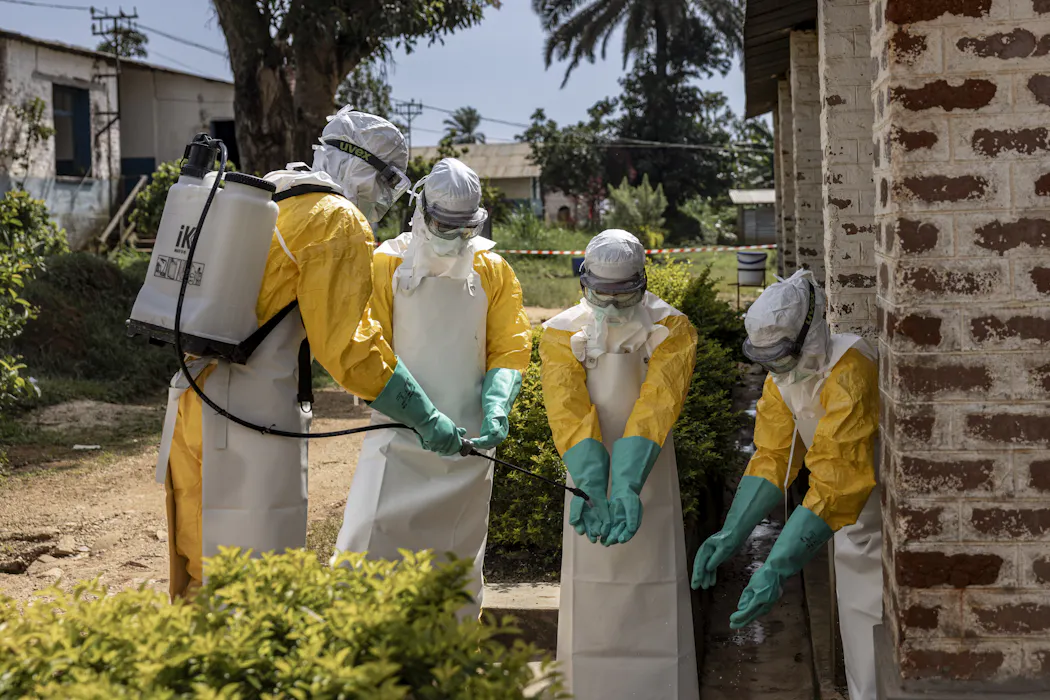
The Democratic Republic of Congo is scaling up health operations to contain the Ebola epidemic. Michel Lunanga/Getty Images

As public health workers in the Democratic Republic of Congo work to rein in a growing outbreak of a rare Ebola virus, other countries are establishing protocols for keeping their own populations safe.

As of May 27, 2026, Congo has reported more than 1,000 suspected and confirmed cases, and more than 250 deaths, according to the U.S. Centers for Disease Control and Prevention. Neighboring Uganda has also reported seven cases and one death. Several Americans who were in the region have been exposed.

Measures such as screening incoming travelers and isolating those who have been exposed, announced by the U.S., Canada and other countries, are scientifically proven ways to effectively address outbreaks.

But recent decisions by two countries stand out because they are not supported by epidemiological evidence – and because they reflect a surprisingly similar way of thinking about outbreak control: On May 27, Uganda closed its border with Congo. Only a narrow set of exceptions apply, mostly for emergency aid workers, and those who cross the border will be subject to health screening and supervised isolation. The following day, the United States announced plans to send exposed Americans from affected countries to a quarantine facility in Kenya, a country with no Ebola cases – though as of May 29, a Kenyan court has blocked the move.

Uganda closed its border with Congo to prevent the spread of Ebola, but public health history suggests this is not a great idea.

These are very different policies, but both rely on a common assumption: that creating geographic distance from a threat provides protection. However, surveillance, isolation and response capacity are often more important. And both the Ugandan and U.S. moves have drawn criticism from public health and medical experts who argue that managing outbreaks depends more on detection and monitoring than distance alone.

And both decisions emerge from a long-running debate in public health: whether controlling where people are located is more effective than investing in the systems that identify, monitor and treat disease.

As an epidemiologist studying infectious disease outbreaks, I think a look at the history of border restrictions and closures during epidemics helps explain why scientific consensus usually recommends against them.

Land borders are challenging to ‘close’

The instinct to seal borders during outbreaks goes back centuries. Venice’s 14th-century “quarantino” was one of the earliest organized attempts by a state to regulate movement in the name of collective health. It worked because the unit of control was a ship: a discrete location that could be anchored offshore for a period of time.

A land border is a fundamentally different problem. As trade networks crossed continents, epidemic control encountered something maritime quarantine never had to solve. You cannot easily anchor people at a land border.

By the 19th century, repeated cholera outbreaks had made the problem international. European powers responded with waves of uncoordinated border closures and trade restrictions that caused enormous economic damage without reliably stopping transmission.

A four-panel etching from 1833 showing people trying to disembark from a boat and go ashore.
Sealing a border is easier when people arrive by sea than by land. Wikimedia Commons

In 1874, governments from around the world met in Vienna for the Fourth International Sanitary Conference to address a problem that sounds remarkably modern: how to control infectious diseases crossing borders without crippling trade and travel. Delegates explicitly rejected border closures and land quarantine as “unworkable and consequently useless.”

The modern descendant of those 19th-century conferences is a set of global laws called the International Health Regulations. Their core purpose is straightforward: Make it safe for countries to report outbreaks honestly, without fear that doing so will trigger economic punishment or travel bans.

Incentive problem at the heart of global health

The entire modern global health surveillance system rests on a single premise: Countries need to report outbreaks quickly, without fear of automatic economic punishment for doing so. If declaring an outbreak triggers immediate border closures and travel bans, governments have a powerful incentive to delay reporting.

This concern is not hypothetical. During the first SARS outbreak in 2003, China’s delays in official reporting, driven in part by concern about economic fallout, contributed directly to the global spread of the disease. This prompted the World Health Organization to publicly accuse a member state of placing the world at risk. The International Health Regulations were most recently revised in 2005 in direct response to that failure.

When the WHO declared the current Ebola outbreak a public health emergency of international concern on May 17, it explicitly warned against border closures and travel restrictions, saying that these moves “have no basis in science.” That’s because such actions push movement to informal border crossings that are not monitored and “can also compromise local economies and negatively affect response operations from a security and logistics perspective.”

For example, a mother trying to get a sick child to a clinic just across the border may not stop because the formal crossing is shut. The Uganda-Congo border is several hundred miles long and crossed by numerous footpaths beyond formal border posts, which many people use daily to visit family or to trade.

The public health system loses the ability to test, isolate or trace those interactions. This matters especially for Ebola, which transmits only after symptoms begin – meaning a person who can actually spread the virus is already identifiable through symptom screening, making case detection and isolation far more effective than geographic restriction.

U.S. plans to establish quarantine facilities in Kenya for Americans exposed to Ebola have drawn strong pushback.

The U.S. decision to send exposed Americans to a quarantine facility in Kenya reflects a related instinct – to keep the virus off native soil. But exposure has already occurred, so the public health question is no longer how to prevent entry but how to monitor potentially exposed people safely and effectively. The plan is particularly controversial because it would transfer potentially exposed individuals to a country with no Ebola cases of its own, despite the U.S. already possessing specialized facilities designed for exactly this purpose.

The Infectious Diseases Society of America criticized the plan, noting that the United States has already invested heavily in specialized Ebola treatment centers specifically designed to care for patients with highly dangerous infectious diseases. It warned that building and staffing a new unit in Kenya during an active outbreak raises questions about resources, timing and quality of care.

Border restrictions do not work alone

Some countries did use border closures effectively during COVID-19 – New Zealand, Australia and Taiwan sharply restricted international travel while pairing those measures with intensive testing, quarantine and contact tracing. But specific circumstances made those cases work: restrictions before the virus began spreading widely in the community, island geography that naturally limited informal crossings, and aggressive internal measures running in parallel.

Remove any of those elements and the effectiveness drops sharply. In these examples, the act of closing the border did not work alone. It bought time for setting up the infrastructure for testing and contact tracing.

These circumstances don’t apply to Uganda’s border closing. Researchers estimate the virus had been transmitting for approximately six weeks, and Uganda already has seven confirmed cases. A closure here is not a moat.

Governments face real pressure to act visibly during outbreaks, and border restrictions are easier to communicate to a worried public than investments in surveillance infrastructure. Those incentives are understandable.

But history suggests that outbreaks are controlled less by where people are located than by whether governments can identify cases quickly, trace contacts, isolate infections and maintain public trust. In other words, borders alone do not stop outbreaks. The real work happens inside them.

The Conversation

Katrine L. Wallace does not work for, consult, own shares in or receive funding from any company or organization that would benefit from this article, and has disclosed no relevant affiliations beyond their academic appointment.

  •  

What’s wrong with how US and Uganda plan to stop Ebola spreading

The Democratic Republic of Congo is scaling up health operations to contain the Ebola epidemic. Michel Lunanga/Getty Images

As public health workers in the Democratic Republic of Congo work to rein in a growing outbreak of a rare Ebola virus, other countries are establishing protocols for keeping their own populations safe.

As of May 27, 2026, Congo has reported more than 1,000 suspected and confirmed cases, and more than 250 deaths, according to the U.S. Centers for Disease Control and Prevention. Neighboring Uganda has also reported seven cases and one death. Several Americans who were in the region have been exposed.

Measures such as screening incoming travelers and isolating those who have been exposed, announced by the U.S., Canada and other countries, are scientifically proven ways to effectively address outbreaks.

But recent decisions by two countries stand out because they are not supported by epidemiological evidence – and because they reflect a surprisingly similar way of thinking about outbreak control: On May 27, Uganda closed its border with Congo. Only a narrow set of exceptions apply, mostly for emergency aid workers, and those who cross the border will be subject to health screening and supervised isolation. The following day, the United States announced plans to send exposed Americans from affected countries to a quarantine facility in Kenya, a country with no Ebola cases – though as of May 29, a Kenyan court has blocked the move.

Uganda closed its border with Congo to prevent the spread of Ebola, but public health history suggests this is not a great idea.

These are very different policies, but both rely on a common assumption: that creating geographic distance from a threat provides protection. However, surveillance, isolation and response capacity are often more important. And both the Ugandan and U.S. moves have drawn criticism from public health and medical experts who argue that managing outbreaks depends more on detection and monitoring than distance alone.

And both decisions emerge from a long-running debate in public health: whether controlling where people are located is more effective than investing in the systems that identify, monitor and treat disease.

As an epidemiologist studying infectious disease outbreaks, I think a look at the history of border restrictions and closures during epidemics helps explain why scientific consensus usually recommends against them.

Land borders are challenging to ‘close’

The instinct to seal borders during outbreaks goes back centuries. Venice’s 14th-century “quarantino” was one of the earliest organized attempts by a state to regulate movement in the name of collective health. It worked because the unit of control was a ship: a discrete location that could be anchored offshore for a period of time.

A land border is a fundamentally different problem. As trade networks crossed continents, epidemic control encountered something maritime quarantine never had to solve. You cannot easily anchor people at a land border.

By the 19th century, repeated cholera outbreaks had made the problem international. European powers responded with waves of uncoordinated border closures and trade restrictions that caused enormous economic damage without reliably stopping transmission.

A four-panel etching from 1833 showing people trying to disembark from a boat and go ashore.
Sealing a border is easier when people arrive by sea than by land. Wikimedia Commons

In 1874, governments from around the world met in Vienna for the Fourth International Sanitary Conference to address a problem that sounds remarkably modern: how to control infectious diseases crossing borders without crippling trade and travel. Delegates explicitly rejected border closures and land quarantine as “unworkable and consequently useless.”

The modern descendant of those 19th-century conferences is a set of global laws called the International Health Regulations. Their core purpose is straightforward: Make it safe for countries to report outbreaks honestly, without fear that doing so will trigger economic punishment or travel bans.

Incentive problem at the heart of global health

The entire modern global health surveillance system rests on a single premise: Countries need to report outbreaks quickly, without fear of automatic economic punishment for doing so. If declaring an outbreak triggers immediate border closures and travel bans, governments have a powerful incentive to delay reporting.

This concern is not hypothetical. During the first SARS outbreak in 2003, China’s delays in official reporting, driven in part by concern about economic fallout, contributed directly to the global spread of the disease. This prompted the World Health Organization to publicly accuse a member state of placing the world at risk. The International Health Regulations were most recently revised in 2005 in direct response to that failure.

When the WHO declared the current Ebola outbreak a public health emergency of international concern on May 17, it explicitly warned against border closures and travel restrictions, saying that these moves “have no basis in science.” That’s because such actions push movement to informal border crossings that are not monitored and “can also compromise local economies and negatively affect response operations from a security and logistics perspective.”

For example, a mother trying to get a sick child to a clinic just across the border may not stop because the formal crossing is shut. The Uganda-Congo border is several hundred miles long and crossed by numerous footpaths beyond formal border posts, which many people use daily to visit family or to trade.

The public health system loses the ability to test, isolate or trace those interactions. This matters especially for Ebola, which transmits only after symptoms begin – meaning a person who can actually spread the virus is already identifiable through symptom screening, making case detection and isolation far more effective than geographic restriction.

U.S. plans to establish quarantine facilities in Kenya for Americans exposed to Ebola have drawn strong pushback.

The U.S. decision to send exposed Americans to a quarantine facility in Kenya reflects a related instinct – to keep the virus off native soil. But exposure has already occurred, so the public health question is no longer how to prevent entry but how to monitor potentially exposed people safely and effectively. The plan is particularly controversial because it would transfer potentially exposed individuals to a country with no Ebola cases of its own, despite the U.S. already possessing specialized facilities designed for exactly this purpose.

The Infectious Diseases Society of America criticized the plan, noting that the United States has already invested heavily in specialized Ebola treatment centers specifically designed to care for patients with highly dangerous infectious diseases. It warned that building and staffing a new unit in Kenya during an active outbreak raises questions about resources, timing and quality of care.

Border restrictions do not work alone

Some countries did use border closures effectively during COVID-19 – New Zealand, Australia and Taiwan sharply restricted international travel while pairing those measures with intensive testing, quarantine and contact tracing. But specific circumstances made those cases work: restrictions before the virus began spreading widely in the community, island geography that naturally limited informal crossings, and aggressive internal measures running in parallel.

Remove any of those elements and the effectiveness drops sharply. In these examples, the act of closing the border did not work alone. It bought time for setting up the infrastructure for testing and contact tracing.

These circumstances don’t apply to Uganda’s border closing. Researchers estimate the virus had been transmitting for approximately six weeks, and Uganda already has seven confirmed cases. A closure here is not a moat.

Governments face real pressure to act visibly during outbreaks, and border restrictions are easier to communicate to a worried public than investments in surveillance infrastructure. Those incentives are understandable.

But history suggests that outbreaks are controlled less by where people are located than by whether governments can identify cases quickly, trace contacts, isolate infections and maintain public trust. In other words, borders alone do not stop outbreaks. The real work happens inside them.

The Conversation

Katrine L. Wallace does not work for, consult, own shares in or receive funding from any company or organization that would benefit from this article, and has disclosed no relevant affiliations beyond their academic appointment.

  •  
❌