Reading view

Bengal: New BJP govt ‘implements’ already existing BNS, promises welfare continuity and border push

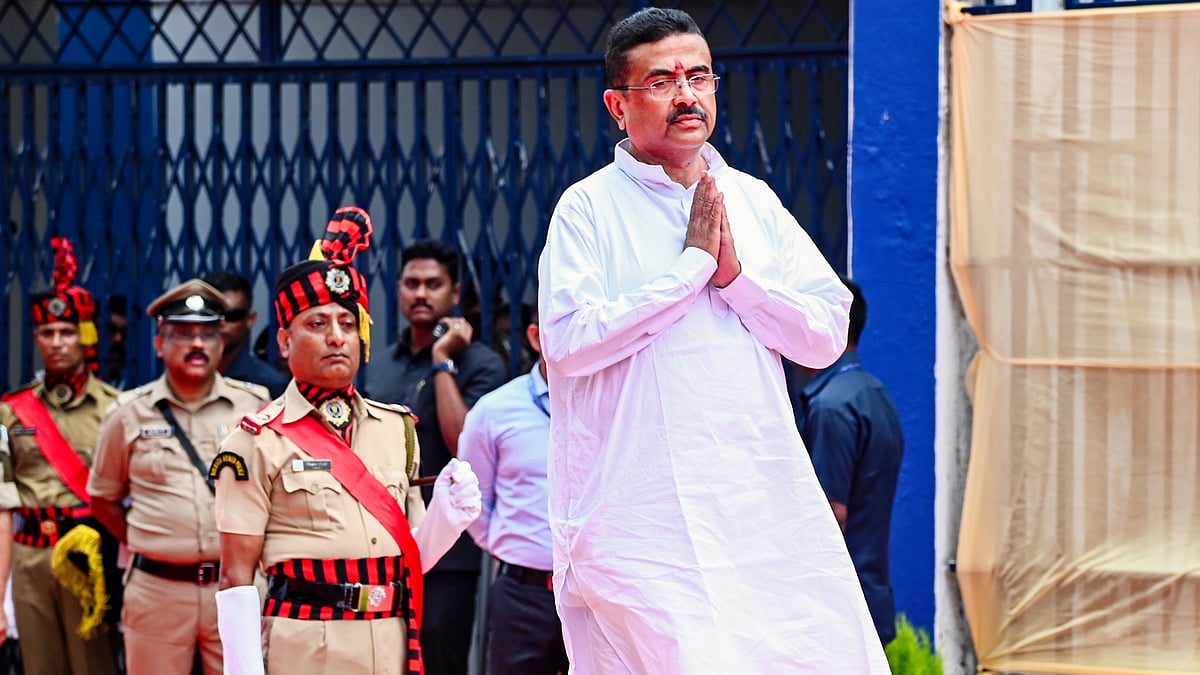
The first cabinet meeting of West Bengal’s new BJP government on Monday, 11 May offered an early glimpse into the priorities — and occasional contradictions — of the Suvendu Adhikari administration.

A key point of the meeting was chief minister Suvendu Adhikari’s announcement that the Bharatiya Nyaya Sanhita (BNS) would now be implemented in West Bengal, accompanied by accusations that the previous Trinamool Congress (TMC) government had delayed adopting the new criminal laws.

There is, however, one complication: the BNS has already been in force in West Bengal — along with the rest of India — since 1 July 2024.

Like every other state, West Bengal automatically came under the Bharatiya Nyaya Sanhita, Bharatiya Nagarik Suraksha Sanhita and Bharatiya Sakshya Adhiniyam after Parliament replaced the IPC, CrPC and Indian Evidence Act in 2023. States are free to adjust administrative preparedness, police training and implementation mechanisms, but not to opt in or out of Central criminal laws once notified.

Which made the new government’s triumphant declaration of implementation sound less like a policy breakthrough and more like a knowledge gap.

Still, the BNS confusion did not stop the cabinet meeting from laying out the BJP government’s broader political roadmap: retain existing welfare schemes for now, foreground Narendra Modi-branded Central programmes and push an aggressively securitised border narrative.

“No ongoing social welfare scheme is being discontinued,” Adhikari said after the meeting at Nabanna.

The assurance was politically necessary. During the election campaign, the TMC had repeatedly warned that a BJP government would dismantle or dilute Bengal’s sprawling welfare architecture associated with the Trinamool Congress. The BJP, meanwhile, had campaigned on a parallel promise of introducing its own welfare benefits and expanding central schemes.

• Ayushman Bharat and all Central schemes to be implemented in Bengal
⁰• Central training/deployment for bureaucrats cleared; BNS implemented from today
⁰• State recruitment process to begin after years of no hiring

— Sreyashi Dey (@SreyashiDey) May 11, 2026

Now in office, the government appears to have concluded that abruptly withdrawing popular welfare programmes may not be the wisest opening move. Instead, the administration seems to be attempting a careful balancing act: preserve existing schemes while gradually shifting political ownership towards the Centre and PM Modi’s welfare branding.

That strategy was visible in the government’s decision to formally join the Ayushman Bharat Pradhan Mantri Jan Arogya Yojana after years of resistance from the Mamata Banerjee government. “Modiji had promised that, in our very first cabinet meeting, we would join Ayushman Bharat,” Adhikari declared.

The cabinet also announced full implementation of schemes such as the Pradhan Mantri Fasal Bima Yojana, PM-SHRI, Vishwakarma, Beti Bachao Beti Padhao and the Ujjwala Yojana — effectively turning the first cabinet meeting into a demonstration of the BJP’s “double engine government” template.

But the Ayushman Bharat rollout may not be entirely frictionless. The previous TMC government had long argued that Bengal’s Swasthya Sathi scheme offered broader and near-universal coverage irrespective of income category, unlike Ayushman Bharat, which is restricted largely to economically vulnerable households identified through the 2011 Socio-Economic Caste Census.

Eligibility under Ayushman Bharat depends on deprivation criteria in rural areas and occupational categories in urban areas. Critics have argued that sections of lower middle-class families who were covered under Swasthya Sathi could fall through the cracks unless the state continues parallel coverage mechanisms.

The second major pillar of Monday’s cabinet meeting was border security — a theme the BJP has consistently used both administratively and politically in Bengal.

The government announced that the long-pending process of transferring land to the Border Security Force (BSF) for fencing along the India-Bangladesh border had officially begun and would be completed within 45 days. “With the security of Bengal as the paramount concern, approval has been granted to initiate the land transfer process required to secure our borders,” Adhikari said.

The BJP had repeatedly accused the previous government of delaying land transfer for fencing and thereby 'weakening national security'.

West Bengal shares a 2,216.7-km border with Bangladesh. According to official figures, fencing has already been completed along 1,648 km, while 569 km remain unfenced. Around 113 km are riverine stretches where fencing is not feasible, while the Union home ministry says another 456 km can still be fenced if land disputes are resolved.

The state government said 105 acres of land would now be transferred to the BSF. The matter had earlier reached the Calcutta High Court, which directed the state to hand over acquired border land by 31 March.

A senior TMC leader, speaking on condition of anonymity, dismissed the cabinet announcements as political score-settling dressed up as governance. “BJP is just trying to settle scores with us. Have they announced any compensation for those who would lose land in the process?” the leader asked.

Adhikari also revived the BJP’s familiar demographic (read Muslim) rhetoric, claiming that “the demographic profile of the state has undergone a transformation” — remarks likely to sharpen already polarised debates over migration and identity politics.

The cabinet additionally announced a five-year relaxation in the upper age limit for state government job applicants, with Adhikari arguing that irregular recruitment examinations since 2015 had left many candidates overage.

The government also unveiled a wider bureaucratic shake-up. Nominated chairpersons and directors appointed under the previous TMC administration have reportedly been removed from boards and public bodies, while IAS, IPS and state civil service officers will now be required to participate in Central training programmes.

Adhikari further accused the previous government of deliberately delaying Census work to obstruct delimitation and women’s reservation measures — another charge that fit neatly into the BJP’s larger narrative of institutional obstruction by the former regime.
  •  

Selective outrage in Bengal

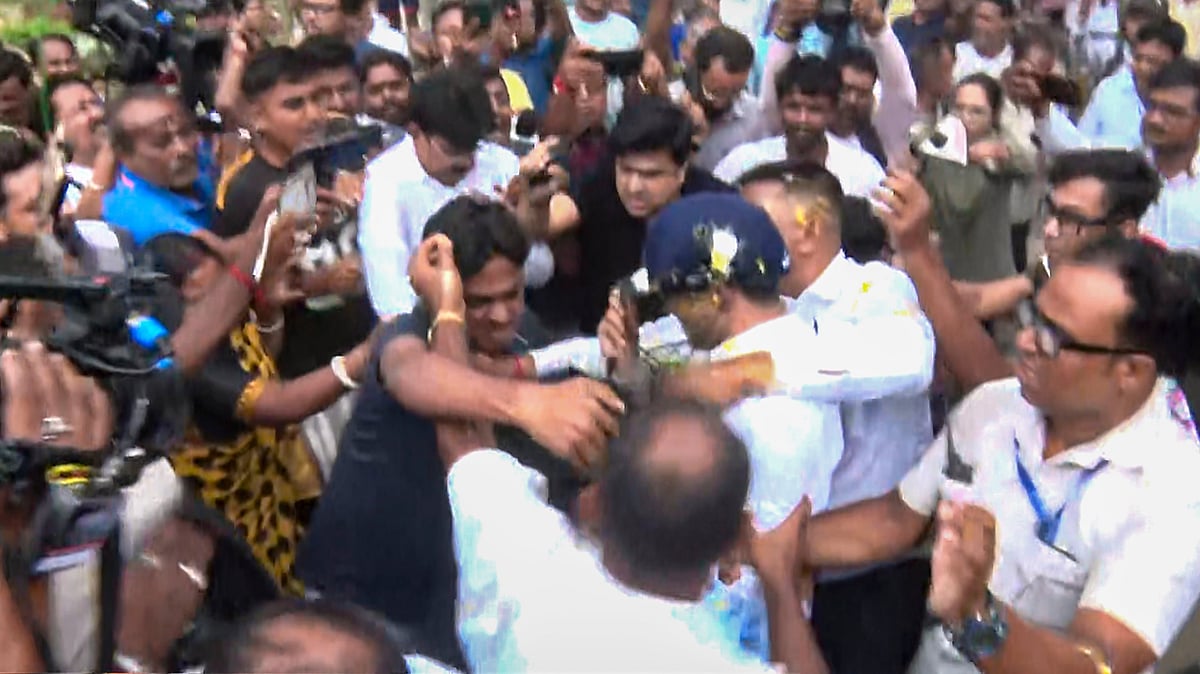
The 27 May attack on Trinamool Congress (TMC) MP and national general-secretary Abhishek Banerjee has quickly become Bengal’s dominant political story, consuming television debates, political messaging and public discussion.

Yet, before the incident seized headlines, a series of controversies had been steadily building around West Bengal’s new BJP government — from allegations of sexual violence and questions over student safety to backlash over a flagship welfare scheme and anger over bulldozer drives targeting hawkers and small traders.

Many of these issues generated intense discussion on social media, including among voters who had initially supported the BJP. But they struggled to command the kind of sustained television coverage, political mobilisation or public outrage associated with earlier flashpoints such as the R.G. Kar case, to cite one major example.

Critics of the government argue that the focus on the Abhishek Banerjee attack did more than dominate the news cycle — it conveniently reordered the public conversation, pushing other uncomfortable debates to the margins.

TMC leader Pratikur Rehman accused sections of the mainstream media of selectively amplifying issues that suited the ruling establishment. "We have all heard terms such as 'godi media' and yellow journalism. It is quite evident that many media houses choose to focus only on what is convenient for the BJP, especially now that West Bengal has a so-called 'double-engine' government. Several important issues affecting ordinary people are not receiving the attention they deserve," he said."

Kolkata, West Bengal: TMC Chief Mamata Banerjee says, "A rape has occurred in Behala, why is no one protesting about it? TMC has not taken money from anyone. There may be some people who take advantage of situations, but those who thought such people were their assets have left,… pic.twitter.com/JnilLAdcp8

— ANI (@ANI) June 1, 2026

CPI(M) leader Sujan Chakraborty echoed concerns about selective media attention. "For nearly a decade, large sections of the media have not performed the role expected of the fourth pillar of democracy. They often show only what is convenient for those in power. Instead of reporting news, they are increasingly promoting particular viewpoints and failing to represent the concerns of ordinary citizens," he said.

Among the most disturbing incidents discussed across social media was the alleged rape of a school student in Behala, which triggered outrage over the age of the victim and allegations of a slow official response.

The case quickly evolved into a wider debate about women's safety in Bengal. Activists, local residents and opposition figures questioned whether adequate protection mechanisms existed for school-going girls and whether the investigation was moving with sufficient urgency.

Social media users repeatedly asked why such a serious allegation was not receiving sustained attention from major television networks. Many posts expressed frustration that political narratives appeared to be overshadowing discussion about the victim and her family.

Women's rights groups argued that cases involving minors should attract greater institutional attention irrespective of political circumstances. The incident led to calls for faster investigations, stronger accountability and tighter safety mechanisms in educational institutions.

Heartbreaking. Class 3 (ICSE) student Ayush Kumar Nath of Maharshi Vidyamandir is no more. Parents allege negligence + inhuman treatment in school led to his death. We demand an impartial, transparent probe. No child’s life should be the cost of apathy.#JusticeForAyush

— Bristi Singha (@BristiSingha5) May 31, 2026

Another controversy that generated widespread anger online was the death of Class III student Ayush Kumar Nath of Maharishi Vidya Mandir in Bansdroni, south Kolkata.

According to the family's allegations, the child fell ill during school hours but did not receive timely medical attention. His father claimed the boy was allegedly made to remain in class despite feeling unwell and was later asked to carry his school bag. The family further alleged that the school delayed informing them about his deteriorating condition. Ayush later collapsed, suffered a brain haemorrhage and died after spending days in a coma.

The tragedy sparked protests by parents, students and local residents demanding accountability from the school administration. Police launched an investigation and registered a case under provisions of the Juvenile Justice Act.

The school denied negligence. But the emotional force of the case transformed it into a broader debate about student safety, institutional accountability and parental trust.

For many observers, the question was not only about the facts of the case but also about visibility: why did allegations involving a schoolgirl and the death of a child fail to trigger the scale of sustained outrage and saturation coverage seen in some earlier controversies?

Annapurna Bhandar’s form went from 12 pages to 13 pages. At this rate, while “simplifying” the process, BJP might soon add another “₹15 lakh in every account” style jumla for the people of Bengal.

More paperwork, more promises, less delivery that seems to be the real DOUBLE… pic.twitter.com/xAVm6TT8FR

— All India Trinamool Congress (@AITCofficial) May 29, 2026

Questions over welfare delivery also emerged as an early challenge for the new government. The BJP had campaigned heavily on the Annapurna Bhandar scheme, presenting it as a flagship programme for women and promising monthly financial assistance of Rs 3,000.

But public sentiment shifted sharply after the application form was released. Instead of the straightforward process many beneficiaries expected, applicants encountered a 12-page document demanding extensive household information — including Aadhaar-linked bank details, voter information, occupations, addresses and records relating to multiple family members.

The backlash was notable because it included criticism from women who had publicly supported the BJP online. One social media user wrote, "How are we calling this a women empowerment scheme? Also isn't this a type of data breach given the fact that we will have to enter all the account details of all family members?"

Another remarked, "This looks more like a UPSC question paper than Annapurna form."

Others questioned why details relating to entire households were being sought for a scheme marketed as direct support for women. A particularly pointed criticism stated: "Annapurna Bhandar was never marketed as a poor relief scheme. It was presented as a women empowerment scheme."

Many women argued that the administrative reality of the scheme looked very different from expectations created during the election campaign.

The backlash grew strong enough for state minister Agnimitra Paul to publicly defend the lengthy paperwork, arguing that the government wanted to ensure that only eligible Indian citizens benefited from welfare schemes. "We will not allow non-Indians to benefit from public welfare schemes," she said.

The defence, however, did little to calm criticism. Social workers warned that elderly women, poor women and those with limited education could struggle to navigate such extensive paperwork. Reports indicated that many applicants were seeking paid assistance simply to complete the forms.

Another major controversy centred on bulldozer drives targeting hawkers and roadside traders across parts of Bengal.

A hawker's cart isn't just a cart,it's a child's school fee,a family's dignity.

Last night in DumDum,the 'double engine' BJP govt's bulldozers & batons smashed hawkers' only way to earn bread.

This is the true face of BJP's "vikas"- not for the poor, but for crony corporates. pic.twitter.com/0hEomXRSpx

— Mayukh Biswas (@MayukhDuke) May 31, 2026

Reports emerged of demolition operations against stalls, temporary structures and informal businesses. One of the most discussed incidents involved allegations that bulldozers were used against meat shops near Kolkata's New Market area during post-election celebrations. Opposition parties described the episode as an example of "bulldozer politics".

A PTI report quoted the TMC as saying, "BJP's poriborton (change) has arrived, and it has arrived with a bulldozer."

Further criticism followed reports of hawker evictions in areas including Howrah, where traders allegedly arrived to find their stalls demolished overnight.

Accounts from the ground described vegetable sellers, tea vendors, repair workers and garment traders discovering that their workplaces had been reduced to rubble during late-night operations. The issue quickly became politically sensitive because many of those affected belonged to economically vulnerable groups.

Former chief minister Mamata Banerjee sharply criticised the demolitions, arguing that hawkers were an essential part of Bengal's economy and accusing the government of carrying out evictions without considering the livelihoods of poor families.

The debate widened into a broader question: was Bengal beginning to adopt the kind of "bulldozer governance" associated with some BJP-ruled states?

Against this backdrop, the attack on Abhishek Banerjee rapidly became the state’s central political flashpoint.

Rehman rejected suggestions that the incident would permanently displace the other issues that had been widely discussed online. "When people saw that their leader was allegedly being targeted through a stone-pelting attack, it was natural for them to react and speak about it. A large number of those raising concerns on social media are supporters of the TMC. However, that does not mean that the other issues will be forgotten. We will continue to raise those matters, and discussions around them will regain momentum very soon," he said.

Chakraborty argued that the extensive focus on the Abhishek Banerjee attack politically benefited both the BJP and the TMC. "We said immediately after the incident that the BJP was inadvertently giving fresh political space to the Trinamool Congress by bringing the spotlight back onto its leadership. The result is that both parties remain at the centre of public attention while discussions on other pressing issues are pushed into the background. In that sense, the social media narrative has also begun to shift," he said.

Regardless of political interpretation, the episode altered the public conversation. Controversies that had generated sustained online debate over student safety, welfare implementation and livelihoods found themselves overtaken by a familiar Bengal political script centred on violence, confrontation and partisan conflict.

Selective outrage in Bengal
  •  

As new government takes office in Bengal, Mamata calls for grand anti-BJP alliance

For the first time in West Bengal’s political history, the Bharatiya Janata Party (BJP) has formed the government in the state, marking a dramatic shift in Bengal politics after the 2026 Assembly election results.

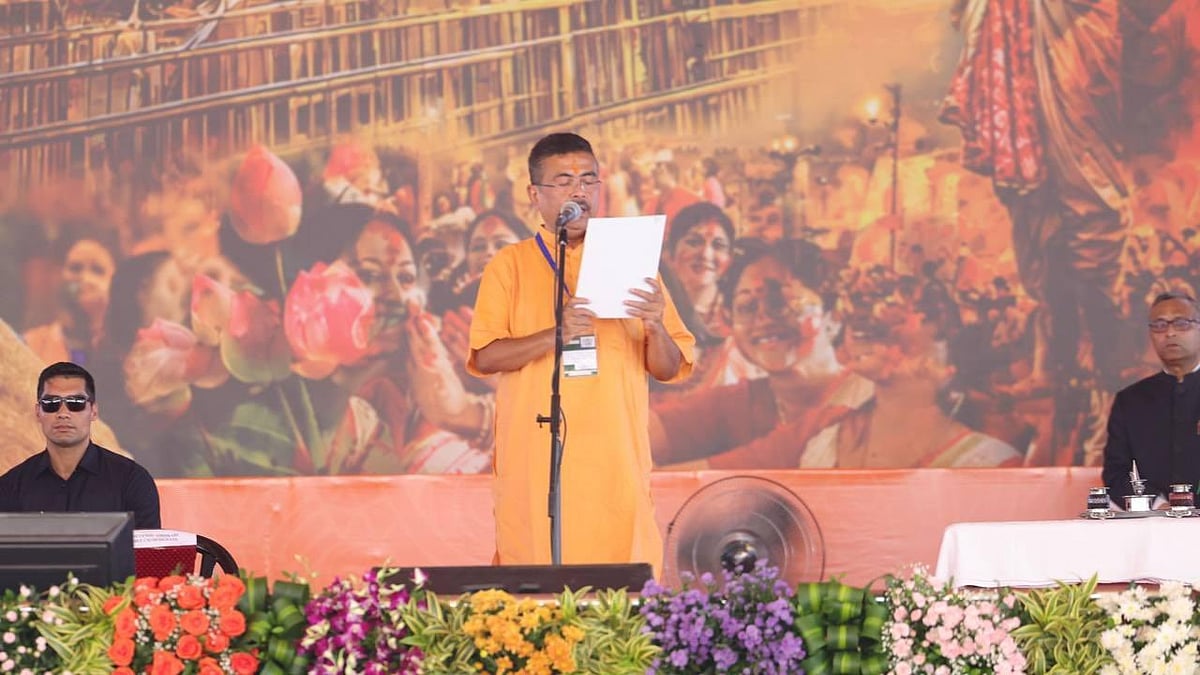
On Saturday, Suvendu Adhikari was sworn in as the new Chief Minister at the historic Brigade Parade Ground in Kolkata. The ceremony drew senior BJP leaders, party workers and supporters celebrating what the party described as a “historic mandate for change”.

Alongside Suvendu Adhikari, several BJP leaders also took oath as ministers, including Dilip Ghosh, Agnimitra Paul, Ashok Kirtania, Nisith Pramanik and Khudiram Tudu.

Senior BJP leaders described the victory as the beginning of a “new era” for West Bengal. Suvendu Adhikari said the government would work for “development, law and order, and democratic governance” across the state. BJP leaders also claimed that people had voted for “change after years of political violence and corruption”.

According to BJP sources, the remaining cabinet ministers are expected to take oath on Monday, 11 May, at Lok Bhawan, where Governor R. N. Ravi is likely to administer the oath. The new government’s first cabinet meeting is expected to be held at Nabanna shortly afterwards.

There is also strong speculation that Tapas Roy could become the next Speaker of the Assembly. BJP MLAs are expected to take oath later next week.

The BJP secured a victory in the Assembly elections, winning 207 of the 293 seats. The Election Commission of India reported that the BJP received 45.84 per cent of the vote share, while the All India Trinamool Congress secured 40.80 per cent. The Congress won two seats, the CPI(M) one seat, the ISF one seat and the AJUP two seats. Re-polling in Falta will be held on 21 May.

However, even as the BJP celebrated its rise to power, former Chief Minister Mamata Banerjee launched a sharp political counterattack from her residence in Kalighat during Rabindra Jayanti celebrations honouring Rabindranath Tagore.

Standing before a portrait of Tagore, Mamata Banerjee appealed to all anti-BJP political forces — including Left and far-Left parties — to unite against the BJP government.

She declared, “A thunderbolt of terror is striking from all directions. I urge all political parties, student and youth organisations, and NGOs to come together and form an alliance. Our primary adversary is the BJP.”

In another significant remark, she said, “Whether Left, far-Left, or any national party — wherever you may be — come, let us join forces. The enemy of my enemy is my friend.”Her statement is being seen as a major political signal, especially given the long-standing rivalry between the Trinamool Congress and the Left Front in Bengal politics. Reacting to her appeal, CPI(M) state secretary Mohammed Salim quoted Tagore and said: “When life runs dry, come like a stream of When life runs dry, come as a stream of compassion.”

Mamata Banerjee also accused the BJP of unleashing “post-poll terror” across the state. She alleged that Trinamool workers were being attacked and intimidated following the election results. According to her, “outsiders” had been brought into Bengal to spread fear and violence.

She further claimed that disturbances had taken place outside both her residence and the home of Abhishek Banerjee. Mamata alleged that BJP supporters attempted to disrupt Rabindra Jayanti events and that decorators were pressured not to provide chairs, tents or sound systems for the programme at Kalighat. “We had to arrange everything ourselves. We even had to buy stools this morning,” she said.

The Trinamool chief also accused the administration of withdrawing her security and internet access after the BJP came to power. She claimed that she had suddenly stopped receiving calls and messages before discovering that her internet services had allegedly been disconnected.

At the same time, Mamata Banerjee continued to question the legitimacy of the election outcome. She claimed that although the Trinamool had not lost the elections, “we were defeated through manipulation”. She insisted that “the truth will come out in the days ahead”.

The Trinamool supremo also revealed that several opposition leaders from across India had contacted her after the results. She named Sonia Gandhi, Rahul Gandhi, Mallikarjun Kharge, Uddhav Thackeray, Tejashwi Yadav, Akhilesh Yadav, Hemant Soren and Arvind Kejriwal as leaders who had expressed solidarity with her.

Meanwhile, the Trinamool Congress has announced the creation of a relief fund to support party workers allegedly affected by post-election violence. Senior TMC leader Kalyan Banerjee is expected to oversee legal matters related to these cases.

The developments signal the beginning of an intense new political chapter in West Bengal. While the BJP begins its first term in power in the state with a large majority, Mamata Banerjee appears determined to reposition herself as the central figure of a wider anti-BJP opposition movement at the national level.

  •  

Is Trinamool Congress heading for a split? Whiffs of ‘operation Shinde’ in Bengal

With the budget session of the West Bengal assembly starting on 8 June 2026, a split in the legislature party of Trinamool Congress appears imminent. Following reports that only 20 of the 80 elected TMC MLAs turned up to attend a meeting of MLAs, the party was forced to expel two MLAs, Ritabrata Banerjee and Sandipan Saha, on Monday. Both MLAs were named by chief minister Suvendu Adhikari and lauded for complaining to the Assembly Speaker that their signatures on a letter signed by Abhishek Banerjee were forged.

The letter addressed to the speaker was apparently to claim the position of leader of the Opposition in the assembly for party veteran Sobhandeb Chattopadhyay. According to one version assembly officials found discrepancies between signatures on the documents submitted and those recorded during the oath-taking of newly elected MLAs. The Assembly Secretariat subsequently lodged a complaint, leading to a CID investigation.

Ritabrata Banerjee and Sandipan Saha have claimed that signatures collected during an earlier party meeting were later used in the documents submitted, which they considered unethical and improper. The two MLAs subsequently approached the assembly speaker with their complaints. It is not clear why it was necessary to forge signatures of the two MLAs or how many signatures were genuine. However, once the chief minister publicly confirmed names of the two TMC MLAs as whistle blowers, TMC was left with no option but to expel them in a bid to contain the damage.

Ritabrata Banerjee, a former MP who had earlier been expelled by the CPM for anti-party activities, claimed sources in the BJP, had been encouraged to split the party and become the LoP himself. The ‘rebels’ are said to have met in a city hotel and claimed to have the support of between 30 and 50 MLAs. They are looking to mobilise sufficient number of MLAs to stake their claim to be the ‘real TMC’ and enable the speaker to allot them the position of the LoP.

The BJP, observers have been quick to suggest, would like to weaken Mamata Banerjee and implicate her and her loyalists in multiple cases. But the party does not want, they believe, the former chief minister to vacate entirely the opposition space. If TMC is totally decimated, they argue, the void may be filled by the Left Front and the Congress. Adding two factions of the TMC in this opposition space would suit the BJP by dividing the opposition’s space.

Speaking on a Facebook Live session, the TMC chairperson Mamata Banerjee criticised opportunists seeking to abandon the party after enjoying the privileges when the party was in power. She sought to

put up a brave face and asserted that TMC is not a party of leaders but of workers. "Leaders may be afraid, but party workers are not. They became MLAs and MPs because the party gave them ticket. The moment the party faces a setback, some people begin making arrangements elsewhere. If anyone thinks they can destabilise the Trinamool Congress, they are mistaken," she warned.

In a pointed comment seen as directed at Ritabrata Banerjee, she added, "It was a mistake to give tickets to such people. We trusted them, gave them opportunities and responsibilities. Today they are repaying that trust with betrayal." Her loyalists like Kunal Ghosh described the duo as "traitors" who chose to attack their own party less than a month after being elected on its symbol. "If they had so many objections, why did they contest the election on a Trinamool ticket? Internal issues should be discussed within the party, not used as weapons against it," Ghosh said sharply.

"Some are being threatened, some are being tempted. But Trinamool Congress cannot be broken so easily. Our real strength lies with our workers and supporters," she added.

Mamata Banerjee loyalists point out that Ritabrata Banerjee had been photographed chatting with Suvendu Adhikari at Banga Bhawan in New Delhi during Adhikari’s thanksgiving visit to New Delhi before being sworn in. They allege that Banerjee explored the possibility of joining the BJP but was encouraged to

remain within the TMC legislative party and attempt to secure the post of Leader of the Opposition for himself.

TMC insiders admit differences over the choice of the Leader of the Opposition. While a section of the MLAs reportedly favoured Kunal Ghosh for the role because of his aggressive style and ability to counter the BJP inside the assembly, others felt that his perceived proximity to TMC national general secretary Abhishek Banerjee could create discomfort among some legislators.

The party leadership settled on Sobhandeb Chattopadhyay, a veteran politician respected across factions. One senior legislator said, "Sobhandeb-da is not tainted by controversy and is someone who can speak to everywhere. He has the experience and stature to keep the legislative party united." Others acknowledge concerns regarding his age and health. "Nobody questions his integrity or political experience. The only concern is whether his physical condition will allow him to handle all the demands of the leader of the Opposition's role," a party source said.

The CID investigation has meanwhile expanded, with Abhishek Banerjee being summoned in connection with the matter. Abhishek did not appear on the scheduled date, citing illness, and has reportedly sought additional time.

  •  

CID searched TMC offices in Kolkata, but took away nothing, claims party

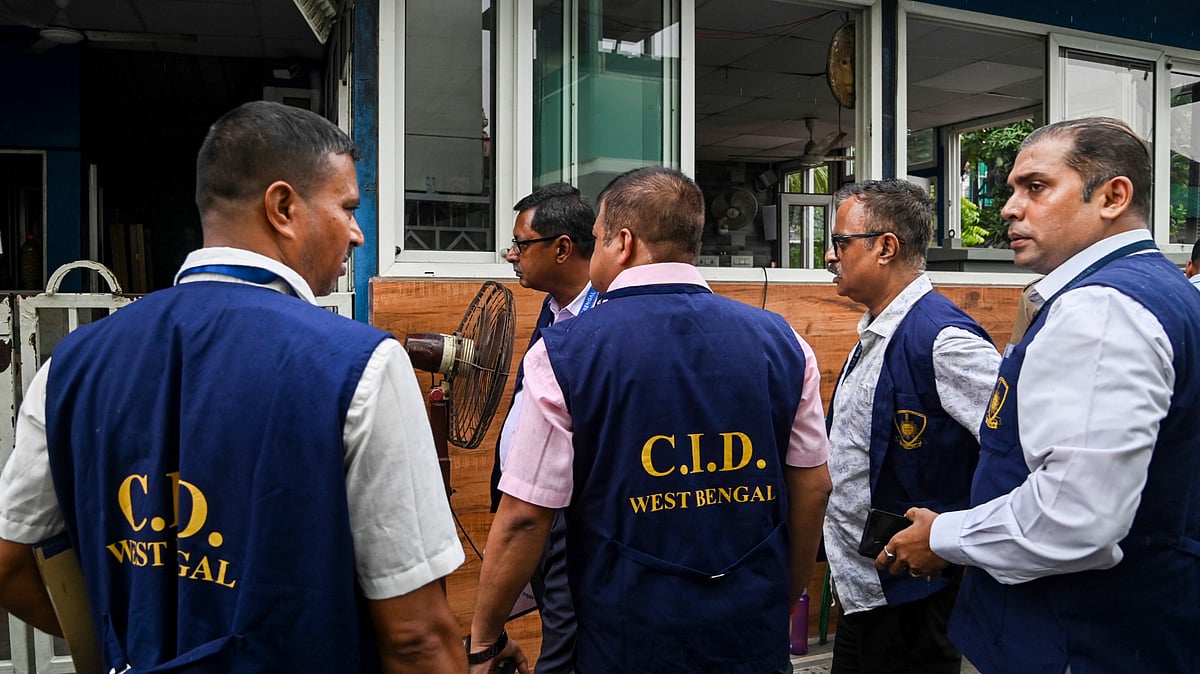
The West Bengal CID on Tuesday conducted searches at the Trinamool Congress’s (TMC) central party office in Kolkata’s Kalighat and at the office of TMC national general-secretary Abhishek Banerjee on Camac Street as part of its investigation into the alleged forgery of signatures of multiple rebel MLAs in a letter submitted to the Assembly speaker by Abhishek Banerjee.

The searches came on a day when Abhishek Banerjee skipped a third summons issued by the Crime Investigation Department, citing his appeal to the Calcutta High Court, where a hearing is expected on Wednesday, 10 June. 

Both Mamata and Abhishek Banerjee were in New Delhi. A large CID team reached the TMC's central office at 30B Harish Chatterjee Street in Kalighat shortly after 3.00 pm. The office serves as the party headquarters and is located next to Mamata Banerjee's residence. Police personnel, Central forces and female officers accompanied the CID team, while the entire area was placed under tight security. Bus loads of CRPF jawans also accompanied the team.

The CID has so far recorded statements from 13 TMC MLAs. Three of them — Baharul Islam, Arup Roy, and Subhasis Das — reportedly disowned the signatures attributed to them on the document. The TMC officially claimed the CID team left without confiscating anything after the hour-and-a-half's search. The seizure list also indicated there was no seizure.

The team, however, was insistent that it needed to collect CCTV footage and registers kept in the office. The party also claimed that the CID team did not produce any search warrant from a court but claimed they were authorised to search the office and forced their way through. 

Former Trinamool Rajya Sabha MP and party treasurer Subhashis Chakraborty, who was overseeing the office in the absence of Mamata and Abhishek Banerjee, objected to the search and insisted that he could not allow it in the absence of the party leadership. "I cannot allow entry in Abhishek Banerjee's absence. How can I grant entry in the absence of the person who issued the letter? I have been practising as a lawyer for 40 years," he told the CID officers. The CID officers responded by saying, "We are not seeking your permission."

While @MamataOfficial is in Delhi for crucial meetings, the CID conducts a much-publicised “raid” at her residence. The official seizure list says: “NIL” — nothing seized, nothing damaged, nothing destroyed. So what was the purpose of the “raid”? Nothing but HUMILIATION,… pic.twitter.com/ZjF8sQYsLv

— Sagarika Ghose (@sagarikaghose) June 9, 2026

Once inside, CID officers conducted a search of the party office. The entire operation was video recorded. According to sources familiar with the investigation, the CID was looking for documents connected to the controversial resolution that proposed the selection of Sovandeb Chattopadhyay as leader of opposition in the Assembly.

The controversy centres on a proposal letter submitted to Assembly speaker Rathindra Basu following a meeting of TMC legislators convened to finalise appointments in the Assembly. The letter proposed Sovandeb Chattopadhyay as LoP, Nayana Bandyopadhyay and Asima Patra as deputy leaders and Firhad Hakim as chief whip.

Some TMC MLAs alleged that signatures attributed to them on the proposal were forged. Ritabrata Bandyopadhyay, the MLA from Uluberia East, and Sandipan Saha, the MLA from Entally, were among the first to publicly challenge the authenticity of the signatures. Both later found themselves at odds with the party and were subsequently removed from party posts.

Following complaints regarding the alleged forged signatures, Assembly authorities approached Hare Street police station. An FIR was registered and an investigation launched. The CID later joined the probe and a Special Investigation Team was formed to assist in the investigation.

Nothing seized by CID from the #TMC party office situated within the residence premises of #MamataBanerjee at Kalighat #Kolkata

This is the seizure list

It reads NIL

“Nothing Seized, damaged and destroyed”

CID searched this office for 1 hour 48 minutes pic.twitter.com/bKiLXBGHtH

— Tamal Saha (@Tamal0401) June 9, 2026

Abhishek Banerjee, the CID holds, has been evading summons to appear for interrogation. Investigators visited his Kalighat residence on 30 May and directed him to appear on 1 June. Instead of doing so, Abhishek sought a 14-day extension. The CID did not grant the request but visited his residence on 1 June and again on 8 June to serve additional summons. He was eventually directed to appear before investigators by 5.00 pm on Tuesday, 9 June.

At around the same time that the search was taking place in Kalighat, another CID team arrived at Abhishek Banerjee's office on Camac Street and carried out a separate search there.

The CID's actions sparked strong reactions from TMC leaders. Party MLA and spokesperson Kunal Ghosh arrived at the Kalighat office during the search and said, "I came to the office for party work. On arriving, I learned that a CID team had come for investigation. We extended full cooperation when the CID approached us." It was an attempt to damage Mamata Banerjee's reputation, he said, and warned that the people of West Bengal would respond politically.

Senior TMC MP Kalyan Banerjee also arrived at the scene and accused investigators of acting with ulterior motives. "There is no rule stating that a copy of the resolution must be kept at the venue where a meeting took place. This is merely harassment in the guise of a search," he said.

Veteran party leader Madan Mitra also rushed to Kalighat on learning of the search operation. The BJP, meanwhile, accused Abhishek Banerjee of deliberately avoiding investigators. BJP leader Debjit Sarkar said repeated non-appearance before the CID raised serious questions and argued that legal processes should be respected.  

  •  

First split in TMC's 28-year history as rebels seize control of legislature party

The Trinamool Congress (TMC) split for the first time in its 28-year history on Wednesday as 58 rebel MLAs seized control of the party's legislature wing, elected expelled legislator Ritabrata Banerjee as their leader and secured recognition from the West Bengal Assembly speaker.

In a dramatic escalation of the crisis that has gripped the party since its defeat in the Assembly elections, the dissidents formally staked claim to the legislature party by submitting a letter carrying the signatures of 58 of the TMC's 80 MLAs. Speaker Rathindranath Basu accepted the claim, recognised Ritabrata Banerjee as the leader of the opposition and opened the Assembly chamber designated for the post.

The development has created an unprecedented political situation in West Bengal. For the first time, the state's principal opposition in the Assembly is being led not by the organisation headed by Mamata Banerjee but by a breakaway faction that has pledged to function as a "constructive opposition", maintain dialogue with the government and support measures it considers beneficial to the state.

Critics argue that the arrangement risks creating a government-friendly opposition within the House, potentially diluting the adversarial role traditionally expected of the principal opposition party. Supporters of the dissident camp, however, contend that constructive engagement with the government should not be mistaken for political compromise.

The rebellion marks the culmination of a revolt that began with allegations that signatures of several MLAs had been used without authorisation on a proposal seeking recognition of senior TMC MLA Sovandeb Chattopadhyay as leader of opposition. What initially appeared to be an internal procedural dispute rapidly snowballed into an open challenge to the party leadership and has now resulted in an unprecedented split within the legislature party.

VIDEO | Expelled TMC leader Ritabrata Banerjee says, "We are the principal opposition, urge Mamata Banerjee to be our chief advisor; Abhishek Banerjee has no connection with state assembly."

The rebellion within the TMC took a decisive turn on Wednesday, as 58 dissident MLAs… pic.twitter.com/2rDJ3XZnOJ

— Press Trust of India (@PTI_News) June 3, 2026

Addressing a press conference at the Assembly, Ritabrata Banerjee claimed the dissident camp enjoyed the support of a two-thirds majority of TMC legislators and therefore represented the legitimate opposition in the House. "Our claim has been accepted by the Speaker," he said.

Claiming legitimacy through numbers, he argued that parliamentary convention was on the side of the rebels. "The TMC legislative party is a team of 58 MLAs who won on the TMC symbol," he said, adding that two more legislators currently outside the state had conveyed their support and were expected to join the camp shortly.

Banerjee said the speaker had accepted the new composition of the legislature party and handed over the office meant for the leader of the opposition.

The dissident camp also unveiled a new leadership structure. Akhruzzaman was appointed chief whip, while Javed Khan, Sabina Yasmin, Shiuli Saha and Sandipan Saha were named deputy leaders. Banerjee said the relevant communications had already been submitted to the Speaker.

Yet even as the rebels asserted control over the legislature party, they sought to avoid a direct break with Mamata Banerjee. In a significant political gesture, Banerjee appealed to the former chief minister and TMC supremo to serve as chief adviser to the newly constituted legislative team. "We would request Mamata Banerjee to play the role of the chief adviser of the legislative party," he said.

After careful consideration, it has been decided that all committees of the All India Trinamool Congress in West Bengal, as well as all its frontal organisations, shall stand dissolved with immediate effect.

The party will undertake a comprehensive exercise of introspection,…

— All India Trinamool Congress (@AITCofficial) June 3, 2026

The appeal highlights the central contradiction at the heart of the rebellion. While the dissidents continue to acknowledge Mamata Banerjee as their supreme political leader, they have openly rejected the authority of the leadership structure she endorsed, including the proposal to appoint Sovandeb Chattopadhyay as LoP.

The rebels have also signalled that they do not recognise any role for Mamata Banerjee's nephew and heir apparent Abhishek Banerjee in the functioning of the legislature party, exposing a widening divide between elected legislators and sections of the party organisation.

Ritabrata Banerjee sought to portray the revolt as a collective movement rather than a personal power struggle. "I am not a boss. I do not believe in bossism. I believe in 'we'. All decisions will be taken through discussions," he said.

He also repeatedly stressed that the dissident camp would act as a constructive opposition rather than engage in obstructionist politics. "We will oppose the government's policies that we don't think are right. But we will not oppose for the sake of opposition," he said.

Thanking chief minister Suvendu Adhikari for inviting opposition legislators to an administrative meeting at Nabanna earlier in the day, Banerjee said several rebel MLAs from Kolkata, Howrah and North 24 Parganas had attended the meeting. "We will play the role of a responsible and constructive opposition. We will fight the government eye to eye where necessary, but we will also appreciate positive steps taken by it," he said.

INTERESTING: Shiv Sena redux being played out now with TMC in West Bengal in fast forward mode. Carrot and stick politics: those TMC MLAs/MPs with ED/CBI skeletons in their cupboard and in need of ‘protection’ or inducements most vulnerable to splitting/defecting. Two MAJOR…

— Rajdeep Sardesai (@sardesairajdeep) June 3, 2026

The speaker's decision has also triggered intense political scrutiny. Basu returned to Kolkata on Wednesday morning after travelling to Delhi with chief minister Adhikari on Tuesday, 2 June. Reports in sections of the media and political circles claimed that the speaker separately met Prime Minister Narendra Modi and Union home minister Amit Shah during the visit, though no official confirmation of such meetings was immediately available.

The timing of the Delhi trip and the speaker's swift recognition of the dissident camp upon his return have fuelled speculation among political observers. However, no evidence has emerged linking the visit or any reported meetings to the speaker's decision.

Adding another layer to the intrigue are reports that political strategist Prashant Kishor contacted Ritabrata Banerjee to understand the rapidly evolving political situation. The reported communication has generated considerable discussion, with observers questioning why Kishor would seek the rebel leader's assessment when he has historically enjoyed direct access to both Mamata and Abhishek Banerjee. The significance of the reported contact remains unclear.

Meanwhile, Sovandeb Chattopadhyay expressed confidence that the party's support base remained intact. "The party will be very much there with Mamata Banerjee as people of Bengal are with her," he said.

While Ritabrata Banerjee's faction has secured a major institutional victory inside the Assembly, the broader battle is only beginning. Political experts point out that control over the TMC as a political party — including its name, symbol and organisational structure — remains a separate question that would ultimately fall within the jurisdiction of the Election Commission should competing claims emerge.

For now, however, the Speaker's acceptance of the dissidents' claim has formalised left the Mamata Banerjee-led organisation confronting its most serious internal challenge since the party's formation in 1998, and reshaping the political landscape of West Bengal.

  •  

Adhikari aide murder: Row erupts over alleged shooter's purported BJP link

The arrest of an alleged sharpshooter in connection with the murder of Chandranath Rath, personal assistant to West Bengal chief minister Suvendu Adhikari, has triggered a political controversy after videos surfaced on social media purportedly showing one of the accused campaigning for the BJP in Uttar Pradesh.

Raj Singh, arrested by West Bengal Police from Ballia in Uttar Pradesh, is alleged to be one of the key shooters involved in Rath’s killing in Madhyamgram earlier this month. Investigators claim the murder was a meticulously planned contract killing executed by multiple assailants in less than a minute.

A video circulating on X allegedly shows Raj Singh canvassing for BJP candidates during an election campaign in Uttar Pradesh. Photographs shared online also appear to show him alongside political figures, including Uttar Pradesh MLC Brijesh Singh and state transport minister Daya Shankar Singh. In several social media posts, Raj Singh has also been identified as a former office-bearer of the All India Kshatriya Mahasabha.

However, National Herald could not independently verify the authenticity of the video or the photographs.

The emergence of the visuals has intensified political sparring, with opposition leaders questioning whether the accused had links to members of the BJP. So far, neither the BJP leadership in Uttar Pradesh nor the West Bengal government has officially commented on the allegations surrounding the footage.

पीले कुर्ते वाला राज सिंह है जिसे बंगाल पुलिस मुख्यमंत्री सुवेन्दु अधिकारी के PA चंद्रनाथ रथ की हत्या के आरोप में गिरफ़्तार करके ले गई है…

बगल में कलफदार कुर्ते में यूपी के MLC बृजेश सिंह प्रिंसू हैं…एक तस्वीर में यूपी के परिवहन मंत्री दया शंकर सिंह के साथ है राज…

राज सिंह… pic.twitter.com/hS954edxCI

— Mamta Tripathi (@MamtaTripathi80) May 11, 2026

Police sources said Raj Singh has a long criminal record, with more than a dozen cases allegedly registered against him, including offences under the Arms Act. Investigators suspect he acted as a hired sharpshooter and may have been paid a substantial sum to participate in the killing.

According to the Special Investigation Team (SIT), Raj Singh was arrested during a late-night raid in Ballia, while two other accused — Mayank Raj Mishra and Vicky Maurya — were apprehended from Bihar’s Buxar district. Investigators believe seven to eight people may have been involved in the conspiracy.

The murder took place on the night of 6 May, just two days after the West Bengal Assembly election results were declared. Police said Rath’s vehicle was first intercepted by another car before armed men on motorcycles surrounded it from both sides and opened fire through the windows at close range.

Around 10 rounds were allegedly fired during what investigators described as a “50-second operation”.

Officials said digital payment trails played a key role in cracking the case. FASTag and UPI transactions linked to toll payments reportedly helped investigators track the movement of the accused across multiple states.

शुभेंदु अधिकारी के PA चंद्रनाथ रथ की हत्या में पुलिस ने यूपी से एक शूटर गिरफ्तार किया है.

इस शूटर का नाम राज सिंह है, जो यूपी के बलिया का रहने वाला है.

इस वीडियो में राज सिंह BJP प्रत्याशी के लिए वोट मांग रहा है. pic.twitter.com/fjQoBo2pim

— Ranvijay Singh (@ranvijaylive) May 11, 2026

The accused were produced before the Barasat Court under heavy security, where the CID sought custody for further interrogation. The court granted 13 days of police remand.

Meanwhile, Raj Singh’s family has strongly denied the allegations against him. His mother claimed that he was in Lucknow attending the wedding of an MLC’s daughter at the time investigators believe the conspiracy was unfolding. “We have no connection with Kolkata and have never gone there with my son. I do not know why he is being implicated,” she told reporters.

She further claimed that several people, including family members, friends and a driver, had travelled together to Lucknow and insisted there was evidence proving his presence there. “His mobile phone records should be checked. There is proof that he was in Lucknow,” she said.

The family has appealed for a fair investigation and demanded that police examine all available evidence before reaching conclusions.

Political reactions to the case continue to escalate. Opposition parties have alleged that the murder points to a deeper conspiracy, while BJP supporters have accused rivals of attempting to politicise a criminal investigation before the facts are fully established.

VIDEO | Suvendu Adhikari aide murder case: Accused Raj Singh’s mother says, "My son had gone to Lucknow to attend the wedding of an MLC’s daughter. I also accompanied him. My driver, Omprakash Singh, was with us. Another boy had gone to take photographs, and one of Raj’s friends,… pic.twitter.com/rzcFhOPn9y

— Press Trust of India (@PTI_News) May 11, 2026

Adhikari had earlier described the killing of his aide as “brutal”, “premeditated” and a “contract killing”, claiming the attack bore signs of detailed planning and reconnaissance carried out over several days.

Investigators are now focusing on identifying who financed the operation and whether a larger network was involved. Police officials said multiple angles — including political motives, organised crime links and personal enmity — remain under investigation.

  •  

Death, arrests and defections deepen pressure on TMC after Bengal poll setback

The Trinamool Congress (TMC) is facing mounting pressure across West Bengal following a series of arrests, corruption investigations, defections and the death of a municipal councillor, developments that have fuelled concerns about instability within the party after its Assembly election setback.

The latest flashpoint emerged with the death of Sanjay Das, a Member of the Mayor-in-Council responsible for health and sports at the South Dum Dum Municipality, who was found hanging inside his residence on Saturday morning. Family members and local residents rushed him to a hospital in Nagerbazar, where doctors declared him dead. Police have registered a case of unnatural death and preliminary investigations suggest suicide, though the exact circumstances remain under investigation.

The incident has triggered intense political speculation and debate within local TMC circles.

Allegations of pressure before councillor's death

According to local residents and party workers, Das had allegedly been facing considerable pressure in recent weeks. Posters reportedly appeared in parts of the locality accusing him of illegal land occupation and demanding that the land be returned. The posters also allegedly accused him of intimidating local residents and summoning people to his office late at night. Police were reportedly informed about the matter at the time.

Residents and party workers further alleged that relatives of Das were involved in municipal contract work and claimed that he wielded influence through his proximity to TMC councillor Debraj Chakraborty and former MLA Aditi Munshi. The allegations have not been independently verified.

The developments come amid ongoing investigations by the ED (Enforcement Directorate) into alleged irregularities in municipal recruitment across parts of West Bengal. Former Bidhannagar MLA and ex-minister Sujit Bose was recently arrested in connection with the recruitment case, while former South Dum Dum Municipality chairman Pacchu Roy has also been questioned by investigators.

Some local residents and party workers claimed Das feared he could become the next target of investigative scrutiny, although no official agency has publicly linked him to any investigation.

Rival claims within party ranks

The circumstances surrounding Das's death have exposed divisions within local TMC ranks.

Kiran Bhattacharya, the party's Ward 24 president in South Dum Dum, rejected allegations that internal corruption investigations were responsible for the pressure faced by Das. Instead, he accused former TMC workers who recently joined the BJP (Bharatiya Janata Party) of intimidating him.

Bhattacharya alleged that money had been demanded from Das shortly before his death and claimed that those involved were individuals who had switched political allegiance after the election results. The allegations have not been independently verified.

Extortion arrest adds to concerns

The political controversy intensified further with the arrest of Samrat Barua, councillor of Ward No. 6 of the Bidhannagar Municipal Corporation, by Baguiati Police in connection with allegations of extortion.

Local residents cited in the report described Barua as an influential political figure because of his association with Debraj Chakraborty and Aditi Munshi. The three were frequently seen together at public functions and in social media posts, according to residents.

The allegations against Barua are under investigation and have not been adjudicated in court.

Defections and uncertainty after election defeat

Political observers cited in the report believe the recent developments reflect growing uncertainty within the TMC following its electoral setback. Several councillors and grassroots functionaries have reportedly resigned, distanced themselves from local leadership or crossed over to the BJP in recent weeks.

Analysts attribute the trend to multiple factors, including fear of investigation by central agencies such as the ED and CBI (Central Bureau of Investigation), as well as public dissatisfaction over allegations relating to corruption, extortion, land dealings and recruitment scams.

Reports from various municipalities suggest that some local party offices have become inactive or sparsely attended since the election results, while councillors are increasingly concerned about public protests and potential legal scrutiny.

Political battle over narrative

TMC chief Mamata Banerjee has sought to project confidence amid reports of defections, telling party workers that those choosing to leave could do so and that the organisation would be rebuilt.

The BJP, meanwhile, has argued that the turmoil reflects public anger against alleged corruption, extortion and misuse of power during the TMC's tenure.

Leaders of the CPI(M) have also continued to criticise the ruling party over allegations of corruption and governance failures in municipalities and local bodies.

TMC leaders, however, maintain that central investigative agencies are selectively targeting party members for political reasons. Banerjee has repeatedly alleged that the BJP has used investigative agencies and constitutional institutions to weaken her party.

With investigations continuing, arrests mounting and defections persisting, the developments unfolding across several municipalities are increasingly being viewed as signs of a deeper organisational challenge confronting the TMC in the aftermath of its electoral defeat.

SIR row: Mamata urges SC to ‘save democracy’, alleges Bengal being targeted
  •  

Beyond cricket: How Eden Gardens gave 1,500 children a night of belonging

The boy had never seen a night like this before.

For years, 12-year-old Raju had grown up in the narrow lanes of Kolkata’s red-light district, where darkness arrives early and hope often disappears before midnight. Cricket, for him, meant catching glimpses of matches on television sets placed inside crowded tea stalls or listening to excited voices spilling out from nearby homes. Eden Gardens was a place he knew only through stories.

But on Sunday night, as the floodlights illuminated the iconic stadium and nearly 60,000 voices erupted around him, the child sat frozen in wonder. His eyes widened as giant screens flashed, music thundered through the stands, and the Kolkata Knight Riders walked onto the field to face Delhi Capitals in what became KKR’s final IPL match of the season.

For the first time in his life, he was inside Eden Gardens.

“I thought the stars had come down to earth,” he whispered softly to a volunteer sitting beside him.

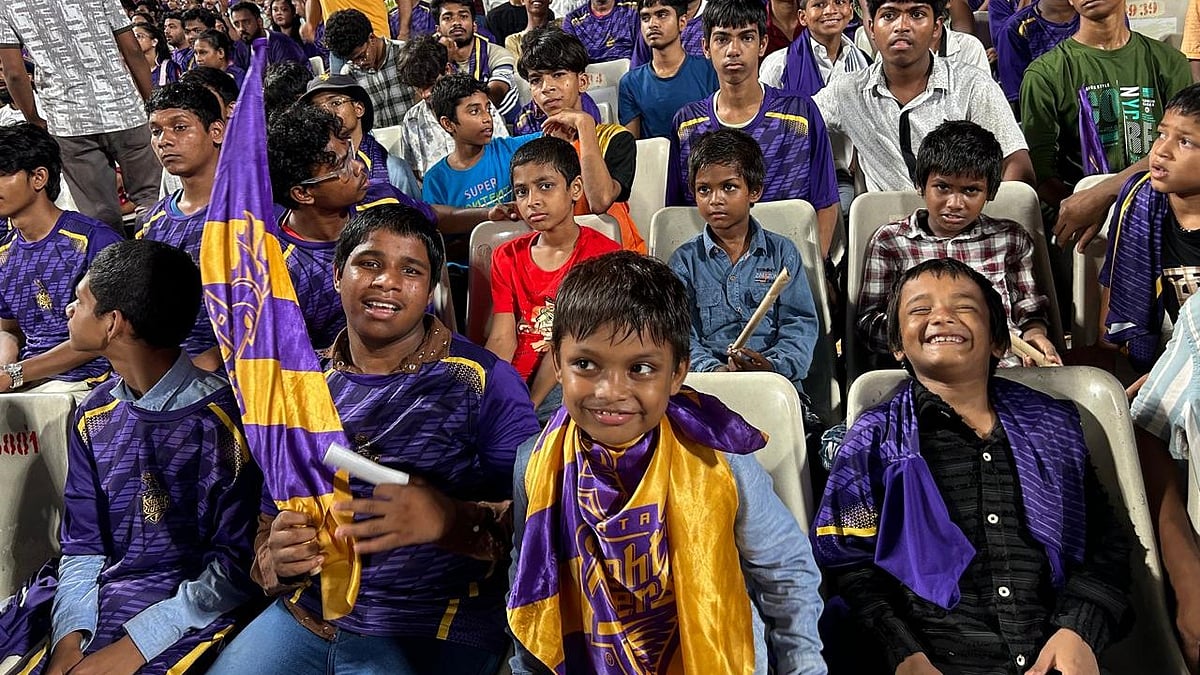
Raju was among nearly 1,500 children and individuals with special needs, visual impairments, autism and vulnerable social backgrounds who were brought to the stadium free of cost through an initiative led by Kolkata Police inspector Subrata Das, officer-in-charge of the city police’s Dial 100 emergency response unit.

What unfolded inside Eden Gardens on Sunday went far beyond cricket. It became an evening of dignity, inclusion and joy — and for many children, a memory powerful enough to outshine years of hardship.

Das spent weeks coordinating with organisations, police personnel and volunteers after KKR extended around 1,500 tickets for the match.

“The objective was simple — no child should feel excluded from experiences that bring happiness and create memories. Witnessing the joy on their faces made every effort worthwhile,” Das said.

Kids enjoy the KKR match in Kolkata.

Throughout the evening, police personnel took on roles far beyond crowd management. Officers held the hands of autistic children while guiding them carefully through the noisy galleries. Several escorted visually impaired boys to toilets and food counters. Others helped wheelchair-bound visitors navigate ramps and crowded passages.

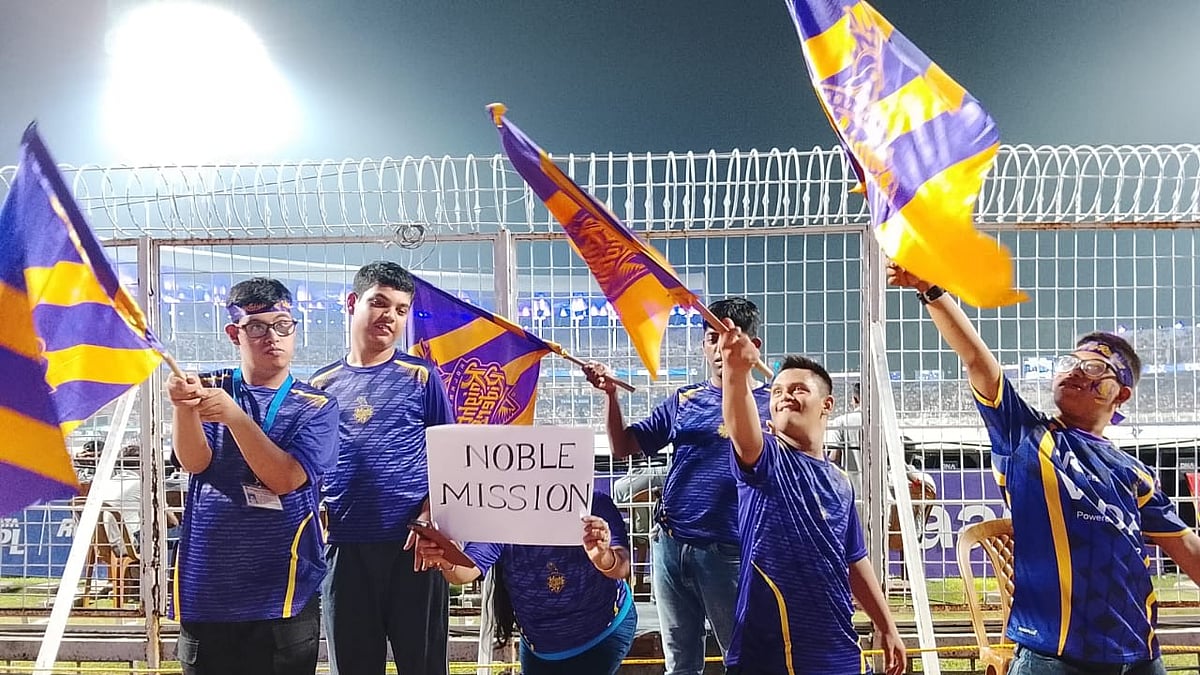
Inside the lower tier of the D Block, the atmosphere felt unlike a regular IPL evening. Blind students from Narendrapur clapped in rhythm with the Eden roar, responding to every wicket and boundary through sound, vibration and commentary from friends beside them. Autistic children waved KKR flags with unfiltered excitement, while children from shelter homes shouted themselves hoarse as chants echoed through the stadium.

For many guardians, the experience was deeply emotional.

The mother of a non-verbal autistic child said she had spent days preparing her son for the visit by showing him photographs and videos of Eden Gardens.

“He looked back at me with a spark in his eyes after watching the videos. When he finally entered the stadium and saw the lights and the ground, he was spellbound,” she said.

Autism Society West Bengal representative Sudip Kanti Ghosh said many of the children had never imagined entering a venue like Eden Gardens.

“This is a unique initiative. Our children are super excited. We had shown them videos beforehand, but when they reached the venue and saw the stadium for real, they could not believe it,” he said.

Among those invited were around 100 visually impaired individuals, many of whom regularly follow IPL commentary on mobile phones. Society for the Welfare of the Blind principal Biswajit Ghosh said the invitation meant the world to the students.

“Our boys follow cricket passionately. But experiencing Eden Gardens in person was unimaginable for many of them. They may not see the match like others do, but they feel the excitement through the sound and atmosphere,” he said.

As Delhi Capitals lost their first wicket, the famous Eden roar exploded across the stadium. The visually impaired students instantly jumped up in celebration along with everyone around them.

A teenage boy from Future Hope, who captains a cricket team run by the organisation, summed up the night simply:

“This was a completely different experience for me.”

Several NGOs and organisations joined hands to make the initiative possible, including Child In Need Institute, The Hope Foundation, Autism Bengal, Future Hope and the Blind Cricket Association of Bengal.

Dilip Bose of Child In Need Institute (CINI) said many children came from backgrounds where dreams are often restricted by poverty.

“Our children never get opportunities like this. They always dream of seeing their cricket heroes in person. Yesterday, that dream became real,” he said.

For Subrata Das, however, the evening carried a meaning beyond recognition or organisation.

“It comes from within,” he said quietly when asked how he managed such an enormous effort alongside his police duties. “I feel blessed to be able to do this.”

By the end of the night, KKR’s playoff hopes had faded after Rajasthan Royals defeated Mumbai Indians elsewhere.

But inside Eden Gardens, none of that seemed to matter.

Because while one cricket season may have ended, hundreds of children who had spent much of their lives battling exclusion, silence, darkness or abandonment returned home carrying something they rarely receive from society — the feeling that they belonged.

  •  

Aide’s murder throws focus back on mystery deaths around Suvendu Adhikari

The murder of Chandranath Rath, executive assistant to BJP leader and outgoing leader of opposition in the Bengal Assembly Suvendu Adhikari, triggered a fierce political slugfest in West Bengal on Thursday, 7 May. As the BJP accused the Trinamool Congress of orchestrating a “revenge killing” for the recent Assembly election defeat, the controversy also brought renewed attention to the mysterious deaths of three other close associates of Adhikari over the past decade.

Smarting from their humiliating defeat in the Assembly elections, the BJP alleged, TMC leaders had hired assassins to target Adhikari, who defeated three-time chief minister Mamata Banerjee from the Bhabanipur constituency in Kolkata by a margin of over 15,000 votes.

TMC leaders, while condemning the killing, denied the allegations, claiming that the party had little to gain from the assassination. Rath’s family members, however, alleged that he possessed sensitive information relating to corruption in the outgoing government, illegal sand mining operations, criminal syndicates and various financial scams.

They further claimed that Rath was privy to politically sensitive information and was therefore silenced. Others believe the killing was intended as a warning to Adhikari, who is considered one of the frontrunners for the chief minister’s post.

An emotional Adhikari said, “His only crime was being the personal assistant to Suvendu Adhikari.” Describing the murder of his aide on Wednesday evening as “cold-blooded” and “premeditated”, he claimed that for the past two or three days, a vehicle bearing a fake number plate had been moving around the area. “Had I not defeated the chief minister in Bhabanipur, perhaps this young man would still be alive today,” he added.

He also appealed for calm. “I appeal to all BJP workers and supporters across the state: please do not take the law into your own hands,” he said.

At Rath’s ancestral home in Kulup village in East Medinipur, grief quickly gave way to fury. His 69-year-old mother Hasirani Rath alleged that her son had been murdered as an act of political revenge. Fighting back tears, she said, “Those who were in power have carried out what they threatened.”

Referring to inflammatory campaign rhetoric during the election period, she remarked, “Now that we have come to power, those who made those fiery speeches have fulfilled their threats.” It is widely believed that her remarks were directed at TMC MP Abhishek Banerjee.

BJP leader Arjun Singh alleged police complicity in the murder. He claimed the attackers appeared to have tracked Rath through technological surveillance and added, “Nowadays reconnaissance is technology-driven. Mobile phones can easily be tracked.”

The murder has also revived political controversy surrounding the violent deaths of three other aides of Adhikari since 2013, two of them coming while he was still a trusted lieutenant of Mamata Banerjee in the TMC.

In 2013, Adhikari’s former political secretary and personal assistant, Pradip Jha, was found unconscious on Strand Road in Kolkata and later died in hospital. Although the post-mortem cited asphyxiation linked to alcohol consumption, serious questions arose after his mobile phone disappeared and cash was reportedly missing from his wallet. His family alleged murder, but the case remained unresolved.

Five years later, in 2018, Adhikari’s long-serving bodyguard Shubhabrata Chakraborty was found with gunshot wounds inside police barracks opposite Adhikari’s residence in Kanthi. The death was initially described as a suicide, but Chakraborty’s wife later alleged murder and demanded a CID investigation. No arrests have been made in that case either.

In 2021, another aide of Adhikari, Pulak Lahiri, was found dead under suspicious circumstances. His family members alleged foul play, but the case was eventually buried.

“After the death of his bodyguard in 2018, police had received a complaint from his wife against Suvendu Adhikari, following which a CID investigation was initiated. But due to a court order, the investigation could not proceed as the court granted immunity to Adhikari,” TMC sources said.

The sources, speaking on condition of anonymity, further claimed that the timing of Rath’s assassination suggested that someone wanted Adhikari’s past to come under scrutiny and thereby damage his prospects for the state's top post.

Was Rath killed because of what he knew? Was the murder prompted by personal or political rivalry? Were financial dealings behind the brutal targeted killing? Why do mysterious deaths continue to surround individuals closely associated with Adhikari? Several such questions remain unanswered even as the state grapples with retaliatory violence, road blockades and inflammatory speeches.

  •  

Rajya Sabha exits fuel BJP speculation, but questions remain over TMC's real strength

The resignation of two Trinamool Congress Rajya Sabha MPs within days has intensified speculation that some of the party's parliamentarians may eventually join the BJP. However, despite the political noise surrounding the departures of Sushmita Dev and Sukhendu Sekhar Roy, the actual extent of any larger exodus remains uncertain.

Political circles in Delhi and Kolkata are abuzz with rumours that more Trinamool MPs could leave the party. The speculation has been fuelled by a series of developments, including Sushmita Dev's meeting with Assam Chief Minister Himanta Biswa Sarma shortly after her resignation and reports that veteran MP Sukhendu Sekhar Roy has attracted interest from BJP leaders.

Yet neither leader has publicly confirmed any move to the BJP.

After resigning from the Rajya Sabha, Sushmita Dev described herself as "free and independent" but said she had not yet decided her political future.

The former Congress MP from Assam, who joined the Trinamool Congress in 2021, declined to criticise the party leadership. She said she remained grateful to the people of West Bengal for sending her to the Rajya Sabha and explained that her meeting with Himanta Biswa Sarma stemmed from a long-standing personal acquaintance.

Roy has taken a similarly cautious position. Amid speculation that he could eventually enter the BJP camp, he said, "I haven't made any decision yet. I have some personal and family matters to attend to. Only after those are concluded will I consider whether or not to remain in politics."

He also stated that he had received no proposal from the BJP and described his presence at a gathering involving dissident Trinamool MPs in Delhi as "purely coincidental".

Nevertheless, the resignations have weakened the Trinamool's strength in the Upper House. The party's tally has fallen from 13 to 11 seats.

The BJP's interest in both leaders stems from different factors.

In Roy's case, BJP leaders have pointed to his criticism of the Trinamool leadership during the controversy surrounding the rape and murder of a doctor at R.G. Kar Medical College. Some BJP figures privately argue that his willingness to publicly question the party's position increased his credibility beyond Trinamool ranks. Historical factors also play a role, with BJP leaders occasionally highlighting the legacy of his father, Shibendu Sekhar Roy, who was associated with the Hindu Mahasabha.

Sushmita Dev, meanwhile, comes from a Congress background. The daughter of former Union Minister Santosh Mohan Dev, she was once considered close to Rahul Gandhi before joining the Trinamool Congress in 2021. Her meeting with Himanta Biswa Sarma has naturally fuelled speculation because both politicians share deep roots in Assam politics.

The resignations have come at a politically difficult time for the Trinamool Congress.

Roy delivered a particularly sharp critique while announcing his departure.

"I was waiting for the right time and opportunity. I knew this would happen," he said.

He added, "This party has become completely cut off from the people; it has become alienated from the masses. There was never any ideology in this party—only programmes."

The BJP has seized on such comments as evidence of organisational decline.

State BJP spokesperson Debjit Sarkar claimed, "Politically, adhering to the principles of political science, the Trinamool Congress is heading towards its end. Not much time is left."

Another BJP leader, Nitin Navin, accused the party leadership of becoming disconnected from workers and voters, alleging that corruption had become entrenched at multiple levels.

The political reality, however, is more complicated than either side's narrative.

The resignations, coupled with public expressions of dissatisfaction from some MPs, have fuelled talk of a wider rebellion. However, reports suggesting that large numbers of MPs are preparing to join the BJP have not yet translated into formal resignations from Parliament. Similarly, claims regarding the scale of dissent vary widely depending on which political camp is speaking.

One of the most visible signs of discontent came from MP Satabdi Roy, who questioned the absence of introspection following the party's electoral setbacks.

"Even after such a crushing defeat, there was no analysis of why we lost. We were told to communicate via letters. I wrote many letters," she said.

She added that the lack of discussion after the election results was a major source of frustration.

Yet dissatisfaction within a party does not automatically translate into a permanent split.

Senior Trinamool leader Kalyan Banerjee has openly challenged the rebels.

"Their leader has changed; their leader is now Narendra Modi. If they possess political ethics and honesty, they should stop calling themselves Trinamool MPs," he said.

Banerjee argued that dissidents should resign and seek a fresh mandate from voters. He also dismissed suggestions that the BJP would necessarily welcome all defectors, saying the party knew them too well.

Importantly for the Trinamool leadership, not all MPs who have interacted with dissident groups have indicated a desire to quit.

Actor-turned-politician Dev attempted to calm speculation after attending a meeting that also involved BJP leaders.

"My love for Mamata Banerjee will remain lifelong. I am not joining the 'New Trinamool'; as long as Mamata Banerjee is alive, I stand with her," he said.

He added, "I went to Delhi as a Trinamool Congress MP, and I have come here today as a Trinamool Congress MP as well."

While Dev left open questions about the future, his remarks underscored that support for Mamata Banerjee still exists among prominent party figures.

The Trinamool Congress is clearly facing one of the most turbulent periods in its history. Electoral setbacks, internal disagreements and the departure of senior leaders have exposed weaknesses that were previously hidden behind the party's electoral dominance.

At the same time, predictions of the party's immediate collapse may be premature. The organisation still retains a significant political base, an established leadership structure and a loyal section of MPs, MLAs and grassroots workers.

For now, the departures of Sukhendu Sekhar Roy and Sushmita Dev represent a serious warning sign for the Trinamool Congress—but not necessarily the final chapter of the party's influence in West Bengal politics.

Rajya Sabha exits fuel BJP speculation, but questions remain over TMC's real strength
  •  

West Bengal gears up for ‘result day Holi’ as surging Abir sales reflect electoral buzz

As West Bengal awaits the counting of votes on 4 May, an unusual but telling trend has emerged across the state—an unexpected surge in the sale of Abir, the coloured powder typically associated with Holi. From Siliguri in North Bengal to Burrabazar in Kolkata, traders and manufacturers report a sharp rise in demand, driven not by a festival but by political anticipation.

In North Bengal, where the first phase of voting has already taken place, speculation over the outcome has translated into brisk business for abir sellers. While demand exists for multiple colours, traders say saffron and green powders—associated with major political parties—are dominating sales. Interestingly, in some pockets green has begun to edge ahead, though the broader picture remains mixed.

Sudipta Bhowmik, a manufacturer in Siliguri, explained that demand for abir usually drops after Holi, but this year has been different. “We had almost stopped production after the festival,” he said. “But suddenly, with the election results coming up, demand shot up again. We are now producing both saffron and green abir, and it is becoming difficult to keep up.”

From Siliguri, consignments are being dispatched across North Bengal, covering districts from Cooch Behar to Malda, as well as the hill regions. According to traders, both major parties are stockpiling abir in preparation for victory celebrations.

At Bidhan Market in Siliguri, vendor Kamal Saha noted a significant change in buying behaviour. “People are not buying small packets anymore,” he said. “They are buying full sacks worth 500 rupees and even saying they might need more. Green is selling, but saffron demand is unusually high. We have not seen this in earlier elections.”

A similar trend is visible in other districts. In Bankura, trader Raju Kundu reported strong sales despite rising prices. “Saffron abir is selling the most,” he said. “Green is also moving well, but there is almost no demand for red. Prices have gone up, yet people are still buying in large quantities.”

Another trader, Bapi Das, offered a slightly broader view. “Both green and saffron are selling the most,” he said. “But we should also remember that the upcoming Haribol Mela is adding to the demand.”

Across multiple markets, one pattern is clear—red abir, once commonly associated with earlier political trends, has seen a steep decline in demand. Traders consistently report minimal interest in the colour this season.

In Kolkata’s Burrabazar, the state’s largest wholesale market, green abir appears to be leading in terms of bulk stocking. Merchants have filled their warehouses with sacks of green powder, anticipating strong demand if the ruling party performs well.

Raghunath Sanyal, a colour merchant, said, “We have stocked mostly green abir. It seems that is what people expect will be needed. We have kept some saffron and red, but in smaller quantities.”

Retailers from various districts have already begun purchasing from Burrabazar in anticipation of post-result celebrations. One trader from Bardhaman said he planned to buy multiple sacks of green powder, expecting demand to rise further.

The surge in abir sales is not limited to traders. Political workers of the TMC, themselves have started preparing early. In several areas, including Uttarpara, supporters have already begun symbolic celebrations, playing with green coloured powder days before the results are announced.

Leaders have also contributed to the atmosphere of anticipation. Party organisers have urged workers to stock up on colours and prepare for celebrations, reinforcing the sense that the result day could resemble an out-of-season Holi.

Manufacturing hubs in Tamluk, East Medinipur, are also witnessing an unusual revival. Factories that typically operate only during the Holi season have reopened to meet the sudden demand. Production is now running at full capacity, focusing largely on green and saffron powders.

Factory owner Sadhan Chandra Guria said, “We will only know which colour wins on the day of the results. But I believe green will be in highest demand, so we have focused entirely on producing that.”

Despite the heavy speculation, traders admit that uncertainty remains. Different regions show different trends—some report saffron leading, others say green is ahead. What is clear, however, is that the scale of preparation is unprecedented.

As 4 May approaches, the state is not only preparing for a political verdict but also for a spectacle of colour. Whether it is green or saffron that dominates the streets will depend on the final results. Until then, markets continue to buzz, factories run at full pace, and West Bengal waits—ready to celebrate, whichever way the mandate goes.

  •  
❌