Reading view

Study shows that regularly watching sports reduces risk of depression among the elderly
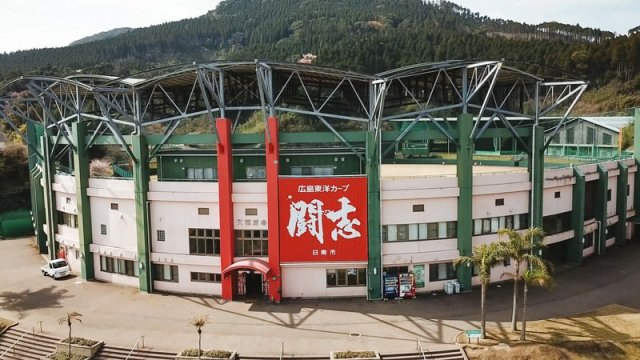
Unless you live in Buffalo.

Who doesn’t want to be taken out to the ball game, and be bought so many peanuts and Cracker Jacks they may never want to go back? Not only is it a great way to get some fresh air, buy a 20-dollar hotdog, and learn some creative obscenities, but a recent study also suggests that watching sports either live or on TV can significantly reduce your risk of depression in your later years.

Researchers at the University of Tsukuba found a roughly 30-percent lower risk of depression among seniors who watch sports regularly, compared to those who do not. The key factor of being into sports is the tendency to gather with other like-minded people, be it in a stadium or a nursing home, and interact with others through shared emotions and excitement.

They analyzed data from over 21,000 elderly people and measured their depressive symptoms. They found that those who attended live sporting events a few times a year were 30 percent less likely to develop symptoms of depression, and those who went out to games a few times a month fared even better, with a risk of depression lower by 34 percent compared to those who never watch sports. Even watching on TV or the Internet had positive results, but required more frequent viewing with weekly games or more resulting in a 29 percent lower risk of developing symptoms of depression.
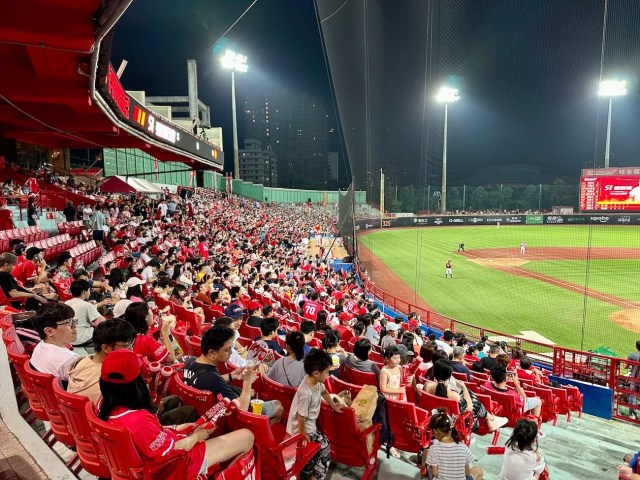
A major catalyst for mental decline among the elderly is said to be social isolation, and watching sports is an excellent remedy for this in three ways. Sports are a great way to break down barriers between people, cheering along with or high-fiving strangers wearing the same team colors. It’s also a great way for seniors to stay active by getting dressed and going to the stadium. And finally, it can be an outstandingly cathartic way to release your emotions as you shout, “I got cataracts, and even I can see that was offside!” at the referees.

Ibaraki Prefecture has decided to put this research into practice and started partnering with professional soccer and basketball teams in an effort to promote well-being among seniors. One way this is being done is at a nursing home in the city of Namaegata, where every week, residents and staff gather in front of the television and watch J1 League soccer matches.

One 71-year-old fan there said soccer was her favorite, and watching any sport makes her happy. Another 93-year-old resident says watching matches with everyone is something she looks forward to every week. Staff members also reported that some residents have been sleeping better and that it’s great seeing them having something to look forward to.

So if you or anyone you know is getting up there in years and feels increasingly withdrawn from society, this might be the perfect time to get a ticket to the next baseball, rugby, or bread-in-mouth footrace match and see where it leads from there.

Source: The Sankei Shimbun, National Library of Medicine
Photos ©SoraNews24
● Want to hear about SoraNews24’s latest articles as soon as they’re published? Follow us on Facebook and Twitter!

  •  

Used chopsticks upgraded from “waste” to “valuable material” by Kawasaki City thanks to ChopValue

They’re very good at using chopsticks.

Every day, millions of people in Japan crack open a bento or dig into a restaurant’s meal while holding a pair of chopsticks that are destined for the garbage once finished, possibly even sooner if one is dropped on the floor. On the bright side, they’re biodegradable compared to plastic utensils, but it still seems wasteful to discard so much material after one use.

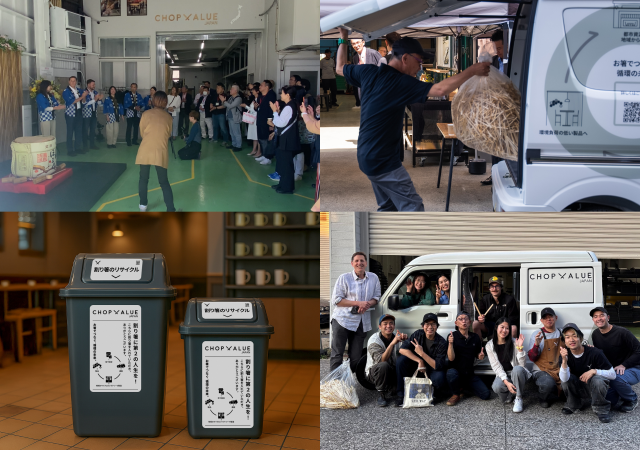
It’s something the Canadian company ChopValue has been working to address by developing a method to engineer used chopsticks into a durable and aesthetically pleasing building material. They do this by collecting discarded chopsticks, sterilizing them, and compacting them into a block that’s harder than maple and stronger than oak.

The process has been catching on well, and there are currently ChopValue micro-factories all over the world, with ChopValue Japan having recently opened in 2024 in the city of Kawasaki, Kanagawa Prefecture. It goes without saying that Japan goes through a lot of chopsticks, and if this business model can expand across the country, it could result in the upcycling of some 20 billion chopsticks a year.

However, one hurdle to accomplishing this is Japan’s very strict laws regarding waste management. Since chopsticks are considered waste, one would require a special license to be able to collect them from places like restaurants. These are extremely difficult to obtain and are handled by municipalities, meaning ChopValue would have to get a permit in every single city they operate in. Not only that, the restaurants and businesses would also be required to keep detailed records of their chopstick usage and disposal, and that’s not a burden many businesses would be willing to take on.

In the face of this difficulty, ChopValue Japan began working with the Kawasaki City Government on research regarding their techniques for reusing chopsticks. Thanks to this cooperation, the city has officially upgraded used chopsticks from the classification of “waste” to “valuable material.” This means the chopsticks are treated like any normal commodity that can be freely traded and collected without government regulations.

▼ So, keep an eye out for chopstick bins in your area.

Now, before any residents of Kawasaki reading this begin hoarding their own used chopsticks to get rich now that they’re “valuable material,” there is a very important caveat to this designation. Only bamboo chopsticks collected by ChopValue are considered “valuable material,” and any other used chopstick remains as “waste” in the eyes of the law.

Nevertheless, this is a pretty big moment for circular business models in Japan. It set a precedent that ChopValue can take advantage of when setting up micro-factories in other Japanese cities. It also creates a framework that other circular business models can emulate in order to get around longstanding and strict Japanese laws.

With the future looking bright for ChopValue Japan, we might be nearing a day when tossing out disposable chopsticks isn’t creating garbage but creating things we can use in our daily lives.

Source, images: PR Times
● Want to hear about SoraNews24’s latest articles as soon as they’re published? Follow us on Facebook and Twitter!

  •  

Fukushima City on edge as resourceful and violent bear still not found

Cunning bear managed to escape stand-off with police and hunters.

As we’ve been seeing in recent years in Japan, not only has the number of bear encounters and attacks been steadily rising, but it appears bears have been coming closer and closer to populated areas as well.

Once an incident that only those deep in the mountains and forests of Japan had to worry about, more and more people have been spotting the large and powerful animals in unlikely places, like train stations, and now on the outskirts of Fukushima City, a regional population center with a population of 275,000 people.

In the evening of 1 June, Fukushima police started to receive scattered reports of what appeared to be a bear wandering around the Sasakino area in the northwest part of the city. The next morning, the vice principal of Noda Elementary School in the same area was driving to work when a bear suddenly started chasing his car. The street is also a route many students take to the school, but luckily, the bear appeared hours before any kids were outside.

▼ The main area where the bear was active.

Things only intensified after that. At about 6:30 a.m., the Asiatic black bear, measuring about one meter in length, attacked an employee in his 20s approaching the entrance of Fukushima Steel Works. It then charged through a glass door at the company’s building and mauled a man in his 60s inside.

From there, the bear ran off to a residential area, where it jumped clear over a one-meter (three-foot) wall to enter a nearby field. There, it found and attacked a woman in her 80s, injuring her face. The animal then headed about 500 meters (1,640 feet) to the northwest and attacked the 66-year-old guard of the OKI Symfotech manufacturing plant before entering the building.

Police arrived at the site and surrounded OKI Symfotech with the bear inside, evacuating a perimeter around the plant. Other local businesses and Noda Elementary, which was only a block away, closed for the day. The events so far had all unraveled so quickly, the municipal government could only catch up by this point and issued an emergency cull order around noon that day, granting the local hunters’ association permission to shoot and kill the bear.

However, by this time, it was too late. The bear had managed to hole itself up in a building full of machinery and chemicals. One misplaced shot or a ricochet could have triggered a fire or explosion. Unable to use live ammunition, the hunters resorted to tranquilizer darts, but the bear was in such an agitated state that its own adrenaline counteracted the sedative when struck by a dart.

For the next 35 hours, the standoff continued with the bear surrounded and hunters unable to kill it. Traps were set up to catch it when it would finally try to leave one of the building’s exit points. However, at approximately 11:00 p.m. on 3 June, the animal managed to unlatch one of OKI Symfotech’s windows, climb out undetected, and flee into the night.

▼ A news report with various times the bear was caught on camera

It wasn’t until the following morning that anyone realized the bear had escaped. The cordon around the manufacturing plant was removed, but citizens remained on high alert. Schools and some businesses remained closed, while some operated on increased security, such as disabling automatic doors.

Despite a few scattered reports, one of which turned out to be a wild boar, there were no significant encounters with bears in the area. On 5 June, OKI Symfotech reopened for business and Noda Elementary resumed in-person classes, but requested all students be dropped off by car. Meanwhile, authorities continued searching for the bear, even employing thermal imaging drones, but the creature’s location has not been found.

It might have just returned to wherever it came from, but it’s hard to rest easy when an animal that managed to overcome several obstacles and even outwit the police remains at large. Hopefully, things will return to a state of normalcy for residents soon, but it certainly seems like these kinds of problems are going to get worse if nothing is done on a larger scale to keep bears away from inhabited areas.

Source: FNN Online Prime, Fukushima TV, Yomiuri Shimbun Online, Asahi Shimbun, My Game News Flash
Photo ©SoraNews24
● Want to hear about SoraNews24’s latest articles as soon as they’re published? Follow us on Facebook and Twitter!
  •  

Japanese government to allow desecration of flags on kids’ meals

A victory for freedom of eats.

The ruling Liberal Democratic Party has been hard at work drafting a bill to criminalize desecration of the Japanese flag. It’s apparently a pressing matter, even though I’ve never seen anyone do anything bad to a flag before. In fact, I rarely see the flag used much at all, good or bad. But it’s perhaps in anticipation of continuing protests to the current administration’s efforts to roll back the pacifist elements of the constitution that they feel this is a priority.

There has been a lot of discussion about the specific details of this law as it rubs up against people’s freedom of expression. One major point is what exactly constitutes the national flag of Japan. Especially since it’s just a red circle on a white background, I could drop some spaghetti sauce on my shirt and end up wearing the flag. So, how is it legally different from a real flag?

According to the latest revision of the bill, the flag is defined as generally made of cloth or paper, primarily displayed on poles as a sign or decoration, and usable in real society. This means the Japanese flags in the virtual world are fair game, which is great news for my upcoming smartphone game Flag Blaster 3000.

But where does that leave those little toothpick flags that restaurants in Japan stick in the potato salad or rice of kids’ meals? They’re made of paper, displayed as a decoration, and used in society.

▼ The countries are usually randomly given out, so there’s only a small chance of getting a Japanese flag a lot of the time.

Since they technically fit the legal definition of a flag, the makers of the bill decided to explicitly exclude kids’ meal flags from the law. This means you wouldn’t have to worry about getting in trouble with the law if you attacked some ketchup rice extra hard and made a mess of your flag. Another exemption involves flags depicted in paintings. That being said, destroying other people’s paintings can land you in a whole other spot of trouble.

Online commenters have been less than happy that this is what the government is choosing to spend its time on when so many other things in the country seems to be getting less and less bearable.

“This is what they’re discussing?”
“They can’t seriously be spending time on kids’ meal flags.”
“Just ignoring all of our other anxieties.”
“Didn’t they recently say they didn’t have time to discuss same-sex marriage or separate surnames?”
“I should get a tattoo of the flag. Then no one will hurt me.”
“Just copy whatever they do in France and get it done with.”
“When I was a kid, I used to carefully save my kids’ meal flag and take it home. I’d usually forget all about it 10 minutes after that.”

The draft bill also includes a provision that freedom of expression should be considered when pressing charges. According to the wording, artistic expression, such as live-action films, using real national flags as props would be exempt if considered socially acceptable.

That last part about being “considered socially acceptable” is still a matter of contention in the bill, since it is greatly open to interpretation. I think we can all agree that Godzilla torching the flag with its atomic breath is completely acceptable because that big lug just doesn’t know any better. But if King Kong hurls a colossal turd at one, the issue becomes much less black and white.

Hopefully, they get this all sorted out soon, and maybe go back to working on things like how no one can afford stuff anymore, and why we can’t even secure the resources to make colored bags of potato chips.

Source: Mainichi Shimbun, Hachima Kiko
Photos ©SoraNews24
● Want to hear about SoraNews24’s latest articles as soon as they’re published? Follow us on Facebook and Twitter!

  •  
❌