Reading view

Why sophrosyne, an ancient Greek virtue, matters more than ever in the age of AI
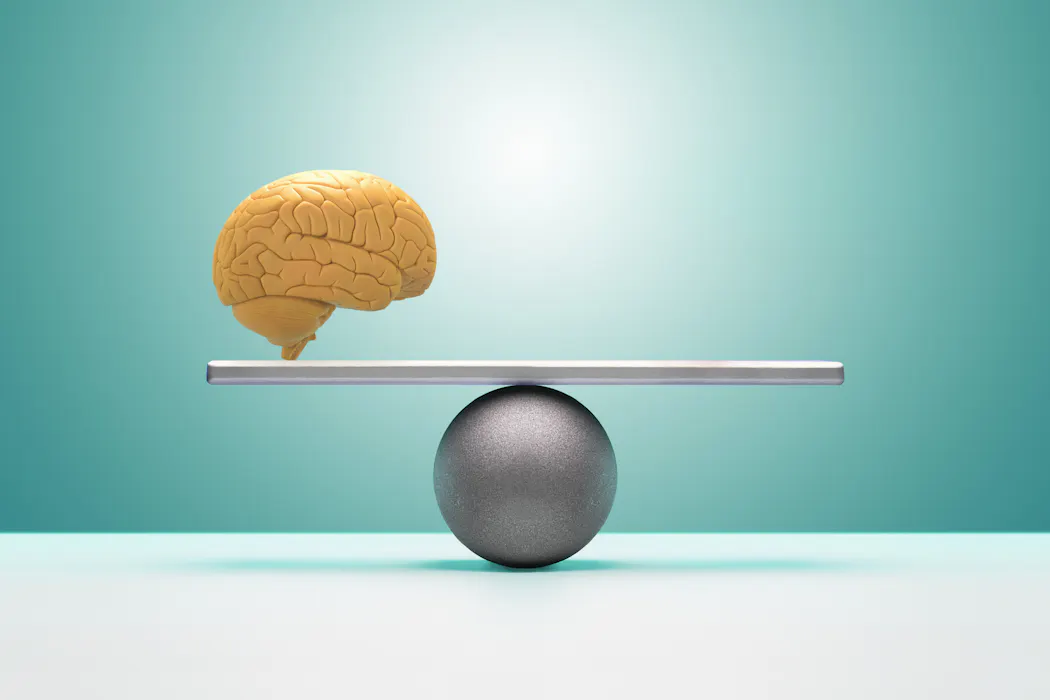
Sophrosyne is a constellation of characteristics that includes moderation, reflectiveness and self-knowledge. PM Images/DigitalVision via Getty Images

Texting while driving. Bullying people on social media. Buying into the latest conspiracy theory. Passing off AI-generated work as your own.

That may seem like a random list of 21st-century vices. But I’d argue they’re all examples of the loss of one particular virtue: sophrosyne.

An ancient Greek concept, sophrosyne – pronounced “suh-fros-uh-nee” – is what we might call “sound-mindedness” today. It’s a constellation of characteristics, including moderation, reflectiveness and self-knowledge. They’re found in the kind of person who can respect and trust herself, and be respected and trusted by others.

As a philosopher and philosophical counselor, I research the connection between virtue and happiness. In particular, I’ve noticed a connection between sophrosyne and eudaimonia, the Greek philosophical concept for happiness, or living well.

Harmony of the soul

For the Greeks, sophrosyne represented excellence of character, moderation and self-control. It was connected to phronesis, or practical wisdom, and stood in marked contrast with hubris: excessive pride, dangerous overconfidence and lack of self-insight. Heraclitus, a philosopher who lived around 500 B.C.E., taught that sophrosyne was the most important virtue of all.

Plato, who taught a century later, discussed sophrosyne as the ability to know oneself – and to know when you don’t know something. In “Republic,” he likened sophrosyne to a harmony or friendship between the three parts of the soul: reason, spirit and bodily desires.

A faded fresco shows two bearded men in robes gesturing as they speak with each other.
At the center of ‘The School of Athens,’ by Raphael, stand Plato and his student, Aristotle. Wikimedia Commons

Plato’s student Aristotle argued that sophrosyne allows people to strike a balance between self-indulgence and self-denial – like someone who tries to get the right amount of physical exercise, neither too much nor too little. Aristotle taught that it was a virtue developed through practice, just like training for a sport or learning to play a musical instrument.

Sound-mindedness, in short, is not inborn but must be learned.

Discipline and discernment

I believe sophrosyne is still essential for the good life, the life of eudaimonia – happiness and human flourishing. It’s not a transitory feeling, but a sense of being your best self. This involves a kind of satisfaction that is not possible without self-knowledge and self-control.

What’s more, it requires the ability to discriminate between the good and the bad, the true and the false – capacities that are not inborn, but learned through steady practice. Without sophrosyne, it may not be possible to discern what is good for yourself or others. And even if you could, without sophrosyne you might lack the will to follow through.

If anything, these qualities might be even more important with the rise of artificial intelligence and social media. In my counseling practice, I’ve worked with people like “Brian,” an idealist who wanted truth and justice to win out over evil and oppression.

The problem was that he didn’t know how to vet his sources. As the COVID-19 pandemic raged, Brian fell down a conspiracy theory rabbit hole. He was certain that the condensation left in airplanes’ wake were “chemtrails,” a government brainwashing plot, and fumed against the “New World Order.” Thinking he knew it all, he was no longer open to reasoned dialogue.

A man, seen from behind, looks at his phone in a dark room.
Sound-mindedness helps us keep perspective in the sea of information online. Artur Debat/Moment Mobile via Getty Images

But if Brian is an example of the loss of sophrosyne, another person I worked with, “Lee,” shows how we can develop it. Lee spent quite a bit of time on social media, but she began to wonder how it was affecting her. She slowed down, took more breaks and started paying more attention to what her mind was doing and to how she was feeling.

As Lee became more self-aware, she realized she was wasting her time. She no longer connected to the reasons she had used social media in the first place. “Consuming social media was making me uneasy. It was like pigging out on junk food,” she told me. “Now I read more books, prepare food and walk during the time I had been spending on social media.”

Ripple effect

For the Greeks, sophrosyne was an ideal second to none. In the 1960s, though, Plato scholars Edith Hamilton and Huntington Cairns lamented that it was no longer “among our ideals.” That seems all the more true today – and the wider consequences are easy to see.

First, there’s the increase in incivility, in all its 21st-century forms – from road rage to cyberbullying. After the isolation of the pandemic, there’s even a new term for general social incivility: “social jet lag.”

The decline of sophrosyne can also lead to screen addiction, diminished attention span and ability to focus – factors that can, in turn, undermine civility. Civility takes sustained awareness of oneself and others.

The consequences go beyond our friends, families and co-workers to democracy itself. If sound-mindedness suffers, excessive pride and overconfidence hurt our ability to engage in reasoned dialogue and to respect other people’s differences.

Timeless virtue

There are a number of factors, I’d argue, that have led to the loss of sophrosyne, including a decrease in funding for education, more teaching to the test and greater economic inequality, which leaves less time and energy for things like personal development.

Another is the decline of mentoring relationships, which the ancient Greeks considered central to intellectual and moral development. A true mentoring relationship involves both instruction and leading by example. It’s about character, not success defined by wealth and status. Today, it appears that mentors have largely been replaced by celebrities and hero culture, with the rich and famous held up as examples worthy of emulation.

I believe the first step toward recovering sophrosyne is to recognize its importance in the good life. The second is to acknowledge its decline. The third is to understand the factors that have led to this decline.

Temperance, moderation, self-control, discernment – qualities such as these add up to a timeless excellence of character that cannot be faked. Becoming such a person requires guidance, practice and consistency.

The Conversation

Ross Channing Reed does not work for, consult, own shares in or receive funding from any company or organization that would benefit from this article, and has disclosed no relevant affiliations beyond their academic appointment.

  •  

What are those orange balls on some power lines?

Curious Kids is a series for children of all ages. If you have a question you’d like an expert to answer, send it to CuriousKidsUS@theconversation.com.


What are those orange balls on some power lines? – Maggie, age 8, West Chester, Pennsylvania


Have you ever looked up while driving on a highway and spotted those big orange balls hanging on power lines? They look a bit like giant toy beads strung along the electric wires.

What in the world are those overgrown basketballs doing up there?

I’m a professor who teaches about and researches power systems, the big networks that move electricity from power plants to our homes, schools and businesses.

Those big orange balls don’t help with electricity flow or improve the efficiency of the power lines, but they do have a very important job. Officially called aviation marker balls or spherical markers, they’re there to help pilots see power lines so airplanes and helicopters don’t crash into them. They’re like bright warning signs in the sky, protecting pilots, passengers and people on the ground below.

Marker balls on power lines along a gravel road.
Sometimes these markers are on wires that are pretty close to the ground. Zen Rial/Moment via Getty Images

Big round warning signs in the sky

Power lines can be very hard to see from an airplane or helicopter, especially when pilots are flying low. Thin metal wires can visually blend into the background of nature.

The orange balls help the lines stand out. You can think of them as being like reflective tape on a bike – just a little something simple that helps people notice a danger before it’s too late.

Orange isn’t a random choice. This vibrant color is very visible to the human eye and especially stands out against the more muted colors of nature – blue sky, green trees or gray clouds. Sometimes the balls are red or white, or even striped, but orange is the most common because it works well in most lighting conditions.

Aviation safety rules in many countries explain which colors should be used so pilots can quickly recognize hazards. Organizations like the U.S. Federal Aviation Administration publish guidelines you can check out about marking obstacles near flight paths.

People wearing hats working on a ball in the back of a pickup truck.
People on the ground prepare a ball for installation. Lisa Meiman/Western Area Power/Flickr, CC BY

These balls may look like slightly oversized ping-pong balls from your perspective on the ground. But most are actually much bigger, about the size of a large beach ball, roughly 2 to 3 feet (0.6 to 1 meter) across. Each one can weigh 10 to 25 pounds (4.5 to 11 kilograms), about as heavy as a large backpack full of books.

They’re usually made from strong plastic or fiberglass, similar to materials used in boats or playground equipment. That way, they can survive years of sun, rain, snow, wind – and even the occasional bird landing on them.

Even though they sit on wires that carry huge amounts of electricity, the balls themselves are not energized. They’re made of insulating materials, so electricity does not flow through them.

Why are there so many wires up there?

High-voltage power lines are like highways for electric power, carrying electricity from the power plants where it is generated to the places where it is used.

The wires are strung between sturdy metal towers or wooden poles that are very tall to keep dangerous high-voltage electric wires high up in the sky, far away from people on the ground. This design makes it safe to walk, play and drive underneath them. Some transmission towers, especially for very high-voltage lines, can be as tall as a 15-story building.

If you look closely at big transmission lines, you’ll often see three thick wires, sometimes with an additional thinner one on top that’s called a shield wire. Because the shield wire sits higher, lightning is more likely to hit it first, protecting the other wires from a strong blast of electricity that can damage equipment or cause power outages. The shield wire is connected to the ground, so a lightning strike’s electricity can flow safely down the tower and into the earth.

The three main wires work together to carry electricity in a steady rhythm. By sharing the job among three wires instead of one, the system can move more energy with less waste, making it more efficient.

People leaning out of a helicopter work on an orange ball installed on a power wire
It’s a delicate procedure to install or dismantle the balls on the power lines. Christian Butt/picture alliance via Getty Images

Clamping the balls to the wires

Installing the aviation marker balls is a job for specially trained crews, often working from helicopters. The power line usually stays turned on while the work is being done, so safety rules and careful planning are critical. The ball comes in two halves that clamp around the wire and bolt together tightly.

Once installed, these balls can last 10 to 15 years, depending on weather and conditions. They don’t need much maintenance, but utilities inspect them from time to time to make sure they haven’t cracked or faded too much.

Not every transmission line needs the markers. Usually only places where aircraft are more likely to fly low – such as near rivers, valleys, airports or helicopter routes – will use these brightly colored balls. Most neighborhood power lines are too low to need markers.

Next time you spot those bright orange dots in the sky, you’ll know: They’re not electrical equipment, and their color isn’t random. They’re simple, clever tools helping keep our busy world a little safer.


Hello, curious kids! Do you have a question you’d like an expert to answer? Ask an adult to send your question to CuriousKidsUS@theconversation.com. Please tell us your name, age and the city where you live.

And since curiosity has no age limit – adults, let us know what you’re wondering, too. We won’t be able to answer every question, but we will do our best.

The Conversation

Rui Bo does not work for, consult, own shares in or receive funding from any company or organization that would benefit from this article, and has disclosed no relevant affiliations beyond their academic appointment.

  •  

‘Debate me!’ doesn’t work. Here are better ways to disagree – and maybe change minds

In a deeply divided America, what passes for 'debate' seems designed to fuel polarization, not to exchange ideas and really change minds. Brendan Smialowski/AFP via Getty Images

Spend time on social media and you will see debates with titles like “I destroy MAGA mom on vaccines” or “Conservative philosopher owns feminist student.” These popular videos focus on clip-worthy gotcha questions, one-line zingers and screaming matches edited for virality.

These “debates” would be unrecognizable to the Founding Fathers, who enshrined debate as a primary tool of legislative deliberation. Even the passionate exchanges of Abraham Lincoln and Stephen Douglas, whose 1858 “great debates” about slavery drew crowds of thousands, are tame compared with today’s vitriolic exchanges. While Lincoln and Douglas exchanged insults, played to the crowd and took a few logical leaps, they could still communicate respectfully.

Then, as now, Americans were deeply divided. But today’s wars of words seem designed to fuel intense polarization, not to change minds.

Debate is broken as a tool to inform, explore ideas and persuade an audience. It’s time to find another way.

That’s a difficult conclusion for me. As a communications professor, I believe presenting an argument, listening thoughtfully to the response and responding with a rebuttal is excellent critical thinking and public speaking practice. However, when I assign a shortened Lincoln-Douglas structure, many students ask when they get to “really” debate – meaning the ruthless online back and forth.

Research says that persuasion is possible in other ways. But the process requires understanding, perspective-taking and collaboration. People must choose communication, not competition.

A black and white illustration of around a dozen men in suits, including a standing Abraham Lincoln, on a platform amid a crowd outdoors.
The Lincoln-Douglas debates inspired a format still used today – but in such a polarized society, traditional debate rarely changes minds. Cool10191/Wikimedia Commons

Us vs. them

How did even presidential debates become so combative, so filled with personal insults, that moderators have to mute microphones to stop constant interruptions?

Political scientist Lilliana Mason says a major factor is that political affiliation has become central to Americans’ personal identity. Her 2018 book, “Uncivil Agreement,” argues that in the wake of the Civil Rights Movement, political parties started aligning less with specific policies and more with social identities, such as race, class, religion and sexual orientation.

As the parties became less diverse, both demographically and ideologically, political affiliation became an umbrella-like mega-identity that stacks different aspects of personal identities together and has created two large teams: conservative and liberal. In some ways, the two parties form different cultures, though no group is a monolith. There are surface differences, such as where liberals and conservatives tend to live, and deeper ones about values and beliefs. Ultimately, mega-identity creates a sense that the “other side” is a threat.

These identities contribute to a person’s sense of self and shape how they see others too. The more someone aligns with a political party’s constituent identities, the more partisan they become, and the stronger the influence of mega-identity.

When political affiliation becomes tied to self-concept, it links to a person’s deepest values: their sense of right and wrong. That’s why conversations about controversial issues frequently elicit defensiveness. Hearing conflicting ideas feels like you are being attacked, as though you need to defend yourself and your community or lose face.

Want to talk?

With tensions this high, avoiding politics in conversation is tempting – but often hard to avoid. And sidestepping tough topics could do just as much harm as tackling them, since deep conversations are important for the health of our relationships.

So, what can be done to sway someone on controversial issues? One successful method with research behind it is called deep canvassing. The technique was originally built for door-knockers advocating for ballot initiatives but can be adapted to other kinds of fraught conversations.

First, decide which topics you can really be civil about. If something feels so personal that any contrary opinion makes you throw up internal walls, it may not be the right topic for bridge building.

Next, cordially invite the other person into a conversation, building rapport without putting them on the spot. Something like, “I saw your post on Facebook about immigration and I wanted to talk with you about it. Are you up for that?” or “I’m curious about why you think that way. Care to talk about it?” The tone should be friendly and casual.

A middle-aged woman in a purple shirt stands in a garden speaking with a tall, younger man in a white collared shirt.
Try to go into the conversation with real curiosity about someone’s opinions. Koldunova_Anna/iStock via Getty Images Plus

If they accept, gauge where they are on the topic. Canvassers start by asking a person on a 1-10 scale where they stand on an issue and why. This allows the person to articulate their position and gives them time to process how they feel and why.

Often, the initial statements and opinions they’ll share are inflammatory ones they’ve heard elsewhere, including politicians’ talking points and media sound bites. It can be tempting to start building a counterargument or to interrupt.

Don’t. Stay open and let them talk. Remember, these issues might touch on their sense of identity and can easily trigger defensiveness, so saying, “Well, actually …” could shut down the conversation.

Sharing stories

As the conversation deepens, the goal is to move past talking points into storytelling. Journalist Mónica Guzmán, in her 2022 book “I Never Thought of It That Way,” suggests questions like, “What shaped your views on this?” or “Do you know someone who…” or “What experiences have you had that make you think this way?”

Listen for connection points, such as shared values, emotions and experiences. In a conversation about voting rights, fairness could be a shared value, no matter where you stand on a given policy. Talking about gun control? Safety could be a starting point. Canvassers link that underlying value to a story or experience of theirs that shows the other side of the issue.

For example:

“I hear what you’re saying about wanting everyone to have an ID to vote. I can see we agree on wanting elections to be fair. However, I remember when REAL ID came out, I had to go to one county to get a copy of my first marriage license, another to get a copy of my divorce decree, and then dig out my new marriage license and all the other required documents. If I couldn’t take time off, or if I didn’t have reliable transportation, I might have just given up.”

Exchanging stories can go around defensive walls and open people up to conversation, making us more open-minded and curious about each other – a moment of humanization.

“I worry that this proposal could make it hard for everyone to have a voice, and that feels unfair to me. I’m curious, do you think there might be a better way to prevent fraud and make sure the process is accessible?”

Notice the lack of sources and statistics? Not focusing on data can drive a traditional debater crazy. But someone’s political stance can actually change how they interpret raw data, a process called motivated numeracy. Statistics that contradict a strongly held belief are often discarded as “fake news.”

The conversation usually ends with the canvasser asking the other person whether their rating on the issue has moved at all. If it took 21 hours for Lincoln and Douglas to talk through their issues, it is unrealistic to assume one short conversation will make a dramatic difference. But civil experiences with someone who holds a different opinion can stick with the person long after the conversation ends.

I think debate, with its competitive point scoring, no longer serves us, but techniques drawn from deep canvassing can build bridges. Perhaps with patience and practice, conversations like these can build empathy, promote compromise and begin to disassemble the walls dividing us.

The Conversation

Lisa Pavia-Higel is a trained Braver Angels volunteer facilitator, though she is not currently active in the organization. Last fall, she helped co-facilitate a People's Supper event as a volunteer. She has also undergone one training session in deep canvassing from PROMO, a St. Louis-based LGBTQIA organization, and occasionally gives her time to the organization.

  •  
❌