Reading view

Women have the right to health care in prison. This should extend to freezing their eggs

Aleksandr Zubkov/Getty Images

In recent weeks, a female prisoner in Queensland lost her fight to have her eggs frozen while incarcerated.

Rachel Smith is currently serving a ten-year sentence for drug trafficking. She will be between 39 and 41 years of age when she is released. Smith’s fertility will decline significantly while imprisoned.

Smith was 33 when she first applied to freeze her eggs and was prepared to fund the treatment herself. She applied to Queensland Corrective Services, the Brisbane Supreme Court and the Court of Appeal. Each application failed.

By denying her access to egg freezing, the state may have denied her the chance to have a child. This goes beyond the intended scope of criminal punishment, and should be reviewed.

Your rights depend on which state you live in

Queensland prisoners are prohibited from accessing assisted reproductive technology under the Corrective Services Act 2006.

In Smith’s case, the court ruled that the processes of extracting and freezing eggs was a form of assisted reproductive technology and therefore fell within that prohibition.

The court also justified the ban on grounds of consistency. It applied a blanket ban to ensure prisoners were treated equally and avoid correctional authorities having to make judgements about which prisoners should be permitted to have children.

The outcome may have been different had Smith been imprisoned in a different jurisdiction. In Victoria, for example, access to assisted reproductive technology is a recognised human right.

In 2010, the Supreme Court of Victoria ruled that a prisoner was entitled to access assisted reproductive technology, specifically IVF, recognising it as a legitimate medical treatment and a human right necessary for the preservation of health.

In 2024, another Victorian prisoner was granted the same right.

The welfare of children

There may be legitimate concerns about the welfare of children born to incarcerated parents. This may justify restricting access to assisted reproductive technology for prisoners, which could result in pregnancy while serving time.

The state, however, has not acted consistently on these concerns. Women have been incarcerated while pregnant, and children have been born and raised in custody.


Read more: Babies and toddlers are living with their mums in prison. We need to look after them better


But these concerns don’t apply to Smith’s case. Egg freezing does not result in pregnancy. It doesn’t result in a child being born or raised in custody. It’s a procedure that preserves the opportunity to have a baby after release.

Whatever concerns one might have about prisoners reproducing while incarcerated, none of them apply to egg freezing.

Sex discrimination

The consequences of denying access to egg freezing don’t end on release. Once someone has served their time, they’re entitled to reintegrate into society with most of their freedoms and rights restored. Whatever limits incarceration places on reproductive freedoms, those limits are presumably intended to end upon release.

However, for some, this will not be the case.

Women’s fertility declines with age. By age 30, women have around a 20% chance of falling pregnant each month. This chance drops to less than 5% by the age of 40. A woman incarcerated during her reproductive years may lose the ability to conceive before she is released.

While age also affects men’s fertility, it doesn’t typically lead to infertility. A male prisoner denied access to assisted reproductive technology will probably still be able to father children after his release.

The same denial to female prisoners is much more likely to permanently prevent them from having a biological child. A rule that produces categorically different consequences by sex warrants serious scrutiny.

The purposes of criminal punishment

While incarcerated, people lose fundamental liberties and rights, including freedom of movement, privacy and the ability to make many decisions about their daily lives.

Reproductive freedoms could be argued to fall within this category. Denying access to assisted reproductive technology for incarcerated people might reasonably be understood as consistent with the restrictions of prison life.

But there is a crucial difference between restrictions that apply within prison and harms that persist beyond it.

Some might even endorse the negative effects on prisoners’ reproductive prospects as part of the punishment itself.

The problem with this view is that, in Australia, criminal incarceration serves recognised purposes: punishment, deterrence, rehabilitation and community protection. Retribution is not on that list.

Even if we think it is right that prisoners suffer for their crimes, not all punishments are equal. Those with permanent bodily consequences have been abandoned. We no longer brand, mutilate or forcibly sterilise prisoners.

No Australian court has prescribed the loss of a person’s reproductive capacity as a legitimate sentencing objective. Nor should they accept policies that make this the default outcome.


Read more: What are prisons for? Answering that is the starting point for reform


The Conversation

Molly Johnston has received research funding and/or in-kind research support from Monash IVF, Public Fertility Care, Fertility Society of Australia and New Zealand, and Ferring Pharmaceuticals.

Julian Koplin has received research funding from Ferring Pharmaceuticals.

Neera Bhatia receives funding from the Australian Research Council.

  •  

Almost 20% of Australian students don’t finish school – these 3 things can help them stay

Abstract Aerial Art/ Getty Images

The latest data on Australian schooling shows about 81.5% of Year 10 students go on to Year 12.

This is a modest rise of 1.6 percentage points on the previous year, but figures have been largely stable since the start of the COVID-19 pandemic.

There has been decades of research on how to help students finish school.

Each student is of course different and will have different needs. But there are many things schools can do from Year 7 to support students to stay until Year 12.

Here are three of the most important ones.

Why it’s important to finish school

Completing Year 12 is associated with a range of positive longer-term outcomes.

These include better employment prospects, higher lifetime earnings, and stronger health and wellbeing.

It also keeps the widest range of post-school options open, from vocational training and apprenticeships to further study and direct entry into work.

Why do students leave?

The reasons students leave before Year 12 are varied and often complex.

For example, some students might be managing health challenges, navigating difficult life circumstances, or pursuing opportunities like an apprenticeship that fit their goals well.

For others, however, leaving early is shaped by experiences at school itself.

Somewhere along the way, they became disengaged, fell behind, or lost their connection to school. These are the experiences schools are best placed to influence.

Research shows there are three key areas schools can better develop now to help increase the retention numbers in the years ahead.

1. How teachers teach

It may sound obvious but one main way schools can keep students is through teaching approaches that help students learn effectively. This is because students need to feel they can succeed at school — and see themselves making progress — in order to stay engaged and connected to it.

When learning is consistently out of reach, students disengage. In contrast, when they can see themselves getting better at things, school feels worth their effort.

Our research shows effective teaching in Year 7 is connected all the way through to whether a student completes school six years later.

This type of teaching is also linked with students putting in greater effort at school and higher achievement.

What kind of teaching practices are we talking about?

One well-evidenced approach is explicit instruction where teachers clearly model new concepts and skills, guide students through examples, and gradually shift responsibility to students as they gain mastery.

As part of this, two strategies stand out.

First, reducing difficulty during initial learning. When a concept is new, break it into manageable steps and match the challenge to what students already know.

Second, give students well-organised opportunities to practise, paired with specific guidance on how to improve.

2. How the classroom works

Orderly, predictable and positive classrooms free up students to focus on learning rather than navigating disruption.

This is why classroom management is important. This is how teachers structure the classroom environment and the interactions within it so learning can happen.

In a recent study, we found students whose teachers provided strong classroom management were up to six times more likely to have high motivation, engagement, and resilience at school than students whose teachers did not.

Two strategies are particularly effective for classroom management.

First, establishing and consistently maintaining clear rules and routines is important, so students know what to expect.

Second, recognising and building on what students do well rather than only focusing on what goes wrong.

3. Student-teacher relationships

Research also tells us it’s important for teachers to build warm, respectful relationships with students.

It is not only important for retention in its own right — it also underpins the other two areas above. Strong teaching and good classroom management both depend on positive teacher-student relationships.

When students feel known and supported by their teachers, they are more willing to engage and stay connected to school.

Our research shows each relationship a student has with a teacher matters. The more positive relationships students have with their teachers — relative to negative ones — the greater their academic engagement.

Academic engagement in turn, is a key driver of school retention.

Research tells us every teacher can make a difference, and the relationships teachers build with their students could be what helps that student stay on and complete school. This is because the relationships add up — and for some students, the bond they build with one teacher in particular can be what tips the balance toward staying engaged with school.

So it is important to create conditions where every student has the chance to build genuine, positive connections with teachers. This means teachers getting to know students as individuals, showing interest in their lives beyond the classroom, and teaching in ways that feel personal and engaging.

The Conversation

Rebecca J. Collie receives funding from the Commonwealth Department of Education and the New South Wales Department of Education.

Andrew J. Martin receives funding from the Commonwealth Department of Education and the NSW Department of Education.

  •  

An AI solution to an 80-year-old problem has shocked mathematicians

A representation of one version of the new best arrangement of points on a plane with pairs separated by a unit distance. Álvaro Lozano-Robledo

Last week, OpenAI shocked the mathematical community by revealing that one of its internal artificial intelligence (AI) models had found a counterexample to a famous conjecture made by legendary Hungarian mathematician Paul Erdős in 1946.

The planar unit distance problem, or Erdős problem 90, has intrigued mathematicians for decades. The new result is no mere curiosity. Canadian mathematician Daniel Litt described it as “the first result produced autonomously by an AI that I find interesting in itself”.

The breakthrough, produced with a general-purpose AI model rather than one specialised for mathematics, also highlights how AI is changing mathematical research itself. Days after OpenAI’s paper, US mathematician Will Sawin followed the same line of reasoning to an improved result. Also last week, a team from Google DeepMind used one of their own models to resolve nine lesser open problems left by Erdős.

At the same time, results like this show us what kind of mathematics current AI models are good at – and where their capabilities are still uncertain.

Dots and lines

Paul Erdős was one of the most prolific mathematicians of the twentieth century. He was famous for asking deceptively simple questions whose solutions often resisted decades of effort.

At first glance, the underlying problem seems relatively straightforward. Suppose you have some number of points – call the number n – drawn on an infinitely large piece of paper. Given you can arrange the points any way you like, how many pairs of points can be positioned exactly one unit of distance away from each other?

If you try this problem yourself (on a presumably finite piece of paper), you may quickly gravitate towards a square grid as a promising candidate for the best arrangement. The spacing of the grid naturally creates many pairs at a regular distance apart.

Grid of dots connected by lines
A square grid intuitively looks like a good solution to the planar unit distance problem. OpenAI

This intuition influenced much of the early thinking about the problem. As the number of points grows, grid-like arrangements continue to appear to be remarkably effective.

For decades it was widely believed these highly regular structures were about as good as it gets. Erdős himself conjectured that no construction could improve substantially on these intuitive arrangements, even for an extremely large number of points. (The new best result, by Sawin, reportedly only starts to yield improvements for around 102000000 points – that’s a one followed by two million zeroes.)

Over the past 80 years, mathematicians have tried to prove Erdős either right or wrong. Their efforts have linked the problem to other areas of mathematics called incidence geometry, graph theory and extremal combinatorics. While a full proof remained elusive, there was a general feeling that Erdős’ conjecture was probably true.

However, OpenAI’s recent breakthrough proved Erdős’ intuition wrong. The new result uses tools from an area of mathematics called algebraic number theory to show there are patterns of dots that involve many more unit-distance pairs than the square grid, for infinitely many values of n.

No hesitation

In an article OpenAI published alongside the new paper, several leading mathematicians remarked on the result.

Fields Medallist Timothy Gowers wrote that if a human researcher had submitted the paper with this result to the prestigious journal Annals of Mathematics, he would have recommended publication “without any hesitation”. He also added that no previous AI-generated proof had come close to this level of sophistication.

This breakthrough also represents the first major mathematical open problem solved with AI with minimal human intervention beyond the initial prompt. The accompanying paper shows the prompt given to the model, as well as a recount of the “chain of thought” conducted by the model.

This has renewed broader questions about the capabilities of AI to aid in, and perform, mathematical research.

Three keys to mathematical research

Research mathematicians have been using computers for a long time, but their work is rarely driven by computation alone. Most major breakthroughs emerge from a delicate combination of three things: expertise developed over years, sustained effort to apply that expertise creatively to explore ideas (many of which turn out to be dead ends), and occasional conceptual leaps that suddenly reorganise how a problem is understood.

The first two are domains where AI models excel: as noted by Gowers, large language models such as ChatGPT have an “encyclopaedic knowledge of mathematics”. Moreover, they can follow huge numbers of speculative lines of enquiry, even those unlikely to lead anywhere, without human time constraints.

The latter seems to be what provided the key to success here. In hindsight, it seems an expert given a small number of hints would be likely to be able to reach the same proof. As Gowers notes:

Many of the ideas needed for the proof were present in the literature already, and for such ideas either no hint is needed, since the expert is aware of that piece of literature, or a highly generic “look it up” hint would be enough.

Lightbulb moments

The harder question is how much AI can contribute to genuine conceptual leaps. These acute moments of insight, where a lightbulb moment reframes a problem in an entirely new way, are often seen as the most human part of mathematics.

These leaps are hard to formalise and even harder to predict. It remains unclear whether AI models can replicate them, even with recent advances.

What is clear is that AI models are causing a seismic shift in the way mathematics is discovered.

For centuries, progress in mathematics depended almost entirely on human creativity and persistence. Now, for the first time, researchers are working alongside systems capable of autonomously exploring enormous spaces of ideas and contributing to problems once thought accessible only to human insight.

The Conversation

Melissa Lee receives funding from the Australian Research Council.

  •  

Men film themselves sexually abusing sedated women and share it with other men online. Why?

Erik Mclean/Pexels, The Conversation, CC BY-SA

The world watched on in horror in 2024 as Dominque Pelicot and 50 other men were tried in a French court for repeatedly drugging and raping Gisele Pelicot over almost a decade. All of them were found guilty.

While such horrific abuse can feel far away and rare, it’s more widespread than many realise. There are private online communities with thousands of members all over the world, including in Australia, trading in video and photos of sedated women being abused.

A recent investigation by CNN revealed there are thousands-strong groups on messaging app Telegram who share tactics and videos assaulting and raping their girlfriends and wives.

In April, France launched an investigation into the website Pelicot used to recruit dozens of strangers to rape his wife. During the trial, police uncovered 20,000 videos and photos of his wife’s abuse, recorded by Pelicot himself.

So why do men do it, and how can we stop it?

Global, organised abuse

While the CNN report and Pelicot’s case shocked the world, these cases are not unique, with private pages and group chats being uncovered in Australia, Canada, Ireland, the United Kingdom, Germany, Italy, Spain, China, and Poland.

These reports show how widespread this issue is, underscoring that these are not isolated episodes. They are organised crimes committed by dedicated communities that support such violence, hosted on platforms that provide the essential infrastructure.

One report from the New York Times reported China-based group chats with as many as 100,000 members. A study of Telegram networks across Italy and Spain showed groups with nearly 25,000 users.

The Telegram group CNN reported on had more than 1,000 members with some videos posted in the group amassing over 50,000 views.

The groups identified in these stories and reports are part of a broader digital ecosystem often referred to as the manosphere, an online network of group chats, influencers and communities that perpetuate misogynistic ideas.


Read more: From violence to sexism, the manosphere is doing real-world harm


Why are people doing this?

As the CNN report puts it “while the platforms vary, inside such groups, video is king”. The more perverse, humiliating and risky the visual material, the higher the engagement and the greater the reward.

Telegram, like other platforms, provides financial incentives for engagement. Members can earn points through their activity and earn a place on leader boards. Telegram has its own internal crypto system, which members can spend through affiliate links.

Research from Australia shows men who non-consensually share images and videos online are motivated by more than revenge. What these men crave is the chance to prove their manliness to other men.

While research on perpetrators of online violence is still emerging, those who study the cultures of these online groups observe that a kind of homosocial bonding is created when share their abuse with one another. As feminist philosopher Marilyn Frye put it:

from women they want devotion, service and sex. Heterosexual male culture is homoerotic; it is man-loving.

While the men in these groups are sharing images and videos of women, commenting on women’s bodies, degrading women and objectifying women, it is men who are at the centre of the exchange. They seek the validation and praise of other men. One way this is achieved is by getting comments and likes on their videos.

Another popular form of bonding is the solicitation of comments from other members. One study described how users requested descriptions of what others would do, such as “describe how you would rape this bitch”.

Others commission sexualised deepfakes – realistic but fake sexually explicit images – using nudify apps and other artificial intelligence (AI) platforms.

In these groups, the practices and the language are meant to degrade women, to reduce them to raw material, objects to be consumed to satiate men’s desire, and to reinforce the bonds between men. Misogyny is the “social glue” that holds these communities together.

What can we do about it?

Traditional approaches and responses to gender-based violence still tend to individualise the problem, focusing on single perpetrators. What this approach fails to do is address the social, structural and technological enablers of this abuse.

Take the Telegram platform: why has this become the safe haven for perpetrators?

Telegram has specific design affordances that both enable and amplify image-based sexual abuse.

Groups can have up to 200,000 members. End-to-end data encryption allows for anonymity, and its content moderation regulations are weak. Telegram allows users to share visual and audio material (including large files). And perhaps most importantly, it has interactive features: likes, comments and disappearing messages.

All of these features collide to create the perfect storm for perpetrators. They are large, private, largely unregulated and allow them to anonymously share non-consensual sexual material.

There are efforts to stop this abuse, with emerging legislation such as the Take It Down Law in the United States that came into effect in May, and regulatory bodies such as the eSafety Commissioner in Australia, that aim to tackle the creation of image-based sexual abuse (including using sexualised deepfakes).

While these laws are aimed at individual perpetrators, the Pelicot case in France prompted the arrest of the creators of the website Dominique used to recruit others to assault his wife. In 2024, Telegram’s founder was arrested and charged in France for allowing illicit behaviour on the platform, including the distribution of child sexual abuse material. The case is still before the courts.

These arrests represent a welcome shift in how we tackle this issue by holding tech executives, not just their companies, responsible for providing the infrastructure that allows this abusive and degrading behaviour to proliferate and thrive.

The author would like to acknowledge Siân Human from the Australian Research Council Centre of Excellence for the Elimination of Violence Against Women for her insights and support during the process of writing this piece.

The Conversation

Emma Quilty receives funding from the Australian Research Council and eSafety.

  •  

What we still get wrong about how people from non-Western backgrounds recover from trauma

Over the past few decades, researchers have developed effective treatments for post-traumatic stress disorder (PTSD), a psychiatric disorder some people develop after experiencing trauma. These treatments often involve talking through the trauma and understanding what happened with a therapist.

But most PTSD research is based on Western populations. Many treatments reflect Western values and ways of thinking valuing independence, agency and regaining personal control. These approaches do not work equally well for everyone.

This matters because many trauma survivors are not from Western cultural backgrounds. In Australia, more than 50% of people were born overseas or have a parent who was. This means that people may receive care that does not fully match how they understand their own experiences.

Culture shapes how people remember the past, make sense of their experience, and seek social support. These processes are also central to recovery from trauma. When treatment fits a person’s cultural background, it is more likely to be effective.


CC BY-NC

Everyone seems to be talking about trauma. Do we know more about it? Or has the meaning changed? In this five-part series, we explore the shifting definition of trauma, why talking about it doesn’t always help, and what else can work.


Why memory is key to recovery

The key symptom of PTSD is distressing and unwanted memories of the trauma. These flashbacks are vivid and overwhelming, and make people feel like they are re-living the trauma in the present.

People with PTSD may avoid reminders of what happened, struggle with sleep and concentration, and experience changes in mood.

This is why memory plays a central role in recovery. PTSD interventions typically focus on helping people process these trauma memories.

This might involve talking through the memory with a therapist in a safe and supported way, making sense of what happened, and exploring how the experience has shaped how the person feels about themselves and the world.

But culture influences how we remember trauma

Across cultures, telling stories about life experiences, including trauma, plays a central role in maintaining good mental health. But there can be cultural differences in how people with PTSD relate to and recount their experiences.

For example, Western culture is generally considered individualist, valuing personal independence, choice and control.

This is reflected in psychology research that prompts people to talk about memories that define their identity. Those from individualistic Western backgrounds – such as the United Kingdom, Australia and the United States – generally tend to discuss memories that centre on themselves as individuals, how they felt, and whether they had control over what happened.

When people from Western cultures have PTSD, trauma memories can become central to one’s identity focus, such as surviving a car accident. They also tend to give longer and more emotionally rich accounts of trauma.

These trauma memories then often become the focus of talking therapies for PTSD.

Trauma is not always an identity

In contrast, collectivist cultures, typical in many parts of Asia, Africa and the Middle East, tend to emphasise relationships, family, community and social harmony.

When talking about memories that define them, people from these backgrounds often downplay personal emotions and centre other people and social interactions.

They may not view trauma through a personal lens or as an individual experience, instead describing its impact on others, social roles and the community. Even those diagnosed with PTSD may not view trauma as central to their identity.

This means the most common one-on-one PTSD treatments, which focus on talking with a therapist about individual feelings and memories, may fundamentally misunderstand how people from non-Western backgrounds relate to experiences of trauma.

Making meaning after trauma

How a person makes meaning of their trauma can also influence their recovery. Are they trying to regain control over what happened, for example? Or are they aiming to accept the past and view challenges as part of life?

Many Western PTSD treatments focus on helping people feel more in control, capable of managing their trauma and current situation.

However, these ideas don’t apply to everyone.

In our research with Asian Australians with PTSD, we found feeling a sense of personal control and agency may be less important for their recovery than other goals.

Rather, lower levels of PTSD symptoms were associated with an increased sense of acceptance of what happened, adapting to the current situation, staying connected to others, and seeing adversity as an opportunity for growth.

These goals may still be achieved in talk therapy with a psychologist. But treatment must be culturally-informed, reflecting these different beliefs and values.

When asking for support doesn’t help

The way people seek support after trauma can also affect recovery.

Among Western trauma survivors, research shows explicitly asking others for support and discussing the trauma – for example, calling a mental health service or a friend – can be beneficial.

However, in collectivist cultures this may be felt as burdening others, and increase a trauma survivor’s stress.

One study of Malaysian adults with PTSD showed explicitly asking others for help actually led to more distress. This can make it harder for some people to seek professional help or talk openly about their trauma. Expecting them to may not be culturally sensitive.

What else can help?

Some people from non-Western backgrounds may find implicit support, which means feeling supported simply by being around others, can be more beneficial than explicitly disclosing their trauma to others.

In practice, this might look like spending time with family, going for a walk with a friend, or being included in community activities such as sport, or cultural and religious events.

Spirituality is often overlooked in trauma recovery. But it can play an important role in helping people make meaning – for example, by understanding hardship as a test of faith, or feeling that patience will be rewarded by God. Among Muslim trauma survivors, studies link these kinds of beliefs with fewer PTSD symptoms.

Some research has also explored how Western “talk therapies” can incorporate spiritual approaches, such as the Qur'an or Buddhist teachings, rather than treating faith as separate from recovery.

There is no single way to heal from trauma. But it’s important to respect how culture shapes how people understand their experiences, seek support, and recover

Your heading here

The Conversation

Laura Jobson receives funding from NHMRC, ARC and Wellcome Trust.

Xin Kie Lee does not work for, consult, own shares in or receive funding from any company or organisation that would benefit from this article, and has disclosed no relevant affiliations beyond their academic appointment.

  •  

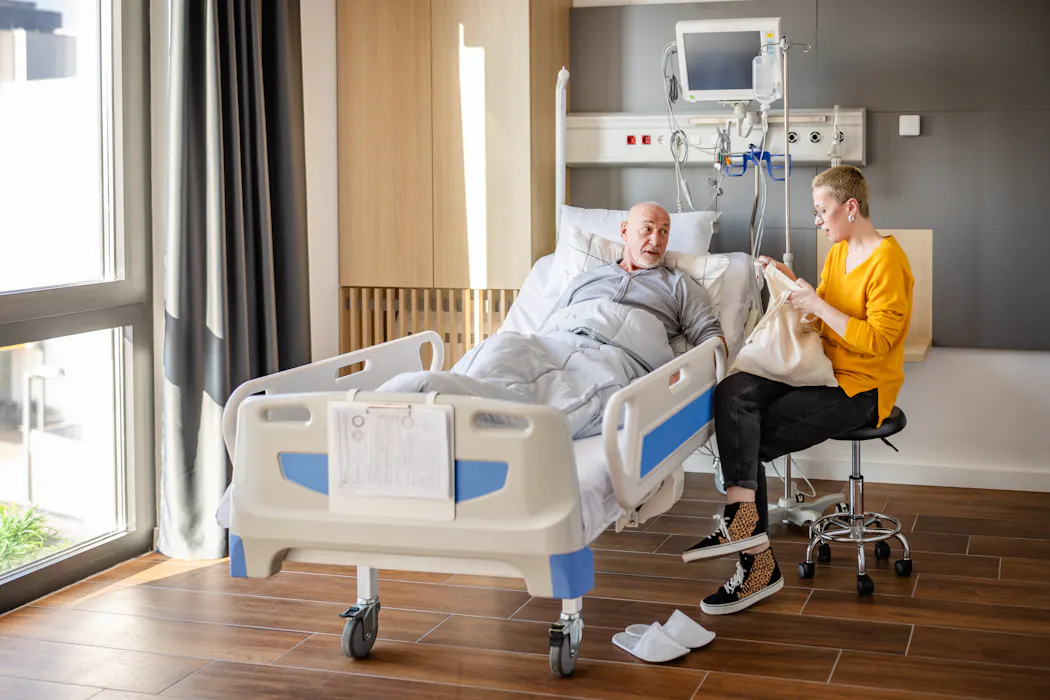
Brushing your teeth in hospital could reduce the chance of catching pneumonia

South_agency/Getty Images

You go to hospital for treatment and to get better. But sometimes, you get something much less welcome: an infection.

Pneumonia, an infection of the lungs, is one of the most common and deadly infections people develop in hospital. Around 50,000 patients contract pneumonia in Australian hospitals every year. Around 1,900 of them die from it.

It’s rarely monitored and rarely reported. And to date, few studies have looked at how it can be prevented.

But our new trial, published today in The Lancet Infectious Diseases, shows a surprisingly simple action can make a major difference: brushing patients’ teeth.

We found this can reduce the chance of getting this type of pneumonia, called non-ventilator hospital-acquired pneumonia, by 60%.

What is this type of pneumonia?

Non-ventilator hospital-acquired pneumonia occurs in patients who aren’t on a ventilator, usually outside of intensive care settings.

Patients are infected when bacteria from the mouth or throat are breathed into the lungs.

Patients who develop this type of pneumonia stay in hospital between ten and 48 days longer, and are around eight times more likely to die during their admission.

A simple intervention made a big difference

We studied 8,870 patients across three Australian hospitals to see whether improving oral care – which included tooth-brushing – could reduce this type of pneumonia.

Usually, when patients go to hospital, they don’t pack a toothbrush – especially in emergencies.

In busy hospital wards, oral care isn’t always given the attention it needs, nor are oral care products always readily available. Patients don’t always get reminders to brush their teeth and many patients need help with their oral care.

The intervention in our study was deliberately simple. We:

  • gave patients in hospital a toothbrush and toothpaste in a bag when they were admitted

  • educated patients and hospital staff about the importance of tooth-brushing. The toothbrush also had a written prompt on it – “Brush away pneumonia”

  • assisted patients who needed help with tooth-brushing

  • audited how oral care was being delivered and gave feedback to hospital wards.

We introduced the intervention into one ward at a time over 12 months at each hospital. This gradual roll-out is known as a stepped-wedge cluster randomised trial. It can test new health interventions when it’s too difficult to randomise individuals without revealing who is receiving the intervention and who isn’t.

We found that this relatively simple intervention increased the proportion of people who cleaned their teeth from 16% to 62%.

This increasing oral care led to a 60% reduction in the risk of acquiring pneumonia, from the equivalent of eight infections per month on a typical ward of 30 patients, to less than four infections per month.

This is the largest trial of its kind and the first completed across multiple hospitals.

Why does brushing teeth help?

The mouth is home to billions of bacteria. Oral hygiene often deteriorates when people are unwell, sedated, immobile, or taking certain medications.

When this happens, bacteria build up on the teeth, gums and tongue. If these bacteria are breathed in – even in tiny amounts – they can cause pneumonia.

Daily tooth-brushing reduces this bacteria. It’s a simple mechanical action with a powerful protective effect.

Yet in busy hospitals, oral care is often overlooked. Patients may not know just how important oral care is. Staff are often busy with competing priorities and oral care can be de-prioritised. There is also a general lack of understanding about the importance of oral care.

Patients can help protect themselves

One of the most important messages from our research is patients aren’t powerless. While health-care staff such as nurses play a crucial role, patients who are able to brush their own teeth can meaningfully reduce their own risk.

If you or a loved one is admitted to hospital, you can:

  • bring your own toothbrush and toothpaste
  • brush your teeth twice a day if you’re able
  • ask staff for help if you can’t
  • remind staff if oral care has been missed.

These small actions can reduce the risk of a serious, life-threatening infection.

What happens next?

Pneumonia is costly – in lives, hospital days and the financial cost of care. But because non-ventilator hospital-acquired pneumonia isn’t routinely reported, it’s often invisible.

Our research challenges the assumption that hospital-acquired pneumonia is an unavoidable complication when you go to hospital.

It also highlights the need for hospitals to monitor non-ventilator hospital-acquired infections, in the same way they monitor falls, pressure injuries and other preventable harms.

Finally, our study strengthens the case for including oral care in national infection-prevention guidelines and nursing practice.

Oral care isn’t glamorous, expensive or technologically advanced – but it works. Sometimes, the simplest interventions are the most powerful.

The Conversation

Brett Mitchell receives funding from the Medical Research Future Fund which helped fund the reported study. Brett also receives funding from the National Health and Medical Research Council through an Investigator grant. He is affiliated with Avondale University and the Hunter Medical Research Institute. Brett is Editor-in-Chief of Infection, Disease and Health.

Allen Cheng receives funding from the National Health and Medical Research Council and the Australian Government for research studies and surveillance systems. He is a member of the Infection Prevention and Control Advisory Committee for the Australian Commission for Safety and Quality in Healthcare - the views expressed in this article may not reflect the views of the committee.

Nicole White receives funding from the Medical Research Future Fund which helped fund the reported study. She is a member of the Statistical Society of Australia and holds editorial roles with the Infection, Disease and Health journal and Significance magazine.

Philip Russo is an NHMRC Early Career Research Fellow at Monash University and Director of Nursing Research at Cabrini Health.

Peta Ellen Tehan does not work for, consult, own shares in or receive funding from any company or organisation that would benefit from this article, and has disclosed no relevant affiliations beyond their academic appointment.

  •  

Activism, complicated sexualities, and rural Oklahoma: what to stream this Pride Month

Pride Month takes place in June each year, prompting increased attention on the LGBTQIA+ community, key issues affecting us and our stories.

Some streaming services have previously curated prominent Pride Month categories, although these saw a downturn in 2025.

Queer “storyworlds” – television series that emphasise the social connections between LGBTQIA+ people – first emerged in the 1990s. These queer series were often products of experimentation in response to disruption, such as the proliferation of cable television.

In new research, we explore how queer storyworlds use the serial nature of television to present complex and nuanced portrayals of queer identities, experiences and community.

These storyworlds emphasise queer social connection, through friends and relationships. They move away from representations of the lone queer character in an otherwise straight world, who may occasionally have a love interest. And they use distinctly queer settings that include the spaces where community is formed, both in public – bars, cafes, nightclubs – and private homes.

Whether the 1990s or the 2020s, centrally queer stories on television remain revolutionary. They offer a glimpse into the ways we create liveable lives despite the dominance of heterocentric society. And for that, they remain a powerful and radical source of meaning making for our community.

We have found more than 70 queer storyworlds since the 1990s, created in the United States, the United Kingdom, Australia and Canada, but there are more queer storyworlds to explore. Here is just a small selection you should be streaming this June.

Queer as Folk

Prime Video

Russel T. Davies’ Queer as Folk (1999–2000) was the first fully queer storyworld in mainstream television. It centres the lives of gay men, and a few lesbians, in Manchester, and the scene on the infamous nightclub strip, Canal Street.

This bold, sexy series is also highly political. It critiques the UK’s oppressive Section 28 laws, which suppressed open discussion of homosexuality for those under 18 from 1988–2003 (2001 in Scotland).

The first episode features a 15-year-old Nathan Maloney (Charlie Hunnam) seeking and finding his first sexual experience on Canal Street, in a UK where it was also illegal for him to explore such desires with someone his own age in 1999.

The L Word

Stan (Australia), Prime Video (NZ and Australia)

Ilene Chaiken’s The L Word (2004–09) is the first all-lesbian (and bisexual woman) storyworld. It gained worldwide popularity early in its run, and is likely one of the most seen series on this list.

The L Word is sexy, dramatic and unafraid to tackle complex issues around relationships, infidelity, family and identity. As a central setting, the cafe/bar The Planet showcases a site of lesbian community-building.

In Our Blood

ABC iview and Stan

In recent years, period dramas have been a key feature of queer storyworlds. Australia’s own powerful contribution is In Our Blood (2023).

The miniseries focuses on queer community activist and government responses to the AIDS Epidemic in Australia. It highlights the diversity of Australia’s LGBTQIA+ community and the vital role of lesbians who led activism and care movements.

Importantly, In Our Blood has moments of levity, where the community comes together. Whether to celebrate progress towards their cause or to mourn loss, they are able to use spaces such as Oxford Street to find connection and joy.


Read more: The ABC’s In Our Blood shines a light on lesbian activism during the AIDS crisis – but there’s more to their story


Pose

Disney+

Another period drama, Pose (2018–21) celebrates the Black and Hispanic trans and queer voices at the centre of New York’s infamous ball culture in the 1980s and 1990s.

The series is groundbreaking for its casting of out trans and queer actors, the depth of storytelling, and the unflinching look at the impact of the AIDS epidemic on the community.

Pose boasts outstanding performances, and Dominique Jackson’s iconic reads – the act of throwing out witty, dismissive insults that originated on this scene – have become the subject of cultural listicle articles.

With 26 episodes over three seasons, Pose gives space to stories often overlooked in mainstream distribution.

Sort Of

ABC iview and Stan

Sort Of (2021–23) is a smart, funny series centring on non-binary Pakistani-Canadian Sabi (Bilal Baig), as they navigate between queer and non-queer spaces.

With three seasons and 24 episodes, Sort Of gives space to explore the complexity of trans and non-binary identity, including bisexual/pansexual attraction.

Sort Of also provides some hard hitting moments as Sabi finds a way to forge a liveable life.

Throughout the series, they learn how to understand and be understood by their family, how to be a good friend and how to make choices that are best for them.

But the series is about more than identity. It highlights the ways queer people build both literal and metaphorical community spaces, and how those remain vital today.

Eastsiders

Netflix

Starting on YouTube, Eastsiders (2012–19) is an independent web series that made the leap to streaming.

The first season of this dark comedy follows Cal (Kit Williamson) and Thom (Van Hansis) as they navigate a shift in what their relationship looks like after Thom is caught cheating.

As the seasons progress, the story expands to include a larger ensemble of LGBTQIA+ characters and community spaces.

The third and fourth season premiered on Netflix where all four seasons are now available.

Faking It

10Play

An astute teen comedy-drama that explores the “incoherence of identity”, Faking It (2014–16) follows Amy (Rita Volk) and Karma (Katie Stevens) who pretend to be queer to gain popularity at their progressive school.

As Amy begins to realise her sexuality might be more complicated, it prompts an important examination of the pressure to apply labels to our identity.

This series speaks to teen – and adult – audiences grappling with expectations to label themselves.

Smoggie Queens

Binge

Smoggie Queens (2024–) is all about the ways queer people find one another and build community wherever we are.

Set in the North Yorkshire port town of Middlesborough, this scrappy, queer chosen family ensemble shows off the beating heart of low-budget comedy as a place for sharp writing by new voices.

Smoggie is a term for people from Middlesborough, and this series gives us the queens of that community. It is packed full of acerbic wit, pop culture references and heartfelt moments.

Q-Force

Netflix

Q-Force (2021) blends the “chosen family” and “crack team of secret agents” tropes that stays on the funny side of stereotype.

The team features a type-A personality gay leader, a drag queen mistress of disguise, a trans hacker, a lesbian mechanic who is revealed to have a house full of rescue pitbulls, and a token straight guy (of course).

The series examines how we find community, sometimes despite our differences, as we are brought together under the LGBTQIA+ banner.

Iggy & Ace

SBS OnDemand

Part of the SBS Digital Originals initiative, Iggy and Ace (2021) follows its titular best friends (played by Sara West and Josh Virgona) as they navigate addiction within the queer community.

This short series examines the ways our community can find connection in bars and nightclubs, places intrinsically tied to alcohol, and the challenges this can bring.


Read more: Iggy & Ace: a zany Aussie comedy about two gay best friends — and alcohol abuse


Key highlights include the scenes set in Ace’s all-queer Alcoholics Anonymous group, led by Australian comedy legend Roz Hammond as Gwen. She brings heartfelt moments, and calls out Ace’s excuses, hitting at the heart of what makes queer community connection so powerful.

Special

Netflix

Created by Ryan O'Connell, Special (2019–21) is a semi-autobiographical comedy series about being a gay man with cerebral palsy in Los Angeles.

Special does more than putting an underrepresented story onscreen. It examines the life of a disabled gay man and his desire for friendships, relationships and sex.

The series gives us genuine, laugh-out-loud moments and shows how authentic writing can be irreverent and meaningful all at once.

Reservation Dogs

SBS OnDemand and Disney+

Reservation Dogs (2021–23) is a coming-of-age comedy about four Indigenous teenagers in a small town in the Muscogee Nation in rural Oklahoma. The series has been celebrated for its inclusive queer and trans Indigenous representation, both on screen and behind the scenes.

Over three seasons, the show reflects on community and culture, following Bear, Elora, Cheese and Willie Jack as they navigate the messiness, humour, and heartbreak of adolescence. One of the most refreshing aspects of Reservation Dogs is that it approaches LGBTQIA+ and Two-Spirit identities as a natural part of everyday life.

The Conversation

The authors do not work for, consult, own shares in or receive funding from any company or organisation that would benefit from this article, and have disclosed no relevant affiliations beyond their academic appointment.

  •  
❌