Reading view

Man in 'cockroach' outfit protests Yamuna pollution at Mathura civic office

A social activist in Mathura, protesting pollution in the Yamuna river, arrived at the municipal corporation office dressed as a cockroach, singing and dancing in a stunt that appeared to draw inspiration from the recently launched satirical ‘Cockroach Janata Party’ (CJP).

Clad in a cockroach costume, activist Deepak Sharma said on Friday that the condition of the Yamuna would worsen unless authorities acted urgently.

Sharma said he was compelled to adopt the unusual guise to open the eyes of “incompetent” officials, accusing them of turning a blind eye to the river’s pollution and mounting civic filth in the city.

The protest comes days after the emergence of the CJP, a satirical social media platform that has sought to capitalise on the controversy over remarks attributed to Chief Justice of India Surya Kant likening certain youth to “cockroaches” and “parasites” during a court hearing. The platform has also launched a campaign demanding the resignation of Union education minister Dharmendra Pradhan over the alleged NEET-UG 2026 paper leak.

The CJI later clarified that his observations, directed at people entering the legal profession using “fake and bogus degrees”, had been misquoted.

Municipal officials did not comment on Sharma’s protest. At the civic body office in Mathura, crowds gathered to watch the activist, with many recording videos on their mobile phones.

कॉकरोच के चाचा से मिलिए गाइज

यूपी: मथुरा में नगर निगम के ऑफिस ये कॉकरोच पहुंचा है. ये यमुना नदी में गिरते गंदे नालों के विरोध में ये कॉकरोच नगर निगम पहुंचा है. जिसे देखकर हर कोई हैरान है. pic.twitter.com/RaqKjXLerc

— Priya singh (@priyarajputlive) May 22, 2026

“We, the residents of Braj, perform the aachaman ritual of sipping water from the Yamuna. Yet, despite years of promises to rid the river of pollution, nothing has been done. Be it Mathura or Vrindavan, polluted water and sewage from filthy drains can be seen flowing openly into the river,” Sharma said, alleging official apathy.

Citing the Water (Prevention and Control of Pollution) Act, he said releasing sewage and polluted water into rivers was a punishable offence. “The Supreme Court and the National Green Tribunal have also clarified that direct discharge of sewage and drain water into any river is a criminal act,” he said.

Sharma also urged citizens to join him in filing FIRs against officials whom he accused of violating the very rules they were tasked with enforcing. As part of his protest, the activist also stood in front of vehicles belonging to senior officials.

With PTI inputs

  •  

Centre tells SC no new hydel projects should be allowed in upper Ganga basin

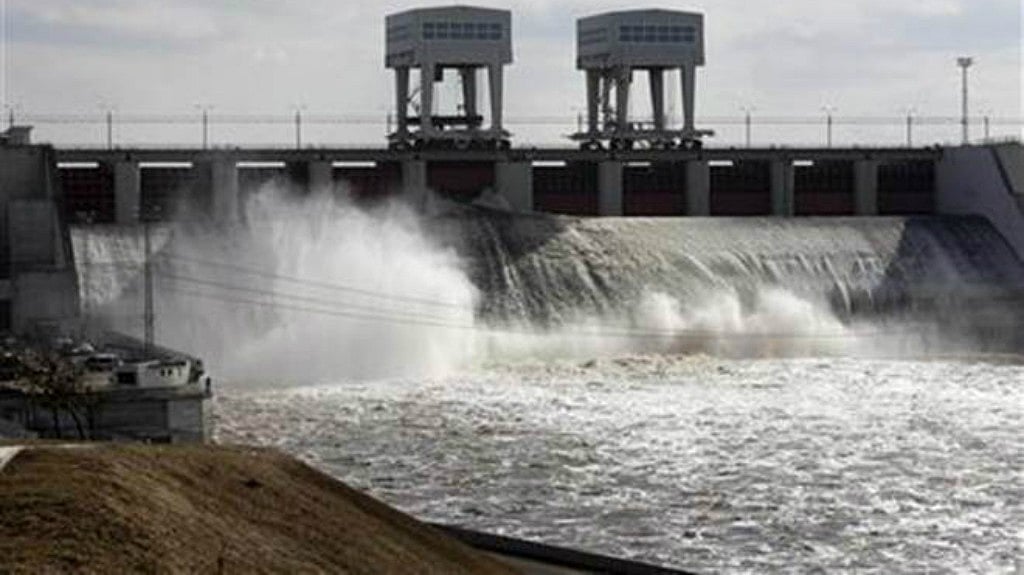
Acknowledging the fragility of the Himalayan ecosystem, the Centre has told the Supreme Court that no new hydroelectric projects should be permitted in the upper reaches of the Ganga river basin in Uttarakhand, barring seven existing projects in the Alaknanda and Bhagirathi basins that are at advanced stages of development.

In an affidavit filed before the apex court, the Centre said the seven projects — Tehri Stage-II (1,000 MW), Tapovan Vishnugad (520 MW), Vishnugad Pipalkoti (444 MW), Signoli Bhatwari (99 MW), Phata Byung (76 MW), Madhmaheshwar (15 MW) and Kaliganga-II (4.5 MW) — may be allowed to proceed, subject to stringent environmental safeguards and statutory compliance.

Represented by additional solicitor-general Aishwarya Bhati, the Union government argued that the Ganga river system required “special treatment” because of its ecological, geological and cultural importance.

“On behalf of the Union of India, it is respectfully submitted that only the seven hydro-electric projects, of which four projects are already commissioned and three projects have already achieved substantial physical and financial progress, may be permitted to proceed, subject to strict compliance with all applicable statutory provisions and environmental safeguards and that no other new hydro-electric projects shall be undertaken in the upper reaches of the Ganga river basin in Uttarakhand,” the affidavit stated.

The Centre told the court that the potential environmental damage, including harm to the health of the river system, outweighed the financial gains associated with hydropower generation.

Highlighting the ecological vulnerability of the region, the affidavit said the Alaknanda and Bhagirathi basins — which contain critical headstreams of the Ganga — are highly prone to landslides and flash floods and play a vital role in sustaining biodiversity and ecological balance.

The Centre also questioned earlier expert recommendations that favoured expanding hydropower development in the region, saying they did not sufficiently account for the cumulative environmental impact of multiple dams and other human interventions in the Himalayan terrain.

The submissions were made in ongoing proceedings concerning hydropower projects in the upper reaches of the Ganga, initiated in the aftermath of the devastating Kedarnath floods of 2013.

With PTI inputs

  •  

Recipe for ecological disaster: Jairam to Rajnath on Great Nicobar project

Congress Rajya Sabha MP and general-secretary (communications) Jairam Ramesh on Sunday wrote to defence minister Rajnath Singh, raising concerns over the Great Nicobar Island Project, saying the project in its current form is a recipe for “ecological disaster”.

The Congress has repeatedly expressed reservations about the project, alleging that it could severely impact the region’s ecology and undermine tribal rights.

In his letter to Singh, Ramesh said there was unanimous agreement on the need to bolster India’s defence preparedness, but suggested that the country’s strategic objectives around Great Nicobar could be achieved through alternative measures with far less environmental damage.

According to him, several such proposals have already been put forward by naval officers in their writings and could significantly strengthen India’s defence capabilities without adversely affecting the fragile ecosystem.

Sharing the letter on X, Ramesh wrote, “After writing to the Union Minister of Environment, Forests, & Climate Change and the Union Minister of Tribal Affairs, I have written to the Raksha Mantri on the Great Nicobar Island Project.”

Referring to his earlier correspondence, the former Environment minister said the Government of India had issued a press note on 1 May titled “The Great Nicobar Island Project: FAQs”.

After writing to the Union Minister of Environment, Forests, & Climate Change and the Union Minister of Tribal Affairs, I have written to the Raksha Mantri on the Great Nicobar Island Project. pic.twitter.com/wGJOJ3OqGK

— Jairam Ramesh (@Jairam_Ramesh) May 17, 2026

Ramesh said he had written to the Union environment minister on 10 May, arguing that the FAQs presented a “completely false picture” of the project’s environmental clearances, which he claimed had been granted on highly questionable grounds.

He further said that on 13 May, he had written to the Union tribal affairs minister alleging that the FAQs “misrepresent totally” the status of compliance with the Forest Rights Act, 2006, during the clearance process.

According to Ramesh, the process “flagrantly violate, in letter and spirit, the individual and collective rights given to tribal communities by Parliament.”

“Now I am writing to you since the project, which is essentially a commercial venture and is facing growing public criticism because of the ecological damage it will cause, is being sought to be justified by the Government of India supposedly on overriding security considerations,” he said in the letter to Singh.

“Let me straightaway say that there can be no two opinions on the need to strengthen our nation's defences. There can also be no two opinions on the need to project India's strategic capabilities in a credible manner,” he added.

I travelled through Great Nicobar today.

These are the most extraordinary forests I have ever seen in my life. Trees older than memory. Forests that took generations to grow.

The people on this island are equally beautiful - both the adivasi communities and the settlers - but… pic.twitter.com/vYdBWdYfIJ

— Rahul Gandhi (@RahulGandhi) April 29, 2026

Ramesh then outlined a series of alternatives for the minister’s consideration. “Even so, I submit the following for your consideration. First, INS Baaz located in Campbell Bay on the Great Nicobar Island was commissioned in July 2012. But plans for at least trebling the length of the existing runway and making a naval jetty have been awaiting approval for almost five years. These plans have far less adverse environmental impacts as well,” he said.

He also pointed to existing infrastructure under the Andaman and Nicobar Command that could be expanded at a significantly lower ecological cost. “These include INS Kardip, INS Kohassa, INS Utkrosh, INS Jarawa & the Car Nicobar Air Force Station.”

The Modi government has been touting national security as justification for an ecologically-disastrous project enriching cronies, while sitting on the Navy’s actual Great Nicobar expansion plans for five years. https://t.co/bwivIGoA7W

— Amitabh Dubey (@dubeyamitabh) May 7, 2026

Questioning the strategic rationale behind certain components of the project, Ramesh said, “Third, the transshipment port and the township that are an essential part of the Great Nicobar Island Project do not enhance our country's military capability in any way. Yet, now that suddenly has emerged as a major justification for them.”

“Finally, I wish to reiterate that the Great Nicobar Island Project in its present shape and form is a recipe for ecological disaster. I would urge you, as the nation's Raksha Mantri, to seriously consider the above alternatives that have, in fact, been proposed by distinguished naval officers themselves in their writings,” he said.

  •  

Goa declares zones near Old Goa, St Cruz as no-development areas

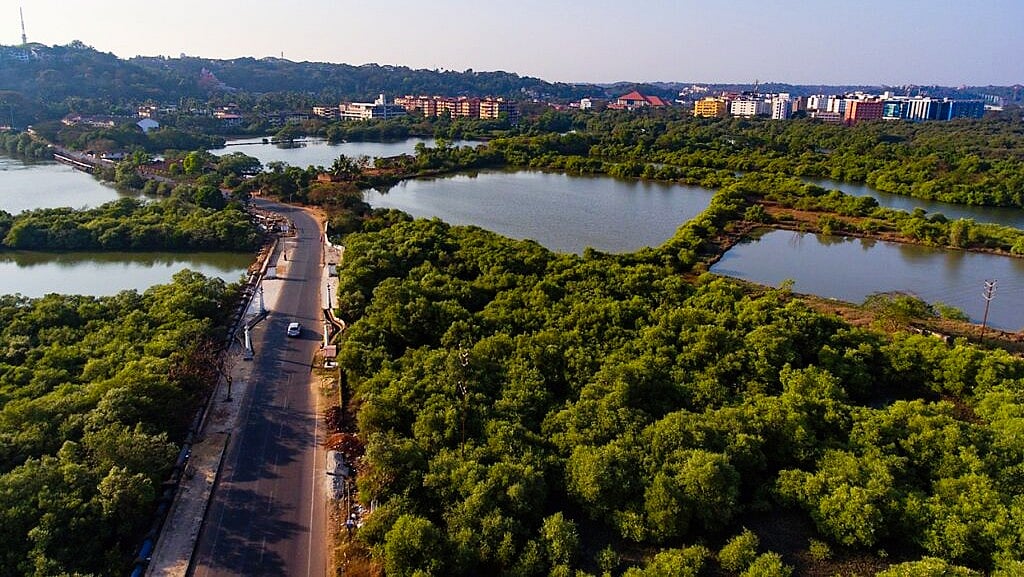
The Goa government has declared more than 4 lakh square metres of ecologically sensitive land near the protected heritage precinct of Old Goa and in St Cruz village as ‘no development zones’, effectively prohibiting construction and other development activities in the identified areas.

Town and country planning minister Vishwajit Rane on Saturday said the move was aimed at preserving environmentally fragile landscapes, including orchards, salt pans, paddy fields and mangroves, under Section 39(A) of the Goa Town and Country Planning (TCP) Act.

The Town and Country Planning (TCP) Board, through a notification issued on Thursday, declared around 1.02 lakh square metres of land surrounding Old Goa as a no-development zone. The notified area includes orchards and parts of an archaeological park located near the heritage precinct.

Old Goa, the former capital of Portuguese India, is home to several centuries-old churches and colonial-era structures and forms part of the UNESCO-listed Churches and Convents of Goa heritage complex.

In a separate notification, the TCP Board also declared around 3.37 lakh square metres in St Cruz village in north Goa as no-development zones. The protected land includes salt pans, mangroves and other ecologically sensitive stretches.

Rane said St Cruz was home to rich salt pans and traditional paddy fields that needed protection from conversion into settlement zones and real-estate development.

The move assumes significance amid growing debate in Goa over land-use changes under Section 39(A) of the TCP Act, a provision introduced in 2024 that allows plot-level zoning modifications through the Town and Country Planning department. The provision has faced criticism from environmental groups and activists, who have alleged that it could enable arbitrary conversion of ecologically sensitive land for construction projects.

Environmental concerns over rapid land conversion and unplanned urbanisation have intensified in recent years in Goa, particularly around coastal belts, wetlands and agricultural land. The Bombay High Court, while hearing matters related to Goa’s land-use regulations last year, also observed that environmental concerns in a “fragile ecosystem” like Goa must outweigh private commercial interests.

With PTI inputs

  •  

Climate risk still missing from lending strategy at India’s top banks: Analysis

India’s largest banks are still failing to adequately integrate climate risks into their lending and risk-management practices despite rising threats from floods, heatwaves and droughts, according to a new analysis by Bengaluru-based think tank Climate Risk Horizons.

The report, which assessed 35 Indian banks with a combined market capitalisation of around Rs 50 trillion, found that while disclosures related to climate change have improved sharply in recent years, most lenders are still not using climate-related information to shape credit decisions, portfolio exposure or long-term business strategy.

According to the study, 92 per cent of Indian banks now disclose at least some climate-related data, compared with just 40 per cent in 2022. However, researchers said this progress appears largely compliance-driven and influenced by regulatory pressure from the Reserve Bank of India rather than a deeper recognition of financial risks posed by climate change.

“The economic impacts of physical climate risks such as floods, heat and drought are worsening,” the report’s co-author Sagar Asarpur said, warning that climate risks directly affect borrower cash flows, collateral quality and overall portfolio stability.

Few banks stress-testing climate risks

The report found that fewer than half the banks studied had initiated climate stress-testing exercises, and none publicly disclosed the impact of those stress tests on capital adequacy, asset quality or portfolio performance.

Only a handful of lenders have taken concrete measures such as measuring financed emissions, introducing coal phase-out policies or setting net-zero targets.

According to the analysis, only Federal Bank and RBL Bank have announced clear timelines for phasing out coal-sector financing, while Union Bank of India has made a more limited commitment.

Just six of the 35 banks surveyed have announced net-zero targets, and only State Bank of India and Punjab National Bank include Scope 3 emissions within those targets.

The report also noted that only five banks currently disclose financed emissions — the greenhouse gases linked to borrowers and financed projects — despite such emissions typically accounting for over 95 per cent of a bank’s total climate footprint.

Climate costs rising rapidly

The findings come amid increasing concern over the economic costs of climate-related disasters in India.

According to reinsurance giant Swiss Re, extreme weather events causing losses exceeding USD 1 billion are becoming increasingly common in India. Separate estimates cited in the report suggested climate-linked losses in 2023 exceeded USD 12 billion.

Researchers warned that delayed action by banks could increase the risk of stranded assets, rising non-performing loans and broader financial instability.

The report said Indian banks now need to move beyond disclosure-led compliance and integrate climate considerations directly into credit appraisal, pricing models, capital planning and portfolio limits.

Climate risk still missing from lending strategy at India’s top banks
  •  

Everyone is an activist: SC on ‘anti-development’ litigation in Pipavav case

The Supreme Court on Monday, 11 May, sharply criticised what it described as a growing tendency to use environmental litigation to stall infrastructure projects, while hearing a plea linked to the expansion and modernisation of Gujarat’s Pipavav port — a long-contentious coastal project that has faced years of environmental objections and regulatory scrutiny.

Hearing a challenge to a National Green Tribunal (NGT) order upholding environmental and Coastal Regulation Zone (CRZ) clearances for the port expansion, a bench of Chief Justice Surya Kant and Justice Joymalya Bagchi questioned whether the country could progress if every major project was met with litigation.

“Show us even a single project in this country where these so-called environmental activists have said that we welcome this project,” the bench remarked. “In this country, the kind of petitions being filed are only to stall development. That is the problem. How the country is going to progress?”

At the same time, the bench clarified that courts remained conscious of environmental concerns and had consistently intervened where ecological damage was evident. It said activists and environmental groups should instead focus on offering constructive suggestions that balanced development with environmental protection.

“The attempt should never be to stall developmental projects,” the bench said.

BREAKING: Supreme Court Grants Leave In Plea Against NGT’s Pipavav Port Expansion Order, But Says It Is Not Inclined To Interfere,
"Nowadays, everyone is an activist, everything cannot be stalled, there has to be development also" the CJI said. https://t.co/NAEoDy4V2b

— LawBeat (@LawBeatInd) May 11, 2026

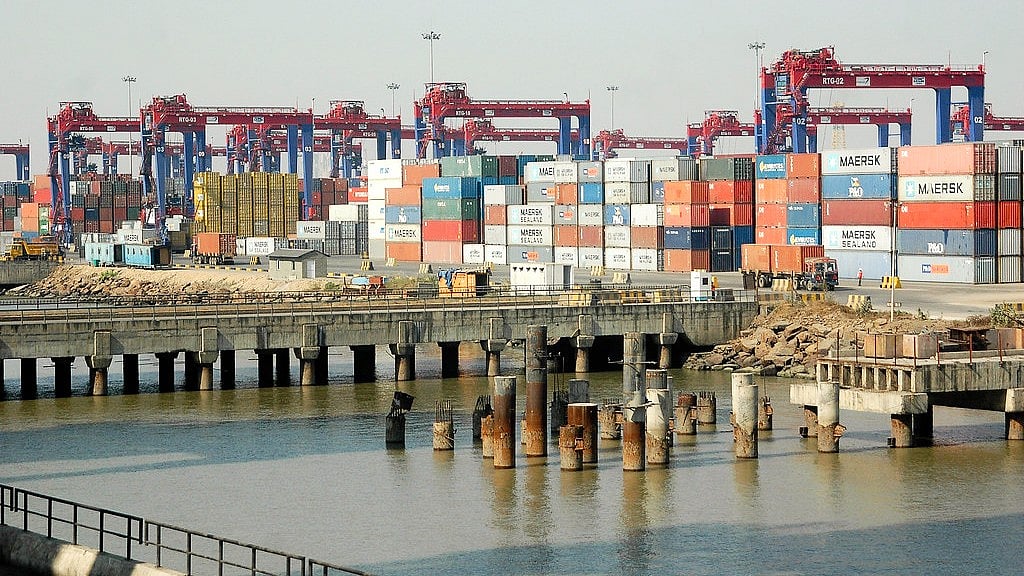
The case concerns the expansion and modernisation of Gujarat Pipavav Port Ltd (GPPL), India’s first private port developed under the public-private partnership model at Pipavav in Amreli district of Gujarat. The project involves expanded cargo handling facilities, new berths, dredging activity and upgraded container and liquid cargo infrastructure aimed at significantly increasing the port’s handling capacity.

The project has had a long and controversial environmental history. Environmental and CRZ clearance for the expansion was first granted in 2012 under the UPA government, but portions of the project were later challenged before the NGT over concerns relating to mangroves, grazing land, coastal ecology, fishing livelihoods and potential salinity impacts.

In 2013, the NGT had even asked the environment ministry to reconsider the clearance, observing that the environmental impact assessment process required closer scrutiny. Activists and local groups had alleged that earlier expansions of the port had already affected mangroves and coastal ecology in the region.

Yet the project continued to receive extensions and fresh approvals over the years. The Ministry of Environment, Forest and Climate Change extended the validity of environmental and CRZ clearances in 2019 after large parts of the approved work remained incomplete.

'The Great Nicobar project to develop a transshipment terminal, airport, and township, with an outlay of nearly one lakh crores, is likely to destroy over 160 sq km of pristine rainforest, cut down nearly 10 lakh trees, displace the indigenous Shompen tribe and irreparably damage…

— Dr PV Ramesh (@RameshPV2010) May 11, 2026

That trajectory, critics note, mirrors a broader policy shift under the Narendra Modi government, which has repeatedly stressed “ease of doing business” and accelerated infrastructure approvals while simultaneously diluting or relaxing environmental compliance norms in several sectors.

Over the past decade, amendments to environmental regulations — including post-facto clearances, extended validity periods for approvals and streamlined appraisal procedures — have frequently been justified in the name of speeding up development projects, such as the currently ongoing and immensely controversial Great Nicobar project.

Against that backdrop, the Supreme Court’s remarks on Monday appeared strikingly aligned with the Centre’s development-first policy approach, which has often viewed prolonged environmental litigation as an obstacle to economic growth.

The bench, however, stopped short of dismissing environmental concerns altogether. It noted that apprehensions about ecological damage could initially be genuine whenever large projects were proposed.

Dealing with the present plea, the court observed that the NGT had passed a “very detailed order” in the matter. It granted liberty to the petitioner to approach the NGT through a review application specifically on the question of whether the environmental impact assessment report had adequately considered the issues raised by the petitioner. The apex court also directed the NGT to examine that aspect.

The judges reiterated that while development was necessary, environmental safeguards could not be ignored. At the same time, they stressed that litigation should not become a means to indefinitely halt projects that governments consider vital for economic growth and infrastructure expansion.

With PTI inputs

  •  
❌