Reading view

Demolishing homes after climate disasters can be devastating. Here’s how we reused precious materials

Elise Derwin

Following the devastating Northern Rivers floods in New South Wales in 2022, roughly 14,000 truckloads of water-damaged materials were sent to landfill.

The flood exposed many things, including our unimaginative approach to managing waste. As immediate recovery moved into reconstruction, we saw an opportunity to manage this flood-damaged material differently.

We proposed an alternative to traditional house demolition. It was piloted on two flood-damaged houses in Lismore, using a “circular” model that could reuse materials and eliminate waste.

As well offering potential economic benefits for the local community, our report found it had considerable social and environmental value.

Why did homes get demolished?

In the aftermath of the floods, many NSW homes were significantly damaged and still lay in the path of future floods. In response, the NSW government introduced a buy-back scheme for eligible homes in flood-prone areas.

Part of this program involved demolishing homes, with the materials discarded in landfill or used for low-value recycling, such as woodchipping and burning. Yet the homes contained valuable materials, such as hardwood timbers.

Losing these homes was traumatic for the local community and an unnecessary loss of valuable resources. So the NSW Reconstruction Authority, Living Lab Northern Rivers, and the University of Technology Sydney (UTS) explored how to recover a material that is extremely difficult to source today – old growth timber.

A weatherboard house that has suffered flood damage.
A flood-damaged home in North Lismore, before it was dismantled as part of the Circular Timber project. Kurt Petersen/LLNR

The colonial hunger for hardwood

The first wave of European colonisation of the Northern Rivers included groups known as “cedar getters”. These timber cutters arrived in search of highly-prized rainforest hardwoods.

Much of this timber was transported to Australian cities or as far away as Europe. It was also used to construct buildings and homes for local communities.

Premium old growth timbers extracted from the area included red cedar (Toona ciliata), spotted gum (Corymbia maculata), tallowwood (Eucalyptus microcorys), rosewood (Didymocheton fraserianus) and blackbutt (Eucalyptus pilularis).

This is not your ordinary hardware-variety timber. Prized hardwood rainforest timber is dense, strong, durable and resistant to rot and insects.

Two men in workwear and hard hats study the timber inside a house being deconstructed.
Berto Pandolfo (project lead) and Kris Gardner identifying timber species during the selective deconstruction process. Kurt Petersen

The circular timber project

In early 2024, the Circular Timber project developed an alternative to traditional demolition, which offers very little opportunity for recovering materials.

The current system for demolishing homes is this: large-scale machines level structures and excavators scoop materials into dump trucks, which transport them to distant landfill. Sometimes, materials are recovered, but the vast majority are broken into small pieces, trucked away and buried.

We wanted to establish a “circular” system that reused materials and eliminated waste. This cannot be achieved by a single entity – multiple partners needed to collaborate. In this case, the local community, educators, businesses and government agencies collaborated to establish a pilot where timber from uninhabitable homes could be recovered and reused.

The local community was invited to make prototypes as proof that these premium timbers could be salvaged into new objects. Buy-in from the community was immediate – the materials in these homes represented a link to the region’s history and culture.

Two homes acquired by the government authority were deconstructed, with their recovered materials made available to local timber makers, builders, artists, architects and designers. The salvaged timber was transformed into a dining table, a community shed, and other designed objects.
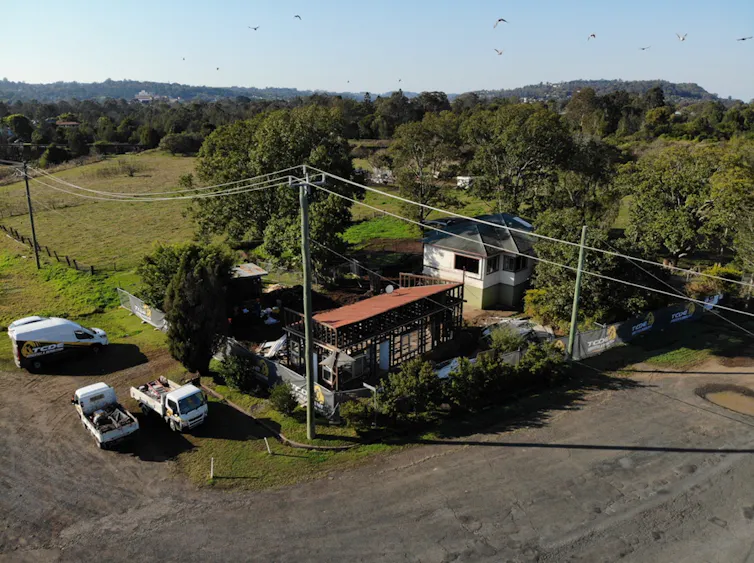
An aerial photo of two houses on a green hill.
An aerial photo of the two properties that were used for the project. Living Lab Northern Rivers

How it happened

Moving from home demolition to deconstruction represented a significant challenge. There are Australian standards for demolishing a building, but no guidelines for deconstructing exist (yet).

This project developed a considered approach to dismantling the homes. Care was taken in site preparation, materials identification and disassembly to ensure as much of the timber was recovered as possible.

Although deconstructing, recovering and reusing house materials requires more time, there were significant local and global benefits. For example, salvaging timber reduces carbon emissions, significantly reduces waste sent to landfill, and has a smaller carbon footprint than using virgin timber.

There are also economic and social benefits. This was a Northern Rivers community with a long history of seeing lives turned upside down by catastrophic floods. They responded positively to retaining the physical, cultural, and historical value of the past built into these homes.

A composite picture of household objects made with hardwood.
The salvaged timber from deconstructed homes was used to make new objects. Living Lab Northern Rivers

Homes hold many values

Between 2019 and 2025, there were 214,483 approvals granted nationwide for knock-down-and-rebuild applications in Australia, with the management of waste material left to the discretion of the owner and demolition contractor.

A standard Australian house can include salvageable materials such as hardwood timber, premium timbers, pressed metal ceilings or Federation red bricks.

Shifting our approach from demolition to deconstruction could open up new opportunities. Not only could it create jobs, but it could reduce the need for virgin materials and protect our environment.

This project reminds us that value should not only be assessed in economic terms but also in relation to our environment and communities. This program showed deconstructing homes can be embraced as a way to transform waste into a valuable resource.

The Conversation

Berto Pandolfo receives funding from Northern Rivers Reconstruction Corporation (NRCC).

Angelique Milojevic receives funding from Northern Rivers Reconstruction Corporation (NRCC).

Dan Etheridge receives funding from the NSW Reconstruction Authority. The NSWRA funded the project described in this article.

  •  

Genome sequencing is rewriting the history of disease outbreaks – but without social context, it can tell only part of the story

A pathogen's genome acts as a biological record of where it came from and how it spread. Westend61/Getty Images

Fingerprinting transformed police investigations by making it possible to place a suspect at a crime scene with physical evidence. Similarly, genome sequencing has changed how disease detectives study outbreaks by allowing them to read a pathogen’s genes as a biological record of where it came from and how it spread.

One way to think about sequencing is to imagine a virus or bacteria’s genome as a recipe book. Each gene is a recipe for making a protein. When scientists sequence a pathogen, they read the order of the genetic letters in those recipes.

Over time, small changes appear in the recipes as the pathogen mutates. By comparing those changes in samples collected from different places and times, researchers can determine which infections are related and estimate when and where the pathogen entered a population.

Scientists have used sequencing in this way to track outbreaks of COVID-19, Ebola, mpox and foodborne illnesses. This information helps public health investigators connect cases that might otherwise seem unrelated.

Genomic sequencing helps researchers keep track of virus variants.

Still, genomic sequencing has limits. It can show that different pathogen strains are related, but it cannot fully explain why an outbreak began in one place, why it spread in a particular direction, or how human behavior shaped its course. Answering those questions requires combining genomic data with historical records, archaeological artifacts, trade records and epidemiological investigations.

I am a chemist and the author of “Diseases Without Borders: Plagues, Pandemics, and Beyond,” a book for young adults on infectious disease and the ways it has shaped human history. In my research, I’ve found that while the genome can help researchers trace the evolutionary trail of a pathogen, other fields are needed to explain the environmental conditions that allowed this trail to become an outbreak.

Ancient DNA tells only part of the story

Advances in DNA sequencing and extraction over the past decade have made it possible to recover fragments of ancient DNA from bones and teeth. Researchers can use these genomes to study a metaphorical molecular fossil record of microbial evolution.

The Black Death, one of the deadliest pandemics in history, shows both the power and the limits of sequencing.

The infectious disease behind the Black Death, plague, is caused by the bacterium Yersinia pestis. DNA recovered from the teeth of people buried more than 5,000 years ago in what is now Sweden revealed the existence of an ancestral form of Y. pestis that had not yet adapted to fleas.

About 2,000 years later, the bacterium made an important evolutionary shift: It gained the ability to survive in fleas and pass back and forth between humans, rats and other mammals via flea bites. That change made the pathogen far more dangerous and helped pave the way for three great plague pandemics that followed: the Justinianic Plague from the sixth to eighth century; the Black Death and later waves from the 1300s into the 1700s; and the third pandemic from the 19th to mid-20th centuries.

But how and why did plague emerge and move through human societies with such devastating results? Genetic results alone are not enough to answer these questions.

When gravestones become genetic evidence

Geneticists needed archaeologists, paleoclimatologists and historians to complete the picture of the plague pandemics. The genome revealed the lineage. Other disciplines supplied the historical and environmental context.

Two 14th-century graveyards in what is now Kyrgyzstan provide a striking example of how historical evidence can guide genetic investigations into the origins of a pandemic.

Historian Philip Slavin noticed archival records pointing to an unusual number of gravestones from 1338 and 1339. Some of those tombstones explicitly referred to a pestilence as the cause of death.

That clue led to the next stage of the investigation, where archaeologist Maria Spyrou and her team extracted and sequenced ancient DNA from the skeletal remains of seven people buried in the graves and found genetic traces of Yersinia pestis in three of the skeletons. These strains were close precursors of the strain linked to the Black Death and ancestors of several modern Y. pestis lineages.

Map of locations of the Kara-Djigach and Burana archaeological sites in Kyrgyzstan, a map of graves color-coded by age and presence of Y. pestis, a horizontal bar chart of grave numbers over time, and a tombstone with a pestilence-associated inscription
The top map shows the locations of the gravesites in modern-day Kyrgyzstan, with regions of Y. pestis outbreaks shaded in blue. The map on the bottom left shows tombstones, burial dates and evidence of Y. pestis infection in a part of Kara-Djigach cemetery. The map on the bottom right shows annual numbers of tombstones from the archaeological sites of Kara-Djigach and Burana. And the artifact is a tombstone from the Kara-Djigach cemetery, part of the inscription reading ‘This is the tomb of the believer Sanmaq. [He] died of pestilence.’ Spyrou et al./Nature, CC BY-SA

This major finding was still not the whole story. It could explain where the Black Death pandemic began but not how the disease spread across Asia to Europe. Researchers found a potential answer to this question in artifacts buried at the site, which included pearls from the Indian Ocean, Mediterranean coral and foreign coins. Those objects suggested that the region was connected to long-distance trade networks.

Once the gravestones, skeletal remains, written records and trade goods were considered together, a richer picture emerged. Researchers could place the pathogen in a specific time and place and connect it to the networks of human movement that may have carried plague westward.

Sequencing provided the biological clue, revealing the pathogen’s identity and ancestry. History and archaeology turned that clue into a plausible narrative.

From ancient DNA to modern outbreaks

Genomic sequencing isn’t limited to examining outbreak cold cases. It is also researchers’ tool of choice for understanding new diseases.

When the first reported COVID-19 cases emerged in 2019, researchers quickly sequenced the virus and found that it was closely related to the virus that caused the 2002 SARS outbreak. This placed the new virus within a known family of pathogens.

Later genomic sequencing helped reveal the scale of a major superspreading event: the 2020 Biogen conference in Boston.

The biotech company Biogen brought together about 175 European and American executives at a moment when COVID-19 was only beginning to spread in the United States. In Europe, COVID-19 was also escalating, with northern Italy reporting locally transmitted clusters just days before the meeting. After the meeting, many Massachusetts cases were linked to the conference.

A 2020 Biogen conference in Boston is considered a superspreader event for COVID-19.

Researchers then analyzed thousands of viral genomes from patients in Massachusetts and elsewhere. One viral genome carried a unique genetic signature traceable to a European attendee at the conference. It matched viruses circulating in Europe but also had an additional mutation that appeared to have arisen during the attendee’s travel to Boston or early in the conference.

Because that altered sequence appeared only in people with direct or indirect ties to the meeting, it served as a genetic marker for the COVID-19 strain originating at the Biogen conference. By comparing it with other viral sequences in national databases, researchers tracked the strain associated with the conference to 29 states and several other countries.

Interviews and contact tracing alone couldn’t have made that chain of infection so clear because people may not know exactly when they were exposed, especially when infections spread through brief encounters, via travel or large meetings.

When genomes join the investigation

Genome sequencing has rewritten the history of disease by giving scientists a way to read a pathogen’s own record of change.

It can link ancient graves to later pandemics and trace a modern outbreak from one conference room to cases across a continent.

But the greatest strength of genome sequencing lies in partnership. Sequencing does not replace history, archaeology or public health investigation. It gives them a new molecular partner.

Combining work from these fields produces a fuller and more accurate account of how disease moves through the world.

The Conversation

Marc Zimmer does not work for, consult, own shares in or receive funding from any company or organization that would benefit from this article, and has disclosed no relevant affiliations beyond their academic appointment.

  •  

When you don’t have the facts, argue the law: How Trump’s EPA is limiting its own ability to protect public health far into the future

The Trump administration is trying to tie the hands of future administrations when it comes to regulating pollution, including greenhouse gas emissions. Chris Sattlberger/Tetra Images via Getty Images

As the Trump administration moves to weaken America’s air pollution rules, it is deploying new legal interpretations that are intended to tie the hands of future administrations for years to come.

In practice, the changes limit the Environmental Protection Agency’s authority under the Clean Air Act. The result allows EPA officials to ignore science, data and the adverse effects their decisions will have on public health and the environment.

But the new interpretations are also designed to apply not just to the rule in which they are first set forth but into the future.

If affirmed by the U.S. Supreme Court in inevitable legal challenges, these interpretations could make it harder for future administrations to restore the public health protections that the Trump administration eliminates. They could also make it difficult to update rules to respond to new information about health risks.

Typically, moves to weaken pollution regulations through novel legal interpretations would have a good chance of being overturned in court. But the EPA’s new interpretations are strategically designed to appeal to the current U.S. Supreme Court’s view of federal agencies’ authority, especially in light of the court’s 2024 ruling in Loper Bright v. Raimondo. In that case, the court overturned what’s known as the Chevron doctrine. A 1984 Supreme Court ruling had established that courts should defer to executive agencies’ legal interpretations of their governing statutes when the text of the law was ambiguous or left gaps. That deference no longer applies.

As a former EPA appointee who helped write and review dozens of regulations under the Clean Air Act during the Obama and Biden administrations, I find these efforts to prevent the EPA from doing its job of protecting public health and the environment to be alarming. Here are two examples of how the new interpretations are playing out.

Blocking future climate regulations

In February 2026, the EPA rescinded its 2009 endangerment finding, a determination under the Clean Air Act that carbon dioxide and five other greenhouse gases “may reasonably be anticipated to endanger public health or welfare” because they contribute to climate change.

The endangerment finding was the scientific and legal basis for EPA rules requiring automakers, power plants and oil and gas operations to cut their greenhouse gas emissions. Erasing it would make it easier for the Trump administration to eliminate greenhouse gas regulations.

Rather than try to challenge the science of climate change, which would be difficult given the growing mountain of evidence, the Trump EPA relied on legal arguments that were intended to dispense forever with the EPA’s ability to regulate greenhouse gas pollutants under the Clean Air Act.

Two men walk toward a podium. One of them, Zeldin, is grinning. The promotional sign reads 'Largest Deregulation in History
President Donald Trump and U.S. Environmental Protection Agency Administrator Lee Zeldin arrive for a White House event to announce a rollback of the 2009 Endangerment Finding on Feb. 12, 2026. Anna Moneymaker/Getty Images

Among the administration’s numerous arguments, two stand out:

First, the Trump EPA says the Clean Air Act should be read to limit the EPA’s authority to regulate air pollution only if its harm to the public is “through local or regional exposure.”

That would mean contributions from U.S. sources to global air pollution, no matter how demonstrable or how much they endanger Americans, are not covered by the Clean Air Act.

Second, the Trump EPA says that reducing greenhouse gas emissions from motor vehicles and engines would be “futile.” It points to global climate modeling that suggest these reductions would not meaningfully reduce the harm to public health and welfare.

What that argument fails to mention is that actions by people around the world to reduce emissions across different sectors add up. Motor vehicle emissions are the No. 1 contributor of U.S. emissions. If this sector is too small to regulate, then nothing is big enough.

Each of these interpretations is contrary to positions that the EPA took in the original endangerment finding, which the D.C. Circuit Court of Appeals upheld in 2012.

Allowing more toxic air pollutants

A second example involves the EPA’s proposal on March 17, 2026, to weaken pollution restrictions on businesses that sterilize medical equipment using ethylene oxide, a known carcinogen.

In that proposal, the EPA is also changing a legal interpretation in a way that would constrain the agency’s ability to protect human health into the future, this time from emissions of toxic air pollutants.

The Clean Air Act, under Section 112, establishes a methodical program for the EPA to regulate industries that emit significant quantities of air pollutants that can cause cancer, birth defects, genetic mutations or neurological harm, or harm reproductive health.

The EPA reviews how facilities control their emissions and sets standards that require all facilities to meet what the best-controlled sources are doing. But Section 112 has an important provision called “residual risk” review: Eight years after the EPA sets the first technology-based standards, it must determine whether the public health risk posed by emissions from the facilities after controls are added is acceptable.

In 2024, the EPA updated its hazardous air pollution rule for facilities that use ethylene oxide to sterilize medical equipment sensitive to steam heat, such as devices containing plastic, rubber or electronic components. Because recent research showed that ethylene oxide posed a much higher risk of cancer than previously thought, the EPA also updated its 2006 residual risk finding and required additional safeguards.

The Trump EPA is now arguing that the agency can assess residual risk only once, even if more recent information shows that the health risk is unacceptably high.

By constraining its own authority, the EPA is withholding standards that would protect thousands of people from a higher risk of cancer. It is also creating a legal precedent that will justify weakening other standards. Those include standards for chemical manufacturing facilities that the Biden EPA updated in 2024 through residual risk review.

That precedent would also prohibit the EPA in the future from taking into account new information about the health effects of any regulated hazardous air pollutant from any type of industry the EPA regulates under Section 112 of the Clean Air Act, including petroleum refineries, chemical manufacturing and paper mills.

Arguing the law

These rules are just two examples of the administration’s “if you don’t have the facts, argue the law” approach.

If the administration’s strategy works, the American public may be living, and dying, with the consequences of these industry-friendly regulations for years to come.

The Conversation

Janet McCabe is a volunteer with the Environmental Protection Network and has held several appointed positions at the United States Environmental Protection Agency. Consistent with the Indiana University Statement of Policy on Institutional Neutrality, the comments contained in this communication are solely my views and are not intended to be construed, and shall not be construed, as the views of Indiana University or comments made on behalf of or by Indiana University.

  •  

Dark patterns on the web are designed to manipulate you – why aren’t they all illegal?

Website designs that try to change your behavior cross a line when they outright deceive. Fizkes/iStock via Getty Images

You open a free app to do one simple thing. Before you even start, a full-screen message asks whether you want to try the paid version. The “Start free trial” button is large, bright and hard to miss. The option to keep using the free version is smaller, buried at the bottom. The same prompt appears again tomorrow. And the day after that.

A lot of people look at screens like that and think, “Surely this has to be illegal.” We even have a name for them, “dark patterns.” They feel pushy. They waste time. They seem designed to wear you down. But in most cases, they are perfectly lawful.

“Dark pattern” is not a legal term with a clear boundary. It is a broad label for digital designs that nudge, pressure, confuse or trap users. As a legal scholar who studies consumer protection and digital design, I think the most important thing for readers to understand is that the label “dark pattern” covers a broad spectrum.

Some of that spectrum is just annoying. Some of it is aggressive salesmanship. And some of it crosses the line into deception or coercion. Federal and state consumer protection laws are mostly aimed at that last category. They do not ban every design choice people dislike, only those that trick or coerce.

Annoying isn’t illegal

smartphone screenshot of images of a well-dressed young man
The ‘X’ in the upper right corner of this ad, for users to click to dismiss the ad, appears after the ad has been displayed for a moment. The ad also has an ‘X’ in the upper left corner, which is part of the image in the ad. Some users might click the ‘X’ on the left to dismiss the ad but instead be sent to the ad’s website. Possibly annoying but not illegal. Screen capture by Gregory Dickinson

That reality may sound unsatisfying, but it is not unusual. Offline life is full of things that are irritating but not unlawful. Think of the cashier who asks whether you want to sign up for the store credit card, then points out the discount you are turning down, then asks again. Most people know exactly what is happening. They roll their eyes, say no and try to shop somewhere else next time.

The same is true online. A repeated pop-up can be obnoxious. A guilt-inducing button can be tacky. But consumers recognize ordinary annoyance for what it is. In many cases, the market answer is simple: Close the app, ignore the pitch or take your business elsewhere.

Similarly, law does not ban persuasive sales pitches just because they are effective. A car salesperson who keeps steering you toward the upgraded model is trying to influence your choice. So is the airline clerk who offers travel insurance. So is the restaurant server who asks whether you want dessert. Salesmanship is nothing new. Digital design often borrows from familiar techniques.

That helps explain why lawmakers cannot simply outlaw “manipulation.” And so many interfaces are built to persuade, openly and lawfully.

What crosses the line

What the federal FTC Act and analogous state consumer-deception statutes usually care about is not whether a design is annoying. They focus on whether the design is likely to mislead a reasonable consumer. That is the core idea in modern consumer protection law.

So a design is likelier to be unlawful when it hides key facts, makes an optional choice look mandatory or tricks people about the effect of the button they are pressing. A fake countdown timer, a disguised ad, a misleading one-click purchase button or a cancellation path that looks finished when it is not are all different from ordinary hard selling. Those designs do not just pressure users; they can deceive them.

That is also why the app maker’s intent is not always the key question. In many consumer protection cases, a company does not get a free pass just because no one said, “Let’s trick people.” The legal question is often about effect: What would a reasonable user likely understand from this screen?

Research on dark patterns reinforces that concern. Even relatively mild designs can push people into choices they would not otherwise make. And regulators have increasingly focused on subscription flows, hidden fees and cancellation obstacles for exactly that reason.

image of a website form with a pop-up box in front of it
The instructions for this web form and the pop-up box that appears when users click ‘Continue’ indicate that the form has required fields. The form uses the word ‘mandatory,’ which could lead some users to believe that the form itself is required in order to continue when it is instead optional. Possibly annoying but not illegal. Screen capture by Gregory Dickinson

Why it feels like dark patterns are everywhere

One reason people might think there are no laws against dark patterns is that they see them so often. But that frequency reflects that the term covers a wide range of conduct, from lawful nagging to outright deception.

It also reflects enforcement limits. Regulators cannot chase every irritating screen on every app and website. They have to prioritize the worst cases. That leaves a lot of borderline conduct in the wild, which makes the whole problem feel bigger and murkier to ordinary users.

So when people ask why there is not a law against dark patterns, the best answer is that there already is, but the law does not prohibit every annoying or high-pressure design. It targets lies, misleading cues and coercive obstacles.

That line can be fuzzy. But the fuzziness is not a mistake. It is what you get when the law tries to separate persuasion from deception in a world full of both.

The Conversation

Gregory M. Dickinson does not work for, consult, own shares in or receive funding from any company or organization that would benefit from this article, and has disclosed no relevant affiliations beyond their academic appointment.

  •  

From exporting spyware to surveilling activists – how democracies became the new digital authoritarians

“Digital authoritarianism” refers to governments using technology for surveillance and censorship to repress dissent.

China remains the master practitioner. There, sweeping surveillance and censorship at home is combined with cyber-espionage and disinformation, censorship and influence campaigns abroad.

But this problem is no longer confined to Moscow or Beijing. Democracies, too, are beginning to repress their citizens with the same tools, and export them abroad.

Two countries in particular – India and Israel – reveal how democracies are drifting toward the very digital authoritarianism they once opposed.

Israel: exporting spyware

Israel, a democracy, permits private firms to export spyware under a state-regulated system.

Pegasus spyware, developed by the Israeli firm NSO Group, is marketed as a tool licensed to government agencies for counterterrorism and serious crime investigations.

However, investigations have linked it to the surveillance of journalists, activists, lawyers and political opponents.

Pegasus spyware can infiltrate smartphones without the user clicking on a link. It can grant access to messages, calls, microphones and cameras.

It has been linked to the surveillance of journalists in Mexico, opposition politicians in India and civil society groups in Hungary.

Israel tightened export rules in 2021, insisting sales go only to trusted governments for legitimate purposes. Yet the problem has not disappeared.

In early 2025, it was revealed Paragon Solutions, an Israeli spyware firm cofounded by former Prime Minister Ehud Barak, developed a powerful surveillance tool capable of potentially compromising encrypted communications.

WhatsApp said last year nearly 100 journalists and members of civil society had been targeted using Paragon spyware.

Reporters at Citizen Lab later identified the spyware as a Paragon product, Graphite, and confirmed it had been used against journalists. It remains unclear who exactly the perpetrators were.

Through its export control system for offensive cyber tools, Israel is still allowing Israeli firms such as NSO Group and Paragon Solutions to sell spyware abroad, including Pegasus and Graphite.

This has contributed to concerns about the normalisation of commercial spyware.

India: Pegasus turned inward

In India, Amnesty International’s Security Lab reported forensic evidence of Pegasus being used on the phones of high-profile journalists.

Earlier reporting alleged Indian journalists, activists, lawyers and opposition figures appeared among potential targets. Following a petition, the Supreme Court will soon decide whether there should be an investigation into “India’s alleged use of Pegasus spyware on journalists, activists and public officials”.

The perpetrator has not been conclusively identified in those forensic reports, but NSO Group says Pegasus is licensed only to law enforcement and the intelligence agencies of sovereign states and government agencies.

The Indian government has denied wrongdoing, with IT Minister Ashwini Vaishnaw saying such surveillance was not possible under Indian law. The government later declined to file a detailed affidavit before the Supreme Court, citing national security.

These allegations sit within a wider pattern of democratic erosion in India. Critics have linked the Pegasus controversy to broader state practices, including:

  • frequent internet shutdowns and online censorship
  • legal pressure on journalists and activists
  • online harassment of journalists, activists and members of marginalised groups
  • and the stifling of dissent.

In 2023, Apple warned at least 20 Indian opposition politicians and journalists that their iPhones may have been targeted by “state-sponsored attackers”, reviving allegations the Indian government was using electronic surveillance against domestic critics. The Indian government has rejected the implication, but has announced an investigation.

Social media platforms have also been pressured by Indian government agencies and regulators to remove posts critical of the government. And supporters of the ruling party are known to organise online harassment campaigns of government critics.

A global problem

Other democracies – from Hungary to Turkey to Mexico – have experimented with spyware and aggressive online controls.

Technologies once hailed as enabling protest, connecting citizens and amplifying marginalised voices are now being redeployed for surveillance and control.

In 2024, global internet freedom declined for the 14th consecutive year. This was driven by censorship, surveillance, disinformation, platform restrictions and controls on internet access.

Governments of all types are blocking platforms, expanding monitoring, and deploying trolls and bots to tilt online debate.

For instance, Russia’s state-linked online influence operations have used coordinated troll farms to manipulate political discussions at home and abroad. Turkey’s pro-government “AKtroll” networks have also been accused of amplifying official narratives and harassing opposition voices online.

Gradual erosion of freedoms

Digital authoritarianism does not arrive overnight. It advances through normalisation: spyware licensed as “security”, platforms nudged into silencing dissent, internet shutdowns excused as “temporary”.

These measures, taken alone, may appear minor. Together, they gradually erode freedoms until democratic life itself is hollowed out.

Reversing this requires democracies to commit to strict controls on spyware exports. These controls must be backed by transparency, accountability and robust oversight.

Surveillance powers and online restrictions must be publicly justified and subject to independent review.

Equally vital is the protection of civil society. Journalists, activists and opposition groups need guarantees they can operate freely.

The Conversation

The authors do not work for, consult, own shares in or receive funding from any company or organisation that would benefit from this article, and have disclosed no relevant affiliations beyond their academic appointment.

  •  

Texas Tech’s new limits on how faculty teach gender identity and sexual orientation challenge more than free speech

Banning students from writing theses and dissertations on sexual orientation and gender identity could be seen as curtailing students' freedom of speech rights. Malte Mueller/fStop/Getty Images

Texas Tech University, a public university in Lubbock, announced in April 2026 that its five schools would phase out all academic credentials centered on sexual orientation or gender identity. The new policy, detailed in a six-page memo on April 9, also requires instructors to use “alternate materials” when courses address these topics.

Texas Tech, led by former Texas Republican state legislator Brandon Creighton, is not the first university to try to restrict instruction on gender, sexual orientation and other topics in recent years.

In 2023, for example, Florida passed legislation that banned students at public universities from majoring in critical race theory, gender studies, queer theory and intersectionality.

Texas Tech, however, goes further with this new memo. It also bars graduate students from writing “degree-culminating” theses or dissertations on sexual orientation or gender identity, something no other major public university system appears to have done.

As a scholar who studies the intersection of law, science and public policy, I doubt the policy would survive a possible constitutional challenge in court, given First Amendment freedom of speech protections. Even if courts ultimately strike the policy down, though, it may still leave a lasting mark, by signaling that some universities are willing to prioritize politics over independent academic inquiry.

A series of brown buildings are seen grouped closely together from above.
Texas Tech University’s main campus is in Lubbock, Texas. David Kozlowski/Moment Mobile via Getty Images

Texas Tech’s policy shift

Texas Tech’s policy, which will begin taking effect in June 2026, requires faculty to teach in compliance with a 2025 Texas law that declares there are “only two human sexes.”

The law echoes the language of an executive order the Trump administration issued in January 2025 that said “It is the policy of the United States to recognize two sexes, male and female.”

Despite that air of certainty, there is substantial scientific literature that shows people’s biological variation does not fit a strict binary model.

Texas Tech faculty will soon be largely prohibited from teaching about gender fluidity or gender as a spectrum. There are narrow exceptions to this rule, such as discussions about intersex traits, so long as instructors do not “advocate for or validate sociological frameworks.”

Although current faculty may continue researching “topics of their choosing,” new faculty will be hired “in alignment” with the memo.

Students, meanwhile, can continue to conduct “general independent student research,” and write standard term papers, for example, on one of these subjects. But students cannot write graduate theses or dissertations on sexual orientation and gender identity.

By legal standards, these new policies are not neutral, curricular decisions. This is because the state of Texas favors one viewpoint – that there are only two biological sexes – that this public university system now reflects.

For nearly 60 years, the U.S. Supreme Court has repeatedly rejected the idea of viewpoint discrimination at universities. This discrimination occurs when the government or another authority allows speech favoring one opinion, while restricting speech expressing an opposing opinion.

The Fifth Circuit Court of Appeals, which oversees the region where Texas Tech is located, has also long recognized that “classroom discussion is protected activity.”

In a statement to the Associated Press in April, Creighton said that the school is “focused on ensuring our academic programs are rigorous, relevant, and produce degrees of value.”

He added that this focus “is matched by our unwavering support for the First Amendment and the open exchange of ideas that define a public university. Texas Tech will continue to be a national leader on both fronts.”

Part of a broader story

The Texas Tech policy is the latest example of a broader political effort to reshape what public universities may teach and research.

Several other public universities have also recently limited programs or coursework involving gender and identity studies.

In 2022, Florida’s “Stop WOKE” Act, restricted instruction perceived as endorsing certain race-related concepts in classrooms and workplace training sessions. Some faculty members left Florida public universities, citing concerns about censorship and political interference in higher education.

In 2022, federal judge Mark Walker called that Florida law “positively dystopian” and barred its enforcement, holding that the state cannot grant academic freedom only to viewpoints it favors. The restrictions remain blocked, pending appeal.

Texas A&M English professor Melissa McCoul sued that university after she was fired in September 2025, following a classroom discussion she led about gender identity.

Texas A&M later eliminated its women’s and gender studies degree program in January 2026.

The University of Texas at Austin consolidated four ethnic studies departments and the Women’s, Gender, and Sexuality Studies Department into a single Department of Social and Cultural Analysis in February 2026. The university is also reviewing which majors, minors and courses within that new department students may pursue and enroll in.

These changes reflect a broader political climate in which some politicians and university leaders increasingly frame gender identity and other academic subjects as ideological positions, rather than scholarly areas of research. That trend has intensified alongside the Trump administration’s executive orders, actions and rhetoric surrounding gender identity and diversity, equity and inclusion initiatives.

Limiting academic research

Texas Tech was established in 1923 to prepare students for technical and agricultural professions, and “elevate the ideals, enrich the lives, and increase the capacity of the people for democratic self-government.”

That mission reflects the American Association of University Professors’ 1940 Statement of Principles on Academic Freedom and Tenure. The statement describes universities as dedicated to “the common good” through the “free search for truth.”

Universities are therefore expected to pursue scholarly inquiry according to disciplinary standards and academic expertise, not partisan priorities. That commitment is reflected in the thesis and dissertation process, through which faculty evaluate students’ ability to conduct independent research and contribute to disciplinary knowledge.

Although disfavored on some Texas and Florida campuses, topics such as HIV disparities in LGBTQ+ populations continue to be studied elsewhere as public-health subjects. The same is true for suicide risk and family rejection among LGBTQ+ adolescents and services for transgender youth.

With such lines of inquiry curtailed, some Texas Tech students now question whether the university can still provide an “honest education.” Some Texas Tech faculty members are openly discussing looking for other jobs.

A blue pencil is positioned over a white, empty speech bubble.
Restrictions on academic freedom are prompting some Texas university faculty to consider jobs out of state. nadia_bormotova/iStock via Getty Images Plus

Restricting academic independence

A September 2025 survey by the American Association of University Professors documented the toll of political interference on university faculty across the country, including in Texas.

One-quarter of the 1,100 Texas professors and researchers surveyed said they are seeking jobs outside the state. More than 60% said they would not encourage graduate students or colleagues to work at a university in Texas.

When the state decides which questions may and may not be researched, it is doing more than shaping curriculum. It is regulating the boundaries of knowledge itself by determining what future scholars may study and what universities are permitted to discover.

That – more than any single line in a memo – is what I believe should concern anyone who cares about the integrity of higher education. And it is precisely the danger longstanding First Amendment protections for academic freedom were designed to prevent.

The Conversation

Henry F. Fradella does not work for, consult, own shares in or receive funding from any company or organization that would benefit from this article, and has disclosed no relevant affiliations beyond their academic appointment.

  •  

Baloch insurgency: Suicide bombs and uptick in violence threaten Pakistan, regional security

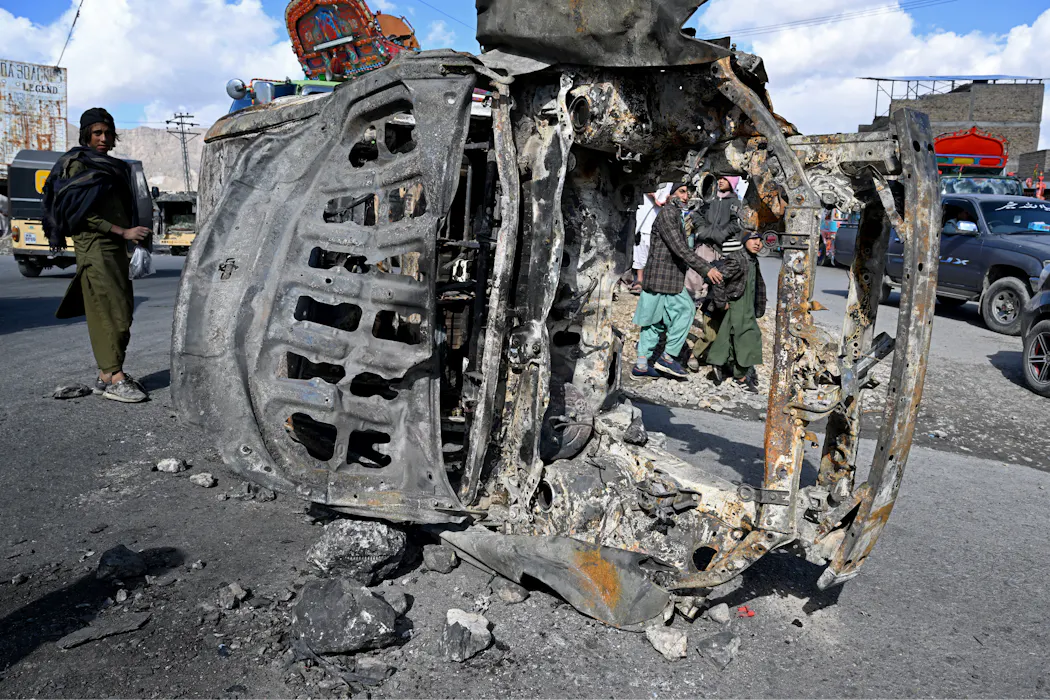
The aftermath of an attack by Baloch separatists in Quetta, Pakistan, on Feb. 1, 2026. Banaras Khan/AFP via Getty Images

In the space of 10 days in late April 2026, insurgents in Pakistan purportedly carried out 27 attacks in the country’s southwest province of Balochistan, killing at least 42 military personal. Then, on May 11, authorities announced that a suicide bombing plot on the capital, Islamabad, had been foiled. Authorities arrested a girl over the incident – a nod to militants’ increasing use of young Baloch women to carry out attacks.

These incidents represent the latest flaring up of a long-running insurgency in Pakistan’s largest province and home to around 15 million people.

For a rundown of what you need to know about the Baloch insurgency and groups involved, The Conversation turned to Amira Jadoon and Saif Tahir, experts on militant and terrorist organizations currently researching such groups’ operational activities and strategic messaging in Afghanistan and Pakistan.

What is the Baloch insurgency about?

Pakistan’s southwestern province of Balochistan has long been the site of resistance and armed movements involving Baloch, an ethnic group of an estimated 8 million to 10 million people that straddles parts of Pakistan and Iran.

Their insurgency is rooted in both contemporary and historical grievances. Its origins trace back to the contested annexation of the princely state of Kalat in 1948, months after the partition of British India into India and Pakistan, and the resulting confrontations between Baloch tribal leaders and the newly formed Pakistani state.

While the insurgency long remained a low-level struggle framed around Baloch marginalization and economic exploitation, it turned violent in the early 2000s with the rise of militant factions, including the Balochistan Liberation Army, or BLA, in 2000 and the Balochistan Liberation Front, or BLF, which was revived in 2004 under current leader Allah Nazar Baloch decades after its 1964 founding. The insurgents’ goals vary, from greater autonomy and control over the province’s natural resources to full independence.

Baloch militants generally cast their emergence as a nationalist rebuttal to the Pakistani government’s long-standing narrative, which states that the unrest is driven by a handful of tribal chiefs resisting development rather than a broad-based movement.

In practice, the contemporary insurgency has expanded well beyond its tribal base, and Baloch militant groups have invested heavily in strategic communications that directly challenge the Pakistani state’s framing.

Today, Baloch militants’ propaganda targets the local educated youth, including women. They play on existing grievances over enforced disappearances, state repression and resource extraction. Balochistan is home to significant deposits of copper, gold, natural gas and coal, including at the Reko Diq mine, one of the world’s largest undeveloped copper and gold reserves. Yet the province remains Pakistan’s poorest.

Baloch militants’ efforts are designed to broaden the insurgency’s appeal, adding an urban, middle-class layer to what was once a primarily tribal revolt that casts itself as a struggle to defend the Baloch “motherland” and achieve national liberation.

The Baloch insurgency has emerged as one of Pakistan’s most consequential internal security challenges. In 2025, the BLA claimed 521 attacks and 1,060 security-force fatalities, though independent monitoring records substantially fewer attacks, at around 254 events, in Balochistan over the same period.

Two Baloch militants’ operations bookend the recent escalation. In March 2025, BLA fighters hijacked the Jaffar Express – a heavily used passenger train connecting Quetta, the capital of Balochistan, to Peshawar in northwestern Pakistan – holding more than 350 passengers in a 30-hour siege. In April 2026, the group announced a new naval wing, the Hammal Maritime Defence Force, following its first maritime attack on a Pakistan coast guard vessel near Jiwani, in Gwadar district.

These tactical innovations have been reinforced by deliberate efforts at broadening the support base for Baloch separatism. The 2018 formation of Baloch Raji Ajohi Sangar, an alliance of Baloch militant groups, and the 2020 entry of the non-Baloch Sindhudesh Revolutionary Army, a Sindhi separatist group based in neighboring Sindh that has extended Baloch militants’ operational reach into Karachi, signal an expanding ethno-regional coalition aimed at broadening the geographic and ideological scope of the insurgency.

Why the uptick in violence now?

Four converging factors explain the recent escalation.

First, the Pakistani state’s crackdown on peaceful political space in recent months has accelerated social discontent. Following the March 2025 Jaffar Express attack, prominent Baloch rights defender Mahrang Baloch was arrested under anti-terrorist laws, while three protesters were shot dead at a peaceful sit-in in Quetta.

As nonviolent avenues close, aggrieved civilians become more receptive to Baloch militants’ recruitment narratives.

Second, Baloch militants have acquired U.S. weapons left behind in Afghanistan during the 2021 withdrawal, including M4 and M16 rifles fitted with thermal optics. Recent reports have linked the arms used in the Jaffar Express attack directly to abandoned U.S. stockpiles in Afghanistan.

Third, militant operational collusion has deepened between the Balochistan Liberation Army and the Tehrik-i-Taliban Pakistan, the latter ranked by the Institute for Economics and Peace as the world’s fastest-growing insurgent group in 2024.

Despite the groups’ divergent ideologies, the cooperation appears to have produced clear tactical convergence, including town takeovers, the use of suicide bombings, and sniper and ambush tactics.

Finally, Baloch groups have excelled in the effective use of social media to influence and recruit educated young people, including women.

A man in a gun stands in the middle of a street.
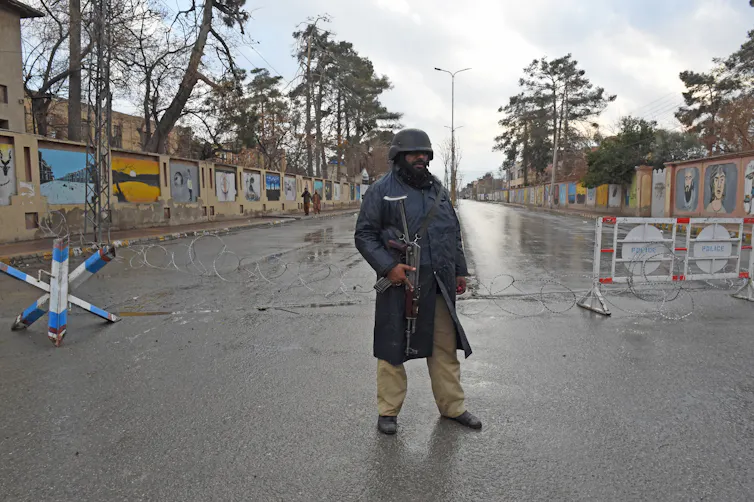
A policeman stands guard near the blast site in Quetta after an attack by Baloch separatists on Jan. 31, 2026. Adnan Ahmed/AFP via Getty Images

The BLA’s elite Majeed Brigade has formalized a women’s wing, and the use of female suicide bombers has now spread across multiple Baloch factions. At least five known cases have been reported since 2022.

The deployment of women is strategic: Female operatives present a softer public face and yield both reputational and tactical benefits, evading security profiling, expanding target reach and amplifying media impact.

Has the insurgency been affected by the Iran war?

Tehran’s destabilization creates new tactical space for insurgents. Ethnic Baloch communities straddle the Pakistan-Iran border, and the BLA already maintains a presence in Iran’s Sistan and Baluchestan province.

The “Greater Balochistan” narrative promoted by Baloch nationalists, which envisions the reintegration of Baloch lands across both states, is gaining traction on the Iranian side. Moreover, weaker border enforcement gives militants greater freedom to move, recruit and coordinate.

Cross-border trade flows have dropped sharply since the war in Iran began, but the disruption is more likely to expand than to shrink Balochistan’s illicit economy over time. As state enforcement weakens on both sides of the border, the cross-border fuel and narcotics smuggling networks that Baloch militants tax and target are likely to expand further.

The cross-border problem had already escalated to interstate confrontation. In January 2024, Iran and Pakistan exchanged tit-for-tat strikes on Baloch militant groups operating across their shared border.

Counterterrorism coordination between the two countries remains modest, and attacks have continued, including the killing by militants of Pakistani migrants inside Iran as recently as April 2025.

With Iran’s stability weakening, these dynamics are likely to deepen, potentially raising tensions between Islamabad and Tehran over separatists in the future.

How are Pakistan-US relations affected?

The Baloch insurgency is now also an increasingly important focus of a warming U.S.-Pakistani relationship.

In August 2025, the U.S. State Department designated the BLA and its Majeed Brigade as foreign terrorist organizations – a move Islamabad had long pressed for.

Months later, the U.S. Export-Import Bank approved US$1.3 billion for the Reko Diq copper-gold project in Balochistan, its single largest critical minerals investment to date.

The current insurgency directly contests Pakistan’s capacity to deliver security in Balochistan. The Reko Diq mine lies in the same district where Zareena Rafiq, a BLF-affiliated female suicide bomber, struck a base of Pakistan’s federal paramilitary force on Nov. 30, 2025.

Further, in April 2026, a BLF commander declared that the group would target all foreign companies operating in Balochistan, regardless of country of origin.

Yet the present alignment between the U.S. and Pakistan is transactional: Its durability depends on Pakistan delivering on counterterrorism, mediation with Iran and mineral access.

Meanwhile, absent a counterinsurgency approach that addresses the underlying political and social drivers of the Baloch insurgency – including state repression, political marginalization and resource grievance – the broader U.S.-Pakistan reset is unlikely to deliver the stability its investments require.

The Conversation

The authors do not work for, consult, own shares in or receive funding from any company or organization that would benefit from this article, and have disclosed no relevant affiliations beyond their academic appointment.

  •  

Supreme Court preserves access to mifepristone via telehealth – at least for now

Mifepristone is one of two drugs typically used in medication abortions. Carl Lokko/iStock via Getty Images Plus

The U.S. Supreme Court has decided that patients can continue to get mifepristone, one of the two drugs used for medication abortion, via telehealth and by mail. At least for now.

A lower court had temporarily blocked this access nationwide in early May 2026. The case now returns to that lower court, although it may well make it back to the Supreme Court in the future.

Since 2023, almost two-thirds of abortions in the United States have involved mifepristone, and since late 2024 one-quarter of all abortions occur through abortion pills provided via telehealth.

As scholars who study laws affecting reproductive health, we believe the outcome of this case will have an enormous impact on access to abortion care across the country.

In states with abortion bans, telehealth prescriptions have allowed women to get abortions anyway. But the case is also significant to those in states without abortion bans, especially women with low incomes and disabilities or who live in rural areas, where reproductive services are extremely limited.

How did the case get to this point?

The case began in October 2025, when Louisiana argued that the Biden administration’s allowance of telehealth abortions was for “avowedly political reasons.” The state asserted that the U.S. Food and Drug Administration had insufficient evidence to remove the requirement that the drug be dispensed in person, which had been in place from 2000 through 2021.

The state also argued that mailing mifepristone violated an 1873 federal law known as the Comstock Act. This law, which makes it a crime to mail or ship any “lewd, lascivious, indecent, filthy or vile article” and anything that “is advertised or described in a manner … for producing abortion,” has rarely been enforced.

The lower court thought Louisiana would likely win, but it decided to keep the FDA regulations in place while the case made its way through the courts. On May 1, 2026, however, the appellate court suspended the FDA regulation allowing mifepristone to be prescribed via telehealth.

As a result, mifepristone could no longer be mailed or prescribed via telehealth, nationwide. Three days later, on May 4, after the manufacturers of mifepristone appealed, the Supreme Court put the 5th U.S. Circuit Court of Appeals’ decision on hold for a week to give it more time to consider the legal issues. On May 11, it extended the stay for a few more days.

What does the SCOTUS decision mean for mifepristone access?

On May 14, the Supreme Court decided to leave the FDA’s regulation in effect, so mifepristone remains available for prescription via telehealth. Justices Samuel Alito and Clarence Thomas dissented, with Alito accusing the court of “perpetrat[ing] a scheme to undermine” the court’s decision in the 2022 Dobbs ruling that overturned the constitutional right to an abortion and allowed states to ban it. Thomas added his view that the Comstock Act makes it a criminal offense to mail mifepristone.

The case now returns to the 5th Circuit, which has signaled how it is likely to rule on this question. Namely, that it believes the FDA has exceeded its authority in allowing the drug to be prescribed via telehealth. Once the case has been resolved in the lower courts, it could end up before the Supreme Court again. If the court decides to strike down the rule, or if the FDA rescinds it, then women in all states would no longer be able to get the pills by mail, not just in the 13 total-ban states.

The court’s May 14 decision extends the pause on a lower court ruling, preserving mail-order access to mifepristone for now.

Why has mifepristone become so contested?

In 2000, the FDA approved mifepristone specifically to end pregnancies. In combination with telehealth, it allows for abortion to occur outside of a doctor’s office. Accordingly, anti-abortion groups have attempted to discredit mifepristone’s safety and effectiveness for decades, even though mifepristone has been shown to be as safe as ibuprofen and safer than Viagra.

Mifepristone first became available in France in 1998. In 2000, the FDA approved mifepristone in the U.S. after evaluating rigorous studies that showed it to be safe and effective.

Initially, the FDA required the drug to be prescribed and taken at a doctor’s office. But after further review of research on the drug’s safety under the Biden administration, the agency changed some of the prescribing regulations, making it easier to access the drug.

One change made permanent in 2023 was to allow mifepristone to be prescribed via telehealth and mailed. That is the regulation at issue in the Louisiana case.

But after the 2022 Dobbs ruling, mifepristone became even more of a target. Anti-abortion groups realized that people could effectively evade abortion bans by receiving abortion pills through the mail. After Dobbs, in fact, the number of abortions increased, and by June 2025 telehealth abortions had increased fivefold, with more than half of them occurring in abortion-ban states.

The attempts to challenge mifepristone first reached the Supreme Court in 2024, when anti-abortion physicians and groups challenged the FDA’s approval of mifepristone and changes in its prescribing regulations that made it easier to access the pill.

The Supreme Court ultimately dismissed the case on the grounds that the challengers did not have legal standing to bring the claim. Legal standing requires the parties to show they suffered concrete harms or injuries.

Since then several states, including Louisiana, have brought lawsuits with the same kinds of challenges to the FDA’s authority. The Louisiana case is the first to reach the Supreme Court. It is also the first state to reclassify mifepristone as a dangerous controlled substance.

Is this likely to happen with the other abortion pill?

The legal challenges so far have been only to mifepristone, one of the two pills used for medication abortion.

Unlike mifepristone, which is approved only for abortion, misoprostol was approved in 1988 for a different purpose: to treat gastric ulcers.

Misoprostol is prescribed for abortion “off-label,” which means it is an unapproved use of an FDA-approved drug that a healthcare provider determined is medically appropriate for their patient.

In fact, 1 in 5 prescriptions is for off-label use of a drug.

While some studies suggest that using misoprostol alone for an abortion is slightly less effective than taking both pills together, many researchers express confidence in the misoprostol-only option.

And the court’s ruling does not affect access to “Plan B,” a pill that prevents pregnancy and thus is used as birth control, not to induce an abortion.

The Supreme Court’s action is certainly not the end of the story. Challenges to abortion pills will continue, particularly because the leaders of many states believe the availability of these pills prevents them from enforcing their abortion bans.

The Conversation

The authors do not work for, consult, own shares in or receive funding from any company or organization that would benefit from this article, and have disclosed no relevant affiliations beyond their academic appointment.

  •  

Ukraine war: air campaign intensifies as Russia and Ukraine trade massive drone and missile attacks

Over the past month, there has been a notable increase in the intensity of the air war in Russia’s aggression against Ukraine. Strikes in mid- and late-May and early June have been characterised by significantly larger numbers of drones and missiles deployed by Russia in single attacks, leading to more destruction and more casualties.

At the same time, Russian territorial gains on the ground have slowed significantly, and in some cases have been reversed by successful Ukrainian counter-attacks.

The change in intensity in the air war, however, is what generates headlines, and for good reason. Two consecutive Russian attacks on May 13 and 14 were the largest in the war to date.

Ten days later, a similar strike hit Kyiv and other Ukrainian cities. And a week after that, Russia launched yet another large-scale strike.

Just focusing on the Russian strikes, however, masks an important pattern of increasingly effective Ukrainian retaliation.

The first Russian attack in May was followed by Ukrainian strikes on the Moscow region. The second one saw Ukrainian strikes on St Petersburg on June 3, just before Vladimir Putin’s St Petersburg International Economic Forum was due to begin there.

At the same time, Ukraine has also intensified its strikes on Crimea and critical Russian supply lines to the peninsula, which Moscow has illegally occupied since 2014.

This series of Russian and Ukrainian airstrikes represents a high-intensity retaliation cycle. Ukraine responds to a Russian strike, which Moscow then uses to justify its massive strike, and so on.

What is new is both the scale of the Russian strikes, with larger numbers of drones and missiles compared even with the peak of attacks in late 2025, and the quickening cycle of these tit-for-tat attacks.

Ukrainian attacks deep into Russia are no longer just symbolic but highly effective – prompting Russia to accuse Ukraine of a terror campaign, in an attempt to deflect from its own systematic targeting of civilian infrastructure.

In their levels of destruction and civilian casualties, the Russian strikes also seem more effective than in the past – and Ukraine’s air defences less so. But this is only partially true. Ukraine’s intercept rate of drones remains high. However, the larger number of drones being deployed by Russia means that, in absolute numbers, more drones hit their targets.

Russia has also deployed more missiles in recent strikes, which Ukraine finds harder to intercept – not least because its stockpiles of anti-missile defences have been depleted over time, with the decrease in US support since Donald Trump’s return to the White House in January 2025.

The recent diversion of US interceptors to the American war effort in the Middle East has also run down the stocks of these defence systems that are available to Kyiv.

Can this intensity be sustained?

Russia has thus been presented with an opportunity it is ruthlessly exploiting. But how sustainable is the current pattern?

The scale and frequency of the past four weeks is probably beyond Russia’s capacity to sustain indefinitely. While still large in scale, the strikes in late May and early June did not involve the same number of munitions as the first wave.

Russia is clearly able to mass-produce cheap attack drones, but less able to do the same for missiles. So, sustaining larger-scale attacks over time is likely to decrease their frequency, while more frequent attacks will mean a more limited scale.

A mixture of the two is most likely – a sustained campaign of frequent massed drone strikes, with intermittent spikes of large missile barrages.

While this may be a sustainable attack pattern for Russia, it does not mean the current level of effectiveness is equally sustainable. Ukrainian air defences will adapt and become more effective, including against Russian missiles.

Its defence cooperation with the EU is simultaneously improving. The lifting of Hungary’s veto on €40 billion (£34.6bn) of EU reimbursements for military support is likely to free additional funds to supply critical air defence systems to Ukraine.

Even with a sustained Russian air campaign, a manageable equilibrium is likely to set in over time. But critically, this will not merely be characterised by better Ukrainian defences against Russian attacks – but also by more effective Ukrainian strikes at Moscow’s critical war infrastructure.

The Russian air campaign, and the war against Ukraine more generally, will thus become more costly for the Kremlin – and not just on the battlefield inside Ukraine.

Whether this simply creates a different stalemate at a more costly level for both sides in their ongoing war of attrition, or prompts them to reassess their exit strategies, remains to be seen.

For Moscow, there is a hard choice to be made: towards escalation, including potential nuclear mobilisation, or towards a peace deal. The middle ground of simply continuing is quickly eroding, because none of Putin’s strategic goals in the war can be achieved this way – and the ongoing waste of resources cannot be sustained indefinitely.

On the Ukrainian side, the statement by Ukraine’s president, Volodymyr Zelensky, that Ukraine’s recent strikes on Russia put the country on an equal footing with Moscow in negotiations, hints at Kyiv’s willingness to negotiate an end to the war with Moscow. However, it may take several more rounds in the air campaign retaliation cycle before the Kremlin reaches a similar conclusion.

The Conversation

Stefan Wolff is a past recipient of grant funding from the Natural Environment Research Council of the UK, the United States Institute of Peace, the Economic and Social Research Council of the UK, the British Academy, the NATO Science for Peace Programme, the EU Framework Programmes 6 and 7 and Horizon 2020, as well as the EU's Jean Monnet Programme. He is a Trustee and Honorary Treasurer of the Political Studies Association of the UK and a Senior Research Fellow at the Foreign Policy Centre in London.

Tetyana Malyarenko does not work for, consult, own shares in or receive funding from any company or organisation that would benefit from this article, and has disclosed no relevant affiliations beyond their academic appointment.

  •  

Europe’s dilemma – to use China’s turbines to meet its renewable targets or not

Europe’s wind turbines have become part of a wider struggle over energy security, industrial power and the west’s dependence on China.

European wind power capacity has surged dramatically in recent years. Wind energy now supplies 17% of EU electricity up from 13% in 2019. Offshore wind has expanded particularly rapidly, with installed capacity growing strongly over the past decade.

But Brussels wants renewables to provide at least 42.5% of the EU’s total energy mix by 2030. Wind is “pivotal” to this strategy, according to the European Commission’s wind power action plan. The challenge for Europe is to meet its 2030 target, it needs to build 33 gigawatts (GW) of new wind turbines annually.

So far, data from 2022, 2023 and 2024 indicates that Europe has averaged only around 16-19 GW of new installations per year. This leaves a significant gap between Europe’s target and its implementation.

Across the Atlantic, the picture is just as uncertain. The US Inflation Reduction Act introduced during Joe Biden’s presidency promised a surge in renewable energy investment, including wind. But growing political opposition to turbines, especially from Donald Trump and his political allies, has cast doubt over how far that momentum can go.

Cheap turbines and fast delivery

Europe’s installation shortfall and the US’s retreat from wind energy create a strategic opening for China. Chinese manufacturers dominate the global wind industry, with six of the top ten turbine makers and producing over 70% of the world’s new wind turbines in 2024. Companies like Goldwind, Envision and Mingyang offer turbines that are 30-40% cheaper than western equivalents and promise faster delivery.

This puts the west in a bind: accept Chinese help to meet climate targets quickly and cheaply, or reject it and risk falling further behind.

Europe could certainly rely on Chinese wind power to close its gap in renewable energy. The same could be said about the US, although its desire to push forward with wind power is not clear. US wind deployment fell to 5.2 GW in 2024, the lowest level in a decade, and turbine orders dropped 50% in the first half of 2025.

However, allowing Chinese firms greater market access creates a real policy dilemma. While purchases of Chinese turbines would speed up Europe’s energy transition and is cost effective, the EU sees China as an economic rival and security risk that potentially undermines the union’s industrial and strategic autonomy.

The US appetite for Chinese wind tech is much lower than Europe’s. Aside from permit delays, grid connection bottlenecks and rising costs, Trump’s return to office in 2025 is an important factor in the US’s renewable slowdown. The US president has publicly labelled wind power “a joke”, and has frozen federal permits for offshore and onshore wind projects, in addition to eliminating renewable energy tax credits.

But that’s not all. Washington views China’s dominance in wind turbine technology as a security threat requiring protectionist barriers, and has effectively blocked Chinese wind technology through various measures. This includes national security probes into wind turbine imports, 50% tariffs on wind turbines and parts, and tax credit restrictions that bar companies using Chinese-manufactured components from accessing federal clean energy incentives.

Western tariffs haven’t slowed China’s wind industry but have redirected it. Chinese wind turbine exports surged 50% in 2025. By the end of 2025, cumulative exports had exceeded 28 GW, a thirteenfold increase from 2015. Chinese manufacturers are now selling wind turbines to more than 60 countries, and have established production or research operations in more than 20.

The UK’s largest wind farm is off the east coast.

Targeting new markets

The pattern is clear: China is targeting developing markets where western competition is weak and renewable energy demand is surging. The biggest purchasers of turbines from China in 2024 were Saudi Arabia, Uzbekistan, Brazil, Egypt and Kazakhstan. All are participants in China’s economic development plan, the Belt and Road Initiative.

But China’s wind momentum shows no signs of slowing. Pakistan, Indonesia, Vietnam, Saudi Arabia and Malaysia are expected to add 120 GW of wind and solar capacity over the next decade, requiring US$73 billion (£53.5 billion) in investment. Chinese firms already captured over 60% of renewable energy capacity in these markets since 2024, and is set to expand further.

While China’s wind turbine sales to the US and Europe may be uncertain, Beijing has secured a different prize. Since 2013, Chinese companies have installed 156 GW of power capacity across Belt and Road Initiative countries, 70% in Asia and 15% in Africa.

The west may be protecting its own energy independence, but may also be handing the control of Africa and Latin America’s energy future and security to China, if things don’t change.

The Conversation

Chee Meng Tan does not work for, consult, own shares in or receive funding from any company or organisation that would benefit from this article, and has disclosed no relevant affiliations beyond their academic appointment.

  •  

Warming winters are changing NZ’s landscapes, bringing insect pests, smaller fruit and carbon loss

Summer heatwaves are currently receiving a lot of attention in Europe because they now cause more deaths than floods or storms.

But winters are also warming. While they are generally less deadly, they influence and disrupt human and natural systems in many subtle ways.

Aotearoa New Zealand has experienced a particularly warm start to this winter, with record high June temperatures in the capital and warm conditions across the country.

Many will welcome the unseasonably warm weather, but milder winters have a range of impacts, especially for plants and insects.

Extra winter growth, but loss of carbon

In forests, warmer temperatures can extend the growing season of trees.

Usually, many trees are dormant during winter as conditions are too cold for growth. But our ongoing measurements of kauri tree growth in Auckland indicate trees have continued to grow throughout recent winters.

One might assume a longer growing season would increase carbon uptake and storage in trees. However, overall carbon changes are actually negative because warmer temperatures also increase respiration, which returns more carbon to the atmosphere.

In Aotearoa, few plant species lose their leaves in winter. But according to traditional Māori knowledge (mātauranga Māori), flowering time has changed and fruit biomass has declined with warming in forests of the central North Island since the 1950s.

This has had a negative impact on the numbers, breeding rates and health of kererū (native wood pigeons) and has reduced nutrient cycling in the soil.

Risk of new invasions

Insects are also very sensitive to winter temperatures.

Like trees, many insects have a dormant period during colder months. Some insects from warmer climates have established as pests in Aotearoa, but they usually struggle to survive cold conditions. As winters warm, the numbers of species able to get through the cold season is increasing.

For instance, in temperate climates such as in New Zealand, wasp colonies have a strong seasonal cycle. Wasp numbers increase during spring after the queen emerges from overwintering and lays eggs. The workers expand the colony during summer but when temperatures drop in autumn, most of them die off.

However, in warmer conditions, sightings of winter-active workers have increased in Aotearoa. This means a warming climate will likely lead to higher wasp numbers and increased ecological and economic impacts.

There are a range of other invertebrate pests that may become more problematic in natural systems, plantation forests and agricultural and horticultural settings as winters warm. This includes rising numbers of parasites of sheep and cattle, more insect pests in plantation forests, increased risk of overwintering of the Queensland fruit fly and bigger range sizes for mosquitoes and ant and cattle ticks.

Shrinking alpine refuge

New invasive plant species from subtropical regions may also be able to establish or expand their ranges and shift into the alpine zone.

Similarly, the upward expansion of invasive mammals will reduce the availability of refuge areas for native birds, including the endangered rock wren.

Known as “thermal squeeze”, the movement of rats and stoats to higher elevations reduces the availability of safe spaces for large alpine birds such as the kea, exacerbating the risk of extinction.

The alpine zone is especially vulnerable to winter warming because plants and animals living there are highly adapted to the specific environmental conditions and are often poorly prepared for invasive predators or competitors.

Horticultural winners and losers

In the horticulture industry, cold winter nights are important as a trigger for spring flowering. Economically important fruits such as apples, avocados and kiwifruit may not flower well and have poor-quality fruit under future climates.

Potatoes and onions are also sensitive to warming conditions because heat stress reduces the quality of tubers and produces smaller bulbs, causing lower yields of both crops.

Plant breeding and gene technologies offer opportunities to develop fruits and vegetables that are better prepared for a warmer world.

And there is some good news in other areas, including that flea infestations are predicted to decline in regions where warming is associated with drying. There may also be opportunities for the establishment of new crops, such as bananas.

As the climate continues to warm, there is more to learn about the impacts and options for adaptation in Aotearoa. Research needs to focus on finding solutions for native species and primary industries because healthy ecosystems are essential for a healthy economy and thriving communities.

The Conversation

Cate Macinnis-Ng has received funding from The Royal Society Te Apārangi, MBIE and Te Pūnaha Matatini. She is a lead author for the IPCC Assessment Round 7 Working Group II report.

  •  

‘Some people’s lives matter more than others’: local responders in Sudan feel ignored as the world focuses on other crises

In April 2026, Sudan marked three years of civil war – one of the most ignored humanitarian crises in the world.

This conflict began between two factions that seized power after a coup in 2021: the Sudanese Armed Forces (SAF), led by Abdel Fattah al-Burhan, and the Rapid Support Forces (RSF), a paramilitary group led by Mohamed Hamdan “Hemedti” Dagalo.

The actions of these men have thrown Sudan into the worst humanitarian crisis in the world. It has involved crimes against humanity, genocide, the death of potentially more than 150,000 people, the forced displacement of more than 15 million civilians and 19 million people facing acute hunger.

In one of the most dangerous places in the world, local leaders are putting their lives at risk to provide humanitarian assistance within their communities.

These volunteers have formed Emergency Response Rooms or غرف الطواريء to coordinate, resource and carry out life-saving assistance. They describe being motivated by nafeer – a Sudanese tradition focused on a “deep sense of social responsibility” and “collective volunteerism”.

This concept is grounded in the idea that one must “lift your bowl to your neighbour”. Diaspora communities around the world have been funding and coordinating this work for years.

As one 25-year-old female volunteer told us:

The success of emergency rooms stems from the spirit of volunteerism and the desire to help others. This motivation keeps people working despite the challenges they face, like lack of funding, security threats from authorities and working in active war zone.

However, nafeer, by its nature, should only last for a limited period. After three years, these crisis leaders are exhausted, and the international humanitarian system is not stepping up to support them.

In fact, our recent research shows the system’s own structures are making their work harder.

Our research

We spoke to 20 local leaders from Emergency Response Rooms, civil society organisations and women’s associations. These interviewees were based in Darfur, Greater Khartoum, Gezira, Kassala, Al-Qadarif, Kordofan and the Nuba Mountains.

Interviews were conducted online in Arabic by Mayada Elmaki, a Sudanese-British researcher living between Europe and Qatar.

Responders’ names, organisations and locations were taken out, due to safety concerns. Of the 20 leaders we spoke with, only a quarter received a salary. The remainder were unpaid volunteers.

Because these community organisations have not been formally recognised as “humanitarian” by the international humanitarian system itself, their people are not considered “humanitarian workers”. This means they are not given the legal protection afforded those conferred on humanitarian workers under international law, including the Geneva Conventions. This puts them at extra risk of harm from military and paramilitary forces.

The Sudanese emergency workers say funders from within the humanitarian system – including governments, nongovernmental organisations and UN agencies – are often more focused on managing perceived risk than on what the community actually needs.

Funding is often so inflexible, it takes an “extremely, extremely long time” to access. Getting money from funders require negotiating quite different templates and procedures.

As one person told us:

when our priority is saving lives first, it’s problematic when donors dictate what we should focus on.

Sudan is one of the most dangerous places in the world to deliver humanitarian assistance. It is also home to one of the most chronically underfunded humanitarian crises.

The number of organisations in Sudan getting money from these major humanitarian funders has fallen dramatically in recent years. This isn’t because things have improved, but because the priorities of many international organisations have shifted elsewhere.

As one Sudanese humanitarian leader put it:

When one crisis receives more attention and support than another, it means some people’s lives matter more than others.

At the heart of the international humanitarian system’s ethical foundation is the idea that assistance should be based on need alone – not factors such as geopolitical interest. But this is not what many of our interviewees have experienced.

The international community has taken some notice. Sudan’s Emergency Response Rooms were awarded major humanitarian prizes in 2025 and have been twice nominated for the Nobel Peace Prize.

But awards are not protection, funding, or recognition within the humanitarian system.

As Sudanese leaders, community members and volunteers endure one of the world’s worst humanitarian crises, the international system needs to step up.

Local priorities

Our research seeks to amplify the priorities of local Sudanese responders.

They are calling for:

  • better protection and compensation for those on the front lines
  • more flexible agreements with major funding bodies
  • direct funding that acknowledges operational costs
  • funding for long-term rebuilding of Sudan (not just the emergency response).

Otherwise, the international humanitarian system and the major players in it will, as one person told us, continue “ploughing the sea”, and “keep going in circles without real progress”. They added:

I hope my words reach them and make them reconsider their policies and establish long-term strategies for developing local communities.

The Conversation

Max Kelly recevies funding from the Norwegian Refugee Council. This research is funded in part by Deakin University, and the Norwegian Refugee Council (NRC).

Julia Hartelius and Mayada Elmaki do not work for, consult, own shares in or receive funding from any company or organisation that would benefit from this article, and have disclosed no relevant affiliations beyond their academic appointment.

  •  
❌