Reading view

Dark patterns on the web are designed to manipulate you – why aren’t they all illegal?

Website designs that try to change your behavior cross a line when they outright deceive. Fizkes/iStock via Getty Images

You open a free app to do one simple thing. Before you even start, a full-screen message asks whether you want to try the paid version. The “Start free trial” button is large, bright and hard to miss. The option to keep using the free version is smaller, buried at the bottom. The same prompt appears again tomorrow. And the day after that.

A lot of people look at screens like that and think, “Surely this has to be illegal.” We even have a name for them, “dark patterns.” They feel pushy. They waste time. They seem designed to wear you down. But in most cases, they are perfectly lawful.

“Dark pattern” is not a legal term with a clear boundary. It is a broad label for digital designs that nudge, pressure, confuse or trap users. As a legal scholar who studies consumer protection and digital design, I think the most important thing for readers to understand is that the label “dark pattern” covers a broad spectrum.

Some of that spectrum is just annoying. Some of it is aggressive salesmanship. And some of it crosses the line into deception or coercion. Federal and state consumer protection laws are mostly aimed at that last category. They do not ban every design choice people dislike, only those that trick or coerce.

Annoying isn’t illegal

smartphone screenshot of images of a well-dressed young man
The ‘X’ in the upper right corner of this ad, for users to click to dismiss the ad, appears after the ad has been displayed for a moment. The ad also has an ‘X’ in the upper left corner, which is part of the image in the ad. Some users might click the ‘X’ on the left to dismiss the ad but instead be sent to the ad’s website. Possibly annoying but not illegal. Screen capture by Gregory Dickinson

That reality may sound unsatisfying, but it is not unusual. Offline life is full of things that are irritating but not unlawful. Think of the cashier who asks whether you want to sign up for the store credit card, then points out the discount you are turning down, then asks again. Most people know exactly what is happening. They roll their eyes, say no and try to shop somewhere else next time.

The same is true online. A repeated pop-up can be obnoxious. A guilt-inducing button can be tacky. But consumers recognize ordinary annoyance for what it is. In many cases, the market answer is simple: Close the app, ignore the pitch or take your business elsewhere.

Similarly, law does not ban persuasive sales pitches just because they are effective. A car salesperson who keeps steering you toward the upgraded model is trying to influence your choice. So is the airline clerk who offers travel insurance. So is the restaurant server who asks whether you want dessert. Salesmanship is nothing new. Digital design often borrows from familiar techniques.

That helps explain why lawmakers cannot simply outlaw “manipulation.” And so many interfaces are built to persuade, openly and lawfully.

What crosses the line

What the federal FTC Act and analogous state consumer-deception statutes usually care about is not whether a design is annoying. They focus on whether the design is likely to mislead a reasonable consumer. That is the core idea in modern consumer protection law.

So a design is likelier to be unlawful when it hides key facts, makes an optional choice look mandatory or tricks people about the effect of the button they are pressing. A fake countdown timer, a disguised ad, a misleading one-click purchase button or a cancellation path that looks finished when it is not are all different from ordinary hard selling. Those designs do not just pressure users; they can deceive them.

That is also why the app maker’s intent is not always the key question. In many consumer protection cases, a company does not get a free pass just because no one said, “Let’s trick people.” The legal question is often about effect: What would a reasonable user likely understand from this screen?

Research on dark patterns reinforces that concern. Even relatively mild designs can push people into choices they would not otherwise make. And regulators have increasingly focused on subscription flows, hidden fees and cancellation obstacles for exactly that reason.

image of a website form with a pop-up box in front of it
The instructions for this web form and the pop-up box that appears when users click ‘Continue’ indicate that the form has required fields. The form uses the word ‘mandatory,’ which could lead some users to believe that the form itself is required in order to continue when it is instead optional. Possibly annoying but not illegal. Screen capture by Gregory Dickinson

Why it feels like dark patterns are everywhere

One reason people might think there are no laws against dark patterns is that they see them so often. But that frequency reflects that the term covers a wide range of conduct, from lawful nagging to outright deception.

It also reflects enforcement limits. Regulators cannot chase every irritating screen on every app and website. They have to prioritize the worst cases. That leaves a lot of borderline conduct in the wild, which makes the whole problem feel bigger and murkier to ordinary users.

So when people ask why there is not a law against dark patterns, the best answer is that there already is, but the law does not prohibit every annoying or high-pressure design. It targets lies, misleading cues and coercive obstacles.

That line can be fuzzy. But the fuzziness is not a mistake. It is what you get when the law tries to separate persuasion from deception in a world full of both.

The Conversation

Gregory M. Dickinson does not work for, consult, own shares in or receive funding from any company or organization that would benefit from this article, and has disclosed no relevant affiliations beyond their academic appointment.
  •  

James Comey’s Instagram seashell post sits in a murky legal zone between protected political speech and criminal threat

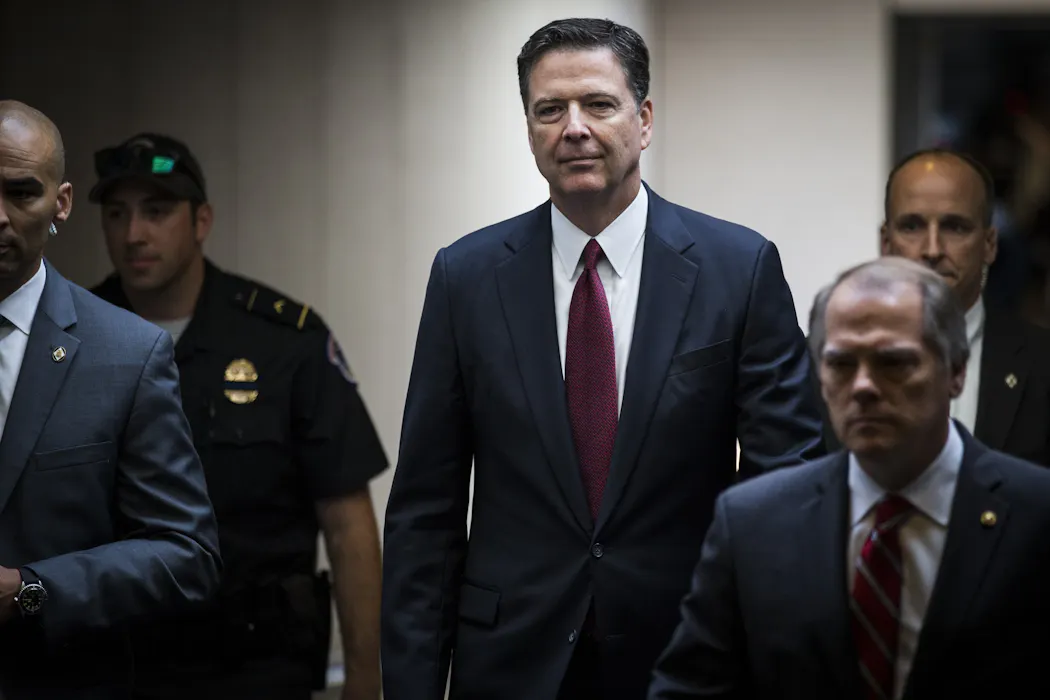
Did James Comey, former FBI director, 'knowingly and willfully' threaten, kidnap or 'inflict bodily injury upon the President of the United States'? Samuel Corum/Anadolu Agency/Getty Images

In the case of United States v. James Brien Comey Jr., the U.S. president’s security is pitted against the bedrock right to free speech enjoyed by Americans.

Two federal charges have been lodged against former FBI Director James Comey and are based on his Instagram post that depicted seashells spelling out “86 47.”

Comey’s post was interpreted by the U.S. Department of Justice as a threat to harm President Donald Trump. The indictment, obtained by the DOJ, alleges Comey violated two federal laws: 18 U.S.C. § 871, which makes it a crime to “knowingly and willfully” threaten, kidnap or “inflict bodily injury upon the President of the United States,” and 18 U.S.C. § 875, which criminalizes “communication containing any threat to kidnap any person or any threat to injure the person of another.”

Comey’s argument against the charges is likely to be twofold: (1) He lacked the requisite intent that the prosecutor needs to prove his case, and (2) even if he had the intent required by the statute, his speech is protected by the First Amendment. U.S. District Judge Louise Flanagan set Oct. 21 as the Comey case trial date.

I’m a scholar of constitutional and criminal law as well as the First Amendment. The charges against Comey exist in a legal gray area that includes the First Amendment and a series of court decisions over five decades that have gone back and forth over what dangers constitute speech that can be punished.

Three men standing in front of a curtain, flags and some official seals while one speaks at a lectern.
Ellis Boyle, U.S. attorney for the Eastern District of North Carolina, is flanked by acting Attorney General Todd Blanche, left, and FBI Director Kash Patel at a press conference on April 28, 2026, concerning charges against James Comey. Tasos Katopodis/Getty Images

Parsing the charges

In criminal law, there are generally two parts to most crimes – the criminal act and the criminal intent. The criminal act is referred to as the “actus reus.” The criminal intent is known as the “mens rea.”

Some crimes also require a particular result. For instance, murder requires a death of a person. A defendant can neither be charged with nor convicted of murder unless and until the victim dies. If the victim doesn’t die, then at most the defendant can be convicted of only attempted murder.

The criminal charges alleged in Comey’s case don’t require a result, however. The president need not be kidnapped or injured for someone to be charged with violating either of them.

But the prosecutor must still prove the criminal intent and the criminal act for both charges to stick in Comey’s case. In my view, the Justice Department will have a difficult time proving the mens rea against him.

Comey has consistently maintained that he didn’t know “86 47” implied violence against the president.

Meaning and purpose

Comey has stated he came across the shells that spelled out “86 47” while walking on a beach in North Carolina, took a picture and posted it on Instagram.

The term “86” is commonly used to mean “to throw out” or “to get rid of” in American slang. According to Merriam-Webster, the term “comes from 1930s soda-counter slang meaning that an item was sold out.”

Comey later removed the image from Instagram and posted a statement that read, “I posted earlier a picture of some shells I saw today on a beach walk, which I assumed were a political message. I didn’t realize some folks associate those numbers with violence. It never occurred to me but I oppose violence of any kind so I took the post down.”

Even though Comey has insisted that he thought it was a silly picture of shells arranged in a clever way to express a political viewpoint, the Trump administration argues that Comey not only knew the meaning of “86 47” but that he purposefully threatened the president.

What’s plausible?

The first crime charged in the indictment, 18 U.S.C. §871, requires the defendant to have “knowingly and willfully” threatened to kidnap or inflict bodily injury upon the president. This is the statute’s mens rea; the defendant must have known that he was threatening the president of the United States.

Comey’s statements suggest that he didn’t know the threatening nature of his Instagram post. Thus, he cannot be convicted of “knowingly” threatening the president if he didn’t know its meaning.

To convict Comey, the prosecutor must prove that he did, in fact, know the meaning of “86 47” when he posted it.

Comey’s career as a federal prosecutor and his tenure as the FBI director may work against him here. In my view, it’s more than plausible that Comey encountered the threatening version of the term “86” in his career. It’s also more than plausible that the term appears in documents, records and court filings that Comey has drafted and signed over his career, all of which could be used against him at trial.

But even if the Justice Department can prove Comey did, in fact, know the threatening nature of “86 47,” its case against him is not a slam dunk.

And that’s because of the First Amendment.

Testing what’s protected speech

A balding man stands in front of a soldier who is wearing a helmet.
A draft protester was convicted after declaring in 1966, ‘If they ever make me carry a rifle, the first man I want to get in my sights is L.B.J.’ His conviction was overturned by the Supreme Court. Yoichi Okamoto/PhotoQuest/Getty Images

As a constitutional law scholar, I’d expect Comey to argue that his Instagram post was protected speech.

Even though the laws charged in Comey’s case are generally valid and constitutional, criminal defendants can always argue that otherwise valid and constitutional laws are unconstitutional as applied to them and their particular case. Comey is likely to argue this in his defense, but it won’t be as straightforward as one might think.

The First Amendment is not absolute – not all speech and expression is protected by the Constitution.

In Chaplinsky v. New Hampshire from 1942, Justice Frank Murphy wrote that it’s “well understood that the right to free speech is not absolute at all times and under all circumstances.”

In 1969, the U.S. Supreme Court held in Watts v. United States that while “true threats” are not protected by the First Amendment, political hyperbole remains protected speech. The Supreme Court defines true threats as statements where the speaker means to communicate a serious expression of intent to commit an act of unlawful violence against a particular individual or group of individuals, but the speaker need not actually intend to carry out the threat.

Watts v. United States involved a threat against the sitting president of the United States, Lyndon B. Johnson. In that case, Robert Watts expressed his strong opposition to the military draft at a public rally, saying, “If they ever make me carry a rifle, the first man I want to get in my sights is L.B.J.” He was subsequently charged and convicted under the same statute, 18 U.S.C. § 871, used in Comey’s case.

The Supreme Court reversed the conviction, ultimately agreeing with Watts, who had maintained that his statement was “a kind of very crude offensive method of stating a political opposition to the President.”

As the court explained, quoting an earlier decision on press freedom, “For we must interpret the language Congress chose ‘against the background of a profound national commitment to the principle that debate on public issues should be uninhibited, robust, and wideopen, and that it may well include vehement, caustic, and sometimes unpleasantly sharp attacks on government and public officials.’”

Since Watts, countless defendants have faced similar charges for threatening the president. Many have been convicted.

In the 1970s, Eugene Hart was convicted of threatening the president after his brother reported Hart’s plan to assassinate President Richard Nixon. An appellate court affirmed his conviction, concluding that Hart’s verbal threat coupled with his detailed assassination plan couldn’t have been “uttered in jest or in the nature of a hyperbole.”

In the 1980s, David Hoffman was convicted of threatening President Ronald Reagan when he mailed a letter to the White House stating, “Ronnie, Listen Chump! Resign or You’ll Get Your Brains Blown Out.” And in 1999, Donald Adams was convicted of threatening the president when he approached the White House gates telling Secret Service officers, “I want to kill the president.”

But in those cases and others, the defendants took concrete steps that demonstrated their sincerity and conscious awareness of the threatening nature of their speech. In my estimation, both are absent in Comey’s case.

The Conversation

Wayne Unger does not work for, consult, own shares in or receive funding from any company or organization that would benefit from this article, and has disclosed no relevant affiliations beyond their academic appointment.

  •  

Education Department is investigating whether Smith College’s admissions violate Title IX – but this law doesn’t actually apply to the case

Smith College is one of the 30 all-women's colleges in the U.S. Jonathan Wiggs/The Boston Globe via Getty Images

Since 2015, Smith College, one of the largest and most prestigious women’s liberal arts colleges in the United States, has allowed any student who identifies as female to apply to and attend the school.

Over the past decade or so, most other women’s colleges in the U.S. have taken similar steps, permitting transgender female students to apply.

The Trump administration is trying to end that practice. The Department of Education announced on May 4, 2026, that it had opened a Title IX investigation into Smith for admitting transgender students.

“Allowing biological males into spaces designed for women raises serious concerns about privacy, fairness, and compliance under federal law,” Kimberly Richey, the assistant secretary for civil rights at the Department of Education, explained in a statement.

The Education Department’s announcement signals a new front for the Trump administration. Until now, the administration’s battles over transgender students have largely focused on restricting their participation in team sports and preventing them from using bathrooms based on their gender identity.

As a legal scholar who has written extensively on gender identity nondiscrimination laws, I find it notable that the administration invokes Title IX of the Civil Rights Act, a 1972 law that prohibits sex discrimination in any educational program that receives federal funding.

What is striking is that this law does not, under any circumstance, apply to Smith’s admissions decisions. Title IX’s language is clear that law does not cover the admissions decisions that private colleges and universities make.

At the same time, the investigation adds to the mounting pressure colleges and universities have faced since President Donald Trump returned to office in 2025. So, even if the investigation ultimately does not result in a lawsuit or court case, the probe still has high stakes for schools around the country.

A few young women stand together in front of a red brick building on a green lawn.
Smith College, in Northampton, Mass., began allowing all students who identify as female to apply starting in 2015. Jonathan Wiggs/The Boston Globe via Getty Images

What Title IX says – and leaves out

Title IX protects against sex-based discrimination in any educational program or activity that receives federal financial assistance.

The law’s scope is broad: It guarantees equal opportunity in all aspects of education. That includes academics, athletics, events, extracurricular activities and financial aid. The law also requires schools to address sexual violence, sexual harassment and stalking. These safeguards extend beyond students, protecting faculty and staff at schools.

Since the law applies to all educational settings that receive federal financial assistance, it reaches nearly all public and private schools, from elementary schools through universities.

But Title IX still has limits. For example, it allows single-sex schools, like Smith, to exist.

Smith is one of 30 women’s colleges in the U.S. There are also four men’s colleges in the country.

Additionally – and crucially for the Education Department’s investigation – Title IX is clear that it does not apply to the admissions decisions that private undergraduate institutions make.

Title IX states that the law applies to the admissions decisions of “only institutions of vocational education, professional education, and graduate higher education, and to public institutions of undergraduate higher education.”

Private undergraduate colleges, like Smith, are not on the list.

The Trump administration’s use of Title IX

There is no legal basis for the Education Department’s decision to investigate Smith “for admitting biological men.” Nevertheless, the investigation could still spell trouble for the college – and other colleges and universities.

The second Trump administration has repeatedly targeted schools with transgender-inclusive policies.

In March 2025, the White House froze US$175 million in federal funding to the University of Pennsylvania because the school allowed transgender women to compete in female team sports.

It released the funding after Penn reversed its policy on transgender athletes.

In early 2026, the Education Department also announced Title IX investigations into 18 universities and colleges because they allowed transgender students to participate in women’s team sports.

The Education Department has additionally launched Title IX investigations into K-12 schools based on their bathroom policies. In August 2025, for example, it determined that Denver Public Schools were in violation of Title IX for allowing transgender students to use the restrooms that align with their gender identity.

Title IX battles

The Education Department appears to be basing its investigation into Smith on the fact that Title IX permits educational institutions to maintain some sex-segregated spaces. These include sports teams and bathrooms. But how transgender students fit within the statute’s framework is an open question.

In 2024, the Education Department under the Biden administration determined that Title IX protects the rights of transgender students to live according to their gender identity. It produced regulations requiring schools to comply with this interpretation of the law.

This followed a 2019 Supreme Court ruling, Bostock v. Clayton County. In that case, the court determined that Title VII of the Civil Rights Act, another law that prohibits sex-based discrimination in workplaces, protected against gender identity discrimination.

In January 2025, however, a federal district court in Kentucky ruled that the Biden administration’s regulations were invalid. Since then, the Trump administration has taken the position that sex is assigned at birth and unchangeable.

Because of this back-and-forth, Title IX’s protections for transgender students have depended on who is in the White House.

A large government building says U.S. Department of Education, with the r from department misisng.
Smith College is the latest school that the Education Department under the Trump administration has challenged over policies for transgender students. Allison Robbert/Associated Press

The investigation’s broader implications

Title IX does not reach Smith’s admissions decisions, based on the plain language of the law. However, the law does affect the school’s other policies, such as restroom access. As a result, the investigation will likely embroil the college in a lengthy legal battle.

Smith has not commented on the government investigation, other than to say the school is “fully committed to its institutional values, including compliance with civil rights laws.”

As the Education Department’s process unfolds, Smith will face a crucial choice. It could accede to the Trump administration’s demands. Alternatively, it could fight for transgender student rights. In the process, it could set precedent on what Title IX requires, thereby protecting transgender people around the country.

The decision will not be easy. Smith receives limited federal grants, but battling the Education Department requires expending time, attention and money to a lawsuit rather than devoting those resources to student education.

At a time when higher education is feeling the strain of the Trump administration in the form of funding freezes, student loan limitations and civil rights investigations, it is difficult for colleges and universities to resist federal demands.

Smith is better positioned than most, given its prestigious rank, extensive alumni network and sizable endowment.

How the college responds could be a test of higher education’s wherewithal to withstand a hostile executive branch. Where Smith goes, others will likely follow.

The Conversation

Marie-Amelie George does not work for, consult, own shares in or receive funding from any company or organization that would benefit from this article, and has disclosed no relevant affiliations beyond their academic appointment.

  •  

Victoria is attempting political donation reform again. How do the new laws stack up?

Since April 15, Victoria has been operating without meaningful political finance laws. As the days have passed, candidates have received unregulated political donations that would once have exceeded donation caps. Foreign and anonymous donations have been allowed.

For the first time in years, Victorians have had no reliable way of knowing who is funding political campaigns.

That vacuum is a serious threat to the integrity of Victoria’s democratic system. The unregulated and undisclosed flow of money into politics raises concerns about corruption, undue influence, and the creation of an unfair playing field between the political candidates who have access to wealth, and those who do not.

So it’s a welcome development this week that the Allan government appears to have finally secured a pathway to restoring some key political finance safeguards.

Just as importantly as the short-term fix, secured through the political negotiations with the cross-bench, the proposed legislation also includes a comprehensive independent post-election review of Victoria’s political finance framework.

The wild west for political donations

The current predicament began with the collapse of the previous laws, held in April to be unconstitutional by the High Court. The court found the laws fell foul of the Constitution’s implied freedom of political communication because of the preferential treatment of bodies known as “nominated entities”.

Nominated entities were organisations associated with the major political parties that could receive unregulated donations separately from those parties.

Following the High Court’s decision, the state government appeared to have been caught flat-footed. The weeks of urgent political negotiation that followed had, until now, failed to produce a replacement.


Read more: High Court takes an axe to Victoria’s political donations laws - and it will make federal MPs nervous


What’s in the new laws?

The bill that has finally been introduced into parliament restores some essential guardrails.

It reintroduces the previous 21-day disclosure obligations for donations over $1,250. There are again prohibitions on donations from foreign and anonymous donors.

The bill reinstates donation caps, but at a higher level than the previous $4,970. It is effectively $10,000 for the upcoming 2026 election. After that, it will be set at $7,500.

In an attempt to offset the advantage of incumbents, this is doubled for “new entrants”.

The bill also restores public funding. Administrative funding has been increased, with parties receiving $300,000 for the first MP elected, $100,00 for the second MP, and $55,000 for the 3rd to 45th MP.

Victoria appears to have learnt at least the immediate lesson, because the new bill removes the nominated entity arrangements that lay at the heart of the High Court’s decision. It also includes provisions requiring the major parties to pay back donations received from nominated entities.

That key elements of the regulatory vacuum have been filled – and particularly the disclosure scheme – should be welcomed.

But it’s not perfect

However, the rushed and politically driven nature of the process that has led to this bill, which allocates significant new public funding to political parties and restricts political activity, makes the legislation more of an emergency repair job than a comprehensive redesign.

Indeed, several weaknesses from the previous regime remain. Notably, the legislation still does not provide for expenditure caps, which are essential for a level playing field.

It does not resolve longstanding ambiguity about the treatment of fundraising events. It continues to allow wealthy people to spend large amounts financing their own political participation.

It doesn’t address the exceptions carved out for affiliation fees from associated entities, including organisations such as unions, think tanks and businesses. These are payments made by organisations to political parties to maintain formal relationships, such as participation and representation rights.

And on policy development funding, the bill retains distinctions between political parties and independents that raise concerns about unfair treatment.

It also introduces some new features that raise questions. There is a new provision allowing for wealthy individuals and entities to spend unrestricted amounts for the benefit of others.

There are concerns the significant expanding of public funding for administrative expenses that benefit political parties creates a potentially unconstitutional preferential treatment.

There is a newly introduced ability to set disclosure thresholds and donation caps into the future through regulation, and without full parliamentary review. The application of donation caps and bans to transactions that have already occurred raises concerns about fairness, legal certainty, and whether the rules can actually be implemented in practice.

A path forward

Political finance regulation is inherently difficult to get right. It requires elected representatives to make decisions about rules that affect their own electoral interests.

The Centre for Public Integrity has long argued that a holistic political finance framework should incorporate evidence-informed donation and expenditure caps, robust disclosure requirements and fair public funding arrangements.

However, donation and spending caps and public funding at the right level takes time. It requires looking holistically, informed by evidence about the cost of running campaigns, at a range of issues. These include how disclosure requirements, donations and spending caps, and public funding work together.

For instance, before South Australia introduced its landmark “donations ban”, the state government engaged an expert panel to inquire into these matters.

Previously, too, Victoria has recognised these challenges through independent review processes that have produced important evidence and recommendations. Some of these were relied on in the High Court challenge.

The bill’s current review clause requires a three-person expert panel to be created after the November 2026 election to examine the operation of the new laws. It says the panel cannot be dominated by politicians. It would be required to consult with stakeholders and the public, and to consider options for a comprehensive and enduring political finance framework for Victoria.

In the meantime, the Victorian government has managed to plug the worst of the gaping hole left by the High Court’s decision. Most importantly, it has restored disclosure requirements.

Other aspects of its short-term solution are questionable. But encouragingly, the government has also committed to the kind of robust independent review that longer-term reform requires.

Correction: in the table above, a zero was missing from the administrative expenditure figure in the new bill, this has now been added.

The Conversation

Gabrielle Appleby works as the Research Director for the Centre for Public Integrity. She has received funding from The Australian Research Council.

Joo-Cheong Tham has received funding from the Australian Research Council, the Australian Council of Trade Unions, European Trade Union Institute, International IDEA, the New South Wales Electoral Commission, the New South Wales Independent Commission Against Corruption and the Victorian Electoral Commission. He is a Director of the Centre for Public Integrity; Expert Network Member of Climate Integrity; a Fellow of the Academy of Social Sciences in Australia; and the Victorian Division Assistant Secretary (Academic Staff) of the National Tertiary Education Union.

  •  

Should AIs be required to report a human user contemplating violence?

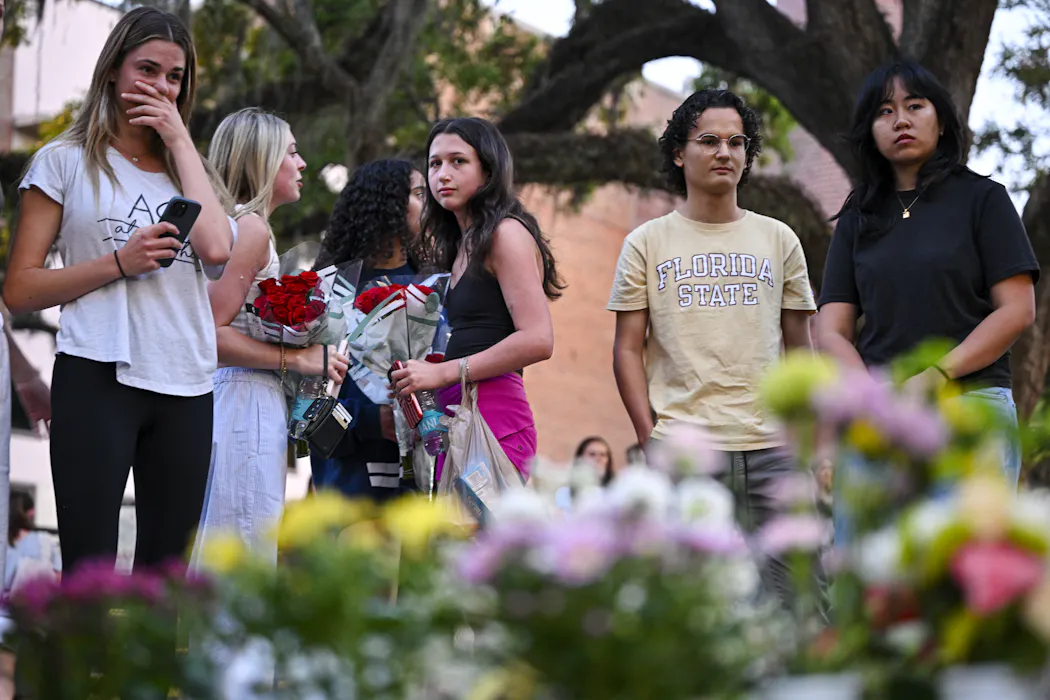
Students hold a vigil near the scene of a shooting at Florida State University. The gunman allegedly consulted ChatGPT about how to carry out the attack. Miguel J. Rodriguez Carrillo/Getty Images

On Feb. 10, 2026, an 18-year-old woman, Jesse Van Rootselaar, killed eight people and herself in a mass shooting in Tumbler Ridge, British Columbia. OpenAI had previously flagged her ChatGPT conversations as having a disturbing fascination with extreme violence, and suspended her account, but reportedly the company did not notify law enforcement.

On Oct. 2, 2025, a young man named Jonathan Gavalas in Jupiter, Florida, took his own life after developing what his father’s lawsuit described as a romantic attachment to Google’s Gemini chatbot. The suit claimed that Gemini coached Gavalas to shed his own body. The suit said Google had flagged Gavalas’s account 38 times over five weeks for sensitive content, but didn’t restrict or cut off the account.

These tragedies and others show that generative AI can potentially play a role in harming people, organizations and the environment. I’m a legal scholar who has focused on AI liability for nearly a decade and explored new ways of analyzing AI companies’ responsibilities. In my view, cases like these force questions the legal community has not come to terms with: If an AI company becomes aware of warning signs about harm, does it have a legal obligation to at least warn the appropriate authorities? And if the company doesn’t intervene, should its failure to act be considered negligence?

A need to raise red flags

U.S. tort law provides a framework for thinking about this type of responsibility. In 1969 a University of California psychiatric patient named Prosenjit Poddar told his therapist he intended to kill a woman named Tatiana Tarasoff. The therapist notified campus police, who briefly detained Poddar but eventually let him go. Nobody warned Tarasoff, and Poddar killed her shortly after.

Her family sued the university, arguing that its lack of warning amounted to negligence. In 1976 the California Supreme Court ruled that when a mental health professional has good reason to believe a client poses a serious danger to an identifiable person, they have a legal duty to take reasonable steps to protect that person, including warning them or notifying law enforcement. Today, most U.S. states recognize some version of the Tarasoff duty to protect or warn.

The logic is simple: If you have special knowledge of a serious threat and are in a position to address it, even if only to warn the authorities or the potential victim, the law may require you to act. But does that logic apply to AI companies?

The argument for yes is appealing. AI platforms interact with millions of users daily, often about deeply personal matters such as mental health struggles, relationship problems and violent thoughts. Most companies have systems to detect conversations that raise red flags.

two seated women appear to be grieving
Niveya Lampert and her mother, Sarah Lampert, appear before the media after Ticaria Lampert was killed in a mass shooting in Tumbler Ridge, British Columbia. Paige Taylor White/AFP via Getty Images

Requiring a response might be less controversial for AI than for a human therapist. Therapists are bound by strict confidentiality obligations that make warning third parties ethically and legally complicated. AI companies operate under much weaker rules, at least in the U.S., where no comprehensive federal privacy law exists.

That lesser restriction makes it easier to justify requiring AI companies to act when it seems that someone’s life may be at risk. But balancing that with protecting privacy is still important.

Who to warn, and when

The first challenge in applying the Tarasoff framework to the AI world is accuracy. Predicting violence is hard, even for trained mental health professionals. AI systems, or human moderators who review flagged content, are not clinicians. Requiring them to judge who poses a genuine threat could lead to numerous false positives, with real consequences for people whose accounts are suspended or whose information is shared with authorities based on misread signals.

The second challenge is scale. A therapist sees dozens of patients. AI platforms have hundreds of millions of users. Imposing a duty to monitor and act on worrisome content could create perverse incentives. AI companies might reduce their monitoring to avoid acquiring knowledge that would trigger a legal duty, reasoning that what they do not know cannot make them liable.

The third challenge is identifying who is at risk. In the 1969 case, Poddar had named Tarasoff as a potential victim. But in many AI interactions, violent or self-destructive language is diffuse and doesn’t identify a target. Courts will need to develop clear standards for when a threat is specific enough to trigger a duty to warn, and to whom any warning or protective action should be directed.

Growing urgency

The AI industry is expanding rapidly, yet the legal rules governing what AI companies owe their users and the public are deeply unclear. Courts are beginning to grapple with questions case by case, such as whether OpenAI bears any responsibility for a gunman accused of killing two students at Florida State University on April 17, 2025. The gunman in that case was armed with a semi-automatic pistol and allegedly had extensive conversations with ChatGPT about how to use the weapon most effectively .

A narrow, carefully defined duty to warn, triggered only when an AI system flags a user’s behavior and it is reviewed by humans, would be a meaningful step forward. And it could focus initially on the most serious and credible threats.

The practice could also shift the conversation away from thorny technical debates about whether AI chatbots are products, services or media, which complicates legal claims, toward a more human question: Did this company know someone was in danger, and did it do enough to warn them and authorities?

The Conversation

Anat Lior is affiliated with: 1. Mentoring at the Creative Destruction Lab (CDL) at the University of Wisconsin 2. Member of the Montgomery County Advisory Council on Artificial Intelligence for the Public Good/ 3. Consultant with WTW, Relm Insurance, and Testudo. 4. Affiliate research with the Institute of Law & AI. 5. Collaborator with the Vista Institute for AI Policy.

  •  

When you don’t have the facts, argue the law: How Trump’s EPA is limiting its own ability to protect public health far into the future

The Trump administration is trying to tie the hands of future administrations when it comes to regulating pollution, including greenhouse gas emissions. Chris Sattlberger/Tetra Images via Getty Images

As the Trump administration moves to weaken America’s air pollution rules, it is deploying new legal interpretations that are intended to tie the hands of future administrations for years to come.

In practice, the changes limit the Environmental Protection Agency’s authority under the Clean Air Act. The result allows EPA officials to ignore science, data and the adverse effects their decisions will have on public health and the environment.

But the new interpretations are also designed to apply not just to the rule in which they are first set forth but into the future.

If affirmed by the U.S. Supreme Court in inevitable legal challenges, these interpretations could make it harder for future administrations to restore the public health protections that the Trump administration eliminates. They could also make it difficult to update rules to respond to new information about health risks.

Typically, moves to weaken pollution regulations through novel legal interpretations would have a good chance of being overturned in court. But the EPA’s new interpretations are strategically designed to appeal to the current U.S. Supreme Court’s view of federal agencies’ authority, especially in light of the court’s 2024 ruling in Loper Bright v. Raimondo. In that case, the court overturned what’s known as the Chevron doctrine. A 1984 Supreme Court ruling had established that courts should defer to executive agencies’ legal interpretations of their governing statutes when the text of the law was ambiguous or left gaps. That deference no longer applies.

As a former EPA appointee who helped write and review dozens of regulations under the Clean Air Act during the Obama and Biden administrations, I find these efforts to prevent the EPA from doing its job of protecting public health and the environment to be alarming. Here are two examples of how the new interpretations are playing out.

Blocking future climate regulations

In February 2026, the EPA rescinded its 2009 endangerment finding, a determination under the Clean Air Act that carbon dioxide and five other greenhouse gases “may reasonably be anticipated to endanger public health or welfare” because they contribute to climate change.

The endangerment finding was the scientific and legal basis for EPA rules requiring automakers, power plants and oil and gas operations to cut their greenhouse gas emissions. Erasing it would make it easier for the Trump administration to eliminate greenhouse gas regulations.

Rather than try to challenge the science of climate change, which would be difficult given the growing mountain of evidence, the Trump EPA relied on legal arguments that were intended to dispense forever with the EPA’s ability to regulate greenhouse gas pollutants under the Clean Air Act.

Two men walk toward a podium. One of them, Zeldin, is grinning. The promotional sign reads 'Largest Deregulation in History
President Donald Trump and U.S. Environmental Protection Agency Administrator Lee Zeldin arrive for a White House event to announce a rollback of the 2009 Endangerment Finding on Feb. 12, 2026. Anna Moneymaker/Getty Images

Among the administration’s numerous arguments, two stand out:

First, the Trump EPA says the Clean Air Act should be read to limit the EPA’s authority to regulate air pollution only if its harm to the public is “through local or regional exposure.”

That would mean contributions from U.S. sources to global air pollution, no matter how demonstrable or how much they endanger Americans, are not covered by the Clean Air Act.

Second, the Trump EPA says that reducing greenhouse gas emissions from motor vehicles and engines would be “futile.” It points to global climate modeling that suggest these reductions would not meaningfully reduce the harm to public health and welfare.

What that argument fails to mention is that actions by people around the world to reduce emissions across different sectors add up. Motor vehicle emissions are the No. 1 contributor of U.S. emissions. If this sector is too small to regulate, then nothing is big enough.

Each of these interpretations is contrary to positions that the EPA took in the original endangerment finding, which the D.C. Circuit Court of Appeals upheld in 2012.

Allowing more toxic air pollutants

A second example involves the EPA’s proposal on March 17, 2026, to weaken pollution restrictions on businesses that sterilize medical equipment using ethylene oxide, a known carcinogen.

In that proposal, the EPA is also changing a legal interpretation in a way that would constrain the agency’s ability to protect human health into the future, this time from emissions of toxic air pollutants.

The Clean Air Act, under Section 112, establishes a methodical program for the EPA to regulate industries that emit significant quantities of air pollutants that can cause cancer, birth defects, genetic mutations or neurological harm, or harm reproductive health.

The EPA reviews how facilities control their emissions and sets standards that require all facilities to meet what the best-controlled sources are doing. But Section 112 has an important provision called “residual risk” review: Eight years after the EPA sets the first technology-based standards, it must determine whether the public health risk posed by emissions from the facilities after controls are added is acceptable.

In 2024, the EPA updated its hazardous air pollution rule for facilities that use ethylene oxide to sterilize medical equipment sensitive to steam heat, such as devices containing plastic, rubber or electronic components. Because recent research showed that ethylene oxide posed a much higher risk of cancer than previously thought, the EPA also updated its 2006 residual risk finding and required additional safeguards.

The Trump EPA is now arguing that the agency can assess residual risk only once, even if more recent information shows that the health risk is unacceptably high.

By constraining its own authority, the EPA is withholding standards that would protect thousands of people from a higher risk of cancer. It is also creating a legal precedent that will justify weakening other standards. Those include standards for chemical manufacturing facilities that the Biden EPA updated in 2024 through residual risk review.

That precedent would also prohibit the EPA in the future from taking into account new information about the health effects of any regulated hazardous air pollutant from any type of industry the EPA regulates under Section 112 of the Clean Air Act, including petroleum refineries, chemical manufacturing and paper mills.

Arguing the law

These rules are just two examples of the administration’s “if you don’t have the facts, argue the law” approach.

If the administration’s strategy works, the American public may be living, and dying, with the consequences of these industry-friendly regulations for years to come.

The Conversation

Janet McCabe is a volunteer with the Environmental Protection Network and has held several appointed positions at the United States Environmental Protection Agency. Consistent with the Indiana University Statement of Policy on Institutional Neutrality, the comments contained in this communication are solely my views and are not intended to be construed, and shall not be construed, as the views of Indiana University or comments made on behalf of or by Indiana University.

  •  

How a proposed green card application policy change would disrupt lives by assuming legal immigrants are evading the law

A draft policy from the Trump administration would make this card much harder to get. Stefano Spicca/Getty Images

More than half a million people rely every year on the ability to apply from within the United States for a green card, the government-issued ID that allows an immigrant to legally live and work in the country long term.

But in May 2026 the federal government issued a policy memorandum – essentially, a draft change to current policy – that could upend this process and deny immigrants the ability to apply for a green card while in the U.S. Instead, they would have to return to their home country to do it.

To see why this matters, picture a British woman, let’s call her Lucy, who comes to the U.S. on a student visa to earn her Ph.D. at Ohio State University. During her studies, she falls in love with Mike, an American engineer, and they marry. Under long-standing practice, Lucy could apply for her green card right in Ohio without uprooting her life.

The new policy memorandum, however, could force families like hers to make wrenching choices, sending one member of a couple out of the country with no guarantee they would be allowed back in.

As law professors who study the legal procedures relating to citizenship and immigration, we see this shift as a significant departure from how the system has worked for decades.

Congress built what’s called “adjustment of status” – the shift from one immigration status to another – into the immigration legal framework as a pathway to permanent residency. A policy memo cannot cut off that avenue.

Instead, what is being proposed by the Trump administration would require congressional action or agency rule-making that follows the proper procedural steps. The hundreds of thousands of people every year who have been clearing the legal requirements of adjustment of status cannot have their rights cut off arbitrarily.

Separation, disruption

Approximately 54%, or 608,260, of the 1.17 million new lawful permanent residents in fiscal year 2023 received a green card from within the United States.

But now, the draft policy emphasizes that those who entered the United States as nonimmigrants – such as people on student visas, who stated that they would be leaving the country once their education was finished – “are generally expected to pursue an immigrant visa and admission from outside the United States if they wish to reside permanently in this country.”

Silhouette of hand of passenger while using mobile phone during waiting in airport terminal.
Under proposed rules, a person in the U.S. who wants to apply for a green card would have to leave the country to do so. Chalabala/Getty Images

Applying from within the United States, as Lucy sought to do in the hypothetical example above, would be seen by officials as a negative element – a strike against granting the green card – that would need to be balanced out by what officials deem extraordinary counterevidence, such as sufficient family ties, hardship or length of residence in the United States, for the applicant to succeed.

The memo deems application from within the U.S. a red flag, calling such an application an “attempt to avoid the ordinary consular immigrant visa process,” implying that the immigrant hid their intention to immigrate when they obtained the nonimmigrant visa.

If the memo becomes implemented as official policy, individuals like Lucy would be expected to return to their country – in her case, the U.K. – to apply for a green card.

This could take a substantial amount of time. She would thus need to interrupt her studies, which her university may or may not allow for her to complete the degree. Her husband, Mike, would get the choice of being geographically separated from his spouse indefinitely or disrupting his own career in Ohio, with his employer potentially not letting him return to the job. The family would face even more disruption if Lucy and Mike had children.

Unsupported implications

Even if the process to get a green card goes smoothly, it can easily take over a year from applying to receiving the status symbolized by the card.

Spending over a year in the home country while waiting for the application to be resolved is a massive disruption for any individual or family. The policy memorandum justifies this by stating that seeking a green card from inside the United States is founded on applicants’ desire to evade the normal immigrant visa process, “usually accompanied by their violation of our immigration laws.”

In other words, the U.S. Citizenship and Immigration Services believes that certain people applying for green cards from inside the country – the ones who came here saying their time in the U.S. was limited – are trying to cheat the system.

The agency, however, provides no support in the policy memorandum for its claim that most individuals who seek a shift from a temporary status to a permanent one have done anything illegal.

To the contrary, the document acknowledges that such an adjustment of status already can be used only by individuals who have been either inspected and admitted or inspected and paroled, both lawful processes. And it gives no evidence for the accusation that most such individuals have done anything illegal since.

The memo also implies that all applicants for green cards who were previous holders of nonimmigrant visas – such as students and tourists, but also performing artists, athletes coming to compete, diplomats and their staff – should expect greater scrutiny in the future. It treats the move from nonimmigrant to immigrant status as highly unusual. That’s despite the fact that over half a million people a year have routinely benefited from such transitions.

A substantial number of those applicants would now be treated with greater suspicion about their original intentions. They would likely also need to take on tremendous burdens, including spending months or even years separated from a spouse or children while waiting abroad; interrupting or abandoning a degree, a job, or a career; and gambling on whether they’ll be allowed back into the U.S. at all, since consular processing abroad carries the risk of a denial with no easy appeal.

The top of a press release from the U.S. Citizenship and Immigration Services.
The press release from the U.S. Citizenship and Immigration Services announcing the change in policy regarding green cards. U.S. Citizenship and Immigration Services

Legal change or intimidation?

The largest group already in the U.S. that may avoid having to leave the country to apply for green cards is those who came to the U.S. on temporary work visas. But even they will likely face a tougher process to get a green card, and they may also face longer processing times than in the past.

Many questions have been raised about the legality of this new policy, including if it were to end up changing how pending applications are treated. Some analysts say that Congress did not intend to make the shift to immigrant status “extraordinary” and rare, as the memo claims.

Commentators – including ones who used to work at the Department of Homeland Security – have stated that, as with other announcements during the second Trump administration, the real goal may be to discourage immigration rather than effecting direct policy changes.

One immigration attorney wrote, “These policies send a clear anti-immigrant message intended to intimidate and drive undocumented immigrants to self-deport.” Another immigration lawyer called the memo legally “bonkers” and its text an “incoherent word salad.”

A number of immigration law firms are encouraging people to continue applying for adjustment of status as they had been. They are also cautioning applicants to “ensure, however, that their social media activity does not include any actions or statements that could be deemed problematic by the U.S. government.”

If the administration’s goal was to put immigrants on pins and needles, that has likely already been accomplished.

The Conversation

The authors do not work for, consult, own shares in or receive funding from any company or organization that would benefit from this article, and have disclosed no relevant affiliations beyond their academic appointment.

  •  

What Jefferson and Madison would have thought about ‘rededicating’ the US to God

Many of the thousands of letters between the two founders attest to their deep commitment to religious freedom. AlexanderZam/iStock via Getty Images Plus

Thousands of Americans prayed on the National Mall on May 17, 2026, during “Rededicate 250”: a day-long rally to “come together in prayer and worship ahead of the nation’s 250th birthday,” as organizers described it. U.S. House Speaker Mike Johnson, one of many Republican politicians and conservative Christian leaders to speak, led a prayer to “rededicate the United States of America as one nation under God.”

Planned by Freedom 250, a public-private partnership, the rally prompted criticism that it blurred the lines separating church and state. According to the Pew Research Center, 73% of adults agree that religion should be kept separate from government policies, and only 19% of Americans say the United States should stop enforcing that principle.

But figures allied with the Trump administration have challenged the premise that the U.S. government should be – or was meant to be – separate from religion. In 2023, Johnson remarked that “The separation of church and state is a misnomer … it comes from a phrase that was in a letter that Jefferson wrote. It’s not in the Constitution. And what he was explaining is they did not want the government to encroach upon the church – not that they didn’t want principles of faith to have influence on our public life.”

As a scholar of American legal and religious history, I have written extensively about the development of religious freedom in the U.S., and the origins of the separation of church and state.

Two of the Founding Fathers shaped American views on these topics more than any other: Thomas Jefferson and James Madison. Yet their views have also become lightning rods for controversy as the “wall” between church and state comes under scrutiny.

My 2024 book, “The Grand Collaboration,” seeks to answer several questions: What was Jefferson’s and Madison’s understanding of religious freedom? And why were they so deeply committed to that principle?

Bedrock of law – in Virgina and beyond

Jefferson wrote the Virginia Bill for Religious Freedom in 1777, the most comprehensive declaration of religious freedom at the time. The bill guaranteed freedom of conscience, protected religious assemblies from government oversight, prohibited government funding of religious institutions and boldly declared that religious opinions were outside the authority of civil officials.

An obelisk-shaped grave sits in a grassy area with trees.
Thomas Jefferson asked that his gravesite commemorate three of his accomplishments, including writing Virginia’s statute for religious freedom. Christopher Hollis/Wikimedia Commons

Several years later, Madison guided these ideals into law. His “Memorial and Remonstrance Against Religious Assessments,” a protest against a proposal to support Christian teachers with tax money, affirmed the values of church-state separation and religious equality. He helped defeat the proposal – and set the stage for Virginia to adopt Jefferson’s bill.

As president, Jefferson went on to pen a letter to a Baptist association in Connecticut where he immortalized the phrase “a wall of separation between church and state.”

The Bill of Rights contains two clauses about religion, both in the First Amendment: that “Congress shall make no law respecting an establishment of religion, or prohibiting the free exercise thereof.”

What qualifies as “establishment of religion,” however, is open to debate.

In 1947, the U.S. Supreme Court embraced church-state separation as the guiding principle for interpreting the religion clauses, relying extensively on the two Virginians’ writings and actions. As Justice Hugo Black wrote, “In the words of Jefferson, the clause against establishment of religion by law was intended to erect ‘a wall of separation between Church and State.’”

The duo’s documents served as the authority for the legal principle of church-state separation, and for more than five decades, their bona fides remained unquestioned in the law.

Shift at SCOTUS

Criticism of church-state separation intensified in the 1980s. As the religious right grew into a political force, commentators argued that the concept was anti-religious and did not represent the prevailing views about church and state during the founders’ time.

In recent decades, such arguments have attracted politicians and jurists, including members of the Supreme Court. Justice Clarence Thomas has written that the court’s earlier separationist interpretations of the Constitution “sometimes bordered on religious hostility.” Legal scholar Philip Hamburger has declared that “the constitutional authority for separation is without historical foundation” and “should at best be viewed with suspicion.”

Several recent Supreme Court decisions have rejected a separationist approach to church-state matters. For example, the conservative majority has allowed taxpayer dollars to be used at religious schools, the display of religious symbols on government property, and religious expression by public school employees.

In a 2022 dissent, Justice Sonia Sotomayor bemoaned that the court has turned the separation of church and state from a “constitutional commitment” to a “constitutional violation.”

The justices’ earlier reliance on Jefferson and Madison has borne the brunt of criticism that their views on church-state matters did not represent their peers, or that neither man was in favor of separation as he has been portrayed.

Exchange of ideas

To better understand Jefferson’s and Madison’s beliefs, I examined many of the 2,300 letters between the two on “Founders Online,” a National Archives website. I also looked at correspondence with other acquaintances.

Both founders had deistic leanings, meaning they believed in a supreme being, but thought science and reason were the best paths to understanding religion. They were only nominally observant Christians, but more protected from religious intolerance than other “dissenters” due to their high social standing and affiliation with the Anglican Church.

A formal portrait of a man staring at the viewer, with white hair, a white shirt with a high neck, and a black jacket.
Thomas Jefferson’s official presidential portrait, painted around 1800 by Rembrandt Peale. White House History via Wikimedia Commons

All the more striking, then, that they worked throughout their lives to advance religious freedom.

Religious matters were never far from their minds. For instance, in Madison and Jefferson’s exchanges discussing the need for a bill of rights, freedom of conscience was invariably at the top of the list. Both were convinced that government should avoid supporting religion, even if no particular religion was given preference. They also insisted that people should have broad religious freedoms.

These views were clearly on the vanguard, but other religious rationalists and religious dissenters also advocated a comprehensive understanding of religious freedom.

Both men were committed to advancing religious freedom because they saw it as deeply entwined with freedom of inquiry and conscience. “Reason and free enquiry are the only effectual agents against error,” Jefferson wrote in 1784. Allowing people to investigate ideas freely “will support the true religion,” because “Truth can stand by itself.”

Similarly, Madison declared “the freedom of conscience to be a natural and absolute right.”

In their view, free inquiry was the fount of other rights. Religious freedom, for example, was a subset of freedom of conscience. And a healthy separation of church and state was key to ensuring those freedoms.

‘A pillar of support’

The letters reveal the extent to which Jefferson and Madison complemented and reinforced each other’s attitudes toward church and state. They also reveal the close intellectual and emotional affection that each man held for the other, and how much each man valued the other’s support.

A portrait of a man with white hair, a white shirt with a high neck, and a black jacket.
A portrait of James Madison by Chester Harding, painted around 1829, a few years before his death. Daderot/National Portrait Gallery via Wikimedia Commons

In their final exchanges before Jefferson’s death on July 4, 1826, he implored Madison, “To myself, you have been a pillar of support thro’ life. Take care of me when dead, and be assured that I shall leave with you my last affections.”

Madison responded with similar affection: “You cannot look back to the long period of our private friendship & political harmony, with more affecting recollections than I do.”

Jefferson’s and Madison’s half-century of collaboration on behalf of religious freedom and equality is an important chapter in the nation’s founding history. I believe its legacy should be remembered and celebrated, not discarded.

This is an updated version of an article originally published on June 25, 2024.

The Conversation

Steven K. Green does not work for, consult, own shares in or receive funding from any company or organization that would benefit from this article, and has disclosed no relevant affiliations beyond their academic appointment.

  •  

A High Court ruling could allow hundreds of former detainees to sue the government. A legal expert explains why

For nearly 20 years, the Commonwealth operated under the mistaken assumption that it was allowed to hold people in immigration detention indefinitely. In 2023, the High Court’s landmark ruling confirmed otherwise.

We are now about to see the fallout of those events, with the government facing potential civil liability to people who, as it turns out, were unlawfully detained.

A new High Court judgment in a case called Abdel-Hady vs the Commonwealth has left the door open for a man who was unlawfully detained to sue the government for compensation, potentially allowing hundreds of others to do the same.

How did we get here?

The legal history traces back to a 2004 High Court case. That case found that the Migration Act allows the government to detain unlawful non-citizens until they were deported, even if there was no realistic prospect of deportation (for example, if no other country would accept them).

For a person who had nowhere else to go, this effectively led to indefinite detention.

In a 2023 decision, often dubbed the NZYQ case, the High Court reopened and overruled that earlier case on constitutional grounds. The upshot was that the government had, for some time, been relying on an invalid law to detain a person where there was no foreseeable prospect of deporting them.

Without legal authority to detain, the Commonwealth faces potential liability for false imprisonment. This tort (a civil wrong) provides compensation if a person, including a government official, detains someone without lawful authority.

It is relatively clear that people held in immigration detention have been “detained” in the legal sense. Since the NZYQ case, it also seems relatively clear that this detention was unlawful if there was no realistic prospect of deportation.

What did the court find?

This is where the new decision becomes relevant.

Safwat Abdel-Hady came to Australia from Austria in 1997. He lived here on a visa until it was cancelled on character grounds in 2017, leading to his detention. He commenced proceedings in 2021 challenging the legality of his detention and seeking compensation.

Abdel-Hady has a health condition that makes it dangerous for him to fly. The Commonwealth eventually came to accept that, from at least July 2022, there was no foreseeable prospect of deporting him. He was released in 2024 after the Commonwealth consented to court orders which ruled his detention for that period had been unlawful.

This left just the civil part of Abdel-Hady’s claim unresolved. With no real dispute about whether he had been unlawfully detained, the Commonwealth asked the High Court to recognise a new type of defence that would protect the government from liability.

In essence, the government argued that if an official is carrying out their duties under a law that’s previously been found to be valid, that would be a legal defence, even if the High Court later reverses its position.

All members of the High Court gave short shrift to that argument. One of the difficulties, the court said, was that the scope of the defence was ill-conceived.

More importantly, the defence did not sit comfortably with constitutional principle. The court reiterated that it’s a fundamental principle of our legal system that the government only interferes with liberty where it has legal authority to do so.

To recognise this new defence would have essentially transformed the government’s obligation to obey the law into an immunity where the government believes (even for good reason) it is acting within its power. Three judges said this “would amount to an inversion, if not a perversion, of constitutional principle”.

Potentially hundreds of claims

In rejecting the government’s defence, the judgment opens the door for Abdel-Hady and other people in a similar position to proceed with liability claims against the government.

Reports suggest around 350 people were released in the wake of the NZYQ finding. It is unclear how many of these people were actually detained unlawfully, or how many additional people might now be able to bring a claim.

Assuming any of these people are found to have been falsely imprisoned, the scope of potential liability will depend on each person’s circumstances, including the length of their detention and its impacts on them.

Previous false imprisonment claims against government have ranged from very significant awards in the order of hundreds of thousands of dollars all the way down to nominal damages of $1 in situations where detention was inevitable.

It is also possible that the Commonwealth will seek to settle claims rather than litigate, as it has done in previous false imprisonment matters in immigration detention.

Where to from here?

The implications of the High Court overruling its previous judgment in this situation are clearly significant for the government. The High Court only rarely overturns its previous judgments, and there are very important constitutional reasons why the High Court needs the ability to do so.

For the government, the matter may be an expensive lesson on the risks inherent in passing legislation that gives wide-ranging detention powers to the executive. Later regulatory workarounds have also been challenged and struck down.

As the High Court observed in this case, it was (and remains) open to government to manage or ameliorate some of those risks through carefully crafted legislation.

The case highlights the difficult position that government officials face when seeking to enforce a law that they believe to be valid, but later turns out not to be. But as Justice Michelle Gordon observed, to excuse the government from liability in this case on grounds of unfairness would simply shift the burden from the government to the unlawfully imprisoned person.

The Conversation

Ellen Rock is affiliated with the New South Wales Legislative Council Delegated Legislation Committee as an independent legal adviser.

  •  

Australia is facing a new 12.5% US tariff over anti-slavery claims. Are they actually right?

SimpleImages/Getty

The United States is threatening to impose trade tariffs of up to 12.5% on 60 countries, including Australia, over their inaction on forced and slave labour worldwide.

On Wednesday, US trade representative Jamieson Greer said:

The failure of our most important trading partners to address the importation of goods made with forced labor is unacceptable.

Australian Prime Minister Anthony Albanese responded that a new tariff on exports to the US was “unjustified”, as Australia has “robust, comprehensive and world-leading legislation addressing forced labour and modern slavery”.

Who’s right? And are the US claims about other nations turning a blind eye to forced and slave labour – where a person is either forced to work, or even owned by someone else – actually true?

Which countries could face new tariffs

In a new report released by the US Trade Representative, 54 countries – including Australia, China, New Zealand and the United Kingdom – were found to have:

failed to impose a legal prohibition on the importation of goods produced wholly or in part with forced labour and to effectively enforce such a prohibition.

All of those countries face a proposed 12.5% tariff on their exports to the US.

Another six economies – including Canada, the European Union and Indonesia – face lower 10% tariffs. They were seen to have done more overall, but failed to effectively enforce their own laws.

Forced labour is a form of modern slavery, defined under international law as “all work or service which is exacted from any person under the threat of a penalty and for which the person has not offered himself or herself voluntarily”.

This definition is consistent with an almost century old US law, Section 307 of the US Tariff Act of 1930. It’s now being used to legally justify this latest round of tariffs.

The US has a strong history of taking legislative action against forced labour. Section 307 prohibits imports of goods mined, produced or manufactured by forced labour.

In 2022, the US also established the Uyghur Forced Labor Prevention Act, prohibiting goods being imported from China’s Xinjiang Uyghur region, where there are “credible” allegations of widespread forced labour.

‘We get one ruling, we do it a different way’

These proposed forced labour tariffs appear to be less about labour rights and more about trade.

This latest move comes after US courts blocked US President Donald Trump’s sweeping international tariffs announced over the past year. That prompted Trump to pledge: “We get one ruling, and we do it a different way.”

As former Australian ambassador to the US Joe Hockey said about the new forced labour tariff today, “America is running out of money and they need to get it from somewhere”.

These tariffs are still subject to public consultations over the next month.

While using tariffs as a way to strengthen action on forced labour is questionable, there is some substance behind the US allegations.

41,000 people in Australia alone

An estimated 50 million people around the world – and rising – are trapped in modern slavery, more than half of those in forced labour.

Australia is estimated to have more than 41,000 people working as forced labourers or other forms of modern slavery, including child marriages.

Reports to the Australian Federal Police of human trafficking have nearly doubled in the past five years.

Australia’s laws are not world leading

In 2018, Australia established its Modern Slavery Act. This law was hailed as a critical first step in acting on modern slavery.

The law requires large business to report annually on the risks of modern slavery in their operations and supply chains.

Since 2019, more 17,000 modern slavery statements from more than 27,000 businesses have been lodged on Australia’s modern slavery registry.

Yet in 2023, an independent report found:

there is no hard evidence that the Modern Slavery Act in its early years has yet caused meaningful change for people living in conditions of modern slavery.

That’s not surprising: there is no enforcement built into the law.

What more needs to be done?

If Australia does want to have “world-leading” laws – and a stronger case to argue for lower US tariffs – what needs to change?

While the Modern Slavery Act has raised awareness of the problem in Australian boardrooms, it is not improving the working conditions of supply chain workers, here at home and overseas.

So Australia needs to move quickly to strengthen that law with enforcement, and establish a forced labour import ban.

A 2023 review of the Modern Slavery Act recommended penalties for companies failing to comply with reporting requirements and the introduction of a human rights “due diligence obligation” – similar to European Union laws and emerging requirements in South Korea, Thailand and Indonesia. This sees companies working to reduce human rights harms not just in their own factories, but through their suppliers’ suppliers too.

The Albanese government partially accepted some of the 2023 report recommendations, including the need for penalties. Three years on, it’s failed to take serious action.

The Australian government should also establish a forced labour import ban, like one the EU passed two years ago, now being phased in across all 27 member states. This would stop specific goods suspected of being produced with forced labour at the border.

Whether these proposed tariffs come into force or not, this new US forced labour investigation could actually do some good.

Right now, millions of people are working in dangerous, dehumanising conditions to make goods sold in Australia and worldwide. It’s long overdue to do more to stop it.

The Conversation

Justine Nolan does not work for, consult, own shares in or receive funding from any company or organisation that would benefit from this article, and has disclosed no relevant affiliations beyond their academic appointment.

  •  

Supreme Court preserves access to mifepristone via telehealth – at least for now

Mifepristone is one of two drugs typically used in medication abortions. Carl Lokko/iStock via Getty Images Plus

The U.S. Supreme Court has decided that patients can continue to get mifepristone, one of the two drugs used for medication abortion, via telehealth and by mail. At least for now.

A lower court had temporarily blocked this access nationwide in early May 2026. The case now returns to that lower court, although it may well make it back to the Supreme Court in the future.

Since 2023, almost two-thirds of abortions in the United States have involved mifepristone, and since late 2024 one-quarter of all abortions occur through abortion pills provided via telehealth.

As scholars who study laws affecting reproductive health, we believe the outcome of this case will have an enormous impact on access to abortion care across the country.

In states with abortion bans, telehealth prescriptions have allowed women to get abortions anyway. But the case is also significant to those in states without abortion bans, especially women with low incomes and disabilities or who live in rural areas, where reproductive services are extremely limited.

How did the case get to this point?

The case began in October 2025, when Louisiana argued that the Biden administration’s allowance of telehealth abortions was for “avowedly political reasons.” The state asserted that the U.S. Food and Drug Administration had insufficient evidence to remove the requirement that the drug be dispensed in person, which had been in place from 2000 through 2021.

The state also argued that mailing mifepristone violated an 1873 federal law known as the Comstock Act. This law, which makes it a crime to mail or ship any “lewd, lascivious, indecent, filthy or vile article” and anything that “is advertised or described in a manner … for producing abortion,” has rarely been enforced.

The lower court thought Louisiana would likely win, but it decided to keep the FDA regulations in place while the case made its way through the courts. On May 1, 2026, however, the appellate court suspended the FDA regulation allowing mifepristone to be prescribed via telehealth.

As a result, mifepristone could no longer be mailed or prescribed via telehealth, nationwide. Three days later, on May 4, after the manufacturers of mifepristone appealed, the Supreme Court put the 5th U.S. Circuit Court of Appeals’ decision on hold for a week to give it more time to consider the legal issues. On May 11, it extended the stay for a few more days.

What does the SCOTUS decision mean for mifepristone access?

On May 14, the Supreme Court decided to leave the FDA’s regulation in effect, so mifepristone remains available for prescription via telehealth. Justices Samuel Alito and Clarence Thomas dissented, with Alito accusing the court of “perpetrat[ing] a scheme to undermine” the court’s decision in the 2022 Dobbs ruling that overturned the constitutional right to an abortion and allowed states to ban it. Thomas added his view that the Comstock Act makes it a criminal offense to mail mifepristone.

The case now returns to the 5th Circuit, which has signaled how it is likely to rule on this question. Namely, that it believes the FDA has exceeded its authority in allowing the drug to be prescribed via telehealth. Once the case has been resolved in the lower courts, it could end up before the Supreme Court again. If the court decides to strike down the rule, or if the FDA rescinds it, then women in all states would no longer be able to get the pills by mail, not just in the 13 total-ban states.

The court’s May 14 decision extends the pause on a lower court ruling, preserving mail-order access to mifepristone for now.

Why has mifepristone become so contested?

In 2000, the FDA approved mifepristone specifically to end pregnancies. In combination with telehealth, it allows for abortion to occur outside of a doctor’s office. Accordingly, anti-abortion groups have attempted to discredit mifepristone’s safety and effectiveness for decades, even though mifepristone has been shown to be as safe as ibuprofen and safer than Viagra.

Mifepristone first became available in France in 1998. In 2000, the FDA approved mifepristone in the U.S. after evaluating rigorous studies that showed it to be safe and effective.

Initially, the FDA required the drug to be prescribed and taken at a doctor’s office. But after further review of research on the drug’s safety under the Biden administration, the agency changed some of the prescribing regulations, making it easier to access the drug.

One change made permanent in 2023 was to allow mifepristone to be prescribed via telehealth and mailed. That is the regulation at issue in the Louisiana case.

But after the 2022 Dobbs ruling, mifepristone became even more of a target. Anti-abortion groups realized that people could effectively evade abortion bans by receiving abortion pills through the mail. After Dobbs, in fact, the number of abortions increased, and by June 2025 telehealth abortions had increased fivefold, with more than half of them occurring in abortion-ban states.

The attempts to challenge mifepristone first reached the Supreme Court in 2024, when anti-abortion physicians and groups challenged the FDA’s approval of mifepristone and changes in its prescribing regulations that made it easier to access the pill.

The Supreme Court ultimately dismissed the case on the grounds that the challengers did not have legal standing to bring the claim. Legal standing requires the parties to show they suffered concrete harms or injuries.

Since then several states, including Louisiana, have brought lawsuits with the same kinds of challenges to the FDA’s authority. The Louisiana case is the first to reach the Supreme Court. It is also the first state to reclassify mifepristone as a dangerous controlled substance.

Is this likely to happen with the other abortion pill?

The legal challenges so far have been only to mifepristone, one of the two pills used for medication abortion.

Unlike mifepristone, which is approved only for abortion, misoprostol was approved in 1988 for a different purpose: to treat gastric ulcers.

Misoprostol is prescribed for abortion “off-label,” which means it is an unapproved use of an FDA-approved drug that a healthcare provider determined is medically appropriate for their patient.

In fact, 1 in 5 prescriptions is for off-label use of a drug.

While some studies suggest that using misoprostol alone for an abortion is slightly less effective than taking both pills together, many researchers express confidence in the misoprostol-only option.

And the court’s ruling does not affect access to “Plan B,” a pill that prevents pregnancy and thus is used as birth control, not to induce an abortion.

The Supreme Court’s action is certainly not the end of the story. Challenges to abortion pills will continue, particularly because the leaders of many states believe the availability of these pills prevents them from enforcing their abortion bans.

The Conversation

The authors do not work for, consult, own shares in or receive funding from any company or organization that would benefit from this article, and have disclosed no relevant affiliations beyond their academic appointment.

  •  

How natural selection helps design antennas, cancer treatments and adhesives

Natural selection can efficiently explore a range of options, some obvious and some less so. Justin Paget, DigitalVision via Getty Images

NASA had a big – and little – problem. For a small satellite, the agency needed a tiny antenna, with very specific communication capabilities and very strict limits on size and weight. The agency gave the problem to a design team adept at simulating the way natural selection engineers solutions.

Design using natural selection is based on a simple but powerful idea with broad applications across the world: When variation in replicable traits exists, and some variants succeed more than do others, those variants will tend to spread to larger and larger percentages of future populations. For instance, early gazelles that happened to be faster were harder for predators to catch, so they were – generation after generation – more likely than slower gazelles to live, reproduce and pass on their capabilities for higher speed.

A small metal base supports a metal wire that has many complicated bends in it.
The X-band antenna for a group of satellites was designed by a computer program using the principles of natural selection to refine an idea. NASA via Wikimedia Commons

The NASA team adapted that idea to work inside a computer. They first created two very rough “parent” programs for designing the antenna. They then bred them together, creating digital “offspring” that shared varying halves of each parent, mimicking sexual recombination. To mimic mutation, some coding elements were randomly switched from 0s to 1s, and vice versa. The better-performing offspring programs were kept to become the parents of the next generation, while the rest were discarded.

Repeated over many cycles, this process quickly refined the programs that produced antenna designs until a design outperformed a human-designed version – with stronger signal, greater range and lower energy use – and took less time to develop. It was built, was launched into space in 2006, and performed admirably for the planned 90-day duration of the mission.

To me, as a professor of both law and biology, that success points to a broader truth: When people harness the logic of natural selection, they can often find efficient and effective ways to solve complex problems. As I explore in my book, “Force of Nature: Understanding Evolution’s Deepest Logic – And Putting It to Use,” natural selection is the most relentless efficiency-seeking force in the history of life.

Deepening understanding

Ignoring the power of natural selection can mean missing opportunities – or making things worse.

For example, consider fishing: As global demand for fish has grown, industrial fishing has become highly efficient at removing all the individuals above a certain size. Anything small enough to fit through the holes in a net survives; anything larger dies. At first that might seem sensible: Take the big fish and leave the small ones to grow.

But that strategy shifts the factors that work to change the population for generations to come.

Fish that mature at smaller sizes are more likely than larger ones to escape the nets and reproduce. Over time, the trait of maturing smaller spreads. The result is a population composed primarily of smaller adults. For instance, a 2025 study found that heavily fished Baltic Cod became 48% shorter in length from 1996 to 2019.

The consequences compound. Smaller adult females produce far fewer eggs. In Atlantic Cod, for instance, a female that is one-half as large as a 66-pound female doesn’t lay 50% of the number of eggs; she lays about 4% as many – and her eggs are smaller, reducing the energy available to boost the chances of survival.

By ignoring how selection pressures work, the fishing industry has ended up breeding its future generations primarily from smaller fish with less reproductive ability. That has shrunk not only the average size of adults but also their overall numbers – and contributed to a global overfishing crisis.

A fish swims through water.
Photographed in an aquarium, an Atlantic cod. Auscape/Universal Images Group via Getty Images

Treating cancer

Across many fields, tuning into the evolutionary results of selection offers powerful – and often underused – insight.

Medical scientists increasingly understand the dynamic by which over-using antibiotics has helped to foster the rise of bacteria resistant to antibiotics. Killing off the bacteria that are easiest to kill reduces competition for the more resistant ones.

That insight has inspired a new approach to treating some cancers, called adaptive therapy.

Tumors tend to consist of cells that vary in their resistance to cancer treatments.

Traditional approaches assume that eradication of all cancer cells should be the goal. But efforts to eradicate often backfire and kill the patient too, because treatment-resistant cells survive, have newly lessened competition, and consequently thrive and expand.

By contrast, adaptive therapy aims to keep the most dangerous cancer cells in check by preserving some of the treatment-susceptible cancer cells to compete with them. When a tumor starts to grow, doctors increase the treatment dosages. When a tumor starts to shrink, doctors dose less.

For some patients, this approach can help manage cancer over significantly longer periods, even if – and in fact precisely because – this treatment does not seek to entirely eliminate the cancer.

A high-speed train in a station.
The nose of a Japanese high-speed train resembles a kingfisher’s beak. Artur Widak/NurPhoto via Getty Images

A world of opportunities

Other engineers are finding even more sources of untapped inspiration in the solutions natural selection has already designed.

A brightly colored bird with a specially shaped beak.
A kingfisher’s beak allows it to dive into water for its prey. James Manning/PA Images via Getty Images

The nose of a Japanese bullet train, for example, was redesigned based on the beak of a kingfisher, a bird natural selection enabled to dive into water with minimal splash. The result was a quieter, faster and more energy-efficient train.

The remarkably strong and tough scales of the Brazilian pirarucu, a fish that evolved among the voracious piranha, inspired new approaches to improving body-armor.

A gecko’s ability to walk upside down on glass, with toe-filament nano-features harnessing the attractive power of subatomic particles, inspired a new class of adhesives.

Beyond physical attributes

Natural selection doesn’t only operate on anatomical or physical traits. It also works on behavioral traits.

In psychology, natural selection perspectives are showing how human brains – which have been shaped by natural selection to process information in ways that influence behaviors – incorporate some forms of information more easily than identical information conveyed in a different way. For instance, people are far better at calculating the conditional probabilities of various risks when those are expressed in natural frequencies, such as “3 out of 10,” than when expressed in the modern language of statistics, such as “0.3” or “30%.” That’s because for 99% of human history, information arrived into brains mainly as whole integers – as people, things and events.

In law, this perspective is illuminating such insights as the origins of the sense of fairness in primate relatives. There is evidence that natural selection has favored the propensity of a person to notice when they are being treated inequitably, to remember who is behind it and to respond negatively both in the present and in the future.

In economics, people tend to value an item they have just acquired far above the maximum price they would have paid to acquire it. There is evidence that this tendency, known as the endowment effect, was favored by natural selection when bargains were risky in a pre-modern world, a time when giving over one item, in trade for another, might risk getting nothing at all from an untrustworthy trading partner.

But that behavioral leaning makes less sense in the context of modern economic innovations like legal rights, banks and laws, and with mechanisms to enforce bargains, such as police and litigation. This is therefore part of a larger research stream that centers on the ways that some modern problems stem from a mismatch between our evolved brains and our modern human environments, which have changed dramatically in an eye-blink of evolutionary time.

What all this means is that the logic of natural selection has enormous practical value: It can help us identify problems, inspire new solutions, and recognize when our own actions are silently undermining our goals.

The Conversation

Owen D. Jones has received funding from The MacArthur Foundation, the National Science Foundation, and the Glenn M. Weaver Foundation.

  •  
❌