Reading view

What Pennsylvania’s AI chatbot lawsuit teaches us about the psychology behind medical trust
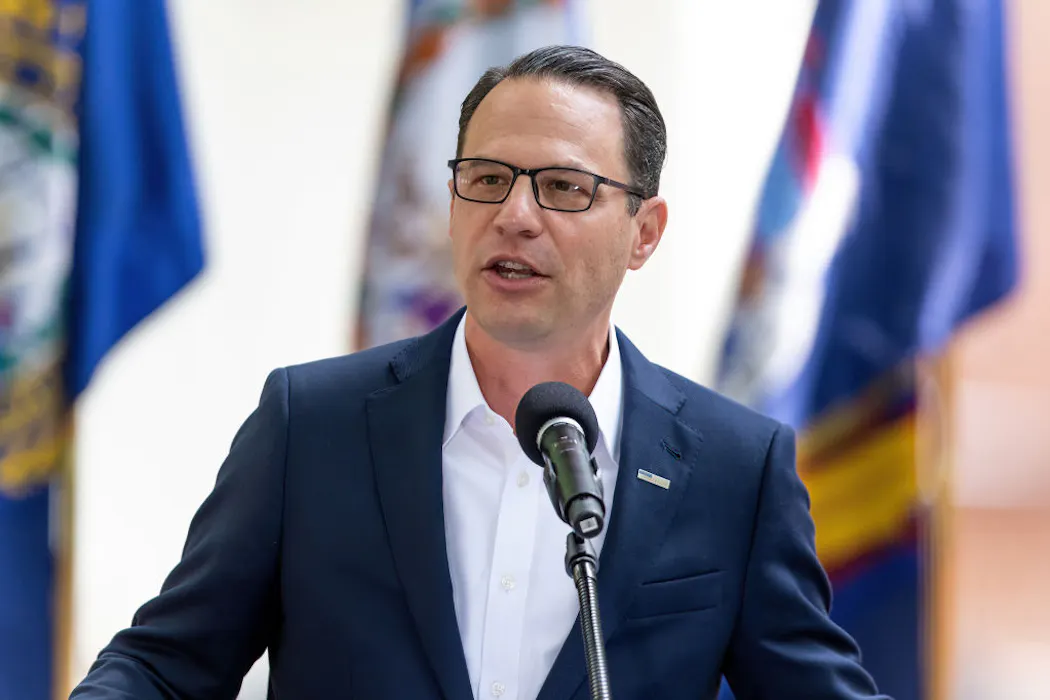
Pennsylvania Gov. Josh Shapiro is suing Character.AI to stop its chatbot from posing as doctors. Gilbert Carrasquillo/GC Images via Getty Images

In May 2026, Pennsylvania Gov. Josh Shapiro’s administration filed suit against Character Technologies Inc., the company behind the popular chatbot platform Character.AI. A state investigation found that a chatbot character named “Emilie” claimed to have a medical degree, seven years of practice and a Pennsylvania medical license – and was providing users with a fabricated license number. As of April 17, 2026, the chatbot had accumulated approximately 45,500 user interactions on the platform. The suit was filed by Pennsylvania’s State Board of Medicine.

Gretchen Chapman is a professor of behavioral decision research at Carnegie Mellon University in Pittsburgh, where she studies how people evaluate expertise and make decisions. As AI-powered tools increasingly enter healthcare settings – and as courts begin to grapple with the consequences – her research offers a timely way to understand why we trust these systems, when that trust breaks down, and who bears responsibility when it does.

Why might someone respond differently to a medical error depending on whether it was made by a human or an AI?

Research has examined the phenomenon of “algorithm aversion,” or the reluctance many people have to trust an AI system, even when the automated system makes fewer overall mistakes than a comparable human expert. One reason for this aversion is that people tend to be more forgiving of human mistakes than of AI mistakes. This is partly because some AI errors are the sort of mistakes that human experts are quite unlikely to make.

For example, we may find it outrageous when an AI erroneously claims to have a medical license or offers to write a suicide note for a depressed person because we feel quite confident that those particular errors could have been avoided if a human expert rather than an AI had been consulted.

Forty years ago, psychologist Hillel Einhorn argued that we need to “accept error to make less error,” meaning that even the most accurate system will produce some errors. Of course, some errors are more costly than others. People are willing to accept that even good doctors make mistakes. What they’re not willing to accept is a mistake that no competent and ethical doctor would ever make – such as claiming to have credentials they don’t have.

Why are people so willing to trust AI chatbots with medical advice?

Work from my research group builds on previous scholarship on perceived expertise. When people do not have direct access to the qualifications of a potential expert, they tend to rely on superficial identifying cues, such as whether the person wears a lab coat, uses scientific jargon or speaks with great confidence. Such cues are indicative of actual expertise in many settings, but it is also easy for a nonexpert, such as an AI chatbot, to assume the confidence and use jargon to signal qualifications they do not actually have.

A person holds a phone screen that shows a text bubble and an image of a person in a white lab coat.
According to the lawsuit, the chatbot in question described itself as a psychology specialist. SDI Productions/iStock Collection via Getty Images

What makes a title or credential so convincing – even when it belongs to a chatbot?

An expert is someone with an unusually deep understanding of a specific subject. Experts are commonly identified by their level of training or qualifications, such as holding a medical degree. Thus, credentials and titles are embedded in the very definition of expertise. Consequently, claiming a credential is a forceful way to present as an expert. Thankfully, this is also a tactic that is easily fact-checked, as we know that AI agents cannot gain medical licenses.

Ordinary people can’t be expected to scrutinize every piece of information they receive. Instead, our minds use mental shortcuts, such as trusting someone with a credential, because those cues are usually reliable.

Although it might be fairly easy to realize that an AI cannot earn a medical degree, other identifying cues are less easily vetted. For example, checking that the medical evidence cited by an AI comes from an actual scientific article takes more time. What makes our minds so good at processing information quickly is also what makes us easy to mislead. When your mind is wired to trust a credential automatically, it doesn’t stop to ask whether that credential is real.

Who is responsible when an AI system gives bad medical advice?

Determining culpability is already complex when a human expert gives bad advice. In addition to the expert herself, her employer – such as a hospital – could bear responsibility. Even the patient could be responsible, depending on how they used the advice – for instance, if they interpret an off-handed comment in a nonprofessional context as official medical advice.

Human medical experts carry malpractice insurance in part because this question is so fraught. The situation is even more complicated for AI systems because the AI agent itself cannot be legally responsible. The developers are responsible for ensuring reasonable safeguards and accuracy. Institutions are responsible for vetting new systems before adopting them, and for getting appropriate insurance. And users are responsible for adhering to guidelines about how the systems are to be used.

A sign on a lampost reads 'Carnegie Mellon University.'
Carnegie Mellon University is developing a maternal health chatbot. AP Photo/Gene J. Puskar

Tell us about your own research on health chatbots here in Pittsburgh.

Pittsburgh is not just a research hub but an active testing ground for these technologies in real clinical settings.

Carnegie Mellon University, where I work, houses the AI Institute for Societal Decision Making, funded by the U.S. National Science Foundation, which focuses on public health as one key use case.

One project at the institute entails developing a maternal health chatbot that allows pregnant women to receive answers to their questions in real time. Accuracy and safety guardrails are essential considerations in its development. The stakes are high: A pregnant woman who receives inaccurate information about symptoms, medications or warning signs could delay seeking care at a critical moment.

Pittsburgh’s two major hospital systems are already rolling out AI tools across their facilities to use for imaging and diagnosis, monitoring patient safety, and administrative work such as charting.

Pittsburgh stories. Expert voices. Read more of our stories about Pittsburgh.

The Conversation

Gretchen Chapman receives funding from NSF.

  •  

Everyone wants to think they’re open-minded – here’s why most people aren’t

Existential humility means learning to live with the tension between certainty and curiosity. Ippei Naoi/Moment via Getty Images

Most people think they are open-minded and would like others to perceive them as such. But for the things that matter most – religious beliefs, for example, or the meaning of life – few of us are genuinely willing to consider that we might be wrong, let alone do the hard work of revising beliefs. At a fundamental level, we humans are somewhat closed-minded.

As a social psychologist, I research big questions, such as what makes life meaningful and the nature of humility. I’ve had a long-standing interest in why people are so resistant to changing their cherished core beliefs. After all, isn’t it better to remain open-minded when you may be wrong or can’t know for certain?

As decades of research has revealed, it turns out that our deepest convictions serve important psychological functions that make them hard to change. It’s unsettling to admit that our core beliefs about how the world works may be wrong.

I call that openness “existential humility”: a willingness to change our minds about our deepest convictions when presented with new evidence. And though holding beliefs in this way can be difficult, it can also be a bridge to creating stronger relationships and more inclusive communities.

Power of worldview

All of us hold myriad beliefs that range from the mundane to the magnificent. “Is pineapple a legitimate pizza topping?” is very different from “Is there life after death?” Yet these seemingly disparate beliefs are connected through an interlocking set of ideas and principles that help us make sense of ourselves and the world around us.

Psychologists call these sets of beliefs “worldviews,” and they provide people with a sense of meaning in an otherwise confusing and chaotic world. They are a constellation of beliefs that shape what people value, view as important and perceive as morally right and wrong.

It’s natural to take worldviews for granted, assuming that other intelligent people see the world the same way.

At the core of these worldviews reside your most cherished beliefs: who you are, what the meaning of life is, what constitutes right and wrong. Ask yourself how willing you are to revise those beliefs. How sure are you that you are right? What would it take to alter those convictions?

Probably a lot.

Cost of questioning

By answering these big, existential questions, worldviews can help manage anxiety. Strong convictions help people get through the day. For example, belief in an afterlife can thwart fear of mortality, because it denies that death is the end of existence.

A lack of certainty, on the other hand, can allow existential anxiety to creep in.

In 2022, my colleagues and I presented research participants with a list of existential topics and asked them to reflect on what they believed. We also asked them to rate how committed they were to their belief and how open they were to change.

Women with white scarves draped over their heads stand in rows of pews.
Coptic Orthodox worshippers attend Christmas prayers at Archangel Michael Church in Cairo, Egypt, on Jan. 6, 2026. AP Photo/Amr Nabil

Next, the participants assessed their anxiety and well-being. For example, they rated how much of a sense of meaning and purpose they had in their own lives, and how much peace, if any, they drew from religion.

Across several studies, including college students, adults and people who were significantly revising their religious beliefs, we found that being open to changing core convictions often comes at a cost to their well-being. For example, higher existential humility was associated with higher anxiety about death and a lower sense of meaning in life.

2 core needs

This research speaks to a broader paradox between two of humanity’s deepest, and seemingly competing, motivations: certainty and curiosity. Both involve trade-offs.

On one hand, people desire conviction, which provides security. It feels good to believe that you have the answer to deep and consequential questions.

The downside of conviction, however, is that it often breeds intolerance: People can become so convinced they are right that they leave no room for other people’s perspectives. Belief becomes a zero-sum game.

Even the mere existence of alternative viewpoints can feel threatening to some people with firm beliefs. To regain confidence in our own opinions, we might try to convince other people to change their mind, simply discount their perspective or try to eliminate their worldview altogether. Sadly, violence often stems from the desire to protect ideological convictions.

On the other hand, humans also desire growth. Curiosity drives people toward new discoveries and helps them stay open to changing their minds, should they encounter sufficiently strong evidence to do so.

But while this openness makes people tolerant, it also can make them prone to anxiety.

In other words, clinging to security about important beliefs provides intrapersonal benefits: The person who holds those beliefs feels a strong sense of meaning and safety. But it comes at an interpersonal cost: less tolerance for other people’s viewpoints.

Conversely, a growth-focused openness makes people more tolerant and generous but can come with psychological costs.

Why and how

My research exploring existential humility offers critical insights about why it is so hard for people to change their minds.

A brunette woman writes in a journal and looks pensive, with her face partially reflected in several thin panes of glass.
Existential humility benefits society but sometimes comes at a cost. Johner Images/Getty Images

Because people’s worldviews comprise interlocking beliefs, admitting that they were wrong about something small means that they could also be wrong about something big. Rather than face that anxiety, people often double down on defensiveness.

Existential humility benefits other people in someone’s life, from friends and neighbors to strangers. But it can take a psychological toll, and many people see these costs as too steep.

Given the benefits, though, I believe those costs are worth bearing.

Friedrich Nietzsche can offer wisdom here. In “Twilight of the Idols,” the philosopher asserted, “He who has a why to live can bear almost any how.” The “why” of existential humility, I’d argue, is to become better neighbors, active participants in making this world a more loving place.

As for the how? Practice.

There’s no quick fix to become more open-minded. It requires developing tolerance for the feelings of distress that can come with not being sure. Over time, people adjust, becoming more comfortable with holding beliefs despite the possibility they might be wrong. We make peace with uncertainty – we befriend this tension.

Existential humility is hard to live out, but I believe that society needs it more than ever. Committing to practice this virtue may transform us and our communities. And that seems worth it to me.

The Conversation

Daryl Van Tongeren had received funding from The John Templeton Foundation for this research.

  •  

Button-pushing explorers: How to grasp that AI agents can do amazing things while knowing nothing

The simple process of taking an action, assessing what happens and adjusting can lead to smart-seeming behavior. Westend61 via Getty Images

The nonprofit ARC Prize Foundation on May 1, 2026, released the results of a new benchmark: a test of an AI system’s ability to solve a game. The results were striking – humans scored 100%, while the most advanced AI systems scored under 1%.

At first glance, this may be surprising to users of AI who are impressed by its polished essays, codebases and multistep projects generated in seconds. How can these brilliant AI systems struggle with these simple Tetris-shape puzzles?

That confusion points to a risk: AI is becoming integrated into everyday life faster than people can make sense of it.

We are cognitive psychologists who study how to teach difficult concepts. To recognize the limits and risks of today’s AI agent systems, it’s important for people to grasp that the systems can both accomplish superhuman feats and make mistakes few humans would. To that end, we propose a new way to think about AIs: as button-pushing explorers.

Mental models for AI

We teach college students, a group rapidly incorporating AI tools into their daily routines. That gives us regular opportunities to ask what they think is going on with AI. The answers vary widely. One student said that someone at OpenAI or Anthropic is reading and approving every response the system generates. Another, more succinctly, said, “It’s magic.”

These responses illustrate two tempting ways of making sense of AI. At one extreme, AI is treated as an inscrutable black box – a powerful but ultimately mysterious force. At another, people explain it using the same assumptions they use to understand other humans: that its outputs reflect reasoning or judgment.

The worry is that these misinterpretations don’t go away as users gain more experience interacting with AI, and they might get reinforced. When AI performs well, its output can feel like evidence of understanding or confirmation that it really is something like magic. That apparent success makes it harder to question what the system is actually doing. Biases can seem logical or inevitable; harmful behavior can look like a deliberate choice or even fate, as if it could not have gone any other way.

Cognitive scientist Anil Seth explains why AIs don’t have – and won’t have – consciousness.

Saying that AI models are shaped by patterns in data, training processes and system design is true, but that’s too abstract to tell people when to trust the systems’ outputs or when they might fail. To help people avoid misplaced trust in AI, AI literacy efforts will need to include some mechanistic understanding of what produces their behavior – explanations that are perhaps not perfectly accurate but useful. Statistician George Box once wrote, “All models are wrong, but some are useful.”

Researchers have come up with several mental models for large language models. One is “stochastic parrot,” which shows that the models use statistical methods – stochastic refers to probabilities – to mimic responses with no understanding of meaning. Another is “bag of words,” which emphasizes that the models are collections of words – for example, all English words found on the internet – with a mechanism for giving you the best set of words based on your prompt.

These ways of thinking about large language models were never meant to be complete accounts of the systems. But the metaphors serve an important cognitive purpose: They push back against the idea that fluent language is necessarily caused by humanlike understanding.

But as the AI systems people use are increasingly powerful agents capable of stringing together actions on their own, it’s important for people to have a different kind of mental model: one that explains how they act. One place to find such a model is in earlier research on AI systems that learned to play Atari 2600 games. These systems didn’t understand the games the way humans do, but they still managed to rack up a lot of points.

The simple loop: Act, observe, adjust

Imagine a neural network, a relatively simple kind of AI model, placed into a video game it has never seen before. It does not “understand” the game like a human would. It has no idea whether it’s shooting space invaders or navigating an ancient pyramid. It doesn’t know the goals or rules.

Instead, it learns to play through a simple loop: Take an action – move left, jump, shoot – observe what changes, and then adjust. If an action leads to a good outcome, such as gaining points, it adjusts to become more likely to take similar actions in similar situations. If it leads to a bad outcome, such as losing a life, it adjusts in the opposite direction.

Even this simple mechanism can produce surprisingly capable behavior. Over time, by repeating this loop, the neural networks learned to play a wide range of Atari games – but not all games.

There is one game that famously stumped these early neural networks: Montezuma’s Revenge. To make progress, a player must carry out a long sequence of actions – climbing ladders, avoiding obstacles, retrieving keys – before receiving any reward at all. Unlike simpler games, most actions offer very little immediate feedback. The game required something like goal-directed, long-term planning.

Early neural networks would try a few actions, receive no reward and fail to make further progress through Montezuma’s underground pyramid. From the system’s perspective, all actions looked equally useless. But researchers made a breakthrough by changing the feedback signal. Instead of rewarding only success, they also rewarded the system for doing something new. The rewards were for visiting parts of the game it had not seen before or trying actions it had not previously taken. This tweak encouraged exploration.

In 2016, Google DeepMind rewarded its AI model for exploration – try something, see what happens, adjust – while playing the Atari 2600 game Montezuma’s Revenge, which dramatically improved the AI’s performance on the game that’s notoriously difficult for AIs.

With that change, performance improved dramatically. The neural network began navigating obstacles, taking multiple steps toward goals and adapting when things went wrong. From the outside, this kind of behavior can look like planning or problem-solving. But what looks like planning was not caused by sophisticated planning abilities. The underlying mechanism is still the same simple loop: act, observe, adjust.

This kind of system isn’t a stochastic parrot or a bag of words. It’s closer to a button-pushing explorer: something that doesn’t understand the world in a human sense but moves forward by pushing buttons, seeing what happens and adjusting what it does next.

From video games to modern AI agents

Today’s AI systems can do far more than play games like Montezuma’s Revenge. They can coordinate tools, write and run code, and carry out multistep projects. The range of possible actions is much larger, and the environments in which they operate are increasingly complex.

But these agents are still fundamentally button-pushing explorers. The behavior can be sophisticated, but the process that produces it is not. Humans can often infer how a new environment works after just a few observations. Systems that rely on these feedback loops cannot. They need to try many actions and see what happens before they can make progress.

This helps explain both the strengths of these AI systems and some of their most concerning failures. What these agents learn depends on what is being rewarded. And in real-world systems, those reward signals are often imperfect.

AI systems that conduct negotiations aim to maximize their client’s interests, sometimes with deceptive tactics. Rental pricing software used by landlords ends up price fixing. Marketing tools generate persuasive but misleading reviews.

These systems aren’t trying to be evil or greedy. They are adjusting to the signals they are given. From the button-pushing explorer perspective, these failures are downright predictable.

Effective AI literacy means holding two ideas at once: These systems can do surprisingly complex things, and they are not doing them the way humans do. If AI is seen as humanlike or magical, its outputs feel authoritative. But if it is understood, even imperfectly, as a button-pushing explorer shaped by feedback, people are likely to ask better questions: Why is it doing this? What shaped this behavior? What might it be missing?

That’s the difference between being impressed by AI and being able to reason about it.

The Conversation

Ji Y. Son receives research funding from the Gates Foundation and Valhalla Foundation.

Alice Xu does not work for, consult, own shares in or receive funding from any company or organization that would benefit from this article, and has disclosed no relevant affiliations beyond their academic appointment.

  •  

What is trauma? The more we talk about it, the more it means

It’s the word of the decade. “A major signifier of our age.” “The invisible force that shapes our lives.”

But what is “trauma”? Although it occupies the cultural spotlight, its meaning has never been hazier. Can we bring it into focus?

“Trauma” derives from the ancient Greek for wound. According to the Oxford English Dictionary, this external bodily injury meaning dates back to 1684.

Late in the 19th century, “trauma” acquired a second meaning as psychological injury. In 1894, for example, the US philosopher and psychologist William James wrote of “permanent ‘psychic traumata’”, likening them to “thorns in the spirit”.

A third, figurative meaning emerged in the 1970s. “Trauma” now referred to suffering or adverse events in general. Just as “schizophrenia” and “hysteria” originated as clinical diagnoses and later picked up new, broader senses, trauma expanded and became a metaphor.


CC BY-NC

Everyone seems to be talking about trauma. Do we know more about it? Or has the meaning changed? In this five-part series, we explore the shifting definition of trauma, why talking about it doesn’t always help, and what else can work.


Trauma in psychology and psychiatry

In the mental health disciplines, the definition of trauma has followed a winding path. In 1952’s first edition of the Diagnostic and Statistical Manual of Mental Disorders (DSM), it referred exclusively to physical injury.

No diagnosis corresponding to the psychological meaning of “trauma” appeared until 1980, when DSM-III introduced post-traumatic stress disorder (PTSD).

DSM-III listed an array of PTSD symptoms and a definition of the kind of traumatic events responsible for them. For a diagnosis to be made, the event would have to evoke significant distress in almost everyone and be “outside the range of usual human experience”.

Controversially, later editions of the DSM loosened this criterion. For example, events that were indirectly witnessed – rather than directly experienced – came to be included. Emphasis shifted from an event’s objective severity to the subjective distress it caused. Consequently, a wider range of experiences became traumatic.

These changing rules for diagnosing PTSD point to a fundamental ambiguity in the psychiatric meaning of “trauma”. It can refer to a harmful event, as when a catastrophe is described as a trauma. But it can also name the event’s psychological impact, as when a person is said to suffer from trauma.

As a result, “trauma” awkwardly straddles the objective and the subjective, cause and effect.

Concept creep

The relaxation of the DSM’s definition of a traumatic event is an example of “concept creep” – the gradual broadening of harm-related concepts. Studies have demonstrated this trend in large historical datasets.

For example, a study by my research group shows that “trauma” came to be used in a wider range of semantic contexts from 1970 to the late 2010s. That broadening is found in general text, such as news media and fiction, as well as academic articles.

“Trauma” is also increasingly used in less emotionally fraught contexts, implying that its connotations have become milder and normalised.

Interestingly, one driver of trauma’s broadening appears to be the growing cultural prominence of the concept. Books now mention it six times more often than they did half a century ago, and in psychology articles the factor is 25. The more we talk about trauma, the more it means.

The everyday uses of ‘trauma’

The public has embraced “trauma” and run with it. As a recent review observed, “the definition of trauma is more restricted in clinical psychology and psychiatry than in common parlance”.

Studies find that people define a wider range of adversities as traumas than the DSM, stretching the concept from so-called “big-T” traumas to relatively “small-t” traumas. For example, they extend it to experiencing poor housing conditions and street harassment.

Grid of Tik Tik videos about 'butter cookie tin trauma'.
Social media users share the ‘childhood trauma’ of finding sewing supplies in a tin you expected to hold delicious butter cookies. Tik Tok

Social media is implicated in these broadened definitions. TikTok videos commonly describe minor embarrassments as traumas (for example, “I sat in chocolate and didn’t realise”) and innocuous experiences, such as mind-wandering, as signs of it.

Some of these uses are tongue-in-cheek and knowing. They poke fun at broad definitions (for example, “trauma is when you open the cookie tin to find sewing materials”). In the same spirit, participants in a recent Irish study were ambivalent about such definitions, “welcoming trauma’s de-stigmatisation but deploring its potential trivialisation”.

Benefits and costs of broad definitions

This ambivalence points to a backlash against expansive definitions, but that backlash carries risks. Trivialising trauma may be wrong, but people can be harmed by events that are not “big-T” traumatic. Those who have experienced adversity deserve compassion whether or not their experiences meet diagnostic benchmarks.

People who question the concept creep of “trauma” are sometimes accused of lacking compassion, glossing over adversity and policing language. If someone wants to describe their experience as traumatic, who are you to invalidate them?

However, some objections to the inflation of “trauma” are legitimate and grounded in compassionate concern. Holding a broad definition may harm people.

One study found that people induced to hold such a definition experienced more distress and intrusive thoughts after viewing a confronting video clip than those induced to hold a narrow one. Another showed that people who held broader trauma concepts were more distressed by an upsetting clip.

Perceiving something to be traumatic may contribute to making it so. Attributing distress to trauma implies that the injury we have suffered is enduring, indelible, overwhelming and identity-defining.

For the writer Will Self, trauma has become:

the idea that certain species of experience have the ability to injure us in lasting ways, such that we carry the wound – and, indeed, the experience itself – forever with us, often without our even knowing.

Understanding the cause of our suffering in this way – beyond our control, permanent and profoundly impactful – is the opposite of what is likely to promote recovery. It is a pattern associated with depression and hopelessness.

Another reason to resist the expansion of “trauma” is conceptual clarity. If all adversities become trauma, and all distress is ascribed to it, the concept becomes a blunt instrument. “Big-T” trauma is already widespread – three quarters of Australian adults have experienced such an event, such as a life-threatening car crash or the unexpected death of a loved one – without diluting it with small-t troubles.


Read more: New study finds 2 in 5 Australians experience traumatic events as children


The expansive view of trauma promotes the increasingly popular view that distress can be explained by adverse life experiences alone. The idea we should move from asking what’s wrong with people to what happened to them sounds humane, but it can lead to simplistic trauma determinism.

Life experiences matter, but they’re not all that matters. Only 4% of people who experience a DSM traumatic event develop PTSD, for example. Many biological, psychological and cultural factors play a role in mental ill health, not just traumatic experiences.

Questioning the expansion of “trauma” is essential if we are to avoid diluting and misusing the concept. This expansion is driven by benevolent societal trends but it has a downside. At this cultural moment, when “trauma” is everywhere, we need to think clearly and critically about it.

The Conversation

Nick Haslam receives funding from the Australian Research Council.

  •  

How you map numbers in your mind isn’t universal, even among people who read the same language

Each person organizes quantities and gradients in their own mental space. AMarc/iStock via Getty Images Plus

Imagine taking out a 12-inch ruler and finding that the number 12 is on the left side and the number 1 is on the right side. For most native English speakers, this would be disorienting. We are used to seeing the numbers move from smallest to largest, from left to right. When this layout flips, people struggle because the numbers are now in the “wrong” place.

Psychologists have long known that people in Western cultures tend to associate smaller numbers with the left side of space and larger numbers with the right, a phenomenon called the SNARC effect – short for Spatial-Numerical Association of Response Codes.

In the lab, researchers like us test this tendency by asking people to press a left or a right button when shown a numerical digit. Native English speakers are generally quicker to press left for small numbers and right for large numbers because these locations match our mental number line.

But here’s the twist: What feels like the “correct” direction depends on where you grew up and where you live. In places with right-to-left languages like Arabic, the pattern often flips: People are faster to press right for small numbers and left for large numbers. Speakers of Farsi, a right-to-left language, who were born in Iran but move to France gradually shift toward a left-to-right mapping the longer they stay.

Woman kneeling next to young child points to number on a number line
Learning to read and count can influence your mental map. Lucidio Studio, Inc./Moment via Getty Images

Even literacy matters. On average, people who never learned to read or count don’t show the effect at all. Researchers aren’t sure why. Maybe these people do not map numbers to space. Or maybe each individual has their own different orientation – left-to-right vs. right-to-left – that wash each other out when investigators average them all together.

Although people in Western cultures are used to seeing numbers increase left to right on keypads, rulers or classroom number lines, the SNARC effect isn’t limited to numbers. In the lab, similar left-to-right patterns appear with other magnitudes, including size, height and brightness.

A key question is the origin of the SNARC effect. Some researchers point to brain lateralization: the differences in how the left and right sides of the brain are wired and used. Others suggest it is a broader cognitive habit: When people line things up, they prefer to sort them in an order that makes sense for them. For example, if you are comparing 5 inches to 9 inches, you might think of 5 on the left and 9 on the right. But if you were comparing 5 o'clock to 9 o'clock, you might think of 5 on the right and 9 on the left, based on the face of an analog clock.

But culture matters, too: Cultural experience learning that “small” is on the left and “large” is on the right results in a stronger SNARC effect. It’s therefore not yet clear where the SNARC effect comes from because in humans, biology and culture are all tangled up.

Do other animals have mental number lines?

Our field of study is comparative cognition. We study how primates and birds make sense of the world: how they think, learn and remember. Animals share many cognitive processes with humans, but lack cultural experiences like reading, writing and counting, making them ideal subjects for investigating this number-line question.

We and other researchers in our field started by developing a SNARC task for nonhuman animals. We showed orangutans and gorillas two sets of dots on a touchscreen, one on the left and the other on the right. If these animals naturally associate “less” with left and “more” with right, then on average they should have been more accurate and faster at picking out the smaller set when it appeared on the left than when it appeared on the right. But that is not what happened.

Orangutan reaches fingers through fencing toward a computer screen; white bird faces a blue computer screen.
An orangutan and a pigeon select the smaller number of dots on a touchscreen computer task meant to measure the SNARC effect – how they map quantities onto space. Reggie Gazes and Olga Lazareva

Looking closer at the individuals, we saw why: Some apes showed a left-to-right pattern and others preferred right-to-left. These individual preferences canceled each other out in our overall averaged results. This split suggested that apes, like humans, do organize magnitudes in space. But without cultural cues like reading or counting direction, each animal developed its own preferred ordering direction.

We and others have since replicated the original study in rhesus monkeys, pigeons and blue jays and our ongoing, not yet peer-reviewed study with chickens. In all of these cases, there’s strong evidence for spatial representation of magnitude, along with clear individual differences in direction.

Number-line direction may not be so clear-cut

Finding so much variability in animals made us think: Might individual people also differ more than the averages suggest? Many SNARC studies report only average scores combining all the people tested, making it hard to see whether individual people vary like other animals do.

So we ran a new study in which native English speakers from the United States judged different magnitudes ranging from Arabic numerals to dot quantities and the brightness of a square. The averages showed the expected left-to-right pattern. But individuals often didn’t.

Nearly a quarter of participants judging dot quantities showed a right-to-left pattern, contradicting their reading and counting history. When judging brightness of a square, the split was almost 50/50, erasing the average effect altogether, just like in animals.

Our results suggest that the SNARC effect isn’t a universal rule etched into human brains by culture. Instead, it looks more like a flexible way of thinking that can vary among individuals, species – or even from task to task in the same person. Some people like arranging things left-to-right, others prefer right-to-left, and the same is true of animals.

By looking beyond averages, we see a richer story: Minds can be flexible and inventive, whether they belong to apes, birds or humans.

The Conversation

The authors do not work for, consult, own shares in or receive funding from any company or organization that would benefit from this article, and have disclosed no relevant affiliations beyond their academic appointment.

  •  

Is my brain wired to never see a ghost? A psychologist on three factors that make a paranormal experience more likely

When you experience something that can't easily be explained, do you think of the supernatural? Zeferli/iStock via Getty Images Plus

Around 1 in 5 Americans say they’ve seen a ghost. I’m not one of them, and I probably never will be. I blame my brain.

Let me explain. No one can say definitively that ghosts exist, but many people believe they do. Roughly three-quarters of Americans believe in some form of paranormal activity – not only ghosts, but psychic abilities, precognitive dreams, mediums and anything else that conventional explanations can’t account for.

As a psychology professor, I often think about the subjectivity people use when interpreting experiences. I wonder, then, if there are perfectly ordinary explanations for seemingly extraordinary experiences. Maybe a perfect storm of everyday factors can converge and trigger the sensation of a paranormal experience.

In my new book, “Science of the Supernatural,” I explore the idea that the human brain might be creating an experience of the supernatural by misinterpreting the external world. Here are three factors that might trick your brain into creating a fake ghost:

Haunted factor #1: Environmental stimuli

Anyone who’s ever watched a ghost hunting show has seen the paranormal investigator mutter something like “The EMF’s going crazy” when there’s purported supernatural activity afoot. Electromagnetic fields, or EMFs, are invisible areas of energy created by electrically charged particles.

At present, there is no direct evidence that humans can consciously sense EMF the same way we can touch, see or hear things in our environment. But with a handheld device purchased at a local hardware store, you can measure them anywhere. An EMF detector picks up electrical or magnetic activity, whether human-made or otherworldly. But do EMF fluctuations relate to paranormal activity?

The scientific method might help answer this question. In one study, conducted in the South Street vaults underneath Edinburgh, Scotland, EMFs fluctuated more in areas with a history of ghostly happenings. Another study found greater variability of EMFs in the more “haunted” areas of Hampton Court Palace in England.

People might unknowingly be detecting changes in environmental stimuli, like electromagnetic fields. The question then becomes: Did the ghost cause the EMF, or did the EMF cause the ghost?

To date, only one research group has attempted to experimentally manipulate environmental factors, including complex EMF, and measure subsequent perceptions of the paranormal.

Participants did report many peculiarities, ranging from feeling dizzy to feeling like they were detached from their bodies and even sensing a presence – but these experiences didn’t correspond to how the researchers varied environmental conditions, like EMF intensity. Interestingly, the people who described anomalous experiences were the same people who believed more strongly in the paranormal.

Do environmental factors like EMF lead to perceptions of the paranormal? On the one hand, there is a correlation between reportedly haunted places and EMF variability. And there are some indications that humans can detect magnetism. On the other hand, experimental manipulation of EMF did not relate to weird perceptions in a lab setting.

I think we need to look into other haunted factors.

Haunted factor #2: Neurological mix-ups

By applying a small electrical current to the side of the head, usually to evaluate a patient for a clinical procedure, researchers have observed some strange effects. One case study described a patient who experienced an “illusory shadow figure” that was mimicking, and even interfering, with their movements. Other people have reported out-of-body experiences.

diagram of brain with lobes labeled and TPJ region circled in the middle
The temporoparietal junction is on each side of the brain; this region helps you feel that you are within your own body. John A Beal/Wikimedia Commons, CC BY

Experimental evidence suggests that this brain area, the temporoparietal junction, is probably crucial for the feeling of embodiment – that you inhabit your own body. Disrupting this brain area seems to trigger a sensation of disembodiment.

Neuroscientists aren’t completely sure how the sense of embodiment is built in the brain. The brain probably integrates bodily senses, like balance and position, with other internal processes, like a sense of self and agency. When this integration is altered, a person will experience very strange sensations.

Sometimes, misinterpretation of sensations from the body can happen during sleep, when your brain shuts out the external world. During rapid eye movement, or REM, sleep, when most vivid dreams occur, the brain sends messages that prevent movement of skeletal muscles. This inhibition causes complete paralysis during REM sleep. It is a neurological safeguard; without it, you would be likely to act out your dreams.

woman lying in bed with transparent image of woman rising away from her reclined body
Mixed-up sensory input during sleep paralysis can lead to the perception of an out-of-body experience. Ralf Nau/The Image Bank via Getty Images

Some people, though, wake up during REM sleep and find that they cannot move. They may simultaneously experience rich hallucinations – the remnants of their dream. This experience passes quickly. But in that moment of sleep paralysis, the neural signals that control skeletal muscle movement are inhibited, resulting in a mismatch of feedback from the body to the brain. Most people respond to the missing sensory information with fear, which makes them more likely to experience the sights and sounds from their dreams as reality.

Haunted factor #3: Personality traits

Living through a paranormal encounter requires that a person label their experience as such. If a believer were exposed to fluctuating EMFs, for example, they might be quick to categorize the strange sensation as paranormal. A skeptic might note they felt weird or off, but probably not point to a paranormal explanation.

There’s a growing body of research that suggests people with certain personality traits are more likely to believe in the paranormal.

For instance, some people are hyperaware of unconscious perceptions and ideas, which then permeate their consciousness. Often, these traits are associated with magical thinking, distorted or unusual thoughts, disorganized behavior and, sometimes, trouble forming close relationships.

Psychologists refer to this set of traits as schizotypy. They’re related to schizophrenia, although being high in schizotypy doesn’t mean you will be diagnosed with the disorder of schizophrenia. People with high levels of schizotypy are more likely to believe in the paranormal. They’re also more likely to experience disembodiment and spontaneous sensory perceptions and have trouble discriminating between self and others.

All of these traits relate to the function of the temporoparietal junction – the brain area that helps you know you’re located within your own body.

transparent outline of a girl in a creepy hallway
A perfect storm of factors can make a ghost seem like the only explanation. urbazon/E+ via Getty Images

When haunted factors add up to a ghost

While I cannot say for sure whether ghosts exist, I can propose a plausible explanation for why some people might be more prone to apparent paranormal experiences than others.

Consider a person who believes in paranormal phenomena who experiences a natural change in electromagnetic fields or an episode of sleep paralysis. Those experiences induce unusual sensations that this person cannot explain. Searching for meaning in ambiguity, this person distorts their distinction between internally and externally generated sensations. They settle on the only explanation that makes sense to them – that this strange feeling they experienced was a ghost.

My guess is that belief in the paranormal is the glue that holds the haunted factors together to create the (mis)perception of a ghost.

One experiment asked participants to walk through a disused theater in Decatur, Illinois. Some were told that the theater was haunted, and some were not. Several participants noted weird sensations that they attributed to paranormal activity – but only those who believed that the theater was haunted reported these sensations.

Belief alone might not create a ghost, but belief combined with at least one haunted factor – environmental stimuli, neurological hiccups or psychological conditions – might be enough to make a ghost real.

This becomes a chicken-or-the-egg riddle – or in this case, the ghost or the EMF. Someone who is more likely to be sensitive to environmental factors or who experiences sleep paralysis might create belief from their experiences. When someone cannot explain these experiences with any “natural” explanation, a supernatural explanation might be the only one that makes sense.

I’ve never noticed EMF. I’ve never experienced sleep paralysis. I’m pretty sure I don’t have personality traits like schizotypy. I don’t believe in the paranormal. And I don’t think I’ll ever see a ghost.

The Conversation

Melissa Maffeo does not work for, consult, own shares in or receive funding from any company or organization that would benefit from this article, and has disclosed no relevant affiliations beyond their academic appointment.

  •  

San Diego mosque shooting reflects how online rhetoric, media depictions and political discourse contribute to increased Islamophobia

People comfort one another near the scene of a shooting outside the Islamic Center of San Diego on May 18, 2026, in San Diego. AP Photo/Gregory Bull

Many Muslim Americans are fearful following a shooting at the Islamic Center of San Diego that left three worshipers dead. Investigators reportedly found hate speech and anti-Islamic writing inside the vehicle of the suspected shooters, who killed themselves soon after the attack.

The director of the Islamic Center, Taha Hassane, condemned the attack while also encouraging individuals to respond with tolerance and love. “All of us are responsible for spreading the culture of tolerance, the culture of love,” he said, while lamenting the conditions that had led to such violence.

The attack comes just one week before the celebration of Eid al-Adha, an annual festival celebrating the Prophet Abraham’s – Ibrahim in Arabic – willingness to sacrifice his son in obedience to God, and the conclusion of the annual Hajj – the pilgrimage to Mecca, one of the five pillars of Islam.

It also comes on the heels of ongoing tensions in the Middle East and increasing political rhetoric in the United States. Republicans in Congress held hearings during the week of May 13, 2026 titled “Sharia-Free America.” This reflects a long-standing anti-Muslim trope that portrays Muslims as invaders who want to impose sharia – Islamic religious law – on all Americans. Many Muslim Americans are concerned because the rise of anti-Muslim bigotry among politicians has been mostly met with silence.

Muslim Americans have been warning that the increased rhetoric targeting Islam and Muslims endangers their community. As a scholar who studies Islamophobia and its impact on Muslim Americans, I have observed how the war with Iran intensified anti-Muslim sentiment online. A study by the Center for the Study of Organized Hate found that in the first six days of the conflict, the average number of Islamophobic posts on X jumped from an average of 2,000 posts daily to 6,000.

Research consistently shows that negative portrayals of Muslims shape public attitudes toward them and can lead to increased discrimination, psychological harm and hate crimes like the shooting in San Diego.

Increase in Islamophobia

Islamophobia in the United States tends to surge during global conflicts, political campaigns and terrorist attacks. Human Rights First, an organization that works to promote human rights in the U.S. and abroad, documented surges in Islamophobia in 2015 following the Syrian refugee crisis, when a large number of people were displaced. That same year the 2015 attacks in Paris and shooting in San Bernardino, California, intensified public anxiety about terrorism. A surge in crimes against Muslims followed.

Islamophobic rhetoric in the U.S., in which Muslims were often framed as a security threat, intensified during Donald Trump’s 2016 presidential campaign and continued into his first presidency. Burton Speakman, a scholar of digital media, and I found an increasing acceptance of such rhetoric among the political right in social media posts from 2016-19.

Social media posts and comments showed an increasing use of dehumanizing language toward Muslims. In a study I conducted in 2020, a majority of 830 Muslim Americans reported encountering the most Islamophobic content on Facebook, followed by Twitter and Instagram. This shift was also reflected in the language and coverage of Islam in right-wing media, which often portrayed Muslims as invaders wanting to impose sharia and as a drain on social welfare.

Mainstream media can also amplify negative depictions of Muslims by often discussing Islam within the context of terrorism and portraying Muslims more negatively than other racial, ethnic or religious minority groups.

Hate crimes tend to increase alongside Islamophobic rhetoric. During 2016, a period with high rates of Islamophobic rhetoric, there were 307 reported incidents – the highest recorded number since immediately following 9/11. The numbers dropped in 2017 but were followed by an increase in 2024 with the start of the Israel-Hamas war. That year, 288 anti-Muslim hate crimes were reported.

A 2025 poll found that 63% of American Muslims reported experiencing religious discrimination, with many reporting at least one such incident every year since 2016.

Mental health of Muslim Americans

The cumulative effects of Islamophobia have an impact an American Muslims’ mental health and access to care.

A woman wearing a headscarf speaks with another woman reclining on a bed, who is also wearing a headscarf.
Higher rates of depression among Muslim Americans are associated with Islamophobia. triloks/ E+ via Getty images

Numerous studies since 9/11 link the high rates of discrimination experienced by the Muslim American community to higher rates of depression. Experiences of discrimination also lead some Muslim Americans to believe they are not viewed as being American.

Thirty-one percent of participants in my 2020 study described the impact of social media on their mental health. Many said they avoided displaying their Muslim identity in social media posts, supporting a Muslim political candidate on social media, or even sharing religious content or videos. Some just withdrew – 27% deactivated or deleted their social media accounts.

In addition, many Muslims reported feeling discouraged from seeking both physical and psychological treatment from non-Muslim providers. This leads Muslim Americans to significantly underutilize available services compared to other ethnic and religious minority groups.

A 2015 study found that nearly one-third of Muslim Americans reported experiencing discrimination in health care settings, which has an impact on their trust in providers. The majority reported rude treatment by providers, insensitivity regarding modesty requirements, or having their pain disregarded. One participant in that study said: “Going into a surgery, health care providers didn’t recognize the importance of me keeping my hijab on and wanting most of my body covered.”

In my 2023 study, a number of participants described personal experiences with mental health professionals who seemed not to see them as individuals beyond their religious affiliation. One participant described a provider as being “quick to attribute problems” to religion or culture. “I worry about them stereotyping and end up feeling as if I’m on the defense,” this participant said.

My most recent study, conducted in 2024, which is currently under review, asked 325 Muslim Americans who had used any psychological services about their health-seeking behavior: 56% said they were worried about provider bias; 57% were worried about being misunderstood.

Following Trump’s travel ban targeting several Muslim countries in 2017, a study conducted by researchers at the Yale School of Public Health found that many Muslim Americans skipped their primary care appointments. At the same time, their visits to the emergency room went up.

Addressing the challenges

In response, a number of initiatives have emerged at the local and national levels.

One approach involves increasing mental health literacy within Muslim communities and creating networks of mental health professionals working with Muslim clients.

For example, mental health professionals and community leaders are working to increase mental health literacy both digitally and through in-person education. Muslim community members learn about symptoms of mental health disorders through training, such as Mental Health First Aid. Online directories of Muslim mental health providers have also been created.

Another approach involves training mental health professionals. A team at Stanford University has created a six-part training module that provides therapists with knowledge of religious norms and an opportunity to reflect on their own possible biases.

Finally, Muslim researchers and providers have begun to develop therapies and resources that integrate Muslim beliefs and spiritual approaches with treatment. These include psychotherapy that is inspired by the Quran, the teachings of the prophet and spiritual practices such as self-reflection, prayer and mindfulness.

A vulnerable community

The war with Iran has fueled an increase in anti-Muslim rhetoric that has increasingly spilled into political discourse. In February 2026, for example, U.S. Rep. Randy Fine of Florida posted on X that “the choice between dogs and Muslims is not a difficult one.” In another post he wrote, “We need more Islamophobia, not less.” Similarly, U.S. Rep. Brandon Gill of Texas called for stopping the entry of “Muslims immigrating to America.”

The shooting at the Islamic Center of San Diego has deepened fear of harassment and violence among an already vulnerable community.

Muslim Americans can often feel powerless in the face of such hostility. Greater public awareness, stronger advocacy and efforts to address the mental health impacts of anti-Muslim hatred are critical for a community that already feels vulnerable.

This is an updated version of an article first published on April 17, 2026.

The Conversation

Anisah Bagasra receives funding from Meta for Content Policy research in 2019

  •  

We analysed 14 million Reddit posts to reveal a striking shift in how we talk about mental health

Brett Jordan/Pexels

More people are relying on social media – such as TikTok, Instagram, YouTube and Reddit – to learn about mental health conditions and to interact with people who have shared experiences.

These aren’t only long-familiar disorders such as depression, anxiety and schizophrenia. They also include conditions often placed under the “neurodivergent” umbrella such as autism, ADHD (attention-deficit hyperactivity disorder), Tourette syndrome and dyslexia.

For instance, on TikTok the hashtag #adhd has had more than 50 billion views.

We wanted to explore how social media platforms shape how we understand mental health. So we analysed more than 14 million posts and comments about mental health on Reddit.

We show a shift in conversations toward ADHD and autism, and away from anxiety and depression.

Our findings have important implications for how people make sense of, and seek help for, mental health problems.

A complex relationship

Social media coverage of mental health has made it more visible, with some positive effects. It has probably reduced the stigma of mental illness and increased the use of mental health services.

However, it also has downsides. It can induce or exacerbate eating disorders, can contribute to the spread of symptoms (such as tic-like behaviours), and has been attributed to the rise of questionable self-diagnoses.

Misinformation is common in social media discussions of mental health. One study found a majority of the most popular TikTok videos on ADHD were misleading. Inaccurate information about many other mental health conditions on social media is common.

Discussions change and evolve

Mental health content has not merely risen in volume. Some conditions have increasingly attracted the spotlight, others have receded from view, and the relationships among them have shifted.

In our Reddit study published last year, we found that as the largest ADHD- and autism- related communities (subreddits) became increasingly more prominent from 2012 to 2022, their content gradually became more similar, and their users increasingly overlapped.

Discussions in both communities increasingly emphasised the experiences of adults, challenges in accessing diagnostic assessments, and struggles with personal relationships.

This growing convergence of these two conditions on Reddit illustrates how social media can reshape representations of mental health.

Our latest study takes this further

In our new study, we analysed more than 14 million posts and comments from several of the largest mental health communities on Reddit.

The 14 communities we studied included those related to mood, anxiety, trauma, personality, dissociation and psychosis, as well as those focused on conditions often placed under the “neurodivergent” umbrella, such as autism, ADHD, Tourette syndrome and dyslexia.

We investigated how the people belonging to these communities and the language they used changed from 2015 to 2022.

We explored which communities became more or less closely associated over time – sharing more or fewer members and containing posts and comments with similar or different linguistic content. We also looked at whether these changes reflected shifts in the amount of attention the 14 conditions received.

Although our analysis only covered a seven-year period, it revealed a striking pattern of changes. The two diagrams show how the 14 communities were interrelated at the beginning and end of the period.

The size of the circles represents the relative size of the communities. The width of the links between them indicates how closely they were associated.

In 2015, depression and anxiety were prominent mental health communities on Reddit. They were among the most active and their members and content overlapped with those of many other communities. In this sense, they were “central” to the network.

However, in 2022, ADHD and autism communities had become most popular and prominent, displacing depression and anxiety. ADHD, autism and other neurodivergent conditions became more closely associated with other communities, and consequently more central to the network.

These analyses suggest that on Reddit the mental health landscape has been re-configured. Mood and anxiety disorders once dominated discussions. But discussions of mental health have increasingly pivoted to discussing conditions related to being neurodivergent.

Reddit users do not represent the general population; they tend to be younger, male, more educated, and have a higher income. Nevertheless, our study offers important insights into changes in mental health discussions on one social media platform over time.

Why does it matter?

The rising prominence and centrality of ADHD and autism makes them increasingly popular explanations for mental health problems. This might promote accurate self-diagnosis by people who once would not have recognised the nature of their difficulties.

However, it could also lead people to misinterpret and mislabel their experiences as ADHD and autism when there’s another explanation.

The rising prominence of these conditions on social media may also lead people to interpret mood or anxiety symptoms as signs of ADHD or autism.

Misinterpretations can lead people to pursue inappropriate diagnoses or unhelpful treatment, delaying access to the help they need. This in turn places increasing pressure on mental health services, and can lead to other conditions being overlooked.

The Conversation

Jemima Kang receives funding from an Australian Government Research Training Program Scholarship, an Australian Academy of Technological Sciences and Engineering Elevate Scholarship, and a University of Melbourne Helen Macpherson Smith Scholarship.

Nick Haslam receives funding from the Australian Research Council.

Mike Conway does not work for, consult, own shares in or receive funding from any company or organisation that would benefit from this article, and has disclosed no relevant affiliations beyond their academic appointment.

  •  

What is trauma? The more we talk about it, the more it means

It’s the word of the decade. “A major signifier of our age.” “The invisible force that shapes our lives.”

But what is “trauma”? Although it occupies the cultural spotlight, its meaning has never been hazier. Can we bring it into focus?

“Trauma” derives from the ancient Greek for wound. According to the Oxford English Dictionary, this external bodily injury meaning dates back to 1684.

Late in the 19th century, “trauma” acquired a second meaning as psychological injury. In 1894, for example, the US philosopher and psychologist William James wrote of “permanent ‘psychic traumata’”, likening them to “thorns in the spirit”.

A third, figurative meaning emerged in the 1970s. “Trauma” now referred to suffering or adverse events in general. Just as “schizophrenia” and “hysteria” originated as clinical diagnoses and later picked up new, broader senses, trauma expanded and became a metaphor.


CC BY-NC

Everyone seems to be talking about trauma. Do we know more about it? Or has the meaning changed? In this five-part series, we explore the shifting definition of trauma, why talking about it doesn’t always help, and what else can work.


Trauma in psychology and psychiatry

In the mental health disciplines, the definition of trauma has followed a winding path. In 1952’s first edition of the Diagnostic and Statistical Manual of Mental Disorders (DSM), it referred exclusively to physical injury.

No diagnosis corresponding to the psychological meaning of “trauma” appeared until 1980, when DSM-III introduced post-traumatic stress disorder (PTSD).

DSM-III listed an array of PTSD symptoms and a definition of the kind of traumatic events responsible for them. For a diagnosis to be made, the event would have to evoke significant distress in almost everyone and be “outside the range of usual human experience”.

Controversially, later editions of the DSM loosened this criterion. For example, events that were indirectly witnessed – rather than directly experienced – came to be included. Emphasis shifted from an event’s objective severity to the subjective distress it caused. Consequently, a wider range of experiences became traumatic.

These changing rules for diagnosing PTSD point to a fundamental ambiguity in the psychiatric meaning of “trauma”. It can refer to a harmful event, as when a catastrophe is described as a trauma. But it can also name the event’s psychological impact, as when a person is said to suffer from trauma.

As a result, “trauma” awkwardly straddles the objective and the subjective, cause and effect.

Concept creep

The relaxation of the DSM’s definition of a traumatic event is an example of “concept creep” – the gradual broadening of harm-related concepts. Studies have demonstrated this trend in large historical datasets.

For example, a study by my research group shows that “trauma” came to be used in a wider range of semantic contexts from 1970 to the late 2010s. That broadening is found in general text, such as news media and fiction, as well as academic articles.

“Trauma” is also increasingly used in less emotionally fraught contexts, implying that its connotations have become milder and normalised.

Interestingly, one driver of trauma’s broadening appears to be the growing cultural prominence of the concept. Books now mention it six times more often than they did half a century ago, and in psychology articles the factor is 25. The more we talk about trauma, the more it means.

The everyday uses of ‘trauma’

The public has embraced “trauma” and run with it. As a recent review observed, “the definition of trauma is more restricted in clinical psychology and psychiatry than in common parlance”.

Studies find that people define a wider range of adversities as traumas than the DSM, stretching the concept from so-called “big-T” traumas to relatively “small-t” traumas. For example, they extend it to experiencing poor housing conditions and street harassment.

Grid of Tik Tik videos about 'butter cookie tin trauma'.
Social media users share the ‘childhood trauma’ of finding sewing supplies in a tin you expected to hold delicious butter cookies. Tik Tok

Social media is implicated in these broadened definitions. TikTok videos commonly describe minor embarrassments as traumas (for example, “I sat in chocolate and didn’t realise”) and innocuous experiences, such as mind-wandering, as signs of it.

Some of these uses are tongue-in-cheek and knowing. They poke fun at broad definitions (for example, “trauma is when you open the cookie tin to find sewing materials”). In the same spirit, participants in a recent Irish study were ambivalent about such definitions, “welcoming trauma’s de-stigmatisation but deploring its potential trivialisation”.

Benefits and costs of broad definitions

This ambivalence points to a backlash against expansive definitions, but that backlash carries risks. Trivialising trauma may be wrong, but people can be harmed by events that are not “big-T” traumatic. Those who have experienced adversity deserve compassion whether or not their experiences meet diagnostic benchmarks.

People who question the concept creep of “trauma” are sometimes accused of lacking compassion, glossing over adversity and policing language. If someone wants to describe their experience as traumatic, who are you to invalidate them?

However, some objections to the inflation of “trauma” are legitimate and grounded in compassionate concern. Holding a broad definition may harm people.

One study found that people induced to hold such a definition experienced more distress and intrusive thoughts after viewing a confronting video clip than those induced to hold a narrow one. Another showed that people who held broader trauma concepts were more distressed by an upsetting clip.

Perceiving something to be traumatic may contribute to making it so. Attributing distress to trauma implies that the injury we have suffered is enduring, indelible, overwhelming and identity-defining.

For the writer Will Self, trauma has become:

the idea that certain species of experience have the ability to injure us in lasting ways, such that we carry the wound – and, indeed, the experience itself – forever with us, often without our even knowing.

Understanding the cause of our suffering in this way – beyond our control, permanent and profoundly impactful – is the opposite of what is likely to promote recovery. It is a pattern associated with depression and hopelessness.

Another reason to resist the expansion of “trauma” is conceptual clarity. If all adversities become trauma, and all distress is ascribed to it, the concept becomes a blunt instrument. “Big-T” trauma is already widespread – three quarters of Australian adults have experienced such an event, such as a life-threatening car crash or the unexpected death of a loved one – without diluting it with small-t troubles.


Read more: New study finds 2 in 5 Australians experience traumatic events as children


The expansive view of trauma promotes the increasingly popular view that distress can be explained by adverse life experiences alone. The idea we should move from asking what’s wrong with people to what happened to them sounds humane, but it can lead to simplistic trauma determinism.

Life experiences matter, but they’re not all that matters. Only 4% of people who experience a DSM traumatic event develop PTSD, for example. Many biological, psychological and cultural factors play a role in mental ill health, not just traumatic experiences.

Questioning the expansion of “trauma” is essential if we are to avoid diluting and misusing the concept. This expansion is driven by benevolent societal trends but it has a downside. At this cultural moment, when “trauma” is everywhere, we need to think clearly and critically about it.

The Conversation

Nick Haslam receives funding from the Australian Research Council.

  •  

How to encourage a friend to get therapy (without blowing up your friendship)

christopher lemercier/Unsplash

You’re trying to be a supportive, empathetic friend. You listen as they outline significant challenges in their life. Maybe they’re feeling low or stressed, or there’s tension at home or in relationships.

You’ve heard it’s best not to jump in with solutions, or try to “fix” anything, and instead just listen without judging them.

But sometimes, the same conversation repeats, the weight doesn’t lift, and the lines between support and responsibility begin to blur.

So when does being a good friend mean gently suggesting more structured help – such as therapy with a psychologist or a mental health professional?

How do you know it’s time?

Listening to your friend talking about their problems, without judging them, creates a sense of psychological safety. It helps them feel they can speak honestly without being evaluated, corrected or dismissed.

Being heard in this way by a friend can itself be deeply validating. This can help someone feel more comfortable to seek professional help.

However, there may be a time where listening is not enough, and over time, your concern begins to grow.

You might notice your friend’s situation is worsening, or their wellbeing – or that of those around them – is being affected. They may be relying on unhealthy coping strategies, such as increased alcohol use, struggling with sleep, or facing serious consequences such as losing their job.

Or you might notice the intensity or the frequency of the problem and/or its impact increasing. If the emotional weight of conversations becomes heavier, more frequent, or more urgent, it may signal deeper distress so may warrant more specialised, professional intervention.

Then there’s the impact of these conversations on you. If you feel overwhelmed, drained, start to avoid your friend, or dread these conversations, it may be time to encourage them to seek professional help.

This is also the case if you’re feeling out of your depth and at a loss about how best to respond to your friend.

What do I say?

One way is to think in three stages. These provide a structure that keeps the conversation supportive while gradually opening the door to something more.

1. Validate

Show you’ve truly heard and understood your friend. You might say, “That sounds really exhausting. I can see why you’re feeling overwhelmed”, or “You’ve been dealing with a lot lately. It makes sense this is affecting you”.

2. Show concern

Then you can gently share your concern. This involves shifting from simply listening to naming what you’ve been noticing, without criticism or judgement. You might say, “I’ve been thinking about what you’ve been going through, and I’m a bit worried about how much it’s been affecting you”, or “I’ve noticed this has been coming up a lot and seems really heavy for you”.

Framing your words around your own observations (such as using phrases like “I’ve noticed” or “I feel”) helps keep the conversation open and avoids making your friend feel judged.

3. Therapy as support

The next step is to introduce therapy as a form of support, rather than something you are imposing. It’s important to position it as an additional layer of help, not a replacement for your friendship.

You might say, “Have you ever thought about talking to someone professionally about this?” or “I wonder if having someone trained to support you through this might help in a different way”. You could also acknowledge your limits by saying, “You deserve more support than just what I can give, and someone who’s really equipped to help with this”. Using tentative language such as “might”, “wonder” or “have you thought about” helps keep the tone collaborative and non-forceful.

It can also help to normalise therapy and reduce any sense of stigma around it. People are often more open to the idea when it feels ordinary rather than extreme.

You might frame it in terms such as, “A lot of people find it helpful to have a space like that”, or “It’s not about something being wrong with you, it’s just having support to work things through”. This helps shift therapy from something daunting to something accessible.

Sometimes your friend may be willing to seek more support but might be overwhelmed or uncertain about where to start. Gentle offers such as, “If you ever wanted to look into it, I could help you find someone,” or “I’d be happy to sit with you while you book something, if that makes it easier” can lower that barrier while still respecting their autonomy.

What if it backfires?

If your friend is hesitant or resistant, don’t push too hard. Instead, keep the door open while maintaining the relationship. You might respond with, “That’s completely OK. I just thought I’d mention it because I care”. This reassures them your support isn’t conditional on their response.

Finally, there may be times when you need to acknowledge your own limits. Being honest about this can actually strengthen the conversation, as long as it’s done with care.

You might say, “I really want to keep supporting you, but I’m also feeling a bit out of my depth with this”, or “I care about you a lot, and I think this might be something bigger than I can help with on my own.” In this way, setting a boundary becomes another form of care for your friend and for you.

The Conversation

Glen Hosking does not work for, consult, own shares in or receive funding from any company or organisation that would benefit from this article, and has disclosed no relevant affiliations beyond their academic appointment.

  •  

Kids learn to bully from adults’ threats, manipulation and criticism – a child psychologist explains how parents can model better tactics

Kids notice how parents treat each other and emulate their ways. Westend61 via Getty Images

“Do what I say, or you’re not invited to my birthday party!”

“I’m not going to be your partner on the project unless you give me the treat from your lunch!”

These kinds of threats are tactics many school-age kids use to solve conflicts. Parents and teachers sometimes assume these common threats are basically harmless.

After all, are they so different from comments kids might hear from grown-ups in their lives? It’s a small step from “Daddy better get you to school on time or Mommy is going to be angry with him!” to “If you don’t give me that toy you won’t be my best friend anymore!”

The adult and the kid versions are both signs of bullying behavior. I’m a child psychologist, and I know that kids imitate the behaviors they observe at home. Bullying is tied to poor outcomes not only for the child who is bullied but for the bullies themselves, who run a higher risk than their peers of experiencing depression when they become teens. Youth who are bullies also are more likely to engage in aggressive and rule-breaking behavior, have substance use problems and hang out with other adolescents who share these tendencies.

The good news is that parents can change the ways they handle their own conflicts to demonstrate for children how to use healthier and more positive ways to interact with others.

Getting people to do what you want

Across cultures, regardless of temperament, most children act with two goals in mind: to get or do things they want and to avoid things that they don’t want.

Kids want things like hugs and affection, praise, cool toys, yummy food and treats. They want to play, have fun and spend time with family and friends. Alternatively, they don’t want to do things that seem tiring, stressful, scary or boring, like cleaning up, doing chores, getting ready for bed or completing difficult or tedious schoolwork.

Think about all the ways you can get someone to do something that’s undesirable to them, especially if you have power over them. You can use positive tactics, such as direct encouragement, incentives and praise. You can try negative tactics, such as threats, manipulation and force. Some – asking politely, saying please and thank you each time – work better than others, such as nagging or pleading.

Children learn which tactics work and are acceptable by seeing how adults, who hold power over them, employ them.

On one extreme, observing aggression between parents increases risk for children’s heightened aggression and violence in their own social relationships. Stanford psychologist Albert Bandura’s seminal 1961 “Bobo Doll Study” found that preschool children who saw an adult hit and kick a life-size inflatable figure were more likely to be aggressive toward that figure when frustrated.

In my own research, I focused on children who were exposed to domestic violence between parents as early as in infancy. As adults, these now-grown children were more likely to be both victims and perpetrators of violence with their romantic partners. People were particularly likely to be violent as adults if they were exposed to domestic violence when they were in preschool, as opposed to later in childhood, suggesting early childhood is a particularly important time for parents to model healthy conflict resolution.

Many people don’t regularly use physical force on each other or on their kids to get what they want, so children also pay attention to how subtle tactics such as manipulation, threats and exclusion work. If children constantly hear, “If you don’t do this, you’ll lose that, or I’ll do this to you,” they learn that threats are acceptable and effective at getting others to comply.

Young girl holding her hand up to the camera
‘No, you can’t play with me unless you give me that toy!’ Catherine Falls Commercial/Moment via Getty Images

What about even more subtle behavior, such as parents criticizing each other or giving one another the silent treatment?

If children regularly hear adults pointing blame or diminishing others’ self-worth – for example, “Mommy is so disorganized, she can’t keep herself together!” or “Daddy is so lazy, Mommy always has to do all the cooking AND the cleaning” – they are more likely to use these strategies to gain social dominance.

For children, this becomes, “You can’t play with us because your dress is ugly” or “You aren’t smart enough to be my partner.” Kids can pick up on each other’s weaknesses and learn to exploit them to get what they want.

For older children who observe one parent giving the other parent the silent treatment, “freezing out,” “canceling” or “ghosting” others now become potentially useful strategies.

Modeling kindness

But what about the flip side: If parents modeling aggression or disrespect is harmful for children, is modeling respect, kindness and compassion helpful? The answer is yes.

Parents who make respectful requests of one another, thank and praise each other, and work as a team model healthy social strategies for their kids, and these patterns have long-term benefits. Armed with these positive skills, children are not only less likely to bully others to get what they want, but they are more likely to recognize – and resist – being bullied themselves.

man holding toddler looks at laptop on kitchen island while woman looks down at sink
When parents respectfully work together – like one checking the recipe, while the other prepares ingredients – kids learn how to cooperate to accomplish a goal. 10'000 Hours/DigitalVision via Getty Images

For example, if Mom is more patient and empathetic, whereas Dad is able to be more stern and “hold the line,” parents can work as a team and play to each other’s strengths. This might look like Mom making the morning routine happen with warm and directive encouragement, while Dad takes charge of enforcing bedtime routines.

Then, a key ingredient to make this noticeable to kids is that both parents praise each other’s strengths in front of the kids: One parent says, “Thanks to Mom for getting us out of the house on time!” The other says, “Thank goodness that Dad keeps us organized!” This subtle yet detectable respect goes a long way. It also demonstrates how to leverage relationships to further your own interests, but in a positive and healthy way.

Kids who are accustomed to using kindness and respect to get what they want are less likely to tolerate unkind, mean or manipulative behavior from bullies. Kindness becomes internalized, and it empowers kids to walk away from a bully.

Kids watch grown-ups for signs of how to act. Parents hold power over what kids get done and how, but they also have the power to show kids how to treat one another and how to do difficult things while also feeling good about them. The key is modeling kindness, teamwork and gratitude to get things done well – and to do this across your child’s life, ideally as early in their development as possible.

The Conversation

Angela J. Narayan receives funding from the National Academy of Medicine and the American Psychological Association.

  •  

You can change your emotions – but it’s a 2-step process that takes some effort

You don't need to be stuck on a negative feeling. RealPeopleGroup/E+ via Getty Images

Picture Gigi, having a chat with her boss, when the meeting takes a sharp turn. Gigi’s boss tells her that her work has been lacking recently and that maybe she needs to stay late a couple of evenings to make it up. Surprised by her boss’s remarks, she feels the rumblings of anxiety rising in her mind and body. Psychology research suggests that Gigi feels anxious because she interpreted her boss’s remarks as something threatening that perhaps she can’t handle.

Just as Gigi starts frantically looking online for new jobs, she spies the “employee of the month” plaque on her desk from last year. She thinks to herself that maybe she can get back to her old form. She has changed her initial view of the situation (need to run away from a threat) to a new one (let’s rise to the challenge), causing her anxiety to subside. Psychologists call this process reappraisal.

Studies show that reappraising emotional situations is a powerful way to change how you feel. When you find the silver linings in bad situations or give others and yourself the benefit of the doubt, it can help you feel better.

I’m a psychology researcher who’s interested in how people change their emotions. Gigi may feel a little less anxious in the moment, but does she truly believe that she can make up the work on time and regain her former glory? My colleagues and I set out to investigate whether it’s possible to start the process of reappraisal without going all the way through with it. Are people getting the full benefit from trying to think differently about their emotions?

Reappraisal has multiple steps

When my colleague Kateri McRae and I first started thinking about what it means to fully reappraise emotional experiences, we were struck by something we saw in the emotion regulation research. Almost all of the studies treated reappraisal as a one-step process. Researchers would ask participants to “reappraise this to make yourself feel better” and then measure the effects.

Man with downcast eyes sits with elbows on knees and fists to temples
Intentionally finding a new way to think about how you’re feeling can help you start changing your emotions. Maskot via Getty Images

However, theories about how people regulate their emotions suggest that, like any effortful psychological process, reappraisal involves multiple steps.

When you want to change how you’re feeling, you first generate a reappraisal. You bend and stretch your mind to come up with some alternative way to look at the situation. For Gigi, seeing the employee of the month plaque helped. She could have also thought of her boss’s previous compliments or how it felt to get projects done early.

After you generate a reappraisal, it might seem like you’re done, but you’re not. That alternative interpretation is fragile and must compete with your original take that’s driving your emotion. Somehow you need to strengthen that reappraisal so it can stick.

We call this implementation – when you focus and elaborate on that reappraisal to really change your mind about the situation. For Gigi, she may continue to think about all the ways that she can be a great employee so that it lodges firmly in her mind and makes her anxiety truly disappear.

We tested this idea in a study. We showed 89 undergraduate participants images of negative situations and asked them to first just generate a reappraisal of the image that could help them feel better about it. For example, they might see a picture of a frail man in a hospital bed and tell themselves that the man is getting good treatment and will be better soon. Then, we showed them the image again and asked them to focus and elaborate in their mind on their reappraisal.

Participants felt a little better after generating a reappraisal, but they felt much better after implementing it by focusing and fleshing out the details. In a follow-up study, we showed that these emotional boosts persisted when viewing the images later.

Choosing to commit to feeling better

So we experimentally showed that people reappraise their feelings in two steps. So what? That’s probably what everyone does naturally, anyway, right?

This was the next question we sought to answer. We conducted a study with 52 undergraduate participants like the earlier one, but with a twist. This time, after participants generated a reappraisal, we gave them a choice to continue the reappraisal process by implementing it or to stop the process by distracting themselves.

Participants chose to continue reappraising their emotions only about half the time. Even though reappraisal made participants feel better about the emotional images, there were still many times when they stopped the process prematurely and did not enjoy its full benefits.

Young woman looks out window holding tablet and pen
Successfully reappraising your emotions calls for not giving up on the process too soon. whitebalance.space/E+ via Getty Images

In real life

These studies showing the benefits of fully following through on emotional reappraisals are lab experiments, but they have implications for how people try to help themselves feel better in real life.

First, it’s hard to intentionally change how you think about something, and people tend to dislike continuing to do hard things. Indeed, in our choice study, people opted to give up on reappraising when they weren’t feeling its benefits early on. Knowing this human tendency might give you the best chance of continuing reappraisal even when it doesn’t feel like it’s working or is hard.

Second, people often get reappraisals from others, and it’s tempting to think that hearing a new perspective is all you need. Indeed, we have unpublished data that shows that participants feel pretty good when receiving a reappraisal from someone else about their own situation. But other people cannot change your mind for you. You must do that yourself if you want to truly feel better.

Next time you’re in an unpleasant situation like Gigi’s, don’t just cursorily think that you can rise to the challenge. Really think through the situation and let your new perspective become your only one.

The Conversation

Christian Waugh receives funding from National Institutes of Health.

  •  
❌