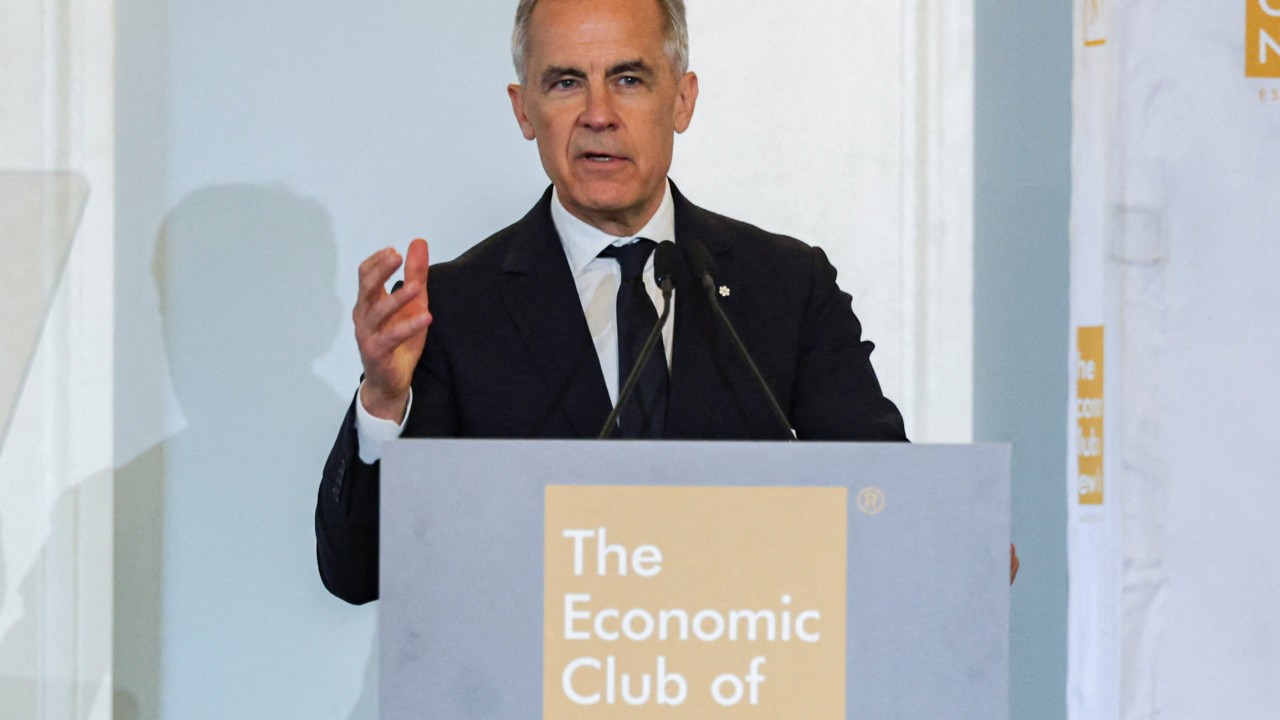
Canadian Prime Minister Mark Carney called for a “new partnership” with the United States to “help make America great again”, in a speech delivered in New York on Thursday.
Carney said that while the world is undergoing a “rupture” as the US transforms its commercial relationships, working closely with Canada in specific sectors, including aluminium, cars and critical minerals, would strengthen both countries.
Asked about his January trip to Beijing to meet Chinese President Xi Jinping, Carney...
France has decided to ban Israel’s far-right police minister Itamar Ben-Gvir from French territory, Foreign Minister Jean-Noel Barrot said on Saturday, adding that this reflected growing anger among governments around the world over the treatment of an activist flotilla heading to Gaza.
“As from today, Itamar Ben-Gvir is banned from entering French territory,” Barrot wrote on X.
“Along with my Italian counterpart, I am asking the European Union to also take sanctions against Itamar...
US House Foreign Affairs Committee Chairman Brian Mast has warned US Secretary of State Marco Rubio of “Chinese malign influence” in a bid for a major contract in Argentina, according to a letter seen by Reuters.
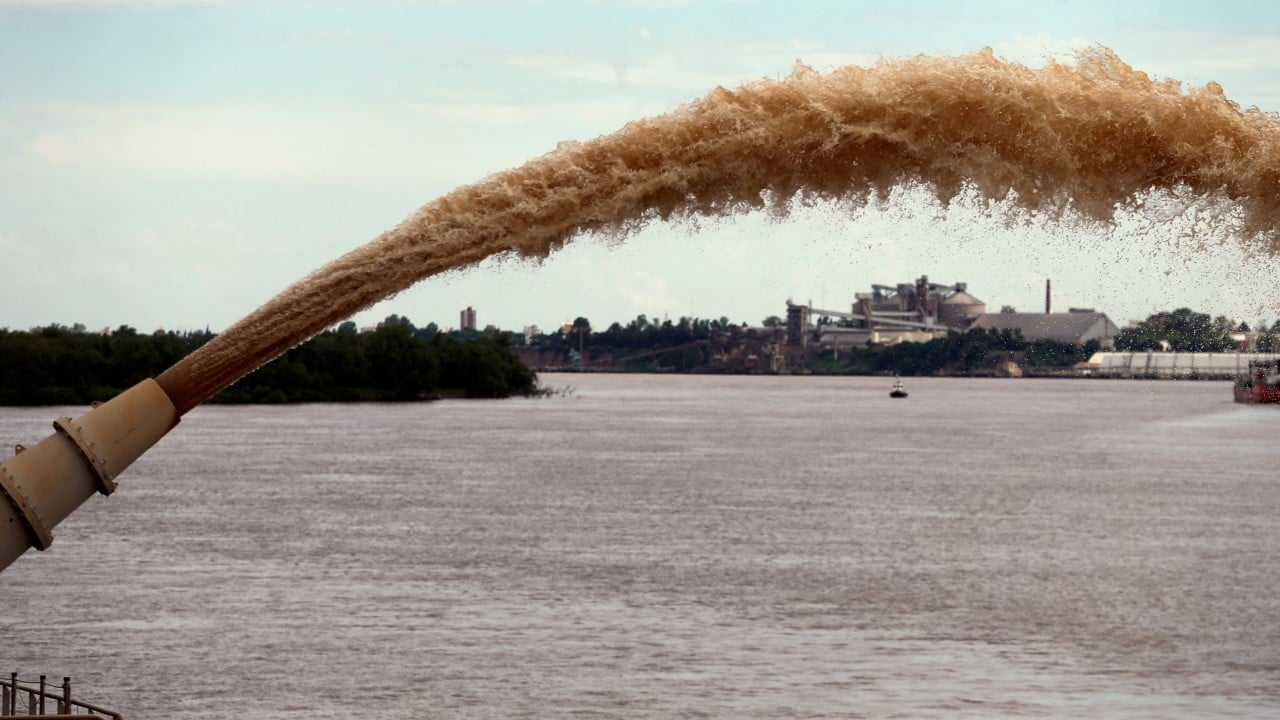
The April 23 letter concerns an auction for a 25-year contract to dredge and operate Argentina’s Parana River, a vital waterway for most of the country’s agricultural exports, that Argentina estimates will reach US$10 billion in investment.
The terms of the tender, which is in its...
Residents of Gaza, south Lebanon, northern Israel and Kuwait were all under fire this week despite United States-arranged ceasefires supposedly in force in their regions.
Israeli airstrikes hit Gaza and Lebanon, with Israeli forces still actively deployed in both places. Hezbollah rockets struck northern Israel, and Iranian attacks hit Kuwait’s international airport.
The continued violence prompted US President Donald Trump to comment on Wednesday that ceasefires in the Middle East involved “shooting in a more moderate manner” rather than a total halt in fighting.
Three truces his administration has negotiated were meant to have stopped the warfare. But while major fighting has greatly reduced, munitions are still falling and people still dying.
This is how the ceasefires — and ongoing fighting — are playing out:
What’s happening with the ceasefire in Gaza?
The US brokered a ceasefire between Israel and Hamas on October 10, 2025, ending major warfare.
The ceasefire deal involved a halt to all fighting, Hamas releasing all its remaining hostages in Gaza, Israel freeing Palestinian prisoners, a phased Israeli withdrawal, ramped-up aid and the opening of a crossing into Egypt.
A Trump plan to build out the ceasefire was meant to involve agreements on disarming Hamas, a new Gaza government without the group’s involvement, reconstruction of Gaza and a complete Israeli withdrawal.
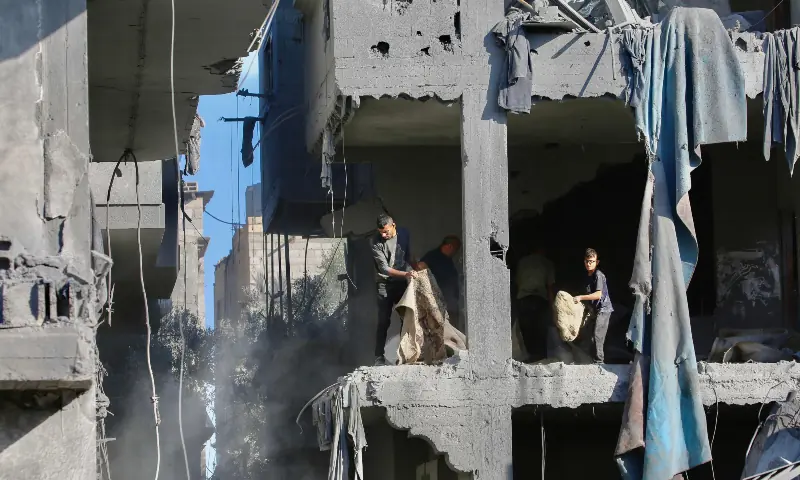
Palestinians clear debris at the site of an Israeli strike on a house whose residents were warned to evacuate before the attack, in Zawaida, central Gaza Strip on June 5, 2026. — AFP
However, while all hostages were released, the amount of aid reaching Gaza has not substantially increased. Hamas has not agreed to disarm. Reconstruction has not begun, and Israel has expanded its control of the territory.
Israeli airstrikes on Gaza have continued, killing more than 900 Palestinians since the truce, including nine on Thursday. Sporadic Palestinian attacks have killed four Israeli soldiers in Gaza.
Why is there still warfare in Lebanon?
After fighting in 2024, a ceasefire between Israel and Lebanon’s Hezbollah was only partially implemented, with both sides accusing the other of violations.
Open warfare began again in March after war against Iran erupted, with Hezbollah firing into Israel and Israeli forces seizing swathes of southern Lebanon and pounding other areas with airstrikes.
Trump announced a 10-day ceasefire in Lebanon on April 16 after rare contacts between representatives of the Israeli and Lebanese governments. Intense fighting continued in the south, but Israel mainly refrained from striking Beirut.
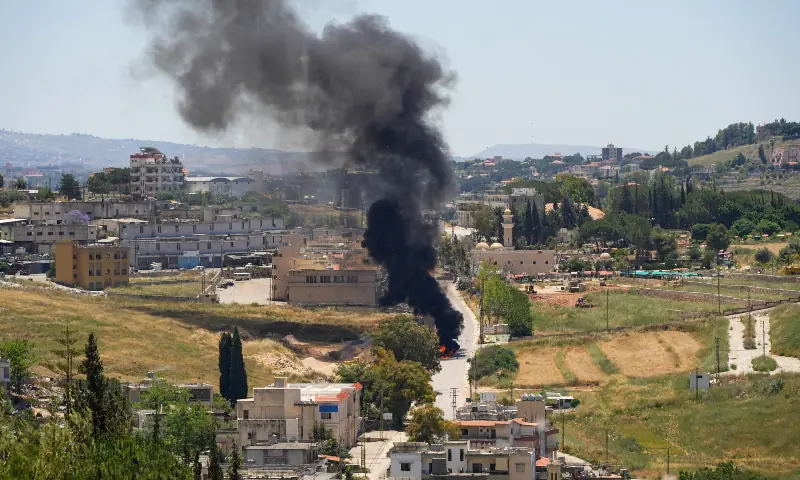
Black smoke billows at a strike scene following an Israeli strike on a car as seen from Nabatieh, Lebanon on June 5, 2026. — Reuters
Since April 16, Israeli strikes have killed hundreds of people, bringing the total toll to more than 3,500 since March 2, according to Lebanese authorities, whose data does not distinguish between civilians and combatants. Israel says 26 of its soldiers and four civilians have been killed in Hezbollah attacks since March.
Iran wants a ceasefire in Lebanon to be part of any deal to end its war with the United States and Israel and to reopen the Strait of Hormuz.
On Wednesday, Trump announced that Lebanon and Israel had agreed to implement a new ceasefire contingent on Hezbollah leaving southern areas. Israel says it can still carry out military operations despite the ceasefire and Hezbollah has rejected the truce. Fighting continues.
Will the US and Iran cement their ceasefire?
The US and Israel attacked Iran on February 28, seeking to destroy its nuclear and ballistic missile programmes. Both countries voiced hope the ruling theocratic system would be overthrown.
That followed a 12-day war last year in which Israel, later joined by the United States, struck many of Iran’s nuclear facilities and military leaders.
Despite many of Iran’s senior figures being killed, it has managed to close off the Strait of Hormuz, throttling Gulf energy exports and hitting the global economy.
The US announced a ceasefire with Iran in early April, with talks to follow on a lasting end to hostilities, the reopening of Hormuz, the end of a US blockade on Iranian ports and a pathway to negotiations on Iran’s nuclear programme.
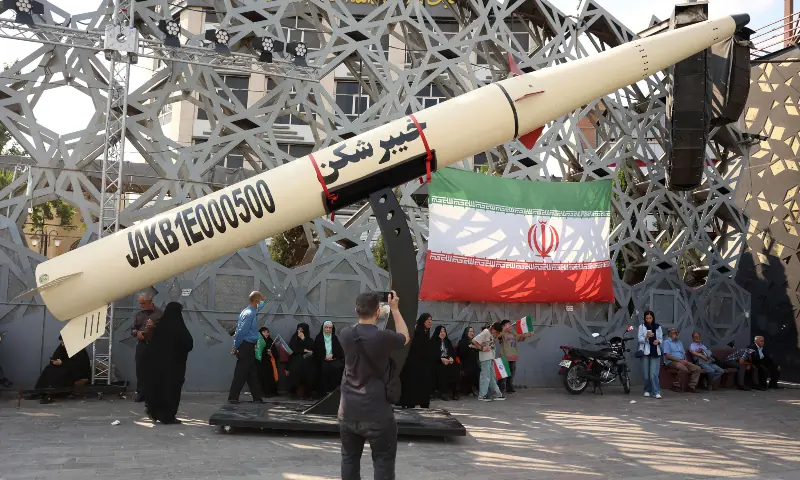
Iranians stand next to a symbol of a Kheibar missile as they take part during a rally in support of the country’s supreme leader Mojtaba Khamenei and commemorate Eid al-Ghadir in Tehran on June 4, 2026. — AFP
However, despite repeated rounds of indirect talks mediated by Pakistan and Qatar, there has been no fuller agreement yet. A deal would likely put off negotiation on the nuclear issue to a later stage.
Meanwhile, the sides have repeatedly exchanged fire, with Iran also attacking Gulf states including Kuwait this week.
Why haven’t the ceasefires been effective?
All three deals have come unstuck in their first phase, with interim arrangements failing to move towards more lasting ceasefires.
In each case, the combatants have been unwilling to accept painful concessions required to move beyond the first phase of transitional ceasefires.
At times, they have turned to military action to try to advance goals they had to set aside when the truces were agreed or to test the boundaries of the agreements.
“When there’s no movement and there’s no political horizon, it’s very difficult for a ceasefire to hold, because there’s no real incentive for the parties to that ceasefire to continue abiding by it if it doesn’t actually lead to any changes,” said Urban Coningham, research fellow at the Royal United Services Institute in London.
The diminishing influence of international bodies like the United Nations and the growing assertiveness of regional powers have also made it harder for long-term agreements to stick, he said.
A 7.8-magnitude earthquake in the southern Philippines on Monday killed at least 31 people, according to provincial authorities, after toppling buildings and sparking tsunami warnings across the region.
National disaster authorities said at least a dozen people were still missing, while 134 had sustained injuries.
Philippine authorities urged people in affected coastal regions to move to higher ground after the offshore quake hit south of General Santos, a city of about 720,000, where at least nine were killed.
A series of powerful aftershocks rocked the area from about two hours after the first quake, according to the United States Geological Survey, with the largest measuring 6.5 magnitude.
In General Santos, an AFP journalist watched on Monday afternoon as rescue workers dug through the rubble of a popular grocery store chain in a desperate bid to reach the bodies of two employees buried beneath.
Rene Punzalan, disaster chief for hard-hit Sarangani province, told AFP 14 people had died in Glan municipality alone when a landslide buried their homes at the foot of a mountain.
“The landslide happened immediately after the earthquake, so many lives were lost,” he said, adding that some areas had yet to report if they had sustained casualties.
“The greatest challenge is communication. The power was cut, so it’s hard to get updates,” Punzalan said.
“We’re worried about aftershocks,” he added.
“We can feel the fear of the residents.” Videos posted to social media and verified by AFP showed a shopping centre with a Jollibee fast food restaurant reduced to rubble in General Santos City, while a school building that officials said was unoccupied crumpled in another.
“Lord, it has really collapsed! … The building has really collapsed!” someone can be heard shouting as the abandoned school structure topples.
In another video verified by AFP, young schoolchildren could be seen screaming in the arms of their teachers as the quake violently swayed them back and forth on the ground.
A flimsy metal structure in the background collapsed as the video uploaded to the school’s official Facebook page came to an end. An accompanying caption said no one was under the structure when it fell.
‘Evacuate now’
Punzalan, the Sarangani disaster chief, told AFP that more than 2,000 people evacuated due to a morning tsunami warning were now awaiting a green light to return to their homes.
“[Authorities] are still assessing the situation now if it will be OK to send them home,” he said.
A notice from the Pacific Tsunami Warning Centre had said tsunami waves were possible along the coasts of the Philippines, Indonesia, Palau, Taiwan and Papua New Guinea.
But by mid-afternoon, the Philippines and other countries had cancelled their warnings. Waves that did reach the Pacific coast of Japan, where authorities had issued a tsunami advisory, were reported to be no higher than 20 centimetres.
’We will not leave Mindanao behind,’ president says
President Ferdinand Marcos Jr ordered an immediate disaster response in Mindanao, an island the size of South Korea, with agencies directed to prepare relief supplies and evacuation centres and be ready for possible rescue operations.
“The national government is moving and we will not leave Mindanao behind,” he said in a statement. Marcos, who suspended classes across Mindanao island on what was to have been the first day of school, had also called on residents in coastal areas to evacuate immediately.
“Move to higher ground now. Do not wait,” he said. “Your life is more important than anything left behind.”
The airport in General Santos, meanwhile, has been closed until further notice, officials said. A video verified by AFP showed what appeared to be chunks of ceiling that had collapsed onto the baggage claim area.
This comes eight months after the Philippines suffered its deadliest tremor in 12 years, when a shallow 6.9-magnitude quake hit off the island of Cebu, killing 79 people.
Two powerful quakes struck Mindanao two weeks after that, the strongest at a magnitude of 7.4. The Philippines and Indonesia experience hundreds of quakes each year and sit on tectonically complex parts of the Pacific Ring of Fire, a seismically active belt stretching from South America to the Russian Far East.
The Philippine seismology agency said at least nine strong aftershocks were felt across Mindanao on Monday morning, the strongest of which was a magnitude-6.7.
A hospital in General Santos was evacuated due to concerns about cracks on higher floors, while one of the buildings at the city’s Notre Dame of Dadiangas University collapsed, though no one was inside.
“I had to duck and shelter myself under the table. And it was very long and strong,” the university president, Manuel de Leon, told broadcaster DZMM.
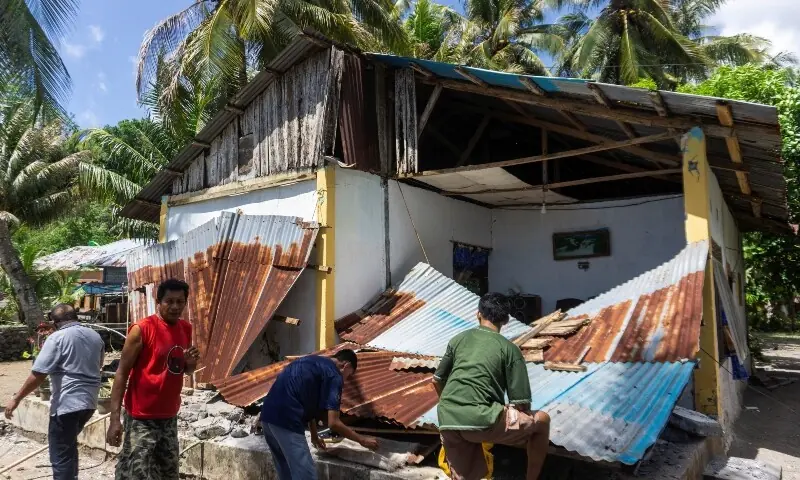
Images from authorities in Sarangani province showed damaged shopfronts with collapsed signs, smashed windows, and piles of rocks from crumbled concrete.
Military deployed; Malaysia offers assistance
The Philippine military said its disaster response units had been deployed to affected areas.
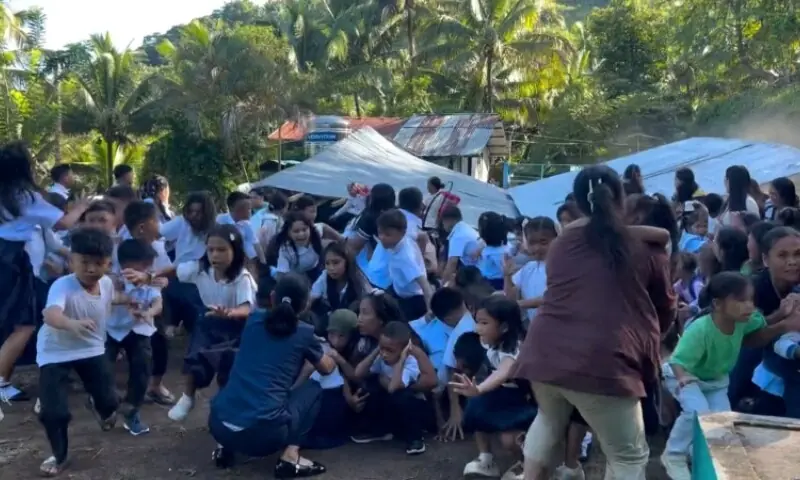
A video shared by a local school the moment the quake struck showed a large group of children sitting on the floor swaying rapidly from side to side, some hugging teachers, before fleeing en masse as a makeshift shelter collapsed behind them.
Children react as the roof of a structure at Deped Mahayahay Elementary School collapses during an earthquake in Digos, Mindanao Island, Philippines, June 8, 2026. —Reuters
Benjie Ancheta, police chief of Sarangani’s Alabel town, said the quake occurred during a police flag-raising ceremony, causing some people to faint.
“This is the strongest earthquake we’ve experienced,” Ancheta said by phone. Malaysian Prime Minister Anwar Ibrahim said his government was ready to assist the Philippines.
“I pray for the safety and well-being of all those affected, wishing them strength and courage in the difficult days ahead,” Anwar posted on X.
The Indian retailer posted a near-fourfold jump in quarterly profit on Thursday, aided by its rollout of celebrity labels like Kay Beauty and Fenty Beauty.
 Login
Login