
Reading view

SpaceX is poised to go public and test the latest version of its massive Starship rocket amidst criticism about its environmental impact
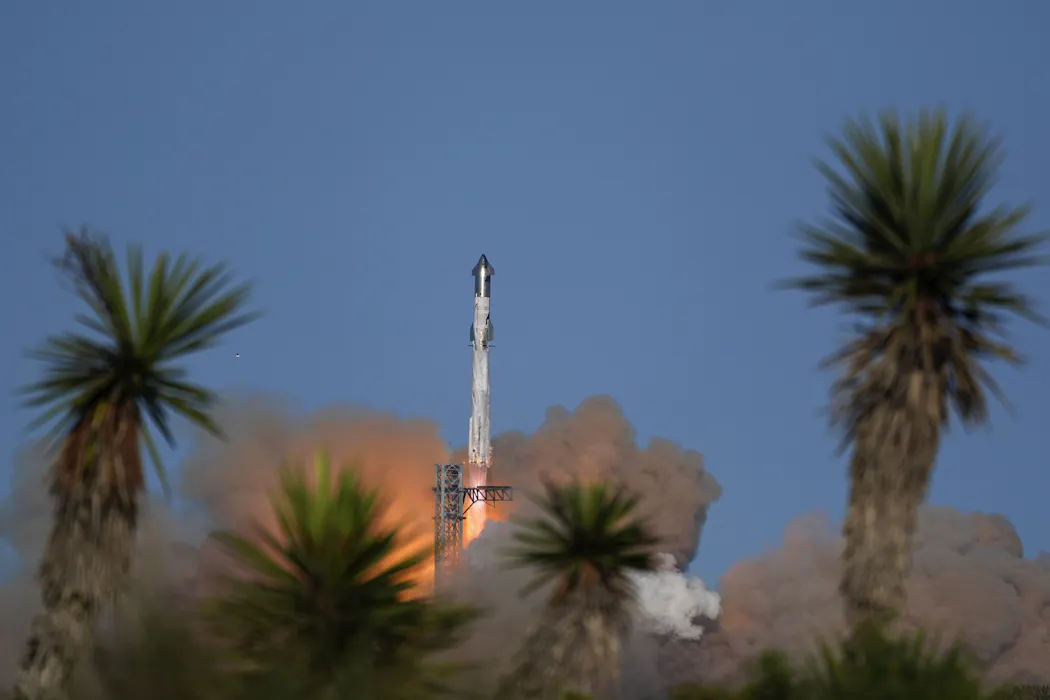
An earlier version of SpaceX's Starship rocket launched from the Starbase facility in Boca Chica, Texas during a test in November 2024. AP Photo/Eric Gay

SpaceX is proceeding with two major milestones with consequences that could be, at a minimum, global. The company, owned by Elon Musk and valued at upwards of US$1.5 trillion, released its financial details on May 20, 2026 in advance of an IPO scheduled for June 12 and anticipated to be the largest in history. Meanwhile, as soon as this evening, May 21, SpaceX plans to test the latest version of its Starship rocket – also the largest of its kind in history – and designed to facilitate a human migration to the Moon and Mars.

But underlying SpaceX’s surges forward are tensions between the company’s activities and concerns about the effects they may be having on the environment.

These tensions were on display in April 2026 as protests by environmental activists took place outside Starbase, its development and testing facility in South Texas, while SpaceX was courting investors.

The Starbase facility is located in a sensitive wetland area along the Gulf Coast that serves as a habitat for birds and a nesting site for sea turtles. Concerned about pollution and launch debris damaging these species and others, environmental groups have filed multiple lawsuits against the company. Federal and state agencies have also fined SpaceX for polluting local waterways.

This conflict is a microcosm of a larger issue: whether the space ambitions of Silicon Valley and Wall Street are fundamentally at odds with the concerns of environmental activists.

Activists protested outside SpaceX’s Starbase facility ahead of the company’s IPO.

Space and conservation at odds?

On the one hand, technologies developed for space often have benefits on Earth. And Musk has argued that SpaceX’s long-term goal of building a city on Mars would help protect life, including humans and other species, by ensuring their survival in the event of an Earthly disaster. But space exploration can also do environmental harm, from space debris causing damage to marine or terrestrial ecosystems to rockets producing pollutants and greenhouse gases, which can contribute to climate change.

As an evolutionary ecologist who spent years studying rainforest insects and more than a decade considering the consequences of space settlement, I can understand both sides of this argument.

I’ve been to Starbase to watch a Starship launch and seen the sensitive wetlands surrounding the launch pad. But I’ve also studied the fossil record and understand how events like the asteroid impact 66 million years ago devastated many of the dominant life forms alive at the time, like most dinosaurs. So I understand the motivation to become a multiplanetary species to help avoid that fate.
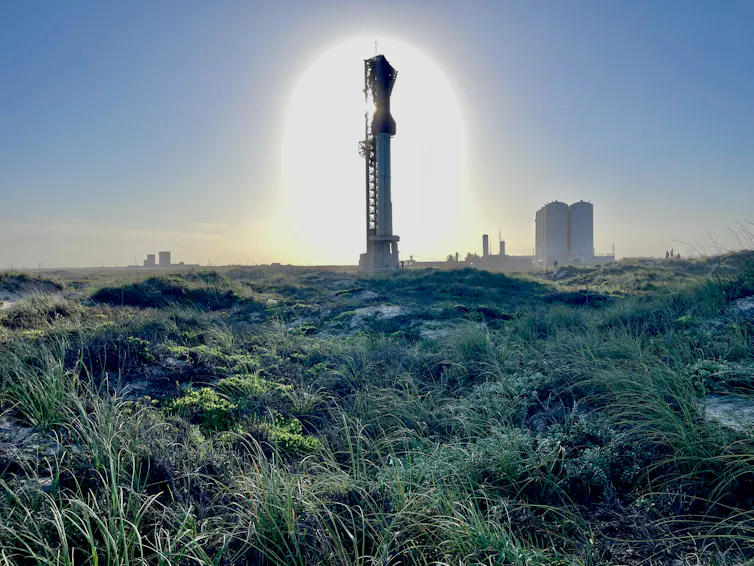
A large rocket sits on a launch pad in the midst of a wetland
SpaceX’s Starbase facility, where its Starship rockets are built and where test launches occur, is surrounded by coastal wetlands that provide habitat for animals including birds and sea turtles. Scott Solomon

Environmental costs of space travel

But does the very act of going to space cause more environmental harm than good?

Depending on the type of fuel used, rocket launches can release pollutants such as black carbon, chlorine gas, methane and carbon dioxide that can contribute to ozone depletion and climate change. However, some liquid fuels like methane – which is what SpaceX uses for its massive Starship rocket – are cleaner-burning, producing mainly water and carbon dioxide as byproducts.

There can also be local ecological impacts, including damage to nearby vegetation or harm to wildlife, such as the destruction of bird nests. Noise pollution from the sound of a launch can stress some animals or interfere with their natural behaviors.

As the frequency of rocket launches increases, these potential impacts are becoming a greater concern. In 2025, there were a total of 324 launches worldwide, which sent a staggering 4,510 objects into space. Both were new records. And these numbers don’t include suborbital launches – those that involve a shorter, up-and-down trajectory – or test launches, such as those for SpaceX’s Starship.

Benefits of space exploration

But there can also be ways in which space exploration directly benefits people back on Earth.

Technological innovations created for living in space have already directly benefited some sustainability efforts on Earth. These include methods for recycling water and managing waste.

Space technologies such as satellites have also become essential tools for researchers who study and monitor our planet’s ecosystems and how they are changing.

NASA is working with SpaceX and other commercial space companies to build a base on the Moon within the next decade. Having people live on the Moon will require further technological developments that could have helpful spinoffs to use back on Earth.

For example, finding ways to grow food in such an austere environment could lead to new ways to feed people in regions on Earth where agriculture has traditionally been limited by environmental constraints.

Looking back at the Earth

Another way space exploration could benefit conservation efforts is by motivating people to be more environmentally minded.

The environmental movement that began in the 1970s was inspired in part by the perspective offered by the Earthrise photo taken during the Apollo 8 mission in 1968. Seeing the Earth with your own eyes can be even more moving, according to those who have experienced it. They point out that borders between nations are largely invisible, but that human impacts on the planet like deforestation, wildfires and the bright lights of cities at night can be quite evident.
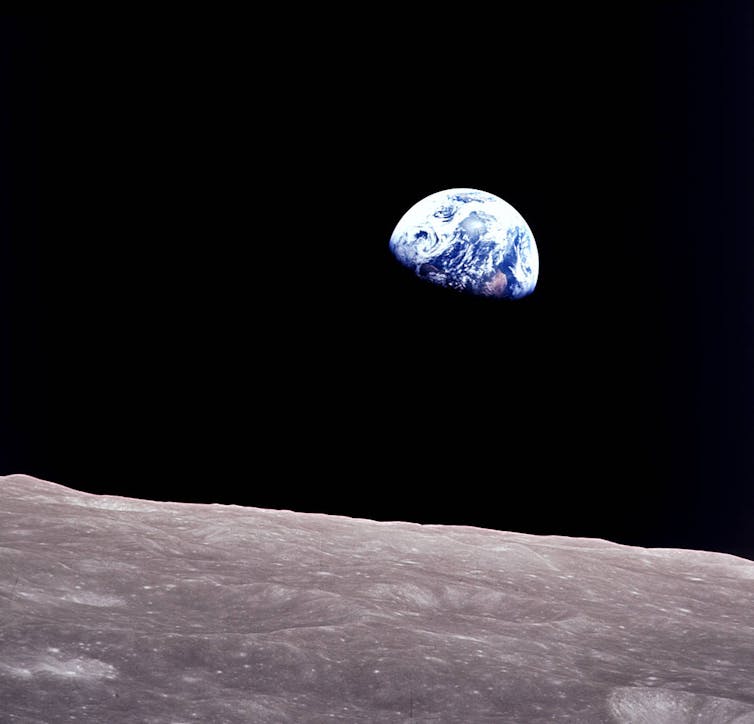
The white and blue cloudy Earth is visible above a gray edge of the Moon's surface
The Apollo 8 ‘Earthrise’ image, showing the Earth over the horizon from the Moon. This image, acquired by William Anders, became famous for its portrayal of the Earth in its planetary context. NASA

Also visible from space is a thin, blue line that seems to hover just above our planet’s surface: the atmosphere. It’s a reminder that there is only a narrow zone that allows life on Earth to flourish, and that we must protect it.

Astronauts frequently come back to Earth more motivated to protect the environment. Some, like Scott Kelly and Nicole Stott, became dedicated environmentalists after the experience of being in space. As space becomes more accessible and a greater number of people have these transformative experiences, there could be more support for conservation and sustainability.

Do these benefits outweigh the environmental costs? Ultimately, whether going to space is a net benefit or a cost to the environment may come down to individual choices. The choice of rocket fuel matters. But so does the location of launch sites. Those near the coast are better for human safety because falling debris is more likely to come down over the ocean than a city. But some coastal locations host more significant wildlife habitats than others.

What goes up…

Decisions about what to send to space are also important. After all, what goes up must come down. Debris from space, such as defunct satellites, can burn up during reentry, but occasionally pieces reach the ground intact. When they do they can create litter, not to mention the potential for causing damage to people, property and wildlife.

Objects that remain in orbit also contribute to concerns about polluting the space environment, potentially making it more dangerous to travel into space because of the risk of high speed collisions.

Perhaps new technologies to help advance human pursuits in space, like living on the Moon, will help solve some of our environmental challenges. The increasing number of people who get the opportunity to travel to space may be so profoundly affected by the experience that they take actions with environmental benefits.

As the space economy continues to develop, the balance between expanding humanity’s presence beyond our home planet and concerns about protecting it will only intensify.

The Conversation

Scott Solomon has received funding from the National Science Foundation. He is the author of the book "Becoming Martian: How Living in Space Will Change Our Bodies and Minds" published by MIT Press.

  •  

The Social Security trust fund will run dry in 2032 – what that means for retirees and workers who hope to retire

Social Security has lasted as long as it has thanks to the bipartisan deal that President Ronald Reagan and congressional leaders hammered out in 1983. AP Photo/Ed Reinke

Every year, the panel overseeing the trust fund for Social Security and Medicare publishes its annual financial report. And every year, its members make clear that the programs’ reserves will be exhausted by the time Gen X retires – meaning they will no longer be able to pay full scheduled benefits by the mid-2030s.

While many media outlets cover this news as a one-day story, this year’s report should be seen as a much more ominous warning. The latest projection, released on June 9, 2026, is that the Social Security trust fund will be depleted by 2032, at which point incoming revenue can pay only about 78% of scheduled benefits. For the 1 in 5 Americans who receive Social Security, that means a potential across-the-board benefit cut of roughly 22% unless Congress acts.

What makes this year’s warning especially troubling is that the deterioration isn’t driven by a temporary downturn but by deeper demographic and policy changes: Fewer expected births, lower immigration, slower growth in the workforce and reduced future revenue from the taxation of Social Security benefits.

The fundamental challenge, though, has been obvious for years. There are too few current and future workers to support the growing number of retirees. And now, there are fresh headwinds that make the math even more daunting. Record debt levels and elevated interest rates are reducing the fiscal resources available for lawmakers to implement solutions, while declining immigration and birth rates mean that the supply of current and future workers is even smaller than previously projected.

These pressures don’t mean Social Security will disappear. It will always exist as long as workers and employers pay into the program. But for anyone who expects to retire starting in the early 2030s, the potential for a cut to benefits is real.

As a scholar of public finance, I argue that this looming deadline recalls the crisis policymakers faced in the early 1980s. Once again, the issue of reform is about to move from a distant worry to an immediate political problem. And failure to reach a bipartisan compromise will bring both economic pain and political damage.

Fresh pressures

In 1983, President Ronald Reagan and House Speaker Tip O’Neill struck their historic bipartisan compromise to extend the life of the program by raising taxes and the eligibility age. This time, the challenge will be far harder.

To start with, the federal government now carries a much higher debt burden, topping 100% of annual GDP, compared to about 35% in the early 1980s. And the Congressional Budget Office projects large deficits adding to that debt in the coming decades, with the annual budget shortfall rising from US$1.9 trillion in 2026 to $3.1 trillion in 2036 under current tax and spending laws. Public debt is projected to rise to 120% of GDP by 2036, leaving less and less fiscal room to patch Social Security.

Servicing that debt is also becoming more expensive. Although the Federal Reserve trimmed interest rates in 2024 and 2025, the cost of borrowing remains elevated as concerns over inflation grow, exacerbated by oil price spikes and the crisis in the Strait of Hormuz. Markets now expect the Fed to hold rates steady for a while, and some investors are betting it may even raise them later this year.

The demographic picture is also unforgiving. Baby boomers continue to retire, Americans are living longer, and birth rates have fallen sharply. Since 2007, the U.S. birth rate has fallen by 23% and has remained below replacement level for years. The result is fewer future workers paying payroll taxes, even as the number of retirees grows.

A final factor is immigration.

While other aging countries have turned to immigration to shore up public finances and revitalize their labor force, the U.S. has taken the opposite approach. According to the U.S. Census Bureau, net migration to the U.S. is estimated to have fallen by 2.4 million between 2024 and 2026, amid the Trump administration’s crackdown on unauthorized migrants and its efforts to discourage green card applications.

The new report referenced these challenges, noting that lower immigration and fertility estimates will have “a negative projected effect on Social Security’s financial status.” It also addressed the effects of the massive policy bill that President Donald Trump and the Republican Congress pushed through in 2025, which among other things cut the income tax that retirees pay on Social Security benefits.

The near-term economic changes of that legislation will “have a positive effect,” the report said, but in the longer run it will also weaken the program’s finances.

A slow-motion crisis

It’s important to remember that before the 1983 deal was sealed, Social Security was far closer to insolvency than it is today. The program was nearing the point where it could no longer pay full benefits on time.

The problem was caused by a mix of high inflation, weak wage growth, the recessions of the 1970s and early 1980s, and mounting demographic pressure. Americans were living longer, birth rates were falling, and the number of workers supporting each beneficiary was declining.

The 1983 reform was negotiated under Reagan, a Democratic-controlled House and a Republican-controlled Senate, with help from a bipartisan commission led by future Federal Reserve Chair Alan Greenspan. It addressed the program’s immediate financing crisis by accelerating scheduled increases in the payroll tax and phasing in a higher full retirement age, from 65 to 67. It also anticipated the retirement of the baby boomers and the growing burden they would place on future workers.

The historic overhaul, which came only after months of wrangling, bought the country time. Just as important, it showed that with bipartisan support, a Social Security deal is possible. But it also underscored the danger of waiting too long. When policymakers delay, the menu of options gets smaller, the required changes get larger, and the economic and political pain increases.

Social Security’s next crisis won’t arrive suddenly. It’s arriving in slow motion. The question isn’t whether the program can be fixed, but whether elected officials will act while they still have room to choose among less costly options. I believe the real lesson of 1983 is that waiting until the last minute will turn a chance for reform into a political emergency, and little good comes from governing by crisis.

The Conversation

John W. Diamond does not work for, consult, own shares in or receive funding from any company or organization that would benefit from this article, and has disclosed no relevant affiliations beyond their academic appointment.

  •  

SpaceX is poised to go public and test the latest version of its massive Starship rocket amidst criticism about its environmental impact

An earlier version of SpaceX's Starship rocket launched from the Starbase facility in Boca Chica, Texas during a test in November 2024. AP Photo/Eric Gay

SpaceX is proceeding with two major milestones with consequences that could be, at a minimum, global. The company, owned by Elon Musk and valued at upwards of US$1.5 trillion, released its financial details on May 20, 2026 in advance of an IPO scheduled for June 12 and anticipated to be the largest in history. Meanwhile, as soon as this evening, May 21, SpaceX plans to test the latest version of its Starship rocket – also the largest of its kind in history – and designed to facilitate a human migration to the Moon and Mars.

But underlying SpaceX’s surges forward are tensions between the company’s activities and concerns about the effects they may be having on the environment.

These tensions were on display in April 2026 as protests by environmental activists took place outside Starbase, its development and testing facility in South Texas, while SpaceX was courting investors.

The Starbase facility is located in a sensitive wetland area along the Gulf Coast that serves as a habitat for birds and a nesting site for sea turtles. Concerned about pollution and launch debris damaging these species and others, environmental groups have filed multiple lawsuits against the company. Federal and state agencies have also fined SpaceX for polluting local waterways.

This conflict is a microcosm of a larger issue: whether the space ambitions of Silicon Valley and Wall Street are fundamentally at odds with the concerns of environmental activists.

Activists protested outside SpaceX’s Starbase facility ahead of the company’s IPO.

Space and conservation at odds?

On the one hand, technologies developed for space often have benefits on Earth. And Musk has argued that SpaceX’s long-term goal of building a city on Mars would help protect life, including humans and other species, by ensuring their survival in the event of an Earthly disaster. But space exploration can also do environmental harm, from space debris causing damage to marine or terrestrial ecosystems to rockets producing pollutants and greenhouse gases, which can contribute to climate change.

As an evolutionary ecologist who spent years studying rainforest insects and more than a decade considering the consequences of space settlement, I can understand both sides of this argument.

I’ve been to Starbase to watch a Starship launch and seen the sensitive wetlands surrounding the launch pad. But I’ve also studied the fossil record and understand how events like the asteroid impact 66 million years ago devastated many of the dominant life forms alive at the time, like most dinosaurs. So I understand the motivation to become a multiplanetary species to help avoid that fate.

A large rocket sits on a launch pad in the midst of a wetland
SpaceX’s Starbase facility, where its Starship rockets are built and where test launches occur, is surrounded by coastal wetlands that provide habitat for animals including birds and sea turtles. Scott Solomon

Environmental costs of space travel

But does the very act of going to space cause more environmental harm than good?

Depending on the type of fuel used, rocket launches can release pollutants such as black carbon, chlorine gas, methane and carbon dioxide that can contribute to ozone depletion and climate change. However, some liquid fuels like methane – which is what SpaceX uses for its massive Starship rocket – are cleaner-burning, producing mainly water and carbon dioxide as byproducts.

There can also be local ecological impacts, including damage to nearby vegetation or harm to wildlife, such as the destruction of bird nests. Noise pollution from the sound of a launch can stress some animals or interfere with their natural behaviors.

As the frequency of rocket launches increases, these potential impacts are becoming a greater concern. In 2025, there were a total of 324 launches worldwide, which sent a staggering 4,510 objects into space. Both were new records. And these numbers don’t include suborbital launches – those that involve a shorter, up-and-down trajectory – or test launches, such as those for SpaceX’s Starship.

Benefits of space exploration

But there can also be ways in which space exploration directly benefits people back on Earth.

Technological innovations created for living in space have already directly benefited some sustainability efforts on Earth. These include methods for recycling water and managing waste.

Space technologies such as satellites have also become essential tools for researchers who study and monitor our planet’s ecosystems and how they are changing.

NASA is working with SpaceX and other commercial space companies to build a base on the Moon within the next decade. Having people live on the Moon will require further technological developments that could have helpful spinoffs to use back on Earth.

For example, finding ways to grow food in such an austere environment could lead to new ways to feed people in regions on Earth where agriculture has traditionally been limited by environmental constraints.

Looking back at the Earth

Another way space exploration could benefit conservation efforts is by motivating people to be more environmentally minded.

The environmental movement that began in the 1970s was inspired in part by the perspective offered by the Earthrise photo taken during the Apollo 8 mission in 1968. Seeing the Earth with your own eyes can be even more moving, according to those who have experienced it. They point out that borders between nations are largely invisible, but that human impacts on the planet like deforestation, wildfires and the bright lights of cities at night can be quite evident.

The white and blue cloudy Earth is visible above a gray edge of the Moon's surface
The Apollo 8 ‘Earthrise’ image, showing the Earth over the horizon from the Moon. This image, acquired by William Anders, became famous for its portrayal of the Earth in its planetary context. NASA

Also visible from space is a thin, blue line that seems to hover just above our planet’s surface: the atmosphere. It’s a reminder that there is only a narrow zone that allows life on Earth to flourish, and that we must protect it.

Astronauts frequently come back to Earth more motivated to protect the environment. Some, like Scott Kelly and Nicole Stott, became dedicated environmentalists after the experience of being in space. As space becomes more accessible and a greater number of people have these transformative experiences, there could be more support for conservation and sustainability.

Do these benefits outweigh the environmental costs? Ultimately, whether going to space is a net benefit or a cost to the environment may come down to individual choices. The choice of rocket fuel matters. But so does the location of launch sites. Those near the coast are better for human safety because falling debris is more likely to come down over the ocean than a city. But some coastal locations host more significant wildlife habitats than others.

What goes up…

Decisions about what to send to space are also important. After all, what goes up must come down. Debris from space, such as defunct satellites, can burn up during reentry, but occasionally pieces reach the ground intact. When they do they can create litter, not to mention the potential for causing damage to people, property and wildlife.

Objects that remain in orbit also contribute to concerns about polluting the space environment, potentially making it more dangerous to travel into space because of the risk of high speed collisions.

Perhaps new technologies to help advance human pursuits in space, like living on the Moon, will help solve some of our environmental challenges. The increasing number of people who get the opportunity to travel to space may be so profoundly affected by the experience that they take actions with environmental benefits.

As the space economy continues to develop, the balance between expanding humanity’s presence beyond our home planet and concerns about protecting it will only intensify.

The Conversation

Scott Solomon has received funding from the National Science Foundation. He is the author of the book "Becoming Martian: How Living in Space Will Change Our Bodies and Minds" published by MIT Press.

  •  
❌