
 Login
Login
Detroit is spending millions on gunshot detection tech – is it an effective tool in the fight against violent crime?
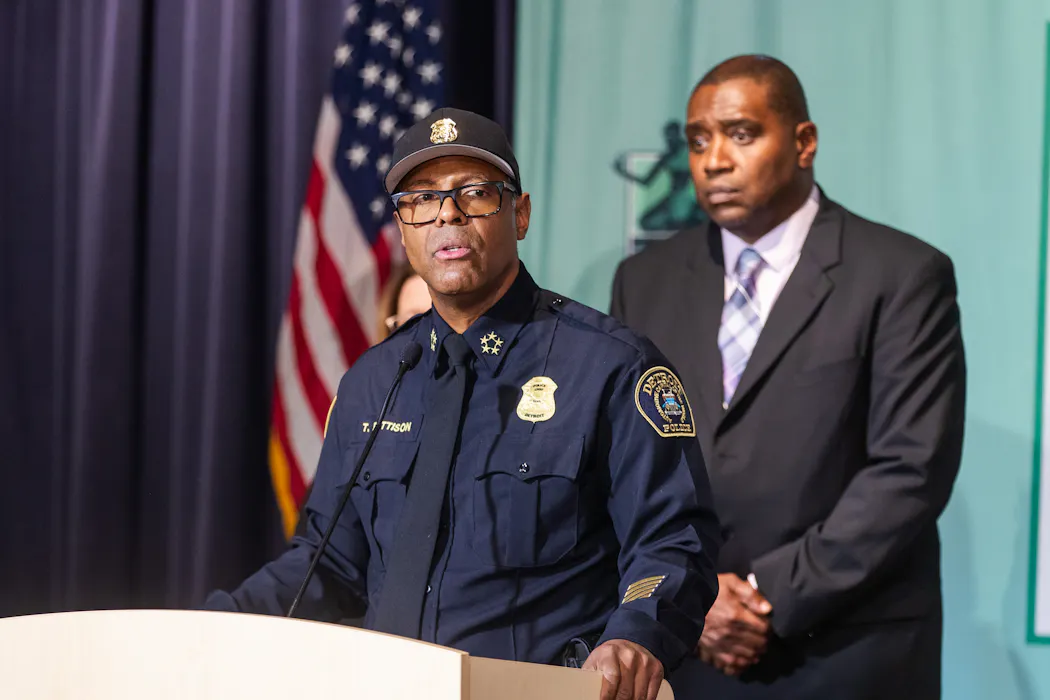
Detroit Police Chief Todd Bettison says alerts from ShotSpotter, a gun detection technology, help officers respond quickly to shootings.
“Without it, I wouldn’t have the closure rate [of resolved crimes] that I have and a lot of families wouldn’t have the justice they deserve,” he said in March 2026, according to BridgeDetroit, a nonprofit news service.
During a Detroit City Council committee meeting on May 18, 2026, police officials said ShotSpotter led to hundreds of search warrants and confiscated guns in 2025.
It’s not clear how many arrests resulted last year. Bettison has been quoted saying that ShotSpotter during the May 18 City Council meeting and 256 during a March 23 budget briefing. We reached out to the Detroit Police Department to clarify the number, but it didn’t respond by our deadline.
The department has requested a nine-month extension for ShotSpotter, which would cost the city an additional $US2.06 million, while it considers other vendors to provide gun detection technology, the Detroit News reported.
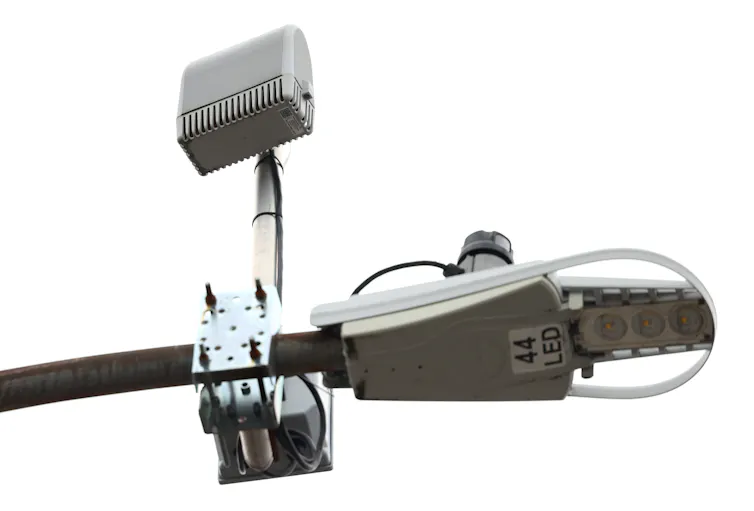
The system uses a network of acoustic sensors to detect, locate and alert police to shots fired. ShotSpotter is in use in more than 180 American cities, according to the company. The technology has been criticized for its high price tag, ineffectiveness in improving public safety and lack of transparency.
Detroit City Council first approved ShotSpotter in 2020, and the system became fully active in 2021. In 2022, City Council members narrowly approved, by a 5-4 vote, expanding the program to more neighborhoods. The technology now covers approximately 39 square miles (about 101 square kilometers), about a third of the city, and is deployed in the neighborhoods police say are most likely to experience gun violence. The contract that expires on June 30, 2026, cost $7 million over a four-year period.
Divya Ramjee and Tian An Wong are part of a team of researchers who studied the effectiveness of gunshot detection technology in Detroit during its first two years. The study is currently under peer review. They answered the following questions for The Conversation Detroit.
How did ShotSpotter affect calls to 911 to report gunshots?
Wong: Our research first looked at calls to 911 reporting gunshots before and after the first deployment of ShotSpotter in Detroit, covering February 2018 to November 2022. This data is available on Detroit’s Open Data Portal. In the areas of Detroit where ShotSpotter was implemented in 2021, calls to 911 to report gunshots initially dropped by 47%. This effect disappeared about after a year, however, and these calls returned to previous levels.
Our study does not cover the 2023 expansion of ShotSpotter in Detroit, though the data is currently available for those interested.
Although ShotSpotter alert time and location data is publicly available, the outcome of the police response to those alerts, is not and the DPD has never released data on the effectiveness of the technology during these first two years of use. To analyze outcomes, we made a Freedom of Information Act, or FOIA, request to the Detroit Police Department.
Did the technology affect officer response times or the rates of arrests for violent crime in Detroit?
Wong: By analyzing the FOIA data, we found that of the 5,853 ShotSpotter alerts from that first deployment, just two alerts, or 0.03%, resulted in at least one arrest. Additionally, 798 alerts, or 13.63%, resulted in at least one firearm recovered.
Those numbers are obviously low. However, we don’t believe that arrest rates should be used as a measure of ShotSpotter’s success. We need to understand the nature of those arrests and if they helped bring down gun-related incidents in the community.
We did not find any difference in officer response times. Some have argued that the alerts generate responses to events that would otherwise not have been reported due to lack of trust in law enforcement, but it is difficult to verify this claim.
I’d argue the request to renew ShotSpotter is not based on a rigorous review of the technology’s impact. In addition to ShotSpotter, Detroit also introduced a community violence intervention program in 2023 with a similar name – Shot Stoppers. That program determines grant renewals to participating community organizations based on a drop in homicides and nonfatal shootings in their geographic area.
But the reality is that homicides in Detroit hit a 60-year low in 2025, and nonfatal shootings are also significantly down. This tracks with nationwide crime trends. Our research tries to get at the role ShotSpotter played in this reduction, if any.
What do you make of Bettison’s statement that ShotSpotter alerts led to dozens or hundreds of arrests in 2025?
Wong: The arrest data that we obtained from the Detroit Police Department covers February 2018 to November 2022. Bettison is referring to a later time period – after the expansion of the coverage area – so his numbers don’t necessarily contradict ours. The only way to know for sure is to FOIA data for this most recent time period and fact-check what the chief is saying. This process is currently underway.
In the meantime, two arrests, as we found in the actual data we obtained from the police department, compared with 78 – or even 256, as Bettison as said – seems like a big jump, and more context is needed.
Is there any evidence that ShotSpotter saved lives of gunshot victims?
Ramjee: Evidence is inconclusive at best. Some research supports that the technology can potentially increase the likelihood of police transport of gunshot victims to hospitals and reduce EMS response times for victims, which could potentially improve survival outcomes. However, research hasn’t proved a corresponding reduction in mortality rates in areas where ShotSpotter has been deployed across the U.S.
How is ShotSpotter received in other U.S. cities?
Ramjee: There are continued issues with the accuracy of sensors, including false positives and missed gunshot detections, that complicate its practical effectiveness.
The lack of evidence that ShotSpotter improves public safety, given its high cost, has prompted a number of communities to reassess its value. Chicago; San Antonio; Houston; Baton Rouge, Louisiana; Charlotte, North Carolina; and Portland, Oregon have either terminated existing agreements or indicated that they do not intend to renew them upon expiration.
In New York, the city comptroller indicated that available evidence from a June 2024 audit did not support continued investment in ShotSpotter. Nevertheless, the New York City Police Department opted to renew its contract for an additional three-year term, at a cost of approximately $21.8 million.
What happens to the data ShotSpotter collects? Specifically, does the city of Detroit own it, can researchers access it, and how does that compare to 911 data?
Ramjee: ShotSpotter data ise not broadly shared with the public. The company, which rebranded as SoundThinking, Inc. in 2023, considers the raw audio from sensors, the underlying algorithms and other system-generated data to be proprietary. SoundThinking states that the company only shares alerts, gunshot locations, timestamps and short, isolated audio clips with police agencies. Prosecutors, defense attorneys and courts may also access this incident data as part of criminal cases, depending on legal rules.
Cities and municipalities themselves do not necessarily obtain full ownership of ShotSpotter data even when data is shared with them. In most cases, contractual agreements dictate the access and use of incident data by the respective jurisdictions, and there are generally constraints on how they can store, analyze or publicly release the data.
For 911 call data in Detroit, access to the data depends on the level of detail required. The city’s Open Data Portal provides a large dataset of law enforcement-serviced 911 calls that includes time of incident, call type, response metrics and ShotSpotter-initiated 911 alerts, but it redacts information that exposes a person’s identity.
Obtaining the actual dispatch logs or the arrest outcomes from ShotSpotter alerts typically requires submitting a FOIA request. That process can be tedious, may involve delays due to issues with resources, outdated technology or flawed data reporting practices, and may ultimately result in partial data or data with redactions.

Tian An Wong received funding from the American Council of Learned Societies (ACLS).
Divya Ramjee is affiliated with the Center for Strategic and International Studies.



_speaking_during_Southwest_Detroit_flood_press_conference_held_on_February_17,_2025_(54334410463).jpg)
