Soccer has changed dramatically in many ways since then – on and off the pitch.
As the US (with Mexico and Canada) gets set to host the mega-event once again, more than anything, the tournament’s defining change since 1994 is its sheer scale-up.
The scale-up
This scale-up can be clearly quantified. The 1994 tournament featured 52 matches across 32 days with 24 teams. By contrast, the 2026 event (the first three-nation World Cup) will involve 78 matches in the US alone, over 39 days.
The competition’s 48 teams are divided into 12 groups, with progression to the knockout stage awarded to the top two teams in each group along with the eight best third-placed teams.
In terms of games, the tournament has doubled in size since 1994.
The scale-up is not accidental. It has been driven by the twin forces of globalisation and commodification, alongside a deliberate strategy by FIFA president Gianni Infantino to both protect and extend football’s commercial dominance.
Central to this has been expanding the tournament into non-traditional markets, most notably the US – the world’s largest sports economy – thereby generating substantial financial returns and commercial interest.
Infantino and FIFA have faced sustained criticism in global media – ranging from controversial symbolic gestures involving Donald Trump to concerns over ticket pricing. But the broader outcome is clear: the World Cup has become more expansive and commercially powerful than ever.
At the same time, FIFA has deepened its claim to global reach by incorporating smaller nations such as Cape Verde and Curaçao, whose combined populations are well under one million.
The scale-up rests on two core dynamics. First, more matches mean more broadcast content, and media rights remain FIFA’s largest revenue stream. Expanding to 104 matches significantly increases the value of rights deals, particularly across participating nations.
Second, expansion broadens FIFA’s political base. By granting more countries access, it strengthens the influence of nations previously on the margins of global soccer.
Within FIFA’s voting structure, each member association carries equal weight: the vote of powerhouse Brazil counts the same as that of Curaçao, a recent entrant with a population around 150,000.
At the same time, a larger tournament increases the likelihood that major population centres and emerging consumer markets (such as China, India, and Southeast Asia) will participate, further expanding the World Cup’s commercial reach.
The unresolved question for FIFA is one of limits: how far can expansion go before it dilutes the exclusivity and premium value of the World Cup?
The World Game in the US
Soccer in the US has grown markedly since the 1994 event. In many ways, this growth reflects the original intent behind awarding the 1994 World Cup to the States.
Major League Soccer (MLS), launched in 1996, is now firmly established within the US sporting landscape.
The pathway has also strengthened, with college athletes feeding into MLS and increasingly major European leagues, alongside the expansion of secondary professional and semi-professional tiers.
Growth has been especially strong in the women’s game thanks to significant new investment.
The US men’s team, currently ranked 16th in the world, could plausibly make a deep run in 2026.
As in 1994, matches this year will largely be staged in football stadiums to maximise capacity.
Rule changes and technology
FIFA’s rule changes are largely designed to keep the ball in play and increase the tempo of matches. Measures addressing time-wasting – from stricter control of throw-ins and goal kicks to tighter management of added time – reflect this objective.
The 1994 World Cup introduced major reforms, including a ban on back-passes to goalkeepers and awarding three points for a win to encourage attacking play.
Looking to the 2026 event, technological oversight will expand, with Video Assistant Referee (VAR) technology applied more broadly to decisions such as second yellow cards and corner calls.
Substitution rules have also evolved significantly, increasing from two in 1994 to five regular substitutions, along with an additional allowance for concussion replacements.
Same game, different scale
Since its codification and even in early filmed matches more than a century ago, soccer’s simplicity has been the foundation of its global dominance.
The sport’s continuity bridges generations. The leading players of the 1994 World Cup, such as Italy’s Roberto Baggio and Brazil’s Romário, could plausibly compete in the modern game, even if today’s players are generally more physically developed.
Ultimately, despite the scale, global reach and commercialisation of tournaments like the World Cup, soccer’s enduring success lies in its consistency.
The game played on the world’s biggest stage remains fundamentally the same as that played in parks, schools and local grounds; simple, universal and instantly recognisable.
Steve Georgakis does not work for, consult, own shares in or receive funding from any company or organisation that would benefit from this article, and has disclosed no relevant affiliations beyond their academic appointment.
A representation of one version of the new best arrangement of points on a plane with pairs separated by a unit distance.Álvaro Lozano-Robledo
Last week, OpenAI shocked the mathematical community by revealing that one of its internal artificial intelligence (AI) models had found a counterexample to a famous conjecture made by legendary Hungarian mathematician Paul Erdős in 1946.
The planar unit distance problem, or Erdős problem 90, has intrigued mathematicians for decades. The new result is no mere curiosity. Canadian mathematician Daniel Litt described it as “the first result produced autonomously by an AI that I find interesting in itself”.
The breakthrough, produced with a general-purpose AI model rather than one specialised for mathematics, also highlights how AI is changing mathematical research itself. Days after OpenAI’s paper, US mathematician Will Sawin followed the same line of reasoning to an improved result. Also last week, a team from Google DeepMind used one of their own models to resolve nine lesser open problems left by Erdős.
At the same time, results like this show us what kind of mathematics current AI models are good at – and where their capabilities are still uncertain.
Dots and lines
Paul Erdős was one of the most prolific mathematicians of the twentieth century. He was famous for asking deceptively simple questions whose solutions often resisted decades of effort.
At first glance, the underlying problem seems relatively straightforward. Suppose you have some number of points – call the number n – drawn on an infinitely large piece of paper. Given you can arrange the points any way you like, how many pairs of points can be positioned exactly one unit of distance away from each other?
If you try this problem yourself (on a presumably finite piece of paper), you may quickly gravitate towards a square grid as a promising candidate for the best arrangement. The spacing of the grid naturally creates many pairs at a regular distance apart.
A square grid intuitively looks like a good solution to the planar unit distance problem.OpenAI
This intuition influenced much of the early thinking about the problem. As the number of points grows, grid-like arrangements continue to appear to be remarkably effective.
For decades it was widely believed these highly regular structures were about as good as it gets. Erdős himself conjectured that no construction could improve substantially on these intuitive arrangements, even for an extremely large number of points. (The new best result, by Sawin, reportedly only starts to yield improvements for around 102000000 points – that’s a one followed by two million zeroes.)
Over the past 80 years, mathematicians have tried to prove Erdős either right or wrong. Their efforts have linked the problem to other areas of mathematics called incidence geometry, graph theory and extremal combinatorics. While a full proof remained elusive, there was a general feeling that Erdős’ conjecture was probably true.
However, OpenAI’s recent breakthrough proved Erdős’ intuition wrong. The new result uses tools from an area of mathematics called algebraic number theory to show there are patterns of dots that involve many more unit-distance pairs than the square grid, for infinitely many values of n.
No hesitation
In an article OpenAI published alongside the new paper, several leading mathematicians remarked on the result.
Fields Medallist Timothy Gowers wrote that if a human researcher had submitted the paper with this result to the prestigious journal Annals of Mathematics, he would have recommended publication “without any hesitation”. He also added that no previous AI-generated proof had come close to this level of sophistication.
This breakthrough also represents the first major mathematical open problem solved with AI with minimal human intervention beyond the initial prompt. The accompanying paper shows the prompt given to the model, as well as a recount of the “chain of thought” conducted by the model.
This has renewed broader questions about the capabilities of AI to aid in, and perform, mathematical research.
Three keys to mathematical research
Research mathematicians have been using computers for a long time, but their work is rarely driven by computation alone. Most major breakthroughs emerge from a delicate combination of three things: expertise developed over years, sustained effort to apply that expertise creatively to explore ideas (many of which turn out to be dead ends), and occasional conceptual leaps that suddenly reorganise how a problem is understood.
The first two are domains where AI models excel: as noted by Gowers, large language models such as ChatGPT have an “encyclopaedic knowledge of mathematics”. Moreover, they can follow huge numbers of speculative lines of enquiry, even those unlikely to lead anywhere, without human time constraints.
The latter seems to be what provided the key to success here. In hindsight, it seems an expert given a small number of hints would be likely to be able to reach the same proof. As Gowers notes:
Many of the ideas needed for the proof were present in the literature already, and for such ideas either no hint is needed, since the expert is aware of that piece of literature, or a highly generic “look it up” hint would be enough.
Lightbulb moments
The harder question is how much AI can contribute to genuine conceptual leaps. These acute moments of insight, where a lightbulb moment reframes a problem in an entirely new way, are often seen as the most human part of mathematics.
These leaps are hard to formalise and even harder to predict. It remains unclear whether AI models can replicate them, even with recent advances.
What is clear is that AI models are causing a seismic shift in the way mathematics is discovered.
For centuries, progress in mathematics depended almost entirely on human creativity and persistence. Now, for the first time, researchers are working alongside systems capable of autonomously exploring enormous spaces of ideas and contributing to problems once thought accessible only to human insight.
Melissa Lee receives funding from the Australian Research Council.
Cricket – and possibly world sport’s – most dominant figure, “The Don” is known for his staggering batting feats, including a scarcely believable batting average of 99.94, and his leadership of Australia’s 1948 team nicknamed the “Invincibles”.
However, few would know Bradman was a key figure behind cricket’s transformation from time-consuming five-day matches to the chaotic world of one-day and Twenty20 (T20) games that dominate the sport’s calendar, broadcasts and finances today.
And it was all sparked by Melbourne’s oft-criticised weather, some worried bean-counters, and a bright idea.
Sports can change dramatically in the blink of an eye. Sometimes, these moments create immediate shockwaves. Other times, it’s not until much later that their impact become obvious. This is the first story in a rolling series that explores key (and sometimes long forgotten) moments in sports history.
The first one-day international (ODI) in 1971 was an accident: an unscheduled match played as a last-minute replacement for a Test abandoned due to heavy rain.
According to Australia’s captain Bill Lawry, the match was conceived by Bradman for financial reasons. Facing heavy financial losses the English and Australian cricket boards agreed to play a game on what would have been the last day of the Test.
But growth of this format was slow, mainly due to the conservative nature of international boards.
The next ODI did not happen until August 1972, and other countries did not start playing them until 1973.
Remarkably, considering the amateur status of women athletes at the time, the first limited-overs World Cup was a women’s tournament in England in 1973 – two years before the maiden men’s World Cup was played.
One-day cricket’s popularity soon soared, especially after the men’s World Cup in 1975.
The media baron was desperate to showcase cricket on Channel Nine but his TV rights bid was rejected by the Australian Cricket Board. Aggrieved, Packer instead set up a breakaway competition, signing many of the world’s best players.
The new-look competition featured brightly coloured team kits, white balls, games under lights and batters wearing helmets – all of which are still in place today.
How ODIs changed cricket
Test cricket was, and often still is, criticised for being too slow and boring.
The limited number of overs in ODIs increased the speed of the game: batters looked to score more quickly and take more risks, which resulted in more boundaries.
Clive Lloyd, who captained the West Indies to two World Cup wins, called limited-overs cricket the greatest innovation for the sport. He specifically referred to improved standards of fielding and tactical awareness.
ODIs have greatly increased athleticism: batters need to be stronger to hit more boundaries and quicker to ensure they are fast enough when running between wickets.
Fielders need to be faster and more athletic to stop boundaries and extra runs. They also need stronger arms to throw the ball faster.
In 1992, fielding restrictions were introduced for the first 15 overs, only allowing two fielders outside of a 30-yard circle. This promoted early aggressive batting.
These fielding restrictions forced captains to rethink field placements and bowling rotations.
While Australia scored 191 runs to win the first ODI, current teams regularly surpass 300.
Boundary ropes introduced for player safety also reduced the distance required to hit a boundary.
Bowlers have had to develop more variations, such as slowerballs, to make it harder for them to score runs.
In this shorter format, the importance of all-rounders (players who can bat and bowl competently) has increased greatly.
Wicketkeepers are also expected to be better batters. Former Australian wicketkeeper Adam Gilchrist had successopening the batting, which gave his team more flexibility to include other batters and all-rounders.
Player uniforms also evolved.
One-day clashes originally used traditional white clothing, but colour uniforms introduced a new dimension for televised cricket. They have been used permanently since the 1992 World Cup.
As the format evolved, player names and then numbers were gradually added to playing tops, making identification easier for commentators and spectators.
Limited-overs cricket laid the platform for even shorter formats such as T20s, the Hundred and even tenover games.
Ironically, these innovative formats now threaten the continued relevance of 50-over cricket.
Analysis of more than 340 ODI matches played in Australia between 1985 and 2015 shows average attendances have declined over time. In the 1980s, games in Australia regularly drew crowds of more than 35,000, but in recent years attendance has struggled to regularly reach 25,000 per match.
ODIs have given fans decades of drama and achievement.
Older fans still remember classic games such as Australia’s tied1999 World Cup semifinal against South Africa, and Michael Bevan’s last-ball four to beat the West Indies on New Year’s Day in 1996.
Michael Bevan’s last-ball four against the West Indies captivated Australian audiences.
But 50-over cricket now faces a challenge to stay relevant alongside more exciting and more profitable T20 tournaments.
If ODIs are to keep their place in a busy cricket calendar, they must continue evolving to ensure they maintain player and audience interest.
The authors do not work for, consult, own shares in or receive funding from any company or organisation that would benefit from this article, and have disclosed no relevant affiliations beyond their academic appointment.
The 2026 Fifa World Cup is the biggest ever edition of the world’s most watched sporting tournament. The 48 teams taking part in Canada, the US and Mexico may find their toughest opponent is the extreme heat.
Very hot temperatures are expected across many of the states including Texas, California and Florida where World Cup games are being held this summer, with wildfire risks being highlighted in some states. The tournament kicks off on June 11.
The problems heat causes during matches were visible during the 2025 Fifa Club World Cup, played in the same summer months and across many of the same North American venues. Players and managers repeatedly referenced the stifling weather conditions.
Borussia Dortmund manager Niko Kovač said after a match in Cincinnati he was “sweating like I’ve just come out of a sauna”. Chelsea midfielder Enzo Fernández described conditions as “very dangerous”, adding that “everything becomes very slow”. Juventus manager Igor Tudor revealed that ten players asked to be substituted during a match against Real Madrid in Miami, where temperatures reached 30°C, with 70% humidity.
North America’s last World Cup (USA 1994) also produced memorable scenes relating to heat. German striker Jürgen Klinsmann recalled: “I played in Dallas at 120 degrees [49°C ] I was dying” in a match against South Korea. Meanwhile, Republic of Ireland manager Jack Charlton was reprimanded by Fifa officials for throwing water bottles onto the pitch to help his dehydrated players during a game in Orlando.
Extreme heat is not just uncomfortable – it threatens both health and performance. Football already has documented cases of heat-related fatigue, collapses and hospitalisations, including Guatemalan referee Humberto Panjoj collapsing during a 2024 Copa América match in Kansas City.
Heat also changes the game itself. Studies show players cover less distance, perform fewer high-intensity sprints and get tired more quickly in extreme conditions. Tired players are more prone to mistakes and injuries, while hotter matches have been linked to more penalty shootouts, as exhausted teams struggle to break each other down in extra time.
Scientists commonly use wet bulb globe temperature (WGBT) to assess heat stress. Unlike air temperature alone, WBGT combines temperature, humidity, solar radiation and wind, making it a better indicator of how dangerous conditions feel to the human body.
Several football governing bodies – including the global players’ union Fifpro – consider a WBGT above 28°C to be a threshold where matches should potentially be delayed or postponed.
20-year average levels of extreme heat in 16 venue cities
A chart based on author’s data measuring mean temperatures at venue cities from 2003-2022.Author, CC BY
Possible solutions?
A study I led in 2025 found that 14 of the 16 upcoming World Cup host cities are likely to exceed the extreme 28°C WBGT threshold if conditions this summer are typical. Most of the danger falls during mid-afternoon, and Fifa has clearly tried to reduce some of the risk through scheduling. Compared with the Club World Cup, matches in the hottest cities and non-air-conditioned stadiums have largely been shifted away from the most dangerous hours of the day.
That will help – but it will not eliminate the problem.
Some high-risk fixtures remain. Late afternoon (5pm) and early evening (6pm) matches in Miami and Kansas City carry a greater than 30% risk of WBGTs exceeding 28°C if summer temperatures are typical, rising above 50% if conditions are hotter than average. The final at MetLife Stadium in New Jersey kicks off at 3pm, when the probability of extreme heat is about 30% in a typical summer and 55% in a hot one.
Those estimates may even turn out to be conservative. Heatwaves are becoming more frequent and intense globally. The 2021 western North America heatwave shattered records by more than 4°C in some locations. A similarly extreme event during the World Cup could push lower-risk cities such as Seattle, Toronto and Vancouver into dangerous territory, while prolonging extreme evening heat in more vulnerable venues such as Miami, Kansas City and Philadelphia.
And even air-conditioned stadiums do not remove the wider public-health risk.
In the hottest cities such as Dallas and Houston, indoor venues may protect players and match officials during the game itself. But tens of thousands of spectators will still spend hours travelling, queueing and celebrating in dangerous outdoor heat. Many fans are older, less physically fit than elite athletes, dehydrated from alcohol consumption, or arriving from cooler climates with little acclimatisation.
The risk therefore extends well beyond the pitch.
Yet Fifa’s current heat policy remains limited. All matches will have three-minute hydration breaks midway through each half, but the threshold for stronger action remains exceedingly high. Current Fifa guidance only mandates additional precautions at a WBGT of 32°C.
Very hot temperatures are predicted this summer.
That figure has alarmed scientists and medical experts who have sent an open letter urging Fifa to strengthen its heat protections before the tournament begins. Their recommendations include doubling the time for cooling breaks to six minutes, lowering the WBGT threshold for intervention and introducing clearer rules for delaying or postponing matches in dangerous conditions.
It is possible matches could be delayed or postponed if WBGTs exceed 32°C. This would be a decision for Fifa – and is something they have never done before. It is worth noting that the 32°C threshold is also considerably above levels many experts consider dangerous.
It’s likely that more World Cups will be played outside the traditional summer months in future. This was the case for the Qatar World Cup in 2022, moving from June/July to November/December and is almost certain to be the case for the 2034 tournament in Saudi Arabia.
The 2026 World Cup may ultimately become a defining test for how global sport adapts in a warming world. Scheduling matches outside the hottest hours is a sensible start. But as temperatures continue to rise, timing alone may no longer be enough.
Donal Mullan does not work for, consult, own shares in or receive funding from any company or organisation that would benefit from this article, and has disclosed no relevant affiliations beyond their academic appointment.
New Zealand has long stood out among comparable economies not for what it taxes, but for what it doesn’t.
Perhaps nowhere is that more apparent than in its lack of a comprehensive capital gains tax: a measure used by counterparts including Australia, Canada, the United States and the United Kingdom.
In basic terms, this tax applies when an asset is sold for more than it was purchased for. The gain is treated as income and taxed accordingly.
While its absence has helped New Zealand to maintain a relatively simple tax system, it increasingly raises concerns about fairness, economic balance and the sustainability of government revenue.
For decades, that debate has largely been a political dead end, with successive governments concluding the electoral risks outweigh the policy benefits.
For at least one mainstream party, that now appears to be changing. After years of ruling one out under Jacinda Ardern, centre-left Labour recently proposed to introduce a targeted capital gains tax to fund free healthcare such as GP visits.
Parties to the right of Labour remain opposed to a capital gains tax – National argues it would add complexity and stifle economic growth – while those to its left generally support some form of broader taxation of wealth or capital.
In any case, the coming elections mean voters are likely to hear renewed debate about the tax. This is arguably overdue, given the mounting pressures on a tax system becoming increasingly harder to sustain.
The problem with taxing work more than wealth
New Zealand’s Treasury and Tax Working Group have repeatedly pointed out the country relies more on taxing wages than many comparable countries do.
This means workers shoulder a large share of the tax burden, while gains from rising asset values – particularly property – are often lightly taxed or not taxed at all.
This imbalance creates a structural issue. Two people can experience the same economic gain, one through wages and the other through asset appreciation, but face very different tax outcomes. Over time, this undermines the principle of fairness in the tax system.
Inland Revenue data and analysis have also highlighted how difficult it is to tax capital gains under the current system. Instead of a clear rule, taxation depends on intent, timing and technical classifications. This creates uncertainty and allows some gains to fall outside the tax net altogether.
The absence of a broad capital gains tax is not neutral; it advantages certain types of investment. Property, in particular, has benefited from favourable tax treatment.
New Zealand’s lack of a capital gains tax is a major point of difference compared to countries like Australia, which taxes gains more comprehensively. This has contributed to a perception, particularly among overseas investors that New Zealand offers relatively generous treatment of property investment.
There are benefits to this. Foreign investment can support economic activity, provide capital and stimulate development. Australian investors, for instance, have at times looked to New Zealand property markets due to fewer restrictions and favourable tax settings.
However, the gains from these investments are not evenly shared. Property appreciation largely benefits those who already own assets, contributing to wealth concentration. Meanwhile, younger or lower-income households who rely primarily on wages continue to pay tax at full rates.
In effect, the current system can amplify inequality by rewarding capital much more favourably than labour.
A capital gains tax would broaden the tax base by bringing asset-based income into the system. This does not necessarily increase overall taxation, but rather changes who pays and how.
Would a capital gains tax make a difference?
Labour’s proposal is relatively targeted. It focuses mainly on investment and commercial property, while exempting the family home, KiwiSaver, farms and inheritances.
As with any tax proposal, the question is not only who would pay, but how it would affect behaviour and economic activity.
A common concern is that capital gains taxes discourage investment or reduce house prices. Supporters argue the opposite: that taxing gains can reduce incentives to favour property over other productive investments and help broaden the tax base.
Research shows tax settings influence not whether but where capital is invested, while international experience indicates capital gains taxes tend to have gradual rather than dramatic effects on property markets.
At the same time, economists have identified potential downsides, including added compliance costs, valuation challenges and incentives for investors to defer asset sales.
Introducing a capital gains tax would therefore involve trade-offs. Inland Revenue would need systems to track gains, taxpayers would likely face additional record-keeping requirements and policymakers would need to decide how assets are valued and which exemptions apply.
Ultimately, the debate is not simply about raising revenue, but the future of New Zealand’s tax system.
As wealth becomes increasingly tied to asset ownership, questions about how different forms of income are taxed are unlikely to go away.
Whether a capital gains tax is the right answer remains contested.
But continuing to rely so heavily on income taxes is becoming harder to justify.
Expanding the tax base to include capital gains is one option for rebalancing the system, improving fairness and supporting the long-term funding of public services.
Irshad Ali does not work for, consult, own shares in or receive funding from any company or organisation that would benefit from this article, and has disclosed no relevant affiliations beyond their academic appointment.
When the University of Queensland Press cancelled the publication of Wiradjuri poet Jazz Money’s book Bila: A River Cycle because of a blog post by its illustrator, 60 UQP contributors signed a letter of protest. Some declared they would no longer publish with UQP. Fourteen staff members issued a statement decrying “the precedent the University of Queensland has set”.
Had HarperCollins, a publisher owned and controlled by the Murdoch family, nixed
an Indigenous children’s book, the decision would perhaps not have been experienced as such a betrayal. UQP, however, boasts on its website of “publishing literary works, poetry and Aboriginal Torres Strait Islander stories”: scarcely an orientation one usually associates with politicised book pulping.
The Bila episode follows a recent pattern in which supposedly progressive institutions and organisations respond to any connection to the Gaza genocide as aggressively as their right-wing counterparts, or even more so.
Conservative politicians and the right-wing press systematically demonise the Palestinian cause and its supporters. According to a study by Ette media, the Australian published, between October 7 2023 and April 9 2026, an astonishing 412 articles wholly or in part about Palestinian writer Randah Abdel-Fattah. Yet some of the most punitive campaigns have played out not in the corporate sector but at the ABC and within the university sector.
In How to Sell a Genocide: The Media’s Complicity in the Destruction of Gaza, Adam Johnson explores a similar phenomenon in the United States. His book does not focus, he says, on “the conservative or MAGA media’s dehumanization of Palestinians”. This is partly because right-wing outlets such as Fox News, the Wall Street Journal and The Daily Wire don’t disguise their anti-Palestinian stance, but also because the timing of the war in Gaza made the reporting and commentary by supposed progressives particularly important.
“There was,” Johnson reminds us, “a Democratic president in office when the
genocide began in earnest, and support from Democrats in Congress and in the think-tank and media world was dispositive in continuing said genocide.”
His critique of what he calls the “Center-Left media” is based on careful
documentation of some 12,000 articles and 5,000 television clips. He brings, as they say, the receipts.
For instance, Johnson notes that CNN – a pillar of US liberalism – mentioned the child deaths in the first 100 days of the Ukraine war far more (4,223 times) than child deaths in the corresponding period in Gaza (3,632 times). On MSNBC, child victims of the Ukraine war featured 1,775 times, compared with 1,522 times for Gaza.
The systematic obliteration of civilian infrastructure in Gaza meant that, even in the initial period Johnson studied, 80% of the population was displaced. In Ukraine, the equivalent figure was only 33%. Yet Johnson finds the US television networks referred to refugees, displaced people and similar terms eight times more often for Ukrainians than for Palestinians (1,663 versus 211).
Yet most liberal news outlets still do not use the word “genocide” in relation to Gaza.
Johnson shows how such lexical scruples do not apply elsewhere. “Even though the destruction of Gaza, by all objective metrics, has been magnitudes more brutal and deadly than that of Russia’s invasion and occupation of Ukraine,” he observes, “the totalising moral labels of ‘war crime’ and ‘genocide’ were used on CNN and MSNBC 17.2 times more often in the context of Russia’s invasion of Ukraine than Israel’s action in Gaza.”
His review of the first 30 days of the two conflicts found that, on CNN and MSNBC, Ukrainians were described on air as victims of genocide or war crimes 1,790 times: 1,515 for war crimes and 275 for genocide. When the victims were Palestinian, the terms were used 104 times: 92 for war crimes and 12 for genocide.
“Ostensibly non-opinionated reporters and ‘analysts’ on both MSNBC and CNN,” writes Johnson, “often asserted, as a matter of fact, that Russia was committing war crimes against Ukrainians, without this being seen as violating their neutrality.”
Higher standards
Israel’s defenders insist the country should not be held to a higher standard than other nations. Johnson’s research shows the opposite is true: judgements regularly made in other contexts become controversial only when applied to Israel.
Channel 4 quickly debunked the audio as a clumsy fake; the investigative group Forensic Architecture determined that most of Israel’s claims about the hospital attack were demonstrably false.
In the months that followed, the IDF engaged in what UN experts later described as “medicide”: namely, the targeted destruction of Gaza’s healthcare system and the killing of more than 1,500 healthcare workers. In one particularly ghastly incident, the IDF fired on five clearly marked ambulances and a fire truck after they came to the aid of Palestinians wounded in an earlier attack.
A subsequent investigation by Forensic Architecture and Earshot alleged the soldiers fired more than 900 bullets at the convoy, before shooting the survivors at close range. The IDF then deployed bulldozers to crush and cover the vehicles, and bury the dead in an unmarked mass grave.
That was one year and five months after Israeli president Isaac Herzog rejected allegations of Israeli responsibility for the Al-Ahli hospital attack as a “blood libel”.
The pushback by the Israelis led to US news outlets formulating new policies. CNN and the New York Times began instructing employees that attacks could only be attributed to Israel after confirmation from the IDF and GPS coordinate location. Johnson quotes a source at CNN:
Whether it’s in the newsroom or in the field, we couldn’t credit anything to Israel unless we were held to this impossibly high bar of having to call it an “explosion”, until we geolocated the site of the explosion, sent the coordinates to the Israelis and asked them for comment.
Asked about whether the policy was applied in other conflicts, such as the Ukraine
war, Johnson’s source answers: “Never, never, never, never, never.”
Previously, the World Health Organization, Human Rights Watch and the US State
Department had all used data from the Gaza Health Ministry because of its proven reliability. After the Al-Ahli hospital attack, US news outlets began appending the description “Hamas-controlled” or “Hamas-run” to descriptions of the health ministry. Johnson says:
in our 100-day survey period, CNN used the “Hamas-run” label and related terms 277 times and MSNBC used it 146 times, despite neither using it once between October 7, 2023 and October 17, 2023.
The practice spread, including to Australia. By October 28 2023, the Sydney Morning
Herald was also attributing casualty figures to the “Hamas-controlled Health Ministry”.
While no one has yet studied the liberal media in Australia with the rigour applied by Johnson in the US, the available evidence suggests it followed the patterns he describes. As I noted in a piece for Deep Cut News, the Age published a bold editorial declaring:
There is a genocide happening today […] Our government should urgently, repeatedly and loudly call for international intervention, and lead in imposing sanctions. We should send bountiful aid to the victims, and halt economic and diplomatic relations […] unless and until the savagery is stopped. All of us, as Australians, should shun travel […] for tourism or business.
And our government should, as it did with the Syrian refugee crisis a few years ago, rapidly engineer an intake of […] refugees.
That wasn’t about Gaza. It appeared in 2017, in relation to the persecution of the
Rohingya people in Mynamar.
Some commentators point to the absence of a final judgement by the International Court of Justice in relation to Gaza. But in 2017 the International Court of Justice had not ruled that the killings of the Rohingya were genocidal. It still hasn’t. The glacial pace at which the court moves means genocide allegations brought by Gambia against Myanmar remain unresolved.
Nevertheless, in 2017, the Age saw no problem with using the word “genocide” after studying reports from Medecins Sans Frontieres about “a deliberate, systematic campaign causing death and human suffering”.
Today, Medecins Sans Frontiers describes Israel’s operations in Gaza as genocidal. The Age does not. It has not published an editorial akin to that it issued in respect of Mynamar; it has not called for the government to impose sanctions, nor urged Australians to boycott Israel.
An acquiescent press
How to explain the special treatment of Israel by the liberal press?
The Gaza war focused attention on lobbyists and their influence on politics and the media. In the US, the American Israel Public Affairs Committee devoted the staggering sum of US$100 million in 2024 to unseating candidates it deemed insufficiently supportive of Israel.
In his book Dateline Jerusalem, veteran journalist John Lyons describes a similar process in Australia. Well before the Gaza war, he witnessed the brutal discrimination dished out by Israeli soldiers to 12-year-old Palestinians in the West Bank, but recognised that, if he reported it, “I would be the target of a backlash which would be tough, nasty and prolonged”.
So it proved. His 2014 story Stone Cold Justice won a Walkley, but he was “attacked professionally, personally and relentlessly by the pro-Israel lobby and its supporters”.
Famously, Edward Herman and Noam Chomsky list “flak” from corporate lobbyists as one of the filters that produces an acquiescent press. Dissenting journalists face a barrage of time-consuming complaints so exhausting it induces preemptive self-censorship. Flak from pro-Israel groups aims, as Lyons puts it, “to make journalists decide that, even if they have a legitimate story that may criticise Israel, it’s simply not worth running it as it will cause ‘more trouble than it’s worth’”.
Along with the stick comes various carrots. In Australia, pro-Israel groups regularly provide journalists, editors and other media workers (as well as politicians) with all-expenses-paid “study trips” to the Middle East. Recipients of this largesse include a roll call of conservative media talent, but also include prominent journalists from the liberal press.
To contextualise that record, consider the response when hundreds of media workers
(including me) signed an open letter on the Gaza conflict in 2023, calling on outlets to, among other issues, reject “both sideism”, centre the human casualties, show equal scepticism to IDF and Hamas reports, report credible allegations of “war crimes, genocide, ethnic cleansing and apartheid”, and cover the anti-war movement.
In reply, Nine issued a memo written by Tory Maguire, then executive editor of the Sydney Morning Herald and the Age, and signed by then Age editor Patrick Elligett, SMH editor Bevan Shields and national editor David King. The memo cautioned journalists that “personal agendas” should not influence reporting.
The principle, Maguire wrote, meant that “any newsroom staff who signed this latest industry letter will be unable to participate in any reporting or production relating to the war”.
Guardian staff received a similar message from the editors of its Australian, US and UK organisations: Lenore Taylor, Betsy Reed and Kath Viner. The memo explained that staff “should not sign public petitions or open letters about matters that have, or could be perceived to have, a bearing on [the publication’s] ability to report the news in a fair and fact-based way”.
Maguire, Shields and King had previously travelled to Israel on “study trips”; so had Taylor. A petition calling for fair cover for Palestinians created a perception of “bias” – but accepting free travel and accommodation from Israel or pro-Israel groups did not.
Double standards
Such double standards foster allegations of a media “captured” by pro-Israel lobbyists, a claim that can degenerate into antisemitic conspiracism. Johnson’s book rests on a much better analysis, one that centres US rather than Israeli power.
Three decades ago, secretary of state Alexander Haig provided a simple explanation of why Tel Aviv mattered so much to Washington. “Israel,” he said, “is the largest American aircraft carrier in the world that cannot be sunk, does not carry even one American solider, and is located in a critical region for American national security.”
Since the 1970s, the US has looked to Israel to protect American interests in the oil-rich Middle East. To equip Israel for that function, the US provides more cumulative foreign aid to Israel than any other nation: since 1948, more than US$300 billion (adjusted for inflation) in total.
Most US support, particularly in recent years, pertains to defence. The majority of Israel’s air force and all of its combat aircraft are made in the US. The analyst William D. Hartung estimates that, since the Hamas attack on October 7 2023, the US government has provided Israel with US$21.7 billion of military aid.
If we recognise America’s strategic reliance on Israel, we are better positioned to
understand the liberal response to Gaza, which also needs to be seen in the context of Trumpism. During the first Trump administration, many progressive institutions ostentatiously signalled their opposition to a presidency they considered illegitimate and anomalous.
Johnson notes that, when the killing of George Floyd in 2020 spurred a revival of the Black Lives Matter movement, “media outlets, cultural nonprofits, and colleges issued lofty – if vague – statements of support for racial justice”. These were low-stakes anti-Trump gestures that aligned mainstream liberals with what they saw as the imminent restoration of progressive normality.
Support for Ukraine was equally easy. Unlike Palestinians, Ukrainians were, after all, understood by the Western media as civilised. In the London Telegraph, pundit Daniel Hannon spelled out why Ukrainian suffering resonated in the West: “They seem so like us. That is what makes it so shocking.” In 2022, CBS News foreign correspondent Charlie D’Agata explained (in remarks for which he subsequently apologised) that Ukraine was not “a place, with all due respect, like Iraq or Afghanistan, that has seen conflict raging for decades”; it was “relatively civilized, relatively European”.
Adam Johnson, author of How to Sell a Genocide.Pluto Press
Johnson shows that, in the period he surveyed, the New York Times, the Associated Press, the Washington Post, CNN, Politico, USA Today and Axios collectively used the term “savage” 16 times for the killing of Israelis, but never for the killing of Palestinians.
Likewise, “slaughter” appeared 120 times in relation to the killing of Israelis, but only once for Palestinians. “Massacre” was used 344 times in relation to Palestinians killing Israelis, but never for Israelis killing Palestinians. “Barbaric” was used 14 times to describe the killing of Israelis, but zero times in relation to the deaths of Palestinians.
The cable coverage displayed a similar pattern. Johnson records that on MSNBC, presenters and guests used “massacre” 177 times, “barbaric” 46 times, “savage” 23 times and “slaughter” 102 times in relation to Israeli deaths. They never called the killing of Palestinians “barbaric” or “savage”. In relation to Palestinians, they only used “massacre” eight times and “slaughter” four times.
References to “savagery” and “barbarism” echo the logic of settler colonialism, identifying the uncivilised natives as a problem to be solved.
The sphere of deviancy
By denouncing Putin’s invasion, liberal politicians and institutions were opposing a traditional US adversary. They were siding with the incoming Biden administration and most Western nations. And they were distancing themselves from an increasingly unpopular Trump, widely seen as sympathetic to Russia.
After October 7 2023, the calculus changed. Unlike a stance on Ukraine, opposition to Israel’s war was not cost-free. Hostility to the longstanding foreign policy consensus required a modicum of courage. In the terms established by Daniel Hallin’s famous study of the US media and Vietnam, The “Uncensored War” (1986), those who opposed Israel’s war stepped outside the “sphere of consensus” and the “sphere of legitimate controversy” to inhabit the “sphere of deviancy”.
This is a space occupied, in Hallin’s words, by “those political actors and views which journalists and the political mainstream of the society reject as unworthy of being heard”.
Not surprisingly, as Johnson explains, institutions that had previously backed Black Lives Matter, the people of Ukraine and other popular causes “found both their tongues and hands tied on the subject of social justice as the death toll in Gaza skyrocketed”.
In 2022, Harvard president Lawrence Bacow proclaimed his institution’s solidarity with Ukraine with a rousing speech. “Now is the time for all voices to be raised,” he declared:
The deplorable actions of Vladimir Putin put at risk the lives of millions of people and undermine the concept of sovereignty. Institutions devoted to the perpetuation of democratic ideals and to the articulation of human rights have a responsibility to condemn such wanton aggression […]
Today the Ukrainian flag flies over Harvard Yard. Harvard University stands with the people of Ukraine.
By 2024, Harvard had changed its mind. The time for raising voices had,
apparently, come to an end. In the face of student protests, Harvard announced it would “no longer take positions on matters outside of the university”.
Then, as the Gaza crisis intensified, they suddenly explained they couldn’t take stands on political issues.
Third partying
The media, however, had to say something. In 2016, progressive outlets in the US had portrayed Trump as something akin to a fascist. In 2020, they had campaigned, more-or-less openly, for the Democrats. Even sober publications such as the New York Times made clear their preference for Joe Biden: a sensible centrist who would restore decency and democracy. Not surprisingly, in 2023, the Gaza genocide – and Biden’s complicity with the killing – created a tremendous ideological crisis for the liberal media.
Johnson notes that Biden could have stopped the war at any time, citing multiple Israeli sources to that effect. In November 2023, for instance, retired Israeli major general Yitzhak Brick acknowledged that the Gaza operation depended utterly on the US:
All of our missiles, the ammunition, the precision-guided bombs, all the airplanes and bombs, it’s all from the US. The minute they turn off the tap, you can’t keep fighting. You have no capability […] Everyone understands that we can’t fight this war without the United States. Period.
Michael Herzog, the former Israeli ambassador to the US, explained:
God did the State of Israel a favor that Biden was the president during this period, because it could have been much worse. We fought for over a year, and the administration never came to us and said, ‘ceasefire now’. It never did. And that’s not to be taken for granted.
Biden’s agency was rarely acknowledged by the mainstream media. Johnson
describes the emergence of several distinctive styles of reporting that allowed “the average media consumer – and media worker – to cope with the undeniable and untenable war crimes being carried out by their leaders before their eyes”. A common trope involved what he dubs “Third Partying”. This entailed journalists framing the US “as a neutral party – even a humanitarian force – always looking (but, mysteriously, always failing) to end the conflict”.
Liberals depicted Biden as helpless. As the New York Times put it, the most powerful man in the world was supposedly constrained by the “limits of US influence in the Mideast”. They wrote stories about what Johnson calls “Fuming/Deeply Concerned Biden”, in which the president featured as “secretly upset, outraged, having stern words for Netanyahu, or privately sad or anguished about civilian casualties”.
We might think about these tropes in relation to journalism professor Jay Rosen’s work on the professional socialisation of political journalists into what he describes as the “savvy style”. Rosen explains:
In politics, our journalists believe, it is better to be savvy than it is to be honest or correct on the facts. It’s better to be savvy than it is to be just, good, fair, decent, strictly lawful, civilized, sincere, thoughtful or humane. Savviness is what journalists admire in others. Savvy is what they themselves dearly wish to be. (And to be unsavvy is far worse than being wrong.)
Savviness is that quality of being shrewd, practical, hyper-informed, perceptive, ironic, “with it”, and unsentimental in all things political. And what is the truest mark of savviness? Winning, of course! Or knowing who the winners are.
In relation to Gaza, savvy commentators recognised (though not necessary openly) the US reliance on Israel to maintain hegemony in the Middle East. Savviness meant understanding the political consequences of that relationship: namely, that US politicians would back Israel under almost every circumstance.
Though the Australian situation is different, certain parallels can be identified.
The Albanese government came to power in 2022 with considerable support from a liberal media impressed by Labor’s aura of competence, particularly in contrast to the shambolic Morrison administration.
As a backbencher, Anthony Albanese had spoken at rallies to denounce the IDF for meeting “children throwing rocks with helicopters, with tanks and with missiles”. But as prime minister, he and his foreign minister Penny Wong sought, above all else, to strengthen the US alliance as a counter to an increasingly confident China. In relation to Gaza, Australia determinedly followed the US lead.
The tropes identified by Johnson appeared, in slightly modified form, in the
Australian liberal press. For instance, after Greens leader Adam Bandt’s defeat in the seat of Melbourne during the federal election in May 2025, Nine’s David Crowe explained that Bandt had lost in part because he had:
seized on the war in Gaza to accuse Albanese of knowingly aiding Israel in a genocide. There was no such support for genocide; the Australian government wants a ceasefire and a two-state solution. Most importantly, most Australians knew their government did not have the power to stop the war. The Greens leader was eyeless in Gaza, blind to the danger for him and his party.
Crowe was right to say that an Australian prime minister lacked the power of a US president to stop the war. But Bandt had never suggested otherwise. Instead, the Greens – like many others – had insisted that abstract calls for a ceasefire and a two-state solution (an outcome that Israeli Prime Minister Benjamin Netanyahu has repeatedly vowed to oppose) meant nothing unless accompanied by what Bandt called pressure from “real, concrete steps”, such as an end to military trade, the imposition of sanctions and the expulsion of the Israeli ambassador.
Symptomatically, in his condemnation of Bandt, Crowe does not reject his description of the war as genocidal. Instead, he presents Bandt’s response as an electoral misfire by the Greens. “Young voters may be drawn to its exaggerated rhetoric and confected conflict,” he concludes, “but voters trend to drop the party as they age.”
We might again recall Jay Rosen. “Prohibited from joining in political struggles,” he writes,
dedicated to observing what is, regardless of whether it ought to be, the savvy believe that these disciplines afford them a special view of the arena, cured of excess sentiment, useless passion, ideological certitude and other defects of vision that players in the system routinely exhibit. The savvy don’t say: I have a better argument than you. They say: I am closer to reality than you.
Throughout the liberal media in Australia, the question of Gaza often manifested as a tension between employees and management. In November 2023, for instance, the Australian Financial Review reported on a meeting by the staff of Schwartz Media, publisher of the Saturday Paper, at which editor-in-chief Erik Jensen addressed concerns about the paper’s response to the Gaza crisis.
As far back as 2021, Alex McKinnon, the one-time morning editor of the Saturday
Paper, identified what he called “an unofficial but widely known editorial policy of avoiding coverage of Israel and Palestine, especially any coverage that could be perceived as being critical of the Israeli government’s ongoing human rights abuses of Palestinians”. Many staff members, said McKinnon, “expressed discomfort with it, but all seemed resigned to it”.
In response to McKinnon, Jensen rejected claims of a pro-Israel bias. He said the same in the 2023 staff meeting. Yet, as the staff reportedly argued, the Saturday Paper had previously distinguished itself with overt stances on other progressive causes, such as refugee rights and climate; it campaigned, through the dogged reporting of Rick Morton, for justice over the Robodebt scandal.
On May 21 2022, the Saturday Paper called for the defeat of Scott Morrison in the federal election, saying Morrison “will be remembered, if he is remembered at all, as the country’s great torturer”. On April 8 2023, the paper attacked Peter Dutton’s stance on the Indigenous Voice to Parliament, saying his “cynicism is boundless” and calling him an “ugly person who makes true the old joke about politics and show business”. The editorial accused him of dividing the country with his “ghoul politics”.
Elections and Indigenous reconciliation are important issues. But so is genocide. Had the Saturday Paper applied the same editorial focus to Gaza, it might have published something like this:
How will history regard the government of Albanese, Chalmers, Marles and Wong? It
will record that after two and half years of genocide by Israel, Australia’s leadership invited Israel’s president for a state visit. Australia refused to condemn the raft of war crimes committed by Israel and supported by the United States, first in Gaza and then in Iran and southern Lebanon. […]
Australia has said nothing while Israel has continued to assassinate journalists, medics, aid workers, diplomats, foreign and spiritual leaders across the Middle East. Worse, it has done nothing even to dissuade Israel – no sanctions, no calls for justice or statements of support for the ICC arrest warrants, not even stopping our arms trade to Israel.
This passage was written by Nick Feik, the former editor of Schwartz Media’s magazine the Monthly, but it didn’t run in the Monthly or in the Saturday Paper. It appeared on Feik’s personal Substack.
Alternative platforms
That’s symptomatic of a growing trend in which writers horrified at the genocide are, either by choice or necessity, publishing on alternative platforms rather than the established liberal outlets. Robert Manne has long been acknowledged one of the most important public intellectuals in Australia. Remarkably, if you want to read his thoughtful comments on Gaza, Bondi and antisemitism, you must turn, not to any of the mainstream papers, but to his Substack.
Rick Morton, who spearheaded the Saturday Paper’s coverage of Robodebt, posted his thoughts on Gaza and the Bondi massacre on Ghost, a Substack alternative, in January 2026. He quit his job at the Saturday Paper shortly afterwards.
Alex McKinnon established a Substack to report “what others won’t about Australia’s silence on Palestine”; he later launched Deep Cut News with Antoun Issa, who resigned from the Guardian in 2024 “due to objections over the outlet’s coverage of the Gaza genocide”.
Antoinette Lattouf – who won a high-profile legal case against the ABC after it sacked her for sharing a post from Human Rights Watch about Gaza – now works with Jan Fran making podcasts and YouTube shows for their own Ette Media.
Scott Mitchell and Osman Faruqi, who both worked for Schwartz’s 7am podcast (as well as various other outlets), collaborate on the news platform Lamestream.
The proliferation of new outlets and the rejuvenation of older ones, such as Overland, has led to important interventions. The Klaxon, a project of investigative journalist Anthony Klan, doggedly pursued the ties between John Roth, the husband of antisemitism envoy Jillian Segal, and the far-right Advance project. Deep Cut News published the letter in which a pro-Israel academic group lobbied to exclude Abdel-Fattah from the Bendigo Writers Festival. Lamestream broke the story about UQP’s cancellation of Jazz Money’s book.
Yet good journalism does not, in itself, guarantee the survival of the outlets who
conduct it. The mass street movement in support of Gaza created a new audience for
alternative publications. But with the establishment of a ceasefire (though not a genuine peace) the protests have declined, creating a difficult environment for media projects challenging the liberal consensus.
Legal ramifications
In the US context, Johnson doubts that the progressive outlets that supported the genocide will pay much of a short-term price. On the contrary, he identifies a process of rationalisation and justification already underway. Insofar as liberals apportion blame, they attribute it to Netanyahu and what they see as an unfortunate overreaction by the IDF to the barbarities of Hamas. He concludes:
Mostly, I think the genocide in Gaza will be put into a memory hole, forgotten, dismissed as a lefty ‘obsession’, or hung up, the disproportionate focus of which, it will be heavily implied, is evidence of latent antisemitism. And that will be that.
Nevertheless, the consequences of so much killing cannot be evaded entirely. The precedent set by the genocide will reverberate for generations, in the media and elsewhere. As Johnson notes,
we will likely see versions of Gaza play out in the coming decades across various peripheries […] And the model of deflection, dehumanization, and liberal excuse-making perfected during the Gaza genocide will be the template – the weapons, technological and rhetorical, having been sharpened over late 2023 into 2025.
The Gazafication of south Lebanon provides one immediate and obvious example, but there are others. The indifference to legal norms shown by Donald Trump when he greenlit the US and Israeli war on Iran reflected the experience of Gaza, where nothing said by the International Court or the United Nations or similar bodies made any difference at all.
It is not just the existing international legal system that is in jeopardy now. At risk is the survival of any rules at all – and with them any constraints on the exercise of state power.
critique of the fourth estate, the so-called pillar of democracy, not only becomes more pertinent. It resonates as a broader analysis of the decay of democratic institutions in the West.
How to Sell a Genocide is part of that critique. But much more remains to be done.
Jeff Sparrow has signed statements of solidarity with Palestine and participated in campus campaigns against the genocide in Gaza.
In recent local elections in the United Kingdom and Australia, right-wing populism has appeared to be on the march. Support has surged for the Reform UK and One Nation parties.
Media speculation about a future Prime Minister Nigel Farage, or even a Prime Minister Pauline Hanson, is no longer off limits. Right-wing populists are already in power in other countries in Europe, such as Italy.
The next big electoral tests for the far right in Europe will be in Germany and France.
Is this surge in Europe real, and how successful can far-right parties be in actually getting elected?
A far-right Italy – and Austria may be next
The most successful transformation of far-right populism in a large European country has been Giorgia Meloni’s Brothers of Italy. It won the most votes in the 2022 election and leads a right-wing coalition government.
The party has a fascist history, anti-immigration rhetoric and attempts at concentrating power. Despite this, Meloni has managed to somewhat normalise her government in Europe by strongly backing the European Union, NATO and Ukraine (in contrast to some other far-right parties).
In Austria, the platform of the far-right Freedom Party includes xenophobic and Eurosceptic propaganda and opposition to EU climate policies. It also opposes support for Ukraine and sanctions against Russia.
It has been in government as a junior partner previously, but won the 2024 elections with almost 29% of the vote. Although it was kept out of power by a coalition of centrist parties, it seems only a matter of time before it leads a government in Vienna.
The far right surging in France and Germany
Parties such as National Rally in France and Alternative for Germany (AfD) have historically undermined the European Union, while aligning themselves with the growing autocratisation and authoritarianism of Putin’s Russia.
Two regional German elections are due in September, where Alternative for Germany are leading polls.
National Rally candidates are also preforming strongly in polls for France’s presidential election due in April 2017.
In other words, right-wing populists may soon acquire significant executive power in the EU’s two most influential countries. This could affect Europe’s future commitments to Ukraine.
Cosying up to Russia
In Germany, the AfD proposes ending military aid for Ukraine, ending sanctions on Russia and restoring Russian fossil fuel imports.
The party’s main focus is on restricting immigration and asylum. It promotes “remigration”. This radical idea proposes up to two million “unassimilated German citizens” could be “relocated” to a “model state” in North Africa, while sharply reducing immigration and restricting asylum.
The party has been labelled an “extremist entity” by Germany’s federal domestic intelligence agency.
Despite this, the AfD is leading polls for two key regional elections in September in the former communist East Germany (and may end up securing an absolute majority in at least one).
Traditional parties have established a “firewall” or “cordon sanitaire” that historically has prevented coalitions with the AfD, at both national or regional levels.
However, with AfD’s growing support, centre-right parties may feel pressure to reconsider.
National Rally seeks normalisation in France
National Rally (more widely known as RN) was founded in 1972 and had early links to neo-fascism.
However, leader Marine Le Pen (who took over from her father in 2011) has gone to great lengths to normalise the party and broaden its appeal. She distanced the party from her father’s antisemitism and focused more on anti-immigration, French nationalism and opposing Islamic extremism.
She reached the presidential runoffs in 2017 and 2022 but was comfortably defeated by centrist Emmanuel Macron both times.
Since then, however, RN has increased support. With Macron constitutionally unable to run in the next election, Le Pen – or her protégé Jordan Bardella if she is legally barred from running – is leading polls in a final round match-up against most candidates.
RN has traditionally been close to Putin and Russia. Le Pen supports Russia’s annexation of Ukraine’s Crimea and has committed to France leaving NATO’s integrated command structure.
But the Russia-friendly rhetoric has been toned down since the 2022 full invasion of Ukraine, which is politically toxic in much of Western Europe.
While it will probably be some time before the AfD joins a governing coalition in Germany, there is a very real chance RN will win next year’s presidential election in France. This would give it a powerful executive role within the EU’s only nuclear power and permanent UN Security Council member.
The path ahead
The most successful right-wing populist in Europe in recent years was Victor Orbán. He led the Fidesz party, which held power in Hungary for 16 years until a monumental election victory for the pro-EU opposition in April.
The importance of this victory for Ukraine became immediately evident when the new Hungarian government abandoned its veto of a €90 billion EU loan (about A$146 billion). The loan, which remains conditional on continued democratic and anti-corruption reforms, will fund a significant portion of Ukraine’s military and financial requirements over the next two years as it fights Russia’s brutal invasion.
Liberals and pro-EU types were relieved at the fall of Orbán and the passage of the loan. While this funding will assist Ukraine over the next two years, there are long-term questions regarding EU support for the country if far-right populists win more power in the EU’s most powerful states – exactly what Putin is holding out for.
Adam Simpson does not work for, consult, own shares in or receive funding from any company or organisation that would benefit from this article, and has disclosed no relevant affiliations beyond their academic appointment.
In recent weeks, the back-to-back state visits to Beijing by Russian President Vladimir Putin and US President Donald Trump have put China in the global spotlight.
Chinese analysts, meanwhile, noted that over the past six months, numerous other world leaders have visited Beijing, including those from France, Britain, Canada, South Korea and Germany. Crucially, some leaders returned after long gaps. It was the first visit in eight years by a UK prime minister, for example. And the first visit in nine years for a Canadian, South Korean and American leader.
With all these visits happening one after another, Chinese media described the
Chinese capital as an international “living room” that provides stability in a turbulent world. Another headline read, “The world is entering ”Beijing time“.
Beyond the optics
While this has undeniably been a big moment on the global stage for Beijing, these interpretations miss three important points.
First, it is unclear whether world leaders are visiting China because of proactive Chinese diplomacy or as a way of gaining leverage in dealings with the Trump administration.
For example, when Canadian Prime Minister Mark Carney visited Beijing in January, it was widely interpreted as a response to Canada’s structural dependence on the US and the volatility of the second Trump administration. Some media said he was playing the "China card” to negotiate better terms with the US.
Second, Beijing sets a high “entry price” for visits to its “living room”. Occasionally, these summits have been linked to major policy shifts by visiting dignitaries.
When Trump visited Beijing, for instance, he backtracked on earlier calls to block Chinese nationals from buying farmland in the US and to impose limits on the number of Chinese students at US universities. Chinese media highlighted the negative reactions these concessions got from Trump’s MAGA base and other Republicans in the US.
Similarly, Carney’s visit to China resulted in a trade deal reducing tariffs on made-in-China electric vehicles to 6.1% for the first 49,000 cars annually. In late 2024, Canada had imposed a 100% tariff on Chinese EVs. Months later, during the 2025 election, Carney called China the biggest threat “from a geopolitical sense”.
Carney’s concession on electric cars drew criticism back home. Politicians warned it would invite a “flood of cheap made-in-China electric vehicles”, without guarantees of investment in Canada’s economy.
Finally, these visits by foreign leaders have clearly not changed China’s core foreign policy positions.
The appeals of European leaders did not, for example, change Beijing’s material support for Russia’s war in Ukraine. Nor did they reduce China’s large trade surplus with the European Union.
Similarly, Beijing did not agree to assist the Trump administration on Iran, despite Trump’s praise for Xi’s leadership and his decision to pause a weapons sale to Taiwan.
And even Putin failed to resolve disagreements over the Power of Siberia 2 pipeline, a project long sought by Putin. If built, the pipeline could carry 50 billion cubic metres of Russian natural gas annually to China, or about 12% of China’s gas use in 2025.
Visibility without influence?
The recent influx of international leaders to China may instead be a reflection of growing uncertainty in the global order.
The dramatic shifts in US foreign policy under the Trump administration have prompted a great deal of concern among Washington’s traditional allies. It’s also provided an opportunity for China to project itself as a stable partner after years of pursuing its more aggressive, wolf-warrior diplomacy.
But these visits do not prove China’s diplomatic efforts have become more effective. Domestic economic pressures and competing international priorities still limit what Beijing can realistically deliver.
For example, to prevent factory closures and meet growth targets, Beijing channels massive state subsidies into certain manufacturing sectors. This creates surplus output that is exported globally – including to the EU – at artificially low prices. China can’t afford to rein these exports in.
At the same time, China has continued to support Russia and Iran in challenging the US and Europe’s security, despite the importance of these Western markets to China’s economic development.
As a result, high-profile meetings in Beijing produce ceremony and pomp, but deliver limited concrete outcomes.
These recent visits by Trump, Putin and other world leaders have certainly made China appear more central to global diplomacy. But this visibility does not necessarily translate into effective global leadership.
Czeslaw Tubilewicz does not work for, consult, own shares in or receive funding from any company or organisation that would benefit from this article, and has disclosed no relevant affiliations beyond their academic appointment.
If you’ve ever taken your child to a maternal, child and family health nurse for a growth check, you might have felt a mix of curiosity and anxiety.
As health professionals, we’re often asked: is my baby gaining enough weight? Am I feeding enough? Why did they drop a percentile? Why is my friend’s baby bigger than mine? Am I doing something wrong?
In most cases, the answer is that there is nothing wrong at all. Let’s look at what the measurements actually mean and we’ll answer some questions that commonly arise during these appointments.
Each state and territory, as well as New Zealand, has its own schedule of recommended growth and development checks. In Victoria, for example, appointments are booked when your baby is aged two weeks, four weeks, eight weeks, four months, eight months, 12 months, 18 months, two years, and three and a half years.
In the early weeks, when feeding is still being established and child growth is rapid, these appointments can help identify feeding difficulties.
First, the nurse will observe your baby or child, then they will weigh them, measure their length (if they’re babies) or height, and measure their head circumference. They plot these numbers on a growth chart in your child’s health record or the Well Child Tamariki Ora book in New Zealand.
The nurse will check your child’s alertness, appearance and muscle tone. They will also ask questions about feeding, sleep, wet/dirty nappies and any recent changes.
Nurses are there to support you as a new parent. They provide reassurance and a chance to ask questions to help build confidence during a period that can feel uncertain.
Over time, growth checks allow nurses to see if your child is growing and developing at an expected rate.
For toddlers and preschoolers, the nurse will check for typical development in behaviour, language and play. If required, they will provide support or referrals to a GP who may then refer to a paediatrician, speech pathologist, occupational therapist, or psychologist, depending on the child’s needs.
What do the dots on a growth chart really mean?
Growth charts in Australia and New Zealand are based on the World Health Organization’s Child Growth Standards, which reflect optimal growth for healthy, breastfed children.
They provide context for your child’s growth through a reference population of children of the same age and sex. The curved lines are called percentiles.
a child on the 50th percentile is right in the middle
a child on the 25th percentile is smaller than average
a child on the 85th percentile is larger than average.
If your child is on the 25th percentile for weight, it means that if 100 children of the same age and sex were lined up in increasing order of weight, your child would be number 25. So 75 children would weigh more and 24 would weigh less.
A single measurement tells very little. The pattern of the weight over time is even more important.
Small fluctuations on the chart are common, as babies grow in spurts. But nurses may look more closely if a child:
crosses several percentile lines over time – either in an upward or downward trend
is showing signs of feeding difficulties or dehydration
appears unwell.
Even in these cases, the approach is careful assessment, not alarm, and your nurse might suggest additional checks. This helps see whether a feeding adjustment is working, or whether something else might need attention.
In most cases, extra visits end with reassurance. When there is a concern, extra visits allow things to be identified and addressed early.
1. When should I consider supplementing with formula?
Breastfeeding is recommended where possible. But there are situations where supplementing with formula might be recommended – for example, when there are concerns about weight gain. In these cases, we always recommend to discuss supplementing with your trusted health care provider.
Your nurse is there to support your child and reassure you – not to judge how you feed them.
2. Should I start solids early if my baby is ‘big’?
In short, no. The guidelines recommend introducing solids at around six months. This should be done when babies show developmental readiness, not because of their size or percentile.
Breastmilk or formula still meets all nutritional needs until around six months.
3. Why doesn’t growth happen steadily week to week?
Babies grow in spurts, not in smooth lines and weight can vary with feeding, sleep and any recent illness.
Periods of rapid growth often occur in the early weeks, around six to eight weeks, three to four months, and around six months with babies growing rapidly throughout the first year of life. During these times, babies may feed more or seem unsettled.
Where to find more support
For more support, contact your local GP and consider asking for a referral to a lactation consultant, paediatrician or dietitian.
As part of the Australian government’s Pregnancy, Birth and Baby program, you can phone (1800 882 436) or video call a maternal and child health nurses for free, seven days a week from 7am to midnight. Or for breastfeeding issues, call the Breastfeeding Helpline on 1800 mum 2 mum (1800 686 268).
For parents in New Zealand, the government’s Plunketline (0800 933 922) is available 24–7 for advice about child health and parenting.
For the first time in history, soccer’s World Cup will expand to 48 teams in 2026, marking one of the most radical changes ever made to the tournament.
The new format has allowed several so-called “minnow nations” to qualify for the first time. They include Uzbekistan and Jordan, while Haiti has returned after last appearing in 1974.
But it is two small island nations that have rightly grabbed the most international attention.
Their place was confirmed after a draw against Jamaica in November 2025 and there were, as expected, huge scenes of celebration across the Caribbean island.
Curaçao is a former Dutch colony and remains part of the Kingdom of the Netherlands, and this plays a major role in its soccer story.
The entire starting team from the Jamaica match was born and raised in the Netherlands, eligible to play through family history. Tahith Chong, who plays for Sheffield United in England’s second tier, was the only squad member born in Curaçao.
Curaçao has not often come up against the elite of world soccer, although a friendly match against current world champions Argentina ended in a 7-0 defeat in 2023.
Cabo Verde (formerly Cape Verde) is an island state off the west coast of Africa. With a population of around 525,000, the country is also preparing for its maiden World Cup appearance.
In their final two qualifying matches, 14 of the 25 players called up were part of the Cabo Verdean diaspora, born and raised in other parts of the world.
Compared with Curaçao, Cabo Verde has more experience against stronger soccer nations due to being affiliated with the Confederation of African Football. To qualify, they beat Cameroon – a country boasting a strong history in the World Cup, including reaching the quarter-finals in 1990.
Still, when Cabo Verde line up against second-ranked Spain in Atlanta on June 15, it will be a new level again.
Inclusive or excessive?
There are two ways to assess the 48-team World Cup.
The FIFA view is the tournament is the biggest show on Earth, and the previous 32-team format did not do it justice. Expanding to 48 will help grow the game around the world and give more countries a chance to shine on soccer’s biggest stage.
Africa’s confederation has received nine slots – up from five. Asia has grown from 4.5 to eight. Oceania now receives one direct entry where it previously only received 0.5, with the winner of its confederation entering a playoff (notable for Australia’s memorable qualification battles with Uruguay in both 2002 and 2006).
By comparison, Europe’s allocation only grew from 13 to 16.
This new model will only further exacerbate quirks in the rankings between those that do and do not qualify for the World Cup.
For the 2026 tournament, European nations Italy (ranked 12) and Poland (35) missed out, while Cabo Verde (69) and Curaçao (82) qualified.
Yet, the scenes of pure jubilation in Curaçao and all the other first-time qualifying countries show the case for inclusion is there. If growing the game is FIFA’s mission, this is strong validation for it.
There is a strong argument the old 32-team format struck the right balance between quality and inclusion. Critics worry FIFA is effectively ignoring any idea of scarcity that can make the World Cup special.
FIFA will feel validated if we get a few shocks from smaller nations beating the established elite. And soccer, more than most sports, is capable of producing them.
Could we see Cabo Verde or Curaçao produce an even greater World Cup upset?
The authors do not work for, consult, own shares in or receive funding from any company or organisation that would benefit from this article, and have disclosed no relevant affiliations beyond their academic appointment.
Eriksen was fitted with an implantable cardioverter defibrillator after suffering a cardiac arrest in 2021.Vitalii Vitleo/ Shutterstock
When Danish footballer Christian Eriksen collapsed during a friendly match recently, many people would have been surprised to see the footballer walk off the pitch after regaining consciousness.
The event brought back memories of Eriksen’s cardiac arrest during the delayed Euro 2020 tournament in 2021. On that occasion, he required emergency treatment on the pitch.
After the incident, Eriksen was fitted with an implantable cardioverter defibrillator (ICD). It’s thanks to this device that he is now recovering at home. The footballer even posted on social media that his ICD “did exactly what it was designed to do: protect me when I needed it”.
Although details of this latest incident are still emerging, ICDs – however effective – do not make someone immune to symptoms, blackouts or future medical problems.
What is an ICD and how does it work?
An ICD is a small pacemaker-like device designed to protect people at risk of dangerous heart rhythm disturbances. These abnormal rhythms can stop the heart from pumping enough blood around the body and, if left untreated, may lead to cardiac arrest.
The ICD is implanted under the skin below the collarbone and connected to the heart by one or more thin leads. It continuously monitors the heartbeat and can respond within seconds if a dangerous rhythm occurs. Depending on the situation, it may deliver a series of small electrical impulses or, if necessary, a stronger shock to restore a normal rhythm.
Importantly, an ICD does not stop abnormal rhythms from occurring. Like an airbag in a car, it provides protection when something goes wrong.
Why would someone need an ICD?
ICDs are recommended for people who have survived a cardiac arrest or who are known to be at high risk of developing life-threatening heart rhythms.
This includes some people with inherited heart conditions, diseases affecting the heart muscle, previous heart attacks or disorders of the heart’s electrical system.
How does an ICD respond during a cardiac emergency?
If a dangerous rhythm occurs, the ICD can deliver treatment within seconds. Patients may experience palpitations, breathlessness, chest discomfort or dizziness before treatment is delivered.
If a shock is required, it’s often described as a sudden jolt or thump to the chest. Although unpleasant, the shock is intended to stop a potentially fatal rhythm disturbance.
Modern ICDs also record detailed information about these events and can often transmit information directly to the hospital.
Can someone with an ICD still lose consciousness?
Although ICDs act quickly, they are not instantaneous. If a dangerous rhythm develops suddenly, blood flow to the brain can fall before treatment is delivered. Some people may therefore feel dizzy, lightheaded or briefly lose consciousness.
However, not every blackout is caused by a dangerous heart rhythm. In fact, other causes are often more common.
Many people with ICDs take medications that lower blood pressure or slow the heart. These treatments are important but can occasionally cause blood pressure to fall too low in certain situations – for example, if someone becomes dehydrated, is unwell with an infection or stands up quickly.
Exercise can contribute too. During physical activity, the body normally increases heart rate and blood pressure to maintain blood flow to the brain and muscles. But some heart medications can blunt these responses, occasionally leading to dizziness or even a blackout despite the heart rhythm remaining normal.
What tests do doctors perform after an incident?
After an ICD delivers treatment, doctors will usually want to understand exactly what happened.
One of the first steps is to interrogate the device, allowing specialists to review recordings of the heart rhythm before, during and after the event. Additional tests may include an electrocardiogram (ECG), blood tests and an echocardiogram.
These tests allow doctors to look for the cause of the blackout and exclude other problems. Doctors will also look for possible triggers such as worsening heart disease, dehydration, medication changes or abnormalities in blood chemistry.
Why do athletes with ICDs remain under close monitoring?
Athletes and highly active people require particularly careful follow-up after an incident.
Exercise is important for health and many people with ICDs can continue to participate in sport. However, very fast heart rates during intense exercise can make it more difficult for the device to distinguish between normal exertion and a dangerous rhythm. In some people, strenuous exercise may also increase the likelihood of rhythm disturbances.
Regular reviews allow doctors to assess symptoms, review device recordings and adjust settings where necessary.
Eriksen’s return to elite football after his cardiac arrest demonstrated what modern heart rhythm management can achieve. His latest collapse is a reminder that an ICD is only one part of managing people at risk of dangerous heart rhythms.
These devices cannot cure the underlying condition, but they provide a powerful layer of protection that allows many people, including some professional athletes, to continue living active and fulfilling lives.
Klaus Witte has received funding for research into personalised programming of pacemakers and ICDs from the UK NIHR and the British Heart Foundation.
In recent weeks, the back-to-back state visits to Beijing by Russian President Vladimir Putin and US President Donald Trump have put China in the global spotlight.
Chinese analysts, meanwhile, noted that over the past six months, numerous other world leaders have visited Beijing, including those from France, Britain, Canada, South Korea and Germany. Crucially, some leaders returned after long gaps. It was the first visit in eight years by a UK prime minister, for example. And the first visit in nine years for a Canadian, South Korean and American leader.
With all these visits happening one after another, Chinese media described the
Chinese capital as an international “living room” that provides stability in a turbulent world. Another headline read, “The world is entering ”Beijing time“.
Beyond the optics
While this has undeniably been a big moment on the global stage for Beijing, these interpretations miss three important points.
First, it is unclear whether world leaders are visiting China because of proactive Chinese diplomacy or as a way of gaining leverage in dealings with the Trump administration.
For example, when Canadian Prime Minister Mark Carney visited Beijing in January, it was widely interpreted as a response to Canada’s structural dependence on the US and the volatility of the second Trump administration. Some media said he was playing the "China card” to negotiate better terms with the US.
Second, Beijing sets a high “entry price” for visits to its “living room”. Occasionally, these summits have been linked to major policy shifts by visiting dignitaries.
When Trump visited Beijing, for instance, he backtracked on earlier calls to block Chinese nationals from buying farmland in the US and to impose limits on the number of Chinese students at US universities. Chinese media highlighted the negative reactions these concessions got from Trump’s MAGA base and other Republicans in the US.
Similarly, Carney’s visit to China resulted in a trade deal reducing tariffs on made-in-China electric vehicles to 6.1% for the first 49,000 cars annually. In late 2024, Canada had imposed a 100% tariff on Chinese EVs. Months later, during the 2025 election, Carney called China the biggest threat “from a geopolitical sense”.
Carney’s concession on electric cars drew criticism back home. Politicians warned it would invite a “flood of cheap made-in-China electric vehicles”, without guarantees of investment in Canada’s economy.
Finally, these visits by foreign leaders have clearly not changed China’s core foreign policy positions.
The appeals of European leaders did not, for example, change Beijing’s material support for Russia’s war in Ukraine. Nor did they reduce China’s large trade surplus with the European Union.
Similarly, Beijing did not agree to assist the Trump administration on Iran, despite Trump’s praise for Xi’s leadership and his decision to pause a weapons sale to Taiwan.
And even Putin failed to resolve disagreements over the Power of Siberia 2 pipeline, a project long sought by Putin. If built, the pipeline could carry 50 billion cubic metres of Russian natural gas annually to China, or about 12% of China’s gas use in 2025.
Visibility without influence?
The recent influx of international leaders to China may instead be a reflection of growing uncertainty in the global order.
The dramatic shifts in US foreign policy under the Trump administration have prompted a great deal of concern among Washington’s traditional allies. It’s also provided an opportunity for China to project itself as a stable partner after years of pursuing its more aggressive, wolf-warrior diplomacy.
But these visits do not prove China’s diplomatic efforts have become more effective. Domestic economic pressures and competing international priorities still limit what Beijing can realistically deliver.
For example, to prevent factory closures and meet growth targets, Beijing channels massive state subsidies into certain manufacturing sectors. This creates surplus output that is exported globally – including to the EU – at artificially low prices. China can’t afford to rein these exports in.
At the same time, China has continued to support Russia and Iran in challenging the US and Europe’s security, despite the importance of these Western markets to China’s economic development.
As a result, high-profile meetings in Beijing produce ceremony and pomp, but deliver limited concrete outcomes.
These recent visits by Trump, Putin and other world leaders have certainly made China appear more central to global diplomacy. But this visibility does not necessarily translate into effective global leadership.
Czeslaw Tubilewicz does not work for, consult, own shares in or receive funding from any company or organisation that would benefit from this article, and has disclosed no relevant affiliations beyond their academic appointment.

 Login
Login

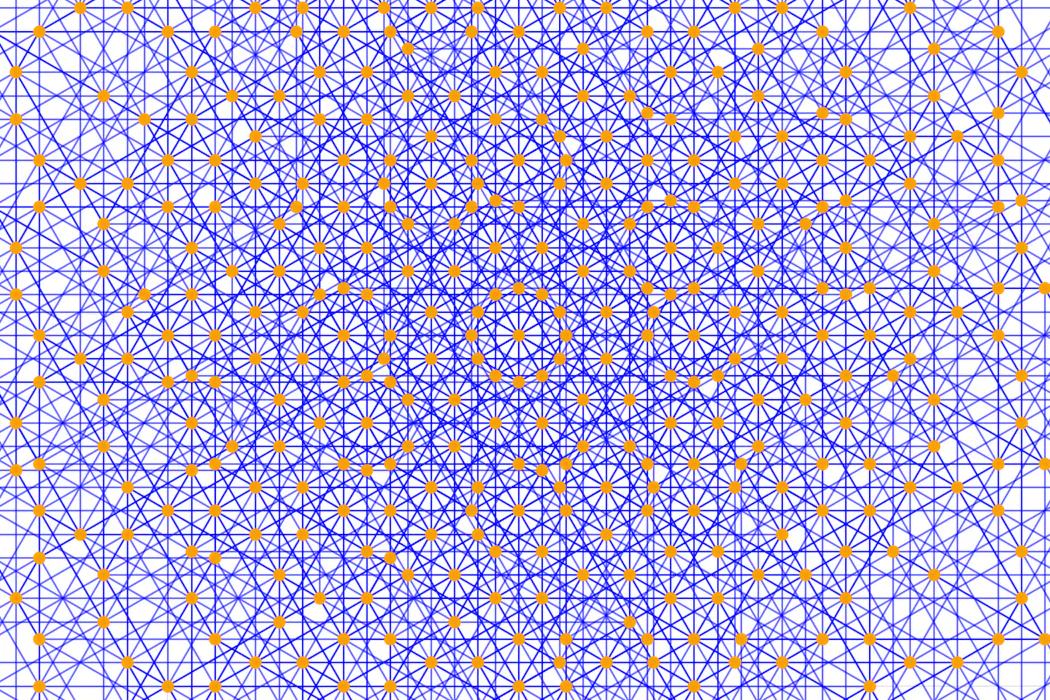


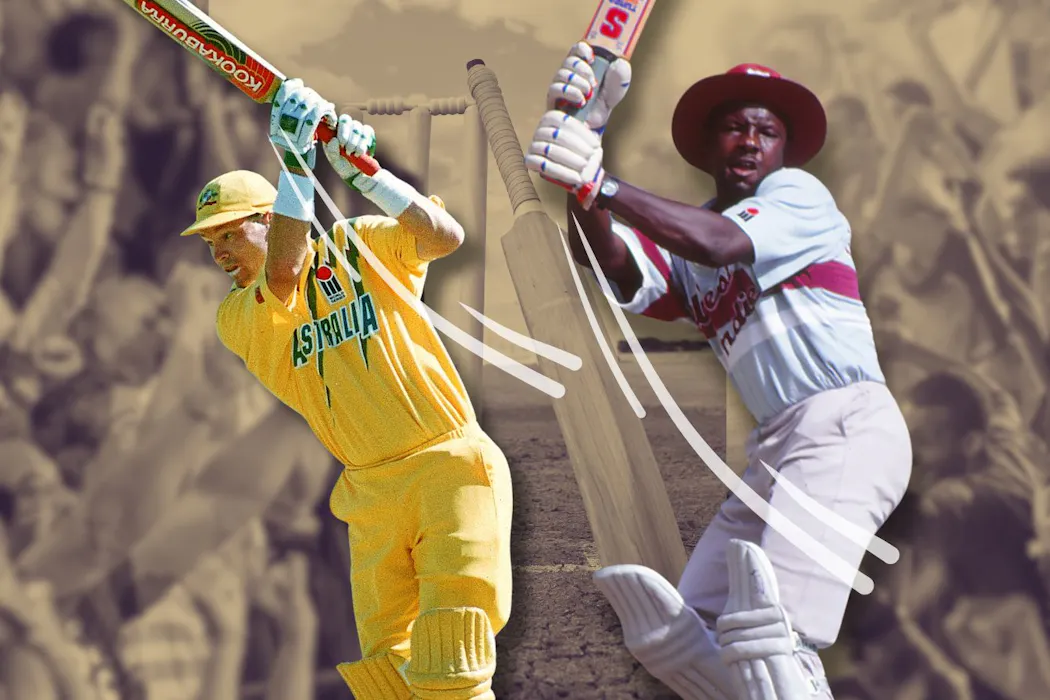











.png)
.jpg)