Reading view

Hurricane forecasts have improved dramatically, saving lives, but federal cuts threaten to stretch NOAA resources to breaking point

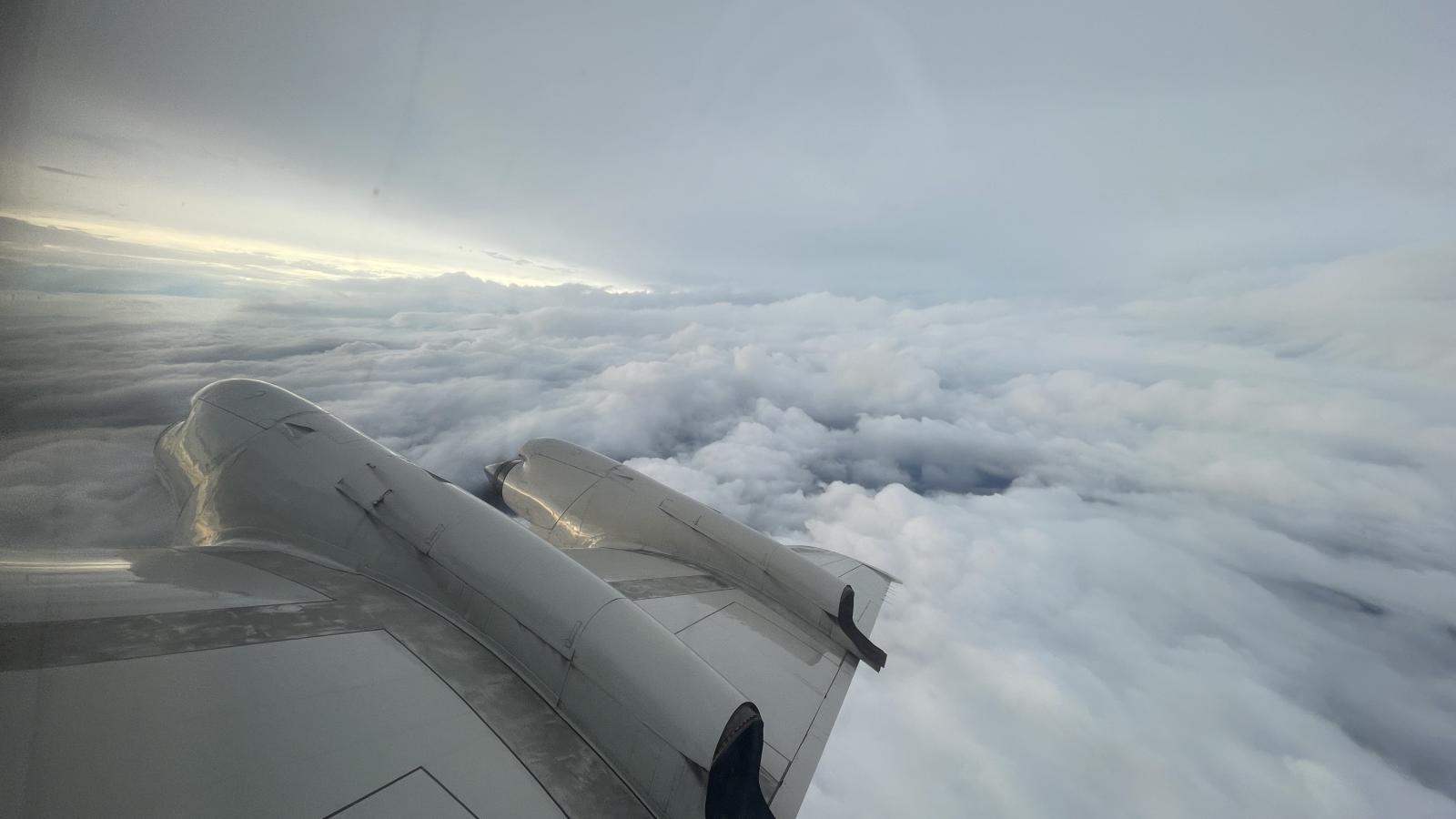
One of NOAA's WP-3D Orion hurricane hunters, dubbed Miss Piggy, flies over Tropical Storm Idalia on Aug. 28, 2023. Nick Underwood/NOAA

The 2026 Atlantic hurricane season starts June 1, and while early outlooks suggest that a developing El Niño might result in a tamer season than in the past few years, with below-average hurricane activity, all it takes is one big storm hitting a populated area to make it a bad hurricane season.

Every year, Americans rely on accurate forecasts when hurricanes might be developing to know when to stock up on supplies, prepare for power outages or evacuate.

Those forecasts have improved dramatically in recent decades, but the improvements can’t be taken for granted. Over the past year, federal funding cuts and job losses in the very programs that are helping make Americans safer from extreme weather threaten to stall progress and stretch forecasting resources to the breaking point.

How storm tracks have improved.
Hurricane track forecasts have become more accurate over the past three decades. For example, recent forecasts showing where a storm is expected to be in 96 hours have been, on average, about as accurate as a 24-hour track forecast was in the early 1990s. That gives people more time to evacuate. The lines show how many miles off the National Hurricane Center’s official storm tracks were. National Hurricane Center

I am an atmospheric scientist whose research focuses on hurricanes, including how and why they intensify or weaken. I also work with scientists at the National Oceanic and Atmospheric Administration, NOAA, to analyze observations collected by reconnaissance aircraft and evaluate computer model forecasts of hurricanes.

Here’s what forecasters rely on during hurricane season and why investing in science, forecasting technologies and the people who run them matters.

Flying through hurricanes

To have the best chance of an accurate hurricane forecast, computer models and meteorologists need to know about the location, intensity and structure of a hurricane, along with the environment that surrounds it. Satellites are crucial for tracking storms from above, but many details can be collected only inside the storm, where satellites can’t see.

That’s why NOAA relies on “hurricane hunters” – a group of skilled pilots and scientists who fly through storms all season long to collect storm data, which is quickly transmitted to forecasters and computer models.

A scientists in a flight suit sits at a computer in an airplane talking on a headset.
Flight Director Quinn Kalen at his work station during a flight into Hurricane Lee on Sept. 8, 2023. Lt Cmdr Utama/NOAA Corps
A radar screen with an airplane in the center of a storm circulation.
A radar display shows NOAA’s Miss Piggy hurricane hunter aircraft in the center of Tropical Storm Idalia on Aug. 28, 2023. Nick Underwood/NOAA

When storms are developing, the U.S. Air Force Reserve and NOAA conduct several hurricane hunter flights per day to provide the most up-to-date storm information. During these missions, the crews often fly directly into the storm, through screaming winds and heavy rain, to release instrument packages called dropsondes.

The dropsonde is a feat of science and engineering, able to accurately measure the temperature, humidity, wind and pressure in hostile conditions. This data is radioed back to the aircraft. From there, it is processed and transmitted to NOAA, where forecasters analyze it and computer models use it to initialize forecasts.

A NOAA scientist explains how hurricane forecasters use dropsondes.

I and many hurricane scientists have used dropsonde data collected over the years to build a better understanding of how hurricanes behave. A recent study showed that computer model forecasts of hurricane tracks were up to 24% more accurate when they included dropsonde data than those that didn’t.

Simulating hurricanes

A big reason hurricane forecasts have gotten better has been federal investments in computer models that can simulate these storms.

In 2008 the U.S. government funded the NOAA Hurricane Forecast Improvement Project, leading to substantial advancements in computer modeling and forecast accuracy. Computer models got better at incorporating the observations gathered by aircraft, showing air movements and rain bands in greater detail.

A radar showing a hurricane's swirling form.
A HAFS radar forecast shows Hurricane Melissa as it approaches Jamaica in October 2025. The HAFS model performed well in forecasting the intensification and extreme strength of the Category 5 storm in the days leading up to its landfall in Jamaica. NOAA/AOML/HRD

The flagship NOAA hurricane model is now the Hurricane Analysis and Forecast System, which does a better job of predicting rapid intensification, among other things, than its predecessors.

When storms rapidly intensify, as several have done in recent years, they can pose an acute risk to coastal communities. More accurate forecasts give people and communities better information to decide how to prepare and when they need to evacuate. Improvements since 2007 have resulted in an estimated US$2 billion in savings per hurricane landfall and many lives saved.

That’s a huge return on investment. In 2024, NOAA’s entire budget was $6.7 billion.

Keeping an eye on the storms ahead

There are some exciting developments ahead in hurricane observations and modeling.

NOAA in 2024 ordered two new aircraft, expected to be delivered by 2030, to begin replacing its aging hurricane hunter fleet so fights and their data collection can continue.

Private companies working with NOAA have deployed and tested autonomous drones – both in the air and sail drones on the ocean surface – that can collect data in areas where quality observations are hard to get.

Additionally, artificial intelligence weather models have emerged, such as Google DeepMind, which made a big splash as the most accurate forecast model of the 2025 hurricane season.

Some lingering dark clouds

Despite these promising developments, a different storm is eroding the bedrock upon which the national weather forecast enterprise sits.

Cuts in funding and staffing have stressed NOAA’s ability to collect critical observations. Last year, retired NOAA scientists volunteered to staff hurricane hunter reconnaissance flights so the missions could still be flown.

Debris and damage homes across a town with the Gulf waters in the background.
Knowing when to evacuate is crucial. Hurricane Helene made a mess in Horseshoe Beach, Fla., on Sept. 28, 2024. The storm was blamed for at least 250 deaths across six states. Chandan Khanna/AFP via Getty Images

The Trump administration proposed cutting NOAA’s budget by more than a quarter, including dismantling its Office of Oceanic and Atmospheric Research. Congress rejected many of the administration’s proposed budget cuts, ultimately approving a $6.1 billion budget in March 2026, still down from the previous budget.

The National Center for Atmospheric Research, which led the development of computer models and dropsonde technology, has also been targeted by the Trump administration to be dismantled. The American Meteorological Society warns this decision “will harm meteorological research and innovation in the United States with severe consequences to current and future efforts of the weather enterprise to protect life, property, and the nation’s economy.”

I worry about the funding and staff cuts stressing systems that keep scientific progress marching forward and warn Americans about hazardous weather. Losing staff and support raises the risk of critical failures, such as delayed severe weather warnings and broken equipment causing new blind spots when storms threaten. In the long run, failing to invest risks stagnation or even reversing the hard-fought progress the U.S. has made in advancing weather prediction.

With coastal populations and development expanding over the past few decades, and storms becoming stronger, the vulnerability of the U.S. to costly, damaging hurricanes has increased dramatically. It is more important than ever that public investment in hurricane science and forecasting continue.

This article, originally published May 18, 2026, has been updated with NOAA’s 2026 Atlantic Hurricane Season outlook.

The Conversation

Brian Tang receives funding from the National Science Foundation, the National Aeronautics and Space Administration, and the Center for Western Weather and Water Extremes. He has research collaborations with the National Oceanic and Atmospheric Administration's Hurricane Research Division. He is a member of the American Meteorological Society.

  •  

Black, Hispanic, female and low-income elementary students are less likely to be identified with autism

Understanding whether different groups of kids are more likely to be identified as having autism can help ensure that all students have equal access to the appropriate services at school. Adrian Vidal/iStock/Getty Images Plus

Students who are Black, Hispanic, female, from low-income families or multilingual learners are less likely to be identified with autism in U.S. elementary schools than their white, male, higher-income or English-speaking peers. This finding comes from our new research, published in April 2026 in the academic journal Autism.

These disparities appear even among students who have similar levels of academic achievement and who are attending the same schools.

Our research shows there are big and recurring gaps in whether students are identified with having autism while they attend U.S. elementary schools. In both 2003 and 2019, for example, fourth grade female students were about 80% less likely to be identified with autism, as compared to similarly situated boys.

We found that for every 10 boys identified with autism, only about two girls in a comparable situation – including those displaying similar levels of reading achievement and attending the same schools – were identified.

We analyzed data repeatedly collected from 2003 to 2022, using large, nationally representative samples of about 160,000 fourth grade students participating in the National Assessment of Educational Progress.

We specifically looked at data that included student academic achievement. This approach let us consider potential bias in how a student’s disability is identified.

Why it matters

Understanding these disparities in U.S. elementary schools is important to help ensure that all students with disabilities have equal access to appropriate services and supports.

Schools are one of the most common places that provide disability services to children and adolescents. This includes students who have autism.

Some research finds that teachers are more understanding of a student’s classroom struggles when informed that the student has autism.

School-based special education services, such as speech therapy, often benefit students with disabilities, including those of color. Student will not receive these services without an identified disabilty.

For example, recent analyses of public data from Massachusetts, Indiana and Connecticut compared the achievement trajectories of the same students before and after they received special education services. The students did better in both reading and mathematics when they received special education services.

Students with disabilities are also more likely to graduate from high school and attend college if they receive special education services.

A graphic shows a montage of puzzle pieces and children playing, with the word 'autism' written near the children.
Children with autism who are identified and receive supportive services at school are more likely to do well academically. DrAfter123/iStock Illustrations

What still isn’t known

We do not know whether these disparities in autism identification are occurring in other elementary grades, at least based on the National Assessment of Educational Progress data.

In another of our recent analyses, though, we did observed racial disparities in autism identification across elementary grades.

Some other research suggests that students of color and girls experience significant delays in receiving autism diagnoses.

Our analysis is based on students who completed the National Assessment of Educational Progress reading test. Students with severe autism and higher support needs who were unable to complete these assessments, even with accommodations, were not included in our analysis.

Future studies could examine whether sociodemographic disparities in autism identification are occurring in U.S. middle and high schools as well for students with significant impairments.

What’s next

Our additional preliminary analysis indicates there are other types of disparities at play. For example, we are finding that Black and Hispanic girls, low-income Black students and multilingual learners who are white or Hispanic are especially unlikely to be identified as having autism.

We are also exploring whether some of these disparities have grown, or otherwise changed, following recent increases in autism prevalence rates, including for students of color and girls.

The Research Brief is a short take on interesting academic work.

The Conversation

Paul L. Morgan received funding from the U.S. Department of Education's Institute of Education Sciences to support these analyses. Opinions expressed here are those of the author and do not represent the view of the U.S. Department of Education.

  •  

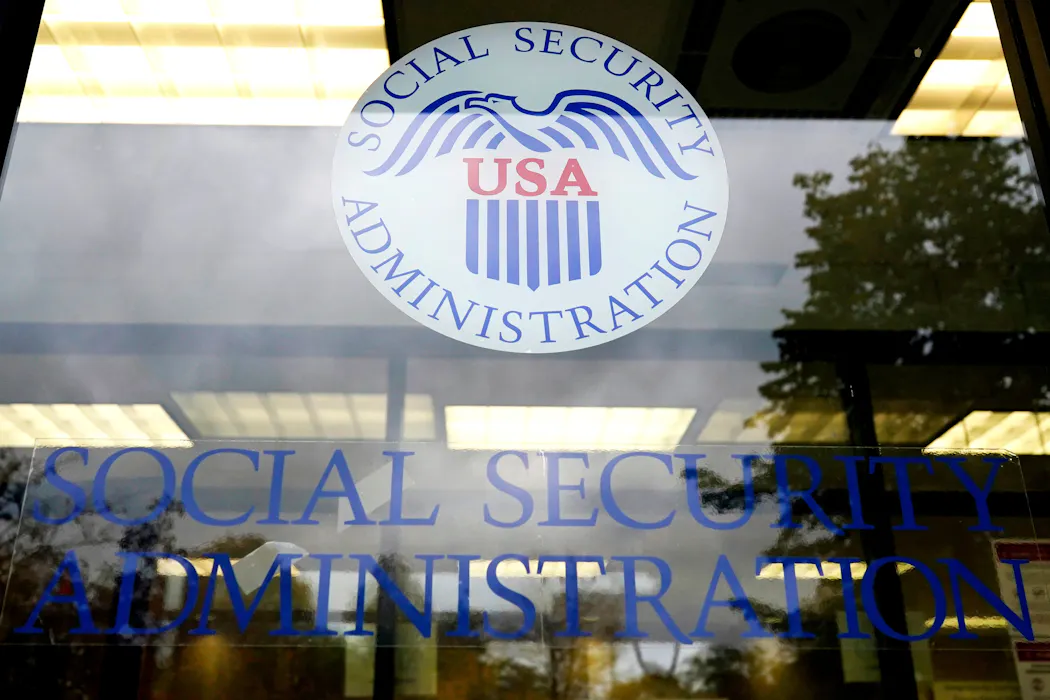
Getting disability benefits got harder after the Social Security Administration’s staff was slashed and program rules were changed by Trump

The agency has cut more than 13% of its workforce. AP Photo/Nam Y. Huh

A rapid series of administrative, staffing and policy changes the Social Security Administration underwent early on in the second Trump administration are making it much harder to get disability benefits that millions of Americans rely on to make ends meet.

The agency cut more than 7,100 jobs – more than 13% of its workforce and its largest staffing cut ever. It closed six of its 10 regional offices, moved more services online and expanded the use of automated and artificial intelligence systems on its public phone lines.

Some rules changed and changed back again. For instance, Social Security officials announced in March 2025 that people would no longer be able to apply for benefits on the phone, only to reverse course a month later.

We’re social work professors at California State University, Sacramento, Binghamton University in New York and the University of Wisconsin-Madison who study these programs. And we have each independently found that even before 2025, it was hard to get disability benefits.

Now, we’ve found that the process has become even harder.

Missing metrics

In June 2025, the agency removed key customer service metrics, such as phone wait times and disability claim processing times, from its website. This data had provided the public with critical transparency about the agency’s performance.

Lacking insight into the impacts of the many changes underway, we launched a project to study how they were affecting access to disability benefits. We interviewed benefits representatives – lawyers, social workers and other kinds of advocates who help applicants and beneficiaries navigate Social Security systems.

We conducted in-depth interviews with 52 advocates at 32 nonprofits, such as legal aid agencies and disability organizations. These organizations collectively assist over 8,000 people every year.

We’re referring to these advocates by pseudonyms to maintain their privacy. Many insisted that neither they nor their employers be identified due to fear of retaliation by the Trump administration.

We published our findings in collaboration with two national disability advocacy organizations, the Disability Rights Education and Defense Fund and the American Association of People with Disabilities, in March 2026. We took the step of publishing with these organizations before submitting our work to academic journals because we wanted to share these findings with the public as soon as possible.

16 million people get these benefits

The Social Security Administration is a federal agency that runs some of the country’s biggest social safety net programs, including benefits for more than 60 million retired workers, as well as survivor benefits for the spouses of workers who have died and their children who are under 18.

In addition, the agency administers two kinds of disability benefits to a total of 16 million people.

Supplemental Security Income, or SSI, is a public assistance program for low-income older adults and people with disabilities under age 65. In 2026, it provides a maximum of US$994 per month for any one person getting benefits.

Social Security Disability Insurance, or SSDI, provides a limited pension for those who have worked long enough to qualify and now have disabilities that prevent them from working any longer. Payments vary based on one’s past wages, but the monthly average in 2026 is about $1,634.

To receive either kind of benefits, Americans must meet the Social Security Administration’s strict definition of disability, which considers health status, past education and employment and age to determine if a physical or mental disability makes someone unable to work.

There are no time limits on how long you can receive SSI benefits. But children and adults under age 65 are subject to periodic assessments of their eligibility and must adhere to the program’s rigid rules. For example, they can’t have more than $2,000 in assets at any time while receiving benefits, must submit their pay stubs for any earned income monthly, and must report any changes in their living situation, marital status or bank accounts.

People engage at a meeting, where many of them appear to be over 65.
Ray Render, left, a staffer for Rep. John Rose, meets with constituents in Gallatin, Tenn., about their concerns related to changes to Social Security Administration practices in March 2025. AP Photo/George Walker IV

Encountering long wait times and chatbots

The Trump administration made no formal changes to eligibility criteria for SSI or SSDI, despite considering proposals that could have narrowed eligibility rules and potentially excluded millions who qualify for these benefits today or reduced the size of benefits payments for many people with disabilities.

But when the Urban Institute, a nonpartisan research center, analyzed state-level data from the first half of 2025, it found that 7% fewer claims for disability benefits were submitted to the Social Security Administration than during the same period a year earlier.

We got more insight into these changes during our interviews.

We heard that with fewer employees, the agency had fewer people available to answer phone calls, contributing to long waits. Customer service protocols also changed so that phone calls to the Social Security Administration were routed to field offices the callers hadn’t dialed, where staff couldn’t help them.

Other benefits representatives encountered AI chatbots that did not answer their questions, or found that staffers with specialized knowledge had been reassigned to perform other tasks.

“I just have so many cases that are stuck in purgatory because they don’t have enough workers to work them,” said Jane, a paralegal we interviewed in Social Security’s Kansas City region. “They don’t have enough workers to answer the phone to tell me what’s happening to them.”

Field office frustrations

Another source of friction emerged around visits to Social Security Administration field offices.

The agency has more than 1,200 field offices across the nation where people can seek services. Shortly before Trump took office in 2025, the agency began moving from walk-in services to requiring appointments. But the Social Security Administration had promised in 2024 that it would “not turn people away” if they couldn’t or didn’t want to make an appointment.

And yet benefits representatives told us in 2025 that many field offices did require appointments, and turned people away if they arrived without them.

This was especially frustrating because it was hard to make those appointments over the phone anymore, said Freddie, a benefits representative in the Denver region. “Now, we can’t reach anybody at Social Security,” she told us. “We can’t get through to make an appointment.”

As of May 2026, 10 offices in nine states are either open on an appointment-only basis or closed to the public until further notice.

Obstacles online and in person

The Social Security Administration’s push to conduct business online assumed that everyone could easily use digital platforms. But that’s simply not true for many of the most vulnerable low-income people with disabilities who have or are applying for SSI and SSDI benefits.

As Michael, an attorney in the Atlanta region, explained, it’s not reasonable to assume that “someone who’s in their 20s, but unhoused” or “someone in their 70s and having issues with memory loss” can handle an online application process.

Another challenge is the Trump administration’s crackdown on immigration, which has now extended to people who are authorized to live in the United States. Many immigrants who get disability benefits, or who support their relatives with SSI and SSDI benefits, are no longer sure it’s safe for them to visit Social Security offices.

Those fears were reinforced in February 2026, as reports emerged that some Social Security workers had been told to share appointment data with Immigration and Customs Enforcement agents.

Several benefits specialists told us they no longer know how to advise such clients about the potential risks of interacting with the Social Security Administration, including whether it was safe to visit field offices or whether the agency might share their information with immigration authorities.

Dying while waiting

Staff cuts meant that the problem-solvers who advocates had once turned to had left, taking years of expertise with them. The agency’s remaining staff members were harder to reach than ever. Some were less familiar with the intricacies of the Social Security Administration’s policies and procedures than their senior colleagues who had left.

As disability benefits have become harder to obtain, many people are suffering. We heard multiple accounts of terminally ill clients dying before receiving benefits for which they were eligible.

For example, Anne, an attorney in the agency’s Philadelphia region, described the case of a homeless, seriously ill client who couldn’t move forward because Social Security Administration staff told her that they couldn’t locate paperwork she had submitted three years earlier.

“This woman is dying,” Anne said. “All you have to do is push a little button to get this moving, and you’re telling me you can’t.”

Miranda, an attorney in the Philadelphia region, explained that in the past, she advocated for clients over complex legal issues. During the second Trump administration, that’s changed.

Now, her clients may find that they need an attorney simply “to make sure something gets off someone’s desk and then faxed into the system.”

Faxing, rarely necessary for most everyday business transactions, is commonly used during the disability benefits application process.

“It is taking more of my time to do the same amount of work, which then means we’re not able to take as many cases” said Megan, a paralegal in the Boston region.

Suggesting possible improvements

Our report includes recommendations for improving how the Social Security Administration responds to applications for disability benefits.

In our view, the agency should employ enough people to handle all applications and appeals in a timely and accurate manner while protecting the data privacy and accessibility for all applicants – including those from immigrant families.

We also believe that the agency’s leaders would be wise to listen seriously to feedback from professional benefits representatives who help people with disabilities apply for SSI and SSDI benefits, such as those we interviewed, and their clients.

The Conversation

Katie Savin is the Ford Fellow in Disability Policy Research at the National Academy of Social Insurance and a Benefits Futures Innovator at the Benefits Futures Studio, a project from the Aspen Institute Financial Security Program and the National Academy of Social Insurance. They have received prior funding from the Retirement and Disability Research Consortium, funded by the Social Security Administration.

Callie Freitag receives funding from the Disability Economic Policy Consortium via The Roosevelt Institute and the National Academy of Social Insurance.

Matthew Borus previously received funding from the Social Security Administration through the Analyzing Relationships between Disability, Rehabilitation, and Work (ARDRAW) small grant program.

  •  

Why did ‘Tyrannosaurus rex’ have such short arms?

Teeth? Big. Arms? Not so much. William_Potter/iStock via Getty Images Plus

Curious Kids is a series for children of all ages. If you have a question you’d like an expert to answer, send it to CuriousKidsUS@theconversation.com.


What did the T. rex use its little arms for? – Aurora, age 11, Pemberton Township, New Jersey


One of the most famous dinosaurs to ever roam across Earth, Tyrannosaurus rex, has filled people’s minds with wonder since the first skeleton was discovered in the early 1900s.

Scientists believe T. rex, or King of the Tyrant Lizards, as its name translates, was a fearsome predator. An adult T. rex was massive in size – approximately 40 feet (12 meters) long and 20 feet (6 meters) tall, weighing as much as an African elephant. Each of its enormous sharp teeth could be near a foot (0.3 meters) in length from the root to the tip.

I’m a paleontologist, and I use fossils to study how animals lived and evolved over long periods of time. One of the coolest things about being a paleontologist is that there are always new questions to ask and new things to learn – even about a super-well-known dino like T.rex, which went extinct just over 65 million years ago.

One T. rex mystery has to do with this giant predator’s relatively tiny arms. Why would it have arms so short that it couldn’t even reach its own mouth? How did it use them?

How ‘short’ is short?

First, let’s define what we mean by “short.”

The biggest T. rex could measure 45 feet (14 meters) from the snout to the tip of the tail, but their arms were only about 3 feet (1 meter) long. On average, a T. rex’s arms were just about 30% of the length of its legs.

In comparison, humans have, on average, arms around 66% of the length of their legs. If people had the same arm proportions as a T.rex, a 6-foot (1.8 meters) tall person would have arms only 10 or 12 inches (25 to 30 centimeters) long!

T. rex isn’t the only dinosaur with such short arms. The evolutionary trend toward shorter arms in theropods – the larger group of meat-eating, two-legged dinosaurs that T. rex belongs to – happened multiple times. Similar to how wings separately evolved in different animals – like birds and bats – traits can emerge many times in evolutionary history.

You can see the shortening of T. rex arms as a pattern in its family tree, as earlier relatives had proportionally longer arms.

Lots of schoolchildren gathered around a T. rex skeleton on display in a museum
Fossil skeletons of Tyrannosaurus rex make clear that the dinosaur itself was very big, even if its arms were proportionally small. John Zich/AFP via Getty Images

How did they use their mini-arms?

Short arms don’t seem to have been a problem for these mighty dinosaurs. T. rex was a successful carnivorous species that existed for over a million years. They only went extinct when an asteroid hit the Earth, causing a global mass extinction.

Scientists have suggested a few ideas to possibly explain how T. rex used their arms. Maybe they were used as some kind of social display that could impress other T. rex – kind of like the bright feathers of a peacock that can attract potential mates.

But male and female T. rex skeletons don’t show the major differences that paleontologists would take as clues that they relied on social displays to attract mates. And while animal behavior can sometimes be preserved, such as in bite marks or fossilized footprints, it’s rare to have enough fossil data to draw clear conclusions.

Maybe T. rex used their arms as weapons to attack or hold down prey. But these options seem unlikely since T. rex’s huge jaws would have made contact with an enemy or prey before the short arms would have been able to reach it.

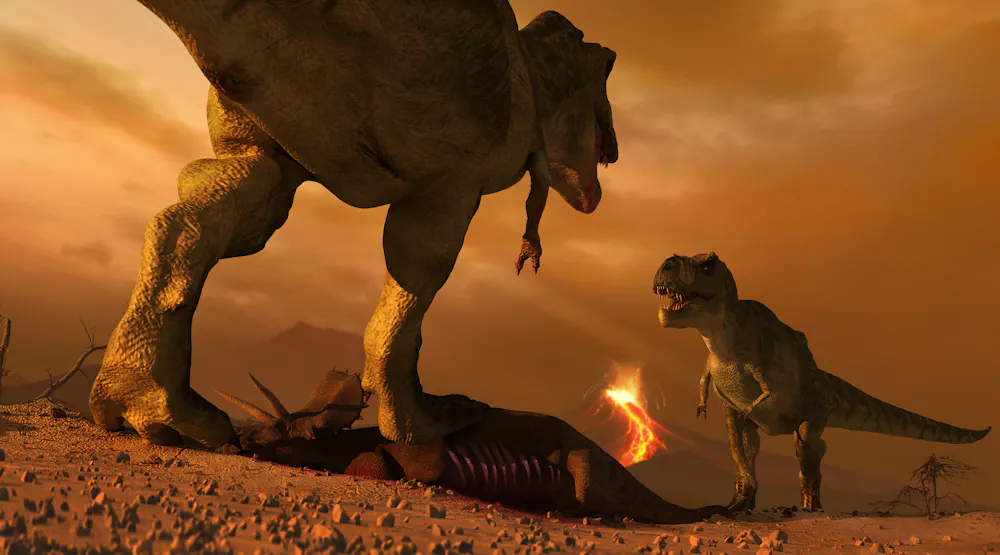
Some scientists have recently hypothesized that T. rex‘s short arms were an adaptation to competition with other carnivores. If multiple predators were feeding on a carcass, one could get hurt by accidental bites or even intentional warning bites for getting too close. Shorter arms would be less likely to get chomped. Similar things occur today with territorial carnivores, like Komodo dragons.

Two Tyrannosaurus dinosaurs face off over a downed prey carcass
Scientists have suggested that in a feeding frenzy, shorter arms would potentially be easier to keep out of the way of chomps from other T. rex. Mark Garlick/Science Photo Library via Getty Images

Maybe the arms didn’t have a purpose

Another possibility is that the arms served little or no purpose at all, so over time, they became vestigial. That’s the scientific term for body parts that don’t have clear purposes anymore, but are still passed down through evolution.

One example is a whale’s hindlimbs. Whales evolved from mammals that lived on land that had large legs to move around. The bones are still present in today’s whales, but have gotten much smaller over millions of years and have no function.

Some scientists have suggested a different idea: T. rex’s arms may have evolved to be smaller as another body part grew larger. The fossil record reveals that arms got shorter as theropod skulls got larger across many different dinosaur groups, including T. rex. Larger skulls likely would have made it easier to hunt and eat larger prey.

Researchers can use mathematical equations to accurately predict theropod arm length if they know the animal’s skull size and length of its upper leg bone, the femur. It turns out that larger skulls are strongly linked to shorter arms in theropods.

The reason for the change in arms, however, isn’t as clear. Some scientists have argued that the smaller arms could have helped with balance as the head got larger, but others aren’t so sure. In evolution, there isn’t always a reason why a change occurs – sometimes, changes just happen. In this case, we don’t yet know if there was a benefit for the arms to get smaller as heads got larger.

Artist's rendition of a T. rex in a misty forest.
However they got that way, small arms don’t seem to have been an issue for these big predators. Orla/iStock via Getty Images Plus

So for now, we don’t really know how T. rex used its arms or why they evolved to be so small, proportionally. As scientists find new data, we will continue to test hypotheses to better understand why this tiny-arm trend occurred so many times in theropod evolution. That’s what makes science so exciting – a future fossil discovery could be the missing puzzle piece that helps us answer these questions.

Sarah Sheffield describes – and her students act out – some of scientists’ hypotheses about T. rex arms.

Hello, curious kids! Do you have a question you’d like an expert to answer? Ask an adult to send your question to CuriousKidsUS@theconversation.com. Please tell us your name, age and the city where you live.

And since curiosity has no age limit – adults, let us know what you’re wondering, too. We won’t be able to answer every question, but we will do our best.

The Conversation

Sarah Sheffield does not work for, consult, own shares in or receive funding from any company or organization that would benefit from this article, and has disclosed no relevant affiliations beyond their academic appointment.

  •  
❌