
Reading view

Reduced health insurance payments for hospital births had a bigger impact on sterilization rates than correcting an injustice

Public outrage over the forced sterilization of poor, Black women had less impact on female sterilization rates in the U.S. than a policy changing how post-birth care is delivered. DisobeyArt/iStock via Getty Images Plus

For decades, female sterilization has been one of the most common forms of birth control in the U.S.: 11.5% of U.S. women, ages 15-49, use female sterilization as their primary contraceptive method – nearly identical to the pill.

But the history of sterilization is also deeply entangled with coercion in the form of racial targeting, invalid consent and state control.

As a health economist and a political scientist, we wanted to better understand what factors influence women’s choices around contraception and sterilization. Our recent study found that a policy change in the 1990s which reduced the length of hospital stays for women giving birth appears to have inadvertently had a more meaningful effect on female sterilization rates in the U.S. than a landmark civil rights intervention in the 1970s.

This leads us to believe that seemingly innocuous, practical policy changes may exert greater influence on women’s reproductive choices than even public outrage over an injustice.

In 1974, the case of Relf v. Weinberger revealed that between 100,000-150,000 girls and women, most of them poor and Black, were sterilized each year at federally funded public health clinics from 1970 to the time the case was heard.

Looking at inflection points

In our study, we revisited Relf v. Weinberger, a 1974 civil rights case that involved the sterilization of two Black girls – the Relf sisters – without valid consent. The girls’ mother was told they were receiving a birth control shot that would temporarily prevent pregnancy. Instead, doctors subjected them to an unwanted tubal ligation surgery, in which the fallopian tubes are sealed off to permanently prevent pregnancy.

The Relf sisters were not alone: In the the early 1970s, the sisters’ case helped bring to light broader patterns in federally funded sterilization that included invalid consent and pressure tied to public benefits. Though the U.S. District Court did not find that each of these sterilizations had been coerced per se, it did find strong evidence that minors and people legally unable to consent had been sterilized with federal funds, and that sterilization was often presented as a requirement for families to maintain welfare or other government benefits. The court ruled that federally funded medical procedures require informed, uncoerced consent.

Our study examined how the public outrage, litigation and consent reforms that followed reshaped U.S. sterilization trends in the 50 years after the court ruled in favor of the Relf girls.

We then compared those effects with another, less visible inflection point in the history of female reproductive health that began in 1992, often called the “drive-through delivery” era. At this time, insurance companies instituted fixed payments to hospitals for each birth. This meant that hospitals received the same payment whether women giving birth stayed one night or two nights afterward. The practical effect was that more women who had uncomplicated births were sent home after just one night in the hospital.

The 1996 Newborns’ and Mothers’ Health Protection Act was meant to end this era, but the shift towards shorter postpartum stays persisted in an effort to cut costs.

This shortened hospital stay after birth posed a problem for women who wanted to be sterilized: Tubal ligation is logistically easy to provide immediately postpartum, while a patient is already hospitalized after giving birth. But when insurers pushed shorter postpartum stays, providers had less time to schedule and perform the procedure, meaning fewer women ended up getting the surgery.

How we did the study

We compared U.S. sterilization trends with those in other countries that had similar trends. Those countries gave us a way to estimate what U.S. sterilization patterns might have looked like if the Relf ruling or changes to hospital payment policies had not occurred. We did not look at individual medical decisions in isolation, but instead tracked patterns in how often sterilization is used across the country.

We asked a simple but important question: What actually changed sterilization practices over time? Was it the highly visible public backlash invoked by the Relf ruling? Or was it a quieter administrative change in how childbirth care was organized and paid for?

We found that the Relf case and subsequent consent reforms, including a 30-day waiting period and minimum age of 21 for federally funded sterilizations, slowed growth in U.S. female sterilization but did not reverse the broader trend. Female sterilization was still becoming more common: The national rate rose from about 5% in 1970 to about 13% in 1975. After a brief pause following the ruling and the new consent rules, it continued climbing. BY 1990, nearly 1 in 4 married women aged 15-49, were sterilized.

Nor did we see a meaningful shift in the populations most at risk of state-targeted sterilization: younger Black women in the South.

By contrast, the administrative payment reforms of the 1990s were associated with the first national declines in sterilization since the 1960s.

Why it matters

Sterilization is not inherently good or bad. It is a highly effective and often desired form of permanent contraception.

That matters now more than ever. In the 2022 case of Dobbs v. Jackson Women’s Health, the U.S. Supreme Court ruled that states can set their own abortion laws, essentially limiting abortion access for many Americans. Since this ruling, our colleagues have found increases in permanent contraception, particularly among younger adults and in states with abortion bans.

In another study, we described limiting patient choices by not providing adequate birth control options as a problem of coercion built into the very structure of the healthcare system.

The issue is not always that patients are forced into, or denied, care altogether. Often, they are offered a narrowed set of options that may look like choice, but do not fit what best meets their needs. A person with diabetes, for example, may technically have access to insulin, but only to a formulation, device or at a pharmacy location that is hard to use safely or access in their daily life.

In reproductive care, we argue that restricting options in this way can be a form of coercion, even when it is less visible.

a postpartum mother speaks with a doctor in the hospital
Tubal ligation is logistically simplest after a woman gives birth, but shortened postpartum hospital stays have made it more difficult for patients who want the procedure to get it at that time. SDI Productions/E+ via Getty Images

A two-way problem

At the same time, many patients report being unable to obtain sterilization when they do want it because of Medicaid consent rules, hospital logistics, staffing limits, insurance timing or institutional restrictions.

So the problem goes two ways: Some people are pushed toward permanent contraception by a restrictive reproductive policy environment, while others are blocked from obtaining it when they want it.

That tension is precisely why sterilization is such an important issue. If rates rise or fall in response to payment incentives, discharge practices or insurance rules, it calls into question whether patient decisions are straightforward expressions of free choice. This is true for reproductive care broadly but has unique human rights implications when the method is permanent.

Our findings suggest that sterilization trends are highly responsive to policy shifts, and not only those driven by public outrage. This raises an uncomfortable question: To what extent do trends in sterilization rates truly reflect what people want, and to what extent do they reflect the choices patients were steered toward by the design of the healthcare system?

The Conversation

The authors do not work for, consult, own shares in or receive funding from any company or organization that would benefit from this article, and have disclosed no relevant affiliations beyond their academic appointment.
  •  

New SNAP rules requiring that benefits be used at stores selling healthier food could backfire

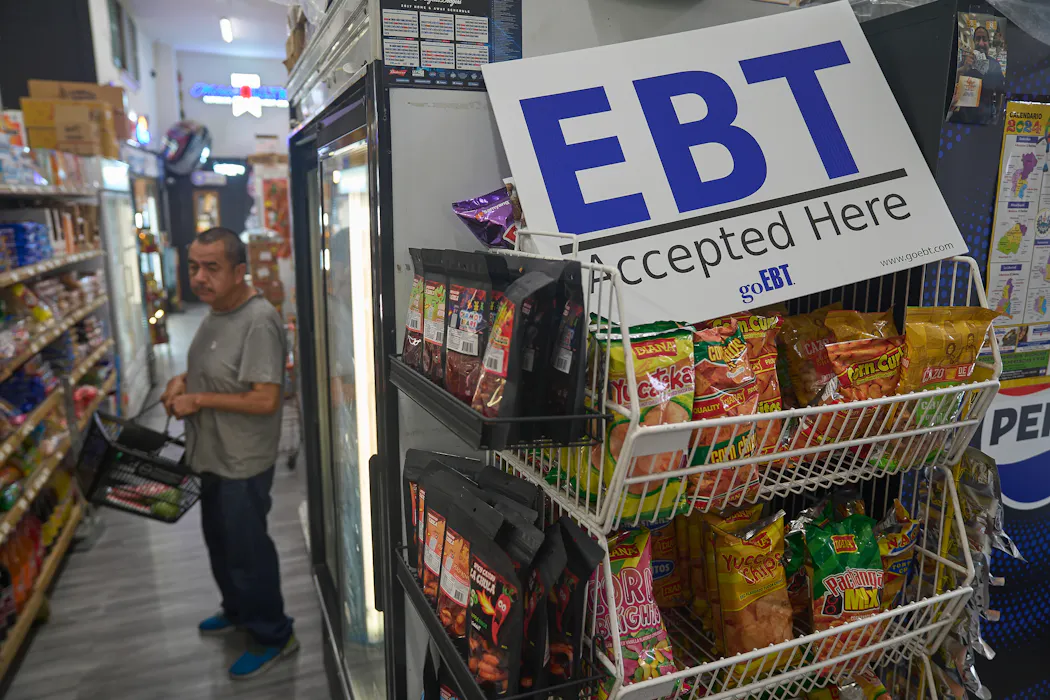
A man shops at El Recuerdo Market in Los Angeles in 2025, next to a sign indicating that customers may pay with SNAP benefits. AP Photo/Damian Dovarganes

The more than 250,000 shops and stores that accept Supplemental Nutrition Assistance Program benefits as payment for groceries will have to meet tougher requirements starting on Nov. 4, 2026, according to new U.S. Department of Agriculture rules. Any retailers that accept SNAP benefits from their customers will have to stock a wider variety of food, some of it perishable.

Government officials said they introduced the new standards to make it easier for Americans who receive SNAP benefits, which help people pay for groceries, to select more nutritious options.

As a community health scholar, I’ve been following these and other changes to SNAP, the largest and most important government program for helping Americans get enough to eat. While expanding access to healthy food is a worthy goal, I fear that these new rules could have the opposite effect for people who are enrolled in SNAP.

More kinds of dairy, produce, grains and protein

Until now, small shops and big stores alike have had to stock at least three items in each of four staple food categories if they want to be able to accept SNAP benefits: dairy, produce, grains and protein.

Under the stricter new rules, all retailers accepting SNAP as payment must sell at least seven kinds of food in each of those four categories. And they need to offer at least one perishable variety in three of the four.

The rules will expand some ways that retailers can meet USDA requirements. For example, the government will accept plain, seasoned and shelf-stable meats as separate items that count as protein. And specialty retailers, such as bakeries and produce markets, will remain exempt from having to fulfill all the requirements.

But certain items that currently meet the requirements, such as beef jerky for protein or butter for dairy, no longer will.

Supermarkets and other big stores that sell groceries won’t need to do anything different to comply with the rule changes. But many convenience stores, corner markets, bodegas and other small stores will have to make changes if they want to continue to accept SNAP benefits.

What’s at stake

A big industry group that represents convenience stores and an anti-hunger organization are both warning that instead of making it easier for low-income people to follow a balanced diet, the new USDA rules might lead many small shops to stop accepting SNAP benefits.

That’s in part due to other changes those small retailers face.

More than 20 states have begun to restrict what people can buy with their SNAP benefits. Selling banned items to shoppers paying with SNAP benefits can jeopardize a store’s ability to accept those benefits.

These rules prohibit sales of soda, with some states also banning the sale of energy drinks, candy, desserts or processed foods to anyone paying with SNAP benefits. Some states, including Tennessee, are proposing additional, more complex restrictions based on ingredient lists.

Retailers will have to update their checkout systems to prevent SNAP payments on banned items, and educate staff and customers about the changes. Rather than police purchases, some stores might instead decide to stop accepting SNAP. This could leave communities with fewer options to spend SNAP benefits.

Fewer people are getting SNAP benefits

These aren’t the only challenges retailers that accept SNAP benefits face. Nationwide, the number of people who get those benefits fell by about 10% between June 2025 and February 2026, from about 42 million to 38 million. This decline isn’t happening because fewer Americans need help paying for groceries.

The big tax and spending package that President Donald Trump signed into law in 2025 is responsible. It restricted SNAP eligibility for some age groups and expanded the reach of SNAP’s work requirements.

With fewer Americans using SNAP, retailers can expect lower sales. This could be a big problem for stores whose customers rely heavily on SNAP. It’s possible that some of these stores could close.

While losing food retailers will make shopping with SNAP less convenient, it also could be bad for their former customers’ health. Research shows that people enrolled in SNAP have healthier diets when they have better access to retailers that accept SNAP as payment. And cutting their benefits has the opposite effect.

Helping small shops offer healthier options

This isn’t the first time the government has sought to make it easier to buy healthier food at small stores in low-income communities. State and local governments and researchers have worked for over a decade with the owners of those shops to procure, stock and sell healthier products.

Examples include the Healthy Corner Store Initiative in Philadelphia and Camden, New Jersey; collaborations between city officials and researchers in Baltimore; and a state-funded program to purchase equipment and health-promotion materials for small stores in rural North Carolina.

Often, these programs have assisted store owners with a mix of expertise, funding and logistics, such as new shelving and refrigeration.

While there have been successes, researchers that have evaluated these programs have found that there are many obstacles.

Role of small stores

Many smaller retailers are not familiar with how to source and stock healthier food, especially produce, and may question whether these products will sell. These initiatives are often funded on a temporary basis, meaning that store owners must maintain any changes on their own after a program ends.

For example, a refrigerator purchased for fresh fruits and vegetables can easily be repurposed to hold bottles of soda.

Efforts to get small shops to sell more nutritious food work best when they are created in partnership with store owners and tailored to fit the needs of local communities. But the USDA is not offering that kind of help.

What’s more, while most Americans buy salty or sweet treats from convenience stores, I think that these rules suggest that SNAP shoppers should not.

For more than 60 years, a cornerstone of the Supplemental Nutrition Assistance Program and the food stamp program that preceded it has always been that the people who are enrolled in it should be treated like everyone else when they buy food. I believe that the USDA’s new rules suggest that the government is moving away from that commitment.

The Conversation

Benjamin Chrisinger has received funding from USDA’s Research Innovation and Development Grants in Economics (RIDGE) Partnership. This should not be construed to represent any official USDA or U.S. government determination or policy.

  •  

Most people don’t know what they don’t know, but think they do – correcting your metaknowledge can make you a better teacher and learner

The ability to say 'I know that I know nothing' could be considered a sign of wisdom. Nicolas-André Monsiau/Pushkin Museum of Fine Arts via Wikimedia Commons

Do you know what the Apple logo looks like?

Chances are, you think you do. It’s ubiquitous and iconic. How could you not know it?

But when tested, it turns out very few people can remember all the features of the logo. One study of 85 people found that only about half could pick the correct logo out of a lineup of similar ones. And only one person could correctly draw it.

This isn’t an isolated example. A classic study from 1979 found that people similarly couldn’t draw a penny accurately or pick out a correctly drawn penny from incorrect ones.

People aren’t just bad at remembering things they see all the time, but also in actually knowing how they work. In a 2006 study, many people made significant errors when drawing a bicycle, like putting the chain around the front wheel as well as the back wheel. More than just a forgotten detail, putting the chain around both wheels shows a deeper misunderstanding of how a bicycle works. A bicycle with a chain around both wheels wouldn’t be able to turn.

Illustration of bike with different components labeled
Do you truly know how a bicycle works? Al2/Grandiose via Wikimedia Commons, CC BY-SA

It turns out people’s knowledge of how the world works is often fragmented and sketchy at best. They systematically overestimate their understanding of everyday devices and natural phenomena. People will tend to give themselves high ratings on how well they understand something, such as how bicycles or zippers work. But when they’re asked to actually explain the mechanics of these objects, their ratings of their understanding typically drop.

Just like how your knowledge of the world around you is imperfect, your knowledge about your own knowledge – also called metaknowledge – is often flawed. My field of cognitive science has been uncovering various gaps in human metaknowledge for decades.

If people are systematically overconfident about how well they understand things, why don’t they notice when they don’t understand something? And what can people do to better recognize the limits of their own knowledge?

Why you think you know more than you do

Researchers have identified several factors behind people’s overconfidence in their knowledge.

One is that people confuse environmental support with understanding: The information is out in the world but not actually in your head. With a bicycle or a zipper, all of the parts are visible to you, and you may confuse this transparency for an internal understanding of how they work. But until you go to use that knowledge by attempting to explain how they work, you may not recognize that you don’t understand how those parts interact.

A second factor is confusing different levels of analysis. People can often describe how something works at a very high level. You know that the engine of a car makes the car go, and the brakes slow and stop the vehicle. But confidence in your high-level understanding of the car may bias you to think you also have a good grasp of the finer details, like how the engine pistons and brake pads work.

Additionally, people can be blind to the ways their knowledge shapes their own perception. In one study, researchers had participants tap out the tune to a popular song. On average, the tappers thought listeners would be able to identify the song about 50% of the time. But when listeners had to identify the tapped song, they actually could identify it only 2.5% of the time. The tappers didn’t realize how much their knowledge was making identifying the song seem easy to them.

A teacher talks to a student before a chalkboard wall filled with equations, chemical structures and graphs
Intellectual humility can help you see your expert blind spot. Vitaly Gariev/Unsplash, CC BY-SA

This disconnect has consequences beyond whether someone else can understand your Morse code version of a song. When teaching people, whether in formal classroom settings or through casual mentorship, you can sometimes have an expert blind spot: the inability to recognize the difficulties beginners face when learning something you have expertise in.

Building expertise often involves internalizing knowledge to the point where it becomes invisible to you. You draw on knowledge you don’t realize you have, making it hard to relate to learners who lack this knowledge – and, of course, hard for learners to relate to your teaching. You might have experienced this when you’ve gotten partway through explaining something, only to realize you’ve been using jargon you forgot isn’t common knowledge and lost your listener.

How to address metaknowledge failures

Your metaknowledge can fail in two directions: You can think you know more than you do, and you can be blind to how much you’re relying on knowledge you do have. Each calls for a different response to correct it.

When you’re overconfident in your knowledge, the remedy is using that knowledge. You’ll quickly realize how much you actually understand and dial down your confidence. Challenging yourself to actually try to walk through how something works is a great exercise in intellectual humility – that is, recognizing that you may be wrong – and can keep you from getting out over your skis.

Building a greater appreciation for what you know is more difficult. You can’t simply unlearn what you’ve internalized. But what this challenge shows is that, to some extent, knowing a subject and knowing how to teach it are two separate skills. Some experts are great teachers, but not simply by virtue of being experts. Recognizing that you have to approach teaching with humility, and that your expertise doesn’t automatically make you a skilled teacher, can go a long way toward making you a better teacher and mentor.

These aren’t easy and quick fixes to failures of metaknowledge. Both require ongoing intellectual humility and a willingness to distrust your own confidence. But acknowledging the fallibility of your own metaknowledge is a good place to start.

The Conversation

Tommy Blanchard does not work for, consult, own shares in or receive funding from any company or organization that would benefit from this article, and has disclosed no relevant affiliations beyond their academic appointment.

  •  
❌