Reading view

Despite improved macroeconomic stability in first half of FY26, war in Middle East poses significant risks to outlook: SBP

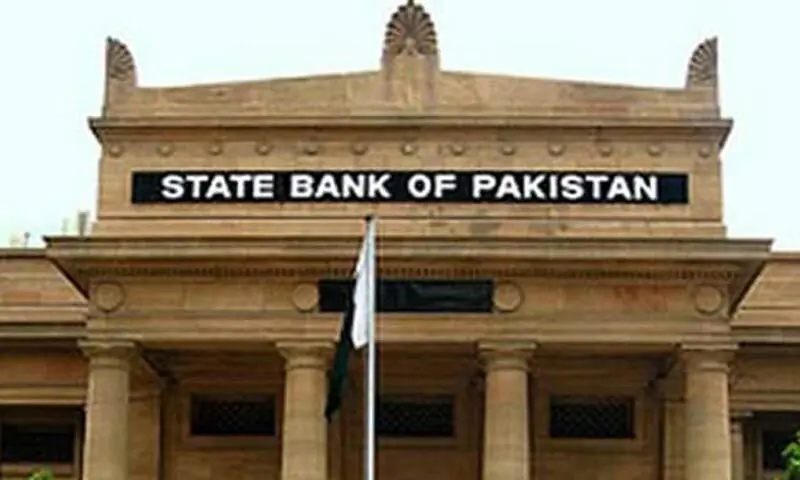
While macroeconomic stability improved in the first half of fiscal year 2026, the war in the Middle East poses risks to the economic outlook amid heightened uncertainty, the State Bank of Pakistan (SBP) said on Tuesday.

The SBP released its Half Year Report 2025-26 (The State of Pakistan’s Economy) on Tuesday, showing that Pakistan’s macroeconomic stability strengthened in the first half of the fiscal year despite headwinds from uncertainty regarding global trade and domestic floods.

However, the report noted that the war in the Middle East poses “significant risks to the macroeconomic outlook”, as supply chain disruptions are likely to affect the inflation trajectory, external trade and remittance flows, and the country’s economic activity, according to an SBP press release.

Discussing the outlook for FY26, the report notes that the latest data on high-frequency indicators — including Purchasing Managers’ Index (PMI), LSM and construction — suggests that economic activity maintained the momentum through February before the war began to weigh on output in the remaining month of FY26.

“Therefore, SBP projects real GDP growth close to the lower bound of the earlier projected range of 3.75 to 4.75 per cent for FY26,” the statement said, adding that despite momentum in economic activity and higher commodity prices, the current account deficit is now expected to be close to the lower bound of the earlier projected range of 0-1pc of GDP.

However, a surge in international oil prices and its impact on other commodity prices are expected to keep the National Consumer Price Index (NCPI) inflation above the upper bound of the medium-term target range of 5-7pc for most of FY27.

The report highlights that economic indicators improved significantly in the first half of FY26. It noted that average NCPI inflation eased further, while SBP’s FX purchases and net financial inflows shored up external buffers.

“These outcomes were supported by prudent monetary and fiscal policies, ongoing structural reforms, favorable commodity prices and [the] IMF programme,” the press release said, particularly highlighting the continued cautious monetary policy stance of the SBP.

“The macroeconomic stability, in turn, facilitated growth momentum,” it added.

The report further said that the real GDP in H1-FY26 grew at “twice the pace” of the same period last year, mainly driven by pickup in industrial activity followed by services and agriculture sectors. The momentum in economic activity translated into a volume-driven increase in imports in H1-FY26.

At the same time, it noted, a significant drop in rice exports led to a decline in export earnings. However, steadily rising workers’ remittances continued to finance a major part of the deficits in trade, services, and primary income balance, helping to keep the current account deficit at moderate levels.

The report also highlights that “the substantial reduction in interest payments and fiscal consolidation measures turned the fiscal balance into a surplus in H1-FY26, for the first time since FY02, while the primary surplus remained at last year’s level”.

The report further notes that “continued prudent policy mix, an improved external account position and stability in exchange rate, softened international commodity prices along with downward adjustments in administered electricity tariffs” kept inflation moderate during H1-FY26.

“The NCPI inflation averaged 5.2 per cent in H1-FY26, about two percentage points lower compared to the same period last year,” the SBP said.

According to the SBP statement, the report highlights that while Pakistan’s overall economic conditions improved, the country’s transition to a sustainable high-growth path with sustained macroeconomic stability required deep-rooted economic reforms.

“These specifically need to address the long-standing issues, including low savings and investment, weak competitiveness, falling exports, subdued foreign direct investment, and the persistently low tax to GDP ratio,” it said.

The report includes a chapter titled ‘Climate Change and its Impact on Pakistan’s Economy’, which highlights that while Pakistan’s contribution to global greenhouse gas emissions is very low, it is the 15th-most affected country by climate events.

It further noted that Pakistan is among the countries that face high levels of vulnerability to climate change and low levels of preparedness to deal with the ensuing challenges, saying, “This low readiness enhances the risks to country’s economy.”

It also pointed out Pakistan’s relatively high emissions intensity of GDP, reflecting “structural inefficiencies and a carbon-intensive growth trajectory”.

It stressed the requirement for substantial investments in climate mitigation and adaptation, which currently remain largely unmet due to low international climate inflows and challenges to domestic public and private sector financing.

The report also discusses the multifaceted macroeconomic risks to the medium-term outlook in the case of an extended war in the Middle East.

Last week, the Ministry of Finance and the SBP showed unanimous optimism over economic growth and achieving fiscal and current account targets despite the regional crisis.

In April, SBP Governor Jameel Ahmad said that while the ongoing conflict in the region has introduced new risks and heightened uncertainty about the macroeconomic outlook, the economy is relatively better positioned than during previous crises to manage these challenges.
  •  

Suparco says Eidul Azha likely to fall on May 27

The Pakistan Space and Upper Atmosphere Research Commission (Suparco) on Tuesday forecast that Eidul Azha was expected to fall on May 27.

“The new moon of Zilhajj 1447 AH is expected to be born on May 17 at 1:01am,” it said in a statement.

It said that at sunset the same day, the age of the new moon would be approximately 18 hours and 30 minutes. It estimated an interval of 60 minutes between “sunset and moonset along the country’s coastal belt”.

“Based on these astronomical parameters, the chances of sighting the Zilhajj crescent on the evening of May 17 are considered favourable,“ Suparco said, adding it would be subject to clear weather conditions and visibility near the horizon.

“Consequently, the 1st Zilhajj 1447 AH is anticipated to fall on Monday, May 18, marking the conclusion of the holy month of Zilqad,” it said.

Therefore, Eidul Azha will fall on May 27, Suparco said.

“The final decision regarding the sighting of the Zilhajj crescent and the commencement of the holy month will be made by the Central Ruet-i-Hilal Committee of Pakistan, which is the sole competent authority to announce the beginning of Islamic months on credible witness testimonies and verified observations from across the country,” the statement concluded.

  •  

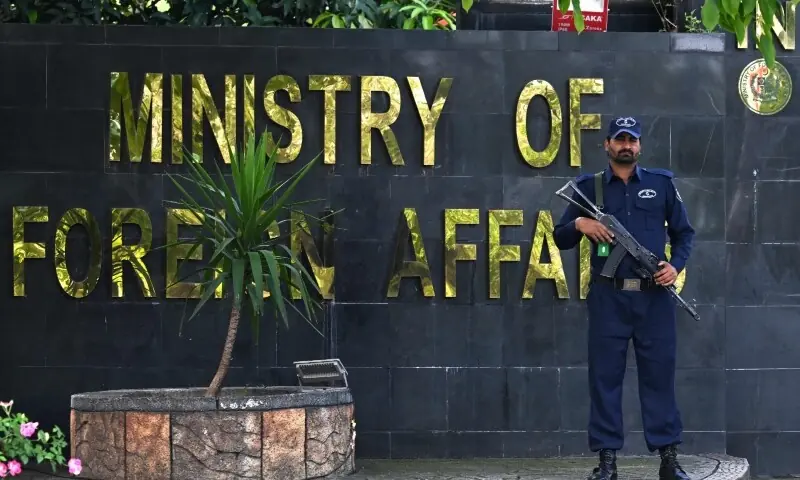
FO terms report claiming Pakistan allowed Iranian military aircraft to park at airbase as 'misleading and sensationalised'

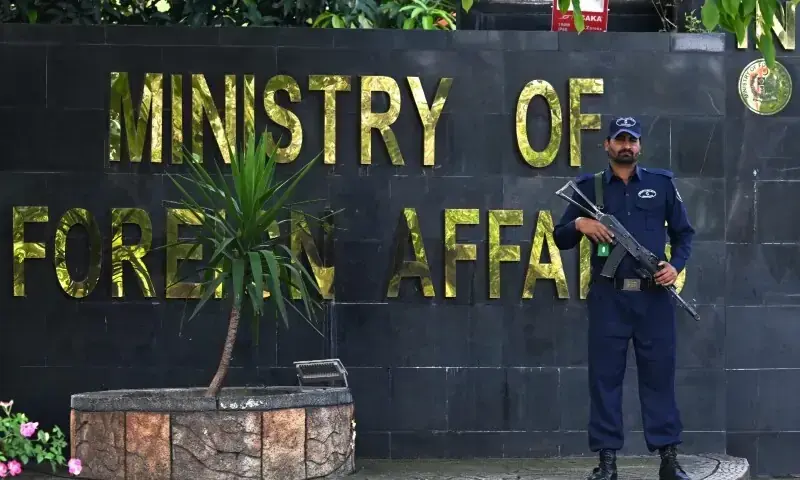
The Foreign Office (FO) on Tuesday termed a report by an American media outlet claiming that Islamabad “quietly allowed” Iranian military aircraft to park on its airfields while playing the role of a mediator in the Middle East conflict as “misleading and sensationalised”.

Citing US officials, CBS News had alleged that days after US President Trump announced the ceasefire with Iran in early April, Tehran sent multiple aircraft to the Nur Khan Air Base.

“Among the military hardware was an Iranian Air Force RC-130, a reconnaissance and intelligence-gathering variant of the Lockheed C-130 Hercules tactical transport aircraft,” the report claimed.

In a response issued on Tuesday, the FO said, “Pakistan categorically rejects the CBS News report regarding the presence of Iranian aircraft at Nur Khan Airbase as misleading and sensationalised. Such speculative narratives appear aimed at undermining ongoing efforts for regional stability and peace.”

“Following the ceasefire and during the initial round of the Islamabad Talks, a number of aircraft from Iran and the US arrived in Pakistan to facilitate the movement of diplomatic personnel, security teams and administrative staff associated with the talks process,” it said.

The FO said that some aircraft and support personnel remained temporarily in Pakistan in “anticipation of subsequent rounds of engagement.

“Although formal negotiations have not yet resumed, senior-level diplomatic exchanges have continued. In this context, visits by the Iranian foreign minister to Islamabad were facilitated through the existing logistical and administrative arrangements,” it said.

“The Iranian aircraft currently parked in Pakistan arrived during the ceasefire period and bear no linkage whatsoever to any military contingency or preservation arrangement. Assertions suggesting otherwise are speculative, misleading, and entirely detached from the factual context,” the FO said.

“Pakistan has consistently acted as an impartial, constructive, and responsible facilitator in support of dialogue and de-escalation. In line with this role, Pakistan has extended routine logistical and administrative support where required, while maintaining full transparency and regular communication with all relevant parties,” it said.

“Pakistan remains committed to supporting all sincere efforts aimed at promoting dialogue, reducing tensions, and advancing regional and global peace, stability, and security,” it added.

The CBS report comes after its new boss, Bari Weiss, ousted a veteran bureau chief following tensions over coverage of the Middle East, bringing in a new foreign editor who, according to sources, “is more aligned with Weiss’s pro-Israel agenda”, The Guardian reported last month.

The report quoted the former colleague of the new hire Shayndi Raice, a Wall Street Journal editor, saying she had a reputation as “much more sympathetic to the Israeli perspective than the Palestinian [one]”.

“Other sources said colleagues concerned with what they saw as a pro-Israel slant repeatedly flagged concerns to the paper’s standards team … They also said that a review of the paper’s coverage of the conflict under her leadership found an overreliance on Israeli sources and analysts,” the report alleged.

Meanwhile, the report said that Weiss, a self-declared “Zionist fanatic” and vocal supporter of the administration’s war on Iran, has long accused the media of an anti-Israel bias.

  •  

HEC launches online degree attestation system to facilitate students

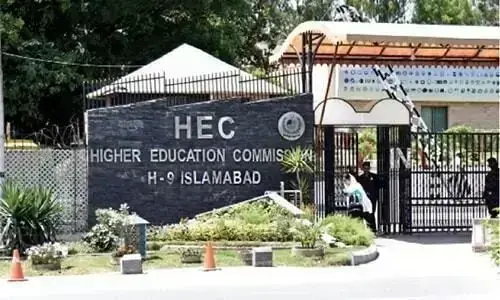
The Higher Education Commission of Pakistan (HEC) on Monday announced the launch of a “fully online and paperless” degree attestation system to facilitate students.

In December last year, the HEC said that it had initiated a project to revamp its degree attestation system by integrating cutting-edge blockchain technology, saying the project would be completed within six months. Meanwhile, the National Assembly Standing Committee on Government Assurances had also asked the Higher Education Commission (HEC) to reduce the turnaround time in degree attestation.

In a social media post on X, HEC Chairman Dr Niaz Ahmed Akhtar said, “HEC has revamped the Degree Attestation System (DAS) by introducing a fully online and paperless attestation mechanism to facilitate students and graduates across Pakistan.”

Under the new system, he explained, applicants will no longer be required to physically visit HEC offices or submit original documents.

“Applications for online attestation can now be submitted 24/7 through the HEC e-Services Portal,” he added.

He said that the new e-attestation certificate system was designed to provide a “secure, efficient, and user-friendly process,” with online verification available for attested documents and certificates.

According to information available on HEC’s official website, “This modern system is fast, convenient, and hassle-free, removing the need for applicants to visit HEC offices or submit original documents in hard copy. Applications can be submitted anytime (24/7) through the online portal at www.eservices.hec.gov.pk.”

Candidates can apply for the online degree attestation by creating an account and providing personal and academic details. The candidates will then upload the transcripts online for scrutiny by the HEC and verification of credentials by the respective universities.

The payment can be made online through 1-link.

After a final review, an e-attestation certificate will be issued against the documents applied for attestation. Applicants will be notified via SMS and email.

The applicants can also download the verifiable certificate from their online account at the HEC Portal.

Before this initiative, candidates had to send their documents via post to HEC or visit its offices to get their documents attested. The new project will now issue a verifiable e-certificate instead of a stamp, minimising the time and cost required by the manual process.

  •  

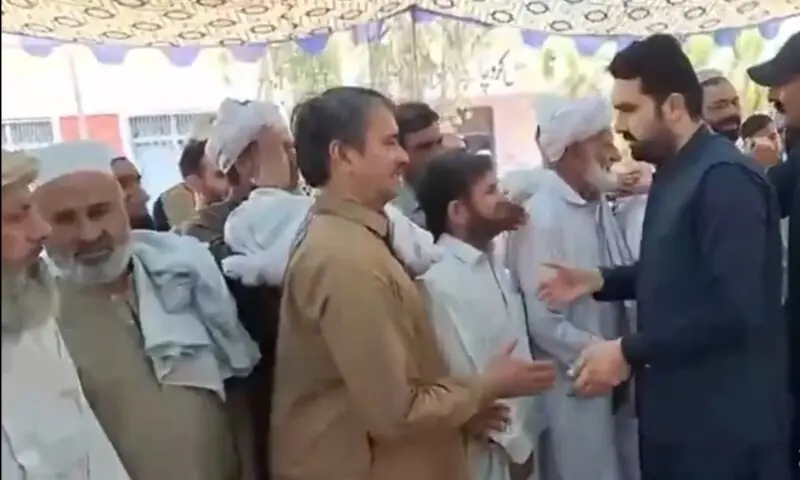
KP CM Afridi decries 'decisions made behind closed doors' during visit to Bannu

Khyber Pakhtunkhwa Chief Minister Sohail Afridi on Monday decried decisions taken behind closed doors, saying that the provincial government would oppose those decisions that went against peace in the province and the people’s interests.

He made the remarks during a visit to Bannu, after 15 police personnel were martyred and three sustained injuries after a suicide attack on the Fateh Khel police post.

According to a statement issued by the CM House, Afridi met the families of the martyred police personnel and also offered Fateha.

The statement said that he also visited the hospital to inquire about the health of the injured personnel and directed officials to provide them with the best possible healthcare facilities.

The statement quoted Afridi as saying that the KP police had shown bravery and courage against terrorism. He said that the people of the province had to stand up for their rights, otherwise the “imposed circumstances” would continue to prevail.

“We have been continuously saying that terrorists are again rearing their heads, but decisions behind closed doors have been imposed on us for the last 78 years,” he lamented, adding that the imposed policies had “pushed the province into a quagmire of unrest”.

“We have made immense sacrifices [in the fight] against terrorism. Further unrest is unacceptable,” he asserted.

“The provincial government and police will fight against terrorism together,” Afridi said, noting that the government would oppose every decision against peace in the province and the people’s interests.

He further noted that the sacrifices of the martyred officials would not be in vain, as establishing peace in the province was the government’s top priority.

  •  

Afghanistan issued demarche after 15 police personnel martyred in Bannu suicide attack

The Foreign Office (FO) said on Monday that the Afghan chargé d’affaires was summoned and handed a “strong demarche” over the suicide attack in Bannu, which claimed the lives of 15 police personnel.

In a statement, the FO said, “The Afghan chargé d’affaires was summoned to the Ministry of Foreign Affairs today to deliver a strong demarche regarding the cowardly vehicle-borne improvised explosive device (IED) attack carried out by terrorists of Fitna al Khawarij on the Fateh Khel police post in Khyber Pakhtunkhwa’s Bannu District on May 9.”

Fitna al Khawarij is a term the state uses for terrorists belonging to the banned Tehreek-i-Taliban Pakistan, while Fitna al Hindustan is a term designated by the state for terrorist organisations in Balo­chistan.

“The ministry conveyed that a detailed investigation into the incident, along with evidence collected and technical intelligence, indicates that the attack was masterminded by terrorists residing in Afghanistan,” the FO said.

“Reiterating Pakistan’s grave concern over the continued use of Afghan soil for terrorist attacks against Pakistan, it was impressed upon the Afghan side that Pakistan reserves the right to respond decisively against the perpetrators of this barbaric act,” the statement added.

It was also highlighted that the continued presence of various terrorist organisations on Afghan soil, and the permissive environment enabling their operations, were documented in reports by the United Nations Monitoring Team and other international organisations.

“The fight against terrorism is a common cause, and the Afghan Taliban must honour their commitment not to allow their territory to be used for terrorism against other countries,” the FO said.

It stated that Pakistan had repeatedly urged the Afghan Taliban regime to take concrete and verifiable action against Fitna al Khawarij, Fitna al Hindustan, and ISKP/Daesh elements operating from Afghan soil.

“Pakistan has also constructively engaged with the Afghan Taliban regime through several rounds of talks mediated by brotherly and friendly countries. However, the Afghan Taliban have consistently failed to commit to, or deliver, meaningful and verifiable action against these terrorist outfits,” the statement said.

“The Afghan Taliban regime has also been categorically informed that, if it continues to harbour these terrorist organisations, Pakistan will not compromise on its national security or on the safety and protection of its citizens,” the FO concluded.

At least 15 police officers were martyred and three others wounded late on Saturday night after terrorists rammed an explosives-laden vehicle into Fateh Khel police post in Bannu, followed by attacks from multiple directions with heavy weaponry and drones.

Bannu Regional Police Officer (RPO) Sajjad Khan confirmed that a total of 18 police personnel were on duty at the post when it was attacked. The initial assault began when terrorists drove a vehicle filled with explosives into the post.

Following the massive blast, militants opened heavy fire and launched a multi-pronged ground attack, according to authorities. “Fifteen were martyred and three sustained injuries,” the RPO said.

A senior administration official in Bannu told AFP the assailants also used quadcopters during the assault.

Recent Pak-Afghan ties

There has been a resurgence in terrorism in Pakistan since the Afghan Taliban returned to power in Kabul in 2021.

Islamabad has repeatedly urged the Taliban administration to dismantle terrorist sanctuaries on Afghan soil, particularly those linked to the banned TTP. Officials say those appeals have gone unheeded.

Operation Ghazab lil-Haq was launched on the night of February 26, following unprovoked firing by the Afghan Taliban from across the border.

From March 18 to 23, Pakistan observed a five-day temporary pause in the operation on the occasion of Eidul Fitr, with the FO later saying it would continue “until its objectives are achieved”.

De-escalation requests from Saudi Arabia, Qatar and Turkiye were part of the reasons behind the pauses announced by both sides, according to their respective statements.

In early March, Chief of Defence Forces and Chief of Army Staff Field Marshal Asim Munir had said that peace between Pakistan and Afghanistan could only prevail if the Taliban regime “renounced their support for terrorism and terrorist organisations”.

In April, the two countries held talks in China’s Urumqi and agreed to avoid any escalation in their armed conflict.

  •  

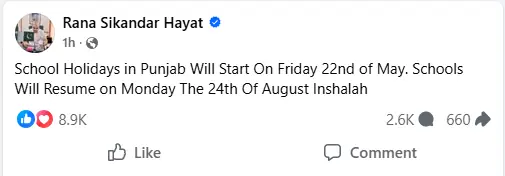
3-month-long summer vacation announced for Punjab schools

Punjab Education Minister Rana Sikandar Hayat on Monday announced a three-month-long summer vacation for schools in the province.

In a statement released by his spokesperson, he said that the summer break would begin on May 22 and would end on August 23.

He said that schools in the province would then open on August 24.

The minister also posted the same on his official Facebook account.

Last month, schools in the province were advised to alter working hours or declare early summer holidays due to excessive heat, which has prevailed over parts of the country over the past few weeks.

The Punjab Disaster Mana­­gement Authority had issued urgent directives to educational instit­utions and district admi­nistrations across the province in view of a heatwave.

The advisory had stated that schools should alter working hours or declare early summer holidays if excessive heat persisted; suspend all outdoor sports and activities immediately; ensure uninterrupted availability of clean, cold drinking water; maintain functional ventilation, fans, and cooling systems; and tell students to wear loose, light-coloured clothing.

  •  

Plot to coerce girl into carrying out terrorist attack in Islamabad thwarted, CM Bugti says

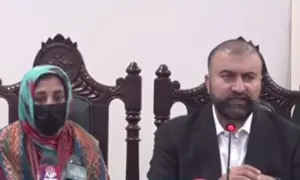
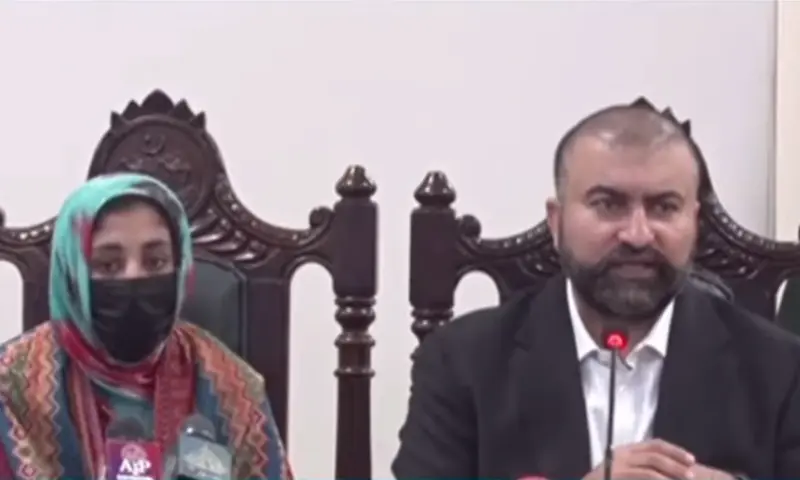
Balochistan Chief Minister Sarfraz Bugti said on Monday that a plot to coerce a girl into carrying out a terrorist attack in Islamabad had been thwarted by intelligence agencies.

The girl, who was reportedly arrested before she could carry out a suicide bombing, will be released to her father under supervision instead of facing trial, he said.

The chief minister, in a press conference alongside the suspect, emphatically denounced the perpetrators of exploitation against Baloch women and girls. He stressed that their actions had no connection at all to Baloch tradition or history.

“We are faithful to our tradition,” he said, adding, “These people have no connection to Balochiyat, and the way they are using our women in this war is shameful. I am so ashamed that I cannot even tell the media the details.”

According to details shared by Bugti, the girl’s name had initially appeared on social media as a missing person, but an investigation by intelligence agencies ascertained that she was allegedly training at a terrorist camp.

Terming the investigation’s results as “very unfortunate”, Bugti noted that the method of exploitation by the terrorists involved “honeytrapping” women, then blackmailing them. In this case, by threatening to kill the girl’s father if she did not comply with their orders, the chief minister added.

“The plan was to perform a suicide attack in Islamabad,” the chief minister said.

He contended that the objective of the attack, which he alleged was orchestrated by agents of India’s intelligence agency Research and Analysis Wing (RAW), was to sabotage the improved reputation Pakistan was currently enjoying on the international stage.

The Balochistan CM said the girl perhaps did not know that Islamabad was the target and was to be told at the last minute, commending the intelligence agencies for foiling a major plan.

In addition, he stressed that the girl had been exploited in an egregious way and slammed those who were responsible for it, asking, “They would exploit their own Baloch girls? Their own daughters, their own sisters … and to please international masters? Can you conceive of it?”

“Then they say, ‘We are Baloch and these are Baloch traditions and a Baloch cause’ — there is no cause, no Balochiyat. It is a curse on this Balochiyat.”

Bugti said the girl’s story had caused him great pain and was a cause for shame, asserting that it showed the difference between the state and the terrorists: “I always say we should be opening doors to Oxford and Harvard for these girls, and they want to exploit them and put them in suicide jackets.”

He also denounced that the terrorists would proceed to upload video clips of such women and girls to social media as propaganda, calling it “heroism”, to recruit more women for their plans. He challenged the notion presented by the terrorists that women were “a part of this war”.

“Historically, Baloch women have never been a part of war. Historically, Baloch women have been a part of peace — when tribes fight, if a woman comes in between them, the fight ends. If a woman is there, her brother’s life is spared; if a woman is there, her father and son’s murders are called off … these were our traditions,” he noted.

“What kind of tradition has you exploiting girls for your vested interests like this? I do not have words to tell you the details,” the Balochistan CM remarked.

“We have decided that we are returning this girl to her father respectfully and with political and tribal guarantees,” Bugti said, adding that the father was a poor man.

“We have requested that he keep an eye on his daughter and, of course, our oversight will be present somewhere; we will watch them.”

He emphasised that they were releasing the girl because she was underage: “We could have tried her, but seeing the evidence of exploitation … I cannot sleep tonight.

“This is what they are doing to our Baloch daughters? To our Baloch sisters? They should be ashamed.”

The chief minister highlighted the “capacity and capability” of the intelligence agency that had saved Pakistan from losing face.

“So much destruction was going to happen; that was a given,” he noted. “But in Pakistan, if a woman carries out a suicide bombing … you can imagine its impact on Pakistan at this time, on an international level.”

Pakistan recorded a second consecutive month of improving security indicators in April 2026, with militant attacks and related casualties declining markedly, according to a report released by the Pakistan Institute for Conflict and Security Studies (PICSS).

According to the data, Balochistan also experienced a notable improvement, with militant attacks falling from 59 in March to 18 in April, a 69pc reduction.

In March, Bugti said security forces had arrested a “would-be” female suicide bomber in Khuzdar, with the help of “human intelligence”. At the time, he said the arrested woman would be interrogated in the “presence of female police personnel”, stressing that the state was cognisant of its responsibility to ensure that she suffered “no physical harm, moral harm or harassment”.

In December of last year, a major terror plot was thwarted in Karachi as law enforcers detained a teenage girl hailing from Balochistan, according to Sindh Home Minister Ziaul Hasan Lanjar.

  •  
❌