Reading view

Taliban's new marriage separation decree draws UN criticism

The Afghan Taliban government’s new decree governing the separation of spouses “reinforces systemic discrimination” and erodes the rights of Afghan women and girls, the United Nations said on Thursday.

Published in mid-May, the 31-article code sets out various grounds for separation in Afghanistan, including a husband’s prolonged disappearance, “incompatibility” between couples, renunciation of Islam and “failure on the part of the husband”.

The decree, which appeared in the country’s Official Gazette, also states that marriage contracts drawn up by relatives “on behalf of a minor boy or girl” can be annulled, which suggests child marriage is permitted in Afghanistan, according to the UN.

In most cases, the procedures for women seeking a separation are more complicated than those for men.

The document, approved by Supreme Leader Hibatullah Akhundzada, “is part of a broader and deeply concerning trajectory in which the rights of Afghan women and girls are being eroded”, said Georgette Gagnon, deputy special representative of the UN secretary-general.

It “further entrenches systemic discrimination in law and practice”, the UN statement said, adding that women and girls are denied “autonomy, opportunities and access to justice”.

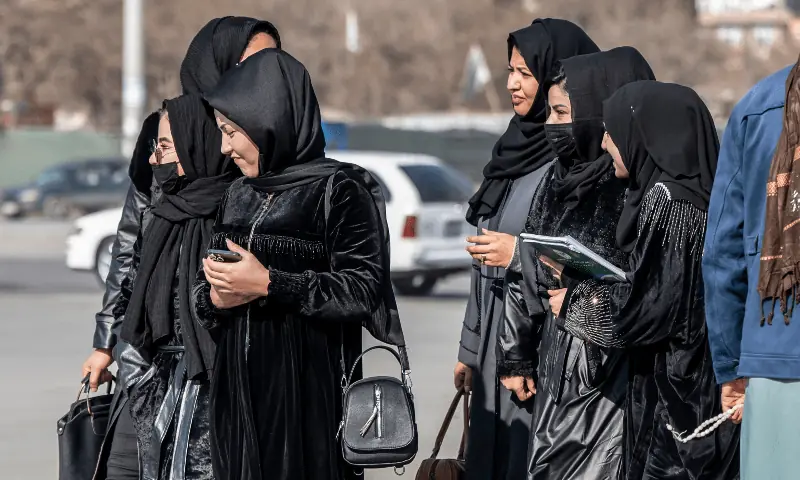
Since returning to power in 2021, the Taliban government has banned girls from continuing their education beyond primary school, walking in parks and going to gyms, swimming pools or beauty salons.

They are required to cover themselves from head to toe and are barred from many jobs.

Any breach of the rules can result in arrest and imprisonment.

The UN’s Afghanistan mission (UNAMA) said that following a decree issued in 2021 in which the Taliban authorities had “recognised certain rights for women, including women’s consent to marriage”, subsequent legislation has ultimately eroded those protections.

Article 5 of the decree has drawn widespread criticism.

It sets out the procedures for the separation of minors whose family members enter into a marriage contract on their behalf, which “implies that child marriage is permitted”, according to UNAMA.

“If any relative other than the father or grandfather concludes a marriage contract on behalf of a minor boy or a minor girl with a compatible spouse and for a customary dower, the contract shall be valid,” the decree says, before outlining how the boy or girl can choose to annul at puberty if approved by a court.

According to a traditional practice that has been in place in some families in Afghanistan for decades, parents promise that their child will marry a child from the other family.

However, the marriage contract is only concluded later, as sexual relations before puberty are prohibited under Islamic law.

The Taliban government’s Ministry of Justice did not respond when asked by AFP whether the minor should be required to live with their spouse at any age.

Marriage was only permitted from the age of 16 for girls under the law in force until the Taliban took back power.

The decree makes a distinction between girls’ and boys’ option to annul on reaching puberty, saying that if a “virgin girl” had previously remained silent, the decree considers her choice to separate as “invalidated”.

However, “the choice upon obtaining puberty of a boy… is not invalidated by silence”.

Government spokesperson Zabihullah Mujahid dismissed criticism to the decree, telling the state-run RTA television channel on Wednesday it was coming from people “hostile” to Islam.

He defended fathers and grandfathers having authority over their children, including the power to enter into a marriage contract, provided they were “kind and healthy”.

However, he said such cases would be rare because the Taliban “prohibits marrying off a girl without her permission”.

The procedures also set out how a woman may remarry if her husband has gone missing, but not in the event of war.

In such cases, “the wife shall wait for such a period until his death becomes certain and until the people of his generation (peers) have all passed away”.

If the missing person were to reappear after the woman had remarried, it would be up to him to decide whether to “keep” her, divorce or opt for mutual separation.
  •  

Commander-in-beef: Buffalo nicknamed 'Donald Trump' wins fans in Bangladesh

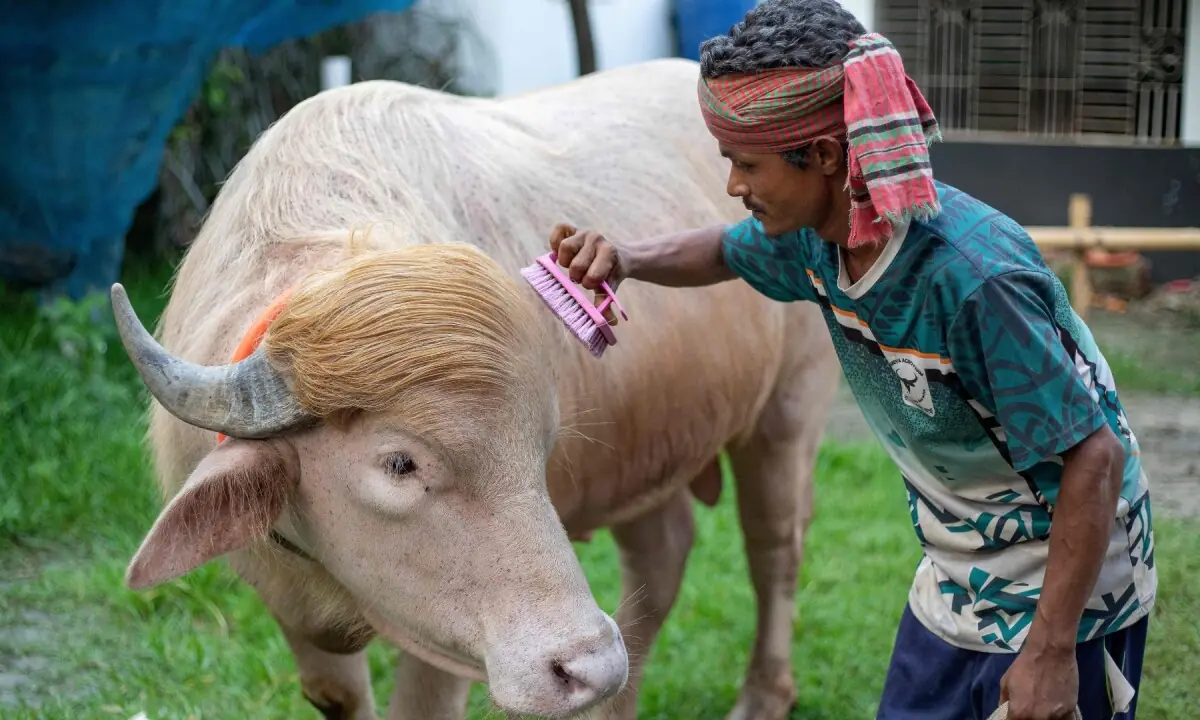
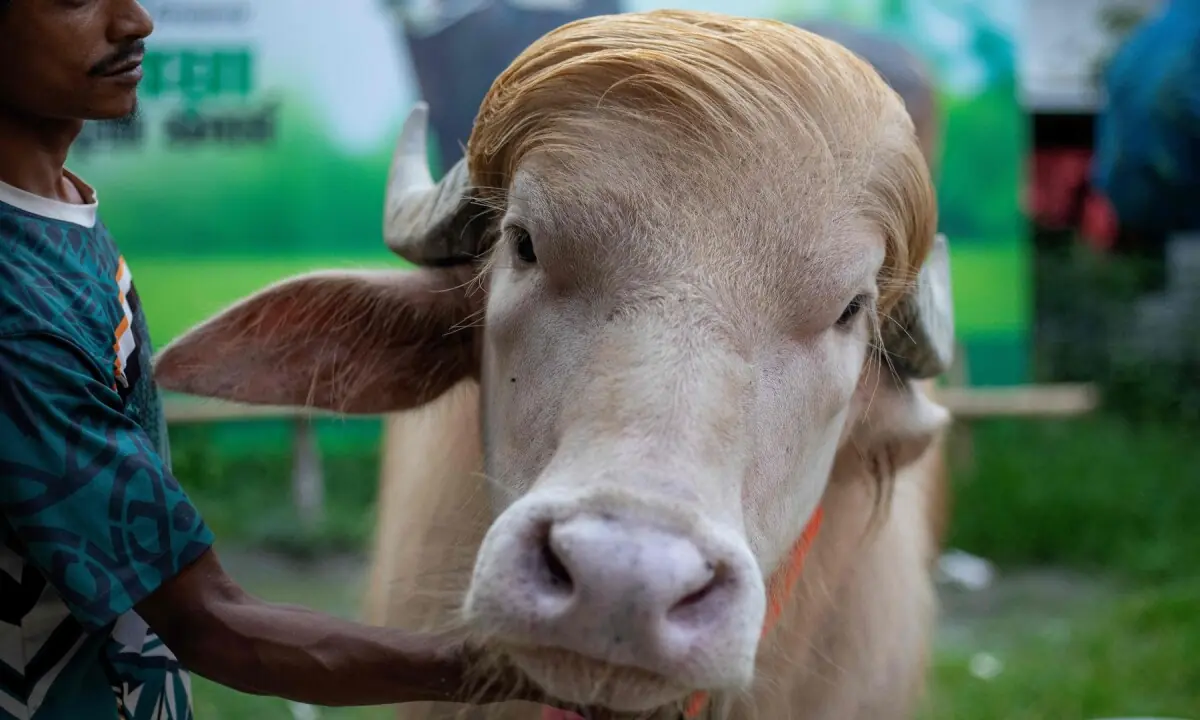
Crowds in Bangladesh are flocking to snap photographs with an unlikely social media star — an albino buffalo with flowing blond hair nicknamed “Donald Trump” due to be sacrificed within days.

Owner Zia Uddin Mridha, 38, said his brother named the 700 kilogramme bull over its flowing helmet of hair resembling the signature look of the US president.

“My younger brother picked this name because of the buffalo’s extraordinary hair,” he told AFP at his farm in Narayanganj, just outside the capital Dhaka.

Mridha said a constant stream of curious visitors — social media fans, onlookers and children — have come throughout May, eager to see the internet sensation.

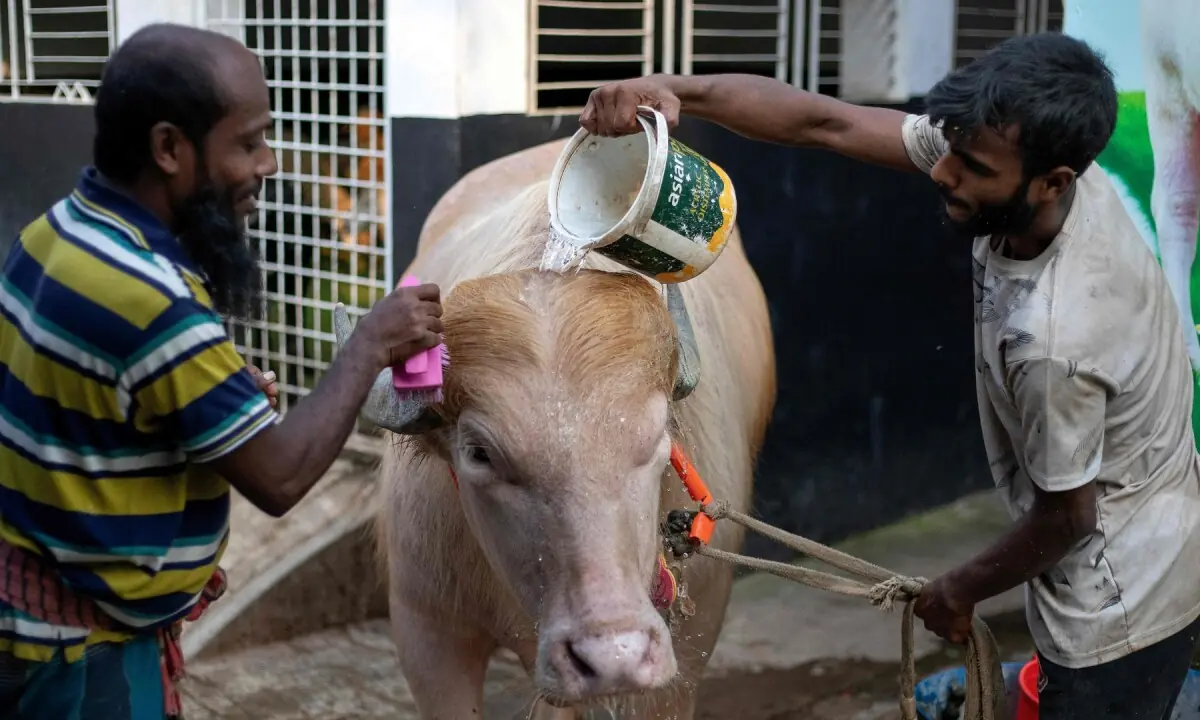
He watched as men poured a cool bucket of water over the bull’s head, running a pink brush through its blond combover, neatly tucked between sweeping curved horns.

“The only luxury he enjoys is bathing four times a day,” Mridha said, stressing that the similarities between the bull and the president stopped at the hair.

Officials from the livestock department said albino buffaloes are extremely rare, and appear white or pink due to a lack of melanin production.

This photograph taken on May 17, 2026 shows caretakers attending an albino buffalo nicknamed “Donald Trump” for sale ahead of Eidul Azha at a livestock farm in Narayanganj. — AFP

Eidul Azha

Muslim-majority Bangladesh, a South Asian nation of 170 million people, is preparing for Eidul Azha later this month.

More than 12 million livestock — including goats, sheep, cows and buffaloes — are expected to be sacrificed during the holiday, when many poorer families get a rare chance to feast on meat.

Mridha said the stress of the crowds had caused the buffalo to lose weight, forcing restrictions on public viewing.

Still, children continue to peer through the gates for a glimpse.

Businessman Faisal Ahmed, 30, was among those who managed to get close, snapping photographs.

“Truly, the features are similar between the buffalo and President Donald Trump,” Ahmed told AFP, after arriving with five friends and relatives to see the animal.

“My nephew took a one-hour boat journey just to come and see ‘Donald Trump’,” he added.

This photograph taken on May 17, 2026 shows content creators shooting videos of an albino buffalo nicknamed “Donald Trump” for sale ahead of Eidul Azha at a livestock farm in Narayanganj. — AFP

‘Making a sacrifice’

While the Trump buffalo has become a national star online, it is not the only buffalo with a nickname.

His companions include an aggressive bull named “Tufan,” meaning “storm,” a generously sized animal called “Fat Boy”, and the gentle-natured “Sweet Boy.”

One golden-haired bull was named after Brazilian footballer Neymar for his bleached-blond cut.

Mridha, who has cared for his four-year-old buffalo for the past year, looked with affection at the animal, snuffling through a bowl of fodder.

“I am going to miss Donald Trump, but that is the core spirit of Eidul Azha — making a sacrifice.”

This photograph taken on May 17, 2026 shows a caretaker attending an albino buffalo nicknamed “Donald Trump” for sale ahead of Eidul Azha at a livestock farm in Narayanganj. —AFP

  •  

Radio station mistakenly announces death of King Charles

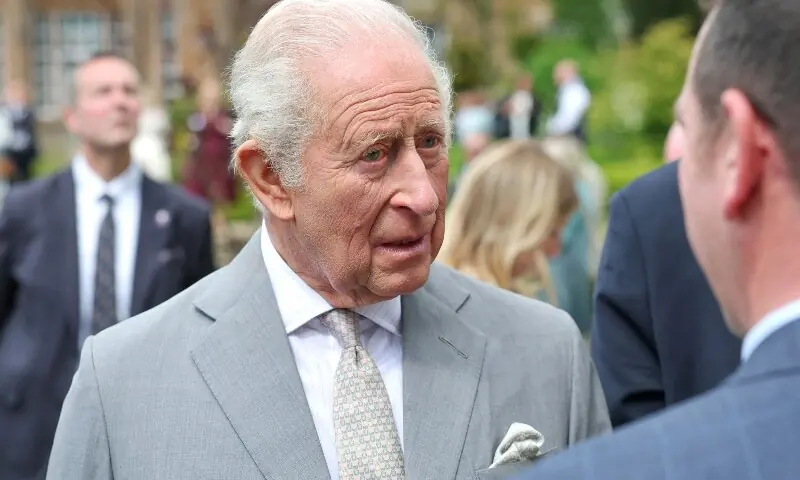
LONDON: A former British pirate radio station on Wednesday apologised “for any distress caused” after accidentally announcing the death of King Charles III.

The erroneous announcement was made on Tuesday afternoon due to a computer error at its main studio in Maldon in eastern Essex, Radio Caroline said in a post on social media.

The error had triggered the so-called death of a monarch procedure “which all UK stations hold in readiness while hoping not to require”, wrote station manager Peter Moore.

Radio Caroline then fell silent as would be required, which alerted us to restore programming and issue an on-air apology,” he said on Facebook post.

“Caroline has been pleased to broadcast Her Majesty the Queen’s and now the King’s, Christmas message and we hope to do so for many years to come,” he said, referring to the monarch’s traditional Christmas Day message to the nation.

“We apologise to HM (his majesty) the king and to our listeners for any distress caused,” Moore added. The mishap on Tuesday came as Charles and Queen Camilla were in Northern Ireland, where they joined a performance with an Irish folk group.

The post did not say how long it was before the mistake was discovered, but the domestic Press Association news agency reported that on Wednesday afternoon, playback for Tuesday’s broadcast between 1:58pm and 5pm was unavailable on the station’s website.

Esta­bl­ished in 1964 to challenge the BBC’s broadcasting mon­opoly, Radio Caroline previously operated from ships off the English coast. After legislation in 1967 forced many pirate broadcasters to close, it continued intermittently before ending offshore broadcasts in 1990.

Published in Dawn, May 21st, 2026

  •  

How IRGC’s ‘permit’ threats may impact submarine cables in Hormuz

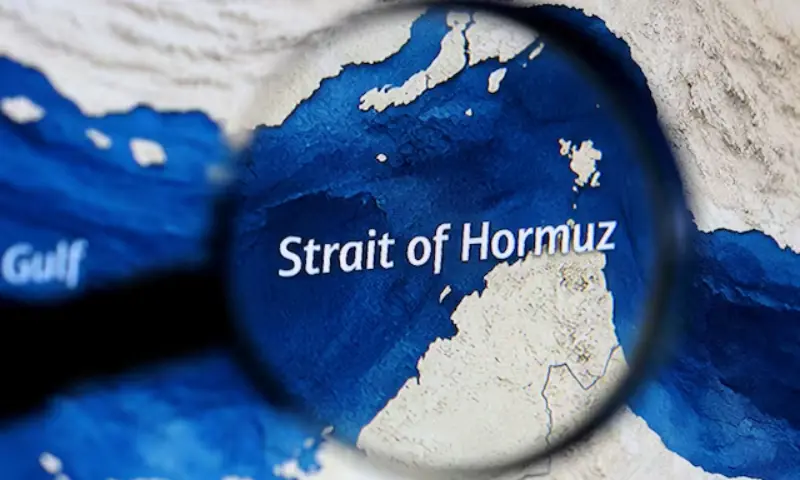
Iran’s Islamic Revolutionary Guard Corps threatened Monday to impose “permits” on submarine fibre-optic cables passing through the Strait of Hormuz.

Here is what you need to know about cable infrastructure in the region and how the threats could play out:

What cables run through Hormuz?

Major connections running through Hormuz include a branch of AAE-1 (Asia, Africa, Europe), which connects points from Hong Kong to Italy and France.

Meanwhile, the Falcon and Gulf Bridge cables connect countries in the Gulf — including Iran — with India and eastern Africa as far as Egypt.

Data running over the cables includes “all kinds of traffic, any data you can think of — videos, email, social media, financial transactions, government communication,” Alan Mauldin, research director at specialist data firm TeleGeography, told AFP.

The potential for global disruption is limited as data flowing between Asia and Europe on AAE-1 does not pass via the Gulf branch, Mauldin said.

What’s more, “all of the Gulf countries using submarine cables that traverse the Strait of Hormuz have multiple other connectivity options,” he added.

But Mauldin did note in a March blog that “the capacity of terrestrial networks may not be sufficient to handle the complete re-routing of traffic” if the Gulf’s subsea connections are cut off.

As host of AAE-1’s Gulf terminal, Qatar especially would be affected by any disruption to the link.

What threat could Iran pose to cables?

Hormuz is “a closed-in geographic area in a strait, with relatively shallow waters… it’s especially favourable for harassment operations using manned or unmanned systems,” said Eric Lavault, a former French naval officer.

Lavault pointed out that American forces have not been able to prevent Iran from launching operations from its long Gulf coast, with Tehran retaining “solid military potential”.

Iran could both attack the cables themselves and “prevent the cable firms from carrying out operations, either for maintenance or for laying new cables,” he said.

“If Iran damages them, they’ll have to be repaired,” Lavault added.

Cables around the world are regularly damaged — mostly by accidents, such as ships dragging their anchors. The International Cable Protection Committee tallied around 200 incidents a year, Mauldin wrote in March.

“A dedicated fleet of repair vessels is on standby,” he noted.

But these require permits to enter a country’s waters and must remain stationary on site for long periods — making them potentially vulnerable to attack.

Only one repair vessel owned by UAE-based e-Marine is currently in the Gulf, Mauldin pointed out, limiting capacity until the Strait of Hormuz is reopened.

Can Iran legally tax or forbid the cables?

It was not immediately clear from Iranian statements who it could target for demands to pay tolls or permits — whether cable layers, owners, operators or users.

In territorial terms, “given the long-standing issues with Iran, all cables were laid in Omani waters as they passed through the Strait of Hormuz,” Mauldin wrote in March.

But Tehran has claimed “absolute sovereignty over the bed and subsoil of its territorial sea”.

Iran’s threat “calls international law into question,” said Lavault, as the country is a signatory to the 1982 UN Convention on the Law of the Sea (UNCLOS) — “a bit like the rules of the road at sea”.

“In normal conditions, they don’t have the right to demand tolls” from passing ships — “and the same goes for cables”, he added.

UNCLOS allows laying cables and pipelines within countries’ exclusive economic zones, which extend up to 200 nautical miles (230 miles, 370 kilometres) from their coastlines.

“The coastal state normally has no right to object,” Lavault said.

But although Iran has signed UNCLOS, it never ratified the treaty — the same position as the United States.

If the treaty is called into question, “it would be a crack in another fundamental pillar of international law”, Lavault warned.

  •  

WHO says Ebola risk high regionally, low worldwide

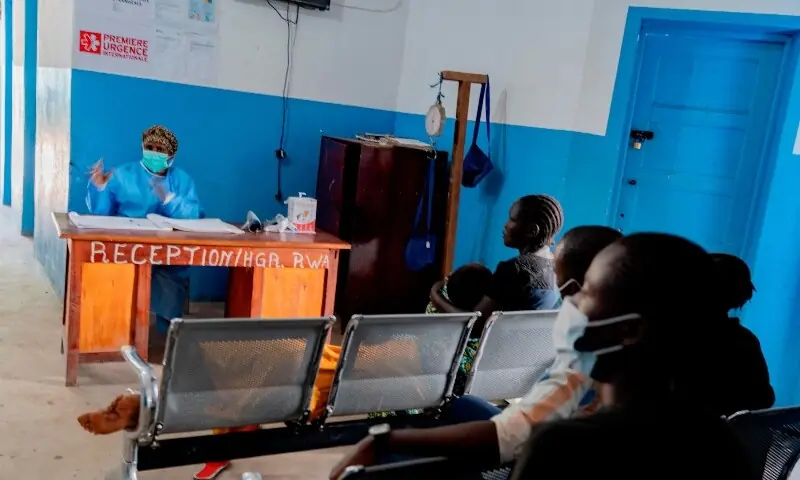
The World Health Organisation (WHO) on Wednesday said the risk of the Democratic Republic of Congo’s (DRC) deadly Ebola outbreak was currently high at the national and regional levels but low worldwide.

WHO experts said that while investigations into its origins were ongoing, given the scale of the situation in the eastern DRC, the outbreak probably began a couple of months ago.

But the UN health agency’s emergency committee said it did not currently meet the pandemic emergency threshold.

“WHO assesses the risk of the epidemic as high at the national and regional levels, and low at the global level,” said the organisation’s chief Tedros Adhanom Ghebreyesus.

So far, 51 cases have been confirmed in the DRC, in the eastern provinces of Ituri and North Kivu, “although we know the scale of the epidemic in DRC is much larger,” he told a press conference at the WHO’s headquarters in Geneva.

He said Uganda had also reported two confirmed cases in the capital Kampala, including one death, while a US national working in the DRC has been confirmed positive and transferred to Germany.

“There are several factors that warrant serious concern about the potential for further spread and further deaths,” said Tedros.

“Beyond the confirmed cases, there are almost 600 suspected cases and 139 suspected deaths.

“We expect those numbers to keep increasing, given the amount of time the virus was circulating before the outbreak was detected.”

Not a pandemic

On Sunday, Tedros declared the situation to be a public health emergency of international concern — the second-highest level of alarm under the legally binding International Health Regulations (IHR) — triggering emergency responses in countries worldwide.

The WHO emergency committee convened to assess the outbreak met on Tuesday.

“The current situation and criteria for a public health emergency of international concern have been met, and we agree that the current situation does not satisfy the criteria for a pandemic emergency,” the committee’s chair, Lucille Blumberg, told reporters from South Africa.

Anais Legand, WHO technical officer on viral haemorrhagic fevers, said investigations were underway to pinpoint how long Ebola has been spreading in the eastern DRC.

Given the scale, we are thinking that it has started probably a couple of months ago, but investigations are ongoing and our priority is really to cut the transmission chain by implementing contact tracing, isolating and caring for all suspect and confirmed cases,” she said.

US Secretary of State Marco Rubio on Tuesday said the WHO was “a little late” in identifying a deadly outbreak.

President Donald Trump, in one of his first acts on returning to office last year, set in motion a US withdrawal from the WHO, which he attacked bitterly over its response to the Covid-19 pandemic.

Asked about Rubio’s criticism, Tedros said that “maybe what the secretary said… could be from lack of understanding of how IHR work, and the responsibilities of WHO and other entities”, he said, explaining that the agency acted in support of countries rather than replacing them in outbreak responses.

  •  

Shot for throwing stones: Israeli forces killing West Bank teens weekly

Youssef Shtayyeh came home from school on an April afternoon, dropped his bag in the hallway and headed straight back out to join his friends.

Minutes later, he was dead — shot by an Israeli soldier, just 100 metres from his home.

He was 15. His is not an isolated case.

Since Israel launched a major military operation against armed Palestinian groups in the northern West Bank in January 2025, one Palestinian minor has been killed every week on average across the territory, up from one every three weeks in 2021, according to Unicef.

Seventy teenagers, mostly aged 15 to 16, have been killed to date, 65 of them by Israeli forces, according to a Unicef report dated May 12.

Then came Youssef Kaabnah, 16, killed on May 13.

Then Fahd Oweis, 15, two days later.

The Israeli military said both had “hurled stones” at soldiers.

It is almost certainly what Shtayyeh had been doing too, on April 23, in Nablus — the largest city in the northern West Bank, a Palestinian territory occupied by Israel since 1967.

Youssef and his friends were on a side street above a main road when a couple passing in a car spotted them throwing stones — and the military convoy below.

One jeep stopped. Then the others.

“A soldier got out, then two more. They started shooting at the kids,” the passing driver told AFP, declining to be named for safety reasons.

‘Designed to kill’

A neighbour filmed what followed.

Two shots. Then screams.

Youssef grabbed the car door.

“He said, ‘Please don’t leave me, I’m scared. Take me to my father, take me home,’” the driver recalled.

Youssef’s father Sameh Shtayyeh, a 48-year-old building contractor, told AFP he had no idea what had caused the soldiers to open fire on his son as he “wasn’t there”.

Sameh Shtayyeh, the father of 15-year-old Youssef Sameh Shtayyeh who was killed on April 23, by Israeli soldiers in the city of Nablus, stands next to an image of his son playing football, used in his obituary, in the village of Till, west of Nablus, in the Israeli-occupied Palestinian West Bank on May 12, 2026.

In a panic, the driver told the boy to get in the car and sped to the hospital.

By the time they reached the facility, the boy was silent. Youssef’s heart had stopped.

“A gunshot wound — entry in the back, exit through the chest,” surgeon Bahaa Fattouh, who treated him, told AFP.

Doctors resuscitated him and rushed him to the operating theatre. His heart stopped again.

This time, it did not revive.

“Earlier, we used to treat minor injuries — legs, arms, rubber bullets,” said Fattouh.

But since the Hamas attack on Israel on October 7, 2023, “we only see lethal wounds — chest, head.” Wounds, Fattouh said, that were “designed to kill”.

“Most patients die on the operating table.”

‘Standard procedure’

AFP contacted the Israeli military on the day of the incident, and again after returning from Nablus last week.

The response was identical, word for word: “A terrorist threw stones at soldiers. The soldiers applied the standard arrest procedure, which ended with fire being directed at the suspect.”

Israeli daily Haaretz recently quoted the military’s commander for the West Bank, Major General Avi Bluth, saying troops had killed 42 Palestinians for throwing stones in 2025.

He described stone-throwing as “terrorism”.

Standing at the spot where his son fell, Sameh Shtayyeh stares down at the road below.

“Whether he threw stones or not — what does it matter? Where is the danger to an army patrol?” he asks bitterly.

In protests “in Israel, in France, people throw stones and bins” and face nothing worse than arrest, he said.

He buried Youssef in the family village of Tell, five kilometres (three miles) from Nablus.

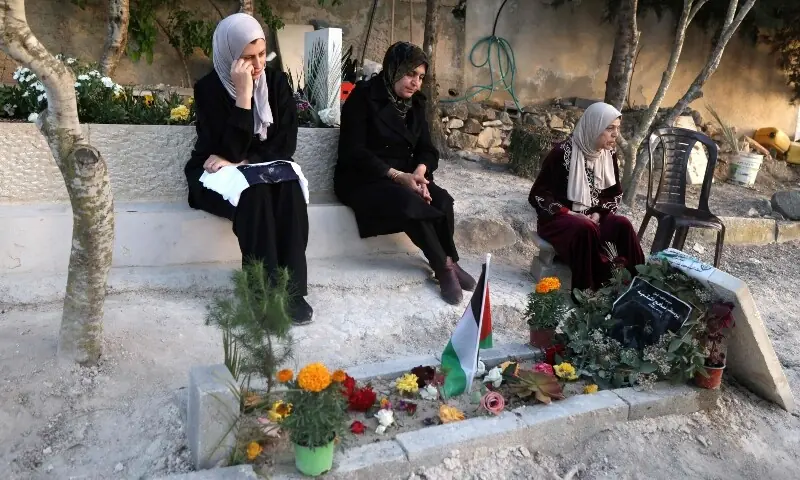
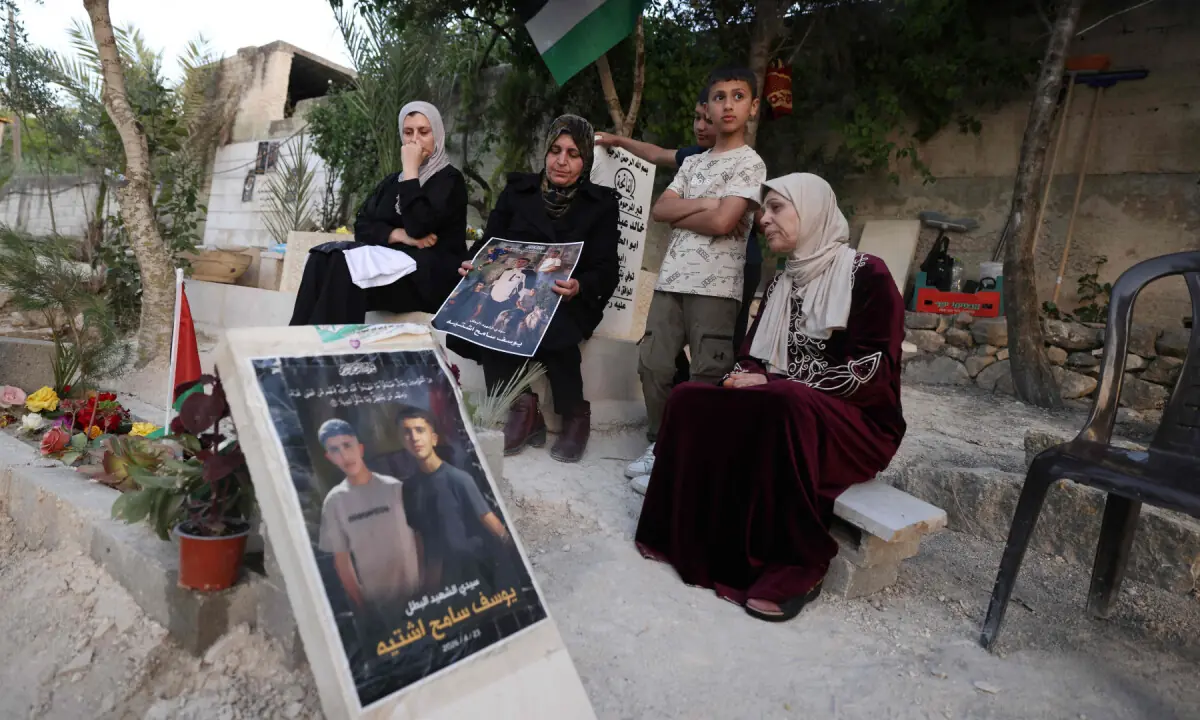
Weeks later, women were still holding a vigil at the flower-covered grave, topped with a portrait of the teenager showing him on a football pitch with a ball at his feet.

Palestinian female relatives visit the grave of 15-year-old Youssef Sameh Shtayyeh who was killed on April 23, by Israeli soldiers in the city of Nablus, at the cemetery in the village of Till, west of Nablus, in West Bank on May 12, 2026. — AFP

His father had promised to take him to Saudi Arabia to watch Cristiano Ronaldo play.

Now, each time Sameh comes home, Youssef is not there to greet him.

His eldest son returns from school — but Youssef is not there.

He glances at the back seat of his car. Youssef is not there.

  •  

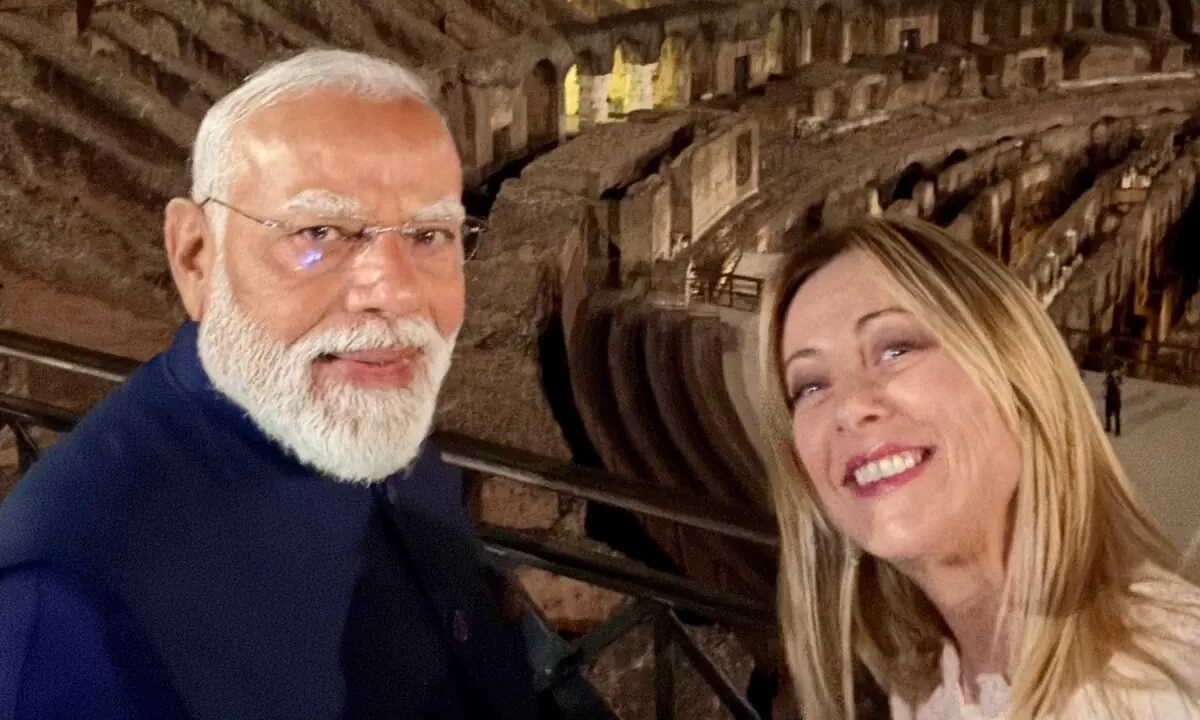
Colosseum selfies and 'Melody' toffee: Modi meets Meloni in Rome

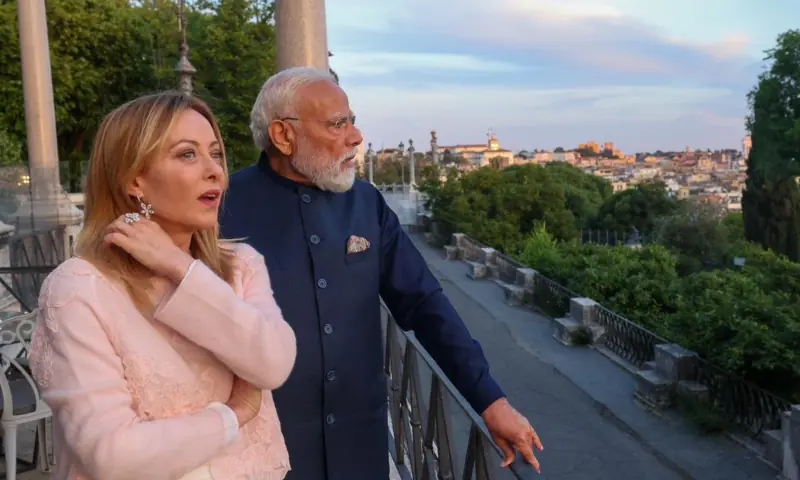
Indian Prime Minister Narendra Modi and Italian Prime Minister Giorgia Meloni took selfies at the Colosseum and admired the view over Rome ahead of talks focused on trade on Wednesday.

In a video posted on X, Meloni also thanked Modi for bringing along a packet of “Melody” toffees on his visit, with the two seen laughing over the present — a play on their names.

Wrapping up a tour of Europe, Modi landed in Rome on Tuesday for the first bilateral visit by an Indian prime minister to Italy in 26 years.

Modi previously visited Italy for a G20 meeting in 2021 and a G7 summit in 2024.

In a joint opinion in Italy’s Corriere della Sera daily, the two said they wanted to “reach and exceed the €20 billion ($23bn) target for trade between Italy and India by 2029”.

Particular sectors of interest would include defence, aerospace, car parts, clean technologies and textiles, they said.

“We aim to forge a powerful synergy between Italian design, manufacturing excellence, and world-class supercomputers… and India’s rapid economic growth, engineering talent, scale, and innovation and entrepreneurial ecosystem,” they said.

Bilateral trade between Italy and India was €14.25bn last year, according to the Indian embassy to Italy.

Later on Wednesday, the two leaders will hold bilateral talks at Villa Pamphili, a 17th-century villa to the west of the city centre.

Modi on X said he would also visit the Rome headquarters of the UN’s Food and Agriculture Organisation (FAO) “strengthening India’s commitment to multilateralism as well as global food security”.

  •  

Can Brazil become a major rare earths supplier?

Brazil sits atop a potential bonanza of rare earths that has sparked global interest, led by Washington, as demand surges for the increasingly vital minerals.

But any windfall still appears a distant prospect as Latin America’s biggest economy currently mines only a marginal amount.

Only China has greater reserves of the critical minerals which are essential to make everything from smartphones to electric vehicles and missiles.

Despite their name, the 17 elements are not actually rare, but rather extremely complex to extract and the requisite capital and technology are in short supply in Brazil.

So can the Latin American giant become a major supplier?

How large are the reserves?

Brazil has more than 20 million tons of rare earths, according to estimates by the US Geological Survey (USGS).

It holds the second-largest reserves after China and ranks far ahead of India, the third-placed nation which has an estimated 6.9 million tons of the critical minerals.

But Brazil exported only 20 tons in 2024, a tiny share of global production, which the USGS estimated at 390,000 tons that year.

China accounts for around two-thirds of the total global production.

Why is production so low?

Rare earth elements are found in sands, clays or rocks alongside dozens of other compounds and must be separated through a costly process.

“Between what we extract from the ground and the oxide (of rare earths), which would be 99.9 per cent pure, there are at least 400 industrial processes,” explained Pablo Cesario, president of the Brazilian Mining Institute (IBRAM), which represents the sector’s main companies.

“We can do this at laboratory scale. What we do not have — and almost nobody in the world has — is this processing technology at industrial scale,” he added during a virtual press conference.

Julio Nery, director of mining affairs at IBRAM, said the country needs infrastructure, technological research and a cheaper, more abundant energy supply to ramp up production.

Brazil is already one of the world’s leading mining countries, producing large quantities of iron ore, gold, bauxite and graphite. It dominates the global supply of niobium — used to strengthen steel.

Who is leading the scramble for rare earths?

In a bid to challenge China’s dominance over the rare earth market, Washington is actively encouraging exploration in Brazil.

“We see Brazil as a place with the potential for billions in investment. We are already on that path, with over $600 million invested,” an American embassy spokesperson, speaking on condition of anonymity, told reporters at an event with investors in March.

During the meeting, Washington signed a memorandum of understanding with the state of Goias in central Brazil to encourage rare earth mining.

And in April, the American company USA Rare Earth bought Serra Verde — the company operating Brazil’s only producing rare earth mine in Goias — for around $2.8 billion.

Australia has also emerged on Brazil’s rare earths scene through the company Foxfire Metals, while China has a stake in a project in the Brazilian Amazon, according to IBRAM.

What does the government say?

President Luiz Inacio Lula da Silva has said he is willing to “make agreements with all countries.”

“But no one … will ever lay claim to our wealth,” he said.

This week, the leftist leader invited the United States to “partner” with Brazil in rare earth exploration, days after meeting US President Donald Trump at the White House, with whom he has had an up-and-down relationship.

This month, the lower house of Congress in Brazil approved a bill offering tax incentives to the private sector to develop the industry, while also increasing state control over it.

The text gives the executive branch veto power over agreements with foreign companies for reasons of “economic or geopolitical security,” something the private sector dislikes.

“What is written there is that the government has the final say in everything. And that is a concern,” IBRAM president Pablo Cesario told journalists.

“The expectation is that it will change in the Senate,” where it will be debated on a date yet to be determined, the industry leader added.

  •  
❌