Reading view

'Encouraging progress' made during CDF Munir's Tehran visit: ISPR

Chief of Defence Forces and Chief of the Army Staff Field Marshal Asim Munir conducted intensive negotiations with the Iranian leadership over the past 24 hours that have resulted in “encouraging progress towards a final understanding”, the Inter-Services Public Relations (ISPR) said in a statement on Saturday.

The engagements with Iran’s senior leadership were held in a “positive and constructive environment” and contributed meaningfully to the ongoing mediation process, the military’s media wing said following the conclusion of the army chief’s Tehran visit.

The visit came at a time when negotiations appeared to have moved beyond political signalling into detailed bargaining over a narrow interim framework dealing with the Strait of Hormuz, Iran’s nuclear programme, sanctions relief and guarantees against renewed military action.

“During the visit, the field marshal held high-level engagements with Iranian leadership as part of ongoing mediation efforts aimed at promoting de-escalation and constructive engagement, amidst the regional tensions that have simmered after the ceasefire on 8th April, 2026.”

The discussions between the two sides focused on expediting the ongoing consultative process to “support peace and stability in the region and to reach to a conclusive agreement”.

The statement further said that the Iranian leadership also appreciated Pakistan’s sincere and constructive role in facilitating the dialogue and the promotion of “peaceful settlement of regional issues”.

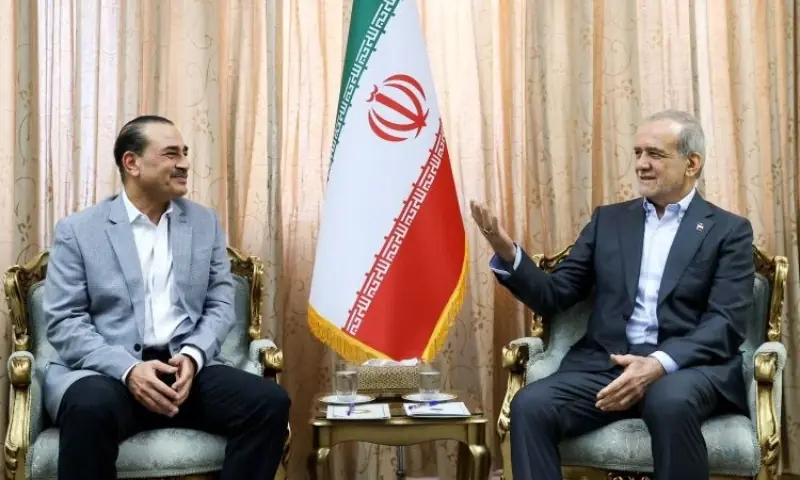
During his visit to the Iranian capital, the field marshal met President Masoud Pezeshkian, Speaker of Iranian Parliament Mohammad Bagher Ghalibaf, Foreign Minister Abbas Araghchi and Interior Minister Eskandar Momeni.

Pakistan has stepped up its diplomatic efforts to break the deadlock, sending the interior minister to Tehran on Wednesday for the second time in less than a week to resuscitate negotiations. He had previously met Iran’s president, parliament speaker and foreign minister over the weekend.

The CDF previously visited Iran for three days last month alongside Interior Minister Mohsin Naqvi, where he held a meeting with Iranian Foreign Minister Abbas Araghchi and other officials. The military’s media wing described the visit as part of “ongoing mediation efforts” for de-escalation between Iran and the US.

The mediation process around Tehran has widened over the past 48 hours. Qatar also dispatched a negotiating team to the Iranian capital in coordination with the United States, while Saudi Interior Minister Abdulaziz bin Saud Al Saud spoke to Naqvi in Tehran.

An Iranian diplomat in China also praised Beijing for presenting a peace initiative during the war “with the support of Pakistan”.

Regional diplomats also pointed to signs of softer Emirati messaging in favour of de-escalation and uninterrupted maritime trade.

The latest round of contacts is taking place under heightened pressure from the US and its Middle East allies. US President Donald Trump on Wednesday said talks in Iran were in the final stages, and also threatened to resume strikes if a deal is not reached in a “limited timeframe”.

Iran, meanwhile, warned of confrontation beyond the Middle East in the case of a US attack but also insisted that all paths were open to avert the resumption of hostilities.

‘Primary interlocutor’

A day earlier, US Secretary of State Marco Rubio also praised Pakistan’s mediation role, describing it as Washington’s “primary interlocutor” in the talks.

“The primary interlocutor on this has been Pakistan and continues to be, and they’ve done an admirable job,” Fox News quoted him as saying.

He also referred to Field Marshal Asim Munir’s Tehran visit, saying Washington was in “constant communication” with him at the highest levels.

“We’re in constant communication with him, and the highest levels of our government are constantly talking to him,” Rubio said.

Diplomats said the evolving process increasingly resembled a phased stabilisation effort rather than negotiations on a comprehensive settlement.
  •  

KP announces four Eid holidays from May 26 to 29

The Khyber Pakhtunkhwa government has announced four Eid holidays from May 26 to May 29 (Tuesday to Friday), according to a notification issued on Saturday.

Meanwhile, in a notification issued today, the Punjab government announced three Eid holidays from May 26 to May 28 (Tuesday to Thursday) in line with the federal government’s Eid holiday schedule.

A day earlier, the Sindh government announced a four-day holiday, including Friday, the third day of Eidul Azha, in its holiday schedule.

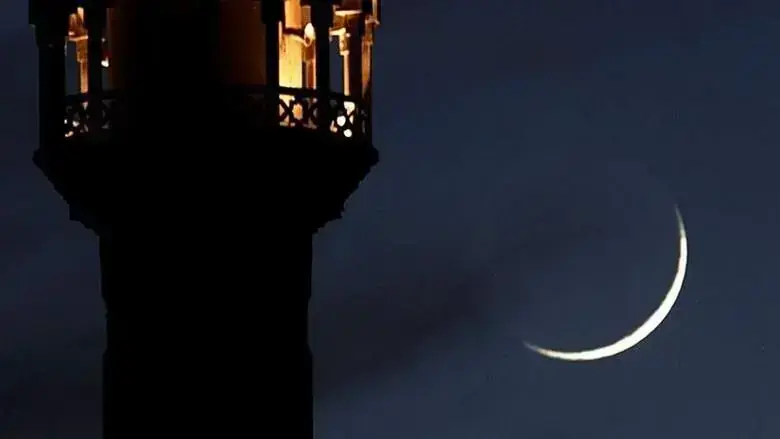
Eidul Azha will be celebrated across Pakistan from May 27 to May 29.

The federal government on Wednesday announced a three-day public holiday from May 26-28 (Tuesday to Thursday) to mark Eidul Azha.

According to a notification issued by the Cabinet Division, Prime Minister Shehbaz Sharif declared May 26 to 28 as “public holidays on the occasion of Eidul Azha”.

The announcement was made after moon sighting testimonies were received from Karachi and other cities of Sindh, Mardan, Rawalpindi, Peshawar and some other areas.

Celebrated on the 10th of Zilhaj, Eidul Azha marks the culmination of Haj, one of the five pillars of Islam.

Saudi Arabia is also set to mark the first day of Eidul Azha on May 27, Saudi Gazette reported.


  •  

PM Shehbaz lands in Hangzhou, kicking off 4-day China visit

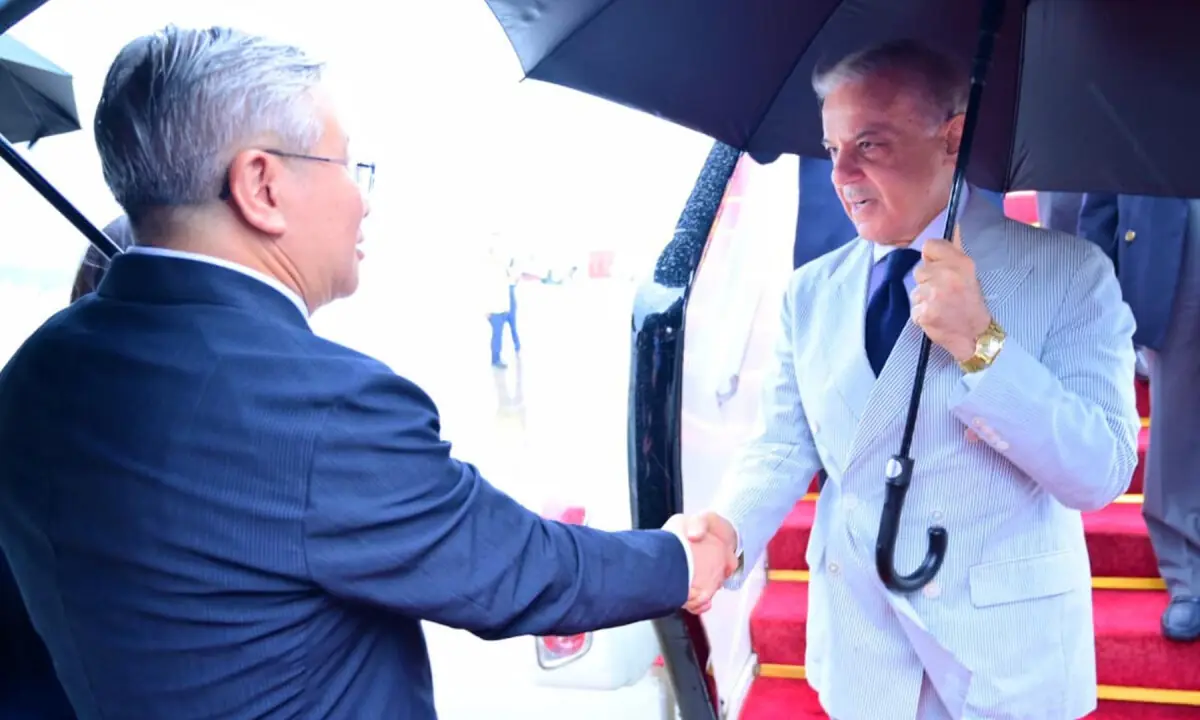
Prime Minister Shehbaz Sharif on Saturday landed in Hangzhou, kicking off his four-day official visit to China.

Zhejiang province’s Vice Governor Xu Wenguang received PM Shehbaz at Hangzhou Xiaoshan International Airport upon his arrival, the Prime Minister’s Office (PMO) said.

China’s Ambassador to Pakistan Jiang Zaidong and Islamabad’s envoy Khalil Hashmi were also present to welcome him.

PM signs MOUs, meets provincial official

Prime Minister Shehbaz signed a memorandum of understanding (MoU) on the establishment of a sister-province relationship between Zhejiang and Punjab during a meeting with Communist Party of China (CPC) Zhejiang Provincial Committee Secretary Wang Hao in Hangzhou.

A statement issued by the government of Pakistan on X said that during the meeting, PM Shehbaz witnessed the signing of two cooperation documents, including the MoU on the establishment of a sister-province relationship between Zhejiang and Punjab.

“The MoU aims to promote cooperation in trade, investment, agriculture, education, culture, tourism and people-to-people exchanges,” said the statement.

It added that PM Shehbaz also witnessed the signing of a document of understanding between Hangzhou Normal University and the Embassy of Pakistan in Beijing for the establishment of the China-Pakistan Joint Technology Research Centre at the university.

“The centre will promote academic cooperation, applied research, technology exchange and institutional linkages between Pakistan and China,” it stated.

According to the statement, the prime minister appreciated the remarkable development achievements of Zhejiang province and praised the visionary leadership of President Xi Jinping during his tenure as secretary of the CPC Zhejiang Provincial Committee, particularly the concept that “lucid waters and lush mountains are invaluable assets.”

“Zhejiang’s development offered an important example of how ecological conservation, green development and high-quality economic growth could advance in a mutually reinforcing manner,” the statement quoted PM Shehbaz as saying.

Pakistan attached high importance to strengthening cooperation with Zhejiang province, particularly in the fields of digital economy, e-commerce, information technology, telecommunications, agriculture, renewable energy, advanced manufacturing and skills development, the prime minister added.

“The provincial cooperation constitutes an important pillar of Pakistan-China relations and can play a significant role in advancing Phase II of the China-Pakistan Economic Corridor (CPEC) through industrial cooperation, agricultural modernisation, technology collaboration and export-oriented development,” he said.

Highlighting the recent commemoration of the 75th anniversary of diplomatic relations between Islamabad and Beijing, PM Shehbaz said, “The two countries are entering a new phase of practical, people-centric and development-oriented cooperation.”

Detailing his Hangzhou itinerary, the PMO said PM Shehbaz will attend a business forum aimed at promoting cooperation between Pakistani and Chinese companies under the second phase of China-Pakistan Economic Corridor (CPEC 2.0).

The PMO further said that the premier will engage with the chief executive officers (CEOs) of leading Chinese companies and visit the headquarters of Alibaba Group to strengthen economic cooperation.

Deputy PM and Foreign Minister Ishaq Dar, Planning Minister Ahsan Iqbal, Information Minister Attaullah Tarar, IT Minister Shaza Fatima, and PM’s adviser Tariq Fatemi are accompanying the premier on the trip.

A day earlier, the Foreign Office (FO) had announced that the premier would undertake an official visit to China from May 23 to 26.

“The visit assumes special significance as Pakistan and China commemorate the 75th anniversary of the establishment of diplomatic relations. It will provide an opportunity to reaffirm the abiding strength of the Pakistan-China all-weather strategic cooperative partnership and advance the shared vision of building an even closer Pakistan-China community with a shared future,” it said.

During the visit, PM Shehbaz will hold meetings with the Chinese leadership, including President Xi Jinping and Premier Li Qiang.

“The two sides will review bilateral cooperation in the political, economic, and strategic domains, with particular focus on the high-quality development of CPEC, trade, investment, industrial cooperation, agricultural modernisation, information technology, science and technology, and people-to-people exchanges,” the FO said.

The premier will begin his visit in Hangzhou, where he will chair the Pakistan-China B2B Investment Conference. In Beijing, he will attend a reception hosted by the Chinese People’s Association for Friendship with Foreign Countries to commemorate the 75th anniversary of diplomatic relations between Pakistan and China.

“The visit is expected to further deepen political trust, strengthen strategic coordination, expand practical cooperation, and consolidate the longstanding friendship between Pakistan and China,” the statement concluded.

Separately, FO Spokesperson Tahir Andrabi said during his weekly press briefing that the US-Iran war was expected to come up during discussions between PM Shehbaz and the Chinese leadership.

“Pakistan and China have maintained close coordination on the standoff in the Middle East and our peace efforts in this regard,” Andrabi said, recalling DPM Dar’s visit to China last month.

“We agreed on a five-point principle, which was issued as a joint statement. So, yes, this issue will be discussed during the prime minister’s visit,” he added.

  •  

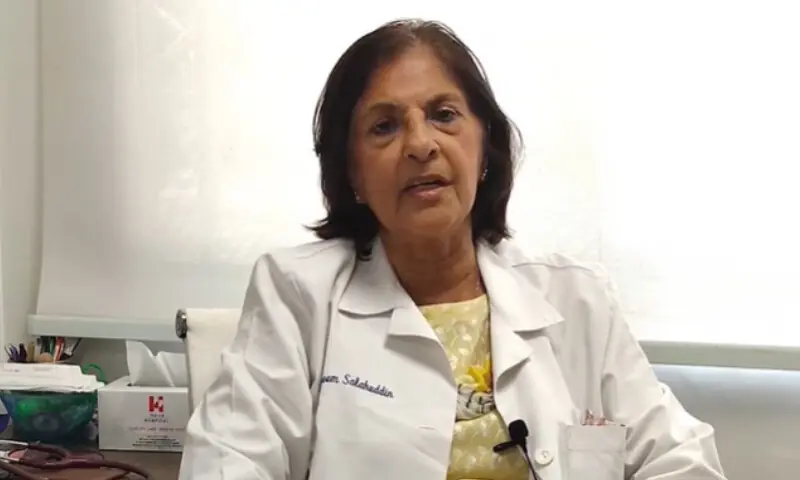
Renowned infectious diseases expert Dr Naseem Salahuddin passes away

Dr Naseem Salahuddin, a renowned infectious diseases expert and professor emeritus at Indus Hospital, passed away on Friday.

According to information available on the hospital’s website, she was serving as the head of its infectious diseases department.

The Indus Hospital also expressed its sorrow over the passing of Dr Salahuddin.

In a statement, it said that Dr Salahuddin had been associated with the Indus Hospital since November 1, 2007, and “remained a beacon of dedication, compassion, and excellence in the field of healthcare and infectious diseases”.

“Her lifelong commitment to patient care, medical education, and humanitarian service greatly contributed to strengthening the mission of providing quality healthcare, free of cost, to those in need,” the statement said.

It added that Dr Salahuddin also played a pivotal role in raising awareness and advancing efforts towards a rabies-free Pakistan, stating that her “relentless work in the prevention and treatment of rabies saved countless lives and brought national attention to an often-neglected public health challenge”.

Dr Salahuddin graduated from Fatima Jinnah Medical College in 1967 and obtained certification in internal medicine from the United States in 1977.

The website stated that Dr Salahuddin had also been a member of the World Health Organization’s Expert Advisory Panel on Rabies since 2004.

Dr Salahuddin was also a prolific writer, contributing to various scholarly journals and news outlets, including Dawn. She also authored books.

  •  

CDF Asim Munir arrives in Iran as part of ongoing mediation efforts: ISPR

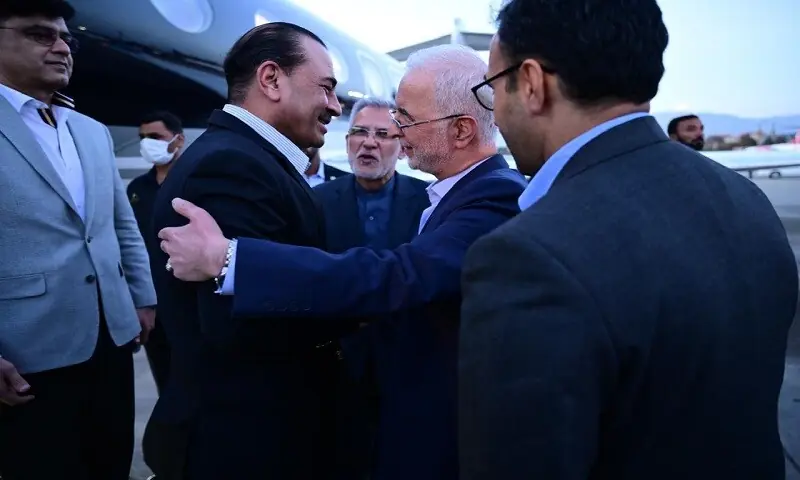
Chief of Defence Forces (CDF) and Chief of the Army Staff (COAS) Field Marshal Asim Munir arrived in Tehran on Friday evening as part of ongoing mediation efforts aimed at bringing the Iran-US war to a conclusion.

On arrival, the army chief was “received and warmly welcomed” by Iran’s Minister for Interior Eskandar Momeni, said the Inter-Services Public Relations (ISPR).

The military’s media wing added that Interior Minister Mohsin Naqvi was also present at the reception.

The CDF will discuss US-Iran talks, regional peace and other important issues during the visit, the sources said. He will also meet senior Iranian officials.

Earlier in the day, security sources said the army chief had departed for Iran.

US Secretary of State Marco Rubio commented about CDF Munir’s visit to Tehran, saying that the US was in “constant communication with him [and] the highest levels of our government are constantly talking to him”.

He also praised Pakistan for doing an “admirable job” trying to mediate a peace deal between Washington and Tehran.

“The primary interlocutor on this has been Pakistan and continues to be and they’ve done a, you know, I think an admirable job. And that’s what we continue to work through,” Fox News quoted Rubio as saying.

“Obviously, other countries … may have their own situation going on. We talk to all of them. But I would just say that the primary country we’ve been working with on all of this is Pakistan, and that remains the case,” he told reporters in Sweden.

Meanwhile, earlier today, Tasnim News Agency reported that Interior Minister Mohsin Naqvi held a meeting with Iran’s Foreign Minister Abbas Araghchi to review proposals for resolving disputes, while on an official visit to Tehran.

The visit comes amid ongoing Pakistani efforts to mediate between the US and Iran, after plans for a second round of negotiations in Islamabad fell through.

The first round of historic direct US-Iran talks was held in Islamabad on April 11 and 12, following a Pakistan-brokered ceasefire on April 8. It had ended without an agreement, but also without a breakdown.

US President Donald Trump later called off a planned visit of US Special Envoy Steve Witkoff and adviser Jared Kushner to travel to Islamabad for a second round of talks with Iran. However, he extended the ceasefire indefinitely “upon the request of Field Marshal Asim Munir, and Prime Minister Shehbaz Sharif”.

Pakistan has stepped up its diplomatic efforts to break the deadlock, sending the interior minister to Tehran on Wednesday for the second time in less than a week to resuscitate negotiations. He had previously met Iran’s president, parliament speaker and foreign minister over the weekend.

The CDF previously visited Iran for three days last month alongside Naqvi, where he held a meeting with Iranian Foreign Minister Abbas Araghchi and other officials. Inter-Services Public Relations (ISPR) described the visit as part of “ongoing mediation efforts” for de-escalation between Iran and the US.

Diplomatic sources said Pakistan was continuing to relay messages between Tehran and Washington, but differences over Iran’s nuclear programme, sanctions relief, the Strait of Hormuz, and wider regi­onal security concerns linked to Teh­ran’s missile capabilities and allied armed groups continued to impede progress.

The latest round of contacts is taking place under heightened pressure from the US and its Middle East allies. US President Donald Trump on Wednesday said talks in Iran were in the final stages, and also threatened to resume strikes if a deal is not reached in a “limited timeframe”.

Iran, meanwhile, warned of confrontation beyond the Middle East in the case of a US attack but also insisted that all paths were open to avert the resumption of hostilities.

While negotiations currently remain stalled, the Foreign Office (FO) said at the end of April that Pakistan’s diplomatic efforts are continuing, with Islamabad maintaining its role as a facilitator between the two sides despite the apparent impasse.

FO spokesperson Tahir Andrabi said in a press briefing on Friday that PM Shehbaz would be undertaking a visit to China from May 23-26, in which the US-Iran war would be on the agenda for discussion.

However, he said he could neither confirm not deny reports about a “high-level delegation” visiting Iran from Pakistan.

Iranian foreign ministry spokesman Esmaeil Baqaei said on Wednesday that Tehran had received a new US proposal and was currently examining it.

“We received the points of view of the American side and we are currently examining them,” he told state television.

He reiterates Iran’s demands in talks to end the war, including the release of Iranian assets frozen abroad and an end to the US blockade on Iranian ports.

The Strait of Hormuz — the world’s most important waterway for oil shipments — has been a central point in the US-Iran war.

After the US and Israel attacked Iran on Feb 28, Tehran responded by shutting down the strait and later announced it would charge vessels using the maritime route. In April, the US blockaded Iranian ports to stop its oil exports and returned over 30 ships leaving Iranian ports.

Europe and the rest of the world appears anxious for a swift, diplomatic end to the war, which has ravaged the Middle East and crippled global shipping, causing a fuel crunch across the globe.

Pentagon chief Pete Hegseth, however, has claimed, “No one sails from the Strait of Hormuz to anywhere in the world without the permission of the United States Navy.”

Another sticking point remains a lasting ceasefire in Lebanon, where Israel has launched massive strikes since the war began, insisting they are aimed against Hezbollah. The strikes have continued despite the announcement of the ceasefire in April.

Iran maintains that any final deal with the US must include security guarantees for Lebanon to prevent future attacks from Israel.

In addition, it has asked the US to give up regime change plans, unwarranted military aggression against Iran and a guaranteed permanent ceasefire. The US, on the other hand, has demanded an end to Iran targeting Israel and US bases in the Gulf states, as well as its support for regional groups such as Hezbollah.

The US has also said that Iran’s request for the lifting of sanctions and unfreezing of assets can only be considered after Iran gives up on its nuclear ambitions.

  •  

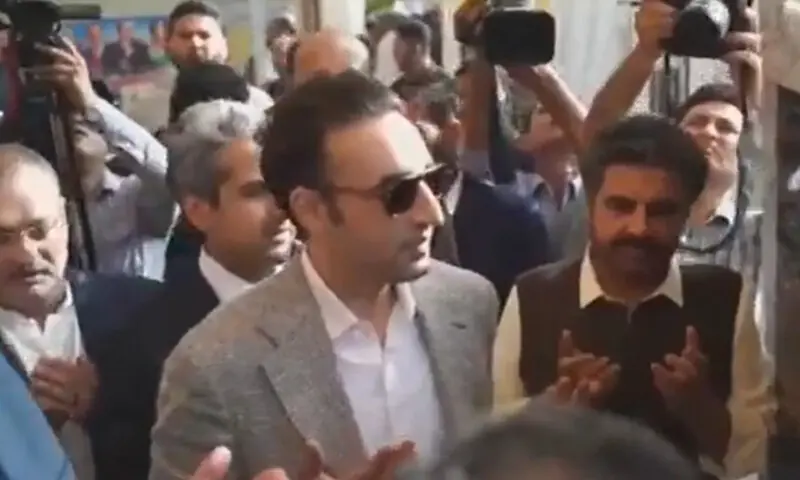
PPP Chairman Bilawal Bhutto inaugurates 39km-long Shahrah-i-Bhutto linking Qayyumabad to M9 Motorway

PPP Chairman Bilawal Bhutto Zardari on Friday inaugurated the 39-kilometre-long Shahrah-i-Bhutto Expressway, linking Karachi’s Qayyumabad to the M-9 Motorway.

He also laid the foundation stone for the construction of an expressway project linking Karachi Port to Qayyumabad.

Speaking on the occasion, Sindh Chief Minister Murad Ali Shah said that the expressway has six interchanges, six lanes and a 5-kilometre elevated section.

He said the PPP chairman had inaugurated the first 9-kilometre segment of the project in January 2025. The second 4-kilometre segment was inaugurated in June last year, and the remaining portion is now being inaugurated in May 2026.

CM Murad emphasised that the project took 4 to 4.5 years to complete, and that it could have been finished earlier had the government not prioritised avoiding the displacement of any population along the route.

“If you need to travel outside Karachi, whether to Sindh, Punjab or Balochistan, this project will reduce travel time by around an hour.”

He added that projects worth Rs1,700 billion were underway in Karachi, adding that he had approved over Rs70 billion worth of projects in the past three months alone.

‘Healthcare capital of the country’

Addressing the ceremony, PPP Chairman said, “If one compares the projects completed between 1947 and 2008, one will realise that the PPP is the only government that has undertaken meaningful development projects.”

“Due to the PPP, people from across the country want to visit, work and live in Karachi. We invite them to come here and contribute to this province and its economy,” he said.

He maintained that Karachi is not just the commercial capital of Pakistan, but also the healthcare capital of the country.

He said the Sindh government assumed administrative control of the National Institute of Cardiovascular Diseases (NICVD) in Karachi after the 18th Constitutional Amendment.

“I invite our political rivals to assess the hospital’s situation before and after the 18th Amendment. It has become one of the largest free healthcare institutions in the world,” Bilawal said.

Bilawal said that the Shahrah-i-Bhutto project was completed under a public-private partnership model.

During his speech, Bilawal said that the Pakistani nation was currently facing financial difficulties. “In particular, the Israel–US war with Iran is causing a global financial burden. Poor and hardworking people around the world are bearing that burden.”

“I believe that whoever is working for peace at this time is doing God’s work,” he said.

He thanked Field Marshal Syed Asim Munir and Prime Minister Shehbaz Sharif for their efforts to prevent war.

“We thank them because the PPP has always been against war, especially in view of the country’s financial difficulties,” he said.

He added that his party was also working to ease the financial burden. “We will create opportunities that provide financial relief.”

“We need to launch initiatives that create economic opportunities,” he emphasised.

He also said the Sindh government was leading the country in public-private partnerships.

“We have received global recognition for these partnerships. We have proven that the PPP can deliver on its promises. Through these partnerships, we will create opportunities for the entire nation.”

The PPP chairman also announced the establishment of the Sindh International Financial Centre in Karachi, adding, “It will help improve Karachi’s business growth.”

“Once this project is built, Sindh will compete with the rest of the world.”

He said Pakistan needed to improve its port infrastructure so that the economy could grow.

“The port authority is the government’s responsibility, but I will also try to develop a public-private partnership port,” he said.

Bilawal also said he wanted to ensure that Karachi plays a role in defence production.

“When I was foreign minister, I noted that we were not meeting demand in those years. Now, since the war with India in May, the demand for ‘Made in Pakistan’ defence production has increased.”

“Everyone wants to buy ‘Made in Pakistan’ defence equipment. So I want to establish a defence and security production zone in Karachi. The goal would be to manufacture defence equipment such as drones, ammunition and fighter jets,” he said.

The PPP chairman further added that these projects would also be implemented through public-private partnerships.

Bilawal said some critics in the country often criticise the PPP.

“I encourage my workers to ignore what they say. I am here, and I will not let any of their plans succeed.”

“It is the right of our rivals to criticise us. Right now, Sindh has the most democracy in the country. Karachi has the highest level of democratic freedom of all cities in the country,” he said.

He said the PPP considers criticism part of democracy. “In any other province, political rivals cannot criticise the ruling party.”

“I say that the problems in my city are mine. Anyone sitting elsewhere cannot solve these problems,” he stressed.

On May 14, Sindh Senior Minister Sharjeel Memon announced that the government would fully open the Shahrah-i-Bhutto Expressway in Karachi to the public by the end of May.

Earlier this week, Karachi Mayor Barrister Murtaza Wahab launched the Urban Forest project along the Shahrah-i-Bhutto, aiming to plant 100,000 saplings along the route.

He said it would play a significant role in environmental improvement, reducing air pollution and providing citizens with a healthier environment.

  •  

Pakistan, Turkiye air forces reaffirm ‘growing strategic convergence’ in defence sector: ISPR

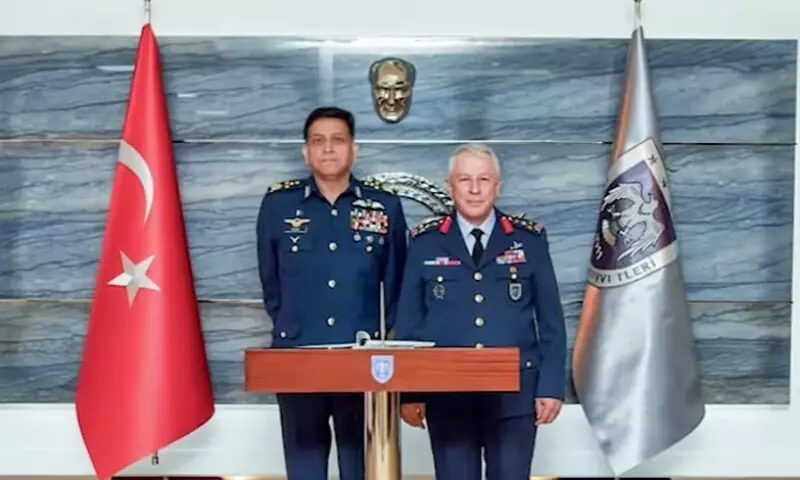
The Pakistan Air Force and the Turkiye Air Force reaffirmed their “growing strategic convergence” in defence, aerospace innovation and emerging technologies, the military’s media wing said on Friday.

Air Chief Marshal (ACM) Zaheer Ahmed Baber Sidhu, during an official visit to Turkiye, held high-level meetings with Turkish Air Force Commander General Ziya Cemal Kadıoğlu, Defence Minister Yaşar Güler, and Baykar Technologies Chief Technology Officer (CTO) Selçuk Bayraktar, the Inter-Services Public Relations (ISPR) said in a statement.

During these engagements, ACM Sidhu reaffirmed “the growing strategic convergence and shared commitment of both nations towards enhanced collaboration in defence, aerospace innovation and emerging technologies”.

At the headquarters of the Turkish Air Force, the air chief was accorded a guard of honour. During the engagement, ACM Sidhu “discussed enhancing interoperability through joint exercises, training programmes, and professional exchanges”.

“The Turkish air chief appreciated Pakistan Air Force’s support in training Turkish pilots,” ISPR said.

ACM Sidhu, in his meeting with Güler, “reaffirmed the strong historical and strategic ties between Pakistan and Turkiye,” the ISPR stated, adding that the two sides also explored “deeper cooperation in training, capacity building and aerospace collaboration”.

The air chief also met Baykar Technologies CTO Selçuk Bayraktar, where discussions focused on “advancements in aerospace innovation, unmanned aerial systems and emerging technologies,” the military’s media wing said.

ISPR added that the discussion reflected the “shared vision of both sides to pursue greater collaboration in next-generation defence technologies”.

Pakistan and Turkiye share robust bilateral relations spanning across various sectors.

Earlier this year, Chief of Defence Forces (CDF) and Chief of the Army Staff (COAS) Field Marshal Asim Munir, in a meeting with Turkiye’s Chief of General Staff General Selcuk Bayraktaroglu, discussed the regional security landscape and bilateral defence cooperation.

It was also reported earlier this year that the country was seeking to join a defence alliance between Saudi Arabia and Pakis­tan, which was signed in September 2025.

  •  

Prince Rahim Aga Khan arrives in Gilgit-Baltistan

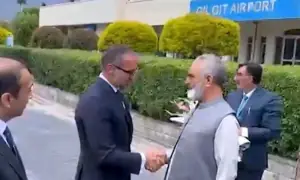
Prince Rahim al-Hussaini Aga Khan V reached Gilgit-Baltistan on Friday where he is expected to attend public gatherings and address different ceremonies.

Prince Rahim arrived in Pakistan on Wednesday for a week-long visit — his first to the country since being named the spiritual leader of the Ismaili community last year.

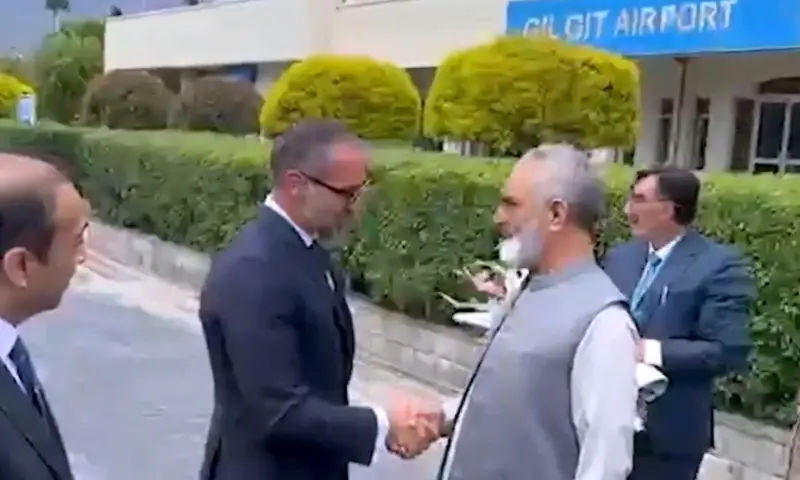
State broadcasters PTV News and Radio Pakistan reported that he was welcomed by caretaker Chief Minister Justice (retd) Yar Muhammad and other senior civil and military officials at the airport in Gilgit.

Meanwhile, banners and messages welcoming Prince Rahim were put up at different spots in the city, PTV News reported.

@dawn.today

Prince Rahim Aga Khan arrived in Gilgit-Baltistan on Friday. Prior to his arrival, preparations in GB reached a fever pitch, prompting a large-scale mobilisation of federal and regional resources, officials said. Officials anticipate large gatherings in the Passu Cones area of Hunza; Gilgit City, Gahkuch Bala, and Taus Yasin. The administration is considering holding multiple sessions at certain venues to manage the expected crowds, officials told the minister. DawnToday

♬ original sound - Dawn.com - Dawn.com

On Wednesday, he was received by President Asif Ali Zardari at Rawalpindi’s Nur Khan Airbase upon his arrival in Pakistan. He will be in the country till May 26.

He has held discussions with both President Zardari and Prime Minister Shehbaz Sharif since his arrival.

PPP Chairman Bilawal Bhutto-Zardari and MNA Aseefa Bhutto Zardari were also present during his meeting with President Zardari on Wednesday, which was followed by delegation-level talks.

A day later, he attended a breakfast meeting hosted by PM Shehbaz where he expressed the desire to continue cooperation with Pakistan in various human development initiatives, a statement issued by the PM’s Office said.

In GB, he will be accorded the status of a state guest, and prior to his arrival, preparations reached a fever pitch, prompting large-scale mobilisation of federal and regional resources, officials said last week.

Officials anticipate large gatherings in the Passu Cones area of Hunza, Gilgit City, Gahkuch Bala, and Taus Yasin during Prince Rahim’s visit.

This is Prince Rahim’s second visit to Pakistan since 2024, when he was awarded the Nishan-i-Pakistan — the nation’s highest civilian award — for the Aga Khan family’s contributions to the country.

  •  
❌