Reading view

On Marka-i-Haq's first anniversary, PM Shehbaz commemorates Pakistan's 'historic response' to India

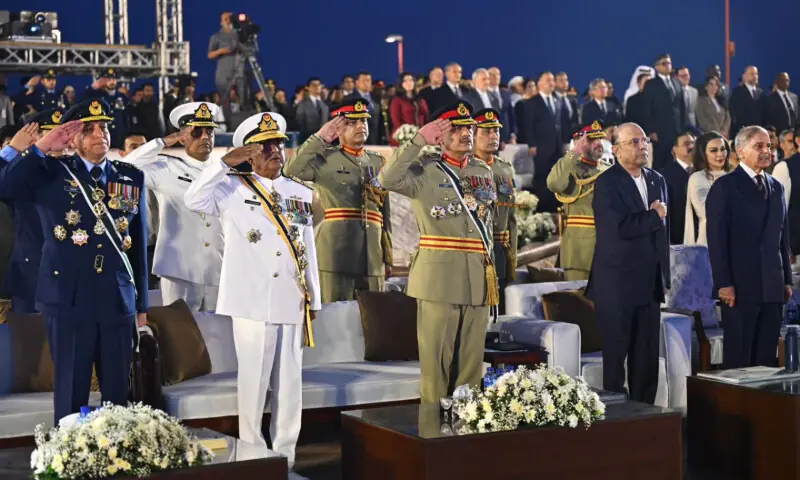
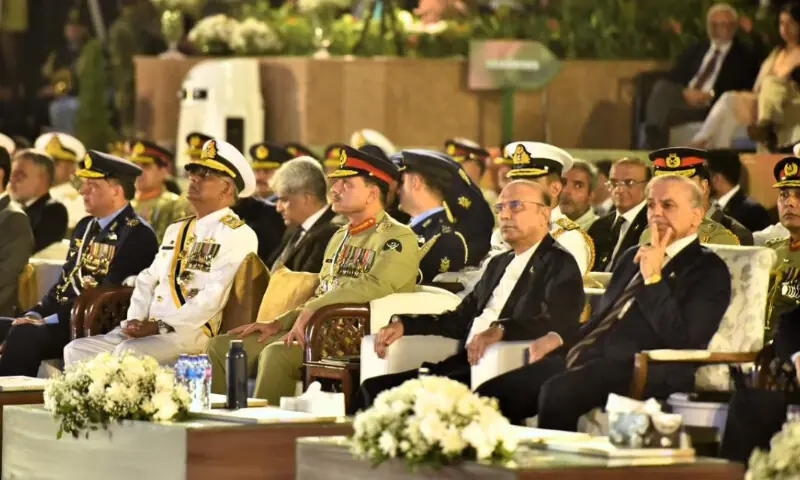
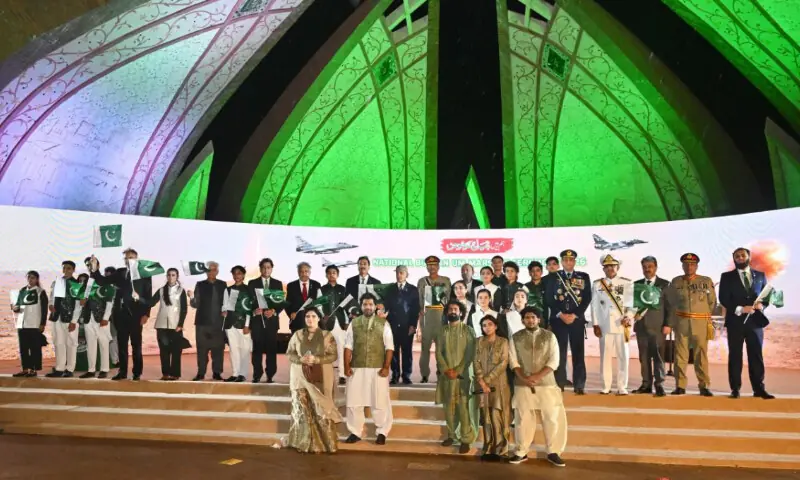
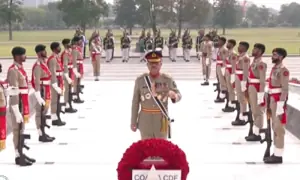
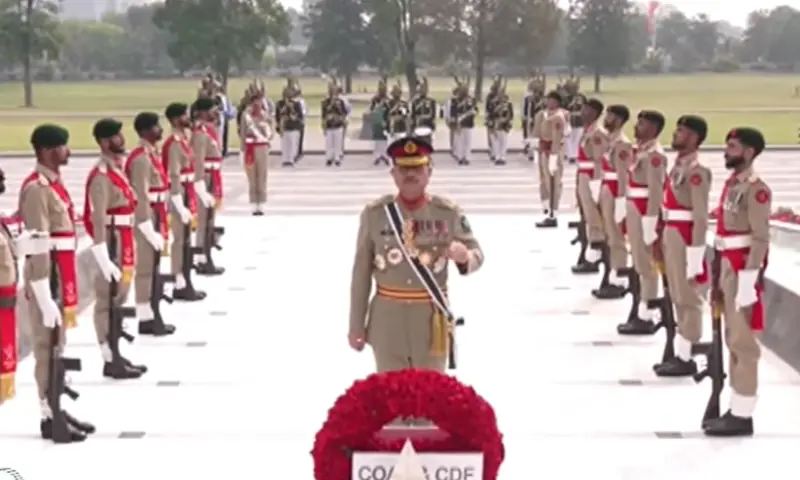
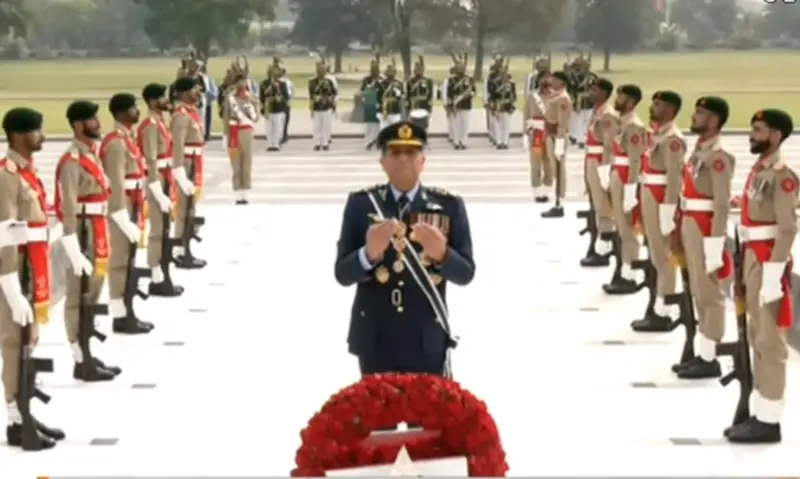
Prime Minister Shehbaz Sharif recalled the “historic” response of Pakistan to India during Marka-i-Haq on Sunday as he addressed a ceremony held at the Pakistan Monument in Islamabad to commemorate the conflict’s first anniversary.

The conflict with India — starting from the April 22 Pahalgam attack to the end of Operation Bunyanum Marsoos with a ceasefire between the two countries on May 10 — has been called “Marka-i-Haq” (Battle of Truth) by the state.

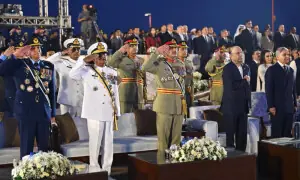
President Asif Ali Zardari and Chief of Defence Forces and Chief of Army Staff Field Marshal Asim Munir were among those attending the ceremony in Islamabad, where Chief of Naval Staff Admiral Naveed Ashraf and Chief of Air Staff Air Chief Marshal Zaheer Ahmad Baber Sidhu were also present.

PM Shehbaz began his address by observing one minute of silence for those martyred during the period of conflict.

Recalling the conflict, PM Shehbaz said that India “using Pahalgam as an excuse, made baseless accusations against us”. And despite Pakistan offering a transparent investigation into the incident, the “enemy, in the dark of the night, attacked our mosques and children, imposing an unprovoked war on us”.

“Our brave armed forces gave a historic response to the attack that the enemy carried out in the darkness of the night,” he said, adding that “our Shaheens dominated the conflict”.

Consequently, he continued, India was compelled to request a ceasefire after four hours.

He also noted that even one year after the Pahalgam attack, India had not been able to present any evidence of Pakistan’s alleged involvement in the incident.

“There is no doubt that Operation Bunyanum Marsoos is not just a historic win but also a glowing victory of our national honour, principles and self-respect,” he added.

The premier announced that ‘Youm-i-Bunyanum Marsoos’ would be celebrated on May 10 every year from now onwards.

He paid tributes to the armed forces, particularly mentioning CDF Munir, who he said had set new examples of “bravery and courage” during Marka-i-Haq.

“Field Marshal’s wise and brave leadership will be written in golden words in history. Field Marshal Asim Munir, the entire nation and I salute you,” PM Shehbaz said.

He added that this “tale of bravery will remain incomplete without the mention of ACM Sidhu and his Shaheens … who laid bare the reality behind the claims of the adversary’s aerial power. ACM Sidhu, I also pay tribute to you and congratulate your Shaheens from the bottom of my heart.”

PM Shehbaz also lauded the country’s navy and its chief, saying that the adversaries could not “muster the courage to enter our waters” during Marka-i-Haq.

He then acknowledged the support of the people extended to the armed forces during the conflict, as well as that of the “brotherly and friendly countries” for Pakistan on the diplomatic front.

The prime minister particularly thanked US President Donald Trump, who he said played a “historic role for peace in the region and to save millions of lives”.

He said that had the situation worsened and things escalated further between two nuclear-armed nations, “it is not difficult to assess how disastrous the outcome would have been”.

PM Shehbaz also specifically expressed gratitude to the leadership of Saudi Arabia, China and Turkiye.

The premier also mentioned Pakistan’s efforts for de-escalation between the US and Iran.

“Our sincere efforts continue, and Field Marshal was telling me a while ago that we have received Iran’s response.

“I cannot go into more detail. But, I commend the efforts of Deputy Prime Minister Ishaq Dar and congratulate Field Marshal Asim Munir, who has dedicated himself [to this cause],” he said.

He then lauded the armed forces for their fight against terrorism and concluded his address by promising the youth more opportunities for education and employment, and to learn skills.

‘Calibrated and shocking response’

Speaking after him, President Zardari dubbed Marka-i-Haq “one of the most important chapters” in Pakistan’s national history.

He added: “India chose unprovoked aggression on the basis of false flag Pahalgam incident, and launched an airstrike on Pakistan’s civilian and worship places without any justification. And India’s media misled the nation by presenting fabricated stories”.

To that, Pakistan gave a “calibrated and shocking response to the Indian aggression” under the “dynamic” leadership of CDF Munir, he said.

President Zardari maintained that despite its military capabilities, Pakistan chose to exercise restraint. “Our response was mature and measured, being a responsible and peace-preferring state”.

He said the Pakistan Air Force (PAF) proved during Marka-i-Haq that they were second to none.

“Our pilots faced a larger adversary, but with their extraordinary skills and confidence, they defended our skies,” President Zardari said, recalling that Pakistan downed eight Indian aircraft, “delivering a response that became a defining moment of the resolve and national pride”.

He also commended the Pakistan Navy, which he said, “through their operational preparation and combat capabilities, defended our seas”.

The president said Pakistan’s victory reflected the nation’s unity and harmony and gave a message to the world: “that we remain united, vigilant and resolute like a wall.”

The president said India’s unilateral suspension of the Indus Waters Treaty after the Pahalgam incident amounted to “hydro-terrorism”.

He also reiterated Pakistan’s diplomatic support for the people of the India-occupied Kashmir and their cause, stating that the issue “needs to be resolved in accordance with UN resolution”.

Moreover, he also called for an end to the “India-sponsored terrorism in Pakistan through Afghanistan” and the use of Afghan soil for terrorism in its neighbouring countries.

Concluding his address, the president remarked that the diplomatic efforts of CDF Munir and PM Shehbaz had earned Pakistan the reputation of a “regional stabiliser”, particularly concerning its mediatory role in the US-Iran conflict.

“I want to conclude by underlining that Pakistan’s armed forces are capable and always ready to defend our sovereignty and national interest in the face of any challenge,” he said.

The ceremony began with a march past and the recitation of the Holy Quran.

A fly past was also planned but had to be aborted due to bad weather.

Patriotic songs were also performed during the ceremony.

Rallies and events in Azad Kashmir

In Azad Jammu and Kashmir (AJK), rallies, seminars, exhibitions and cake-cutting ceremonies were held on the occasion.

The day’s first major event was a rally organised by the Working Committee of post-1989 migrants from India-occupied Jammu and Kashmir in Muzaffarabad. Participants carried Pakistani and AJK flags and banners bearing slogans such as “We are Pakistanis and Pakistan is ours”.

“Kashmiris have pinned their hopes on a strong and stable Pakistan, and the current military leadership has made them happy by inflicting a humiliating defeat on their tormentor, India,” said rally leader Uzair Ghazali.

Separately, acting AJK president Chaudhry Latif Akbar and Chinar Division General Officer Commanding (GOC) Maj Gen Zarrar Mahmood inaugurated a Pakistan Army exhibition of defence equipment as part of the Victory Day celebrations commemorating the success in Marka-i-Haq.

The exhibition showcased modern weaponry, communication systems, combat vehicles and other military hardware, attracting large crowds, particularly young visitors.

Akbar and the GOC also hoisted the national flag and laid a floral wreath at the martyrs’ memorial at Chhatar Chowk, where a Pakistan Army contingent presented a salute. A special message from Field Marshal Munir was also read out on the occasion.

In Kotli district, a large rally and public gathering were held in Fatehpur Thakyala, attended by Federal Minister for Kashmir Affairs and Gilgit-Baltistan Amir Muqam as the chief guest.

“The battle of truth crushed India’s arrogance and, by the grace of Allah Almighty, elevated Pakistan to new heights of dignity, honour and prestige,” he said.

He described residents living along the Line of Control as “unpaid soldiers of Pakistan” who had always stood shoulder to shoulder with the armed forces during difficult times.

“I do not have enough words to repay your love and affection. I am indebted to your passion and devotion. Our brothers living on the LoC deserve the highest tribute,” he added.

Rallies were also held at district headquarters across AJK, while educational institutions and government offices organised special events, including cake-cutting ceremonies and prayers for Pakistan’s strength and the early freedom of Kashmiris from Indian occupation.

In Kabul, Pakistan’s ambassador Ubaidur Rehman Nizamani reaffirmed the nation’s resolve to defend itself against any aggression, stating that the “enemy attacked the nation and the armed forces of Pakistan responded valiantly on behalf of every Pakistani”. Paying glowing tribute to the armed forces, Ambassador Nizamani affirmed that the nation stands eternally indebted to their sacrifices.

A statement issued by the embassy further quoted him as saying: “Pakistan’s desire for peace must never be mistaken for weakness.”


Additional reporting by Tariq Naqash
  •  

Governor Kundi meets PTI leaders, asserts KP's case should be presented 'firmly, collectively' to the Centre

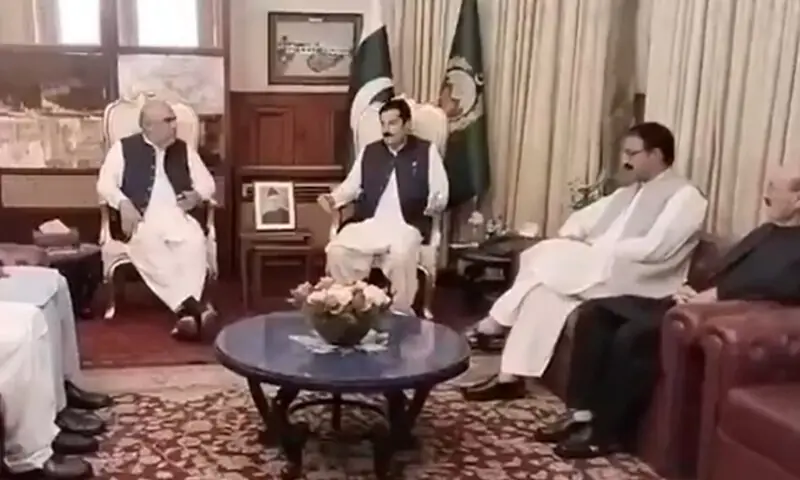
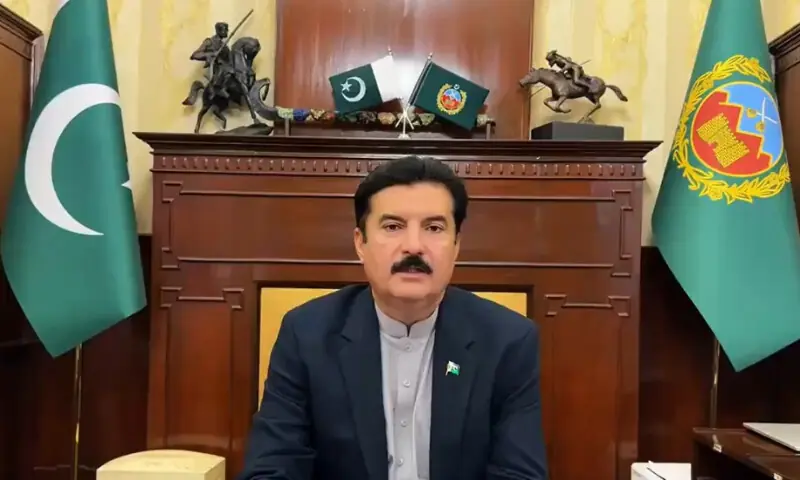
Khyber Pakhtunkhwa Governor Faisal Karim Kundi in a meeting with PTI leaders on Sunday at Governor House KP discussed the province’s constitutional and economic rights, stressing on the need to present a firm case before the federal government to ensure “justice and fair treatment”.

In a social media post on X, Governor Kundi said that PTI leaders, including former National Assembly speaker Asad Qaiser, MNA Junaid Akber, and other parliamentarians, called on him for a “constructive exchange on the pressing issues of KP”.

“We discussed the province’s constitutional and economic rights, including Compressed Natural Gas (CNG) closures, wheat concerns, National Finance Commission (NFC) matters, and the challenges faced by the merged districts and the business community,” he stated.

The meeting comes less than a week after KP Chief Minister Sohail Afridi had announced observing a province-wide pen-down strike over the federal government’s alleged “discrimination” against KP in the NFC Award, electricity and gas.

Since taking charge as the province’s chief executive in October 2025, Afridi has repeatedly accused the Centre of stalling the release of funds allocated to KP, particularly those committed to the merged districts under the NFC Award. He had also condemned the Punjab government’s tighter controls on inter-provincial movement of wheat and flour through a permit regime to curb price hikes within the province.

The KP government in March requested the federal government to revise the NFC resource distribution formula on the basis of the region’s population, which would increase the province’s share from the existing 14.62 per cent to 18.96pc. Subsequently, Finance Minister Muhammad Aurangzeb had assured his “full support” to Afridi for the “resolution of all legitimate issues” as the two met in Islamabad.

The province has been further affected by a deepening CNG crisis in April that brought economic activity to a near standstill, with hundreds of filling stations shut and millions of citizens struggling for affordable fuel.

KP Governor Kundi in today’s meeting called for the province’s case to be “presented firmly and collectively before the federal government to ensure justice and fair treatment.”

  •  

PTCL users may face internet disruption during evening hours from May 11-18

Pakistan Telecommunication Company Ltd (PTCL) said on Sunday that consumers may face internet disruptions due to maintenance work on a submarine cable between May 11 and 18.

In a post on X, PTCL said: “A maintenance activity is planned on one of our submarine cables to repair a fault by the International Cable Consortium,” adding that the work will begin on May 11 and may continue until May 18.

“During this period, customers may face internet service degradation during evening hours,” PTCL said.

The state-owned telecom giant manages three undersea optical fibre cable networks that provide international internet connectivity to Pakistan.

Internet users in Pakistan often face disruptions due to persistent submarine cable faults.

According to a report by Top10VPN.com, Pakistan led the world in financial losses from outages and shutdowns of internet and social media apps in 2o23.

  •  

Pakistan, Qatar reaffirm shared commitment to support 'constructive dialogue across region'

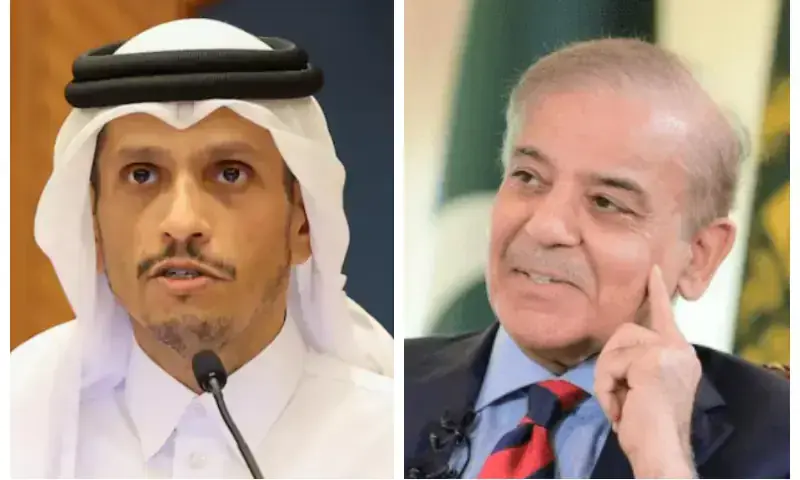
Prime Minister Shehbaz Sharif on Sunday said he and his Qatari counterpart Sheikh Mohammed bin Abdulrahman bin Jassim Al Thani reaffirmed their “shared commitment” to support “constructive dialogue” in the Middle East.

In a post on X, PM Shehbaz said he was “delighted to receive a telephone call from my brother […] earlier today”.

“We exchanged views on the evolving regional situation and reaffirmed our shared commitment to support all ongoing efforts aimed at promoting lasting peace, stability, and constructive dialogue across the region,” the premier added.

The prime minister said he conveyed his “sincere appreciation to my dear brother”, Qatar’s Emir Sheikh Tamim bin Hamad Al Thani, “for his wise leadership and for Qatar’s continued support for Pakistan’s sincere efforts to advance regional peace and stability through dialogue and diplomacy”.

PM Shehbaz further said he looked forward to the Qatari emir’s visit to “Pakistan very soon”.

In its statement on the phone call, the Prime Minister’s Office (PMO) said the two leaders “reviewed the progress of ongoing peace efforts in the region”.

Emphasising the “depth of the brotherly bonds between the two countries”, the PMO said both sides “underscored the importance of constructive engagement by all parties to ensure the success of ongoing peace efforts”.

It further noted that the Qatari emir’s visit “would help both sides to further strengthen and expand the enduring Pakistan-Qatar partnership”.

According to Qatar’s foreign ministry, Sheikh Mohammed affirmed Qatar’s “full support for the Pakistani mediation efforts aimed at ending the crisis through peaceful means”.

He stressed the “need for all parties to respond to these efforts in order to create the appropriate conditions for progress in the negotiations, leading to a comprehensive agreement that achieves sustainable peace in the region”.

The conversation marks the second phone call this week between PM Shehbaz and Sheikh Mohammed. It also follows the Qatari PM’s meeting with US Secretary of State Marco Rubio and Special Envoy on the Middle East Steve Witkoff during his visit to the United States.

Rubio said he discussed “US support for Qatar’s defence”, while Qatar’s foreign ministry noted that “Pakistani mediation aimed at reducing escalation” also came under discussion.

Iran, while questioning the seriousness of American diplomacy, has kept the United States waiting for its response to Washington’s latest proposals to end more than two months of fighting and begin peace talks.

Pakistan initially positioned itself as a facilitator in the peace process between Tehran and Washington after the US and Israel launched attacks on Iran on February 28, setting off a conflict that gave rise to a global fuel crisis. Later, the White House and Iran acknowledged it as the “sole mediator” in the process.

The first round of historic direct US-Iran talks, held in Islamabad on April 11 and 12, ended without an agreement, but also without a breakdown, as a Pakistan-brokered ceasefire was then extended indefinitely by US President Donald Trump.

While Pakistan’s leadership is seeking to bring the US and Iran back to the negotiating table, an impasse remains.

  •  

CDF Munir warns Pakistan's response to any future ‘misadventure’ will be ‘extremely widespread, painful’

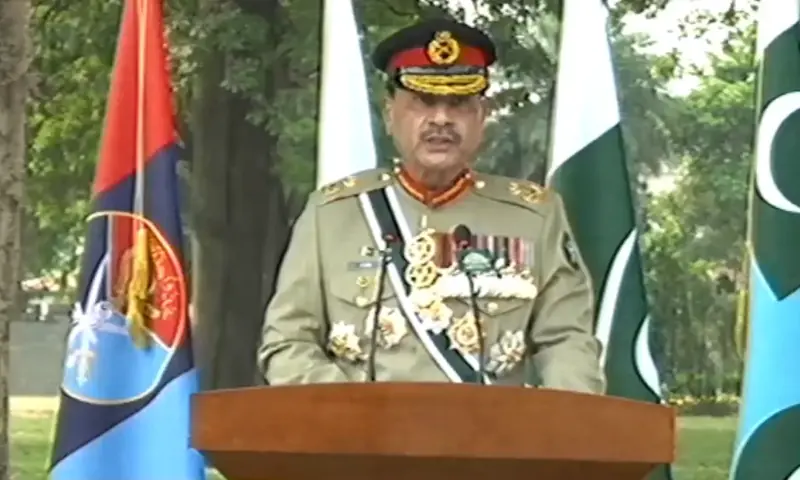
Chief of Defence Forces (CDF) and Chief of the Army Staff Field Marshal Asim Munir warned on Sunday that any future “misadventure” against Pakistan will result in “extremely far-reaching and painful” consequences for the enemy.

He made the remarks at a ceremony held at General Headquarters (GHQ) in Rawalpindi to mark one year since Pakistan’s victory in last year’s conflict with India.

The conflict with India — starting from the April 22 Pahalgam attack to the end of Operation Bunyanum Marsoos with a ceasefire between the two countries on May 10 — has been called “Marka-i-Haq” (Battle of Truth) by the state.

CDF Munir, as the chief guest, addressed the event. Chief of the Air Staff Air Chief Marshal (ACM) Zaheer Ahmed Babar Sidhu and Chief of the Naval Staff Admiral Naveed Ashraf were also in attendance.

Addressing the ceremony, Field Marshal Munir warned: “Our enemies should know that if any attempt is made in the future to carry out a misadventure against Pakistan, then the impact of war would not be limited, but extremely widespread, dangerous, far-reaching and painful.”

At the outset of his speech, the army chief said the day was a “source of pride” for Pakistan, its public and the armed forces.

He recalled that the “enemy made a failed attempt to test our resolve by violating the sovereignty and territory” of Pakistan from the midnight of May 6/7 till May 10. He asserted this was responded to “with full national unity and military force”.

“Marka-i-Haq was not merely a traditional war fought between two countries or militaries, but in reality, it was a decisive marka (battle) between two ideologies, in which, thanks to Allah, the truth won and falsehood was met with defeat,” he noted.

Quoting a Quranic verse on truth and falsehood, he stressed that the May 2025 conflict was “not a sudden incident, but rather a part of India’s false and widening pattern of exploitative tactics”.

“The false flag operations of 2001, 2008, 2016 and 2019 are a testament that even in the past, India has made failed attempts to impose an illegitimate war on Pakistan and […] achieve narrow-minded, long-term political and military objectives through allegations, exaggeration, warmongering and misleading imagination of limited aggression,” CDF Munir said.

“Each time, not only did Pakistan unveil the wrong assumptions of the enemy, but also served it a decisive defeat. In this war as well, India once again was a victim of its obsolete and self-delusional thinking,” he asserted.

The army chief highlighted that the objective of Operation Bunyanum Marsoos was to “unravel the enemy’s behaviour under which, to divert attention from its internal failures, it creates war hysteria by blaming Pakistan for every self-inflicted incident”.

CDF Munir said India was under the false assumption that it could “change the balance of power and prove its dominance over the region by making Pakistan a target of its military aggression and diplomatically isolating it”.

“But in reality, global and defence experts know that India’s ambitions proved to be much larger than its stature and capabilities,” COAS Munir remarked, asserting that Pakistan’s armed forces were not intimidated by the dominance of power and will never do so.

He paid tribute to the martyrs of Marka-i-Haq who “paid the price of this victory with their blood”, including women, the elderly and children killed in Indian strikes.

“All martyrs of Marka-i-Haq and their bereaved families are our crown. Your sacrifices are the guarantor of our independence and everlasting debts,” the army chief said. “We consider our martyrs an amanat, our power and responsibility, and our success a favour of God,” he added.

The army chief proceeded to express his gratitude to the president, the prime minister, the federal cabinet, the national and provincial political leadership, and all political parties for their “everlasting political wisdom, foresight and leadership” that accorded Pakistan success.

“The national leadership, all government institutions and the Pakistani nation gave a message as a single unit that any compromise on the country’s sovereignty, territorial integrity and national honour is unacceptable,” he declared.

CDF Munir stated that Pakistan also “achieved success on the diplomatic front” as its leaders and representatives conveyed Pakistan’s stance on the global stage.

“Similarly, there is no parallel found to the way the Pakistani media, the journalist community, and especially our youth, thwarted the enemy’s propaganda, cyberwarfare and psychological tactics,” he added.

The army chief highlighted that the conflict was not won on just the battlefield, but also “in every section of society” at the national level.

Emphasising that a country’s true power lies with its nation’s unity of thought and action, and patriotism, he lauded the “comprehensive national unity” displayed by the public.

“When the clouds of war loomed, we saw that every ideological and individual identity was transformed into Pakistaniyat — labourers, traders, students, the elderly and the young, and all Pakistani men and women resolved to defend their homeland,” he recalled.

“We witnessed a relation between the nation, the government, and the armed forces by virtue of which the entire nation lined up in defence of the country like an iron wall,” the army chief said.

He then recited a Quranic verse from which the phrase “Bunyanum Marsoos” for Pakistan’s retaliatory operation was derived. The verse was also recited earlier during the ceremony.

“In this battle, not only did the armed forces defeat the aggressor enemy beyond its imagination, but the professional expertise and top military strategy of our ground, naval and air forces forced the enemy to meet defeat,” the military chief said.

The CDF commended the air force personnel for “reducing the enemy’s pride to dust and setting the unique example of the modern era’s longest and decisive air battle” under the leadership of the air chief.

“Not only did they down the enemy’s several modern fighter jets, but also destroyed numerous military installations,” he said.

The field marshal also lauded the naval forces for “keeping the enemy’s naval ships thousands of miles away from Pakistani territory through constant monitoring and vigilant defence of the maritime borders”. He further commended the forces on the Working Border and the Line of Control for thwarting India’s aggression and “causing immense loss by destroying its defence positions”.

He asserted that India “suffered great human and economic losses, the price of which it will keep paying in the times to come”.

The army chief recalled that Pakistan “successfully targeted more than 26 military targets” in India during the conflict, following which New Delhi “expressed the wish for a ceasefire” to international powers.

“Defeated India expressed the desire for mediation through the American leadership, which Pakistan accepted in the interest of wider regional peace,” Field Marshal Munir said.

Future conflicts to comprise ‘multi-domain operations’

The army chief declared that Pakistan’s “defence was absolutely invincible in the face of any foreign aggression”.

“We are strictly committed to maintaining the balance of power in the region and our effective defence deterrence,” he said, asserting that the focal point of the armed forces was the protection of peace rather than aggression.

“And to maintain peace, it is mandatory to be ready for war at all times,” CDF Munir noted.

He observed that traditional wars were a thing of the past, adding that modern and future wars would “comprise multi-domain operations, in which modern technology, including cyber and electronic warfare, drones, long-range vectors, and artificial intelligence would play a crucial role”.

The military chief noted that to “further harmonise Pakistan’s armed forces with multi-domain operations”, the Defence Forces Headquarters has been established, the space programme was being expanded, and the Army Rocket Force Command has been formed.

He cited the induction of Hangor-class submarines in the Pakistan Navy, the acquisition of the “most modern fighter jets” for the Pakistan Air Force (PAF), and the Fatah missile series as “a few examples of this series”.

At the same time, COAS Munir stressed that the “journey of this defence preparedness” was not merely limited to buying new weapons, but extended to a “new thinking, training and research”.

Pakistan’s diplomatic success

CDF Munir highlighted that Marka-i-Haq had direct positive impacts on Pakistan’s foreign policy and diplomatic importance, with the world acknowledging Pakistan as an “invincible power”.

“The number of our friends in the world today is much higher compared to the past,” he said, adding that even those who criticised Pakistan were praising it now.

The army chief also mentioned the “Strategic Mutual Defence Agreement” signed with Saudi Arabia last year as a “great milestone of our diplomatic successes”.

He highlighted Pakistan’s “unbiased and responsible diplomacy” and its role as a host for “historic negotiations” between the United States and Iran.

Field Marshal Munir thanked the US and Iranian leadership, particularly US President Donald Trump, for “trusting Pakistan with this difficult task”.

‘Only one demand from Afghanistan’

In his address, the army chief said India had intensified its “state-sponsored terrorism and the strategy of supporting it”.

“It has realised that it is impossible to defeat Pakistan in the traditional battlefield. Subsequently, it has again resorted to the disgusting behaviour of terrorism,” he said, highlighting that terrorism was also being carried out from Afghanistan’s soil.

“Pakistan has only one demand from Afghanistan: to stop supporting Fitna al Khawarij and Fitna al Hindustan on the directives of India, and to completely eradicate the centres and safe havens of terrorism on its soil,” CDF Munir said.

He commended the country’s law enforcement agencies, security personnel, and public, especially those in Khyber Pakhtunkhwa and Balochistan, for fighting terrorism for the past two decades. The army chief reaffirmed the state’s resolve to eradicate terrorism.

‘Story of Pakistan incomplete without Kashmir’

Field Marshal Munir also mentioned the people of occupied Kashmir.

“Any story of Pakistan is incomplete without Kashmir. The resolution of the Kashmir dispute in accordance with the United Nations’ resolutions and the aspirations of the Kashmiris is necessary to secure freedom from India’s state brutality and violence,” he asserted.

The army chief emphasised that the ground realities of India-occupied Kashmir could not be changed through any demographic or social re-engineering.

“We will continue to raise our voice for Kashmiris’ right to self-determination at every forum, and continue our political, diplomatic and moral support for the Kashmiri people,” COAS Munir affirmed.

Concluding his address, the army chief expressed the hope that the nation would face any future challenges like an iron wall and further strengthen the homeland by continuing on the path of development.

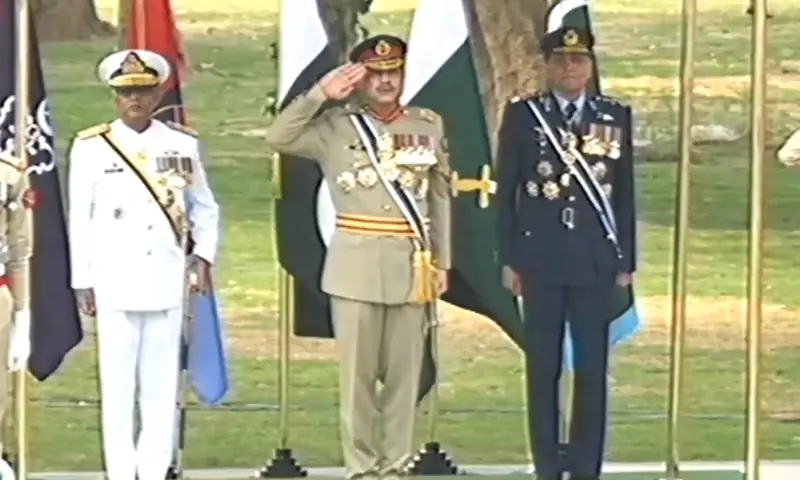
Prior to the army chief’s address, ACM Sidhu and Admiral Ashraf took turns to lay floral wreaths at the Yadgar-i-Shuhada (Martyrs’ Monument).

A salute was presented by smartly turned-out contingents of the three branches of the armed forces, which was followed by the national anthem being played.

‘Defining landmark’

In their messages issued on Saturday, Field Marshal Munir, ACM Sidhu and Admiral Ashraf congratulated the nation and officers and personnel of the armed forces on the completion of one year since the success of Marka-i-Haq.

“Observed with deep reverence, gratitude, and national fervour, the day stands as a testament to the enduring spirit of courage, professionalism, and unity,” a statement issued by the Inter-Services Public Relations (ISPR) quoted them as saying.

“Marka-i-Haq has become a defining landmark in the nation’s journey, reflecting national resolve, military excellence, and strategic maturity. This success not only bolstered national confidence but also established Pakistan as a responsible regional stabiliser, possessing formidable military capabilities,” it stated.

The statement added that Pakistan’s measured and resolute response during Marka-i-Haq “exposed adversarial conspiracies, false flag narratives and disinformation campaigns, diminishing their credibility internationally”.

“Despite facing conventional and hybrid challenges, including proxy terrorism, the armed forces demonstrated superior operational competence across land, air, sea, cyber, and information domains,” it continued.

It further read that in the aftermath of Marka-i-Haq, Pakistan had “further enhanced its defensive capabilities and reinforced full-spectrum deterrence despite resource asymmetries”.

  •  

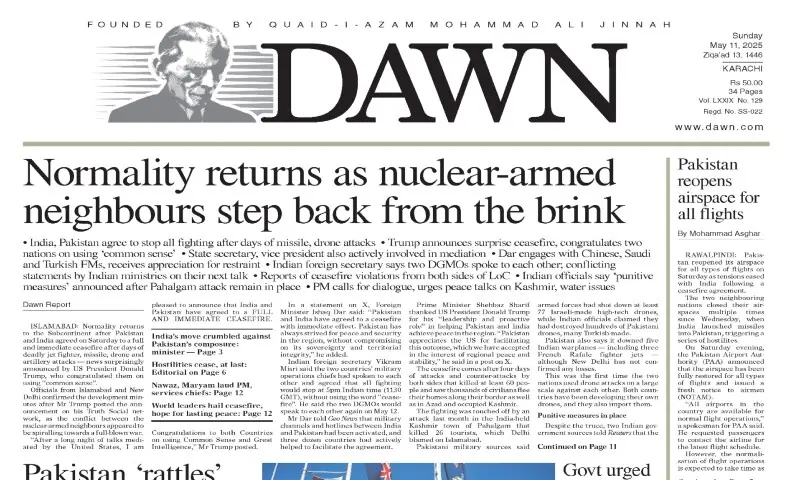
A year ago today: Normality returns as nuclear-armed neighbours step back from the brink

The week of May 6 - May 10 marks the first anniversary of the five-day military conflict between Pakistan and India.

The conflict was sparked by the April 22 Pahalgam attack on tourists in India-occupied Kashmir, which New Delhi, without evidence, linked to Pakistan.

In a dangerous escalation, New Delhi launched deadly air strikes in Punjab and Azad Kashmir on May 7. Pakistan retaliated by downing five Indian planes in air-to-air combat, later raising the tally to seven.

Following tit-for-tat strikes on each other’s airbases, and the launch of Pakistan Army’s Operation Bunyanum Marsoos, both sides agreed to a ceasefire on May 10 after American intervention.

The Pakistan Army named the period of conflict from April 22-May 10 “Marka-i-Haq”.

Throughout the week, Dawn will be sharing daily headlines from the brief conflict when tensions between both countries reached a boiling point.

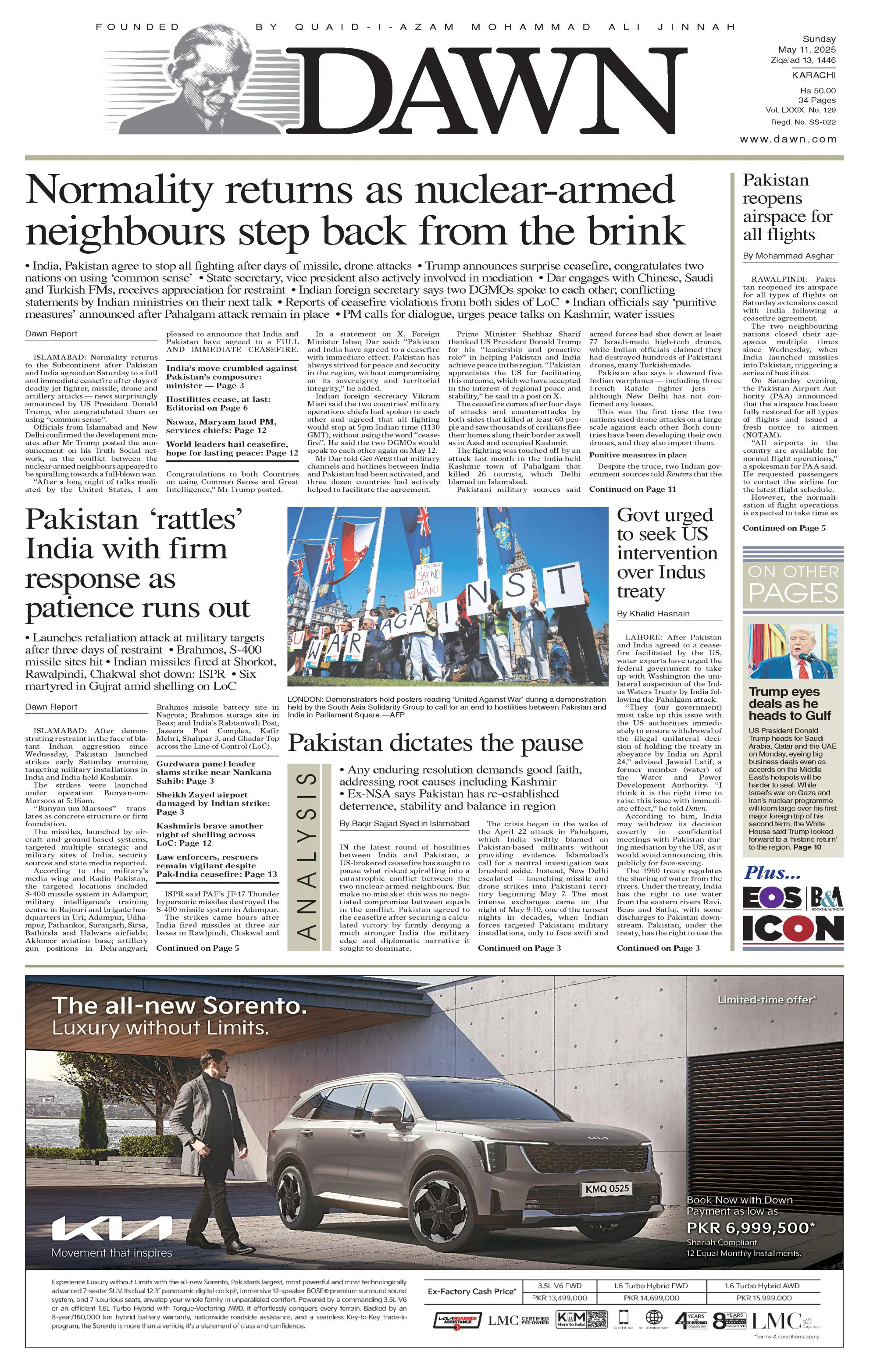
Here’s a look at Dawn’s front page published on May 11, 2025.

  •  
❌