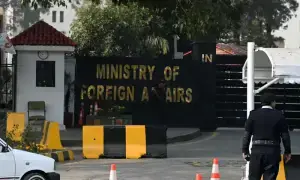
Pakistan on Monday strongly condemned drone attacks on Saudi Arabia and expressed solidarity with the kingdom, a statement from the Foreign Office (FO) said.
In a post on X, Saudi Arabia’s defence ministry reported that three drones were intercepted and destroyed on Monday morning, having originated from Iraqi airspace. The United Arab Emirates condemned the incident earlier today, while Iraq said it is investigating the incident.
In its statement, the FO condemned in the strongest possible terms the drone attacks carried out against Riyadh, noting: “Such attacks constitute a serious violation of the kingdom’s sovereignty and territorial integrity, and appear to be an attempt to further undermine regional peace and stability.”
It added that the government and the people of Pakistan stand in solidarity with the Saudi government and people, reaffirming their “full and unwavering support for the kingdom’s security, peace and prosperity.”
The incident occurred after strikes on the Barakah nuclear plant in the UAE on Sunday, which were condemned by Pakistan and Saudi Arabia, with Emirati Industry Minister Dr Sultan Al-Jaber branding the strike a “terrorist attack”.
In a post on X, Prime Minister Shehbaz Sharif also condemned the drone attack on the UAE, urging all parties to “exercise maximum restraint”.
“We stand in full solidarity with the leadership and the brotherly people of the United Arab Emirates,” he said, urging all parties to “exercise maximum restraint and fulfil their obligations under international law”.
“Dialogue and diplomacy remain the only viable path toward lasting regional peace, stability and de-escalation,” he wrote.
Defence Minister Khawaja Asif on Monday said that India would be “relegated to history” and its geography “changed” if it attempted any future misadventure against Pakistan.
In an interview on the Geo News programme ‘Capital Talk’, Asif said, “As a nation, India thinks that its esteem has been damaged.”
The defence minister was referring to last year’s confrontation with India, beginning with the April 22 Pahalgam attack and the subsequent military conflict — which resulted in a resounding victory for Pakistan — until the ceasefire on May 10.
Reflecting on last year’s standoff with India, Asif said that Pakistan’s armed forces had given India a “devastating” response.
“If India attempts any misadventure against Pakistan, it would be relegated to history and its geography would be changed,” the defence minister asserted.
The defence minister also criticised the recent remarks made by Indian Army Chief General Upendra Dwivedi, in which he said that Pakistan had “to decide whether they want to be part of geography or history or not”.
“By making those kinds of remarks, the Indian army chief is trying to regain his lost respect,” Asif maintained, adding that during Marka-i-Haq, India was significantly battered.
Asif also commented on the Rashtriya Swayamsevak Sangh (RSS) secretary general’s remarks, calling for keeping the window for dialogue between Islamabad and New Delhi open.
“There are also various critical voices against the government in India,” he said, adding that the stance of the Indian army and civil society differs.
He said that Bangladesh, Nepal and Sri Lanka, which India had considered its “extension,” did not enjoy the same relationship with it as before. “India is now facing embarrassment on the foreign front,” he added.
Meanwhile, he said that Pakistan had achieved “a highly reputable status” in the region.
While responding to a question about a possible nexus between India and Israel against Pakistan, the defence minister said that there could be a resemblance in the objectives of India and Israel.
“Israel doesn’t want anyone more powerful in this region other than its partner, India.”
Asif added that the Indus Waters Treaty (IWT) between Pakistan and India had been in place for 66 years and the recent Permanent Court of Arbitration decision on the IWT was in Pakistan’s favour.
Moreover, he elaborated that the agreement had a strong mechanism for dispute resolution and could not be suspended unilaterally.
‘War will not return to Iran’
Responding to a question about whether the United States and Israel would launch attacks against Iran again, he said, “My hunch is that war will not happen again.”
He said that Israel desperately wanted attacks to be launched against Iran or perhaps two or three other countries.
“The American public’s opinion is very clear about the Iran war. Their public does not want America to fight Israel’s war,” he said, adding that wars cannot be fought without public support.
“Relationship with America is the real strength of Israel. Without America’s support, Israel cannot remain stable.”
He said that a superpower like the US showing trust in Pakistan was an achievement, adding that Iran also trusts Pakistan.
The defence minister also said that Pakistan’s brotherly countries, including Saudi Arabia, Qatar, Oman, Kuwait, China and Russia, do not want war to return to Iran.
‘Absolutely not’
The defence minister also rejected the impression that the 28th constitutional amendment had been tabled before the cabinet, dismissing the reports and saying, “Absolutely not.”
He added that Law Minister Azam Nazir Tarar had also dismissed any discussions related to a constitutional amendment in the near future.
“There is nothing in my knowledge about any discussion related to this amendment,” he said.
‘India achieved certain gains in Afghanistan’
Asif said that during his recent meetings with Afghanistan’s Defence Minister Mullah Yaqoob, he told him that in the past Afghanistan’s enemy was also Pakistan’s enemy, and asked why Pakistan’s enemies were not considered Afghanistan’s enemies now.
“If you cannot be an enemy of our enemies, at least do not be friends with them. Do not provide them shelter or give them arms,” he said.
In response to a question, he said that he agreed that India had achieved certain gains in Afghanistan.
“Afghanistan is acting as a proxy for India against Pakistan,” he said.
A day earlier, the Inter-Services Public Relations (ISPR) took exception to the Indian army chief’s recent provocative remarks and cautioned New Delhi against pushing South Asia towards another conflict with “devastating” consequences for the region.
“Indian COAS gave a provocative statement during a recent interview that ‘Pakistan should decide if it desired to be part of geography and history’,” ISPR noted in a statement issued in response to Indian Army Chief Gen Upendra Dwivedi’s comments made a day earlier.
“Contrary to the delusional and hallucinational belief system and despite the omnipresent ill wishes that prevail in Hindutva-led India, Pakistan is already a country of consequence at global level, a declared nuclear power and an indelible part of South Asia’s geography and history,” the ISPR said.
“Threatening a sovereign nuclear neighbour with elimination from ‘geography’ is not strategic signalling or brinkmanship; it is sheer bankruptcy of cognitive capacities, madness and warmongering despite knowing the reality that such geographic obliteration would certainly be mutual and comprehensive,” the ISPR warned.
The United Arab Emirates (UAE) is standardising the deadline for paying private-sector salaries to regulate wage payments across the country, Khaleej Timesreported on Monday.
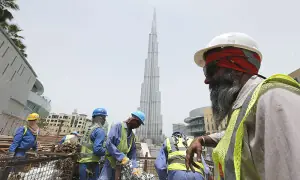
According to a new rule introduced under the UAE’s Wage Protection System (WPS), salaries must be paid on the first day of each month for the previous month, while payments made after the first will be considered delayed. The rule is scheduled to come into effect on June 1.
According to Khaleej Times, the decision was issued on May 12 following a ministerial resolution issued earlier in the month by the UAE’s minister of human resources and emiratisation. The resolution aims to strengthen compliance and ensure timely wage payments across private sector establishments.
Under the new regulation, all companies registered with the ministry are required to distribute wages through the approved system or other authorised payment channels. Employers must also provide documents and data confirming salary payments.
The UAE also outlined clear thresholds for what constitutes compliance under the WPS and consequences for delays in a ministerial resolution.
According to Khaleej Times, a private company will be considered compliant if it pays “at least 85 per cent of the total wages due to its employees” by the set deadline.
“This threshold takes into account cases where part of the salary may be legally deducted or withheld,” Khaleej said, adding that a worker will still be considered to have received their salary if they are paid at least 85pc of their total entitled wage — as long as the remaining amount is due to legally permitted deductions or withholdings.
For companies that fail to pay wages on time, authorities will enforce penalties and measures in line with existing laws and procedures, with oversight from judicial and regulatory bodies, it added.
The decision set out a series of escalating measures, saying that authorities would begin sending notifications and alerts to non-compliant establishments from the second day of non-payment.
From the fifth day after the deadline, the company will not be granted new work permits. The employer will be notified of the suspension, along with the reasons behind it, and will receive a second warning.
“If an employer fails to pay wages by the 11th day after the due date, the company will face administrative fines as specified in Cabinet Resolution No. 21 of 2020. The company will be reclassified to the third category, and repeat violations within a six-month period will result in further action,” Khaleej said.
From the 16th day after the deadline, authorities will automatically register an individual or collective labour dispute on behalf of the affected workers. The company’s issuance of new work permits will also be suspended.
These measures apply to employers with 25 or more unpaid workers, as well as businesses owned by the same employer when the total number of affected workers reaches 25.
From the 21st day after the deadline, authorities will issue an executive order to ensure wages are paid, or initiate collective labour dispute registration procedures for workers numbering 50 or more. Precautionary seizure procedures can also be initiated against the company, and a travel ban may be imposed on the person responsible for the establishment.
“In cases of repeated violations over two consecutive months, firms with more than 50 employees can be referred to the Public Prosecution, with authorities sharing all relevant documents and data for legal action,” Khaleej added.
Authorities may also intervene regardless of the size of the establishment if there are risks to the UAE labour market stability.
The rule exempts certain cases and types of workers, including those absconding, those unable to work for legal reasons, those on approved unpaid leave, and those that fall into certain categories outside the scope of the WPS, such as foreign employees of overseas firms paid outside the UAE. Certain sectors, such as banks and places of worship, are also excluded.
“The updated rule is expected to enhance transparency in wage payments and reinforce protections for workers by establishing a clear, unified salary deadline for all private sector employers in the UAE,” Khaleej said.
The federal government has allowed temporary exemption of shops, markets and eateries from early closure timing of 8pm, state broadcaster PTV News reported, citing a notification, on Monday.
The Cabinet Division notification dated May 18 states that Prime Minister Shehbaz Sharif has given the approval to exempt “with immediate effect and till May 31” several entities from the closure timings specified in a April 6 notification.
According to the latest notification, all shops, departmental stores, markets, shopping malls, bakeries, tandoors, restaurants and grocery stores have been exempted from the early closure timings for all days of the week.
On April 6, the federal government had announced that all markets across the country, barring Sindh, would close by 8pm throughout the week as part of energy conservation measures amid a global fuel crisis triggered by the US-Israeli war on Iran.
Meanwhile, the closure time for wedding halls, bakeries, restaurants, tandoors and other eateries was set at 10pm.
Days later on April 10, the Sindh government had also notified that all shops, markets and shopping malls in Karachi and other divisional headquarters of the province would close at 9pm throughout the week.
Tandoors (as standalone shops), milk and dairy shops, bakeries, medical stores and pharmacies, medical laboratories, clinics and hospitals, as well as fuel stations, were, however, exempted from the order.
Hotels, restaurants, and food outlets were given the permission to operate between 7pm and 11:30pm for dinner timings and marriage/wedding halls and banquets in the province were given the permission to operate between 8pm and midnight.
However, Sindh, as well as Punjab, Balochistan and Khyber Pakhtunkhwa governments lifted closure timing restrictions last week.
Punjab was the first one to make the decision in response to traders’ protests and appeals by the shopping malls association and general public to revise 8pm business closure timings.
The Punjab government granted partial relief on May 15 and lifted the restriction on market timings until June 1. It notified that “all the shops, markets, shopping malls, hotels, restaurants and food outlets are exempted from the prescribed closure timings till June 1, 2026”.
The next day, Sindh, KP and Balochistan governments also relaxed the restrictions. While the notification by the Balochistan Home Department said the restrictions had been relaxed till June 1, the KP and Sindh governments withdrew the restrictions without setting any timeline.
PPP stalwart and former Senate chairman Raza Rabbani on Monday said that there was “no need” for a 28th Constitutional Amendment, saying that the Constitution could not “bear the burden” if it were to happen.
In a statement, he said, “The ruling elite should realise that the Constitution, 1973, cannot bear the burden of another amendment. There is no need for the 28th Constitutional Amendment.”
He said that the 26th and 27th Constitutional Amendments had already “defaced” a number of the original provisions of the Constitution, particularly those relating to the judiciary.
The former took away the Supreme Court’s suo motu power, while the latter made significant changes to the judicial system and the military’s chain of command.
Rabbani said the “transfer of a judge without his or her consent impinged on the independence of the judiciary”.
“The federal government should be looking at the backlash of these two amendments and, in consultation with the stakeholders, taking remedial measures,” he said.
He further said that new provinces and provincial autonomy were “no-go areas”, warning that any attempt to “fiddle with the existing arrangements to their detriment” would have very serious consequences for the federation.
The former Senate chairman said the federal government should stop violating Article 160 of the Constitution and focus on announcing a new National Finance Commission (NFC) Award before the budget.
He noted that the last NFC Award was announced in 2010.
Rabbani said that instead of blaming provincial autonomy for a lack of coordination, the federal government should stop violating Article 154 of the Constitution and convene meetings of the Council of Common Interests (CCI) once every three months.
He added that it had been over a year since the CCI last met and stressed that the solution lay in adhering to and implementing the Constitution of 1973.
The development comes as rumours abound about another constitutional amendment. PPP Chairman Bilawal Bhutto-Zardari last week said that the government had not contacted him or his father, President Asif Ali Zardari, regarding a constitutional amendment.
“The PPP’s role in the 26th and 27th constitutional amendments is evident to everyone. We did not allow the rights of the provinces to be reduced; instead, we expanded them. Through our amendments, Balochistan’s representation in the Senate increased,” he added.
Subsequently, Law Minister Azam Nazeer Tarar said he saw “no indications” of the 28th Constitutional Amendment. He noted that the Muttahida Qaumi Movement had long been demanding constitutional amendments aimed at strengthening local government systems.
Last November, Adviser to the Prime Minister on Political Affairs Rana Sanaullah said that a 28th Constitutional Amendment, dealing with “public issues”, could be introduced if there is political consensus.
The Pakistan Stock Exchange’s (PSX) benchmark index extended its losing streak to a seventh straight session on Monday as the market plunged by nearly 3,800 points.
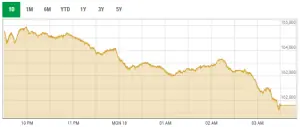
The KSE-100 index declined by 3,791.05 points or 2.29 per cent to close at 161,805.02 points from the previous close of 165,596.07.
The market traded in red the entire day, recording an intraday high of 164,939.08 points at around 10am, before witnessing a steady decline to reach an intraday low of 161,613.51 points shortly before close.
Investor sentiment has remained depressed amid a lack of tangible progress in the US-Iran negotiations, while concerns over the fragile situation in the Strait of Hormuz fuelled fears of further disruption to global oil supplies.
Topline Securities Limited noted that KSE-100 “traded under sustained pressure throughout a highly volatile session”.
It highlighted that “investor sentiment remained cautious amid the lack of meaningful progress in ongoing negotiations and continued uncertainty surrounding developments between the United States and Iran”.
It pointed out that elevated crude oil prices further weighed on market confidence.
Heavyweight stocks, including Oil & Gas Development Company Limited (OGDC), Meezan Bank Limited (MEBL), United Bank Limited (UBL), Pakistan Petroleum Limited (PPL), and Engro Holdings Limited (ENGROH), “stayed under selling pressure, collectively contributing 1,159 points to the index’s decline”, Topline said.
“Overall market activity remained healthy, with total traded volume clocking in at 499.8 million shares, while market turnover stood at Rs19.4 billion. DSL led the volume chart, with 40 million shares traded during the session,” it added.
Last week, heightened geopolitical tensions and persistent economic uncertainty kept investors on edge, dragging KSE-100 below the pre-war level.
The PSX extended its losing streak to a sixth straight session on Friday, losing 902.77 points to settle at 165,596.07 points.
Analysts expect market performance this week to remain closely tied to geopolitical developments, particularly the trajectory of US-Iran negotiations and international oil prices, while investor activity is likely to stay cautious ahead of the federal budget.
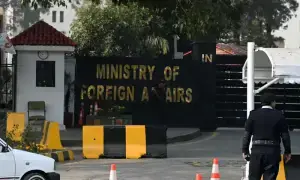
The Foreign Office (FO) on Monday strongly condemned the drone attack on the United Arab Emirates’ nuclear power plant, saying that “such reckless actions carry potentially catastrophic and irreversible consequences for human life, the environment and regional as well as global peace and security”.
A day ago, a drone strike had triggered a fire near Barakh Nuclear Power Plant in the emirate of Abu Dhabi, reporting no injuries or impact on radiation levels, according to the UAE’s defence ministry.
The UAE defence ministry said two other drones had been “successfully” dealt with, and that the drones had been launched from the “western border”. It did not elaborate.
Emirati officials said they were investigating the source of the strike and that the UAE had the full right to respond to such “terrorist attacks”.
The UAE has previously accused Iran of attacking its energy targets in what it has called an escalation of the conflict in the region.
In the statement released on Monday, the FO said that “any deliberate targeting of nuclear facilities” constituted a grave violation of international law, including international humanitarian law, the UN Charter, and the fundamental principles of nuclear safety and security enshrined in the Statute and resolutions of the International Atomic Energy Agency (IAEA).
It added that nuclear installations “must never be targeted under any circumstances”, adding “such reckless actions carry potentially catastrophic and irreversible consequences for human life, the environment, and regional as well as global peace and security”.
“The inviolability of civilian nuclear infrastructure is a well-established international norm and must be upheld without exception,” the FO said.
“Pakistan calls upon all parties to exercise maximum restraint, fulfil their obligations under international law and international humanitarian law, and avoid any actions that could further escalate tensions with consequences extending far beyond the region,” it said.
“Dialogue and diplomacy, consistent with the principles and purposes of the United Nations Charter, remain the only viable path toward lasting peace, stability, and de-escalation in the region,” the FO concluded.
Prime Minister Shehbaz Sharif also condemned the drone attack, urging all parties to “exercise maximum restraint”.
In a post on X, “We stand in full solidarity with the leadership and the brotherly people of the United Arab Emirates”.
PM Shehbaz urged all parties to “exercise maximum restraint and fulfil their obligations under international law”.
“Dialogue and diplomacy remain the only viable path toward lasting regional peace, stability and de-escalation,” he wrote.
The Barakah Nuclear Power Plant began operations in 2020 and is 200km west of Abu Dhabi, near the borders with Saudi Arabia and Qatar.
The plant provides up to a quarter of the oil-rich UAE’s electricity needs.
The drone hit an electrical generator outside the inner perimeter of the Barakah Nuclear Power Plant, the Abu Dhabi Media Office said on Sunday.
The International Atomic Energy Agency said emergency diesel generators were providing power to the plant’s “unit 3”, and called for “maximum military restraint” near any nuclear power plant, adding that it was following the situation closely.

 Login
Login