Login
Login
Former Singapore president blasts StanChart CEO for calling workers ‘lower-value human capital’
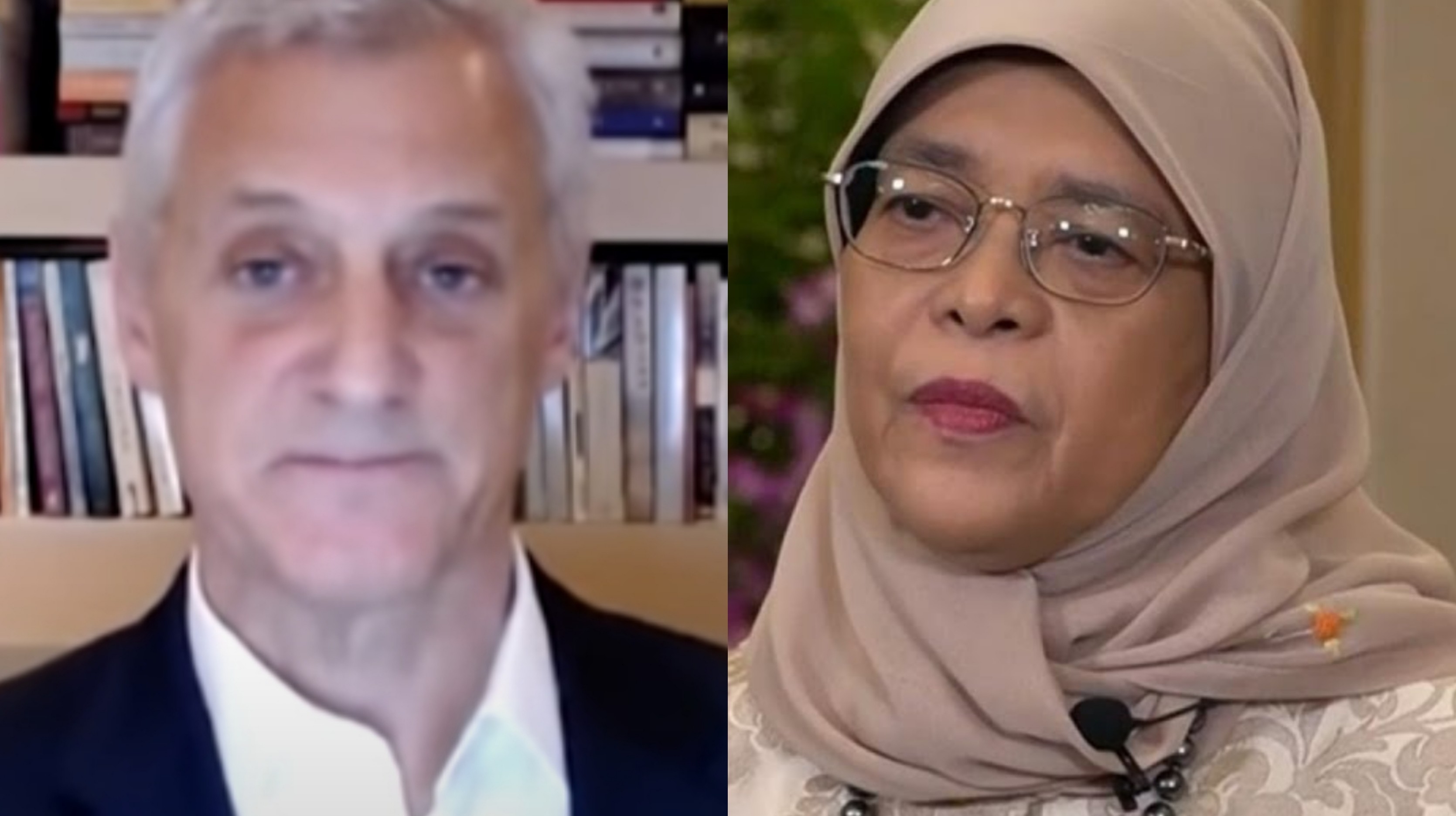
SINGAPORE: Former Singapore President Halimah Yacob has joined the growing backlash against Standard Chartered chief executive Bill Winters after he referred to employees affected by the bank’s restructuring plans as “lower-value human capital.”
The remarks, which some online have described as “unbelievably cruel language,” came after the London-headquartered lender announced plans to cut nearly 8,000 jobs over the next four years as it accelerates its adoption of artificial intelligence and automation.
The move marks one of the largest workforce reductions by a global bank directly linked to AI-driven restructuring.
Speaking to reporters after unveiling the bank’s latest strategy update, Winters said the exercise was not merely about cutting costs but about reshaping the organisation by redirecting resources toward technology and investment.
“It’s not cost-cutting. It’s replacing in some cases lower-value human capital with the financial capital and the investment capital we’re putting in,” Winters said.
He added that automation and AI would play a central role in the bank’s overhaul, while some affected staff would be given opportunities to retrain and move into other positions within the organisation.
“So, the people that want to reskill, that want to carry on, we’re giving every opportunity to reposition,” he said.
His comments quickly sparked criticism online, with many describing the phrase “lower-value human capital” as demeaning and insensitive toward workers facing redundancy.
Mdm Halimah weighed in on the controversy in a Facebook post, calling the remarks “disturbing” and urging the bank to treat employees with greater dignity and empathy.
“Workers are human beings with families, not just a form of capital. They, too, have contributed to the bank and now, because of AI, have become redundant. It’s demeaning to describe them as ‘lower-value human capital’,” she wrote.
She also warned that such language could have a lasting impact on both retrenched employees and those who remain within the organisation.
“After the retrenchment, they need to look for other jobs, and this negative description is not helpful. Imagine the morale of those who remain behind knowing that they are just another form of capital to their employer, who don’t really care about how they feel,” she added.
Calling on Standard Chartered and its leadership to handle retrenchments more compassionately, Mdm Halimah said, “Carry out retrenchments humanely. Treat workers with respect.”
Her remarks drew praise from many Singaporeans online, with some commending her for speaking out on the issue. Others pointed out that Singapore sovereign wealth fund Temasek Holdings is Standard Chartered’s largest shareholder, holding an estimated 17% to 18% stake in the bank.
Winters has yet to publicly respond to the criticism surrounding his comments.
Standard Chartered has said the roles expected to be most affected by the restructuring are located in back-office operations centres in Chennai, Bengaluru, Kuala Lumpur, and Warsaw. Winters also said AI would support the bank’s broader effort to modernise and automate its core banking systems.
The restructuring forms part of Standard Chartered’s longer-term strategy to improve profitability and reassure investors after years of transformation efforts. The bank has increasingly focused on higher-margin businesses, particularly affluent retail banking and financial institutions within its corporate and investment banking division.
Alongside the job cuts, the lender announced more ambitious financial targets, saying it aims to deliver a return on tangible equity (ROTE) of more than 15% by 2028, before increasing it further to around 18% by 2030.
The bank also brought forward its target of attracting US$200 billion in net new money to 2028 from its earlier 2029 timeline. In the first quarter of the year, Standard Chartered reported record wealth revenue and its highest level of new client inflows.
Despite the stronger targets, investor reaction was subdued. Shares in the bank, which have risen about 65% over the past year, slipped 0.5% in early trading after analysts described the guidance as relatively cautious.
Standard Chartered, whose operations are heavily concentrated in Asia-Pacific and Africa, also acknowledged ongoing geopolitical risks. Analysts have warned that prolonged instability in the Middle East could force regional banks to raise provisions for bad loans amid rising energy prices and slower economic growth.
The bank said it had already set aside US$190 million in precautionary provisions linked to Middle East tensions during the first quarter.
Asked whether geopolitical uncertainty could derail the bank’s ambitions, Winters maintained that the lender remained well-positioned to withstand external shocks.
“We are extremely resilient,” he said.
The strategy update also comes amid speculation over succession planning after Winters’ 11-year tenure as chief executive. Winters indicated that he intends to remain at the helm for the next few years to oversee the implementation of the bank’s latest strategy.
Separately, Standard Chartered announced on Monday that Manus Costello, formerly the bank’s head of investor relations, had been appointed permanent chief financial officer. He succeeds Diego De Giorgi, who resigned in February after nearly three years in the role.
This article (Former Singapore president blasts StanChart CEO for calling workers ‘lower-value human capital’) first appeared on The Independent Singapore News.