Normal view

  • ✇Collider
  • 1 Year Later, Leonardo DiCaprio’s Modern Masterpiece Is Surging on Streaming Jake Hodges
    The 98th Academy Awards, like any other year, were represented by a host of winners and losers. Marty Supreme was the notable flop on the night, winning nothing despite being nominated in nine categories. This disappointment was contrasted by the celebrations of the likes of Ryan Coogler’s beloved vampire flick Sinners, the animated phenomenon KPop Demon Hunters, the Danish-Norwegian drama Sentimental Value, Apple's F1, and even the horror underdog Weapons, which all left with Golden Statues.
     

1 Year Later, Leonardo DiCaprio’s Modern Masterpiece Is Surging on Streaming

7 June 2026 at 18:00

The 98th Academy Awards, like any other year, were represented by a host of winners and losers. Marty Supreme was the notable flop on the night, winning nothing despite being nominated in nine categories. This disappointment was contrasted by the celebrations of the likes of Ryan Coogler’s beloved vampire flick Sinners, the animated phenomenon KPop Demon Hunters, the Danish-Norwegian drama Sentimental Value, Apple's F1, and even the horror underdog Weapons, which all left with Golden Statues.

As Climate Change Exacerbates Extreme Weather, Olive Oil Feels the Squeeze

By: Guest
24 March 2026 at 20:01
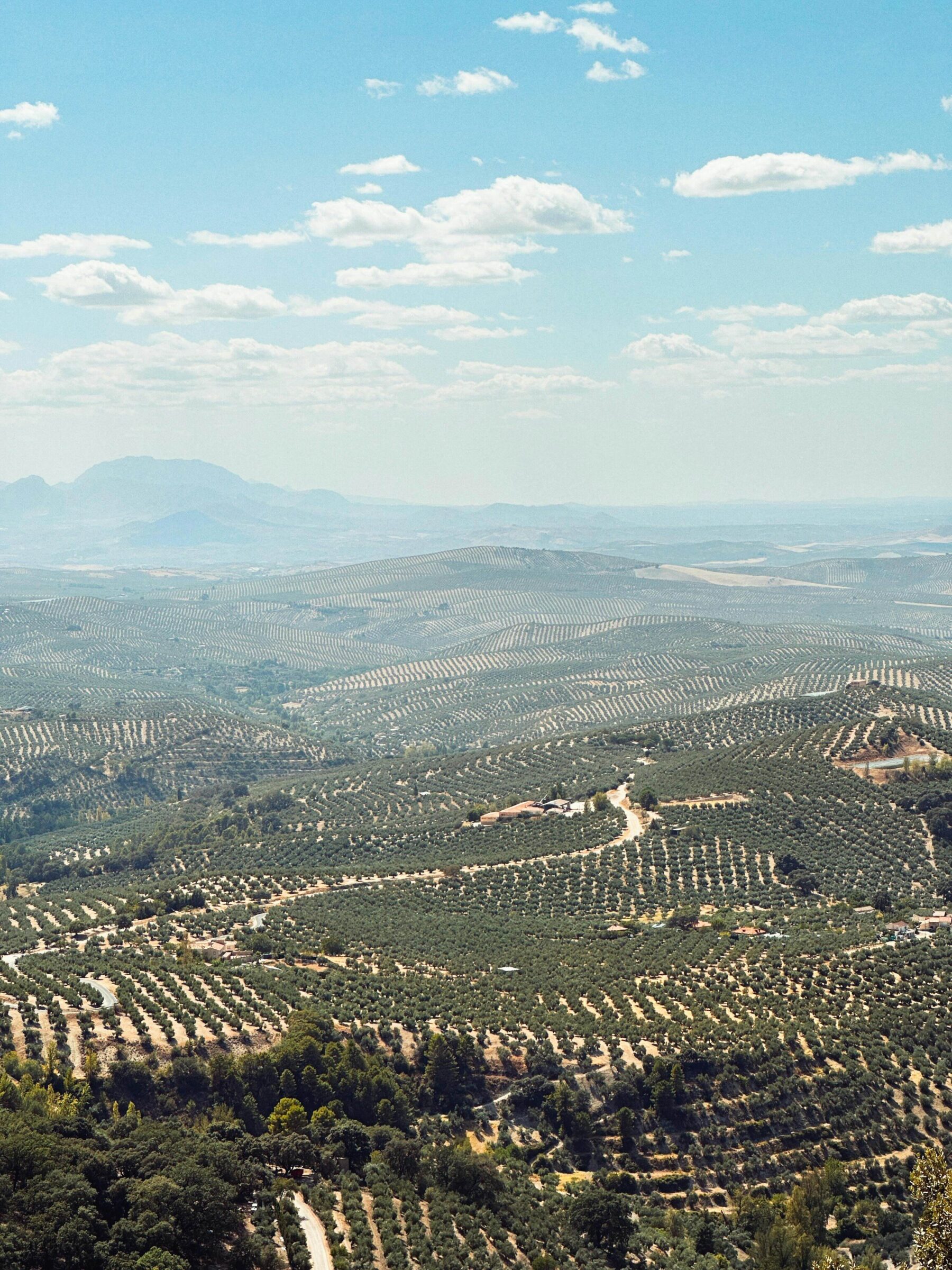
Intensifying droughts and extreme heatwaves are having a profound impact on olive quality, quantity and price, according to recent research.

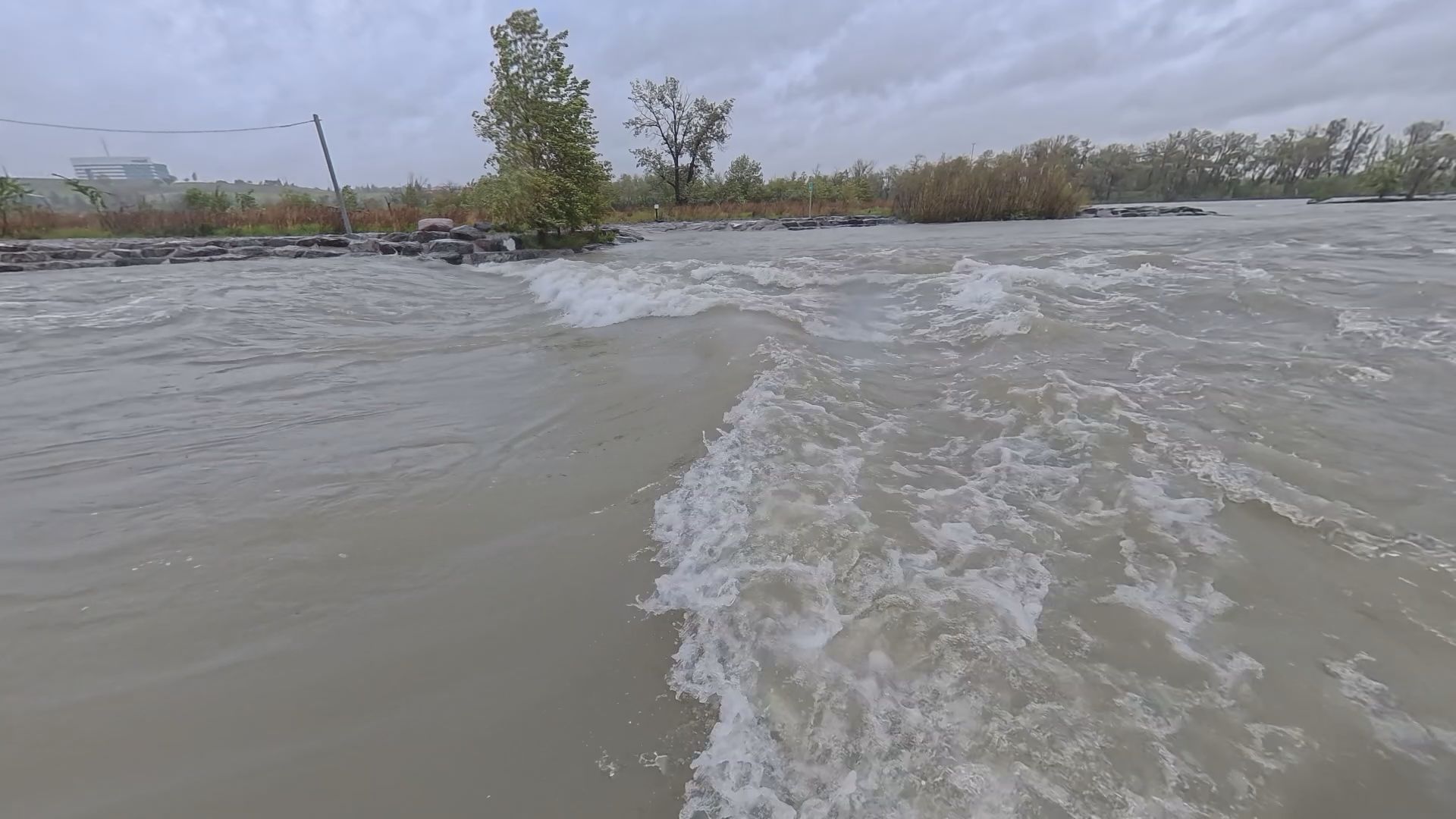
City of Calgary officials forecast river levels to peak by Tuesday

2 June 2026 at 03:09
Despite the rising water levels, City of Calgary officials said 70 per cent of the damage potential from the 2013 floods has been reduced due to investments in flood resilience.

  • ✇Eos
  • NOAA Forecasts a Below-Average Hurricane Season Emily Gardner
    In its annual forecast of the upcoming Atlantic Hurricane season, NOAA suggests the 2026 season has a 55% chance of being below normal, compared with a 35% chance of being near normal and just a 10% chance of being above normal. The forecast, announced at a press conference at the NOAA Aircraft Operations Center in Lakeland, Fla., includes 8 to 14 named storms (with winds of at least 39 miles per hour), 3 to 6 of which will be hurricanes (with winds of at least 74 miles per hour). One to thr
     

NOAA Forecasts a Below-Average Hurricane Season

21 May 2026 at 18:53
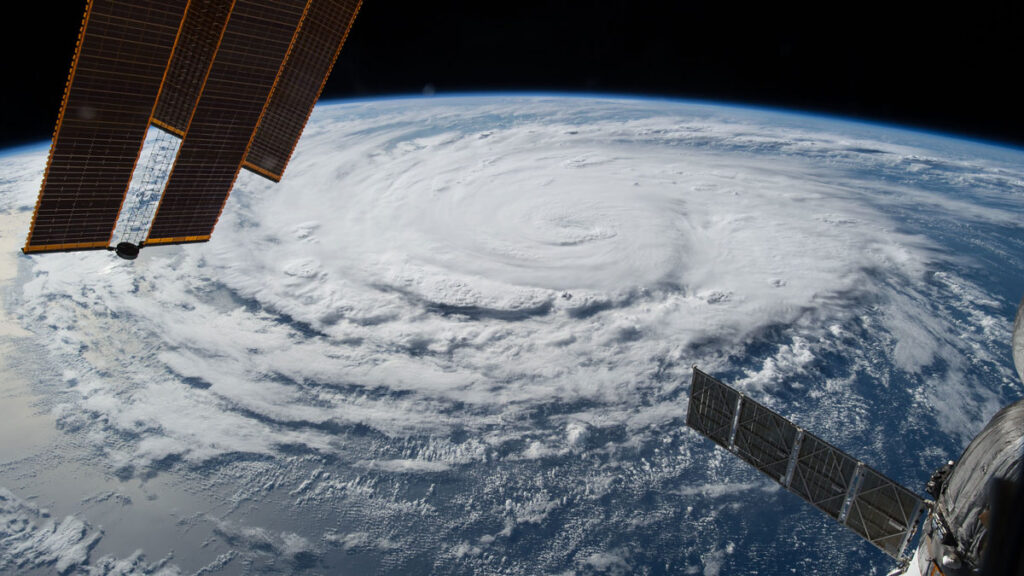
A hurricane on Earth is seen from the International Space Station.

In its annual forecast of the upcoming Atlantic Hurricane season, NOAA suggests the 2026 season has a 55% chance of being below normal, compared with a 35% chance of being near normal and just a 10% chance of being above normal.

The forecast, announced at a press conference at the NOAA Aircraft Operations Center in Lakeland, Fla., includes 8 to 14 named storms (with winds of at least 39 miles per hour), 3 to 6 of which will be hurricanes (with winds of at least 74 miles per hour). One to three of those are forecast to be major hurricanes (category 3 to 5 storms, with winds of at least 111 miles per hour).

A pie chart shows that the 2026 Atlantic hurricane season outlook has a 55% chance of being below normal, a 35% chance of being near normal, and a 10% chance of being above normal. Also listed are 8–14 named storms, 3–6 hurricanes, and 1–3 major hurricanes.
NOAA forecasts that a below-average hurricane season is most likely in 2026, largely because of El Niño conditions. Credit: NOAA

A below-average number of hurricanes does not reduce the need for people to be prepared, NOAA representatives emphasized.

“Even though we’re expecting a below-average season in the Atlantic, it’s very important to understand that it only takes one.”

“Even though we’re expecting a below-average season in the Atlantic, it’s very important to understand that it only takes one,” said Under Secretary of Commerce for Oceans and Atmosphere and NOAA Administrator Neil Jacobs. “We have had category 5s make landfall in the past during below-average seasons.”

In contrast, NOAA is forecasting an above-average season in the Pacific, with a 70% likelihood of above-normal activity.

Matthew Rosencrans, lead hurricane forecaster with NOAA’s National Weather Service, noted that the Atlantic forecast does not yet contain information about potential hurricane landfalls, just the likelihood of their formation. National Weather Service Director Ken Graham said the potential for rapid intensification—when wind speed increases by at least 35 miles per hour over the course of 24 hours—makes early preparedness particularly important.

“Every category 5 that’s made landfall in this country was a tropical storm or less 3 days out,” he said. “So they rapidly intensified that quick. You think you might have a week on your timeline. The reality is you may only have days.”

“There will never be a ‘Hurricane Justa,’” he added. “There’s no such thing as just a category 1, just a tropical storm, just a category 2.…Even the smallest storm, if it’s slow enough and big enough, it’s going to be catastrophic flooding and storm surge.”

The Atlantic hurricane season runs from 1 June to 30 November. The NOAA forecast is in line with an Atlantic hurricane forecast issued 9 April by Colorado State University (CSU), which predicted 13 named storms and 6 hurricanes, including 2 major hurricanes. Similarly, a forecast released 22 April by North Carolina State University predicted 12 to 15 named storms, 6 to 9 hurricanes, and 2 to 3 major hurricanes.

All three forecasts are slightly below the average Atlantic hurricane numbers for 1991–2020: 14.4 named storms, 7.2 hurricanes, and 3.2 major hurricanes.

2026 Atlantic tropical cyclone names: Arthur, Bertha, Cristobal, Dolly, Edouard, Fay, Gonzalo, Hanna, Isaias, Josephine, Kyle, Leah, Marco, Nana, Omar, Paulette, Rene, Sally, Teddy, Vicky, and Wilfred.
The World Meteorological Organization has released its list of 2026 Atlantic tropical cyclone names. Credit: NOAA

El Niño

The forecast for below-average activity levels largely stems from El Niño, a climate pattern that increases vertical wind shear over the tropical Atlantic. Vertical wind shear is how much the speed and direction of wind change with altitude. When wind shear is too high, it can tear a hurricane apart before it forms.

“Wind shear is good for us, bad for the hurricanes,” said Phil Klotzbach, a hurricane forecaster at Colorado State University and lead author of the CSU report.

This year, researchers suggest El Niño could become the strongest in modern history, which could have ripple effects on global temperatures. At the NOAA press conference, Jacobs said that there is a 98% chance of El Niño conditions occurring later this season and an 80% chance that it will be moderate to strong. The forecasted strength of El Niño has only grown since CSU issued its forecast, Klotzbach said.

However, in addition to high wind shear, El Niño is also characterized by unusually warm waters in the Pacific. Klotzbach compared the warm waters of El Niño to loaded dice.

“If the waters are a little bit warmer, that will load the dice for the storm to get stronger.”

“To get to a hurricane, you need to have warm water,” he said. “You need to have a lot of other stuff as well, but if the waters are a little bit warmer, that will load the dice for the storm to get stronger.”

El Niño isn’t the only reason our oceans are warming.

At a press briefing hosted by Covering Climate Now prior to the NOAA press conference, Shel Winkley, a meteorologist at Climate Central, noted that about 90% of the excess heat caused by greenhouse gas emissions has gone into Earth’s oceans, as the planet tries to keep our atmosphere in balance.

“We’re not saying that climate change necessarily creates hurricanes,” Winkley said. “But it is supercharging them: More intense winds, heavier rain, bigger flooding. That’s the connection that we can confidently draw.”

—Emily Gardner (@emfurd.bsky.social), Associate Editor

Citation: Gardner, E. (2026), NOAA forecasts a below-average hurricane season, Eos, 107, https://doi.org/10.1029/2026EO260171. Published on 21 May 2026.
Text © 2026. AGU. CC BY-NC-ND 3.0
Except where otherwise noted, images are subject to copyright. Any reuse without express permission from the copyright owner is prohibited.

Curry Barker’s ‘Anything But Ghosts’, Next Pic With Focus Features & Blumhouse-Atomic Monster, Adds Chris Reinacher

2 June 2026 at 22:53
EXCLUSIVE: Curry Barker’s Anything But Ghosts, his next movie from Blumhouse-Atomic Monster and Focus Features, will also star Superstore and The Mindy Project actor Chris Reinacher. Spooky Pictures and Divide/Conquer are also producers on the pic. The news comes in the wake of Barker’s current pic in cinemas, Obsession, becoming Focus Features’ highest-grossing movie at […]

  • ✇Eos
  • Most of the U.S. West Will Face Above-Normal Wildfire Risk This Summer Grace van Deelen
    Want your wildfire updates to come from a trusted source? Preference Eos in your searches! Go to Google A warm, dry spring has set the stage for above-average significant wildland fire risk across much of the southern and western United States this summer, and no part of the United States will have below-average fire potential through the end of August. “It’s not necessarily a foregone conclusion that we’re going to have a really busy season, but everything is pointing that way.”
     

Most of the U.S. West Will Face Above-Normal Wildfire Risk This Summer

11 May 2026 at 13:16
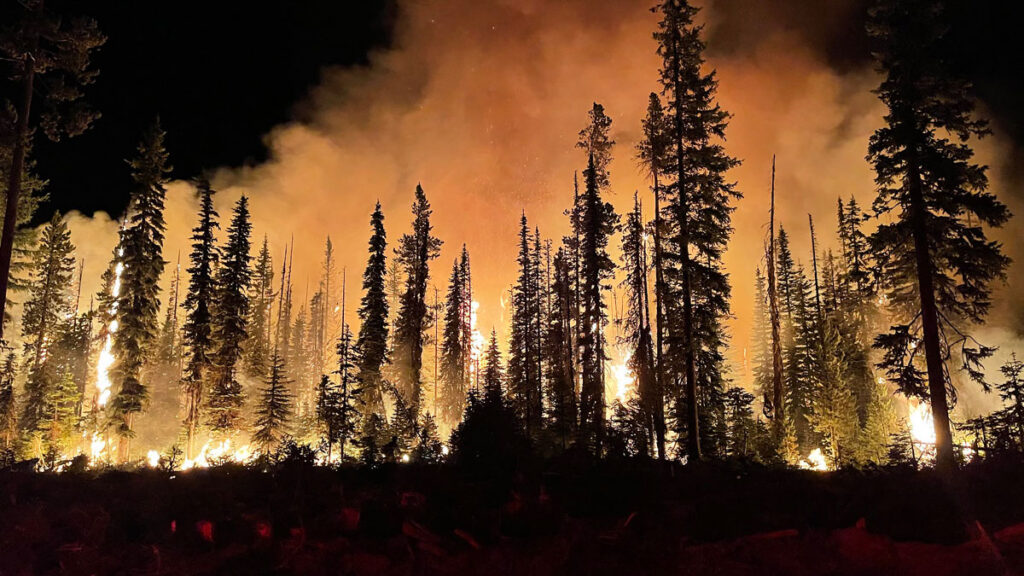
A wildfire burns in a forest at night.
Want your wildfire updates to come from a trusted source? Preference Eos in your searches!

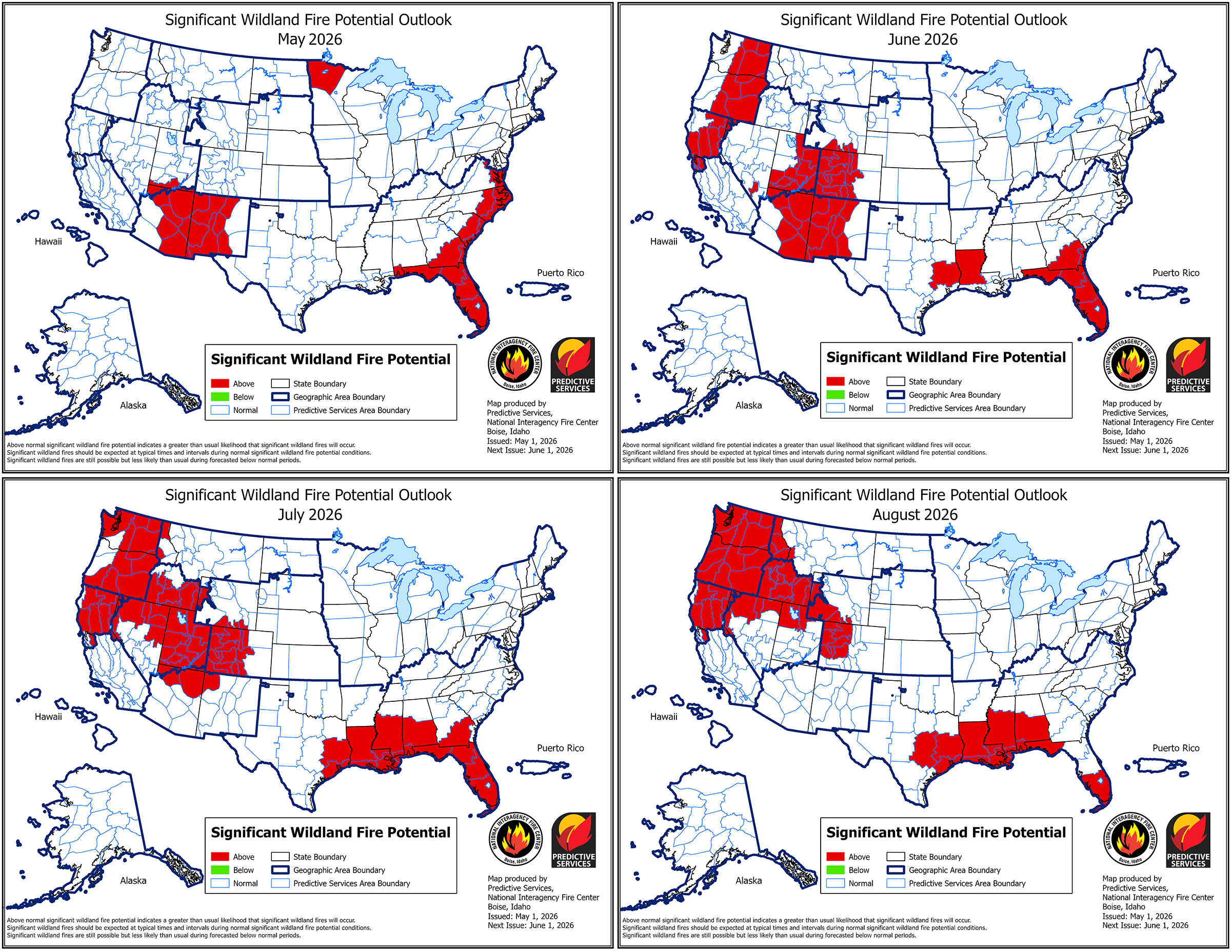
A warm, dry spring has set the stage for above-average significant wildland fire risk across much of the southern and western United States this summer, and no part of the United States will have below-average fire potential through the end of August.

“It’s not necessarily a foregone conclusion that we’re going to have a really busy season, but everything is pointing that way.”

These predictions are part of a 4-month outlook produced monthly by the National Interagency Fire Center (NIFC), a group of wildland fire experts from eight federal agencies that coordinates wildland fire resources across the country.

The most recent outlook, published 1 May, projects the likelihood of significant fires (defined as those that require an NIFC response) from May to August using long-term forecasts from NOAA’s Climate Prediction Center, current precipitation and drought conditions, and an assessment of the fuels available in different regions (like grasses, brush, and timber).

This year, 1,848,210 acres across the country have already burned—nearly twice the annual average over the past 10 years.

“It’s not necessarily a foregone conclusion that we’re going to have a really busy season, but everything is pointing that way,” said Jim Wallmann, a meteorologist for the U.S. Forest Service at the NIFC and one of the outlook’s authors.

Four maps of the United States show where significant wildland fire potential is projected to be elevated May-August. Most of the country is projected to have average fire potential and is not colored, though parts of Arizona, New Mexico, Utah, Colorado, California, Oregon, Washington, Nevada, Idaho, Texas, and states in the Southeast have above-average fire potential and are colored red.
Significant wildland fire potential will be elevated across much of the West and Southeast this summer. Click image for larger version. Credit: National Interagency Coordination Center, Public Domain

Drought in the West

In the West, wildfire season typically peaks in late summer. This most recent outlook predicts an above-average significant fire potential for much of the West as the season peaks.

In May, the above-average risk is concentrated in eastern Arizona and western New Mexico, though that risk fades to normal by August as the Southwest’s monsoon season begins. In June, the above-average risk extends to western Colorado and parts of the Pacific Northwest. In July and August, that risk covers much of the Northwest, including Utah, Idaho, Oregon, Washington, and Northern California.

Above-average spring temperatures and a far-below-normal snowpack across the West are contributing to the elevated risk in Washington, Oregon, Idaho, and Northern California, in particular. Many river basins across the West contain less than 20% of their normal amount of snow, and some are already snow-free at all observed locations due to melting caused by warm temperatures in March.

A map of the western United States shows the percent snow water equivalent of various river basins compared to the 1991–2020 average. Many of the basins are colored red, denoting they are less than 50% of the 1991–2020 average.
As of May, many river basins in the West have a snow water equivalent—the amount of water held in their current snowpackthat is less than 50% (in red) of the 1991–2020 average level. Credit: USDA Natural Resources Conservation Service, Public Domain

“The snowpack being lower this time of year, and melting out, affects the soil moisture throughout the rest of the summer, which then affects the fuel moistures,” said Craig Clements, a meteorologist at San Jose State University’s Fire Weather Research Laboratory who was not involved in the outlook. Early snowmelt also uncovers fuels, like pine needles and leaf litter, that would typically be under snow, exposing them to the air to dry and catch fire.

Southern California and the Sierra Nevada mountain range, though, remain at an average significant fire risk throughout the summer, as a result of higher-than-average precipitation earlier in the year.

The Southeast and Beyond

Fire risk will also be elevated in the Southeast this summer. Florida, for example, remains at an above-average significant fire potential through the end of August. Southern Georgia, Mississippi, Louisiana, Arkansas, and the eastern halves of Virginia, North Carolina, and South Carolina will also have above-average significant fire potential.

The above-average risk is fueled, in part, by a worsening drought affecting the Southeast alongside the drought in the West. As of 1 May, nearly 63% of the country was experiencing drought, and 19% of the country was experiencing extreme or exceptional drought, according to the U.S. Drought Monitor.

A map of the United States shows drought predictions for 1 May through 31 July 2026. The map predicts that drought will persist across almost all of the West and much of the Southeast.
NOAA’s Climate Prediction Center forecasts a persistent drought for most of the West and much of the Southeast this summer. Credit: NOAA/National Weather Service/Climate Prediction Center, Public Domain

The Midwest and the Northeast will remain at an average significant fire potential from May to August, though northwestern Minnesota faces an above-average potential in May.

No place in the United States is projected to have a below-average significant fire potential through the end of August.

Preparing Amid Uncertainty

A developing El Niño—a climate phenomenon that affects heat storage in the ocean—could alter the fire risk projections. Scientists expect that a strong El Niño could lead to a below-normal hurricane season, worsening drought in the Southeast. In the Pacific, a strong El Niño could intensify the hurricane season, which may lower wildfire risk.

However, a stronger El Niño could drive more lightning strikes in the Sierra Nevada, which could increase fire risk there, Clements said. In 2020, for example—a strong El Niño year—Hurricane Elida in the Pacific contributed to a lightning outbreak that supercharged wildfires in the West.

“We’re still not sure exactly how [El Niño] is going to impact the season.”

“We’re still not sure exactly how [El Niño] is going to impact the season,” Wallmann said. As late summer approaches, meteorologists will better understand how El Niño will develop and affect wildfire risk.

Weather patterns can change, and day-to-day conditions still play a role in fire occurrence. “If the weather shifts, or we get a really big heat wave, it can modify [the forecast]. Or if it remains relatively moderate, that might lessen the fire danger,” Clements said. “We’ll just have to see how the weather plays out.”

Wallmann and Clements emphasized that those living in areas with elevated fire risk should be aware of their surroundings and think ahead about where they might go for safety should a wildfire occur. “Having that situational awareness ahead of time can help you make better decisions,” Wallmann said.

—Grace van Deelen (@gvd.bsky.social), Staff Writer

Citation: van Deelen, G. (2026), Most of the U.S. West will face above-normal wildfire risk this summer, Eos, 107, https://doi.org/10.1029/2026EO260145. Published on 11 May 2026.
Text © 2026. AGU. CC BY-NC-ND 3.0
Except where otherwise noted, images are subject to copyright. Any reuse without express permission from the copyright owner is prohibited.

‘I’m not your lifetime meal ticket’: Man wants to cut mum’s allowance after nearly 20 years to focus on marriage

8 June 2026 at 00:00

SINGAPORE: A Singaporean man who has spent almost two decades financially supporting his mother has turned to Reddit to ask whether he is wrong for wanting to reduce her allowance so he can focus on marriage and starting a family with his girlfriend.

Posting on Reddit’s r/asksg forum on Wednesday (Jun 3), the man shared that he has been giving his mother 15% of his salary since he first started working. In addition to the monthly allowance, he also pays for her Netflix subscription and medical insurance.

While he said he had never had an issue with the arrangement, he admitted that his circumstances and priorities are no longer the same as they were years ago. With marriage now on the horizon, he is beginning to feel the pressure of balancing his responsibilities towards his mother with his own plans for the future.

“My girlfriend and I are discussing marriage,” he wrote. “We’ve been together since 2019. She is a low-income foreign worker who speaks Mandarin and basic English. She is incredibly frugal, rarely asks for anything, and earns under S$2,000 a month.”

‘I told her to stop treating me as a lifetime meal ticket’

The conflict reportedly began when his mother started encouraging the couple to have a child.

According to the man, he responded by explaining that having a baby was financially unrealistic unless he reduced the amount of money he currently gives her each month.

“I told her flatly that a baby is not financially viable right now unless the money comes from somewhere, specifically a reduction in the monthly allowance I give her.”

In the heat of the argument, he also revealed some long-held frustrations.

“I told my mother she needs to stop treating me as a lifetime meal ticket and find her own income. I suggested she rent out my bedroom once I move out, but she flatly refused due to her ‘fear of strangers’. She also refuses to seek any part-time work, citing her lack of English and claiming there are ‘bad people’ everywhere.”

His mother reportedly reacted angrily, accusing him of being “unfilial” and refusing to care for her.

He also alleged that she tried to guilt-trip him by bringing up the hardships she endured while working unpaid for his grandmother during her younger years.

When he responded that it was “just her fate” — a phrase he said she once used on him after he failed his exams — the argument escalated further.

“She told me she should never have given birth to me and invoked religious curses,” he wrote. “She then used my girlfriend as a punching bag. She claims my girlfriend ‘changed me’, will ‘con me of everything and leave the country’, and looks down on her job, saying my girlfriend is lucky a university graduate wants her.”

According to him, his mother is also strongly opposed to the idea of him giving his future wife an allowance.

“She is fiercely against me giving my future wife an allowance, and against my girlfriend sending money back to her own parents, claiming my girlfriend has siblings to do that whereas my mother ‘only has me’.”

“I told her that while I am indebted to her to a point, she has been free-riding for nearly two decades.”

Wanting outside perspectives, he asked fellow Redditors: “AITA (Am I The A***ole) for wanting to reduce my dependent mother’s allowance so I can marry and start a family?”

A long history of financial dependence

To explain why he feels the way he does, the man shared more details about his mother’s background.

According to him, she has not worked since 1995 and has consistently resisted suggestions that she seek employment.

He said she speaks no English and often describes the outside world as being full of “bad people”, something he believes has become her justification for avoiding work altogether.

Following his father’s death in 2007, she reportedly relied on an insurance payout left behind by her late husband.

“Originally, the money was split 50% to her and 50% between my brother and me, but out of trust, both my brother and I gave her our shares. She spent my portion buying me a motorcycle. My elder brother eventually cut contact with her completely due to her heavy favouritism towards me.”

Despite being the “favoured” child, the man claimed that his mother did not support his educational ambitions.

“I put myself through university via night classes and bank loans. My mother was heavily against me getting a degree, claiming ‘degree holders are jobless’. Despite her lack of support, I now earn a degree-level salary.”

“15% isn’t all that high.”

The post quickly attracted responses, with many Singaporean Redditors sympathising with the man’s situation and arguing that parents should not expect lifelong financial support at the expense of their children’s future plans.

One commenter wrote, “At some point you have to prioritise yourself. Filial piety should never be at the expense of your own future. If you are relying on her (example, staying at her house), move out asap and establish boundaries.” 

Another commented, “Don’t let your parents gaslight you!!! They’re adults, and they need to be responsible for their own life.”

Others felt the issue was more complicated and argued that the man was being unfair, particularly given his mother’s age and circumstances.

One critic pointed out that his mother had spent years supporting him and accused him of lacking gratitude.

They said, “It’s because of people like you that the gov’t had to come up with ‘Maintenance of Parents Act.’  I feel sad for your mum. It must’ve been due to her favoritism towards you that brought you up wrongly, never instilling the right values in you. You guys obviously can’t afford luxuries, and yet she’s willing to help you get a motorcycle, which resulted in your brother cutting ties. 

“Her world literally has only you, and you are this pathetic charsiew who is ASKING HER TO GET A JOB. ASKING HER, A WIDOWER LIVING ON HER OWN, TO SHARE HER HOME WITH A STRANGER TO SUPPLEMENT HER INCOME all over a foreign worker.”

Another added, “15% isn’t all that high. Many parents make such demands..”/TISG

Read also: ‘The company he worked for decided to move production to Malaysia’: Daughter upset after father’s layoff, says he ‘worked hard and stayed loyal’ 

This article (‘I’m not your lifetime meal ticket’: Man wants to cut mum’s allowance after nearly 20 years to focus on marriage) first appeared on The Independent Singapore News.

Photographer Bitten by ‘Shark or Sea Lion’ During Surf Competition

26 May 2026 at 10:35

A sea lion swims underwater, illuminated by sunlight streaming through the water's surface, creating rays and reflections around the animal.

A photographer was bitten by what may have been a “shark or a sea lion” during the finals of a surf competition in New Zealand, forcing the event to be paused for several hours.

[Read More]

Alice Rohrwacher to Direct Feature Film Adaptation of Italo Calvino Classic ‘The Baron in the Trees’

29 May 2026 at 09:48
Italian auteur Alice Rohrwacher, known for her magical realist works “The Wonders,” “Happy as Lazzaro” and “La Chimera” —  all of which competed at Cannes Film Festival — is set to direct a feature film adaptation of Italo Calvino’s coming-of-age fable “The Baron in the Trees.” One of the most celebrated books in 20th century […]

❌
Subscriptions