
Normal view

  • ✇Malay Mail - All
  • Singapore seeks IAEA review next year as it weighs advanced nuclear energy options
    SINGAPORE, May 20 — Singapore will undertake the Integrated Nuclear Infrastructure Review (INIR) Phase 1 Mission next year to assess its preparedness for the possible deployment of advanced nuclear energy technologies.The Ministry of Sustainability and the Environment (MSE) said the assessment would determine the republic’s readiness to make an informed decision on the possible future deployment of advanced nuclear energy technologies.“As part of efforts to asses
     

Singapore seeks IAEA review next year as it weighs advanced nuclear energy options

20 May 2026 at 04:35

Malay Mail

SINGAPORE, May 20 — Singapore will undertake the Integrated Nuclear Infrastructure Review (INIR) Phase 1 Mission next year to assess its preparedness for the possible deployment of advanced nuclear energy technologies.

The Ministry of Sustainability and the Environment (MSE) said the assessment would determine the republic’s readiness to make an informed decision on the possible future deployment of advanced nuclear energy technologies.

“As part of efforts to assess the suitability of advanced nuclear energy technologies for power generation, Singapore has been progressively building capabilities in nuclear science, safety, and technology in line with international best practices.

“The INIR Phase 1 Mission will support the government in validating our progress and ensuring our capability development is advancing in the right direction, based on an internationally recognised assessment framework known as the International Atomic Energy Agency (IAEA) Milestones Approach,” it said in a statement yesterday.

According to the ministry, the assessment via the INIR Phase 1 Mission will be a key milestone of Singapore’s nuclear capability-building journey.

It will also enable the IAEA to better understand Singapore’s current stage of development and provide more tailored support for capability-building efforts in the future, it added.

Singapore has not made a decision on the adoption or deployment of nuclear energy.

“We will continue to monitor global developments and work with international partners to build capabilities in nuclear safety and regulation, as part of efforts to study all potential pathways for decarbonisation,” the ministry said. — Bernama
  • ✇Malay Mail - All
  • UAE says drone targeting its nuclear plant was launched from Iraq
    UAE says six drones launched in from Iraq in 48 hoursDefence ministry says all but one were interceptedUN envoy highlights attacks ‘by one state ‌and its proxies’ May 20 — The United Arab Emirates said yesterday that six drones had been launched against it from Iraq in the past 48 hours, including one that caused a fire at a nuclear power plant in the Gulf state on Sunday.The UAE’s defence ministry said in a statement that it had intercepted all but one of the dr
     

UAE says drone targeting its nuclear plant was launched from Iraq

20 May 2026 at 02:28

Malay Mail

  • UAE says six drones launched in from Iraq in 48 hours
  • Defence ministry says all but one were intercepted
  • UN envoy highlights attacks ‘by one state ‌and its proxies’ 

May 20 — The United Arab Emirates said yesterday that six drones had been launched against it from Iraq in the past 48 hours, including one that caused a fire at a nuclear power plant in the Gulf state on Sunday.

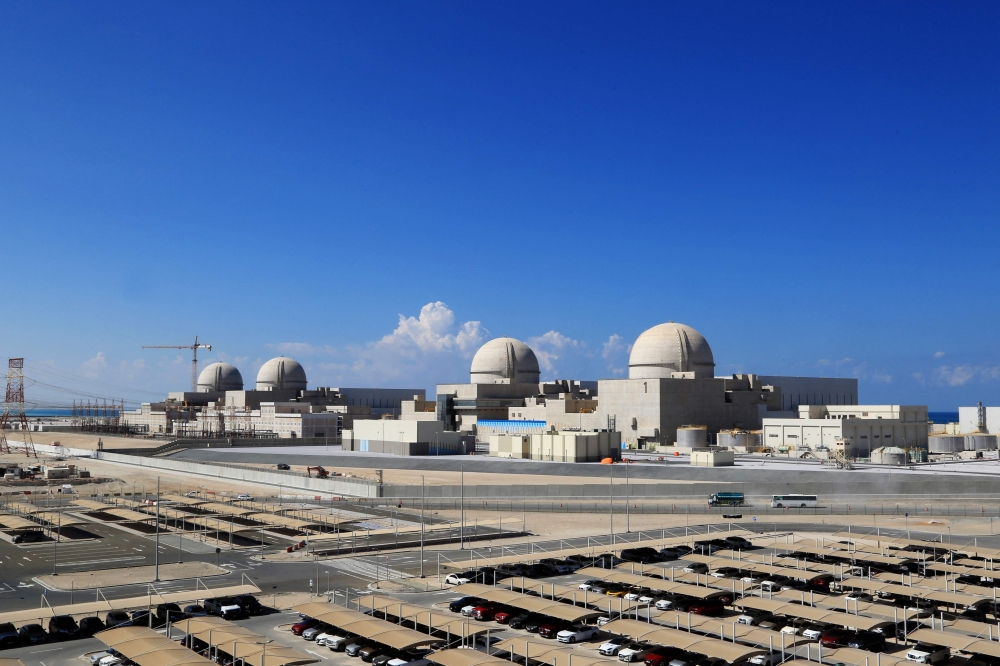
The UAE’s defence ministry said in a statement that it had intercepted all but one of the drones. It said three in total had been targeting the Barakah Nuclear Power Plant, which is the Arab world’s first commercial nuclear power station.

The drone that penetrated the UAE’s defences hit an electric generator outside the inner perimeter of the plant, the ministry said.

After that drone strike, the UAE’s Federal Authority for Nuclear Regulation said the plant remained safe and that no radioactive material had been released due to the attack.

Emirati officials have said the UAE has the full right to respond to such “terrorist attacks”.

Iraq is home to powerful Iranian-backed militia groups which have claimed attacks against “enemy bases in Iraq and the region” during the US-Israeli war on Iran.

Later at the United Nations in New York, the UAE ambassador to the world body, Mohamed Abushahab, told a Security Council meeting called to discuss the attack on the Barakah plant that it was not an isolated incident.

He did not identify a perpetrator, but said it occurred “in a wider regional context, in which persistent cross-border attacks by one state and its proxies have pushed the region toward heightened escalation and dangerous confrontation.”

Russia and China, which have long been supportive of Iran, criticised the attack at the Security Council, with China’s envoy expressing “great concern” and Russia’s UN ambassador saying that strikes on peaceful nuclear facilities in any country were “categorically unacceptable.”

The head of the UN’s International Atomic Energy Agency, Raphael Grossi, told the meeting the attack threatened the nuclear safety of the UAE and caused great concern throughout the Gulf.

“In case of an attack on the Barakah Nuclear Power Plant, a direct hit could result in a very high release of radioactivity to the environment,” he said.

“A hit that disabled the lines supplying electrical power to the plant could increase the likelihood of its reactors’ cores melting, which could result in a high release of radioactivity.”

While hostilities during the Iran conflict have scaled down since a ceasefire came into effect in April, drones have been launched from Iraq towards Gulf countries, including Saudi Arabia and Kuwait.

Saudi Arabia said on Sunday it had intercepted three drones coming from Iraqi airspace and that it would take any necessary measures in response to efforts to violate its sovereignty and security.

Iraq said its air defences had not detected any drones being launched from its airspace. — Reuters


❌
Subscriptions