Normal view

  • ✇Camille Styles
  • These Memoirs Made Us Call Our Therapist (We Have No Regrets) Isabelle Eyman
    There is nothing quite like a memoir to crack you open. Not in the dramatic, obvious way—but in a slow accumulation that happens when you recognize something true about yourself in someone else’s story. A really good one clarifies something you haven’t found the words for. Until now. The Best Memoirs by Female Authors Will Shift Your Perspective We’ve always loved sharing the books that move us, and this list has been a long time coming. These aren’t the memoirs you’
     

These Memoirs Made Us Call Our Therapist (We Have No Regrets)

7 May 2026 at 10:00
Camille Styles reading best memoirs by women.

There is nothing quite like a memoir to crack you open. Not in the dramatic, obvious way—but in a slow accumulation that happens when you recognize something true about yourself in someone else’s story. A really good one clarifies something you haven’t found the words for. Until now.

The Best Memoirs by Female Authors Will Shift Your Perspective

We’ve always loved sharing the books that move us, and this list has been a long time coming. These aren’t the memoirs you’ll find on every “must-read” roundup (though a few have earned their moment in the spotlight, here’s looking at you, Strangers). They’re the ones we keep pressing into people’s hands, the ones that stay with you long after the last page, and the ones that made us see marriage, ambition, grief, and the shape of a life a little differently. Whatever you’re carrying right now, one of these will meet you there.

Pin it Best memoirs on picnic blanket beside flowers and a glass of wine.

On Love, Marriage, and What We Don’t See Coming

Some of the most clarifying books ever written about love are the ones about its unraveling. But I wouldn’t think of these as cautionary. These three books ask the questions most of us are carrying—and think we’re carrying alone.

Strangers: A Memoir of Marriage by Belle Burden

Belle Burden’s 20-year marriage ended without warning during the pandemic: her husband announced he was leaving, offered no explanation, and nearly overnight became a man she didn’t recognize. What follows is a reckoning with the ways women make themselves small inside a marriage, and what happens when one woman decides to stop. Consider it essential reading.

Threshold

Left on Tenth: A Second Chance at Life by Delia Ephron

Ephron had just received a leukemia diagnosis when a man she had briefly dated decades earlier reached out by email after reading one of her essays. What followed was a love story that unfolded in hospital waiting rooms and remission celebrations. Tender, funny, and deeply moving—the rare memoir about late-in-life love that earns every emotion it asks of you.

Threshold

Trying by Chloé Caldwell

What begins as a fertility story takes a turn that reshapes everything—including what Caldwell thought she knew about her marriage and her own identity. Spare and wry, this is one of those books that gets harder to put down the more uncomfortable it gets. It rides the line between heartbreaking and funny in a way that feels true to life itself.


On Reinvention and Reclaiming Your Story

These are the books about women who rewrote the narrative—sometimes quietly, sometimes dramatically, always on their own terms. The consistent truth: identity is something you build, not something that happens to you.

Love, Pamela by Pamela Anderson

A radiant, deeply personal account of a woman reclaiming her own narrative—on her own terms, in her own words. Tender, self-aware, and far more moving than you might anticipate (if, unlike me, you haven’t been hungrily devouring her Substack). Easily one of the most memorable books on this list.

Everything I Know About Love by Dolly Alderton

Alderton’s memoir of her twenties—the bad dates, the great friendships, the slow work of becoming yourself—reads like a message from your most honest friend. If you haven’t read it yet, consider this your sign.

Be Ready When the Luck Happens by Ina Garten

What looks like a career memoir turns out to be something more interesting: an unusually candid account of a complicated marriage and a series of bold bets that led her to become one of the most beloved figures in American food. Garten writes about luck as something you prepare for, not wait for.

More Than Enough by Elaine Welteroth

The second youngest editor-in-chief in Teen Vogue history writes about ambition, race, and what it actually takes to break barriers. This isn’t the polished version, it’s the honest one.


On Inner Life, Grief, and Learning to Rest

Not every book on this list will leave you feeling inspired in the traditional sense. Some will just make you feel less alone in what you’re carrying. I like to think of that as its own kind of nourishment.

Wintering: The Power of Rest and Retreat in Difficult Times by Katherine May

When May’s life came to a sudden halt, she didn’t push through. She wintered. This hybrid memoir weaves her own story with natural history and mythology to make a quiet, radical argument for rest. Not self-help — something richer. One of the most healing reads we know.

The Many Lives of Mama Love by Lara Love Hardin

Hardin was, by every outward measure, a successful suburban mom — until the opioid addiction she’d hidden for years caught up with her, and she found herself convicted of 32 felonies. Startling in its honesty and unexpectedly redemptive. A book about the gap between the life we show people and the one we’re actually living.

A Living Remedy by Nicole Chung

In two years, Chung lost both parents—her father to decades of precarity and a healthcare system that failed him, and then her mother to cancer, just as COVID made the distance between them feel insurmountable. This is a book about grief, yes, but also about the particular guilt of upward mobility in America: what it means to build a different life for yourself while the people you love remain at the margins.

Drinking: A Love Story by Carolyn Knapp

An older title and one of the most enduring on this list—recommended by Camille’s mom, who still thinks about it years later. Knapp writes about her relationship with alcohol with a novelist’s precision and an intimacy that makes it feel less like confession and more like a conversation. I think it’s one of the most beautifully written memoirs about addiction ever published.


On Family, History, and the Stories We Inherit

Feeding Ghosts by Tessa Hulls

The 2025 Pulitzer Prize winner for memoir, and unlike anything else on this list. A graphic memoir tracing three generations of Chinese women: Hulls’s grandmother, who survived the Communist revolution, fled to Hong Kong, and poured it all into a memoir—only to unravel in the aftermath; her mother, who inherited that silence and its weight; and Hulls herself, who spent nearly a decade drawing and writing her way toward understanding. If you’ve never read a graphic memoir, start here.

The Wildcard

Paris: The Memoir by Paris Hilton

This is a serious reckoning with a life spent performing a persona she created as armor—and the boarding school abuse at the center of it is not what you’d expect. More than a celebrity tell-all, it’s a story about survival and self-invention that earns its place on any list of books about the distance between who the world sees and who you know yourself to be.

This post was last updated on May 7, 2026, to include new insights.

The post These Memoirs Made Us Call Our Therapist (We Have No Regrets) appeared first on Camille Styles.

  • ✇Wiktionary Word of the day
  • Word of the day for April 29
    edit · refresh · viewWord of the dayfor April 29 aslant prep (archaic, literary) Across or over in a slanting or diagonal direction. aslant adv (archaic, literary) At or on a slant; in a slanting or sloping direction. aslant adj (archaic, literary) Slanting, oblique. ← yesterday | About Word of the Day Nominate a word Leave feedback | tomorrow →
     
  • ✇Wiktionary Word of the day
  • Word of the day for April 13
    edit · refresh · viewWord of the dayfor April 13 thaw v (transitive) To gradually cause (something frozen, such as earth, ice, or snow) to melt or soften by raising the temperature. To gradually cause (someone or something that is very cold) to warm up. (figurative) To cause (something inactive) to become active; also, to cause (something unfeeling) to have feelings. To cause (someone or their feelings that are reserved or unfriendly) to become friendly or gentle. (archaic, rare) To ca
     

Word of the day for April 13

13 April 2026 at 00:00
edit · refresh · view
Word of the day
for April 13
thaw v
  1. (transitive)
    1. To gradually cause (something frozen, such as earth, ice, or snow) to melt or soften by raising the temperature.
    2. To gradually cause (someone or something that is very cold) to warm up.
    3. (figurative)
      1. To cause (something inactive) to become active; also, to cause (something unfeeling) to have feelings.
      2. To cause (someone or their feelings that are reserved or unfriendly) to become friendly or gentle.
      3. (archaic, rare) To cause (something rigid) to become limp.
  2. (intransitive)
    1. Of something frozen, such as earth, ice, or snow: to gradually melt or soften as a result of the temperature being raised.
    2. Of someone or something that is very cold: to gradually warm up.
    3. (impersonal, meteorology) With the dummy pronoun it: of the weather: to become sufficiently warm for ice, snow, etc., to melt.
    4. (figurative)
      1. Of a person or their feelings that are reserved or unfriendly: to become friendly or gentle.
      2. Of something inactive: to become active; also, of something unfeeling: to develop feelings.

thaw n (also attributive)

  1. A gradual melting or softening of something frozen (such as earth, ice, or snow) when the temperature rises; the transformation of something frozen into a fluid or semifluid.
  2. A gradual warming up of someone or something that is very cold.
  3. (figurative)
    1. Of something inactive: an act of becoming active; also, of something unfeeling: an act of developing feelings.
    2. Of a person who is reserved or unfriendly: an act of becoming friendly or gentle.
    3. (politics) A period of relaxation of restrictions in a country or state; also, a period of increased friendliness or understanding, or of reduced hostility or tension in relations, between states.
  4. (meteorology) A period of weather warm enough to melt ice, snow, etc.
← yesterday | | tomorrow →
  • ✇SoraNews24 Japan
  • 7-Eleven Japan releases their second lineup of upsized foods from a muffin to bukkake soba Elliot Hale
    As well as a double-sized cheesecake worth fighting battles over. The world may be subject to the annoyances of shrinkflation, but over the past few years, there’s been a running trend in Japan of campaigns where prices remain the same though the amount of food is increased. Family Mart started the show, with Lawson, MiniStop, NewDays, and other convenience store chains now regularly holding these campaigns. 7-Eleven Japan kind of missed that wave, but with the Founding Anniversary Sale that s
     

7-Eleven Japan releases their second lineup of upsized foods from a muffin to bukkake soba

21 May 2026 at 13:00

As well as a double-sized cheesecake worth fighting battles over.

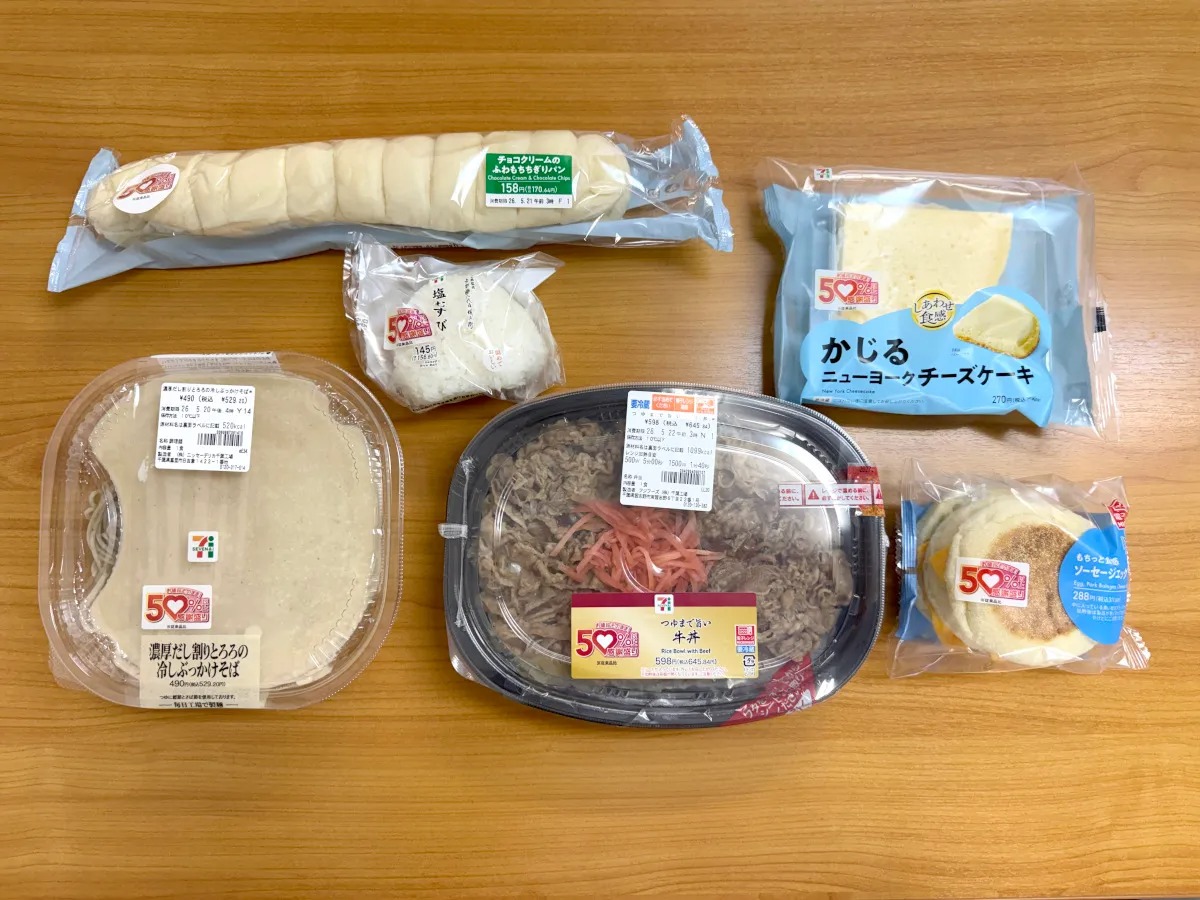
The world may be subject to the annoyances of shrinkflation, but over the past few years, there’s been a running trend in Japan of campaigns where prices remain the same though the amount of food is increased. Family Mart started the show, with Lawson, MiniStop, NewDays, and other convenience store chains now regularly holding these campaigns.

7-Eleven Japan kind of missed that wave, but with the Founding Anniversary Sale that started on May 12, they released six food items that saw increases in their amounts, including a bowl of ramen that weighed a hefty 1,084 grams (2.4 pounds).

From May 19, the second phase of what they’re calling the “Thank You Extra Large” series started, with an addition of another six products. Seeing as we managed to get our hands on the entire set, let’s tap into our gastronomic senses and share our thoughts and feelings on each item.

Salted Rice Ball (156 yen [US$0.98]) – ★★☆☆☆

The Salted Rice Ball is a simple but classic item, with no hidden surprises inside and only an increased amount of rice. While it is a joy just to have an increase in volume, its other characteristics haven’t changed so it’s not bad, but since it lacks excitement, it only gets two stars.

Sausage Egg Muffin (311 yen) – ★★★☆☆

This has increased muffin, sausage, and cheddar cheese, and a total weight of 215 grams (0.47 pounds), making it quite satisfying to eat. Picking it up provides you with a heavy and solid feeling in your hand, and the side-view is really tall.

This is “three stars” that leans heavily and cheesily towards four.

Fluffy and Chewy Pull-Apart Bread with Chocolate Cream (170 yen) ★★★★☆

The pull-apart bread with an increased total weight is visually impressive: it’s just so long. The impact is strong and has a clear sense of value. In addition to the deliciously chewy dough, the smooth chocolate cream contrasting with the chunky chocolate chips is also great.

This bread is a highly rated “four stars”.

Rice Bowl with Beef (645 yen) ★★★★☆

Claiming to be delicious down to the sauce, the beef bowl has seen an increased amount of both beef and rice, recording a weight of 610 grams (1.3 pounds). Eating it up, we appreciated how it wasn’t just bulked up with extra rice, but did in fact include a decent amount more meat too.

This dish is definitely recommended for those who want a voluminous meal: four stars.

Chilled Bukkake Soba with Rich Dashi-Blended Tororo (529 yen) ★★★★☆

Here is a simple dish of tororo soba noodles with increased noodles, sauce, and tororo (grated yam). With the total weight of 549 grams (1.2 pounds) making it slightly inferior to the beef bowl, it is about 120 yen cheaper, so the value for money is excellent.

Factoring in the increasing temperatures, this cooling and refreshing meal is assuredly worth four stars.

New York Cheesecake (291 yen) ★★★★★

This phase’s winner by far! With a mouthwatering taste that will capture the heart of anyone with a penchant for desserts, this feels like a cheesecake on steroids, having roughly the same weight as two of the regular cheesecakes.

It’s proven to be so popular that it’s out of stock in many of the stores, so prepare for a battle to get it. A hands-down five stars.

Our number one recommendation to try is the New York Cheesecake, so even if you try nothing else from this phase, though they all have their own charms and are delicious in their own right, be sure to swing by your nearest 7-Eleven store to try it.

This item is so good that cheesecake shortages might be a common feature of the coming weeks, but you only have until the final day on Monday, June 1, to partake in this campaign, so keep your eyes locked on those refrigerator restocks.

Related: 7-Eleven Japan Campaign Site
Photos ©SoraNews24
● Want to hear about SoraNews24’s latest articles as soon as they’re published? Follow us on Facebook and Twitter!

  • ✇Project Gutenberg EBooks
  • Sport and science on the Sino-Mongolian frontier by Arthur de Carle Sowerby
    QR code Read online now Download for free For your e-reader or reading app — Kindle, Kobo, Apple Books, Calibre etc. EPUB3 ★ Recommended for most devices! Kindle → Use Send-to-Kindle Kobo, Nook etc → Transfer via USB Phone, tablet or computer → Open in a reading app Reading guide Other formats & older devices Plain Text (accessible) EPUB (older e-readers) EPUB (older e-readers, no images) Kindle Older Kindles
     

Sport and science on the Sino-Mongolian frontier by Arthur de Carle Sowerby

21 May 2026 at 06:56
QR code

Download for free

For your e-reader or reading app — Kindle, Kobo, Apple Books, Calibre etc.

Kindle → Use Send-to-Kindle
Kobo, Nook etcTransfer via USB
Phone, tablet or computer → Open in a reading app
Other formats & older devices

About this eBook

Author Sowerby, Arthur de Carle, 1885-1954
Title Sport and science on the Sino-Mongolian frontier
Original Publication London: A. Melrose, ltd., 1918.
Credits Richard Tonsing, Peter Becker, and the Online Distributed Proofreading Team at www.pgdp.net (This file was produced from images generously made available by The Internet Archive)
Language English
Category Text
eBook-No. 78716
Release Date May 20, 2026
Copyright Public domain in the USA.
Downloads 0 downloads in the last 30 days.

Project Gutenberg eBooks are always free!

  • ✇Project Gutenberg EBooks
  • Black ivory by Polan Banks
    QR code Read online now Download for free For your e-reader or reading app — Kindle, Kobo, Apple Books, Calibre etc. EPUB3 ★ Recommended for most devices! 445 kB Kindle → Use Send-to-Kindle Kobo, Nook etc. → Transfer via USB Phone, tablet or computer → Open in a reading app Reading guide Other formats & older devices Plain Text (accessible) 457 kB EPUB (older e-readers) 442 kB EPUB (older e-readers, no images) 350 kB Kindle
     

Black ivory by Polan Banks

7 June 2026 at 16:42
QR code

Download for free

For your e-reader or reading app — Kindle, Kobo, Apple Books, Calibre etc.

Kindle → Use Send-to-Kindle
Kobo, Nook etc. → Transfer via USB
Phone, tablet or computer → Open in a reading app
Other formats & older devices
966 kB
914 kB

There may be more files related to this item.

About this eBook

Author Banks, Polan
Title Black ivory
Original Publication New York: A. L. Burt Company, Publishers, 1926.
Credits Charlene Taylor and the Online Distributed Proofreading Team at www.pgdp.net (This file was produced from images generously made available by The Internet Archive/American Libraries.)
Language English
Category Text
eBook-No. 78822
Release Date Jun 6, 2026
Copyright Public domain in the USA.
Downloads 455 downloads in the last 30 days.

Project Gutenberg eBooks are always free!

Hottest day of the year ushers in 9 days of rain, as Hong Kong logs over 6,000 instances of lightning on Friday

6 June 2026 at 02:48
hko

Hongkongers sweated through the hottest day of the year on Friday, with the Observatory (HKO) recording a maximum temperature of 34.6 degrees Celsius at its headquarters.

Yung Shue Wan, Lamma Island on Friday, June 5.
Yung Shue Wan, Lamma Island on Friday, June 5, 2026. Photo: HKFP.

The mercury neared 37 degrees Celsius in the northern part of the territory.

Maximum temperatures in Hong Kong on June 5, 2026.
Maximum temperatures in Hong Kong on June 5, 2026. Photo: HKO.

Meanwhile, the Observatory noted 1,263 instances of cloud-to-ground lightning on Friday, and 4,859 cases of cloud-to-cloud lightning.

The city is now set to see nine days of rain, the weather service predicts.

See also: How Hong Kong’s elderly face deadly heat inside cramped cage homes

Cloud-to-ground lightning count distribution.
Cloud-to-ground lightning count distribution on June 6, 2026. Photo: HKO.

“A broad trough of low pressure will linger over the vicinity of the coast of southern China to the northern part of the South China Sea during the weekend to midweek next week,” the Observatory said.

The amber rainstorm warning was raised at 10am on Saturday as violent gusts swept into the territory, raising the risk of flooding.

See also: NGO warns hot weather can worsen air quality, urges gov’t action on pollutants and cooling measures in hot districts

Climate crisis

Friday marked the hottest “Grain in Ear” solar term ever documented. The ninth traditional solar term, known in Chinese as Mangzhong, signifies a period when awny crops like wheat are ready to harvest.

This week, environmental NGO Friends of the Earth urged the Hong Kong government to prioritise the climate crisis and strengthen its climate adaptation policies, with the city expected to endure an extremely hot summer.

A heatwave in Hong Kong in late May 2026. Photo: Kyle Lam/HKFP.

The Intergovernmental Panel on Climate Change has warned that the intensity and frequency of heatwaves have continued to increase since the 1950s due to human-caused climate change. The prevalence of greenhouse gases like carbon dioxide – which trap heat in the atmosphere – raises the planet’s surface temperature, with hotter, longer heatwaves putting lives at risk.

See also: How extreme heat became the deadliest silent killer among world weather disasters

Hong Kong has already warmed by 1.7 degrees Celsius since the Industrial Revolution, research NGO Berkeley Earth says. Heat and humidity may reach lethal levels for protracted periods by the end of the century, according to a 2023 study, making it impossible to stay outdoors in some parts of the world.

  • ✇Duct Tape Marketing
  • How to Know When Your Business Is Ready to Scale John Jantsch
    How to Know When Your Business Is Ready to Scale written by John Jantsch read more at Duct Tape Marketing Catch the Full Episode Overview Scaling too fast kills companies. So does scaling too slow. But most business owners never stop to ask whether they have actually earned the right to scale at all. In this episode of the Duct Tape Marketing Podcast, John Jantsch sits down with Mark Roberge, co-founder of Stage 2 Capital, founding CRO of HubSpot, and author of The Science of Scaling, to unpack
     

How to Know When Your Business Is Ready to Scale

20 May 2026 at 19:03

How to Know When Your Business Is Ready to Scale written by John Jantsch read more at Duct Tape Marketing

Catch the Full Episode

DTM Podcast Mark RobergeOverview

Scaling too fast kills companies. So does scaling too slow. But most business owners never stop to ask whether they have actually earned the right to scale at all. In this episode of the Duct Tape Marketing Podcast, John Jantsch sits down with Mark Roberge, co-founder of Stage 2 Capital, founding CRO of HubSpot, and author of The Science of Scaling, to unpack one of the most misunderstood decisions in business growth.

Roberge, helped take HubSpot from zero to IPO, then spent years at Harvard Business School teaching founders why so many fast-growing companies implode. His framework asks a different question: instead of “how fast can we grow,” ask “have we proven we deserve to grow?” The answer requires evidence, not instinct, and not pressure from investors.

This episode is for small business owners, agency owners, and entrepreneurs who are thinking about adding headcount, launching new channels, or entering a new stage of growth. If you want to scale without destroying what you built, this conversation is your roadmap.

Guest Bio

Mark Roberge is the co-founder of Stage 2 Capital and the founding Chief Revenue Officer at HubSpot, where he grew the company from zero to IPO. He later joined Harvard Business School as a senior lecturer, teaching founders and operators how to scale with discipline. He is the author of The Sales Acceleration Formula and The Science of Scaling, and has spent the past decade as an investor, board member, and advisor helping companies navigate the gap between early traction and sustainable growth.

Key Takeaways

  • Product-market fit is not a revenue number. It is a retention metric. If customers are not staying and using your product, you do not have it yet, regardless of how many you have signed.
  • Go-to-market fit is the second gate before scaling. It is measured by unit economics, specifically whether you can acquire and serve customers profitably.
  • Scaling revenue too fast is a structural problem, not a motivation problem. Hiring 27 reps when you only have one requires 270 qualified interview screens, management infrastructure, and demand generation that most companies simply do not have.
  • Build a monthly hiring pace instead of a January 2nd headcount dump. Steady, intentional growth gives you time to build the systems that support each new hire.
  • The CRM funnel should not end at closed-won. Retention, engagement, and expansion are stages, not afterthoughts. The Marketing Hourglass is the right model.
  • Leading indicators of retention can be defined simply. Slack tracked whether 80% of customers sent 2,000 team messages per month. You do not need a data science team to build a version of this for your business.
  • A feature is not a moat. If a competitor can replicate your advantage in six months, it is not long-term defensibility. Founders need a vision for what makes them unbeatable over time.
  • The ability to up-level the executive team around you as the company grows is one of the strongest predictors of a successful exit. It is also one of the hardest skills to develop.
  • Sometimes the business outgrows the founder. The COO or president model is not failure. It is graduation. The reframe: someone else does the work you hate so you can focus on the work you love.
  • AI is accelerating faster than society can adapt. Mark is donating book proceeds to McLean Hospital for mental health research, because the people building this technology have a responsibility to help manage its consequences.

Great Moments (Timestamps)

[00:02] — The opening question that reframes every growth decision: are you betting on a business that is not prepared to win?

[04:04] — Mark defines what it actually means to earn the right to scale, and why most founders get this wrong from the start

[06:25] — The two-step framework: product-market fit and go-to-market fit explained clearly

[09:51] — Half scale too fast, half too slow. Mark explains the Groupon and WeWork examples as two failure modes

[11:40] — How to measure product-market fit without a data science team, using Slack and HubSpot as real examples

[13:29] — John and Mark align on why retention and advocacy belong inside the customer journey, not outside it

[16:31] — Why a feature is not a moat, and what long-term defensibility actually requires

[17:43] — The London School of Economics study on what predicts a strong startup exit (the answer will surprise most founders)

[20:33] — The mental health connection: Mark shares why he is donating proceeds to McLean Hospital and what the AI era demands of technologists

Memorable Quotes

“The decision on when to scale is usually when someone hands you a fat check, which doesn’t sound that strategic.” — Mark Roberge

“Do not let the dashboards and sales funnels in your CRM end at closed-won. That is literally step four of seven.” — Mark Roberge

“A feature is not long-term defensibility. If your competitor can build it in six months, you don’t have a moat.” — Mark Roberge

“We’re basically offering to pay for someone to do all the work you hate so you can do the work you love.” — Mark Roberge on helping founders let go

“We as technicians need to diversify our efforts away from just building and profiting toward helping society adapt to this new world.” — Mark Roberge

Duct Tape Transcript

John Jantsch (00:02.19)

So what if every time you hired too fast, launched a new channel or added a service line, you were making a bet that your business actually wasn't prepared to win. Hello and welcome to another episode of the Duck Tape Marketing Podcast. This is John Jance and my guest today is Mark Roberge. He's the co-founder of Stage Two Capital, founding chief revenue officer at HubSpot and the author of a book we're going to talk about today, The Science of Scaling.

Mark helped grow HubSpot from zero to IPO and then brought what he had learned into Harvard Business School where he taught founders how to grow without blowing up what they built. His framework gives business owners a way to use evidence rather than instinct or outside pressure to decide when they've truly earned the right to scale. So Mark, welcome to the show.

Mark Roberge (00:53.259)

Thanks, John. That's not my copy and I love it. Seriously, I love how you put it.

John Jantsch (00:59.105)

Awesome. good. Well, you know, we were talking before we got started, you and I met some 20 years ago when HubSpot was a nascent business. think maybe the first conference there were 500 people, something of that neighborhood.

Mark Roberge (01:04.916)

Yeah.

Mark Roberge (01:11.393)

Yeah, I was like in a Marriott in Cambridge. I have like, I remember specifically a couple of things about you. I think you were the most famous one of our early partners. I think I remember my last in-person chat with you was in some steakhouse in like South Boston or something. Cause I remember two people came up to you and asked for your autograph and you were like super humble about it. And I'm like, oh my gosh, this is crazy.

John Jantsch (01:21.271)

Ha ha ha!

John Jantsch (01:27.438)

You

John Jantsch (01:35.288)

Well, I'm glad I wasn't a jerk. That's for sure. Awesome. Well, let's get into your book a little bit. So I mentioned HubSpot, Harvard, now you back companies as a VC. Did something you learned or showed up across all three of those roles kind of make you say, I need to write this book?

Mark Roberge (01:37.365)

Hahaha

Mark Roberge (01:54.207)

Yeah. Yeah. It's like, it's kind of funny that we can unpack as much as you want, but in reflecting the last 20 years of my life professionally, I've given up on having a plan because I never intended to go into sales. I never applied for HubSpot. I never applied or intended to be a professor at Harvard. I never intended to start a venture capital firm.

And I never intended to write either the sales acceleration formula 12 years ago or the scientist's killing last year. These were all things that like people were like, would you be willing to do this? So they did, they do just like show up and the way that this one, as both books unfolded was a, like you, I am blessed with the opportunity to do a number of keynotes every year. and I, for the big ones like saster, I tended to try to do something fairly original for the year.

So I've, you every year I do something original. So I've given like 20 to 25 brand new speeches over the last decade. And this one was just like a pattern I saw after like eight years of being out of HubSpot as an independent board member, as a professor, as an advisor, as an investor, in why companies, the few that went IPO and billion dollar valuations versus the ones that went bankrupt was just this.

really non-strategic, non-rigorous perspective on when to scale and how fast. And half do it too early, too fast. Half of them wait too long and go too slow. It's more about going the optimal time. I started speaking about it and I'm like, it's ridiculous how many classes and rigorous frameworks we have on accounting for and accruing revenue, but not on scaling revenue. And it just went viral and kept speaking about it, kept writing about it. And then Stanford was like, hey, can you write this up?

And here we have it.

John Jantsch (03:47.128)

So the term, you kind of alluded to it, but I'll say it directly, earn the right to scale. It does a lot of work in your framework and your talk. So what does a business owner actually have to prove or do to prove that's true? Like, when do they know I have the right to scale?

Mark Roberge (04:04.286)

Yeah, it's kind of interesting how it unfolds right now. I I've done this with like tractor companies in Brazil and pharmaceutical companies in Japan, but mostly with software companies in Silicon Valley. And it's kind of funny how it's decided. Like the decision on when to scale is usually when someone hands you a fat check, which doesn't sound that strategic.

And so I try to unpack it as two steps that are sequential. One is product market fit and the other is go to market fit. And usually you're like product market fit, like duh, product market fit, duh. But like, what is product market fit? You know, I think a lot of people will say I'm ready to scale when I have product market fit, which I think is a great answer. But then when I ask them what product market fit is,

I get a lot of different answers, most of which are about a certain revenue number, a certain customer number, a certain number of inbound leads. And then I'm like, well, okay, cool. Let's say that you have 200 customers or like 500 inbound leads and everyone's buying, but like people stop using the product. Do you have product market fit? And they're like, okay, no, but

I'll just start, I'll just listen to them and build the product to appease their needs. And I'll be like, okay, well, how will you know when you've achieved it? And they'll be like, when they keep using the product and don't churn. And I'm like, exactly. So like that, that's like the first kind of like pivot mentally for folks is I encourage you to define product market fit, not as a revenue acquisition.

metric, but as a revenue and customer retention metric. And the book talks about how to extract that long-term lagging indicator back to something that you can evaluate in the first week of a customer being with you. Okay, so that's step one, product market fit. And then if you think about it, once you've achieved product market fit, all that means is that when you sign up 10 more customers, they're gonna see value that you promised and stick around.

John Jantsch (06:00.866)

Yes.

Mark Roberge (06:25.372)

It doesn't mean that you've proven that you can acquire and serve them profitably. And that's what go-to-market fit is. And it's measured by UNEconomics. So that's really the, probably the simplest way to describe the work is these two sequences of product market fit and go-to-market fit as measured by retention in the first one and positive UNEconomics in the second.

John Jantsch (06:29.506)

Mm-hmm.

John Jantsch (06:46.018)

Well, since we're defining terms, we probably better step back because I bet you if I asked 100 people, 10 people, 100 people sounds like too much work. If I asked 10 people what the word scale means, we'd probably get a bunch of definitions, more leads, more staff, more tools, but how do you define it?

Mark Roberge (06:59.21)

Sure. Sure.

Mark Roberge (07:07.528)

Yeah. So once you are ready to scale the way and that to your point, yeah, that can mean a lot of things. It could mean how do we scale our culture? How do we scale our engineering team? How do we scale our office space? Blah, blah. First off, I'm, I should be more clear that I'm talking about scaling the revenue. And to your point, scaling revenue, the inputs to that vary quite a bit by business by business. if you're a consumer business, you may just have to spend more on marketing. Something that you know a lot about Joan. if you're a B2B.

John Jantsch (07:15.094)

Mm-hmm.

John Jantsch (07:21.92)

Okay.

Mark Roberge (07:37.513)

sometimes you have to scale fancy outside salespeople if you're selling like rockets to governments. And sometimes you do it through PLG. And again, it's more of like a marketing exercise. So I really talk about scaling the revenue and the principles, apply, whether you're doing it through pure marketing or through, through sales head count. let's for simplicity, let's just talk about scaling through sales head count and the

Big pothole that people make there is even if they follow the guidance of like, let's achieve product market fit first and then go to market fit, and it could take a day, it could take a week, it could take a month, it could take a year, whatever, and now we're ready to scale, they raise money and then they have a target for the year and they hire like 27 reps the next week.

even though they only have one on the team today. And there's just no appreciation of the new capabilities that are needed to hire and onboard and manage 27 reps. Like just like, let's take one piece of it, which is let's kind of pontificate that the hiring quality might be correlated to the number of interview screens we do, qualified interview screens to the hire. If I do,

two interview screens and make a hire, I'm probably not gonna make as good of a hire as if I did 10 interview screens and make a hire. So if we're trying to do 10 and we're making 27 hires, that's 270 qualified interview screens. Where are we getting those candidates? Who's doing the interviews? Nevermind, where's the demand gen gonna come from? Who's gonna ramp them? What about the managers? It's just too driven from a Google Sheet or Excel, and so the simple pivot philosophically is,

Don't think about it as putting the annual plan together and hiring all those reps on January 2nd. Think about it as establishing a hiring pace every month or every quarter. 10 reps a month, boom, boom, boom. As opposed to like 37 at the beginning of the year.

John Jantsch (09:51.791)

So there's all kinds of horror stories of companies that blew up because they grew too fast. Would you say that they scaled too fast or they didn't scale fast enough?

Mark Roberge (09:57.47)

Yes.

Mark Roberge (10:04.928)

Both. have, like I said, it's about half and half. I mean, I would say like the classic examples out there, like an old school one is Groupon, which I think if you look at it from this lens, never really had product market fit. they just like, the promise was like, if you're a Chinese restaurant and give these coupons away, you'll get new customers, but it was really just the existing customers. And then maybe like WeWork never really had go-to-market fit. And that was pretty famously documented story.

John Jantsch (10:21.486)

There's Buzz. There's Buzz.

Mark Roberge (10:35.36)

The ones that didn't scale fast enough, we just don't know, right? Cause they're like, I can name some in our portfolio or people I've worked with over the years, but the reason why we don't know them is cause they just sat there and they were like, they had something, but the co-founders just like wanted to just go too slow and continue to do founder selling and wanted to run a profitable business when it needed to be a blitz scale business. And there's nothing wrong with running a profitable business. just, if you're trying to win in the AI customer support,

John Jantsch (10:38.702)

Yeah, yeah.

Mark Roberge (11:05.258)

category today, you can't be profitable right now. Like there's just certain blitz scale risk that you have in your category that needs to dictate how fast or slow you go.

John Jantsch (11:06.638)

Yeah.

John Jantsch (11:16.056)

So one of the key elements in science of scaling is evidence over instinct. So if I don't have a giant data team, and I know AI is actually solving some of this right now, but what does evidence actually look like at a startup or smaller business level?

Mark Roberge (11:29.768)

Mm-hmm. Yes.

Mark Roberge (11:40.117)

Yeah, I mean, you don't, you definitely don't need like a sophisticated data science team. You don't even need AI agents doing this stuff. Let me just give you like a really simple example. So we talked about product market fit is where I'm, I'm proposing to everyone that it's more about customer value and retention as opposed to customer acquisition. And obviously you need to acquire customers to eventually make them valuable. So it's an input to it.

John Jantsch (11:48.526)

Okay, all right.

Mark Roberge (12:08.34)

The retention is a lagging indicator. So we needed to find a leading indicator of retention. We can't wait a year to know if we have product market fit. I need to know like the week after I acquired the customer or the month after. And so what the book and the work I've been doing with companies for last decade is to help them define their leading indicator of retention. What is it that we can observe in the first month of a customer's experience with you, your product, your service, whatever.

that if we see that, they'll be with you forever. And if we don't, they'll probably churn. And so like, I frame it as P percent of customers do e-event every tee time. Okay, so that sounds like the programmers on the audience are like loving this right now. The history majors are like totally lost, right? So like, just to bring that to life, Slack, 80 % of customers send 2000 team messages every month. HubSpot, 80 % of customers use five or more features in the platform every month, right?

John Jantsch (12:53.55)

You

Mark Roberge (13:08.564)

These are things that can be measured in the first month to give us insight. If we're at 80%, we probably have product market fit. If we have 10%, we definitely don't. I don't need a data scientist to evaluate that. Okay, so these are not overly complicated, like PhD math type things.

John Jantsch (13:20.174)

So.

John Jantsch (13:29.922)

One of the things I've been preaching for 20 years is that when we talk about the customer journey, that retention and advocacy and all the things that come after somebody becomes a customer are part of the customer journey or should be part of the customer journey. And for so many people, it's let's get a customer. And I think what you're really certainly hammering home here is this idea that you're not going to scale without retention and without

Mark Roberge (13:44.234)

Yes!

John Jantsch (13:59.382)

know, referrals or whatever you call it. Yeah.

Mark Roberge (14:01.984)

Spot on. mean, when I hear people like you say this, the conviction continues to escalate, right? Because it's like, another way to say what John is saying here is, let's just talk really tactically. Do not let the dashboards and sales funnels in your CRM end at closed one. That is like literally step four of seven, right? Like let's just like really step back, like very, very like basic, like.

John Jantsch (14:20.468)

Yeah.

Mark Roberge (14:31.654)

know, opportunity stage one is, you know, business, like discovery call and like business and you know, metrics definition. Step two is product validation, demo, blah, blah. Step three is closed one. Step four is set up. Step five is regular engagement. Step six is retention. That's the funnel.

John Jantsch (14:52.558)

He

John Jantsch (14:59.438)

Yeah, yeah, yeah, yeah. I actually refer to it, have been referring to it as the hourglass, you know, with the idea being that, the funnel, right, but then it goes back out again. Yeah. Yeah.

Mark Roberge (15:06.26)

Totally. And expands. Exactly, because you expand more and like lot of people like winning by design with Jaco and like that's just a great way, the bow tie. A lot of people like it's a really good way to think about it because that usage, it represents that the usage and should grow.

John Jantsch (15:16.589)

Yeah.

John Jantsch (15:23.576)

So you were at Harvard and name a dozen schools, Stanford, that a lot of people go to those because they've got a big idea or they wanna have a big idea. They wanna turn out the next Google. I'm sure you encountered many founders or would be founders in those environments. What would you like if you were, I'm sure you did this in your class environment.

tell them they're gonna get wrong or how would you coach them of how you think they're thinking about it incorrectly?

Mark Roberge (15:58.009)

I mean, there's a lot to that. I think we covered a lot of them related to the work in terms of like, you know, being more precise around having the business fundamentals in place to be prepared to scale and how you go about scaling. I would say,

I guess I'll add two more to it that come up a lot, one that's related to revenue development to some degree and one that it really isn't. The one I'll mention is having a plan for a moat. And I would say like, when I ask people what their long-term defensibility will be, they often tell me about a feature.

John Jantsch (16:31.992)

Yes.

Mark Roberge (16:45.468)

And when I asked them if they are correct and they start crushing it and start winning, and then the competition realizes it, how long will it take them for them to build that feature? And they say six months. And I say, that's not long-term defensibility. So, so you really have to like, you don't have to prove it on day one. Cause oftentimes it might take something that you have to kind of take one of those design big start small approaches to it.

John Jantsch (17:02.58)

Hehehehe

Mark Roberge (17:14.464)

but you really need to have a vision around if you are right, there will be lots of copycats and the incumbents will try to take you out and you need to make sure that you win there. The other one, unless you want to talk about that, John, I have one more that I can throw out that's pretty popular. Yeah, yeah, the other one that's interesting, I think it was a study done at London School of Economics where they looked at like, I don't know, 5,000 seed funded businesses like 15 years ago and.

John Jantsch (17:22.637)

Yeah.

Yeah.

John Jantsch (17:31.17)

Yeah, yeah, go for it.

Mark Roberge (17:43.282)

and tried to evaluate the commonalities for those that like exited at, you know, very strong exit. The number one correlation was the founder's ability to up level the executive team around them as they went through the various phases of growth. And it's like, it's so pronounced in my journey with some of these folks. It's like, it's so hard to do too. Like it's so hard for like a founder to like stare someone in the eyes who've been there in the trenches with them from day one for three years.

and be able to communicate that they are over their head and that the business needs someone ready for the next stage. How you deliver that, how you recognize it, how you have the guts to say it, how you like move through that and still feel like a human and still feel like that person has been made whole. Like that's such a difficult skill to build, but that there's so much correlation with successful founders and CEOs and in

developing and executing that skill.

John Jantsch (18:43.372)

Well, and let's take it up one level. Many times the business outgrows the founder, right? So they may be having that conversation with themselves, right? Yeah.

Mark Roberge (18:48.714)

Sure. It's very rare that they're there. Totally. Yeah. And that lots of times the board has to manage that. think we, we went from an, like a culture or like a tactic around that. would say in the eighties and nineties when venture capital was much smaller and startups were, it just, was a much smaller portion of the economy. VCs were notorious for investing in these young technicians and then

fire in them. And I think in the early 2000s, venture took a different approach. They didn't want to get a reputation for firing CEOs. So they did what I call the Sheryl Sandberg, which is to like bring in the, the operator, but keep the CEO, which is good. think that's great. think a lot of times that CEO can sort of graduate up to being a

face to the organization, a driver of the culture, a person to be in key meetings with customers, to be on the road, but like don't have to be or nor qualified to be like the day-to-day operators, hence like today's COO president role. So, but yeah, sometimes founders, they're like not willing to let go. And I have to be like, I have to be like, do you even understand that you have graduated to an era and scale that every CEO

John Jantsch (20:00.782)

Yes, yes.

Mark Roberge (20:15.519)

founder dreams of, we're basically offering to pay for someone to do all the work that you hate and have you just do the work you love, which is product vision, talking to customers and talking to the market. So it's like, it takes a little reframing, you know.

John Jantsch (20:17.56)

Yeah, that's right.

John Jantsch (20:23.598)

You

John Jantsch (20:33.16)

Yeah, yeah, yeah, yeah. So you, I think your PR people mentioned this, they're donating the proceeds to the book to McLean Hospital for Mental Health Research. Is there an intentional connection of the subject of scaling to mental health?

Mark Roberge (20:42.014)

Yeah.

Mark Roberge (20:48.113)

my gosh. Huge. Well, not so much. It's very light. It's more of an intentional connection to the author. and it's just something as you've experienced, John, it like you get up, you get up in the morning and do these things three times more aggressively when you have a cause like this around you. And there's two personal reasons and thank you for providing a platform to talk about them. The first one is mental health has played an enormous piece in my own life.

John Jantsch (20:55.992)

Yeah.

Mark Roberge (21:18.259)

I have been a caregiver, a direct caregiver to many loved ones and I've been a patient. And I can stand here and say this because I've been blessed with certain resume wins that society values and I can be braver than most. And I'm sure by saying that some people may be hesitant to work with me. And I just think we need to fight that stigma more. Like we've come a long way in a generation, but

Even to this day, I think a lot of people will be interviewing a candidate and find out they survived cancer 10 years ago and it will elevate their perception of them versus if they found out that they overcame a serious mental illness, they may have some concern and both are just a disease. They're often genetic. So that's part of the personal driver. And the second one is I think in this moment in tech, there's a hundred times more capital talent.

John Jantsch (22:02.03)

Yes.

John Jantsch (22:07.308)

Yes.

Mark Roberge (22:17.009)

an effort going into building AI and next to nothing in helping society adapt to the world that about to become. And I think we as technicians need to change that. We can't delegate this to Washington or economists. They're just not close enough to it. And we just need to like really diversify our efforts away from just building and profiting toward

John Jantsch (22:25.347)

Yes.

Mark Roberge (22:44.265)

helping society adapt to this new world. like with every tech revolution, we ended up better as a society, but there are scars along the way. It happened with the internet. They're about to be really bad with AI if we don't do anything. So I think we all need to find a little thing to do. And right now that's my little thing to do.

John Jantsch (22:51.734)

Yes.

John Jantsch (22:59.914)

Awesome. Well, I appreciate you taking a few moments to stop by the Duct Tape Marketing Podcast. Any way you'd invite people to connect with you, find out more about your work as well as your latest book.

Mark Roberge (23:11.315)

Yeah, I'm all over. mean, LinkedIn is probably where I'm most at. I'm trying to hang out on TikTok more, John, just to like, because I need to like talk to these 22 year old founders as well, which is awesome. So I'm trying to find where they are. But I'm mostly on LinkedIn if folks want to go on there and collaborate.

John Jantsch (23:25.55)

Well again, I appreciate you stopping by and hopefully we'll run into you someday in a steakhouse in South Boston. I don't know how much that'll be worth to you, if you got a pen, I'll do it. All right. Thanks, Mark.

Mark Roberge (23:32.305)

I'd love it and maybe I'll ask for your autograph, John.

Mark Roberge (23:42.578)

All right, it's great to see you. Thank you.

Sign up to receive email updates

Enter your name and email address below and I'll send you periodic updates about the podcast.

powered by

  • ✇Dawn Newspaper Pak
  • Bangladesh elected president of UN General Assembly in closely contested vote none@none.com (Anwar Iqbal)
    UNITED NATIONS: Bangladesh’s Foreign Minister Khalilur Rahman was elected president of the United Nations General Assembly (UNGA) for its 81st session (2026–2027) on Tuesday, defeating Cyprus’s candidate Andreas S. Kakouris in a tightly fought vote that underscores the continuing importance of regional consensus-building within the global body. Rahman secured 99 votes in the 193-member UNGA, while Kakouris received 91 votes. There were no abstentions. The required majority for the election was 9
     

Bangladesh elected president of UN General Assembly in closely contested vote

UNITED NATIONS: Bangladesh’s Foreign Minister Khalilur Rahman was elected president of the United Nations General Assembly (UNGA) for its 81st session (2026–2027) on Tuesday, defeating Cyprus’s candidate Andreas S. Kakouris in a tightly fought vote that underscores the continuing importance of regional consensus-building within the global body.

Rahman secured 99 votes in the 193-member UNGA, while Kakouris received 91 votes. There were no abstentions. The required majority for the election was 96 votes.

How the election works

The president of the UNGA is elected annually by the 193 member states, with each country holding one equal vote.

According to the UN’s Rules of Procedure, the election is conducted by secret ballot unless members agree otherwise, and a candidate must obtain a simple majority of those present and voting to win.

While the process is formally competitive, it is shaped in practice by a long-standing principle of geographical rotation, under which the presidency alternates among regional groups.

For the 81st session, the Asia-Pacific Group was entitled to nominate candidates, leading to a contest primarily between Bangladesh and Cyprus-backed contenders within the agreed rotation framework.

The president-elect assumes office at the opening of the UNGA session in September 2026 and serves a one-year term, presiding over plenary meetings, managing debate, and facilitating negotiations among member states.

Significance of the outcome

Bangladesh’s election is notable for several reasons.

First, the margin reflects a competitive race within a system that often produces consensus or unopposed candidates. The relatively close result—99 to 91—signals a more contested political environment within the UNGA, where regional alignments and diplomatic campaigning increasingly matter.

Second, the presidency is a high-visibility role in global diplomacy. Although the UNGA president does not set binding policy, the officeholder plays a key role in shaping the agenda of debates on international peace and security, development, climate action, and UN reform. The president also helps steer negotiations on procedural and sometimes politically sensitive resolutions.

Finally, the result highlights Bangladesh’s growing diplomatic profile within multilateral institutions. The presidency is often viewed as both symbolic and strategic, offering the holder country an opportunity to influence consensus-building across 193 member states during a period of heightened global tensions.

Rahman will formally take up the post at the opening of the 81st UNGA session in September 2026.

FM Dar extends felicitations

Deputy Prime Minister and Foreign Minister Ishaq Dar extended felicitations to his Bangladeshi counterpart over his appointment as the UNGA president.

In a social media post on X, FM Dar said, “Having closely engaged with him, I am confident that his vast diplomatic experience and steadfast commitment to multilateralism will guide the Assembly with distinction. I look forward to continuing our engagement at the United Nations and working together to strengthen multilateral cooperation, advance shared global priorities, and promote dialogue, peace and sustainable development.”

He also wished Rahman success in this important responsibility and endeavour.

Beyond hot flushes: what menopause can do to your heart – and why it matters

As women navigate hot flushes, sleep issues and changing waistlines, there’s another quieter change that can often occur during perimenopause and post-menopause that deserves just as much attention: heart health.

While women often worry more about the visible signs of midlife and menopause, they are less aware of the hidden shifts in blood fats, blood vessels and metabolism that can silently raise the future risk for cardiovascular disease, the leading cause of death in women worldwide.

Women in their peri-menopause (i.e. from the time when periods start to become more erratic till one year after the complete loss of menstruation) and post-menopause become more vulnerable to cardiovascular disease because falling oestrogen levels trigger an unfavourable shift in blood fats, body fat distribution, blood pressure, glucose control, and inflammation.

This untimely cocktail pushes the heart and arteries under additional strain. By the late 50s and 60s, many women’s cardiovascular risk approaches – and in some respects exceeds – that of men of the same age, although the pattern and timing of disease differ between men and women.

Lipid metabolism made simple

We term “lipid metabolism” the way our bodies handle fats: from how we absorb them from food, to how they move through the blood, are stored, and are used up for energy our organs and cells need.

Because fat does not dissolve in water, the body packages it into tiny particles called lipoproteins that travel in our bloodstream. LDL particles carry cholesterol out to tissues; when there is too much LDL, or the particles are small and dense, they can more easily enter artery walls and help form plaques. HDL particles move cholesterol back from tissues and artery walls to the liver for disposal, which is why they are often called “good” cholesterol. However, their quality and function matter as much as their amount.

What changes at peri- and post-menopause?

Oestrogen has important protective effects on the cardiovascular system: it helps keep LDL (so-called bad cholesterol) lower, supports healthy HDL (“good cholesterol”), improves how blood vessels relax, and modulates inflammation.

Around the menopausal transition, ovarian oestrogen production drops sharply, and this is often associated with a rapid change in several metabolic pathways rather than a slow, gentle ageing process we would perhaps expect.

Large studies show that around and after menopause women develop higher total and LDL cholesterol, while HDL particles that are smaller and less effective at clearing cholesterol from arteries become more predominant. Triglycerides, a type of fat that circulates in our blood acting as one of our body’s main fuel stores, also increase post-menopause. This combination of fats creates what we call a more “atherogenic” or atherosclerotic plaque-promoting profile. When too many of these fats circulate in the bloodstream, they can build up in arteries over time, contributing to the development of fatty plaques that can gradually narrow the space for blood to flow. Eventually, they sometimes rupture and trigger a clot, raising the risk of heart disease and stroke.

At the same time, women are more likely to develop other cardiovascular risk factors:

  • Weight gain, especially around the abdomen
  • Higher blood pressure
  • Insulin resistance.

All of the above further raise cardiovascular risk.

Modern studies on the collection of metabolites circulating in our bloodstream (metabolomics) confirm that over half of menopause-related metabolic changes are in lipid-related molecules, tightly linking this hormonal transition to cardiovascular risk.

How do women’s risks compare with men’s?

Before menopause, women generally have a lower risk of heart attack and stroke than men, helped in part by higher oestrogen levels and overall more favourable lipid profiles.

Data from large cohorts show that pre-menopausal women have lower total and LDL cholesterol than men of the same age, along with slightly lower blood pressure and better control of their glucose levels.

After menopause, this advantage shrinks or even disappears.

In a very large study carried out on British people, post-menopausal women actually had higher total and LDL cholesterol than similarly aged men, despite lower rates of other risk factors, such as smoking, hypertension and diabetes.

Clinically, women tend to develop cardiovascular disease (CVD) roughly 7–10 years later than men, but their risk accelerates sharply after menopause and ultimately converges.

Women are also more prone to certain presentations of heart disease, such as heart failure with preserved ejection fraction (where the heart looks as if it is pumping normally on scans, but is too stiff to relax and fill properly between beats), and microvascular angina (chest discomfort caused by problems in the heart’s small blood vessels). These forms of heart disease have historically been underrecognised and understudied.

Current approaches: lifestyle changes and lipid-lowering drugs

Across sexes, the foundations of cardiovascular prevention are the same:

  • Not smoking

  • A diet rich in plant foods and low in trans fats

  • Regular physical activity

  • Adequate sleep

  • Weight management.

For peri- and post-menopausal women, guidelines emphasise checking blood pressure, cholesterol and glucose, and acting early if these are abnormal, because the risk can increase quickly during this time.

Statins remain the mainstay medication for lowering LDL cholesterol and preventing cardiovascular events in people at increased risk. Large meta-analyses show clear benefits in women and men for secondary prevention (after a cardiovascular event such as a stroke).

For primary prevention (before any event occurs), the evidence of benefit in women is less robust than in men, and some analyses suggest that absolute risk reductions may be smaller. However this remains an active area of research. Regardless, women who meet established criteria for statins are still less likely than men to receive them or to stay on therapy – a major implementation gap that extends to other lipid-lowering drug classes, as discussed below.

Menopausal hormone therapy (MHT)

For many years, oestrogen was thought to be a heart-protective therapy, but clinical trials and their overall analysis have painted a more complex picture. MHT is prescribed primarily to relieve troublesome menopausal symptoms: hot flushes, night sweats and vaginal symptoms, and also helps prevent bone loss and fractures. It is not a heart-prevention pill, but its relationship with cardiovascular risk is relevant for any woman considering it.

Our understanding of MHT and the heart has changed substantially over the past two decades. Early large trials raised alarm, but they largely studied women who started hormones in their 60s, long after menopause, using older formulations. When the data were re-analysed by age at the time starting treatment, and newer studies focused on women closer to menopause, a more reassuring picture emerged: for healthy women who begin MHT before 60 or within about 10 years of their final period, cardiovascular risks appear low.

Some studies suggest possible cardiometabolic advantages, but the evidence for hard clinical benefits such as fewer heart attacks or lower mortality remains inconclusive, and MHT is therefore not recommended as a cardiovascular prevention strategy.

Timing and formulation matter.

Modern MHT uses low-dose oestradiol, preferably via the skin (patches or creams) rather than taken orally, since transdermal oestrogen bypasses the liver and avoids the increase in clotting factors associated with oral preparations. Starting hormones around the time of menopause looks very different from starting them in the late 60s or 70s, when baseline cardiovascular risk is already higher.

Current guidelines from menopause societies in North America and Europe recommend a personalised approach: using the lowest effective dose, reviewing risks regularly, and making decisions jointly with a clinician who understands both a woman’s menopausal symptoms and her cardiovascular profile.

In late 2025, the US Food and Drug Administration began removing the broad warnings that had linked MHT to cardiovascular disease, breast cancer and dementia across the board, describing those old labels as misleading when applied to healthy women in their 50s (this regulatory change occurred after the primary literature for this article was gathered). The most prominent warning that remains is for endometrial cancer with oestrogen-only therapy in women who still have a uterus, underlining the importance of using an adequate progestogen alongside oestrogen in those cases.

Newer cardiometabolic therapies

Several newer drug classes offer promising additional tools, especially for women with obesity, diabetes or very high cholesterol.

Glucagon-like peptide-1 receptor agonists (GLP-1 RAs), such as semaglutide, were first developed for diabetes but are now also used for obesity. A large analysis of clinical trials found that GLP-1 RAs reduce blood pressure and lower the risk of myocardial infarction, with neutral effects on stroke. The landmark SELECT trial showed that weekly semaglutide (at 2.4 mg) reduced major cardiovascular events by about 20% in people with obesity and existing CVD but without diabetes, an advance that is already changing clinical guidelines.

For people whose LDL remains high despite maximally tolerated statins, PCSK9-targeting molecules (monoclonal antibodies) can lower LDL by around 50–60% and have been shown to further reduce cardiovascular events.

Recent sex-specific analyses indicate that women and men achieve similar LDL reductions and cardiovascular benefits from these drugs.

Unfortunately, as with statins, women are somewhat less likely to receive them in practice – illustrating a persistent treatment gap across lipid-lowering drug classes that warrants urgent attention.

Where is research heading?

The trend is towards a more personalised approach.

Current priorities include better understanding of how menopause-related lipid and metabolite shifts translate into plaque formation, and identifying which women are at greatest risk so that prevention can be more personalised. There is also a call for more trials designed from the outset to answer sex-specific questions, including optimal use of statins, GLP-1 RAs, PCSK9 inhibitors and MHT across different menopausal stages – particularly large randomized controlled trials powered to detect differences in clinical events (heart attacks, strokes, deaths) that can establish whether the promising but inconclusive cardiovascular signals seen in studies using surrogates as endpoints and observational studies translate into robust evidence that is guideline-changing.

For now, the key message is that cardiovascular disease is not just a “man’s disease”, and that peri- and post-menopause is a crucial window to analyse your risk factors, adjust your lifestyle and diet, and, when appropriate and with your medical specialist’s recommendation, use evidence-based medications to protect your heart and blood vessels in the long-term.


The AXA science philanthropy is now part of the AXA Foundation for Human Progress, which brings together the commitments of AXA Group and Mutuelles d’Assurances in the fields of Science, Nature, Solidarity, and Culture. Before 2025, the global science philanthropy was held by the AXA Research Fund, which has supported over 750 projects around the world since its inception back in 2007. To learn more, visit Axa Foundation for Human Progress.


A weekly e-mail in English featuring expertise from scholars and researchers. It provides an introduction to the diversity of research coming out of the continent and considers some of the key issues facing European countries. Get the newsletter!


The Conversation

Inés Pineda-Torra est membre de The Endocrine Society and is funded by the following organistations: Instituto Carlos III- (grant PMPTA23/00023), Ministerio de Ciencia e Innovación-Agencia Estatal de Investigación-PROYECTOS DE COLABORACION PUBLICO-PRIVADA 2021-2023-(grant CPP2022-010039), Ministerio de Ciencia e Innovación – Agencia Estatal de Investigación -PROYECTOS DE GENERACIÓN DE CONOCIMIENTO-2021-(grant PID2021-126077OB-I00), Axa Research Fund (Axa Chair 2023).

  • ✇France 24 - International News
  • Israel continues strikes on Beirut suburb FRANCE24
    🔴 🇮🇱 🇱🇧 Israeli strikes on Sunday targeting the Beirut suburb of #Dahiyeh, located to the south of #Lebanon's capital, killed two people and injured at least 20 others, prompting Iran to conduct retaliatory strikes. FRANCE 24 journalists Antonia Kerrigan, Elena Volochine and Hala Moukaddem paid a visit to the neighbourhood on Monday, speaking to some of the locals displaced by the resurging violence.
     

Israel continues strikes on Beirut suburb

9 June 2026 at 15:03
🔴 🇮🇱 🇱🇧 Israeli strikes on Sunday targeting the Beirut suburb of #Dahiyeh, located to the south of #Lebanon's capital, killed two people and injured at least 20 others, prompting Iran to conduct retaliatory strikes. FRANCE 24 journalists Antonia Kerrigan, Elena Volochine and Hala Moukaddem paid a visit to the neighbourhood on Monday, speaking to some of the locals displaced by the resurging violence.

❌
Subscriptions