

Normal view

Meta terminates 8,000 jobs globally, while Singapore staff receive their termination e-mails at 4 AM, as the company moves on with its new AI-focused teams

SINGAPORE: Meta’s latest round of job cuts arrived even before sunrise in Singapore. Employees at the social media giant woke up on Wednesday (May 20) to emails sent around 4 am local time informing them their roles had been cut, as the company began laying off around 8,000 workers globally while reshaping itself around artificial intelligence (AI).

According to Bloomberg, staff in other regions were scheduled to receive notifications in their own morning hours. The job cuts affect roughly 10 per cent of Meta’s workforce and mainly target engineering and product teams. Staff were also encouraged to work from home during the process. At the same time, thousands of employees are being moved into newly created AI-focused teams.

Meta reassigned about 7,000 employees to AI projects just days before the layoffs in other job roles

This is not to say that Meta is tightening its belt because its business is weak. On the contrary, the company remains highly profitable, and its chief executive, Mark Zuckerberg, has made AI its top priority.

Meta has committed up to US$145 billion (S$186 billion) in capital spending this year, much of it tied to AI infrastructure and development, and just days before the layoffs began, Meta reassigned about 7,000 employees into AI projects covering products and AI agents.

In an internal memo reviewed by Bloomberg, Meta’s Chief People Officer Janelle Gale said the company wants flatter structures and smaller working groups that move faster and carry greater ownership.

For staff receiving their work termination emails before dawn, however, the experience likely felt far less efficient and polished than that shocking memo.

Employees pushed back over how AI-related projects are changing work culture

Meta’s redirection mirrors a trend spreading across the tech sector, with companies once hiring aggressively to build products now reorganising around how AI is changing workflows, team sizes and spending priorities. Meta is far from alone, but its scale makes the transition hard to ignore.

Some employees have already pushed back internally over how AI-related projects are changing work culture, as reports indicate that staff raised concerns about company plans involving employee device activity and data collection, including their keyboard strokes, movement of their mouse and what content is displayed on their screen, tied to AI training efforts, while others voiced frustration online about morale and uncertainty.

Investors have also questioned whether the spending will pay off, as analysts quoted by Bloomberg estimated the layoffs save roughly US$3 billion (about S$3.8 billion), which remains small compared with Meta’s bigger AI spending plans.

Company performance no longer guarantees workforce stability without AI skills to back it up

Singapore has spent years building itself into a regional technology hub, which makes news like this increasingly local, even when decisions are made elsewhere because global restructuring now arrives instantly through inboxes, time zones and corporate calendars.

The uncomfortable lesson learned from this story is that strong company performance no longer guarantees workforce stability. Businesses are changing how work gets organised, and AI investment is becoming part of that calculation.

The wise and practical way forward is not to fear technology or to assume jobs will vanish overnight due to AI disruptions. Rather, it’s better to focus on upgrading personal skills, work adaptability, and staying close to where value is created to stay safe, as in remaining employed as long as possible.


Read related: Singapore retrenchments 2026: Amazon, Tiger Beer, Yeo’s, and more firms cut jobs amid rising energy costs and weak demand

This article (Meta terminates 8,000 jobs globally, while Singapore staff receive their termination e-mails at 4 AM, as the company moves on with its new AI-focused teams) first appeared on The Independent Singapore News.
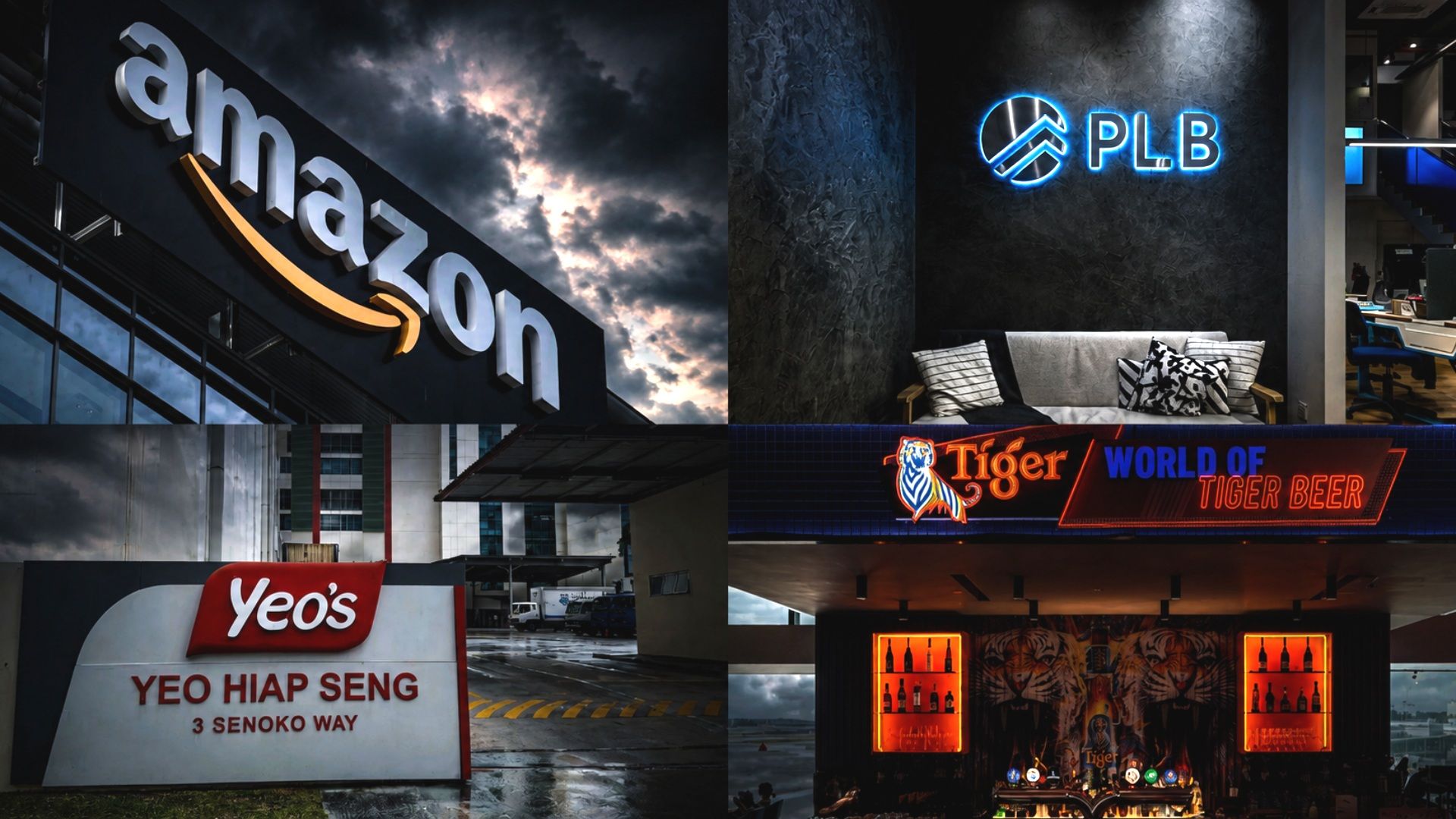
Singapore retrenchments 2026: Amazon, Tiger Beer, Yeo’s, and more firms cut jobs amid rising energy costs and weak demand

SINGAPORE: Singapore’s retrenchment list for 2026 continues to grow and is no longer tied to a single sector. From beer brewing and drinks manufacturing to property and online retail, firms in Singapore are cutting jobs, shrinking teams, or moving parts of their operations elsewhere as costs climb and demand stays uneven.

The pressure is building from several directions at once as energy costs remain elevated, consumer spending has weakened, and uncertainty linked to the war in Iran has made planning harder for businesses.

A recent Singapore National Employers Federation (SNEF) survey found that 96% of companies said higher energy prices had increased operating costs, Vulcan Post reported (May 13), signalling to workers that even established names are making difficult choices.

Amazon

Even global tech firms are making local changes, with Amazon joining the list in May. The company announced role reductions in Singapore while redirecting its focus to expanding its international store offerings for local shoppers.

As part of the move, Amazon is winding down local fulfilment operations, including Amazon Fresh and its grocery partner network. It said sellers and vendors are being supported through alternative arrangements, a change that comes amid a consumer-led shift in how customers in Singapore shop, with growing interest in products shipped from markets such as the United States, Japan, and Germany.

Yeo’s Yeo Hiap Seng

Yeo Hiap Seng, better known as Yeo’s, also announced retrenchments in March. Twenty-five employees at its Senoko facility were affected as the company moved its can production into Malaysia. Yeo’s said the change allows better use of manufacturing capacity across its network.

Its Senoko location will remain the company’s headquarters and continue to support logistics and selected production functions, following earlier workforce cuts linked to changing buying habits, cost pressures and operational shifts.

Tiger Beer’s Asia Pacific Breweries Singapore

One of the biggest moves came from Asia Pacific Breweries Singapore (APBS), the company behind Tiger Beer. In March, APBS announced plans to reduce brewing activity at its Tuas plant and move production to regional sites in Malaysia and Vietnam by the end of 2027. Around 130 jobs are expected to be affected.

The company said the Singapore site will not disappear but shift towards regional logistics, innovation work and a pilot brewery setup. The move follows an earlier restructuring exercise in late 2023.

PropertyLimBrothers

Property agency PropertyLimBrothers entered a period of internal change after leadership issues became public earlier this year. Its media division laid off some staff in April while parts of the business were reorganised.

The company changes came after online speculation involving company leadership gained public attention, which was followed by leadership exits, and the firm later introduced a whistle-blowing channel as part of governance changes.

JLL (Real Estate)

Elsewhere, global real estate consultancy JLL also reduced its headcount in Singapore in April as part of an organisational restructuring.

The company said the changes were tied to long-term positioning as the real estate market adjusts to changing conditions, although it didn’t state how many employees were affected.

Layoffs must be communicated to workers in advance

Usually, layoffs are treated as isolated company news, but this year’s pattern suggests something more far-reaching as manufacturing firms are moving production closer to lower-cost locations.

Property businesses are tightening operations, and large tech firms are reallocating resources rather than pursuing local expansion. Singapore has been through cycles like this before; what stands out now is how many sectors are adjusting simultaneously.

For workers, company restructuring is becoming the norm as businesses reshape themselves amid current economic conditions. Nevertheless, it must be communicated to workers in advance when such major changes are coming.

Staff cannot control market conditions, but better early notice, support, and retraining give people a fairer chance to move forward instead of being caught off guard.


Read related: ‘Who am I without my work?’ — Singapore worker grieves after losing her job and the identity it gave her

This article (Singapore retrenchments 2026: Amazon, Tiger Beer, Yeo’s, and more firms cut jobs amid rising energy costs and weak demand) first appeared on The Independent Singapore News.

❌
Subscriptions