At a security conference in Singapore over the weekend, the three AUKUS partners – the United States, United Kingdom and Australia – announced a tweak to their partnership that has generated quite a lot of attention in Canberra.
Australia will now receive three second-hand Virginia-class, nuclear-powered submarines in the coming years, instead of the original deal of two used vessels and one brand new sub.
Australian Defence Minister Richard Marles spun this as a welcome streamlining of the
At a security conference in Singapore over the weekend, the three AUKUS partners – the United States, United Kingdom and Australia – announced a tweak to their partnership that has generated quite a lot of attention in Canberra.
Australia will now receive three second-hand Virginia-class, nuclear-powered submarines in the coming years, instead of the original deal of two used vessels and one brand new sub.
Australian Defence Minister Richard Marles spun this as a welcome streamlining of the fleet that would simplify its supply chain, as well as the management and sustainment of these complex warships.
What Marles seems not to have noticed is that not all Virginia-class submarines are the same.
The new boat the US had promised would have been from Block 6, the most recent design. Instead, all of Australia’s submarines will now likely come from Block 4, which carry a much smaller weapon payload. Firepower is a measure of a fighting ship’s utility. Having the largest weapon capacity is a key ingredient for battle success.
It seems Australia has been a willing – not to say eager – victim of what is essentially a “bait and switch”.
The deal has always been unequal
The unilateral change of plans should not have come as a surprise to anyone in the Australian government.
AUKUS has always been a one-sided deal in which the US reaps the benefits while Australia accepts the risks. The agreement Australia entered into provides the US with numerous opportunities to cancel or modify the deal. Washington simply acted on what was permitted.
In addition, the AUKUS agreement allows the US president to cancel the submarine transfer at his or her whim, while Australia has no right to challenge or lobby against the decision. The current president, Donald Trump, is not known for loyalty to his allies. The fact the AUKUS deal was signed by his predecessor, Joe Biden, is likely to further reduce Trump’s level of commitment.
To make the US decision more of an affront, Australia has already contributed at least US$2 billion (A$2.8 billion) to the American submarine manufacturing pipeline.
The US is not building enough submarines to meet its own requirements, let alone the additional boats it has promised to Australia. The Australian cash contribution was meant to improve the US rate of production so Canberra would be able to get one or two of the latest boats. Australia’s investment has turned out to be a very poor one, and there are no refunds.
The Australian government has also misinterpreted what the US hopes to get out of the deal.
For the Americans, selling Australia any subs at all makes little sense in the contest with China for supremacy in the Western Pacific. It just reduces America’s own military capability.
The key element in AUKUS for the US has always been the submarine base that Australia is building at HMAS Stirling in Western Australia. This is where the US Navy plans to operate its submarines. The US has already announced the establishment of the support elements that will administer and sustain these warships.
As we can see now, Australia has virtually no leverage to make the submarine deal more equitable.
The Americans know that Australian strategic policy since before the Vietnam War has been to demonstrate relevance to the US. Australia has not hesitated to rush into US-led wars – even those of dubious legality – in order to show loyalty. If this was a poker game, the Australians would be playing with most of their cards face-up.
What can Australia do to gain more agency?
Unfortunately, not a lot. The US holds all the important cards. Australia will likely continue to be a dutiful ally in the hope the US will deliver what it has promised. But there are no guarantees.
The only vulnerability the US has is its desire to base its submarines at Stirling. If Australia was to halt construction or restrict US access to the base, it would be seen as tantamount to cancelling the deal. The price Australia would pay for its temerity would be an enormous loss of respect and favour in Washington – the very thing a long succession of governments has sought to boost.
Australia’s defence policy has seen our country ensnared in a trap of its own making. There are lessons our political leaders can hopefully learn.
The first is to accept the wisdom of former UK Prime Minister Lord Palmerston’s adage that countries have no eternal allies, just eternal interests.
The second is to recognise that an unbalanced alliance leads to servility, not partnership.
The final lesson is to develop faith in Australia’s ability to protect itself rather than turning to an ally of increasingly dubious reliability.
Albert Palazzo does not work for, consult, own shares in or receive funding from any company or organisation that would benefit from this article, and has disclosed no relevant affiliations beyond their academic appointment.
Halfpoint Images/GettyDementia is now the leading cause of death in Australia.
About 446,000 people currently live with a brain condition that may affect their memory, thinking and behaviour. And this number is projected to almost double by 2065.
That sounds frightening, especially as we age or watch loved ones get older. But dementia risk isn’t just the result of genetics, old age or bad luck.
Rather, research suggests up to 40% of dementia cases worldwide may be linked to lifestyle factor
Dementia is now the leading cause of death in Australia.
About 446,000 people currently live with a brain condition that may affect their memory, thinking and behaviour. And this number is projected to almost double by 2065.
That sounds frightening, especially as we age or watch loved ones get older. But dementia risk isn’t just the result of genetics, old age or bad luck.
Rather, research suggests up to 40% of dementia cases worldwide may be linked to lifestyle factors we can change. One of these may be what hobbies you have.
So why are hobbies good for the mind? And which ones will help keep your brain sharp?
Understanding dementia risk
The latest Lancet Commission on dementia prevention, intervention and care pooled data from many large studies around the world.
It identified 14 modifiable risk factors for dementia at different stages of life. This means if you avoid or reduce these factors, you may be less likely to have dementia in older age.
The 14 factors include:
less education in early life
hearing loss
lack of exercise
obesity
diabetes
high cholesterol
high blood pressure, particularly in mid-life
smoking, particularly in adulthood
excessive alcohol consumption
untreated vision loss
air pollution
traumatic head injury
depression
social isolation.
Importantly, none of this means you are to blame if you develop dementia. But this research suggests our everyday choices are not trivial, and may help keep our brains healthy for longer.
Researchers often explain these findings using the term “cognitive reserve”. This is the idea that education, engaging work and other mentally stimulating activities create more neural connections in your brain. This may mean you are better at solving problems or doing complex tasks.
People with higher cognitive reserve often deal better with age-related changes or disease in the brain, even before other symptoms such as memory loss become obvious.
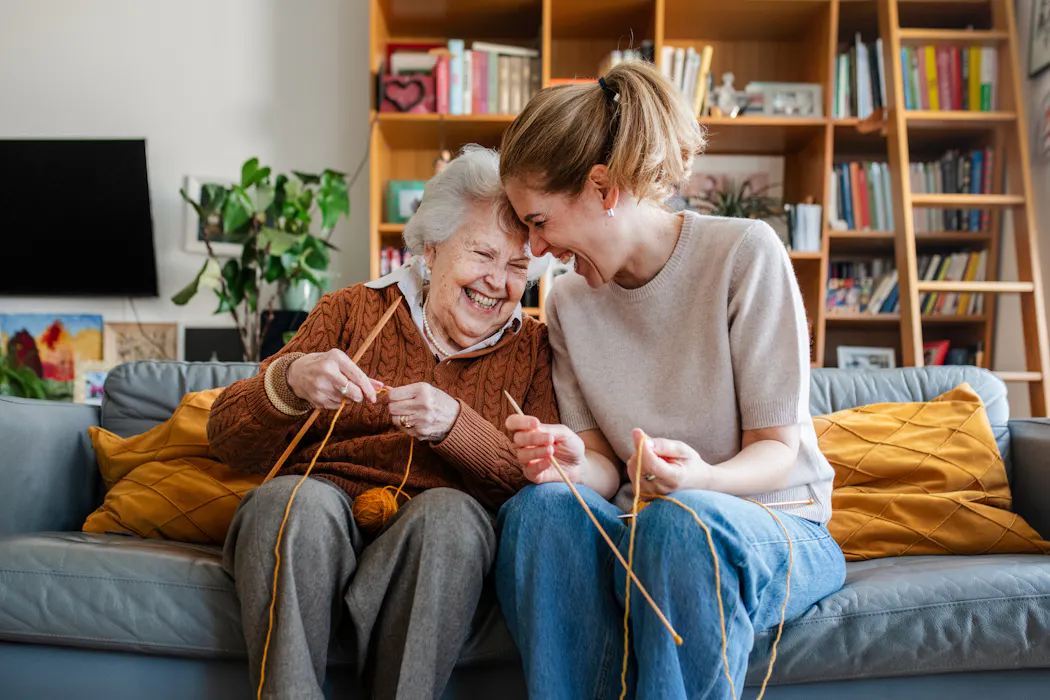
Research suggests hobbies and leisure activities could help boost your cognitive reserve. One systematic review found people who regularly took part in leisure activities had a significantly lower risk of developing dementia, compared to those who did not. The researchers separated these activities into three categories – physical such as walking, cognitive such as puzzles, and social such as joining a club – and found all were associated with reduced dementia risk.
It’s not that simple, according to current research.
One large Japanese study followed more than 22,000 people without dementia over an 11-year period. It found those who reported having at least one hobby in mid-life had about a 19% lower risk of developing “disabling” dementia – meaning their condition interferes with daily life or requires care – compared with participants who didn’t. And those with several hobbies did even better. Having multiple hobbies was associated with about a 23% reduction in dementia risk. However, no particular kind of hobby appeared to reduce dementia risk more than others.
Australian research has come up with similar findings. One 2023 study found certain literacy and critical thinking tasks – such as writing, solving puzzles or using a computer – were linked to a 9–11% lower dementia risk. Creative activities such as knitting or woodworking were associated with about a 7% reduction. Again, no single hobby came out as the top dementia-preventing activity.
This is reassuring, as you don’t have to choose the “perfect” hobby, but one that you enjoy and can do regularly.
Research suggests hobbies help reduce dementia risk because they bring together several ingredients that support overall brain health. These include:
cognitive challenge, such as learning new skills and solving problems, which is associated with higher cognitive reserve
physical activity, such as dancing and gardening, which has been shown to be one of the most robust protective factors for brain health
reduced stress, as conditions such as depression and chronic stress are linked to higher dementia risk
social connection, due to social isolation being a major risk factor for dementia, particularly in older age.
To bundle these ingredients, consider the example of playing cards. Playing solitaire on your phone might tick the cognitive box. But organising a weekly card night with friends adds movement, stress relief – in the form of laughter – and social connection. From a brain‑health perspective, the second option is much more appealing, even though the hobby is the same.
But if you prioritise any one ingredient, social connection should be top of your list. Current evidence suggests social isolation is one of the strongest predictors of dementia risk, alone accounting for about 5% of dementia cases. One long‑running study found older people who were not socially active developed dementia symptoms roughly five years earlier than their socially active peers.
Celia Harris receives funding from the Australian Research Council, and is the CEO of Memory Aid Pty Ltd.
Ruth Brookman does not work for, consult, own shares in or receive funding from any company or organisation that would benefit from this article, and has disclosed no relevant affiliations beyond their academic appointment.
TonyFeder/GettyFor a quarter century, Australia’s environment laws were widely regarded as not fit for purpose. In 2020, a scathing review by Professor Graeme Samuel found the Environment Protection and Biodiversity (EPBC) Act was ineffective and unfit for future environmental challenges.
On the last Parliamentary sitting day of 2025, Labor passed its long-awaited reforms to Australia’s nature laws following a deal with the Greens. According to Environment Minister Murray Watt, these reforms
For a quarter century, Australia’s environment laws were widely regarded as not fit for purpose. In 2020, a scathing review by Professor Graeme Samuel found the Environment Protection and Biodiversity (EPBC) Act was ineffective and unfit for future environmental challenges.
On the last Parliamentary sitting day of 2025, Labor passed its long-awaited reforms to Australia’s nature laws following a deal with the Greens. According to Environment Minister Murray Watt, these reforms would deliver tangible benefits for the environment and “protect what is precious”.
Now the dust has settled on getting the legislation passed, conservationists want to know if they will work.
The big questions is whether two proposed “environmental standards”, a centrepiece in the new laws, are up to the task.
What are environmental standards?
Previously, the EPBC Act required the decision-maker to tick procedural boxes, but this did not necessarily result in an outcome that protected the environment.
For example, while the Department of Environment could access information about the impacts of development on the black-throated finch, it merely needs to “have regard” to this. There was no obligation to reject a project, or impose conditions, even if the projected impacts on the finch would be severe.
To address this, Professor Samuel called for new national environmental standards. These universal requirements would guide the outcomes of environmental decision-making across the country.
For example, his suggested standard for threatened species included the outcome that they would be “protected, managed and recovered over time”. Decisions would have to be consistent with these standards with rare exception, only justifiable in the public interest. Rather than box-ticking, this would require decisions to promote good outcomes for nature.
Although Labor committed to environmental standards in 2022, passing the reforms proved challenging. It took three years, an election, a new Environment Minister, and a slew of compromises, to secure the deal.
A small Leadbeater’s possum. Australia’s new environment laws are supposed to protect critically endangered species like this from extinction.Jason Edwards/Getty
What is the government proposing?
Two draft standards have released, and are open for consultation. One is for Matters of National Environmental Significance (MNES), a term in the EPBC Act that includes World Heritage areas, migratory species and the Great Barrier Reef National Park.
The other is for environmental offsets – actions taken to counterbalance the unavoidable negative impacts of a project on the environment.
At first blush, the draft standards contain the components urged by Professor Samuel, including objectives and outcomes. For example, the MNES Standard has an objective that habitat be protected, conserved, and restored.
However, clauses buried in both of the standards render these outcomes and objectives effectively useless. These clauses state that as long as the minister makes a decision consistent with another part of the standard (called the “principles”), the outcomes and objectives are deemed to be met.
These legal technicalities can be confusing. But the reality is that if the standards are signed off in their current form, we will be back to box-ticking as the key focus of environmental decision-making.
These new standards also include a narrow focus on “irreplaceable” habitat. For species that are recognised as threatened, habitat that is “irreplaceable” and necessary for them to remain “viable in the wild” should be protected.
While this framing sounds like what Professor Samuel envisaged, the narrow definition of “irreplaceable” means only the rarest and most fragile habitats will be covered.
This is at odds with the federal government’s previous commitment to “no new extinctions”. Avoiding a species becoming extinct requires habitat to be protected before things get to breaking point.
Weak constraints on state power
The weak standards are especially concerning given the federal government is steaming ahead with plans to pass approval powers to the states and territories. The Commonwealth has an important oversight role in environmental regulation and, although rare, it has stepped in on occasion to stop the most destructive projects, like the proposed Toondah Harbour development.
Under the reformed laws, the standards are supposed to act as a crucial guardrail on state power. The minister cannot devolve powers to a state unless satisfied that its environmental approval frameworks are consistent with federal standards. Unless robust environmental standards are developed, this constraint on state power will be fairly weak.
Environment Minister Murray Watt promised the EPBC reforms would deliver tangible benefits for the environment. Unfortunately, the draft standards offer little guarantee.
Justine Bell-James receives funding from the Australian Research Council, the Great Barrier Reef Foundation, and the National Environmental Science Program. She is a Director of the National Environmental Law Association and a member of the Wentworth Group of Concerned Scientists.
SDI Productions/Getty ImagesIf you’ve ever taken your child to a maternal, child and family health nurse for a growth check, you might have felt a mix of curiosity and anxiety.
As health professionals, we’re often asked: is my baby gaining enough weight? Am I feeding enough? Why did they drop a percentile? Why is my friend’s baby bigger than mine? Am I doing something wrong?
In most cases, the answer is that there is nothing wrong at all. Let’s look at what the measurements actually mean and
If you’ve ever taken your child to a maternal, child and family health nurse for a growth check, you might have felt a mix of curiosity and anxiety.
As health professionals, we’re often asked: is my baby gaining enough weight? Am I feeding enough? Why did they drop a percentile? Why is my friend’s baby bigger than mine? Am I doing something wrong?
In most cases, the answer is that there is nothing wrong at all. Let’s look at what the measurements actually mean and we’ll answer some questions that commonly arise during these appointments.
Each state and territory, as well as New Zealand, has its own schedule of recommended growth and development checks. In Victoria, for example, appointments are booked when your baby is aged two weeks, four weeks, eight weeks, four months, eight months, 12 months, 18 months, two years, and three and a half years.
In the early weeks, when feeding is still being established and child growth is rapid, these appointments can help identify feeding difficulties.
First, the nurse will observe your baby or child, then they will weigh them, measure their length (if they’re babies) or height, and measure their head circumference. They plot these numbers on a growth chart in your child’s health record or the Well Child Tamariki Ora book in New Zealand.
The nurse will check your child’s alertness, appearance and muscle tone. They will also ask questions about feeding, sleep, wet/dirty nappies and any recent changes.
Nurses are there to support you as a new parent. They provide reassurance and a chance to ask questions to help build confidence during a period that can feel uncertain.
Over time, growth checks allow nurses to see if your child is growing and developing at an expected rate.
For toddlers and preschoolers, the nurse will check for typical development in behaviour, language and play. If required, they will provide support or referrals to a GP who may then refer to a paediatrician, speech pathologist, occupational therapist, or psychologist, depending on the child’s needs.
What do the dots on a growth chart really mean?
Growth charts in Australia and New Zealand are based on the World Health Organization’s Child Growth Standards, which reflect optimal growth for healthy, breastfed children.
They provide context for your child’s growth through a reference population of children of the same age and sex. The curved lines are called percentiles.
a child on the 50th percentile is right in the middle
a child on the 25th percentile is smaller than average
a child on the 85th percentile is larger than average.
If your child is on the 25th percentile for weight, it means that if 100 children of the same age and sex were lined up in increasing order of weight, your child would be number 25. So 75 children would weigh more and 24 would weigh less.
A single measurement tells very little. The pattern of the weight over time is even more important.
Small fluctuations on the chart are common, as babies grow in spurts. But nurses may look more closely if a child:
crosses several percentile lines over time – either in an upward or downward trend
is showing signs of feeding difficulties or dehydration
appears unwell.
Even in these cases, the approach is careful assessment, not alarm, and your nurse might suggest additional checks. This helps see whether a feeding adjustment is working, or whether something else might need attention.
In most cases, extra visits end with reassurance. When there is a concern, extra visits allow things to be identified and addressed early.
1. When should I consider supplementing with formula?
Breastfeeding is recommended where possible. But there are situations where supplementing with formula might be recommended – for example, when there are concerns about weight gain. In these cases, we always recommend to discuss supplementing with your trusted health care provider.
Your nurse is there to support your child and reassure you – not to judge how you feed them.
2. Should I start solids early if my baby is ‘big’?
In short, no. The guidelines recommend introducing solids at around six months. This should be done when babies show developmental readiness, not because of their size or percentile.
Breastmilk or formula still meets all nutritional needs until around six months.
3. Why doesn’t growth happen steadily week to week?
Babies grow in spurts, not in smooth lines and weight can vary with feeding, sleep and any recent illness.
Periods of rapid growth often occur in the early weeks, around six to eight weeks, three to four months, and around six months with babies growing rapidly throughout the first year of life. During these times, babies may feed more or seem unsettled.
Where to find more support
For more support, contact your local GP and consider asking for a referral to a lactation consultant, paediatrician or dietitian.
As part of the Australian government’s Pregnancy, Birth and Baby program, you can phone (1800 882 436) or video call a maternal and child health nurses for free, seven days a week from 7am to midnight. Or for breastfeeding issues, call the Breastfeeding Helpline on 1800 mum 2 mum (1800 686 268).
For parents in New Zealand, the government’s Plunketline (0800 933 922) is available 24–7 for advice about child health and parenting.
The weekend exchange of strikes between Iran and Israel has put US President Donald Trump under even more domestic and international pressure to end the unpopular war he launched with Israeli Prime Minister Benjamin Netanyahu more than three months ago.
The Israeli leader favours the continuation of the war until Iran is reduced to a feeble state. This would enable him to win the Israeli general elections later this year and further his goal of expanding Israel’s borders and regional domination
The weekend exchange of strikes between Iran and Israel has put US President Donald Trump under even more domestic and international pressure to end the unpopular war he launched with Israeli Prime Minister Benjamin Netanyahu more than three months ago.
The Israeli leader favours the continuation of the war until Iran is reduced to a feeble state. This would enable him to win the Israeli general elections later this year and further his goal of expanding Israel’s borders and regional domination in pursuit of a so-called “Greater Israel”.
Netanyahu is against any US–Iran deal that doesn’t meet his objectives. Israel’s invasion of southern Lebanon to repel the Iran-backed Hezbollah group is part of his strategy, which has been boldly countered by Iran.
Tehran, meanwhile, has shown a steely resilience to ensure the war is settled in its favour as a formidable regional actor.
As a result of all this, Trump faces the difficult task of reaching an acceptable deal with Iran and restraining an unruly Netanyahu.
Why the standoff has gone on so long
At this point in the war, what would constitute a “victory” for Trump?
He wants an outcome that can vindicate his decision for starting the war, which has proved to be very costly, generating a worldwide energy crisis and a great deal of economic pain. The war could cause Trump political problems in the midterm elections later this year, too.
He also wants an agreement on Iran’s nuclear program that he could claim is better than the 2015 deal Tehran struck with the Obama administration and its international partners, called the Joint Comprehensive Plan of Action. Trump withdrew the US from the deal in 2018.
But Iran’s Islamic government has so far not been willing to bend to Trump’s demands.
Relying on a mix of ideological devotion to Shia Islam, a strong sense of historical nationalism, and an effective military capability, the regime has not only survived, but made strategic gains.
It has destroyed or damaged many US bases in the Persian Gulf, hit Israel hard with missile and drone strikes, and above all gained control of the Strait of Hormuz. The strait – a critical oil and fertiliser chokepoint – has now become Iran’s most potent lever of resistance and punishment.
The conflict has also given renewed life to the Islamic government and its instruments of power. Many citizens who were opposed to the regime have rallied around the flag in the face of the external threats and for the love of their country.
Further, the war has propelled the government’s Islamic Revolutionary Guard Corps, which is designated by the US and many of its allies as a terrorist organisation, to new heights. It has been able to prove its worth as the key actor defending Iran and its Islamic system.
Meanwhile, Tehran is not as isolated as the Trump administration believes, either. It has the support of both Russia and China. And Iran’s geographical location has worked to its advantage, enabling it to access markets by road through its neighbours and via the Caspian Sea to the north.
The US and Israel still have the advantage when it comes to military power and they can inflict heavy damage on Iran. But Tehran’s strategic gains have placed it in a stronger bargaining position in the peacemaking process.
No matter the level of US military and economic pressure, Tehran is unlikely to succumb to US and Israeli demands to dismantle its nuclear program or relinquish control over the Strait of Hormuz.
The regime was designed to be resilient. It has built a system based on defiance, resistance and pragmatic decision making when faced with serious threats from both inside and outside Iran.
As such, it has the patience and endurance to outlast Trump – and for that matter, Netanyahu.
Echoes of 1979
The regime also has a history of outlasting the United States.
For instance, there are some parallels that can be drawn between the way the founder of the Islamic Republic, Ayatollah Ruhollah Khomeini, dealt with the hostage crisis of 1979–81 – when a militant group of his supporters ransacked the US embassy and took 66 Americans hostage – and the manner in which his successors are now managing negotiations with the US.
Khomeini let that episode drag on for 444 days to both consolidate his power and humiliate the US for having backed the pro-Western monarchy of his predecessor, Mohammad Reza Shah Pahlavi.
His approach played a key role in then-President Jimmy Carter’s defeat to Ronald Reagan in the 1980 US presidential election. The regime released the remaining 52 hostages just minutes after Reagan was inaugurated in January 1981.
The current standoff with Iran is only 100 days old, and it appears the regime is now prepared to use a similar strategy to punish Trump and Netanyahu for attacking Iran.
Iran’s leaders are seemingly determined to turn the tables on their adversaries and humiliate them. Whether they succeed will depend on what Trump does next – and what he’s willing to compromise on to bring Iran to the table for a lasting, mutually acceptable agreement.
Amin Saikal does not work for, consult, own shares in or receive funding from any company or organisation that would benefit from this article, and has disclosed no relevant affiliations beyond their academic appointment.
Frazao Studio Latino/ Getty ImagesThe latest round of national testing has shown Australian school students’ skills around digital tools, such as computers and tablets, has dropped.
This is despite students spending significant time online and on devices.
What is the test and what is going on?
A different kind of literacy
The latest test is run by the same national organisation that runs the NAPLAN testing. This round looks only at “ICT literacy”.
This is about students’ ability to use
The latest round of national testing has shown Australian school students’ skills around digital tools, such as computers and tablets, has dropped.
This is despite students spending significant time online and on devices.
What is the test and what is going on?
A different kind of literacy
The latest test is run by the same national organisation that runs the NAPLAN testing. This round looks only at “ICT literacy”.
This is about students’ ability to use information and communication technology tools appropriately, critically and safely. This is also referred to in the national curriculum as “digital literacy”.
Since 2005, a national sample of students in Years 6 and 10 have been tested on their technology skills. This is designed to provide a measure of how well Australian students can use digital tools and technologies.
The latest test
The 2025 test – the first for three years – uses a representative sample of 5,498 Year 6 students and 4,753 Year 10 students.
The test asked students to complete tasks such as creating digital presentations, analysing data, designing algorithms, and responding to scenarios involving online safety and ethics.
For example, one task might require students to read an email from a school technology committee and follow instructions to update an inter-school sports day webpage. In another they might have to demonstrate how to navigate a website.
Alongside the test, students were also surveyed about their use of and attitudes towards digital technology.
Year 6 results
Unsurprisingly, most students reported they had extensive experience using digital tools, such as computers, tablets, smart phones and watches. More than 60% of Year 6 students had at least five years’ experience using digital tools. For Year 10, this figure was 77%.
But more surprisingly the 2025 results show a decline in student proficiency in ICT literacy.
Half (50%) of Year 6 students met or exceeded the national “proficient standard” for digital literacy. The proficient standard is a “challenging but reasonable” level of achievement expected for each year level.
This is a decline from 55% in 2022.
What about Year 10?
In 2025, only 37% of Year 10 students across Australia met or exceeded the proficient standard.
This represents a significant decline from 2022, when 46% of Year 10 students met the standard. As the report notes, it is also the lowest proportion of students achieving the proficient standard since the assessment began in 2005.
What is happening?
So, students are using digital tools but not building digital literacy skills at the same time.
At face value, the finding is troubling: students are surrounded by technology yet appear to be getting worse at using it.
This apparent contradiction reflects a deeper issue. Literacy is a far more complex capability than simply using technology.
High levels of digital access or frequency of digital technology use do not guarantee this deeper capability. Other studies tell us students may be highly adept at navigating apps or platforms while lacking the critical and reflective skills needed for learning, problem-solving, managing online safety or civic participation.
Concerning gaps in results
The latest results also show some concerning and ongoing inequities.
For example students from schools in major cities generally outperformed those in regional and remote schools. Non-indigenous students also outperformed their Indigenous peers.
We know regional and remote areas and some Aboriginal and Torres Strait Islander communities do not have reliable access to devices, or reliable internet connections.
What now?
This national assessment attempts to capture a very wide range of skills. This includes technical skills, information management, critical evaluation and ethical engagement.
As with many large-scale assessments, there is a tension between breadth and depth – in trying to measure everything, the instrument may struggle to do any one dimension well.
This raises a broader curriculum question. Despite being identified as a general capability for students, digital literacy has no clear disciplinary “home” in the same way literacy or numeracy does.
It sits across all learning areas, from humanities and social sciences, through to the arts. This means both teaching and assessment become fragmented.
If we are serious about improving digital literacy, we need to rethink how we teach and how we assess it.
This shift could better align assessment with the complex, evolving nature of digital technology and provide a more meaningful picture of what students can do.
Kate Highfield has received funding from the Australia Government, but none in relation to this work.
Holly Tootell has historically received funding from the Australian government for specific research projects. She has no current affiliation to ACARA.
Katie Wilson does not work for, consult, own shares in or receive funding from any company or organisation that would benefit from this article, and has disclosed no relevant affiliations beyond their academic appointment.
Cottonbro Studio/PexelsChattyBear, a soft, brown-furred teddy bear, begins every conversation with a jubilant, “Hello, my buddy!”
No longer the province of the imagination, ChattyBear is part of a new generation of artificial intelligence (AI) toys. It can tell stories, chat about a child’s interests, play games or even discuss what’s happening in the world today.
These high tech toys are powered by generative AI engines such as ChatGPT and are now widely available online. They are being mar
ChattyBear, a soft, brown-furred teddy bear, begins every conversation with a jubilant, “Hello, my buddy!”
No longer the province of the imagination, ChattyBear is part of a new generation of artificial intelligence (AI) toys. It can tell stories, chat about a child’s interests, play games or even discuss what’s happening in the world today.
These high tech toys are powered by generative AI engines such as ChatGPT and are now widely available online. They are being marketed as a way to give children as young as three an educational advantage and a new type of play – without the perils of screen time.
After evaluating six different AI teddy bears and toys over several months, it’s clear how these toys could feel compelling for children. Yet as our new report highlights, there are new risks that come with AI toys turning up in young children’s lives.
Sounding human
For younger children especially, understanding that their teddy or toy isn’t “alive” or magic can be hard. This is especially true if “teddy” uses language that positions it as a trusted friend – for example, by insisting it is a “real buddy”.
This is a feature of many AI toys.
Sounding human builds an artificial sense of trust and intimacy, which can be especially problematic for children when combined with sycophantic language choices – or excessively agreeable, validating and even flattering language.
Increased trust leads to increased use and engagement with the toys. Recent estimates suggest close to 80% of children aged 10 to 17 have used an AI companion or assistant, so it’s urgent children and young people be taught how to “reality check” their AI “buddies”.
Infinite chat
The marketing materials for many AI toys often highlight “endless conversations” as a feature of these devices.
But enabling endless conversations, or infinite chat, poses risks when it comes to children learning how to moderate their technology use.
In the social media realm, the infinite scroll of TikTok or Instagram is seen as a potential challenge to teens limiting their use to healthy amounts.
Research has also found some AI toys discuss very adult topics – such as sexual fetishes and how to find knives and start fires.
Infinite chat also opens the door to infinite data collection.
The potentially intimate nature of conversations with AI toys might lead children to presume their conversations are private. But most AI terms of use reveal the opposite to be true.
Sharing personal details with a friendly bear might feel safe. But that chat could be training data for the next large language model.
Marketing material for ChattyBear says the toy offers “safe, filtered content for children”. The Conversation contacted the manufacturer for further detail about this but did not receive a response before deadline.
Children’s wellbeing
Childhood is a critical period when young people develop the social and emotional skills to form and maintain trusting relationships. These skills are usually learned through interactions with trusted friends and adults.
Initially, time spent with AI agents may displace time interacting with real humans. Fewer opportunities to build these skills could lead to a reduced capacity to maintain caring human relationships. Difficulties in maintaining human relationships may promote a preference of machine over human relationships as children expect “frictionless” interactions.
Eventually, these developments may lead to less satisfying human connections, increasing loneliness, which in turn promotes increased time spent with AI.
The novelty of AI toys means there is little evidence to confirm these possible detrimental impacts. Further research is needed – especially as the AI toy industry is set to grow even more.
Last year, for example, Mattel, one of the world’s biggest toy makers, announced a strategic collaboration with OpenAI to support AI-powered products.
Barriers to the online world are gone
The ability to read and write was once a requirement to use most online tools and services. This literacy barrier no longer exists today with many generative AI toys, tools and devices now widely accessible to younger children through voice interactions.
The audio turn opens up new technological play, experiences and opportunities for children. But it also means adults need to ensure AI toys can be safe for younger children, too.
Right now, playing with AI toys under the supervision of a parent or trusted adult may well be a fun way to explore the world of AI together. But especially for younger children, playing with AI toys without supervision opens the door to a wide range of new risks.
Importantly, the risk factors in AI toy design, such as the degree to which they pretend to be human, can be changed by manufacturers, offering opportunities to follow safety-by-design.
However, the business models behind many AI toys capitalise on the duration and intensity of users’ engagement, leaving little incentive for companies to change their products.
Tama Leaver receives funding from the Australian Research Council. He is a Chief Investigator in the ARC Centre of Excellence for the Digital Child.
Katrin Langton receives funding from the Australian Research Council. She is a Research Fellow in the Centre of Excellence for the Digital Child.
Suzanne Srdarov receives funding from the Australian Research Council. She is a Research Fellow in the Centre of Excellence for the Digital Child.
Do Australians really want reform? It’s a reasonable question to ask as the Albanese government weathers trenchant attacks on its recent federal budget.
From the front pages to Facebook, in parliament and in the opinion polls, the mood seems so sour that Australia’s far right demagogue, Pauline Hanson, is being canvassed by some as a possible prime minister in 2028.
After a much quieter first term – during which he was consistently criticised for not being bold enough on policy reform – Prime
Do Australians really want reform? It’s a reasonable question to ask as the Albanese government weathers trenchant attacks on its recent federal budget.
From the front pages to Facebook, in parliament and in the opinion polls, the mood seems so sour that Australia’s far right demagogue, Pauline Hanson, is being canvassed by some as a possible prime minister in 2028.
After a much quieter first term – during which he was consistently criticised for not being bold enough on policy reform – Prime Minister Anthony Albanese may be wondering whether the bigger moves of Labor’s second term are worth it.
For a range of reasons, the answer is yes.
Governments learn by doing
All new governments learn by doing. They have to match ambition with capacity and capability, or things can go horribly awry.
If the first term works well enough, more political capital is earned at the second election. That capital can then be spent on a more ambitious agenda by ministers who are now experienced and better at their jobs.
The budget’s tax reform package’s timing was therefore probably right.
Labor won a second election and built up a big buffer of seats in its landslide win. The government could lose a lot of them and still win the 2028 election. It has two years to get the electorate to digest the idea of the budget’s tax changes and move on.
The noise is often not the whole story
It can be hard to get a realistic picture of how big reform moves are really being received by voters, especially when vested interests are challenged.
The loudest noise in the budget attack is coming from mainstream commercial media outlets, shaped by the plutocratic interests of their owners, and fuelled by rage-farming techniques designed to boost audience share.
Asymmetries in the reporting are striking.
The Australian Financial Review’s page 1 lead on May 27, for example, was “Rethink tax moves, tech chiefs urge”. It was one of four stories in that edition critical of the budget.
The same day it reported JWS Research’s post-budget analysis, which showed all the government’s key budget measures had net positive support from those surveyed. This was true, by the narrowest possible margin (+0.5 percent), even of the capital gains tax (CGT) change. The story was buried on page 4 with a mealy-mouthed headline, “Tax changes struggle to win support from voters”.
Another example is the Sydney Morning Herald story on May 28, “Nine in 10 under 30 to be better off due to tax changes: Treasury” – a big story given the budget controversy. Was it on page 1? No, it was on page 11.
A righteous streak in the budget commentary focuses on the alleged “broken promises” and “untrustworthiness” of Albanese given his changed stance over the CGT and negative gearing.
Experienced hands would be hard-pressed to name a prime minister who hasn’t at some point changed stance on something in a similar way, often going on to further election wins.
Even if these commentators disagree with the changed policy positions, healthy, democratic debate would at least canvas how the changes might be in the national interest rather than rushing to condemnation.
The polling should, but doesn’t always, help
Reputable opinion polls can and should be one source for guidance at times of high political noise.
However, there are memorable cases of them being wrong, notably when Liberal Scott Morrison won the 2019 election against opinion polls pointing to an almost certain Labor win.
Polls can also themselves become the story, as is the case in 2026 with the apparent rise of One Nation at the expense of the Coalition parties. This can be a problem given the herd behaviour noted by astrophysicist and former ANU vice-chancellor Brian Schmidt, in relation to polling at the 2019 election. In his view, because of confirmation bias,
[…] the polls have been manipulated, probably unintentionally, to give the same answers as each other […] I say unintentionally because humans are biased towards liking to get the same answer as everyone else.
Some pollsters, notably Redbridge Group, are getting enormous coverage in relation to the “rise of One Nation” narrative. Others such as Essential Poll, taking the longer view that voters choosing One Nation now would be less likely to do so at an election in two years time, when their vote really counts, get less attention.
Essential’s post-budget survey found two-thirds of voters supported government action to rebalance tax rates on wages and salary earnings versus “money earned on investments and assets like property and shares”. Essential executive director Peter Lewis says:
Told well it has the potential to connect with those moving to the political fringes because they don’t believe the system works for them anymore.
But if there ends up being herd behaviour by pollsters overall because of the enormous attention Redbridge’s One Nation narrative is attracting, the opinion polls could end up affecting politics rather than just reflecting it.
Governments have been here before and survived
If you want to make significant reforms, there’s going to be a reaction.
Whitlam government health minister Bill Hayden received death threats when fighting to establish Medicare’s predecessor, Medibank. There were public demonstrations against Hawke government minister for the status of women, Susan Ryan, when she was getting the Sex Discrimination Act through parliament.
That’s politics.
Is the Albanese government doing enough? Is it doing too much?
The rapturous applause Treasurer Jim Chalmers received from caucus after delivering the 2026 budget showed his fellow MPs were thrilled the government is finally doing bigger things.
Many voters are likely quietly relieved too. They elected Labor to do Labor things, and will take it out on the government through the ballot box if it doesn’t.
Like Hayden and Ryan, and like Bob Hawke and Paul Keating too, Albanese and Chalmers just have to keep fighting their policy corner and prevail.
Chris Wallace has received funding from the Australian Research Council.
Despite One Nation having only two House of Representatives seats, politically-savvy observers now believe it is possible the insurgent party could be the de facto opposition that Labor faces in 2028.
Two Redbridge polls have carried this message.
The first, a seat-by-seat mapping of the country, published by the Australian Financial Review last month, suggested that in an election held now, the Coalition would be almost wiped out by the One Nation surge.
The latest poll, taken in the wa
Despite One Nation having only two House of Representatives seats, politically-savvy observers now believe it is possible the insurgent party could be the de facto opposition that Labor faces in 2028.
Two Redbridge polls have carried this message.
The first, a seat-by-seat mapping of the country, published by the Australian Financial Review last month, suggested that in an election held now, the Coalition would be almost wiped out by the One Nation surge.
The latest poll, taken in the wake of the budget and published by the AFR on Sunday, has One Nation ahead of Labor (for the first time) and the Coalition continuing to languish. One Nation’s primary vote was 31% to Labor’s 28% with the Coalition at 20%.
One Nation, it seems, is the party that’s received a “bounce” from an unpopular budget, up four points in a month, while both Labor and the Coalition went backwards.
As preferred prime minister, Pauline Hanson trails Anthony Albanese 25% to 31%, with Angus Taylor on 14%.
The day Taylor set foot in parliament in 2013, or indeed before that, he was seen as a potential leader, a possible future prime minister. When Pauline Hanson arrived in the House of Representatives in 1996, she was regarded as a political outsider, disendorsed by the Liberals for racist comments.
Now Hanson is being asked – seriously – if she wants to be prime minister.
When that question was put to her on Sky by Andrew Clennell on Sunday, Hanson repeated it, rhetorically, before answering:
Do I want to be prime minister?
Well, I’ll tell you what, I won’t knock back the job Andrew, because I believe that I have the ability to do it. I’m not going to underestimate myself or say ‘no, I can’t do it’ because you know, have a look at what we’ve got now. Really? Honestly?
She echoed her self-confidence on Monday.
Most leaders in Hanson’s situation (a senator, leading a party with just six seats in total, including both houses) would probably have demurred, saying “we’re a long way from talking about that”.
But in that answer we see the unvarnished Hanson – a woman who both believes in herself, and thinks – and resents – that she has been underestimated all her political life. Of course she’s convinced she could do the job – and she has reached the stage of saying that outright.
Taylor must have difficulty believing things have come to their present pass. A senior minister in the Morrison government, which had won a “miracle” election victory, he now presides over a party that appears to be declining by the week, with its supporters and some of its rank-and-file members jumping to Hanson.
Albanese, for his part, can’t quite get his head around the fact that a woman who does not even bother turning up for parliamentary business when she doesn’t feel like it, and used to be a near political pariah for her more extreme views, is now, according to the polls, in line to win a heap of lower house seats at the next election.
The attention has been on the threat One Nation poses to the Liberals and Nationals, but within Labor, the strategists are taking seriously the rapidly changing political landscape.
Although the election is two years off and everything could change, Labor planning is underway for the contingency that come 2028, the main fight could be between the government and One Nation, with the Coalition a secondary player.
In 2025 Albanese had to adapt, and adopt appropriate tactics, to combat what appeared to be a surging Coalition (in retrospect that was probably never as real as it looked at the time). Next election, a similar adaptation to new circumstances might be required.
The challenge for Labor, while being mulled over currently, is in the future. For the Liberals, things are desperate now.
In this situation, the wisdom of installing Tony Abbott as their federal president is still an open question for Liberals.
Shadow Treasurer Tim Wilson said Abbott’s role would be “administrative”.
Abbott’s take certainly seemed more expansive. “I don’t expect to be in the media every day,” he told the ABC.
“But on the other hand, I do think that my presence now, in this senior role will demonstrate to people who might have been sceptical that the Liberal Party is fair dinkum about abolishing net zero, fair dinkum about cutting back mass migration, fair dinkum about scrapping taxes - because my government was actually very good at that.
"My presence, I think, is an indicator that the Liberal Party hasn’t forgotten how to be a very, very good government.
"Look, the party president, is the organisational leader, not the political leader. But I don’t think there’s ever been a party president who’s taken a vow of silence, and I’m certainly not going to start.”
Taylor’s problem is that Abbott is better media talent than he is, and their mutual problem is that Abbott loves the spotlight.
Michelle Grattan does not work for, consult, own shares in or receive funding from any company or organisation that would benefit from this article, and has disclosed no relevant affiliations beyond their academic appointment.
Yet another poll and yet another result showing Pauline Hanson’s One Nation ahead of Labor at a national level, with the Coalition way behind.
The latest Newspoll has confirmed the trend is clear. Labor is becoming increasingly alarmed, while the Coalition has long been in panic.
Meanwhile, at a state level, polling by Freshwater for the Herald Sun shows Labor running third in Victoria behind the Coalition and One Nation. Almost two-thirds (62%) of the 1,034 people polled also backed
Yet another poll and yet another result showing Pauline Hanson’s One Nation ahead of Labor at a national level, with the Coalition way behind.
The latest Newspoll has confirmed the trend is clear. Labor is becoming increasingly alarmed, while the Coalition has long been in panic.
Meanwhile, at a state level, polling by Freshwater for the Herald Sun shows Labor running third in Victoria behind the Coalition and One Nation. Almost two-thirds (62%) of the 1,034 people polled also backed replacing Jacinta Allan as premier before the November election – including 39% of Labor voters surveyed.
To discuss why the Victorian election matters nationally, as well as the ongoing federal budget fallout, we’re joined on the podcast by pollster and Redbridge Group director Simon Welsh.
He’s spent more than 20 years in market and social research, including doing qualitative research for the Daniel Andrews Labor government’s successful re-election campaign in 2018.
The Victorian election will be the next electoral test of One Nation’s recent rise – and Welsh predicts it will be “very, very messy” to watch.
On Victoria’s ‘messy’ three-way contest
Welsh said Labor’s vote in Victoria has now fallen “down to its base”. Given One Nation and the Coalition are both polling slightly higher, he understands why many people assume the Allan government will lose the election.
But it’s not quite that simple.
He said One Nation and Coalition had more support statewide, but their votes fall mainly in the same regional or outer suburban areas.
For now, Labor’s vote is holding up middle suburban seats in and around Melbourne, where the most seats are, still giving Labor
a foundation to potentially get close to majority government, even with the polls sort of sitting where it is now. [Labor’s] overlay of its primary vote on the political geography of Victoria is much more favourable than the other two parties, being the Liberals and One Nation […] I think all parties are going to have their challenges and work cut out for them in this election. I think it’ll be very, very messy.
On a possible leadership challenge in Victoria
Amid speculation about Allan’s future as premier, Welsh said swapping leaders just five months before the election would “only do One Nation and even the Liberals a hell of a service”.
I think the one thing that is very clear is that what voters hate, absolutely hate, is when politicians seem to act with surprising urgency on things that threaten their employment, when they don’t seem to actually have the same urgency on things that threaten [voters’] employment. So, in other words, if they were to roll Jacinta Allan now, it sends entirely the wrong message […] It would be disastrous.
One of the things that voters really like about Pauline Hanson – the kinds of voters that are coming off the Labor pile and moving towards her – is her consistency. She stuck it out.
One of the big critiques always on the major parties, particularly over the last sort of decade or more, has been this inconsistency of leadership, this chopping and changing for their own political survival, their own interests ahead of the interests of ordinary Australians like me.
Why One Nation appeals to some Labor voters
Looking at the national picture, the May 12 federal budget brought a sharp backlash from investor groups and business interests.
But Welsh said many voters he’s heard from in focus groups simply saw it as a missed chance to do something to help their straitened living standards.
Probably the defining response to the budget was just a sense of lost opportunity. So again, people going back to these immediate material stresses in their lives. People are literally struggling to put food on the table. We hear this in focus groups all the time: that the picture in that outer suburban regional area of Australia – I can’t convey strongly enough just how deep the economic stresses are in people’s lives right now.
And the feedback on the budget was really […] ‘gee, there wasn’t much in it’ to affect that. You know, we had this tiny little tax cut that’s not really going to touch the sides – if they’d even heard of that. It was really an absence of perception, an absence of anything they felt made a material difference to their lives.
So where did these disaffected voters go? Well, some of them went left, so some of them went to the Greens and other minor parties […] But some did go to One Nation. And that’s kind of the giveaway […] These were voters that just saw, again, [a] major party missing the opportunity to do something for their immediate economic plight.
Labor is losing votes to One Nation. It may not be as much as the Liberals, it may not an existential problem. But it’s enough to make majority government a problem.
Michelle Grattan does not work for, consult, own shares in or receive funding from any company or organisation that would benefit from this article, and has disclosed no relevant affiliations beyond their academic appointment.
A.D. Hope. National Archives of Australia, CC BY-NC-NDI began teaching Australian literature not long after the death of Alec Derwent (A.D.) Hope (1907-2000). Despite Hope’s canonical status, I – like many – overlooked him, gravitating to writers more engaged with feminist, environmental, postcolonial and decolonial questions, or to those whose poetry was freshly modern, postmodern or experimental. Hope seemed conventional and dated by comparison.
Such assumptions were reinforced by his most a
I began teaching Australian literature not long after the death of Alec Derwent (A.D.) Hope (1907-2000). Despite Hope’s canonical status, I – like many – overlooked him, gravitating to writers more engaged with feminist, environmental, postcolonial and decolonial questions, or to those whose poetry was freshly modern, postmodern or experimental. Hope seemed conventional and dated by comparison.
Such assumptions were reinforced by his most anthologised poem, Australia (1943), with its image of the land as menopausal woman:
She is the last of lands, the emptiest,
A woman beyond her change of life, a breast
Still tender but within the womb is dry.
And even allowing for its time of writing, this poem’s silence about Australia’s First Peoples presents a barrier for many readers. In short, why bother?
Review: A.D. Hope: A Life – Susan Lever (La Trobe University Press )
Susan Lever’s compelling biography A.D. Hope: A Life asks us to stop and think again. Well aware of what will strike readers as problematic, Lever prompts us to revisit Hope’s writings. Tracing the life, career and achievement of this “grand old man”, the all-but-forgotten poet and professor, Lever documents his contribution to Australian literary culture during a formative period of postwar nation building.
That the biography yields an excellent cultural history is one of its attractions. But even more arresting is what Lever shows about the philosophical reach, formal brilliance and impassioned force of Hope’s poetry.
It’s the poetry that stands at the core of this biography. The poetry speaks into the gaps left, for instance, by embargoed letters. It dramatises the contradictory aspects of Hope’s life as suburban husband and father, as philanderer and poet-professor, as radio broadcaster for children, as savagely caustic reviewer, and as generous mentor to young writers.
The reverse is also true: we see how the paradoxes shaping his intellect, passions, views and desires are imprinted within and generative of the poetry. This is apparent in both the poetry’s formal design and its content.
Hope’s university education was checkered: a stellar undergraduate career at Sydney, a disappointing third-class honours degree at Oxford, then teacher training. But this period exposed him to psychology, especially Freud, and fostered his love of philosophy, languages and philology. It also inspired his abiding admiration of 17th- and 18th-century poets and satirists like Ben Jonson, Alexander Pope and Jonathan Swift.
Enamoured of this neoclassical literary tradition, Hope resisted the dominant, post-romantic modes and forms of his own time: the personal lyric and free verse. He instead turned towards, and advocated for, the liveliness of discursive forms like the long narrative poem, the satire, the meditation and the epistle.
These, he wrote in his essay The Discursive Mode (1956), allowed for “narrative, drama, excogitation, argument, description”. They were, in other words, forms for thinking with.
The poetry is dark, the poetry is bleak, the poetry is funny, the poetry is joyful. And it is disciplined. Inhabiting a variety of older forms and modes, the poetry is always precise, metrically controlled and rhymed.
At the same time, Hope makes his verses think and speak. His poems voice ideas and questions, canvassing matters that still press on us today:
Go tell those old men, safe in bed,
We took their orders and are dead.
Returning to the poetry, we discover that Hope’s invocation and remodelling of traditional forms – of classical, biblical and mythical scenes, and of 17th- and 18th-century texts – is what makes his poetry modernist in form and spirit.
Darkness and bawdiness
Lever’s biography takes us from Hope’s idyllic childhood in Tasmania to his old age as the “great panjandrum of Canberra” (in Patrick White’s vengeful phrase).
In Lever’s telling, productive antinomies recur. Poems drawn from childhood, such as Ascent into Hell and Observation Car from his collection The Wandering Islands (1955), are haunted by darkness and existential dread.
Observation Car recalls a train journey away from home. Not unlike Walter Benjamin’s backward-gazing angel of history, the poet is spellbound, transfixed by receding time as the train hurls him relentlessly onward:
Only the past is assured. From the observation car
I stand looking back and watching the landscape shrivel,
Wondering where are we going and just where the hell we are.
Yet Observation Car also contains images that objectify women’s bodies, a pattern that recurs elsewhere in Hope’s poetry. His bawdy verse satires, penned during and beyond his student years, together with his ongoing preoccupation with sexuality, earned him the nickname of “Phallic Alec”.
Cover of A.D. Hope first book of poetry The Wandering Islands (1955)
In his more serious and sophisticated poems, like The Double Looking Glass (1963), women’s bodies are still subject to the male gaze. Even so, as implied by its title, the looking glass is double, refracting many layers.
Lever is not an apologist. But her account persuades us that at least some of these poems dramatise intense struggles with masculinity, sexuality and desire. “Readers do not need to look far to find patriarchal positions or failures of taste in Hope’s poetry,” she writes, “but his best work examines sexuality in a way that reveals the poet’s own struggles to understand it.”
Hope’s poetry can be read both ways at once: as objectifying and as self-implicated. And though Lever chooses not to dwell on gossip, her account shows the importance of Hope’s various love affairs for his poetry.
Hope’s sensibility, Lever suggests, aligned with that of a key cohort of mid-century writers, internationally and across the political spectrum, who felt “that a return to tradition in art was essential to preserving social order”. This suggestion doesn’t dislodge, but it does reframe, Hope’s reputation as conservative and out of date.
At the same time, the biography highlights the lucidity and feeling of his poetry’s response to the modernity of his own time, and perhaps ours.
One of Hope’s recurring questions concerns the role of the poet in secular, scientific modernity. Inspired by the University of Sydney philosopher John Anderson, Hope soon shed the religiosity of his Presbyterian upbringing for atheism and scientific materialism. But the biography unfolds a paradox: in life and in poetry, he sought spiritual meaning that might square with science.
For Hope, poetry, like music, is sourced in mystery. This is dramatised, for instance, in his polyphonic poem, Vivaldi, Bird and Angel, Or, Il Cardinello (1972):
Somewhere beyond this frame of natural laws,
Moving in time on its predestined grooves,
I hear another music to which it moves.
Wherever I go, whatever I do, I seem
To step in time to that resistless stream
And though, I trust, a rational man, I vow
I heard it as a child, I hear it now;
With every year I live, it sounds more clear,
More vast, more jubilant to the inward ear;
Beyond my power to imagine or invent
That choir of being, or this sole instrument
Of my response to that invisible world.
The Australianness (or not) of Hope’s poetry is, thankfully, not at issue in Lever’s biography. We are reminded, too, of Hope’s impatience with hackneyed settler tropes of the bush. This rejection of parochialism seems yet another mark of his modernity.
With publication of The Wandering Islands, his late-arriving first book of poetry, Hope won international as well as national recognition. Even so, Lever’s biography registers the consequences of Australia’s distance from the literary centres of London and New York.
Hope’s poetic mode runs in tandem with that of other poets of his time, notably with the work of W.H. Auden. Lever does not argue, in line with some earlier commentators, that Hope was influenced by Auden. But her biography assures us that he did read Auden’s poetry, along with that of many of his contemporaries.
Hope’s poetry is both like and unlike Auden’s “iceberg verse”: it is “tidy” like Auden’s, and metrically disciplined, even clinical, but it is neither “cold” nor “oblique”.
Persistence, poise and acumen
Reading Lever’s account makes it clear that, despite difficulties, interruptions and constraints, Hope’s academic life and poetry wove together. His public lectures and literary essays, his outreach through teaching and broadcasting, his sometimes vexed networks, his friendships with the literary luminaries of his day (Douglas Stewart, James Macauley, Judith Wright, Leonie Kramer, Rosemary Dobson, James Macauley, among many others) and with politicians and prime ministers – all this put Hope at the centre of Australian literature in the cultural heyday of its study and professionalisation.
Susan Lever makes clear how A.D. Hope’s life and poetry were woven together.Georgie Greene/Black Inc.
That this is the first biography of Hope, appearing more than two decades after his death, borders on shocking. It is a gift for which we should be grateful, especially given the precarity, in these “job-ready” days, of literature – let alone Australian literature – as a subject of university teaching and scholarly investment.
Taking on such a project against the odds required persistence, fortitude, poise and critical acumen. These are the very qualities that make Lever’s biography shine. Clear eyed about her subject, she is intelligently sensitive to Hope’s life; she shows us the brilliance of his poetry’s form and language, and the liveliness of its thought and feeling.
Returning to Hope’s poetry after reading the biography, I found much to enjoy and admire. The late poem A Swallow in the House (1991), for example, describes a familiar situation in order to generate a question of startling applicability today. The bird, trapped inside the house, is baffled by the transparency of the window. The familiar “yielding element” suddenly “becomes a wall”. And so:
We drop bewildered, not knowing why we fall.
What in my house, what perhaps in my century
Waits to baffle us all? We can only wait and see.
The poem recognises our blinkered presentism. Gesturing to things invisible yet in plain sight, it prompts us to ask what we, in the common sense of our contemporary moment, might fail to see, understand or appreciate.
Brigid Rooney does not work for, consult, own shares in or receive funding from any company or organisation that would benefit from this article, and has disclosed no relevant affiliations beyond their academic appointment.
Liberal frontbencher Andrew Hastie has become a special target for One Nation over his willingness to give evidence against Victoria Cross winner Ben Roberts-Smith, who has been charged with five counts of the war crime of murder.
One Nation used the Roberts-Smith issue in the Farrer byelection, with corflutes declaring HE FOUGHT FOR US. ONE NATION STANDS WITH HIM".
James Ashby, Pauline Hanson’s top adviser and a long term leading strategist in the party, on Tuesday delivered a very direct po
Liberal frontbencher Andrew Hastie has become a special target for One Nation over his willingness to give evidence against Victoria Cross winner Ben Roberts-Smith, who has been charged with five counts of the war crime of murder.
One Nation used the Roberts-Smith issue in the Farrer byelection, with corflutes declaring HE FOUGHT FOR US. ONE NATION STANDS WITH HIM".
James Ashby, Pauline Hanson’s top adviser and a long term leading strategist in the party, on Tuesday delivered a very direct political threat to Hastie.
“We stand by all of our defence force members, and that is one thing that Andrew Hastie is forgetting.
"What I will say to Andrew Hastie is that we’ve got 430 One Nation members in his electorate [of Canning in Western Australia]”, Ashby said on Sky.
“I did seek the number from our office before coming on air tonight.
"So we’re a strong 430 registered, paid up members of One Nation in that seat, and they expect us to run a very strong candidate.”
Ashby said One Nation would stand by Roberts-Smith “right to the very end, despite what the allegations are.”
He dismissed a rumour that Roberts-Smith (who is subject to strict bail conditions) could run in Canning. “He’s not standing for us, but we will stand by Ben Roberts-Smith.”
Canning was one of four WA seats Pauline Hanson named at the weekend as campaign priorities. The others were Forrest, Hasluck and Pearce.
Hastie, who was in the Special Air Service Regiment (SAS) and served in Afghanistan with Roberts-Smith, gave evidence for the defence in Roberts-Smith’s failed defamation case, and expects to be called in a trial.
He has been the target of a ferocious social media campaign for his stand. The Roberts-Smith issue has divided former SAS colleagues (some of whom made allegations against him), and also split Liberals. The furore has been a major political setback for Hastie, who has his eyes on the Liberal leadership.
Hastie said when Roberts-Smith was arrested: “As a qualified member of the SAS, I was present on one of the operational missions in 2012 that was examined by the Federal Court. I gave testimony under oath, as required by law.
"Mr Roberts-Smith is now facing criminal charges in relation to this operational mission, so it is possible that I will be called as a witness to this trial. I urge every Australian to respect the rule of law, the criminal justice system, and the accused’s right to a presumption of innocence and a fair trial. Therefore, I will not prejudice this trial by making any further comment.”
Hastie said on Wednesday: “I don’t live in fear of threats made by political operatives.
"My mission is simple: to defeat the Albanese government at the next election.
"If One Nation shares the same mission, why are they targeting a centre-right MP like me? Their strategy makes no sense. Who is pulling the strings in the background?
"I will fight hard, and I won’t be deterred.”
Michelle Grattan does not work for, consult, own shares in or receive funding from any company or organisation that would benefit from this article, and has disclosed no relevant affiliations beyond their academic appointment.

 Login
Login