Normal view

Only 37% of Year 10 students meet our national standards for digital skills

Frazao Studio Latino/ Getty Images

The latest round of national testing has shown Australian school students’ skills around digital tools, such as computers and tablets, has dropped.

This is despite students spending significant time online and on devices.

What is the test and what is going on?

A different kind of literacy

The latest test is run by the same national organisation that runs the NAPLAN testing. This round looks only at “ICT literacy”.

This is about students’ ability to use information and communication technology tools appropriately, critically and safely. This is also referred to in the national curriculum as “digital literacy”.

Since 2005, a national sample of students in Years 6 and 10 have been tested on their technology skills. This is designed to provide a measure of how well Australian students can use digital tools and technologies.

The latest test

The 2025 test – the first for three years – uses a representative sample of 5,498 Year 6 students and 4,753 Year 10 students.

The test asked students to complete tasks such as creating digital presentations, analysing data, designing algorithms, and responding to scenarios involving online safety and ethics.

For example, one task might require students to read an email from a school technology committee and follow instructions to update an inter-school sports day webpage. In another they might have to demonstrate how to navigate a website.

Alongside the test, students were also surveyed about their use of and attitudes towards digital technology.

Year 6 results

Unsurprisingly, most students reported they had extensive experience using digital tools, such as computers, tablets, smart phones and watches. More than 60% of Year 6 students had at least five years’ experience using digital tools. For Year 10, this figure was 77%.

But more surprisingly the 2025 results show a decline in student proficiency in ICT literacy.

Half (50%) of Year 6 students met or exceeded the national “proficient standard” for digital literacy. The proficient standard is a “challenging but reasonable” level of achievement expected for each year level.

This is a decline from 55% in 2022.

What about Year 10?

In 2025, only 37% of Year 10 students across Australia met or exceeded the proficient standard.

This represents a significant decline from 2022, when 46% of Year 10 students met the standard. As the report notes, it is also the lowest proportion of students achieving the proficient standard since the assessment began in 2005.

What is happening?

So, students are using digital tools but not building digital literacy skills at the same time.

At face value, the finding is troubling: students are surrounded by technology yet appear to be getting worse at using it.

This apparent contradiction reflects a deeper issue. Literacy is a far more complex capability than simply using technology.

High levels of digital access or frequency of digital technology use do not guarantee this deeper capability. Other studies tell us students may be highly adept at navigating apps or platforms while lacking the critical and reflective skills needed for learning, problem-solving, managing online safety or civic participation.

Concerning gaps in results

The latest results also show some concerning and ongoing inequities.

For example students from schools in major cities generally outperformed those in regional and remote schools. Non-indigenous students also outperformed their Indigenous peers.

We know regional and remote areas and some Aboriginal and Torres Strait Islander communities do not have reliable access to devices, or reliable internet connections.

What now?

This national assessment attempts to capture a very wide range of skills. This includes technical skills, information management, critical evaluation and ethical engagement.

As with many large-scale assessments, there is a tension between breadth and depth – in trying to measure everything, the instrument may struggle to do any one dimension well.

This raises a broader curriculum question. Despite being identified as a general capability for students, digital literacy has no clear disciplinary “home” in the same way literacy or numeracy does.

It sits across all learning areas, from humanities and social sciences, through to the arts. This means both teaching and assessment become fragmented.

If we are serious about improving digital literacy, we need to rethink how we teach and how we assess it.

This shift could better align assessment with the complex, evolving nature of digital technology and provide a more meaningful picture of what students can do.

The Conversation

Kate Highfield has received funding from the Australia Government, but none in relation to this work.

Holly Tootell has historically received funding from the Australian government for specific research projects. She has no current affiliation to ACARA.

Katie Wilson does not work for, consult, own shares in or receive funding from any company or organisation that would benefit from this article, and has disclosed no relevant affiliations beyond their academic appointment.
Mysterious signals keep coming from space. We have found their ‘Rosetta stone’

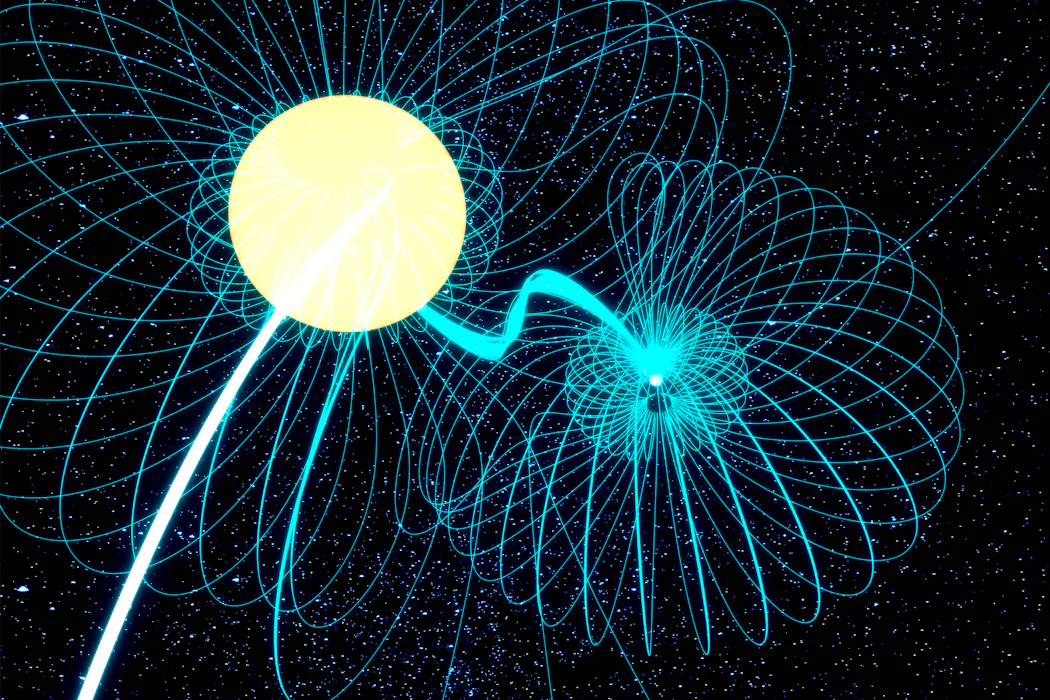
Simulated magnetic field lines for a binary system that is close enough for the stars to interact. Carl Knox (OzGrav/Swinburne) & Joshua Preston Pritchard (CSIRO)

A pair of stars spiralling around each other. That’s the origin of a new source of repeating radio bursts we’ve detected, called ASKAP J1745.

In recent years, astronomers have been puzzling over mysterious bursts of radio signals, known as long-period transients because of how slowly they repeat. They were first discovered by chance with telescopes scanning large chunks of the sky.

To date, astronomers have only found a dozen of these weird sources, and we’re still trying to understand exactly what they are.

In a new study published today in Nature Astronomy, we describe a first-of-its-kind detection – both radio and X-ray bursts repeating with each orbit.

ASKAP J1745 is exciting because we’ve figured out what it is, unlike 10 of the 12 known long-period transients. Even better, we were able to detect it with a bunch of different telescopes that observe all different kinds of light.

Bearing the same message in three forms of writing, the famous Rosetta stone once helped scholars decipher ancient Egyptian hieroglyphs. Similarly, this extra information we found about ASKAP J1745 will help astronomers better understand the mystery of all long-period transients.

What do long-period radio transients look like?

Long-period transients are things in space that produce bright, repeating bursts of light at radio wavelengths. Little is known about the origins of most long-period transients. In addition, many have been discovered close to the dusty region in the middle of our galaxy, so it can be hard to see them with visible-light telescopes.

Even with just a dozen of these strange sources discovered so far, they seem to come in a few different shapes and sizes. Their radio bursts repeat on timescales of minutes to hours.

Some have been making regular pulses for more than 30 years, while others turn off for days at a time or go permanently radio-silent.

Galactic map of long-period transients (LPTs), including those with evidence of binary systems, and galactic centre radio transients (GCRTs). Author-provided composite. Background image: ESA/Gaia/DPAC, A. Moitnho

Where do they come from?

Astronomers initially thought long-period transients were just very slowly spinning neutron stars, called pulsars. These are the fast-rotating dense cores left after the supernova explosions of massive stars.

The first few of these radio transients discovered were repeating roughly every 20 minutes. That’s much slower than the average pulsar, which repeats every few seconds.

Furthermore, when pulsars slow down their spin, they should stop producing radio light. This means we shouldn’t see radio bursts from neutron stars rotating so slowly.

So astronomers investigated other theories involving white dwarfs – the slowly cooling dead centres of less massive stars. And recently we discovered some long-period transients in binary systems (two stars in a close orbit) with evidence of both a white dwarf and a lower-mass red dwarf star.

The ASKAP radio telescope at Inyarrimanha Ilgari Bundara, the CSIRO Murchison Radio-astronomy Observatory on Wajarri Yamaji Country in Western Australia. Alex Cherney/CSIRO

The discovery of ASKAP J1745

ASKAP J1745 is a new long-period radio transient we found with the ASKAP radio telescope, owned and operated by CSIRO, Australia’s national science agency. It’s the first one of these strange sources that we’ve identified as a “cataclysmic variable”.

Cataclysmic variables are systems with two stars – one of them a white dwarf – that orbit each other closely enough to interact. If the stars are close enough, the white dwarf’s gravity can pull (or “accrete”) material from the other star. That’s why these systems are also known as accreting white dwarf binaries.

Another long-period radio transient was recently discovered with X-ray bursts, repeating with the same regularity as the radio. However, the origin of the bursts and their shared timing remained unclear.

Now, for the first time, we have combined observations from radio, X-ray and optical telescopes to find that ASKAP J1745 produces both X-ray and radio bursts with each orbit of its two stars.

Simulation of magnetic fields in a closely orbiting binary system. Carl Knox (OzGrav/Swinburne) & Joshua Preston Pritchard (CSIRO)

In these rapidly orbiting systems, the X-ray light is thought to come from the material heating up as it streams onto the white dwarf.

The bright radio bursts were a bit more of a mystery. But knowing that this is an accreting binary system helped us figure things out.

The type of pulsed radio light we detected is typically caused by energetic particles interacting with strong magnetic fields. Here, we have the perfect combination: two stars with strong magnetic fields (typically thousands of times stronger than an MRI machine), with charged particles flowing towards the white dwarf from the other star.

What this means for the future of astronomy

This discovery is unique because we have more information and at more different wavelengths than any other previous long-period transient.

Just like the Rosetta stone was key to decoding ancient Egyptian symbols, ASKAP J1745 will be key to deciphering the origins of other long-period radio transients that lack information at other wavelengths.

ASKAP J1745 is the first long-period transient showing signs of accretion across the spectrum of light – from radio waves to visible to X-rays. And this stream of charged material is a crucial ingredient for making the radio light we detect from these systems.

Exploring the mechanism that produces long-period radio bursts gives us a new laboratory to learn about extreme physics such as plasma flows and magnetic fields in conditions we can’t recreate on Earth.

We acknowledge the Wajarri Yamaji as the Traditional Owners and Native Title Holders of Inyarrimanha Ilgari Bundara, the CSIRO Murchison Radio-astronomy Observatory where ASKAP is located.

The Conversation

Kovi Rose does not work for, consult, own shares in or receive funding from any company or organisation that would benefit from this article, and has disclosed no relevant affiliations beyond their academic appointment.

Amanda Lohrey’s UFO novel captures the uncertainties of reason, doubt and belief

Danie Franco/Unsplash

Amanda Lohrey’s Capture plays out as a sequence of conversations in strange rooms.

The centre of the novel is the consulting room of psychiatrist James Mather, lately stripped of all its therapeutic paintings and suggestive curios to a state of clinical blankness. There is also the apartment where the psychiatrist and his former lover regard each other from “two enormous couches in the centre of the room”. And there are the rooms of a shiatsu sensei, cavernous and empty, except for a “big glass aquarium of shimmering fish”.

Shadowing all these rooms, in this novel of the ordinary and the divine, are the dream-interiors of UFOs. James is studying people who claim to have been abducted by aliens, and Capture is partly composed of his interviews with them. “I wake up in this weird room, this weird shiny room,” says Mary, a beautician.

But it feels like every room in Lohrey’s novel is a weird shiny room, where humans are studied with curiosity and partial incomprehension.


Review: Capture – Amanda Lohrey (Text Publishing)


Lohrey was raised as a Catholic in postwar working-class Hobart. Though she fled the faith as a teenager, her fiction has always been concerned with the personal and political dimensions of belief.

Her later career works – including the multi-award-winning The Labyrinth (2021) and The Conversion (2023) – all focus on myth, dreams and the limits of rationality. In these novels, a lonely and adrift protagonist takes on a quixotic project in the hope of giving their life a meaning and a shape.

In Capture, Lohrey sketches James as a quietly self-doubting rationalist. Though he deals in symbols and narratives, he puts himself in the science camp. He does not read fiction because it “mostly lacks substance”. He keeps himself free from the “weeds of superstition”.

His assistant, Lucy Cheng, is one of “you people in the humanities”: a historian with a doctorate on 19th-century medicine, who has a “healthy scepticism of the DSM” and an awareness of psychology’s history of oppression. “What, at any given moment,” Lucy asks, “is credible science?”

To his colleagues, James is a man “radiating complacency”, yet his glassy demeanour is already faintly rippled with uncertainty. “We make it up as we go along,” he replies to Lucy’s question. “Unless we are adhering to a rigidly prescribed set of doctrines, how else could it be?”

James wields his doubt as a professional virtue, but it also affects him in a more gnawingly existential way. After a long career, he is approaching retirement with a sense of incompleteness. Having broken his back coming off a motorbike in his twenties, the arthritic pain in his spine keeps returning him to a body he would prefer to transcend.

So he takes up the alien capture research on a whim, as a last hurrah and a grand distraction. “By immersing myself in another reality I might disengage my mind from its prison of flesh and bone,” he thinks, “for in my worst moments, pain threatened to unhinge my sense of self.”

What he expects is an enjoyably diverting cavalcade of Roswell truthers and hillbillies: “in my preparatory reading,” he says, “I have gained the impression that captives belonged to a lower socio-economic category, the kind of people prone to paranoid fears, and dreams so vivid they cannot be distinguished from reality.”


Read more: Intellectual fearlessness, politics and the spiritual impulse: the remarkable career of Amanda Lohrey


Everyday epiphanies

There is something here of the liberal political imagination in the age of Trump, which too readily blames the rise of a post-truth world on poor people who are easily tricked.

At first, the psychiatrist seems confident in his ability to explain away the experiences of his subjects. He concludes that his first case, Anthony, may be suffering “unconscious grief at the prospect of having no heirs,” which has “induced a psychotic episode”.

James’s favoured technique is to get patients talking on their pet topic, watching how they light up and how they construct their narratives. He encourages the beautician Mary to detail the art of eyelash extensions, while he savours “the accuracy, indeed a kind of eloquence, with which she describes her technique.”

He does the same to everyone. He encourages his assistant Lucy’s young son to monologue about Transformers, and his grown-up son to rhapsodise about bread baking. “I am content to listen as he describes his art,” he says.

This is how the psychiatrist understands other humans, but these are also moments when he finds humans to be at their most obsessive, arcane and alien. Rituals and icons – the “everyday epiphany” of a fresh loaf of bread, or the plastic gods of a small child – belong to a realm of shamanic experience James cannot fully comprehend. “My psyche is stripped bare of consoling ritual,” he says, “and what remains is the pain in my spine.”

Amanda Lohrey. Text Publishing

The emotional core of the novel is a scene in which James contemplates the evening rituals and icons of his wife. He recalls “watching Deborah prepare for bed, an unvarying ritual of small observances, never rushed”. In her absence, her presence is felt as a “constellation of intimate traces”.

On the bureau opposite the bed, Deborah keeps a framed photograph from 1870 that she discovered during her archival research. It shows a bargemaster’s wife and baby aboard a canal boat. The boat’s confined living space is decorated like a shrine.

Every night before turning out her lamp my wife glances at this icon. On many nights it’s the last thing she sees. Why? It is so unlike Deborah to romanticise the past. My instinct tells me that these late-night glances are a rite of mourning, but for what? Could it be that some infant, some lost or unborn child, lives aboard the boat of my wife’s dreams?

James considers showing the photograph to his assistant Lucy, to see what another woman might make of it, but he thinks better of it: “It is not, after all, my shrine.”

Alien otherness

His wife and her household gods are a dark canal James cannot fathom. So he is unsettled when he interviews Bernard, a draughtsman with the city planning authority, who claims to have experienced a religious awakening in his close encounter with a UFO, and who mourns every day for his absent alien gods.

In a pair of wonderfully freewheeling scenes, James takes his incomprehension to a folklorist and to a theologian. The latter suggests that this is “just one of the many symptoms of the god-shaped hole in our culture […] We’ve been deprived of metaphysical hope so we take it where we can find it.”

The confidence James took into the project is already evaporating. His subjects are sober and middle class; their stories, though extraordinary, are “linear, consistent and rational”. Every one of his theories seems inadequate.

This leaves him to contemplate the ultimate horror: that these experiences cannot be adequately captured by the language of psychiatry as delusions or symptoms, projections or wish fulfilments. What if these things actually happened? What if the gods are real?

“I have arrived in a cul-de-sac of unknowing,” he says. “I no longer believe that I can account for and interpret the reality of others.”

When Flick, the folklorist and James’s ex-lover, tries to talk him out of his newfound doubts about doubt, the psychiatrist resorts to the language used by alien abductees themselves. Only those who witnessed the interviews in his consulting room, he says, can really understand:

Her logic is impeccable but rankles with me. You were not in the room, I want to say. You were not in the room. In the room there’s an electricity, a vibration; it’s a different order of experience. Outside the room, it’s all words. And after all her theories are applied, in my mind there remains a surplus of meaning.

And so it comes back to a conversation in a room: to the psychiatrist’s art, which is also the novelist’s art, of reading the vibrations: probing, diagnosing and interpreting the alien otherness of human consciousness. What if, Lohrey asks, the textures of everyday life – with all of its attachments and private obsessions – are too much for the psychiatrist or the novelist to capture?

The Conversation

Robbie Moore does not work for, consult, own shares in or receive funding from any company or organisation that would benefit from this article, and has disclosed no relevant affiliations beyond their academic appointment.

Astronomers found a galaxy in the throes of death – and they know what’s killing it

Powerful galaxy winds that blast gas into space may be a common killer of massive galaxies in the early universe. Joshua Worth, CC BY

At the start of cosmic history, galaxies were big clouds of gas, and they grew by turning that gas into stars. If a galaxy runs out of gas, it will stop forming stars and die.

Present-day galaxies have had more than 10 billion years to grow old and die. But this is not true in the early universe: we expect to see very few dead galaxies in the first billion years of cosmic time.

In 2022, the James Webb Space Telescope gave us our first clear glimpse of galaxies in the early universe. What we saw completely defied our expectations: there were too many big, dead galaxies, far earlier than expected.

Astronomers came up with many possible explanations. Some suggested that dark energy – the mysterious phenomenon believed to be driving the universe’s expansion – may have been stronger in the early universe than current theories predict. This would allow galaxies to grow (and die) faster. However, the real solution may be much simpler.

Our new study, published today in the Monthly Notices of the Royal Astronomical Society, reveals an early massive galaxy in the throes of death: its gas is being rapidly blasted into space by a powerful “galaxy wind”, and it may very soon run out of gas. This galaxy offers a new solution to the mystery of what killed big galaxies in the early universe.

Prime suspects for massive galaxy death

There are two ways to eject gas from galaxies: exploding stars (called supernovae) that push gas away, and supermassive black holes that accelerate gas to such high speeds that it escapes the gravitational pull of the galaxy. Both produce fast-moving gas streams that astronomers call galaxy winds.

These winds have long been considered one of the main causes of galaxy death.

Black holes produce faster winds than exploding stars, making them the favoured means for ejecting gas from the largest, most massive galaxies. Many theories suggest that only the powerful winds driven by supermassive black holes can kill the largest galaxies.

However, testing these predictions is hard. As the gas in the wind leaves a galaxy, it becomes very faint very quickly, making galaxy winds difficult to see even in nearby galaxies.

In distant galaxies, they were almost invisible until recently.

Transforming our view of the early universe

Designed to look deeper in space than any telescope before it, the James Webb Space Telescope has transformed our view of the early universe. It allows us to see things that were previously undetectable – including hot, fast-moving gas ejected from early massive galaxies.

For our new study, we paired observations from the James Webb Space Telescope with data from the Atacama Large Millimeter Array, the world’s most powerful radio telescope, which measures cold star-forming gas swept out of galaxies by winds.

Together, these telescopes give us the most complete picture yet of galaxy winds in the early universe.

One galaxy, called CRISTAL-02, stood out to us immediately. We noticed it was forming stars twice as fast as other similar-sized galaxies. Our extremely sensitive observations revealed a huge plume of cold gas extending far away from CRISTAL-02. This plume was almost as long as the galaxy itself – a telltale sign the gas was being driven out of the galaxy.

The wind from CRISTAL-02 was ejecting twice as much gas as the galaxy converts into stars, and this gas was likely travelling fast enough to escape the galaxy. If the wind kept ejecting gas at the same rate, the galaxy would run out of fuel in less than 100 million years – a blink of an eye in cosmic terms – forming a massive dead galaxy less than 1.5 billion years after the Big Bang.

Paradoxically, the wind appeared to be driven by the same intense star formation that was making the galaxy grow so quickly.

A patch of orange, green and purple light against a black background.
The cold gas plume (white contours) extends away from CRISTAL-02, revealing a galaxy wind. Rebecca Davies

Cosmic collisions may hold the answer

To complete the picture, we need to understand why CRISTAL-02 was growing so fast in the first place.

The answer may lie in the fact that CRISTAL-02 is not a single galaxy, but multiple galaxies in the final stages of a cosmic collision. During such collisions, gas funnels towards the galaxy centres, triggering strong bursts of star formation.

In the present-day universe, galaxy collisions are relatively rare: they are seen in only a few percent of galaxies. But one billion years after the Big Bang, the universe was far more compact, meaning galaxies were packed much closer together.

Recent studies suggest around 40% of big galaxies in the early universe are in the process of merging. Some of these galaxies will likely face a similar fate to CRISTAL-02: undergoing frenzied bursts of star-formation, followed by powerful winds that lead to their deaths.

Our findings show that powerful winds capable of killing galaxies do not originate exclusively from supermassive black holes: they can also be triggered by the intense star-formation that causes galaxies to grow rapidly.

If many early galaxies collide and experience rapid growth, then it may not be surprising at all that we see so many dead galaxies in the early universe. CRISTAL-02 offers a natural solution to the mystery of why these massive galaxies live fast and die young.

The Conversation

Rebecca Davies receives funding from the Australian Research Council.

Deanne Fisher receives funding from Australian Research Council.

How much water and power will AI data centres use in Australia? Ironically, we don’t have the data to know

Daniele Levis Pelusi/Unsplash, CC BY-NC-SA

Australia’s data centre rush now rivals the mining boom. OpenAI chief executive Sam Altman last week said Australia could become a “data centre capital of the world”.

This would come at an environmental cost. Water use is a common concern. One report estimates AI centres could use billions of litres of water a year.

But what do the numbers say? Based on the value derived per megalitre, data centres look less threatening and more likely to be a highly economically productive use of water.

The bigger problems are energy and location. As a new report suggests, electricity demand from data centres could outstrip clean power from renewables and lead to new gas plants.

Before committing fully, we need granular detail on how much water and energy these centres use.

What value do we get from water?

In the 2023–24 financial year, Australian industries consumed about 17.6 million megalitres of water – about 30 times the water in Sydney Harbour.

Of this, agriculture, forestry and fishing consumed about two-thirds of the total – nearly 11.8 million ML. This water was used to produce goods valued at A$54.6 billion – roughly $4,600 for every megalitre consumed.

Compare this to “other industries”, the category covering data centres. A megalitre of water in this sector was valued at $2.3 million – 500 times more value than if used on a farm.

How much water do data centres use?

We can only make a rough estimate on water use due to a lack of clear data.

Research shows data centres need about 25ML of water per megawatt of capacity. Australia has about 300 data centres with about 1.3 gigawatts of operating capacity. Using these figures, Australia’s current data centres would use 15,000–35,000ML a year. That would be a fraction of 1% of the water used nationwide – close to a rounding error.

There are three caveats.

First, credible estimates of water use vary widely.

Second, most estimates – including this article – only count water used directly for cooling. Data centres can be remarkably frugal with this water and getting more efficient.

But data centres indirectly use substantially more in the water used to produce the electricity powering them. Coal, gas and hydro plants all need water.

Third, proposed new data centres are much, much larger than existing ones. Some are seeking between 5ML and 40ML a day.

Sydney is set for huge growth in AI data centres.

If all 41 in the pipeline or under assessment are built, they would directly use 15–20% of Sydney’s water supply within a decade.

Sydney would bear the strain on water supplies in return for an upfront economic benefit from construction and some ongoing jobs. But the economy wide $116 billion boost to GDP from AI adoption by all industries over the next ten years would be spread nationally.

It would make sense to locate data centres where water is more abundant and cheaper.

Energy is a bigger concern than water

At present, data centres use just over 2% of the electricity on the National Electricity Market.

This would almost triple to 6% within four years, according to Australian Energy Market Operator forecasts. The Clean Energy Finance Corporation estimates the figure could be 11% within a decade.

Energy use isn’t inherently bad. What matters is whether increasing demand will be met by renewables – or gas.

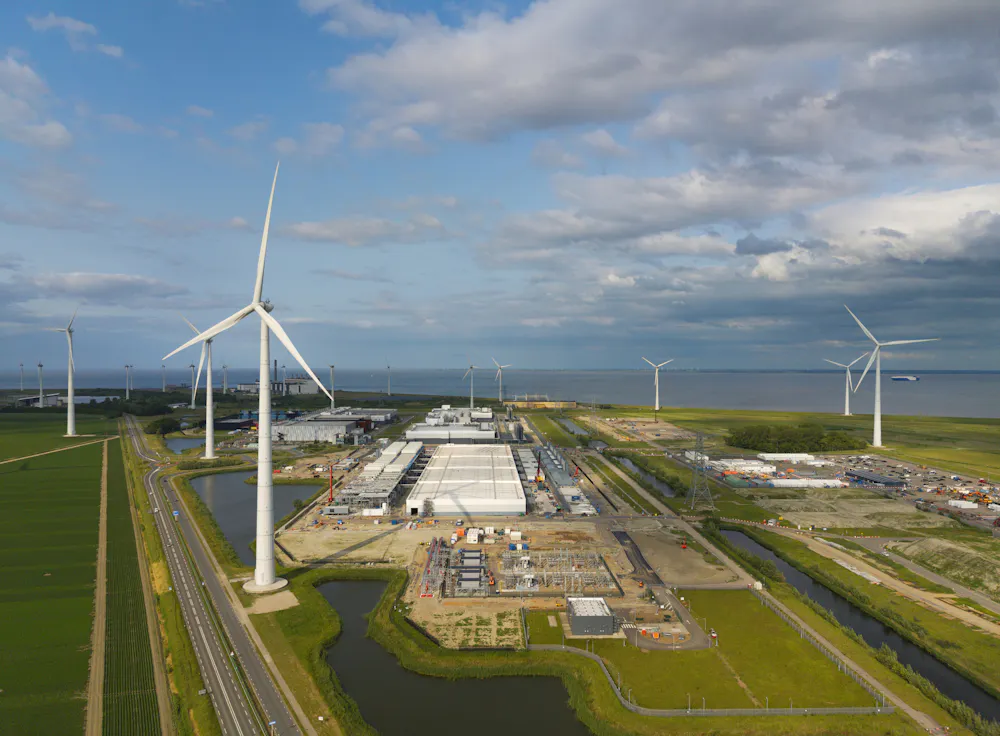
aerial view of wind turbines and a data centre warehouse set among green fields.
Data centres are hungry for energy. The question is how that demand will be met. Westend61/Getty

We need better data – on data centres

We can’t manage what we don’t measure. Data centres are a textbook example of a data gap impeding good policy.

The Australian Bureau of Statistics rolls data centres into a broader category.

This means we can’t access detailed statistics on how much water or energy data centres use. Nor how much they add to the national accounts.

The federal government has introduced new expectations on water use and efficiency for data centre operators. That’s something. But it’s not the same as a national picture that fits with existing official statistics. Only one data centre meets the new national water-efficiency rating.

Surprisingly, Australia’s National AI Plan has little focus on water and energy. State and federal water ministers have named data centres as an emerging threat to water security. A Senate inquiry is in progress.

We need to track water use better

Australia’s water accounts measure how much water every industry uses. But they don’t track how much water is lost to evaporation or value all water used. Water supply and sewerage are bundled together in even the most detailed view of the national accounts, meaning neither can be seen clearly.

So while data centres appear to be a high-value use of water, we can’t confirm it.

There are signs of change. Australia uses the international System of Environmental-Economic Accounting to track water use. This is being rewritten now, in part to address these issues. The national accounts have also begun treating damage to nature as a cost of production. Both shifts matter, no longer treating the environment as free lunch.

To finish the job, authorities will have to properly value all the water used by industries and disentangle data centre data from other industries. This would turn a noisy debate into a measurable one.

Time to keep tabs on AI

Based on the data we do have, we can say Australia’s data centre boom is neither the water villain some fear nor the cost-free miracle its promoters describe.

Instead, it looks like a high-value industry arriving at record speed which is relatively light on water use and fairly heavy on energy.

With better data in hand, the numbers – not the headlines – should decide where the next megalitre and the next megawatt should go.

The Conversation

Michael Vardon is a member of the Australian government's Technical Advisory Panel for Environmental-Economic Accounting and is on a United Nations team working on environmental-economic accounting.

How did we learn which plants are safe to eat? 2 food scientists explain

Catherine Delahaye/Getty

Have you ever eaten a green potato, or a bunch of rhubarb leaves?

Hopefully not, because these two plant parts can be toxic to humans. While they may seem edible, they contain chemicals that can make you seriously ill.

Over centuries, humans have learnt which plants are safe to eat and which are not, often by combining ancient knowledge with modern science.

The power of plants

Without plants, we would struggle to get the nutrients we need.

Crops such as wheat and rice provide carbohydrates, the body’s main source of energy. Fruits and vegetables contain a wide range of vitamins that help us stay healthy.

Plants are also chemical factories. To survive, they produce compounds that deter insects and animals that might eat them. They may also release chemicals that protect them from disease. One example is the tobacco plant which produces nicotine, a natural alkaloid that helps protect the plant from insect attacks.

Globally, there are tens of thousands of plants that contain toxic compounds. In Australia, we have more than 1,000 native and introduced plant species that can be toxic to humans and animals, under certain conditions. However, humans only consume a small fraction of the world’s edible plant species.

What makes a plant toxic?

A key principle of toxicology – the study of what makes something poisonous – is “it’s the dose that makes the poison”. This means certain toxic compounds are safe to consume, as long as you don’t eat too much of them.

Table salt is one example. You likely eat it everyday, but this substance can be harmful in excessive amounts.

And many plant compounds that sound dangerous are actually safe, when consumed in small amounts. For instance, green potatoes contain glycoalkaloids, a group of chemicals that can cause symptoms such as vomiting, fever and diarrhea when consumed in large amounts. Oxalates are a type of toxin found in rhubarb leaves. They too can make you sick, but only if you eat lots of them.

Preparation is key

At first, humans learnt which plants were nourishing and which were harmful through years of observation and experimentation. For instance, cassava was first domesticated in South America where Indigenous communities developed processing methods to remove cyanide, a poisonous chemical found in the plant’s roots and leaves.

Many other First Nations peoples developed sophisticated ways of preparing plants that contained toxins. Some Aboriginal communities in northern Australia would soak, grind or cook cycad seeds to remove naturally occurring toxins before consumption.

This knowledge soon became embedded in each community’s culture, as it was passed down through generations.

Today, we use various techniques to reduce or remove harmful compounds from plants. For example, raw or undercooked kidney beans contain a natural toxin called phytohaemagglutinin, which can cause illness. But by soaking and thoroughly boiling kidney beans, you can easily get rid of this toxin.

Fermentation is another way to remove poisonous chemicals from plants. This is because fermentation changes the plant’s chemistry in ways that can reduce or remove toxic compounds. For example, during soybean fermentation, microbes break down harmful compounds such as phytates and trypsin inhibitors, making the soybeans safer and easier to digest.


Read more: Little shop of horrors: the Australian plants that can kill you


The role of modern science

In some cases, scientists have modified toxic plants to make them safe to eat.

Faba beans, also known as broad beans, are one example. Faba beans are an increasingly important crop for Australian farmers, as they can attract high prices and help manage weeds.

Like many plants, faba beans naturally contain vicine and convicine, two compounds that generally don’t affect humans. But in people with a genetic condition called G6PD deficiency, they can trigger a serious reaction called favism. This condition can be life-threatening as it causes your red blood cells to rapidly break down.

Rather than abandoning this crop, scientists have used modern chemistry and plant breeding to develop new faba bean varieties with lower concentrations of these compounds. And farmers are already planting low-vicine varieties as part of their crop rotations.

Over millenia, humans have unpacked the complex chemistry of plants to learn what is safe to eat. But how we consume these plants, and how much of them we eat, also affects how toxic they may be.

The Conversation

Joel Johnson receives scholarship funding from the Australian government for his PhD program.

Mani Naiker does not work for, consult, own shares in or receive funding from any company or organisation that would benefit from this article, and has disclosed no relevant affiliations beyond their academic appointment.

Can ‘grip strength’ exercises actually help you live longer?

If you follow wellness channels on social media, you might’ve come across the claim that your grip strength – or how firmly you can squeeze something with your hands – can predict how long you will live.

This sounds far-fetched. Yet the science supports such a connection.

But as wellness influencers try to monetise this link, what started as something based on scientific evidence starts to get stretched. Now some influencers claim just strengthening your grip strength can help you live longer.

And it’s not just social media influencers. Mainstream media often follows some similar patterns, overlooking the complexity and nuance of the science and misrepresenting what it means for individuals.


So many ideas about what makes us sick, or keeps us well, sound plausible. Early studies might sound promising. But then something gets twisted. In this series, we investigate how a grain of truth ends up as a common health myth. And we untangle what went wrong along the way.


What the science says

The evidence consistently shows a person’s grip strength is a good indicator of their overall health and therefore can act as a proxy for how long they might live.

However, grip strength isn’t a driver of longevity. The strength of your hands doesn’t make your healthier. It indicates how robust the body is, from muscle and nerve function, to the health of your heart and veins, and how your body uses energy.

A typical way researchers have investigated the relationship between grip strength, health and longevity is to measure participants’ handgrip strength by getting them to squeeze a hand-held device called a dynamometer. Then they track participants over time, to see if they developed diseases and how old they were when they died.

For example, a study of around half a million British people aged 40–69 years found a 5kg lower grip strength was associated with an approximately 20% greater risk of dying during the follow up period, which was up to ten years.

The researchers also found muscle weakness, which they defined as having a grip strength of less than 26kg for men and 16kg for women, was associated with a higher overall risk of death as well as a higher risk of death from cardiovascular disease (heart attack and stroke), respiratory disease, chronic obstructive pulmonary disease and a number of cancers.

The link is stronger for older people

While the relationship between grip strength and health holds for all age groups, in older people it appears to be a particularly good predictor of death, heart attacks, stroke, falls and fractures.

This is because it seems to be exceptionally good indicator of age-related loss of muscle mass (known as sarcopenia), power and resilience in older people.

Consequently, some researchers suggest grip strength should be considered a “new vital sign” – alongside more traditional indicators of health such as temperature, pulse, respiration and blood pressure.

The reason grip strength is a less powerful predictor of longevity in younger people compared to older age groups is because most young people are near the upper end of physiological performance. Differences in young people’s health are relatively small compared to the “noise” introduced by measurement error or random variation.

As people age, however, their health varies much more, while the sources of error remain roughly the same. Consequently, this higher signal-to-noise ratio results in a much stronger relationship between grip strength and health in later life.

So how did this turn into hype?

The problem with the way some people communicate this is generally an issue of overreach. Things often get muddled and this association can sometimes be turned into a prescription.

When people conflate correlation with causation, they may claim that just doing exercises to improve your grip strength, without improving your overall health, can help you live longer.

But just because two variables are linked does not mean that one causes the other. Improving grip strength is not a magic path to longevity. Rather, it’s a marker or proxy of broader physiological robustness, which influences longevity.

Intriguingly, some reels and articles explain the science clearly and highlight that grip strength is a proxy and not a cause, but then, paradoxically, go on to describe ways of increasing grip strength. This undoubtedly undermines the message that the relationship is not causal.

One of the problems seems to be that influencers and journalists sometimes feel it’s not enough to just explain the science: they have to offer actionable health advice or a solution. This can lead to overreach, where advice is given that goes beyond what the evidence says.

In a nutshell

We’re all naturally drawn to simple metrics that promise insights into our health and longevity, and grip strength seems to be one of the more useful ones.

Grip strength is a simple and accessible marker that can help predict health and longevity, particularly in the elderly. But improving your grip strength in isolation won’t make you healthier or extend your life.

The most effective drivers of health and longevity remain the obvious ones: staying active, eating a balanced diet, sleeping well, maintaining social connections and managing stress.


Read more: How old are you really? Are the latest ‘biological age’ tests all they’re cracked up to be?


The Conversation

Hassan Vally does not work for, consult, own shares in or receive funding from any company or organisation that would benefit from this article, and has disclosed no relevant affiliations beyond their academic appointment.

Australia is facing a new 12.5% US tariff over anti-slavery claims. Are they actually right?

SimpleImages/Getty

The United States is threatening to impose trade tariffs of up to 12.5% on 60 countries, including Australia, over their inaction on forced and slave labour worldwide.

On Wednesday, US trade representative Jamieson Greer said:

The failure of our most important trading partners to address the importation of goods made with forced labor is unacceptable.

Australian Prime Minister Anthony Albanese responded that a new tariff on exports to the US was “unjustified”, as Australia has “robust, comprehensive and world-leading legislation addressing forced labour and modern slavery”.

Who’s right? And are the US claims about other nations turning a blind eye to forced and slave labour – where a person is either forced to work, or even owned by someone else – actually true?

Which countries could face new tariffs

In a new report released by the US Trade Representative, 54 countries – including Australia, China, New Zealand and the United Kingdom – were found to have:

failed to impose a legal prohibition on the importation of goods produced wholly or in part with forced labour and to effectively enforce such a prohibition.

All of those countries face a proposed 12.5% tariff on their exports to the US.

Another six economies – including Canada, the European Union and Indonesia – face lower 10% tariffs. They were seen to have done more overall, but failed to effectively enforce their own laws.

Forced labour is a form of modern slavery, defined under international law as “all work or service which is exacted from any person under the threat of a penalty and for which the person has not offered himself or herself voluntarily”.

This definition is consistent with an almost century old US law, Section 307 of the US Tariff Act of 1930. It’s now being used to legally justify this latest round of tariffs.

The US has a strong history of taking legislative action against forced labour. Section 307 prohibits imports of goods mined, produced or manufactured by forced labour.

In 2022, the US also established the Uyghur Forced Labor Prevention Act, prohibiting goods being imported from China’s Xinjiang Uyghur region, where there are “credible” allegations of widespread forced labour.

‘We get one ruling, we do it a different way’

These proposed forced labour tariffs appear to be less about labour rights and more about trade.

This latest move comes after US courts blocked US President Donald Trump’s sweeping international tariffs announced over the past year. That prompted Trump to pledge: “We get one ruling, and we do it a different way.”

As former Australian ambassador to the US Joe Hockey said about the new forced labour tariff today, “America is running out of money and they need to get it from somewhere”.

These tariffs are still subject to public consultations over the next month.

While using tariffs as a way to strengthen action on forced labour is questionable, there is some substance behind the US allegations.

41,000 people in Australia alone

An estimated 50 million people around the world – and rising – are trapped in modern slavery, more than half of those in forced labour.

Australia is estimated to have more than 41,000 people working as forced labourers or other forms of modern slavery, including child marriages.

Reports to the Australian Federal Police of human trafficking have nearly doubled in the past five years.

Australia’s laws are not world leading

In 2018, Australia established its Modern Slavery Act. This law was hailed as a critical first step in acting on modern slavery.

The law requires large business to report annually on the risks of modern slavery in their operations and supply chains.

Since 2019, more 17,000 modern slavery statements from more than 27,000 businesses have been lodged on Australia’s modern slavery registry.

Yet in 2023, an independent report found:

there is no hard evidence that the Modern Slavery Act in its early years has yet caused meaningful change for people living in conditions of modern slavery.

That’s not surprising: there is no enforcement built into the law.

What more needs to be done?

If Australia does want to have “world-leading” laws – and a stronger case to argue for lower US tariffs – what needs to change?

While the Modern Slavery Act has raised awareness of the problem in Australian boardrooms, it is not improving the working conditions of supply chain workers, here at home and overseas.

So Australia needs to move quickly to strengthen that law with enforcement, and establish a forced labour import ban.

A 2023 review of the Modern Slavery Act recommended penalties for companies failing to comply with reporting requirements and the introduction of a human rights “due diligence obligation” – similar to European Union laws and emerging requirements in South Korea, Thailand and Indonesia. This sees companies working to reduce human rights harms not just in their own factories, but through their suppliers’ suppliers too.

The Albanese government partially accepted some of the 2023 report recommendations, including the need for penalties. Three years on, it’s failed to take serious action.

The Australian government should also establish a forced labour import ban, like one the EU passed two years ago, now being phased in across all 27 member states. This would stop specific goods suspected of being produced with forced labour at the border.

Whether these proposed tariffs come into force or not, this new US forced labour investigation could actually do some good.

Right now, millions of people are working in dangerous, dehumanising conditions to make goods sold in Australia and worldwide. It’s long overdue to do more to stop it.

The Conversation

Justine Nolan does not work for, consult, own shares in or receive funding from any company or organisation that would benefit from this article, and has disclosed no relevant affiliations beyond their academic appointment.

Rare male red pipefish carrying eggs on its trunk spotted in Sydney

Andrew Trevor-Jones, CC BY

The red pipefish (Notiocampus ruber) is a rare relative of seahorses and seadragons found only in Australia.

While the species occurs across southern Australia from Western Australia to New South Wales, its incredible camouflage means until now only one person had ever photographed it in the wild.

In Gamay (Botany Bay) it has been observed hiding among feathery red algae, but elsewhere the red pipefish has been recorded on rocky reefs. Its colour and slender body allow it to disappear almost completely against its surroundings.

For decades, scientists have wondered how these elusive creatures carry their eggs. Our new photographs and research, published in the Journal of Fish Biology, finally provide an answer.

A lucky sighting

One of us (Andrew) regularly dives the popular Sydney sites The Leap and The Steps at Kurnell, Gamay (Botany Bay), where he documents seahorses, pygmy pipehorses, seadragons and other related sealife.

Andrew had briefly seen a red pipefish twice before. However, he struck gold when he spotted one at Kurnell in April 2021. He kept tabs on this individual, spotting it almost weekly until January 2022.

During that time it was joined by two more red pipefish. When all three were sighted in November 2021, one was a brooding male carrying eggs on his trunk.

Tails or trunks?

While pipefishes and seahorses are famous for male pregnancy, the family is split by how the males carry their young. Many pipefish – and all seahorses – are “tail brooders”, carrying eggs on the tail in pouches.

Another group of pipefish, the “trunk brooders”, carry eggs exposed directly on the belly. However, scientists have suspected the red pipefish was a tail brooder since 1979 based on the structure of its body. However, without a living male to study the theory remained unproven.

Skinny red fish with translucent whitish lumps.
The small translucent lumps on the pipefish’s trunk are eggs attached directly to its body. Andrew Trevor-Jones, CC BY

Andrew’s photographs from his November 2021 dives at Kurnell finally provided the proof. They clearly show a male carrying large eggs attached directly to the belly – confirming the species as a trunk-brooder and placing it in an ancient group of pipefishes that lack pouches entirely.

Interestingly, the data suggest this Australian fish may be a long-lost relative of species found as far away as the North Atlantic, despite the vast geographical separation.

Finding such a rare fish in the well-dived waters of Gamay is a reminder that major biological secrets are still hiding in plain sight.

The Conversation

The authors do not work for, consult, own shares in or receive funding from any company or organisation that would benefit from this article, and have disclosed no relevant affiliations beyond their academic appointment.

Richard Scolyer leaves a unique legacy of pioneering brain cancer research

Professor Richard Scolyer, renowned pathologist and joint Australian of the Year (2024), has died at the age of 59.

Scolyer captured the attention of Australians and the world when he volunteered to undergo a world-first experimental treatment for brain cancer.

This not only extended the duration of his life, but provided scientists with a wealth of knowledge that will help shape the future of brain cancer therapy.

In an open letter Scolyer intended to be published when he passed away, he wrote:

“I sincerely hope the scientific data and awareness I have generated will provide a platform for others to build upon to ultimately make a difference for future cancer patients.”

Richard Scolyer is survived by his wife, Dr Katie Nicoll, and his three children, Emily, Matt and Lucy.

Finding his calling

Scolyer grew up in the suburb of Riverside in Launceston, Tasmania. He described his memories of his childhood there as “mostly happy”, having spent it doing “all the normal things”, like biking and footy.

His family went on beach holidays every year, spending their time there swimming and playing cricket.

Scolyer was a lifelong sportsman, playing football as a youth, swimming, cycling, and running as an adult, and channelling his skill at these towards fundraising for charity whenever possible.

In year ten, Scolyer decided to be a doctor, successfully finding his calling very early. He studied medicine at The University of Tasmania.

Once a qualified doctor, he excelled in his role, driven by a great compassion for his patients. His speciality was melanoma, and he was regarded as one of the finest melanoma pathologists in the world.

In 2017, Scolyer was appointed the Co-Medical Director of the Melanoma Institute of Australia, alongside his friend, colleague, and co-2024 Australian of the Year recipient, Professor Georgina Long.

In mid-2023, Scolyer was diagnosed with advanced (stage 4) glioblastoma, the most aggressive and most common form of brain cancer.

Following diagnosis, survival is often only around a year. Treatment for glioblastoma has largely not changed in almost 20 years, and usually involves chemotherapy, radiation therapy, and surgery, but the cancer nearly always returns.

Knowing the severity of his disease, however, and the poor prognosis associated with glioblastoma, Scolyer volunteered to undergo a new glioblastoma treatment method that borrowed from newer techniques in the melanoma space. Those techniques are called immunotherapies.

Trailblazing cancer therapy

Immunotherapy is a term for a variety of relatively new techniques that are becoming more widespread.

The immune system is remarkably strong. So strong, in fact, it can kill almost anything, even you. Think of a severe allergic reaction – that’s the immune system being activated essentially by mistake, and it can be lethal.

The immune system needs to be kept under control, and one way the body does that is by using “checkpoints”. These are proteins on the immune cells that are like an “off switch” for the immune system.

It makes sense, then, that one of the most widely used immunotherapies are the “immune checkpoint inhibitors”. These are drugs that “turn off the off switch”, activating the immune system to help fight cancer.

To treat his glioblastoma, Scolyer was given simultaneous doses of three different checkpoint inhibitors, followed by surgery to remove as much cancer as possible from his brain 12 days later.

Scolyer then underwent six weeks of radiation therapy, received some additional checkpoint inhibitors, and even a “personalised peptide vaccination”.

Peptide vaccination is another type of immunotherapy. The aim is to try to teach the immune system what a patient’s cancer cells look like so, if their cancer comes back, the immune system can better fight against it.


Read more: What are these ‘cancer vaccines’ I’m hearing about? And what similarities do they share with COVID vaccines?


Eighteen months after surgery, Scolyer’s tumour was still gone.

For a disease as difficult to treat as glioblastoma, it was an incredible result, and a testament to the skill of the scientists and clinicians involved, as well as to the tenacity and strength of Scolyer himself.

The success of his treatment quickly led to the creation of a clinical trial, looking at how this new glioblastoma treatment program can be adapted and used more widely in the future.

Scolyer’s bravery and trailblazing approach to his own care will almost certainly contribute to extending the lives of hundreds, even thousands of people who will be diagnosed with glioblastoma in the future.

More than that, researchers will be able to adapt these techniques to treat other cancers and diseases, which has the potential to benefit even more patients.

A remarkable extension

Sadly, in March 2025, Scolyer announced that his cancer had returned. It had been almost two years since his original diagnosis – a remarkable extension to his life, considering the dangerous nature of his disease.

Scolyer will live on in the memories of all that knew him, and his contributions to science and medicine will touch the lives of people worldwide for years to come, even if they never knew his name.

The Conversation

Sarah Diepstraten receives funding from the National Health and Medical Research Council, Cure Cancer Australia and My Room Children's Cancer Charity.

John (Eddie) La Marca receives funding from Cancer Council Victoria. He is affiliated with the Olivia Newton-John Cancer Research Institute and the Walter and Eliza Hall Institute of Medical Research.

Washing machines could support skin health for First Nations people – if we get the wash settings right

Doing a load of laundry involves lots of decisions – from which cycle to choose to what detergent to use.

These choices may seem like simple personal preferences. But in communities where skin and other infections are common, doing laundry is often part of medical advice.

Washing clothes and bedding is widely recommended to help control skin and other infections. However, we haven’t known which wash settings are needed to kill or remove pathogens found on fabrics.

How hot? For how long? And with what detergent?

Our new research aims to answer these questions.

Why washing matters

Washing clothes and bedding may be one way to support skin health.

Rural and remote First Nations communities experience a particularly high burden of skin infections. These infections are driven by the consequences of colonisation, socioeconomic marginalisation and housing inequity, which disproportionately affect First Nations people.

Skin infections can have serious consequences. For example, skin infections caused by the toxin-producing bacteria, Corynebacterium diphtheriae, are driving the current diphtheria outbreak that has already claimed one person’s life.

Strep A skin infections can lead to acute rheumatic fever and rheumatic heart disease, conditions that can cause inflammation throughout the body and permanent damage to the heart. This has a big impact on the lives of children and families. Severe cases may lead to serious disability or death.

Improving access to effective washing may be one way to support wellbeing and curb the spread of skin disease. But we need to get our wash settings right.


Read more: Deep-rooted inequalities are driving the latest diphtheria outbreak. But we can fix them


What we studied

In our new study, we conducted a systematic review that analysed all the available research about fabric contamination and the effect of washing practices on skin pathogens.

Our results show temperature is the most important factor in preventing the spread of skin infections. This was true across all the pathogens and parasites we reviewed.

We found it is most effective to launder clothes at a minimum temperature of 60°C for at least 15 minutes to effectively kill off any bugs or pathogens. This can be in a washing machine set to hot, or in a conventional dryer.

However, reaching these high temperatures is not always possible. Under current regulations, hot tap water can only reach a maximum of 50°C to prevent scalds. And only some washing machines have internal water heaters, so even a “hot” wash might not be hot enough. Heating water and running dryers is also energy intensive and expensive.

Detergents containing activated oxygen bleach can effectively kill some skin pathogens at lower temperatures. But we need more research to know whether detergents and disinfectants can make cold water washing more effective.

Washing in First Nations communities

However, it’s often not possible to wash laundry in a way that effectively kills pathogens. This is especially true in remote Aboriginal and Torres Strait Islander communities.

Many households struggle to purchase a reliable washing machine that is large enough to suit the needs of families. Washing machines can be twice as expensive in remote communities than urban areas, and the cost of electricity is exorbitant. Environmental factors such as dust, wet seasons and hard water – meaning water with higher concentrations of certain minerals – can damage machines and shorten their lifespan.

In some areas, as many as 70% of First Nations households go without a functional washing machine. Even fewer households have access to a dryer.

Community laundries may be one way to improve access to washing facilities. Our research shows that in the past decade, more than 50 communal laundry facilities have been set up in at least 38 rural and remote First Nations communities. These facilities give people free access to industrial washing machines, machine dryers, hot water and detergent.

Last November, the federal government committed A$11.4 million in funding for new or upgraded laundries.


Read more: How we partnered with local communities to halve skin sores among Aboriginal children in remote WA


Where to from here

Washing facilities are tied to the human rights to water, sanitation and dignity. They also have clear benefits for wellbeing.

But more work is needed to understand how effective washing could help reduce skin infection rates, particularly in remote First Nations communities.

One reason is funding for these laundry facilities is often tied to potential health benefits. The Remote Community Laundries Project, for example, aims to prevent serious conditions that can arise from skin infections. However, we don’t have enough evidence for looking at the health impacts of having more laundry facilities, or how we can maximise them.

Another reason is we don’t currently have guidance to support communities and laundry providers delivering these services. Our research highlights that the Australian Standard for Laundry Practice, for instance, has no specific recommendations about how community laundry facilities should be established or run.

Everyone has the right to wash and dry their clothes and bedding. But more work is needed to ensure washing facilities and practices meet the needs, preferences and priorities of First Nations communities.

The Conversation

Rosemary Wyber is supported by an NHMRC Fellowship and receives funding from The Kids Research Institute Australia and Yardhura Walani at Australin National University.

Rachel Burgess receives funding from The Kids Research Institute Australia.

Kate Summer does not work for, consult, own shares in or receive funding from any company or organisation that would benefit from this article, and has disclosed no relevant affiliations beyond their academic appointment.

Can you really drain your lymphatic system, and should you?

Iuliia Burmistrova/Getty

Did you know your body has an inbuilt sewerage system?

It’s called the lymphatic system, and is a crucial part of how your body fights infection and disease.

Lately the lymphatic system is causing a stir online, with some social media personalities promoting “lymphatic drainage” for beauty and skin health.

So what is lymphatic drainage? And is it backed by science?

What does the lymphatic system do?

The lymphatic system is a network of tiny vessels that, like your blood vessels, branch out to most tissues in the human body.

These vessels carry lymph, a colourless fluid that contains specialised white blood cells known as lymphocytes. Lymphocytes help the body fight infection.

Unlike blood, which circulates around your body in a loop, lymph moves in one direction. It starts off as extra fluid in the tissues in your body, which is then picked up by lymphatic capillaries. From there it travels through to larger lymph vessels and nodes, before draining back into the bloodstream.

The lymphatic system has three main jobs:

  • draining excess fluid, mainly to prevent swelling
  • supporting immunity, by helping the immune system detect and respond to unwanted substances such as bacteria, viruses, parasites and cancer cells
  • absorbing fats, mainly from food, to transport them back into the body.

When something’s wrong

If the lymphatic system is not working properly, the affected body part can start to swell. This swelling is known as lymphoedema, and most commonly affects the arms or legs.

There are two main types of lymphoedema.

Primary lymphoedema occurs when the lymphatic system does not develop properly. This may be due to a genetic condition which impacts the number of lymphatic vessels you have, or their ability to pump fluid. Primary lymphoedema may be present from birth, or may develop during puberty or in adulthood.

Secondary lymphoedema occurs when the lymphatic system is damaged in some way. A common cause of secondary lymphoedema is cancer. This is because cancer treatment may involve surgically removing lymph nodes or unintentionally damaging them with radiation therapy.

Lymphoedema is a sign your lymph fluid isn’t draining properly. To keep things moving, your body pushes lymph into the tiny lymphatic capillaries near your skin. It’s similar to a traffic jam, where cars need to leave the highway to drive on backroads. However, these backroads soon become congested because they aren’t designed to handle that much traffic.

A special type of imaging known as indocyanine green lymphography can test whether your lymphatic system is congested. If your limbs show signs of persistent swelling, your GP will first assess the swelling to rule out other common causes. If they suspect lymphoedema is the cause, they can refer you to a lymphoedema specialist who may request indocyanine green lymphography to help with diagnosis and/or treatment.

People with lymphoedema may also be more vulnerable to infections because their lymphatic system isn’t working as it should. A common and potentially serious one is cellulitis, a bacterial skin infection which can leave you with red, swollen skin.


Read more: What are lymph nodes? And can a massage really improve lymphatic drainage?


What is ‘lymphatic drainage’?

The main treatment for lymphoedema is compression. This involves using medical stockings or bandaging to apply pressure to the swollen body part. This helps move excess fluid from the affected area while also softening any hard, swollen tissue.

Exercise and skincare may also help treat lymphoedema. When your muscles contract during exercise, they act like a pump and help move fluids – such as lymph – around the body. Daily skincare, which may involve washing with a pH-neutral soap and applying moisturiser, is important for keeping the skin clean and well-moisturised. It also helps prevent cracks and infections, which might make lymphoedema worse.

Some people with lymphoedema may benefit from manual lymphatic drainage. This usually involves a trained lymphoedema practitioner using specialised massage techniques that help move fluid out of congested areas. This ensures your body drains lymph fluid if, for some reason, it can’t do so properly by itself.

However, there’s little evidence that manual lymphatic drainage alone treats lymphoedema in any significant or lasting way. This is also the case with claims – mainly circulated on social media – that manual lymphatic drainage can make your skin healthier and more beautiful. The research here is even more limited, and any potential benefits are likely to be small or short-lived.

The bottom line

If your lymphatic system is healthy and you don’t have any swelling, you probably don’t need “lymphatic drainage”. To keep your lymphatic system working well, it’s best to have a balanced diet, stay hydrated and exercise regularly.

If you do notice any swelling or have concerns about your lymphatic system, speak to your GP. If you are having treatment for cancer, you should consult an accredited lymphoedema practitioner. If they recommend trying manual lymphatic drainage, it should be done by a trained lymphoedema therapist. And you should receive it alongside other evidence-based treatments such as compression, exercise and skin care.

The Conversation

Belinda Thompson receives funding from Essity and Haddenham Healthcare.

Louise Koelmeyer receives funding from Essity and Haddenham Healthcare.

❌
AU Conversation