Normal view

Talking about trauma doesn’t always help. Brain scans show one reason why

After trauma, some people develop post-traumatic stress disorder (PTSD), a mental health condition that can involve intrusive nightmares, flashbacks and physical reactions when reminded of the traumatic event, such as a racing heart or difficulty breathing.

Some people with PTSD also develop profoundly negative beliefs about themselves – intense shame, guilt and even feeling responsible for what happened.

For example, someone who experienced a violent assault may believe they somehow deserved to be attacked. Such beliefs can cause significant distress and drive persistent PTSD symptoms.

There are multiple evidence-based forms of cognitive therapy, also called “talk therapy”, that can effectively treat PTSD by helping to reframe these negative self-beliefs.

However, some people don’t respond to these kinds of therapy much – or at all.

In our research, we scanned the brains of 136 people – half who had PTSD, and half who didn’t – while they used cognitive therapy techniques to challenge negative beliefs. We found the reason some people don’t respond to treatment may lie in the way PTSD has restructured their brains.

First, how does talk therapy work for PTSD?

Research shows talk therapies targeting negative beliefs – including cognitive processing therapy (CPT) and trauma-informed cognitive behavioural therapy (TF-CBT) – are broadly effective for PTSD. Most people show meaningful improvement in their symptoms.

Talk therapy for PTSD usually aims to equip patients with skills to challenge distorted negative beliefs through a structured dialogue, known as cognitive restructuring.

During therapy, a therapist might guide the person to counter the rationale underlying beliefs (for example, “who made the decision to commit the assault?”), or consider alternative perspectives (“is there another way of understanding what happened, which doesn’t put the blame on you?”).

Another therapy, prolonged exposure (PE) gradually increases how much someone is exposed to reminders of the trauma, usually alongside reframing techniques. This can be done during therapy (for example, repeatedly describing what happened) or between sessions (for example, revisiting the scene of the trauma).


Read more: Why do some people who experience childhood trauma seem unaffected by it?


But it doesn’t work for everyone

Clinical studies show, after these kinds of cognitive therapy for PTSD, about one-third of people will still have diagnosable PTSD symptoms.

While zero improvement is rare, it means a significant proportion of people still aren’t achieving ideal outcomes from therapy. The factors underpinning this are complex and poorly understood.

But we know some people with PTSD are more likely to show no or little improvement after talk therapy. They include those with:

  • the most severe symptoms
  • persistent exposure to trauma (particularly during childhood)
  • other psychiatric diagnoses, such as depression or substance use disorders.

Some studies also suggest older people, men, those from racial minorities and military veterans show less benefit on average from cognitive PTSD therapies.

This may because these groups are more likely to report other factors which affect how well treatment works. For example, men with PTSD typically have more symptoms of anger problems than women, and less social support.

What we did and what we found

Our recent study showed there may be a neurobiological explanation for why talk therapies work for some people and not others.

We asked 70 people with PTSD, and 66 people who’d been exposed to trauma but without PTSD, to challenge negative self-beliefs via cognitive restructuring while inside an MRI brain scanner.

In people with PTSD, we found their prefrontal cortex (the brain’s “control centre”) was worse at regulating activation in the thalamus – a small structure that works as a relay hub, allowing different parts of the brain to communicate.

These regions work together to let us represent abstract information – such as self-beliefs – in the brain, and to update our beliefs and their associated emotions with new information.

Among people with PTSD in our study, those with more severe negative beliefs showed weaker connectivity in this pathway when using restructuring techniques to challenge negative self-beliefs.

Weaker connection between these regions might hinder people’s ability to update negative self-beliefs with new information, resulting in less benefit from therapy.

So, why might this be?

We know that self-beliefs in people with PTSD are more often heavily influenced by negative information and events – that is, being criticised might make you feel worse about yourself, but being praised won’t make you feel that much better.

The way PTSD changes brain pathways points to why some people’s self-beliefs are harder to counter with positive reframing techniques, meaning these beliefs become “stuck”.

These trauma survivors may understand, on an intellectual level, that they weren’t to blame for what happened. But that understanding never quite shifts the part of them that still feels responsible, and they have little emotional relief.


CC BY-NC

Everyone seems to be talking about trauma. Do we know more about it? Or has the meaning changed? In this five-part series, we explore the shifting definition of trauma, why talking about it doesn’t always help, and what else can work.


What might work instead?

Some people may need treatments that first address the brain’s wiring needed to engage with talk therapy. For example, certain evidence-based approaches aim to build people’s emotion regulation skills before talk therapy.

A therapist will help someone improve their ability to deal with negative emotions, for example by learning effective strategies to tolerate and manage distress. They will unpack how these emotions influence their interactions with other people, so they are better able to take on the challenges of cognitive restructuring in therapy.

Other emerging evidence suggests therapy using MDMA or ketamine for PTSD may help those who haven’t responded to other treatments, by directly influencing brain pathways. Research is exploring how these can be delivered safely.


Read more: Psychedelic drug MDMA could help treat PTSD – but there’s a reason it’s not widely available


For some people, simply trying different treatments can yield better outcomes. What works can depend on a person’s symptoms or preferences. This won’t always be the first treatment someone tries.

However, we know people whose symptoms don’t improve after one first-line intervention (the “best-practice” treatments with the strongest evidence base) are less likely to engage in further treatment.

By refining our understanding of the brain mechanisms underpinning cognitive restructuring, we’re hopeful our work can inform more precise and targeted approaches to treating PTSD.

But there are other limitations

People with ongoing or repeated exposure to trauma, such as first responders, are also at risk of re-traumatisation. This is where past trauma causes heightened reactions to new trauma. Ongoing trauma can also amplify symptoms and make therapy less effective.

Cultural factors may also shape how well standard therapy formats fit. There is growing evidence that culturally adapted or group-based approaches (especially for interpersonal trauma, such as abuse) better serve some communities than the standard model of one-on-one talk therapy.

The Conversation

Trevor Steward receives funding from the National Health and Medical Research Council.

Andrea Putica and James Agathos do not work for, consult, own shares in or receive funding from any company or organisation that would benefit from this article, and have disclosed no relevant affiliations beyond their academic appointment.
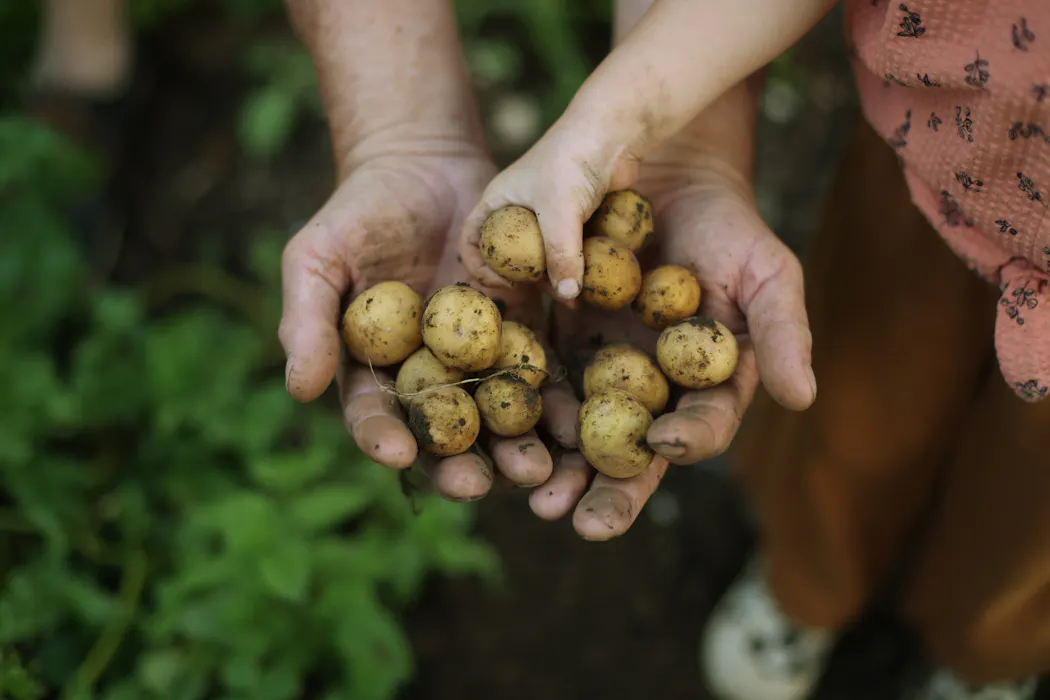

How did we learn which plants are safe to eat? 2 food scientists explain

Catherine Delahaye/Getty

Have you ever eaten a green potato, or a bunch of rhubarb leaves?

Hopefully not, because these two plant parts can be toxic to humans. While they may seem edible, they contain chemicals that can make you seriously ill.

Over centuries, humans have learnt which plants are safe to eat and which are not, often by combining ancient knowledge with modern science.

The power of plants

Without plants, we would struggle to get the nutrients we need.

Crops such as wheat and rice provide carbohydrates, the body’s main source of energy. Fruits and vegetables contain a wide range of vitamins that help us stay healthy.

Plants are also chemical factories. To survive, they produce compounds that deter insects and animals that might eat them. They may also release chemicals that protect them from disease. One example is the tobacco plant which produces nicotine, a natural alkaloid that helps protect the plant from insect attacks.

Globally, there are tens of thousands of plants that contain toxic compounds. In Australia, we have more than 1,000 native and introduced plant species that can be toxic to humans and animals, under certain conditions. However, humans only consume a small fraction of the world’s edible plant species.

What makes a plant toxic?

A key principle of toxicology – the study of what makes something poisonous – is “it’s the dose that makes the poison”. This means certain toxic compounds are safe to consume, as long as you don’t eat too much of them.

Table salt is one example. You likely eat it everyday, but this substance can be harmful in excessive amounts.

And many plant compounds that sound dangerous are actually safe, when consumed in small amounts. For instance, green potatoes contain glycoalkaloids, a group of chemicals that can cause symptoms such as vomiting, fever and diarrhea when consumed in large amounts. Oxalates are a type of toxin found in rhubarb leaves. They too can make you sick, but only if you eat lots of them.

Preparation is key

At first, humans learnt which plants were nourishing and which were harmful through years of observation and experimentation. For instance, cassava was first domesticated in South America where Indigenous communities developed processing methods to remove cyanide, a poisonous chemical found in the plant’s roots and leaves.

Many other First Nations peoples developed sophisticated ways of preparing plants that contained toxins. Some Aboriginal communities in northern Australia would soak, grind or cook cycad seeds to remove naturally occurring toxins before consumption.

This knowledge soon became embedded in each community’s culture, as it was passed down through generations.

Today, we use various techniques to reduce or remove harmful compounds from plants. For example, raw or undercooked kidney beans contain a natural toxin called phytohaemagglutinin, which can cause illness. But by soaking and thoroughly boiling kidney beans, you can easily get rid of this toxin.

Fermentation is another way to remove poisonous chemicals from plants. This is because fermentation changes the plant’s chemistry in ways that can reduce or remove toxic compounds. For example, during soybean fermentation, microbes break down harmful compounds such as phytates and trypsin inhibitors, making the soybeans safer and easier to digest.


Read more: Little shop of horrors: the Australian plants that can kill you


The role of modern science

In some cases, scientists have modified toxic plants to make them safe to eat.

Faba beans, also known as broad beans, are one example. Faba beans are an increasingly important crop for Australian farmers, as they can attract high prices and help manage weeds.

Like many plants, faba beans naturally contain vicine and convicine, two compounds that generally don’t affect humans. But in people with a genetic condition called G6PD deficiency, they can trigger a serious reaction called favism. This condition can be life-threatening as it causes your red blood cells to rapidly break down.

Rather than abandoning this crop, scientists have used modern chemistry and plant breeding to develop new faba bean varieties with lower concentrations of these compounds. And farmers are already planting low-vicine varieties as part of their crop rotations.

Over millenia, humans have unpacked the complex chemistry of plants to learn what is safe to eat. But how we consume these plants, and how much of them we eat, also affects how toxic they may be.

The Conversation

Joel Johnson receives scholarship funding from the Australian government for his PhD program.

Mani Naiker does not work for, consult, own shares in or receive funding from any company or organisation that would benefit from this article, and has disclosed no relevant affiliations beyond their academic appointment.

500-million-year-old fossil helps fill a strange gap in our record of life on Earth

Artist's reconstruction of _Magnicornaspis garwoodi_ in life. Thomas Turner

Roughly 500 million years ago, a strange event in the evolution of life on Earth seems to have taken place.

The known fossil record from this time, which falls within the Cambrian period, contains a missing chapter. Palaeontologists refer to it as the “Furongian gap”. And it’s striking because there is an explosion of biodiversity within the fossil record both immediately before and after it.

This decline has been considered evidence for a real biological crisis – one driven by environmental instability, changing ocean chemistry, cooling climates, a lack of oxygen in ancient seas, or a combination of these factors.

Our new study, published in the journal BMC Biology, provides new evidence for an alternative idea. The Furongian may not represent a true collapse in biodiversity, but rather a gap in where scientists have looked and what kinds of rocks have been studied.

It’s a reminder of how incomplete our understanding of Earth’s history remains.

A rare group of fossils

We describe a new 500-million-year-old arthropod from Québec, Canada. Arthropods are animals with exoskeletons – that is, skeletons on the exterior of their bodies.

The fossil belongs to a rare group of early arthropods related to the lineage leading to spiders and scorpions. Importantly, it comes from a geological setting that scientists have not previously recognised as being notable for preserving fossils at this time in Earth’s history.

The fossil itself is named Magnicornaspis garwoodi. The animal belongs to the corcoraniids – an enigmatic group of early arthropods that have broad head shields, segmented bodies, and defensive spines.

Corcoraniids remain exceptionally rare globally. Only a handful of species are known from the Cambrian and Ordovician periods.

Our specimen is unique for its two large forward-projecting spines extending from the head. These exaggerated spines distinguish the species from previously known relatives. They suggest defensive adaptations within the group evolved earlier than previously recognised.

An image of a fossil with a ribbed skeleton and spines protruding from its head embedded in rock.
Magnicornaspis garwoodi – the fossil and a reconstruction. Thomas Turner

Sitting in a museum drawer for decades

The specimen was originally collected in 1962 during geological mapping near Sainte-Anne-de-la-Pocatière in Québec. It came from mudstones within the Rivière-du-Loup Formation. This formation was deposited in relatively deep marine slope environments during the late Cambrian.

This represents quieter offshore conditions where fine mud settled through the water column. These rocks have received relatively little palaeontological attention, making them ideal for reassessment.

The specimen sat largely overlooked within the collections of the Smithsonian National Museum of Natural History in Washington DC for decades. This highlights one of the most important aspects of palaeontology: major discoveries do not always emerge directly from fieldwork.

Museum collections contain enormous quantities of under-studied material collected during geological surveys and expeditions over the past century. Revisiting these collections with modern techniques can fundamentally reshape understanding of ancient ecosystems.

The facade of a grand building.
The specimen sat largely overlooked within the collections of the Smithsonian National Museum of Natural History in Washington DC for decades. Ajay Suresh, CC BY

More treasures awaiting discovery

Our discovery adds to a growing body of evidence that challenges the notion of a barren late Cambrian world.

Studies from China and Sweden have documented other well-preserved fossils from about 497–485 million years ago.

Together, these discoveries suggest ecosystems may have remained diverse and ecologically complex during this time.

The new Québec fossil expands this picture geographically. Our specimen demonstrates the ancient Appalachian margin of eastern Laurentia, the ancient continent that included much of present-day North America and Greenland, was a site of excellent fossil preservation.

This broadens the known distribution of soft-bodied fossil preservation during the interval. It also hints that comparable deposits may await discovery elsewhere.

The Furongian gap therefore may not represent a biological collapse at all. Instead, it may partly reflect an “anthropogenic bias” in the fossil record – a distortion introduced by where humans have searched, collected, and studied fossils.

Each newly discovered Furongian exceptional fossil site narrows this supposed gap. They reveal increasingly sophisticated ecosystems thriving during the late Cambrian.

Entire groups of organisms – and possibly even ecosystems – may still await discovery within museum drawers or poorly studied rock formations. The late Cambrian lasted millions of years across vast ancient oceans. Yet only a tiny fraction of its environments have been systematically explored for soft-bodied preservation.

The next major fossil discovery may not come from a newly discovered outcrop in a remote desert. It may already exist, inside a museum cabinet, collected decades ago and waiting for someone to recognise its significance.

The Conversation

Russell Dean Christopher Bicknell receives funding from the Australian Research Council.

Julien Kimmig is an officer for the German Palaeontological Society.

Demolishing homes after climate disasters can be devastating. Here’s how we reused precious materials

Elise Derwin

Following the devastating Northern Rivers floods in New South Wales in 2022, roughly 14,000 truckloads of water-damaged materials were sent to landfill.

The flood exposed many things, including our unimaginative approach to managing waste. As immediate recovery moved into reconstruction, we saw an opportunity to manage this flood-damaged material differently.

We proposed an alternative to traditional house demolition. It was piloted on two flood-damaged houses in Lismore, using a “circular” model that could reuse materials and eliminate waste.

As well offering potential economic benefits for the local community, our report found it had considerable social and environmental value.

Why did homes get demolished?

In the aftermath of the floods, many NSW homes were significantly damaged and still lay in the path of future floods. In response, the NSW government introduced a buy-back scheme for eligible homes in flood-prone areas.

Part of this program involved demolishing homes, with the materials discarded in landfill or used for low-value recycling, such as woodchipping and burning. Yet the homes contained valuable materials, such as hardwood timbers.

Losing these homes was traumatic for the local community and an unnecessary loss of valuable resources. So the NSW Reconstruction Authority, Living Lab Northern Rivers, and the University of Technology Sydney (UTS) explored how to recover a material that is extremely difficult to source today – old growth timber.

A weatherboard house that has suffered flood damage.
A flood-damaged home in North Lismore, before it was dismantled as part of the Circular Timber project. Kurt Petersen/LLNR

The colonial hunger for hardwood

The first wave of European colonisation of the Northern Rivers included groups known as “cedar getters”. These timber cutters arrived in search of highly-prized rainforest hardwoods.

Much of this timber was transported to Australian cities or as far away as Europe. It was also used to construct buildings and homes for local communities.

Premium old growth timbers extracted from the area included red cedar (Toona ciliata), spotted gum (Corymbia maculata), tallowwood (Eucalyptus microcorys), rosewood (Didymocheton fraserianus) and blackbutt (Eucalyptus pilularis).

This is not your ordinary hardware-variety timber. Prized hardwood rainforest timber is dense, strong, durable and resistant to rot and insects.

Two men in workwear and hard hats study the timber inside a house being deconstructed.
Berto Pandolfo (project lead) and Kris Gardner identifying timber species during the selective deconstruction process. Kurt Petersen

The circular timber project

In early 2024, the Circular Timber project developed an alternative to traditional demolition, which offers very little opportunity for recovering materials.

The current system for demolishing homes is this: large-scale machines level structures and excavators scoop materials into dump trucks, which transport them to distant landfill. Sometimes, materials are recovered, but the vast majority are broken into small pieces, trucked away and buried.

We wanted to establish a “circular” system that reused materials and eliminated waste. This cannot be achieved by a single entity – multiple partners needed to collaborate. In this case, the local community, educators, businesses and government agencies collaborated to establish a pilot where timber from uninhabitable homes could be recovered and reused.

The local community was invited to make prototypes as proof that these premium timbers could be salvaged into new objects. Buy-in from the community was immediate – the materials in these homes represented a link to the region’s history and culture.

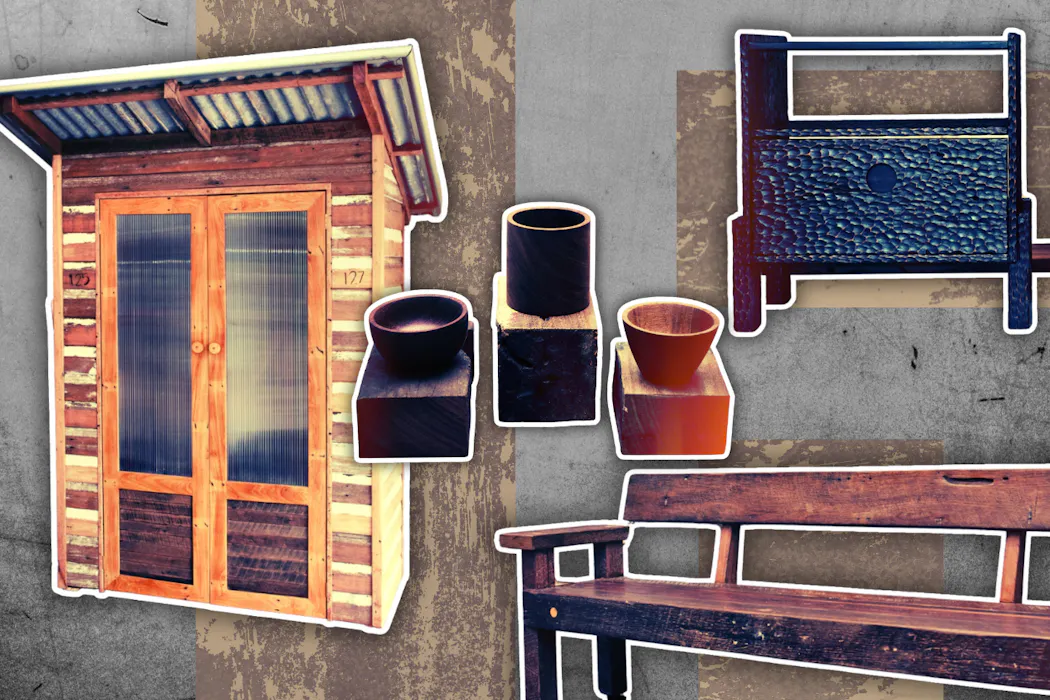
Two homes acquired by the government authority were deconstructed, with their recovered materials made available to local timber makers, builders, artists, architects and designers. The salvaged timber was transformed into a dining table, a community shed, and other designed objects.

An aerial photo of two houses on a green hill.
An aerial photo of the two properties that were used for the project. Living Lab Northern Rivers

How it happened

Moving from home demolition to deconstruction represented a significant challenge. There are Australian standards for demolishing a building, but no guidelines for deconstructing exist (yet).

This project developed a considered approach to dismantling the homes. Care was taken in site preparation, materials identification and disassembly to ensure as much of the timber was recovered as possible.

Although deconstructing, recovering and reusing house materials requires more time, there were significant local and global benefits. For example, salvaging timber reduces carbon emissions, significantly reduces waste sent to landfill, and has a smaller carbon footprint than using virgin timber.

There are also economic and social benefits. This was a Northern Rivers community with a long history of seeing lives turned upside down by catastrophic floods. They responded positively to retaining the physical, cultural, and historical value of the past built into these homes.

A composite picture of household objects made with hardwood.
The salvaged timber from deconstructed homes was used to make new objects. Living Lab Northern Rivers

Homes hold many values

Between 2019 and 2025, there were 214,483 approvals granted nationwide for knock-down-and-rebuild applications in Australia, with the management of waste material left to the discretion of the owner and demolition contractor.

A standard Australian house can include salvageable materials such as hardwood timber, premium timbers, pressed metal ceilings or Federation red bricks.

Shifting our approach from demolition to deconstruction could open up new opportunities. Not only could it create jobs, but it could reduce the need for virgin materials and protect our environment.

This project reminds us that value should not only be assessed in economic terms but also in relation to our environment and communities. This program showed deconstructing homes can be embraced as a way to transform waste into a valuable resource.

The Conversation

Berto Pandolfo receives funding from Northern Rivers Reconstruction Corporation (NRCC).

Angelique Milojevic receives funding from Northern Rivers Reconstruction Corporation (NRCC).

Dan Etheridge receives funding from the NSW Reconstruction Authority. The NSWRA funded the project described in this article.

Three hours of free power a day sounds good – but is Australia’s scheme fair?

xavierarnau/Getty

From July 1, many Australians can choose something that once sounded absurd: free electricity in the middle of the day. The federal government’s opt-in Solar Sharer Offer will give three hours of free power to households with smart meters in New South Wales, South Australia and southeast Queensland. Victoria’s separate scheme will launch in October.

Free power sounds like a giveaway. It isn’t. It’s meant to encourage people to use more electricity during the hours when solar power flows into the grid. The real aim is to get people to shift the use of water heaters, pool pumps, air-conditioning and electric vehicle charging to the middle of the day. At other times, power prices will be slightly more expensive.

The main challenge for Australia’s power systems is no longer how to meet peak demand in the evening. We now have to use or manage the floods of very cheap solar during the sunniest hours when there’s more supply than demand. If this imbalance isn’t managed, electricity voltage and frequency can move outside safe limits, equipment can trip, and the risk of outages rises.

The scheme makes sense. But there are still questions about its fairness. Electrified households will benefit most, while renters and other groups may benefit less.

The challenge of solar abundance

About one in three Australian homes now has solar. At times, this power source can supply 50% of total demand on Australia’s biggest power grid, the National Energy Market. Wholesale prices have regularly gone negative in recent quarters.

In big solar states such as South Australia, solar can supply more power than the state can use. Surplus power is exported, stored in batteries or curtailed – wasted.

The Solar Sharer Offer is meant to make better use of these floods of solar power.

This financial year, the three hours of free power will be 11am to 2pm daily in NSW and southeast Queensland and 12 to 3pm in South Australia. Australia’s energy regulator chose these times to match when solar output is highest, and network and wholesale costs are lowest. This may change year by year.

The reason the scheme isn’t national is because it’s tied to the Default Market Offer — a regulated safety net plan for electricity customers – which only applies in NSW, SA and southeast Queensland.

red brick apartment block in sunshine.
Renters and people in apartments may find it harder to benefit from the free power scheme. Andrew Merry/Getty

Who will benefit most?

Ensuring fair access has been a constant challenge for household clean-energy schemes. People who own their homes and have access to capital are usually better placed to benefit. This scheme has the same issue.

It’s easy to picture the ideal customer for three hours of free power – a homeowner with a smart meter, flexible hot water, electric vehicle, home battery and the ability to choose when power-hungry appliances run.

That’s great for them. But what about everyone else? For instance, you have to have a smart meter to be eligible. Only about 60% of households have one.

The harder question is whether this offer is fair for other households.

Renters, apartment residents and people on embedded networks in retirement villages, caravan parks or shopping centres face another barrier. If they opt in without being able to make good use of the free power, they could actually be worse off due to the higher prices at other times. These concerns were raised during the consultation process.

Making it fairer

The government is aware of these issues. The free power period is capped at 24 kilowatt hours a day, enough to cover several large daytime loads such as hot water, dishwashing, laundry, air-conditioning or part-charging of an EV.

The cap matters because offering electricity for free still incurs costs for energy retailers. To recover the missed revenue during the free window, retailers will boost other usage charges. Capping free power at 24 kWh a day limits how much high-consumption households can use at zero price, which limits how much revenue has to be recovered from usage at other times of day.

More needs to be done to ensure it’s fair. A key step is unglamorous but effective: helping households heat water during the day. Heating water takes a lot of power. Electric hot-water systems are often on controlled-load tariffs designed for overnight operation. A South Australian trial moved close to 50% of water heating from night to day with little reported inconvenience.

Where safe and practical, retailers and network businesses could shift the time these systems charge to the middle of the day. Governments could help rentals and apartment residents by supporting the use of timers, smart controllers and efficient heat-pump hot-water systems. The same logic applies to other flexible loads.

The free lunch is real. The question is who gets a seat at the table.

The Conversation

Saman Gorji receives funding from the Recycling and Clean Energy Commercialisation Hub (REACH), supported by the Australian government's Trailblazer Universities Program.

Alireza Ganjovi does not work for, consult, own shares in or receive funding from any company or organisation that would benefit from this article, and has disclosed no relevant affiliations beyond their academic appointment.

Seahorses and shark fins are illegally trafficked. An AI tool could help stop this crime

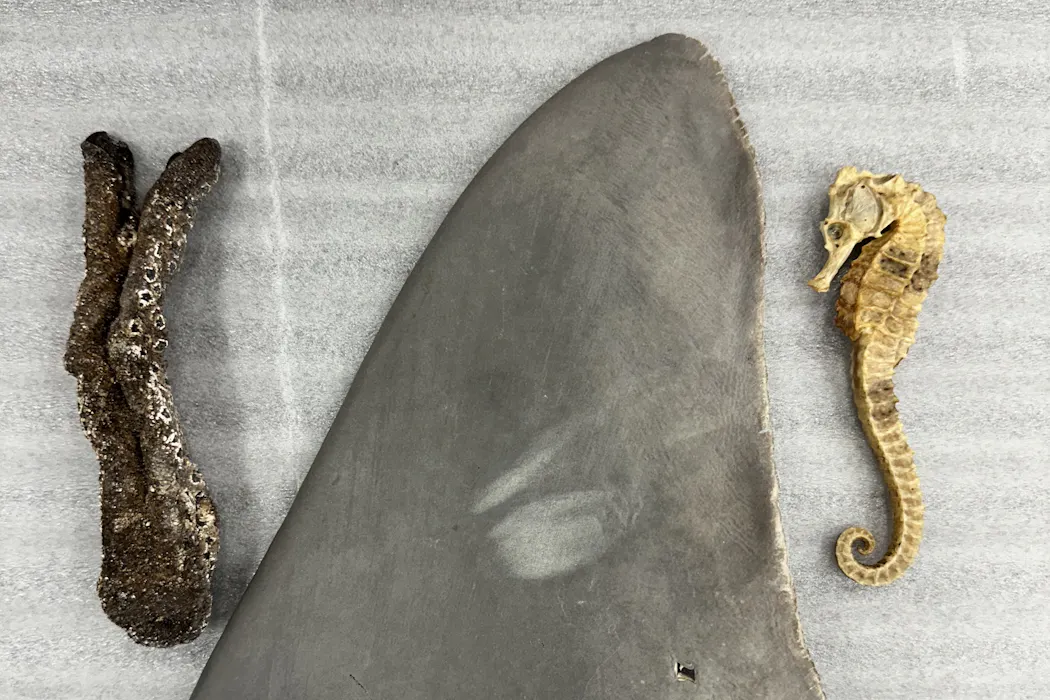
Marine wildlife samples used to create marine detection algorithms. Samples provided by the Australian Museum. Dr Vanessa Pirotta

Shark fins on a plane, seahorses in your bag and sea cucumbers in the post – these are just a few examples of illegal marine wildlife trafficking.

This crime can be hard to detect. But in a new study, published in the journal Frontiers in Ocean Sustainability, we show how artificial intelligence (AI) can be harnessed as a complimentary detection tool to help stop marine wildlife trafficking at international airports and mail facilities.

A global crime

The cross-border trade in live animals, animal parts or products is a global crime, facilitating the flow of billions of illicit dollars each year. It’s known to converge with other criminal activity, including the trafficking in drugs, arms and humans.

The United Nations Office on Drugs and Crime identifies five sources of demand for wildlife trafficking: food, medicine, pets and ornamental plants, specialist collection and adornment.

In some cases, such as pet prestige, people are motivated both by the desire to have a pet and the perceived status it brings to own an exotic animal.

People traffic marine animals too

Wildlife trafficking affects around 4,000 species. Many of the more well-known examples involve land-based animals – ivory from elephant tusks, horns from rhinos and scales from pangolins – the world’s most trafficked mammal.

Closer to home, we also see native Australian reptiles and birds, sometimes shoved in tins, put in socks and packaged up live to be sent overseas.

Marine creatures, unfortunately, are targeted too. This can include live animals such as fish in people’s bags, or dried marine life such as the rise of the seahorse trade and demand for shark fin.

We have small pockets of knowledge of this activity. But the reality is we don’t fully understand how widespread it is.

AI to detect marine wildlife trade

Currently, the best means of detecting illegally trafficked wildlife is humans. And then there are our four-legged friends: biosecurity dogs.

Recently, Australia has also been working to develop the use of AI as a potential means of detecting land-based wildlife in illegal wildlife movements – building on existing detection pathways using 3D X-ray machines fitted with algorithms.

For our latest study, we built on these efforts by developing world-first marine wildlife algorithms. We taught computers to look for shark fins, seahorses and sea cucumbers.

Eight fins illuminated in blue light.
Shark fins scanned under 3D X-ray. Vanessa Pirotta

We did this by collecting a total of 68 samples of dead marine animals, which we scanned in a 3D X-ray machine to create a library of images. We then used this image library to develop algorithms to enable computers to search for what we taught it to look for – in this case, shark fins, seahorses and sea cucumbers.

Samples were scanned alone and then in more complicated scenarios to reflect how people actually traffic marine life. This means if a bag or mail item is hiding a shark fin, seahorse or sea cucumber, the algorithm will be able to flag this to an operator, prompting them to inspect the item.

Out of a total of 298 scans and a training data set derived from these samples, our algorithm had success rates of 95%, 95% and 85% for shark fins, seahorses and sea cucumbers, respectively.

Humans and biosecurity dogs still needed alongside AI

While technology fitted with computer algorithms may help people inspecting luggage or mail, we still need people to verify what computers see. Sometimes the algorithms get it wrong and may miss items.

Despite this, the broader implications of having AI as a second set of eyes searching for trafficked marine life will aid in identifying key trade routes to potentially stop this activity. The next step is relying on implementation of these algorithms at the front lines.

Like computer algorithms and AI, the more we learn, the better we get at detecting and potentially stopping this harmful crime.

The Conversation

Vanessa Pirotta received funding from Rapiscan Systems for this research.

Justine O'Brien receives funding from the San Diego Zoo and Wildlife Alliance; NSW Department of Climate Change, Energy, the Environment and Water; the Australian Research Council; Institute of Museum and Library Services; Great Barrier Reef Foundation; and the Taronga Foundation.

Phoebe Meagher receives funding from San Diego Zoo and Wildlife Alliance and the Taronga Foundation.

Zara Bending serves as a Resident Expert for the Jane Goodall Institute Global and is a Distinguished Research Fellow at the Macquarie University Environmental Law Research Centre.

Booker winner Douglas Stuart reveals flashes of tenderness in his violent working-class men

Douglas Stuart Martyn Pickersgill/Pan Macmillan

Douglas Stuart’s third novel, John of John, returns to the territory that made his Booker prize-winning Shuggie Bain, and Young Mungo, so unforgettable: the intimate violence of masculinity, and the ways love persists inside families whose members cannot speak or emote plainly to one another.

In Stuart’s Falabay, an imagined town on the Isle of Harris in Scotland’s Outer Hebrides, the wind batters – and people have learned to endure by saying less than they mean.


Review: John of John by Douglas Stuart (Picador)


John Calum (Cal) Macleod returns home from art school in Edinburgh after his father, John, hints at his grandmother’s escalating ailments. For Cal, coming home means regression and constraint. He is indebted, back under the roof of a father who insists, often with overbearing zeal, on obedience and conformity.

In Edinburgh, with dyed hair, new clothes and the agency to publicly express his homosexuality, Cal had begun to assemble a new self. Back in Falabay, Cal is under the roof of his father, a man of unrelenting principle. Control is John’s dialect of love. Proximity must be earned through deference. John forces Cal to listen to bible readings:

because it was too much to ask his son to call him a couple of times a week, or to sit with him by the fire for a few hours and give him all his news. Too much to ask Cal just to be near him.

Intimacy and violence

The Macleods are a weaving family. Stuart, a trained fashion designer, attends to the material textures of that work in imagery of the lanolin that softens and splits skin and fibres that embed themselves in the knuckles of the men.

In two scenes in particular, Stuart demonstrates his skill at writing the tactile and physical. He illustrates John’s attentive care for his son, as well as his violent impulses. After Cal’s hands have been cracked and inflamed by overexposure to artificial heat in the weave shed, John makes him sit, and cares for him “as he might care for any useful tool”.

Cal washed each hand before John dried them on a clean tea-towel. Then John oiled them, rubbing ointment into each knuckle, caressing the webbing between Cal’s forefinger and thumb. Cal winced occasionally, and John went slower, taking care to rub the lotion into the peeling nail beds.

Later, Cal insists on returning the care and tends to his father’s own damaged hands, tweezing wool from John’s inflamed skin and cleaning the wounds. “Look at you two playing nail salons,” Cal’s grandmother, Ella, jokes – yet the intimacy here is unmistakable.

Stuart writes men who are simultaneously opaque to themselves, and overexposed to the community’s judgement.

John polices Cal’s appearance, forbidding him from attending church with neon orange hair, as though colour itself were a provocation. When Cal insists on attending anyway, John beats him in the car.

“He braced his left hand on Cal’s lapel and with his right he punched his son three more times, each blow stronger in its fury and determination.” The beating over, he glimpses his reflection. “Now that the anger had gone, he didn’t know what had possessed him. When he looked in the mirror he saw a devil, and the devil wore his face.”

The scene captures how visibility becomes a moral test in communities trained to prize conformity.

Stuart refuses to excuse John, allowing him full moral agency. Something (the devil) has influenced his behaviour, but John is still the perpetrator. Despite moments of tenderness towards his son, he remains a man who harms people he loves – and crucially, who cannot and will not apologise.

The novel’s most complex reality lies in a truth disclosed early, then handled with delicate restraint: John is in love with his neighbour and childhood friend, Innes. Their relationship is a long, quiet arrangement of glances and hedged intimacies, often reset by John’s fear and Innes’ patience.

“I haven’t had any time alone with you since … I can’t remember when.”
“Cal will be home soon. You have to be patient, please.”
“Am I not the very model of self-control?”
John exhaled as though blowing on a cup of hot tea. Then he nodded slowly. “You are,” he said, “you are.” […] Seeing they were truly alone, he took a step closer. He took Innes’s hand in his, and he stroked the back of it with the side of his thumb.

Stuart gives Innes an eloquent verdict: “It went like this, loving John Macleod. You did it against all reason, against all your better judgement, and in that exact moment he starved the embers into submission, he had the skill to blow on them gentle and ignite them again.” Loving John is an exercise of endurance.

Desire and rejection

For Cal, desire is improvised and punctured by rejection. He answers a lonely-hearts ad and is rebuffed. He fixates on and tries to seduce Innes, an act of longing and misrecognition – a young man reaching for the closest possibility of being known and understood.

If John’s love is performed through maintenance and denial, Cal’s is performed through desperate pursuit. He wants to be seen and held, tenderly.

book cover: John of John

Stuart has a gift for the social contours of villages. In the grudges that accrue and create impenetrable fortresses, Stuart illustrates how family fractures become public currency and harden into comic custom. In Falabay, the MacInnes brothers, Innes and Sorley, share a house without having spoken to each other for 16 years.

Every conversation is duplicated, an arrangement of avoidance, because acknowledgement would concede too much. Cal’s childhood friend, Doll Macdonald, nursing old hurt about Cal “leaving him behind” drinks his life into collapse. Stubbornness provides a kind of safety from ruin. No single slight causes these outcomes, nor could an apology prevent them.

Stuart is attentive to the drawn-out violence of pride and how it makes these men choose solitude over repair, principle over mercy.

Falabay is not glamorised: poverty and precarity pervade the novel, though less centrally than in Shuggie Bain or Young Mungo. Employment is seasonal and signing on (claiming unemployment) becomes an ethical debate whispered over the kitchen table, while the weather decides if your family will eat that night.

Cal’s university debts from Edinburgh haunt the family. In one sharp exchange, John and Cal argue in Gaelic about the dole – is it “dishonest,” or simply necessary?

Controversial on Christianity

Stuart’s handling of religion will be the most controversial element for some readers. It would be wrong to say the novel mocks faith, but it does associate the practise of Christianity with control.

The local minister presides rather than pastors, the congregation is fixated on keeping up social appearances rather than neighbourly care and John is a man who turns Scripture into a blunt instrument of discipline. There’s a matching economy here with the island’s other social systems: faith is kept in working order by policing the boundaries of who belongs.

As a Christian reader, I recognise the ache of filial misunderstanding here, but grace is noticeably absent from the novel. Stuart’s fictional church in Falabay is rendered with nuance, but the faith enacted is mostly a language of pressure: public morality without consolation and doctrine without hospitality.

I longed for a glimpse of forgiveness and repair, especially given the novel’s acute awareness of the ways in which shame distorts the expression of love.

Stuart writes the church in the Scottish Isles as these characters experience it, and he refuses the consolation of counterexample. His refusal is an aesthetic choice as much as a moral one. The novel’s tone remains austere; every consolation is so hard won.

What the novel intricately captures, with unsparing clarity, is how religious performance can lend cover to pride, and how the need to appear righteous can crowd out gentleness and grace.

John of John is a bleak novel, but not entirely hopeless. Tenderness is an event – fleeting, fragile – all the more arresting because of its scarcity. Stuart slows his sentences around these moments: the shoulder‑to‑shoulder quiet after an argument, his grandmother’s silent interventions, the small, comic abrasions of family life.

Readers of Shuggie Bain and Young Mungo will recognise Stuart’s signature: lyrical attention to harm, fierce compassion for children negotiating adult failures, men whose desires costs them dearly, households where harm and love continually conflict.

Falabay may be fictional, but its social world feels unbearably accurate. Stuart has returned to his territory and deepened it.

The Conversation

Caitlin Macdonald is affiliated with The University of Sydney.

What’s a living wake? The end-of-life ritual that lets you say goodbye on your own terms

Getty Images

What would attending your own wake be like? To say goodbye to the people in your life in person? What stories would you tell in your own eulogy?

While still relatively uncommon, living wakes are an emerging end-of-life rite in Australia. They may not be everyone’s cup of tea, but for those who want to share one more cuppa before they go, they offer a final opportunity to come together.

There are multiple initiatives increasing death literacy in Australia. These include events such as Dying to Know Day, a rise in death cafes (where people can ask questions, tell stories and talk about death) and death doulas, as well as national advocacy around voluntary assisted dying.

My ongoing ethnographic research has involved extensive interviews and time spent with families and deathcare workers around Australia, particularly those involved with living wakes.

My findings show people are becoming more confident and willing to discuss, plan and craft these personalised end-of-life rituals.

What is a living wake?

A living wake goes by many names, and sometimes no name at all. It can be called a living funeral, a celebration of life, an “awakening”, a bon voyage party, or even a creatively personalised name such as the “Festival of Barry’s Life”.

Regardless of the name used, it is a deliberate coming together around a person who is dying, in order to say goodbye and celebrate their life.

One of my interviewees described why her mum wanted a living wake:

she wanted to have a chance to tell her stories, and see the friends and family that she hadn’t seen […] she wanted to see everyone together again.

The late Australian radio broadcaster James Valentine held his own living wake, before his death last month. His celebration, on Valentine’s day, became part of a documentary tracing his last year.

Sharing stories such as James’, as well as those of less public figures, is vital in bringing living wakes into the public imagination.

Bringing personality to end-of-life rituals

Timing can be one of the challenges with a living wake. These events are typically hosted by people who have a terminal illness and are aware of their imminent death.

Many death doulas – non-medical deathcare workers who support the dying person and their families – advise that people who would like to have one should have it as early as they can, while they still feel up to it.

Voluntary assisted dying also enables the choice to include these goodbye rituals.

Living wakes are part of a growing trend of ritual creativity. This includes newer ritual elements, such as coffin decorating, alongside the personalisation of familiar funerary traditions – which could be as simple as holding a memorial at the person’s favourite place.

The event may incorporate religious or cultural elements, such as prayers or cultural ritual, or may be more secular with activities that best represent the dying person, such as karaoke or ice-cream tasting. Hosts and guests at living wakes tend to have few rigid expectations, as it’s usually everyone’s first time taking part in one.

There are no guidelines, no set structure and no need for formalities. A barbeque in the backyard with the dying person’s favourite beers is as legitimate as an event with a formal celebrant and speeches.

“We made it up as we went along, really” is a common refrain from family and friends. This doesn’t make the rituals less meaningful. Rather, it creates opportunities for authentic and memorable gatherings.

An Australian irreverence and practicality can sometimes colour the event with playful and unexpected flair, without denying the very real feelings of anticipatory grief.

Shared storytelling, including from the dying person, is often described as the highlight for guests: an opportunity to laugh and cry alongside each other and make new memories.

An older man holds and smiles at a baby.
Families who choose to host living wakes are often creating unique events tailored entirely around their person. Getty Images

An increasingly accepted practise

Living wakes have gained traction in recent years as part of a broader shift towards more celebratory and personalised funerals that aim to offer the bereaved a goodbye that feels authentic.

As Melbourne-based death doula told me:

You know, people walk away from funerals and say ‘she would have loved that’. A living wake is a chance to say instead ‘it was great that Granny was there to hear those stories and feel loved’.

My research has found only a few reported examples of living wakes in Australia before the 1980s. A scattering of events in the 1990s started to show global rising interest, and since then media reports have helped further expose these events to the general public.

That said, most living wakes go entirely unrecorded by anyone other than attendees. With only a few deathcare professionals present, such as funeral directors and celebrants, these intimate events become stories held in the family, rather than in public archives.

The Conversation

Cindy Stocken receives funding from the Commonwealth through an Australian Government Research Training Program Scholarship. She is studying with University of Melbourne and the Death Tech Research Team ( https://arts.unimelb.edu.au/research/deathtech ).

Healthy soil can protect land from soaring heat. But our map shows where soil is suffering

Imagine walking into a double-brick house on a scorching 40°C summer day – it feels cool almost straight away. Now imagine stepping into a corrugated tin shed – it feels like an oven. The difference is simple: some materials slow heat down, while others let it rush through.

Soil works in a similar way. Soil in fully functioning condition can act as a thermal buffer: a giant shock absorber for temperature. It holds water and organic matter such as leaf litter, and slows sharp changes in temperature.

But when soil becomes dry, bare or damaged, that protection weakens. During heatwaves, the roots of crop plants may be sitting in rapidly heating soil.

Our new research shows Australia has “thermal gaps” in large areas. A thermal gap is the difference between a soil’s natural ability to absorb heat and keep temperatures steady, and what it is actually doing now after years of farming, land use change and a warming climate. In some areas, especially across southeastern and central Australia, soils are no longer protecting plants from heat as well as they could.

This matters because soil is not just dirt under our feet. It is a buffer against climate change. Soil controls how heat and moisture move between the land and the atmosphere. When soil loses its buffering power, ground temperatures can rise more quickly.

This can reduce plant growth, lower crop and pasture production, and even affect local weather and climate over large areas.

What we did and what we found

To understand where this is happening, we created the first continent-wide map of Australia’s soil thermal buffering capacity.

In other words, we mapped how well different soils can slow heat and keep ground temperatures stable.

We compared each soil’s natural potential with its current condition. This helps show where soil buffering is strong, where it has weakened, and where it may have changed for better or worse.

The results show a clear contrast between soil types.

Clay-rich soils can hold more water and behave more like the double-brick house. They warm and cool slowly, which helps keep roots in a steadier environment.

Iron-rich red and yellow soils in parts of northern Australia, known as Kandosols, also showed good natural capacity and good current condition in our study. These landscapes are still working well as soil heat buffers.

But this does not mean every Kandosol is the same. Soil condition, ground cover, moisture and management still matter.

Sandy soils tell a different story. They naturally hold far less water. When ground cover is low, they lose water faster. Under a hot sun, they behave more like the tin shed. They heat quickly and offer plants much less protection.

That’s why the difference between “just dry” and “hot and dry” is so important. Once dry or degraded soils lose moisture, the sun’s energy heats the ground directly. Roots can become stressed, soil life slows down and crops may decline before the problem is obvious above ground.

This is one reason flash droughts are so dangerous. A flash drought can develop in days or weeks when high temperatures, dry winds and low soil moisture arrive together.

One 2025 global study found flash droughts linked with extreme heat are more severe and take longer to recover from than flash droughts without extreme heat.

For farmers, trouble may already be building below the surface before normal weather warnings capture the full risk.

The good news

The good news is that soil can regain some of its lost heat protection. We can help “re-insulate” the ground with practical farming methods.

One is called “stubble retention”, which means leaving old crop stalks and leaves on the field after harvest rather than burning or removing them.

This layer shades the soil and slows water loss.

Another method, called “cover cropping”, involved growing plants mainly to protect and feed the soil (not necessarily to harvest them). Cover crops keep living roots in the ground, reduce bare soil and add organic matter.

Studies overseas show why this matters. In the US state of Missouri, fields kept covered with plants held more moisture than bare fields. In North Dakota, bare soil was much hotter near the surface than soil protected by barley residue or cover crops.

These methods do not make heatwaves disappear, but they can reduce the stress heat places on soils and crops. Cooler, moister soils may also help surrounding vegetation dry out more slowly, although this is only one part of reducing bushfire risk.

The next step

Our national map is a starting point. It shows where soils may be losing their ability to buffer heat. The next step is to test that risk on real farms.

That means pairing the map with local sensors, such as soil-temperature and soil-moisture probes buried near plant roots. These sensors can show when the soil is drying and how quickly it is heating, and when roots may be coming under stress.

Farm trials can then test which actions work best in different soil types, such as keeping stubble, planting cover crops, adjusting irrigation or reducing grazing pressure.

The results could be turned into simple tools for farmers, such as paddock maps, heat-risk alerts or irrigation guides.

Asking “how dry is the soil?” is no longer enough. We must go further by asking “how fast will this soil heat up once it dries?”

That question matters for irrigation, grazing, crop planning and drought warnings.

If farmers can see heat stress building below the surface, they may be able to act earlier. They can protect ground cover, adjust irrigation, reduce grazing pressure or harvest sooner before the damage becomes obvious above ground.

Soil is one of Australia’s hidden climate defences. Healthy soil stores water, slows heat and protects roots. Damaged soil loses that shield.

By understanding and closing the thermal gap, we can give farms, landscapes and rural communities a better chance in a hotter, drier future.

The Conversation

Amin Sharififar is affiliated with Aroura, global soil security think tank.

How Iran uses billboards as wartime propaganda – we selected 5 to explain what they mean

Since the US–Israel war against Iran began in late February, images of giant billboards in Tehran have been ubiquitous across traditional and social media. These billboards have been placed in some of the busiest and most visible parts of the city, and are constantly being updated to reflect current events.

Iran has long used public spaces as a tool of political communication. Since the 1979 Islamic Revolution – and especially during the Iran–Iraq War – the regime has erected murals and billboards to display revolutionary imagery, war memorials and ideological messages.

Today, these billboards are designed not only for local audiences, but also for global digital circulation. Depicting powerful imagery, slogans and symbolic representations, they serve a dual function:

  • to reinforce a sense of collective identity, national unity and shared emotion during a time of crisis

  • to serve as a tool of propaganda for the state, at times featuring Hebrew and English alongside Farsi (Persian).

Researchers argue these billboards are part of a broader visual communication strategy on the part of the state. They are intended to be photographed, posted and shared widely on social media as a way of projecting power and resistance to a global audience (even with a months-long internet blackout in place).

So, what do the billboards say, and what’s the deeper symbolism behind the imagery? We’ve chosen five samples from Tehran to analyse.

1. The Epstein missile

A billboard in Valiasr Square depicting Iranian missiles with messages on March 17 2026. Kaveh Kazemi/Getty Images

One of the billboards that circulated widely in recent months depicted Iranian missiles covered with handwritten messages and symbolic phrases.

Among the most striking inscriptions is the phrase “To the girls of Minab”, written in bold, red Farsi script. This is a reference to a strike on a girls’ school in the opening days of the war that Iranian officials say killed 175 girls and teachers. Reports indicate US forces were likely responsible.

Directly below that, written in English, are the words “Epstein Island victim girls”, a reference to the island owned by convicted sex offender Jeffrey Epstein where young women were allegedly sexually assaulted.

On another missile is the phrase “the girl with the pink jacket”. This is a deeply emotional reference to a young Iranian girl killed in a terror attack in 2024, who was identified by her pink jacket and heart-shaped earrings.

The intention is to connect these disparate events through a narrative of vulnerable young women affected by violence, exploitation and political power. Rather than presenting missiles only as weapons of destruction, the image reframes them as symbols of grief, revenge, memory and defence.

In this narrative, Iran is portrayed not as seeking war. It is responding to injustice and protecting its people.


2. ‘Masters of war’

A billboard in Enqelab Square, Tehran, threatening Iranian missile attacks on Israel, on October 3 2024. Fatemeh Bahrami/Anadolu via Getty Images

Another billboard that gained significant attention in 2024 depicted the Farsi phrase “If you want war, we are masters of war” above a Hebrew message saying “Israel must be wiped from the face of the earth”.

The billboard portrays the sky over Israel illuminated by waves of incoming missiles, almost resembling a meteor shower or rain of fire. The imagery is highly stylised and cinematic, with the missiles transforming the night sky into a scene of overwhelming force.

By directly addressing Hebrew-speaking viewers, the billboard functions as both a direct warning to Israelis and a symbolic projection of power, designed to have psychological impact. Language becomes a tool of warfare itself.

This multilingual strategy reveals an important shift in Tehran’s urban propaganda. These billboards, which have become more prominent in recent years, are no longer designed solely for Iranian pedestrians and motorists. The regime is aware photographs will circulate instantly across the internet, reaching intended audiences in Israel.


3. Trump’s sutured mouth

Another bilingual billboard is targeted to Western – and specifically American – audiences. It features US President Donald Trump’s mouth with a rendering of the Strait of Hormuz sutured on top, alongside the English phrase “The Breaking Point.”

The Farsi text roughly translates to “its patience has run out”. It also contains a literary pun: the word tang in Farsi can refer both to “narrowness” or “constraint” and to the Strait (tangeh) of Hormuz itself. This creates a double meaning linking the geopolitical tensions in the Strait of Hormuz with the idea of reaching a psychological or political breaking point.

The image also critiques Trump’s constant political rhetoric and media presence. The sutures placed across his mouth symbolise silencing, constraint and the loss of Trump’s authority or influence in relation to Iran and the Strait of Hormuz.


4. Arash the Archer

Another billboard draws on the famous Persian myth of Arash the Archer. In the image, Arash places an arrow into his bow in the heat of battle, surrounded by missiles. The reference comes from the ancient story in which Arash sacrifices his life after shooting an arrow during a mythological war between Iran and neighbouring Turan.

The billboard suggests modern Iranian soldiers, like Arash, are willing to sacrifice their lives to defend their homeland.

More broadly, the image also reflects how poetry, mythology and heroic storytelling are deeply embedded in Iranian history and culture. It connects the contemporary conflict to centuries of struggle.


5. The fishermen

Another billboard demonstrates Iranian military power through the image of a massive fishing net spread across the Persian Gulf. Inside the net are captured American aircraft, drones and naval vessels.

The imagery is accompanied by the phrase, “The entire Persian Gulf is our hunting ground” in Farsi, connoting it is under direct Iranian control and surveillance. The image also emphasises the strategic importance of the Strait of Hormuz, indicating the power to open or close this vital waterway ultimately lies with Iran.

At the same time, the fishing net operates as a cultural metaphor. Like fishing itself, Iran’s warfare strategy is based on patience, resilience, careful strategy and long-term determination, rather than sheer force alone.

The Conversation

The authors do not work for, consult, own shares in or receive funding from any company or organisation that would benefit from this article, and have disclosed no relevant affiliations beyond their academic appointment.

‘Some people’s lives matter more than others’: local responders in Sudan feel ignored as the world focuses on other crises

In April 2026, Sudan marked three years of civil war – one of the most ignored humanitarian crises in the world.

This conflict began between two factions that seized power after a coup in 2021: the Sudanese Armed Forces (SAF), led by Abdel Fattah al-Burhan, and the Rapid Support Forces (RSF), a paramilitary group led by Mohamed Hamdan “Hemedti” Dagalo.

The actions of these men have thrown Sudan into the worst humanitarian crisis in the world. It has involved crimes against humanity, genocide, the death of potentially more than 150,000 people, the forced displacement of more than 15 million civilians and 19 million people facing acute hunger.

In one of the most dangerous places in the world, local leaders are putting their lives at risk to provide humanitarian assistance within their communities.

These volunteers have formed Emergency Response Rooms or غرف الطواريء to coordinate, resource and carry out life-saving assistance. They describe being motivated by nafeer – a Sudanese tradition focused on a “deep sense of social responsibility” and “collective volunteerism”.

This concept is grounded in the idea that one must “lift your bowl to your neighbour”. Diaspora communities around the world have been funding and coordinating this work for years.

As one 25-year-old female volunteer told us:

The success of emergency rooms stems from the spirit of volunteerism and the desire to help others. This motivation keeps people working despite the challenges they face, like lack of funding, security threats from authorities and working in active war zone.

However, nafeer, by its nature, should only last for a limited period. After three years, these crisis leaders are exhausted, and the international humanitarian system is not stepping up to support them.

In fact, our recent research shows the system’s own structures are making their work harder.

Our research

We spoke to 20 local leaders from Emergency Response Rooms, civil society organisations and women’s associations. These interviewees were based in Darfur, Greater Khartoum, Gezira, Kassala, Al-Qadarif, Kordofan and the Nuba Mountains.

Interviews were conducted online in Arabic by Mayada Elmaki, a Sudanese-British researcher living between Europe and Qatar.

Responders’ names, organisations and locations were taken out, due to safety concerns. Of the 20 leaders we spoke with, only a quarter received a salary. The remainder were unpaid volunteers.

Because these community organisations have not been formally recognised as “humanitarian” by the international humanitarian system itself, their people are not considered “humanitarian workers”. This means they are not given the legal protection afforded those conferred on humanitarian workers under international law, including the Geneva Conventions. This puts them at extra risk of harm from military and paramilitary forces.

The Sudanese emergency workers say funders from within the humanitarian system – including governments, nongovernmental organisations and UN agencies – are often more focused on managing perceived risk than on what the community actually needs.

Funding is often so inflexible, it takes an “extremely, extremely long time” to access. Getting money from funders require negotiating quite different templates and procedures.

As one person told us:

when our priority is saving lives first, it’s problematic when donors dictate what we should focus on.

Sudan is one of the most dangerous places in the world to deliver humanitarian assistance. It is also home to one of the most chronically underfunded humanitarian crises.

The number of organisations in Sudan getting money from these major humanitarian funders has fallen dramatically in recent years. This isn’t because things have improved, but because the priorities of many international organisations have shifted elsewhere.

As one Sudanese humanitarian leader put it:

When one crisis receives more attention and support than another, it means some people’s lives matter more than others.

At the heart of the international humanitarian system’s ethical foundation is the idea that assistance should be based on need alone – not factors such as geopolitical interest. But this is not what many of our interviewees have experienced.

The international community has taken some notice. Sudan’s Emergency Response Rooms were awarded major humanitarian prizes in 2025 and have been twice nominated for the Nobel Peace Prize.

But awards are not protection, funding, or recognition within the humanitarian system.

As Sudanese leaders, community members and volunteers endure one of the world’s worst humanitarian crises, the international system needs to step up.

Local priorities

Our research seeks to amplify the priorities of local Sudanese responders.

They are calling for:

  • better protection and compensation for those on the front lines
  • more flexible agreements with major funding bodies
  • direct funding that acknowledges operational costs
  • funding for long-term rebuilding of Sudan (not just the emergency response).

Otherwise, the international humanitarian system and the major players in it will, as one person told us, continue “ploughing the sea”, and “keep going in circles without real progress”. They added:

I hope my words reach them and make them reconsider their policies and establish long-term strategies for developing local communities.

The Conversation

Max Kelly recevies funding from the Norwegian Refugee Council. This research is funded in part by Deakin University, and the Norwegian Refugee Council (NRC).

Julia Hartelius and Mayada Elmaki do not work for, consult, own shares in or receive funding from any company or organisation that would benefit from this article, and have disclosed no relevant affiliations beyond their academic appointment.

Deep-rooted inequalities are driving the latest diphtheria outbreak. But we can fix them

Cristian Ruboni/Getty

The current diphtheria outbreak – which has spread across four Australian states and possibly claimed one man’s life – may seem unexpected.

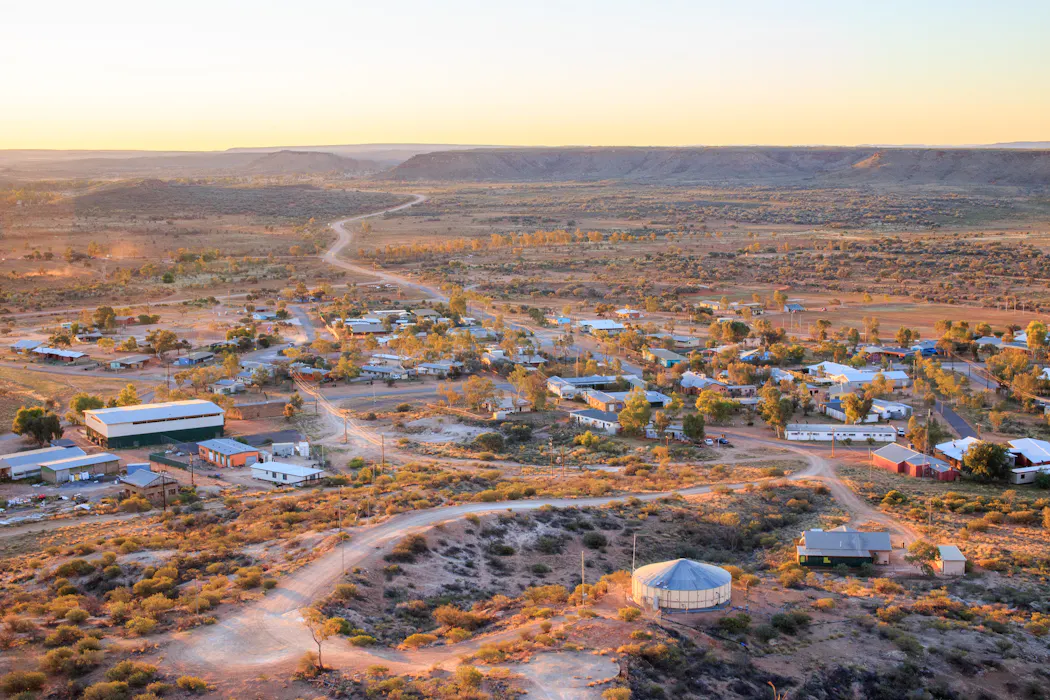
But a closer look shows it is yet another example of inequitable systems – including inadequate housing, a lack of washing facilities and under-investment in preventive health care – driving the spread of infectious disease in Australia’s remote communities.

For decades, groups such as the National Aboriginal Community Controlled Health Organisation – Australia’s national authority on Aboriginal and Torres Strait Islander health care – has urged authorities to address these issues.

So why do they still exist? And can we fix them?

An historic outbreak

Diphtheria is caused by a toxin-producing bacteria, Corynebacterium diphtheriae.

This potentially fatal disease can spread between people through respiratory droplets, or direct contact with infected wounds, skin sores or bodily fluids.

In this latest outbreak, roughly 70% of cases have presented as cutaneous (skin) diphtheria and about 30% as respiratory (throat) diphtheria.

Cutaneous diphtheria is usually less severe, but remains a public health concern as skin sores can facilitate the spread of the disease.

Respiratory diphtheria is the form most associated with severe illness and death.

As of 25 May, authorities say there has been one possible death related to diphtheria in the Northern Territory. The latest data shows Australia has recorded more than 230 diphtheria cases since January 2026.

The federal government recently pledged A$7.2 million to help curb this outbreak, working in close collaboration with the National Aboriginal Community Controlled Health Organisation.

However, we are not only concerned about diphtheria itself, but the inequitable conditions that may help it spread.


Read more: Australia is battling its worst diphtheria outbreak in decades. But vaccines could curb it


Why is it spreading so quickly?

We believe the conditions contributing to the high rates of skin infections in remote Australia are driving this historic diphtheria outbreak.

Remote Aboriginal communities face high rates of preventable skin sores, which can cause severe diseases including sepsis, acute rheumatic fever and rheumatic heart disease.

These sores, generally caused by Streptococcus pyogenes and Staphylococcus aureus, are preventable. But doctors and health care workers may miss them, especially if they are working in busy, under-resourced remote clinics.

Certain environmental factors may allow skin sores, and related diseases such as diphtheria, to spread more rapidly in First Nations communities.

One is insufficient housing. A lack of safe, clean housing may cause infectious diseases – such as strep, staph and diphtheria – to spread more quickly from person to person. In remote communities, this can happen in households, in schools and at community events.

Another environmental factor is overcrowding. Overcrowding puts pressure on home plumbing systems, meaning blocked toilets, broken taps and leaking pipes become more common. If people can’t wash their hands or bodies, this increases their risk of getting infectious diseases such as diphtheria. Research shows even simple hygiene practices, such as handwashing with soap and water, reduces skin sores.

Many remote households also struggle to access basic maintenance or repair services. Even basic jobs, such as fixing a leaking tap, washing machine or a broken hot water system, may take weeks or months. This has direct health impacts, as people may not have the water or facilities to wash themselves or their clothes.


Read more: Why simple school sores often lead to heart and kidney disease in Indigenous children


So, what can we do?

In the current outbreak, vaccine boosters are essential to preventing severe illness and death. But long-term, vaccines alone won’t stop the spread of diphtheria and other infectious diseases.

For that, we need to fix our systems. Research suggests public health responses tend to focus on specific diseases, instead of the structural problems that drive their spread.

So to prevent future diphtheria and other outbreaks, we need to invest more in remote communities. We must build and maintain homes that have the space, water and washing facilities to keep people clean and healthy at home. We also need to make hygiene and cleaning supplies more affordable by aligning prices in remote communities with those in urban areas.

We must also involve First Nations communities in all public health initiatives. In many cases, remote communities already know the solutions to the issues they face. This was evident during the COVID pandemic, when Aboriginal leaders spearheaded the public health response in remote communities. As a result, Australia recorded far fewer Indigenous deaths than other countries.

Sitting with and listening to our First Nations communities takes time. But it demonstrates a commitment to working together, and is key to making public health responses as effective and sustainable as possible.


Read more: How we partnered with local communities to halve skin sores among Aboriginal children in remote WA


The Conversation

Asha Bowen receives funding from the National Health and Medical Research Council of Australia and the Medical Research Futures Fund of Australia.

Lorraine Anderson is affiliated with RACGP and AMA.

Stephanie Enkel does not work for, consult, own shares in or receive funding from any company or organisation that would benefit from this article, and has disclosed no relevant affiliations beyond their academic appointment.
❌
AU Conversation