Bogotá, Colombia – Ecuador will impose a 100% tariff on all Colombian imports beginning on May 1, according to a statement by the Ministry of Production, Foreign Trade, and Investment today.
The move ramps up tensions between the two South American neighbors, which have imposed reciprocal levies of 50% in a trade war that began in January when Ecuador announced it would charge Colombia a “security fee”.
“This measure is based on national security criteria and seeks to reinforce shared resp
Bogotá, Colombia – Ecuador will impose a 100% tariff on all Colombian imports beginning on May 1, according to a statement by the Ministry of Production, Foreign Trade, and Investment today.
The move ramps up tensions between the two South American neighbors, which have imposed reciprocal levies of 50% in a trade war that began in January when Ecuador announced it would charge Colombia a “security fee”.
“This measure is based on national security criteria and seeks to reinforce shared responsibility in a task that must be undertaken jointly to address the presence of drug trafficking at the border,” read a statement by the trade ministry on Thursday announcing the tariff hike.
Bogotá and Quito have clashed over border security issues in recent months, with Ecuadorean President Daniel Noboa accusing his counterpart of failing to deter criminal groups operating in the region.
Colombian President Gustavo Petro has defended his administration’s security record and imposed reciprocal levies against Ecuador.
The two countries were due to hold talks next week to resolve the trade war but these were cancelled yesterday amid a dispute over former Ecuadorean Vice President Jorge Glas. Quito recalled its Ambassador from Bogotá after Petro suggested Glas was a political prisoner and had not been treated humanely in jail.
The tariffs threaten economic shocks on both sides of the border; Ecuador imports medicine, sugar, vehicles and coffee from Colombia and exports wood panels, canned fish, frozen seafood, palm oil, and rice.
Featured image description: Colombia-Ecuador border photographed in 2020.
Featured image credit: Burkhard Mücke via Wikimedia Commons
Bogotá, Colombia – On March 8, for the first time in Colombia’s history, an artificial intelligence candidate appeared on ballot papers across the country.
Gaitana IA (AI) ran for the Indigenous seat in the Senate and the House of Representatives in the northern state of Sucre.
While Gaitana did not win a seat in either of the country’s legislative bodies, it has sparked debate about the role of AI in Colombian politics.
With the ballots counted, Gaitana won a total of under 3,000 vote
Bogotá, Colombia – On March 8, for the first time in Colombia’s history, an artificial intelligence candidate appeared on ballot papers across the country.
Gaitana IA (AI) ran for the Indigenous seat in the Senate and the House of Representatives in the northern state of Sucre.
While Gaitana did not win a seat in either of the country’s legislative bodies, it has sparked debate about the role of AI in Colombian politics.
With the ballots counted, Gaitana won a total of under 3,000 votes – less than 2% of the total votes for the Indigenous seat – suggesting that many people remain skeptical of this new digital approach.
Many questions have emerged surrounding Gaitana, such as why the Registraduría—the Colombian entity in charge of validating and accepting candidates—permitted this unprecedented candidacy, or what the intentions were behind the AI.
“Many local media outlets talked about an AI going to Congress, but that is not the case; they are humans leading the project,” Gaitana’s co-founder, Natalia Aase, told Latin America Reports.
“It is actually a consensus tool developed by our community members, between 14 and 25 years old, from the Senú community of Reparo Torrente, in Coveñas,” she explained.
Rather than planning for the AI to assume office, Gaitana was devised as a democratic experiment underpinned by real human candidates
Aase detailed how the platform was designed to work: Colombian citizens could subscribe through a link to virtually participate and propose various debates regarding topics such as healthcare, women’s rights, and more. These interactions would also feed the AI database.
Once an initiative reached a collective consensus, the people occupying the seats in Congress would “decide the direction of the proposed laws.”
The two humans represented by Gaitana were Carlos Redondo Rincón, a Mechatronics Engineer from the Senú community, who was running for Senate, and Luz Rincón, an Embera-Katio Indigenous sociologist, who was seeking a seat in the House of Representatives.
The co-founder of Gaitana also revealed that the team conducted deep research into global democratic models, such as the one in Norway, and compared them with their own community dynamics.
As the research advanced, the team found that their community in Senú had already established a model of social interaction that worked well, prompting them to launch a digital project modeled on their own practices.
This meant digitizing their traditional way of reaching a consensus; in the Senú community, men, women, and youth gather around tables to discuss specific topics, such as women’s health or local fishing.
“Gaitana IA is not a generative AI; it is a participatory AI. What does that mean? Well, it is not ChatGPT. Instead, it takes the information provided by the users and organizes it,” pointed out Aase. “Transparency and security are the most important things for us; that is why we use blockchain technology—a system of blocks—to power this platform.”
According to Aase, the project was born from a motivation to prevent corruption and explained that with ‘Gaitana AI’, the decisions are not made by a single person but must be approved by at least 100 people.
“You might be able to manipulate one individual, but you cannot manipulate a hundred if you don’t even know who they are,” she concluded.
This article originally appeared on The Bogotá Post and was republished with permission.
Bogotá, Colombia – Bolivia’s government ordered Colombia’s ambassador to leave the country just days after Colombian President Gustavo Petro expressed support for ongoing anti-government protests.
“The Bolivian government has decided to request that the Ambassador of the Republic of Colombia accredited to the country conclude her diplomatic duties in Bolivian territory,” read a statement on Wednesday morning by Bolivia’s Ministry of Foreign Relations.
The ministry expressed its disapprov
Bogotá, Colombia – Bolivia’s government ordered Colombia’s ambassador to leave the country just days after Colombian President Gustavo Petro expressed support for ongoing anti-government protests.
“The Bolivian government has decided to request that the Ambassador of the Republic of Colombia accredited to the country conclude her diplomatic duties in Bolivian territory,” read a statement on Wednesday morning by Bolivia’s Ministry of Foreign Relations.
The ministry expressed its disapproval of Colombia’s involvement in its domestic affairs amid mounting anti-government protests.
“Bolivia considers it essential that any external assessment or statement regarding the country’s internal situation be made with responsibility, diplomatic prudence, and full respect for… institutions,” continued the statement.
While the government did not explicitly mention Petro, the measure came just days after the Colombian president weighed in on the protest movement, describing it as a “popular insurrection” in an X post last Sunday.
In recent weeks, miners, teachers, farmers and Indigenous groups have been calling for President Rodrigo Paz to resign over economic hardships, including soaring inflation and the suspension of fuel subsidies.
Bolivia’s foreign ministry responded to Petro the same day, saying his words, “do not reflect the relation of friendship, respect and cooperation between the peoples of Bolivia and Colombia.”
Petro, whose term ends in August, did not backtrack following the Ambassador’s dismissal.
“If they expel the ambassador simply for proposing dialogue and mediation, it means we’re sliding toward extremism that could lead to a very difficult situation for the Bolivian people,” the president told Caracol radio today.
Despite the spat, Bolivia’s foreign ministry said diplomatic channels remained open and the expulsion did not count as a full-scale rupture in relations.
The government added that it had granted Ambassador Elizabeth García Carrillo “the appropriate period of time in accordance with current international standards” to leave the country.
Featured image description: President Gustavo Petro (L) and President Rodrigo Paz (R). I
Bogotá, Colombia – Bolivia’s government ordered Colombia’s ambassador to leave the country just days after Colombian President Gustavo Petro expressed support for ongoing anti-government protests.
“The Bolivian government has decided to request that the Ambassador of the Republic of Colombia accredited to the country conclude her diplomatic duties in Bolivian territory,” read a statement on Wednesday morning by Bolivia’s Ministry of Foreign Relations.
The ministry expressed its disapprov
Bogotá, Colombia – Bolivia’s government ordered Colombia’s ambassador to leave the country just days after Colombian President Gustavo Petro expressed support for ongoing anti-government protests.
“The Bolivian government has decided to request that the Ambassador of the Republic of Colombia accredited to the country conclude her diplomatic duties in Bolivian territory,” read a statement on Wednesday morning by Bolivia’s Ministry of Foreign Relations.
The ministry expressed its disapproval of Colombia’s involvement in its domestic affairs amid mounting anti-government protests.
“Bolivia considers it essential that any external assessment or statement regarding the country’s internal situation be made with responsibility, diplomatic prudence, and full respect for… institutions,” continued the statement.
While the government did not explicitly mention Petro, the measure came just days after the Colombian president weighed in on the protest movement, describing it as a “popular insurrection” in an X post last Sunday.
In recent weeks, miners, teachers, farmers and Indigenous groups have been calling for President Rodrigo Paz to resign over economic hardships, including soaring inflation and the suspension of fuel subsidies.
Bolivia’s foreign ministry responded to Petro the same day, saying his words, “do not reflect the relation of friendship, respect and cooperation between the peoples of Bolivia and Colombia.”
Petro, whose term ends in August, did not backtrack following the Ambassador’s dismissal.
“If they expel the ambassador simply for proposing dialogue and mediation, it means we’re sliding toward extremism that could lead to a very difficult situation for the Bolivian people,” the president told Caracol radio today.
Despite the spat, Bolivia’s foreign ministry said diplomatic channels remained open and the expulsion did not count as a full-scale rupture in relations.
The government added that it had granted Ambassador Elizabeth García Carrillo “the appropriate period of time in accordance with current international standards” to leave the country.
Featured image description: President Gustavo Petro (L) and President Rodrigo Paz (R). I
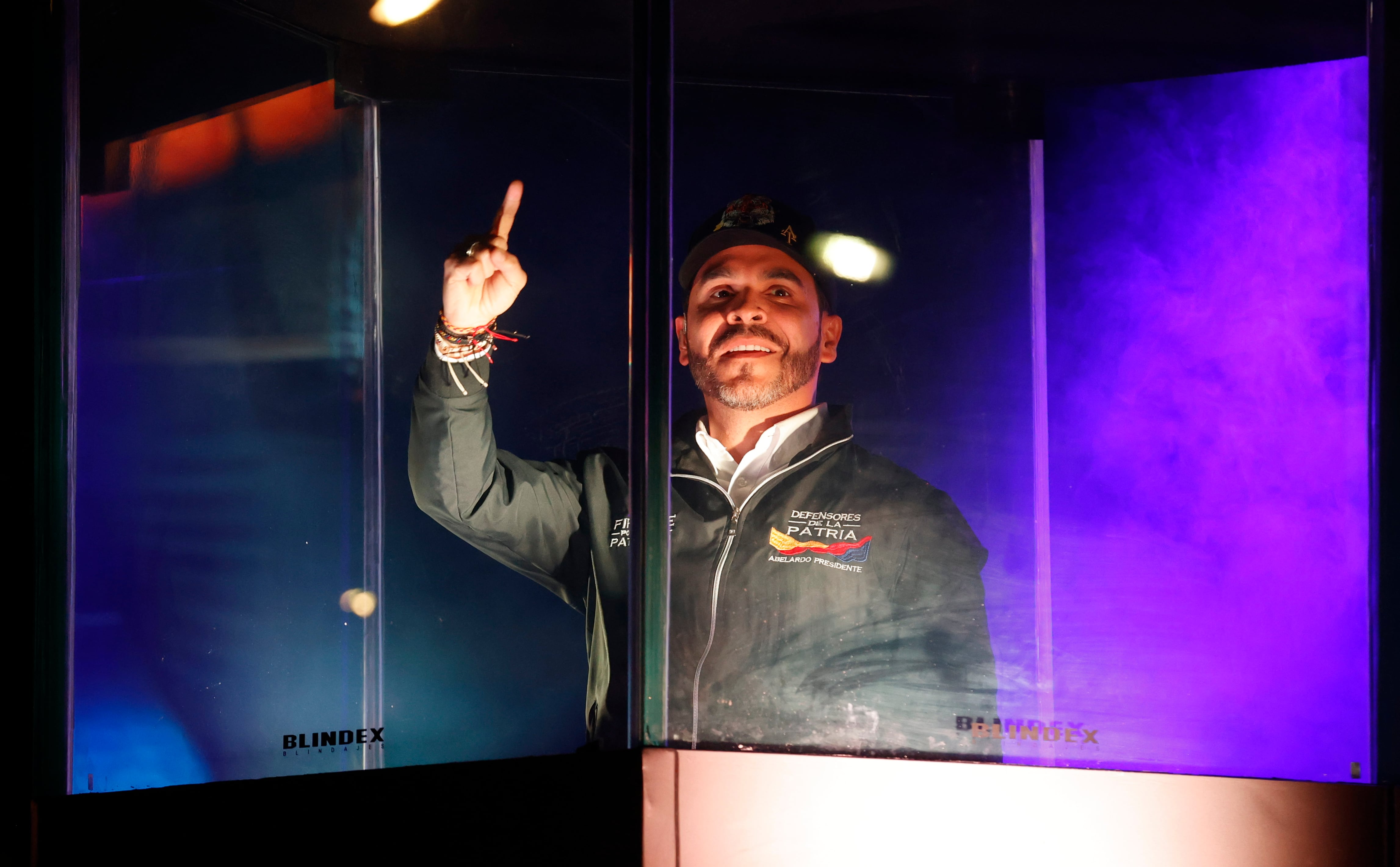
The global far right, which has achieved major milestones in recent years by seizing power in countries such as Argentina and Chile, is now watching closely the elections Colombia will hold on May 31. Abelardo de la Espriella, a lawyer making his political debut as an outsider, has emerged as the country’s extremist figure, invoking epic rhetoric to position himself as the ideal candidate to defeat the left. His campaign has focused on defending a “miracle homeland,” a country of traditional val
The global far right, which has achieved major milestones in recent years by seizing power in countries such as Argentina and Chile, is now watching closely the elections Colombia will hold on May 31. Abelardo de la Espriella, a lawyer making his political debut as an outsider, has emerged as the country’s extremist figure, invoking epic rhetoric to position himself as the ideal candidate to defeat the left. His campaign has focused on defending a “miracle homeland,” a country of traditional values with the economy and security at its core, where the left— or “communism,” as he calls it—and moderate parties play no leading role. His message has resonated in a society battered by violence, where many see the self-styled “Tiger” as a necessary change.
With the first rains of the year, everything changes on the islands. Residents of the Archipelago of San Andrés and Providencia, about 775 km (481 miles) northwest of mainland Colombia, know that in the rainy season the migration of a nine-centimeter (3.5 inch) crustacean disrupts everyone’s routine. It has been this way for as long as islanders can remember. When she was little, Asilvina slept with earplugs, Darson placed towels under his doors and Nicolás’ school bus driver would get down with
With the first rains of the year, everything changes on the islands. Residents of the Archipelago of San Andrés and Providencia, about 775 km (481 miles) northwest of mainland Colombia, know that in the rainy season the migration of a nine-centimeter (3.5 inch) crustacean disrupts everyone’s routine. It has been this way for as long as islanders can remember. When she was little, Asilvina slept with earplugs, Darson placed towels under his doors and Nicolás’ school bus driver would get down with a palm frond to sweep crabs off the road as they crossed from the mountain to the sea. Hundreds of thousands of Gecarcinus ruricola once carpeted the main road in black and purple, making it impossible for any vehicle to pass at night. Today, the same children who used to go to sleep worried that the claws would catch their ears are the biologists who, from April to July, close the roads so the few individuals that now climb the hill can reach the coast to spawn without being crushed by a car.
Bogotá, Colombia – The sophistication of drones used by armed groups is escalating rapidly in Colombia as the military expands efforts to tackle them, the commander of Colombia’s armed forces told Latin America Reports.
“We are dealing with terrorists using drones carrying grenades that are dropped from different altitudes, as well as wire-guided drones,” General Hugo Alejandro López Barreto said, referring to some of the latest and most difficult drones to counter.
On June 2, one person w
Bogotá, Colombia – The sophistication of drones used by armed groups is escalating rapidly in Colombia as the military expands efforts to tackle them, the commander of Colombia’s armed forces told Latin America Reports.
“We are dealing with terrorists using drones carrying grenades that are dropped from different altitudes, as well as wire-guided drones,” General Hugo Alejandro López Barreto said, referring to some of the latest and most difficult drones to counter.
On June 2, one person was reportedly killed in a drone attack in La Tarra, in the conflict-ridden Catatumbo region. A day earlier, six children and one adult were seriously injured in Suárez, Cauca, in an attack authorities attributed to the Jaime Martínez structure of the FARC dissident group.
According to Colombia’s Ministry of Defence, 333 drone attacks successfully struck targets or caused damage in 2025, compared with 61 incidents in 2024 — an increase of 445 percent.
While the FARC disbanded under the 2016 peace accord, some splinter groups emerged. These factions, as well as the National Liberation Army (ELN) guerrilla group, frequently target each other and the military, with civilians often caught in the middle.
General Lopez explained that the military is employing a variety of strategies to counter the growing use of drones by these structures.
“We already have units deployed with anti-drone equipment that will allow us to counter the actions of these criminals and also target those carrying out these attacks against us,” he said. Lopez added that the armed forces were responding through a combination of ‘technical and non-technical measures,’ including protective equipment and weapons capable of bringing down the aircraft.
While drones have been used by Colombia’s armed groups for around a decade, initially for reconnaissance and intelligence gathering, their use in attacks has increased sharply in recent years.
The first recorded death linked to a drone attack occurred in 2024, when a 10-year-old boy was killed while playing football in El Plateado, Cauca.
According to defense analyst and drones expert, Camilo Mendoza, since armed groups began using drones in an organized way in 2024, they have gained the advantage over security forces.
“Groups use drones for both surveillance and attacks, and they have learned a great deal from Ukraine. Ukraine has been the laboratory of modern warfare for the last three or four years,” he explained.
“The success of drones, both in Colombia and in Ukraine, comes down to cost. Drones are very cheap and can do many things.”
According to Mendoza, who also wrote the book Colombia Under Drone Threat, the main groups using drones are the FARC dissident group Estado Mayor Central and the National Liberation Army (ELN), which employ the devices for both surveillance and attacks. The Clan del Golfo also uses drones, although primarily for reconnaissance purposes.
As the technology has evolved, so too have efforts to counter it. In October 2025, Colombia’s Defence Ministry launched BANOT, described as Latin America’s first military battalion dedicated to countering drone threats. Authorities have also invested in radio-frequency jammers and tactical radar systems as part of a broader anti-drone strategy and have an anti-drone shield planned.
But analysts say the pace of development means the military is struggling to keep up. Where initially groups were buying cheap drones in major cities or online sites, like Amazon, now they’re using more sophisticated ones, including First Person View (FPV) drones and fibre-optic drones, which pose challenges for security forces.
“The fibre-optic drones cannot be detected or jammed because the systems simply cannot see them,” Mendoza said.
Traditional anti-drone systems work by disrupting the signal between an operator and an aircraft. But newer drones can be modified to reduce the effectiveness of those countermeasures.
“All anti-drone systems in Colombia operate through the electromagnetic spectrum,” Mendoza explained. “They have no effect on these newer systems, and the drones can continue carrying out attacks even when battalions have anti-drone equipment.”
While analysts warn of the challenge drones pose to security forces, humanitarian organizations say civilians are increasingly bearing the consequences.
“This is not a new phenomenon, but the speed at which it is escalating is alarming,” Antonio Salvatore Armentano, Colombia representative at The United Nations Mine Action Service (UNMAS) told Latin America Reports. “Communities on the ground are absorbing a threat that policy frameworks have barely begun to name.”
In a recently released technical report on drones in Colombia, UNMAS highlighted that in many territories, the only available defence is “the visual and the acoustic detection by recognizing the distinctive ‘buzzing’ sound of drones and attempting to flee.”
While not all drones are used to attack — some are for surveillance — communities have no way of knowing, and so the sound or sight of drones induces psychological distress.
“The harm does not end when the attack does. Communities living under the sound of drones experience chronic fear and anxiety. Not every drone is armed – but no one on the ground can tell the difference. That uncertainty is itself a form of violence,” Armentano said.
As armed groups adopt increasingly sophisticated drones, humanitarian organizations warn that civilians are likely to face a growing share of the consequences.
Featured image description: A member of the Colombian Air Force holds a drone.
Featured image credit: Fuerza Aerospacial de Colombia.
Medellín, Colombia – President Gustavo Petro has accused Ecuador of dropping bombs on Colombian territory, adding that 27 “charred bodies” were discovered near their shared border.
“We’re going to thoroughly investigate the circumstances—it happened very close to the border with Ecuador—which somewhat confirms my suspicion, but we need to investigate thoroughly: they’re bombing us from Ecuador, and it’s not the armed groups,” said Petro in a cabinet meeting on Monday evening.
The accusati
Medellín, Colombia – President Gustavo Petro has accused Ecuador of dropping bombs on Colombian territory, adding that 27 “charred bodies” were discovered near their shared border.
“We’re going to thoroughly investigate the circumstances—it happened very close to the border with Ecuador—which somewhat confirms my suspicion, but we need to investigate thoroughly: they’re bombing us from Ecuador, and it’s not the armed groups,” said Petro in a cabinet meeting on Monday evening.
The accusation marks an escalation in recent tensions between the two neighbors, with president Daniel Noboa swiftly denouncing the claims as false, insisting that his country’s anti-drug operations only hit targets within Ecuador.
In response to Petro’s claims, Noboa said on Tuesday that “with international cooperation, we continue the fight by bombing the hideouts used by these groups, who are mainly Colombians whom their own government allowed to infiltrate our country due to lax border controls.”
But Petro doubled down on his accusations, claiming that “there are 27 charred bodies and the explanation is not credible” the president said via X this Tuesday.
Pedro Sánchez, Colombian Minister of Defense, announced that Colombian forces have been deployed to the border to investigate the matter and carry out a controlled destruction of an alleged Ecuadoran bomb.
Earlier this month, the United States and Ecuador announced a joint military campaign to target criminal groups active in the South American country. Last Sunday, Ecuador began a 15-day joint operation with the U.S., deploying thousands of military and police officers throughout the provinces worst-affected by crime and declaring a nighttime curfew.
Noboa has repeatedly accused Bogotá of failing to address transnational organized crime and police its side of the border.
In February, Ecuador slapped 30% tariffs on Colombia which it labeled a “security fee”. Since then, the tit-for-tat dispute has seen mutual import levies reach 50%, drawing criticism from business owners and workers on both sides of the border.
Despite this, at the start of this month the neighbors joined forces to combat crime on their 600km border. Noboa, an ally of president Trump, also agreed to collaborate with U.S. forces in military operations against organized crime groups in March.
Noboa was also one of the 17 leaders from across Latin America and the Caribbean invited to join Trump’s ‘Shield of the Americas’ last week. The alliance, from which Colombia was excluded, promises to use full military force against drug traffickers. Last week, the FBI also opened its first office in Ecuador.
Featured image credit: Colombian President’s Office.
Colombia will hold a presidential runoff between two candidates who embody irreconcilable visions for the country. Abelardo de la Espriella, the ultraconservative lawyer who ran as the outsider promising to break with everything, won the first round with 43.7% of the vote, with 99% of polling stations counted. Iván Cepeda, the candidate of the governing left, received 40.9%.Seguir leyendo
Colombia will hold a presidential runoff between two candidates who embody irreconcilable visions for the country. Abelardo de la Espriella, the ultraconservative lawyer who ran as the outsider promising to break with everything, won the first round with 43.7% of the vote, with 99% of polling stations counted. Iván Cepeda, the candidate of the governing left, received 40.9%.
Caracas, Venezuela — Colombia is preparing to elect President Gustavo Petro’s successor on Sunday in a race that has generated significant regional interest, especially next door in Venezuela.
As sister nations, Colombia and Venezuela’s relations — which have been strained for years under former President Nicolás Maduro — play a key factor in everything from politics, migration, the economy, security and the fight against drug trafficking.
Interim president Delcy Rodríguez will undou
Caracas, Venezuela — Colombia is preparing to elect President Gustavo Petro’s successor on Sunday in a race that has generated significant regional interest, especially next door in Venezuela.
As sister nations, Colombia and Venezuela’s relations — which have been strained for years under former President Nicolás Maduro — play a key factor in everything from politics, migration, the economy, security and the fight against drug trafficking.
Interim president Delcy Rodríguez will undoubtedly be keeping an eye on which candidate succeeds, given the vast differences in how the presidential hopefuls say they’ll interact with Venezuela’s government.
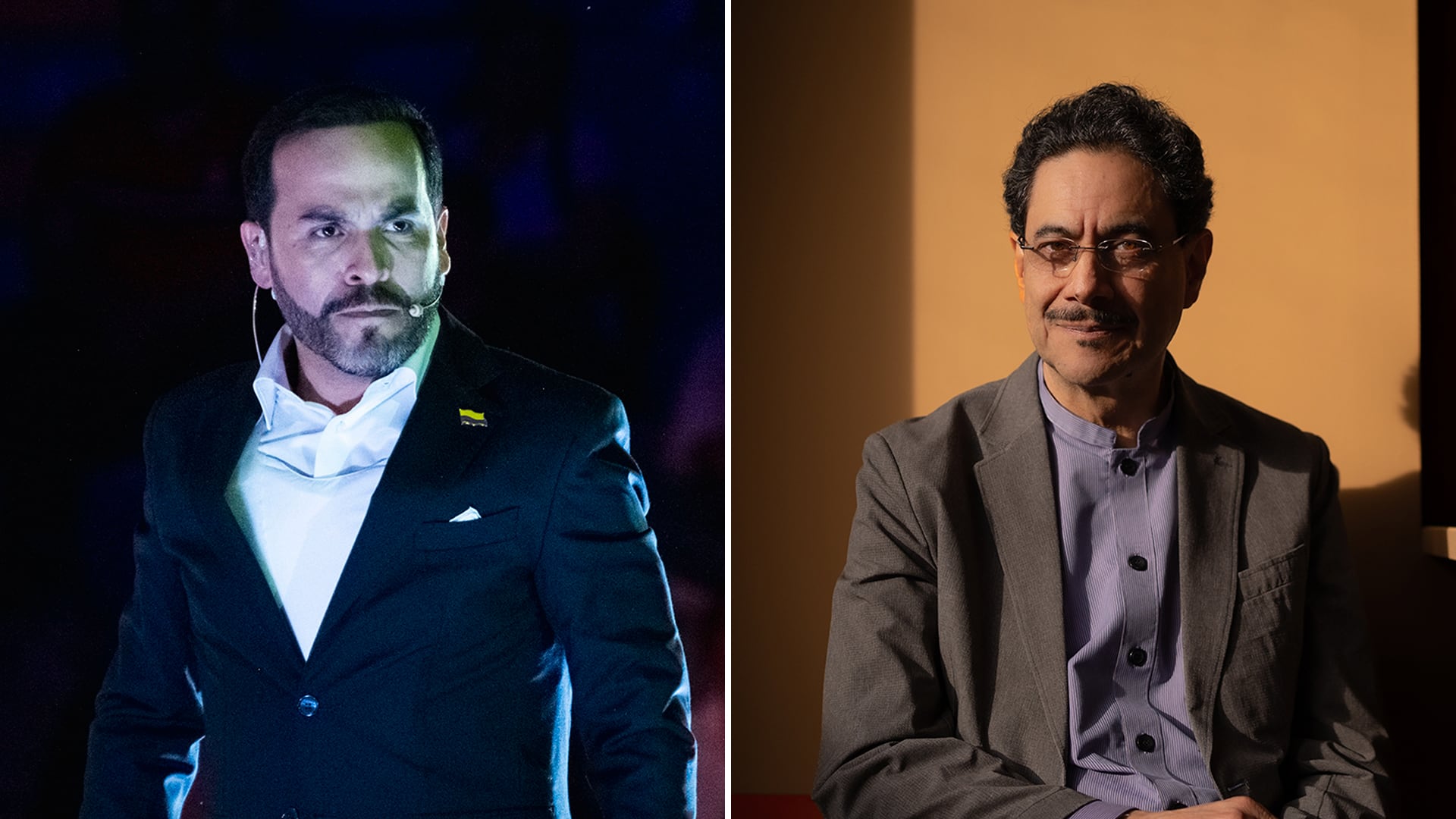
Of the three leading candidates, two — the Centro Democratico’s Paloma Valencia and Defensores de la Patria’s Abelardo de la Espriella — have signaled they’d follow Washington’s lead on Venezuela while the current leader in the polls, leftist Iván Cepeda (Pacto Histórico), has remained quiet despite his past support for Chavismo.
The elections are also shaping up to be the most polarizing in recent memory.
“Of all the societies I have studied, Colombia is perhaps the one with the most extreme positions—people who identify more strongly with the right or those who identify more strongly with the left,” Carmen Beatriz Fernández, a political consultant and professor of public communication, political systems and electoral campaigns, told Latin America Reports.
Colombian news outlet La Silla Vacia’s poll rankings have Cepeda ahead by 8 percentage points, followed by de la Espriella and Valencia. According to pollster AtlasIntel, if elections were to go to a run-off between Cepeda and de la Espriella today, the hard-right de la Espriella would win.
“Cepeda is the candidate who, in theory, would have the strongest ties to Chavismo, but it’s no less true that de la Espriella has never denied his close relationship with Alex Saab, right? So, that’s where the extremes perhaps meet,” said Fernández
De la Espriella, a lawyer by trade, famously represented Maduro’s alleged money launderer and also allegedly received payments from Saab’s front companies, according to an investigation by journalist Daniel Coronell.
Venezuelan political columnist and international affairs expert Beatriz de Majo, told Latin America Reports, “I have my reservations about de la Espriella, because for us he could be a huge surprise. He is a man who does not seem to be entirely above board in every aspect of his conduct, and God only knows what kind of surprise he might have in store for us now. However, it feels as though that battle will undoubtedly be decided between Cepeda and de la Espriella.”
De Majo said it’s hard to gauge where Colombia is heading following four years of Petro’s administration.
“The electoral process in Colombia’s case is particularly interesting because the country’s compass has been turned off during the four years of Petro’s administration. It really wasn’t possible to tell from the outside where the country was headed,” she said. According to De Majo, Petro’s only defining project, his “Total Peace” plan, “was never even close to being achieved.”
Should his political successor Cepeda win, said de Majo, we could see an outflow of capital from Colombia to Venezuela and elsewhere.
“Capitalism in Colombia is deeply entrenched; it is an enormously industrious country, and it is highly likely that if Cepeda wins, there will be a massive migration of capital from Colombia to Venezuela,” she commented.
While Colombia’s wealthy had threatened to move their money abroad when Petro was first elected, Spanish newspaper El País recently reported on companies setting up now to help Colombians move their assets should Cepeda win, saying that Panama, Spain, Costa Rica and the United States were the most sought after countries for relocating Colombians. Venezuela wasn’t listed.
On the other hand, De Majo thinks that if de la Espriella is elected, he’ll follow the U.S.’s lead for the most part and will not prioritize relations with Venezuela.
“If de la Espriella wins, he has said on more than one occasion that he will align with the United States, and moreover because that has been the Colombian trend in recent decades. They have been under the control and protection of the U.S. Armed Forces, and things went very well for them—until the Petro administration—in everything related to drug control,” she said.
Since September 2025, the U.S. has killed nearly 200 alleged drug traffickers by bombing boats in the eastern Pacific ocean and Caribbean, including Colombians. The Trump administration sanctioned Petro for allegedly allowing “drug cartels to flourish” and in March The New York Times reported that prosecutors were investigating Petro — the administration later assured him he faces no current charges.
What about Venezuelan migrants?
According to data from Colombia’s migration office, there are more than 2.8 million Venezuelans in Colombia, by far the country that has received the highest number of Venezuelans fleeing poor economic conditions.
Despite the gravity of the issue, de Majo doesn’t see the election outcome impacting migrants, who are more likely to be watching what happens in Venezuela to see if they can return home.
“The situation of Venezuelans in Colombia will not depend so much on what Colombia does to help them, but rather on what happens in Venezuela, because if a democratic process and freedoms are truly restored in Venezuela and the economy takes off again, the first Venezuelans to return to the country will not be those in Europe or the United States; they will be those in Colombia,” she said.
Featured image: Colombian President Gustavo Petro met with interim President of Venezuela Delcy Rodríguez on April 24, 2026.
Bogotá, Colombia – On April 20, the Special Jurisdiction for Peace (JEP) – Colombia’s transitional justice mechanism – released a report on the violence suffered by animals in the context of the armed conflict.
The JEP’s report, conducted in partnership with the University of Essex, found that an animal is killed or injured every 30 minutes due to the armed conflict.
Animal rights activists say the release represents a step forward in publicizing the often invisibilized violence inflicted
Bogotá, Colombia – On April 20, the Special Jurisdiction for Peace (JEP) – Colombia’s transitional justice mechanism – released a report on the violence suffered by animals in the context of the armed conflict.
The JEP’s report, conducted in partnership with the University of Essex, found that an animal is killed or injured every 30 minutes due to the armed conflict.
Animal rights activists say the release represents a step forward in publicizing the often invisibilized violence inflicted upon animals in war.
The report was developed through the construction of a database using 237 national, regional, and local media outlets, and 600 X accounts belonging to social and environmental organizations, as well as State entities and multilateral organizations.
Based on the information collected, they made an individual categorization referring to domestic animals, and a collective one referring to species, that is, wild animals. In this context, 100,252 domestic animals faced violence and 44 species are at imminent risk of extinction as a result of the armed conflict.
Thirty-two percent of the recorded cases involving animals were directly linked to military actions, including armed confrontations, ambushes, and attacks. The impacts were not distributed evenly across the territory; there are regions where armed conflict, illegal economies, and environmental richness converge, intensifying the harm. For example, Antioquia is the department with the highest concentration of species threatened by the conflict.
“We realized that most cases involved incidents such as accidents with landmines, anti-personnel mines, ambushes against the public security forces, harassment of the public security forces, and armed confrontations. These were some of the situations in which animals were killed or injured. They were also affected by forced displacement,” Laura Ojeda, a researcher on the JEP’s Investigation and Prosecution Unit who contributed to the report, explained.
Forced abandonment was one of the most documented forms of harm identified in the report, largely because it was closely tied to the victimization of caregivers within the dynamics of the conflict. 27% of the recorded cases — corresponding to approximately 900,000 animals — involved forced abandonment.
The report also identified nine ways in which animals were used throughout the armed conflict: as means of transportation; as devices to detonate explosive artifacts; as instruments to inflict pain and suffering – torture –; as sentinels for rapid alerts; as surveillance tools; in practices of bioterrorism involving zoonotic diseases; as propaganda tools; as amulets or part of esoteric rituals; and as a means to intimidate communities and extort payments from business owners and farmers.
Visibilizing animal suffering
The report comes as part of the JEP’s efforts to recognize the environment within its processes of justice, truth, and reparation. This release, the third in a series of three, is the first to focus on the specific forms of violence suffered by animals.
“It is part of a strategy to recognize all forms of life that have been victims of the armed conflict in Colombia,” Ojeda told Latin America Reports.
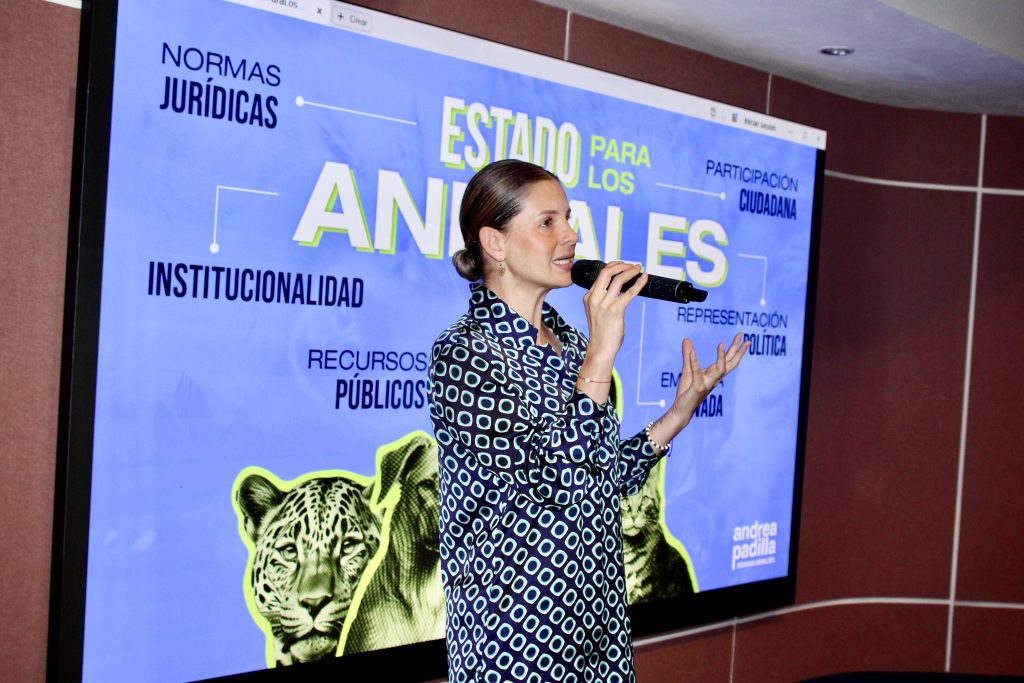
For Senator Andrea Padilla of the Green Alliance (Alianza Verde) party, the report represents a major step forward for animal rights.
She notes that harm to animals is usually addressed as a collateral issue, as damage to property under a framework of harm to human assets.
“Animals have always been excluded from any moral consideration, from any legal consideration, even from news coverage,” the senator told Latin America Reports.
Senator Andrea Padilla delivers a speech on animal rights. Image credit: @andreanimalidad via X
The team behind the report faced the challenge of shifting the narrative away from the legal framework which refers to animals only as part of the natural environment.
Instead, it adopted a “differential” approach from natural sciences, in collaboration with La Enredadera & co, a scientific outreach collective.
For Luis Carlos Posso, anthropologist and member of the collective, the report represents an exception to the “unavoidable anthropocentrism permeating the law.”
Senator Padilla highlighted the animal rights implications: “I believe it is only fair that sentient beings capable of emotions, affection, and social, moral, and emotional lives are also considered as affected by the conflict.”
Padilla added that understanding the impact of the conflict on animals deepens the appreciation of the human toll of violence.
“When we understand that there are bonds of affection there, family bonds that are abruptly broken by war, we can also see the conflict in a deeper way — that is, we can understand the deepest forms of harm being caused,” said the senator.
Animals as victims of the armed conflict
In addition to detailing the harms inflicted upon animals, the report proposes various reparative measures. These include habitat restoration, veterinary care in conflict zones, public veterinary care networks, the inclusion of animals in memory and truth processes, protection measures for at-risk species, and conservation initiatives.
However, there is still a long way to go before animals can be fully recognized as victims.
“Legally they are not things, but they are also not rights-holders. If they are not rights-holders, they cannot be recognized as victims,” explains Ojeda.
Colombian law recognizes animals as sentient beings, and laws such as the Ángel Law reflect significant progress in their rights. Currently, there is a bill advancing in congress that seeks to historically and legally recognize animals and ecosystems as victims of the internal armed conflict, prohibiting their use as instruments of war and ordering their essential reparation. This is Bill No. 012 of 2025, led by Senator Esmeralda Hernández of the Pacto Histórico party.
Senator Padilla explained that the success of the legal changes will depend on whoever is elected as the next president.
“Undoubtedly, this report holds great value. It not only offers another perspective on the armed conflict, but also explicitly incorporates animals into the analysis of war, harm, and peace,” said Senator Padilla. She added that animals must be involved in reparations processes, insisting, “peace must include animals, or it will not be complete.”
This article originally appeared in The Bogotá Post and was re-published with permission.
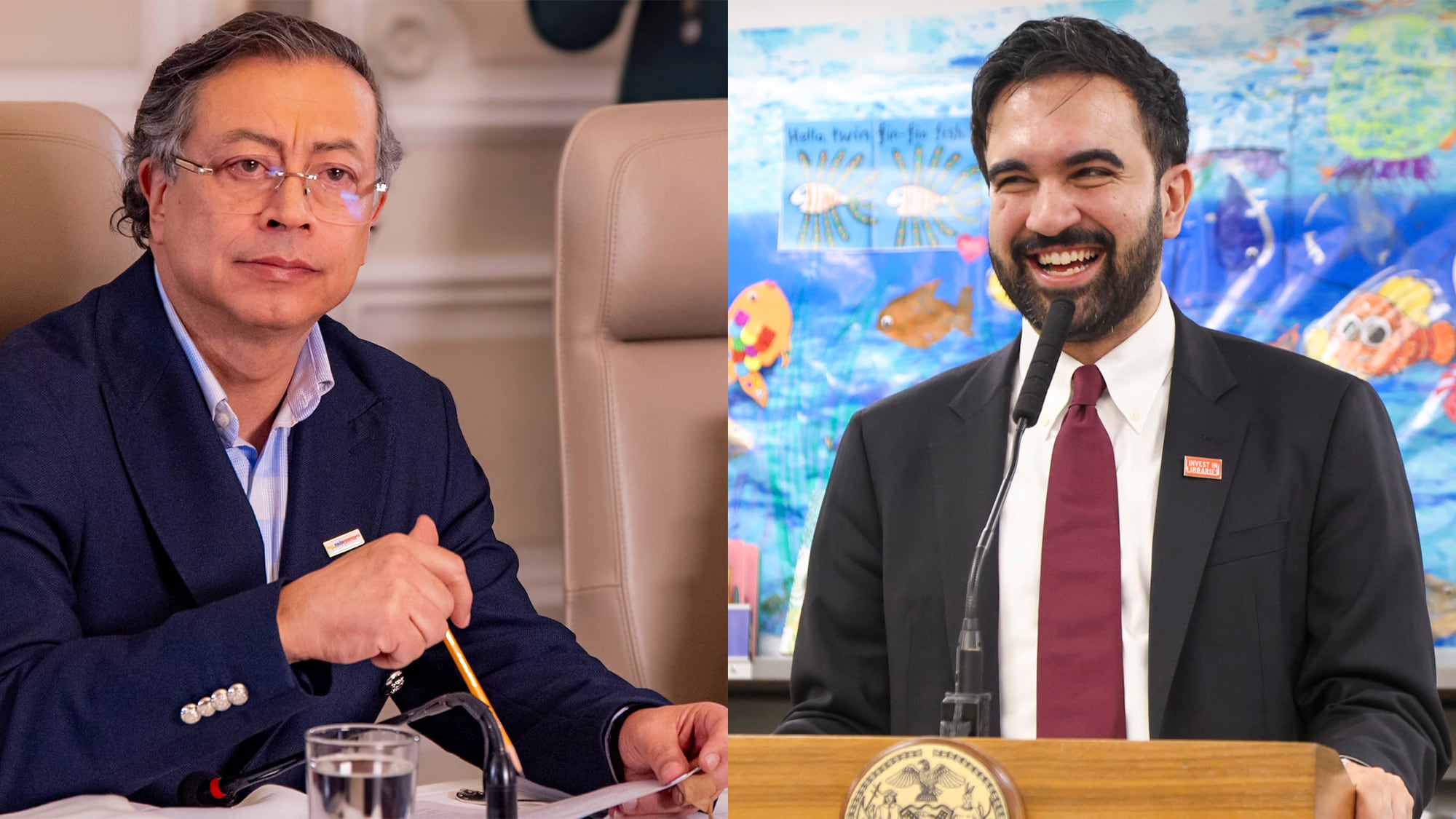
Colombian President Gustavo Petro is scheduled to travel to New York in a couple of weeks to meet with the city’s mayor and a leading figure of the global left, democratic socialist Zohran Mamdani, EL PAÍS has learned. The trip is set for June 12, a little less than two weeks after the first round of Colombia’s presidential election, which will be held this coming Sunday. If that vote does not produce a successor to Petro, a runoff will be held on June 21. In any case, the winner will take offic
Colombian President Gustavo Petro is scheduled to travel to New York in a couple of weeks to meet with the city’s mayor and a leading figure of the global left, democratic socialist Zohran Mamdani, EL PAÍS has learned. The trip is set for June 12, a little less than two weeks after the first round of Colombia’s presidential election, which will be held this coming Sunday. If that vote does not produce a successor to Petro, a runoff will be held on June 21. In any case, the winner will take office on August 7.

 Login
Login