Normal view

  • ✇El País in English
  • Ecuador’s new normal: A country in a state of emergency Carolina Mella Happe
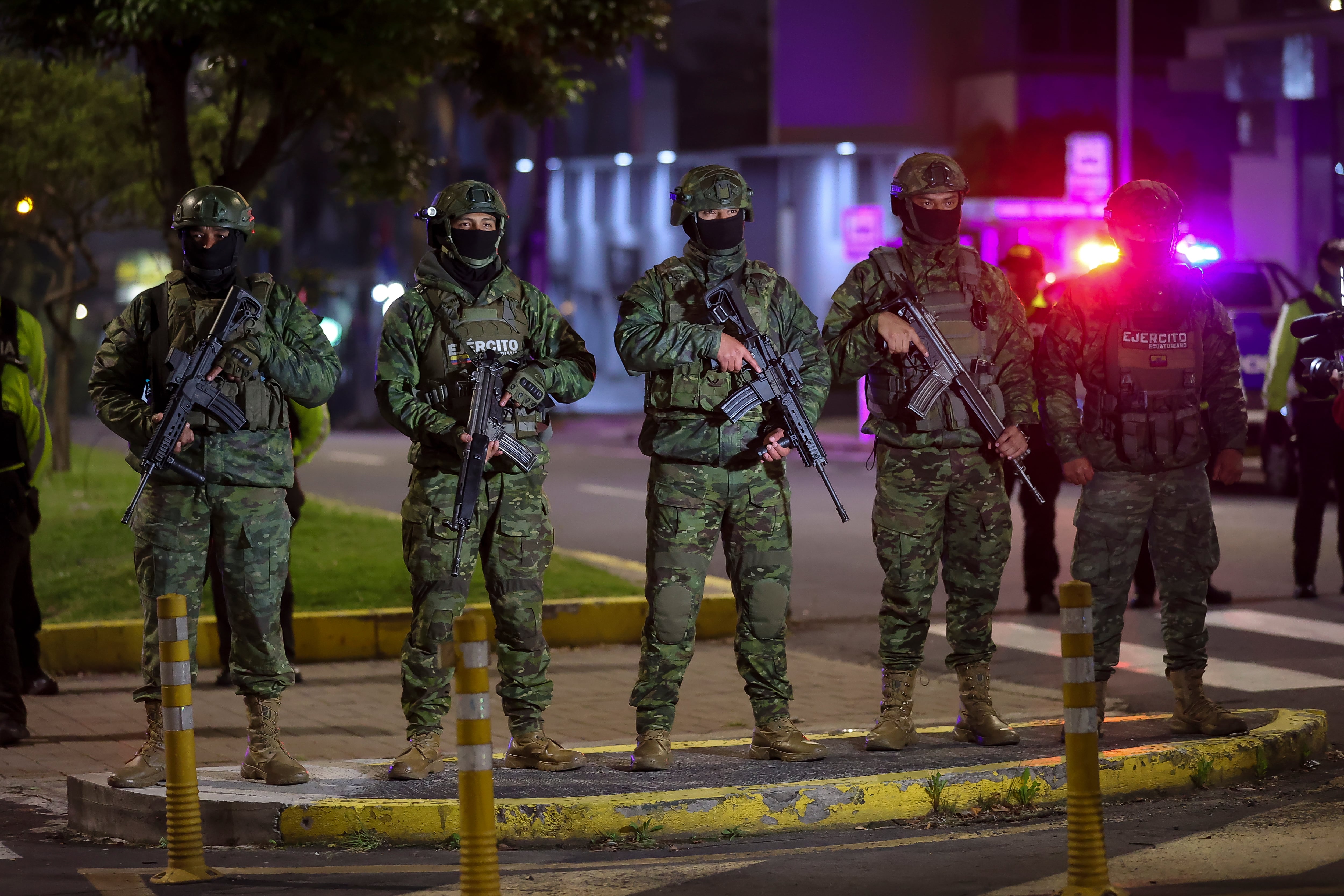
    In two and a half years, Ecuador has spent 846 days under a state of emergency, almost the same amount of time that Daniel Noboa has been in power. During this period, the president has restricted people’s free movement for 272 days, decreeing seven curfews, which the government has maintained as its main strategy for combating violence. For the authorities, the supposed success of the initiative is measured by the number of people arrested: during the 15 days of the curfew last March, 1,283 peo
     

Ecuador’s new normal: A country in a state of emergency

17 May 2026 at 04:05

In two and a half years, Ecuador has spent 846 days under a state of emergency, almost the same amount of time that Daniel Noboa has been in power. During this period, the president has restricted people’s free movement for 272 days, decreeing seven curfews, which the government has maintained as its main strategy for combating violence. For the authorities, the supposed success of the initiative is measured by the number of people arrested: during the 15 days of the curfew last March, 1,283 people were apprehended for violating the measure, and homicides were reduced by almost 30% during the early morning hours.

Seguir leyendo

© JOSÉ JÁCOME (EFE)

Curfew in Quito, Ecuador, on May 4.

The paradox of Ecuador: An oil-producing country where people wait in line for up to 72 hours to buy gasoline

14 May 2026 at 13:04

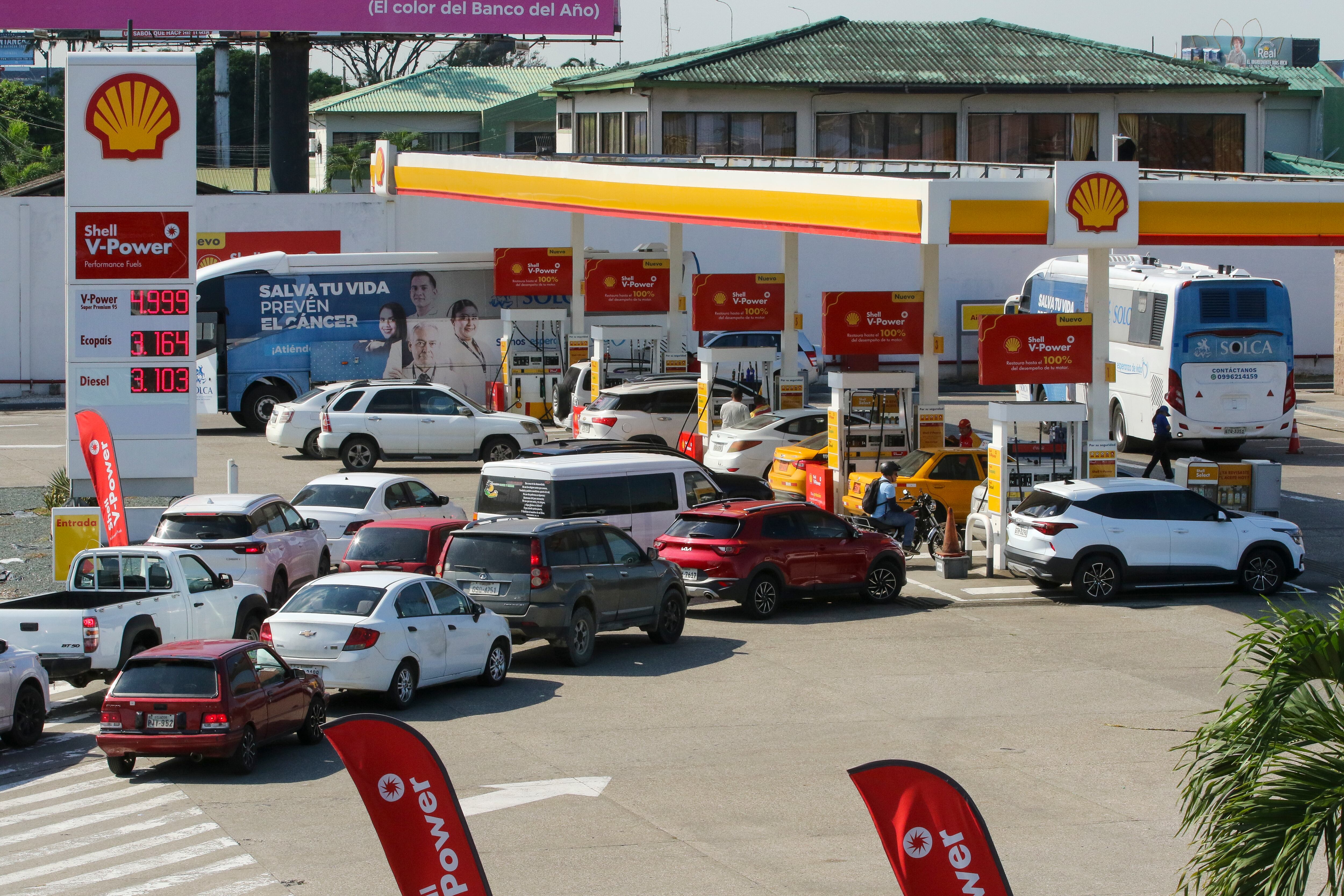
The scene has been repeating itself for 72 hours in Ecuador’s main cities: lines of vehicles snaking around corners, drivers waiting for hours in the sun, and gas pumps only allowing customers to fill up with $15 or $20 worth of gasoline. In Quito and Guayaquil, two cities accustomed to endless traffic, now there’s also a fight over fuel. “I’m frantically looking for fuel because my tank is practically empty,” says Darwin Medina, a taxi driver in Guayaquil. He visited three stations before finding one with gasoline available. On his fourth attempt, he managed to fill up with just five gallons of Ecopaís, a blend of gasoline and ethanol used by a large portion of Ecuador’s vehicles because it’s the cheapest.

Seguir leyendo

© Jonathan Miranda (EFE)

Lines to refuel in Guayaquil (Ecuador), this Wednesday.
  • ✇El País in English
  • US lawmakers demand the Pentagon suspend its alleged anti-drug operations in Ecuador Macarena Vidal Liy
    A group of U.S. lawmakers has called on the Pentagon to immediately suspend joint military operations with Ecuadorian forces in the north of the country, targeting drug trafficking “terrorist organizations” active in the area. In a letter sent to Defense Secretary Pete Hegseth and seen by EL PAÍS, the legislators demand that the mission be halted pending an investigation into the incidents and ask for clarification of the legal basis for U.S. involvement, which has not been authorized by Congres
     

US lawmakers demand the Pentagon suspend its alleged anti-drug operations in Ecuador

13 May 2026 at 18:45

A group of U.S. lawmakers has called on the Pentagon to immediately suspend joint military operations with Ecuadorian forces in the north of the country, targeting drug trafficking “terrorist organizations” active in the area. In a letter sent to Defense Secretary Pete Hegseth and seen by EL PAÍS, the legislators demand that the mission be halted pending an investigation into the incidents and ask for clarification of the legal basis for U.S. involvement, which has not been authorized by Congress.

Seguir leyendo

© Mauricio Torres (EFE)

Members of the Special Mobile Anti-Narcotics Group of Ecuador (GEMA) carry out anti-drug control operations in the Gulf of Guayaquil, Ecuador, on April 10.

Drones carrying explosives and a mysterious blue merchant ship: The terror stalking Ecuadorian fishermen

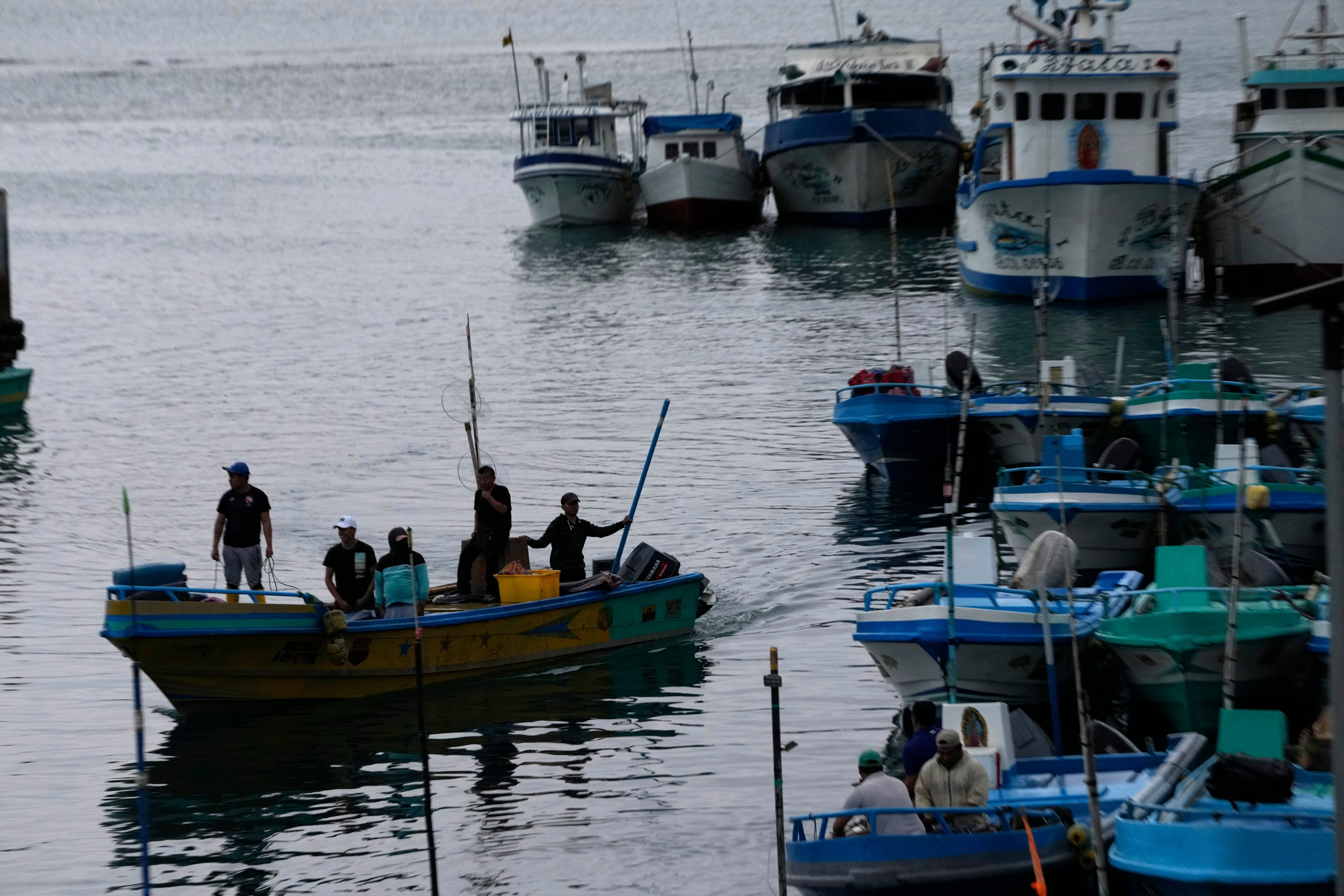
The 20 crew members of the Don Maca were sailing near the Galapagos Islands, in Ecuadorian waters, when they spotted a gray drone flying low, with a small tube pointed at them. They waved, assuming they were being filmed. They never imagined that the small device was carrying explosives.

Seguir leyendo

Some of the 16 crew members of the 'Negra Francisca Duarte II' in San Mateo, Manabí, on March 18.María, mother of Jefferson Mero Cueva, a fisherman who disappeared on January 20, in Jaramijó, Manabí, on March 18.

© Dolores Ochoa (AP)

Fishermen in the port of San Mateo (Ecuador), in an archive image.
  • ✇Latin America Reports
  • Ecuador doubles tariff on Colombia to 100% Alfie Pannell
    Bogotá, Colombia – Ecuador will impose a 100% tariff on all Colombian imports beginning on May 1, according to a statement by the Ministry of Production, Foreign Trade, and Investment today. The move ramps up tensions between the two South American neighbors, which have imposed reciprocal levies of 50% in a trade war that began in January when Ecuador announced it would charge Colombia a “security fee”. “This measure is based on national security criteria and seeks to reinforce shared resp
     

Ecuador doubles tariff on Colombia to 100%

9 April 2026 at 23:44

Bogotá, Colombia – Ecuador will impose a 100% tariff on all Colombian imports beginning on May 1, according to a statement by the Ministry of Production, Foreign Trade, and Investment today.

The move ramps up tensions between the two South American neighbors, which have imposed reciprocal levies of 50% in a trade war that began in January when Ecuador announced it would charge Colombia a “security fee”.

“This measure is based on national security criteria and seeks to reinforce shared responsibility in a task that must be undertaken jointly to address the presence of drug trafficking at the border,” read a statement by the trade ministry on Thursday announcing the tariff hike.

Bogotá and Quito have clashed over border security issues in recent months, with Ecuadorean President Daniel Noboa accusing his counterpart of failing to deter criminal groups operating in the region.

Colombian President Gustavo Petro has defended his administration’s security record and imposed reciprocal levies against Ecuador.

The two countries were due to hold talks next week to resolve the trade war but these were cancelled yesterday amid a dispute over former Ecuadorean Vice President Jorge Glas. Quito recalled its Ambassador from Bogotá after Petro suggested Glas was a political prisoner and had not been treated humanely in jail.

The tariffs threaten economic shocks on both sides of the border; Ecuador imports medicine, sugar, vehicles and coffee from Colombia and exports wood panels, canned fish, frozen seafood, palm oil, and rice.

Featured image description: Colombia-Ecuador border photographed in 2020.

Featured image credit: Burkhard Mücke via Wikimedia Commons

The post Ecuador doubles tariff on Colombia to 100% appeared first on Latin America Reports.

  • ✇Latin America Reports
  • Ecuador-Colombia relations dive as Quito recalls ambassador over Petro comments Amelia Makstutis
    Medellín, Colombia – Ecuador’s Foreign Minister announced on Wednesday morning that Ecuador’s ambassador to Colombia, Arturo Felix Wong, has been recalled. The move follows comments made by Colombian President Gustavo Petro regarding Ecuador’s jailed former Vice President, Jorge Glas, who he called a “political prisoner” and said was not being given sufficient food.  The spat is the latest in a series of diplomatic rows between the two neighbors this year, which have included tit-for-tat t
     

Ecuador-Colombia relations dive as Quito recalls ambassador over Petro comments

9 April 2026 at 01:01

Medellín, Colombia – Ecuador’s Foreign Minister announced on Wednesday morning that Ecuador’s ambassador to Colombia, Arturo Felix Wong, has been recalled.

The move follows comments made by Colombian President Gustavo Petro regarding Ecuador’s jailed former Vice President, Jorge Glas, who he called a “political prisoner” and said was not being given sufficient food. 

The spat is the latest in a series of diplomatic rows between the two neighbors this year, which have included tit-for-tat tariffs and accusations about border security.

Gabriela Sommerfield, Ecuador’s Foreign Minister, justified the withdrawal of the Ecuadorean ambassador from Colombia as “a protest towards Colombia over the terms used by Petro and the interference in decisions made by different branches of the Ecuadorean State” in an interview with Centro Digital Radio.

The announcement followed several inflammatory statements about Glas by Petro in recent days. On Monday, the President said, “it is undeniable that Jorge Glas is a political prisoner.” 

Glas has faced several convictions for corruption-related charges but his supporters, including Petro, accuse Ecuador’s right-wing government of persecuting him for being associated with the progressive Citizen Revolution Movement. 

“Letting someone die of hunger, while under the care of the government, is a crime against humanity,” said Petro on Tuesday. 

Glas is currently serving an eight-year sentence for bribery and criminal association, and a thirteen-year sentence for embezzlement in the maximum-security El Encuentro prison, which is modelled on Salvadorean president Nayib Bukele’s infamous prison system.

He was first convicted in 2017 for his involvement in the Odebrecht case, one of the largest corruption cases in recent Latin American history, after it was revealed that he had received millions of dollars in bribes from the Brazilian conglomerate Odebrecht.

He has since received further sentences and was released temporarily in 2022 but re-imprisoned shortly after. Later that year, he was released again, and sought asylum in the Mexican embassy, claiming political persecution. But two years ago, he was arrested in a controversial police raid of the Mexican embassy in Quito, leading to the severing of diplomatic ties between the two countries. 

Now, Ecuador also faces chilly relations with neighboring Colombia; on February 1st, Quito imposed a tariff of 30% on Bogotá, which it increased to 50% in March. President Daniel Noboa said that the levy was a response to Colombia failing to cooperate in the fight against narcotrafficking.

Colombia responded with tariffs of 30% on 73 types of products coming from Ecuador, including rice and sugar, which later increased to 50% for more than 185 products.

A further dispute emerged last month when Petro accused Ecuador of bombing across the two countries’ joint border.

After recalling Ecuador’s Ambassador to Colombia on Wednesday, Foreign Minister Sommerfield announced that meetings to address the ongoing trade war between the two countries would be suspended.

Featured image description: President Gustavo Petro at a cabinet meeting, October 22, 2025.

Featured image credit: @InfoPresidencia via X.

The post Ecuador-Colombia relations dive as Quito recalls ambassador over Petro comments appeared first on Latin America Reports.

❌
Subscriptions