Anthropic said on Friday it will “abruptly disable” its most advanced AI models for all users after the US government ordered it to suspend access to the models for foreign nationals, citing national security concerns.
The company received the export control directive to suspend access to Fable 5 and Mythos 5 for all foreign nationals, without being given specific details of its national security concern, Anthropic said in a statement.
It is Anthropic’s understanding that the government believes
Anthropic said on Friday it will “abruptly disable” its most advanced AI models for all users after the US government ordered it to suspend access to the models for foreign nationals, citing national security concerns.
The company received the export control directive to suspend access to Fable 5 and Mythos 5 for all foreign nationals, without being given specific details of its national security concern, Anthropic said in a statement.
It is Anthropic’s understanding that the government believes there is a method of bypassing, or “jailbreaking,” a safeguard that would prevent Fable 5 from being used in identifying software vulnerabilities, the company said.
The order comes just as a previous dispute between Trump administration officials and IPO-bound Anthropic showed signs of easing across parts of the US government.
Anthropic’s relationship with the government ruptured this year after it refused to allow the US military to use its AI models for domestic surveillance and fully autonomous weapons systems.
The government responded by putting Anthropic on a supply chain blacklist, set to take effect later in the year.
The action also marks a major escalation of US efforts to halt foreign adversaries’ AI capabilities.
For years, US export controls have focused on the chips and tools that power AI rather than on restricting foreign access to AI itself.
Anthropic said the government has given it only “verbal evidence of a potential narrow, non-universal jailbreak”.
“We disagree that the finding of a narrow potential jailbreak should be cause for recalling a commercial model deployed to hundreds of millions of people,” the company said.
The government directive and Anthropic’s response highlight growing tension between AI developers and regulators over how to assess risks from so-called “jailbreaks,” or methods used to bypass model safeguards.
As recently as Wednesday, Anthropic had called for greater US oversight of AI, including the ability to block models with unacceptable risks.
It said, however, the government action on Friday did not follow principles of fair and fact-based regulation.
The Pentagon’s chief information officer, Kirsten Davies, said in a post on X that the Defense Department supported prioritising national security.
“Some things are simply more important than revenue cycles, clickbait, and pre-IPO valuation. America First. Always,” Davies said.
Anthropic confidentially filed for a US initial public offering (IPO) last month, edging ahead of rival OpenAI in the race to reach public markets.
Sophisticated cyberattacks
Earlier this week, Anthropic rolled out an AI model named Claude Fable 5, representing a new tier of capability it calls “Mythos-class.”
The model is accompanied by guardrails barring its use in risky areas such as cybersecurity, which some users have complained are “overly broad,” Anthropic said.
Experts have said that Mythos models, in the wrong hands, could dramatically accelerate sophisticated cyberattacks, particularly in sectors such as banking that rely on complex, interconnected and often decades-old technology systems.
Anthropic said it had worked with the US government, among others, on safety ahead of the Fable launch and that models from rival AI providers showed a similar ability to unearth minor bugs in code.
“The net effect of this order is that we must abruptly disable Fable 5 and Mythos 5 for all our customers to ensure compliance. Access to all other Anthropic models will not be affected,” Anthropic said.
Anthropic said that it believed there was a “misunderstanding” and that it is working to restore access to the models as soon as possible.
“If this standard was applied across the industry, we believe it would essentially halt all new model deployments for all frontier model providers,” the company said.
Amazon’s cloud unit AWS said late on Friday that Anthropic has asked it to revoke access to the models for “all users in all regions.”
A US official confirmed that the Commerce Department had issued an export control directive to suspend all access to Fable 5 and Mythos 5 by foreign nationals.
Dean Ball, a former White House official who contributed to the AI Action Plan the administration issued in the summer of 2025, said in a post on X that the order suggests all “non-Americans” would be restricted from using Anthropic’s latest models, including those based in the US.
“This means you should expect to have to prove your citizenship to use Anthropic models,” Ball said.
Several key Anthropic personnel, including co-founder Chris Olah, AI researcher Andrej Karpathy and philosopher Amanda Askell, were born outside the United States.
Reuters was unable to determine their citizenship status, and an Anthropic spokesperson declined to comment on whether such staff would lose AI model access.
RIO DE JANEIRO, Brazil — President Luiz Inácio Lula da Silva announced May 30 at Rio2C the creation of Tela Brasil (Screen Brazil), a free-of-charge public streaming service with an initial catalog of 555 Brazilian productions. Anyone with an account in Gov.br, the official digital platform of the Brazilian federal government, can log into Tela […]
RIO DE JANEIRO, Brazil — President Luiz Inácio Lula da Silva announced May 30 at Rio2C the creation of Tela Brasil (Screen Brazil), a free-of-charge public streaming service with an initial catalog of 555 Brazilian productions. Anyone with an account in Gov.br, the official digital platform of the Brazilian federal government, can log into Tela […]
Run an insect trap through a German nature reserve today and it will catch a fraction of the insects it would have trapped in 1989. Entomologists in the Krefeld region did exactly that, season after season, and when they totaled 27 years of catch they found flying insect biomass had fallen more than 75 percent inside protected areas, where nature is supposed to be safe.
Since the turn of the century, two crashes have run in parallel: a steady draining of vertebrate life we know, including the ma
Run an insect trap through a German nature reserve today and it will catch a fraction of the insects it would have trapped in 1989. Entomologists in the Krefeld region did exactly that, season after season, and when they totaled 27 years of catch they found flying insect biomass had fallen more than 75 percent inside protected areas, where nature is supposed to be safe.
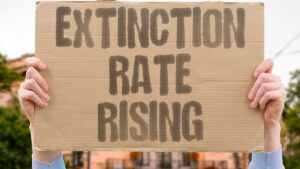
Since the turn of the century, two crashes have run in parallel: a steady draining of vertebrate life we know, including the mammals, birds, fish, amphibians, and reptiles we notice, and a quieter, vaster loss of insects, the wildlife almost no one counts but nearly everything depends on. Much of the underlying data describing the loss of biodiversity reaches back to 1970. What belongs to this century is precise measurement built on long-term studies that matured after 2000 and turned scattered alarm into a documented trend. This is what we have lost while we were watching, and what that loss takes from the generations who come after.
The vertebrate ledger
According to the World Wildlife Foundation and Zoological Society of London’s 2024 Living Planet Report, between 1970 and 2020, the average monitored population of 5,495 vertebrate species shrank by 73 percent. That figure is widely misread, so state it precisely: it does not mean three-quarters of all animals are gone. It means that across the populations scientists track, the average decline was 73 percent, with roughly half falling while half held steady or grew. The average is pulled down by steep losses, including freshwater animal populations that are down 85 percent and wildlife in Latin America and the Caribbean down 95 percent.
The losses are not evenly spread. In North America, a 2019 study in Science tallied a net loss of nearly 3 billion breeding birds since 1970—about one in four—across 529 species, including common backyard birds nobody thought were at risk.
Amphibians are in the worst shape of any vertebrate group. The second Global Amphibian Assessment, published in 2023, found 41 percent of species threatened with extinction, with climate change driving 39 percent of the deteriorations recorded since 2004.
Some losses are now permanent at a level above the species. In a 2023 paper, Gerardo Ceballos and Paul Ehrlich documented that 73 entire vertebrate genera—whole branches of the animal family tree, not single twigs—have gone extinct since 1500, a rate they argue is far faster than the background pace of the past million years. The IUCN Red List, the most comprehensive tally we have, now lists more than 47,000 of its 169,000-plus inventory of species as threatened.
The insect crash almost no one sees
Vertebrates, which tend to the fuzzy and cute, are the animals we grieve. Insects are the ones we depend on, and their decline is harder to see because so few long-term counts exist. But the Krefeld study cracked that open in 2017. Its more-than-75-percent biomass drop could not be explained by weather, habitat type, or land use inside the reserves—the decline was systemic, not local.
A 2020 meta-analysis in Science, combining 166 long-term datasets, put the trend on a global footing: terrestrial insects are declining roughly 9 percent per decade. The same analysis carried a genuinely hopeful finding, that freshwater insects in some regions were recovering, a rebound the authors link to decades of cleaning up polluted rivers and lakes. Declines varied enough from place to place that local action clearly matters. The crash is neither uniform nor does it represent destiny; human decisions can change the future of biodiversity.
The vertebrate and insect declines are not separate emergencies. They feed each other. Insects are the base of the terrestrial food web. The birds North America lost are, in large part, insectivores that ran short of food. Pull biomass out of the bottom and the animals above it follow.
Insects also do work the economy quietly runs on. The IPBES global pollinator assessment found that about 75 percent of the world’s leading food crops depend at least partly on animal pollination. Eighty-seven of the 115 most important crops, from apples and coffee to cocoa, are dependent on robust insect life for pollination. Decomposition of waste, pest control, and soil formation lean on insects too.
These are services no human system currently prices, and none we know how to replace at scale; visions of robotic pollinators, while shiny promises, are far narrower options than the headlines suggest. The machines that work today operate only in controlled environments on crops that already pollinate themselves. Arugga’s ground robots and Polybee’s airflow drones lift greenhouse tomato and berry yields somewhere between 5 and 20 percent, doing the job a handheld wand or a captive bumblebee would otherwise do indoors.
Harvard’s RoboBee, in development since 2013, learned to land reliably in 2025 and still flies on an external tether, carrying no power, sensors, or brain of its own. Nothing on the horizon pollinates an almond orchard or a squash field the way a wild bee does—for free, across miles, while reproducing itself. The robots are a useful supplement for high-value crops under glass and a poor stand-in for the living systems the insect crash is dismantling.
What the next generation inherits
This is where the loss becomes a loss to the future, the question this series keeps returning to.
A child born this year will inherit a thinner world,with fewer birds at the feeder, fewer insects on the windshield, fewer fish in the river. That is the visible loss. The harder losses are what disappear before ever being catalogued: species that vanish unstudied, taking with them chemistry, behavior, and genetic strategies that might have seeded a medicine, a crop trait, or a material we cannot yet imagine because the organism that suggested it is gone.
Extinction is the one environmental harm with no recovery path. A polluted river can be cleaned; a warmed atmosphere can, in principle, be cooled over centuries. A lineage that ends does not come back. The crashes of the past quarter-century are, in that sense, the most irreversible losses we are recording.
The evidence also refuses despair. Half the tracked vertebrate populations are stable or growing. Raptors and waterfowl in North America rebounded after targeted protection and the banning of specific chemicals. Freshwater insects recover where water quality improves. The losses are real and largely human-caused, which means human choices still bend the curve.
What You Can Do
Make a patch of ground work for insects. Native plants, no pesticides, and leaf litter left over winter give pollinators and the food web a foothold—even a balcony planter counts.
Cut light pollution. Shielded, warm-toned outdoor lighting on timers eases a documented and growing pressure on nocturnal insects.
Support long-term monitoring. Community-science projects—bird counts, butterfly and bee surveys—supply the very datasets that made these crashes visible in the first place.
Push where large-scale impact can happen. Individual yards help locally; pesticide rules, habitat corridors, and protected-area funding decide outcomes at the landscape level. Back them.
Ease land pressure through what you eat. Habitat conversion for agriculture is a leading driver of both crashes; cutting food waste and high-impact consumption lowers it.
Nine million tons of carbon dioxide equivalent. That is the projected climate cost of the 48-team, three-country, 16-city soccer tournament that kicks off June 11 in Mexico City — nearly double the average emissions of every World Cup held between 2010 and 2022.
The figure comes from a peer-reviewed analysis published by Scientists for Global Responsibility, the Environmental Defense Fund, Cool Down, the Sport for Climate Action Network, and the New Weather Institute. Their conclusion: FIFA’s de
Nine million tons of carbon dioxide equivalent. That is the projected climate cost of the 48-team, three-country, 16-city soccer tournament that kicks off June 11 in Mexico City — nearly double the average emissions of every World Cup held between 2010 and 2022.
The figure comes from a peer-reviewed analysis published by Scientists for Global Responsibility, the Environmental Defense Fund, Cool Down, the Sport for Climate Action Network, and the New Weather Institute. Their conclusion: FIFA’s decision to expand the tournament and spread it across a continent has locked in a climate footprint that no amount of host-city recycling or LED lighting can offset.
Which makes the question of which host cities are doing serious sustainability work more important, not less. Their practices will outlast the tournament.
The Problem Is Structural
World Cup-related team air travel will account for roughly 7.7 million tons of CO2-equivalent — about 85% of the total, according to the SGR analysis. That is the direct consequence of two FIFA decisions. First, the tournament grew from 32 to 48 teams and from 64 to 104 matches. Second, FIFA chose to hold those matches across Canada, Mexico, and the United States rather than concentrate them in a single region.
The contrast with the previous tournament is stark. Qatar 2022 kept its eight stadiums within 34 miles of each other. The shortest distance between 2026 stadiums, from MetLife in New Jersey to Lincoln Financial Field in Philadelphia, is 95.5 miles. Most teams’ itineraries cover thousands of miles. One UEFA playoff winner, according to a Fossil Free Football analysis, could travel Toronto to Los Angeles (2,175 miles), then Los Angeles to Seattle (932 miles), then, in the knockout rounds, another 2,500 miles to Boston.
FIFA does not set binding emissions limits for host cities, and it did not address the underlying decision to spread the tournament across North America. SGR’s researchers urged FIFA to reverse the team expansion, set mandatory environmental standards, and end sponsorship deals with high-emitting companies, including the Saudi oil company Aramco, whose sponsorship is estimated to result in an additional 30 million tons of CO2e due to energy sales linked to the tournament’s promotion.
The Heat Risk Nobody Planned For
Climate change is not just an abstraction measured in tournament emissions. It is a condition players and fans will experience in real time. The SGR/EDF report assessed heat, flooding, and extreme weather risk at all 16 stadiums. Six face extreme heat stress due to Wet Bulb Globe Temperatures above 80°F, the threshold where exertion becomes dangerous. Eight of the 16 cities require what the researchers called immediate environmental intervention. Four need critical intervention, according to the report.
AT&T Stadium in Arlington, Texas, which will host nine World Cup matches — more than any other venue — experiences 37 days per year above 95°F, with July wet bulb readings that exceed FIFA safety thresholds.
Houston’s NRG Stadium faces simultaneous heat, flooding, and wildfire risk.
Los Angeles contends with wildfire smoke.
Miami faces hurricanes.
Where Host Cities Lead, and Where They Lag
A sustainability ranking published by World Sports Network in April 2026 attempts to score the 16 host cities across transit access, electric vehicle infrastructure, waste, air pollution, urban greening, and greenhouse gas emissions. The methodology has limits — it weights all factors equally, uses stadium-specific data alongside city-wide data, and includes some questionable proxies — but its directional finding is consistent with what urban sustainability researchers have long documented about the climate in North American cities.
Vancouver tops the rankings. British Columbia generates roughly 95% of its electricity from renewable sources, largely hydropower. BC Place sits in the center of Vancouver, with 26 public transit stops within a 10-minute walk. Fans can reach it by SkyTrain or bus. That single design decision eliminates most of the vehicle trips and parking-lot sprawl that define a typical U.S. stadium day.
Boston ranked second, the highest-scoring U.S. city. That is less about inherent greenness than about what severe flooding has forced the city to prepare for. Boston experienced 19 days of flooding in 2024, and sea levels around the city are projected to rise 20 centimeters by 2030 relative to 2000. The city’s Building Emissions Reduction and Disclosure Ordinance requires large buildings to cut emissions to net zero by 2050, with interim targets that have already tightened performance at Gillette Stadium’s surrounding infrastructure.
Mexico City placed third, Toronto fourth, Monterrey fifth. The pattern shows that four of the top five cities are outside the United States, even though 11 of the 16 host cities are American. Mexico City’s transformation from one of the most polluted major cities in the world into one of the Americas’ most active urban reforesters, with over 27 million trees and plants added between 2018 and 2021, is the kind of long-horizon work that does not fit inside a tournament timeline but shapes what that timeline makes possible.
The American Transit Problem
Every U.S. host city except Boston falls in the bottom half of the WSN ranking, and the reason is almost always the same: transit.
AT&T Stadium in Arlington has no public transit stops within a 10-minute walk. Hard Rock Stadium in Miami, which will host seven matches, sits 17 miles north of downtown Miami with no rail connection. SoFi Stadium in Inglewood, MetLife in East Rutherford, and NRG in Houston all require a car, a shuttle, or a rideshare for most attendees.
Dallas-Fort Worth is ranked third in the world for transportation-related greenhouse gas emissions, a structural problem no single event can fix. The Dallas organizing committee has built a sustainability plan in collaboration with the University of Texas at Arlington’s chief sustainability officer, Meghna Tare. It addresses waste management, single-use plastic reduction, composting, and community legacy. The North Central Texas Council of Governments has designed a charter bus system to fill the transit gap for the nine matches AT&T Stadium will host. These are real efforts. They also show that when infrastructure is car-dependent, event-specific workarounds can reduce harm but don’t substitute for the public transit that does not exist.
What This Means Beyond the Tournament
The 2026 World Cup will be a 34-day event watched by a projected 5 million in-person fans and up to 6 billion viewers worldwide. The emissions it generates will dissipate into an atmosphere that cannot tell tournament carbon from commuting carbon. What will persist are the infrastructure choices each host city makes now, including whether transit lines are extended or not, stadium renovations that meet LEED standards or do not, food recovery programs that continue operating after the final match or get packed away with the branded signage.
These are not reasons to hate world football. It’s the Beautiful Game, and its governing body, FIFA, can make changes to reduce the tournament’s impact and protect players from heat-related injuries.
Instagram has introduced a new feature called “Instants”, allowing users to share temporary photos with close friends and selected followers in a move aimed at encouraging more casual and authentic interactions on the platform.The new feature, rolled out by Meta, is designed to offer a more spontaneous alternative to heavily edited posts and polished Stories. Shared photos disappear once viewed, although users can save them privately in an archive for up to a year and later repost them as recap
Instagram has introduced a new feature called “Instants”, allowing users to share temporary photos with close friends and selected followers in a move aimed at encouraging more casual and authentic interactions on the platform.
The new feature, rolled out by Meta, is designed to offer a more spontaneous alternative to heavily edited posts and polished Stories. Shared photos disappear once viewed, although users can save them privately in an archive for up to a year and later repost them as recap Stories.
Instants can be accessed directly from the Instagram inbox, where they appear as a stack of small photo previews in the bottom-right corner of the direct messages section. Unlike Instagram Stories or Reels, Instants are displayed in their original format without editing tools or filters.
Users can choose whether to share their Instants with their Close Friends list or with followers they mutually follow. Recipients can react to the images, reply to them and share their own Instants in response.
Instagram said all viewed Instants would automatically move to a private archive after 24 hours. Archived content remains visible only to the account holder and cannot be accessed by followers or friends.
The platform has also introduced an optional standalone Instants camera app in selected countries, including India, to provide faster access to capturing and sharing photos instantly.
To reduce clutter in the messaging interface, users can temporarily hide the Instants photo stack using a long-press and swipe gesture within the inbox.
A Business Today report said the feature includes the same privacy and safety protections already available across Instagram, including options to block, mute and restrict users. Teen accounts will also continue to operate under parental supervision settings.
With Instants, Instagram appears to be targeting users seeking more private and low-pressure ways to share everyday moments, as social media platforms increasingly compete to promote more personal and real-time communication.
AI Minister Evan Solomon said the government has signed onto Project Glasswing, which Anthropic launched to allow companies to use Mythos to test for security vulnerabilities.
AI Minister Evan Solomon said the government has signed onto Project Glasswing, which Anthropic launched to allow companies to use Mythos to test for security vulnerabilities.
A judge's ruling in Texas is sending shockwaves through college sports. Texas Tech quarterback Brendan Sorsby, who wagered $90,000 on sports games, was banned from the sport. But he and the school appealed, arguing he has a gambling addiction and anxiety issues. The judge agreed, and Sorsby will most likely play this year. William Brangham discussed more with Danny Funt.
A judge's ruling in Texas is sending shockwaves through college sports. Texas Tech quarterback Brendan Sorsby, who wagered $90,000 on sports games, was banned from the sport. But he and the school appealed, arguing he has a gambling addiction and anxiety issues. The judge agreed, and Sorsby will most likely play this year. William Brangham discussed more with Danny Funt.
Want to save time, money, and energy all while adding convenience to your life? Something as simple as using smart plugs throughout your home can help achieve these goals.
The average U.S. household has roughly 65 devices plugged in around the clock, quietly drawing about 770 kilowatt-hours of phantom power every year, about enough to run a refrigerator for nine months. At today’s average residential electricity rate of 17.47 cents per kilowatt-hour, that’s roughly $135 a year wasted on devices
Want to save time, money, and energy all while adding convenience to your life? Something as simple as using smart plugs throughout your home can help achieve these goals.
The average U.S. household has roughly 65 devices plugged in around the clock, quietly drawing about 770 kilowatt-hours of phantom power every year, about enough to run a refrigerator for nine months. At today’s average residential electricity rate of 17.47 cents per kilowatt-hour, that’s roughly $135 a year wasted on devices nobody uses.
Smart plugs are the simplest, cheapest way to stop electricity waste. The arrival of Matter, the cross-platform smart home standard backed by Amazon, Apple, Google, and Samsung, and the maturing of the low-power Thread wireless protocol mean a smart plug bought today should outlast the app it shipped with and work across whatever smart home ecosystem you switch to next. This updated article covers what changed, what to look for now, and which models are worth installing in 2026.
This article contains affiliate links. If you purchase an item through one of these links, we receive a small commission that helps fund our work.
How Smart Plugs Work
A smart plug sits between a wall outlet and whatever you plug into it — a lamp, a coffee maker, a space heater, an entertainment center. Inside is a relay that opens or closes the circuit on command, plus a wireless radio that listens for those commands from your phone or a smart speaker. Some plugs add an energy meter that reports real-time wattage and cumulative kilowatt-hours back to the app.
Older smart plugs relied entirely on 2.4 GHz Wi-Fi and the manufacturer’s cloud services, which meant a server outage or a Wi-Fi hiccup could leave you unable to turn off your lamp. Matter-certified plugs communicate locally over your home network and continue working even when the internet drops. Thread-based plugs go further, forming a self-healing mesh network in which each plugged-in device acts as a relay for the next, extending range and cutting response time, so there’s less waiting for your smart home app to make your smart home work.
Smart plugs enable you to schedule when electrical devices go on and off throughout the day, whether you are home or not.
In late 2022, the Connectivity Standards Alliance released Matter 1.0, an open, royalty-free standard meant to end the era of locked smart home ecosystems. Matter-certified plugs pair with Apple Home, Amazon Alexa, Google Home, and Samsung SmartThings simultaneously, and it is configured by scanning a single QR code. No brand-specific app required, no separate hub for each platform.
Matter has matured quickly. Version 1.4 added home energy management as a first-class device category and introduced certified routers and access points that double as Thread border routers. Version 1.5, published in November 2025, expanded support to cameras, soil moisture sensors, and additional energy management features. As of 2026, Thread border router certification requires Thread 1.4, which lets security credentials to be passed between platforms, so a plug added through Apple Home can also be controlled from a SmartThings hub.
A Matter plug bought in 2026 should still work in 2030, even if you switch from an Amazon Echo to a HomePod or add a SmartThings station. By contrast, a proprietary Wi-Fi plug from a brand that goes out of business or sunsets its app is a paperweight. That’s a real consideration in a category where startups have come and gone — Wink, Insteon, and others left users stranded when their cloud services shut down.
How Much Energy They Actually Save
Smart plugs save energy only when you use them deliberately. The plug itself draws roughly 1 to 2 watts of standby power, so each one adds about $1.50 a year to your bill before it does any work. That cost is recovered many times over if the plug is used to schedule, monitor, or kill standby loads.
Three smart plug features do most of the work:
1. Cutting Standby Loads
The U.S. Department of Energy and the Natural Resources Defense Council estimate that standby power — the electricity devices draw when they’re switched off but still plugged in — accounts for 5% to 10% of residential electricity use, and as much as 23% in homes packed with always-on electronics. The NRDC estimates the national wasted energy spending at about $19 billion a year, or roughly $165 to $440 per household. Older devices, gaming consoles, set-top boxes, and audio equipment are the worst offenders.
A smart plug with energy monitoring lets you spot which devices are draining power in standby and either schedule them off overnight or kill the circuit entirely. One reviewer found an old gaming console drawing 50 watts in standby mode, which costs is about $45 a year at average rates.
2. Scheduling and Off-Peak Shifting
Scheduling a coffee maker, towel warmer, or seasonal lights to run only when needed is the simplest savings case. The bigger one is shifting flexible loads — EV chargers, dehumidifiers, pool pumps — to off-peak hours when many utilities offer lower rates and the grid is running on cleaner sources. Earth911’s reporting on vampire loads walks through which household devices are worth targeting first.
3. Smart Plugs can Catch Failures Early
This is the underrated benefit. A refrigerator that suddenly draws 40% more power, a sump pump that’s cycling too often, or a freezer running 24/7 because the door seal failed will all show up in an energy-monitoring plug’s history before they show up on your utility bill. For appliances that fail gradually, the plug is a cheap diagnostic tool.
2026 Performance Standards: What to Look For
The smart plug market has consolidated around a handful of meaningful specifications. A plug bought in 2026 should meet most of these:
UL or ETL safety certification. This is non-negotiable. Uncertified plugs from unknown brands have been linked to overheating and fires; in 2023 the CPSC announced a recall of Emporia smart plugs over electric shock hazards, and counterfeit electrical products remain a documented risk. Look for the printed UL or ETL mark on the device itself, not just the listing page.
15-amp / 1,800-watt rating. Standard for U.S. plugs and sufficient for nearly any single-outlet appliance. Be cautious about controlling space heaters with smart plugs, even at this rating; high-draw devices running for hours can stress the relay.
Matter certification. Look for the Matter logo (three arrows forming a triangle) on the plug packaging.
Real energy monitoring. Look for plugs that report actual wattage and cumulative kilowatt-hours, not estimated usage based on assumed device profiles. This is the feature that turns a smart plug into a savings tool rather than a convenience gadget.
Local scheduling stored on the plug itself continues running when the internet drops. Cloud-only schedules don’t.
Compact form factor. Older plugs were bulky enough to block the second outlet on a duplex receptacle. Slim designs from Kasa, TP-Link Tapo, and Eve now fit two per outlet.
Thread support is optional but useful. Thread plugs use less power than Wi-Fi, respond faster, and strengthen your mesh as you add more. They require a Thread border router, which is built into most current Apple, Google, and Amazon hubs.
Recommended Models for 2026
These picks are organized by use case rather than ranked overall. Prices and availability checked April 2026; verify before purchase.
Best Cross-Platform Pick: Kasa KP125M
The Kasa KP125M was one of the first Matter-certified plugs with proper energy monitoring and remains the best balance of features in 2026. It works with Apple Home, Alexa, Google Home, and SmartThings via Matter to track real-time and historical wattage in the Kasa app. It stores schedules locally and is compact enough to stack two in a duplex outlet. UL-certified, 15A/1800W. Around $20 per plug in 2-packs and 4-packs. The Chinese manufacturer, TP-Link, has had its U.S. market presence scrutinized for security concerns — worth considering if that’s a priority for your household.
Best for Apple Home and Thread Mesh: Eve Energy
Eve Energy (Matter) runs over Matter and Thread, joining a Thread mesh automatically to act as a router for nearby devices. Eve’s privacy posture is unusual: no cloud, no account registration, no telemetry, so you can use it without fear of digital surveillance of your home. The energy monitoring is granular enough to capture small changes in appliance behavior, and the app provides detailed cost projections. UL-certified, 15A/1800W. Premium-priced at closer to $40 per plug, but the Thread support and privacy stance justify it for households committed to a local-first smart home.
Outdoor Use: Wyze Plug Outdoor
For holiday lights, pool pumps, garden features, and string lights, the Wyze Plug Outdoor offers two independently controlled, weather-sealed outlets with energy monitoring, a built-in light sensor, and IP64 water resistance. It works with Alexa and Google Assistant, operating from -4°F to 120°F. Typically priced between $25 and $30. Note that Wyze has had several security incidents over the past few years, which is worth weighing for indoor cameras, but matters less for an outdoor plug controlling lights.
Simplest Alexa-Only Setup: Amazon Smart Plug
If your household is already deep in the Alexa ecosystem and you want zero-configuration setup, the Amazon Smart Plug pairs automatically with Echo devices and works through the Alexa app, with no separate setup required. While it provides n o energy monitoring, this Alexa-only costs around $20. The simplest option, but the least flexible if you ever switch ecosystems.
The Bigger Picture
Smart plugs are a small intervention. Cutting standby load might save a household $50 to $200 a year — meaningful, but a fraction of the savings available from more efficient HVAC, water heating, and appliance choices, which together account for the majority of residential electricity use. The case for smart plugs is less about that one number and more about the visibility they provide. Most households have no idea which devices are responsible for their bills until they get the data.
The category also has a larger-grid story. Smart plugs that can shift flexible loads to off-peak hours give utilities and grid operators tools to balance demand without building more peaker plants, particularly relevant as electrification of heating and transportation drives residential demand growth. Check out our conversation with ecobee’s Sarah Colvin, which to go deeper into how distributed smart devices are starting to function as grid resources, not just consumer conveniences.
What You Can Do
Audit before you buy. Walk through your home with a notepad and list devices that run on standby, such as entertainment systems, gaming consoles, printers, set-top boxes, microwaves with clocks, or anything with an LED that stays lit. Those are your first smart plug candidates.
Start with one Matter plug with energy monitoring. Use it as a diagnostic tool for a week on each of your top suspects before installing a full set. The data will tell you which loads are worth automating.
Build schedules around the loads you actually use. A coffee maker that runs from 6:30 to 7:30 a.m., an entertainment system that powers down at midnight, and holiday lights on a sunset-to-11 p.m. window. Aim for the plug to spend most of its time off.
Check for utility rebates. Many U.S. utilities offer rebates on energy-monitoring devices and smart home products that participate in demand-response programs. Your provider’s website or ENERGY STAR’s rebate finder is the place to start.
Don’t put high-draw appliances on smart plugs. Space heaters, window AC units, and other devices that draw near the 15A rating for hours at a time stress the relay and pose a real fire risk. Use a hardwired smart switch or a smart breaker for those instead.
Verify safety certification on the physical product. The UL or ETL mark should be printed on the plug itself. If it’s not, return it.
Editor’s Note: Originally written by Sandi Schwartz on March 29, 2023, this article was substantially updated in April 2026.
Marvel Comics has long resurrected iconic characters for second acts. Now ElevenLabs is doing the same for Marvel’s most famous creator, Stan Lee — in a sense. The AI audio company on Wednesday said it struck an expansive deal with Stan Lee Universe, the joint venture between Genius Brands International and POW! Entertainment, to add the […]
Marvel Comics has long resurrected iconic characters for second acts. Now ElevenLabs is doing the same for Marvel’s most famous creator, Stan Lee — in a sense. The AI audio company on Wednesday said it struck an expansive deal with Stan Lee Universe, the joint venture between Genius Brands International and POW! Entertainment, to add the […]
If you took one long-haul flight each year for the past decade, the world would eventually pay about $25,000 for it. You won’t see this charge on your credit card, but the cost shows up somewhere—maybe as a hotter field with less rice, a stronger hurricane, or a factory forced to close on days that are too hot to work. This estimate comes from a Nature study published in March 2026 by researchers at Stanford and the University of California, Berkeley. They created a new way to link damage from s
If you took one long-haul flight each year for the past decade, the world would eventually pay about $25,000 for it. You won’t see this charge on your credit card, but the cost shows up somewhere—maybe as a hotter field with less rice, a stronger hurricane, or a factory forced to close on days that are too hot to work. This estimate comes from a Nature study published in March 2026 by researchers at Stanford and the University of California, Berkeley. They created a new way to link damage from specific emissions to certain places and years.
That $25,000 figure is based on the social cost of carbon, a dollar estimate of the harm caused by releasing one ton of carbon dioxide into the air. While it might seem abstract, it is one of the most important numbers in American policy. It helps decide if a fuel-economy rule is worth it and influences permits for pipelines and power plants. Over the last four presidential administrations, this number has been raised, lowered, removed, and brought back. What we think a ton of carbon costs today affects how much the country is willing to do about climate change in the future.
What Is the Social Cost of Carbon?
Think of the cost of carbon like a garbage bill, the metaphor the authors of the Nature study use. When you put trash on the curb, someone has to pick it up, haul it away, and store it somewhere. You pay for that service. Carbon dioxide works the same way, except no one sends an invoice—it’s more like using a credit card, the bill for which your children or great-grandchildren will eventually pay.
Carbon dioxide stays in the atmosphere for centuries, quietly heating the planet, damaging crops, intensifying storms, and wearing down economies. Somebody, somewhere, eventually pays. The social cost of carbon is an attempt to figure out how much.
The number comes from combining climate science with economics. Researchers model how one extra ton of CO₂ affects global temperatures over the next century or two, then estimate how those temperature changes damage human health, farm yields, labor productivity, property, and economic growth. They add up the losses and express them in today’s dollars.
Two technical choices drive almost every disagreement about the final number:
Global versus domestic damages. Should the United States count the damage that occurs in India, Brazil, or Bangladesh from American emissions? Carbon mixes in the atmosphere — a ton released in Ohio warms the planet the same as a ton released in Mumbai — so the economic case for global accounting is strong. The political case for domestic-only accounting is that the US government works for Americans.
The discount rate. This is the trickiest piece. Economists “discount” future damages to express them in present-day dollars. A higher discount rate makes future harm look cheap today; a lower one makes it look expensive. Using a 7% discount rate, $1 trillion in climate damage in 2100 is worth only about $4 billion today. Using 3%, the same damage is worth about $86 billion. Same science, same damage, twenty times the present value.
That second choice, how much weight to give your grandchildren’s losses compared to your own savings, is where climate economics becomes a moral question.
That decision created a legal obligation. If federal agencies wanted to write rules that survived court review, they had to put a price on carbon. They just did not yet have one they could agree on.
2009–2016: The Obama Administration Sets the Framework
In 2009, President Obama convened an Interagency Working Group of federal economists and scientists. In 2010, the group published its first official estimate of the social cost of carbon: $21 per ton of CO₂.
In the following years, as climate models were updated, the estimate rose, reaching about $50 per ton (2020 dollars) by the end of the Obama years. This value was based on a 3% discount rate and global damages.
That framework, which involved interagency process and peer-reviewed models with global scope, was used in more than 65 federal rules and 81 subrules between 2008 and 2016. It shaped appliance efficiency standards, power plant emission limits, fuel-economy requirements, and rules governing methane leaks from oil and gas infrastructure. A higher social cost of carbon justified stricter rules. A lower one did not.
2017–2020: The First Trump Administration Rewrites the Math
That lower number was, as Resources for the Future explained, “too low to make climate policies economically justifiable.” Rules that had provided a cost-benefit analysis supporting strict emissions rules under Obama suddenly no longer did so. The Clean Power Plan, the centerpiece of Obama’s climate policy, was repealed partly on the grounds that the climate benefits recalculated with the lower number no longer exceeded the costs. According to Scientific American, the change in the social cost of carbon was “determinative” in at least half a dozen petroleum-sector rollbacks during the first Trump term. Simply, it gave emitters an easy out.
2021–2024: Biden Restores, Then Raises, The Price Sharply
Biden reinstated the working group and set an interim value of about $51 per ton, adjusted for inflation. Legal challenges from some states were dismissed.
In November 2023, EPA set a new central estimate for the social cost of carbon: $190 per ton for 2020 emissions, rising to $230 by 2030 and $308 by 2050. This increase drew on updated climate science, new economic models, a lower discount rate of 2%, and two decades of scientific progress clarifying warming’s impact on economic growth, climate-driven mortality, and previously understated risks.
Other governments took note. Canada adopted the updated EPA number in 2023. Germany adapted the underlying model for its own analyses in 2024.
2025: The Second Trump Administration Tries to Erase It
On his first day back in office, January 20, 2025, President Trump signed Executive Order 14154, “Unleashing American Energy,” which disbanded the Interagency Working Group, withdrew its estimates, and directed EPA to consider eliminating the social cost of carbon from federal permitting and regulatory decisions entirely. The order called the metric “marked by logical deficiencies, a poor basis in empirical science, politicization, and the absence of a foundation in legislation.”
In March 2025, EPA Administrator Lee Zeldin announced the agency would “overhaul” the social cost of carbon. In May 2025, a follow-up executive memorandum directed federal agencies to stop factoring climate-related economic damage into their regulations and permitting decisions, except where statute requires it.
Where agencies are still legally obligated to put a number on it, the administration has settled on an interim estimate of as little as $1 per ton of CO₂, a return to the first Trump administration’s methodology, with domestic-only damages and higher discount rates. The companion social cost of methane dropped from $1,470 per ton to $58. In July 2025, the White House guidance went further, instructing agencies that any required analysis should be limited to “the minimum consideration required to meet a statutory requirement” and, where possible, should not be monetized at all. The practical effect: $1 per ton on paper, $0 in most decisions.
The cycle is now in its third full reversal since 2008. Each time the number changes, so does the federal government’s willingness to regulate emissions.
What the New Research Adds
The new study in Nature does something the federal estimates have never done well: it separates past damage from future damage, and it assigns both to specific emitters. Their framework treats every ton of CO₂ as an asset that pays out negative returns; it’s a garbage bill that keeps accruing interest. Using that framework, they found three things that reshape the conversation.
A ton of CO₂ emitted in 1990 has already caused about $180 in global damages by 2020. That same ton will cause an additional $1,840 in damages between now and 2100 — 10 times more. Using the authors’ conservative assumptions, which use a 2% discount rate with damages capped at 2100, the social cost of carbon for a ton emitted today is approximately $1,013. That is more than five times the Biden EPA’s $190 estimate, and higher estimates are possible under longer time horizons or lower discount rates.
Settling the bill for climate damage that has already happened would only cover a small fraction of the damage still to come from the same emissions. Past payments do not clear past debts.
Individuals and Corporations Run Up the Carbon Bill
The study also puts numbers on the kinds of choices that fill everyday life.
One extra long-haul flight per year for a decade produces roughly $25,000 in future discounted damages by 2100.
Switching from a meat-heavy to a vegetarian diet for a decade avoids about $6,000 in future damages.
Installing and using a heat pump for a decade results in an additional $6,000 in avoided damage.
Cutting driving by 10%, another $6,000 less future cost.
At the corporate scale, the numbers are staggering. Emissions from Saudi Aramco’s fossil fuel production between 1988 and 2015 are estimated to cause $64 trillion in cumulative discounted damages through 2100. ExxonMobil’s comparable share: $29 trillion. These are bigger than the annual GDP of most countries.
Today’s Cost, Tomorrow’s Reality
The social cost of carbon can feel like a number on a page in a regulatory document. It is not. It is a bridge between the world you are living in now and the world you will inherit.
When the federal government uses a low social cost of carbon, or no number at all, it writes rules that allow more emissions. More emissions mean a hotter atmosphere, which means stronger storms, longer fire seasons, lower crop yields, higher air conditioning bills, and more days when outdoor work becomes dangerous. Those consequences do not arrive as a lump sum in 2100.
They arrive gradually, starting now, and compounding in the form of flood and wildfire damage, biodiversity loss, and even defense spending to prevent immigration. The Nature researchers emphasize that their estimates are almost certainly too low because GDP damage functions do not capture losses of biodiversity, loss of cultural homelands, harm to mental health, or many slow-moving impacts such as sea level rise.
When the federal government uses a high social cost of carbon, it writes rules that prevent emissions. Those rules have costs today, sometimes real ones, paid by workers in fossil fuel industries, by consumers adjusting to new standards, by companies retooling their operations. The social cost of carbon does not eliminate those costs. It weighs them against costs that will otherwise fall on other people, in other places, at other times. That weighing is a choice about who counts.
The history traced here is, in that sense, a history of that choice, and none of those decisions are final. Courts have repeatedly ruled that federal agencies cannot treat the value of carbon-emissions reductions as zero. The 2008 ruling that gave rise to this framework is still on the books. Whatever the current administration does, the legal obligation to account for climate damages in cost-benefit analysis remains, and the science underpinning the newer, higher estimates continues to strengthen.
The first Earth Day was celebrated on April 22, 1970 — 56 years ago — and, goodness, how the world has changed since then. We’ve come a long way since the days of burning our trash and pumping our gas guzzlers with leaded gasoline. In honor of those 56 years, here are 56 important changes and milestones since the first Earth Day.
Legislation
The U.S. government has led much of the environmental charge, starting with the implementation of the EPA (1) in July 1970. Later that year, the Clean Air A
The first Earth Day was celebrated on April 22, 1970 — 56 years ago — and, goodness, how the world has changed since then. We’ve come a long way since the days of burning our trash and pumping our gas guzzlers with leaded gasoline. In honor of those 56 years, here are 56 important changes and milestones since the first Earth Day.
Legislation
The U.S. government has led much of the environmental charge, starting with the implementation of the EPA (1) in July 1970. Later that year, the Clean Air Act (2) targeted air pollutants, followed by the Clean Water Act (3) in 1972 and the Endangered Species Act (4) in 1973.
Some lesser-known national laws included the Safe Water Drinking Act (5) in 1974, the Resource Conservation and Recovery Act (6) in 1976, the Toxic Substances Control Act (7) in 1976, the National Energy Act (8) in 1978, and the Medical Waste Tracking Act (9) in 1988.
In some cases, states have led the charge. Oregon passed the first bottle bill (10) in 1971, Minnesota’s Clean Indoor Air Act (11) was the first law to restrict smoking in public places (1975), and Massachusetts requiredlow-flush toilets (12) for construction and remodeling in 1988.
Green Innovations: The Early Years
In order to comply with all the laws from the 1970s, we needed new technology to ensure consumers could adhere to the new standards. Consider:
Cars begin displaying fuel economy labels in the mid-1970s (16)
In 1975, all cars are manufactured with catalytic converters to limit exhaust emissions (17)
Chlorofluorocarbons are banned from aerosol cans starting in 1978 (18)
The first curbside recycling program begins in New Jersey in 1980 (19)
In 1986, McDonald’s switches from foam to paper food containers (20)
Mercury is removed from latex paint in 1990, providing a viable alternative to banned lead paint (21)
Earth911 launches the first U.S. recycling directory in 1991 (22)
Energy Star certification debuts in 1992 for appliances and electronics (23)
The U.S. Green Building Council begins in 1993 (24)
The Political Movement
The Green Party (25) launched in 1984, which was just the beginning of green issues entering the mainstream. One Percent for the Planet (26) was founded in 2002 to challenge businesses to donate to environmental causes, and the ISO 14001 standard (27) established environmental management. Companies are now facing pressure to allow employee telecommuting (28).
Things really developed after the release of Al Gore’s An Inconvenient Truth (29) in 2006. NBC debuted Green Week (30) in 2007. Carbon offsets (31) alleviated corporate green guilt. Bisphenol A (32) made us all question plastic purchases. Hybrid vehicles (33) generated tax credits and gas savings. Plastic bag bans gave rise to a reusable bag (34) craze. Fracking (35) and the Dakota Access Pipeline (36) were two of the most hotly contested news stories of the decade, at least until the 2016 election.
Green Tech: The Next Wave
In the past 10 years, emerging green tech has made eco-friendly a way of life, including:
LED light bulbs (37)
Portable solar panels on backpacks and watches (38)
President Biden rejoins the Paris Climate Accord on his first day in office. (51)
The Latest Five: 2022–2026
The pace of innovation has not slowed. Five more milestones have reshaped the environmental landscape since that 51st Earth Day:
The Inflation Reduction Act (52), signed into law in August 2022, became the largest climate investment in U.S. history, directing roughly $370 billion toward clean energy tax credits, EV incentives, methane reduction, and domestic clean manufacturing. Analysts projected it will drive more than $4 trillion in cumulative capital investment over a decade and put the U.S. on track for a 40% emissions reduction by 2030. Sadly, many of its key provisions have been defunded or eliminated by the Trump Administration.
The Kunming-Montreal Global Biodiversity Framework (53), adopted by 188 governments in December 2022, set the most ambitious biodiversity protection commitment in history. Its headline “30×30” target calls for conserving 30% of the planet’s land, freshwater, and ocean areas by 2030, a goal that would require doubling current protected land coverage and quadrupling marine protections.
America’s first commercial direct air capture plant (54), opened by Heirloom Carbon Technologies in Tracy, California in November 2023, marked the arrival of atmospheric carbon removal at commercial scale on U.S. soil. The plant uses limestone to absorb CO₂ directly from the air, with the captured carbon injected into concrete for permanent storage. In May 2024, Climeworks activated the world’s largest direct air capture facility, the Mammoth plant in Iceland, with a design capacity to remove 36,000 tons of CO₂ per year.
Solid-state batteries (55), a next-generation alternative to conventional lithium-ion technology, moved from laboratory promise toward commercial reality between 2022 and 2026. Unlike liquid-electrolyte batteries, solid-state versions are less flammable, achieve higher energy density, and degrade more slowly. In early 2025, Mercedes-Benz began road-testing a prototype EV powered by a lithium-metal solid-state cell that extended driving range 25% over comparable liquid-battery models. Multiple automakers and cell manufacturers now target commercial production between 2027 and 2030.
Perovskite and tandem solar cells (56), a new photovoltaic technology that pairs conventional silicon with thin perovskite layers, pushed solar efficiency into territory once considered theoretical. By 2024, tandem cells in laboratory settings exceeded 34% efficiency — well above the roughly 22% ceiling of standard silicon panels only a few years ago. manufacturers in Asia and Europe began scaling pilot production lines. Because perovskite cells can be printed on flexible substrates, they open the door to solar surfaces on buildings, vehicles, and everyday objects that conventional panels cannot reach.
The past 56 years have been huge when it comes to saving the environment. Expect more to come, including a resurgent EV industry, nuclear fusion, regenerative agriculture, restorative forestry, and more, as costs and the cool factor improve.
Editor’s Note: Originally published on April 18, 2018, this article was most recently updated in April 2026.

 Login
Login