Login
Login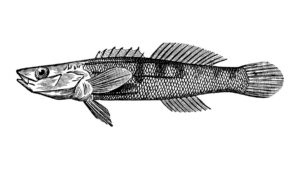


Guest Idea: How the Birmingham Darter Could Be Saved by the Project Marvel Data Center
Three small, easily overlooked fish swimming in Valley Creek near Birmingham, Alabama, are: the Birmingham darter, the watercress darter, and the blackbanded darter. Each is about two inches long—olive-toned, banded, and built for life on the stream bottom, with large pectoral fins that let them perch among gravel and flow.
For years, they were thought to be variations of the same species. In April 2025, genomic analysis confirmed something more fragile and more important: the Birmingham darter is its own species, found nowhere else on Earth. Unlike its relatives, it does not occupy the main channel. It lives in small tributaries and headwater streams—the very places most vulnerable to drying, warming, and disturbance.
Only a handful of populations are currently known, confined to the upper Valley Creek watershed and a few adjacent tributaries—a drainage area of roughly 65 square miles. Recent surveys have extended the known range into Little Blue Creek, Nabors Branch, and Halls Creek, but at least one population is feared extirpated. It is extremely difficult to count, but all evidence suggests a species on the brink.
The Birmingham darter is not alone in its vulnerability. Endangered mussels in Valley Creek, like the upland combshell and triangular kidneyshell, depend on darters to reproduce. Their strategy is as remarkable as it is precarious.
They release mucus or fleshy lures into the current that mimics a small fish, complete with an eyespot. When a darter strikes, it gets a mouthful of microscopic larvae. These larvae clamp onto the fish’s gills—like tiny Pac-Men—where they remain attached as they develop. This relationship is obligate. Without the host fish, the larvae die within days. Without mussels, Valley Creek loses vital natural processes, water filtration, nutrient cycling, and ecosystem stability.
Valley Creek has already experienced this kind of loss. A mussel species once dependent on American eels disappeared when dams blocked eel migration. Without its host, it could not reproduce and becomes extinct.
Fish in Valley Creek, including darters and redeye bass, depend on cool, flowing water sustained by groundwater-fed baseflow, especially in late summer when rainfall is scarce.
The threat they face is more fundamental than any single pollutant or disturbance. The threat is hydrologic collapse. If groundwater recharge is reduced, if headwater streams dry, if flow becomes intermittent in August and September, the habitat disappears—not gradually, but functionally all at once. The problem is that even a resilient system, like Valley Creek, cannot survive without water.
The Opportunity
Into this fragile ecosystem comes Project Marvel.
Bessemer has rezoned 1,600 acres along Valley Creek for a campus of 18 data center buildings—an immense, water- and energy-intensive development at the edge of a watershed already under strain.
At first glance, the risks are clear. Replacing forest with roofs, roads, and compacted ground reduces the land’s ability to absorb rain. Water that soaked into the soil and slowly fed the creek instead runs off quickly, intensifying floods in wet months and starving the creek in dry ones. The result is a more volatile system with higher peaks and lower lows.
Given the steep-sided topography of the Project Marvel site, flash flooding is not an occasional event; it is the norm. When it rains, water moves fast. Flow in Valley Creek can surge from roughly 70 cubic feet per second to over 400 cfs within hours, transforming the creek from a modest stream into a fast-moving, erosive force.
With more extreme weather events—more rain falling in shorter periods—these spikes are intensifying. More water arrives all at once, runs off more quickly, and leaves just as fast.
This is the paradox at the heart of Valley Creek: Too much water when it rains; not enough when it matters. The system is not short of water but short of storage, infiltration, and timing.
This could be the end for Valley Creek as we know it.
However, Project Marvel also introduces something the watershed has never had at this scale: control.
Data centers are not passive users of water. They are engineered systems—precise, monitored, and responsive. They require planning, storage, redundancy, and reliability. These same qualities, if directed outward, can be used not only to consume water but also to manage it.
Rather than constantly taking water from the creek, the solution is to take control and reshape when and how water is used.
Project Marvel can capture high flow during storms and store it in larger cisterns, underground vaults, or managed basins.
Make stormwater an asset, reduce peak flows, and retain water in the watershed for later use. Stormwater becomes an asset rather than a waste stream when peak flows are reduced, water is held in the watershed, and water supply is secure for later use.
The data center can rely on stored water during the hot, dry days of August and September, when the creek flow is 1 to 3 million gallons per day, and Project Marvel needs 2 million gallons per day. Leave the creek alone when the Birmingham darter is most at risk. No surface-water withdrawals during August and September. When the Birmingham darter is most at risk, let it be. Leave the creek undisturbed.
Water storage alone is not enough. The system must also restore what has been lost: the land’s ability to retain water. Bessemer has rezoned 1,600 acres along Valley Creek for a campus of 18 data center buildings. The site to be developed today supports oak-hickory-sweetgum forests and the loblolly pine and hardwood understory forests, including dogwoods, tupelo, holly, redbud, serviceberry, and witch hazel.
These forests intercept rainfall, build soil, and allow water to infiltrate and recharge groundwater. Their removal—and the compaction and grading that follows—eliminates that function.
Using approaches such as Miyawaki plantings, high species diversity and dense native forests can rapidly build soil to rejuvenate degraded industrial land, floodplain edges, and abandoned commercial sites. Over time, these forests increase water infiltration into the ground, build organic matter and humus, store more water in the ground, and release cool water slowly back into streams, especially during dry and hot periods.
With responsible, savvy control, Project Marvel becomes more than just a development. It engineers a water infrastructure for the watershed. Capturing excess water during flash flooding, storing it for dry periods, recharging groundwater through restored landscapes, and maintaining flow when it matters most, the data center becomes a marvel for the Valley Creek watershed.
This is more in keeping with what the Birmingham darter requires. Reliable, cool, flowing water in late summer is something more specific and achievable than pristine wilderness. If Project Marvel is designed with that goal in mind, it will be known as the project that learned how to keep Valley Creek flowing.
What Must Be Required
The survival of the Birmingham darter and the integrity of Valley Creek cannot depend on voluntary measures, best practices, or future promises. It must be secured through clear, enforceable standards embedded in permits, approvals, and long-term oversight.
If Project Marvel is to become a benefit rather than a liability, three things must be required: protect the creek when it is vulnerable, capture and manage water when it is abundant, and restore the land’s ability to hold water.
No surface-water withdrawals from Valley Creek during August and September, months when: streamflow is lowest, water temperature is highest, dissolved oxygen is most limited, and aquatic species are most stressed.
At this moment, even modest withdrawals can have outsized impacts. This standard must be written into permits, continuously monitored, and publicly reported. If flows fall below a defined ecological threshold, withdrawals should be restricted even outside these months.
Project Marvel must operate as a closed-loop system during dry periods, not a continuous user of streamflow. This requires stormwater capture systems sized for extreme rainfall events; cisterns or underground storage sufficient to supply August–September demand; and redundant storage capacity to ensure reliability.
A performance-based requirement could be requiring the facility to demonstrate the ability to meet all cooling water demand for at least 60 consecutive summer days without surface-water withdrawals. This shifts the burden from the creek to the project.
Traditional stormwater permits focus on peak flow reduction. That is not enough. What matters ecologically is the full flow regime—how water moves through the system over time. Project Marvel should be required to match pre-development runoff volume, maintain infiltration rates comparable to forested conditions, and limit rapid runoff that creates flash flooding. The goal is not just to prevent flooding, but to preserve the timing and distribution of water that sustains the creek.
Because 1,600 acres cannot be fully replaced onsite, restoration must extend across the watershed. A binding offset requirement should include restoration of two to five acres for every acre of effective impervious surface not fully mitigated onsite.
Priority placement is in headwater tributaries, floodplain corridors, and degraded industrial and commercial land. These restorations must do more than plant trees. They must rebuild soil structure, increase infiltration, and reconnect groundwater to streams. Performance metrics should include soil organic matter, infiltration rates, vegetation survival, and canopy development.
Streams cannot function without shade, stability, and filtration. Requirements should include wide, continuous riparian buffers along all streams and tributaries, no clearing, grading, or compaction within these zones, and active restoration where buffers are degraded. These buffers will reduce water temperature, stabilize banks, filter pollutants, and provide habitat continuity.
None of these matters without accountability. Project Marvel must include continuous monitoring of streamflow, water temperature, and withdrawal volumes. Required are public reporting of data and independent oversight. There must be clear consequences for non-compliance. Without enforcement, standards become suggestions.
The past is no longer a reliable guide. Permits must account for more intense rainfall events, longer dry periods, and increased variability. This means designing for larger storm capture, longer storage duration, and more conservative withdrawal limits.
The guiding principle should be simple and measurable. No net loss of groundwater recharge. No net increase in damaging runoff. No degradation of summer baseflow. If those conditions are met, the system holds. If they are not, the system fails.
Project Marvel will reshape the Valley Creek watershed. That is already decided. What remains undecided is whether it will be another step in a long pattern of degradation or a turning point—one where development is required not just to avoid harm but to repair what has already been lost.
The Birmingham darter does not have the ability to negotiate, adapt, or relocate. It depends entirely on the decisions made here. Those decisions must be precise. They must be enforceable. And they must be made now.
About the Author
Dr. Rob Moir is a nationally recognized and award-winning environmentalist. He is the president and executive director of the Ocean River Institute, a nonprofit based in Cambridge, MA, that provides expertise, services, resources, and information not readily available locally to support community efforts. Please visit www.oceanriver.org for more information.
The post Guest Idea: How the Birmingham Darter Could Be Saved by the Project Marvel Data Center appeared first on Earth911.