Normal view

Climate change has already made Australians in one state much poorer, and more’s to come

The world’s hottest years over the past decade have coincided with stagnant economic productivity, rising prices and geopolitical instability.

Is this just coincidence or has the current level of climate change been one of the drivers? Climate change is often framed as a problem for the future. But how much economic damage has today’s current level of ~1.35°C of warming already caused?

To answer that question, we analysed the effects of climate change to date on the New South Wales economy. The results were released today as part of a Net Zero Commission report.

We estimate climate change has already caused median losses of around 18% (probability range 4–33%) to the NSW economy, the biggest economic jurisdiction in the country. At a median 18% loss, that translates to about A$21,300 per person on average in yearly income.

We show that it’s not local bushfires or flooding that are driving the majority of damage, but changing global weather that in turn affects our cost of living.

Imagine a world without climate change

Studies typically project the global economic damage that climate change will do by 2050 or 2100.

Some influential estimates have suggested climate damage would be fairly small. But our recent research and work by others shows the economic damage coming down the pipeline could be more than four times larger than previously thought.

Our research question for this report was different: “What would the NSW economy look like today if historical emissions of greenhouse gases had not caused climate change?”

This requires a thought experiment: imagining a past where we burn fossil fuels at the historical rate, but the additional carbon dioxide and other atmospheric gases do not cause changes to temperature or rainfall patterns.

Answering this question will allow us to understand the economic losses we have already endured from historical climate change.

How we did it

First, we collected data on historical economic growth and weather across the world over the past 70 years. We then modelled how weather changes (or shocks) impacted economic growth over this period. There is significant debate on how to do this, so we adopted a variety of approaches.

Then we had to plausibly guess at how the weather would have evolved in the past four decades without climate change. To create this hypothetical weather series, we simply removed any trend found in the weather data which we ascribe to human-caused climate change. This works because there is no evidence natural causes have contributed to the upward trend in temperatures.

Finally, we compared economic growth rates predicted by the models under the observed and under the hypothetical weather conditions. The contrast between the total economic production of the NSW economy in the two scenarios is the economic cost of historical climate change for a given year.

What we found

We estimate the median economic loss for NSW in 2024 was 18%. There is significant uncertainty in this figure, with the lower estimates around 4% and the higher around 33%.

The median loss figure of 18% translates into an average of $21,288 in losses per person in yearly income (in 2023–2024 dollar values). In other words, the model finds that if historical warming had not occurred then people living in NSW would each have $21,288 more dollars, on average, in their pockets every year. This amount is large enough to meaningfully improve the quality of life of the state’s average household.

The models suggest the primary mechanism through which this loss has occurred is the rise in the global average temperature. When people think about losses associated with climate change in NSW, they might consider how climate change exacerbated the bushfires of 2019–20, or the floods that followed. The damages they caused are, of course, real and significant.

However, the economic models suggest the majority of the damage has come from shifts in weather globally. Given the interconnectedness of modern economies through trade and global supply chains, it is reasonable to assume that climate shocks to supply chains affect the whole globe.

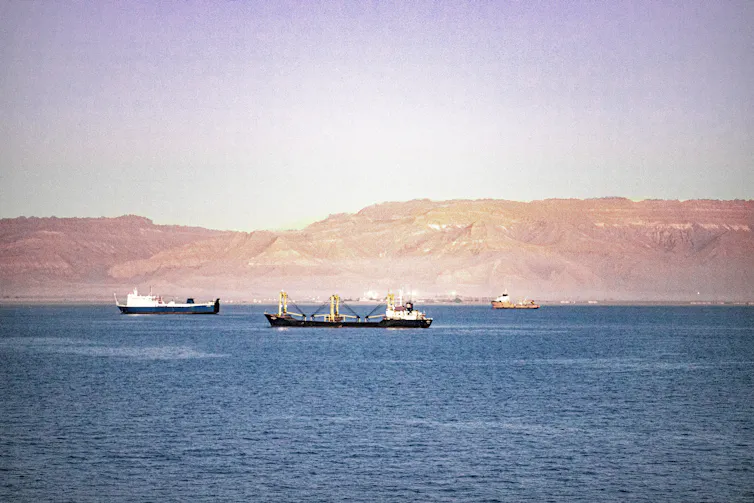
Large cargo and tanker ships sail through the Strait of Hormuz.
The interconnectedness of the global economy can be seen in the downturn following the US-Israel war with Iran and the halt to shipping in the Strait of Hormuz. Eric Seddon/Pexels, CC BY

How we think about climate change

When pollsters ask Australian voters what issues they care about, “climate change” is often listed as one issue among many. Voters are asked to assess how important climate change is to them relative to the cost of living, public health, interest rates, secure employment, and other important things.

Presenting issues in this way reinforces a common misconception that they are independent, and that one can be prioritised over the other.

To the contrary, there is now good evidence that climate change is strongly related to economic outcomes, which in turn drive the cost of living, interest rates, investment in in health and education and the labour market.

It’s time to stop thinking of climate change as “merely” an environmental issue, which can be discarded when economic times are tough. Instead, we should recognise what it really is: a current and ongoing threat to our standard of living.

The Conversation

Timothy Neal receives funding from the Australian Research Council.

Ben Newell receives funding from the Australian Research Council

Rice feeds billions of people – but its role in fueling climate change is growing

Rice paddies are essential to lives and livelihoods in many parts of Asia. Jingting Zhang

Rice feeds more than half the world. From terraced paddies in Southeast Asia to irrigated fields in China and India, it underpins daily meals for billions of people.

But the same flooded soils that help rice thrive also create ideal conditions for microbes that release climate-warming gases.

In a new study, our team of environment and agriculture scientists found that greenhouse gas emissions from rice paddies have nearly doubled globally since the 1960s, averaging about 1.1 billion tons of carbon dioxide-equivalent emissions per year in the 2010s. That’s roughly equal to the annual emissions of 239 million cars.

This makes rice-growing the largest emissions source in agriculture outside of livestock, and rice demand is expected to keep rising.

Farmers have ways to reduce their rice crops’ emissions without lowering their yields. If every grower used the best currently available “climate-smart” options, we found that global rice emissions could be reduced by about 10% by midcentury. However, greater reductions are needed to slow climate change, which would require developing additional, more effective strategies.

Why rice emissions have increased

Rice emissions have risen for two reasons: the expansion of rice cultivation area and the intensification of management practices.

Just over half of the global increase is from the expansion of rice-growing areas. In Africa, for example, the rice-growing area has roughly doubled since the 1960s, helping drive a twofold rise in methane emissions in the region.

At the same time, rice farmers are using more fertilizers and organic amendments, such as straw and manure, planting more productive rice varieties and growing the plants closer together. The result is more rice but also more greenhouse gas emissions.

People walk through a rice field on a hill with golden crops and more hills in the distances.
After rice is harvested, one technique for improving soil fertility is to plow the dried rice stalks back into the soil. But this also increases methane emissions. Jingting Zhang

We found that one practice in particular – leaving rice stalks in the field after harvest and then plowing them into the soil to improve soil fertility – was responsible for about 18% of rice’s increase in overall net emissions since the 1960s. The reason: It increases the organic matter in the soil, which microbes then decompose, creating more methane emissions.

Rising global temperatures further accelerate microbial activity in the soils, meaning even more emissions.

Fertilizer is another major contributor to emissions. Use of synthetic nitrogen increased by about 76% after 2000, boosting nitrous oxide – another powerful greenhouse gas. It contributed about 9% of the increase in total global net emissions from human activities.

Irrigation practices also affect emissions. In the past, irrigated rice paddies were kept flooded throughout the growing season, resulting in constant greenhouse gas emissions produced by microbes that thrive in the wet environment. Over the past two decades, however, more farmers have used intermittent flooding – draining their fields periodically.

This change has lowered methane emissions compared with keeping the paddies continuously flooded. However, we found a slight increase in nitrogen oxide emissions as soils cycled between wet and dry, which induces microbes to transform nitrogen in organic matter into nitrogen oxide gases, particularly nitrous oxide.

Climate impact of rice production

Putting a full climate price tag on rice production is harder than measuring one greenhouse gas at a time.

Rice paddies emit methane and nitrous oxide from wet or flooded soils. They also remove carbon dioxide from the atmosphere as rice grows, and they lose carbon from their soils between crop seasons.

A credible global estimate requires consistently accounting for different gases and soil carbon changes, as well as the uncertainty involved in tracking data across space and time.

To do that, we combined three approaches:

  • An ecosystem computer model allowed us to simulate crop growth, water conditions and soil processes to estimate changes in methane, nitrous oxide and soil carbon together.

  • An artificial intelligence-powered machine learning model improved estimates where measurements were sparse to cover all rice regions in the world.

  • And a meta-analysis of more than 1,200 field experiment sites provided direct evidence of how practices such as irrigation, fertilizer use and management of crop residue affect emissions.

Together, they allowed us to quantify emissions from 1961 to 2020, determine what drove those emissions, and test the potential of mitigation techniques under future climate conditions.

What works and doesn’t for climate mitigation

There are ways to reduce emissions from rice production without sacrificing yield.

Our study found that reducing fertilizer use and residue applications, managing irrigation to allow dry periods in between flooded ones and reducing tillage could, together, reduce global greenhouse gas emissions from rice by about 10% by midcentury.

We were surprised to find that replacing chemical fertilizers with more organic choices is not always better from a greenhouse gas perspective, although it is valued in organic farming.

Maintaining moderate amounts of straw and other crop residue in the field can help boost soil fertility, but too much can increase methane emissions and accelerate the loss of carbon from the soil. Another option is to convert part of the residue into biochar – burning it under low-oxygen conditions before mixing it into flooded soils. Biochar can help stabilize soil carbon and reduce methane emissions.

A view across flooded rice paddies with mountains in the distance.
Rice has long been grown in flooded fields, which promotes methane production. By intermittently draining the fields, researchers found farmers could reduce their fields’ methane emissions. Jingting Zhang

Improving water management can be a powerful tool for reducing emissions. Periodically draining fields reduces methane production, though it may slightly raise nitrous oxide emissions. This strategy is particularly effective in regions with reliable irrigation infrastructure, including large parts of Asia.

Managing fertilizer use is also an effective mitigation strategy, particularly in highly fertilized systems, including parts of China and South Asia. Excess nitrogen increases nitrous oxide without a clear increase in crop yields and increases water pollution. Reducing overapplication of nitrogen reduces emissions and water pollution, and it saves farmers money in the process.

The effects of tilling, the practice of plowing the soil between crop seasons, have large regional differences. Reducing tilling is often promoted as climate-friendly, but we found that it does not always minimize net emissions in flooded systems. In rice fields in temperate zones, including much of the U.S. and China, cooler conditions can limit methane production, allowing the soil carbon benefits of reduced tilling to outweigh the methane risk. In warmer, persistently flooded systems, however, low-oxygen conditions can boost microbial activity, increasing methane production and accelerating soil carbon loss.

Overall, we found that no single practice works everywhere. Each region will need to assess the most effective practices for reducing emissions.

A climate ceiling for rice production

The bottom line is both hopeful and sobering: Targeted sets of optimized practices can deliver meaningful emission reductions without losing rice yields, but the total global possible reduction is modest.

To reduce emissions further will require better guidance to help farmers determine the best levels of organic amendments, such as straw or biochar, and new approaches that can reduce emissions without undermining rice production.

The Conversation

Hanqin Tian receives funding from US Department of Agriculture, US National Science Foundation, and Andrew Carnegie Fellowship Program.

Pep Canadell receives funding from the Australian National Environmental Science Program-Climate Systems Hub.

Shufen (Susan) Pan receives funding from U. S. National Science Foundation

Jingting Zhang does not work for, consult, own shares in or receive funding from any company or organization that would benefit from this article, and has disclosed no relevant affiliations beyond their academic appointment.

Australia is facing a new 12.5% US tariff over anti-slavery claims. Are they actually right?

SimpleImages/Getty

The United States is threatening to impose trade tariffs of up to 12.5% on 60 countries, including Australia, over their inaction on forced and slave labour worldwide.

On Wednesday, US trade representative Jamieson Greer said:

The failure of our most important trading partners to address the importation of goods made with forced labor is unacceptable.

Australian Prime Minister Anthony Albanese responded that a new tariff on exports to the US was “unjustified”, as Australia has “robust, comprehensive and world-leading legislation addressing forced labour and modern slavery”.

Who’s right? And are the US claims about other nations turning a blind eye to forced and slave labour – where a person is either forced to work, or even owned by someone else – actually true?

Which countries could face new tariffs

In a new report released by the US Trade Representative, 54 countries – including Australia, China, New Zealand and the United Kingdom – were found to have:

failed to impose a legal prohibition on the importation of goods produced wholly or in part with forced labour and to effectively enforce such a prohibition.

All of those countries face a proposed 12.5% tariff on their exports to the US.

Another six economies – including Canada, the European Union and Indonesia – face lower 10% tariffs. They were seen to have done more overall, but failed to effectively enforce their own laws.

Forced labour is a form of modern slavery, defined under international law as “all work or service which is exacted from any person under the threat of a penalty and for which the person has not offered himself or herself voluntarily”.

This definition is consistent with an almost century old US law, Section 307 of the US Tariff Act of 1930. It’s now being used to legally justify this latest round of tariffs.

The US has a strong history of taking legislative action against forced labour. Section 307 prohibits imports of goods mined, produced or manufactured by forced labour.

In 2022, the US also established the Uyghur Forced Labor Prevention Act, prohibiting goods being imported from China’s Xinjiang Uyghur region, where there are “credible” allegations of widespread forced labour.

‘We get one ruling, we do it a different way’

These proposed forced labour tariffs appear to be less about labour rights and more about trade.

This latest move comes after US courts blocked US President Donald Trump’s sweeping international tariffs announced over the past year. That prompted Trump to pledge: “We get one ruling, and we do it a different way.”

As former Australian ambassador to the US Joe Hockey said about the new forced labour tariff today, “America is running out of money and they need to get it from somewhere”.

These tariffs are still subject to public consultations over the next month.

While using tariffs as a way to strengthen action on forced labour is questionable, there is some substance behind the US allegations.

41,000 people in Australia alone

An estimated 50 million people around the world – and rising – are trapped in modern slavery, more than half of those in forced labour.

Australia is estimated to have more than 41,000 people working as forced labourers or other forms of modern slavery, including child marriages.

Reports to the Australian Federal Police of human trafficking have nearly doubled in the past five years.

Australia’s laws are not world leading

In 2018, Australia established its Modern Slavery Act. This law was hailed as a critical first step in acting on modern slavery.

The law requires large business to report annually on the risks of modern slavery in their operations and supply chains.

Since 2019, more 17,000 modern slavery statements from more than 27,000 businesses have been lodged on Australia’s modern slavery registry.

Yet in 2023, an independent report found:

there is no hard evidence that the Modern Slavery Act in its early years has yet caused meaningful change for people living in conditions of modern slavery.

That’s not surprising: there is no enforcement built into the law.

What more needs to be done?

If Australia does want to have “world-leading” laws – and a stronger case to argue for lower US tariffs – what needs to change?

While the Modern Slavery Act has raised awareness of the problem in Australian boardrooms, it is not improving the working conditions of supply chain workers, here at home and overseas.

So Australia needs to move quickly to strengthen that law with enforcement, and establish a forced labour import ban.

A 2023 review of the Modern Slavery Act recommended penalties for companies failing to comply with reporting requirements and the introduction of a human rights “due diligence obligation” – similar to European Union laws and emerging requirements in South Korea, Thailand and Indonesia. This sees companies working to reduce human rights harms not just in their own factories, but through their suppliers’ suppliers too.

The Albanese government partially accepted some of the 2023 report recommendations, including the need for penalties. Three years on, it’s failed to take serious action.

The Australian government should also establish a forced labour import ban, like one the EU passed two years ago, now being phased in across all 27 member states. This would stop specific goods suspected of being produced with forced labour at the border.

Whether these proposed tariffs come into force or not, this new US forced labour investigation could actually do some good.

Right now, millions of people are working in dangerous, dehumanising conditions to make goods sold in Australia and worldwide. It’s long overdue to do more to stop it.

The Conversation

Justine Nolan does not work for, consult, own shares in or receive funding from any company or organisation that would benefit from this article, and has disclosed no relevant affiliations beyond their academic appointment.

Is the ‘Quad’ dying a slow death? Even with Trump, it still has a vital role to play

Analysts have tried to make sense of US President Donald Trump’s second term with countless, sometimes contradictory, labels. He’s isolationist and transactional. He’s a populist. Or, more recently, a neoconservative.

One way to make sense of both him and the broader state of geopolitics at the moment is to understand the difference between structure and agency.

Trump has undoubtedly exercised his agency in expansive ways since beginning his second term. Yet, at the same time, he has been constrained by structural limitations. The Supreme Court’s ruling against his Liberation Day tariffs is one example. Another is Congress’ release of the Epstein files.

Even Trump’s fiercest boosters will admit that he is, like his predecessors who also sought to expand executive powers, limited by the US constitution and its stipulation of three co-equal branches of government.

The same goes for foreign policy. Trump can berate allies, implement tariffs and withdraw from international institutions, but he can’t fundamentally alter certain structural realities. This is helpful in making sense of the way Trump’s actions are impacting the US’ alliances and partnerships.

A pivotal moment for the Quad

This week, the foreign ministers of the four nations in the so-called “Quad” – the United States, Australia, Japan and India – met in New Delhi.

The leaders of these nations, however, haven’t gathered for a summit since 2024, when Joe Biden was president. India was meant to host last year, but a summit never came together. It’s unclear if one will happen this year, either.

This has prompted much handwringing. Critics are saying the Quad is drifting “towards irrelevance” and “on the brink of extinction”.


Read more: Trump tariffs and warming India-China ties have silenced the Quad partnership … for now


Yet, as much as the leaders of the four nations have exercised their agency in distinct ways – including, at times, changing the trajectory of the Quad to be less ambitious – the structural dynamics in the Indo-Pacific remain unchanged.

China’s rapid military buildup, extensive maritime aggression, economically destabilising practices, wolf-warrior diplomacy and violent border clashes have altered the strategic calculations of the region for the foreseeable future.

This is why, before the Trump administration took office in January 2025, the four Quad nations dramatically expanded the group’s scope and ambitions. The members agreed to cooperate on everything from fighting cancer to developing vaccines to enhancing cyber security.

They declared at their last leaders’ summit:

…[the] Quad countries have built a vital and enduring regional grouping that will buttress the Indo-Pacific for decades to come.

US-India ties go downhill

This is not to say there hasn’t been challenges.

No single issue has been as problematic for Quad ambitions in the second Trump administration than US-India ties.

For decades, US presidents have all touted the importance of a powerful, independent and democratic India to American’s national interests. In their view, India served as a helpful counterbalance to China in the Indo-Pacific. It was the first Trump administration, after all, that resuscitated the Quad in 2017. (The group was originally formed in 2007, but fell apart soon after that.)

Trump also befriended Indian Prime Minister Narendra Modi during his first term, calling him “one of America’s greatest, most devoted, and most loyal friends”.

Since 2025, however, India-US relations have soured due to the second Trump administration’s massive immigration crackdown, his tariffs on India, tensions over India’s purchases of Russian oil and Trump’s growing closeness with Pakistan.

And after a testy exchange between Trump and Modi over the phone last June, Trump reportedly cancelled his plans to travel to India for the summit.

An effective counter-balance to China

Beijing has been opposed to the Quad since its inception, accusing the four democratic members of encirclement, engaging in a Cold War mentality and antagonising China. Beijing said it would accelerate its own military modernisation in response.

After the Quad disbanded in 2008 – for reasons that remain debated – one US scholar argued:

The Quad came down and China did exactly what it said it was going to do if the Quad persisted.

Unsurprisingly, China has continued to oppose the Quad since it regrouped. It still sees the Quad the same way the four members envisioned it – as an effective, albeit still nascent, counterbalance to China.

At this week’s foreign ministers’ meeting in India, the Quad members agreed to jointly build a port in Fiji, increase critical minerals cooperation and expand maritime cooperation in the region.

Beijing wasn’t impressed. Almost immediately after the meeting ended, Chinese state media ran a story with the headline, “Beijing blasts exclusive cliques after Quad meeting”.

Why the Quad still matters

Public opinion in the four Quad countries also shows firm backing for the alignment. Our polling at the US Studies Centre at the University of Sydney in 2025, for example, found respondents were far more supportive of the Quad becoming a formal military alliance than not.

Australians were the most supportive (49% agree), followed by Indians (44%), Americans (42%) and Japanese respondents (41%). Only a small number of respondents in the four nations opposed the Quad becoming a formal military alliance (from 7-15%). The rest either didn’t know or were unsure.

Cooperation among the Quad members is continuing to expand and deepen, as well. With every passing year, the Quad nations are engaging in an increasing number of military exercises, humanitarian and disaster assistance activities, and maritime cooperation efforts.

The individual leaders of the four nations will continue to change. And they will at times have significant reservations about each other. Yet China’s destabilising behaviour gives the Quad members few alternatives but to persist in using their agency to counterbalance Beijing’s revisionist agenda.

The Conversation

Jared Mondschein does not work for, consult, own shares in or receive funding from any company or organisation that would benefit from this article, and has disclosed no relevant affiliations beyond their academic appointment.

Deep-rooted inequalities are driving the latest diphtheria outbreak. But we can fix them

Cristian Ruboni/Getty

The current diphtheria outbreak – which has spread across four Australian states and possibly claimed one man’s life – may seem unexpected.

But a closer look shows it is yet another example of inequitable systems – including inadequate housing, a lack of washing facilities and under-investment in preventive health care – driving the spread of infectious disease in Australia’s remote communities.

For decades, groups such as the National Aboriginal Community Controlled Health Organisation – Australia’s national authority on Aboriginal and Torres Strait Islander health care – has urged authorities to address these issues.

So why do they still exist? And can we fix them?

An historic outbreak

Diphtheria is caused by a toxin-producing bacteria, Corynebacterium diphtheriae.

This potentially fatal disease can spread between people through respiratory droplets, or direct contact with infected wounds, skin sores or bodily fluids.

In this latest outbreak, roughly 70% of cases have presented as cutaneous (skin) diphtheria and about 30% as respiratory (throat) diphtheria.

Cutaneous diphtheria is usually less severe, but remains a public health concern as skin sores can facilitate the spread of the disease.

Respiratory diphtheria is the form most associated with severe illness and death.

As of 25 May, authorities say there has been one possible death related to diphtheria in the Northern Territory. The latest data shows Australia has recorded more than 230 diphtheria cases since January 2026.

The federal government recently pledged A$7.2 million to help curb this outbreak, working in close collaboration with the National Aboriginal Community Controlled Health Organisation.

However, we are not only concerned about diphtheria itself, but the inequitable conditions that may help it spread.


Read more: Australia is battling its worst diphtheria outbreak in decades. But vaccines could curb it


Why is it spreading so quickly?

We believe the conditions contributing to the high rates of skin infections in remote Australia are driving this historic diphtheria outbreak.

Remote Aboriginal communities face high rates of preventable skin sores, which can cause severe diseases including sepsis, acute rheumatic fever and rheumatic heart disease.

These sores, generally caused by Streptococcus pyogenes and Staphylococcus aureus, are preventable. But doctors and health care workers may miss them, especially if they are working in busy, under-resourced remote clinics.

Certain environmental factors may allow skin sores, and related diseases such as diphtheria, to spread more rapidly in First Nations communities.

One is insufficient housing. A lack of safe, clean housing may cause infectious diseases – such as strep, staph and diphtheria – to spread more quickly from person to person. In remote communities, this can happen in households, in schools and at community events.

Another environmental factor is overcrowding. Overcrowding puts pressure on home plumbing systems, meaning blocked toilets, broken taps and leaking pipes become more common. If people can’t wash their hands or bodies, this increases their risk of getting infectious diseases such as diphtheria. Research shows even simple hygiene practices, such as handwashing with soap and water, reduces skin sores.

Many remote households also struggle to access basic maintenance or repair services. Even basic jobs, such as fixing a leaking tap, washing machine or a broken hot water system, may take weeks or months. This has direct health impacts, as people may not have the water or facilities to wash themselves or their clothes.


Read more: Why simple school sores often lead to heart and kidney disease in Indigenous children


So, what can we do?

In the current outbreak, vaccine boosters are essential to preventing severe illness and death. But long-term, vaccines alone won’t stop the spread of diphtheria and other infectious diseases.

For that, we need to fix our systems. Research suggests public health responses tend to focus on specific diseases, instead of the structural problems that drive their spread.

So to prevent future diphtheria and other outbreaks, we need to invest more in remote communities. We must build and maintain homes that have the space, water and washing facilities to keep people clean and healthy at home. We also need to make hygiene and cleaning supplies more affordable by aligning prices in remote communities with those in urban areas.

We must also involve First Nations communities in all public health initiatives. In many cases, remote communities already know the solutions to the issues they face. This was evident during the COVID pandemic, when Aboriginal leaders spearheaded the public health response in remote communities. As a result, Australia recorded far fewer Indigenous deaths than other countries.

Sitting with and listening to our First Nations communities takes time. But it demonstrates a commitment to working together, and is key to making public health responses as effective and sustainable as possible.


Read more: How we partnered with local communities to halve skin sores among Aboriginal children in remote WA


The Conversation

Asha Bowen receives funding from the National Health and Medical Research Council of Australia and the Medical Research Futures Fund of Australia.

Lorraine Anderson is affiliated with RACGP and AMA.

Stephanie Enkel does not work for, consult, own shares in or receive funding from any company or organisation that would benefit from this article, and has disclosed no relevant affiliations beyond their academic appointment.

‘Poverty porn’: the moral dilemma behind MrBeast’s billion-dollar empire

YouTube/MrBeast

Jimmy Donaldson, better known as MrBeast, runs the most subscribed-to YouTube channel in the world (with 484 million subscribers) and has an estimated net worth of US$2.6 billion.

He is also a prominent philanthropist. Beyond his involvement in fundraising initiatives such as #TeamTrees, which claims to have planted more than 24 million trees worldwide, Donaldson runs a dedicated Beast Philanthropy YouTube channel.

He claims 100% of profits from this channel’s ad revenue, merch sales and sponsorships go towards helping others. This has included paying for 1,000 cataract surgeries, constructing a medical clinic for children rescued from slavery, and building 100 wells to provide clean water in Africa.

These impressive philanthropic endeavours have dramatically improved the lives of their recipients. How could any of this be controversial?

The murky ethics of ‘stunt philanthropy’

Many of Donaldson’s videos involve subjecting people to what might be seen as degrading or exploitative situations, in exchange for money.

In Donaldson’s “Ages 1 – 100 Decide Who Wins $250,000” video, contestants (including young children) are put in an intense competitive structure and forced to eliminate one another. We see a grown man help to intentionally eliminate an 11-year-old girl, which leads to her sobbing on camera.

In another video, he tells a random group of shoppers they will win US$250,000 if they are the last to leave the store. Under pressure to stay, they are kept from their families and forced to endure poor living conditions, with some experiencing emotional breakdowns.

These videos have been labelled by various critics as “poverty porn”, as they could be seen as exploiting the desperation of vulnerable people to generate clicks and ad revenue.

The Beast Games reality series, which airs on Prime Video, is also built around challenges designed to provoke contestants into backstabbing one another, experiencing emotional distress, and revealing depressing stories about how badly they need the money.

Allegations against Donaldson also extend to behind the scenes, particularly in regards to the culture of work in his companies.

In 2024, several contestants who took part in Beast Games filed a lawsuit against Donaldson’s MrB2024 and other companies involved in the production. They allege they were subject to “chronic mistreatment”, including the infliction of emotional distress, inadequate food and rest breaks, delays in receiving medication, exposure to dangerous conditions, and a failure to prevent sexual harassment.

More recently, a former Beast Industries employee sued two of Donaldson’s production companies after suffering alleged sexual harassment and gender bias at work.

You can’t morally offset exploitation of people

When it comes to assessing the ethics of Donaldson’s work, one option is to take a simple “consequentialist” perspective. Act consequentialism is the view that the right action is the one which leads to the most amount of good.

If a few people suffer exploitative conditions so many more people can enjoy life-saving surgery, then the moral calculus is likely to come out in favour of this situation. Of course, there are longstanding philosophical worries with such a view.

The 18th century philosopher Immanuel Kant argued it is wrong to use others as tools to achieve our own ends, even if our ends are morally admirable. Treating some people as mere means right now can’t be morally justified by promising to help others later on.

According to Kant, one’s motives for helping others are also important, and the moral worth of an action is determined by these motives. So helping others out of a sense of duty has a moral worth that doing the same act out of self-interest does not.

Is Donaldson’s philanthropy motivated by duty and care for others, or by clicks, esteem and ad-revenue? Or perhaps both?

We can’t know the answer. Although, Kant himself did believe all humans are likely to be morally corrupt at the very root of their character.

Consent and power

Irrespective of Donaldson’s motives, a broader point remains: his philanthropic videos are an integral part of his overall brand. The philanthropy helps to make the other, more exploitative videos (and the significant revenues they generate) more “morally palatable”.

After all, Donaldson could simply give his money away. He doesn’t need to make people compete, scheme and suffer for it.

One might counter that the participants have consented to being involved. But when you offer people in economically vulnerable situations potentially life-changing amounts of money to endure degrading conditions, the “voluntariness” becomes contestable.

This is not what ethicists consider “informed consent”. The offer can be so large that it clouds judgement. And for people without genuine alternatives, saying “no” may not be a realistic option.

The fact that Donaldson sometimes subjects himself to similar treatment, such as when he buried himself alive for seven days, deepens rather than lessens the worry, given the power asymmetries at play. He owns the production company, controls the conditions, and profits from the content in ways other participants do not.

The underlying structural concerns

When political problems, such as poverty, or a lack of access to healthcare or clean water, are reduced to entertainment, they undergo a form of what scholars call “depoliticisation”. Political failures that demand collective action, institutional reform and democratic deliberation instead become fodder for entertainment.

If we think we can help solve these problems just by watching viral videos, then we can avoid facing the structural issues that underpin them.

The Conversation

Paul Formosa has received funding from the Australian Research Council, and Meta (Facebook)

Marianna Martines: the infuriating reason you’ve never heard of this brilliant 18th-century composer

Imagine if the only musical artists from the 1980s you had access to were Madonna, Prince and Michael Jackson. Others, such as David Bowie, Whitney Houston or George Michael are not available because, we’re told, these artists fail to exhibit the same type of creativity as the other three “geniuses”.

It’s clearly madness, yet this in a nutshell is the gatekeeping situation that exists in classical music today.

Zoom back to the 1780s and the musical landscape was astonishingly diverse, with composers across the globe writing bucketloads of music not only for the church, but for theatres, salons, concerts and performance at home. And, contrary to what we seem meant to believe, none of this music was auditioned by a panel of experts with the “best of the best” selected for our moral betterment.

But what we have access to today from the classical era is the tiniest fraction of what was composed then. And of that fraction, we hear a still smaller subset, dominated by just three composers: Mozart, Haydn and Beethoven – as classical music website Bachtrack’s 2025 statistics attest.

Many significant composers haven’t survived as part of the modern classical canon. Take Marianna Martines (1744–1812), for example. She was an extremely popular Viennese composer, singer and keyboardist whose prolific compositional output was so highly rated in her own time that she was the first woman to be inducted into the Accademia Filarmonica di Bologna as a “master” composer.

Performing regularly for Austria’s empress Maria Theresa and sharing the keyboard with Mozart for four-hand duets at her own popular musical salons, she was at the heart of a booming Viennese musical culture.

Where is her music today?

Talent flourishes with investment, and Martines had it all: money, time, geography, social networks and an elite education. In fact, court poet and famed opera librettist Pietro Metastasio personally oversaw her education from childhood.

Martines’ compositional catalogue is substantial, including – strikingly – several large-scale choral-orchestral works such as the impressive Dixit Dominus (1774), 12 keyboard concerti (four of which survive), and 31 keyboard sonatas (three of which survive). Her music isn’t just fine – it is exceptionally good. Just listen for yourself. So why do we not hear her music today?

It wasn’t that she lacked contemporary advocates, and it wasn’t even that she was immediately forgotten after her death. Indeed, she was significant enough to have active detractors who worked to discredit her authority, as music scholar Judith Valerie Engel details in her research.

The problem, then, was not absence of talent, nor even absence of recognition, but the failure of later institutions to keep investing in the conditions that ensure music like Martines’ is heard.

Ensemble music – particularly larger forms such as choral and orchestral music – requires a rather different type of investment. We’re not able to access it without the complex and expensive assembly of notated scores, instruments, large spaces and dozens of people with specialist skills who know how to transform those dots on the page into musical sounds.

At the root of this are repetition and publication, both in text and in sound. Text, for the obvious reason that without access to printed materials – and I mean well-edited printed materials – the music cannot be played and therefore endure.

Music publishers have long been gatekeepers of musical taste, providing editorial credibility and a supply of materials to the market. This curatorial role was usurped by record producers, who determine what gets recorded and circulated – the new modern legitimising “text” of a musical work, as it were.

Repetition is absolutely essential. This crazy process of putting dots of ink on paper to communicate complex sonic and emotional ideas means that musical works rarely reveal their secrets the first time they are played.

In re-performance and re-recording, musical problems are solved and the infinite dimensions of the possible sound worlds are explored. This dialogue between performers does two crucial things in the establishment of a work within the canon. First, it refines the quality of performance and, with that, enhances the evaluation of the work itself. Second, the frequency of performance or recording generates familiarity – a significant driver of musical preference.

My heart genuinely aches when I think about how different my own life would have been had I grown up listening to Marianna Martines’ music alongside that of her contemporaries. So many limiting myths about women’s inherent musical – and therefore artistic and intellectual – abilities might never have taken root in my subconscious.

While in general the ability to produce knowledge and exert influence is increasingly moving away from historical centres of power, public reclamation of received music history still lags far behind, despite the herculean efforts of numerous musicians, musicologists and advocates.

The good news is that listeners have more ability than ever to discover the music that moves them. The intellectual shackles imposed by commercial and academic institutions when it comes to deciding what constitutes “good” music are slowly losing their potency. There is no doubt though, we are now facing a new era of curatorial power in the form of AI algorithms that shape the discovery of music and much else besides.

However, restorative projects such as this first recording of Marianna Martines’s complete surviving keyboard works provide that essential first step of the music’s modern publication.

It is now possible for listeners to discover this music, and for musicians to begin the long, necessary dialogue with it. Only then are we able to reclaim our rightful musical heritage.

The Conversation

Cayenna Ponchione-Bailey does not work for, consult, own shares in or receive funding from any company or organisation that would benefit from this article, and has disclosed no relevant affiliations beyond their academic appointment.

Online ads are becoming harder to spot – but we’re not powerless to stop it

Gabrielle Henderson/Unsplash

Profound changes are ahead for online advertising. At the recent Google Marketing Live event, the tech giant outlined expanded artificial intelligence (AI) systems for digital ads.

What will that look like? Picture ads integrated directly into your conversation with an AI chatbot. Or a discounted price that only you see because an AI system served it based on your browsing behaviour, intent to buy the product, and what’s available locally. And, of course, generative AI tool suites for producing online ads start to finish.

Meta and ByteDance (parent company of TikTok) have similarly accelerated the rollout of their own AI-driven advertising systems. Meta is expanding tools that automatically generate and personalise ad images, video backgrounds, captions and targeting across Facebook and Instagram feeds.

Facebook is offering tools to create personalised ads based on users’ interests and behaviours. Meta

Bytedance’s TikTok Symphony suite can generate promotional videos, scripts, AI avatars, dubbed voiceovers, and creator-style content from simple text prompts or product links.

At the same time, ads on these social media platforms are becoming harder to recognise. As one example, Instagram and Facebook recently eliminated their familiar “sponsored” labels in favour of smaller “ad” markers.

It may look like a minor interface tweak, but it signals something larger: the steady erosion of clear boundaries between advertising, entertainment, recommendation, and ordinary social interaction.

Dissolving into the flow

Social media platforms have engineered ads to mimic organic content. Just think of influencer and creator partnerships, AI-personalised search results, or brands using memes.

Increasingly, online ads are less of an interruption to the content you consume. Instead, they’re designed to dissolve into the flow itself.

When companies buy advertising space on social media, ads are automatically disclosed as a commercial message. With partnerships and AI-personalised results, the platforms currently offer limited forms of disclosure.

The result is a blurring of the lines. Products, ideas and political messages are spread through ads that look a lot like all other, non-sponsored content. And the less an ad feels like an ad, the more effective it often becomes. This is precisely where public accountability starts to break down.

For several years, researchers like us, working through projects such as the Australian Ad Observatory and the Australian Internet Observatory, have documented how difficult it already is to observe and analyse online advertising systems.

Our work has examined everything from political advertising and astroturfing campaigns, the marketing of alcohol and unhealthy foods, and the veracity of “green” claims made by advertisers.

In many cases, this work depends on relatively simple but crucial forms of signalling. Researchers need to know what counts as an advertisement, who paid for it, where it appeared, and why it was shown to particular audiences.

But those signals are weakening.

Blurry and harder to audit

A blurred system is harder to audit. Audiences should be able to recognise when they’re targeted with ads. Without clear ad disclosures, we can’t easily detect or question commercial influence in our feeds and search results.

New AI tools intensify this challenge. Instead of seeing discrete ads in your feed, you might be getting a stream of product suggestions and discounts nobody else sees. This means regulators and researchers can’t even audit them.

These personalised, disguised ads could also make product recommendations that are biased and potentially harmful. For instance, you might be telling an AI assistant that you’re stressed, and suddenly be offered a discount on a case of wine.

AI-driven dynamic advertising is highly concerning for products that are unhealthy, harmful or regulated – such as alcohol and gambling. If ads appear one moment and are gone the next, it’s almost impossible to make sure they comply with relevant regulations.

The danger is not simply that users may encounter more advertising. It’s that the underlying commercial and promotional logic and messaging become even harder to see.


Read more: OpenAI will put ads in ChatGPT. This opens a new door for dangerous influence


We’re not powerless

Australia’s emerging digital duty of care framework offers an opportunity to confront this problem directly. Much of the current discussion has focused, understandably, on harms such as misinformation, scams, abuse, or risks to children.

But opaque advertising systems are also a public interest issue. They shape political communication, consumer behaviour, health information, financial decision-making, and civic trust.

If platforms increasingly profit from blurring advertising and ordinary communication, then stronger positive obligations around disclosure and transparency become essential.

Minimum disclosures for digital advertising on social media should include:

  • consistent and clear human and machine-readable advertising labels across formats and services
  • accessible ad archives for public-interest scrutiny, including AI variations
  • inclusion of meaningful and accurate information about targeting and delivery, and
  • clear identification of AI-generated or AI-mediated advertising, including specifics on how AI was used.

This is not about banning advertising. Nor is it about returning to some imagined “clean” internet untouched by commerce. Advertising has always adapted to new media and will continue to do so.

But there’s a fundamental difference between visible persuasion and persuasion that disappears into the infrastructure.

Without clear signals on what is and isn’t an ad, we lose one of the few remaining ways to understand who is shaping the information environments we increasingly depend on every day.

The Conversation

Daniel Angus receives funding from the Australian Research Council through Linkage Project LP190101051 'Young Australians and the Promotion of Alcohol on Social Media'. He is a Chief Investigator with the ARC Centre of Excellence for Automated Decision Making & Society, and QUT Node Lead for the Australian Internet Observatory.

Nicholas Carah receives funding from the Australian Research Council through Linkage Project LP190101051 'Young Australians and the Promotion of Alcohol on Social Media' and Discovery Project DP250102499 'The Australian experience of automated advertising on digital platforms'. He is an Associate Investigator with the ARC Centre of Excellence for Automated Decision Making & Society. He is Deputy Director of the Australian Internet Observatory and Deputy Chair of the Foundation for Alcohol Research and Education.

Lauren Hayden does not work for, consult, own shares in or receive funding from any company or organisation that would benefit from this article, and has disclosed no relevant affiliations beyond their academic appointment.

Philadelphia plans to close 17 neighborhood public schools – here’s what went wrong when it shuttered 30 schools in 2013

The former Anna Howard Shaw Middle School in Southwest Philadelphia became Hardy Williams Elementary, a K-6 charter school, in 2015. Julio C. Vega, CC BY-NC-SA

The Philadelphia School Board voted in May 2026 to close 17 of its 218 schools. Seven are elementary schools, five are middle schools and five are high schools. Additionally, three other high schools will move into existing schools and share buildings.

I am an educational anthropologist and co-author of “Schools for Sale,” a forthcoming book that examines what happened during Philly’s last wave of mass school closures, when the district closed 30 of its 249 public schools between June 2012 and June 2013.

My co-authors and I are often asked by citizens, academics and stakeholders whether the School District of Philadelphia’s stated goals for closures – cost savings and reinvestment in existing schools – are achievable. People also want to know whether the current planned closures are similar to or different from 2013.

Shot of large beige building in foreground with glass skyscrapers in background
The Philadelphia School District plans to close 17 schools over the next year to help address its $300 million budget shortfall. Local schools and communities say they’ve been left out of the planning process. AP Photo/Matt Rourke

Why schools closed in 2013

The wave of public school closures 13 years ago in Philadelphia also swept other major American cities, including Chicago, New York and Washington, D.C. These cities, like Philadelphia, decided to close traditional neighborhood schools in order to consolidate underused buildings as the number of students enrolled in their districts dwindled.

In 2013, Philadelphia’s public schools were grappling with roughly 70,000 empty seats, in a district designed for 195,000 students.

This was the cumulative result of a decade of federal and state policies, including No Child Left Behind, passed in 2001, and Race to the Top, in 2009. Both policies tied school funding to standardized test performance, meaning that schools that failed to meet testing benchmarks were recommended for closure and charter conversion. These policies fueled rapid charter school expansion in Philadelphia and nationally.

Between 1999 and 2014, approximately 80 charter schools opened in the city. The share of Philadelphia students enrolled in charters leaped from 2% to 36%, and funding to support them followed the same path.

At the same time, the district faced mounting financial pressures after federal stimulus funds that the city received following the 2008 recession expired. Meanwhile, the costs of maintaining a parallel charter sector continued to grow.

A state law passed in 1997 requires all Pennsylvania districts to remit 70% of per-pupil funding to the charter each child attends instead of a public school. This drove up payments to charter schools by more than 3,000% from 1999 to 2014 and diverted funds away from district schools that still needed to maintain fixed costs, such as utilities, staffing and building improvements.

By early 2012, the district faced a US$300 million budget deficit. The district laid off more than 300 teachers and support staff the following year.

The district hired large consulting firms from out of state in 2010 and again in 2012 to evaluate which schools would meet the criteria for closure. The consultants considered building quality, building use and academic performance. They even created a way to measure school safety based on suspensions and violent incidents. One thing they didn’t do was visit the schools or communities. Ultimately, they listed 60 potential schools for closure.

This number narrowed to 30 after rounds of community meetings and a vote by the School Reform Commission, which at the time was a partially state-appointed, partially mayoral-appointed board.

Six public schools shuttered in June 2012 and another 24 in June 2013. The closures displaced nearly 10,000 students. Many went on to a new public school assigned to them; others went to charters or left the district altogether.

Man in white dress shirt and tie sits at school desk around middle school students in uniforms
Former Massachusetts governor and Republican candidate for president Mitt Romney visits the Universal Bluford Charter School in Philadelphia in May 2012 to promote his federal school choice plan. Mario Tama via Getty Images

Why schools are closing in 2026

Now, Philadelphia – along with other cities, including Baltimore, St. Louis, Houston and Atlanta – is planning a new wave of school closures.

As in 2013, officials cite underutilized space and the goal of redirecting savings from closures into long-deferred capital improvements for the district’s aging facilities. The average school building in Philadelphia is 75 years old.

Declining enrollment – there are approximately 20,000 fewer students in district-run schools than a decade ago – drives these vacancies, but the underlying dynamics of enrollment have also shifted.

Enrollment at in-person charter schools remains stable, having increased just 3% between 2017 and 2022. However, enrollment at cyber charter schools, where students attend classes virtually, more than doubled over the same period, thanks in part to the pandemic. Cyber charters now serve about 13,400 students districtwide.

A decline in enrollment at Philadelphia public schools reflects broader national trends. These include smaller kindergarten cohorts, declining birth rates, more people moving out of cities post-pandemic and recent federal immigration restrictions that have reduced the number of immigrant children enrolling in public schools nationwide.

Overstated savings, still-vacant buildings

In 2013, The School District of Philadelphia projected $28 million in cost savings from its closure plan. However, a report released later that year from the city controller predicted that the projected savings were overstated in the 2012 facilities plan and, in practice, did not materialize.

The report pointed to underestimated costs associated with students moving to new schools, the ongoing expenses of maintaining vacant properties and the relatively modest scale of the projected $28 million savings in the context of a roughly $300 million annual deficit.

Attendance rates and academic performance dropped both for students who transitioned from closed schools as well as for students at the receiving schools.

After the 30 schools closed, there was not a long-term facilities planning process to meaningfully invest in the school buildings that remained open. This lack of planning exacerbated many of the very conditions the current plan now seeks to address, a reflection of both lack of funds to maintain schools but also a lack of process by district facilities’ managers to meaningfully address building conditions after the 2013 closures.

My colleagues and I determined that nearly 30% of the Philadelphia schools that closed in 2013 have remained vacant or unsold in the 13 years since. Only 28% were repurposed for public educational use. The rest were converted into charter schools, demolished for university development or redeveloped as market-rate housing.

Meanwhile, cyber charters increased their revenue by $425 million and reserves to cover unexpected expenses by 144% between 2020 and 2023, with support from school choice advocates such as cyber charter leaders and advocacy organizations.

A performance audit by the Pennsylvania auditor general in February 2025 raised concerns about cyber charter administrators’ potential misuse of these funds, including spending on bonuses for staff and leadership, gift cards for donors, and real estate investments that did not pertain to educational purposes.

Clarity and accountability build community trust

We think that outsourcing closure planning to consultants – as happened in Philadelphia in 2013 and is happening again in 2026 – while offering limited opportunities for meaningful engagement beyond “community updates” that did not integrate public feedback, undermines parents’ and communities’ trust in the public education system.

In 2013 there was a lack of clarity from district officials around the intended outcomes of the school closures. The large transfer of public funds to more privatized schooling options such as charters occurred despite limited evidence of improved performance by charters, selective enrollment policies and ongoing concerns about their use of public funds. This shows that weak oversight allows problems such as empty seats and poor building conditions to persist. At the same time, students are being moved into a separate charter system that the district pays for, while neighborhood schools receive less funding and become more likely to close.

Today, more research supports alternative approaches to closing and selling schools. These include repurposing closed schools for community and educational purposes while retaining public ownership of the buildings. A reckoning with the expansion of both in-person and cyber charters has also been called for recently by The Philadelphia Inquirer’s editorial board.

Ongoing facilities master planning that focuses on capital investments and integrates community ideas into the future of existing buildings can minimize disruptions and build trust with communities affected. Yet despite the success of these alternatives in other cities, the current school closure process in Philadelphia continues to rely on much of the flawed logic of 2013.

Read more of our stories about Philadelphia and Pennsylvania, or sign up for our Philadelphia newsletter on Substack.

The Conversation

Julia McWilliams received funding from the Spencer Foundation.

Why Trump’s $2 billion buyoff to cancel offshore wind farms is a bad deal for American taxpayers and the US energy supply

Wind farm construction means jobs and locally produced power. AP Photo/Michael Dwyer

The U.S. is in a bizarre situation in 2026: It’s facing a looming energy shortage, yet the Trump administration is making deals to pay offshore wind developers nearly US$2 billion in taxpayer money to walk away from energy projects.

These politically motivated moves are costing Americans far more than just the buyouts.

Communities have been laying the groundwork for offshore energy projects for years. Offshore wind development brings jobs and economic development that reshape regional economies, with the scale of public and private investment reaching into the hundreds of billions of dollars over years. East Coast communities have built up ports to support the industry and launched job-training programs to prepare workers. Construction, maintenance and shipping businesses have sprung up, along with secondary businesses that support the industry.

An aerial view of a port showing the towers of future wind turbines and blades in a rack on a ship nearby.
Offshore wind farms bring jobs and economic development. State Pier in New London, Conn., serves as a staging site for wind farm construction and supplies. AP Photo/Ted Shaffrey

Losing the projects, and the threat of losing other planned wind farms, will also likely mean higher energy prices. And while some offshore wind farms are moving ahead, developers must account for both lost momentum and increased uncertainty from the Trump administration.

As a result, Americans will bear the economic brunt of these decisions for decades ahead.

How America got to this point

To understand how the U.S. arrived in this predicament, let’s take a step back.

In March 2023, leaders from three U.S. federal agencies under the Biden administration met with the CEOs from American technology and manufacturing giants Microsoft, Amazon, Ford, GM, Dow Chemical and GE at the annual ARPA-E Energy Innovation Summit, under the banner of “Affordable, Reliable and Secure American-Made Energy”.

They agreed on a key point: The nation was staring down a severe shortage of electrons to drive American business forward.

Fortunately, solutions abounded. Enormous amounts of onshore wind and solar power had been deployed during the previous five years. More than 80% of all new power additions to the U.S. grid had come from these two sources.

Particularly exciting were plans to build large offshore wind farms up and down the Eastern Seaboard. Taken together, the wind farms would generate 30 gigawatts of new power by 2030, enough to power more than 10 million homes and reduce volatility in energy pricing thanks to long-term power purchase agreements.

The U.S. had one small wind farm at the time, off Rhode Island, and two wind turbines off Virginia, but Europe had been operating large offshore wind projects for over two decades and was building more.

In the months following the 2023 meeting, leasing and permitting for the U.S. mega projects continued, and in some areas construction got underway.

A map showing many U.S. wind farm lease areas along the East Coast.
A map of offshore wind lease areas shows how many companies have paid the U.S. to lease areas of ocean for offshore wind farms. A few wind farms off New England are already operating. The lease areas where the Trump administration used taxpayer money to persuade companies to drop their wind farm plans include two TotalEnergies leases – Attentive Energy, off New Jersey, and a lease area off South Carolina – and Bluepoint Wind, also off New Jersey. U.S. Bureau of Ocean Energy Management

Then, the Trump administration arrived in 2025. As president, Donald Trump immediately issued an executive order to halt offshore wind lease sales and any approvals, permits or loans for wind farms. He had made his disdain for wind power clear ever since he lost a fight to stop construction of a small wind farm near his golf course in Scotland in the 2010s.

After a federal judge declared Trump’s executive order unconstitutional in December 2025, the administration shifted strategies.

In March 2026, news outlets began reporting on deals struck in which the federal government would pay three offshore wind project developers hundreds of millions of dollars to cease development of their permitted projects, agree not to build others and repurpose the funds toward fossil fuel projects.

According to reported discussions involving the French energy company TotalEnergies, the money would be paid out through the Department of Interior’s Judgment Fund, intended for payment of legal settlements, despite there not being any active litigation with TotalEnergies.

The other projects agreeing to Trump’s buyouts as of early May were Golden State Wind, in California, and Bluepoint Wind, off New Jersey and New York. Both are co-owned by Ocean Winds, a joint venture of the French energy company Engie and EDP Renewables, headquartered in Spain. The California Energy Commission and members of Congress are now investigating the moves.

Offshore wind means local investment

Regardless of whether these buyouts are even legal, the losing parties will be the American taxpayers and a U.S. economy that needs more electrons on the grid, not fewer.

One analysis projected that deploying 40 GW along the U.S. East Coast by 2035 would generate roughly $140 billion in investment, much of it concentrated in port infrastructure and supply chain development.

New York in early 2026 announced a $300 million state grant program to expand port infrastructure supporting offshore wind. And the New Jersey Wind Port represents an investment exceeding $600 million to enable manufacturing and assembly of turbines.

Two workers stand on a dock as wind turbine blades are loaded on a ship with a crane.
Workers in New London, Conn., prepare a generator and its blades for transport to South Fork Wind’s offshore wind farm in 2023. To build an offshore wind farm requires manufacturing jobs, parts suppliers, dockworkers, crane operators, ship crews, as well as the wind farm construction crews and maintenance teams and many more businesses and their employees. AP Photo/Seth Wenig

In 2025, California state lawmakers authorized $225.7 million in spending for offshore wind ports and related facilities.

For these projects to pay off for local communities, however, the regions will need to see the development of wind farms.

Killing jobs

The cancellations of the planned projects also take jobs away from hard-working, blue-collar Americans.

The construction and installation of offshore wind turbines requires the expertise of skilled electrical workers, pipe fitters, welders, pile drivers, iron workers, machinists and carpenters.

Future offshore wind costs depend on investments today. As infrastructure is established and expertise grows, each subsequent project becomes easier to build, less risky and less expensive.

This pattern is already evident globally: The levelized cost of electricity from offshore wind globally fell by 62% between 2010 and 2024.

Canceling projects or buying back leases eliminates the electricity those projects would have generated. It also slows the accumulation of experience, scale and supply chain maturity that drive costs down over time.

The result is higher costs for future projects and for electricity ratepayers.

An energy crisis

Developing a robust offshore wind industry provides resilience in the face of an unstable global energy market.

Future U.S. and global energy demand is projected to grow significantly, largely driven by the rapid expansion of AI data centers and electrification of vehicles, homes and businesses.

Limiting the supply of homegrown energy will increase energy costs for Americans, especially in the regions where the wind farms were supposed to be located – New York, New Jersey, North Carolina and California.

With the federal buyouts, the U.S. is losing 8 GW of planned electricity generation, enough to power more than 3 million homes. That generation needs to be replaced by other energy sources and expanding power transmission lines that can take seven to 10 years to get permits for and build out. The leased projects were on their way to providing new clean power generation fairly quickly. Eliminating them restarts the project clock.

Reliance on dirtier, conventional forms of power generation will increase along with foreign energy imports, such as electricity delivered from Canada to New York, leading to higher and more volatile electricity prices.

Evidence from Europe shows that offshore wind can also reduce electricity costs for consumers by lowering wholesale prices and reducing dependence on fossil fuels and their volatile prices.

Vineyard Wind I, an offshore wind farm completed in 2026, with 806 MW of generation – enough to power about 400,000 homes – is projected to save Massachusetts customers about $1.4 billion on electricity bills over the next 20 years. With a fixed-price, 20-year contract, the project also lowered prices during cold snaps and peak demand for gas, reducing volatility and cost.

From jobs to local economic development to power costs, we believe canceling these offshore wind projects is a bad deal for American taxpayers.

The Conversation

Christopher Niezrecki receives funding from from the National Science Foundation, Office of Naval Research, Massachusetts Clean Energy Center, ARROW Center, and several companies that support the WindSTAR Industry-University Cooperative Research Center.

Ben Link serves on the Maryland Clean Energy Center Board of Directors.

Zoe Getman-Pickering receives funding from The Massachusetts Clean Energy Center and Maryland Energy Administration. She is affiliated with ARROW based at the University of Massachusetts Amherst. ARROW is a member of NE4Wind and sits on the advisory board for The Pacific Offshore Wind Consortium.

Cities are making it rain more – but not as much as scientists thought

Henry Chen/Unsplash

After another spell of wet weather along Australia’s east coast, with storms, heavy rain and flash flooding across Sydney and parts of New South Wales, it is natural to ask whether our cities are shaping the rainfall that descends upon them.

This matters because most people now live in cities. If urbanisation changes rainfall, even slightly, the effects can reach large populations through flooding, stormwater design, water supply and infrastructure planning.

Satellite data have consistently shown that many cities experience more rain events than the countryside around them. The usual explanation is that cities themselves are involved: urban heat, rougher surfaces, aerosols and changed land cover can all affect how storms develop and where rain falls.

Our new study, published in Environmental Research Letters, asks a related question: how much of this data reflects real changes in rainfall, and how much depends on how we observe it?

Why we need satellites

Understanding rainfall over cities is hard.

Rain gauges accurately measure rainfall at a specific location, but are irregularly distributed and cannot fully capture how rain varies across a large city. Climate models can simulate urban weather in detail, but kilometre-scale simulations across many cities and decades remain computationally expensive.

Satellite observations help fill this gap.

NASA’s Integrated Multi satellite Retrievals for GPM, known as IMERG, provides near-global rainfall estimates at high resolution, and is now widely used for studying rainfall over cities.

What the satellite data shows

We examined IMERG rainfall data across 15 of the world’s largest cities, including Sydney and Melbourne. The cities span different climates and geographic settings, including both coastal and inland regions.

A clear pattern emerged. Rain events occurred more often over urban areas than over nearby rural ones. The strongest signal was not that every storm became stronger, but that satellites counted more hours in which it was raining over cities. Individual events over urban centres often dropped less water than those in surrounding areas.

In other words, the main urban signal in IMERG is more frequent rain, not heavier rain.

Different sensors, different stories

Modern satellite rainfall data combines both infrared and microwave observations.

Infrared sensors estimate rainfall indirectly from the temperature at the top of clouds. They provide broad coverage, but can miss light, shallow or warm rain because these can occur even when the tops of the clouds are not very cold.

Microwave satellites fly in low orbit and detect signals more directly linked to raindrops and ice inside clouds, making them particularly useful for identifying whether rain is actually occurring.

When we separated the IMERG data by observation type, the urban signal mainly came from microwave observations, while infrared estimates showed no urban pattern.

This does not mean the microwave signal is wrong, but it raises a potential problem for long-term studies: microwave observations have changed over time. New satellites have been launched and older ones retired, and across the cities we studied, microwave sampling frequency happened almost twice as often by 2023 as it had in 2001.

This matters because the more often a microwave sensor passes overhead, the more rain events it can detect. A light shower missed in 2002 could now be caught by one of several satellites passing within the hour.

Testing the artefact

To test whether this changing sampling affects observed rainfall trends, we compared the microwave and non-microwave with long-term averages. This meant we could separate out the result of changing satellite sampling from the actual changes in weather.

Changes in microwave sampling explained up to about 20% of the long-term rainfall trends across the 15 cities. For rainfall frequency, cities such as Lagos, London, Melbourne, Beijing, Berlin, Mexico City and Paris showed areas where more than 40% of the apparent trend could be linked to the changing observing system.

The satellites did not create the whole urban rainfall pattern. After accounting for sampling effects, the urban signal remained, but the long-term trend became smaller. So we think it really is raining more often over cities, but perhaps not as much as we thought.

Moving forward

For Sydney, we also compared IMERG with CMORPH, another satellite product, and with Bureau of Meteorology rain gauges. CMORPH showed a similar urban pattern, though the two products are not fully independent because they use overlapping microwave observations.

The gauges are a more independent check, but with too few stations outside the urban core, in Sydney and most cities, the true magnitude cannot yet be confirmed on the ground.

Satellite rainfall data is now used everywhere, in climate science, flood risk, agriculture, insurance and water planning. In many regions it is the only consistent rainfall record over large areas. Our results are a caution: part of an apparent trend can come from the changing observing system rather than real change.

As for why cities get more frequent rain, the likeliest explanations are familiar: urban heat that lifts air, rougher surfaces that nudge winds upward, and aerosols that alter cloud droplets. The signal is real. The task now is measuring it properly.

The Conversation

Shankar Sharma receives funding from the Australian Research Council.

Andy Pitman receives funding from the Australian Research Council.

Jason Evans receives funding from the Australian Research Council.

Philadelphia will celebrate Ona Judge Day to honor Martha Washington’s enslaved maid who made a daring escape to freedom

The National Park Service removed an exhibit on slavery at the President's House site in Philadelphia on Jan. 22, 2026. AP Photo/Matt Rourke

On the evening of May 21, 1796, Ona Judge made the daring decision to free herself.

Considering the prominence of her owner, the laws of the time and the dangerous trek to New Hampshire, a place where she could discreetly live freely, the act carried remarkable risk. Nevertheless, she slipped out of President George Washington’s home in Philadelphia undetected while the first family dined.

The house, then located at the intersection of 6th and Market streets in Philadelphia, served as the first executive mansion. It stood mere feet from Independence Hall, where the nation adopted its lofty language regarding freedom.

Panels with pictures and text affixed to the exterior of a building
The slavery exhibition at Independence Hall opened in December 2010. It was the first slavery memorial on federal land in U.S. history. Michael Yanow/NurPhoto via Getty Images

Years later, Judge described her narrow escape to Rev. Benjamin Chase in an interview for the abolitionist newspaper The Liberator. Judge told Chase, “I had friends among the colored people of Philadelphia, had my things carried there beforehand, and left Washington’s house while they were eating dinner.”

Prior to her escape, Judge served as a chambermaid in the President’s House. She spent years tending to Martha Washington’s every need: bathing and dressing her, grooming her hair, laundering her clothes, organizing her personal belongings, and even periodically caring for her children and grandchildren.

Being a chambermaid also included grueling daily tasks such as maintaining fires, emptying chamber pots and scrubbing floors.

Even though she engaged in this arduous labor as property of the Washingtons, living in Philadelphia provided Judge a glimpse of what freedom could eventually look like for her. Historians estimate that 5% to 9% of the city’s population at the time were free Black people. Prior to her escape, Judge befriended several of them.

Dark, moody painting depicting Black woman taking care of children by a fireplace
An oil painting titled ‘Mt. Vernon Kitchen’ by Eastman Johnson, 1864. Mount Vernon Ladies’ Association

In the spring of 1796, the Washingtons prepared to return to Virginia to resume private life. President Washington issued his farewell address in the fall of 1796, but he told family and close confidants of his plans earlier in the year.

During that time, Martha Washington made arrangements for their pending return to Mount Vernon. Her plans included bequeathing Ona Judge to her granddaughter, Elizabeth Parke Custis, as a wedding gift. Upon learning this, Judge made plans of her own.

In her interview with Chase she explained, “Whilst they were packing up to go to Virginia, I was packing to go, I didn’t know where; for I knew that if I went back to Virginia, I should never get my liberty.”

As a civil rights lawyer and professor in the Africology and African American Studies department at Temple University in Philadelphia, I study the intersection of race, racism and the law in the United States. I am pleased that the city of Philadelphia has decided to honor May 21 as “Ona Judge Day” starting this year, as I believe Judge’s story is vital to the telling of America’s history, despite attempts by the Trump administration to erase that legacy.

Dismantling history

Erica Armstrong Dunbar, a professor of African American Studies at Emory University, tells Judge’s fascinating story in her book “Never Caught: The Washingtons’ Relentless Pursuit of their Runaway Slave Ona Judge.”

Before January 2026, those who wished to learn about Judge could literally stand on the same walkway in Philadelphia where Judge once stood when she chose to flee. Several footprints, shaped like a woman’s shoes and embedded into the pathway outside of where the President’s House once stood, memorialize the beginning of Judge’s journey. These footprints composed part of an exhibit examining the paradox between slavery, freedom and the nation’s founding.

The exhibit, “Freedom and Slavery in the Making of a New Nation,” also included 34 explanatory panels bolted onto brick walls along that sidewalk. They provided biographical details about the nine people the Washingtons owned while living in the presidential mansion. The exhibit presented the sobering reality that our nation’s first president enslaved people while he held the nation’s highest office.

Colorful illustration on a panel on wall of brick building
These and other panels discussing the founders’ owning of slaves were removed in late January 2026, after an executive order issued by President Donald Trump in March 2025 called to eliminate materials deemed disparaging to the Founding Fathers or the legacy of the United States. Matthew Hatcher/Getty Images

This changed in late January when the National Park Service dismantled the slavery exhibit at Philadelphia Independence National Historic Park. The removal sparked intense, immediate outrage from people across the country dismayed by the attempt to suppress unfavorable aspects of American history.

Philadelphia Mayor Cherelle Parker responded swiftly. “Let me affirm, for the residents of the city of Philadelphia, that there is a cooperative agreement between the city and the federal government that dates back to 2006,” she said in a public statement. “That agreement requires parties to meet and confer if there are to be any changes made to an exhibit.”

The city of Philadelphia later sued Interior Secretary Doug Burgum and National Park Service acting Director Jessica Bowron. Pennsylvania subsequently filed an amicus brief in support of the city’s lawsuit.

After an inspection of the exhibit’s panels, U.S. District Judge Cynthia Rufe, who oversaw the case, ruled that the government must mitigate any potential damage to them while they are stored.

Civil rights activist and Philadelphia-based attorney Michael Coard had an opportunity to visit and examine the exhibits in storage prior to a ruling from Rufe that ultimately ordered their restoration. Coard led the fight to create and preserve the exhibit and later led the fight to restore it.

Man in overcoat and sunglasses holds up phone, with brick walls around him
Philadelphia-based attorney Michael Coard, who helped lead the effort to create the exhibition, visited the site after its removal. AP Photo/Matt Rourke

Limiting discussion of race

In ruling to “reinstall all panels, displays, and video exhibits that were previously in place,” Rufe referenced George Orwell’s “1984.” She chided the federal government’s efforts to “dissemble and disassemble historical truths.” Critics had raised similar concerns and argued that the National Park Service’s dismantling of the exhibit was an attempt to “whitewash history” and erase stories like Ona Judge’s.

Avenging the Ancestors Coalition, a Philadelphia-based organization dedicated to preserving Black history, has scheduled a celebration on May 21, 2026, at Independence Hall to honor Ona Judge Day and Judge’s courageous escape more than two centuries ago.

Organizers feel greater urgency to share this history around slavery in the U.S. because of actions by the federal government that seek to suppress it. For example, the Trump administration has restored and reinstalled two Confederate monuments of Albert Pike in Washington and Arlington National Cemetery, while it removed the slavery exhibit in Philadelphia.

Moreover, during the first week of his second term, Trump signed multiple executive orders to eliminate diversity, equity and inclusion policies.

Similarly, during the first Trump administration, the federal government engaged in various efforts to counterbalance the 1619 Project, a project spearheaded by Pulitzer-winning journalist Nikole Hannah-Jones that discussed the 400th anniversary of slavery’s beginnings in America. The 1619 Project spawned yearslong backlash. This included the 1776 Commission, created during the first Trump administration, which tried to discredit the conclusions of the 1619 project.

It is all part of a broader pattern across the country to limit how public institutions broach topics pertaining to race and racism.

This pattern has intensified as the United States prepares to celebrate the 250th anniversary of the framers signing the Declaration of Independence. As the nation celebrates its history, it must decide how much of it to explore.

This is an updated version of an article originally published on Feb. 11, 2026.

Read more of our stories about Philadelphia and Pennsylvania, or sign up for our Philadelphia newsletter on Substack.

The Conversation

Timothy Welbeck has colleagues and affiliates who are members of Avenging the Ancestors Coalition, an organization which is mentioned in this article.

❌
Subscriptions