Normal view

This year’s Venice Biennale marks a major shift in European cultural politics

I was texting a museum director friend in Asia recently. We were discussing whether a trip to this year’s “artworld Olympics”, the Venice Biennale, justified the carbon release.

I felt ambivalent. The main exhibition is curated by Koyo Kouoh, whose 2016 edition of Ireland’s Biennale, EVA International, on the 1916 Easter Rising centennial I had admired. Kouoh died of cancer earlier this year. Her posthumously realised Venice Biennale, titled In Minor Keys, seemed a final opportunity to appreciate the subtle, intelligent work of Africa’s leading curator.

Against the lure of Kouoh’s exhibition, though, was a queasy realisation that the Biennale seemed to be ideologically backsliding. Russia and Israel, both accused of war crimes, were controversially participating.

Alongside the huge guest-curated show of contemporary art, the Biennale invites countries to present exhibitions they curate themselves in national pavilions in the Giardini di Biennale and citywide venues. Following Putin’s full-scale invasion of Ukraine in 2022, Russia was excluded, its pavilion remaining shuttered throughout the 59th and 60th editions. But last year Giorgia Meloni’s government appointed rightwing ideologue Pietro Buttafuoco as Biennale director.

Buttafuoco revoked Russia’s exclusion. He also facilitated the relocation of Israel’s exhibition from its usual Giardini pavilion to a high security cul-de-sac in the Biennale’s second official venue, the massive Arsenale.

“This biennale seems cursed,” texted my friend. Despite feeling hypocritical about the environmental burden, I booked a flight to Venice.

Angry protests and violent reprisals

In the weeks leading up to the exhibition, my friend’s suggestion looked increasingly on point. A complicated choreography of war, state violence and activism began to play out. They culminated during the Bienniale preview in angry protests and violent reprisals.

The Art Not Genocide Alliance (ANGA) gathered 236 curators, artists and art workers to campaign for Israel’s exclusion and improved conditions for cultural workers.

When Kouoh’s international jury refused to consider Israel and Russia for the Biennale’s prestigious Golden Lion awards, artist Belu-Simion Fainaru, who was representing Israel, threatened them with legal action, according to the Italian news agency Adnkronos and arts publication Hyperallergic. The jury resigned. Their subsequent silence has not been explained.

Relieved of the professional all-female expert jury that Kuouh appointed, Buttafuoco instated a Eurovision-style audience prize. At the time of writing, over 70 artists have withdrawn from the awards in protest.

Like an artwork, a curse is a performative utterance at the nexus of ritual symbolism and magic. People like to believe that art, unlike curses, is a force for good. But as I argue in my book The Deployment of Art, there is a long history of state co-option of art and artists in the service of malign agendas of state violence. To me, The 61st Biennale seems one such example.

In a statement on the Biennale website, Buttafuoco amplifies the spiritual dimensions of Kouoh’s vision. “It is an exhibition permeated with spirit, with a sacredness that puts the person, the human being, back at the heart of things … looking to the sky once more.”

Much art in the main exhibition is hard to square with such whimsy. Pio Abad’s precise critical drawings of everyday objects of imperial plunder, like houseplants and chocolate, alongside stolen Benin bronzes. Walid Raad’s series of found photographs of beds slept in by Palestine Liberation Organization leader Yasser Arafat. Joana Hadjithomas and Khalil Joreige’s extraordinary sculptural excavation of the lost ancient city of Orthosia, hidden beneath a buried refugee camp in southern Lebanon.

But other works better serve Buttafuoco’s vague, obfuscating narratives of “sacredness” and “spirituality”.

In the Arsenale, an uprooted olive tree that recalls images of the desecration of Palestinian olive groves rotates on a plinth to the perverse accompaniment of tinkly ballerina music. This work by Theo Eshetu is titled Garden of the Broken Hearted, but the accompanying label doesn’t explain why the tree was uprooted, or from where, only that it “stands as a poetic reflection of impermanence”.

Alfredo Jaar’s “shrine” to base materials, a thrumming scarlet cathedral titled The End of the World meanwhile, so overwhelms the senses that I felt faint. I later saw a young woman collapsed outside it, attended by paramedics. Numerous other works draw on ritual traditions and spiritual practices from “the powerhouse of Africa” (Buttofuocco’s term).

Police presence was pervasive throughout the previews. Armed, helmeted officers held a line around Pussy Riot’s demonstration at the Russian pavilion, where protesters released blue, yellow and pink smoke canisters chanting “bloody Russian art” and “curated by Putin, corpses included”.

On the final preview day, as many pavilions closed early in strike protest, police stomped through the Giardini in heavily armed groups ten or 20 strong. At 4.30pm a peaceful crowd of ANGA protesters, many with young children in pushchairs or carried on shoulders, marched from the Giardini to the Arsenale where riot police used batons to beat them back. Surveillance helicopters hovered over the city until long after midnight.

Visions of hell

When future art historians study the 61st Biennale, they may notice a poster slogan from the ANGA protest: “Palestine is the Future of the World.” Meanwhile, visitors would do well to venture beyond the Giardini and Arsenale to an unofficial collateral exhibition organised by the Museo Moderno Buenos Aires.

Taking its title from John Milton’s description of hell, Darkness Visible: The Long Shadow of the Dictatorship brings together a trans-generational group of artists. Their work has been shaped by a regime of state terror (1976-83) that implemented a systemic policy of kidnappings, torture, murder and the forced disappearance of thousands.

Darkness Visible positions art as a vehicle for understanding history, protecting memory and human rights, and engaging in activism against state violence. One photograph by Marcelo Brodsky documents a demonstration by the Madres de Plaza de Mayo demanding information about their forcibly disappeared children. Brodsky’s mother (whose son was disappeared) appears in the image holding a banner that draws connections between second world war concentration camps in Warsaw and ESMA, a clandestine torture and extermination centre used by the Argentinian junta during the dictatorship.

As I contemplated this image, the exhibition’s curator Victoria Noorthoorn explained: “We wanted to present this show in Venice now because our Argentinian artists have much to say about fear, violence, pain and trauma that remain as scars from Argentina’s repressive regime. Their work reminds us of the need to protect core values: human and civic rights, democracy, freedom of expression and artistic creation.”

The protests I witnessed in Venice were marked by real anger, solidarity but also moments of tenderness and joy. A hopeful sign of how art and artists might imaginatively reinvent future biennales, undo the cursed present and lead us away from the darkness closing in.

The Conversation

Clare Carolin does not work for, consult, own shares in or receive funding from any company or organisation that would benefit from this article, and has disclosed no relevant affiliations beyond their academic appointment.
Why the Iran war is breaking the US-European strategic alliance

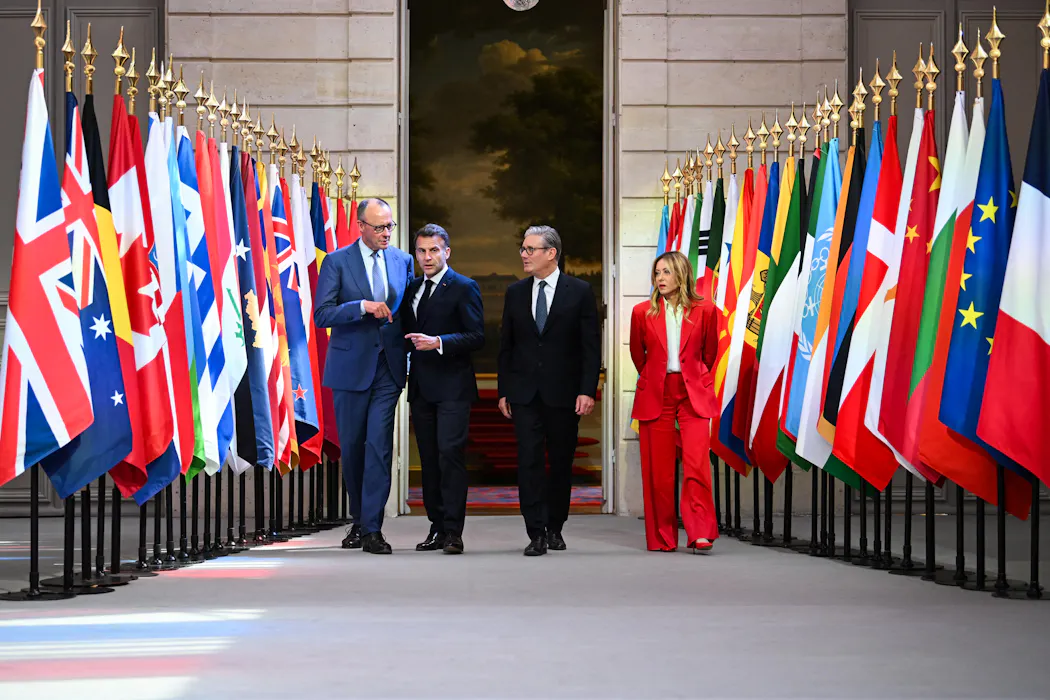
German Chancellor Friedrich Merz, French President Emmanuel Macron, British Prime Minister Keir Starmer and Italian Prime Minister Giorgia Meloni arrive for a press conference at the Elysee Palace in Paris on April 17, 2026. Jeanne Accorsini/Pool/AFP via Getty Images

Days after U.S. and Israeli strikes on Iran began on Feb. 28, 2026, Spanish Prime Minister Pedro Sánchez denied American forces the use of the Naval Station Rota and the Morón Air Base – installations that had hosted U.S. troops for more than 70 years.

“We are a sovereign country that does not wish to take part in illegal wars,” Sánchez said. U.S. President Donald Trump responded by threatening a full trade embargo against Spain.

Weeks later, Italian Prime Minister Giorgia Meloni – Trump’s closest European ally and the only EU head of government invited to his second inauguration – broke publicly with Washington.

“When we don’t agree, we must say it,” she said. “And this time, we do not agree.” Rome then refused to let U.S. bombers refuel at a base in southern Italy.

These are not minor diplomatic frictions. As a scholar of alliance politics and nuclear security, I see something much larger than a tactical disagreement. The Iran war’s most consequential casualty may not be in Tehran. It may be American credibility as an ally, and with it, the trans-Atlantic alliance itself.

The Iraq comparison misleads

The initial U.S. and Israeli strikes on Iran were launched with virtually no advance consultation with European allies. The Trump administration treated NATO partners not as participants in strategic decision-making but as logistical infrastructure to be commandeered or punished for refusing assistance.

European governments, even those most invested with the U.S., declined to join the campaign. The Trump administration has responded with the embargo threat against Spain and the withdrawal of 5,000 U.S. troops from Germany.

“The U.S.A. will REMEMBER!!!” Trump posted on Truth Social on March 31, 2026.

The reflex in Washington has been to read this as a rerun of 2003, when France and Germany opposed the Iraq War. In January 2003, Defense Secretary Donald Rumsfeld dismissed France and Germany as “old Europe” while courting the postcommunist “new Europe,” including Poland, the Czech Republic and Hungary.

On the surface, the parallel is tempting: a unilateral American war in the Middle East, European refusal to participate, trans-Atlantic recriminations.

Protestors carry three posters depicting lawmakers with crowns on their heads.
Protesters against the Iran war carry placards in Rome on March 28, 2026, depicting U.S. President Donald Trump, Italy’s Prime Minister Giorgia Meloni and Israeli Prime Minister Benjamin Netanyahu. Tiziana Fabi/AFP via Getty Images

But the comparison conceals more than it reveals. In 2003, the United States wanted Europe in its coalition. The George W. Bush administration sought United Nations authorization, courted allies and treated European refusal as a problem to be managed.

In 2026, the Trump administration explicitly does not want European input. It views allies as freeloaders and threatens them with economic coercion. It treats their hesitation as cause for retribution rather than negotiation.

The deeper difference is structural. In 2003, the trans-Atlantic alliance still rested on shared commitments to collective defense, open trade and an international, rules-based order.

Today, the Trump administration does not share the commitments that traditionally bound the United States to its European partners, whether on NATO, the Russia-Ukraine war, or the rules governing trade and migration.

The shared values that papered over the Iraq disagreement in 2003, and that allowed President Nicolas Sarkozy to reintegrate France into NATO’s command by 2009, are no longer there to do the work of repair.

The April 2026 collapse of Viktor Orbán’s 16-year rule in Hungary left Trump without a serious political ally among major European governments.

The real precedent is Suez

A more illuminating precedent lies further back. In 1956, Britain and France went to war with Egypt over the Suez Canal, in coordination with Israel, deliberately concealing their plans from the Eisenhower administration. Washington responded by threatening to crash the British pound, forcing London and Paris into humiliating retreat.

The crisis is conventionally remembered as the moment Britain accepted that it was no longer an independent great power.

But its more important legacy was strategic. Suez exposed the depth of Europe’s dependence on the United States. That humiliation drove Charles de Gaulle’s pursuit of an independent French nuclear deterrent. It also accelerated European integration and planted the recognition that genuine strategic autonomy would be a generational project.

The Iran war inverts the conditions of that lesson. In 1956, Europeans learned that they could not act independently of Washington. In 2026, they are learning that they cannot rely on Washington’s consent being available, and that the U.S. will act without them, against their stated interests and at their economic expense.

Two men in suits and ties talk while seated in front of a table.
Secretary of State John Foster Dulles, left, and President Dwight Eisenhower discuss the nationalization of the Suez Canal by the Egyptian government in August 1956 at the White House. Abbie Rowe/PhotoQuest via Getty Images

The pattern is the same: Dependence on the U.S. is unsustainable, and autonomous capacity is no longer optional. What has changed is that Europe is now willing to use the financial, economic and military tools it has long possessed in ways it would not have considered before.

The EU’s €90 billion joint-debt loan to Ukraine signals an autonomous European strategic stance. So do discussions of activating the bloc’s anti-coercion trade instrument against U.S. tariffs, France’s nuclear arsenal expansion and offers to “Europeanize” deterrence.

The strategic postures were debated for decades. The Iran war is making them operational.

This is not yet European strategic independence. Europe remains militarily reliant on U.S. air defense, satellite capacity and intelligence.

The closure of the Strait of Hormuz, for example, has forced an uncomfortable energy reckoning with American liquefied natural gas, Russian pipelines, Middle Eastern hydrocarbons and Chinese-dominated renewable supply chains. None of the available paths to energy security run through trusted partners.

France and Germany still disagree on nearly every detail of how integration should proceed. But the political condition for autonomy, a shared European belief that Washington can no longer be trusted to share strategic decision-making, has crystallized in a way that no previous crisis produced.

The post-1945 trans-Atlantic bargain traded U.S. security guarantees for European deference on global strategy. Iraq 2003 strained that bargain. Trump’s first term cracked it, and the Iran war has broken it.

What replaces it will not be a renewed partnership. It will be a parallel relationship between two powers with sometimes overlapping interests and, increasingly, separate strategic horizons.

In 1956, Europe learned how dependent it was on Washington. In 2026, it is learning that dependence is no longer sustainable.

Eleni Lomtatidze, a student in the International Relations Program at the University of Pennsylvania and at SciencesPo Paris, contributed to this story.

The Conversation

Farah N. Jan does not work for, consult, own shares in or receive funding from any company or organization that would benefit from this article, and has disclosed no relevant affiliations beyond their academic appointment.

Stressing about your baby’s growth check? Here’s what you need to know

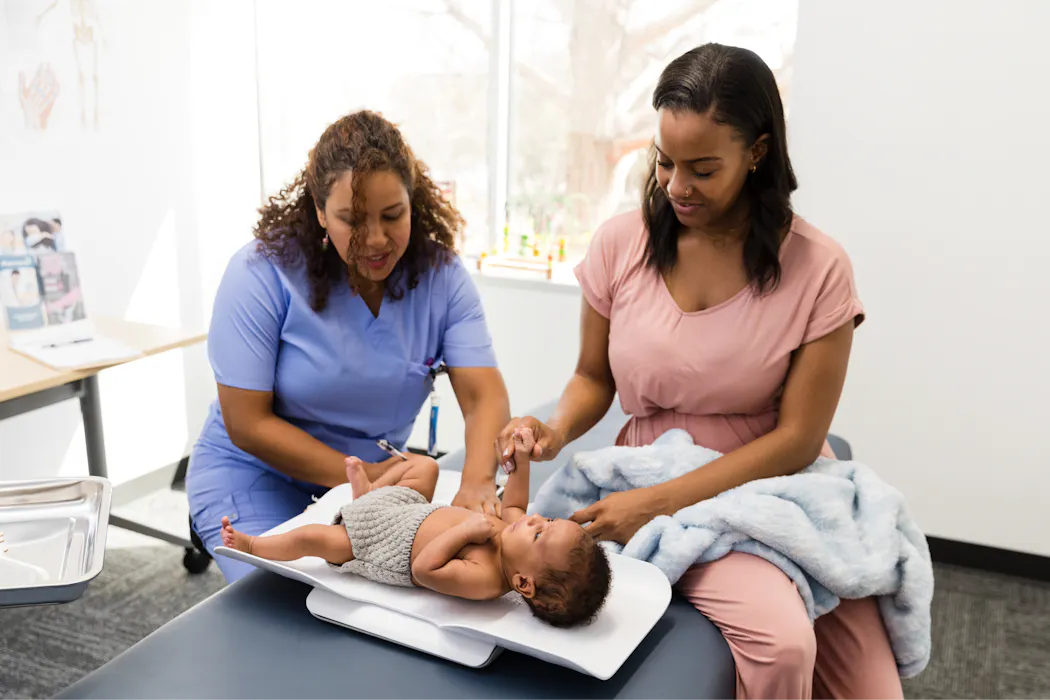
SDI Productions/Getty Images

If you’ve ever taken your child to a maternal, child and family health nurse for a growth check, you might have felt a mix of curiosity and anxiety.

As health professionals, we’re often asked: is my baby gaining enough weight? Am I feeding enough? Why did they drop a percentile? Why is my friend’s baby bigger than mine? Am I doing something wrong?

In most cases, the answer is that there is nothing wrong at all. Let’s look at what the measurements actually mean and we’ll answer some questions that commonly arise during these appointments.

What actually happens at a growth check?

Growth checks are usually done by a maternal, child and family health nurse at a community health centre, or by your family GP.

Each state and territory, as well as New Zealand, has its own schedule of recommended growth and development checks. In Victoria, for example, appointments are booked when your baby is aged two weeks, four weeks, eight weeks, four months, eight months, 12 months, 18 months, two years, and three and a half years.

In the early weeks, when feeding is still being established and child growth is rapid, these appointments can help identify feeding difficulties.

First, the nurse will observe your baby or child, then they will weigh them, measure their length (if they’re babies) or height, and measure their head circumference. They plot these numbers on a growth chart in your child’s health record or the Well Child Tamariki Ora book in New Zealand.

The nurse will check your child’s alertness, appearance and muscle tone. They will also ask questions about feeding, sleep, wet/dirty nappies and any recent changes.

Nurses are there to support you as a new parent. They provide reassurance and a chance to ask questions to help build confidence during a period that can feel uncertain.

Over time, growth checks allow nurses to see if your child is growing and developing at an expected rate.

For toddlers and preschoolers, the nurse will check for typical development in behaviour, language and play. If required, they will provide support or referrals to a GP who may then refer to a paediatrician, speech pathologist, occupational therapist, or psychologist, depending on the child’s needs.

What do the dots on a growth chart really mean?

Growth charts in Australia and New Zealand are based on the World Health Organization’s Child Growth Standards, which reflect optimal growth for healthy, breastfed children.

They provide context for your child’s growth through a reference population of children of the same age and sex. The curved lines are called percentiles.

  • a child on the 50th percentile is right in the middle
  • a child on the 25th percentile is smaller than average
  • a child on the 85th percentile is larger than average.

If your child is on the 25th percentile for weight, it means that if 100 children of the same age and sex were lined up in increasing order of weight, your child would be number 25. So 75 children would weigh more and 24 would weigh less.

A single measurement tells very little. The pattern of the weight over time is even more important.

But there is no “ideal” percentile. Every child grows at their own pace and this can be influenced by their genetics, ethnicity, birthweight and gestation. Even siblings or twins may follow different patterns.


Read more: Our obsession with infant growth charts may be fuelling childhood obesity


When should parents be concerned?

Small fluctuations on the chart are common, as babies grow in spurts. But nurses may look more closely if a child:

  • crosses several percentile lines over time – either in an upward or downward trend
  • is showing signs of feeding difficulties or dehydration
  • appears unwell.

Even in these cases, the approach is careful assessment, not alarm, and your nurse might suggest additional checks. This helps see whether a feeding adjustment is working, or whether something else might need attention.

In most cases, extra visits end with reassurance. When there is a concern, extra visits allow things to be identified and addressed early.


Read more: How do I know if my child is developing normally?


3 common questions answered

1. When should I consider supplementing with formula?

Breastfeeding is recommended where possible. But there are situations where supplementing with formula might be recommended – for example, when there are concerns about weight gain. In these cases, we always recommend to discuss supplementing with your trusted health care provider.

Your nurse is there to support your child and reassure you – not to judge how you feed them.

2. Should I start solids early if my baby is ‘big’?

In short, no. The guidelines recommend introducing solids at around six months. This should be done when babies show developmental readiness, not because of their size or percentile.

Breastmilk or formula still meets all nutritional needs until around six months.

Starting solids early may increase risks of choking, tummy upset and a greater chance of being overweight later in life.

3. Why doesn’t growth happen steadily week to week?

Babies grow in spurts, not in smooth lines and weight can vary with feeding, sleep and any recent illness.

Periods of rapid growth often occur in the early weeks, around six to eight weeks, three to four months, and around six months with babies growing rapidly throughout the first year of life. During these times, babies may feed more or seem unsettled.

Where to find more support

For more support, contact your local GP and consider asking for a referral to a lactation consultant, paediatrician or dietitian.

As part of the Australian government’s Pregnancy, Birth and Baby program, you can phone (1800 882 436) or video call a maternal and child health nurses for free, seven days a week from 7am to midnight. Or for breastfeeding issues, call the Breastfeeding Helpline on 1800 mum 2 mum (1800 686 268).

For parents in New Zealand, the government’s Plunketline (0800 933 922) is available 24–7 for advice about child health and parenting.


Read more: Need a doctor or nurse after hours? How to get virtual or in-person care in Australia – including for free


The Conversation

Amit Arora receives funding from the Australlian National Health and Medical Research Council and NSW Ministry of Health.

Hannah Dahlen receives funding from Australian Research Council, the National Health and Medical Research Council and Medical Research Future Fund.

Jessica Appleton is a board member with Australian College of Children and Young People's Nurses.

Lynn Kemp receives funding from Australian Research Council, National Health and Medical Research Council and the Medical Research Future Fund.

We found hundreds of huge ancient mass graves hidden in the Sahara desert

We have been on a years-long campaign of satellite remote sensing of the vast desert landscapes in Eastern Sudan.

This involved using satellite aerial imagery to systematically and painstakingly search for archaeological features in Atbai Desert of Eastern Sudan, a small part of the much larger Sahara.

Our team – which includes archaeologists from Macquarie University, France’s HiSoMA research unit, and the Polish Academy of Sciences – wanted to tell the story of this desert region between the Nile and the Red Sea, without having to excavate.

One mysterious archaeological feature stood out. We kept finding large, circular mass graves filled with the bones of people and animals, often carefully arranged around a key person at the centre.

Likely built around the fourth and third millennia BCE, all these “enclosure burial” monuments have a large round enclosure wall, some up to 80 metres in diameter, with humans and their cattle, sheep and goats buried inside.

Our new research, published in the journal African Archaeological Review, reveals how we found 260 previously unknown enclosure burials east of the Nile River, across almost 1,000km of desert.

Who built them?

Already known from a few excavated examples in the Egyptian and Sudanese deserts, these large circular burial monuments have long puzzled scholars.

What seemed once isolated examples emerge now as a consistent pattern. It is suggestive of a common nomadic culture stretching across a vast stretch of desert.

Most are within the borders of modern Sudan on the slopes of the Red Sea Hills. Unfortunately, satellite imagery alone cannot communicate the whole story of these enclosure burial builders.

The carbon dates and pottery from the few excavated monuments tell us these people lived roughly 4000–3000 BCE, just before Egyptians formed a territorial kingdom we know of as Pharaonic Egypt.

But these “enclosure burial” nomads had little to do with urbane and farming Egyptians.

Living in the desert and raising herds, these were Saharan desert nomads through and through.

A new elite?

Some enclosures show “secondary” burials arranged around a “primary” burial of a person at the centre – perhaps a chief or other important member of the community.

For archaeologists, this is important data for discerning class and hierarchy in prehistoric societies.

The question of when Saharan nomads became less egalitarian has plagued archaeologists for decades, but most agree it was around this time of the fourth millennium BCE that a distinctive “elite” class emerged.

This is still a far cry from the sort of huge divisions between ruler and ruled as seen in societies such as Egypt, with its pharaohs and farmers. However, it ushers in the first traces of inequality.

Animals held in high esteem

Cattle seem very important to these prehistoric nomads (a theory also supported by ancient local rock art in the area).

Burying themselves alongside their herd, these nomads show they held their animals in esteem.

Thousands of years later, local nomads chose to reuse these now “ancient” enclosures for their burial plots – sometimes almost 4,000 years after they were first built.

In other words, the prehistoric nomads created cemetery spaces that lasted for millennia.

What happened to these people?

No one can say for sure.

The few dates we have for these monuments cluster between 4000–3000 BCE, nearing the end of a period when the once-greener Sahara was drying, a phase scientists call the “African Humid Period”.

From north to south, the summer monsoon gradually retreated, reducing rainfall and shrinking pastures. This led nomads to abandon thirsty cattle, increase the mobility of their herds, migrate to the south or flee to the Nile.

The monuments are overwhelmingly located near what were then favourable watering spots; near rocky pools in valley floors, lakebeds and ephemeral rivers.

This tells us that when the monuments were being built, the desert was already quite challenging and dry.

At some point, as grass and bush made way for sand and rocks, keeping their prized cattle became unsustainable.

Having large herds of cattle in this desert, at this period, may have been a way of showing off an expensive and rare possession – a prehistoric nomad’s equivalent to having a Ferrari. This may help explain why cattle were frequently buried alongside their owners in enclosure burial monuments.

A bigger story

These enclosure burials are only one part of the greater story of human adaptation to climate change across North Africa.

From the Central Sahara, to Kenya and Arabia, keeping cattle, goats and sheep transformed societies. It changed the food they ate, the way they moved around, and community hierarchies.

It’s no coincidence communities changed how they buried their dead at the same time as they adopted herding lifestyles.

These burial enclosures tell us even scattered nomads were extremely well-organised people, and expert adapters.

Our discovery reshapes the story of the Sahara deserts and the prehistory of the Nile.

They provide a prologue for the monumentalism of the kingdoms of Egypt and Nubia, and an image of this region as more than pharaohs, pyramids and temples.

Sadly, many of these enclosure monuments are currently being destroyed or vandalised as a result of unregulated mining in the region. These unique burials have survived for millennia, but can disappear in less than a week.

Maria Gatto (Polish Academy of Sciences) was an author on our paper. We also want to acknowledge Alexander Carter, Tung Cheung, Kahn Emerson, Jessica Larkin, Stuart Hamilton and Ethan Simpson from Macquarie University for their contribution. We are also grateful to the National Corporation of Antiquities and Museums (Sudan).

The Conversation

Julien Cooper receives funding from the Australian Research Council, (Future Fellowship, FT230100067).

Maël Crépy receives funding from the CNRS (HiSoMA) and the Ifao (NOMADES research program).

Marie Bourgeois receives funding from Ifao (NOMADES research program).

Stardust trapped in Antarctic ice reveals tens of thousands of years of Solar System’s past

Alfred-Wegener-Institute/Esther Horvath

When you think of outer space, you’re likely picturing stars, planets and moons. But much of space is filled with clouds of gas, plasma and stardust – known as interstellar clouds.

In the local parts of our galaxy alone there’s a complex of roughly 15 individual interstellar clouds. The Solar System is currently traversing one of them, aptly named the Local Interstellar Cloud. The origin and history of these clouds are believed to be tightly connected to the birth and death of stars. But we can see their imprints right here on Earth, in a place you might not expect – Antarctic ice.

My colleagues and I have been studying stardust trapped in old Antarctic snow and ice to trace the history of our solar neighbourhood, including the Solar System itself.

In a new study published in Physical Review Letters, we found a subtle clue that reveals our Solar System’s movement through the local interstellar environment over the past 80,000 years.

Looking down to see the sky

Astronomy usually looks outward. Telescopes collect light from distant stars and galaxies, allowing us to observe events across vast stretches of space and time. From these observations, we infer how stars live and die, how elements are formed, and how the universe evolves.

Our approach turns that idea on its head.

Instead of observing the light coming to us, we study the debris of exploding stars right here on Earth. As cosmic furnaces, stars forge many elements in their cores, from carbon and oxygen to calcium and iron. This includes rare isotopes (variants of chemical elements) such as iron-60.

When massive stars explode into supernovae at the end of their life, these elements are ejected into space and become interstellar dust.

Tiny grains of this dust then drift through the galaxy and occasionally find their way to Earth’s surface. Radioactive iron-60, a fingerprint of stellar explosions, is embedded within these grains. By searching for these atoms in geological archives on Earth, we can probe astrophysical events like supernovae long after their light has faded.

This is why Antarctica is so valuable. Its snow accumulates slowly and remains largely undisturbed, forming a layered record that stretches back tens of thousands of years. Each layer captures a snapshot of the material that was present in our cosmic neighbourhood at the time.

Finding stardust in Antarctic ice

When we studied 500kg of recent snow in Antarctica, we unexpectedly found this rare radioactive isotope. Where did it come from? There was no recent near-Earth supernova.

But our solar neighbourhood is filled with 15 clouds, with the Solar System currently traversing at least one of them. Is the stardust waiting in the clouds to be picked up by Earth? If yes, then the amount of stardust Earth collects should be related to their structure: the denser the clouds, the more iron-60 they contain. This was our educated guess in 2019.

Soon, other explanations were brought forward. Millions of years ago Earth received large showers of iron-60 from massive supernovae. Is the iron-60 in Antarctic snow the last remnant or an echo of this signal? A rain that became a drizzle?

To find out, we analysed a 300kg section of Antarctic ice, dating from 40,000 to 80,000 years ago. The process is painstaking. The ice needs to be melted and chemically treated to isolate tiny amounts of iron, including the iron-60 from the stardust.

Then, using the sensitive atom counting technique of accelerator mass spectrometry at the Heavy-Ion Accelerator Facility at Australian National University, we counted individual atoms of iron-60.

The expectation was straightforward: based on previous measurements from surface snow of Antarctica and several thousand-year-old ocean sediments, we anticipated a certain steady level of iron-60 deposition.

Instead, we found less. Not zero, but noticeably lower than expected.

This result suggests that less interstellar dust was reaching Earth during that period. This is a remarkable change on a comparatively short astrophysical timescale and does not fit the long timescales of the iron-60 deposits that landed here millions of years ago. Instead, we needed to look for a smaller, more local source for the isotope.

The Orion Molecular Cloud Complex is a type of interstellar cloud. NASA/JPL-Caltech

A fitting story

Naturally, astronomers are also quite interested in the clouds around the Solar System. Last year, a study reconstructing the history of the clouds arrived at the conclusion that they most likely originated in a stellar explosion. Furthermore, they found the Solar System has been traversing the Local Interstellar Cloud from sometime between 40,000 and 124,000 years ago.

If that’s correct, we would expect that the amount of iron-60 collected on Earth should have changed sometime in the same time period – between 40,000 and 124,000 years ago.

This is exactly what our results showed in Antarctica.

The story doesn’t fit perfectly, though. If these clouds did originate directly from an exploding star, we would expect way more iron-60 than we actually see in Antarctic ice.

Nevertheless, these clouds are imprinted in Earth’s geological record. If we look deeper and analyse even older ice, we might soon unravel the mystery of these local interstellar clouds, revealing their full history and uncertain origins.

The Conversation

Dominik Koll receives funding from the Australian Institute of Nuclear Science and Engineering (AINSE).

Spice Girls at 30: how girl power changed pop

The Spice Girls (L-R) Melanie C, Emma Bunton, Mel B, Victoria Beckham and Geri Halliwell. Featureflash Photo Agency/Canva

Thirty years ago, five young women from the UK redefined what a pop group could be. When the Spice Girls burst onto the scene in 1996 with their debut single Wannabe, they helped to reshape discussions around gender, sexuality, power and pop culture.

At first glance, their formula seemed straightforward; catchy music, bold personalities and an explicitly commercial brand. This helped the Spice Girls to dominate the pop charts of the 1990s and 2000s. But their approach was very rare for British female artists – most girlbands relied on matching outfits and a unified look as opposed to the Spice Girls brand of individual personalities. The strategy resulted in huge success but also reflected, and arguably was the catalyst for, deeper shifts in the music industry and society at large.

The Spice Girls arrived at a moment when “girl power” (a phrase they popularised globally and now features in the dictionary) tapped into a growing appetite for female autonomy and visibility.

Unlike many pop acts before them, each member of the Spice Girls had a distinct identity: Mel B (Melanie Brown) as Scary Spice, Melanie C (Melanie Chisholm) as Sporty Spice, Emma Bunton as Baby Spice, Geri Halliwell as Ginger Spice and Victoria Beckham as Posh Spice. These personas were often caricatured, but they provided a lens through which fans (particularly young girls) could see multiple versions of femininity represented in mainstream media.

The music video for Wannabe, the Spice Girls’ breakthrough single.

Another significant element of the Spice Girls’ audience is the LGBTQ+ community. The group has often pointed to the importance of this audience for their success. Many of their LGBTQ+ fans have pointed to the loud and proud message of the band as an important part of their self-acceptance and positive self-esteem.

Later generations of female and LGBTQ+ artists have attributed Spice Girls as inspirational figures including Adele, Billie Eilish, Olly Alexander, Charli XCX and Dua Lipa. These artists in turn continued to keep the Spice Girls legacy alive with younger audiences, helped by the easy access of legacy music catalogues on digital streaming platforms.

The Spice Girls legacy

The band’s debut album, Spice, is the best-selling album by a girl group in history. Their global reach helped solidify the late 1990s and early 2000s as a peak era of British pop culture exports. Throughout their career the band had nine UK number one singles as a group, and eight solo number ones. No other girl group comes close to that total.

But the band’s significance cannot be measured by sales alone. The Spice Girls helped normalise the idea that female acts could dominate the global market on their own terms, without conforming to male-defined industry expectations. For example, they sacked a male manager in the maelstrom of their success and managed themselves while enjoying several more number one singles, platinum album sales and sold-out tours.

The Spice Girls reunion at the 2012 London Olympic Games.

The Spice Girls also exerted an unusual degree of control over their music; notably cowriting all of their songs and challenging the industry norms that often sidelined female artists in decision-making processes. In doing so, they anticipated later debates about authorship, authenticity and agency in pop – decades ahead of modern conversations about music ownership and power such as Taylor Swift’s journey to owning her own master recordings.

The legacy of the Spice Girls is not without tension, however. “Girl power” has been both celebrated in that it made feminism accessible to young people and critiqued as a commodified slogan that reduced complex political ideas to marketable soundbites. At their last reunion tour in 2019 Geri repackaged “girl power” into “people power”.

Beyond the music, the Spice Girls have become an omnipresent element of British pop culture in recent years with Royal Mail stamps, Royal Mint official British currency and a collaboration with the English female rugby team. This shows that the Spice Girls’ iconic imagery is well and truly canonified in the British pop culture vernacular much like The Rolling Stones, Oasis and The Beatles.

Three decades on, the Spice Girls continue to be revisited in ways that alternate between celebration, nostalgia and critique, reflecting ongoing debates about gender, commerce and pop culture in the 1990s.

The Conversation

Joel Gray does not work for, consult, own shares in or receive funding from any company or organisation that would benefit from this article, and has disclosed no relevant affiliations beyond their academic appointment.
Is Beijing the world’s ‘living room’? China is enjoying the global stage, but there are limits to its influence

In recent weeks, the back-to-back state visits to Beijing by Russian President Vladimir Putin and US President Donald Trump have put China in the global spotlight.

For some international analysts, the summits showcased China as a “stabilising force capable of hosting two major rivals within days”, a “broker between the big powers” and a “pillar of global stability”.

To others, the visits highlighted how China is becoming an “indispensable global power” and President Xi Jinping a “world leader to be reckoned with and courted”.

Chinese analysts, meanwhile, noted that over the past six months, numerous other world leaders have visited Beijing, including those from France, Britain, Canada, South Korea and Germany. Crucially, some leaders returned after long gaps. It was the first visit in eight years by a UK prime minister, for example. And the first visit in nine years for a Canadian, South Korean and American leader.

With all these visits happening one after another, Chinese media described the Chinese capital as an international “living room” that provides stability in a turbulent world. Another headline read, “The world is entering ”Beijing time“.

Beyond the optics

While this has undeniably been a big moment on the global stage for Beijing, these interpretations miss three important points.

First, it is unclear whether world leaders are visiting China because of proactive Chinese diplomacy or as a way of gaining leverage in dealings with the Trump administration.

For example, when Canadian Prime Minister Mark Carney visited Beijing in January, it was widely interpreted as a response to Canada’s structural dependence on the US and the volatility of the second Trump administration. Some media said he was playing the "China card” to negotiate better terms with the US.

Second, Beijing sets a high “entry price” for visits to its “living room”. Occasionally, these summits have been linked to major policy shifts by visiting dignitaries.

When Trump visited Beijing, for instance, he backtracked on earlier calls to block Chinese nationals from buying farmland in the US and to impose limits on the number of Chinese students at US universities. Chinese media highlighted the negative reactions these concessions got from Trump’s MAGA base and other Republicans in the US.

Similarly, Carney’s visit to China resulted in a trade deal reducing tariffs on made-in-China electric vehicles to 6.1% for the first 49,000 cars annually. In late 2024, Canada had imposed a 100% tariff on Chinese EVs. Months later, during the 2025 election, Carney called China the biggest threat “from a geopolitical sense”.

Carney’s concession on electric cars drew criticism back home. Politicians warned it would invite a “flood of cheap made-in-China electric vehicles”, without guarantees of investment in Canada’s economy.

Finally, these visits by foreign leaders have clearly not changed China’s core foreign policy positions.

The appeals of European leaders did not, for example, change Beijing’s material support for Russia’s war in Ukraine. Nor did they reduce China’s large trade surplus with the European Union.

Similarly, Beijing did not agree to assist the Trump administration on Iran, despite Trump’s praise for Xi’s leadership and his decision to pause a weapons sale to Taiwan.

And even Putin failed to resolve disagreements over the Power of Siberia 2 pipeline, a project long sought by Putin. If built, the pipeline could carry 50 billion cubic metres of Russian natural gas annually to China, or about 12% of China’s gas use in 2025.

Visibility without influence?

The recent influx of international leaders to China may instead be a reflection of growing uncertainty in the global order.

The dramatic shifts in US foreign policy under the Trump administration have prompted a great deal of concern among Washington’s traditional allies. It’s also provided an opportunity for China to project itself as a stable partner after years of pursuing its more aggressive, wolf-warrior diplomacy.

But these visits do not prove China’s diplomatic efforts have become more effective. Domestic economic pressures and competing international priorities still limit what Beijing can realistically deliver.

For example, to prevent factory closures and meet growth targets, Beijing channels massive state subsidies into certain manufacturing sectors. This creates surplus output that is exported globally – including to the EU – at artificially low prices. China can’t afford to rein these exports in.

At the same time, China has continued to support Russia and Iran in challenging the US and Europe’s security, despite the importance of these Western markets to China’s economic development.

As a result, high-profile meetings in Beijing produce ceremony and pomp, but deliver limited concrete outcomes.

These recent visits by Trump, Putin and other world leaders have certainly made China appear more central to global diplomacy. But this visibility does not necessarily translate into effective global leadership.

The Conversation

Czeslaw Tubilewicz does not work for, consult, own shares in or receive funding from any company or organisation that would benefit from this article, and has disclosed no relevant affiliations beyond their academic appointment.

Israeli forces capture Lebanon’s Beaufort Castle, a Crusade-era site once held by the Knights Templar

Getty Images/Monik-a

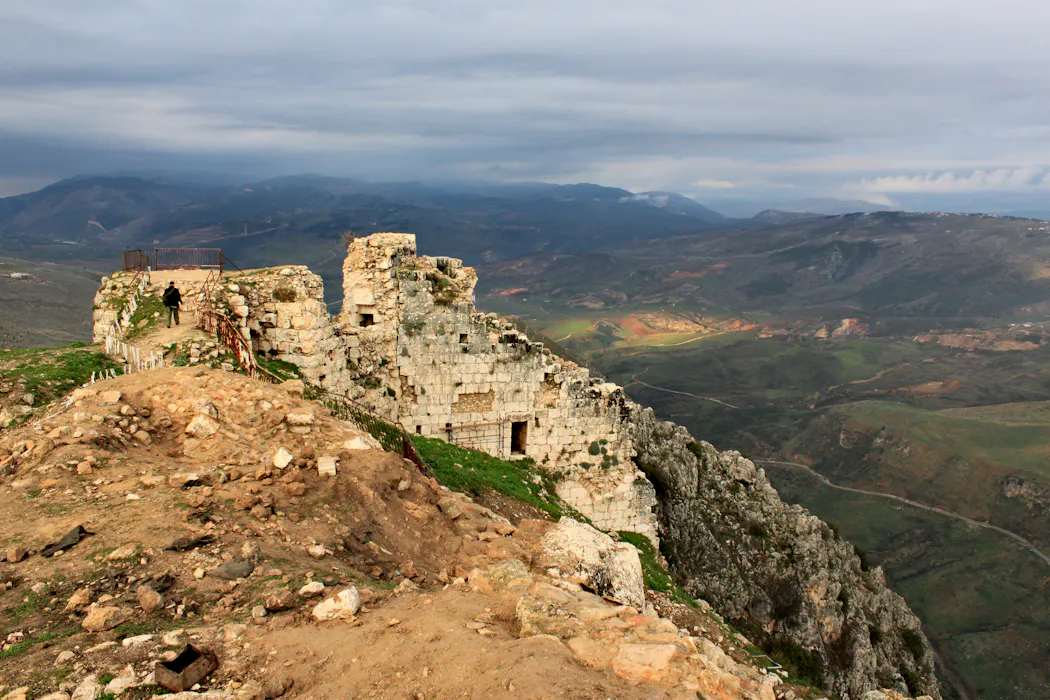
A 12th-century castle built during the Crusades in Lebanon has been seized by Israeli forces in what’s been described as the deepest incursion into Lebanon for more than 25 years.

The historic site, known as Beaufort Castle or Qalʿat al-Shaqīf, sits atop a striking rocky outcrop in a commanding position on the edge of the Litani gorge, boasting spectacular views across southern Lebanon. It has historically been a very strategic site, especially during the Crusades.

What were the Crusades?

The Crusades is the name given to a series of military expeditions, beginning in the late 11th century, of Latin Christians from across Europe to a range of destinations, most famously the Holy Land.

The Crusades were armed pilgrimages, representing a fusion of ideas about warfare and spirituality.

Crusades would be called for by a pope, who would promise participants spiritual rewards if they took the Crusade vow and undertook these campaigns.

The aims and goals of Crusades changed over time as the geopolitical landscape changed. The First Crusade – called in 1095 CE – had a broad goal of “liberating” the holy sites of Jerusalem from the Seljuk Turks, a Sunni Muslim group in power in Asia Minor at the time.

The Crusaders also wanted to render military aid to Eastern Christians in the region.

But what distinguishes the Crusades from other military campaigns was that this was seen as a spiritually meritorious form of warfare.

The First Crusade established the Crusader States, with what came to be known as the Kingdom of Jerusalem at its heart.

Who built Beaufort Castle and why?

This site’s time as a Crusader castle began in 1139 CE with the Franks – the label used at the time to denote western European settlers in the east.

When the Franks arrived at the site, it was probably already being used in some significant way because of its strategic position.

The king of Jerusalem at this time was Fulk, who was a Frank (the Kingdom of Jerusalem had already existed for 40 years before he captured the Beaufort Castle site).

He began construction of Beaufort Castle (Old French for “beautiful fortress”) in about 1139 CE. Ultimately, it became a large castle over two levels, roughly triangular in shape. As is often the case for buildings from this era, it has had parts added on and destroyed over time.

What we are left with is a mix of Frankish building work and augmentations from various Muslim rulers over the centuries.

Latin Christians saw it as part of a network of fortified castles they hoped would help shore up Frankish settlement in the area.

Enter Saladin

The next key character in the history of Beaufort Castle is Saladin. He is among the most famous figures in Crusades history, in the region and in Islamic history more broadly.

King (Saladin from Egypt), from 'Court Game of Geography'
Saladin was a key figure in military Muslim efforts against the Latin Christians. The Metropolitan Museum of Art

He was of Kurdish origin, and by the time Beaufort Castle was controlled by Latin Christians, he was sultan of Egypt and Syria.

By all accounts, Saladin appears to have been a charismatic, canny leader and military practitioner. He was a key figure in Muslim military efforts against the Latin Christians.

Saladin captured Beaufort Castle in 1190 CE. This was part of a longer story of success for Saladin in what has been called the “counter-Crusade”. A few years earlier, he had won some significant victories, including at the famous Battle of Hattin (depicted in Ridley Scott’s 2005 film, Kingdom of Heaven).

Saladin also captured the city of Jerusalem in 1187, which was an enormous loss for the Crusaders.

So the Beaufort capture was part of the bigger picture of Saladin’s spectacular journey of conquest in this region around this time. He died not long after in 1193 CE, and the castle remained in Muslim hands until 1240 CE.

After that, the castle went back to Latin Christian ownership as part of a treaty with Theobald I of Navarre in the Barons’ Crusade. Ultimately, the castle passed to the Knights Templar in 1260 CE.

Who were the Knights Templar?

The Knights Templar was a military religious order made up of hybrid warrior-monks, founded in 1118 in the Kingdom of Jerusalem. Their initial remit was to defend Christian pilgrims visiting holy sites, but their role changed over time.

They lived according to a religious rule, known as the Templar Rule, and they took vows of chastity, poverty and obedience to live in communities according to their vows.

A medieval king consults with the Templars.
A medieval king consults with the Templars. Unknown author - Chronique d’Outremer, vers 1280. Manuscrit Français 770, fol. 313, Gallica/BNF/Wikimedia Commons

What was unusual about these monks was they were also highly trained warriors, especially skilled as mounted knights, as both heavy and light cavalry.

The kings of Jerusalem soon came to rely on them for military advice and as a highly trained standing army.

They were viewed as having the power to fight on both a spiritual and earthly battlefield, a kind of holy super soldiers. According to their patron, Bernard of Clairvaux, the Templar’s

soul is protected by the armour of faith just as his body is protected by armour of steel.

Kings and nobles increasingly began to donate land and riches to the Templars. They eventually became an international organisation with significant wealth across Europe and the Eastern Mediterranean (although they would eventually be tried for heresy).

The Knights Templar held Beaufort Castle for only eight years, before the site was returned to Muslim rule for centuries. In modern history, it has been controlled by Lebanon – until its capture by Israeli forces this week.

This is a region with an incredibly nuanced and complex history, and it remains that way today.

The Conversation

Beth Spacey received funding from the Arts and Humanities Research Council (UK) for her PhD research on medieval history.

I used sound waves to make espresso. It could cut coffee-brewing energy use by 75%

Richard Freeman / UNSW

Most of us think of espresso as a hot, high-pressure ritual. Finely ground coffee goes into a machine, boiling water is forced through it, and in about 30 seconds we get a concentrated shot with crema, aroma, bitterness, body and caffeine.

As someone from Colombia, I like to think coffee is in my blood – and I’m proud to come from a country known for producing some of the best coffee beans in the world.

So perhaps that’s why I have spent a lot of time in my laboratory with my team asking a simple question: does espresso really need hot water?

Our new research suggests the answer may be no.

Low energy, full strength

We have developed what we call an ultrasonic espresso: a room-temperature brewing process that uses high-frequency sound waves to extract the flavour, oils, aroma and caffeine from coffee grounds. The result is an espresso-strength coffee made in under three minutes, but needing far less energy than the conventional method.

Saving up to 75% of energy by not heating the water is a minor benefit for home users or small coffee shops. But for companies making ready-to-drink coffee products at industrial scale, it could be very significant indeed.

A concentrated room-temperature coffee could be used directly in bottled drinks, milk-based beverages or cold coffee products. It can also be shipped as a concentrate and diluted later. This would reduce not only energy use, but potentially processing time as well.

Ultrasound replaces heat

The key to the new process is ultrasound. These are sound waves above the range of human hearing.

In our system, a small metal device called a transducer presses against the side of a traditional espresso basket and makes it vibrate rapidly. Those vibrations move through the water and coffee grounds.

This creates a phenomenon known as acoustic cavitation. Tiny bubbles form and collapse in the liquid.

Diagram showing components of an espresso machine with an added 'ultrasonic horn'.
How ultrasonic vibrations are added to a traditional espresso machine. Naliyadhara et al. / Journal of Food Engineering, CC BY

When these bubbles collapse near coffee particles, they produce microscopic jets and forces that act a little like scrubbing brushes. They pit and fracture the surface of the coffee grounds, helping flavour compounds, oils and caffeine move into the water much faster than they normally would at room temperature.

In other words, ultrasound helps us replace heat with mechanical energy.

Water, grind and time

This is not the same as cold brew. Cold brew is usually made by steeping coffee in cold water for 12 to 24 hours. It tends to be smooth, mellow and much less concentrated than espresso. In earlier work, we used ultrasound to speed up cold brew dramatically.

But the challenge in this project was different: could we produce something with the strength, body and intensity of espresso, without heating the water?

Man in white lab coat and goggles stands at an espresso machine with some kind of electronic box attached.
Ultrasonic espresso uses cold water in a normal espresso machine with an attachment that produces high-frequency high-frequency transducer attached t. Richard Freeman / UNSW

To do that, we adjusted several variables. Brew ratio was one of the most important: how much water we used for each gram of coffee. Too much water and the drink becomes diluted; too little and extraction becomes difficult.

Grind size also mattered. Finer grounds allowed us to extract flavour more rapidly. Finally, we tested how long the ultrasound should be applied. We found the sweet spot was about two-and-a-half to three minutes.

The taste test

Of course, making a concentrated coffee in the laboratory is one thing. The real test is whether people want to drink it.

So we ran a blind evaluation with around 100 regular coffee drinkers. They were not trained judges; they were everyday consumers who drink coffee at least once a week.

We served them four coffees in identical cups: traditional espresso, ultrasound-brewed espresso, traditional filter coffee and ultrasound-brewed filter coffee. All were freshly prepared, cooled to the same temperature and presented in random order.

For the espresso samples, participants could not reliably tell the traditional and ultrasonic versions apart. There were no significant differences in aroma, flavour, bitterness or overall liking. For filter coffee, the ultrasound version was actually preferred overall, with participants rating its bitterness more pleasantly.

Those results show espresso may not need to begin with hot water after all. By using sound waves to shake the coffee grounds, we were able to create the same richness, body and intensity, but with far less energy.

The Conversation

UNSW holds a patent for this technology. Francisco Trujillo is one of the inventors.

Why the tax NZ never wanted to talk about is back on the political agenda in 2026

Hagen Hopkins/Getty Images

New Zealand has long stood out among comparable economies not for what it taxes, but for what it doesn’t.

Perhaps nowhere is that more apparent than in its lack of a comprehensive capital gains tax: a measure used by counterparts including Australia, Canada, the United States and the United Kingdom.

In basic terms, this tax applies when an asset is sold for more than it was purchased for. The gain is treated as income and taxed accordingly.

While its absence has helped New Zealand to maintain a relatively simple tax system, it increasingly raises concerns about fairness, economic balance and the sustainability of government revenue.

For decades, that debate has largely been a political dead end, with successive governments concluding the electoral risks outweigh the policy benefits.

For at least one mainstream party, that now appears to be changing. After years of ruling one out under Jacinda Ardern, centre-left Labour recently proposed to introduce a targeted capital gains tax to fund free healthcare such as GP visits.

Parties to the right of Labour remain opposed to a capital gains tax – National argues it would add complexity and stifle economic growth – while those to its left generally support some form of broader taxation of wealth or capital.

In any case, the coming elections mean voters are likely to hear renewed debate about the tax. This is arguably overdue, given the mounting pressures on a tax system becoming increasingly harder to sustain.

The problem with taxing work more than wealth

New Zealand’s Treasury and Tax Working Group have repeatedly pointed out the country relies more on taxing wages than many comparable countries do.

This means workers shoulder a large share of the tax burden, while gains from rising asset values – particularly property – are often lightly taxed or not taxed at all.

This imbalance creates a structural issue. Two people can experience the same economic gain, one through wages and the other through asset appreciation, but face very different tax outcomes. Over time, this undermines the principle of fairness in the tax system.

Inland Revenue data and analysis have also highlighted how difficult it is to tax capital gains under the current system. Instead of a clear rule, taxation depends on intent, timing and technical classifications. This creates uncertainty and allows some gains to fall outside the tax net altogether.

The absence of a broad capital gains tax is not neutral; it advantages certain types of investment. Property, in particular, has benefited from favourable tax treatment.

New Zealand’s lack of a capital gains tax is a major point of difference compared to countries like Australia, which taxes gains more comprehensively. This has contributed to a perception, particularly among overseas investors that New Zealand offers relatively generous treatment of property investment.

There are benefits to this. Foreign investment can support economic activity, provide capital and stimulate development. Australian investors, for instance, have at times looked to New Zealand property markets due to fewer restrictions and favourable tax settings.

However, the gains from these investments are not evenly shared. Property appreciation largely benefits those who already own assets, contributing to wealth concentration. Meanwhile, younger or lower-income households who rely primarily on wages continue to pay tax at full rates.

In effect, the current system can amplify inequality by rewarding capital much more favourably than labour.

A capital gains tax would broaden the tax base by bringing asset-based income into the system. This does not necessarily increase overall taxation, but rather changes who pays and how.

Would a capital gains tax make a difference?

Labour’s proposal is relatively targeted. It focuses mainly on investment and commercial property, while exempting the family home, KiwiSaver, farms and inheritances.

As with any tax proposal, the question is not only who would pay, but how it would affect behaviour and economic activity.

A common concern is that capital gains taxes discourage investment or reduce house prices. Supporters argue the opposite: that taxing gains can reduce incentives to favour property over other productive investments and help broaden the tax base.

Research shows tax settings influence not whether but where capital is invested, while international experience indicates capital gains taxes tend to have gradual rather than dramatic effects on property markets.

At the same time, economists have identified potential downsides, including added compliance costs, valuation challenges and incentives for investors to defer asset sales.

Introducing a capital gains tax would therefore involve trade-offs. Inland Revenue would need systems to track gains, taxpayers would likely face additional record-keeping requirements and policymakers would need to decide how assets are valued and which exemptions apply.

Ultimately, the debate is not simply about raising revenue, but the future of New Zealand’s tax system.

As wealth becomes increasingly tied to asset ownership, questions about how different forms of income are taxed are unlikely to go away. Whether a capital gains tax is the right answer remains contested.

But continuing to rely so heavily on income taxes is becoming harder to justify.

Expanding the tax base to include capital gains is one option for rebalancing the system, improving fairness and supporting the long-term funding of public services.

The Conversation

Irshad Ali does not work for, consult, own shares in or receive funding from any company or organisation that would benefit from this article, and has disclosed no relevant affiliations beyond their academic appointment.

Can you really drain your lymphatic system, and should you?

Iuliia Burmistrova/Getty

Did you know your body has an inbuilt sewerage system?

It’s called the lymphatic system, and is a crucial part of how your body fights infection and disease.

Lately the lymphatic system is causing a stir online, with some social media personalities promoting “lymphatic drainage” for beauty and skin health.

So what is lymphatic drainage? And is it backed by science?

What does the lymphatic system do?

The lymphatic system is a network of tiny vessels that, like your blood vessels, branch out to most tissues in the human body.

These vessels carry lymph, a colourless fluid that contains specialised white blood cells known as lymphocytes. Lymphocytes help the body fight infection.

Unlike blood, which circulates around your body in a loop, lymph moves in one direction. It starts off as extra fluid in the tissues in your body, which is then picked up by lymphatic capillaries. From there it travels through to larger lymph vessels and nodes, before draining back into the bloodstream.

The lymphatic system has three main jobs:

  • draining excess fluid, mainly to prevent swelling
  • supporting immunity, by helping the immune system detect and respond to unwanted substances such as bacteria, viruses, parasites and cancer cells
  • absorbing fats, mainly from food, to transport them back into the body.

When something’s wrong

If the lymphatic system is not working properly, the affected body part can start to swell. This swelling is known as lymphoedema, and most commonly affects the arms or legs.

There are two main types of lymphoedema.

Primary lymphoedema occurs when the lymphatic system does not develop properly. This may be due to a genetic condition which impacts the number of lymphatic vessels you have, or their ability to pump fluid. Primary lymphoedema may be present from birth, or may develop during puberty or in adulthood.

Secondary lymphoedema occurs when the lymphatic system is damaged in some way. A common cause of secondary lymphoedema is cancer. This is because cancer treatment may involve surgically removing lymph nodes or unintentionally damaging them with radiation therapy.

Lymphoedema is a sign your lymph fluid isn’t draining properly. To keep things moving, your body pushes lymph into the tiny lymphatic capillaries near your skin. It’s similar to a traffic jam, where cars need to leave the highway to drive on backroads. However, these backroads soon become congested because they aren’t designed to handle that much traffic.

A special type of imaging known as indocyanine green lymphography can test whether your lymphatic system is congested. If your limbs show signs of persistent swelling, your GP will first assess the swelling to rule out other common causes. If they suspect lymphoedema is the cause, they can refer you to a lymphoedema specialist who may request indocyanine green lymphography to help with diagnosis and/or treatment.

People with lymphoedema may also be more vulnerable to infections because their lymphatic system isn’t working as it should. A common and potentially serious one is cellulitis, a bacterial skin infection which can leave you with red, swollen skin.


Read more: What are lymph nodes? And can a massage really improve lymphatic drainage?


What is ‘lymphatic drainage’?

The main treatment for lymphoedema is compression. This involves using medical stockings or bandaging to apply pressure to the swollen body part. This helps move excess fluid from the affected area while also softening any hard, swollen tissue.

Exercise and skincare may also help treat lymphoedema. When your muscles contract during exercise, they act like a pump and help move fluids – such as lymph – around the body. Daily skincare, which may involve washing with a pH-neutral soap and applying moisturiser, is important for keeping the skin clean and well-moisturised. It also helps prevent cracks and infections, which might make lymphoedema worse.

Some people with lymphoedema may benefit from manual lymphatic drainage. This usually involves a trained lymphoedema practitioner using specialised massage techniques that help move fluid out of congested areas. This ensures your body drains lymph fluid if, for some reason, it can’t do so properly by itself.

However, there’s little evidence that manual lymphatic drainage alone treats lymphoedema in any significant or lasting way. This is also the case with claims – mainly circulated on social media – that manual lymphatic drainage can make your skin healthier and more beautiful. The research here is even more limited, and any potential benefits are likely to be small or short-lived.

The bottom line

If your lymphatic system is healthy and you don’t have any swelling, you probably don’t need “lymphatic drainage”. To keep your lymphatic system working well, it’s best to have a balanced diet, stay hydrated and exercise regularly.

If you do notice any swelling or have concerns about your lymphatic system, speak to your GP. If you are having treatment for cancer, you should consult an accredited lymphoedema practitioner. If they recommend trying manual lymphatic drainage, it should be done by a trained lymphoedema therapist. And you should receive it alongside other evidence-based treatments such as compression, exercise and skin care.

The Conversation

Belinda Thompson receives funding from Essity and Haddenham Healthcare.

Louise Koelmeyer receives funding from Essity and Haddenham Healthcare.

How to talk to children when terrorist attacks and violence dominate the news

When a man stabbed Jewish people in Golders Green, London, in what police declared a terrorist incident, the story spread fast – through news alerts, social media and the whispered conversations of anxious adults. When this happens, children notice.

Whether they catch a fragment of a TV bulletin, overhear a parent on the phone, or simply sense that something has shifted in the atmosphere at home, the news has a way of reaching them before they are ready. The question isn’t really whether to talk to children about violence and fear; it’s how.

First, it’s important to know that children have the resilience and capacity to process difficult topics, but bear in mind that this needs to happen in a supportive environment.

Start with safety. Ensure your child feels relaxed and secure. Safety comes from routines, keeping daily rhythms and practising rituals that remind everyone you are together and safe – for example, a nighttime story or song, a special time on the couch after dinner.

Your capacity to deal with issues like violence and fear is the most important factor in contributing to your child feeling safe during these conversations. If you feel overwhelmed or anxious, wait until you feel calmer and more grounded, or have someone to support you with the conversation.

Some families – particularly those who face racism or other forms of discrimination – will already be familiar with these conversations. But if this is new to you, the main thing to do is to be honest and clear. Be direct and specific. Avoid metaphors and euphemisms and vague ideas like “bad people”.

Adjust your language to the child’s age, but don’t overthink it. Simply pause often, ask questions, and watch their face for confusion.

Children don’t stay afraid for long. They move in and out of difficult feelings quickly, which is why short, repeated conversations work better than one big, serious talk.

Come back to them to check understanding and listen for misunderstandings. Ask them if they have any questions. And don’t be surprised if the child looks particularly bored or disinterested. Children prefer delight and joy and play rather than serious adult conversations. It doesn’t mean they are not listening or appreciating the explanation, it just means their priorities are elsewhere – and that’s a good thing.

A mother talks to her concerned daughter.
It’s important to make them feel safe. LightField Studios/Shutterstock.com

Keeping children grounded amid fear

Limit media exposure and try to avoid talking about scary events around them – they are always listening and there’s huge room for misunderstanding when they hear rather than take part in conversations.

Research shows that if children are exposed to media and talk about fearful events, that it’s important what they hear is mediated through a supportive adult who can explain the content appropriately. They can pick up on the signs of fear and anxiety from adults, particularly in times of uncertainty, even if they can’t fully understand the words in the conversation.

Follow your child’s lead. Your job is to open the door. They decide whether to walk through it and when to leave. Don’t mistake silence for shutdown. Children often process fear through movement, play, singing, dancing, making and even breaking things.

It’s OK to say “I don’t know” to questions you can’t answer. And it’s OK to say: “I know the answer, but it’s too much information for you at your age, I’ll tell you a little bit now and explain more when I think you are old enough.”

Most important of all, for you and your child, look at your circle of safety. Remind your child they are safe here and now with you, that there is a community that you live in and link with who are there to support you and keep you safe. Focus on hope and efficacy and on what can we do right now for the future we want.

The Conversation

Trudy Meehan does not work for, consult, own shares in or receive funding from any company or organisation that would benefit from this article, and has disclosed no relevant affiliations beyond their academic appointment.

❌
Subscriptions