Normal view

Deep-sea sponges survive in complete darkness in ways we didn’t know before

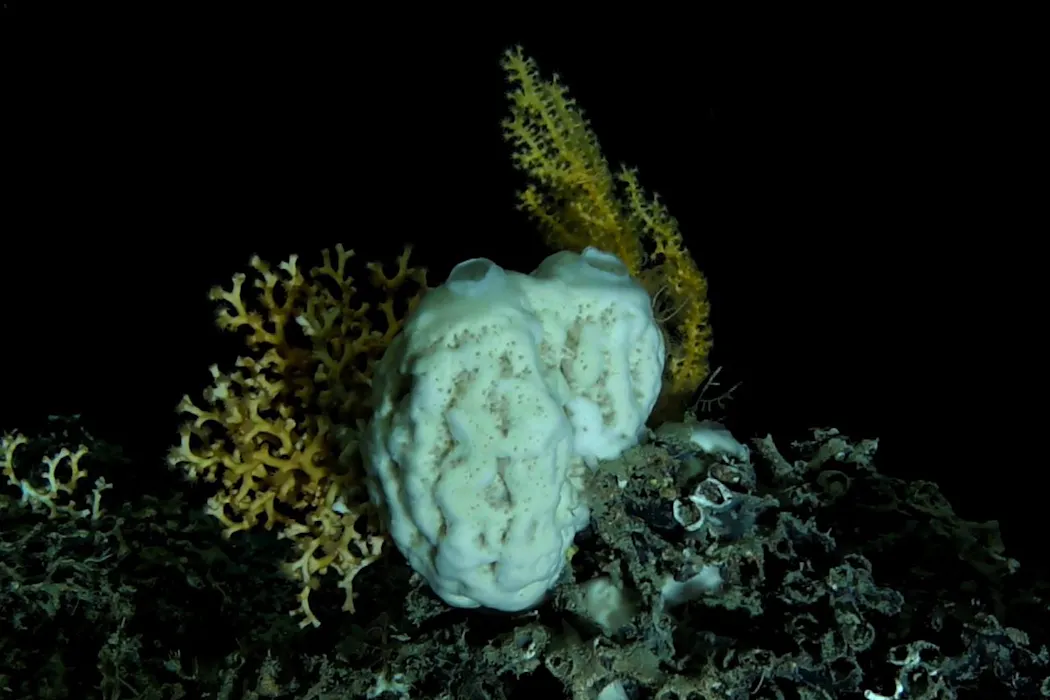
The deep-sea sponge _Calyx_ sp. in its natural habitat. PROBIO-DEEP/Fugro

When we think of marine life, we usually picture colourful coral reefs or dense seaweed forests filled with fish and other critters. The ocean that comes to mind is the one touched by sunlight.

However, most of the ocean is not like that. By volume, roughly 95% of the ocean consists of the permanently dark, cold deep sea. Despite such hostile conditions though, there is life in the ocean’s abyss.

Deep-sea marine sponges are among the organisms that live in these mysterious dark waters. They form “gardens” that are among the largest ecosystems on the planet, some spanning thousands of square kilometres on the ocean floor. They act as ecosystem engineers, providing habitats to many other organisms living on the seafloor.

Individual sponges can also pump and filter thousands of litres of water every day through their bodies. The nutrients they release support other organisms. Yet we know remarkably little about how sponges survive, let alone thrive, in the inhospitable environment of the deep-sea.

Symbiosis with microbes is an important part of how marine sponges live. We’ve been studying deep-sea sponges to better understand life in the ocean’s depths. So far, we’ve found some sponges are packed with microorganisms that use energy from chemical reactions.

The deep-sea sponge Aphrocallistes beatrix has the highest proportion of chemosynthetic symbionts reported to date. PROBIO-DEEP/Fugro

This is called chemosynthesis and is commonly found in other deep-sea organisms, such as mussels and tubeworms living in hydrothermal vents – deep-sea “hot springs”.

Our new study, published today in the journal Microbiome, shows sponges and their microbial partners also use a second strategy to make a living in the deep sea.

Two strategies, one sponge

All living organisms produce waste. Just like humans produce urine, many sponges produce ammonia as one of their waste products.

In this study, we analysed the Calyx species of deep-sea sponges from a depth of 830 metres.

About 16% of their microbial partners use the familiar chemosynthesis process. With ammonia as the energy source, they use carbon dioxide dissolved in the water to build biomass – it’s a bit like plants growing through photosynthesis from sunlight, but in the dark.

In well-lit shallow waters, many sponges and corals have photosynthetic microbes that help them build biomass from carbon dioxide. Our findings show that in the dark depths of the ocean, sponges have microbial partners that use ammonia instead of light for the same process.

The remaining 84% of microbial partners are where it gets really interesting. Instead of chemosynthesis these microbes use heterotrophy, which means consuming organic matter to generate energy and biomass (like the vast majority of animals, humans are also heterotrophs).

The problem here is that there’s little organic matter in the deep sea. Whatever falls down from the surface waters, such as dead plankton and algae, gets stripped by bacteria and small crustaceans of anything easily digestible as it sinks through the water column.

So, the little amount of organic matter that reaches the seafloor is generally poor food for the sponge itself. But, as we discovered, not necessarily for its microbial partners.

It turns out the heterotrophic microbes in Calyx sponges have lots of enzymes specialised in breaking down complex compounds, such as xylan and pectin, which make up the hard-to-digest cell walls of algae.

Feeding on these algal skeletons would allow the microbes to thrive and to transform organic molecules into nutrients their sponge host can use.

Deep-sea sponges and crinoids (marine invertebrates) in a deep-sea reef. PROBIO-DEEP/Fugro

Protecting what we don’t yet understand

Our study shows that sponges and their microbial partners are complex, biogeochemical reactors. They use and recycle ammonia “urine”, carbon dioxide and hard-to-digest organics to generate biomass.

The biomass can then support the growth of other organisms, such as brittle stars and fish, in turn supporting the broader community of animals living on the dark seafloor.

Unfortunately, these ecosystems are under pressure from human activities. Deep-sea trawling physically destroys sponge gardens. Deep-sea mining, now being actively pursued for rare metals used in batteries and electronics, threatens to disrupt the deep-sea habitat in ways that might take centuries to recover.

The United Nations has recognised deep-sea sponge gardens as vulnerable marine ecosystems, a formal acknowledgement of both their ecological importance and their fragility. But recognition alone is not enough.

If we destroy these habitats before we fully understand their role in carbon transformation, then we may lose a critical piece of Earth’s carbon cycle before fully realising it was there.

The Conversation

Torsten Thomas receives funding from the Betty and Gordon Moore Foundation USA and the Australian Government.

Alessandro N. Garritano does not work for, consult, own shares in or receive funding from any company or organisation that would benefit from this article, and has disclosed no relevant affiliations beyond their academic appointment.

Summer between high school graduation and college is a critical time for preventing risky behaviors – here’s how parents can play a key role

Teens experience newfound freedoms as they enter college. FatCamera/E+ via Getty Images

Early summer is a valuable time for parents and young people to prepare for the transition to college in the fall.

As first-year college students arrive on campus every fall, a predictable pattern unfolds. Rates of heavy drinking spike, social pressures intensify, and the risk of sexual assault, injury and other harms increases.

Many parents feel trepidation about their teens navigating this landscape of opportunity and risk. And unfortunately, too often, students don’t receive guidance from schools or caregivers as they make this major life transition.

Research suggests that the summer before college can be a critical window to help students prepare for the social and emotional realities they are about to face, and to reduce risks before they begin. And parents and caregivers can play a key role.

We are a sociologist and a research scientist, and each of us studies different aspects of prevention science.

When we went to college in the 1980s and early 2000s, the dominant message to families was to step back and let students figure things out on their own, and we struggled to adjust. Looking back, we wish our families had received clear guidance and resources for how to stay connected and support us during this transition.

A perfect storm

While students may legally be adults when they leave for college, key parts of the brain – particularly those involved in judgment, impulse control, emotional regulation and decision-making – are still developing well into their mid-20s. At the same time, the parts of the brain tied to reward, emotion and social belonging are especially sensitive during this stage of life.

This combination can make young people more likely to prioritize immediate rewards, peer acceptance and emotional reactions over careful assessments of risk – especially in environments with fewer guardrails and greater access to alcohol and other drugs.

Students are also navigating enormous change: separation from family, pressure to fit in, loneliness, uncertainty and the challenge of building a new identity and social network. Even positive transitions such as moving or getting a new job can create significant stress.

Many students turn to alcohol and other substances to manage stress, reduce anxiety and navigate social belonging in environments where substance use is often normalized – or even expected.

Unfortunately, substance use impairs judgment, increases impulsivity and amplifies vulnerability to a range of other high-risk behaviors and harms. And this struggle, as one of us, Beverly Kingston, experienced, can be more than a phase.

The risks are real, but they can be addressed

The spike in drinking and other risky behaviors during the transition to college is not inevitable. And parents and other adults in young peoples’ lives matter during this developmental transition to adulthood, more than many realize.

For instance, research clearly shows that parents’ attitudes and norms around drinking play a big role in how their children engage with alcohol, both as teens and in adulthood. When students believe their parents are permissive about alcohol, they are more likely to drink and binge-drink.

Even well-intended efforts to encourage “safe” drinking send the wrong message. Many parents believe letting teens drink at home in a supervised environment is safer, but decades of research in the U.S. and internationally show that this unintentionally signals to teens that drinking is acceptable and contributes to higher alcohol use later on.

Yet when parents communicate clear expectations and have honest conversations about alcohol, it can reduce risk and support healthier decision-making. Conversations about binge drinking, peer pressure, stress and decision-making can help students navigate environments where alcohol use is often normalized.

One of us, Clara Hill, works on research related to a tool for navigating these conversations, a parent handbook called “First Years Away from Home: Letting Go and Staying Connected.” In a randomized clinical trial, the most rigorous type of research study available, students whose parents used this handbook during the summer before college were significantly less likely to start or increase substance use during their first semester.

However, the focus of the handbook is not only on substance use. It also serves as a tool kit to guide parents in talking to their young adults about values, expectations and relationships.

Small group of young adults standing in a circle holding sparklers in a festive setting.
With the freedoms that come with college, kids find themselves in a lot of situations where alcohol and other substances are easily accessible. SolStock/E+ via Getty Images

Support, not surveillance

Many students say they want their parents involved in their lives – just not overly involved. They want emotional connection, guidance and support while also being trusted to grow into independent young adults.

To achieve this balance, parents may find it helpful to think of themselves as holding three important roles during the college years. These roles are the cheerleader, who provides emotional support; the coach, who supports autonomy by helping students clarify their values and problem-solve; and the safety monitor, who communicates clear expectations around issues of potential harm and checks in about health and risk behaviors.

Different scenarios – roommate conflicts, poor grades, mental health struggles – will call for parents to embody new parenting roles during this time, distinct from what children needed during adolescence or childhood.

Support can begin with honest conversations before students ever arrive on campus. Parents can talk with their students about stress, loneliness, belonging, alcohol and substance use, relationships, values, safety and how to respond when things do not go as planned.

Looking back, both of us entered college carrying expectations and fears we did not fully understand. When the transition became harder than expected, it fell to us to navigate loneliness, uncertainty and the pressure to fit in.

Finding the right balance

Parents, too, often feel adrift; they want to help, but may receive mixed messages from the media and from colleges about how much they should be involved in their new college student’s life.

Feeling pressure to optimize their young adult children’s success, while also being cautioned against “helicopter parenting,” can lead parents to step back more than necessary when it comes to offering guidance and support.

Today, researchers know much more about what helps young people navigate this major life transition and thrive. Students do not stop needing support when they leave home, and parents do not have to disappear in the name of independence; parents can lovingly support young adults’ growing autonomy.

When students are surrounded by connection, guidance and support, the transition to college can be healthier, safer and less overwhelming. And the time to begin building that support is before students ever arrive on campus.

The Conversation

Clara Hill works for Washington State University, where the "First Years Away from Home: Letting Go & Staying Connected" handbook was developed. She receives funding to disseminate the handbook to universities in Washington State from State Opioid Relief funds, which are granted by the Substance Abuse and Mental Health Administration (SAMHSA) to the Washington State Health Care Authority.

Beverly Kingston does not work for, consult, own shares in or receive funding from any company or organization that would benefit from this article, and has disclosed no relevant affiliations beyond their academic appointment.

Health authorities are racing to contain Ebola in the DRC and Uganda. Here’s what’s making it so challenging

The Democratic Republic of Congo (DRC) is grappling with a rising Ebola epidemic, with almost 600 cases detected so far and more than 130 deaths.

Ebola is a rare virus that initially causes a fever, fatigue, muscle pain, then vomiting and diarrhoea. It can then progress to the hemorrhagic stage, with internal bleeding – which presents as blood in vomit and faeces – as well as bleeding as from parts of the body including the nose, gums, vagina and needle punctures.

Ebola primarily spreads through contact with bodily fluids such as blood, faeces and vomit. It can be contracted from contaminated surfaces or contact with bodies of those who have died, but can also spread by other routes including without contact.

This current outbreak, caused by the rare Bundibugyo strain, was first confirmed as Ebola on May 15. It was already estimated to have 246 cases at the time of this confirmation.

As surveillance efforts stepped up, it became clear the outbreak was more than double that size, with spread to Uganda.

So what are health authorities doing to get the virus under control and why is it such a challenge?

And what can health authorities in Africa, as well as the rest of the world, learn from previous outbreaks?

How did so many people get sick so quickly?

Ebola has a long incubation period of two to three weeks or longer. This means the number of infected people has likely been growing since at least March or April.

Our epidemic early warning system, Epiwatch, saw signals of unknown illness in the DRC on April 13, with reports of hemorrhagic fever noted even earlier on March 13.

The delay in diagnosing Ebola may have been due to initial testing targeting the more common Zaire strain of Ebola. Tests must be specific to Bundibugyo.

The DRC is also experiencing other serious outbreaks including mpox and measles, as well as malnutrition and chronic malaria.

These underlying factors can make epidemics more severe and harder to detect.


Read more: WHO has declared mpox a global health emergency. What happens next?


How big did previous outbreaks get?

The worst Ebola epidemic in history was over 28,000 cases in the 2014 West African epidemic. More than 11,000 people died from this Zaire strain, as vaccines were not yet available at the peak of the epidemic.

In the DRC, the last epidemic of 64 cases was in late 2025. The largest epidemic in the DRC was in 2018-2019 with more than 3,000 cases. These were both the Zaire strain.

There have only been two other Bundibugyo outbreaks. The first, in 2007 with 149 cases, was in the Bundibugyo District of western Uganda, near the DRC border. The second, in 2012, was in the DRC, with 57 cases. The current Bundibugyo epidemic is already the largest in history.

While Bundibugyo is not as lethal as the Zaire strain, it can kill 30–50% of infected people. The fatality rate in this epidemic appears close to 30%, with 139 deaths reported from almost 600 cases.

Unlike the Zaire strain, for which there are treatments and vaccines, there are no approved drugs or vaccines for the Bundibugyo strain.

However, the World Health Organization has sponsored clinical trials of a monoclonal antibody and the antiviral remdesivir, a drug which is also used for COVID.

We may see higher fatality rates unless non-pharmaceutical measures ramp up.

How can it be stopped?

The epidemic can be stopped by coordinated surveillance and containment. This is by identifying cases, isolating them so they cannot infect others, tracing their contacts and quarantining them.

In 2014, these measures alone controlled the Ebola epidemic at a time when no treatments or vaccines were available. This means health system capacity is the key to epidemic control.

There were not enough beds for Ebola patients in the 2014 epidemic, so health authorities built tent hospitals to help bring the epidemic under control. This could be considered if hospitals are overwhelmed.

The DRC has limited capacity to diagnose Ebola, so it’s important to scale up surveillance and testing. A clinical case definition (such as “fever and bleeding means a probable case”) can be used if testing is not available.

Simple surveillance systems – such as open-source intelligence, where community chatter and local news reports can provide signals of epidemics – can help. So can providing incentives for communities to report suspected cases.

It’s also essential to communicate and work with communities and community leaders from the ground up. In the 2014 epidemic, locals murdered eight Ebola workers who provided health education, showing how important trust and community relationships are.

Health workers, close contacts and funeral attendants need extra precautions

Ebola is predominantly spread by contact with blood and bodily fluids. Those most at risk are close contacts of patients with Ebola, health workers and people attending funerals, which often involves touching the body.

At least four health workers have been infected, including one American missionary doctor.

Given the high fatality rate, health workers should be provided the highest level of personal protection.


Read more: How are nurses becoming infected with Ebola?


What can other countries do?

Ebola is a concern for all of us, because travel can result in infections occurring in any country. During the 2014 West African epidemic, cases also occurred outside the main affected countries, the largest number in Nigeria.

Failure to initially diagnose a case in Texas resulted in four other people becoming infected, including health workers.

Whether facing hantavirus or Ebola, emergency departments need tools to improve their awareness of and ability to prevent hospital outbreaks.

Busy staff in emergency triage may send someone with a fever back to the waiting room for hours, not realising they have travelled recently and may have a serious infectious disease. In South Korea, a person with the deadly Middle Eastern Respiratory Syndrome (MERS) virus was in the emergency department for many hours, and a huge outbreak resulted.

One useful tool for hospitals is a decision-support system used during triage that prompts staff to ask for a patient’s travel history and provides data on disease outbreaks in the country of travel. This means patients with deadly infections may be isolated before they can infect others.

Another concern is that if the outbreak becomes much larger, there may be survivors who still harbour the virus for many months or longer after recovery. They could continue to infect others after this epidemic is over if they come into contact with bodily fluids such as semen, amniotic fluid or breast milk, as well as fluids from the placenta or eye.

The WHO declaring a public health emergency of international concern helps, as it activates a range of additional measures and resources for outbreak control.


Read more: Ebola survivors struggle to return to normal lives: what I found out in Sierra Leone and Liberia


The Conversation

C Raina MacIntyre is the founder of EPIWATCH Global Pty Ltd which tracks global epidemics. She receives funding from NHMRC Investigator Grant 2016907 and NHMRC Centre for Research Excellence GNT2006595.

Ashley Quigley, Mohana Priya Kunasekaran, and Noor Jahan Begum Bari do not work for, consult, own shares in or receive funding from any company or organisation that would benefit from this article, and have disclosed no relevant affiliations beyond their academic appointment.

Australia’s huge ‘forever chemical’ lawsuit focuses on the cleanup – not human health. Why?

CRC CARE, CC BY-NC-ND

The Australian government has launched its largest-ever lawsuit, suing American chemical giant 3M and its local subsidiary. The government is seeking A$2 billion in damages for the past and future cost of investigating and managing “forever chemicals” contamination from firefighting foams on almost 30 Defence sites.

The government alleges the company withheld internal testing that showed these foams did significant environmental damage. 3M has vowed to defend itself.

What’s interesting is the scope. State-owned facilities, such as public water utilities, are unlikely to be included. The case also avoids any mention of possible impacts on human health. This is at least in part because the impacts of forever chemicals are a live topic of scientific debate and inquiry.

What is the case based on?

Forever chemicals are properly known as PFAS, or per- and polyfluoroalkyl substances. They are also known as “forever chemicals” because they take a very long time to break down in the environment.

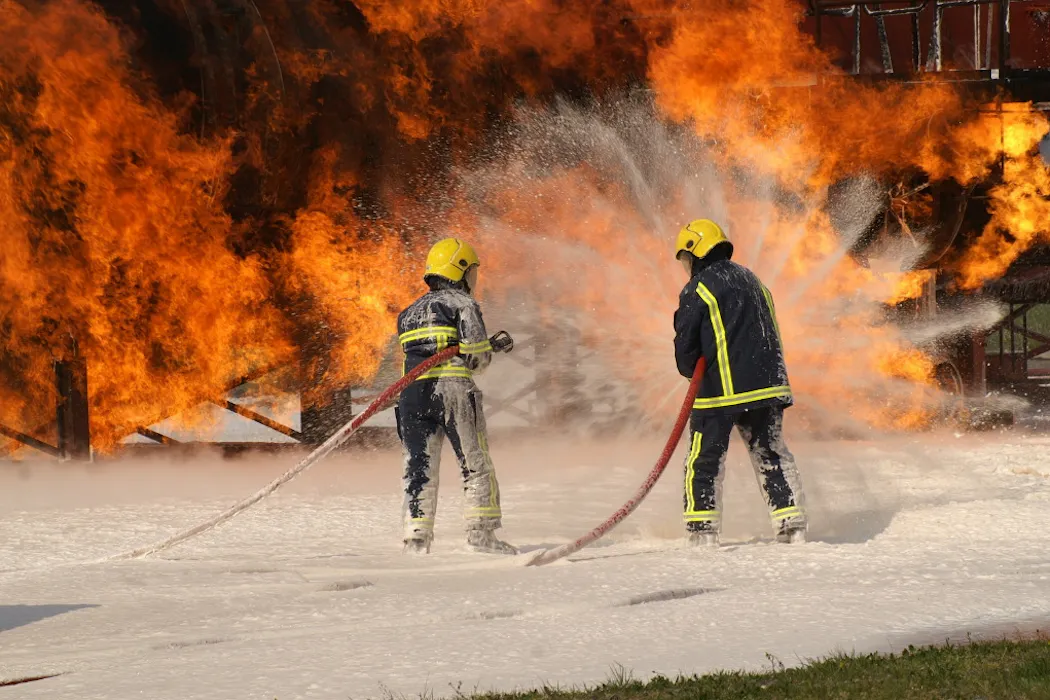
The Commonwealth case focuses on the use of PFAS-containing firefighting foams manufactured by 3M and used on Defence bases from the 1970s until the mid 2000s. These aqueous film-forming foams have been slowly phased out in Australia.

Several communities near affected Defence facilities have sued the Commonwealth, with class actions and other claims amounting to around $400 million in legal settlements.

Until now, the government hasn’t sought to recover these costs, but is doing so now to remediate the sites, pay out class actions and cover future remediation.

While full court documents are not yet public, multiple government statements and the court file suggest the claim is mainly based on the Australian Consumer Law.

The Commonwealth may argue 3M engaged in misleading or deceptive conduct by failing to disclose what it knew about the environmental risks of these firefighting foams.

In the United States, many state attorneys-general have sought to recover clean-up and monitoring costs from manufacturers allegedly promoting PFAS products as safe, despite knowing their risks.

How likely is a settlement?

While both sides appear to have adopted a firm public position committing to the case, this isn’t guaranteed. Large lawsuits like this frequently reach a settlement before trial.

This is because reaching a settlement allows parties to agree on compensation without a judicial finding of liability.

Australian courts encourage alternative dispute resolution, which can enable settlements and reduce costs and uncertainty, while allowing defendants to avoid formal findings of wrongdoing. Class actions against Defence have all settled before trial.

In the US, municipal governments and water authorities sued 3M and other PFAS manufacturers for selling products they knew would contaminate the environment, seeking payments to “help clean up the mess that they created”. These claims became part of a larger case.

In response, 3M agreed to pay about A$14 billion (US$10 billion) to assist with testing and treatment costs while denying liability.

Settlements have also been reached in personal injury litigation, including one against another manufacturer, DuPont, worth A$953 (US$670) million across 3,550 claims.

What’s in and what’s out of the case?

The proceedings have been framed as an effort to recover past and future costs from almost 30 Defence sites.

Yet PFAS contamination isn’t limited to these sites. Other sites of concern include state-operated firefighting facilities, industrial sites and public water supplies. This case is unlikely to directly address those locations.

It’s not clear whether any funds recovered would support measures sought by affected communities, such as routine blood testing or long-term medical monitoring. Residents of Katherine in the Northern Territory have questioned whether any potential settlement would compensate losses not covered by earlier class actions. Many civilian and military firefighters exposed to these PFAS foams for decades have not been involved in compensation schemes or major litigation.

Notably, the case doesn’t mention any possible effects on human health. Assistant Minister for Defence Peter Khalil has cited advice from health authorities that evidence of health impacts from forever chemicals remains limited.

In 2023, the cancer agency of the World Health Organization found one forever chemical, PFOA, was carcinogenic. But there are many different types of PFAS. The WHO is now conducting a systematic review of key PFAS compounds and health outcomes, such as cancer and reproductive toxicity.

The PFAS class actions against Defence similarly excluded personal injury claims, focusing instead on property, business and cultural losses. Even so, evidence about possible health effects was raised because contamination affected property values.

It will be interesting to see whether the Commonwealth can separate environmental contamination from health concerns, while maintaining its position that evidence of human health impacts remains limited.

fighter planes about to take off from runway.
PFAS contamination has affected almost 30 Defence sites, including NSW’s RAAF Williamtown base. Jungle Jack/Flickr, CC BY-NC-ND

What’s next?

If the lawsuit goes to a trial and the government succeeds in its claim, it would likely open the door to further claims against 3M by fire services, water suppliers and other affected groups.

This could also happen if the claim is settled out of court.

Regardless of the result, more legal action and advocacy is likely from communities affected by PFAS around Australia.

The Conversation

Cameron Holley receives funding from the Australian Research Council (DP260103099).

Carley Bartlett receives funding from the Australian Research Council (DP260103099). Her PhD was supported by an Australian Government Research Training Program scholarship.

The market moves before Trump posts

It has long been the case that when a US President speaks, financial markets react.

But recently oil markets have been behaving a bit differently: sometimes the stock price moves before Trump posts. Millions of dollars are changing hands with some traders seeming to have made incredibly well-timed bets. Did some of them know something the rest of the market didn’t?

@realDonaldTrump made 1,341 Truth Social posts from January 25 to April 8. Our analysis of that 73-day window reveals 15 distinct events with unusual trading activity around Trump’s posts. In several of those events — including the most striking ones — the price had already moved sharply in the minutes before he posted.

➡️ Read the interactive story here

The Conversation

Timothy Graham receives funding from the Australian Research Council for the Discovery Project "Understanding and Combatting 'Dark Political Communication'", from the Universities Australia-German Academic Exchange Service Joint Research Cooperation Scheme, and from Meta Platforms Technologies.

Ella Chorazy receives funding from the Australian Research Council (ARC), for the Discovery Project 'Understanding and Combatting "Dark Political Communication"'.

Stephen Harrington receives funding from the Australian Research Council, for the Discovery Project 'Understanding and Combatting "Dark Political Communication"', and for the Discovery Project "Understanding Twenty-First Century Media Uses and Purposes".

US territories have a voice in Congress but no vote – here’s why

Pictured are warships during the 1898 Spanish-American War, after which the U.S. acquired from Spain new territories thousands of miles from the mainland. Bettmann/Getty Images

As the U.S. celebrates its 250th anniversary, millions of Americans who live outside the 50 states are excluded from full participation in its democracy.

Roughly 3.6 million residents of U.S. territories – including Puerto Rico, Guam, American Samoa, the Northern Mariana Islands and the U.S. Virgin Islands – have no senators and only nonvoting representation in the House. These Americans, who can vote in presidential primaries but not the general election, are excluded because of where they live.

This year marks the 125th anniversary of the Insular Cases, a notorious series of Supreme Court decisions beginning in May 1901 that indelibly shaped the nation’s democracy. In these cases, the court decided that some territories were not, and would never be, an equal part of the U.S.

As political scientists who study the history of Congress, we’ve researched how lawmakers wrestled with the question of what rights to extend to the residents of overseas territories. Their answer shapes American democracy today.

The Insular Cases

After the Spanish-American War, fought over four months in 1898, the U.S. acquired vast new territories from Spain – including Guam, Puerto Rico and the Philippines – increasing its population by some 8 million people overnight with new residents thousands of miles from the mainland. Suddenly, the country was faced with a constitutional conundrum: What political status should these new residents have? Should they be fully integrated into American democracy – or should they be governed as colonial subjects, with no elected representation in the halls of Congress?

Pictured are several people in suits standing around a table
The Spanish-American Treaty of Peace was signed in Paris in 1898. HUM Images/Universal Images Group via Getty Images

In a series of cases, the Supreme Court distinguished between “incorporated” U.S. territories destined for eventual statehood and “unincorporated” territories not destined for statehood, like Puerto Rico and Guam. Part of the impetus was economics: Congress had applied tariffs to Puerto Rican goods, despite knowing that this would be unconstitutional if Puerto Rico was indeed part of the U.S. It then tasked the Supreme Court with sorting out the rest.

In turn, the Supreme Court decided these new territories belonged to the U.S. but were not part of it. This meant that 8 million new residents – a contingent nearly equal in size to the Black American population at the time – would exist outside the Constitution. Chief Justice Melville Fuller, dissenting, warned they would exist “like a disembodied shade, in an intermediate state of ambiguous existence for an indefinite period.”

The exclusion of the territories was explicitly tied to race. Justice Henry Billings Brown, in the opinion of the court, wrote that “if those possessions are inhabited by alien races, differing from us in religion, customs, laws, methods of taxation, and modes of thought, the administration of government and justice according to Anglo-Saxon principles may for a time be impossible.”

Unequal representation

Since 1794, Congress had included nonvoting delegates, generally tasked with representing territories en route to statehood. That changed in 1898. Members of Congress overwhelmingly opposed statehood for these newly acquired places, in part because the largely nonwhite populations of Puerto Ricans and Filipinos were considered racially and culturally inferior and incapable of fully participating in a democracy. Representative John Dalzell, a Republican from Pennsylvania, articulated this argument in 1900 on the floor of the House, said “the methods of government prescribed by the principles of Anglican liberty as practiced in the United States would be grotesque in the Philippine Islands and would bring to their people no advantage.”

For territories that would never achieve statehood, Congress designed a new position: the resident commissioner to the United States. At first, the position was more like an ambassador than a member of Congress. The resident commissioner, for example, was not allowed to access the House floor, much less speak on it. Eventually, the position became almost indistinguishable from that of a territorial delegate, gaining the right to debate but never to vote. Resident commissioners would go on to represent Puerto Rico and the Philippines in Congress.

Today, the resident commissioner is a second-class lawmaker. Like the delegates from the other territories and Washington, the resident commissioner may introduce legislation, serve and vote on committees and speak on the House floor – but they cannot vote on whether a bill becomes law. Even though Puerto Rico is more populous than over a dozen states, it has just one lawmaker, the resident commissioner.

Puerto Rico's Resident Commissioner-elect Pablo José Hernández Rivera speaks during a news conference on Capitol Hill in 2024.
Even though Puerto Rico is more populous than over a dozen states, it has just one lawmaker: Resident Commissioner Pablo José Hernández Rivera, pictured here in 2024. AP Photo/Mark Schiefelbein

125 years later

The Insular Cases have faced increasing public criticism in recent years, including from Supreme Court Justice Neil M. Gorsuch, who wrote that they “have no foundation in the Constitution and rest instead on racial stereotypes. They deserve no place in our law.”

A growing body of legal scholarship and activism has echoed Gorsuch and urged the Supreme Court to overrule the Insular Cases, to no avail.

Less attention, however, has been paid to the legacy of post-1898 territorial expansion in the halls of Congress. Puerto Rico is still represented by a resident commissioner, serving the only four-year term in Congress – as compared with the two-year terms for representatives and delegates.

The resident commissioner – alongside delegates who represent Guam, the U.S. Virgin Islands, American Samoa, the Northern Mariana Islands and Washington – serves with a voice but not a vote.

The Conversation

The authors do not work for, consult, own shares in or receive funding from any company or organization that would benefit from this article, and have disclosed no relevant affiliations beyond their academic appointment.

People are using AI to communicate without disclosing it. Is this morally wrong?

Imagine you have used a generative artificial intelligence (AI) tool such as ChatGPT to tidy up notes you took while in a meeting. Your colleague comments on how clear they are. You don’t disclose it was the AI that made the notes clear and not you.

Now consider a different scenario. You are at your mother’s funeral. Her best friend of many years delivers a heartfelt eulogy, wishing her well in the afterlife. But later you discover her friend did not actually write the eulogy in any way – AI did.

The undisclosed use of generative AI in these two scenarios is deceptive. But is it morally wrong?

It’s worth considering this philosophical question in detail, given the rapid uptake of generative AI and the fact research has found people may be strongly incentivised to not disclose their use of generative AI because it may impact their relationships.

This is because people take generative AI outputs, generally, to be less valuable, and regard those who use the technology as less competent and authentic.

Distinguishing different kinds of deception

Roughly speaking, if you’re engaging in a “deceptive act”, you’re trying to get someone to believe something you know is false. However, deception can come in different varieties.

Philosopher John Danaher provides a useful framework to distinguish between three forms of deception by AI or robots. This framework is useful because, just as robots might convincingly mimic human behaviours, generative AI technologies are allowing humans to do the same.

Some deceptions involve lying or misrepresenting the external world, such as telling someone you saw a horse in the street, even though you didn’t. Danaher calls these “external state” deceptions.

Other deceptions involve lying or misrepresenting facts about ourselves, such as making someone believe you’re an accomplished artist, even though the artwork you showed them was generated by AI. Danaher calls these “superficial state” deceptions.

We can also deceive others into believing we lack thoughts, feelings or competencies we actually possess, such as pretending to not understand a language we speak in order to eavesdrop. Danaher calls these “hidden state” deceptions.

So, when is deception immoral?

To go back to the first example, by not disclosing you used AI to tidy up meeting notes, you’ve allowed your colleague to believe you have the capacity to do the work, which might be true. However, you also allowed your colleague to believe that you demonstrated that capacity by doing the work, which is false. This would fall into the category of an “external state deception”.

While this deception is morally objectionable, it’s arguably ethically permissible. Trivial deceptions like this happen all the time – and surely we aren’t obligated to always disclose everything about what we do and why we do it.

For example, we don’t blink an eye at undisclosed use of spell-checking software because, in most situations, being a good speller isn’t important. But triviality depends on context. If someone used spell-checking software at a spelling bee, we might be less forgiving.

The scenario about the funeral speech is similar to the first scenario, but less trivial. Your belief over your mother’s friend’s superficial state – that they wish her well – may or may not be false. However, your belief over the external state of affairs – that the eulogy is a demonstration of those well-wishes – is certainly false.

This is more morally problematic. When we claim an AI-generated output as our own – and particularly one that aims to reflect something about ourselves – we signal to others that we not only endorse the output, but that we have authored it. In this case it matters to us that the friend is the source of the eulogy – and not AI. The external state deception is deceptive in a non-trival way.

We imply the output was directly caused by our thoughts, feelings or competencies. When we don’t disclose our use of AI, we deprive others of the kinds of information needed to form true beliefs about how the world is and how others are. This is wrong if people deserve to have such information.

However, the eulogy example can still show how not disclosing our use of AI can – all things considered – sometimes be permissible. Perhaps, for example, the friend was so wracked with grief, that having AI write the eulogy on their behalf was the only way for them to get the speech written in time for the funeral. So they endorsed the generated output as their own.

In such cases, not disclosing the use of AI may be permissible, even though still a morally objectionable kind of deception. This is because, like triviality in the first scenario, other reasons might sufficiently outweigh the wrongness of non-disclosure.

Using AI more ethically

So, how can people use generative AI more ethically?

If we are to avoid immorally deceiving others, we ought to disclose our use of it in non-trivial cases.

What makes undisclosed AI use non-trivial is malleable and context-dependent. It changes in response to social norms couched within particular social practices.

Being open about AI use gives others the opportunity to form more accurate beliefs about what we are communicating – and the internal states our communication demonstrates.

The Conversation

Siavosh Sahebi is supported by an Australian Government Research Training Program scholarship.

Thomas Montefiore receives funding from the Australian Government through the Australian Research Council.

What we still get wrong about how people from non-Western backgrounds recover from trauma

Over the past few decades, researchers have developed effective treatments for post-traumatic stress disorder (PTSD), a psychiatric disorder some people develop after experiencing trauma. These treatments often involve talking through the trauma and understanding what happened with a therapist.

But most PTSD research is based on Western populations. Many treatments reflect Western values and ways of thinking valuing independence, agency and regaining personal control. These approaches do not work equally well for everyone.

This matters because many trauma survivors are not from Western cultural backgrounds. In Australia, more than 50% of people were born overseas or have a parent who was. This means that people may receive care that does not fully match how they understand their own experiences.

Culture shapes how people remember the past, make sense of their experience, and seek social support. These processes are also central to recovery from trauma. When treatment fits a person’s cultural background, it is more likely to be effective.


CC BY-NC

Everyone seems to be talking about trauma. Do we know more about it? Or has the meaning changed? In this five-part series, we explore the shifting definition of trauma, why talking about it doesn’t always help, and what else can work.


Why memory is key to recovery

The key symptom of PTSD is distressing and unwanted memories of the trauma. These flashbacks are vivid and overwhelming, and make people feel like they are re-living the trauma in the present.

People with PTSD may avoid reminders of what happened, struggle with sleep and concentration, and experience changes in mood.

This is why memory plays a central role in recovery. PTSD interventions typically focus on helping people process these trauma memories.

This might involve talking through the memory with a therapist in a safe and supported way, making sense of what happened, and exploring how the experience has shaped how the person feels about themselves and the world.

But culture influences how we remember trauma

Across cultures, telling stories about life experiences, including trauma, plays a central role in maintaining good mental health. But there can be cultural differences in how people with PTSD relate to and recount their experiences.

For example, Western culture is generally considered individualist, valuing personal independence, choice and control.

This is reflected in psychology research that prompts people to talk about memories that define their identity. Those from individualistic Western backgrounds – such as the United Kingdom, Australia and the United States – generally tend to discuss memories that centre on themselves as individuals, how they felt, and whether they had control over what happened.

When people from Western cultures have PTSD, trauma memories can become central to one’s identity focus, such as surviving a car accident. They also tend to give longer and more emotionally rich accounts of trauma.

These trauma memories then often become the focus of talking therapies for PTSD.

Trauma is not always an identity

In contrast, collectivist cultures, typical in many parts of Asia, Africa and the Middle East, tend to emphasise relationships, family, community and social harmony.

When talking about memories that define them, people from these backgrounds often downplay personal emotions and centre other people and social interactions.

They may not view trauma through a personal lens or as an individual experience, instead describing its impact on others, social roles and the community. Even those diagnosed with PTSD may not view trauma as central to their identity.

This means the most common one-on-one PTSD treatments, which focus on talking with a therapist about individual feelings and memories, may fundamentally misunderstand how people from non-Western backgrounds relate to experiences of trauma.

Making meaning after trauma

How a person makes meaning of their trauma can also influence their recovery. Are they trying to regain control over what happened, for example? Or are they aiming to accept the past and view challenges as part of life?

Many Western PTSD treatments focus on helping people feel more in control, capable of managing their trauma and current situation.

However, these ideas don’t apply to everyone.

In our research with Asian Australians with PTSD, we found feeling a sense of personal control and agency may be less important for their recovery than other goals.

Rather, lower levels of PTSD symptoms were associated with an increased sense of acceptance of what happened, adapting to the current situation, staying connected to others, and seeing adversity as an opportunity for growth.

These goals may still be achieved in talk therapy with a psychologist. But treatment must be culturally-informed, reflecting these different beliefs and values.

When asking for support doesn’t help

The way people seek support after trauma can also affect recovery.

Among Western trauma survivors, research shows explicitly asking others for support and discussing the trauma – for example, calling a mental health service or a friend – can be beneficial.

However, in collectivist cultures this may be felt as burdening others, and increase a trauma survivor’s stress.

One study of Malaysian adults with PTSD showed explicitly asking others for help actually led to more distress. This can make it harder for some people to seek professional help or talk openly about their trauma. Expecting them to may not be culturally sensitive.

What else can help?

Some people from non-Western backgrounds may find implicit support, which means feeling supported simply by being around others, can be more beneficial than explicitly disclosing their trauma to others.

In practice, this might look like spending time with family, going for a walk with a friend, or being included in community activities such as sport, or cultural and religious events.

Spirituality is often overlooked in trauma recovery. But it can play an important role in helping people make meaning – for example, by understanding hardship as a test of faith, or feeling that patience will be rewarded by God. Among Muslim trauma survivors, studies link these kinds of beliefs with fewer PTSD symptoms.

Some research has also explored how Western “talk therapies” can incorporate spiritual approaches, such as the Qur'an or Buddhist teachings, rather than treating faith as separate from recovery.

There is no single way to heal from trauma. But it’s important to respect how culture shapes how people understand their experiences, seek support, and recover

Your heading here

The Conversation

Laura Jobson receives funding from NHMRC, ARC and Wellcome Trust.

Xin Kie Lee does not work for, consult, own shares in or receive funding from any company or organisation that would benefit from this article, and has disclosed no relevant affiliations beyond their academic appointment.
Why was an Egyptian mummy stuffed with a fragment of Homer’s Iliad?

Achilles Lamenting the Death of Patroclus by Gavin Hamilton (1760-1763). National Galleries of Scotland Collection

Archaeologists have found something unexpected inside a 1,600-year-old Roman-era Egyptian mummy: a fragment of Homer’s Iliad. It wasn’t placed beside the body, but inside the mummy’s abdomen. But the real surprise isn’t just where the fragment was found. It’s how it got there. To understand, we must go back – to the Iliad itself, and to what it became in the Roman world.

In The Iliad, a poem shaped in the 8th century BC and attributed to Homer, the Trojan war does not end in triumph or renewal. It ends in devastation. The poem closes at the edge of collapse, with Troy reduced to a landscape of heroic ruin. And yet, this is not where the story ends.

According to later Roman tradition, one Trojan escaped. Aeneas – son of Anchises and the goddess Aphrodite – fled the burning city carrying his father on his shoulders and the household gods in his hands. He moved west, across the Mediterranean, towards Italy, where he became the ancestor of Rome.

This continuation did not come from the Iliad itself. It was shaped centuries later, most famously in Virgil’s Aeneid. But it changed the meaning of the Trojan war entirely. The past, in other words, was actively reorganised – through stories that could be reworked, extended and connected across time and space.

Painting by Pompeo Batoni (1753), depicting Aeneas fleeing the burning city of Troy with his father Anchises and the household gods, as the fall of Troy is recast as the beginning of a journey toward the foundation of Rome.
Painting by Pompeo Batoni (1753), depicting Aeneas fleeing the burning city of Troy with his father Anchises and the household gods, as the fall of Troy is recast as the beginning of a journey toward the foundation of Rome. Galleria Sabauda

Turning defeat into origin

For Roman audiences, the Trojan war was more than a distant Greek legend. It became a way of thinking about origins, identity and power.

Claiming descent from Troy was more than a matter of tracing a lineage. It required constant cultural work – through storytelling, education and shared knowledge. The Iliad provided the raw material: characters, events and genealogies that could be reshaped and redeployed across generations.

Across the Roman Empire, educated elites learned Homer as part of their schooling. They quoted him in speeches, analysed him in classrooms and used him to signal cultural authority. To know the Iliad was to speak a language that others across the empire understood.

A senator in Rome, a teacher in Asia Minor or a student in Egypt could all draw on the same stories. The poem created a shared frame of reference – one that allowed very different people to situate themselves within a common past.

Plan of the late bronze age citadel of Troy
Plan of the late bronze age citadel of Troy (c. 1300–1109BC) shown in red, with Roman-period structures in blue, integrated into the ancient fortification in such a way that the surviving walls functioned as a theatrical backdrop of ‘authentic antiquity’, transforming archaeological depth into a deliberately scenographic experience. University of Tübingen, CC BY-SA

In the Roman imperial period, the site of ancient Troy – located in modern-day Turkey – became a destination. Emperors invested in its development, tying it directly to Rome’s claimed Trojan origins. Under Emperor Augustus, Troy was folded into the political language of empire. And under Emperor Hadrian, it became part of a wider culture of travel, memory and heritage.

A visitor to Troy in the 2nd century AD would have arrived at a curated landscape. There were baths, places to stay and spaces for performance. A small theatre – the Odeion – was built directly into the ancient citadel, so that the remains of the bronze age city, understood as the setting of the legendary battles around Troy, formed a dramatic backdrop.

Visitors could walk through what was presented as the setting of Homeric epic, experiencing the Trojan war as something anchored in the ground beneath their feet.

From Troy to Egypt

Across the Roman Empire, the Iliad circulated as a living text: copied, taught and read. Egypt, one of Rome’s most important provinces, was no exception. Yet here, Homer circulated within a cultural landscape that differed in important ways from the Greek literary world in which the poem had first taken shape.

For Roman observers, Egypt often appeared as a place where antiquity was materially preserved as well as remembered – through temples, monuments and practices that emphasised continuity with the past. At the same time, it was a deeply hybrid society, where Egyptian, Greek and Roman traditions interacted in complex ways.

Homer was among the most widely copied authors in Roman Egypt – read and taught as a marker of education and cultural belonging and deeply embedded in everyday literary culture.

A small covered Roman theatre
The Odeion of Troy, a small covered theatre inserted into the fabric of the ancient citadel and constructed in the early 2nd century AD, exemplifies the Roman reconfiguration of the site’s urban and cultural landscape. University of Tübingen, CC BY-SA

The Homeric version of the Trojan War was particularly prominent among the Greek-speaking elite, especially in urban centres such as Oxyrhynchus, where the mummy was found. Other versions of the story – which placed greater emphasis on Paris and Helen’s stay in Egypt, as reported by Herodotus based on accounts from Egyptian priests – were probably more widespread among the broader Egyptian population.

The initial media coverage of the discovery of the fragment inside the Egyptian mummy suggested the text was deliberately chosen to accompany the deceased. As a personally meaningful object, perhaps reflecting their education or cultural identity.

The most telling explanation, however, may be the most straightforward. Discarded or damaged papyri could be reused as inexpensive material. The fragment may therefore have functioned as stuffing – bundled together and inserted into the body cavity without particular regard for its literary content.

The very fact that a scrap of the Iliad could end up as disposable filling, however, speaks to how deeply Homer had penetrated everyday life in Roman Egypt.

A text in motion

To make sense of the past in the Roman world meant moving between story and monument, between genealogy and deep time. Each perspective made the others more intelligible.

The Iliad helped create a world in which different pasts could be connected, compared and reshaped. By linking stories, places and traditions across the Mediterranean, the Roman world turned the past into a flexible resource – one that could generate identity, authority and belonging in shifting contexts.

This is why the Iliad mattered: it circulated across many different settings. It shaped elite education, but it was also part of everyday reading culture. At Troy, it helped transform the city into a place of cultural memory. The text itself also had a long material afterlife, surviving not only as an authoritative story, but through manuscripts and writing materials that were copied, passed on – or even reused for entirely different purposes.

Its most enduring insight is therefore this: the past is not something simply preserved, but something continuously made and remade – through the stories, practices and materials that carry it across time.

This article features references to books that have been included for editorial reasons, and may contain links to bookshop.org. If you click on one of the links and go on to buy something, The Conversation UK may earn a commission.

The Conversation

The authors do not work for, consult, own shares in or receive funding from any company or organisation that would benefit from this article, and have disclosed no relevant affiliations beyond their academic appointment.

This election year budget is a political tightrope walk for Willis and National

Mark Mitchell/NZ Herald via Getty Images

An election year budget is a government’s pitch for reelection. For opposition parties, it’s a chance to make their case for change.

Unfortunately for Finance Minister Nicola Willis, her National Party can’t campaign on two of its three big fiscal policy promises from the previous election: to achieve a surplus, reduce debt and cut spending on bureaucracy.

With surplus forecasts moved out by years and government debt having risen, that only leaves the bureaucracy as a viable target.

Willis took the initiative last week with a pre-budget speech in Auckland where she announced three major goals based on National’s 2023 pledge to “reduce spending on bureaucracy”:

  • cut the number of public service agencies through amalgamations
  • embed AI into all public entities
  • return core public servant numbers to a historic norm of 1% of the population.

That would mean, by July 2029, 8,700 fewer public service employees than in December 2025. Willis claims that wouldn’t affect wider state sector employees such as teachers, nurses, doctors or police.

Speaking to Auckland business owners and managers, her message was clear: Wellington is getting serious about value for taxpayers’ money.

Using figures from the Public Service Commission, Willis pointed out that public servants had, since 1993, been around 1% of the population, but grew to 1.2% under the previous Labour government.

Bureaucrats are always a soft political target for the right, and Willis’ taxpaying business audience was apparently receptive to her message.

She chose a sharp wedge issue, however, forcing Labour and the Greens to react by defending public sector employees and attacking “austerity” policies.

Moreover, the economy has been hit by an unexpected energy crisis because of the Middle East situation.

In December, Westpac was forecasting 3.0% growth in 2026 and a decline in the unemployment rate. By this month, they’d revised that to 1.5% growth and a rise in unemployment, none of which is good for a government’s budget or its electoral prospects.

National’s fiscal challenge

Willis’ pre-budget speech was getting in ahead of any bad news she may deliver on budget day. Before the 2023 election, the National Party had offered voters a fiscal plan to “deliver the turnaround the government’s books need”, pledging to:

  • achieve a surplus in 2026/27
  • reduce government debt
  • reduce spending on bureaucracy.

Willis has refreshed that third goal, but what about the other two?

Rather than return to surplus in 2026/27 as promised, the Treasury’s December 2025 update shifted the goalpost to 2029/30. So National faces November’s election still in deficit, and the war in Iran has only made things worse.

Accordingly, government debt has risen in the past three years. The Treasury forecast net core Crown debt to rise and peak at 46.9% of GDP in 2027/28, then decline to 46.1% by 2030.

If the Superannuation Fund is included, as economist Susan St John recommends, the net debt-to-GDP figures are much lower, but they’ve still risen since 2023.

Officially, the Superannuation Fund is excluded from the calculation of net debt because it’s not available for current expenditure, and is invested in growth assets and hence volatile.

By National’s own standards, though, the government has failed to deliver on some key fiscal policies in its first term. In November, voters will determine whether it’s to be its last.

The government’s opponents can argue National’s goals were wrong to begin with.

The assumption the government is somehow “broke” and has to stop borrowing and cut spending can be challenged. But there is no political consensus about what would be a fiscally prudent “ceiling” above which public debt shouldn’t rise.

The Treasury’s “recommended prudent limit for net core Crown debt” is 50% of GDP. Other countries have gone much higher. But New Zealand is a small, almost irrelevant economy in the eyes of international investors and credit-rating agencies, so cross-country comparisons may not be helpful.

Debt and doubt

In the 1990s and 2000s, both National and Labour governments reduced net core Crown debt, starting from a level higher than at present, down to below 10%. After the global financial crisis hit in 2008, this allowed the next National government to run deficits for a few years while the economy recovered.

Willis says “the interest bill on our debt has soared to about $9 billion a year”, or about 6% of expenses. That’s a long way from being broke or unable to service loans, let alone default.

But there has to be a prudent limit to borrowing, especially for a small economy vulnerable to economic shocks. No government wants to turn their country into one of history’s sovereign debt defaulters. The consequences of that are catastrophic.

Government debt may sound boring, but it’s a vital political question for this budget and for the coming election.

The Green, Labour and NZ First parties are promising public investment funds, and they should advise voters how much they’d need to borrow overall. All taxpayers help repay the debts, after all, so they should be able to weigh borrowing up against the benefits of proposed investments.

Get ready for the usual political bunfight on budget day. But think critically about where the government – and its opponents – might lead the country.

The Conversation

Grant Duncan does not work for, consult, own shares in or receive funding from any company or organisation that would benefit from this article, and has disclosed no relevant affiliations beyond their academic appointment.

Deep-sea sponges survive in complete darkness in ways we didn’t know before

The deep-sea sponge _Calyx_ sp. in its natural habitat. PROBIO-DEEP/Fugro

When we think of marine life, we usually picture colourful coral reefs or dense seaweed forests filled with fish and other critters. The ocean that comes to mind is the one touched by sunlight.

However, most of the ocean is not like that. By volume, roughly 95% of the ocean consists of the permanently dark, cold deep sea. Despite such hostile conditions though, there is life in the ocean’s abyss.

Deep-sea marine sponges are among the organisms that live in these mysterious dark waters. They form “gardens” that are among the largest ecosystems on the planet, some spanning thousands of square kilometres on the ocean floor. They act as ecosystem engineers, providing habitats to many other organisms living on the seafloor.

Individual sponges can also pump and filter thousands of litres of water every day through their bodies. The nutrients they release support other organisms. Yet we know remarkably little about how sponges survive, let alone thrive, in the inhospitable environment of the deep-sea.

Symbiosis with microbes is an important part of how marine sponges live. We’ve been studying deep-sea sponges to better understand life in the ocean’s depths. So far, we’ve found some sponges are packed with microorganisms that use energy from chemical reactions.

The deep-sea sponge Aphrocallistes beatrix has the highest proportion of chemosynthetic symbionts reported to date. PROBIO-DEEP/Fugro

This is called chemosynthesis and is commonly found in other deep-sea organisms, such as mussels and tubeworms living in hydrothermal vents – deep-sea “hot springs”.

Our new study, published today in the journal Microbiome, shows sponges and their microbial partners also use a second strategy to make a living in the deep sea.

Two strategies, one sponge

All living organisms produce waste. Just like humans produce urine, many sponges produce ammonia as one of their waste products.

In this study, we analysed the Calyx species of deep-sea sponges from a depth of 830 metres.

About 16% of their microbial partners use the familiar chemosynthesis process. With ammonia as the energy source, they use carbon dioxide dissolved in the water to build biomass – it’s a bit like plants growing through photosynthesis from sunlight, but in the dark.

In well-lit shallow waters, many sponges and corals have photosynthetic microbes that help them build biomass from carbon dioxide. Our findings show that in the dark depths of the ocean, sponges have microbial partners that use ammonia instead of light for the same process.

The remaining 84% of microbial partners are where it gets really interesting. Instead of chemosynthesis these microbes use heterotrophy, which means consuming organic matter to generate energy and biomass (like the vast majority of animals, humans are also heterotrophs).

The problem here is that there’s little organic matter in the deep sea. Whatever falls down from the surface waters, such as dead plankton and algae, gets stripped by bacteria and small crustaceans of anything easily digestible as it sinks through the water column.

So, the little amount of organic matter that reaches the seafloor is generally poor food for the sponge itself. But, as we discovered, not necessarily for its microbial partners.

It turns out the heterotrophic microbes in Calyx sponges have lots of enzymes specialised in breaking down complex compounds, such as xylan and pectin, which make up the hard-to-digest cell walls of algae.

Feeding on these algal skeletons would allow the microbes to thrive and to transform organic molecules into nutrients their sponge host can use.

Deep-sea sponges and crinoids (marine invertebrates) in a deep-sea reef. PROBIO-DEEP/Fugro

Protecting what we don’t yet understand

Our study shows that sponges and their microbial partners are complex, biogeochemical reactors. They use and recycle ammonia “urine”, carbon dioxide and hard-to-digest organics to generate biomass.

The biomass can then support the growth of other organisms, such as brittle stars and fish, in turn supporting the broader community of animals living on the dark seafloor.

Unfortunately, these ecosystems are under pressure from human activities. Deep-sea trawling physically destroys sponge gardens. Deep-sea mining, now being actively pursued for rare metals used in batteries and electronics, threatens to disrupt the deep-sea habitat in ways that might take centuries to recover.

The United Nations has recognised deep-sea sponge gardens as vulnerable marine ecosystems, a formal acknowledgement of both their ecological importance and their fragility. But recognition alone is not enough.

If we destroy these habitats before we fully understand their role in carbon transformation, then we may lose a critical piece of Earth’s carbon cycle before fully realising it was there.

The Conversation

Torsten Thomas receives funding from the Betty and Gordon Moore Foundation USA and the Australian Government.

Alessandro N. Garritano does not work for, consult, own shares in or receive funding from any company or organisation that would benefit from this article, and has disclosed no relevant affiliations beyond their academic appointment.

As Japan’s popularity booms, a new survey shows strong anti-foreigner sentiment

Japan is experiencing historically high numbers of foreigners. Its population is shrinking, and its workforce is ageing, driving foreign labour to historic levels.

In addition, the number of international tourists has also reached record highs, reshaping everyday life across the country. In fact, Japan now rivals, and sometimes outstrips, Bali as Australians’ favourite holiday destination.

Yet, despite the expansion of channels for migrant labour and settlement over the past two decades, successive governments have avoided describing the country as an immigration society. They have also been reluctant to adopt broader frameworks for immigrant integration and social inclusion.

However, given the recent surge, questions about foreigners have moved from a policy footnote to a genuinely contested issue. So what do the Japanese people really think?

Generational differences

A nationally representative survey of 1,500 Japanese adults was conducted immediately after the lower house election in February 2026. It revealed striking findings on how the Japanese public views foreigners.

Nearly two thirds of respondents support both tighter regulations on foreign land purchases and the expectation that foreigners follow Japanese rules and customs. These restrictive views hold across gender, education and income groups. The major exception is age: younger generations tend to express more tolerant views toward foreigners.

The recent influx of foreigners – as workers and tourists – appears to be prompting a change in attitude among Japanese people.

The 2025 upper house election marked a turning point. Sanseito, a nationalist party that made immigration restriction its central platform, achieved a strong result, claiming 14 seats on a “Japanese first” platform.

This result signalled that explicitly anti-immigrant positions could attract meaningful public support. This in turn placed pressure on mainstream parties to address the issue more directly.

That momentum carried into the 2026 lower house election. The Liberal Democratic Party (LDP), under Prime Minister Sanae Takaichi, won a landslide victory while tightening its stance on immigration policies. This included raising the requirements for permanent residency and naturalisation, and tightening regulations on foreign land purchases.

Against this political backdrop, understanding how Japanese citizens view foreigners and what identities and values shape those views has become increasingly important.

The post-election survey provides timely evidence on these questions.

My analysis of the data finds a broad consensus on foreigners among most demographics. When asked whether Japan should strengthen regulations on land purchases by foreign nationals and foreign capital, 66.5% of respondents either agreed or somewhat agreed.

When asked whether foreign nationals should place the highest priority on following Japanese rules, etiquette and customs, 62.9% agreed or somewhat agreed. Less than 7% disagree on either item.

It is notable these numbers hold across demographic groups. University and high school graduates express similarly restrictive views; men and women hold nearly identical attitudes; and higher-income respondents are no more tolerant than those on lower incomes.

However, as mentioned, the one important exception to this consensus is age. Younger Japanese are measurably more tolerant of foreigners than their older counterparts. This suggests attitudes toward foreigners in Japan may be slowly shifting.

Party politics play a role

Party support does structure anti-foreigner attitudes to some degree. Sanseito voters record the most restrictive views on both questions. Centrist Reform Alliance voters are the least restrictive. However, party supporters differ only in the intensity of restrictive attitudes, not whether they endorse them.

The survey also included questions measuring traditional values, which capture deference to authority and social norms, and authoritarian values, which capture acceptance of force and coercion.

Traditional values show little variation by age, gender, education or income. In contrast, authoritarian values vary by age, with young people actually showing more authoritarian values. This resonates with a survey of junior high school students in the Tokyo metropolitan area, where the proportion agreeing that “people who break the rules should be punished strictly” rose from 59% in 2018 to 79% in 2025.

At the same time, LDP voters score highest on both measures. This is consistent with the party’s longstanding position as the vehicle of conservative values in postwar Japanese politics.

Both traditional and authoritarian values correlate significantly with anti-foreigner attitudes. Respondents who are more sceptical of authority, less committed to social norms, and less accepting of force tend to hold more tolerant views toward foreigners.

A changing Japan

My analysis reveals a society where restrictive attitudes toward foreigners are widespread, generationally inflected, and grounded in traditional and authoritarian values. This reflects a tension that Japanese policymakers and the public have struggled to resolve: the economic case for accepting more foreign workers is clear, yet it sits uneasily alongside deep-rooted ideas of cultural cohesion and ethnic homogeneity.

Future research could sharpen this picture by distinguishing among Japanese people’s views of foreign tourists, short-term workers and long-term residents.

How the Japanese public views its growing foreign population will continue to matter in future Japanese elections. Similarly, how the government responds will offer an important test case for neighbouring East Asian societies grappling with similar tensions.

The Conversation

Peter Chai does not work for, consult, own shares in or receive funding from any company or organisation that would benefit from this article, and has disclosed no relevant affiliations beyond their academic appointment.

❌
Subscriptions