Normal view

Chinese American teens experience depression, anxiety at higher rates than peers – here’s why their parents may miss the warning signs

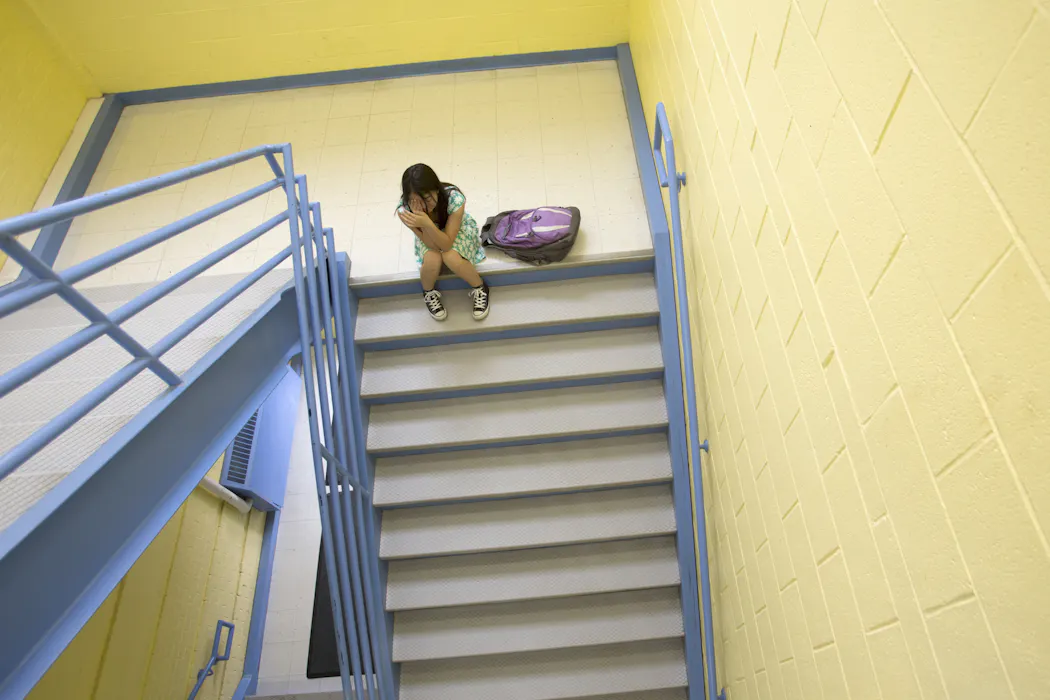
Many Chinese and Chinese American students do not seek the mental health care they might need, sometimes because of stigma. Jonathan Kirn/The Image Bank/Getty Images

She has straight A’s, a full schedule of Advanced Placement classes, a chair in the youth orchestra and a bedroom wallpapered with college acceptance letters. She also hasn’t slept a full night in months. She lies awake at 2 a.m., convinced she is a burden to her family – and she has no idea how to tell anyone.

I know students like this. My niece – a teenager who was quiet, hardworking and by every outward measure doing well – was one of them.

During the first year of the COVID-19 pandemic, she died by suicide. Her family was not aware she was depressed, no one at her school had raised a concern, and she never sought any mental health support.

After her death, I began asking different questions – not only as a family member, but also as an educator and researcher. Between 2023 and 2025, I interviewed 11 Chinese immigrant parents living in the U.S. about how they understood their children’s mental health and why many families avoid mental health services, even when their children are struggling.

The parents I interviewed for my doctoral dissertation at Cleveland State University were not indifferent to their children’s suffering or overall well-being. They were navigating mental health through a different framework – one shaped by deeply held, traditional Chinese beliefs about family honor and self-control. Often, they didn’t have the language and understanding to easily discuss mental health openly.

A graphic shows a silhouette of a head that has a black speech bubble in it and says 'depression' and other words, with a black rain cloud above the head.
Schools could adapt their mental health and counseling services to make sure they are connecting with Chinese immigrant families and other families from different cultures. Raul Ortin/Moment/Getty Images

When distress has no name

While many immigrant teenagers are vulnerable to mental health challenges, Chinese and Chinese American teenagers whose parents are immigrants experience higher rates of anxiety and depression than many of their peers.

Suicide rates among Asian American girls age 10 to 19, meanwhile, have more than doubled over the past two decades.

Despite this escalating crisis, a massive treatment gap persists among youth: Only about 10% of Asian American college students and adolescents experiencing emotional distress seek professional help. This leaves the vast majority of these students to struggle silently, because of stigma, academic pressure and fear of their parents’ response if they seek help.

Many Chinese immigrant families I spoke with did not use labels people in the West might use, like depression or anxiety, to describe emotional distress.

Chinese and Chinese American children and teenagers struggling with mental health challenges might say they are tired, for example. Chinese immigrant parents often only see their children’s physical symptoms, like headaches or loss of appetite. Neither the child nor the parent has the vocabulary to connect what they are seeing to depression or anxiety – and the school sends home an English-language brochure that no one reads.

In tight-knit immigrant communities where reputation matters and word travels fast, admitting that a child is struggling can feel like broadcasting the family’s failure to everyone who knows them. One parent in my study told me in 2024:

“Chinese parents care a lot about ‘face.’ If something is positive, they want the whole world to know; but if it’s negative, they would prefer to hide or cover it up. Even if they are facing an issue, they are unlikely to seek help publicly.”

Another Chinese parent described how the words “mental illness” are heard in her community:

“If someone has even a minor mental issue, others think they’re not normal and may discriminate, or even gossip about it. ‘Mental illness’ is often used as an insult.”

My research, in the process of publication, also found that many parents missed the warning signs of a child’s mental health deterioration entirely – not because they were not watching, but because they did not know what they were looking for. Many described a “wait and see” approach, assuming that teenage stress was temporary and that the child would grow out of it.

One Chinese father, an elementary school teacher who had a 21-year-old son, described what he observes in his community:

“Most parents want to protect their child and believe their child is normal. Often parents just hope to get through the day — they think if the child acts up, it’s nothing, it’ll pass. A lot of days just pass by, and these issues get ignored.”

One mother in my study shared a story that has stayed with me. A teenage boy in her community jumped from a building on the first day of school because he could not turn in a homework assignment. He survived. Later, his mother realized she had missed warning signs for years, mistaking his exhaustion and withdrawal for laziness. As my participant explained:

The boy’s mother “used to think he was just lazy or unmotivated. But in reality, he had no energy — he was deeply lacking motivation. Her philosophy was ‘diligence can make up for lack of talent,” this other parent described.

What schools get wrong

Schools are one place to intervene in identifying and supporting students with mental health needs.

Some parents in my study described supportive teachers who reached out with genuine compassion when they noticed a student pulling away or struggling. Far more encountered counselors who did not understand the family’s cultural context, sent home materials only in English or treated behaviors that were entirely normal within a Chinese household, like a child avoiding eye contact or expressing disagreement through silence rather than words, as a cause for concern.

When a school’s entire approach to student mental health is built around the expectation that students will name their feelings directly and families will welcome a clinical referral, it may feel foreign – and therefore unsafe – to many Chinese American families.

I think that real progress on supporting Chinese American youth mental health requires a few things:

First, states with growing Chinese immigrant and Chinese American populations could fund bilingual, bicultural mental health services. Screening tools used in schools could recognize what might be a cultural way to express distress in Chinese culture, not only through the self-reporting language of Western psychiatry.

Second, I think that schools could invest in bilingual family liaison roles within counseling teams – not just translators of paperwork, but genuine bridges between two worlds. Mental health systems could build formal partnerships with the community institutions that families already trust: Chinese-language churches, cultural organizations and community centers.

My niece was celebrated for her grades, her discipline and her quiet reliability. What she needed was for someone to look past all of that and see how she was really doing.

I cannot change what happened to my niece. But her death continues to shape my work – and my belief that schools, families and communities must learn to see young people more fully – not only for what they achieve, but for what they carry silently.

If you or someone you know is considering suicide, the free and confidential 988 Suicide and Crisis Lifeline is available to call, text or chat.

The Conversation

Huaying Wang does not work for, consult, own shares in or receive funding from any company or organization that would benefit from this article, and has disclosed no relevant affiliations beyond their academic appointment.
A 5.3 million-year-old whale graveyard has been found on the floor of the Indian Ocean

When a whale dies, a very special natural phenomenon can come alive. The carcass might float at the surface for some time, attracting sharks and other predators. As it becomes weathered it may start to sink, falling through the water until it eventually settles on the seafloor where deep sea scavengers feast upon it.

The scientific record of “whale falls” is sparse and fragmentary. But a team of researchers, led by Xiaotong Peng from the Chinese Academy of Sciences, has discovered a vast and ancient whale necropolis in the Diamantina Zone in the southeastern Indian Ocean.

The site, described in a new paper published in Nature, dates back more than five million years and is one of the deepest known whale fall ecosystems in the world.

A whale-sized find in the middle of the ocean

During a special dive mission in February 2023 using a submersible called the Fendouzhe, the team of scientists discovered extensive whale skeletons and fossils partially buried in sediment on the seafloor.

Following the initial discovery, the team made 32 more dives to the seafloor over the next month, mapping the extent of the necropolis.

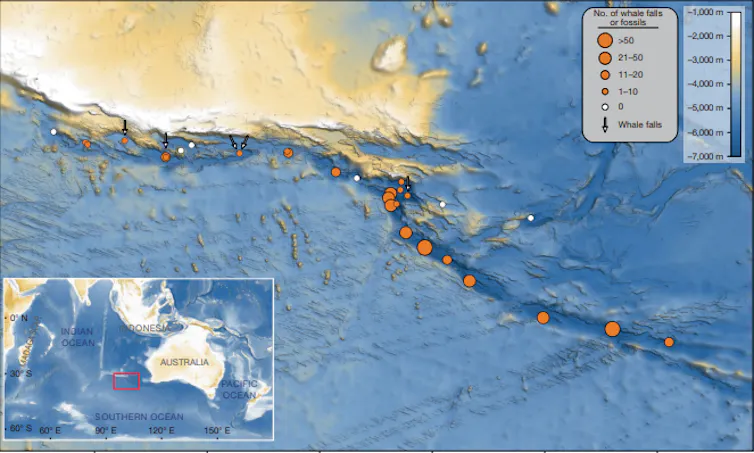
It stretched roughly 1,200 kilometres along the seafloor at depths of between 4,200 and 7,000 metres. It contained 476 whale fossils as well as five active whale falls.

A topographical map of the Indian Ocean, with orange dots representing the location of whale fossils.
Distribution and abundance of whale fossils and whale falls in the Diamantina Zone. Xiaotong Peng et al, CC BY-NC

These active whale falls were teeming with many strange-looking creatures, including jellyfish, brittle stars and bone-boring worms – many of which may be new to science, according to the researchers.

From the 43 fossils the team recovered, they identified five beaked-whale species, including the Andrews’ beaked whale (Mesoplodon bowdoini) and the strap-toothed whale (Mesoplodon layardii) which are known to inhabit the region, and one species of baleen whale – the sei whale (Balaenoptera borealis).

The largest find was a dead Antarctic minke whale, five metres in length, which the team identified from its distinct ear bone shape, as well as genetic analysis. The team also identified a new whale species – Pterocetus diamantinae – which is now extinct.

Isotopic dating, where scientists use the decay of radioactive isotopes, revealed that the oldest fossils from the site are about 5.3 million years old.

The high concentration of whale remains in the region raises the question of how exactly this graveyard was formed. The authors suggest the reason probably has to do with the V-shaped topography of the Diamantina Zone which funnels carcasses onto the seafloor, plus the fact that many deep-diving beaked whale species are known to inhabit this part of the ocean.

Three weathered skulls against a black background.
Fossil skulls of three beaked whales recovered from the seafloor of the Diamantina Zone. Global TREnD, IDSSE

A reminder of how little we know

This work deepens our our understanding of whale falls and the incredible ecosystems they support. It also deepens our understanding of beaked whales – usually offshore species which routinely dive up to 1 kilometre and hold their breath for more than an hour.

The finding of five million-year-old fossils provide an evolutionary window into the history of beaked whales from the Pliocene epoch to the present day.

This research is also a humbling reminder of how little we know of the deep sea – and how when we look for something, we may just find it, and so much more.

The Conversation

Vanessa Pirotta does not work for, consult, own shares in or receive funding from any company or organisation that would benefit from this article, and has disclosed no relevant affiliations beyond their academic appointment.

129,000 years of crocodiles: what we know about Australasia’s ancient apex predators

Jorgo Ristevski, CC BY

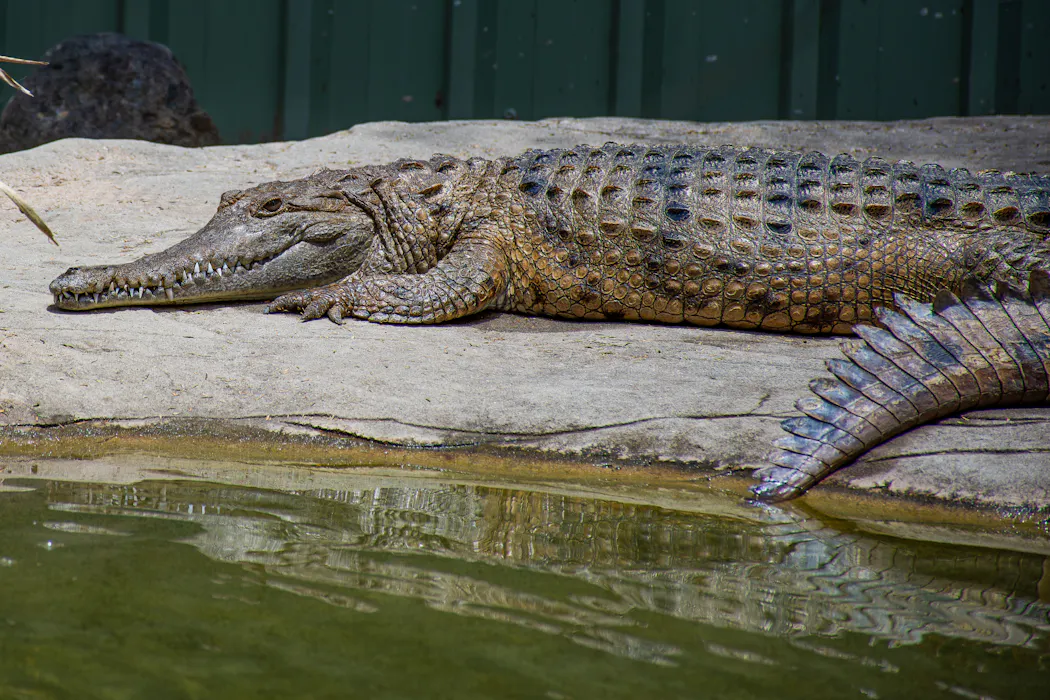
The sight of a saltwater crocodile basking on a mudbank is one of the most iconic and intimidating images of northern Australia. Yet the crocodiles that inhabit the region today are just the survivors of a much richer and stranger lost world.

Until recently, Australasia was home not just to the familiar crocodiles found in tropical waterways, but also to a unique cast of crocs unlike any living species.

Our recent review of evidence from the past 129,000 years reveals a dramatic story of extinctions, human encounters, and survival against the odds.

Mekosuchines – the lost rulers of Australasia

Modern crocodiles are members of the genus Crocodyls, but an entirely different group of crocodylians known as mekosuchines once dominated the region.

For more than 50 million years, mekosuchines were the apex predators of Australasia. Some even survived to meet humans.

These remarkable animals came in an astonishing variety of shapes and sizes, inhabiting many different environments.

Some were giant semi-aquatic ambush predators, much like the saltwater crocodiles that still patrol northern rivers today. Others were much smaller “dwarf” species that inhabited islands such as New Caledonia. Most terrifyingly, some species possessed blade-like serrated teeth and probably hunted their prey on land.

A fragmentary puzzle

We pieced together a record of crocodylians over the past 129,000 years from scattered and highly fragmentary remains recovered from more than 20 archaeological and palaeontological sites.

Most are located in Australia, though some are found in New Guinea, and a handful more across the southwest Pacific. At archaeological sites on the Australian mainland, as well as in the Torres Strait and New Guinea, researchers have uncovered the broken bones and teeth of modern crocodile species, showing that these formidable reptiles have shared landscapes with people for thousands of years.

Ancient rock art, some dating back around 20,000 years, reveals that Indigenous Australians were closely observing and depicting these animals for millennia. The distribution of archaeological remains and rock art closely mirrors the modern ranges of crocodiles today. This points to a long and relatively stable coexistence between humans and these powerful predators.

Map of Australasia with red dots.
Crocodylian remains have been found at sites across Australasia dated over the past 129,000 years. Jorgo Ristevski, CC BY

Archaeological evidence shows that humans did occasionally eat crocodiles, and sometimes even crafted pendants from their teeth. Yet such discoveries are quite rare. When ancient archaeological sites do yield crocodile bones, there are usually only a handful of them.

The evidence suggests crocodiles were hunted only rarely. This is not surprising.

Adult saltwater crocodiles are enormous, immensely powerful, and highly lethal to humans. For ancient communities, engaging with these apex predators would have been a hazardous undertaking, and something mostly avoided.

But modern crocodiles weren’t alone in these ancient landscapes. Fossils show they shared them with the mekosuchines.

On mainland Australia, mekosuchines are currently only known from fossils. Most remains date from more than 40,000 years ago. We currently have no evidence of these extinct crocs from archaeological sites or in ancient rock art.

We don’t know if humans and mekosuchines ever directly interacted in Australia. Their disappearance occurred around the same time as the extinction of other Australian megafauna, potentially after a long period of coexistence with humans. The exact cause of their demise in Australia remains a mystery.

Island extinctions

However, the story is different on the islands of New Caledonia, Vanuatu and Fiji. There, some mekosuchine species managed to survive into much more recent times. And humans almost certainly encountered them directly.

The extinct crocs of New Caledonia and Vanuatu were small, reaching less than two metres in length as adults. They also likely lived more on land than today’s semi-aquatic crocodiles. Their small statures and terrestrial lives would have made them far more accessible for human hunters.

Diagram showing relative sizes of a human, a huge crocodile, and two small crocodiles.
Size comparisons between the largest (the living saltwater crocodile, Crocodylus porosus) and smallest (the extinct dwarf crocs of New Caledonia and Vanuatu, Mekosuchus) known crocodylian species from the past 129,000 years in Australasia. Jorgo Ristevski, CC BY

Tragically, the known record of these island mekosuchines ends within a few centuries of human settlement. In several cases, their remains were found in association with human artefacts and middens.

In one example from Vanuatu, a mekosuchine limb bone appears to bear the gnaw marks of a rat, an invasive species introduced to the island by humans. While definitive proof is elusive, it seems likely that direct or indirect human involvement may be the reason for the disappearance of these “dwarf” island crocodylians.

Lessons for the Anthropocene

We are now living through the Anthropocene, an age when humans are profoundly influencing the planet and extinctions are accelerating, as is particularly evident in Australia.

The prehistoric past is not just a record of vanished worlds, but a warning for the future. Understanding how apex predators like crocodiles responded to past climatic changes, environmental upheaval, and human impacts provides important clues for their conservation in the future.

To truly unravel these questions will take the combined work of palaeontologists, archaeologists, ecologists and conservationists. Just as crucial will be deep engagement with Indigenous knowledges and land managers, whose long histories of observing and living alongside these animals offer clues for protecting the world’s remaining crocodiles, and the threatened ecosystems they inhabit.

The Conversation

The authors do not work for, consult, own shares in or receive funding from any company or organisation that would benefit from this article, and have disclosed no relevant affiliations beyond their academic appointment.

Demolishing homes after climate disasters can be devastating. Here’s how we reused precious materials

Elise Derwin

Following the devastating Northern Rivers floods in New South Wales in 2022, roughly 14,000 truckloads of water-damaged materials were sent to landfill.

The flood exposed many things, including our unimaginative approach to managing waste. As immediate recovery moved into reconstruction, we saw an opportunity to manage this flood-damaged material differently.

We proposed an alternative to traditional house demolition. It was piloted on two flood-damaged houses in Lismore, using a “circular” model that could reuse materials and eliminate waste.

As well offering potential economic benefits for the local community, our report found it had considerable social and environmental value.

Why did homes get demolished?

In the aftermath of the floods, many NSW homes were significantly damaged and still lay in the path of future floods. In response, the NSW government introduced a buy-back scheme for eligible homes in flood-prone areas.

Part of this program involved demolishing homes, with the materials discarded in landfill or used for low-value recycling, such as woodchipping and burning. Yet the homes contained valuable materials, such as hardwood timbers.

Losing these homes was traumatic for the local community and an unnecessary loss of valuable resources. So the NSW Reconstruction Authority, Living Lab Northern Rivers, and the University of Technology Sydney (UTS) explored how to recover a material that is extremely difficult to source today – old growth timber.

A weatherboard house that has suffered flood damage.
A flood-damaged home in North Lismore, before it was dismantled as part of the Circular Timber project. Kurt Petersen/LLNR

The colonial hunger for hardwood

The first wave of European colonisation of the Northern Rivers included groups known as “cedar getters”. These timber cutters arrived in search of highly-prized rainforest hardwoods.

Much of this timber was transported to Australian cities or as far away as Europe. It was also used to construct buildings and homes for local communities.

Premium old growth timbers extracted from the area included red cedar (Toona ciliata), spotted gum (Corymbia maculata), tallowwood (Eucalyptus microcorys), rosewood (Didymocheton fraserianus) and blackbutt (Eucalyptus pilularis).

This is not your ordinary hardware-variety timber. Prized hardwood rainforest timber is dense, strong, durable and resistant to rot and insects.

Two men in workwear and hard hats study the timber inside a house being deconstructed.
Berto Pandolfo (project lead) and Kris Gardner identifying timber species during the selective deconstruction process. Kurt Petersen

The circular timber project

In early 2024, the Circular Timber project developed an alternative to traditional demolition, which offers very little opportunity for recovering materials.

The current system for demolishing homes is this: large-scale machines level structures and excavators scoop materials into dump trucks, which transport them to distant landfill. Sometimes, materials are recovered, but the vast majority are broken into small pieces, trucked away and buried.

We wanted to establish a “circular” system that reused materials and eliminated waste. This cannot be achieved by a single entity – multiple partners needed to collaborate. In this case, the local community, educators, businesses and government agencies collaborated to establish a pilot where timber from uninhabitable homes could be recovered and reused.

The local community was invited to make prototypes as proof that these premium timbers could be salvaged into new objects. Buy-in from the community was immediate – the materials in these homes represented a link to the region’s history and culture.

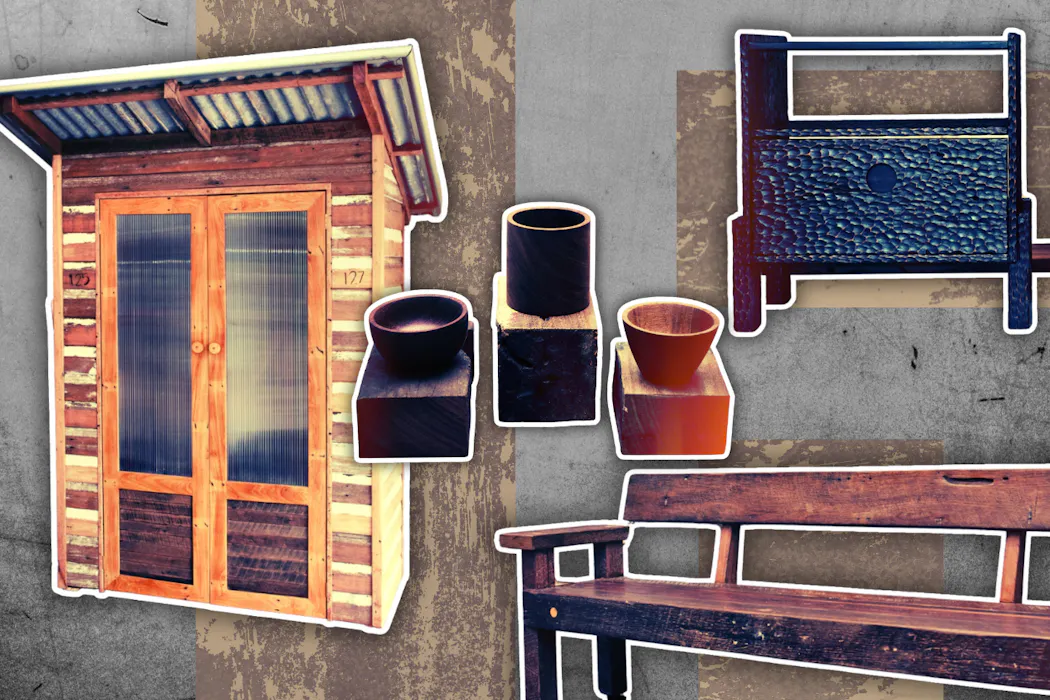
Two homes acquired by the government authority were deconstructed, with their recovered materials made available to local timber makers, builders, artists, architects and designers. The salvaged timber was transformed into a dining table, a community shed, and other designed objects.

An aerial photo of two houses on a green hill.
An aerial photo of the two properties that were used for the project. Living Lab Northern Rivers

How it happened

Moving from home demolition to deconstruction represented a significant challenge. There are Australian standards for demolishing a building, but no guidelines for deconstructing exist (yet).

This project developed a considered approach to dismantling the homes. Care was taken in site preparation, materials identification and disassembly to ensure as much of the timber was recovered as possible.

Although deconstructing, recovering and reusing house materials requires more time, there were significant local and global benefits. For example, salvaging timber reduces carbon emissions, significantly reduces waste sent to landfill, and has a smaller carbon footprint than using virgin timber.

There are also economic and social benefits. This was a Northern Rivers community with a long history of seeing lives turned upside down by catastrophic floods. They responded positively to retaining the physical, cultural, and historical value of the past built into these homes.

A composite picture of household objects made with hardwood.
The salvaged timber from deconstructed homes was used to make new objects. Living Lab Northern Rivers

Homes hold many values

Between 2019 and 2025, there were 214,483 approvals granted nationwide for knock-down-and-rebuild applications in Australia, with the management of waste material left to the discretion of the owner and demolition contractor.

A standard Australian house can include salvageable materials such as hardwood timber, premium timbers, pressed metal ceilings or Federation red bricks.

Shifting our approach from demolition to deconstruction could open up new opportunities. Not only could it create jobs, but it could reduce the need for virgin materials and protect our environment.

This project reminds us that value should not only be assessed in economic terms but also in relation to our environment and communities. This program showed deconstructing homes can be embraced as a way to transform waste into a valuable resource.

The Conversation

Berto Pandolfo receives funding from Northern Rivers Reconstruction Corporation (NRCC).

Angelique Milojevic receives funding from Northern Rivers Reconstruction Corporation (NRCC).

Dan Etheridge receives funding from the NSW Reconstruction Authority. The NSWRA funded the project described in this article.

Birds masturbate, and that’s perfectly normal

mycteria/Shutterstock

For captive animals, engaging in natural behaviour is a pillar of the animal welfare framework. But when it comes to sex, one important behaviour has been largely ignored, and sometimes even punished: masturbation.

Solo sex is surprisingly common across the animal kingdom. It is well documented in primates. Tortoises are surprisingly vocal during their solo lovemaking endeavours, if not very graceful. Camels masturbate by rubbing their penises in the sand and porcupines make inventive use of all sorts of objects.

Our new study could change how other scientists view masturbation in birds and improve their welfare.

Masturbation also seems to be common in birds. A quick internet search brings up an abundance of video clips on social media and dedicated posts on bird-keeping forums, largely from worried or bemused hobbyist bird keepers.

It has often been treated as an abnormal problem behaviour in captive birds (particularly parrots). Folklore husbandry has assumed it is the undesirable outcome of stress, bad health or poor environment. Bird keepers often therefore discourage masturbation via punishment or veterinary interventions such as diet or care changes and, sometimes, even drugs and surgery. Despite the welfare implications, masturbation in birds had been largely unexplored by the scientific community.

We set out to change that, by investigating the distribution and evolutionary history of masturbation in birds for the first time. We studied 120 species of bird across 22 major groups, gathering data from the scattered scientific literature, online reports and community forums, and surveys of bird experts.

Colourful parrot ducks behind wing.
There’s no need to shame parrots for solo sex. Wirestock Creators/Shutterstock

Our study found that masturbation is widespread across birds with a strong evolutionary history, meaning that it’s an ancient trait probably similar in closely related species. Although we found more records of masturbation in male birds, it occurs in both sexes and across all age groups.

Solo sex also seems to be linked to species that mate with multiple partners, supporting the idea that it might help to increase reproductive success when there is a high degree of competition over fertilisation. For instance, in males it may flush out old sperm to leave newer (better condition) sperm for mating. In females it may increase sexual arousal to help with sneak mating with males other than their partner.

Wild behaviour

Crucially, we discovered that masturbation is actually less common in captivity than the wild, and more common in birds reared by their own parents than by humans. What this tells us is that masturbation in birds is neither an unnatural behaviour, nor a consequence of captivity. Given this finding, it is important that birds are not prevented from masturbation. Of course, as with any behaviour, there may be extreme cases where chronic masturbation could indicate underlying health or husbandry issues.

Avian self-pleasure is usually a rather inelegant affair, in which a bird rubs their cloaca (a shared orifice for both excretion and reproduction) against an object, like a branch, twig or toy. This is often accompanied by a lot of flapping and self-satisfied vocalisation.

One potential reason for the lack of scientific studies exploring avian masturbation may be because the cloaca is thought to have fewer nerve clusters, and therefore lower sensitivity, than our own genitals.

Clearly however, birds are getting some satisfaction from masturbation, so perhaps there is more to a bird’s sensations during sex than has previously been recognised. Further exploration of this could have important implications for both welfare and captive breeding programmes. While sexual pleasure may not be exactly the same experience as for mammals, it is wildly premature to dismiss the idea that birds also feel pleasure.

The Conversation

The authors do not work for, consult, own shares in or receive funding from any company or organisation that would benefit from this article, and have disclosed no relevant affiliations beyond their academic appointment.

How Iran uses billboards as wartime propaganda – we selected 5 to explain what they mean

Since the US–Israel war against Iran began in late February, images of giant billboards in Tehran have been ubiquitous across traditional and social media. These billboards have been placed in some of the busiest and most visible parts of the city, and are constantly being updated to reflect current events.

Iran has long used public spaces as a tool of political communication. Since the 1979 Islamic Revolution – and especially during the Iran–Iraq War – the regime has erected murals and billboards to display revolutionary imagery, war memorials and ideological messages.

Today, these billboards are designed not only for local audiences, but also for global digital circulation. Depicting powerful imagery, slogans and symbolic representations, they serve a dual function:

  • to reinforce a sense of collective identity, national unity and shared emotion during a time of crisis

  • to serve as a tool of propaganda for the state, at times featuring Hebrew and English alongside Farsi (Persian).

Researchers argue these billboards are part of a broader visual communication strategy on the part of the state. They are intended to be photographed, posted and shared widely on social media as a way of projecting power and resistance to a global audience (even with a months-long internet blackout in place).

So, what do the billboards say, and what’s the deeper symbolism behind the imagery? We’ve chosen five samples from Tehran to analyse.

1. The Epstein missile

A billboard in Valiasr Square depicting Iranian missiles with messages on March 17 2026. Kaveh Kazemi/Getty Images

One of the billboards that circulated widely in recent months depicted Iranian missiles covered with handwritten messages and symbolic phrases.

Among the most striking inscriptions is the phrase “To the girls of Minab”, written in bold, red Farsi script. This is a reference to a strike on a girls’ school in the opening days of the war that Iranian officials say killed 175 girls and teachers. Reports indicate US forces were likely responsible.

Directly below that, written in English, are the words “Epstein Island victim girls”, a reference to the island owned by convicted sex offender Jeffrey Epstein where young women were allegedly sexually assaulted.

On another missile is the phrase “the girl with the pink jacket”. This is a deeply emotional reference to a young Iranian girl killed in a terror attack in 2024, who was identified by her pink jacket and heart-shaped earrings.

The intention is to connect these disparate events through a narrative of vulnerable young women affected by violence, exploitation and political power. Rather than presenting missiles only as weapons of destruction, the image reframes them as symbols of grief, revenge, memory and defence.

In this narrative, Iran is portrayed not as seeking war. It is responding to injustice and protecting its people.


2. ‘Masters of war’

A billboard in Enqelab Square, Tehran, threatening Iranian missile attacks on Israel, on October 3 2024. Fatemeh Bahrami/Anadolu via Getty Images

Another billboard that gained significant attention in 2024 depicted the Farsi phrase “If you want war, we are masters of war” above a Hebrew message saying “Israel must be wiped from the face of the earth”.

The billboard portrays the sky over Israel illuminated by waves of incoming missiles, almost resembling a meteor shower or rain of fire. The imagery is highly stylised and cinematic, with the missiles transforming the night sky into a scene of overwhelming force.

By directly addressing Hebrew-speaking viewers, the billboard functions as both a direct warning to Israelis and a symbolic projection of power, designed to have psychological impact. Language becomes a tool of warfare itself.

This multilingual strategy reveals an important shift in Tehran’s urban propaganda. These billboards, which have become more prominent in recent years, are no longer designed solely for Iranian pedestrians and motorists. The regime is aware photographs will circulate instantly across the internet, reaching intended audiences in Israel.


3. Trump’s sutured mouth

Another bilingual billboard is targeted to Western – and specifically American – audiences. It features US President Donald Trump’s mouth with a rendering of the Strait of Hormuz sutured on top, alongside the English phrase “The Breaking Point.”

The Farsi text roughly translates to “its patience has run out”. It also contains a literary pun: the word tang in Farsi can refer both to “narrowness” or “constraint” and to the Strait (tangeh) of Hormuz itself. This creates a double meaning linking the geopolitical tensions in the Strait of Hormuz with the idea of reaching a psychological or political breaking point.

The image also critiques Trump’s constant political rhetoric and media presence. The sutures placed across his mouth symbolise silencing, constraint and the loss of Trump’s authority or influence in relation to Iran and the Strait of Hormuz.


4. Arash the Archer

Another billboard draws on the famous Persian myth of Arash the Archer. In the image, Arash places an arrow into his bow in the heat of battle, surrounded by missiles. The reference comes from the ancient story in which Arash sacrifices his life after shooting an arrow during a mythological war between Iran and neighbouring Turan.

The billboard suggests modern Iranian soldiers, like Arash, are willing to sacrifice their lives to defend their homeland.

More broadly, the image also reflects how poetry, mythology and heroic storytelling are deeply embedded in Iranian history and culture. It connects the contemporary conflict to centuries of struggle.


5. The fishermen

Another billboard demonstrates Iranian military power through the image of a massive fishing net spread across the Persian Gulf. Inside the net are captured American aircraft, drones and naval vessels.

The imagery is accompanied by the phrase, “The entire Persian Gulf is our hunting ground” in Farsi, connoting it is under direct Iranian control and surveillance. The image also emphasises the strategic importance of the Strait of Hormuz, indicating the power to open or close this vital waterway ultimately lies with Iran.

At the same time, the fishing net operates as a cultural metaphor. Like fishing itself, Iran’s warfare strategy is based on patience, resilience, careful strategy and long-term determination, rather than sheer force alone.

The Conversation

The authors do not work for, consult, own shares in or receive funding from any company or organisation that would benefit from this article, and have disclosed no relevant affiliations beyond their academic appointment.

Finland is Europe’s most digitalised country – but older people are still left behind

MAYA Lab/Shutterstock

Around the world, countries are moving towards a more digital way of life. Governments have promoted digitalisation of public services to improve efficiency, cut costs and meet modern demands for speedy responses. Yet this push for the digital has caught some people by surprise. Many older adults now feel they face another hurdle in living an independent life.

Across Europe, digitalisation of services is rapidly changing older people’s lives. The post-pandemic movement of booking appointments, vaccines and basic services online accelerated things. Banks and insurance companies now operate mainly online, with in-person options getting rarer by the day in many countries.

Our recent study focuses on Finland, the most digitalised country in Europe. Finland’s first national strategy report on digitalisation was back in 1995. This laid the groundwork for online public services, well before initial steps in the UK and other countries, and when using email was not even an everyday experience.

Finland’s ombudsman for older people estimated recently that the country has between 500,000 and 600,000 residents over the age of 65 who lack digital skills, or don’t have enough skills for independent digital tasks, even if they would otherwise be able to cope independently in their day-to-day lives. This is about 40%-45% out of a total population of about 1.3 million in that age group. However, across political divisions, digitalisation continues to be seen as a self-evident good.

Our study involved talking with over 40 older people in Finland, and analysing over 40 policy documents as part of a larger European study.

Many of our research participants in their late 60s, 70s and 80s had a hard time keeping up with technological and software development. With the erosion of person-to-person contact, daily situations involving medical or financial issues meant dealing with chatbots or, after a long wait, with people who could not answer their questions. As one of our participants put it:

It is very difficult to get hold of someone at a bank, for example. Even if I just want to ask something, I have to hold indefinitely, and if I then get hold of a person in the end, they do not know. On the phone, they always say, that the answer for this or that is available digitally. But then they cannot answer questions I want an answer to.

Many of our participants were concerned about how digitalisation of services has proceeded at such a fast pace. In-person visits to banks and health centres can become very limited, even impossible. Older people are worried about not being able to talk directly with a doctor or nurse in person, or being denied contact with a human when dealing with financial matters. Information about essential health and social welfare is sometimes only available online.

Doctor typing on tablet with a Finnish flag background
Older adults have been particularly concerned about the digitalisation of medical appointments. lunopark/Shutterstock

Finland ranks highest in Europe on the EU’s Digital Economy and Society Index, which measures states’ levels of digital infrastructure and skills. Yet according to the Finnish Digital Skill Report 2023, only half of 65- to 74-year-olds have basic digital skills. Of 75- to 89-year-olds, as few as 22% have such skills, and one-third do not use internet at all.

The report also reveals that 89% of Finns help their family members in digital matters. When skills or technology are not up to date, many older people rely on someone else to access vital information or manage their finances. But not everyone has family or trusted neighbours who can help out.

Meanwhile, online fraud has taken new, more sophisticated forms, causing people to lose both assets and dignity – this is of special concern for older people. Such fears create uncertainty, and, for some, isolation. About 20% of Finnish 65-74 year-olds and about 30% of those 75 and over feel quite or very unsafe in their daily activities in the digital environment .

Debating digitalisation

Some may argue that, as some services have been digitalised from the 1990s, how long can people continue to claim they are being digitally excluded, rather than simply choosing not to use technology?

But this view ignores how digital exclusion works. Isolation, ill-health, disabilities, uneven skills, changing software constantly updating and access to devices are all part of older people’s challenges. Learning new IT skills at work is a totally different matter to coping when old, alone or without support.

There is a clear mismatch here between government policy on digitalisation of services, and the reality of people’s lives. The government does not provide digital support for older people. Many non-governmental organisations, as well as some of the larger cities such as Helsinki, do provide some digital assistance and basic training, but the national pattern is patchy at best.

The needs of older Finnish people have not been considered enough in the government’s efforts to digitise services, nor have there been sufficient impact assessments in planning and carrying out reforms. People with lower income or fewer resources, less or no digital access, fewer digital skills, fewer opportunities to learn or less support have experienced severe consequences. People with no online presence struggle to manage their day-to-day lives and may miss out socially.

Our research participants themselves suggested various possible solutions or improvements that would help them, such as maintaining continuous access to face-to-face, offline services and making digital support free and accessible.

These issues are not unique to Finland. But if even people in Europe’s most digitalised country are struggling, it’s likely to be even more acute for older adults in other countries in the coming years. As one of our participants said: “There are so many that do not really manage.” They need to be supported if we are to bring society fully into the digital age.

The Conversation

Jeff Hearn receives funding from The Research Council of Finland and JPI MYBL . He is affiliated with the British Sociological Association, and the International Sociological Association.

Charlotta Niemistö receives funding from The Research Council of Finland and JPI MYBL. She is affiliated with Åbo Akademi University.

Hanna Sjögren receives funding from The Research Council of Finland and JPI MYBL. She is affiliated with the University of Helsinki.

How Iran uses billboards as wartime propaganda – we selected 5 to explain what they mean

Since the US–Israel war against Iran began in late February, images of giant billboards in Tehran have been ubiquitous across traditional and social media. These billboards have been placed in some of the busiest and most visible parts of the city, and are constantly being updated to reflect current events.

Iran has long used public spaces as a tool of political communication. Since the 1979 Islamic Revolution – and especially during the Iran–Iraq War – the regime has erected murals and billboards to display revolutionary imagery, war memorials and ideological messages.

Today, these billboards are designed not only for local audiences, but also for global digital circulation. Depicting powerful imagery, slogans and symbolic representations, they serve a dual function:

  • to reinforce a sense of collective identity, national unity and shared emotion during a time of crisis

  • to serve as a tool of propaganda for the state, at times featuring Hebrew and English alongside Farsi (Persian).

Researchers argue these billboards are part of a broader visual communication strategy on the part of the state. They are intended to be photographed, posted and shared widely on social media as a way of projecting power and resistance to a global audience (even with a months-long internet blackout in place).

So, what do the billboards say, and what’s the deeper symbolism behind the imagery? We’ve chosen five samples from Tehran to analyse.

1. The Epstein missile

A billboard in Valiasr Square depicting Iranian missiles with messages on March 17 2026. Kaveh Kazemi/Getty Images

One of the billboards that circulated widely in recent months depicted Iranian missiles covered with handwritten messages and symbolic phrases.

Among the most striking inscriptions is the phrase “To the girls of Minab”, written in bold, red Farsi script. This is a reference to a strike on a girls’ school in the opening days of the war that Iranian officials say killed 175 girls and teachers. Reports indicate US forces were likely responsible.

Directly below that, written in English, are the words “Epstein Island victim girls”, a reference to the island owned by convicted sex offender Jeffrey Epstein where young women were allegedly sexually assaulted.

On another missile is the phrase “the girl with the pink jacket”. This is a deeply emotional reference to a young Iranian girl killed in a terror attack in 2024, who was identified by her pink jacket and heart-shaped earrings.

The intention is to connect these disparate events through a narrative of vulnerable young women affected by violence, exploitation and political power. Rather than presenting missiles only as weapons of destruction, the image reframes them as symbols of grief, revenge, memory and defence.

In this narrative, Iran is portrayed not as seeking war. It is responding to injustice and protecting its people.


2. ‘Masters of war’

A billboard in Enqelab Square, Tehran, threatening Iranian missile attacks on Israel, on October 3 2024. Fatemeh Bahrami/Anadolu via Getty Images

Another billboard that gained significant attention in 2024 depicted the Farsi phrase “If you want war, we are masters of war” above a Hebrew message saying “Israel must be wiped from the face of the earth”.

The billboard portrays the sky over Israel illuminated by waves of incoming missiles, almost resembling a meteor shower or rain of fire. The imagery is highly stylised and cinematic, with the missiles transforming the night sky into a scene of overwhelming force.

By directly addressing Hebrew-speaking viewers, the billboard functions as both a direct warning to Israelis and a symbolic projection of power, designed to have psychological impact. Language becomes a tool of warfare itself.

This multilingual strategy reveals an important shift in Tehran’s urban propaganda. These billboards, which have become more prominent in recent years, are no longer designed solely for Iranian pedestrians and motorists. The regime is aware photographs will circulate instantly across the internet, reaching intended audiences in Israel.


3. Trump’s sutured mouth

Another bilingual billboard is targeted to Western – and specifically American – audiences. It features US President Donald Trump’s mouth with a rendering of the Strait of Hormuz sutured on top, alongside the English phrase “The Breaking Point.”

The Farsi text roughly translates to “its patience has run out”. It also contains a literary pun: the word tang in Farsi can refer both to “narrowness” or “constraint” and to the Strait (tangeh) of Hormuz itself. This creates a double meaning linking the geopolitical tensions in the Strait of Hormuz with the idea of reaching a psychological or political breaking point.

The image also critiques Trump’s constant political rhetoric and media presence. The sutures placed across his mouth symbolise silencing, constraint and the loss of Trump’s authority or influence in relation to Iran and the Strait of Hormuz.


4. Arash the Archer

Another billboard draws on the famous Persian myth of Arash the Archer. In the image, Arash places an arrow into his bow in the heat of battle, surrounded by missiles. The reference comes from the ancient story in which Arash sacrifices his life after shooting an arrow during a mythological war between Iran and neighbouring Turan.

The billboard suggests modern Iranian soldiers, like Arash, are willing to sacrifice their lives to defend their homeland.

More broadly, the image also reflects how poetry, mythology and heroic storytelling are deeply embedded in Iranian history and culture. It connects the contemporary conflict to centuries of struggle.


5. The fishermen

Another billboard demonstrates Iranian military power through the image of a massive fishing net spread across the Persian Gulf. Inside the net are captured American aircraft, drones and naval vessels.

The imagery is accompanied by the phrase, “The entire Persian Gulf is our hunting ground” in Farsi, connoting it is under direct Iranian control and surveillance. The image also emphasises the strategic importance of the Strait of Hormuz, indicating the power to open or close this vital waterway ultimately lies with Iran.

At the same time, the fishing net operates as a cultural metaphor. Like fishing itself, Iran’s warfare strategy is based on patience, resilience, careful strategy and long-term determination, rather than sheer force alone.

The Conversation

The authors do not work for, consult, own shares in or receive funding from any company or organisation that would benefit from this article, and have disclosed no relevant affiliations beyond their academic appointment.

Solar activity follows an 11-year cycle – here’s how it controls eruptions and solar flares

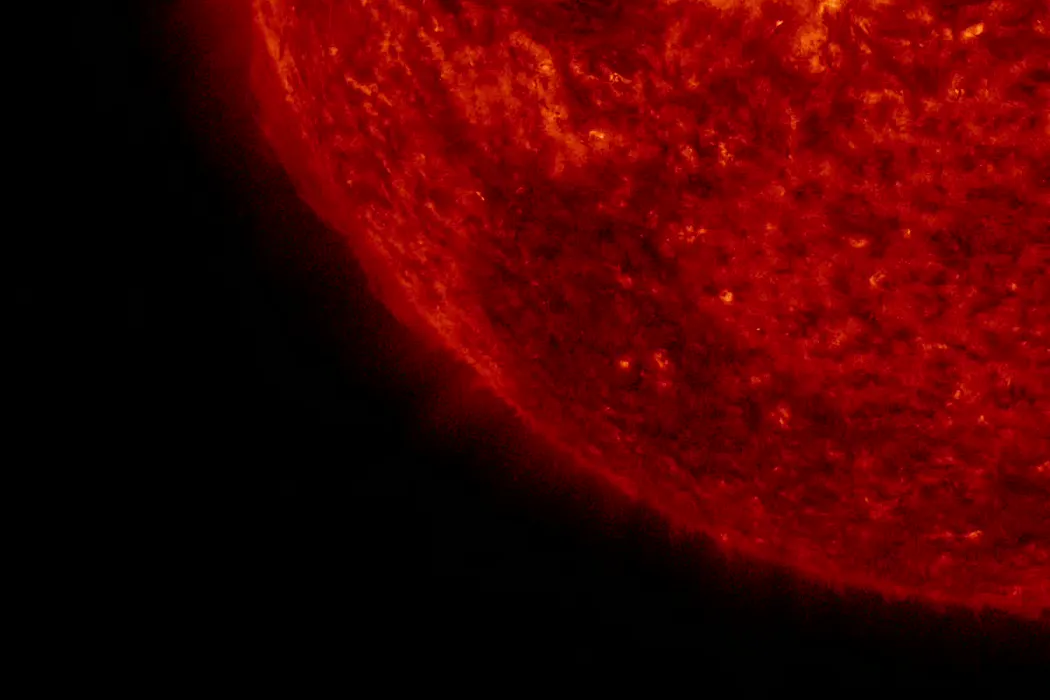
The Sun's surface is dynamic, affected by convection in its interior. NASA/Solar Dynamics Observatory

When you look up at the sky on a sunny day, the Sun might seem like a bright spot, unchanging in the sky. But the Sun is a complex, dynamic celestial body, wrapped in electrical currents and magnetic fields that constantly move and tangle as it rotates. At times the Sun’s surface is very active, casting out powerful bursts of plasma called coronal mass ejections, while at other times it is calmer.

I’m a solar physicist who has spent over a decade researching the Sun. Its movement and activity is directly linked to conditions on Earth: Solar flares and ejections can cause space weather that produces beautiful Northern lights but threatens satellites. This activity follows a roughly 11-year-long cycle, and learning about this cycle helps researchers predict future space weather.

Inside the Sun

The Sun is a star composed of plasma: a hot, ionized gas. The plasma acts as an electrically conductive fluid, and generates large-scale magnetic fields that encircle the Sun.

The Sun is composed of several layers, all made up of a plasma that’s about 70% hydrogen and 28% helium by mass.

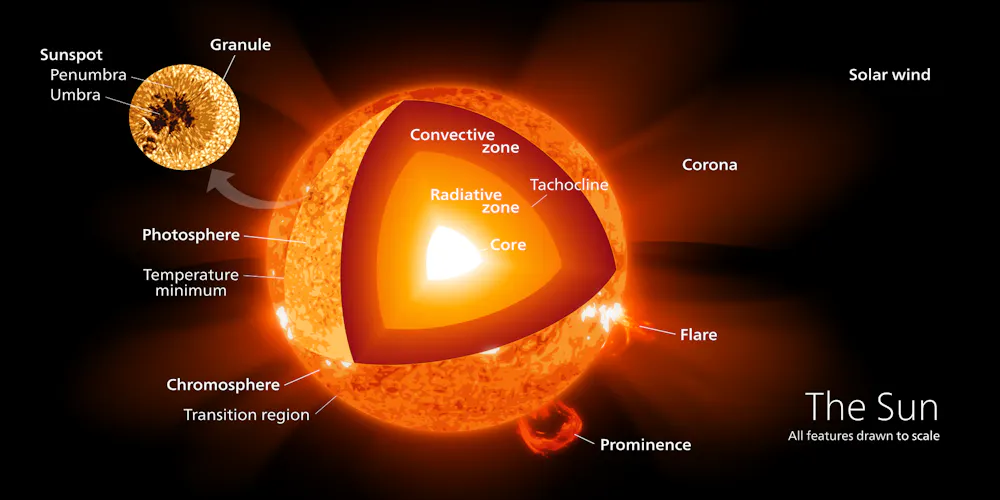
The Sun has a solid core at its center and a dense layer outside the core, where particles of light bounce around, transferring energy outwards. Beyond that layer is a thin line called the tachocline that separates those inner layers from the outer layer. This outer zone is cooler and less dense, allowing plasma to move around.

A diagram showing all the different regions and layers of the Sun
The Sun’s interior is made up of several layers. Kelvinsong/Wikimedia Commons, CC BY-SA

Inside the core, particles collide and release incredible amounts of energy, which radiate out from the Sun in the form of light – a process called nuclear fusion. The light travels outward towards the radiative zone outside the core, before reaching the tachocline.

At the outer layer of the Sun above the tachocline, called the convective zone, the hot plasma travels from deep in the Sun to its surface. As it moves, the plasma cools and contracts, causing it to sink back down. This cyclic process is called convection.

Explaining sunspots, solar cycle and solar dynamo.

The Sun is constantly generating magnetic fields that grow and twist below its surface. Two processes control these magnetic fields by moving the electric charges around in the plasma. One is convection, and the other is the Sun’s rotation.

Scientists think that together, these two processes are ultimately responsible for the Sun’s magnetic activity cycle, during which the Sun shifts from an organized to a less organized magnetic field arrangement. The entire cycle, called the Schwabe Cycle, takes roughly 11 years. Over the course of two Schwabe cycles, the Sun’s magnetic poles flip, and then return to their original orientation.

The Schwabe cycle

When the Sun is in an organized state, the center of the Sun resembles a giant vertical bar magnet with positive and negative ends at the top and bottom, or vice versa – called a magnetic dipole. In the 11-year solar cycle, this phase is known as solar minimum.

A diagram showing the Sun with the top pole labeled '+' and bottom pole labeled '-'. Magnetic field lines come from each pole and curve down vertically to reach the other pole.
During the solar minimum, the Sun’s magnetic field is a simple dipole, with a positive pole and a negative pole on either end. Throughout the solar cycle, the magnetic fields go from simple lines to tangled chaos. NSF/AURA/NSO

Although you cannot see the invisible magnetic field directly, the glowing plasma sticks to these field lines. The magnetic field’s shape during the solar minimum is similar to Earth’s magnetic field, with open-ended magnetic field lines at the north and south poles and closed, looped fields near the equator. After the solar minimum state, the Sun’s magnetic field grows tangled over time. Eventually, it reaches its solar maximum state, where the solar atmosphere resembles tangled up spaghetti.

Two main forces tangle the magnetic field as the Sun rotates and plasma churns away in the convection zone: the Omega and Alpha effects.

Alpha and Omega effects

The Sun doesn’t rotate as a solid body everywhere. The interior of the Sun – the core and radiative layers – spins as a solid sphere, like a basketball. Outside these layers, the convection zone and the surface of the Sun do not spin all together.

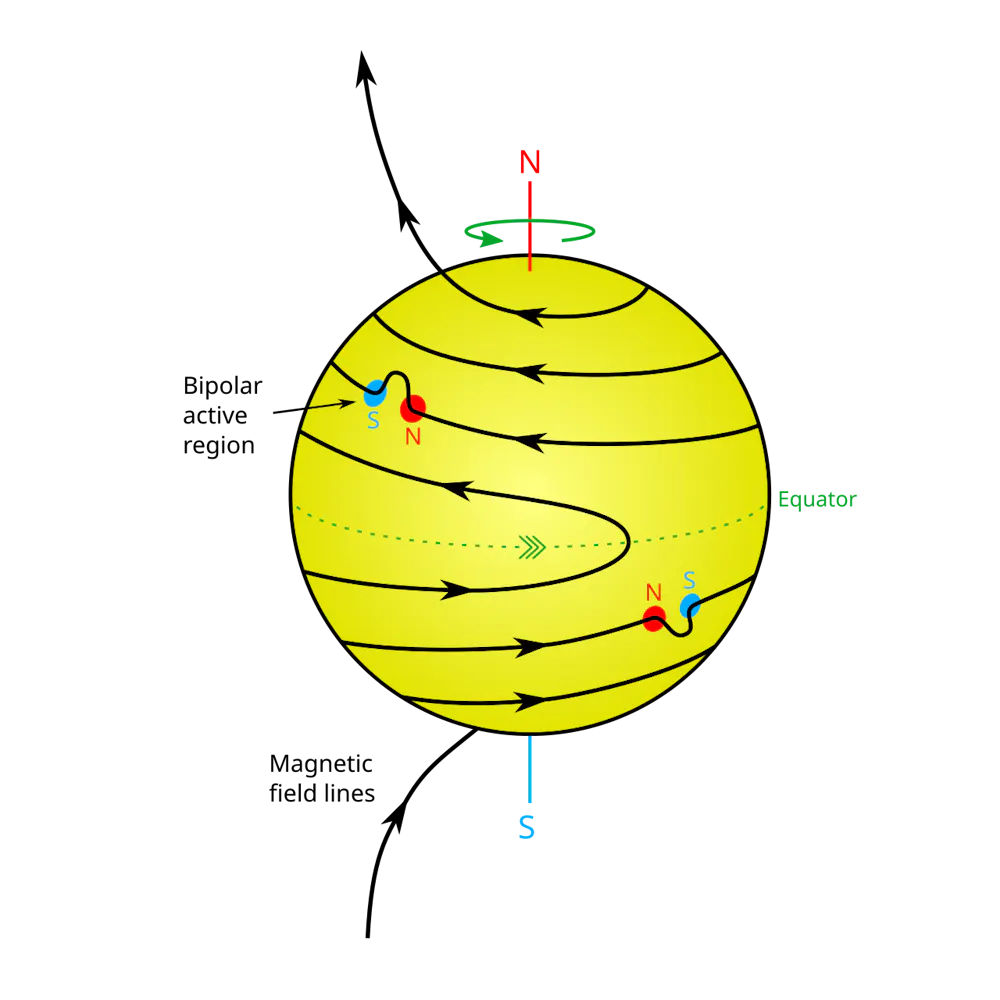
By observing the Sun’s visible surface, scientists found out that the solar equator in the center rotates faster than the poles, near the top and bottom of the Sun. It takes the solar equator about 25 days to make a full rotation, while the poles take longer – about 35 days. Because the equator moves faster, it overtakes the poles in a phenomenon called differential rotation.

Differential rotation stretches the vertical magnetic field lines around the Sun, causing them to wrap around the Sun horizontally like a belt. The field lines pull on the Sun more tightly as differential rotation continues throughout the solar cycle, in a process known as the Omega Effect.

A diagram showing the magnetic field lines wrapping around the Sun and doubling back.
Differential rotation – where the poles of the Sun rotate more slowly than the center – leads the solar magnetic field lines to stretch as they wrap around the Sun. CoronalMassAffection/Wikimedia Commons, CC BY

The second effect, called the Alpha Effect, is thought to arise from convection taking place below the Sun’s surface coupled with its rotation. Like bubbles rising to the surface in boiling water, the tangled magnetic field becomes buoyant and kinked, popping through the surface to create sunspots.

Sunspots look like clusters of dark spots on the Sun’s surface. Scientists can also identify active regions of intensely strong and complex magnetic field bundles by taking images of the Sun in ultraviolet light, where the bundles appear as bright structures.

Solar eruptions called solar flares and coronal mass ejections occur most frequently in these active regions. The appearance of more sunspots, active regions and solar eruptions all signal to scientists that the Sun is entering its solar maximum phase.

Moving magnetic poles

Over the course of the solar cycle, the Sun’s magnetic poles move. At solar minimum, the magnetic poles are oriented vertically through the Sun’s center. But over the course of the solar cycle, the poles begin to tilt, until the pole previously at the top of the Sun is pointed roughly at its equator.

The Sun flipping its magnetic field.

But at the same time, all the tangled magnetic fields make the poles less defined. This chaotic magnetic state partially leads to sunspots and solar eruptions. After solar maximum, as the Sun’s magnetic state grows more organized again, the poles reappear and continue migrating back towards the top and bottom of the Sun.

However, the magnetic pole previously pointed at the top now points to the bottom, and vice versa. The configuration appears upside down from what it was 11 years ago. A full magnetic cycle takes two Schwabe Cycles – during this time, the Sun’s poles flip twice and return back to the original orientation.

Scientists have observed that several other stars, not just our Sun, have a magnetic activity cycle, though their duration can vary. And, like our Sun, other stars also produce eruptions like stellar flares and coronal mass ejections, likely due to their activity cycles.

Studying magnetic cycles in other stars can help astronomers determine whether distant planets could support life. A star’s magnetic activity directly dictates the amount of space weather the planets around that star experience. These effects can strip away the protective atmospheres around planets, prohibiting them from supporting life.

The Conversation

Yeimy J. Rivera does not work for, consult, own shares in or receive funding from any company or organization that would benefit from this article, and has disclosed no relevant affiliations beyond their academic appointment.
How did we learn which plants are safe to eat? 2 food scientists explain

Catherine Delahaye/Getty

Have you ever eaten a green potato, or a bunch of rhubarb leaves?

Hopefully not, because these two plant parts can be toxic to humans. While they may seem edible, they contain chemicals that can make you seriously ill.

Over centuries, humans have learnt which plants are safe to eat and which are not, often by combining ancient knowledge with modern science.

The power of plants

Without plants, we would struggle to get the nutrients we need.

Crops such as wheat and rice provide carbohydrates, the body’s main source of energy. Fruits and vegetables contain a wide range of vitamins that help us stay healthy.

Plants are also chemical factories. To survive, they produce compounds that deter insects and animals that might eat them. They may also release chemicals that protect them from disease. One example is the tobacco plant which produces nicotine, a natural alkaloid that helps protect the plant from insect attacks.

Globally, there are tens of thousands of plants that contain toxic compounds. In Australia, we have more than 1,000 native and introduced plant species that can be toxic to humans and animals, under certain conditions. However, humans only consume a small fraction of the world’s edible plant species.

What makes a plant toxic?

A key principle of toxicology – the study of what makes something poisonous – is “it’s the dose that makes the poison”. This means certain toxic compounds are safe to consume, as long as you don’t eat too much of them.

Table salt is one example. You likely eat it everyday, but this substance can be harmful in excessive amounts.

And many plant compounds that sound dangerous are actually safe, when consumed in small amounts. For instance, green potatoes contain glycoalkaloids, a group of chemicals that can cause symptoms such as vomiting, fever and diarrhea when consumed in large amounts. Oxalates are a type of toxin found in rhubarb leaves. They too can make you sick, but only if you eat lots of them.

Preparation is key

At first, humans learnt which plants were nourishing and which were harmful through years of observation and experimentation. For instance, cassava was first domesticated in South America where Indigenous communities developed processing methods to remove cyanide, a poisonous chemical found in the plant’s roots and leaves.

Many other First Nations peoples developed sophisticated ways of preparing plants that contained toxins. Some Aboriginal communities in northern Australia would soak, grind or cook cycad seeds to remove naturally occurring toxins before consumption.

This knowledge soon became embedded in each community’s culture, as it was passed down through generations.

Today, we use various techniques to reduce or remove harmful compounds from plants. For example, raw or undercooked kidney beans contain a natural toxin called phytohaemagglutinin, which can cause illness. But by soaking and thoroughly boiling kidney beans, you can easily get rid of this toxin.

Fermentation is another way to remove poisonous chemicals from plants. This is because fermentation changes the plant’s chemistry in ways that can reduce or remove toxic compounds. For example, during soybean fermentation, microbes break down harmful compounds such as phytates and trypsin inhibitors, making the soybeans safer and easier to digest.


Read more: Little shop of horrors: the Australian plants that can kill you


The role of modern science

In some cases, scientists have modified toxic plants to make them safe to eat.

Faba beans, also known as broad beans, are one example. Faba beans are an increasingly important crop for Australian farmers, as they can attract high prices and help manage weeds.

Like many plants, faba beans naturally contain vicine and convicine, two compounds that generally don’t affect humans. But in people with a genetic condition called G6PD deficiency, they can trigger a serious reaction called favism. This condition can be life-threatening as it causes your red blood cells to rapidly break down.

Rather than abandoning this crop, scientists have used modern chemistry and plant breeding to develop new faba bean varieties with lower concentrations of these compounds. And farmers are already planting low-vicine varieties as part of their crop rotations.

Over millenia, humans have unpacked the complex chemistry of plants to learn what is safe to eat. But how we consume these plants, and how much of them we eat, also affects how toxic they may be.

The Conversation

Joel Johnson receives scholarship funding from the Australian government for his PhD program.

Mani Naiker does not work for, consult, own shares in or receive funding from any company or organisation that would benefit from this article, and has disclosed no relevant affiliations beyond their academic appointment.

Talking about trauma doesn’t always help. Brain scans show one reason why

After trauma, some people develop post-traumatic stress disorder (PTSD), a mental health condition that can involve intrusive nightmares, flashbacks and physical reactions when reminded of the traumatic event, such as a racing heart or difficulty breathing.

Some people with PTSD also develop profoundly negative beliefs about themselves – intense shame, guilt and even feeling responsible for what happened.

For example, someone who experienced a violent assault may believe they somehow deserved to be attacked. Such beliefs can cause significant distress and drive persistent PTSD symptoms.

There are multiple evidence-based forms of cognitive therapy, also called “talk therapy”, that can effectively treat PTSD by helping to reframe these negative self-beliefs.

However, some people don’t respond to these kinds of therapy much – or at all.

In our research, we scanned the brains of 136 people – half who had PTSD, and half who didn’t – while they used cognitive therapy techniques to challenge negative beliefs. We found the reason some people don’t respond to treatment may lie in the way PTSD has restructured their brains.

First, how does talk therapy work for PTSD?

Research shows talk therapies targeting negative beliefs – including cognitive processing therapy (CPT) and trauma-informed cognitive behavioural therapy (TF-CBT) – are broadly effective for PTSD. Most people show meaningful improvement in their symptoms.

Talk therapy for PTSD usually aims to equip patients with skills to challenge distorted negative beliefs through a structured dialogue, known as cognitive restructuring.

During therapy, a therapist might guide the person to counter the rationale underlying beliefs (for example, “who made the decision to commit the assault?”), or consider alternative perspectives (“is there another way of understanding what happened, which doesn’t put the blame on you?”).

Another therapy, prolonged exposure (PE) gradually increases how much someone is exposed to reminders of the trauma, usually alongside reframing techniques. This can be done during therapy (for example, repeatedly describing what happened) or between sessions (for example, revisiting the scene of the trauma).


Read more: Why do some people who experience childhood trauma seem unaffected by it?


But it doesn’t work for everyone

Clinical studies show, after these kinds of cognitive therapy for PTSD, about one-third of people will still have diagnosable PTSD symptoms.

While zero improvement is rare, it means a significant proportion of people still aren’t achieving ideal outcomes from therapy. The factors underpinning this are complex and poorly understood.

But we know some people with PTSD are more likely to show no or little improvement after talk therapy. They include those with:

  • the most severe symptoms
  • persistent exposure to trauma (particularly during childhood)
  • other psychiatric diagnoses, such as depression or substance use disorders.

Some studies also suggest older people, men, those from racial minorities and military veterans show less benefit on average from cognitive PTSD therapies.

This may because these groups are more likely to report other factors which affect how well treatment works. For example, men with PTSD typically have more symptoms of anger problems than women, and less social support.

What we did and what we found

Our recent study showed there may be a neurobiological explanation for why talk therapies work for some people and not others.

We asked 70 people with PTSD, and 66 people who’d been exposed to trauma but without PTSD, to challenge negative self-beliefs via cognitive restructuring while inside an MRI brain scanner.

In people with PTSD, we found their prefrontal cortex (the brain’s “control centre”) was worse at regulating activation in the thalamus – a small structure that works as a relay hub, allowing different parts of the brain to communicate.

These regions work together to let us represent abstract information – such as self-beliefs – in the brain, and to update our beliefs and their associated emotions with new information.

Among people with PTSD in our study, those with more severe negative beliefs showed weaker connectivity in this pathway when using restructuring techniques to challenge negative self-beliefs.

Weaker connection between these regions might hinder people’s ability to update negative self-beliefs with new information, resulting in less benefit from therapy.

So, why might this be?

We know that self-beliefs in people with PTSD are more often heavily influenced by negative information and events – that is, being criticised might make you feel worse about yourself, but being praised won’t make you feel that much better.

The way PTSD changes brain pathways points to why some people’s self-beliefs are harder to counter with positive reframing techniques, meaning these beliefs become “stuck”.

These trauma survivors may understand, on an intellectual level, that they weren’t to blame for what happened. But that understanding never quite shifts the part of them that still feels responsible, and they have little emotional relief.


CC BY-NC

Everyone seems to be talking about trauma. Do we know more about it? Or has the meaning changed? In this five-part series, we explore the shifting definition of trauma, why talking about it doesn’t always help, and what else can work.


What might work instead?

Some people may need treatments that first address the brain’s wiring needed to engage with talk therapy. For example, certain evidence-based approaches aim to build people’s emotion regulation skills before talk therapy.

A therapist will help someone improve their ability to deal with negative emotions, for example by learning effective strategies to tolerate and manage distress. They will unpack how these emotions influence their interactions with other people, so they are better able to take on the challenges of cognitive restructuring in therapy.

Other emerging evidence suggests therapy using MDMA or ketamine for PTSD may help those who haven’t responded to other treatments, by directly influencing brain pathways. Research is exploring how these can be delivered safely.


Read more: Psychedelic drug MDMA could help treat PTSD – but there’s a reason it’s not widely available


For some people, simply trying different treatments can yield better outcomes. What works can depend on a person’s symptoms or preferences. This won’t always be the first treatment someone tries.

However, we know people whose symptoms don’t improve after one first-line intervention (the “best-practice” treatments with the strongest evidence base) are less likely to engage in further treatment.

By refining our understanding of the brain mechanisms underpinning cognitive restructuring, we’re hopeful our work can inform more precise and targeted approaches to treating PTSD.

But there are other limitations

People with ongoing or repeated exposure to trauma, such as first responders, are also at risk of re-traumatisation. This is where past trauma causes heightened reactions to new trauma. Ongoing trauma can also amplify symptoms and make therapy less effective.

Cultural factors may also shape how well standard therapy formats fit. There is growing evidence that culturally adapted or group-based approaches (especially for interpersonal trauma, such as abuse) better serve some communities than the standard model of one-on-one talk therapy.

The Conversation

Trevor Steward receives funding from the National Health and Medical Research Council.

Andrea Putica and James Agathos do not work for, consult, own shares in or receive funding from any company or organisation that would benefit from this article, and have disclosed no relevant affiliations beyond their academic appointment.

We found hundreds of huge ancient mass graves hidden in the Sahara desert

We have been on a years-long campaign of satellite remote sensing of the vast desert landscapes in Eastern Sudan.

This involved using satellite aerial imagery to systematically and painstakingly search for archaeological features in Atbai Desert of Eastern Sudan, a small part of the much larger Sahara.

Our team – which includes archaeologists from Macquarie University, France’s HiSoMA research unit, and the Polish Academy of Sciences – wanted to tell the story of this desert region between the Nile and the Red Sea, without having to excavate.

One mysterious archaeological feature stood out. We kept finding large, circular mass graves filled with the bones of people and animals, often carefully arranged around a key person at the centre.

Likely built around the fourth and third millennia BCE, all these “enclosure burial” monuments have a large round enclosure wall, some up to 80 metres in diameter, with humans and their cattle, sheep and goats buried inside.

Our new research, published in the journal African Archaeological Review, reveals how we found 260 previously unknown enclosure burials east of the Nile River, across almost 1,000km of desert.

Who built them?

Already known from a few excavated examples in the Egyptian and Sudanese deserts, these large circular burial monuments have long puzzled scholars.

What seemed once isolated examples emerge now as a consistent pattern. It is suggestive of a common nomadic culture stretching across a vast stretch of desert.

Most are within the borders of modern Sudan on the slopes of the Red Sea Hills. Unfortunately, satellite imagery alone cannot communicate the whole story of these enclosure burial builders.

The carbon dates and pottery from the few excavated monuments tell us these people lived roughly 4000–3000 BCE, just before Egyptians formed a territorial kingdom we know of as Pharaonic Egypt.

But these “enclosure burial” nomads had little to do with urbane and farming Egyptians.

Living in the desert and raising herds, these were Saharan desert nomads through and through.

A new elite?

Some enclosures show “secondary” burials arranged around a “primary” burial of a person at the centre – perhaps a chief or other important member of the community.

For archaeologists, this is important data for discerning class and hierarchy in prehistoric societies.

The question of when Saharan nomads became less egalitarian has plagued archaeologists for decades, but most agree it was around this time of the fourth millennium BCE that a distinctive “elite” class emerged.

This is still a far cry from the sort of huge divisions between ruler and ruled as seen in societies such as Egypt, with its pharaohs and farmers. However, it ushers in the first traces of inequality.

Animals held in high esteem

Cattle seem very important to these prehistoric nomads (a theory also supported by ancient local rock art in the area).

Burying themselves alongside their herd, these nomads show they held their animals in esteem.

Thousands of years later, local nomads chose to reuse these now “ancient” enclosures for their burial plots – sometimes almost 4,000 years after they were first built.

In other words, the prehistoric nomads created cemetery spaces that lasted for millennia.

What happened to these people?

No one can say for sure.

The few dates we have for these monuments cluster between 4000–3000 BCE, nearing the end of a period when the once-greener Sahara was drying, a phase scientists call the “African Humid Period”.

From north to south, the summer monsoon gradually retreated, reducing rainfall and shrinking pastures. This led nomads to abandon thirsty cattle, increase the mobility of their herds, migrate to the south or flee to the Nile.

The monuments are overwhelmingly located near what were then favourable watering spots; near rocky pools in valley floors, lakebeds and ephemeral rivers.

This tells us that when the monuments were being built, the desert was already quite challenging and dry.

At some point, as grass and bush made way for sand and rocks, keeping their prized cattle became unsustainable.

Having large herds of cattle in this desert, at this period, may have been a way of showing off an expensive and rare possession – a prehistoric nomad’s equivalent to having a Ferrari. This may help explain why cattle were frequently buried alongside their owners in enclosure burial monuments.

A bigger story

These enclosure burials are only one part of the greater story of human adaptation to climate change across North Africa.

From the Central Sahara, to Kenya and Arabia, keeping cattle, goats and sheep transformed societies. It changed the food they ate, the way they moved around, and community hierarchies.

It’s no coincidence communities changed how they buried their dead at the same time as they adopted herding lifestyles.

These burial enclosures tell us even scattered nomads were extremely well-organised people, and expert adapters.

Our discovery reshapes the story of the Sahara deserts and the prehistory of the Nile.

They provide a prologue for the monumentalism of the kingdoms of Egypt and Nubia, and an image of this region as more than pharaohs, pyramids and temples.

Sadly, many of these enclosure monuments are currently being destroyed or vandalised as a result of unregulated mining in the region. These unique burials have survived for millennia, but can disappear in less than a week.

Maria Gatto (Polish Academy of Sciences) was an author on our paper. We also want to acknowledge Alexander Carter, Tung Cheung, Kahn Emerson, Jessica Larkin, Stuart Hamilton and Ethan Simpson from Macquarie University for their contribution. We are also grateful to the National Corporation of Antiquities and Museums (Sudan).

The Conversation

Julien Cooper receives funding from the Australian Research Council, (Future Fellowship, FT230100067).

Maël Crépy receives funding from the CNRS (HiSoMA) and the Ifao (NOMADES research program).

Marie Bourgeois receives funding from Ifao (NOMADES research program).

❌
Subscriptions