
Normal view

Baloch insurgency: Suicide bombs and uptick in violence threaten Pakistan, regional security

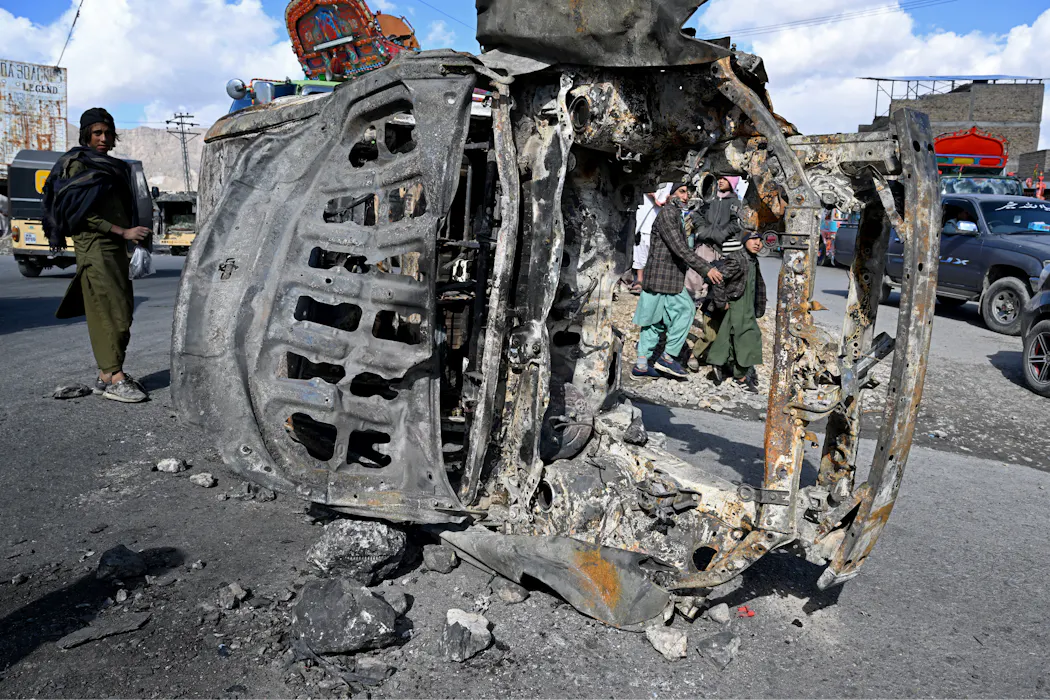
The aftermath of an attack by Baloch separatists in Quetta, Pakistan, on Feb. 1, 2026. Banaras Khan/AFP via Getty Images

In the space of 10 days in late April 2026, insurgents in Pakistan purportedly carried out 27 attacks in the country’s southwest province of Balochistan, killing at least 42 military personal. Then, on May 11, authorities announced that a suicide bombing plot on the capital, Islamabad, had been foiled. Authorities arrested a girl over the incident – a nod to militants’ increasing use of young Baloch women to carry out attacks.

These incidents represent the latest flaring up of a long-running insurgency in Pakistan’s largest province and home to around 15 million people.

For a rundown of what you need to know about the Baloch insurgency and groups involved, The Conversation turned to Amira Jadoon and Saif Tahir, experts on militant and terrorist organizations currently researching such groups’ operational activities and strategic messaging in Afghanistan and Pakistan.

What is the Baloch insurgency about?

Pakistan’s southwestern province of Balochistan has long been the site of resistance and armed movements involving Baloch, an ethnic group of an estimated 8 million to 10 million people that straddles parts of Pakistan and Iran.

Their insurgency is rooted in both contemporary and historical grievances. Its origins trace back to the contested annexation of the princely state of Kalat in 1948, months after the partition of British India into India and Pakistan, and the resulting confrontations between Baloch tribal leaders and the newly formed Pakistani state.

While the insurgency long remained a low-level struggle framed around Baloch marginalization and economic exploitation, it turned violent in the early 2000s with the rise of militant factions, including the Balochistan Liberation Army, or BLA, in 2000 and the Balochistan Liberation Front, or BLF, which was revived in 2004 under current leader Allah Nazar Baloch decades after its 1964 founding. The insurgents’ goals vary, from greater autonomy and control over the province’s natural resources to full independence.

Baloch militants generally cast their emergence as a nationalist rebuttal to the Pakistani government’s long-standing narrative, which states that the unrest is driven by a handful of tribal chiefs resisting development rather than a broad-based movement.

In practice, the contemporary insurgency has expanded well beyond its tribal base, and Baloch militant groups have invested heavily in strategic communications that directly challenge the Pakistani state’s framing.

Today, Baloch militants’ propaganda targets the local educated youth, including women. They play on existing grievances over enforced disappearances, state repression and resource extraction. Balochistan is home to significant deposits of copper, gold, natural gas and coal, including at the Reko Diq mine, one of the world’s largest undeveloped copper and gold reserves. Yet the province remains Pakistan’s poorest.

Baloch militants’ efforts are designed to broaden the insurgency’s appeal, adding an urban, middle-class layer to what was once a primarily tribal revolt that casts itself as a struggle to defend the Baloch “motherland” and achieve national liberation.

The Baloch insurgency has emerged as one of Pakistan’s most consequential internal security challenges. In 2025, the BLA claimed 521 attacks and 1,060 security-force fatalities, though independent monitoring records substantially fewer attacks, at around 254 events, in Balochistan over the same period.

Two Baloch militants’ operations bookend the recent escalation. In March 2025, BLA fighters hijacked the Jaffar Express – a heavily used passenger train connecting Quetta, the capital of Balochistan, to Peshawar in northwestern Pakistan – holding more than 350 passengers in a 30-hour siege. In April 2026, the group announced a new naval wing, the Hammal Maritime Defence Force, following its first maritime attack on a Pakistan coast guard vessel near Jiwani, in Gwadar district.

These tactical innovations have been reinforced by deliberate efforts at broadening the support base for Baloch separatism. The 2018 formation of Baloch Raji Ajohi Sangar, an alliance of Baloch militant groups, and the 2020 entry of the non-Baloch Sindhudesh Revolutionary Army, a Sindhi separatist group based in neighboring Sindh that has extended Baloch militants’ operational reach into Karachi, signal an expanding ethno-regional coalition aimed at broadening the geographic and ideological scope of the insurgency.

Why the uptick in violence now?

Four converging factors explain the recent escalation.

First, the Pakistani state’s crackdown on peaceful political space in recent months has accelerated social discontent. Following the March 2025 Jaffar Express attack, prominent Baloch rights defender Mahrang Baloch was arrested under anti-terrorist laws, while three protesters were shot dead at a peaceful sit-in in Quetta.

As nonviolent avenues close, aggrieved civilians become more receptive to Baloch militants’ recruitment narratives.

Second, Baloch militants have acquired U.S. weapons left behind in Afghanistan during the 2021 withdrawal, including M4 and M16 rifles fitted with thermal optics. Recent reports have linked the arms used in the Jaffar Express attack directly to abandoned U.S. stockpiles in Afghanistan.

Third, militant operational collusion has deepened between the Balochistan Liberation Army and the Tehrik-i-Taliban Pakistan, the latter ranked by the Institute for Economics and Peace as the world’s fastest-growing insurgent group in 2024.

Despite the groups’ divergent ideologies, the cooperation appears to have produced clear tactical convergence, including town takeovers, the use of suicide bombings, and sniper and ambush tactics.

Finally, Baloch groups have excelled in the effective use of social media to influence and recruit educated young people, including women.

A man in a gun stands in the middle of a street.
A policeman stands guard near the blast site in Quetta after an attack by Baloch separatists on Jan. 31, 2026. Adnan Ahmed/AFP via Getty Images

The BLA’s elite Majeed Brigade has formalized a women’s wing, and the use of female suicide bombers has now spread across multiple Baloch factions. At least five known cases have been reported since 2022.

The deployment of women is strategic: Female operatives present a softer public face and yield both reputational and tactical benefits, evading security profiling, expanding target reach and amplifying media impact.

Has the insurgency been affected by the Iran war?

Tehran’s destabilization creates new tactical space for insurgents. Ethnic Baloch communities straddle the Pakistan-Iran border, and the BLA already maintains a presence in Iran’s Sistan and Baluchestan province.

The “Greater Balochistan” narrative promoted by Baloch nationalists, which envisions the reintegration of Baloch lands across both states, is gaining traction on the Iranian side. Moreover, weaker border enforcement gives militants greater freedom to move, recruit and coordinate.

Cross-border trade flows have dropped sharply since the war in Iran began, but the disruption is more likely to expand than to shrink Balochistan’s illicit economy over time. As state enforcement weakens on both sides of the border, the cross-border fuel and narcotics smuggling networks that Baloch militants tax and target are likely to expand further.

The cross-border problem had already escalated to interstate confrontation. In January 2024, Iran and Pakistan exchanged tit-for-tat strikes on Baloch militant groups operating across their shared border.

Counterterrorism coordination between the two countries remains modest, and attacks have continued, including the killing by militants of Pakistani migrants inside Iran as recently as April 2025.

With Iran’s stability weakening, these dynamics are likely to deepen, potentially raising tensions between Islamabad and Tehran over separatists in the future.

How are Pakistan-US relations affected?

The Baloch insurgency is now also an increasingly important focus of a warming U.S.-Pakistani relationship.

In August 2025, the U.S. State Department designated the BLA and its Majeed Brigade as foreign terrorist organizations – a move Islamabad had long pressed for.

Months later, the U.S. Export-Import Bank approved US$1.3 billion for the Reko Diq copper-gold project in Balochistan, its single largest critical minerals investment to date.

The current insurgency directly contests Pakistan’s capacity to deliver security in Balochistan. The Reko Diq mine lies in the same district where Zareena Rafiq, a BLF-affiliated female suicide bomber, struck a base of Pakistan’s federal paramilitary force on Nov. 30, 2025.

Further, in April 2026, a BLF commander declared that the group would target all foreign companies operating in Balochistan, regardless of country of origin.

Yet the present alignment between the U.S. and Pakistan is transactional: Its durability depends on Pakistan delivering on counterterrorism, mediation with Iran and mineral access.

Meanwhile, absent a counterinsurgency approach that addresses the underlying political and social drivers of the Baloch insurgency – including state repression, political marginalization and resource grievance – the broader U.S.-Pakistan reset is unlikely to deliver the stability its investments require.

The Conversation

The authors do not work for, consult, own shares in or receive funding from any company or organization that would benefit from this article, and have disclosed no relevant affiliations beyond their academic appointment.


A ‘supereruption’ transformed NZ 350,000 years ago. We now know how it happened

Deposits from the Whakamaru supereruption are pictured here on Chatham Island. Katherine Holt, CC BY-NC-ND

Some 350,000 years ago, the centre of New Zealand’s North Island appeared much different than the mountainous, scrub-covered landscape it is today.

Amid a glacial period, temperatures were colder and conditions harsher. Vast beech and podocarp forests blanketed the region, providing habitat for abundant native birdlife.

It was against this tranquil backdrop that the one of the Earth’s most explosive eruptions violently unfolded, releasing enough material to carpet much of the country.

Now, colleagues and I have pieced together traces left by the event to provide an unprecedented picture of how it happened – while shedding important new light on the mechanics of those rare cataclysms that are known as supereruptions.

Reconstructing a supereruption

The Whakamaru supereruption was one of the largest ever recorded on Earth – and the greatest produced by New Zealand’s famous Taupō Volcanic Zone.

Stretching from Whakaari/White Island to Ruapehu, this dynamic area is the product of two powerful geological processes: the Pacific Plate sinking beneath the Australian Plate, and the central North Island simultaneously being pulled apart.

It is home to numerous volcanic features today, from geothermal fields with bubbling hot springs and mud pools, to caldera systems and active stratovolcanoes.

Throughout its 2-million-year history, the zone has experienced four known events of such immense scale that they are formally classified as supereruptions – or those that would score a maximum 8 on the Volcanic Explosivity Index.

Only a few dozen have ever been recorded worldwide – the most recent being the Ōruanui eruption that helped create Lake Taupō around 25,300 years ago.

For volcanologists, they pose some of the field’s greatest mysteries: how can so much magma build up below the surface, and then erupt all at once? And what happens to the surrounding landscapes?

To help answer these questions, we turn to preserved volcanic deposits that can be used to reconstruct the processes that play out during these rare events.

Two signature products of supereruptions are “flow” deposits – hot, dangerous masses of rock and gas that travel along the ground – and “fall” deposits, typically mixtures of crystals and volcanic glass that fall from the air.

The challenge for volcanologists is that typically only fragments of these deposits are preserved – and they are often scattered across great distances.

In the Whakamaru supereruption, massive pyroclastic flows left behind thick layers of dense volcanic rock across the Whakamaru and King Country regions. Ash and pumice spread much farther, blanketing much of the North Island and parts of the Pacific Ocean.

One of the first steps in our study was to build a database of these deposits by matching the unique chemical signature of volcanic glass produced during the eruption.

Glass shards from the Whakamaru Supereruption under the electron microprobe. Provided by author, CC BY-NC-ND

This process is similar to forensic science at a crime scene: fingerprints may suggest a suspect, but DNA evidence can confirm the match. In volcanology, deposits can offer clues as to how they got there, but it is their chemical composition which provides the definitive link.

Using this approach, we analysed more than 30 sites around New Zealand and the south Pacific Ocean. All were found to have come from the Whakamaru supereruption.

With these correlated, we were then able to reconstruct this extraordinary episode.

How the supereruption unfolded

At the beginning of the eruption, a large lake likely lay within the central North Island, much like Lake Taupō today.

When the magma reached the surface, it erupted directly into this lake, triggering extremely violent interactions between magma and water, which drove the earliest phase of the eruption.

One of the ashfall deposits from the Whakamaru supereruption at Ōtarawairere, Bay of Plenty. Provided by author, CC BY-NC-ND

It appears this first phase was driven by the evacuation of a singular magma body.

As the eruption progressed, the lake was gradually destroyed and infilled. Eventually, the system transitioned into a much drier style of volcanism.

At the same time, the eruption evolved into a far larger and more complex event beneath the surface. Instead of being fed by one magma chamber, it appears to have triggered a cascading sequence involving at least five separate magma bodies erupting at once.

The amount of ash generated by the eruption is staggering.

Most of the North Island – and even far-away Chatham Island – would have been carpeted in around 30cm or more of material. Areas closer to the eruption were left buried under as much as 4.5m of ash.

One of the ashfall deposits from the Whakamaru supereruption, ~800 km from source on Chatham Island. Provided by author, CC BY-NC-ND

Hot, dense pyroclastic flows also swept across the landscape, leaving deposits up to hundreds of metres thick closer to the eruption source.

Altogether, we estimate the eruption released around 2,300 cubic kilometres of volcanic material – enough to bury the entirety of New Zealand beneath roughly nine metres of debris if spread evenly from Cape Reinga to Invercargill.

Ashfall deposits (the upper, whiter layers) from the Whakamaru supereruption at the Waiotahe Cliffs, Bay of Plenty. Provided by author, CC BY-NC-ND

Today, the Taupō Volcanic Zone remains one of the most active and powerful volcanic systems on Earth.

Although supereruptions like Whakamaru are rare, Taupō volcano has produced many smaller yet still devastating eruptions throughout its history, all of which would have had major impacts on both New Zealand and the wider world.

Understanding how these types of volcanoes operate is essential, both in preparing for future eruptions and for understanding how past events may have transformed the landscape we see today.

The author acknowledges the contributions of Simon Baker and Colin Wilson to this research.

The Conversation

Anna Miller does not work for, consult, own shares in or receive funding from any company or organisation that would benefit from this article, and has disclosed no relevant affiliations beyond their academic appointment.

Baloch insurgency: Suicide bombs and uptick in violence threaten Pakistan, regional security

The aftermath of an attack by Baloch separatists in Quetta, Pakistan, on Feb. 1, 2026. Banaras Khan/AFP via Getty Images

In the space of 10 days in late April 2026, insurgents in Pakistan purportedly carried out 27 attacks in the country’s southwest province of Balochistan, killing at least 42 military personal. Then, on May 11, authorities announced that a suicide bombing plot on the capital, Islamabad, had been foiled. Authorities arrested a girl over the incident – a nod to militants’ increasing use of young Baloch women to carry out attacks.

These incidents represent the latest flaring up of a long-running insurgency in Pakistan’s largest province and home to around 15 million people.

For a rundown of what you need to know about the Baloch insurgency and groups involved, The Conversation turned to Amira Jadoon and Saif Tahir, experts on militant and terrorist organizations currently researching such groups’ operational activities and strategic messaging in Afghanistan and Pakistan.

What is the Baloch insurgency about?

Pakistan’s southwestern province of Balochistan has long been the site of resistance and armed movements involving Baloch, an ethnic group of an estimated 8 million to 10 million people that straddles parts of Pakistan and Iran.

Their insurgency is rooted in both contemporary and historical grievances. Its origins trace back to the contested annexation of the princely state of Kalat in 1948, months after the partition of British India into India and Pakistan, and the resulting confrontations between Baloch tribal leaders and the newly formed Pakistani state.

While the insurgency long remained a low-level struggle framed around Baloch marginalization and economic exploitation, it turned violent in the early 2000s with the rise of militant factions, including the Balochistan Liberation Army, or BLA, in 2000 and the Balochistan Liberation Front, or BLF, which was revived in 2004 under current leader Allah Nazar Baloch decades after its 1964 founding. The insurgents’ goals vary, from greater autonomy and control over the province’s natural resources to full independence.

Baloch militants generally cast their emergence as a nationalist rebuttal to the Pakistani government’s long-standing narrative, which states that the unrest is driven by a handful of tribal chiefs resisting development rather than a broad-based movement.

In practice, the contemporary insurgency has expanded well beyond its tribal base, and Baloch militant groups have invested heavily in strategic communications that directly challenge the Pakistani state’s framing.

Today, Baloch militants’ propaganda targets the local educated youth, including women. They play on existing grievances over enforced disappearances, state repression and resource extraction. Balochistan is home to significant deposits of copper, gold, natural gas and coal, including at the Reko Diq mine, one of the world’s largest undeveloped copper and gold reserves. Yet the province remains Pakistan’s poorest.

Baloch militants’ efforts are designed to broaden the insurgency’s appeal, adding an urban, middle-class layer to what was once a primarily tribal revolt that casts itself as a struggle to defend the Baloch “motherland” and achieve national liberation.

The Baloch insurgency has emerged as one of Pakistan’s most consequential internal security challenges. In 2025, the BLA claimed 521 attacks and 1,060 security-force fatalities, though independent monitoring records substantially fewer attacks, at around 254 events, in Balochistan over the same period.

Two Baloch militants’ operations bookend the recent escalation. In March 2025, BLA fighters hijacked the Jaffar Express – a heavily used passenger train connecting Quetta, the capital of Balochistan, to Peshawar in northwestern Pakistan – holding more than 350 passengers in a 30-hour siege. In April 2026, the group announced a new naval wing, the Hammal Maritime Defence Force, following its first maritime attack on a Pakistan coast guard vessel near Jiwani, in Gwadar district.

These tactical innovations have been reinforced by deliberate efforts at broadening the support base for Baloch separatism. The 2018 formation of Baloch Raji Ajohi Sangar, an alliance of Baloch militant groups, and the 2020 entry of the non-Baloch Sindhudesh Revolutionary Army, a Sindhi separatist group based in neighboring Sindh that has extended Baloch militants’ operational reach into Karachi, signal an expanding ethno-regional coalition aimed at broadening the geographic and ideological scope of the insurgency.

Why the uptick in violence now?

Four converging factors explain the recent escalation.

First, the Pakistani state’s crackdown on peaceful political space in recent months has accelerated social discontent. Following the March 2025 Jaffar Express attack, prominent Baloch rights defender Mahrang Baloch was arrested under anti-terrorist laws, while three protesters were shot dead at a peaceful sit-in in Quetta.

As nonviolent avenues close, aggrieved civilians become more receptive to Baloch militants’ recruitment narratives.

Second, Baloch militants have acquired U.S. weapons left behind in Afghanistan during the 2021 withdrawal, including M4 and M16 rifles fitted with thermal optics. Recent reports have linked the arms used in the Jaffar Express attack directly to abandoned U.S. stockpiles in Afghanistan.

Third, militant operational collusion has deepened between the Balochistan Liberation Army and the Tehrik-i-Taliban Pakistan, the latter ranked by the Institute for Economics and Peace as the world’s fastest-growing insurgent group in 2024.

Despite the groups’ divergent ideologies, the cooperation appears to have produced clear tactical convergence, including town takeovers, the use of suicide bombings, and sniper and ambush tactics.

Finally, Baloch groups have excelled in the effective use of social media to influence and recruit educated young people, including women.

A man in a gun stands in the middle of a street.
A policeman stands guard near the blast site in Quetta after an attack by Baloch separatists on Jan. 31, 2026. Adnan Ahmed/AFP via Getty Images

The BLA’s elite Majeed Brigade has formalized a women’s wing, and the use of female suicide bombers has now spread across multiple Baloch factions. At least five known cases have been reported since 2022.

The deployment of women is strategic: Female operatives present a softer public face and yield both reputational and tactical benefits, evading security profiling, expanding target reach and amplifying media impact.

Has the insurgency been affected by the Iran war?

Tehran’s destabilization creates new tactical space for insurgents. Ethnic Baloch communities straddle the Pakistan-Iran border, and the BLA already maintains a presence in Iran’s Sistan and Baluchestan province.

The “Greater Balochistan” narrative promoted by Baloch nationalists, which envisions the reintegration of Baloch lands across both states, is gaining traction on the Iranian side. Moreover, weaker border enforcement gives militants greater freedom to move, recruit and coordinate.

Cross-border trade flows have dropped sharply since the war in Iran began, but the disruption is more likely to expand than to shrink Balochistan’s illicit economy over time. As state enforcement weakens on both sides of the border, the cross-border fuel and narcotics smuggling networks that Baloch militants tax and target are likely to expand further.

The cross-border problem had already escalated to interstate confrontation. In January 2024, Iran and Pakistan exchanged tit-for-tat strikes on Baloch militant groups operating across their shared border.

Counterterrorism coordination between the two countries remains modest, and attacks have continued, including the killing by militants of Pakistani migrants inside Iran as recently as April 2025.

With Iran’s stability weakening, these dynamics are likely to deepen, potentially raising tensions between Islamabad and Tehran over separatists in the future.

How are Pakistan-US relations affected?

The Baloch insurgency is now also an increasingly important focus of a warming U.S.-Pakistani relationship.

In August 2025, the U.S. State Department designated the BLA and its Majeed Brigade as foreign terrorist organizations – a move Islamabad had long pressed for.

Months later, the U.S. Export-Import Bank approved US$1.3 billion for the Reko Diq copper-gold project in Balochistan, its single largest critical minerals investment to date.

The current insurgency directly contests Pakistan’s capacity to deliver security in Balochistan. The Reko Diq mine lies in the same district where Zareena Rafiq, a BLF-affiliated female suicide bomber, struck a base of Pakistan’s federal paramilitary force on Nov. 30, 2025.

Further, in April 2026, a BLF commander declared that the group would target all foreign companies operating in Balochistan, regardless of country of origin.

Yet the present alignment between the U.S. and Pakistan is transactional: Its durability depends on Pakistan delivering on counterterrorism, mediation with Iran and mineral access.

Meanwhile, absent a counterinsurgency approach that addresses the underlying political and social drivers of the Baloch insurgency – including state repression, political marginalization and resource grievance – the broader U.S.-Pakistan reset is unlikely to deliver the stability its investments require.

The Conversation

The authors do not work for, consult, own shares in or receive funding from any company or organization that would benefit from this article, and have disclosed no relevant affiliations beyond their academic appointment.

‘Like drinking from a firehose’ – what it’s like to be the human in the AI loop

Getty Images

The government’s promised overhaul of New Zealand’s public service has made much of the potential of artificial intelligence (AI) to streamline operations and compensate for a radically reduced workforce.

This is in keeping with generally utopian visions of generative AI (GenAI) tools unleashing creativity, removing mundane, repetitive work, and “freeing up humans” for more fulfilling tasks.

However, this may be naive.

It’s true, GenAI tools can create efficiencies and cost savings for organisations as they become more powerful and their implementation becomes more sophisticated. In this win-win world, organisations and the people who work in them benefit.

But there’s another side to this story as we become more aware of the downsides of GenAI tools – security risks, hallucinations, bias, a “dumbing down” of human input and lack of ethical insight.

However, one thing that is not debated is the need for human oversight of GenAI work. For legal and reputational reasons, organisations require a “human in the loop” who is responsible for reviewing GenAI outcomes, and has the authority to overturn them.

Easier said than done. As we discovered earlier this year when we held an industry panel discussion on GenAI for business students, being the human in the loop can be a role with great responsibility and pressure.

Faster with fewer people

Humans are expected to check and approve outputs, make decisions in ambiguous situations, provide feedback to improve the performance of GenAI tools, and offer ethical oversight and judgement.

The main reason is that GenAI-tools cannot be held accountable for any of their outputs or decisions. GenAI tools are legally considered to be “property” not “persons” and they cannot hold rights or incur duties, meaning final accountability falls with humans.

However, exactly which humans can vary. The organisation implementing the GenAI tool is most frequently considered responsible for any of its behaviours and outputs. In other cases, especially if the tool can be shown to be faulty, the developers or tool vendors may be responsible.

If a problem can be traced to incorrect or biased data, the provider of the data may have some responsibility.

An unexpected negative consequence of GenAI implementation paradoxically arises from its success. Successful GenAI use means executives and managers are expecting to get things done faster with fewer people.

Tasks that used to be done in days or weeks are expected to be done in hours. As a senior manager of a large multinational business told us:

Our goal in the next 18 months is to cut the engineering team down to a quarter of its current size and we need to find out how to leverage AI tools to achieve this.

The pressures on human reviewers

When the overall volume of outputs is lifted substantially by AI tools, the human in the loop can become a major bottleneck.

Within organisations there are now emerging “content creators” who know how to prompt GenAI tools to quickly generate proposals, reports and presentations even in domains where they lack expertise.

These outputs will be sent to the “content reviewers” for “sanity checks”. Those reviewers are domain experts. They are expected to rectify errors, remove nonfactual hallucinated statements, improve quality and provide accountability and final endorsement.

On one hand, a GenAI-powered “creator” can generate a plausible 50-page report in a matter of 15–30 minutes. On the other, the “reviewer” will have to spend hours reading, rectifying and rewriting to make the final report ready for the audience.

This has transposed the workload distribution between “creators” and “reviewers”. At one time a creator would be responsible for around 80% of the total time and effort to produce an advanced draft or prototype, and a reviewer would use the remaining 20% to polish it.

Now the distribution is less than 20% required from the creator, and more than 80% from the reviewer. One of our panellists described this as like “drinking from a firehose”.

Sometimes reviewers have to “let it go”, as they cannot cope with the speed and volume of content coming towards them. But this coping strategy has potentially dire consequences for the organisations they serve.

‘Workslop’ and burnout

There is also a personal cost. Subject-matter experts exposed to unrealistic expectations suffer from burnout, low job satisfaction and high turnover in the organisations we spoke with.

They are overloaded while junior colleagues are losing their jobs or aren’t being hired in the first place. If expert reviewers resign, they may be replaced by more junior colleagues, who are more prepared to trust AI-generated content and sign it off rapidly.

This can become a cycle of decreasing quality, and also raises the question of where the next generation of expert reviewers will come from.

Generating “workslop” (content that seems professional but is of uncertain quality) is cheap and fast, while genuine accountability is difficult. Simply having a nominal human in the loop is not enough.

Quality human oversight needs to be designed in, budgeted for, valued and supported by organisational processes and culture.

The Conversation

The authors do not work for, consult, own shares in or receive funding from any company or organisation that would benefit from this article, and have disclosed no relevant affiliations beyond their academic appointment.

❌
Subscriptions