Normal view

Could the Democrats win control of Congress in the US midterms? All eyes are on these pivotal races

US presidential elections are always about a choice for the future. Who do you want to lead the country? Who will best address your needs?

But the US midterm elections – where all the seats in the House of Representatives and one-third of the Senate are on the ballot – are always a referendum on the president and his party in Congress.

So, given US President Donald Trump’s current popularity, what does this mean for the Republicans’ chances in November?

Struggling with key demographics

In short, Trump is in terrible shape politically at the moment. His net-approval rate is in negative territory in 44 of the 50 states in the country. His national approval rating is also well below 40%, and is heading lower.

Polling consistently shows most voters do not approve of Trump’s management of major issues, including the economy, inflation, jobs, health care, immigration and foreign policy. His decision to launch the Iran war in late February had the lowest approval of any war in American history. It remains among the most unpopular wars.

Inflation is accelerating in the US. Credit card delinquencies are at a 15-year high. With no end to the war in sight, and petrol so expensive, consumer sentiment has crashed to historic lows.

While Trump has broadly retained support among Republicans, his approval rating has declined among independent and Latino voters – two key demographic groups that were crucial to Trump’s election two years ago.

A clear path in the House

Does this mean the Democrats will stroll to victory in the midterms? It’s not quite that simple. US politics is extremely volatile, and there are fewer and fewer seats that are truly contestable.

To control the House, the Democrats need a net gain of three seats, and in the Senate, four seats. Based on my calculations of the six midterm elections this century, the president’s party has lost an average of 27 seats in the House and three seats in the Senate.

The only president to buck the trend was George W. Bush in 2002. Bush’s approval rating was still extremely high – 65% – one year after the September 11 terrorist attacks. The US invasion of Iraq, which would prove deeply unpopular, was still six months away. The Republicans gained eight seats in the House and two in the Senate in those midterms.

This year, the Republicans are more vulnerable in the House than they are in the Senate.

To protect their tiny majority in the House, Trump and the Republicans have launched a war to gerrymander congressional districts in several Republican-controlled states to boost the number of seats they can win this year. Democrats countered by redrawing the maps to favour their party in California.

And last month, the conservative US Supreme Court gave the Republicans another edge when it ruled that protections under the Voting Rights Act to help ensure Black-held seats in the South were unconstitutional. This could threaten up to six black Democratic members in November.

But several Republicans are expected to be ousted from their marginal seats across the country. Amy Walter of the Cook Political Report predicts:

It’s more likely than not that almost all of the closest races break toward the party out of power (in this case, the Democrats). So winning 60 to 70 percent of the closest races is not a huge lift [to capture the House].

Senate up for grabs?

By contrast, the Republicans have been relatively confident of their position to retain control of the Senate.

The seats up for election this year are mostly in states that voted for Trump. That gives Democrats a very narrow path towards winning control of the Senate through states like Texas, Ohio, Alaska, Maine and North Carolina.

In both Ohio and North Carolina, the Democratic candidates are both popular politicians – former Senator Sherrod Brown and former Governor Roy Cooper – and are doing well in the polls. In Alaska, Republican incumbent Dan Sullivan is facing a very well-regarded former House member, Mary Peltola.

Republican Senator Susan Collins is also looking very vulnerable in Democratic-leaning Maine, though the presumptive Democratic candidate, Graham Platner, has been dogged by some controversies lately.

The race that could decide the Senate, however, is in suddenly competitive Texas, a state that has not elected a Democrat to the Senate in 38 years.

Trump successfully urged Republicans to support the controversial former attorney general, Ken Paxton, over veteran incumbent John Cornyn in last week’s primary. Paxton, who has previously been indicted on felony securities fraud charges and impeached by the Texas legislature, will now face the rising political star James Talarico, a progressive Christian Democrat. Talarico is leading in some polls.

The Democrats probably have to worry about one seat in Michigan. The Republican candidate, former House member Mike Rogers, is running his second campaign for the Senate there after losing by less than 20,000 votes two years ago. The Democratic candidate will be decided in an August primary. This is a true tossup that could take away a Democratic seat.

Republicans can afford to lose four seats and still keep control of the Senate with the tie-breaking vote of Vice President JD Vance.

What does this mean for 2027 and beyond?

There is a stark difference between Democrats winning just the House versus the entire Congress.

If Democrats take control of the House, they will put a check on Trump through greater oversight and investigations of his actions. He may well be impeached – for a remarkable third time. This is exactly what happened to Trump after the Democrats won the House in the 2018 midterm elections.

If Democrats are in charge of both chambers, however, they will be able to pass bill after bill that Trump will likely veto. This would further weaken Trump’s political strength – as well as the Republicans – in advance of the 2028 presidential and congressional elections.

Under either scenario, Trump’s legislative agenda will be dead.

After two years of acquiescing to the president by the Republican-held Congress, the midterms will offer a chance to shift the balance of power. If Democrats win the House, Congress will gain a voice again. And the guardrails that have been missing for two years will again be in place to safeguard American democracy.


Correction: This piece has been updated to correct that George W. Bush was president in 2002, not his father, George H.W. Bush.

The Conversation

Bruce Wolpe is a non-resident Senior Fellow at the United States Studies Centre, University of Sydney and is author of two books on Trump and Australia. He served on the Democratic staff in the US Congress in President Obama's first term. He has contributed to Democratic candidates for elected office.
How Silicon Valley misreads The Lord of the Rings

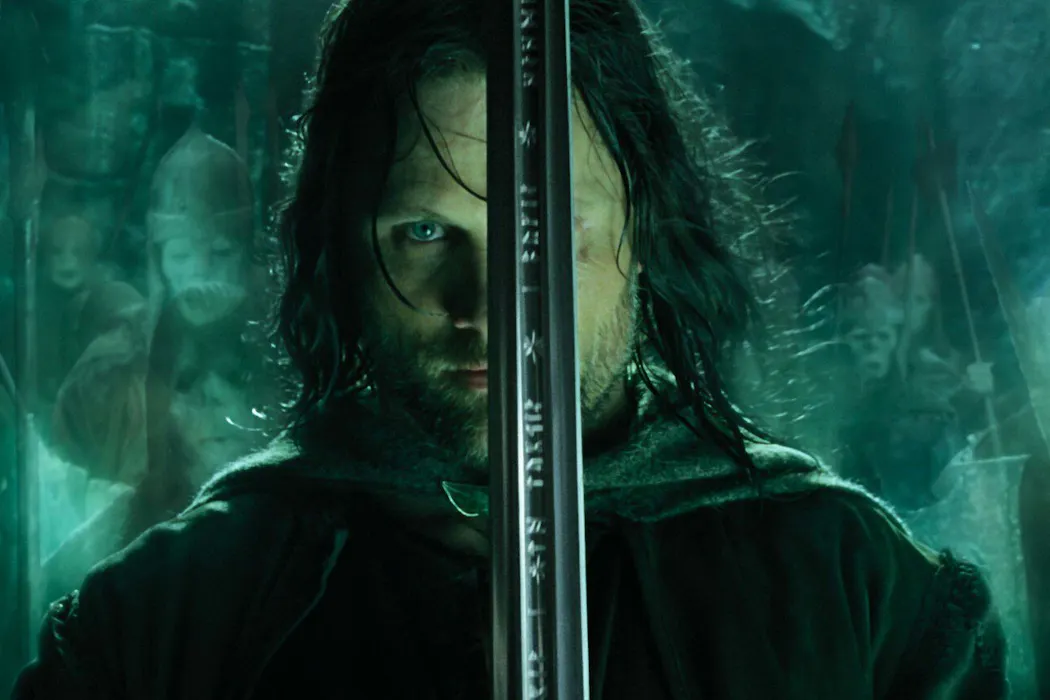
The Lord of the Rings: The Return of the King. Fathom Entertainment

On October 30 2025, the Department of Homeland Security in the United States posted a Tolkien meme. It pictured Merry Brandybuck – one of J.R.R. Tolkien’s four hobbit protagonists in The Lord of the Rings – speaking to another hobbit Pippin at the climax of The Two Towers, the second of Peter Jackson’s film adaptations.

Merry, the older and wiser of the duo, is trying to persuade Pippin not to return home to the Shire. He wants Pippin to join him in persuading the tree-shepherding Ents to join the climactic battle against the forces of the wizard Saruman.

Beneath Merry’s ominous warning (“There won’t be a Shire, Pippin”) are written the words “JOIN.ICE.GOV”.

The post and the flood of Tolkien-themed anti-immigration memes that followed are symptomatic of a larger trend: the use of Tolkien, especially his heroic good-versus-evil imagery, in the rhetoric of the New Right.

Such rhetoric is prominent among influential figures from Silicon Valley, such as Elon Musk, whose influence can be felt in the ICE meme, US vice-president J.D. Vance and Peter Thiel, whose surveillance company Palantir is named after Tolkien’s “seeing stones”, the palantiri.

Tolkien, as recent commentators insist, would hardly have enjoyed such uses of his work. But are these readings of Tolkien really misreadings – readings without foundation in The Lord of the Rings?

Homeland Security and the Shire

The Homeland Security meme has no counterpart in Tolkien’s book. In the book, the Ents are not recalcitrant. Unlike the Ents in Jackson’s film, they decide to intervene in the war on their own, after a long process of careful deliberation.

The book’s ending does, however, confront the scenario Merry fears in the film. The Shire is taken over by a hostile force.

The episode – presented in the The Lord of the Rings’ penultimate chapter, The Scouring of the Shire – has an anti-totalitarian edge. A band of “ruffians” (human outsiders) and their hobbit collaborators have taken over the Shire. They institute rules and curfews. They describe their activities (stealing, burning and knocking down houses) in an Orwellian vocabulary of “gathering and sharing” and “fair distribution” – meaning “they got it and we didn’t”.

Scholarly interpretations emphasise the internal nature of this threat. In David M. Waito’s account, the “pressures of conformity” in the Shire at the start of the book reemerge in this concluding episode. The same hunger for power the adventurers learnt to resist in Mordor was always present in the Shire.

Hobbit collaborators such as Ted Sandyman and Lotho Sackville-Baggins, are suspicious of nonconformists – a category which includes our hero, Lotho’s cousin Frodo Baggins.

Lotho – the instigator of the takeover – starts as a capitalist mogul. “Seems he wanted to own everything himself and then order other folk about,” says the elderly hobbit Gaffer Gamgee.

Palantir and the palantiri

The danger of power – the desire to “order other folk about” – is a central concern for Tolkien. In 1943, he wrote to his son about his “political opinions”, saying they “lean more and more to Anarchy (philosophically understood, meaning abolition of control)”.

Tolkien’s deep suspicion of power can be found throughout his work, but especially in the Shire’s utopian social system. The only proper government official is the Mayor of the Shire, but “almost his only duty was to preside at banquets”.

Silicon Valley readings of Tolkien take account of his anarchic utopianism, which has affinities with its suspicion of government regulation.

This, according to Peter Thiel, is the reason he named Palantir Industries after Tolkien’s palantiri. The company’s surveillance and data-management technology should not fall into the wrong hands – the hands, in the words of Palantir’s website, of “powerful institutions”.

Tolkien’s readers are first introduced to the palantiri by Aragorn (the king who returns in The Return of the King). Aragorn’s description of the stones is echoed in standard explanations of the name Palantir Industries. A palantir is “dangerous indeed”, but “not to all”. As the rightful king, Aragorn may claim one (and he does).

Aragorn can be read as a “redemptive” hero, set apart in his ability to safely wield power. For Thiel and other tech giants, it is individual entrepreneurs — not governments — who should control new technologies.

Film still from The Return of the King showing Aragon gazing at a seeing stone.
Aragorn mastering the palantir in The Lord of the Rings: The Return of the King (2003) New Line Cinema.

The book’s seeing stones, however, were made long before they were used by the kings of Gondor. The wizard Gandalf provides a deeper history than Aragorn, telling us that

the palantiri came from beyond Westernesse, from Eldamar. The Noldor made them. Fëanor himself, maybe, wrought them, in days so long ago that the time cannot be measured in years.

Tolkien’s posthumously published book The Silmarillion recounts the legends behind The Lord of the Rings, including that of the elves known as the Noldor. But the Noldorin craftsman Fëanor is no more the “good” hero of The Silmarillion than Hamlet is the “good” hero of Shakespeare’s tragedy.

Fëanor is a tragic hero. His fatal flaw is his love of invention. In The Silmarillion, he creates gems containing divine light, the silmarils. This instigates the symbolic fall of the elves: the Noldor’s exile from their homeland Eldamar.

Fëanor’s fall is prefaced by two mistakes. First, he neglects the restraining influence of his wife, Nerdanel. Though she is also skilled in invention, she wants “to understand minds rather than to master them”.

Second, he becomes secretive and possessive, isolating himself from all but a close network of kin.

The same errors – isolation and secrecy – are repeated in The Lord of the Rings by wielders of Fëanor’s other invention, the palantiri. First, a line of kings in Gondor sit alone in “aged halls”, “secret chambers” and “high cold towers”, and so die out. Second, Saruman keeps the stone he finds “secret, for his own profit”. Third, Denethor, the steward of Gondor, who inherits the palantir from its dead kings, keeps it secret and is driven to proud despair.

Tolkien and the ‘Machine’

The philosophy of Silicon Valley is that of popular fantasy war games. It interprets the world as a fight, in the words of Ursula K. Le Guin, between “(unquestioned) Good and (unexamined) Evil”.

For Thiel’s heterodox Christianity, “biblical revelation” highlights the “madness of crowds”, who seek to kill and drive out their messianic saviours.

We find the opposite message in Tolkien. The users of magic objects – symbolically, for Tolkien, the “Machine” – bring about destruction by wielding their power in secret, without accountability.

For Thiel, those who oppose technological advancement are evil. In a recent interview, he describes the threat of the Antichrist. The Antichrist is not “some evil tech genius, evil scientist who invents this machine to take over the world”, he said. It is far more likely to be those who say, “we need to stop science, we need to just say ‘stop’ to this”. If we listen to such calls, according to Thiel, we will fall prey to the totalitarian world state, the Armageddon.

Photographic portrait of J.R.R. Tolkien
J.R.R. Tolkien (c.1925) Public domain, via Wikimedia Commons

Apocalyptic language is a hallmark of Tolkien’s moral universe too – something Thiel’s Lord of the Rings themed company names take up. Yet for Tolkien the purpose of apocalyptic language is to cast light on ourselves.

Tolkien defines the danger of the Machine as “all use of external plans or devices (apparatus) … with the corrupted motive of dominating”. Evil, he claimed, can spring from “an apparently good root, the desire to benefit the world and others – speedily and according to the benefactors’ own plans”.

Thus, The Lord of the Rings ends with the evil of Mordor brought into the home the hobbits thought was safe. “Yes, this is Mordor, Sam,” says Frodo, speaking of the Shire, “just one of its works. Saruman was doing its work all the time, even when he thought he was working for himself.”

For Tolkien, any place can become “Mordor”, when the desire to benefit others turns into the will to dominate them.

Misreading Tolkien

So does Silicon Valley misread Tolkien?

There is a messianic undertone to the notion that private companies are the best pair of hands for dangerous technology — and there is a messianism to Tolkien. But his apparently black-and-white moral world has always provoked misinterpretation.

W.H. Auden, who otherwise admired The Lord of the Rings, thought Tolkien’s depiction of absolute evil in the orcs plays into “our deplorable tendency … to identify our cause with Good and that of our enemies with Evil”.

It is easy to call our enemies the orcs and ourselves the heroes. But this is not the way Tolkien wished his works to be read. In The Lord of the Rings, good and evil are pictured as absolute in order to cast light on their character. Goodness is humble and ordinary. It does not seek power over others – though it will stand up for them when they are in need.

Evil is competitive and secretive. It seeks to control others. In Mordor, we see the endpoint of the unrestrained pursuit of power for our own ends – even heroic pursuit of ends we think will benefit the world.

The Conversation

Hannah Frances Roux does not work for, consult, own shares in or receive funding from any company or organisation that would benefit from this article, and has disclosed no relevant affiliations beyond their academic appointment.

Mysterious signals keep coming from space. We have found their ‘Rosetta stone’

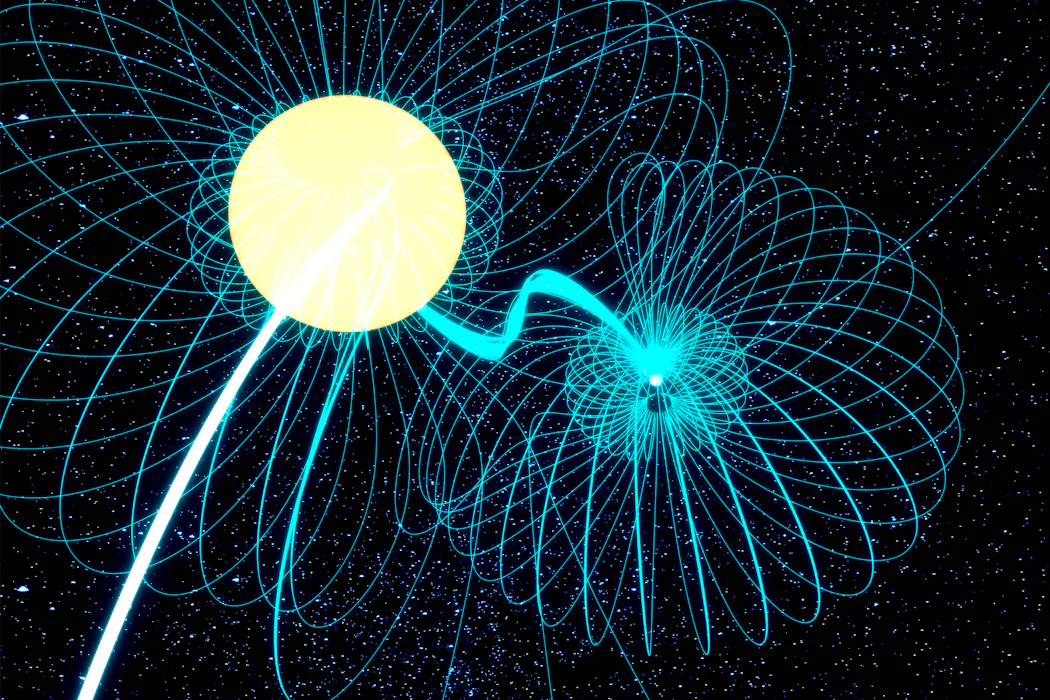
Simulated magnetic field lines for a binary system that is close enough for the stars to interact. Carl Knox (OzGrav/Swinburne) & Joshua Preston Pritchard (CSIRO)

A pair of stars spiralling around each other. That’s the origin of a new source of repeating radio bursts we’ve detected, called ASKAP J1745.

In recent years, astronomers have been puzzling over mysterious bursts of radio signals, known as long-period transients because of how slowly they repeat. They were first discovered by chance with telescopes scanning large chunks of the sky.

To date, astronomers have only found a dozen of these weird sources, and we’re still trying to understand exactly what they are.

In a new study published today in Nature Astronomy, we describe a first-of-its-kind detection – both radio and X-ray bursts repeating with each orbit.

ASKAP J1745 is exciting because we’ve figured out what it is, unlike 10 of the 12 known long-period transients. Even better, we were able to detect it with a bunch of different telescopes that observe all different kinds of light.

Bearing the same message in three forms of writing, the famous Rosetta stone once helped scholars decipher ancient Egyptian hieroglyphs. Similarly, this extra information we found about ASKAP J1745 will help astronomers better understand the mystery of all long-period transients.

What do long-period radio transients look like?

Long-period transients are things in space that produce bright, repeating bursts of light at radio wavelengths. Little is known about the origins of most long-period transients. In addition, many have been discovered close to the dusty region in the middle of our galaxy, so it can be hard to see them with visible-light telescopes.

Even with just a dozen of these strange sources discovered so far, they seem to come in a few different shapes and sizes. Their radio bursts repeat on timescales of minutes to hours.

Some have been making regular pulses for more than 30 years, while others turn off for days at a time or go permanently radio-silent.

Galactic map of long-period transients (LPTs), including those with evidence of binary systems, and galactic centre radio transients (GCRTs). Author-provided composite. Background image: ESA/Gaia/DPAC, A. Moitnho

Where do they come from?

Astronomers initially thought long-period transients were just very slowly spinning neutron stars, called pulsars. These are the fast-rotating dense cores left after the supernova explosions of massive stars.

The first few of these radio transients discovered were repeating roughly every 20 minutes. That’s much slower than the average pulsar, which repeats every few seconds.

Furthermore, when pulsars slow down their spin, they should stop producing radio light. This means we shouldn’t see radio bursts from neutron stars rotating so slowly.

So astronomers investigated other theories involving white dwarfs – the slowly cooling dead centres of less massive stars. And recently we discovered some long-period transients in binary systems (two stars in a close orbit) with evidence of both a white dwarf and a lower-mass red dwarf star.

The ASKAP radio telescope at Inyarrimanha Ilgari Bundara, the CSIRO Murchison Radio-astronomy Observatory on Wajarri Yamaji Country in Western Australia. Alex Cherney/CSIRO

The discovery of ASKAP J1745

ASKAP J1745 is a new long-period radio transient we found with the ASKAP radio telescope, owned and operated by CSIRO, Australia’s national science agency. It’s the first one of these strange sources that we’ve identified as a “cataclysmic variable”.

Cataclysmic variables are systems with two stars – one of them a white dwarf – that orbit each other closely enough to interact. If the stars are close enough, the white dwarf’s gravity can pull (or “accrete”) material from the other star. That’s why these systems are also known as accreting white dwarf binaries.

Another long-period radio transient was recently discovered with X-ray bursts, repeating with the same regularity as the radio. However, the origin of the bursts and their shared timing remained unclear.

Now, for the first time, we have combined observations from radio, X-ray and optical telescopes to find that ASKAP J1745 produces both X-ray and radio bursts with each orbit of its two stars.

Simulation of magnetic fields in a closely orbiting binary system. Carl Knox (OzGrav/Swinburne) & Joshua Preston Pritchard (CSIRO)

In these rapidly orbiting systems, the X-ray light is thought to come from the material heating up as it streams onto the white dwarf.

The bright radio bursts were a bit more of a mystery. But knowing that this is an accreting binary system helped us figure things out.

The type of pulsed radio light we detected is typically caused by energetic particles interacting with strong magnetic fields. Here, we have the perfect combination: two stars with strong magnetic fields (typically thousands of times stronger than an MRI machine), with charged particles flowing towards the white dwarf from the other star.

What this means for the future of astronomy

This discovery is unique because we have more information and at more different wavelengths than any other previous long-period transient.

Just like the Rosetta stone was key to decoding ancient Egyptian symbols, ASKAP J1745 will be key to deciphering the origins of other long-period radio transients that lack information at other wavelengths.

ASKAP J1745 is the first long-period transient showing signs of accretion across the spectrum of light – from radio waves to visible to X-rays. And this stream of charged material is a crucial ingredient for making the radio light we detect from these systems.

Exploring the mechanism that produces long-period radio bursts gives us a new laboratory to learn about extreme physics such as plasma flows and magnetic fields in conditions we can’t recreate on Earth.

We acknowledge the Wajarri Yamaji as the Traditional Owners and Native Title Holders of Inyarrimanha Ilgari Bundara, the CSIRO Murchison Radio-astronomy Observatory where ASKAP is located.

The Conversation

Kovi Rose does not work for, consult, own shares in or receive funding from any company or organisation that would benefit from this article, and has disclosed no relevant affiliations beyond their academic appointment.

If AI can translate instantly, why learn another language?

From live speech translation in video calls to auto-dubbing on TikTok, the technology to dissolve language barriers has arrived. Real-time translation powered by artificial intelligence (AI) is now embedded in everyday life.

Tools from OpenAI, Meta, Google and many others now offer near-instant translation across dozens of languages, and they keep improving.

All this raises a vital question. If machines can do this faster and more accurately than humans, is investing years in learning another language still worth it?

The logic is appealing. Humans have always offloaded cognitive work onto tools. Writing reduced demands on our memory. Calculators removed the burden of mental arithmetic. AI sits within this long tradition. Used well, it can support learning and expand access in ways that matter enormously.

But there’s a difference between using a tool to extend your capabilities and using it to avoid doing something altogether. That distinction becomes important when you are not just replacing a skill, but a form of cognitive and cultural engagement.

The effort is the point

Effort plays a central role in how we acquire knowledge.

Psychologists use the phrase “desirable difficulties” to describe challenges that may feel inefficient, but produce stronger long-term retention and understanding.

Struggling with grammar, searching for the right word, or constructing meaning across multiple languages engages brain networks that support memory, attention and cognitive flexibility. Over time, they consolidate knowledge far more deeply than passive exposure.

Sustained mental engagement contributes to what researchers call cognitive resilience – the brain’s capacity to maintain function as we age. Managing multiple languages is one form of this engagement. It requires the brain to resolve competition, monitor context and adapt dynamically.

These are not trivial demands. And they’re difficult to achieve if you just use translation tools passively, such as resolving the meaning of a foreign phrase with the click of a button.

What multilingualism research actually shows

The evidence on multilingualism is often presented as a simple “bilingual advantage”, a shorthand that obscures a more complicated picture. Some studies report benefits for attention or working memory, while others find no differences. The truth appears to be more selective.

Our recent study examined cognitive performance in 94 adults aged 18 to 83, using both visuospatial and auditory tasks across working memory, attention and inhibition. Put simply, we looked at how people process and respond to information they see or mentally map out in space (visuospatial) and information they hear (auditory). Examples include remembering sounds, focusing on visual patterns, or ignoring distractions.

Our study measured multilingualism as a spectrum, not a category. This allowed us to capture diverse language backgrounds and experiences. Multilingual participants spoke a range of languages with varying levels of proficiency and daily use, reflecting the linguistic diversity common within multicultural communities.

Across most tasks, multilinguals and monolinguals performed similarly. However, one pattern was striking. Individuals with richer, more diverse multilingual experience showed markedly better performance in visuospatial working memory. These effects were most pronounced in older people.

This suggests that multilingual experience doesn’t broadly enhance cognition, like some headlines claim. Instead, it may help preserve specific functions over time.

Separate population-level research has also linked multilingualism to later onset of Alzheimer’s disease and better overall ageing outcomes, though the mechanisms continue to be debated.

Overall, however, it appears that sustained use of multiple languages represents a form of mental activity with effects that accumulate across a lifetime.

What AI translation can’t replicate

AI translation excels at speed and accessibility. For many practical purposes, it works remarkably well. But it operates through pattern recognition, not lived understanding. It can struggle with cultural context, humour, register and emotionally embedded meaning, especially for languages with less representation in training data.

At best, AI captures literal dimensions of language while missing social ones. Consider the scene in the 2003 film Love Actually where Jamie, played by Colin Firth, delivers an awkward but sincere proposal to Aurelia in broken Portuguese.

It is moving because of the effort, vulnerability and intent his imperfect words carry. Resort to real-time translation software and what remains is information, not expression.

This is the deeper distinction: translation is not the same as participation. Learning a language involves understanding how people think, their values, and how meaning is shaped by context and history. This cultural literacy develops through interaction and experience. We can’t fully outsource that to systems that translate on demand.

The multilingual participants in our research spoke to this directly:

I definitely think in Telugu, but I remember numbers and count using English.

Afrikaans is the language of my heart and best used to express intense emotion. English is the language of business and used mostly in everyday life.

These are not descriptions of switching between translation modes. They are descriptions of inhabiting different selves.

AI will continue to change how we engage with language learning. It can personalise instruction, minimise barriers and provide feedback at scale. What it can’t do is replace the cognitive and cultural work that comes from learning a language. This work leads to a deeper relationship with how other people see the world, and with how you express yourself. And that difference still matters.

The Conversation

Olivia Maurice completed her PhD at the MARCS Institute, Western Sydney University.

Mark Antoniou receives funding from the Australian Research Council.

What is ‘cycle syncing’, and how might it affect menstruation?

Yan Krukau/Pexels

Menstruation is once again a hot topic on social media, thanks to a new health trend known as “cycle syncing”.

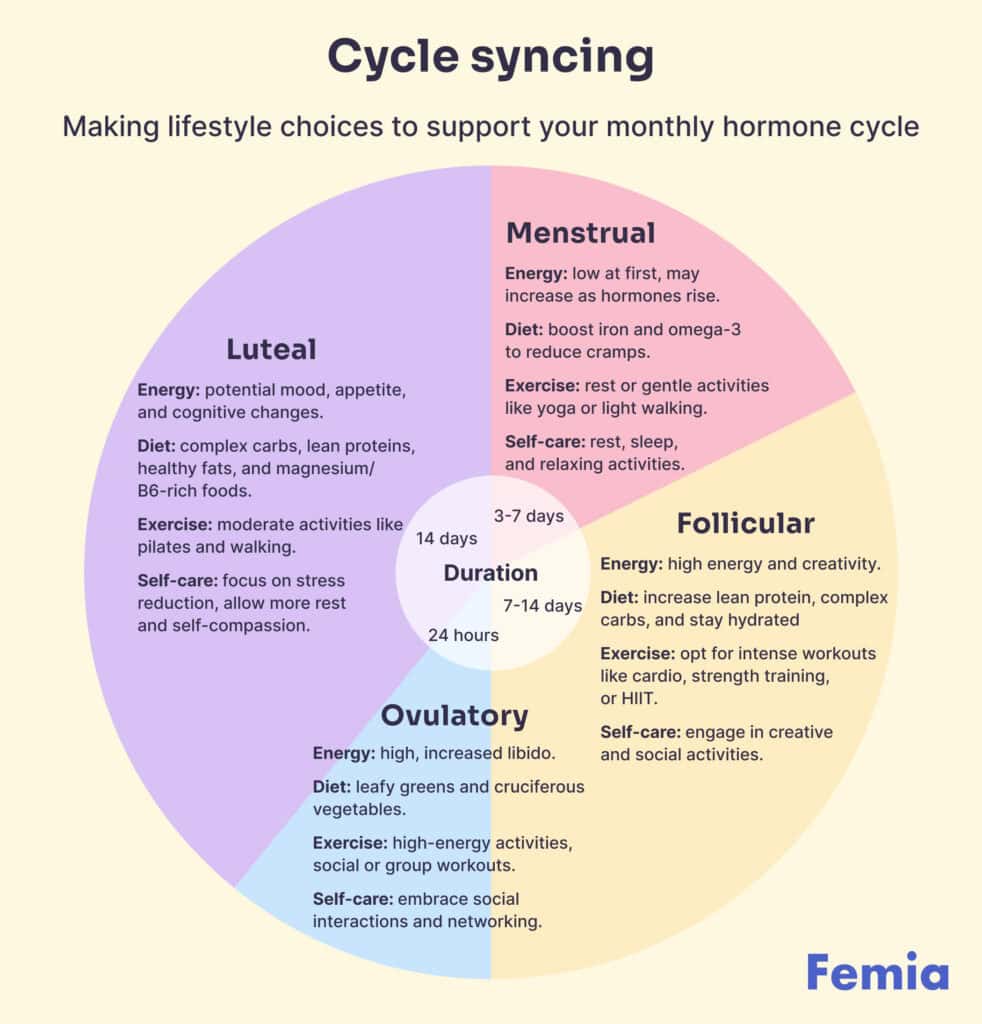
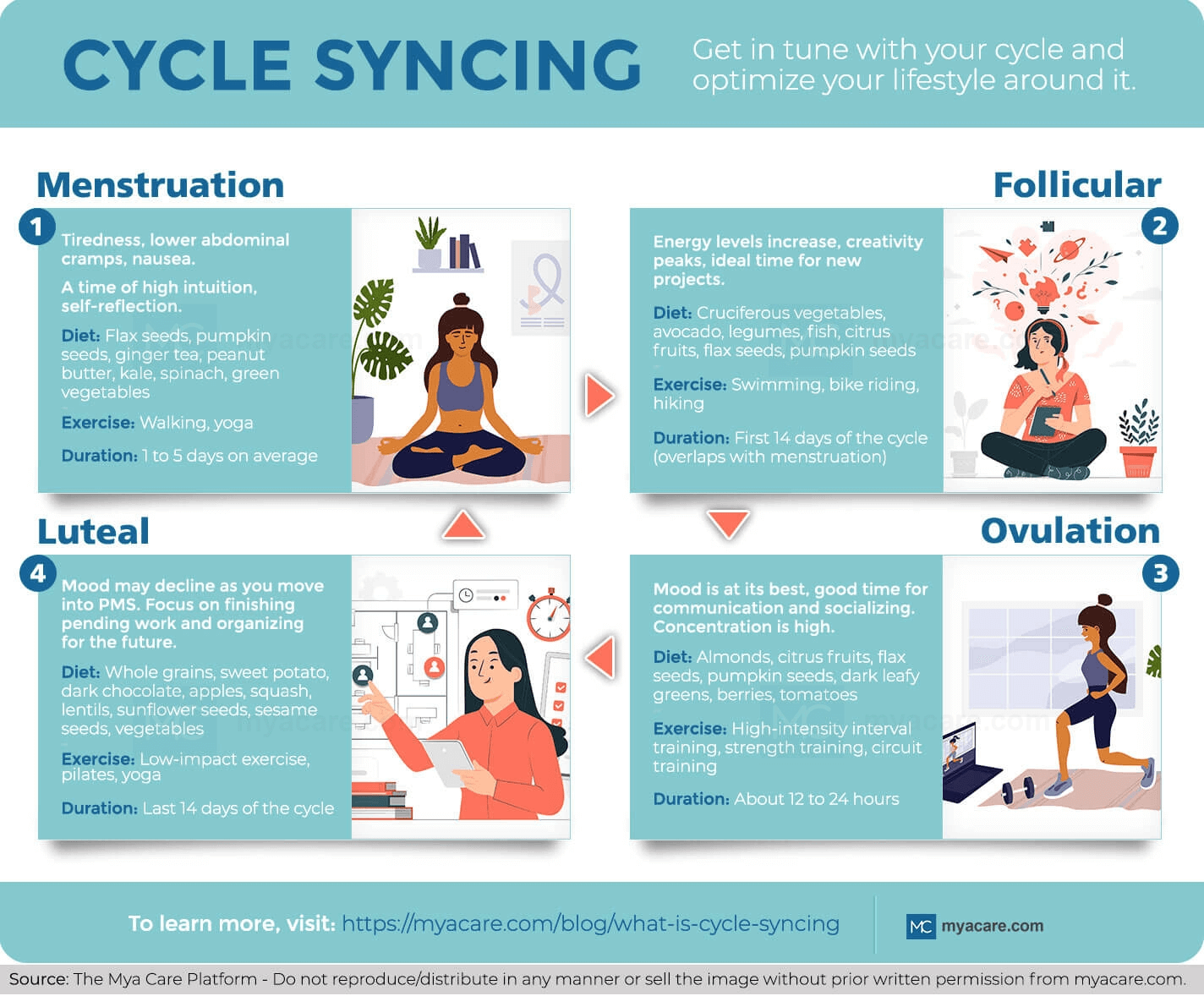
It involves aligning your diet and exercise habits to each phase of your menstrual cycle. For example, you may only do gentle exercises such as yoga or eat more fermented foods during the first phase of menstruation.

Social media influencers are spruiking cycle syncing as a more natural way for women to manage negative symptoms, such as period pain, and be more in tune with their bodies.

So how does it work? And is it supported by research?

The menstrual cycle

During menstruation, the body sheds the uterus lining to prepare for pregnancy. This usually happens every 28–35 days. But bleeding is only one part of the menstrual cycle. The menstrual cycle can be divided into three main phases:

  1. follicular phase, where the body releases a hormone called the follicle-stimulating hormone to help follicles grow in the uterus

  2. ovulation, where the ovary releases a mature egg that may or may not be fertilised

  3. luteal phase, where the body releases a hormone known as progesterone that thickens the lining of the uterus, in preparation for pregnancy. But if the egg is not fertilised, the uterus will shed its lining and this cycle repeats.

Throughout the menstrual cycle, fluctuating hormone levels can cause symptoms such as fatigue, cramps, bloating, mood swings and changes in appetite.


Read more: Planning a baby? A fertility app won’t necessarily tell you the best time to try


Does ‘cycle syncing’ work?

Advocates of cycle syncing say it helps women manage period symptoms and meet the the body’s changing energy needs during menstruation.

However, specific claims often conflict with each other. For example, some who promote cycle syncing suggest eating fermented foods and fresh vegetables during the follicular phase, while others recommend eating lean proteins and wholegrains. Certain cycle syncing advocates emphasise doing cardio workouts and other high-intensity exercise in the follicular phase. Meanwhile, others say swimming or cycling are better options to manage period symptoms.

However, there is little evidence to support these claims.

Various systematic reviews – which summarise all the available research on a specific question – have found no evidence that doing exercise during certain phases of the menstrual cycle improves muscle development or performance. This is the case with both resistance training which aims to build strength, and aerobic exercise, which increases your heart rate.

It also does not appear to reduce your risk of muscle injuries. Research shows immune function may fluctuate throughout the menstrual cycle, but one systematic review found this variation is unlikely to impact exercise.


Read more: Can exercise reduce period pain? And what kind is best?


However, research suggests female athletes may feel less motivated or confident playing sport in the late luteal phase. They were also more likely to think they performed worse at the start and end of their period. This may be because symptoms such as cramping, back pain and tiredness make exercise seem much harder during menstruation.

But research suggests certain types of exercise, including strength training and relaxation-based exercises, may help relieve period pain.

There’s even less evidence examining the link between nutrition and different phases of the menstrual cycle. One 2024 study suggested women may be hungrier or eat more during their luteal phase, compared to the follicular phase. This may be because during the luteal phase, the body consumes more energy to prepare for a potential pregnancy.

However, one systematic review found no conclusive evidence that changing your diet reduces symptoms such as cramps, bloating and fatigue.

What to do instead

Existing studies looking at the relationship between diet, exercise and different menstrual phases have produced extremely varied results. And there are still many gaps in current research, including what the mechanism behind cycle syncing actually is and what its benefits may be.

So for those who want to manage period symptoms, the best approach is to be patient with yourself and listen to bodily cues. For example, if you slept badly because of night-time cramps, you don’t need to do a high-intensity workout the next morning. Consider going for a walk instead. And if you feel extra hungry near the end of your period – in the luteal phase – it’s fine to eat a little more.

The jury’s out as to whether cycle syncing actually works. But making small lifestyle tweaks could help make your time of the month that bit more manageable.

The Conversation

Emmalee Ford is employed by Family Planning Australia, a non-government sexual and reproductive health organisation.

Koala numbers crashed across Australia 100,000 years ago. Global glacial cycles are likely to blame

janclewett/iNaturalist, CC BY-NC

It’s surprising how easy it is to see a koala every day in Australia’s major cities.

The cute, grey marsupial can be found on t-shirts, hanging off people’s bags and pencils, and decorating any decent souvenir shop. But seeing a real koala in the wild has become increasingly tricky in some parts of the country. The iconic marsupial is now listed as endangered in Queensland, New South Wales and the Australian Capital Territory.

But koalas have been in a similar situation before.

As my new study published in the journal Molecular Biology and Evolution shows, koalas experienced a population crash about 100,000 years ago. This finding rewrites our understanding of the genetic history of koalas in Australia – and overturns previous theories about what caused their decline in ancient times.

Turning to the genome

Fossil records of koalas are extremely rare. This makes it difficult to estimate how many koalas were present in the past.

Instead, genomes provide important clues about their evolutionary history. The genome acts as a historical record. It preserves genetic information from ancestral populations that can be used to determine their population size.

Previous genomic studies of koalas have estimated koalas experienced a major population decline roughly 40,000 years ago. This was shortly after the arrival of humans in Australia, suggesting this may have been a contributing factor.

Yet the impact of human arrival on Australian fauna is hotly debated. Some researchers use it to explain the widespread extinction of megafauna during this period.

My new study challenges this theory.

A grey koala sitting in between tree branches.
Koalas are once again experiencing population declines across Australia. dcla/iNaturalist, CC BY-NC

Pushing the timeline back 60,000 years

My colleagues and I set out to construct the first estimate of the koala mutation rate. This is simply the number of mutations that appear in each generation.

Estimating the historical population sizes that have shaped mutation patterns in the genome relies heavily on knowing how often new mutations arise. The problem is that each species has its own unique mutation rate.

To estimate the mutation rate in koalas, we sequenced the genomes of 12 koalas from three families, comprising seven parents and five offspring. This allowed us to count the number of new mutations over each generation.

The whole koala genome has about 3.4 billion sites where changes could occur. We found only 25 mutations per offspring. That’s the equivalent of searching for 25 wrong letters scattered across more than 1,000 copies of The Lord of the Rings trilogy.

We then applied this mutation rate to 457 koala genomes sampled across their entire range. This allowed us to investigate how koala populations have changed over time – including when their numbers crashed.

We found koala population declines occurred around 100,000 years ago – well before humans arrived in Australia. This effectively rules out humans as a cause of the population crash.

Although the mutation rate is a fundamental evolutionary concept, we surprisingly have very few estimates for Australian species. Our estimate is the first from Diprotodontia, the marsupial order which also includes wombats, kangaroos and possums.

Previous studies estimating historical population sizes in koalas have had to rely on mutation rate estimates from distantly related placental mammals such as humans and mice. Applying the koala mutation rate has rewritten the genetic timeline for koalas.

So, what caused the crash?

The koala population crash 100,000 years ago matches a period of intense environmental change across Australia.

The Pleistocene (2.5 million to 11,700 years ago) saw repeated glacial periods, characterised by cold and dry conditions, as well as repeated interglacial periods, characterised by warmer and wetter conditions.

As Australia became drier, the expansion of the Nullarbor Plain established a vast semi-arid shrubland across southern Australia, shrinking suitable koala habitat and separating eastern and western koala populations.

Unfortunately, the population west of the Nullarbor Plain (which was recently described as a distinct species from the modern koala) went extinct around 28,000 years ago.

Although eastern populations were restricted to a small patch of forest on the east coast, they persisted through harsh glacial conditions. Over the last 17,000 years, as conditions became warmer and wetter, they expanded and formed the five genetic groups that are now distributed along the east coast of Australia.

Given our results, we’re now curious to see if other Australian species, including the closest relatives of extinct megafauna, also experienced population declines before humans arrived.

A brown sign signalling the Nullarbor Plain against a blue sky.
The expansion of the Nullarbor Plain established a vast semi-arid shrubland across southern Australia, shrinking suitable koala habitat and separating eastern and western koala populations. Craig Manners/Unsplash

Koalas are back to hard times

Koalas are once again experiencing population declines across Australia.

One similarity between modern and ancient declines is they are both largely driven by reductions in the amount of suitable habitat. The ancient decline was driven by global glacial cycles – an unavoidable result of Earth’s orbit.

However, recent declines have generated a similar bottleneck over a much shorter time window, due to the historical and continued removal of suitable koala habitat. This is made worse by other threats such as hunting, disease, vehicle strikes, feral dog attacks and bushfires.

Fortunately, most koala populations have only recently started losing genetic diversity, and rapid population recovery can prevent further loss and inbreeding.

Hopefully the eastern koala will persist once again.

The Conversation

Toby Kovacs does not work for, consult, own shares in or receive funding from any company or organisation that would benefit from this article, and has disclosed no relevant affiliations beyond their academic appointment.

Does the body really ‘keep the score’ after trauma? How the debunked idea of ‘repressed memories’ is making a comeback

Have you heard someone say online or in casual conversation, when responding to someone’s struggles, “well, the body keeps the score”?

For many people, this phrase is a useful way to name the physical toll stress and trauma can take when the body is in “fight or flight” mode.

The everyday use of this phrase also demonstrates the extraordinary reach of the 2014 non-fiction book that popularised it, The Body Keeps the Score by Dutch psychiatrist Bessel van der Kolk. But as the idea has spread, it’s also been simplified.

In fact, this book – which has spent almost six years on The New York Times bestseller list – goes beyond arguing that trauma affects the body. It rests on a far more contentious claim: that traumatic memories live in the body, inaccessible to conscious memory.

This idea of repressed memories has a long and controversial history. Here’s why we’re worried it’s making a comeback.

The memory wars

During the 1990s, the idea of repressed memories sparked a major scientific dispute known as the “memory wars”. Clinicians and memory researchers disagreed over whether traumatic events could be completely inaccessible to conscious memory, only to be recovered later in therapy.

The core idea, rooted in psychoanalytic theory, was that traumatic experiences are so overwhelming that the mind unconsciously represses them as a defence mechanism, removing them from conscious awareness while they continue to produce psychological symptoms.

After more than a decade of research raising serious doubts about repression as a reliable mechanism, many believed this debate had been settled.

Yet the idea of repressed memories is returning.

Today, the claim is not only that traumatic memories can be repressed, but that the body stores them. These repressed, stored memories are said to re-emerge later through physical symptoms.

The Body Keeps the Score suggests healing requires “releasing” or “integrating” these hidden memories of trauma through a variety of alternative, often non-evidence-based therapies, such as yoga, pyschedelic-assisted therapy and guided imagery.

Traumatic experiences are further described as disrupting the nervous system in lasting ways – even beyond a person’s conscious awareness or memory of what happened. This argument has shifted public perceptions of trauma.

Trauma and the body

The kind of memory research we do does not deny trauma, nor that it can affect the body. The concern is specifically about how this relates to memory.

There is broad scientific agreement that stress, often associated with traumatic experiences, can alter hormone levels such as adrenaline, noradrenaline and cortisol, which can then impact other systems of the body. This can elevate blood pressure, affect libido, and influence how safe or unsafe the world feels on a bodily level.

For some people, trauma can lead to post-traumatic stress disorder (PTSD) which involves physical symptoms such as nausea, panic attacks, difficulty breathing, trouble sleeping, and feeling exhausted from constantly being “on guard”.


Read more: What do people mean when they say their nervous system is overloaded or needs a reset?


How memory works

Memory doesn’t work like a recording device we can simply “play back”.

Decades of research show that autobiographical memory is reconstructed each time an event is recalled. This means the context we’re in – including new information, our emotions, and other people’s expectations – can influence what we remember. This may distort or alter our memories.

Suggestive therapy techniques – for example, hypnosis or guided imagery, where patients enter a highly suggestible state – are especially prone to implanting false memories.

Major professional organisations, such as the American Psychological Association and the British Psychological Society have repeatedly warned that these therapeutic techniques designed to recover supposedly buried memories can create false memories.


CC BY-NC

Everyone seems to be talking about trauma. Do we know more about it? Or has the meaning changed? In this five-part series, we explore the shifting definition of trauma, why talking about it doesn’t always help, and what else can work.


Alternative therapies

The Body Keeps the Score promotes a broad range of therapies for trauma as alternatives to more established PTSD treatments, including yoga and psychodrama, which is the use of roleplay to re-enact the traumatic experience.

Some of these approaches may be helpful for some people. There is no harm in doing yoga if you have PTSD and feel it helps to reduce stress.

However, problems arise when these techniques are claimed to be able to help people “access repressed memories”.

This idea can be exploited. Recent ads on social media suggest nightmares or trouble sleeping could be due to extensive trauma you don’t remember. A quick quiz will deliver your test results and redirect you to a “trauma-informed” online coaching program that you pay for.

This ad on Instagram prompts you to look for physical symptoms as clues to a traumatic past you don’t remember. Instagram

What about psychedelics and MDMA?

More recently, van der Kolk and others have turned attention to psychedelic-assisted therapy.

Substances such as MDMA and psilocybin have shown promise in tightly controlled research settings. They appear to influence brain pathways, though the mechanisms are not yet fully understood.

From a memory perspective, psychedelics raise specific concerns. Research suggests psychedelics can affect memory in some worrying ways.

They make people more suggestible, meaning they are more likely to accept ideas or stories as true, even when they come from an outside source. They also create a powerful feeling that what people experience is deeply and certainly real.

This is a risky combination, because a person could come away with a false memory they feel convinced has happened.

Early qualitative reports already describe cases in which apparent memories of trauma emerged during psychedelic therapy, with uncertainty about their accuracy.

Recent US research found the vast majority of people endorse belief in repressed memories and the idea that “the body keeps the score”. This research is currently being replicated in Australia, with preliminary findings suggesting these beliefs may be even more widespread over here.

The Conversation

The authors do not work for, consult, own shares in or receive funding from any company or organisation that would benefit from this article, and have disclosed no relevant affiliations beyond their academic appointment.

Why Australia needs stronger laws to stop dangerous products being sold online

ArtHouse Studio/Pexels

As online marketplaces continue to boom, can consumers be confident the products we buy online are safe?

On Wednesday, independent consumer advocacy group Choice lodged a “super” complaint with the key regulator, the Australian Competition and Consumer Commission (ACCC).

Choice is calling on the ACCC to investigate “a significant volume” of potentially dangerous toys and other banned products it found for sale on various online marketplaces. The regulator must respond within 90 days.

Such scrutiny may belatedly encourage all online marketplaces to take mandatory safety standards more seriously. But the Australian Consumer Law still lacks a general safety provision. This would require businesses to proactively ensure only safe products are put on the market.

Australia is lagging behind the European Union and several other countries, where stronger laws have been in place for decades to try to prevent unsafe products being sold online.

Online marketplaces in the spotlight

Choice’s super complaint came only a day after the ACCC issued takedown notices to Amazon, eBay, Kogan and Fruugo over concerns some of their products may contain small, high-powered magnets banned under Australian law.

Last Friday, the ACCC also announced it was suing online retailer Amazon, alleging kids’ backpacks previously listed and sold on the site failed to comply with mandatory safety requirements for button batteries.

Amazon has reportedly already taken down these listings and contacted affected customers.

But in both cases, these actions relate to bans on, or mandatory safety standards for, specific products. They are not based on a general regulatory requirement for product safety.

Australia lags behind on stronger laws

The EU first implemented a general product safety provision in 1992. The regulations were recently revised and strengthened, including around recall requirements.

Countries including Malaysia, Canada and Thailand have adopted a similar general product safety provision.

From 2019, the Australian government consulted on the possibility of adding a similar measure. But the process stalled, despite online shopping booming since the pandemic.

The problem with a patchwork approach

In practice, this gap in the law means too often Australian regulators only step in to ban or recall dangerous products after people get hurt.

Button batteries illustrate this point. These became subject to a mandatory standard from 2022 – only after multiple deaths and injuries to babies and children who had ingested them.

Australia only has such mandatory standards for 50 product categories. Even for those products (often for babies or kids) some suppliers may continue to deal in them – until caught out through occasional checks by regulators, or an organisation such as Choice, leading to voluntary recalls.

Regulators have further powers to ban or force recalls of unsafe products once already sold. But this too usually only happens after many serious accidents.

A woman helping a child ride a bike
Bicycles are one product category subject to mandatory safety standards. RDNE Stock project/Pexels

Why other protections fall short

Suppliers themselves have some incentives to do the right thing. They don’t want to face fines or the reputational damage that could result from selling unsafe products.

They also face the risk of class actions or compensation claims from consumers.

One avenue is to claim a seller or manufacturer has breached the mandatory consumer guarantee of acceptable quality, including safety.

A second avenue under the Australian Consumer Law is strict product liability. This is Australia’s adaptation of a 1985 EU directive that holds manufacturers liable if a product with a safety defect causes injury or property damage.

But individually, in practice, small-scale harms are not worth consumers bringing even before tribunals. Regulators such as the ACCC do not use their powers to sue on individual consumers’ behalf.

And class-action law firms typically only bring the biggest and easiest claims – plus then mostly settle them (leaving few precedents for other suppliers to use to up their game).

Seller, manufacturer or platform?

A specific limitation for bringing these types of compensation claims is that online platforms such as Amazon have argued (even in the United States) that they are mere intermediaries – not even sellers, let alone manufacturers.

The EU recently tried to close this loophole when updating its Product Liability Directive. An online platform is caught if presenting products leads an average consumer to believe the platform itself, or a seller under its control, is the supplier.

But even then, platforms might avoid such joint liability through disclaimers, which consumers might not understand even if prominently displayed.

Other ways to hold platforms to account

Another argument – included in Choice’s complaint – is that platforms are engaged in misleading or deceptive conduct in trade by offering goods that are unsafe.

This was the uncontested premise of the ACCC’s 2016 case against Woolworths. That litigation then focused instead on the amount of fines – ultimately more than A$3 million in penalties – for misleading consumers by continuing to offer five types of products, despite having received safety-related complaints.

It is unclear whether the ACCC’s current lawsuit against Amazon adds this argument. But similar claims have been made in the US under broader prohibitions on unfair commercial practices (also belatedly being added to the Australian Consumer Law).

Instead, the ACCC’s lawsuit reportedly alleges Amazon commercially possessed or had control of products violating the button battery standard, through its warehousing and so on. This neatly avoids having to prove Amazon was a product supplier or manufacturer.

Prevention is usually better than cure

For online marketplaces operating in Australia, it shouldn’t be too hard to comply with the 50 product-specific standards. Nor should it be too hard to monitor public recalls of risky products. Consumers and non-governmental organisations such as Choice shouldn’t have to do this for them.

Amazon, Ebay and AliExpress have already signed the ACCC’s Australian Product Safety Pledge. This commits them to take various voluntary steps to ensure product safety. In contrast, the revised European regulation mandates stricter duties.

To keep Australian consumers safe, the government should similarly strengthen Australia’s laws. This includes revisiting product liability provisions and reviving consultation on adding a general safety provision to our consumer protection laws. Prevention is usually better than cure.

The Conversation

Luke Nottage received funding from the Australian Research Council (2017-23) for a joint Discovery Project on "Evaluating consumer product regulatory responses to improve child safety".

Murray Valley encephalitis can be fatal. With no vaccine, here’s how to stay safe

Posnov/Getty Images

Health authorities in the Northern Territory have issued warnings for residents and visitors to avoid mosquito bites after two people from Alice Springs died from Murray Valley encephalitis.

It’s a reminder that mosquitoes in many parts of Australia can be more than just a nuisance.

Without a vaccine for Murray Valley encephalitis, preventing disease relies on preventing mosquito bites.

What is Murray Valley encephalitis virus?

The virus takes its name from the Murray Valley in southeastern Australia where it was first identified in patients who died during an outbreak in 1951.

Infections are rare, but can be deadly. Most people infected don’t develop symptoms. For those that do, symptoms can range from fever and headache to encephalitis (inflammation of the brain), with coma and paralysis. Around 40% of people who develop symptoms won’t fully recover and about 25% die.

The virus circulates between water birds and mosquitoes, most commonly Culex annulirostris, but a small number of other species may be involved too.

A mosquito in entomological collection of laboratory.
Culex annulirostris is the mosquito most likely to be spreading Murray Valley encephalitis virus in northern regions of Australia. A/Prof Cameron Webb (NSW health Pathology & University of Sydney), CC BY-NC

The virus is detected most years in northern Australia, most notably the Kimberley in Western Australia and the Top End of the Northern Territory.

But when environmental conditions are favourable, the virus can emerge in southern regions of Australia. These conditions are generally associated with increased rainfall and flooding generally brought on by La Niña influenced weather patterns.

The more water there is across the wetlands of the Murray Darling Basin and surrounds, the more likely we are to see high numbers of mosquitoes and waterbirds.

It is suspected that infected birds migrating from northern regions bring the virus south.

The most notable outbreak, in 1974, resulted in 58 cases and 12 deaths across Australia.

During outbreaks in 2011 and 2023, there were 17 and 26 cases respectively with many in southern regions.

When mosquito surveillance programs in northern Western Australia and the Northern Territory detect Murray Valley encephalitis virus, this triggers mosquito control measures and public health messaging. Communities across northern Australia are seasonally reminded of the risk associated with this virus and mosquito bites.

But many tourists, both local and international, also travel across the endemic regions and have been among the cases reported over recent years.

Murray Valley encephalitis can be fatal and impact families and communities.

Murray Valley and Japanese encephalitis are different

Murray Valley and Japanese encephalitis are closely related but different viruses. They are likely spread by the same type of mosquitoes, cause similar disease, and infect similar animals. But there are key differences.

Japanese encephalitis is major health concern in Asia, Southeast Asia and the Western Pacific. After a fatal case in the Northern Territory in February 2021, an unprecedented outbreak of Japanese encephalitis occurred in southeastern Australia beginning early 2022.

By the time the epidemic ended in winter 2022, there had been more than 40 documented human cases, including seven deaths.

Japanese encephalitis virus is now likely to be endemic in northern Australia. Feral pigs are suspected as an important animal host but water birds are crucial too.

There is a safe and effective vaccine against Japanese encephalitis that is locally available. Health authorities are now working on how best to recommend its use against potentially annual activity in northern Australia and occasional outbreaks in southern regions.

But vaccines are not currently available for Murray Valley encephalitis. Scientists are investigating whether the Japanese encephalitis vaccine may provide cross-protection for Murray Valley encephalitis but there is more research to be done.

Unfortunately, for a disease so rarely reported a specific vaccine for Murray Valley encephalitis may never be available.

Is there a greater risk of Murray Valley encephalitis this year?

When there is more water, there are typically more mosquitoes.

Record-breaking rainfall and extensive flooding has occurred across northern Australia this year mainly due to cyclones. This rainfall has created ideal conditions for mosquito breeding and increased mosquito numbers.

This is likely to escalate the health risks. But the spread of mosquito-borne disease also depends the interaction of waterbirds, mosquitoes and people, which can be influenced by a range of factors.

There have been two confirmed fatal cases of Murray Valley Encephalitis in Alice Springs.

The virus has also been detected in mosquito surveillance programs in the Top End of the Northern Territory and northern Western Australia.

The historical period of Murray Valley encephalitis virus transmission risk is from February to July, peaking March to May.

The cold weather of winter will limit mosquito activity so a spread now to southern states is unlikely. The risk in coming spring and summer will be highly dependent on rainfall but predictions are for hot and dry conditions.

A live mosquito on white surface
Mosquito bites are more than just annoying, they can have deadly consequences. A/Prof Cameron Webb (NSW Health Pathology), CC BY-ND

How to protect yourself from Murray Valley encephalitis

With no vaccine or specific treatment for the disease, reducing mosquito bites is the only way to protect yourself from the virus.

When outdoors, wear long-sleeved shirts, long pants and covered shoes when possible.

Avoid areas where mosquitoes are active, especially at times when they’re most active such as dawn and dusk.

When camping, ensure you’re using insect netting or mosquito nets.

Applying insect repellents to all exposed areas of skin will provide the best protection. Formulations containing products that effectively keep mosquitoes from biting, such as diethyltoluamide, picaridin and oil of lemon eucalyptus, are safe and affordable.


Read more: Mozzie repellent clothing might stop some bites but you’ll still need a cream or spray


The Conversation

Cameron Webb and the Department of Medical Entomology, NSW Health Pathology and University of Sydney, have been engaged by a wide range of insect repellent and insecticide manufacturers to provide testing of products and provide expert advice on medically important arthropods, including mosquitoes. Cameron has also received funding from local, state and federal agencies to undertake research into various aspects of mosquito and mosquito-borne disease management.

Bart J. Currie does not work for, consult, own shares in or receive funding from any company or organisation that would benefit from this article, and has disclosed no relevant affiliations beyond their academic appointment.

From ‘USA94’ to now: how soccer has changed since the last American World Cup

The United States hosted its first World Cup in 1994.

Soccer has changed dramatically in many ways since then – on and off the pitch.

As the US (with Mexico and Canada) gets set to host the mega-event once again, more than anything, the tournament’s defining change since 1994 is its sheer scale-up.

The scale-up

This scale-up can be clearly quantified. The 1994 tournament featured 52 matches across 32 days with 24 teams. By contrast, the 2026 event (the first three-nation World Cup) will involve 78 matches in the US alone, over 39 days.

The competition’s 48 teams are divided into 12 groups, with progression to the knockout stage awarded to the top two teams in each group along with the eight best third-placed teams.

In terms of games, the tournament has doubled in size since 1994.

The scale-up is not accidental. It has been driven by the twin forces of globalisation and commodification, alongside a deliberate strategy by FIFA president Gianni Infantino to both protect and extend football’s commercial dominance.

Central to this has been expanding the tournament into non-traditional markets, most notably the US – the world’s largest sports economy – thereby generating substantial financial returns and commercial interest.

Infantino and FIFA have faced sustained criticism in global media – ranging from controversial symbolic gestures involving Donald Trump to concerns over ticket pricing. But the broader outcome is clear: the World Cup has become more expansive and commercially powerful than ever.


Read more: Why Trump and FIFA are perfect bedfellows as the World Cup heads to the US


At the same time, FIFA has deepened its claim to global reach by incorporating smaller nations such as Cape Verde and Curaçao, whose combined populations are well under one million.

The scale-up rests on two core dynamics. First, more matches mean more broadcast content, and media rights remain FIFA’s largest revenue stream. Expanding to 104 matches significantly increases the value of rights deals, particularly across participating nations.

Second, expansion broadens FIFA’s political base. By granting more countries access, it strengthens the influence of nations previously on the margins of global soccer.

Within FIFA’s voting structure, each member association carries equal weight: the vote of powerhouse Brazil counts the same as that of Curaçao, a recent entrant with a population around 150,000.

At the same time, a larger tournament increases the likelihood that major population centres and emerging consumer markets (such as China, India, and Southeast Asia) will participate, further expanding the World Cup’s commercial reach.

The unresolved question for FIFA is one of limits: how far can expansion go before it dilutes the exclusivity and premium value of the World Cup?

The World Game in the US

Soccer in the US has grown markedly since the 1994 event. In many ways, this growth reflects the original intent behind awarding the 1994 World Cup to the States.

The 1994 tournament was still the best-attended in history, largely due to the use of National Football League (NFL) venues. It was granted on the condition that a viable professional league be reestablished following the collapse of the North American Soccer League in 1984.

Major League Soccer (MLS), launched in 1996, is now firmly established within the US sporting landscape.

The pathway has also strengthened, with college athletes feeding into MLS and increasingly major European leagues, alongside the expansion of secondary professional and semi-professional tiers.

Growth has been especially strong in the women’s game thanks to significant new investment.

The US men’s team, currently ranked 16th in the world, could plausibly make a deep run in 2026.

As in 1994, matches this year will largely be staged in football stadiums to maximise capacity.

Rule changes and technology

FIFA’s rule changes are largely designed to keep the ball in play and increase the tempo of matches. Measures addressing time-wasting – from stricter control of throw-ins and goal kicks to tighter management of added time – reflect this objective.

The 1994 World Cup introduced major reforms, including a ban on back-passes to goalkeepers and awarding three points for a win to encourage attacking play.

Looking to the 2026 event, technological oversight will expand, with Video Assistant Referee (VAR) technology applied more broadly to decisions such as second yellow cards and corner calls.

Player welfare has also become more prominent: after the extreme heat issues of 1994, mandated drinks breaks will be introduced – one in each half around the 22-minute mark.

Substitution rules have also evolved significantly, increasing from two in 1994 to five regular substitutions, along with an additional allowance for concussion replacements.

Same game, different scale

Since its codification and even in early filmed matches more than a century ago, soccer’s simplicity has been the foundation of its global dominance.

The sport’s continuity bridges generations. The leading players of the 1994 World Cup, such as Italy’s Roberto Baggio and Brazil’s Romário, could plausibly compete in the modern game, even if today’s players are generally more physically developed.

Ultimately, despite the scale, global reach and commercialisation of tournaments like the World Cup, soccer’s enduring success lies in its consistency.

The game played on the world’s biggest stage remains fundamentally the same as that played in parks, schools and local grounds; simple, universal and instantly recognisable.

The Conversation

Steve Georgakis does not work for, consult, own shares in or receive funding from any company or organisation that would benefit from this article, and has disclosed no relevant affiliations beyond their academic appointment.

How Iran uses billboards as wartime propaganda – we selected 5 to explain what they mean

Since the US–Israel war against Iran began in late February, images of giant billboards in Tehran have been ubiquitous across traditional and social media. These billboards have been placed in some of the busiest and most visible parts of the city, and are constantly being updated to reflect current events.

Iran has long used public spaces as a tool of political communication. Since the 1979 Islamic Revolution – and especially during the Iran–Iraq War – the regime has erected murals and billboards to display revolutionary imagery, war memorials and ideological messages.

Today, these billboards are designed not only for local audiences, but also for global digital circulation. Depicting powerful imagery, slogans and symbolic representations, they serve a dual function:

  • to reinforce a sense of collective identity, national unity and shared emotion during a time of crisis

  • to serve as a tool of propaganda for the state, at times featuring Hebrew and English alongside Farsi (Persian).

Researchers argue these billboards are part of a broader visual communication strategy on the part of the state. They are intended to be photographed, posted and shared widely on social media as a way of projecting power and resistance to a global audience (even with a months-long internet blackout in place).

So, what do the billboards say, and what’s the deeper symbolism behind the imagery? We’ve chosen five samples from Tehran to analyse.

1. The Epstein missile

A billboard in Valiasr Square depicting Iranian missiles with messages on March 17 2026. Kaveh Kazemi/Getty Images

One of the billboards that circulated widely in recent months depicted Iranian missiles covered with handwritten messages and symbolic phrases.

Among the most striking inscriptions is the phrase “To the girls of Minab”, written in bold, red Farsi script. This is a reference to a strike on a girls’ school in the opening days of the war that Iranian officials say killed 175 girls and teachers. Reports indicate US forces were likely responsible.

Directly below that, written in English, are the words “Epstein Island victim girls”, a reference to the island owned by convicted sex offender Jeffrey Epstein where young women were allegedly sexually assaulted.

On another missile is the phrase “the girl with the pink jacket”. This is a deeply emotional reference to a young Iranian girl killed in a terror attack in 2024, who was identified by her pink jacket and heart-shaped earrings.

The intention is to connect these disparate events through a narrative of vulnerable young women affected by violence, exploitation and political power. Rather than presenting missiles only as weapons of destruction, the image reframes them as symbols of grief, revenge, memory and defence.

In this narrative, Iran is portrayed not as seeking war. It is responding to injustice and protecting its people.


2. ‘Masters of war’

A billboard in Enqelab Square, Tehran, threatening Iranian missile attacks on Israel, on October 3 2024. Fatemeh Bahrami/Anadolu via Getty Images

Another billboard that gained significant attention in 2024 depicted the Farsi phrase “If you want war, we are masters of war” above a Hebrew message saying “Israel must be wiped from the face of the earth”.

The billboard portrays the sky over Israel illuminated by waves of incoming missiles, almost resembling a meteor shower or rain of fire. The imagery is highly stylised and cinematic, with the missiles transforming the night sky into a scene of overwhelming force.

By directly addressing Hebrew-speaking viewers, the billboard functions as both a direct warning to Israelis and a symbolic projection of power, designed to have psychological impact. Language becomes a tool of warfare itself.

This multilingual strategy reveals an important shift in Tehran’s urban propaganda. These billboards, which have become more prominent in recent years, are no longer designed solely for Iranian pedestrians and motorists. The regime is aware photographs will circulate instantly across the internet, reaching intended audiences in Israel.


3. Trump’s sutured mouth

Another bilingual billboard is targeted to Western – and specifically American – audiences. It features US President Donald Trump’s mouth with a rendering of the Strait of Hormuz sutured on top, alongside the English phrase “The Breaking Point.”

The Farsi text roughly translates to “its patience has run out”. It also contains a literary pun: the word tang in Farsi can refer both to “narrowness” or “constraint” and to the Strait (tangeh) of Hormuz itself. This creates a double meaning linking the geopolitical tensions in the Strait of Hormuz with the idea of reaching a psychological or political breaking point.

The image also critiques Trump’s constant political rhetoric and media presence. The sutures placed across his mouth symbolise silencing, constraint and the loss of Trump’s authority or influence in relation to Iran and the Strait of Hormuz.


4. Arash the Archer

Another billboard draws on the famous Persian myth of Arash the Archer. In the image, Arash places an arrow into his bow in the heat of battle, surrounded by missiles. The reference comes from the ancient story in which Arash sacrifices his life after shooting an arrow during a mythological war between Iran and neighbouring Turan.

The billboard suggests modern Iranian soldiers, like Arash, are willing to sacrifice their lives to defend their homeland.

More broadly, the image also reflects how poetry, mythology and heroic storytelling are deeply embedded in Iranian history and culture. It connects the contemporary conflict to centuries of struggle.


5. The fishermen

Another billboard demonstrates Iranian military power through the image of a massive fishing net spread across the Persian Gulf. Inside the net are captured American aircraft, drones and naval vessels.

The imagery is accompanied by the phrase, “The entire Persian Gulf is our hunting ground” in Farsi, connoting it is under direct Iranian control and surveillance. The image also emphasises the strategic importance of the Strait of Hormuz, indicating the power to open or close this vital waterway ultimately lies with Iran.

At the same time, the fishing net operates as a cultural metaphor. Like fishing itself, Iran’s warfare strategy is based on patience, resilience, careful strategy and long-term determination, rather than sheer force alone.

The Conversation

The authors do not work for, consult, own shares in or receive funding from any company or organisation that would benefit from this article, and have disclosed no relevant affiliations beyond their academic appointment.

Is the ‘Quad’ dying a slow death? Even with Trump, it still has a vital role to play

Analysts have tried to make sense of US President Donald Trump’s second term with countless, sometimes contradictory, labels. He’s isolationist and transactional. He’s a populist. Or, more recently, a neoconservative.

One way to make sense of both him and the broader state of geopolitics at the moment is to understand the difference between structure and agency.

Trump has undoubtedly exercised his agency in expansive ways since beginning his second term. Yet, at the same time, he has been constrained by structural limitations. The Supreme Court’s ruling against his Liberation Day tariffs is one example. Another is Congress’ release of the Epstein files.

Even Trump’s fiercest boosters will admit that he is, like his predecessors who also sought to expand executive powers, limited by the US constitution and its stipulation of three co-equal branches of government.

The same goes for foreign policy. Trump can berate allies, implement tariffs and withdraw from international institutions, but he can’t fundamentally alter certain structural realities. This is helpful in making sense of the way Trump’s actions are impacting the US’ alliances and partnerships.

A pivotal moment for the Quad

This week, the foreign ministers of the four nations in the so-called “Quad” – the United States, Australia, Japan and India – met in New Delhi.

The leaders of these nations, however, haven’t gathered for a summit since 2024, when Joe Biden was president. India was meant to host last year, but a summit never came together. It’s unclear if one will happen this year, either.

This has prompted much handwringing. Critics are saying the Quad is drifting “towards irrelevance” and “on the brink of extinction”.


Read more: Trump tariffs and warming India-China ties have silenced the Quad partnership … for now


Yet, as much as the leaders of the four nations have exercised their agency in distinct ways – including, at times, changing the trajectory of the Quad to be less ambitious – the structural dynamics in the Indo-Pacific remain unchanged.

China’s rapid military buildup, extensive maritime aggression, economically destabilising practices, wolf-warrior diplomacy and violent border clashes have altered the strategic calculations of the region for the foreseeable future.

This is why, before the Trump administration took office in January 2025, the four Quad nations dramatically expanded the group’s scope and ambitions. The members agreed to cooperate on everything from fighting cancer to developing vaccines to enhancing cyber security.

They declared at their last leaders’ summit:

…[the] Quad countries have built a vital and enduring regional grouping that will buttress the Indo-Pacific for decades to come.

US-India ties go downhill

This is not to say there hasn’t been challenges.

No single issue has been as problematic for Quad ambitions in the second Trump administration than US-India ties.

For decades, US presidents have all touted the importance of a powerful, independent and democratic India to American’s national interests. In their view, India served as a helpful counterbalance to China in the Indo-Pacific. It was the first Trump administration, after all, that resuscitated the Quad in 2017. (The group was originally formed in 2007, but fell apart soon after that.)

Trump also befriended Indian Prime Minister Narendra Modi during his first term, calling him “one of America’s greatest, most devoted, and most loyal friends”.

Since 2025, however, India-US relations have soured due to the second Trump administration’s massive immigration crackdown, his tariffs on India, tensions over India’s purchases of Russian oil and Trump’s growing closeness with Pakistan.

And after a testy exchange between Trump and Modi over the phone last June, Trump reportedly cancelled his plans to travel to India for the summit.

An effective counter-balance to China

Beijing has been opposed to the Quad since its inception, accusing the four democratic members of encirclement, engaging in a Cold War mentality and antagonising China. Beijing said it would accelerate its own military modernisation in response.

After the Quad disbanded in 2008 – for reasons that remain debated – one US scholar argued:

The Quad came down and China did exactly what it said it was going to do if the Quad persisted.

Unsurprisingly, China has continued to oppose the Quad since it regrouped. It still sees the Quad the same way the four members envisioned it – as an effective, albeit still nascent, counterbalance to China.

At this week’s foreign ministers’ meeting in India, the Quad members agreed to jointly build a port in Fiji, increase critical minerals cooperation and expand maritime cooperation in the region.

Beijing wasn’t impressed. Almost immediately after the meeting ended, Chinese state media ran a story with the headline, “Beijing blasts exclusive cliques after Quad meeting”.

Why the Quad still matters

Public opinion in the four Quad countries also shows firm backing for the alignment. Our polling at the US Studies Centre at the University of Sydney in 2025, for example, found respondents were far more supportive of the Quad becoming a formal military alliance than not.

Australians were the most supportive (49% agree), followed by Indians (44%), Americans (42%) and Japanese respondents (41%). Only a small number of respondents in the four nations opposed the Quad becoming a formal military alliance (from 7-15%). The rest either didn’t know or were unsure.

Cooperation among the Quad members is continuing to expand and deepen, as well. With every passing year, the Quad nations are engaging in an increasing number of military exercises, humanitarian and disaster assistance activities, and maritime cooperation efforts.

The individual leaders of the four nations will continue to change. And they will at times have significant reservations about each other. Yet China’s destabilising behaviour gives the Quad members few alternatives but to persist in using their agency to counterbalance Beijing’s revisionist agenda.

The Conversation

Jared Mondschein does not work for, consult, own shares in or receive funding from any company or organisation that would benefit from this article, and has disclosed no relevant affiliations beyond their academic appointment.

❌
Subscriptions