 Login
LoginDampflokootive DDF 241-A-65 Brugg
17 May 2026 at 15:50





TAIPEI, May 17 — What began as a minor public indecency case has transformed into Taiwan's most unexpected viral phenomenon, as residents have turned a park surveillance camera into an interactive public spectacle using posters, creative performances, and grassroots humor.
According to the Taipei Times, the incident unfolded on May 15 at Yangmingshan National Park’s Qingtiangang area, when a couple was captured on a park-operated 4K livestream camera engaging in sexual activity.
The couple, unaware of the park’s 24-hour monitoring system linked to YouTube, became the subject of an unintended broadcast that quickly went viral across Taiwanese social media.
The Shilin Police Precinct identified the suspect, a 23-year-old man, and plans to summon him on public indecency charges, which carry a potential penalty of up to one year in prison and a NT$9,000 (RM1,127) fine.
The Yangmingshan National Park Administration Office promptly removed the footage and warned against redistribution, which would violate the Criminal Code and the Social Order Maintenance Act.
Instead of widespread outrage, Taiwanese netizens responded with sharp wit. Posts flooded social media with humorous commentary about the "national-level cameraman" and jokes questioning whether the couple had mistaken the 4K zoom lens for part of their "audience."
On the popular forum PTT, users joked that the livestream had set a "new benchmark for Taiwanese tourism promotion," while others quipped, "They didn't just leave evidence—they gave the authorities 4K receipts."
The creative response quickly moved from online jokes to real-world action.
By the night of May 15, dozens of citizens had gathered at Qingtiangang, turning the site into an impromptu stage. According to Liberty Times, on the evening of May 15 and into the early hours of May 16, crowds flocked to the scene. Some donned dinosaur costumes and playfully mimicked the couple's actions, while others brought spinning tops and staged competitions in front of the camera. By early morning on May 16, the livestream was still drawing over 5,000 viewers, with netizens commenting, "This is the best mental state ever," and "They've single-handedly revived Qingtiangang's tourism industry single-handedly."
A newlywed couple even arrived in wedding attire, recreating the controversial pose while waving cheerfully at the camera. The park administration briefly removed the "evidence table" to discourage further imitation, but visitors reportedly moved it back to continue their creative photo sessions.
You can check out the infamous table as well as the antics of passerbys in the livestream below:

A park district director faces a lawsuit after she authorized the landing of a helicopter in a public park for her daughter's prom photo shoot.

SINGAPORE, May 15 — Singapore’s top Islamic authority has publicly rebuked Starbucks after one of its outlets displayed a sign announcing a “transition toward halal-certified operations”, a claim made without any official application being submitted.
The Islamic Religious Council of Singapore (MUIS) issued a directive to the coffee giant after a photo of the sign at its Parkland Green outlet went viral, sparking a debate online.
The sign stated that pets would no longer be permitted in its seating areas from May 25 as part of this transition, The Straits Times reported.
In a statement, MUIS clarified that it “has not received any application for halal certification from Starbucks to date.”
“MUIS takes a serious view of this matter. Any reference to halal certification status, preparations towards halal certification, or an ongoing halal application process, prior to approval is strictly not permitted,” a spokesman said, adding that such claims can “mislead the public.”
The council has ordered Starbucks to remove all unauthorised references to its halal status across all public communications and materials.
The controversy prompted a swift apology and reversal from Starbucks. In a statement, the company said:
“There are no changes to our current store operations and pets will continue to be welcome on our premises. We apologise for any confusion caused by our earlier communication.”
It also confirmed that the May 25 deadline was no longer applicable.
The sign sparked a heated debate among netizens, particularly as the East Coast Park outlet is located next to a popular dog park. Users on social media criticised the move as alienating a key customer base, while others defended the proposed ban on hygiene grounds.
Clarifying the rules, MUIS’s official social media account, halalsg, explained that “pet dogs are not permitted within halal-certified establishments,” including outdoor areas.
This is because halal compliance covers the entire premises and operational procedures, not just ingredients. The account also noted that the Starbucks sign had wrongly led many to assume the chain was already certified or in the process of applying.
The incident is particularly notable as it comes after the Singapore Food Agency (SFA) relaxed its rules in January 2025, allowing eateries to welcome pets in outdoor areas without needing a special “pet cafe” licence.

edk7 posted a photo:
Sindlinger HH-1 Hawker Hurricane 5/8-scale amateur homebuilt replica, C-GWPN
www.flickr.com/photos/steelhead2010/54022138180/
en.wikipedia.org/wiki/Sindlinger_Hawker_Hurricane
----
Tiger Boys' Aeroplane Works & Flying Museum Annual Air Day
----
Olympus OM-D E-M5 + Olympus M.Zuiko Digital 40-150mm 1:4.0-5.6 R ED MSC
en.wikipedia.org/wiki/Olympus_OM-D_E-M5
robinwong.blogspot.com/2015/12/olympus-mzuiko-40-150mm-f4...
www.imaging-resource.com/lenses/olympus/40-150mm-f4-5.6-e...
P9150065 Anx2 Q90 1200h f25
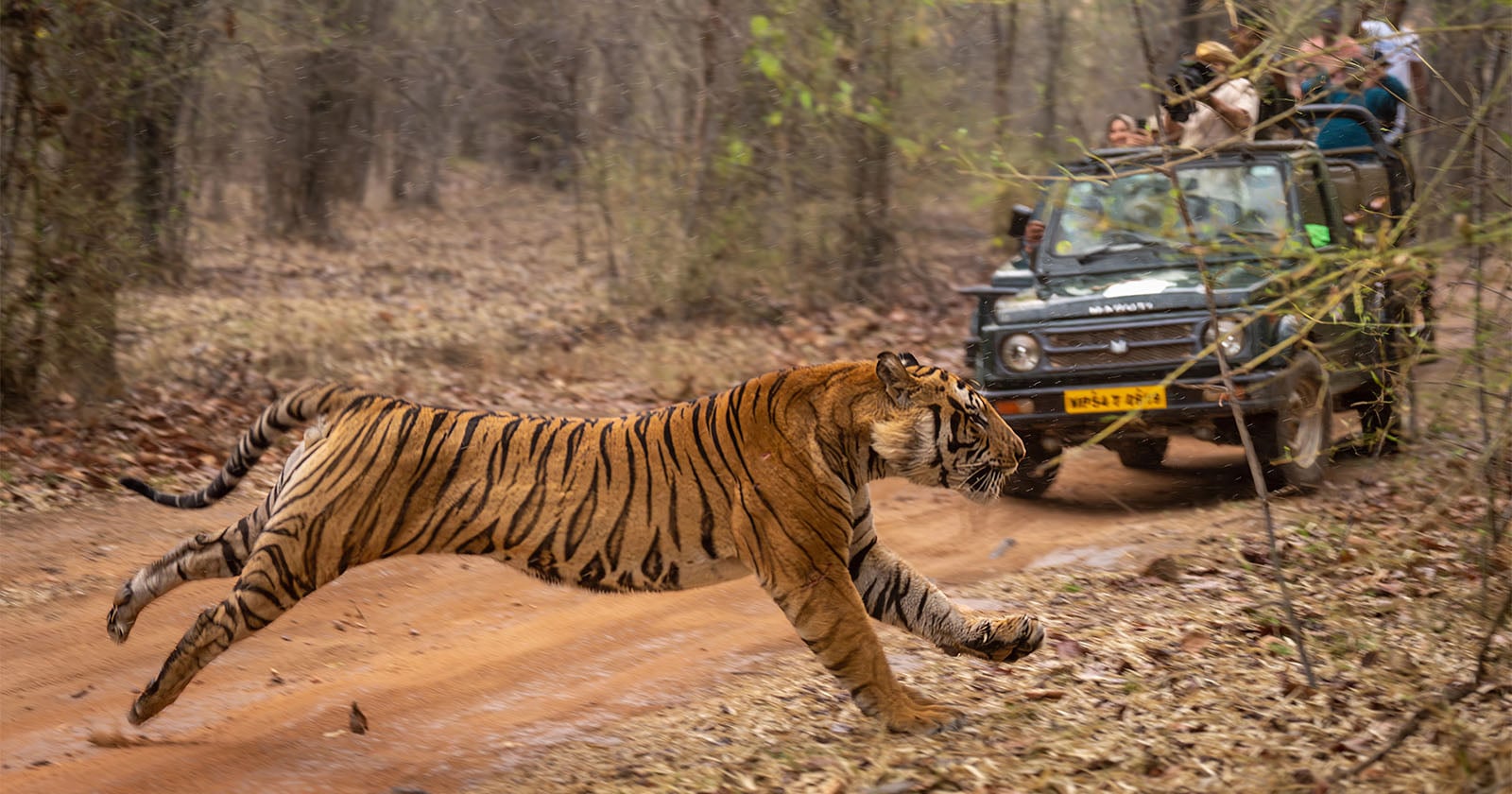
India’s tiger reserves are beginning to ban mobile phones during safaris as wildlife tourism faces growing concerns over overcrowding, unsafe tourist behavior, and the impact of social media-driven content creation on endangered animals and fragile ecosystems.

By Tim Pit Hok-yau
Last month, the Office of the Ombudsman released its long-awaited investigation into the Hong Kong government’s work in combating animal cruelty.
The report was prompted by a series of horrifying abuse cases which, in the Ombudsman’s own words, “amount to a deliberate trampling on the dignity of life and run wholly contrary to the very conscience of a civilised society.”
The investigation focuses primarily on the failures of the Agriculture, Fisheries and Conservation Department (AFCD), which is responsible for animal management and welfare.
Among the key findings are the AFCD’s inefficient investigations and insufficient prosecutions. Out of 1,633 reports of suspected animal cruelty from 2020 to June 2025, only six prosecutions were brought – a striking, though not new, statistic.
The AFCD responded to the Ombudsman, saying that the majority of reports it received pertained to noise or nuisance complaints rather than cruelty. However, media reports on animal cruelty, including a recent shocking case of a 14-year-old student sharing online photos and videos of cat abuse, may suggest otherwise.
Other problems highlighted by the Ombudsman’s report include weak enforcement powers; inconsistent case handling; poor internal monitoring and staff training; delayed reform of the Prevention of Cruelty to Animals Ordinance (Cap. 169), first promised in 2019; and alarmingly low penalties for illegal animal traps, which currently carry a maximum fine of HK$50,000 with no provision for imprisonment.
These are important findings, and the Ombudsman deserves credit for highlighting institutional deficiencies that animal advocates have raised for years.
But while the report has identified some of the government’s major failures, it also reveals a deeper problem: Hong Kong’s approach to animal welfare remains fundamentally reactive rather than preventive, with most suggestions focusing on punishment, not prevention.
Worse still, the report overlooks many of the structural and everyday forms of animal plight that are normalised across the city. This article, then, intends to address these blind spots.
The most glaring limitation of the investigative report concerns its ambivalence over nudging the government to implement a “duty of care.”
While the Ombudsman acknowledges that the government has struggled to reach consensus on this proposal, it stops short of urging its adoption. This hesitation matters.
A duty of care would fundamentally shift existing animal law from punishing cruelty after suffering occurs to preventing suffering in the first place. Without such a framework, Hong Kong continues to operate on an outdated logic: authorities intervene only after visible injury, starvation, or death.
If a cat falls from an unprotected high-rise window, or a dog is chronically confined in a tiny flat with little exercise or social contact, the current legal framework can hardly intervene until obvious harm has already occurred.
With a duty of care, caregivers would be legally required to provide appropriate food, shelter, veterinary care, and living conditions that meet animals’ physical and behavioural needs safely. In other common law jurisdictions, including the UK and Australia, duty of care provisions have already become a cornerstone of animal protection.
Undoubtedly, one of the report’s recommendations is to “further strengthen outreach and education in schools, helping students and young people build an awareness of animal protection from childhood.”
This is a fantastic recommendation for preventing animal cruelty, but it remains frustratingly vague. What kind of education are we talking about?
If Hong Kong genuinely wants to cultivate respect for animals, it must first confront contradictions in the current education system.
Attending a local secondary school, I still remember many science classes where animal dissection was presented as a normal part of learning, from dissecting ox eyes to hearing classmates describe experiments on mice.
These activities are still recommended by the Education Bureau’s Biology Curriculum and Assessment Guide, although the government also expects secondary school students to “learn about how humans can live in harmony with animals and show respect for all living things” in the very same subject.
Not only do such laboratory practices risk reinforcing a worldview in which animals exist primarily as instruments for human use, but the pedagogical value of animal dissection has been convincingly challenged by a large corpus of research.
Yet, the issue is perhaps just one of the many voids in our education system that should help enhance animal well-being and stop the everyday exploitation of animals. Learning about veganism, the intersection between animal exploitation and other social problems, conservation, and other elements of animal education are equally important.
Humane education should equip citizens with the ability to locate the many practices of cruelty against animals in Hong Kong, many of which the Ombudsman’s report says nothing about.
For instance, there have been repeated controversies surrounding captive animals at Ocean Park; animal deaths at the Hong Kong Zoological and Botanical Gardens; and the racing industry operated by the Hong Kong Jockey Club, where horses routinely suffer injuries and fatalities caused by running at maximal speed, lax whipping rules, and a hot climate.
Of course, the development projects and human activities that disrupt animals’ habitats should not be ignored. Just think of how Chinese white dolphins have lost their habitat because of reclamation or been injured because of high-speed ferries’ propeller blades, to name just one example.
Whether one supports these institutions and projects or not, it is difficult to argue that they fall outside the conversation on animal welfare.
The government’s poor animal management policies in urban areas are another major omission in the Ombudsman’s investigation. The report rightly condemns illegal animal traps but ignores government-led practices that also cause suffering, including the wild boar culling operations.
It also neglects ineffective regulation of religious animal release practices, which often disrupt ecosystems and harm the very animals being “saved” because more often than not, they are not released into suitable habitats.
If Hong Kong truly wants to become a “civilised” city that respects life, then animal welfare cannot be confined to criminal prosecutions of isolated abuse cases. It must also confront the legal, educational, economic, and cultural systems that normalise animal suffering in everyday life and prevent it from happening in the first place.
Another step that must be taken to safeguard animals’ well-being is to ask a harder question: What kinds of relationships do we, as a city, continue to build with the animals who live among us?
As philosopher Martha Nussbaum reminds us, animal justice should not be measured simply by the absence of cruelty, but by whether animals can actualise the capabilities essential to their flourishing.
For dogs, that includes play, movement, and social bonding. For dolphins, it means the ability to hunt, communicate, and live within their natural habitat. Survival alone is not welfare; a decent life is.
The Ombudsman’s report is an important step. But it should not be mistaken for an ultimate solution. Rather, it should remind us that there is always more that we – as policymakers, educators, and citizens – must do.
Tim Pit Hok-yau is research lead for the Hong Kong Animal Law and Protection Organisation.
| HKFP is an impartial platform & does not necessarily share the views of opinion writers or advertisers. HKFP presents a diversity of views & regularly invites figures across the political spectrum to write for us. Press freedom is guaranteed under the Basic Law, security law, Bill of Rights and Chinese constitution. Opinion pieces aim to constructively point out errors or defects in the government, law or policies, or aim to suggest ideas or alterations via legal means without an intention of hatred, discontent or hostility against the authorities or other communities. |
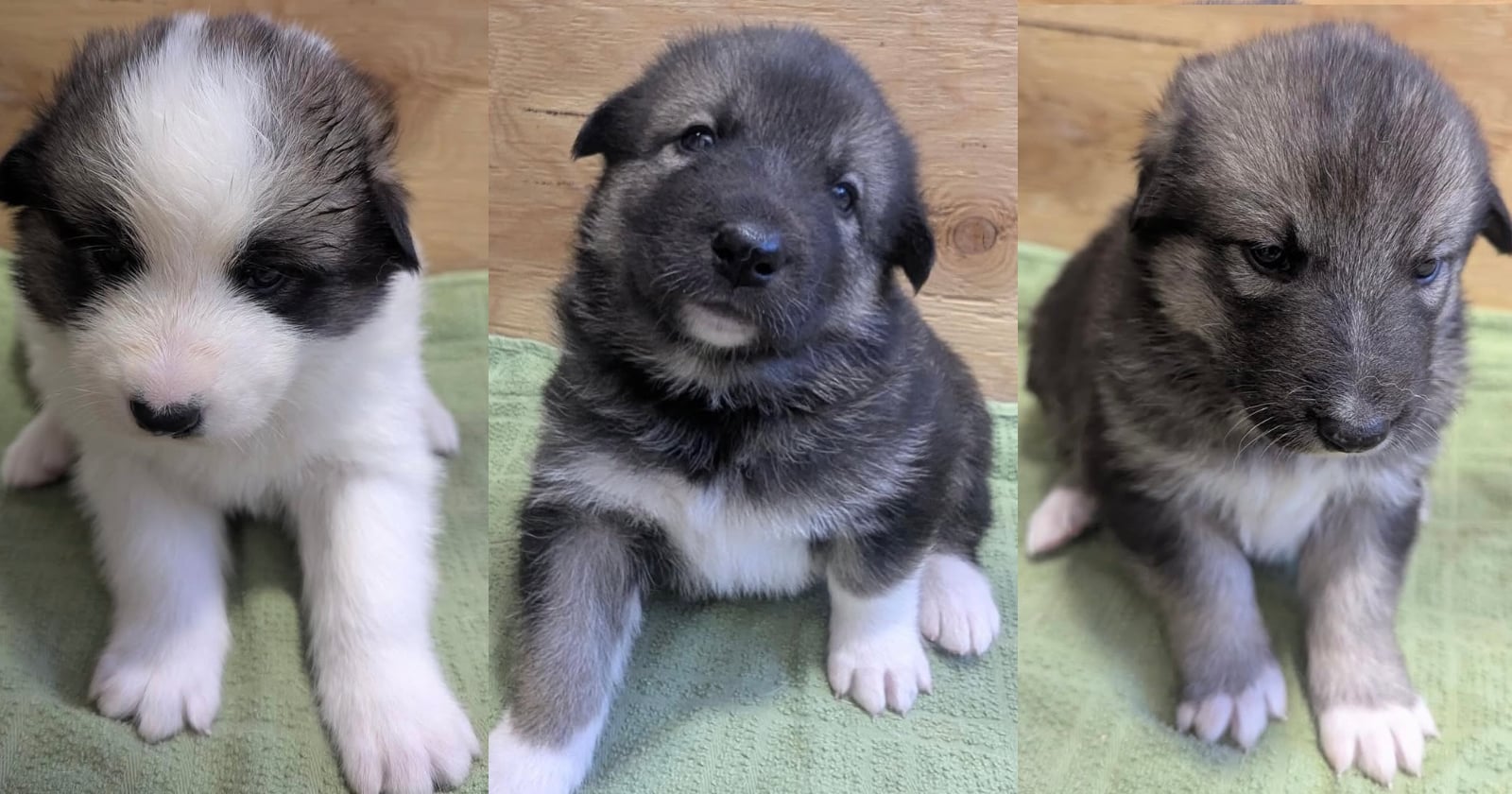
The puppy cam at Denali National Park and Preserve in Alaska went live this week, giving the public a chance to watch these famed sled dogs as they grow up to become future canine rangers.
