Bagpipes: You either love ‘em or you hate ‘em. But even among the instrument’s diehard defenders, most wouldn’t spend years designing, building, and perfecting an electromagnetic variant. But that’s exactly what one intrepid hobbyist in the United Kingdom has accomplished—although he first began toying with the idea 30 years ago.
“This project started back in 1996 when I hacked an Irish Uilleann bagpipe chanter by replacing the cane reed with a homemade reed made from carbon steel,” he explai
Bagpipes: You either love ‘em or you hate ‘em. But even among the instrument’s diehard defenders, most wouldn’t spend years designing, building, and perfecting an electromagnetic variant. But that’s exactly what one intrepid hobbyist in the United Kingdom has accomplished—although he first began toying with the idea 30 years ago.
“This project started back in 1996 when I hacked an Irish Uilleann bagpipe chanter by replacing the cane reed with a homemade reed made from carbon steel,” he explained on his Hackaday project page.
Although most famously associated with Scotland, various iterations of bagpipe instruments are documented in regions around the world like North Africa, East Asia, and the Persian Gulf. The Uilleann or Irish pipes date back to the 18th century and operate similarly to their Scottish relatives. To play them, a wearer operates small bellows strapped around the waist to blow relatively dry air through pipe reeds while using them like flutes. Uilleann pipes typically encompass two full octaves and produce a sound that many consider more melodic and mild than Scottish bagpipes.
The electric bagpipes utilize a carbon steel reed that connects to an amplifier. Credit: Goat Industries / Hackaday
This doesn’t mean they’re quiet, of course. In fact, their earliest versions could often be found on the battlefield as morale boosters. Although, the invention of electric instruments meant that even the most robust pipes couldn’t overshadow an amplifier cranked to its maximum. This posed a problem to the modernized version’s inventor.
“I desperately wanted to play the pipes in a rock band and I knew that I would only be able to sonically compete with an electric guitar by fitting an electromagnetic pickup next to a steel reed,” he explained.
Wielding a workaround may sound like a lot of work, especially when a musician could hypothetically just place a microphone near their traditional bagpipes. While certainly possible, it’s still difficult for the performer to actually hear themselves on stage compared to the electric instruments and drums. On top of that, standard microphones pick up a lot of background noise and produce feedback in stage monitors. Constructing a steel reed bypasses these issues entirely.
“Jimi Hendrix-type feedback can still be created but only by turning up the monitor amp really high and physically shoving the instrument into the speaker,” the creator wrote, adding that he can also employ the same effects used by guitarists, including distortion, pitch shifters, and delays.
The modern updates don’t end there, either. While the bellows bag is crafted from goat skin, it’s basically an exterior cosmetic accessory that houses another bag made from the same vinyl used in car seat covers. That’s all well and good—but how does it play?
“Playing gigs with this instrument, people would crowd around to watch and guitarists at the back would be scratching their heads thinking ‘That sounds like an electric guitar, but it definitely is not an electric guitar and you definitely can’t get an electric guitar to sound like that!’” he wrote.
While the full plans aren’t available online, fans of the sound can check out the inventor’s website to hear multiple original songs featuring the electro-bagpipes.
In The Workshop, Popular Science highlights the ingenious, delightful, and often surprising projects people build in their spare time. If you or someone you know is working on a hobbyist project that fits the bill, we’d love to hear about it—fill out this form to tell us more.
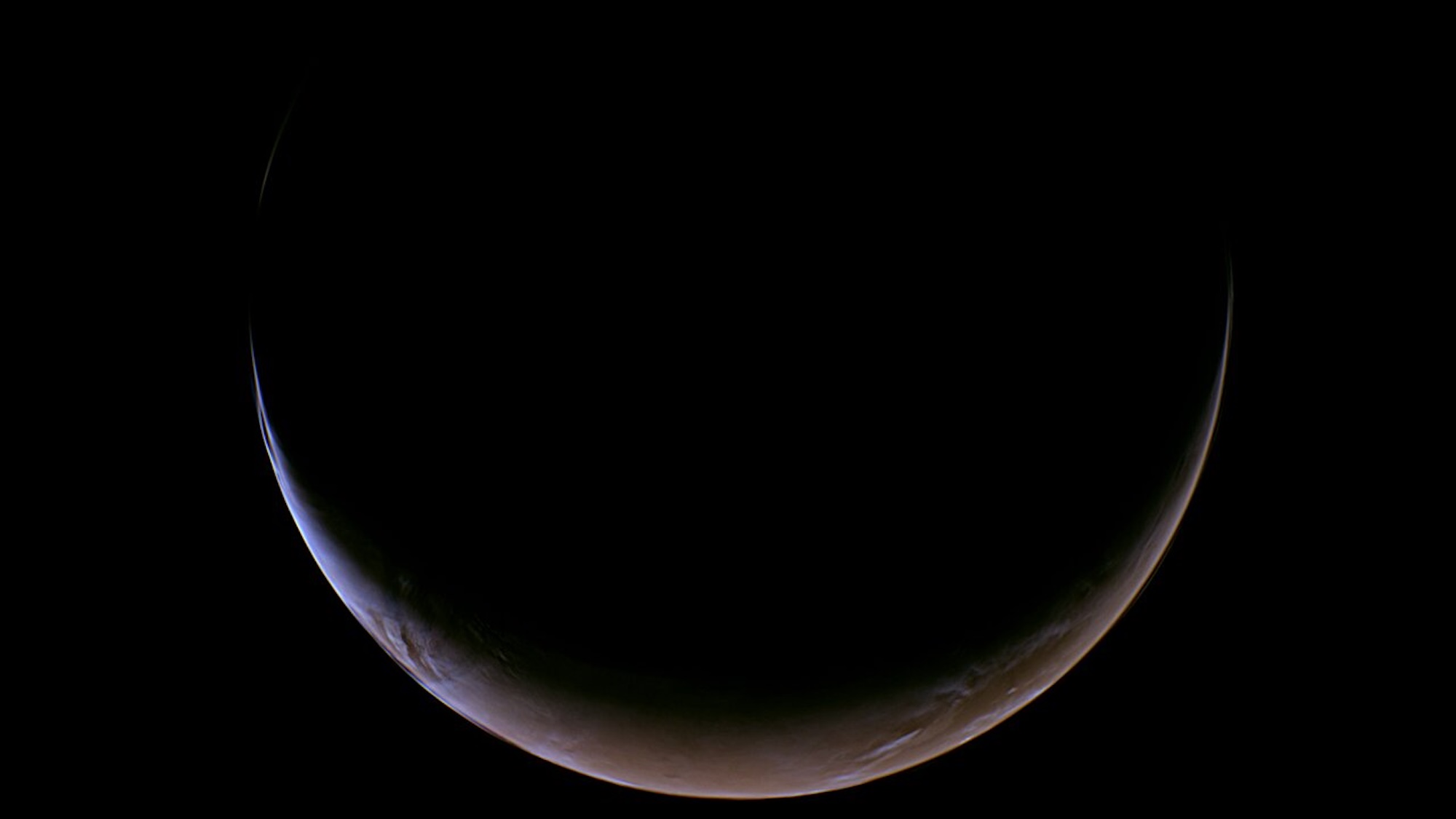
NASA’s Psyche spacecraft is currently en route to a small, metal-rich asteroid near Jupiter. However, the barely 3,600-pound probe recently required a little help from Mars to complete its lengthy 2.2-billion-mile mission. Despite its complex gravity assist earlier this month, the groundbreaking spacecraft still found time to snap some travel photos showcasing its Red Planet flyby. NASA released the latest image from Psyche’s trip on May 20, which offers a gorgeous view of Mars just hours before
NASA’s Psyche spacecraft is currently en route to a small, metal-rich asteroid near Jupiter. However, the barely 3,600-pound probe recently required a little help from Mars to complete its lengthy 2.2-billion-mile mission. Despite its complex gravity assist earlier this month, the groundbreaking spacecraft still found time to snap some travel photos showcasing its Red Planet flyby. NASA released the latest image from Psyche’s trip on May 20, which offers a gorgeous view of Mars just hours before Earth’s neighbor temporarily eclipsed the cosmic traveller.
According to NASA, the image was taken on May 15 at about 8:03 a.m. EDT by the spacecraft’s multispectral imager instrument. The thin crescent view of Mars is due to the spacecraft’s approach at what’s known as a high phase angle. The fingernail slice of Red Planet actually looks brighter and wider than mission specialists anticipated, thanks to a large level of sunlight scattering through the dusty Martian atmosphere. Interestingly, the instrument’s original unfiltered image wouldn’t look very discernible to the human eye. Instead, scientists processed the photo into a natural-color palette using the probe’s red, blue, and green imager filter data.
Launched in October 2023, Psyche is destined for 16 Psyche, a 140-mile-wide rock that astronomers theorize may be the remnant of an ancient planetary core. Once there, the spacecraft will study its iron magnetic properties, as well as use its imagers and spectrometers to analyze the asteroid’s chemical and elemental compositions.
Thanks to the Martian gravity assist, Psyche is scheduled to reach its destination in 2029. At its closest pass, Psyche swung around the Red Planet barely 2,800 miles above the surface at a speed of around 12,333 miles per hour.
BERLIN, May 20 — German police on today arrested a married couple on charges of spying for China, accusing them of seeking information on advanced technology with military uses.The couple, German nationals partially named as Xuejun C. and Hua S., were arrested in the southern city of Munich, said the federal prosecution service, which alleged that the pair “work for a Chinese intelligence agency”.Their homes and workplaces in Munich were being searched.The coupl
BERLIN, May 20 — German police on today arrested a married couple on charges of spying for China, accusing them of seeking information on advanced technology with military uses.
The couple, German nationals partially named as Xuejun C. and Hua S., were arrested in the southern city of Munich, said the federal prosecution service, which alleged that the pair “work for a Chinese intelligence agency”.
Their homes and workplaces in Munich were being searched.
The couple are alleged to have “established contacts with numerous academics at German universities and research institutions, in particular with chairs in the fields of aerospace engineering, computer science and artificial intelligence”.
To make these contacts, the couple are believed to have “posed as interpreters or as employees of an automobile manufacturer”.
Some scientists were then “enticed to travel to China under the pretext of giving paid lectures to a civilian audience”, but actually ended up addressing employees of state-owned arms manufacturers, prosecutors said.
As well as the suspects’ arrests, prosecutors said that “further measures” were being carried out “concerning a total of 10 people who are not suspected of any offence but are potential witnesses” in Berlin, Munich and several other locations across the country. — AFP
KUALA LUMPUR, May 20 — Capital A Bhd has received approval from Bursa Malaysia Securities Bhd for the removal of its Practice Note 17 (PN17) status, effective May 20, 2026.In a statement, the multi-platform digital, travel, and lifestyle services group said the move follows the completion of the company’s regularisation plan, which brings a definitive close to a six-year-long restructuring chapter and the start of Capital A’s next high-growth journey.Its group ch
KUALA LUMPUR, May 20 — Capital A Bhd has received approval from Bursa Malaysia Securities Bhd for the removal of its Practice Note 17 (PN17) status, effective May 20, 2026.
In a statement, the multi-platform digital, travel, and lifestyle services group said the move follows the completion of the company’s regularisation plan, which brings a definitive close to a six-year-long restructuring chapter and the start of Capital A’s next high-growth journey.
Its group chief financial officer, Teh Mun Hui, said post-upliftment, all AirAsia airlines will operate under one consolidated platform.
“The group will focus on its core businesses aimed at delivering sustainable value while efficiently coordinating, managing, and aligning all parties, resources, and systems both within and outside the organisation to achieve shared goals.
“The businesses include Asia Digital Engineering (maintenance, repair, and overhaul), Teleport (logistics), AirAsia MOVE (travel platform), AirAsia Next (brand and internet protocol) and Santan (food and beverage),” she said.
Its group chief executive officer (CEO), Tan Sri Tony Fernandes, said the local bourse’s decision to uplift the PN17 status was an emotional moment for the group and reflected the hard work, discipline and resilience behind the execution of its regularisation plan.
The upliftment from PN17 status follows a series of major strategic moves completed in January 2026, including the disposal of its aviation arm to AirAsia X Bhd (AAX), the distribution and listing of AAX shares to entitled Capital A shareholders, and a High Court-approved capital reduction of approximately RM5.5 billion.
Capital A said that the restructuring has restored its shareholders’ funds to positive territory.
It added that its businesses have delivered five consecutive quarters of profitability (excluding aviation businesses), from the first quarter of 2025 to the first quarter of 2026.
Capital A deputy CEO Effendy Shahul Hamid said the group can now move forward with plans and corporate actions across its various businesses, supported by renewed discipline, a technology-centric mindset, resilience and long-term thinking.
“We hope to execute with speed and ambition, and at the same time demonstrate value in our stable of businesses with a clear growth agenda,” he said. — Bernama
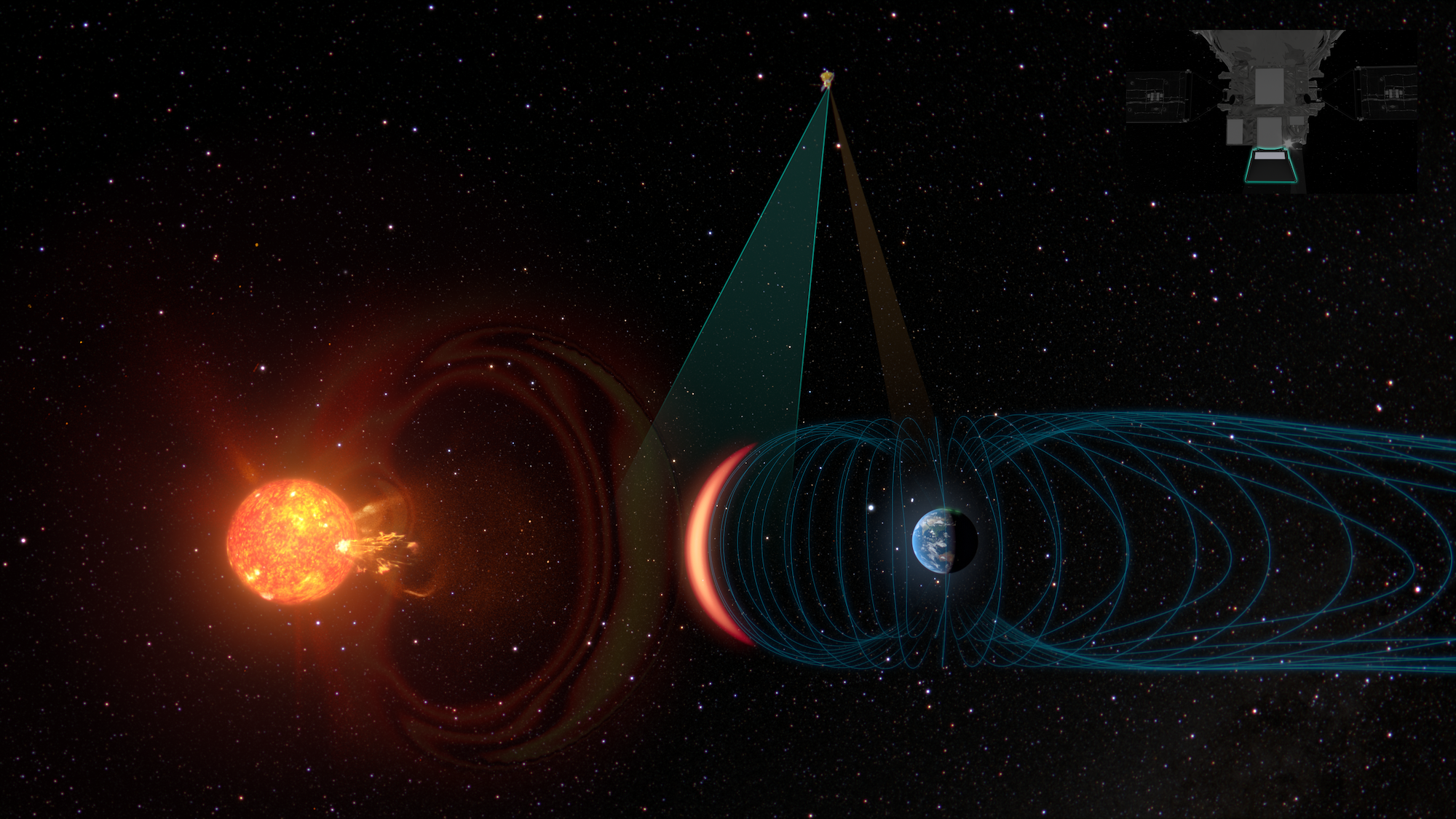
There’s a SMILE beaming down from high above Earth. On May 19, the European Space Agency (ESA) and the Chinese Academy of Sciences (CAS) launched a Vega-C rocket from Europe’s Spaceport in French Guiana with a payload representing years of international collaboration. Known as the Solar wind Magnetosphere Ionosphere Link Explorer (SMILE), the spacecraft will soon begin studying the sun’s immensely powerful solar winds and their relationship with Earth’s atmospheric safeguards.
You woul
There’s a SMILE beaming down from high above Earth. On May 19, the European Space Agency (ESA) and the Chinese Academy of Sciences (CAS) launched a Vega-C rocket from Europe’s Spaceport in French Guiana with a payload representing years of international collaboration. Known as the Solar wind Magnetosphere Ionosphere Link Explorer (SMILE), the spacecraft will soon begin studying the sun’s immensely powerful solar winds and their relationship with Earth’s atmospheric safeguards.
You wouldn’t be reading this without our magnetosphere. The protective shield generated from deep inside Earth has protected the planet from the sun’s most destructive solar winds for billions of years. Without this barrier, life could never survive on what would be a barren, irradiated rock. But while it’s clear that the magnetosphere is Earth’s natural defense system against cosmic radiation and geomagnetic storms, astronomers still aren’t sure exactly how it works.
“We are about to witness something we’ve never seen before—Earth’s invisible armor in action,” ESA director general Josef Aschbacher said in a statement.
Over the next month, SMILE will slowly increase its altitude with 11 engine burns before settling into a large elliptical orbit over the North and South Pole. Actual data collection will start in July using the spacecraft’s four tools, including a pair of X-ray and ultraviolet cameras.
SMILE is the first mission to examine the magnetosphere with X-rays, and the UV equipment will capture the northern and southern lights for up to 45 hours at a time. By combining the two data sources, astronomers hope to gain a better understanding of how the planet is affected by the sun’s constant bombardment of solar winds and frequent coronal mass ejections. The project is planned to last three years.
“The evidence that Smile collects will help us better understand planet Earth and our Solar System as a whole,” explained ESA Smile project scientist Philippe Escoubet. “And the science it uncovers will improve our models of Earth’s magnetic environment, which could ultimately help keep our astronauts and space technologies safe for decades to come.”
College sophomore Ian Vanveen, 20, got into woodworking as a way of budget management. “I didn’t have a whole lot of money,” he says, “so I decided to build what I wanted myself.” The mostly self-taught craftsman started off making furniture, but was eventually itching to do more.
So Vanveen took a carpentry class to learn about different woods and their properties. There, he discovered things like how different kinds of wood can vary in density, and how wood’s fibers can expand or shrink de
College sophomore Ian Vanveen, 20, got into woodworking as a way of budget management. “I didn’t have a whole lot of money,” he says, “so I decided to build what I wanted myself.” The mostly self-taught craftsman started off making furniture, but was eventually itching to do more.
So Vanveen took a carpentry class to learn about different woods and their properties. There, he discovered things like how different kinds of wood can vary in density, and how wood’s fibers can expand or shrink depending on humidity. He then decided to combine his newfound knowledge with his building skills and start making electric guitars.
“That’s when things got interesting,” he says.
A high schooler makes his first electric guitar, kind of
The first electric guitar that Vanveen handled was his dad’s old band guitar: a blue, semi-hollow body, Gibson ES-355. A high schooler at the time, Vanveen immediately felt a connection with the instrument, and got it in his brain to make his own custom-made six-string.
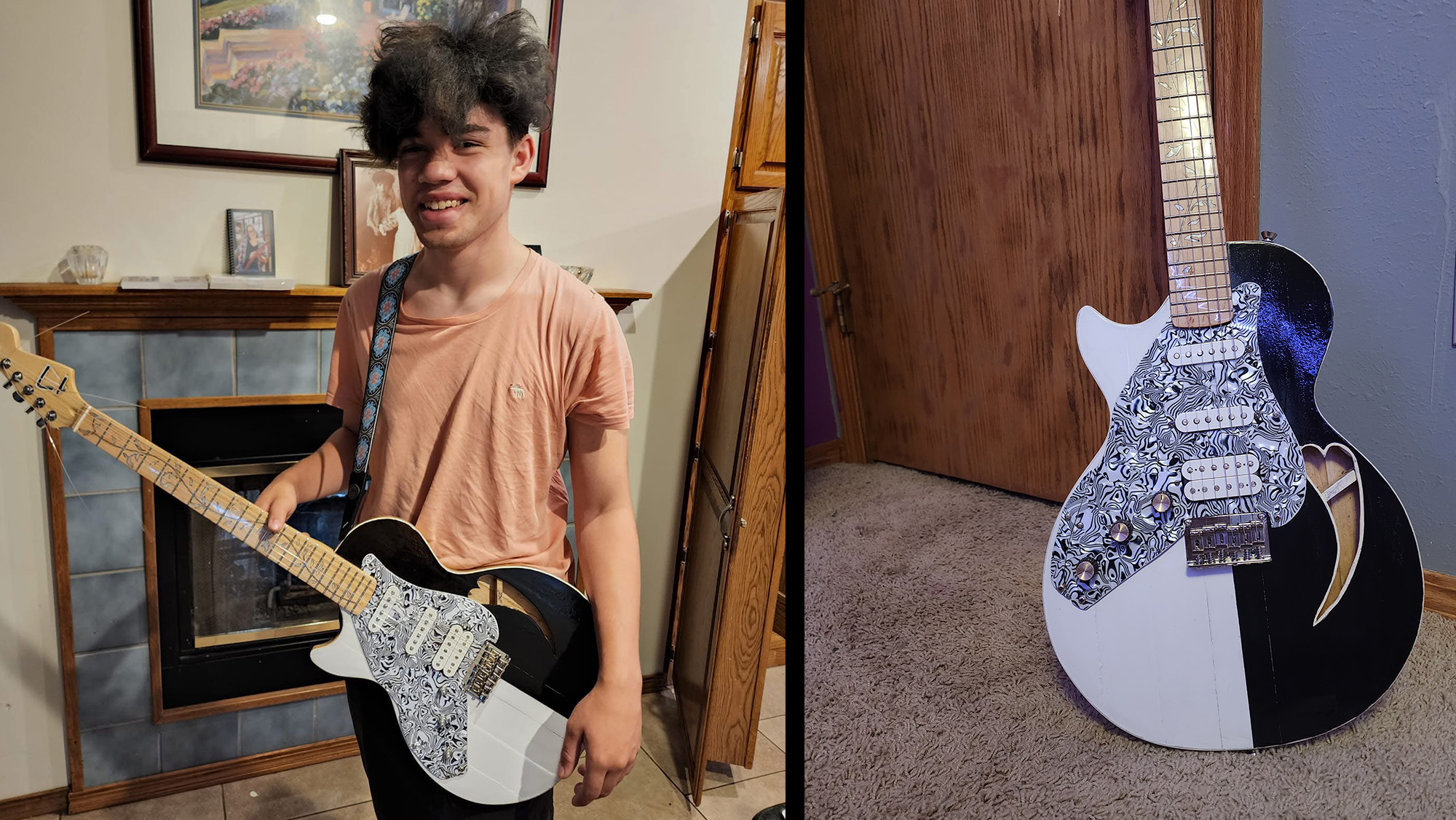
Ian Vanveen first got the itch to make a guitar after handling his dad’s blue, semi-hollow body, Gibson ES-355. Image: Ian Vanveen
So he set up shop in his family’s Wisconsin garage, and got to work building. He took a bunch of pine two-by-fours left over from a home deck project, “and just cut it up and glued all the pieces together,” he says. “It turned out really bad.”
A second attempt at a DIY guitar
Vanveen took a couple years off before he started crafting a second guitar, though this time he went in with a bit more planning and forethought. While a fan of the iconic Les Paul guitar shape—which is slightly asymmetrical with a rounded top and larger, rounded bottom—the student found it “notoriously thick, and really uncomfortable.”
He decided instead to create the thinnest guitar possible without having it warp over time (slimmer guitars are more susceptible to changes in humidity, temperatures, and high-string tension). Another non-negotiable: Vanveen wanted the instrument to sound loud when he played it even when it wasn’t plugged into an amp. “I was really adamant about this.”
His first step was sketching a model of the instrument using Adobe Illustrator. “I didn’t have any of the dimensions, really,” says Vanveen. “I just figured that out as I went.”
For this project he used maple, a stiff and dense wood that’s known for its stability. He then took a couple of weeks to test its strength and see how thin he could get it while still withstanding maximum string tension. “I got it down to an inch and an eighth,” he says. “If I went any lower than that, the whole body would bend over time.”
Vanveen made his first guitar in high school. “It turned out really bad,” he says. Image: Ian Vanveen
Vanveen used a miter saw—good for making quick and angled crosscuts—to cut individual wood boards, creating what would become the guitar’s rough shape. He then used a jigsaw power tool for hollowing out the piece and contouring, and a drill to make holes for the electronics. These include adjustable potentiometers (“pots”), which are basically electrical components that allow a musician to control the instrument’s volume and tone, and a capacitor to filter its frequency (the speed at which its strings vibrate) and shape its tone.
Since Vanveen wanted his guitar to sound loud even without plugging it in, he hollowed out the entire instrument (other than its center, where its wiring is now located) using a handheld router.
“The idea was that the sound would reflect a little bit more within the holes,” he says. As with standard acoustic guitars, the hollow chamber allows the guitar’s wood to vibrate and air to move around inside more freely. This in turn amplifies the sound.
When it came to wiring, Vanveen bought the “cheapest stuff” he could find off of eBay for about $15. The pre-assembled kit contained both potentiometers and a capacitor. It also came with a selector switch to choose guitar pickups, which are electromagnetic transducers arranged in various configurations to determine the “color” of a sound. For example, one pickup might produce a tone that’s “bright and crisp,” while another could be described as sounding “warm and gritty.” It also included all the necessary wires for the electric instrument.
The guitar features a black-and-white color scheme, which Vanveen says was inspired by a photography class he was taking at the time. It’s also specially crafted for left-handed people. “They don’t really make left-handed electric guitars,” he says, “and I’m left-handed. So this was a big moment for me.”
Vanveen plans to make more improvements to his handmade guitar. Image: Ian Vanveen
The finished product
Overall, the piece took Vanveen about five months to make. This involved two months of planning and three months of cutting, crafting, wiring, sanding, painting, and assembling. He typically put in more than 20 hours a week, working mostly on weekends. All said, Vanveen worked more than 200 hours to put the guitar together.
Although Vanveen hasn’t made any new guitars since he started college in fall 2024, he’s still looking for ways to improve his 2.0 version.
Earlier this year, he learned to use an operational amplifier (op-amp), which allows him to further manipulate and control the instrument’s tone. He’s also created a digital circuit simulator that can bypass the guitar’s capacitor, aka its frequency filter, and utilize other capacitors connected to ground.
“Most guitars have only one capacitor,” limiting the instrument’s ability to shape tones, says Vanveen. Instead, his simulator connects a variety of outside capacitors to the guitar’s potentiometers, or volume controls. Vanveen can then get a whole different tone depending on which one he chooses.
“This summer I’m gonna build a new guitar with these switches,” says Vanveen. But it has to wait until he’s home from college. “I make everything in my parents’ garage.”
In The Workshop, Popular Science highlights the ingenious, delightful, and often surprising projects people build in their spare time. If you or someone you know is working on a hobbyist project that fits the bill, we’d love to hear about it—fill out this form to tell us more.
Manuel Gual posted a photo:
Vintage Meccano Workshop: Mechanical Dreams in Brass and Steel
Description:
A detailed visual collection inspired by classic Meccano engineering, captured inside a warm vintage workshop filled with metal strips, brass gears, pulleys, axles, wheels, tools, blueprints, cranes, bridges, clockwork mechanisms, model vehicles and carefully organized construction parts. The series celebrates the beauty of mechanical imagination, precision assembly, old workshop craftsma
Vintage Meccano Workshop: Mechanical Dreams in Brass and Steel
Description:
A detailed visual collection inspired by classic Meccano engineering, captured inside a warm vintage workshop filled with metal strips, brass gears, pulleys, axles, wheels, tools, blueprints, cranes, bridges, clockwork mechanisms, model vehicles and carefully organized construction parts. The series celebrates the beauty of mechanical imagination, precision assembly, old workshop craftsmanship and the nostalgic charm of hands-on model engineering. Each scene evokes the atmosphere of an inventor’s bench, where miniature machines, structural frames and experimental mechanisms come together like a tribute to industrial design, educational toys and timeless creative tinkering. These images have been generated by Artificial Intelligence.
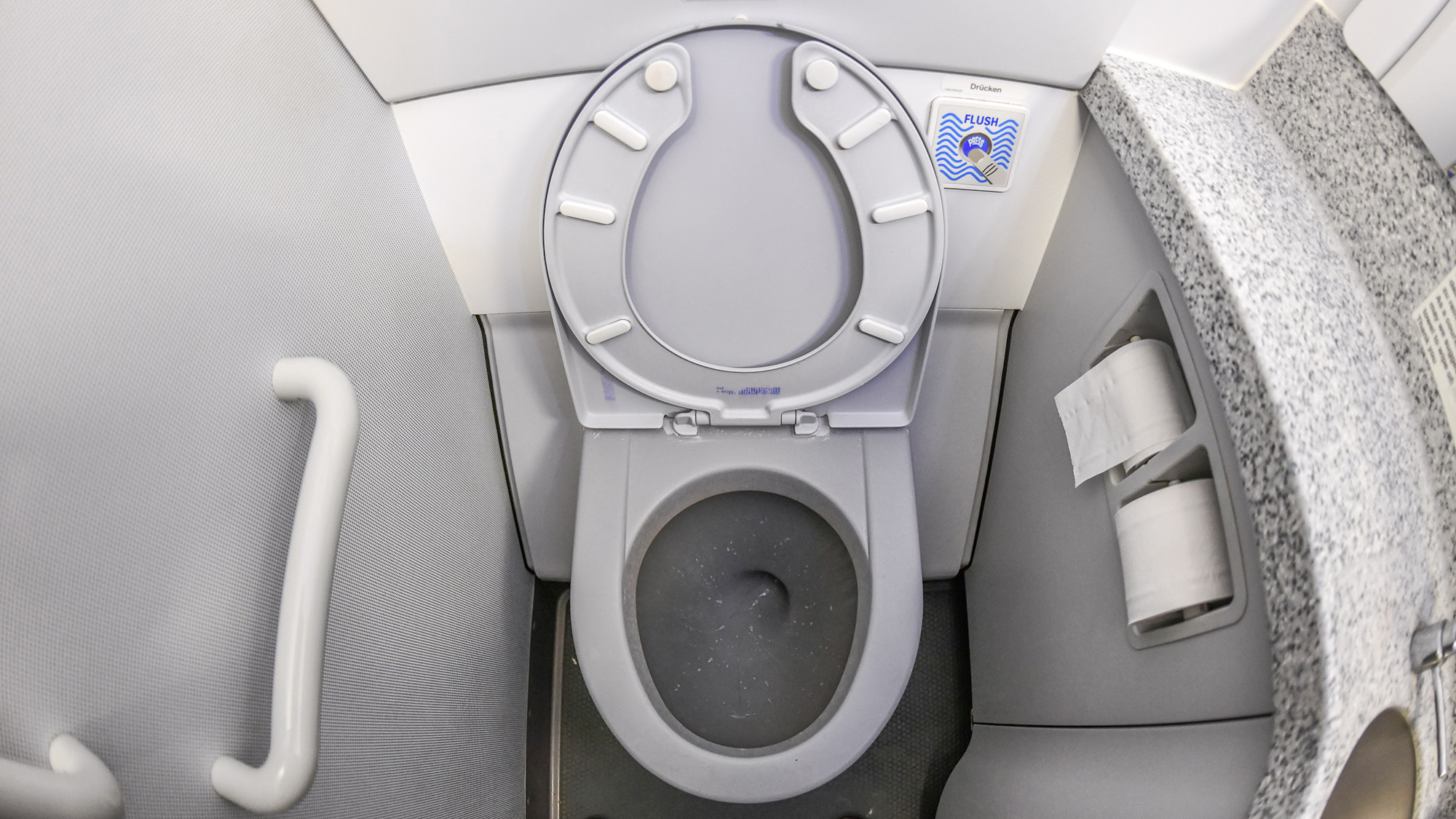
There’s nothing quite like the sound of an airplane toilet flushing. But that incredibly loud sucking sound is actually something of an engineering marvel. These toilets flush, with no water, while zooming along at 500 miles per hour.
In this episode of Ask Us Anything by Popular Science, we get into all the smelly details of how airplane toilets actually work.
Ask Us Anything answers your most outlandish, mind-burning questions—from the everyday things you’ve always wondered to the b
There’s nothing quite like the sound of an airplane toilet flushing. But that incredibly loud sucking sound is actually something of an engineering marvel. These toilets flush, with no water, while zooming along at 500 miles per hour.
In this episode of Ask Us Anything by Popular Science, we get into all the smelly details of how airplane toilets actually work.
Sarah Durn: You’re six years old, wedged into a middle seat on your very first flight.
Your ears are popping. The engine sounds impossibly loud. Somewhere a baby is crying. And after nervously sipping one too many ginger ales, you realize there’s something else you need to do.
So you make the LONG walk down the NARROW aisle to the airplane bathroom.
You open the weird sliding door, and this lavatory is tiny. And, after doing your business, you hesitantly hit the flush button.
For one horrifying second, you’re convinced the toilet might actually suck you into the sky.
But what exactly is happening here? How do airplane toilets work?
Turns out, the answer involves physics, pressure differentials, and one surprisingly clever engineering trick.
Laura Baisas:And hello, I’m news editor Laura Baisis.
SD: Here at Popular Science, we can’t stop thinking about all the world’s strangest questions, and this week, we’re wondering how the heck airplane toilets actually work, something Laura actually edited a story on.
So Laura, what’s going on here? What happens when we use the bathroom at 35,000 feet?
LB: First of all, you can relax. The toilet is not strong enough to suck you out of the plane.
SD: Ah, thank God. Childhood fear officially resolved.
LB: But that terrifying slurp sound, very real. And it turns out that airplane toilets use a surprisingly clever system that takes advantage of something that planes already have at high altitude, the enormous pressure difference between the cabin and the outside of the plane.
SD: So every time we flush on a plane, physics is essentially doing the dirty work?
LB: Pretty much. We love physics.
SD: Oh, we do.
LB: And once you learn how the system actually works, from vacuum toilets to something called blue ice, I’m pretty sure you’ll never hear that sound the same way again.
SD: All right. I’m in. Tell me all the airplane bathroom facts.
LB: I’d be happy to. But before we dive into the science of sky-high plumbing, we want to hear from you. What questions are swirling around your brain? Submit your question by clicking the “Ask Us” link at popsci.com/ask. Again, that’s popsci.com/ask, and click the “Ask Us” link.
SD: We’ll be right back with more about airplane toilets after this quick break.
SD: Welcome back! Okay, Laura, before we get into all the smelly details, I think we need to talk about the history of airplane toilets because early flying was kind of a nightmare.
LB: Oh, absolutely. I mean, that glamorous golden age of air travel, a lot less glamorous if you needed to pee.
SD: Right. So in the very earliest days of aviation, planes just, you know, straight up no bathrooms at all.
LB: Which makes sense if you remember early flights were a lot shorter and planes flew so much closer to the ground.
SD: Yeah, exactly. Pilots were basically flying by sight, and it’s said that early pilots actually peed into their shoes and then would just toss it into the air.
LB: I still can’t believe that’s real.
SD: Me neither. Or they’d make a hole in the cockpit floor…and just go ahead and, you know, pee through that.
LB: Correct. This is all so, so bad. So bad.
SD: But it does get better. I mean, kind of. As passenger air travel became more common in the later 1920s, airlines were like, “Okay, we should probably do something about the bathroom sitch.”
So early passenger planes basically had buckets. Just, you know, a bucket in the back of the plane.
LB: Ah, truly a luxury travel experience.
SD: Very chic, very elegant. Then in the late 1930s, the first enclosed plane lavatory debuted on the DC-4 passenger plane. But even those were pretty primitive. The toilet had a removable bowl that crews had to take out and dump after landing.
LB: Yeah, not sure I’d want that job.
SD: Yeah, same. Eventually planes, though, started using chemical toilets, you know, kind of like a fancy porta potty situation. Waste would sit in these tanks full of bright blue disinfectant liquid.
LB: Ah, yes, we come to the origin of one of aviation’s most disgusting phrases: blue ice.
SD: It doesn’t sound disgusting, which is what throws me.
LB: It’s kind of a misnomer.
SD: I know. It sounds like something a superhero would use. But anyways, explain it to us. What is blue ice?
LB: So blue ice forms when waste leaks from a plane at a really high altitude. Since it’s so cold outside, the waste instantly freezes onto the aircraft.
SD: Okay, which is already kinda gross.
LB: Yeah, and then sometimes, I’m gonna emphasize this, very, very rarely it can break off as the plane descends.
SD: Wait, meaning frozen airplane toilet waste can theoretically fall from the sky? That’s what blue ice is? Frozen human waste raining from above?
LB: Again, gross, but very, very rare, but yes, it can.
SD: Okay. Awful. New fear unlocked. Hate that. Really bad.
LB: But the good news is that modern airplane toilets are much, much more sophisticated. Most commercial planes today use vacuum toilet systems, which are lighter, cleaner, and honestly kind of ingenious.
SD: Okay, so let’s get into it. What’s actually happening when we flush while up in the sky?
LB: Okay, so the key thing to understand here is pressure. Airplanes fly at very high altitudes, usually between 31,000 and 42,000 feet up. There, the air pressure outside of the plane is way lower than inside of the cabin.
SD: Because the cabin is pressurized so all of us, you know, can breathe.
LB: Exactly. Breathing equals important. Right.
SD: Right.
LB: So engineers realized they could use that pressure difference to their advantage. So when you hit the flush button in an airplane bathroom, a valve opens between the toilet bowl and a waste tank. So because the air pressure is lower on the tank side, everything gets sucked downward incredibly fast.
SD: Which explains the very loud sucking sound.
LB: Exactly. And one reason engineers love this system is because it saves a ton of weight. Traditional toilets need a lot of water, but on airplanes water is heavy and heavier planes burn more fuel.
SD: So instead of gallons and gallons of water, plane toilets mostly use air pressure.
LB: Right, which is why the flush is so dramatic and loud and fast.
SD: Okay, and, you know, silly question, but can you actually get sucked into an airplane toilet?
LB: No. Despite what every child, and honestly some adults, might believe, the vacuum is nowhere near powerful enough to suck a human into the plumbing.
SD: Oh, thank goodness.
LB: Although aviation experts do say that you should close the lid before flushing because the suction can splash some gross things around more than you’d maybe like.
SD: Ooh, yikes. Noted forever.
LB: And that’s… Come on, that’s just good general toilet flushing behavior anywhere. You know, flush with that lid down.
SD: Yeah, I’m a strict lid down girl.
LB: Yep, same. Same.
And, you know, airplane toilet systems are also designed with a lot of safety features. There are pressure valves, sealed tanks, all kinds of redundancies to make sure the cabin stays pressurized and everything works safely.
SD: Right, ’cause you don’t wanna mess with the air pressure on a plane.
LB: Absolutely not.
SD: Okay, so when you flush an airplane toilet, where does everything actually go?
LB: So all the waste gets sucked through pipes into holding tanks elsewhere in the aircraft, and contrary to a very persistent myth, planes do not just simply dump sewage while flying. The waste stays on board until the plane lands.
SD: Unless it’s blue ice.
LB: Unless it’s blue ice. But remember, very rare and not that often anymore. Planes are more sophisticated with their waste.
SD: I’m gonna be so aware of anything falling from the sky.
LB: I know.
SD: Watch out. We’re really helping, you know, just assuage a lot of childhood fears on this episode.
LB: You know, we aim to please here.
SD: And okay, so then after the plane lands comes the very misleadingly named honey truck.
LB: The honey truck. Uh, yeah, unfortunately the honey truck is a lot grosser than it sounds. After landing, airport ground crews bring over these specialized service trucks that connect to the aircraft and pump all of that waste out of the holding tanks.
SD: The fact that they’re called honey trucks feels like a crime. Like, who is naming things—blue ice, honey trucks—what the heck is going on?
LB: But, at major airports this happens constantly. Honey trucks are always roving around, pumping waste from planes into their holding tanks for disposal.
Kinda cute, sort of like a poop version of WALL-E happening all along the tarmac without us even knowing.
SD: Is it cute? Do we think that’s cute?
LB: I kind… You know what? I kind of do. It’s important. It’s important, so I think it’s cute.
SD: Fair. Yeah, I can’t imagine being the person assigned to the airplane poop truck.
LB: And apparently, as I said, those very important crews also deal with people flushing things they absolutely should not flush.
SD: Oh, no.
LB: According to one aircraft engineer, mechanics have found diapers, silverware, soda cans.
SD: Soda cans?
LB: Soda cans. And airplane toilet pipes are tiny, so clogs are a huge deal, not to mention they can cause major delays.
SD: Yeah, you do not wanna be the person responsible for grounding a plane because you flushed your ginger ale can.
LB: There are already enough reasons you could get delayed. Do not delay a flight because you decided to flush that can, exactly.
SD: People are crazy.
LB: A clog can even take a plane out of service for days while mechanics fix the plumbing.
SD: It’s honestly incredible that these toilets don’t have more issues. I mean, they’re really clever little pieces of technology.
LB: And the engineering behind all of this is fascinating. These systems have to work safely, reliably, and hygienically while flying hundreds of people through the sky at 500 miles per hour. It’s amazing.
SD: Airplane toilets are one of those weird engineering marvels most of us never think about unless we’re hearing the very loud slurp sound.
LB: And yep, never gonna hear that sound the same way again.
SD: Yeah, same.
LB: Or think of blue ice and honey the same way again, if I’m being honest. And with that image in mind, we’ll be right back after this quick break.
SD: Welcome back. Since this episode is all about flying toilets, we have to talk about the fact that while we were making this episode, NASA sent four astronauts into space, headed to the dark side of the Moon for the first time, and then their toilet basically immediately broke.
LB: Immediately. I mean, that poor crew.
SD: I know. Yeah, Artemis II embarks on this historic mission around the Moon, and then just a few hours into the mission, NASA’s like, “Ooh, guys, quick update, the space toilet fan broke.”
LB: Guessing that’s a sentence that probably caused, you know, some stress at Mission Control.
SD: Yeah, just, you know, a little bit, especially because there was only one toilet on board for four astronauts on a 10-day mission.
LB: Yeah, that toilet had a lot riding on it.
SD: Yeah. And unlike airplane toilets, space toilets can’t really rely on gravity because, you know, space.
LB: Space. In microgravity, nothing naturally goes down, which means space toilets use fans to pull waste in the correct direction, and in this case, the fan stopped doing that, which would have meant urine floating around the cabin. Ew.
SD: Yeah. The good news is NASA fixed it pretty quickly. Astronaut Christina Koch worked with Mission Control to get the system back online within a few hours.
LB: And apparently the astronauts had backup emergency urine bags, just in case.
SD: Which, fun fact, is basically how Apollo astronauts handled this back in the 1960s. No luxury Moon bathroom, just Neil Armstrong peeing and pooping in a bag.
LB: What an image.
SD: I mean …
LB: I know, right? Humanity can build giant rockets, fly hundreds of thousands of miles through space, and still end up improvising bathroom solutions.
SD: Honestly, it all feels very, very human.
LB: It does. And on that note…
SD: May all of your toilets, earthly or cosmic, function correctly.
LB: And that’s it for this episode, but don’t worry, we’ve got more episodes of Ask Us Anything live in our feed right now. Follow or subscribe to Ask Us Anything by Popular Science wherever you enjoy your podcasts, and if you like our show, leave us a rating and review.
SD: Our producer is Alan Haburchak, and this week’s episode was based on an article written for Popular Science by Tom Hawking, with a link in the show notes if you wanna learn more about airplane bathrooms.
LB: Thank you, team. Thank you, toilets, and thanks everyone for listening.
SD: And one more time, if you want something you’ve always wondered about explained on a future episode, go to popsci.com/ask and click the “Ask Us” link. Until next time, keep the questions coming and close those toilet lids.

 Login
Login