
Normal view

  • ✇Popular Science
  • Mars rover snaps a selfie near skyscraper-sized boulders Andrew Paul
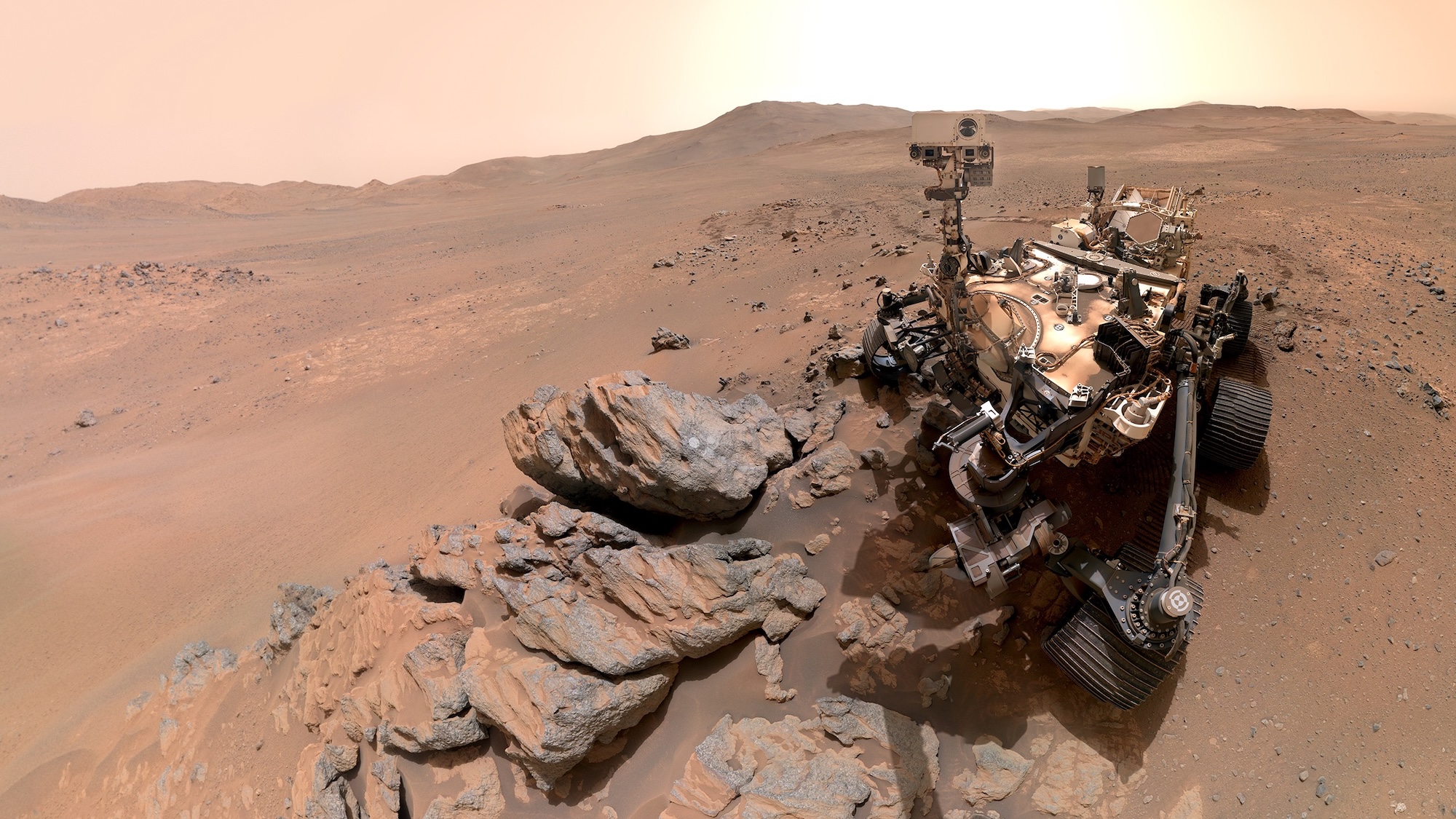
    After five years of rolling across Mars, NASA’s Perseverance rover is still going strong. And it has the selfies to prove it. NASA highlighted its “six-wheeled scientist’s” latest Red Planet excursion in a mission update on May 12, explaining that the explorer is currently engaged in the Northern Rim Campaign. This is Perseverance’s fifth project since arriving on Earth’s planetary neighbor in February 2021.  Compiled from 61 separate photos taken in March, the latest scene depicts Perseverance
     

Mars rover snaps a selfie near skyscraper-sized boulders

13 May 2026 at 15:45

After five years of rolling across Mars, NASA’s Perseverance rover is still going strong. And it has the selfies to prove it. NASA highlighted its “six-wheeled scientist’s” latest Red Planet excursion in a mission update on May 12, explaining that the explorer is currently engaged in the Northern Rim Campaign. This is Perseverance’s fifth project since arriving on Earth’s planetary neighbor in February 2021.  Compiled from 61 separate photos taken in March, the latest scene depicts Perseverance near a region known as Lac de Charmes.

“We took this image when the rover was in the ‘Wild West’ beyond the Jezero Crater rim—the farthest west we have been since we landed at Jezero a little over five years ago,” Perseverance project scientist Katie Stack Morgan said in a statement.

Prior to snapping its selfie, the rover had just finished abrading the rocky Arethusa outcrop. This task involves using the drill on its robotic arm to grind a section of the geological formation, which then offers scientists back on Earth the materials necessary to analyze its composition. After remotely examining the rock’s chemistry, researchers learned Arethusa is largely igneous minerals dating even further back than the Jezero Crater itself. The outcrop likely formed underground millions of years ago from molten material.

The latest portrait is the sixth selfie taken by Perseverance since arriving on Mars. To pull it off, the rover relied on its Wide Angle Topographic Sensor for Operations and eNgineering (WATSON) camera installed at the end of its robotic arm. It took about one hour to accomplish and required 62 extremely fine-tuned movements to ensure the clearest shot possible.

NASA’s Perseverance captured this enhanced-color panorama of an area nicknamed “Arbot” on April 5, the 1,882nd Martian day, or sol, of the mission. Made of 46 images, the panorama offers one of the richest geological vistas of the rover’s mission, revealing a windswept landscape of diverse rock textures. Credit: NASA / JPL-Caltech / ASU / MSSS

Lest anyone think Perseverance is too narcissistic, the rover also employed its Mastcam-Z to also photograph Lac de Charmes’ Arbot area a few days later. The vista scene is the result of 46 combined images, and will help NASA plot out a route to further investigate the ridge. Thanks to the new vantage points, scientists already think they have spotted a few megabreccia—massive chunks of rock as big as skyscrapers that were launched during a meteorite impact about 3.9 billion years ago.

“The rover’s study of these really ancient rocks is a whole new ballgame,” Stack Morgan explained. “These rocks—especially if they’re from deep in the crust—could give us insights applicable to the entire planet, like whether there was a magma ocean on Mars and what initial conditions eventually made it a habitable planet.”

The post Mars rover snaps a selfie near skyscraper-sized boulders appeared first on Popular Science.

  • ✇Popular Science
  • ‘Mars’ is 2025’s most popular planet baby name Annie Colbert
    “Mars, can you please clean up your Legos?” “Jupiter, finish your peas.”“Don’t pull the cat’s tail, Mercury!” The Social Security Administration (SSA) has released its baby name data for 2025 and it’s clear that plenty of parents found inspiration in the cosmos for their little ones. The most popular proper planet in our solar system to name a baby after in 2025 was Mars, followed by Jupiter. Thankfully, no one named their child Uranus, but 80 parents did name their child Cosmo. Here’s th
     

‘Mars’ is 2025’s most popular planet baby name

8 May 2026 at 16:29

“Mars, can you please clean up your Legos?”
“Jupiter, finish your peas.”
“Don’t pull the cat’s tail, Mercury!”

The Social Security Administration (SSA) has released its baby name data for 2025 and it’s clear that plenty of parents found inspiration in the cosmos for their little ones. The most popular proper planet in our solar system to name a baby after in 2025 was Mars, followed by Jupiter. Thankfully, no one named their child Uranus, but 80 parents did name their child Cosmo.

Here’s the planet-baby name breakdown:

  • Mercury: 10 males
  • Venus: 96 females
  • Earth: Eight females
  • Mars: 27 females, 105 males (132 total)
  • Jupiter: 84 females, 37 males (121 total)
  • Saturn: 18 females, 8 males (26 total)
  • Uranus: Zero
  • Neptune: Eight males

A couple of our solar system’s dwarf planets also made appearances on the list:

  • Pluto: 11 males
  • Eris: 128 females, 26 males (154 total)

Of course it’s important to note that most of our solar system’s planets got their names from Roman and Greek gods and goddesses, so a love of space likely wasn’t the only motivation for new parents.

Last year, 332 parents used the name Artemis for their babies. According to baby name site Nameberry, Artemis is of Greek origin and means “safe” or “butcher.” It’s also the name of NASA’s high-profile mission to return humans to the moon.

And as a bonus fun-with-data note: the name Tesla has completely disappeared from SSA’s data. The name peaked in 2016 with 180 children given the moniker. It last appeared on the charts in 2023 when only 13 babies got the name.

For privacy purposes, the SSA only releases data on names given to at least five children. So maybe somewhere, one little Uranus is ruling the playground.

The post ‘Mars’ is 2025’s most popular planet baby name appeared first on Popular Science.

  • ✇Popular Science
  • For 6 days, NASA’s Mars rover battled a rock Andrew Paul
    Curiosity got itself stuck between a rock and hard place last month, but NASA says there’s no reason to fret about the intrepid Mars rover. On April 25, mission engineers were remotely piloting its robotic arm’s rotary-percussive drill into a Martian rock nicknamed Atacama. It’s a relatively routine task for Curiosity, which takes the samples and then pulverizes them into a powder for future onboard chemical analysis. But Atacama is no small stone. The hefty, 1.5-foot-wide geologic formation
     

For 6 days, NASA’s Mars rover battled a rock

7 May 2026 at 15:27

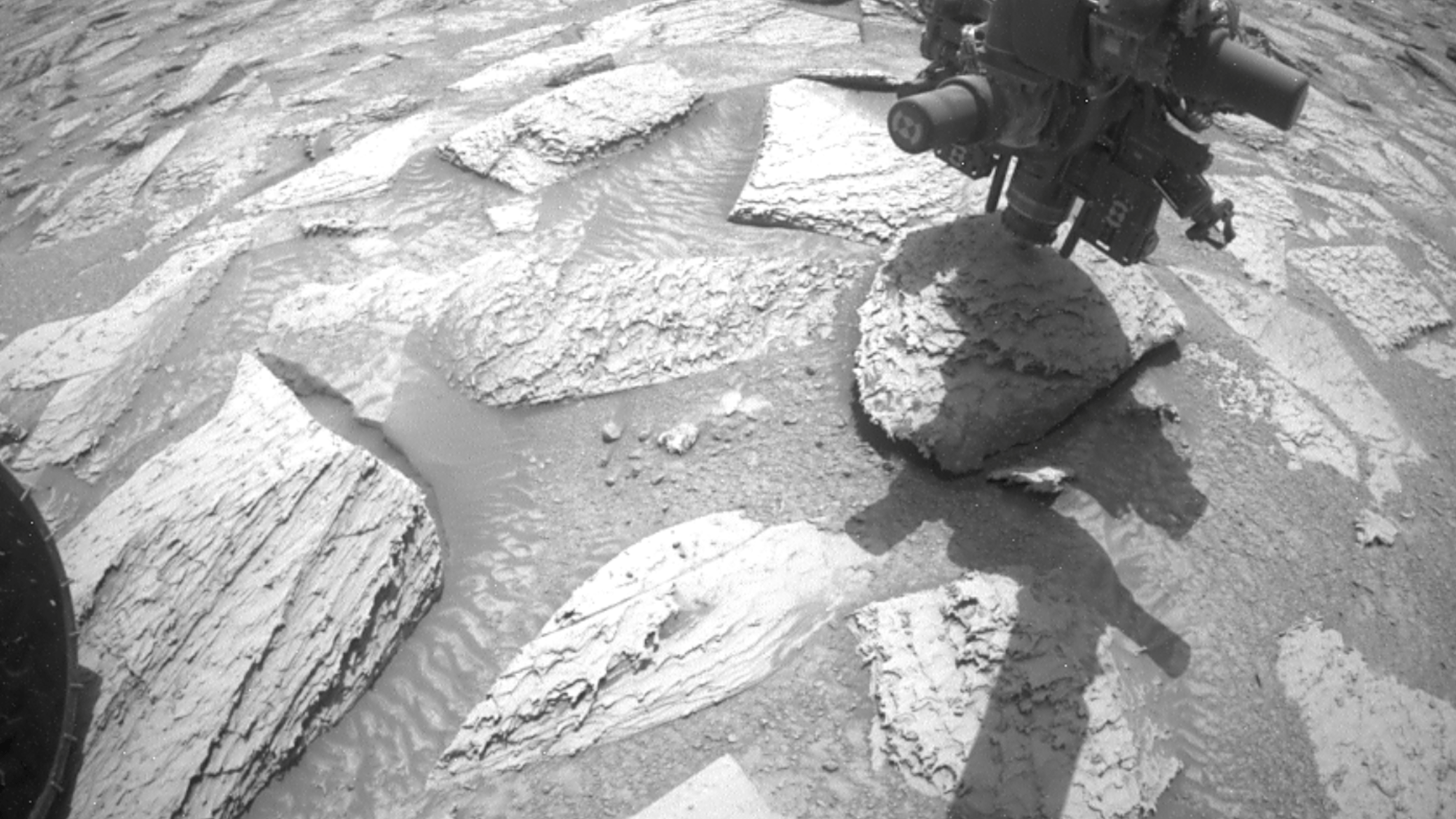
Curiosity got itself stuck between a rock and hard place last month, but NASA says there’s no reason to fret about the intrepid Mars rover. On April 25, mission engineers were remotely piloting its robotic arm’s rotary-percussive drill into a Martian rock nicknamed Atacama. It’s a relatively routine task for Curiosity, which takes the samples and then pulverizes them into a powder for future onboard chemical analysis.

But Atacama is no small stone. The hefty, 1.5-foot-wide geologic formation is about six inches thick and weighs about 28.6 pounds. So NASA engineers were understandably a bit worried when Curiosity attempted to retract its arm—and subsequently lifted the entire rock off the ground.

“Drilling has fractured or separated the upper layers of rocks in the past, but a rock has never remained attached to the drill sleeve,” the agency explained in a recent rundown.

While amusing to envision, the situation was no laughing matter for NASA’s engineers. The rover’s drill would be of little more use with a giant rock indefinitely attached to it. But even if controllers could detach Atacama from the rover, the force might damage the tool or the arm itself. Without those capabilities, Curiosity’s ongoing mission would be in serious jeopardy.

Mission specialists first tried the drilling version of “turning it off and on again,” by vibrating the tool. However, Atacama remained stubbornly stuck on Curiosity…for another four days. NASA then tried a new approach by reorienting the robotic arm and instructing the drill to vibrate one more time. Atacama managed to shake off a bit of sand that time, but little else.

Two more stressful days passed before NASA gave it a third try. Engineers tilted the drill slightly further, then rotated and vibrated the tool while also spinning its drill bit. The Curiosity team anticipated it may take multiple attempts to pull off the feat.But in this case, Atacama finally gave way almost immediately. The nearly weeklong ordeal culminated with the giant rock fracturing as it landed on the Martian ground.

So far, NASA hasn’t reported any lingering damage to the vehicle, meaning the rover is likely ready to continue exploring the Red Planet. As for Atacama, it seems the Martian rock learned a valuable lesson: Don’t mess with Curiosity.

The post For 6 days, NASA’s Mars rover battled a rock appeared first on Popular Science.

❌
Subscriptions